Content note: Quotes wartime anti-German language, including "Hun", and period terms for racial and national groups. This object is shown as it was published. Why
Work of the Foreign Section of the Committee on Public Information.
As chairman of the committee, keenly aware that many of its activities were new and even alien to the American process, I exercised personal direction of all foreign work until January, 1918, when Mr. Will Irwin, returning from Europe, volunteered his services to the national cause. He was made director of the Foreign Section, discharging the duties with devotion and rare intelligence, and upon Mr. Irwin's resignation after carrying through the great Fourth of July celebration, Mr. Edgar Sisson, back from Russia, was given the post, bringing to the work the same organizing genius that marked his conduct of the Russian mission.
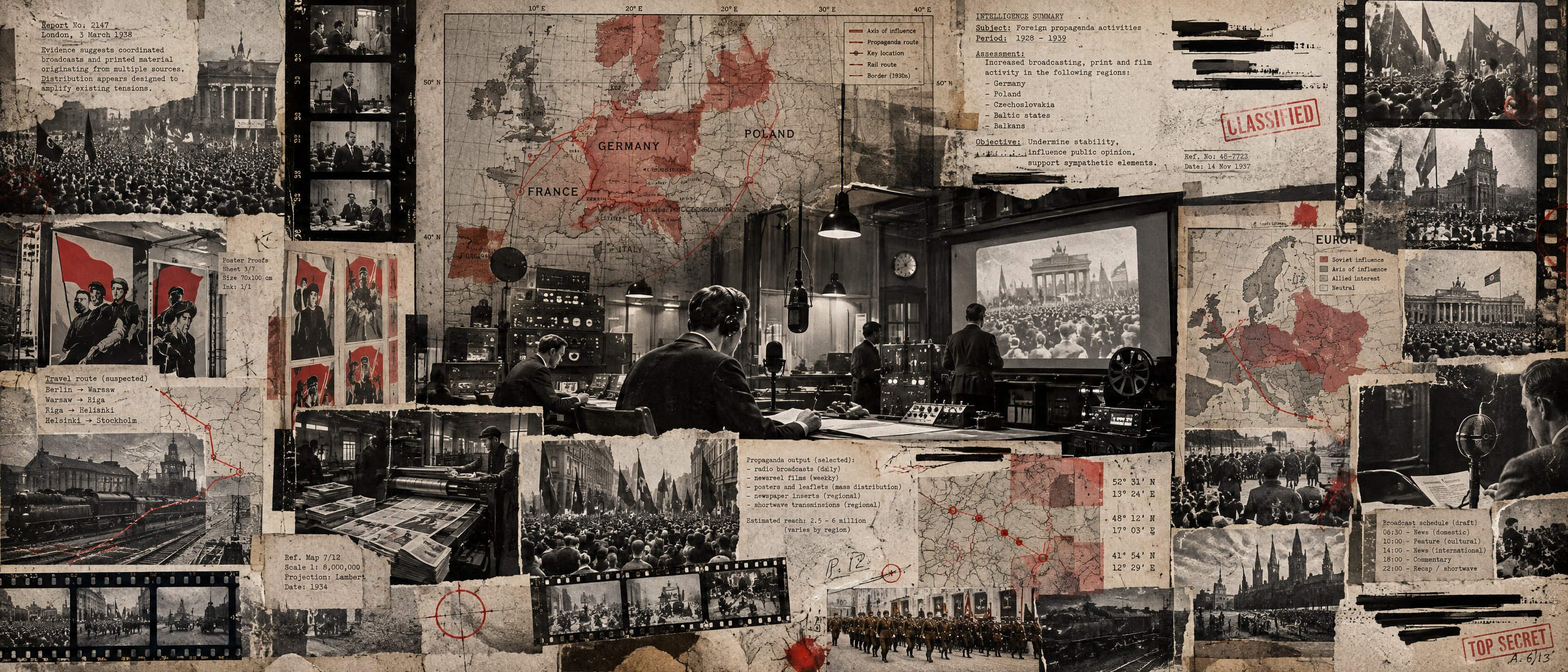
The Foreign Section had three divisions: The Wireless and Cable Service; the Mail Feature Service; Motion Pictures. In each capital, in neutral and friendly belligerent countries, a fully manned office Avas maintained for the distribution of news and articles and film, for the handling of speakers, arrangement of window displays, and the general spread of the truth about America by every possible means.
Complete Report of the Chairman of the Committee on Public Information, George Creel, Chairman, Committee on Public Information. A work of the United States government, printed by the Government Printing Office in 1920, so not protected by copyright in the United States (17 U.S.C. 105) and in the public domain by age as well. The Library of Congress states that it is unaware of any copyright restrictions on the item. Provenance and rights.