Hajime Sugiyama
Illustration, not an archive object
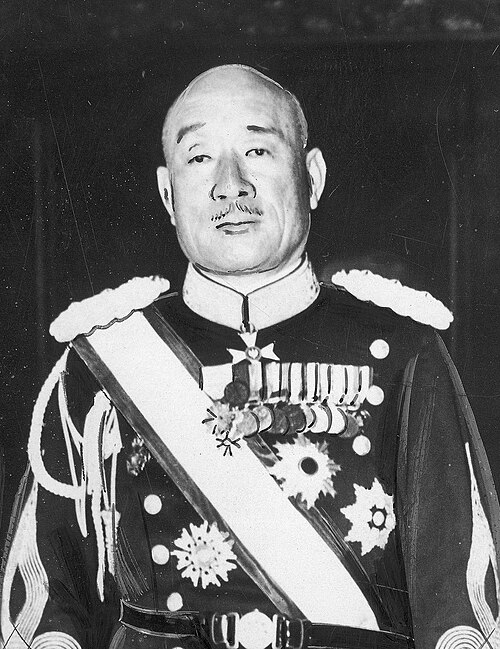

Chief of the Army General Staff (1940-44); Minister of War (1937-38, 1944-45) · Japan
On the regime page: Empire of Japan, 1937 to 1945
3 quotes, oldest first. Filter with other speakers.
“Is evidenced by the previous explanation delivered by Premier Konoye and in view of the present urgent situation, especially of the gradual decrease in the potentiality of our national strength, it is my firm conviction that the time has come for the Empire to decide on peace or war.”
English: English text of Japanese Monograph No. 147 (Military History Section, HQ Army Forces Far East). Original-language text not found.
Army Chief of Staff's explanation to the Imperial Conference that adopted the 'Outline for the Execution of the Empire's National Policy'. He spoke after Navy Chief of Staff Nagano, whose explanation he said the Army fully shared.
Explanation by Chief of Army General Staff Sugiyama at the Imperial Conference of 6 September 1941, Japanese Monograph No. 147, Political Strategy Prior to the Outbreak of War, Part III (Military History Section, Headquarters, Army Forces Far East), Appendix 4, p. A4-i, as published on ibiblio.org Source
Content note: Argues for opening hostilities. The words are shown as they were said or written. Why
“If we should play into the hands of the United States and Great Britain by being driven into the prolonging of diplomatic negotiations at a time when the situation is urgent, the potentiality of the Empire's national defense strength would gradually decrease while at the same time the armament of the United States, and Britain would gradually increase. Such a situation would make our military operations more difficult and place us in a position where we would be forced to lose the advantage of surmounting the obstacles created by the United States and Britain. Therefore, we must open hostilities against the United States and Britain while we have confidence in waging war against them.”
English: English text of Japanese Monograph No. 147 (Military History Section, HQ Army Forces Far East). Original-language text not found.
From the same explanation, on the relationship between preparations for war and diplomatic negotiations.
Explanation by Chief of Army General Staff Sugiyama at the Imperial Conference of 6 September 1941, Japanese Monograph No. 147, Political Strategy Prior to the Outbreak of War, Part III (Military History Section, Headquarters, Army Forces Far East), Appendix 4, p. A4-i, as published on ibiblio.org Source
“In conclusion, I want to emphasize that if the situation should result in a war in the south, the Empire should immediately disclose her intention to Germany and Italy and tighten the agreement with those two countries so that Japan, Germany and Italy can cooperate closely to achieve the common objectives of the war. The most important item in the direction of war is to prevent Germany and Italy from concluding a separate peace with the United States and Britain.”
English: English text of Japanese Monograph No. 147 (Military History Section, HQ Army Forces Far East). Original-language text not found.
Closing passage of the same explanation, on relations with Germany and Italy if war in the south came.
Explanation by Chief of Army General Staff Sugiyama at the Imperial Conference of 6 September 1941, Japanese Monograph No. 147, Political Strategy Prior to the Outbreak of War, Part III (Military History Section, Headquarters, Army Forces Far East), Appendix 4, p. A4-iii, as published on ibiblio.org Source