Content note: this page shows racist caricatures of Black Americans from the 1820s and 1830s, uncropped, and quotes their dialect captions.
In one line: for seventy years both sides of the slavery question fought with medallions, ship plans, woodcuts, lithographs, compiled evidence, memoirs and novels, and this page scores both sides' methods with the same definitions while stating the facts of slavery as the documented record.
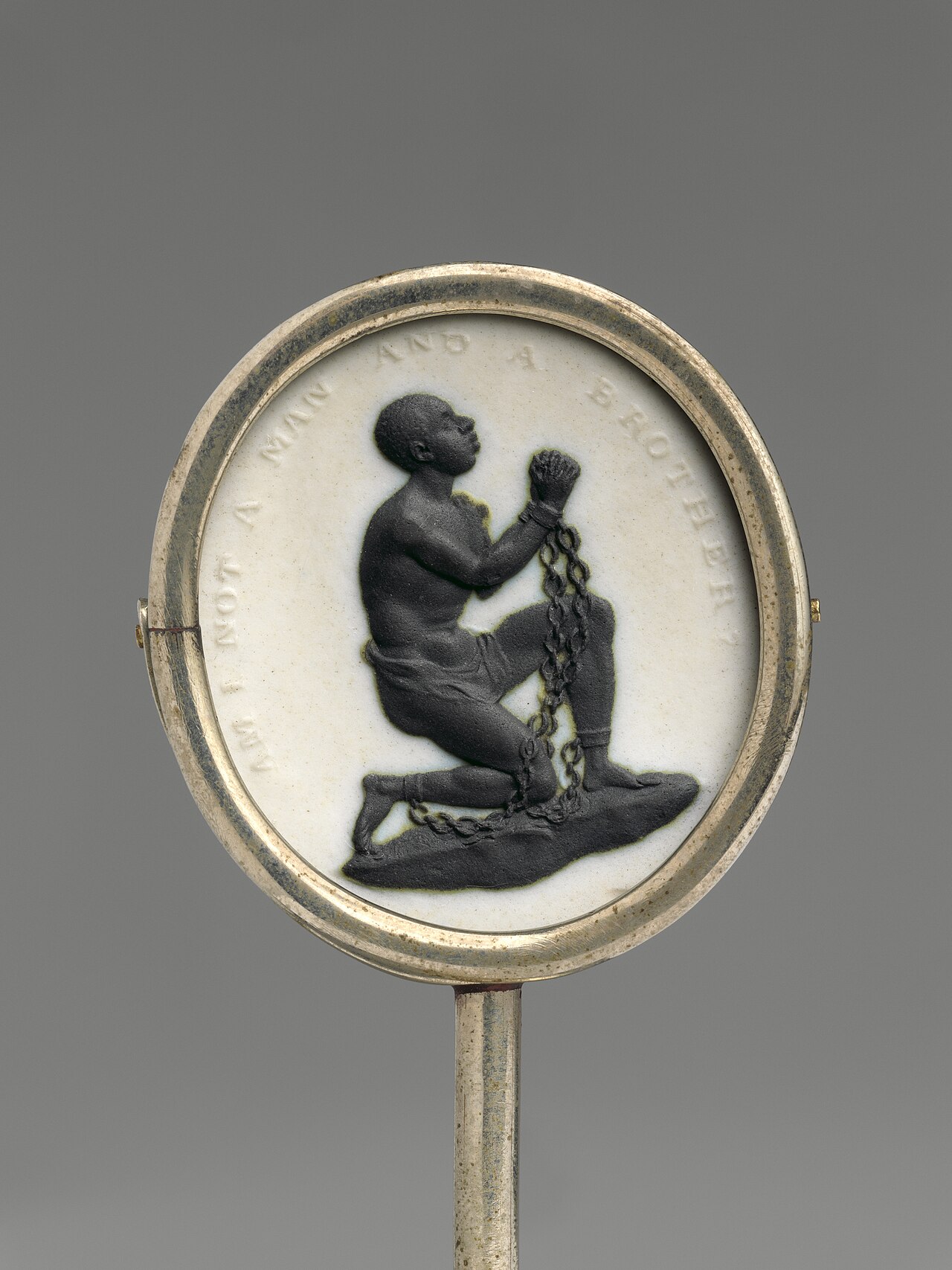
"Am I not a man and a brother?" Jasperware medallion made by Josiah Wedgwood's factory for the Society for Effecting the Abolition of the Slave Trade, modelled by William Hackwood, about 1787, here in a later metal mount. Metropolitan Museum of Art, 08.242. CC0.
What happened
- The record underneath. Chattel slavery was legal in the British Caribbean until the Slavery Abolition Act of 1833 and in the U.S. South until the Thirteenth Amendment (1865). Enslaved people were bought and sold, could be whipped under law, and could not legally marry or protect their families from sale. The persuasion below was a fight about that system, not about whether it existed.
- 22 May 1787. The Society for Effecting the Abolition of the Slave Trade forms in London. Thomas Clarkson, whose Essay on the Slavery and Commerce of the Human Species (1786) had won a Cambridge prize, spends the summer in Bristol and Liverpool collecting sailors' testimony, muster rolls and the shackles and thumbscrews sold for the trade.
- 1787. The Society's committee adopts the kneeling-slave seal. Wedgwood, a committee member, produces it as a jasperware cameo. Clarkson later wrote that people wore it in bracelets and hair ornaments. Wedgwood sent a batch to Benjamin Franklin in Philadelphia, who wrote back in 1788 that the image could do as much as the best-written pamphlet.
- 1787. The U.S. Constitution protects the slave trade until 1808 and counts enslaved people as three-fifths of "other Persons", without using the word slave. Madison's notes record him saying it was wrong to admit in the Constitution the idea that there could be property in men.
- Late 1788 to April 1789. The Plymouth committee prints a deck plan of the Liverpool slaver Brooks (often spelled Brookes). The London committee expands it into Description of a Slave Ship (printed by James Phillips, 1789), with sections, dimensions and a text column.
- 1789. Olaudah Equiano publishes The Interesting Narrative of the Life of Olaudah Equiano, or Gustavus Vassa, the African in London, sold by subscription, and tours Britain promoting it.
- 1807 and 1833. Parliament bans the British slave trade (1807) and abolishes slavery in most of the empire (1833), with compensation paid to slaveholders.
- 1828-1830. In Philadelphia, Edward Williams Clay's etched series Life in Philadelphia caricatures the dress and speech of the city's free Black middle class.
- December 1833. The American Anti-Slavery Society (AASS) is founded in Philadelphia.
- July 1834. Anti-abolition riots in New York target Lewis Tappan's house and Black churches, fed by rumours that abolitionists promoted intermarriage ("amalgamation").
- Summer 1835. The AASS mails large numbers of pamphlets and newspapers to addresses in the South, mostly to white clergy, officials and editors. 29-30 July: a crowd breaks into the Charleston post office, seizes the mail and burns it, with effigies of abolitionist leaders. Postmaster General Amos Kendall declines to order delivery. In December Andrew Jackson asks Congress for a law against circulating what he calls incendiary publications in the South; Congress does not pass one.
- 26 May 1836. The House of Representatives adopts the first "gag rule", tabling antislavery petitions without discussion. It is renewed each session, made a standing rule in 1840, and repealed on 3 December 1844 after a campaign led by John Quincy Adams.
- 6 February 1837. In the Senate, John C. Calhoun says slavery in the South is not an evil but "a positive good".
- 1839. Clay's Practical Amalgamation is published in New York by John Childs, one of several "amalgamation" prints that year. The AASS publishes American Slavery As It Is: Testimony of a Thousand Witnesses, compiled by Theodore Dwight Weld with Angelina and Sarah Grimké, largely from Southern newspapers.
- 1845. Narrative of the Life of Frederick Douglass, an American Slave (Boston: Anti-Slavery Office), with a preface by William Lloyd Garrison and a letter from Wendell Phillips.
- 1850. J. Haven of Boston publishes the lithograph Slavery as it exists in America; Slavery as it exists in England, during the British abolitionist George Thompson's second American tour.
- 1851-1853. Harriet Beecher Stowe's Uncle Tom's Cabin is serialised in the National Era (1851-52) and published as a book by John P. Jewett in March 1852. Replies follow within months, among them Mary Henderson Eastman's Aunt Phillis's Cabin; or, Southern Life As It Is (1852). Stowe answers charges of invention with A Key to Uncle Tom's Cabin (1853).
- 1854-1857. William Grayson's poem The Hireling and the Slave (Charleston, 1854; enlarged 1856) and George Fitzhugh's Sociology for the South (1854) and Cannibals All! or, Slaves Without Masters (1857) argue that Northern and British wage labour is worse than Southern slavery.
Content note: Plan of a slave ship showing enslaved people packed in rows. This object is shown as it was published. Why 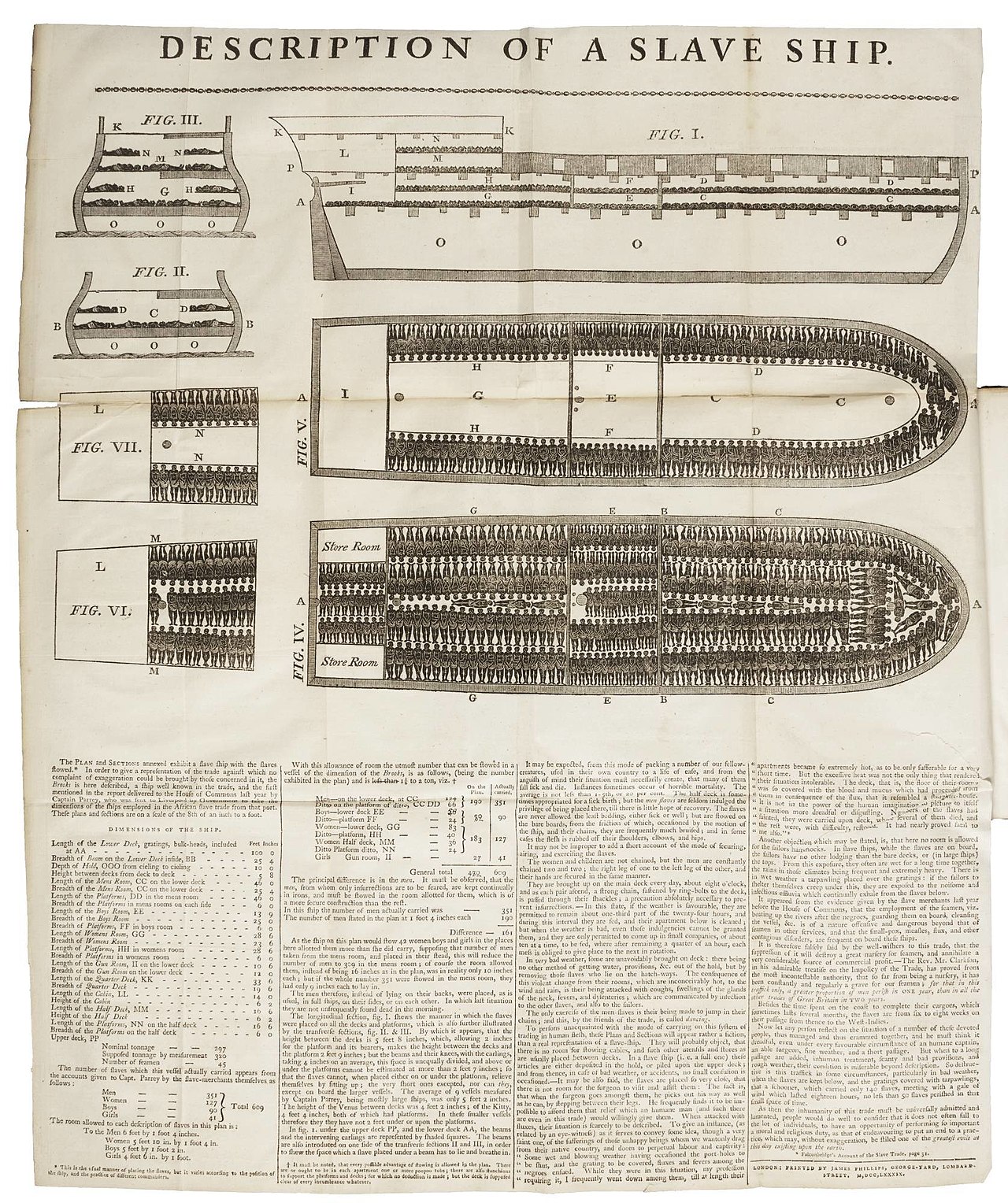
Description of a Slave Ship, London Committee of the Society for Effecting the Abolition of the Slave Trade, printed by James Phillips, 1789. Public domain.
How it works
- Transfer: the Wedgwood figure kneels in the posture of Christian prayer and asks to be recognised as a "brother", borrowing the authority of the congregation's own language. On the other side, Practical Amalgamation hangs portraits labelled "A. Tappan", "O'Connell" and "J. Q. Adams" above its scene, attaching the stigma it draws to three named public men who were not present. The 1850 lithograph sets George Thompson's portrait and his quoted boast that slavery "does not breathe in England" under its English half, pinning the scene to him.
- Card stacking: American Slavery As It Is is openly a prosecution brief. Its items are real, sourced quotations (runaway advertisements describing scars, brands and missing teeth, court records, witness letters), but they were chosen to show cruelty, and the book presents them as typical. The 1850 lithograph and Aunt Phillis's Cabin select in the opposite direction: dancing, music, short working days and loyal servants, with sale, flogging and family separation left out. The difference in material is part of the finding: Weld's pile is checkable quotation from Southern sources, while the 1850 print's pile is invented scenes. The Brooks plan is not tagged here. It was drawn from measurements Captain Parrey of the Royal Navy took for Parliament, its text says the ship was chosen so that "no complaint of exaggeration could be brought", and the plan shows fewer people than the 609 its own text says the Brooks had once carried.
- Whataboutism: Slavery as it exists in America; Slavery as it exists in England answers the charge against Southern slavery with a different charge, English factory misery, so the first charge is never tried. One English worker says operatives "generally die of old age at Forty". Grayson's Hireling and the Slave and Fitzhugh's Cannibals All! build whole books on the same move. The abolitionist woodcut Family Amalgamation among the Men-stealers (below) answers the "amalgamation" charge with the counter-charge that slaveholders themselves fathered children with enslaved women. Under the same definition it is the same structural move. In both cases the counter-charge pointed at real conditions: British factory hours were the subject of parliamentary inquiry, and the sexual exploitation of enslaved women is documented in narratives and court records. The technique is the deflection, not the truth or falsity of the second charge.
- Name-calling: anti-abolitionist print and speech called abolitionists "amalgamationists", "fanatics" and "incendiaries". Abolitionist print called slaveholders "men-stealers", a term from 1 Timothy 1:10, and from the 1840s wrote of a "Slave Power". In each case the label arrives before the argument.
- Fear appeal: the amalgamation prints stage intermarriage as the result of abolition, and the 1834 riots show the fear travelling. After Nat Turner's revolt (1831), Southern public meetings in 1835 said the mailings would incite insurrection. The AASS said it addressed white readers, and no revolt was traced to the pamphlets. Abolitionist and Free Soil warnings about a "Slave Power" seizing the federal government also used impending harm to move readers; historians such as Leonard Richards argue those warnings had a basis in the three-fifths clause's effect on House seats.
- Testimonial: Douglass's Narrative opens with Garrison's preface and Phillips's letter vouching for him, the "authenticating" frame that slave narratives carried. The frame is testimonial by definition. Douglass also named places and enslavers that could be checked, and a Maryland acquaintance, A. C. C. Thompson, published a letter disputing that he could have written the book, which Douglass answered in The Liberator in 1846.
- Euphemism / doublespeak: "our peculiar institution", "servants", "our people" and "the domestic institution" named slavery without naming ownership of people. The 1787 Constitution's "Person held to Service or Labour" is the founding case. "Peculiar" at the time meant "distinctive"; the effect is still that the phrase does not describe the thing.
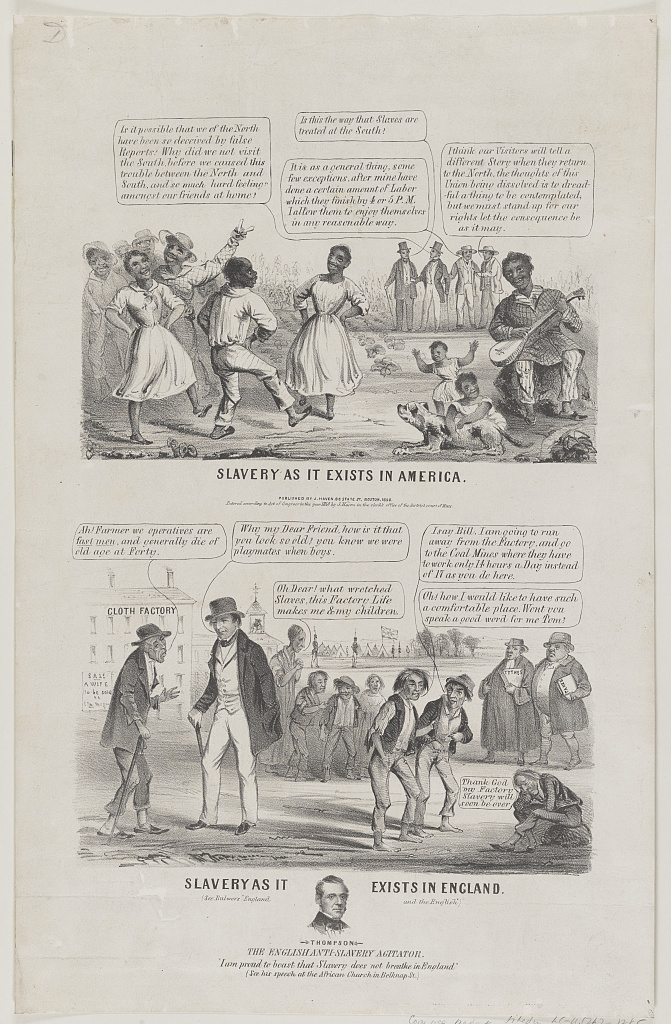
Slavery as it exists in America. Slavery as it exists in England. Lithograph published by J. Haven, Boston, 1850. Library of Congress. Public domain.
Content note: Racist caricature of Black people. This object is shown as it was published. Why 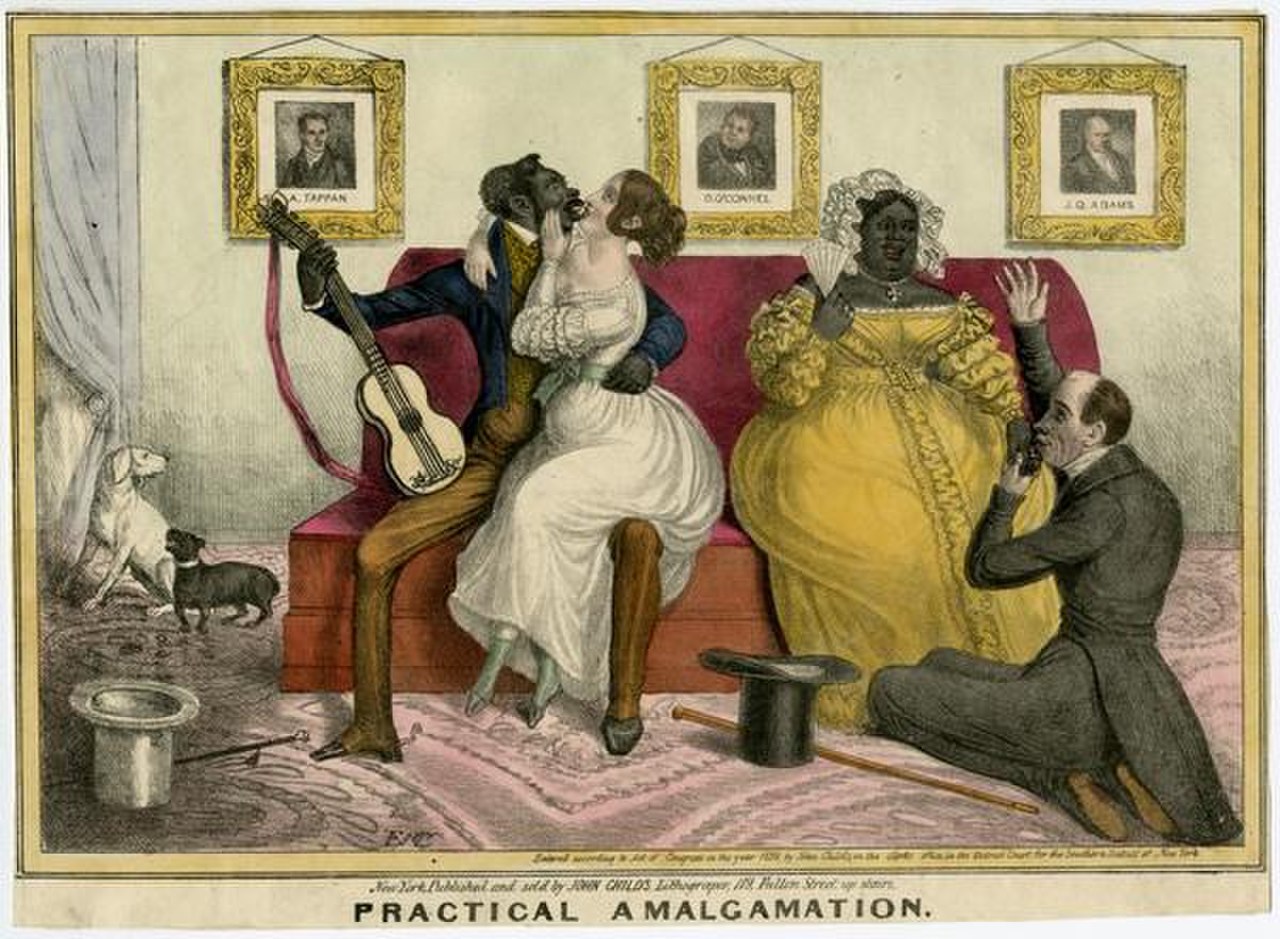
Practical Amalgamation. Racist caricature by Edward Williams Clay (signed "E.W.C."), published by John Childs, New York, 1839. Shown uncropped. Public domain.
Content note: Racist caricature of Black people, with mocking dialect. This object is shown as it was published. Why 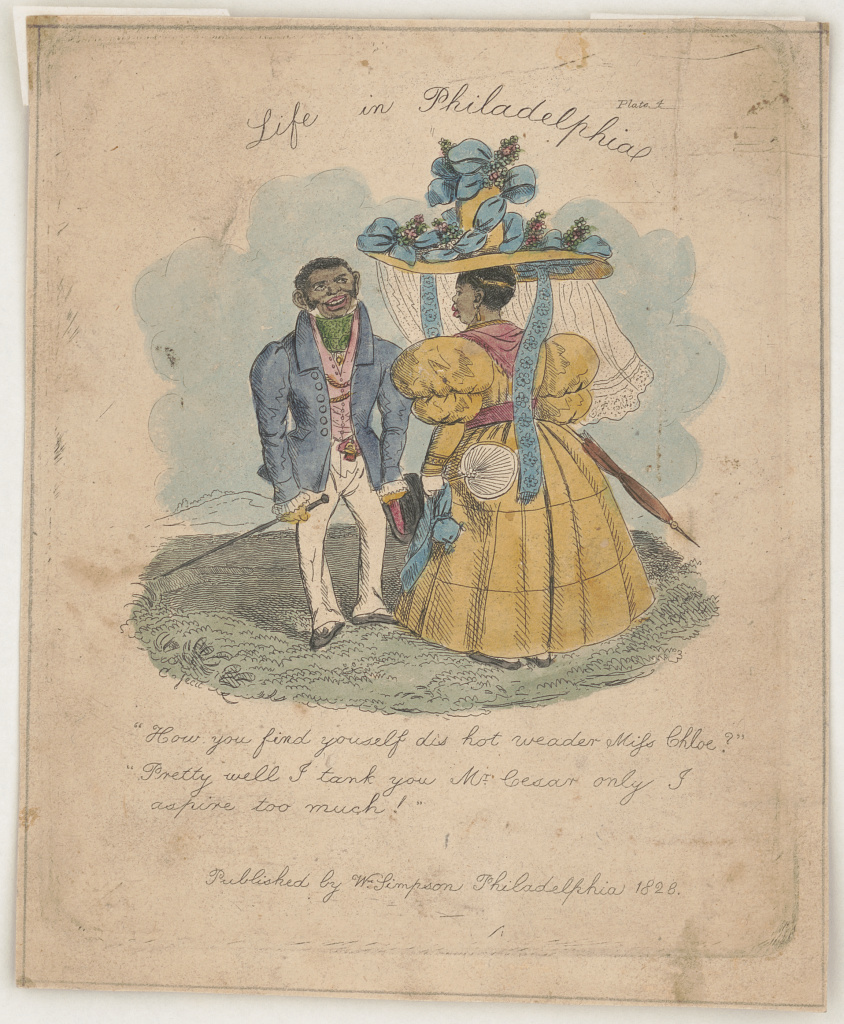
Life in Philadelphia, Plate 4. Racist caricature by Edward Williams Clay ("C. fecit"), published by W. Simpson, Philadelphia, 1828. The caption reads: "How you find youself dis hot weader Miss Chloe?" "Pretty well I tank you Mr Cesar only I aspire too much!" Library of Congress. Public domain.
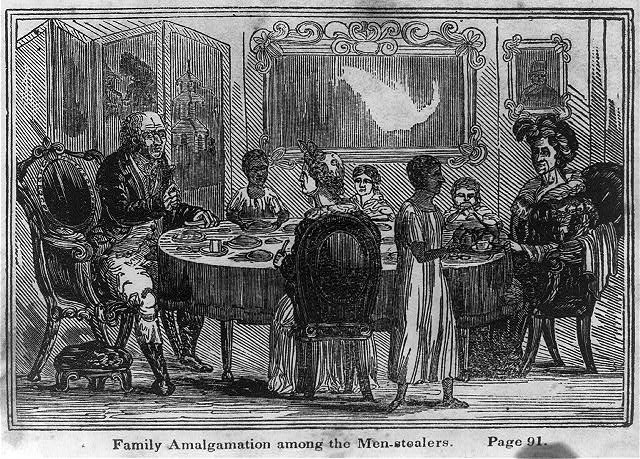
Family Amalgamation among the Men-stealers. Abolitionist book woodcut ("Page 91"), dated 1834 by the Library of Congress. Public domain.
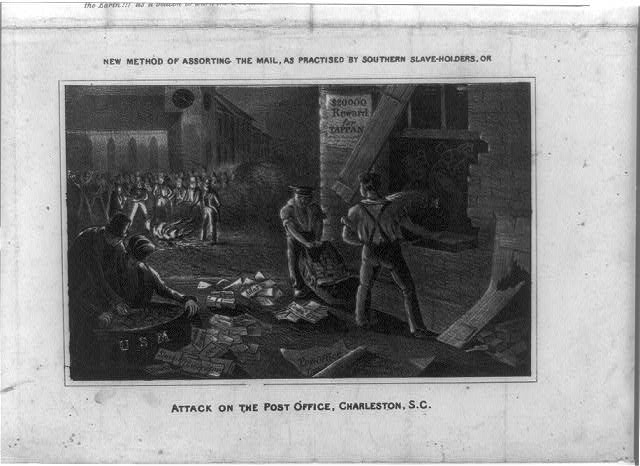
New method of assorting the mail, as practised by Southern slave-holders, or attack on the Post Office, Charleston, S.C. Abolitionist print, [Boston?], 1835. Library of Congress. Public domain.
Then and now
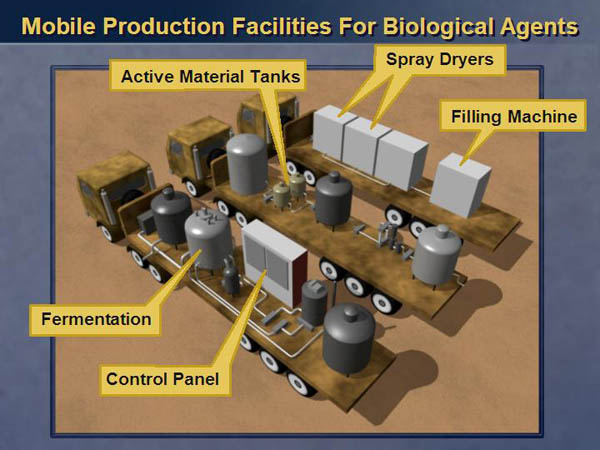
Mobile Production Facilities for Biological Agents (UN Security Council slide), U.S. Department of State, 2003. Public domain.
The Description of a Slave Ship and the 2003 mobile-lab slide both use a technical drawing to turn an argument into something that looks like evidence: dimensions, sections, labels. The difference is in what stands behind the drawing. The Brooks plan came from a naval officer's measurements submitted to Parliament and understated the numbers its own text records. The 2003 slide rested mainly on one defector whose reliability had been questioned, and no such labs were found. The same test applies to both: ask where the numbers came from. Scale and stakes also differ: a printed broadside for a parliamentary campaign against a legal trade, and a government presentation to the UN Security Council six weeks before a war. Later chapters of American picture propaganda are in Join or Die to the Boston Massacre: patriot and loyalist print, 1754-1783 and Union and Confederate print, 1861-1865.
Positions on the record
- Abolitionists' stated position: slavery and the slave trade were sins and crimes against people who were fellow humans and fellow Christians; immediate emancipation (the AASS's 1833 Declaration of Sentiments) or, for British gradualists, first ending the trade. They said their evidence came from slaveholders' own newspapers and from people who had been enslaved.
- Pro-slavery writers' stated position: slavery was lawful under the Constitution and sanctioned by scripture, a "positive good" (Calhoun) that cared for workers better than wage labour did (Grayson, Fitzhugh), and abolitionist mailings endangered Southern households by inviting insurrection. Some, like Fitzhugh, defended slavery as a system in principle; others defended it as a racial order.
- What historians say: the pro-slavery argument hardened from "necessary evil" to "positive good" in the 1830s, partly in answer to the abolitionist press (Tise; Faust). Historians of the abolitionist image, notably Marcus Wood, note that the kneeling supplicant and the packed-deck plan show enslaved people as passive objects of white pity, a critique made from within the study of abolition. Vincent Carretta found baptismal and naval records giving Equiano's birthplace as South Carolina, which makes the African-birth chapters of his Narrative contested; other scholars (for example Paul Lovejoy) defend the African origin. This page treats the question as open.
- This archive's reading: documented: the objects and texts shown and quoted here, the dates above, the Charleston burning, the gag rule, Calhoun's phrase, and the legal status of slavery. Documented too: Weld's items were quotations from Southern sources, and the Brooks plan was based on measured data. Not shown: that any single print changed a vote, and any count of how many people each item reached. The page scores the method; it does not score slavery's opponents more gently. Seven items on this page were made by abolitionists and four by their opponents. That reflects what open collections hold and what was chosen here, not how much each side printed; much of the pro-slavery case survives as speeches and unillustrated books (Calhoun, Grayson, Fitzhugh).
Same-method test
If an abolitionist print had shown contented free labourers beside miserable enslaved people and nothing else, it would be tagged card-stacking and whataboutism here, as the 1850 lithograph is. Weld's compilation gets the card-stacking tag even though its quotations are accurate, because the selection is one-directional by design, the same reason Aunt Phillis's Cabin gets it. A pro-slavery memoir framed by a famous patron's vouching letter would be tagged testimonial, as Douglass's framing is. The definitions do not change with the cause.
How to spot it
- Ask where a picture's numbers come from. A plan with stated measurements and a named surveyor can be checked; a genre scene cannot.
- When an accusation is met with "but look at them", note that the first charge is still untried, whether or not the second is true.
- Read titles that promise the thing "as it is" or "as it exists" (Weld 1839, the 1850 lithograph, Eastman 1852) as a claim to selection, not a guarantee of completeness.
- Look for labels that arrive before arguments: "amalgamationist", "incendiary", "man-stealer".
- Watch for words that name a system without naming what it does to people: "peculiar institution", "servant", "Person held to Service".
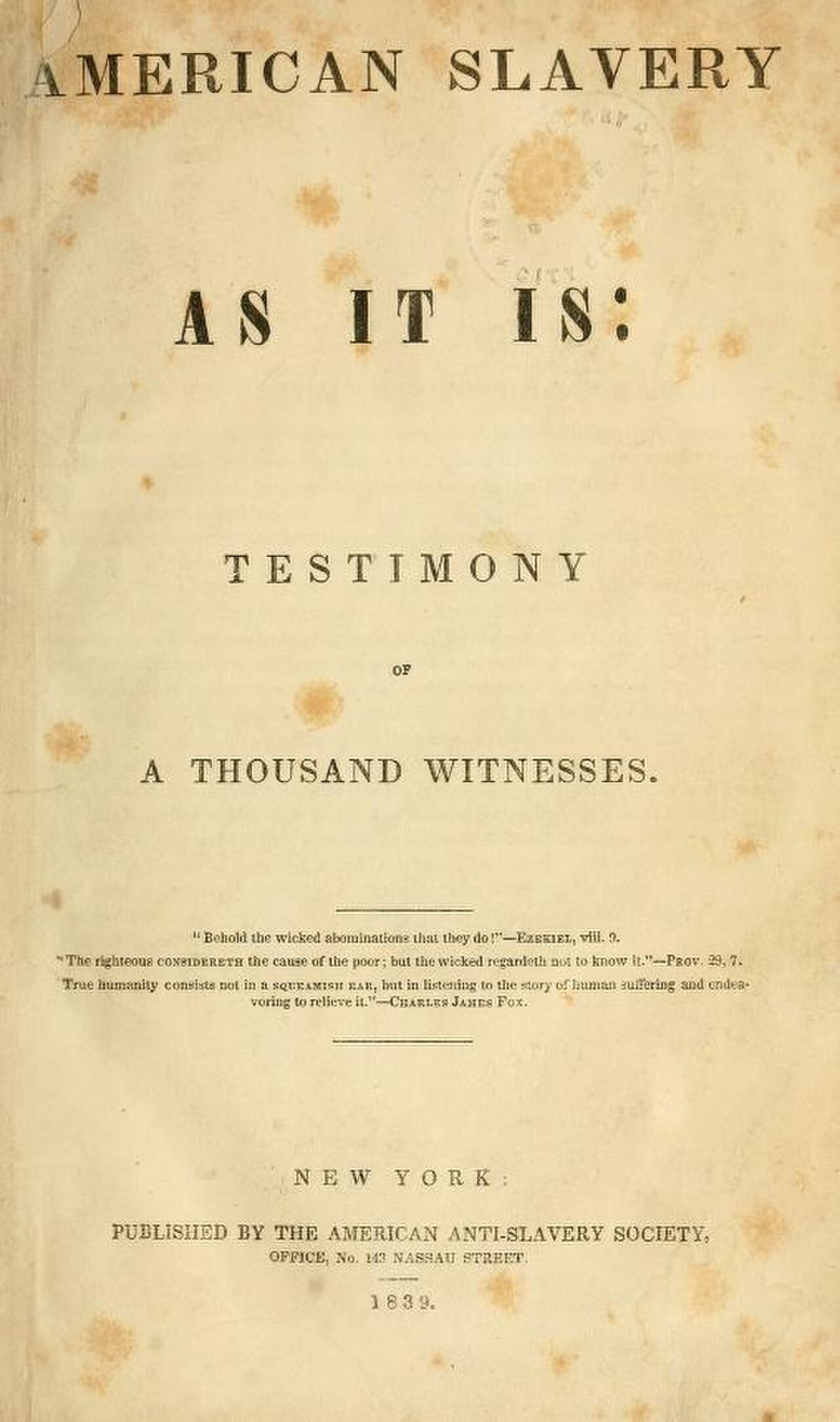
American Slavery As It Is: Testimony of a Thousand Witnesses, title page. American Anti-Slavery Society, New York, 1839. Public domain.
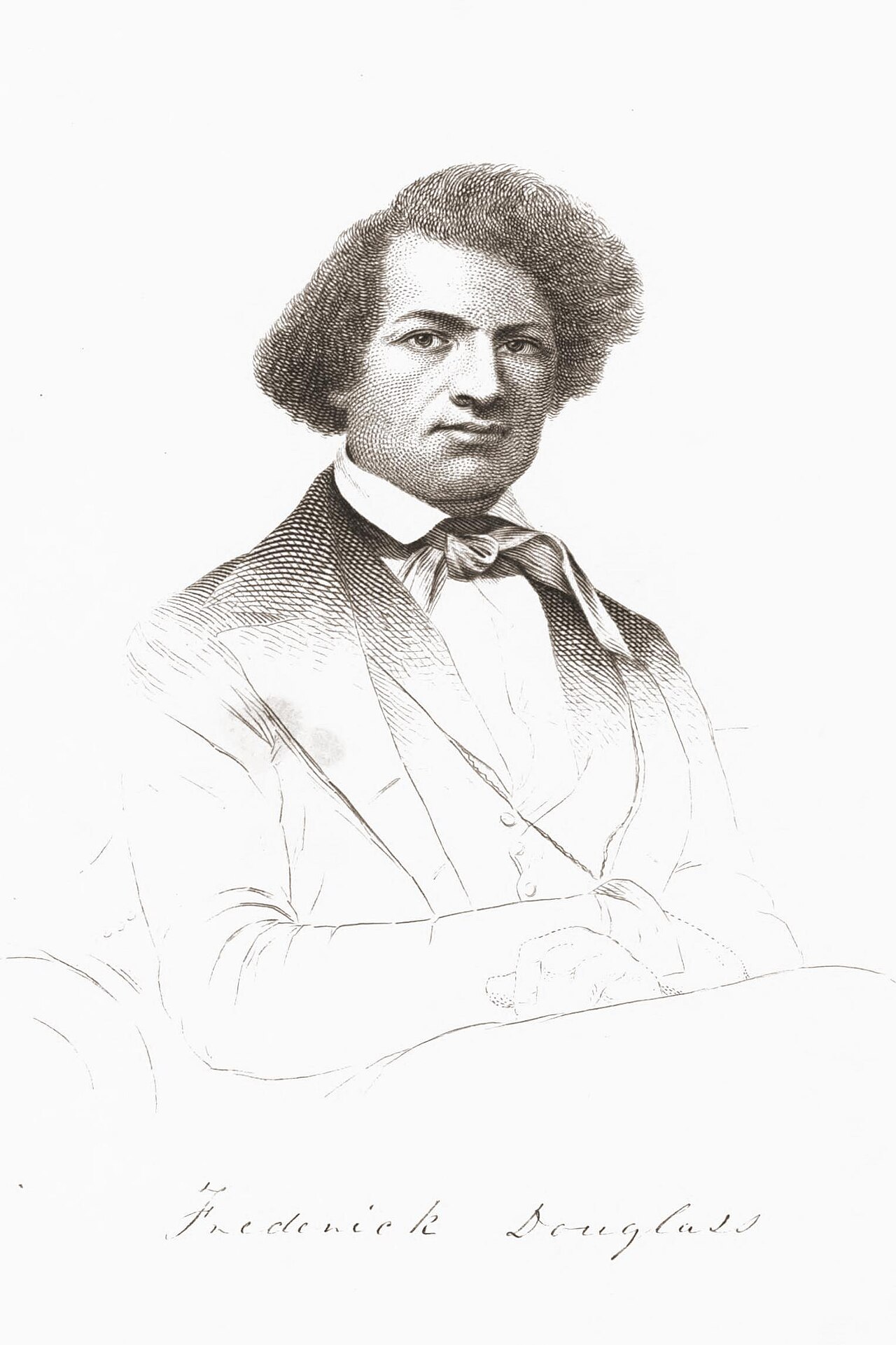
Frederick Douglass, frontispiece to Narrative of the Life of Frederick Douglass, an American Slave. Boston, 1845. Public domain.
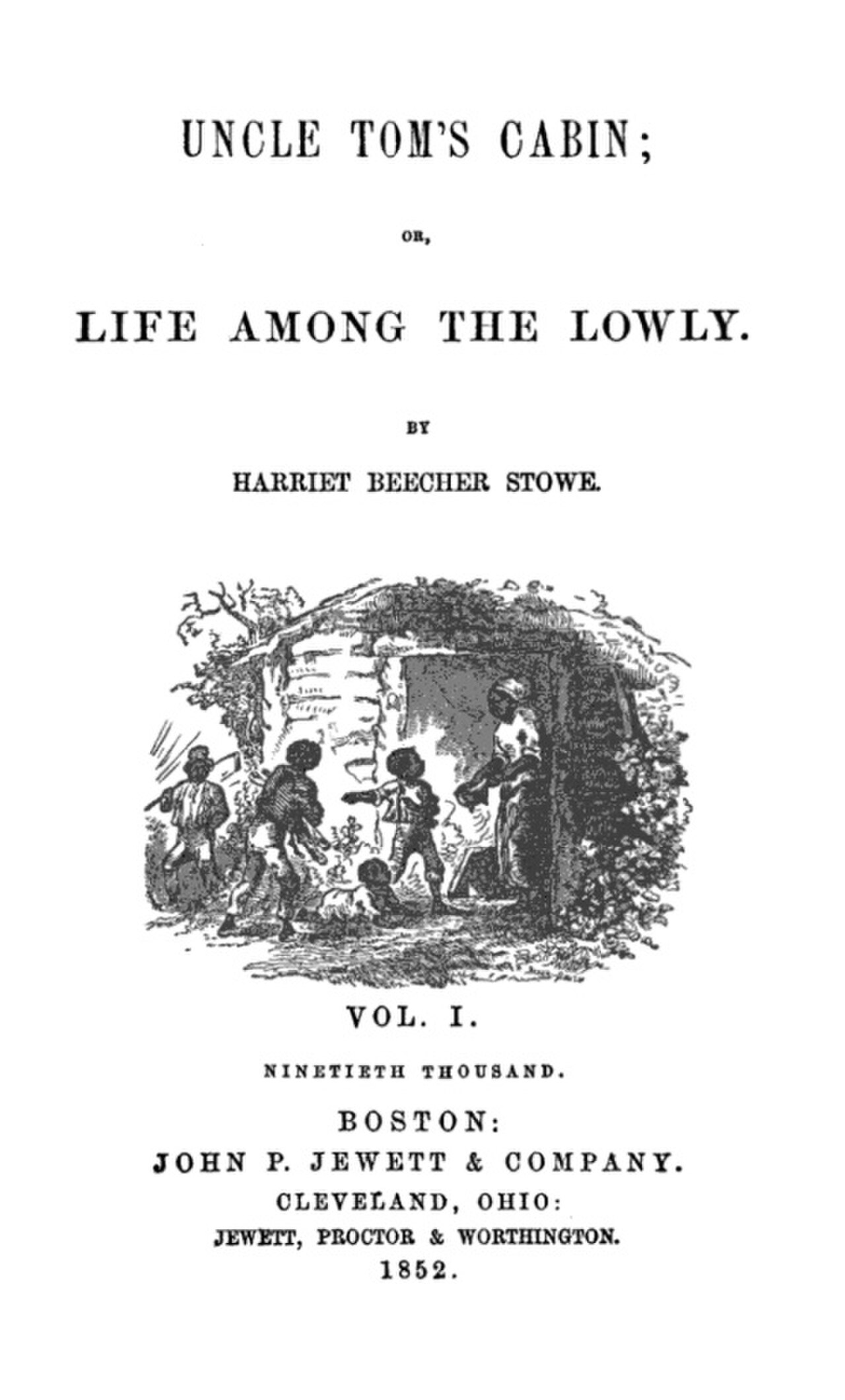
Uncle Tom's Cabin; or, Life Among the Lowly, Vol. I, title page of the "Ninetieth Thousand" printing. John P. Jewett & Company, Boston, 1852. Public domain.
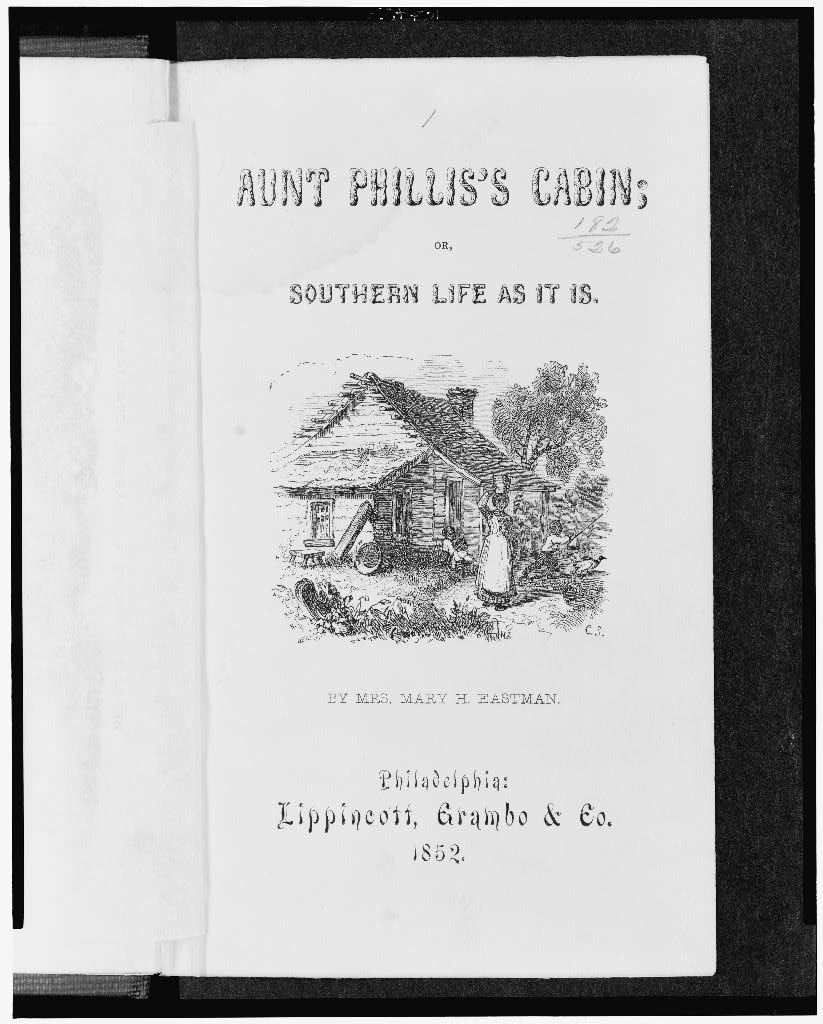
Aunt Phillis's Cabin; or, Southern Life As It Is, by Mary H. Eastman, title page. Lippincott, Grambo & Co., Philadelphia, 1852. The vignette answers Stowe's. Library of Congress. Public domain.
Images
| Image | Source | Licence |
|---|---|---|
| Wedgwood "Am I not a man and a brother?" medallion (c. 1787) | Wikimedia Commons, Metropolitan Museum of Art 08.242 | CC0 |
| Description of a Slave Ship (1789) | Wikimedia Commons, printed by James Phillips | Public domain |
| Slavery as it exists in America; Slavery as it exists in England (1850) | Library of Congress, J. Haven | Public domain (no known restrictions) |
| Practical Amalgamation (1839) | Wikimedia Commons, E. W. Clay / John Childs | Public domain |
| Life in Philadelphia, Plate 4 (1828) | Library of Congress, E. W. Clay / W. Simpson | Public domain (no known restrictions) |
| Family Amalgamation among the Men-stealers (1834) | Library of Congress | Public domain (no known restrictions) |
| New method of assorting the mail (1835) | Library of Congress | Public domain (no known restrictions) |
| American Slavery As It Is, title page (1839) | Wikimedia Commons | Public domain |
| Douglass Narrative frontispiece (1845) | Wikimedia Commons | Public domain |
| Uncle Tom's Cabin, title page (1852) | Wikimedia Commons | Public domain |
| Aunt Phillis's Cabin, title page (1852) | Library of Congress | Public domain (no known restrictions) |
| Mobile Production Facilities slide (2003) | FRAME gallery | Public domain (U.S. government work) |


.jpg)

Image gaps
- The Plymouth committee's first plan (late 1788). A widely reproduced Commons file labelled as the Plymouth broadside carries the title Stowage of the British Slave Ship "Brookes" under the Regulated Slave Trade Act of 1788, which the Library of Congress catalogues as a Liverpool printing of 1884. Because the date could not be settled, it is not shown. Fillable with a securely dated copy.
- Equiano's 1789 frontispiece portrait. A British Library scan is on Wikimedia Commons and appears to be public domain. Fillable.
- Title pages of Grayson's The Hireling and the Slave and Fitzhugh's Cannibals All! Both are public domain and scanned on the Internet Archive, but no ready image file was found. Fillable by extracting a page.
- The House gag-rule resolutions and Calhoun's 1837 speech in print. Public domain in the Congressional Globe and Register of Debates; not located as image files. Fillable.
- Clay's other 1839 amalgamation prints (for example An Amalgamation Waltz). On Commons; left out to keep the page balanced in number, not for content.
Sources
- Thomas Clarkson, The History of the Rise, Progress, and Accomplishment of the Abolition of the African Slave-Trade by the British Parliament (London: Longman, Hurst, Rees and Orme, 1808).
- Committee of the Society for Effecting the Abolition of the Slave Trade, Description of a Slave Ship (London: James Phillips, 1789).
- Olaudah Equiano, The Interesting Narrative of the Life of Olaudah Equiano, or Gustavus Vassa, the African (London, 1789).
- [American Anti-Slavery Society], American Slavery As It Is: Testimony of a Thousand Witnesses (New York, 1839).
- Frederick Douglass, Narrative of the Life of Frederick Douglass, an American Slave (Boston: Anti-Slavery Office, 1845).
- Harriet Beecher Stowe, Uncle Tom's Cabin (Boston: John P. Jewett, 1852) and A Key to Uncle Tom's Cabin (Boston: Jewett, 1853).
- Mary H. Eastman, Aunt Phillis's Cabin; or, Southern Life As It Is (Philadelphia: Lippincott, Grambo, 1852).
- William J. Grayson, The Hireling and the Slave (Charleston, 1854; 1856).
- George Fitzhugh, Cannibals All! or, Slaves Without Masters (Richmond: A. Morris, 1857).
- John C. Calhoun, speech on the reception of abolition petitions, U.S. Senate, 6 February 1837.
- Marcus Wood, Blind Memory: Visual Representations of Slavery in England and America, 1780-1865 (Manchester University Press, 2000).
- Cheryl Finley, Committed to Memory: The Art of the Slave Ship Icon (Princeton University Press, 2018).
- Adam Hochschild, Bury the Chains (Houghton Mifflin, 2005).
- Vincent Carretta, Equiano, the African: Biography of a Self-Made Man (University of Georgia Press, 2005).
- Phillip Lapsansky, "Graphic Discord: Abolitionist and Antiabolitionist Images", in Jean Fagan Yellin and John C. Van Horne (eds.), The Abolitionist Sisterhood (Cornell University Press, 1994).
- Richard R. John, Spreading the News: The American Postal System from Franklin to Morse (Harvard University Press, 1995).
- William Lee Miller, Arguing About Slavery: The Great Battle in the United States Congress (Knopf, 1996).
- Larry E. Tise, Proslavery: A History of the Defense of Slavery in America, 1701-1840 (University of Georgia Press, 1987).
- Drew Gilpin Faust (ed.), The Ideology of Slavery: Proslavery Thought in the Antebellum South, 1830-1860 (Louisiana State University Press, 1981).
- Leonard L. Richards, The Slave Power: The Free North and Southern Domination, 1780-1860 (Louisiana State University Press, 2000).
- Thomas F. Gossett, Uncle Tom's Cabin and American Culture (Southern Methodist University Press, 1985).
- Library of Congress, Prints and Photographs Division: 2008661524, 2012647352, 98510330, 2008661779, 93505754.