Also called Doublespeak, Sanitizing language
Replace a concrete harm or act with a sanitizing or inflating phrase so evaluation never meets the thing.
The tell
The operational word (kill, censor, pay, lie) is missing; a gerund or acronym sits in its place.
Not this
Technical terms used with a glossary.
History and effect
The subject of Orwell's "Politics and the English Language" and of the NCTE's annual Doublespeak Award, which tracks the device in government and corporate language.
It prevents the audience from forming the negative reaction the plain word would trigger, by never letting them see the plain word.
Lineage: Orwell; NCTE Doublespeak Award
How it works
Euphemism replaces the word that names an act with one that names something milder, more technical or more abstract, so the audience evaluates the substitute. A few moves recur. Abstraction turns a verb into a noun of process ("treatment", "operation", "resettlement"). Borrowed register uses the language of administration or medicine ("assembly center", "collateral damage"). Purpose-naming uses the goal claimed for an act as its name ("pacification", "vocational education"). Initials add distance ("EITs"). Deleting the agent removes the doer ("mistakes were made"). Orwell's 1946 essay "Politics and the English Language" gave examples from his own time: when villages are bombed and their inhabitants driven out, "this is called pacification"; political language, he wrote, "is designed to make lies sound truthful and murder respectable".
In propaganda the device is usually a system rather than a word: the substitute is required and the plain word carries a cost. Nazi Germany's language rules (Sprachregelungen) governed how the deportation and murder of Europe's Jews could be written about; the Soviet state classed peasants deported during collectivisation as "special settlers", a category Lynne Viola has traced through the archives; Russia's media regulator told outlets in 2022 not to say "attack" or "invasion". Where a government cannot compel vocabulary, the term is fixed by repetition, by legal documents and by news organisations that adopt it as neutral, and the contest moves into style guides.
The device works on the people doing the act as well as on the public. Hannah Arendt argued that the Nazi language rules helped officials avoid equating their work with their ordinary knowledge of murder. The same mechanics appear at lower stakes in business ("downsizing"; William Lutz's 1989 book takes its title from "revenue enhancement" for a tax increase) and on both sides of armed conflicts: Palestinian armed groups called suicide bombings of civilians "martyrdom operations", a term Human Rights Watch examined in its 2002 report on those attacks, while Israeli officials call the policy of killing named militants sikul memukad ("targeted prevention"), the policy the Israeli Supreme Court reviewed in its 2006 judgment.
Why it works
Amos Tversky and Daniel Kahneman's work on framing effects (1981) showed that logically equivalent descriptions ("200 people will be saved" against "400 people will die") lead to different choices; a euphemism is a framing choice made in one word. The plain word carries more physical emotion: Jeffrey Bowers and Christopher Pleydell-Pearce (2011) found stronger skin-conductance responses when people read aloud offensive words than when they read euphemisms for the same things. And a phrase such as "special treatment" gives the reader nothing to picture.
Albert Bandura's research on moral disengagement (1999) lists "euphemistic labeling" among the mechanisms, alongside moral justification and dehumanisation, by which people switch off the self-sanctions that normally restrain harm. Substitutes wear out as they absorb the meaning of what they name, which Steven Pinker called the "euphemism treadmill" (1994).
Examples across eras and sides
- Nazi language rules (1941-1945, German-occupied Europe, Nazi Germany). German documents used "Endlösung der Judenfrage" (final solution of the Jewish question), "Evakuierung" (evacuation) and "Aussiedlung" (resettlement) for deportation to killing sites, and "Sonderbehandlung" (special treatment) for killing. The Wannsee Conference protocol of January 1942 speaks of evacuating Jews to the East (Raul Hilberg, The Destruction of the European Jews, 1961; Hannah Arendt, Eichmann in Jerusalem, 1963).
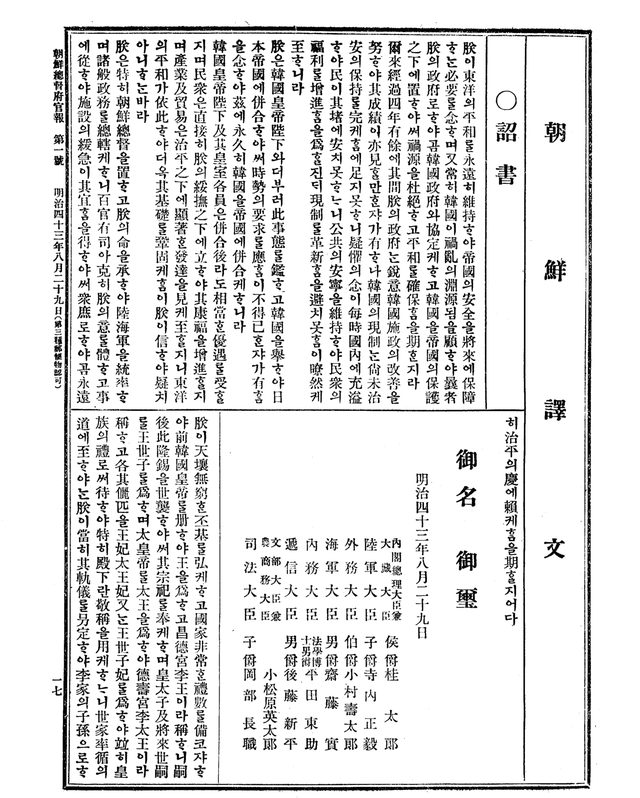
- Military "comfort stations" (1930s-1945, East and Southeast Asia, Imperial Japan). The military's terms "ianjo" (comfort station) and "ianfu" (comfort women) named a system in which women from Korea, China, the Philippines, the Dutch East Indies and elsewhere were held for sexual use by soldiers. Japan's 1993 Kono Statement acknowledged the military's direct or indirect involvement; the UN Special Rapporteur on violence against women, Radhika Coomaraswamy, said in 1996 that "military sexual slavery" was more accurate (Kono Statement, 1993; Coomaraswamy, UN Commission on Human Rights, 1996; Yoshimi Yoshiaki, Comfort Women, 2000).
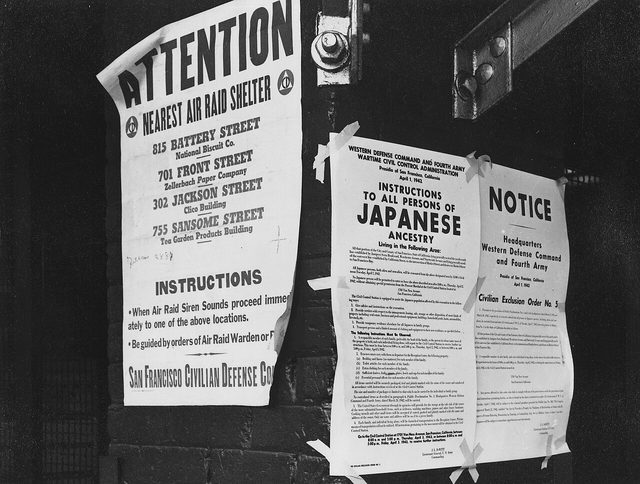
- "Evacuation" and "non-aliens" (1942, US West Coast, US Army). Covered in 'Instructions to All Persons of Japanese Ancestry' (exclusion order posted in San Francisco). Exclusion orders called forced removal "evacuation", US citizens "non-aliens" and the racetracks where families were held "assembly centers". The federal Commission on Wartime Relocation and Internment of Civilians found the policy driven by "race prejudice, war hysteria and a failure of political leadership" (CWRIC, Personal Justice Denied, 1982-83).
- The "events" in Algeria (1954-1962, Algeria and France, French Republic). French governments called the war of independence "operations to maintain order" and "the events in Algeria", and counter-insurgency "pacification". A 1999 law replaced the official phrase "operations carried out in North Africa" with "the Algerian War" (French law of 18 October 1999; Benjamin Stora, La gangrène et l'oubli, 1991).
- "Incursion" and "air support" (1970-1974, Cambodia, US government). In April 1970 President Nixon said "This is not an invasion of Cambodia", and officials called the operation an "incursion". In 1974 the National Council of Teachers of English gave its first Doublespeak Award to Col. David Opfer, a US Air Force press officer, for telling reporters the bombing of Cambodia was not bombing but "air support" (William Lutz, Doublespeak, 1989).
- "Enhanced interrogation techniques" (2002-2014, United States, CIA). CIA and Justice Department documents used the phrase for methods including waterboarding and sleep deprivation. The Senate Intelligence Committee study (executive summary, 2014) concluded that the techniques were not effective and that the interrogations were "brutal and far worse than the CIA represented to policymakers and others"; the CIA's 2013 response disputed that, and Bush administration officials have said the program was lawful. In 2014 President Obama said "we tortured some folks", and the New York Times adopted "torture" for such techniques (SSCI, 2014; CIA response, 2013).
- "Vocational education and training centers" (from 2017, Xinjiang, China). China's government describes facilities in Xinjiang as vocational training centers for counter-terrorism and de-radicalisation. The UN human rights office's 2022 assessment found arbitrary deprivation of liberty, called allegations of torture or ill-treatment credible and said violations may constitute crimes against humanity; China rejected it (State Council Information Office white paper, 2019; OHCHR assessment, 2022).
- "Special military operation" (2022, Russia and Ukraine, Russian Federation). Covered in Address announcing a 'special military operation'. The 24 February 2022 address used the operation label in place of the word war. Two days later Roskomnadzor told outlets to remove words such as "attack", "invasion" and "declaration of war", and a law signed on 4 March made "discrediting" the armed forces a criminal offence (kremlin.ru, 24 February 2022).
How to spot it
- Can you restate the phrase with a subject and a concrete verb: who did what to whom?
- If you substitute the plain word (kill, bomb, deport, detain, fire), does the sentence become false, or only harder to hear?
- Does the phrase name the act, or the purpose claimed for it ("pacification", "education", "security")?
- Is the term defined, and does the definition name the physical act?
- Is the vocabulary enforced, with the plain word discouraged or punished?
- How do courts, historians, international bodies and the other side describe the same event?
Where it ends: edge cases and legitimate persuasion
- Tact is not doublespeak. "Passed away" in a condolence note hides nothing from anyone who has to judge an act. The technique begins when the soft word stands between the public and an evaluation it is entitled to make.
- Defined terms of art are not euphemism. Legal and technical vocabulary is precise within its field; it becomes a problem when used on a general audience in place of the plain description (see The Justice Department's FARA release and public demonstrations, where statutory wording sits beside a prison term).
- The mirror image is dysphemism. Inflating a neutral act with an ugly word belongs with Name-calling: Frank Luntz, in Words That Work (2007), describes advising Republicans to say "death tax" for the estate tax; opponents of Florida's 2022 Parental Rights in Education Act, including Democratic officials, named it the "Don't Say Gay" bill, a phrase that does not appear in its text. A warm name for one's own side overlaps with Glittering generalities: "Peacekeeper", the Reagan administration's name for the MX missile, or the Inflation Reduction Act (2022), whose effect on inflation the Congressional Budget Office estimated as negligible in the near term.
- Contested words, contested facts. Sometimes the word is the dispute, as with "illegal immigrant" against "undocumented immigrant" (the Associated Press stopped using "illegal immigrant" in 2013). Each side calls the other's word the distortion; honest practice describes the act plainly and attributes each label. This differs from cases such as "enhanced interrogation" above, where an official inquiry has described the act itself.
- Neighbours and the line. Semantic hijacking bends a word that already carries weight ("denazification"); euphemism substitutes a bland one. Disclosure theater hides who is speaking; euphemism hides what is described. Legitimate persuasion names the act and then argues for it.
Sources
- George Orwell, "Politics and the English Language", Horizon, 1946.
- William Lutz, Doublespeak: From "Revenue Enhancement" to "Terminal Living", Harper & Row, 1989.
- National Council of Teachers of English, Committee on Public Doublespeak, Doublespeak Award (from 1974).
- Raul Hilberg, The Destruction of the European Jews, Quadrangle Books, 1961.
- Hannah Arendt, Eichmann in Jerusalem: A Report on the Banality of Evil, Viking, 1963.
- Lynne Viola, The Unknown Gulag: The Lost World of Stalin's Special Settlements, Oxford University Press, 2007.
- Government of Japan, Statement by Chief Cabinet Secretary Yohei Kono, 1993.
- Radhika Coomaraswamy, Report of the Special Rapporteur on violence against women (E/CN.4/1996/53/Add.1), UN Commission on Human Rights, 1996.
- Yoshimi Yoshiaki, Comfort Women: Sexual Slavery in the Japanese Military During World War II, Columbia University Press, 2000.
- Commission on Wartime Relocation and Internment of Civilians, Personal Justice Denied, U.S. Government Printing Office, 1982-83.
- Benjamin Stora, La gangrène et l'oubli: la mémoire de la guerre d'Algérie, La Découverte, 1991.
- Senate Select Committee on Intelligence, Committee Study of the Central Intelligence Agency's Detention and Interrogation Program (executive summary), 2014; CIA, comments on the study, 2013.
- State Council Information Office of the People's Republic of China, Vocational Education and Training in Xinjiang, 2019.
- Office of the UN High Commissioner for Human Rights, Assessment of human rights concerns in the Xinjiang Uyghur Autonomous Region, 2022.
- Human Rights Watch, Erased in a Moment: Suicide Bombing Attacks Against Israeli Civilians, 2002.
- Supreme Court of Israel, Public Committee Against Torture in Israel v. Government of Israel, HCJ 769/02, 2006.
- Congressional Budget Office, estimate of the budgetary effects and inflation effects of the Inflation Reduction Act, August 2022.
- Amos Tversky and Daniel Kahneman, "The Framing of Decisions and the Psychology of Choice", Science, 1981.
- Jeffrey S. Bowers and Christopher W. Pleydell-Pearce, "Swearing, Euphemisms, and Linguistic Relativity", PLoS ONE, 2011.
- Albert Bandura, "Moral Disengagement in the Perpetration of Inhumanities", Personality and Social Psychology Review, 1999.
- Steven Pinker, "The Game of the Name", New York Times, 1994.
- Frank Luntz, Words That Work, Hyperion, 2007.
Case studies
- The Justice Department's FARA release and public demonstrations — The Justice Department's FARA release and public demonstrations
- Kangura, Radio Rwanda and RTLM: Hutu Power propaganda before and during the genocide against the Tutsi, 1990-1994 — Kangura, Radio Rwanda and RTLM: Hutu Power propaganda, 1990-1994
- The Armenian genocide, 1915-1923: the wartime 'internal enemy' frame, the rival record, and a century of state denial — The Armenian genocide, 1915-1923, and a century of state denial
- Collectivisation, the 1932-33 famine and its denial: the kulak label, the silence and the foreign press — Collectivisation, the 1932-33 famine and its denial
- Angkar: language control in Democratic Kampuchea, 1975-1979, and the contests over its record — Angkar: language control in Democratic Kampuchea, 1975-1979
- Media war over Croatia and Bosnia, 1987-1995, and the denial of Srebrenica — Media war over Croatia and Bosnia, 1987-1995, and the denial of Srebrenica
- German South West Africa, 1904-1908: the war on the Herero and Nama and the contest over its record — German South West Africa, 1904-1908: the war on the Herero and Nama
- The Office of War Information's Domestic Branch, 1942-43 — The Office of War Information's Domestic Branch, 1942-43
- COINTELPRO: the FBI's covert media and information operations against U.S. groups, 1956-1971 — COINTELPRO: the FBI's covert media and information operations against U.S. groups, 1956-1971
- Ethyl: how leaded petrol was named, defended and kept on sale — Ethyl: how leaded petrol was named, defended and kept on sale
- 'Asia for the Asiatics': Japan's Co-Prosperity Sphere and the movements that used it — 'Asia for the Asiatics': Japan's Co-Prosperity Sphere and the movements that used it
- The Kenya Emergency, 1952-1960: 'rehabilitation', the Hola water cart, and the oath — The Kenya Emergency, 1952-1960: 'rehabilitation', the Hola water cart, and the oath
- 'Benevolent assimilation': the Philippine-American War and the propaganda on every side — 'Benevolent assimilation': the Philippine-American War and the propaganda on every side
- Algeria 1954-1962: 'events', psychological action, and the FLN's single voice — Algeria 1954-1962: 'events', psychological action, and the FLN's single voice
- The Tamil Tigers' martyr cult, and the state's 'humanitarian operation' — The Tamil Tigers' martyr cult, and the state's 'humanitarian operation'
- Octavian, Antony and the Res Gestae: how Augustus wrote his own reign — Octavian, Antony and the Res Gestae: how Augustus wrote his own reign
- Abolitionist and pro-slavery print, 1787-1860 — Abolitionist and pro-slavery print, 1787-1860
- India's Emergency: 'India is Indira' and the censored press — India's Emergency: 'India is Indira' and the censored press
- Xinjiang's 'vocational training centres': the government's messaging and its critics' — Xinjiang's 'vocational training centres': the government's messaging and its critics'
- Gwangju, May 1980: 'rioters', 'spies' and the censored press — Gwangju, May 1980: 'rioters', 'spies' and the censored press
- Pengkhianatan G30S/PKI: how Indonesia's New Order kept 1965 on screen — Pengkhianatan G30S/PKI: how Indonesia's New Order kept 1965 on screen
- Marcos's martial law: the 'New Society' and the online contest over its memory — Marcos's martial law: the 'New Society' and the online contest over its memory
- Screened, state-written and contested: East Asia's history-textbook disputes since 1955 — Screened, state-written and contested: East Asia's history-textbook disputes since 1955
- The Great Leap Forward's 'sputnik' harvests and the famine that followed — The Great Leap Forward's 'sputnik' harvests and the famine that followed
- Better babies, fitter families: eugenics campaigns in the US, Sweden and Germany — Better babies, fitter families: eugenics campaigns in the US, Sweden and Germany
- China's Great Firewall and the June Fourth anniversary — China's Great Firewall and the June Fourth anniversary
- Government pressure on platforms and broadcasters ("jawboning"), 2020-2026 — Government pressure on platforms and broadcasters ("jawboning"), 2020-2026
- The US abortion debate: persuasion campaigns on both sides since the 1960s — The US abortion debate: persuasion campaigns on both sides since the 1960s
- The civil rights movement and the Citizens' Councils: boycotts and marches, 'outside agitator' labels, state money and economic pressure — The civil rights movement and the Citizens' Councils: boycotts and marches, 'outside agitator' labels, state money and economic pressure
- The 1990-91 Gulf crisis: Iraq's 'guests' and 'linkage', and Washington's Hitler analogy — The 1990-91 Gulf crisis: Iraq's 'guests' and 'linkage', and Washington's Hitler analogy
- The Reich Ministry of Public Enlightenment and Propaganda, 1933-1945 — The Reich Ministry of Public Enlightenment and Propaganda, 1933-1945
- Fascist Italy's propaganda machine: from the Duce's Press Office to the Ministry of Popular Culture — Fascist Italy's propaganda machine: from the Duce's Press Office to the Ministry of Popular Culture
- Imperial Japan's wartime propaganda at home: the Information Bureau, the neighbourhood associations and the war communiqués — Imperial Japan's wartime propaganda at home: the Information Bureau, the neighbourhood associations and the war communiqués
- Soviet wartime propaganda, 1939-1945: Sovinformburo, Agitprop and the Red Army press — Soviet wartime propaganda, 1939-1945: Sovinformburo, Agitprop and the Red Army press
- Chinese wartime propaganda, 1937-1945: Chongqing, Yan'an and Wang Jingwei's Nanjing — Chinese wartime propaganda, 1937-1945: Chongqing, Yan'an and Wang Jingwei's Nanjing
- From a fire to a vote: the Reichstag Fire Decree and the Enabling Act, February-March 1933 — From a fire to a vote: the Reichstag Fire Decree and the Enabling Act, February-March 1933
- Bolshevik agitprop, 1917-1921: soviets, decrees, agit-trains and the ROSTA windows — Bolshevik agitprop, 1917-1921: soviets, decrees, agit-trains and the ROSTA windows
- "Liquidate the kulaks as a class": the propaganda campaign for collectivization (1929-1933) — "Liquidate the kulaks as a class": the propaganda campaign for collectivization (1929-1933)
- Divide the land, label the enemy: propaganda and discipline in the Jiangxi Soviet (1927-1934) — Divide the land, label the enemy: propaganda and discipline in the Jiangxi Soviet (1927-1934)
- The Yan'an Rectification Movement: doctrine, self-criticism and the Rescue Campaign (1942-1945) — The Yan'an Rectification Movement: doctrine, self-criticism and the Rescue Campaign (1942-1945)
- Propaganda of the Chinese Civil War, 1945-1949: land reform, surrender leaflets and the fall of the mainland — Propaganda of the Chinese Civil War, 1945-1949: land reform, surrender leaflets and the fall of the mainland
- Land reform and the struggle session: how the CCP's class labels decided who kept their land, 1946-1952 — Land reform and the struggle session: how the CCP's class labels decided who kept their land, 1946-1952
- The Gestapo's Denunciation Apparatus: Policing by Public Tip-Off, 1933-1945 — The Gestapo's denunciation apparatus: policing by public tip-off, 1933-1945
- The German Labour Front and Strength Through Joy, 1933-1945 — The German Labour Front and Strength Through Joy, 1933-1945
- The Agitprop Department: the Communist Party's standing propaganda apparatus, 1920-1991 — The Agitprop Department: the Communist Party's standing propaganda apparatus, 1920-1991
- The NKVD as its own propagandist: 'enemies of the people,' informants and the vigilant state (1934-1946) — The NKVD as its own propagandist: 'enemies of the people,' informants and the vigilant state (1934-1946)
- The Union of Soviet Writers and socialist realism, 1932-1969 — The Union of Soviet Writers and socialist realism, 1932-1969
- Selling the Gulag: the "re-forging" of the White Sea-Baltic Canal, 1930-1937 — Selling the Gulag: the 're-forging' of the White Sea-Baltic Canal, 1930-1937
- Zhongxuanbu: the Central Propaganda Department as the ruling party's standing ministry of message, 1949-2026 — Zhongxuanbu: the Central Propaganda Department as the ruling party's standing ministry of message, 1949-2026
- Xinhua News Agency: China's state press apparatus, 1931-present — Xinhua News Agency: China's state press apparatus, 1931-present
- The danwei: how the work unit became China's basic unit of political control, 1951-2003 — The danwei: how the work unit became China's basic unit of political control, 1951-2003
- The PLA's Political Commissar System: Dual Command, the General Political Department and PLA Daily — The PLA's Political Commissar System: dual command, the General Political Department and PLA Daily
- The Hundred Flowers and Anti-Rightist Campaigns: soliciting criticism, then purging it (1956-1959) — The Hundred Flowers and Anti-Rightist Campaigns: soliciting criticism, then purging it (1956-1959)
- The Hitler Youth: from a party wing to a legal duty, 1926-1945 — The Hitler Youth: from a party wing to a legal duty, 1926-1945
- The Bund Deutscher Mädel: raising Nazi Germany's girls for the Volk — The Bund Deutscher Mädel: raising Nazi Germany's girls for the Volk
- Nazi control of school curriculum and teachers, 1933-1938 — Nazi control of school curriculum and teachers, 1933-1938
- Two ladders to the top: the Napolas, the Adolf Hitler Schools, and the Reich's rival cadet pipelines (1933-1945) — Two ladders to the top: the Napolas, the Adolf Hitler Schools, and the Reich's rival cadet pipelines (1933-1945)
- Kinderlandverschickung: evacuating Germany's children into Hitler Youth camps, 1940-1945 — Kinderlandverschickung: evacuating Germany's children into Hitler Youth camps, 1940-1945
- The All-Union Pioneer Organization: scouting rebuilt as a communist pipeline, 1922-1991 — The All-Union Pioneer Organization: scouting rebuilt as a communist pipeline, 1922-1991
- Soviet control of school curriculum and textbooks — Soviet control of school curriculum and textbooks
- A corner of the flag on a six-year-old: the Young Pioneers of China — A corner of the flag on a six-year-old: the Young Pioneers of China
- Red scarf to Party card: a century of the Communist Youth League of China — Red scarf to Party card: a century of the Communist Youth League of China
- The Red Guards: how Mao turned millions of students into a political weapon, 1966-68 — The Red Guards: how Mao turned millions of students into a political weapon, 1966-68
- Down to the countryside: how China rebranded a mass relocation of youth as revolutionary 're-education' (1968-1980) — Down to the countryside: how China rebranded a mass relocation of youth as revolutionary 're-education' (1968-1980)
- The Volkssturm: staging a 'people's storm' out of Nazi Germany's last conscription, 1944-45 — The Volkssturm: staging a 'people's storm' out of Nazi Germany's last conscription, 1944-45
- The Nero Decree: Hitler's order to destroy Germany, and the myth built on defying it — The Nero Decree: Hitler's order to destroy Germany, and the myth built on defying it
- Wonder weapons: how the Reich sold the V-1, V-2 and Me 262 as war-winners, 1944-1945 — Wonder weapons: how the Reich sold the V-1, V-2 and Me 262 as war-winners, 1944-1945
- The Wehrmachtbericht's collapse: from 'Endsieg' to Dönitz's surrender broadcasts, 1944-1945 — The Wehrmachtbericht's collapse: from 'Endsieg' to Dönitz's surrender broadcasts, 1944-1945
- Glasnost: the controlled opening that outran the Soviet state (1985-1989) — Glasnost: the controlled opening that outran the Soviet state (1985-1989)
- From 'ill health' to Swan Lake: the GKChP's case for its own coup, 19-21 August 1991 — From 'ill health' to Swan Lake: the GKChP's case for its own coup, 19-21 August 1991
- The end of the USSR: Gorbachev's resignation and the flag over the Kremlin (December 1991) — The end of the USSR: Gorbachev's resignation and the flag over the Kremlin (December 1991)
- Boluan Fanzheng: how Deng Xiaoping's faction used a debate about truth to break Hua Guofeng's hold on power, 1977-1981 — Boluan Fanzheng: how Deng Xiaoping's faction used a debate about truth to break Hua Guofeng's hold on power, 1977-1981
- The 1981 Resolution: how the Chinese Communist Party engineered a single verdict on Mao — The 1981 Resolution: how the Chinese Communist Party engineered a single verdict on Mao
- A committee on every block: Cuba's Committees for the Defense of the Revolution — A committee on every block: Cuba's Committees for the Defense of the Revolution
- Órgano oficial del Comité Central: Cuba's standing media apparatus after 1959 — Órgano oficial del Comité Central: Cuba's standing media apparatus after 1959
- Playa Girón and the Bay of Pigs: mercenaries in one telling, Cuban patriots in the other — Playa Girón and the Bay of Pigs: mercenaries in one telling, Cuban patriots in the other
- Cuba's crisis years: Mariel, the Special Period, the Malecón, and 11 July — Cuba's crisis years: Mariel, the Special Period, the Malecón, and 11 July