Content note: Dehumanizing caricature of Germans as an ape-like figure, and bloody imagery. This object is shown as it was published. Why
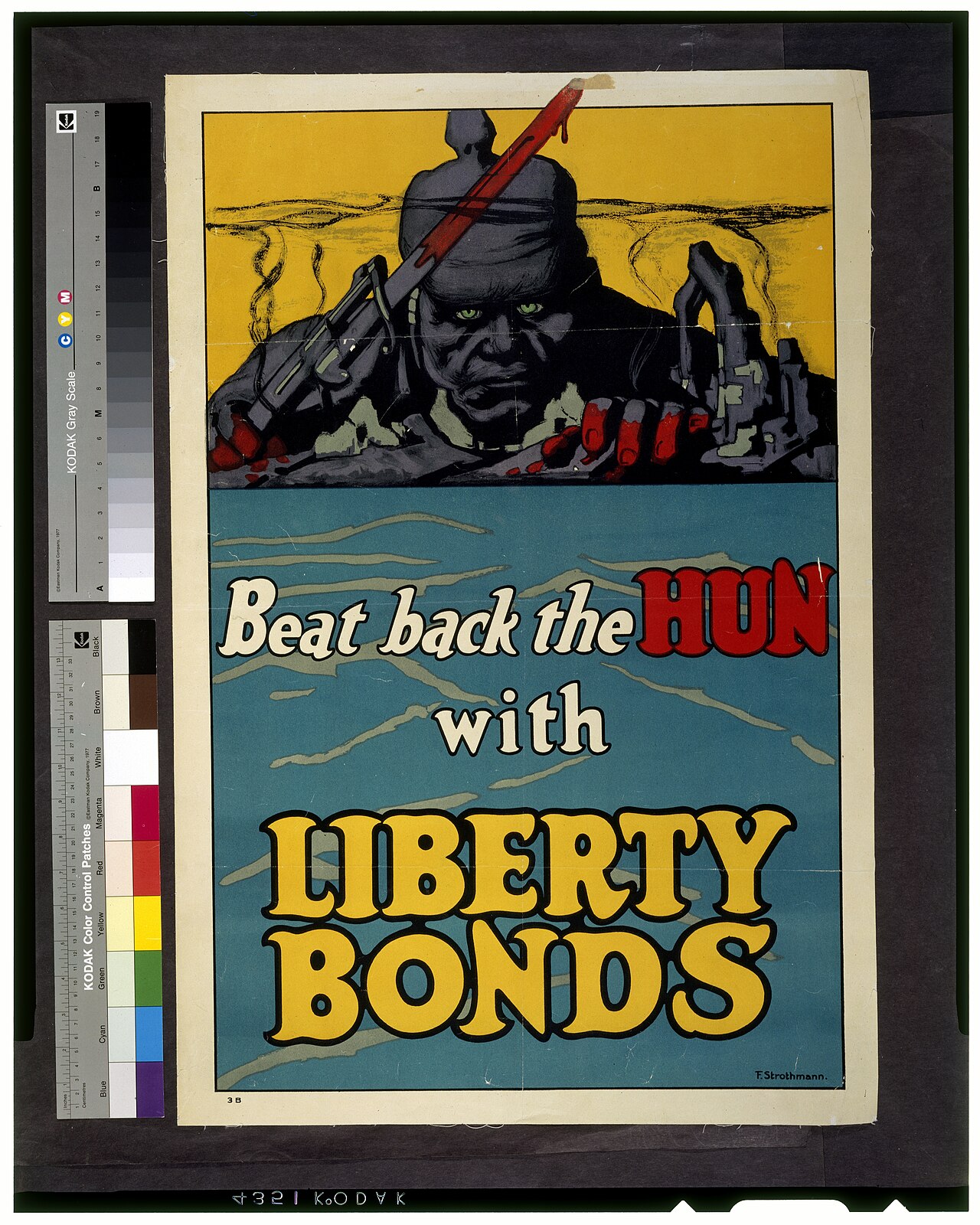
Beat Back the Hun with Liberty Bonds
A bloody, ape-like caricature of a German soldier looms over a burning village, his handprint stamped in blood across the scene, under the single loaded label 'THE HUN.' The poster substitutes the epithet itself for any specific claim, urging Americans to buy Liberty Bonds to beat back what the label alone has already condemned.
A 1918 Liberty Loan poster of the U.S. Treasury Department by Frederick Strothmann, made for a domestic audience. A bloody, ape-like caricature of a German soldier looms over a burning village, his handprint stamped in blood across the scene, under the label 'THE HUN.' and the words 'Beat back the HUN with LIBERTY BONDS'. It asks Americans to buy bonds. Name-calling is in the epithet itself, fear appeal in the burning village, and dehumanization in the animal-like drawing of the soldier.
Propaganda techniques used in this poster
- Date
- 1918
- Period
- First World War
- Made by
- U.S. Treasury Department (Liberty Loan campaign)
Full record
Region, Country, Medium, Issuer type, Regime, Leader, Audience, Purpose, Themes, Event, Source, Rights
- Region
- North America
- Country
- United States
- Medium
- Poster
- Issuer type
- State
- Regime
- Wilson Administration
- Leader
- Woodrow Wilson
- Audience
- Domestic public
- Purpose
- Fundraise
- Themes
- War and the military, Economy and finance
- Event
- World War I
- Regime
- Wilson administration
- Leader
- Woodrow Wilson
- Source
- Identified Openly sourced: the speaker is who they say they are
- Source
- Wikimedia Commons, retrieved September 26, 2026
- Rights
- Public domain (per Wikimedia Commons)
Library of Congress, Prints and Photographs Division (LCCN 94505100); artist Frederick Strothmann
Text on the object
Original (English) · read from the image, not independently checked
Beat back the HUN
with
LIBERTY BONDS

3 B

F. Strothmann.
'3 B' (bottom left) is a print/edition code and 'F. Strothmann.' (bottom right) is the artist's signature; both are small printed marks on the poster itself, not the main slogan. The grayscale and colour calibration card visible at the left edge of the photograph is an archival reference card added by the digitizing institution, not part of the poster, and is not transcribed.