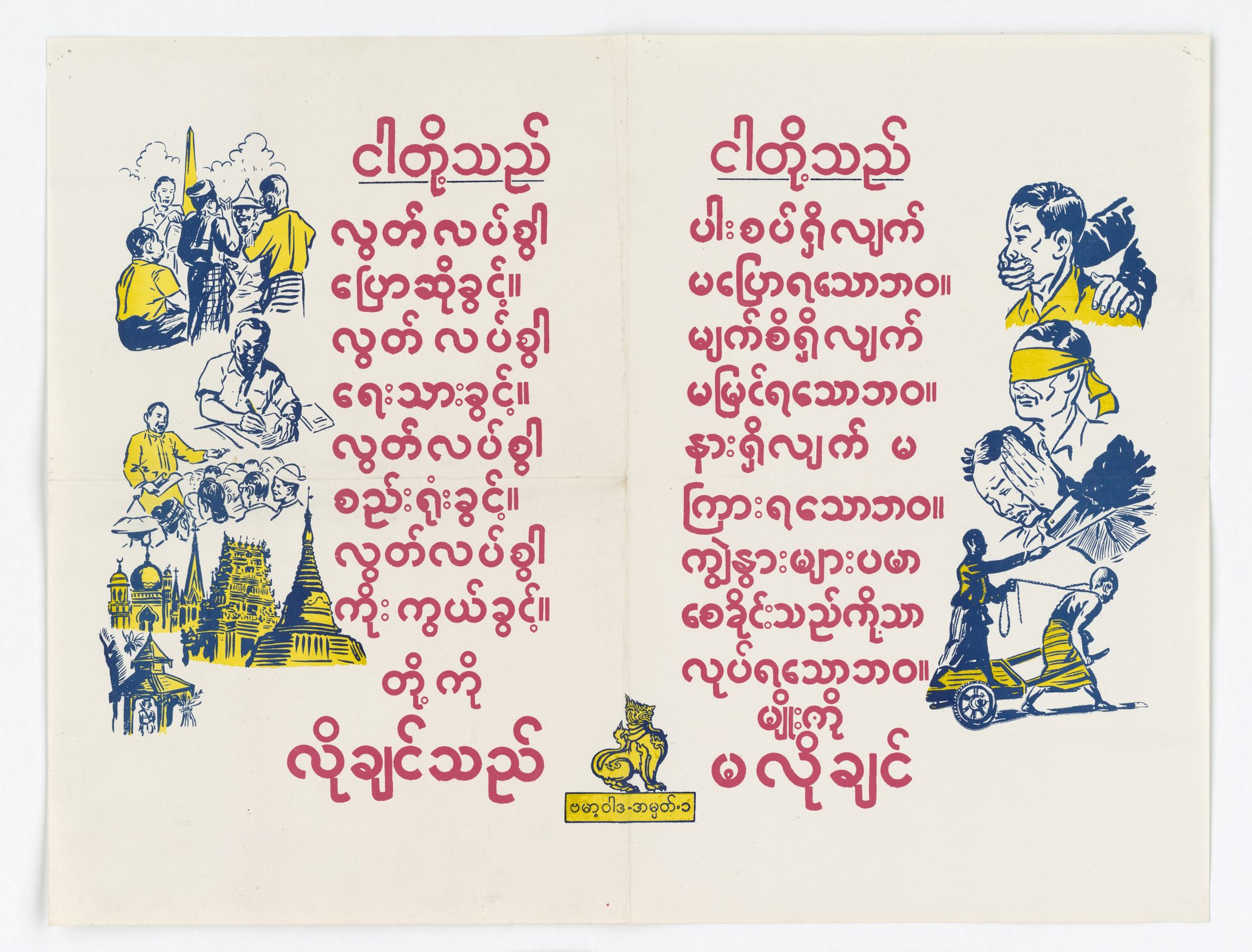
We Want / We Do Not Want: Burma Civil Liberties (Burmese-language poster distributed in Burma)
A two-panel Burmese-language poster in red, blue and yellow. The left panel lists freedoms the text says 'we want' (speaking, writing, organising and worship) beside drawings of a street meeting, a writer, a speaker and religious buildings. The right panel lists conditions 'we do not want' (not speaking, not seeing, not hearing, working only on command) beside drawings of a gagged man, a blindfolded man and one man pulling another in a cart. The tell is glittering generalities for the freedoms and fear-appeal in the images of loss of them.
Propaganda techniques used in this poster
- Date
- April 4, 1951
- Period
- Cold War
- Made by
- U.S. Information Agency (predecessor: State Department International Information and Educational Exchange Program), Propaganda Posters Distributed in Asia series
- Region
- North America
- Country
- United States
- Medium
- Poster
- Issuer type
- State
- Regime
- Truman Administration
- Leader
- Harry S. Truman
- Audience
- Foreign public
- Purpose
- Persuade or win support
- Themes
- Elections and party politics, Religion
- Event
- Cold War
- Source
- Unidentified Source blurred: contractors, cutouts, buried disclosure
- Source
- U.S. National Archives (NARA), Record Group 306, Propaganda Posters Distributed in Asia, retrieved October 3, 2026
- Rights
- Public domain (U.S. government work; NARA RG 306)
U.S. Information Agency / Department of State, April 4, 1951. National Archives, Record Group 306 (NAID 5729921, 306-PPA-22).
Text on the object
ငါတို့သည်
လွတ်လပ်စွာ
ပြောဆိုခွင့်၊
လွတ်လပ်စွာ
ရေးသားခွင့်၊
လွတ်လပ်စွာ
စည်းရုံးခွင့်၊
လွတ်လပ်စွာ
ကိုးကွယ်ခွင့်
တို့ကို
လိုချင်သည်

ငါတို့သည်
ပါးစပ်ရှိလျက်
မပြောရသောဘဝ၊
မျက်စိရှိလျက်
မမြင်ရသောဘဝ၊
နားရှိလျက်မ
ကြားရသောဘဝ၊
ကျွန်များပမာ
စေခိုင်းသည်ကိုသာ
လုပ်ရသောဘဝ
မျိုးကို
မလိုချင်

[boxed label under the lion emblem, [illegible]]
We want freedom of speech, freedom of writing, freedom of assembly/organising, freedom of worship.

We do not want a life of having a mouth but not being allowed to speak, having eyes but not being allowed to see, having ears but not being allowed to hear, and doing only what one is ordered to do like a slave.
Line breaks follow the printed lines; the translation is literal but condensed in places.