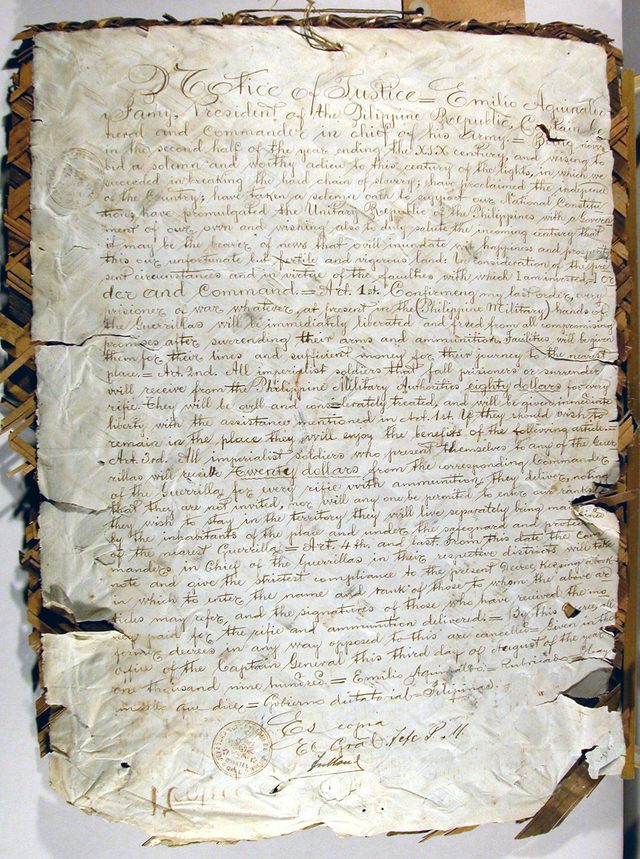
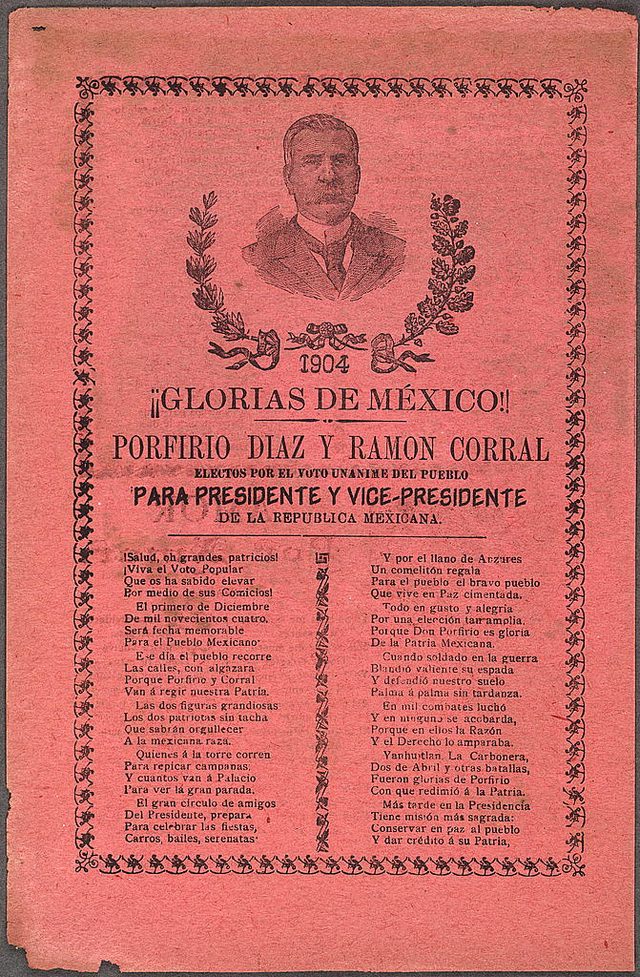
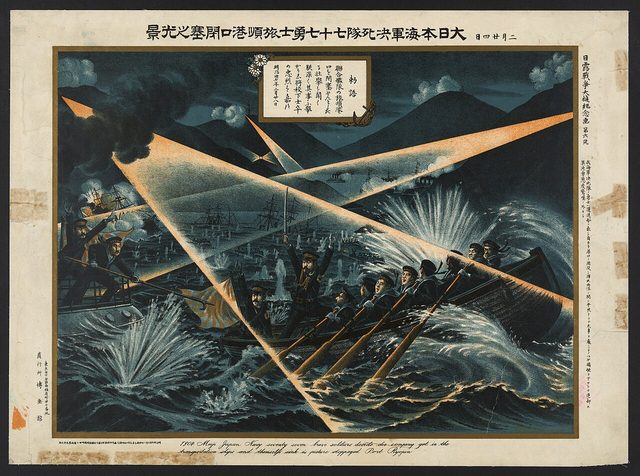
Content note: African figures drawn as racial stereotypes. This object is shown as it was published. Why
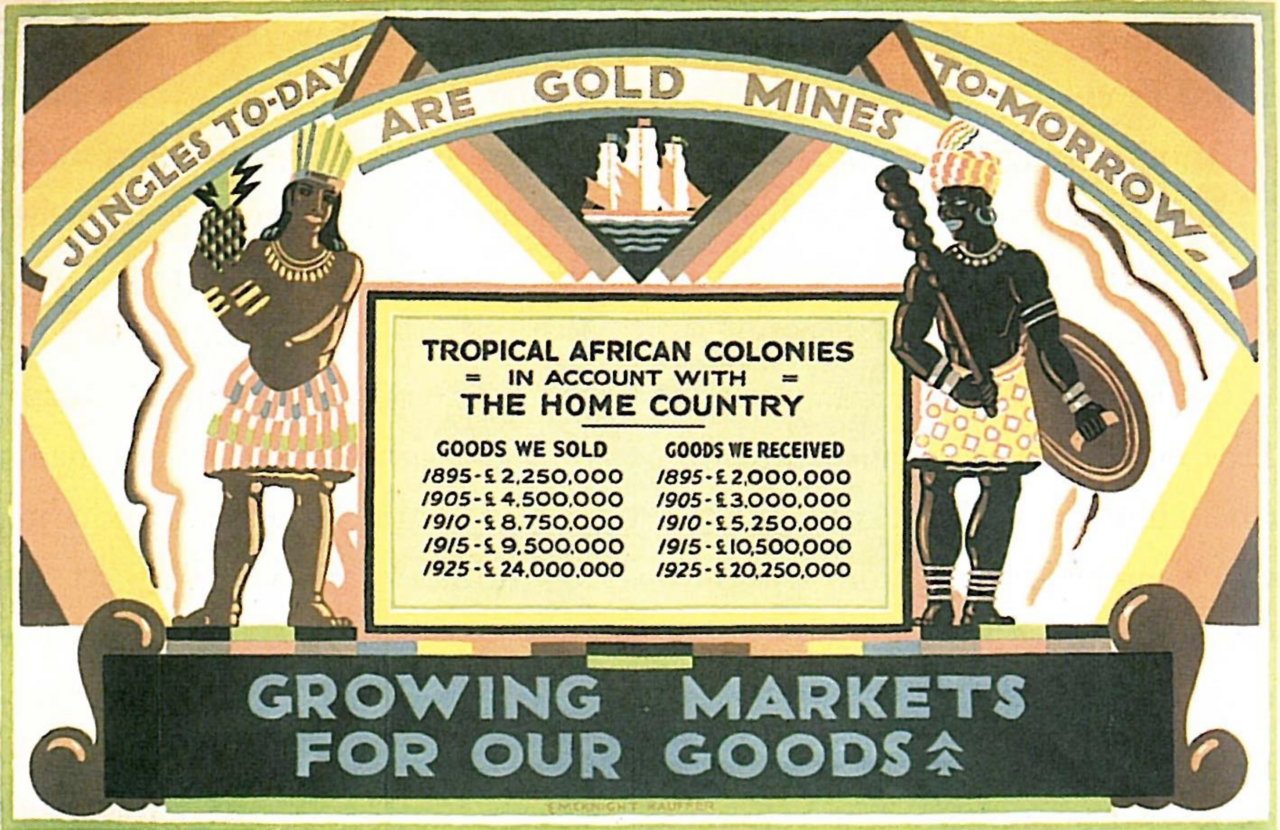
"Jungles Today, Gold Mines Tomorrow" (Empire Marketing Board, 1926)
A poster for Britain's state Empire Marketing Board draws two African figures in stock costume beside a ledger showing colonial trade rising from £2.25 million in 1895 to £24 million in 1925, offering the figures as proof of imperial benefit while giving no wages, population or share of the returns for the colonial producers it depicts.
- Date
- 1926
- Period
- Interwar
- Made by
- Empire Marketing Board (United Kingdom)
- Region
- Western and Central Europe
- Country
- United Kingdom
- Medium
- Poster
- Issuer type
- State
- Regime
- Baldwin Government
- Leader
- Stanley Baldwin
- Audience
- Domestic public
- Purpose
- Persuade or win support
- Themes
- Empire and colonialism, Economy and finance, Race and ethnicity
- Techniques
- Glittering generalitiesCard stacking
- Source
- Identified Openly sourced: the speaker is who they say they are
- Source
- Wikimedia Commons, retrieved September 27, 2026
- Rights
- Public domain (Commons: PD-US expired; Empire Marketing Board Crown copyright expired)
E. McKnight Kauffer for the Empire Marketing Board, c. 1926-27
Text on the object
JUNGLES TO-DAY ARE GOLD MINES TO-MORROW.

TROPICAL AFRICAN COLONIES
= IN ACCOUNT WITH =
THE HOME COUNTRY

GOODS WE SOLD                              GOODS WE RECEIVED
1895 - £2,250,000                          1895 - £2,000,000
1905 - £4,500,000                          1905 - £3,000,000
1910 - £8,750,000                          1910 - £5,250,000
1915 - £9,500,000                          1915 - £10,500,000
1925 - £24,000,000                         1925 - £20,250,000

GROWING MARKETS
FOR OUR GOODS

E. McKnight Kauffer
The artist's name at the bottom centre is printed very small and faint; transcribed with medium confidence, consistent with the attribution already in this entry's license/notes fields.