Saudi Arabia under King Salman and Crown Prince Mohammed bin Salman
Illustration, not an archive object
In one line: Saudi Arabia under King Salman and Crown Prince Mohammed bin Salman is the Saudi state governed by King Salman, who has reigned since 23 January 2015, and by his son Mohammed bin Salman, crown prince since June 2017 and prime minister since September 2022.
The leader and the people under the leader
Roster as of October 2, 2026. Offices and office-holders change; this page is a dated snapshot.
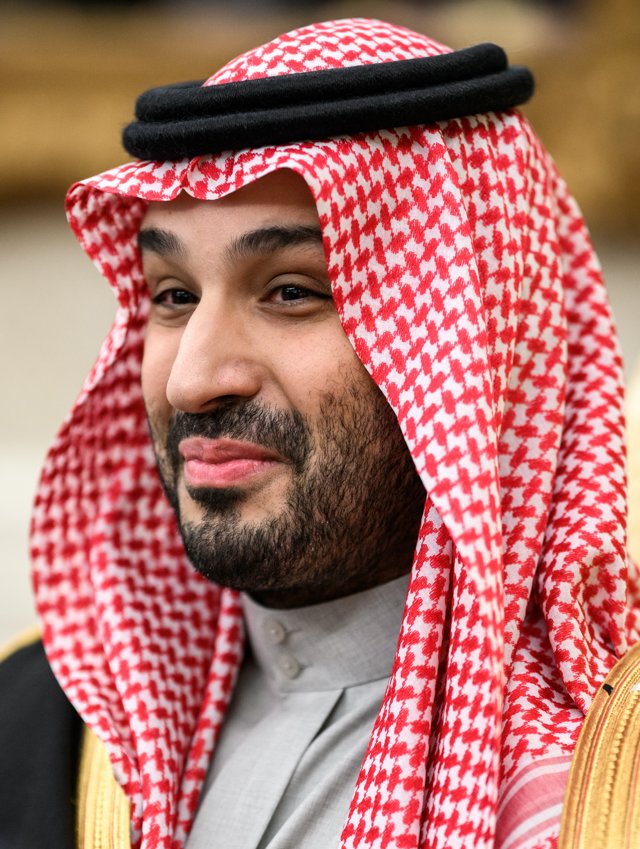
Photo: The White House, official photograph (Daniel Torok), Public domain (U.S. federal government work)
Mohammed bin Salman
Crown Prince and Prime Minister · Crown prince 2017 to present; prime minister 2022 to present
Mohammed bin Salman: Read more
Holds effective executive power as outside sources describe it; chairs the Council of Ministers and the Council of Economic and Development Affairs, and announced Vision 2030 in 2016.
In their words
“We will immediately adopt wide-ranging transparency and accountability reforms and, through the body set up to measure the performance of government agencies, hold them accountable for any shortcomings. We will be transparent and open about our failures as well as our successes, and will welcome ideas on how to improve.”
“Absolutely not. This was a heinous crime. But I take full responsibility as a leader in Saudi Arabia, especially since it was committed by individuals working for the Saudi government.”
“If sports washing going to increase my GDP by way of one percent, then I will continue doing sport washing. I don't care. One percent growth of GDP from sport and I'm aiming for another one-and-a-half percent – call it whatever you want, we're going to get that one-and-a-half percent.”
Monarchy and Royal Court
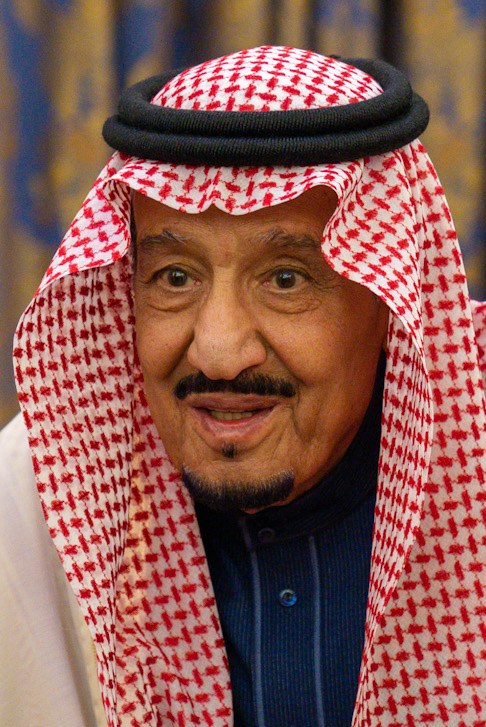
Photo: Ron Przysucha, U.S. Department of State, Public domain (U.S. federal government work)
Salman bin Abdulaziz Al Saud
King of Saudi Arabia and Custodian of the Two Holy Mosques · 2015 to present
Salman bin Abdulaziz Al Saud: Read more
Head of state under the Basic Law, king since 23 January 2015; the crown prince delivered the 30 September 2026 Shura Council address on his behalf.
In their words
“We will remain, God willing, holding the straight course that this country has walked on since its establishment by the late King Abdulaziz.”
“My first objective is for our country to be a pioneering and successful global model of excellence, on all fronts, and I will work with you to achieve that.”
FBNo public-domain or openly licensed portrait found. Nearest: none located in the Commons and institutional searches made for this page.
Fahd bin Mohammed Al-Essa
Chief of the Royal Court, with ministerial rank · 2019 to present (not confirmed by a 2026 source)
Fahd bin Mohammed Al-Essa: Read more
Heads the Royal Court, the king's executive office, since a royal order of 30 August 2019; no replacement was found, but no 2026 report naming him was found either.
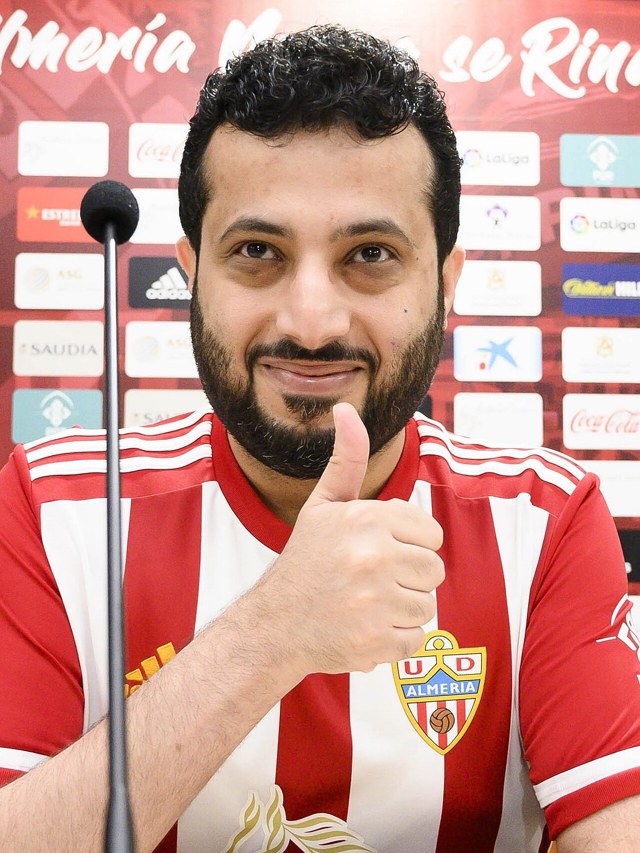
Royal Court adviser with ministerial rank; Chairman of the General Entertainment Authority · 2018 to present
Turki Alalshikh: Read more
Chairs the General Entertainment Authority, which runs Riyadh Season and other events promoted as part of Vision 2030.
Foreign affairs and defence
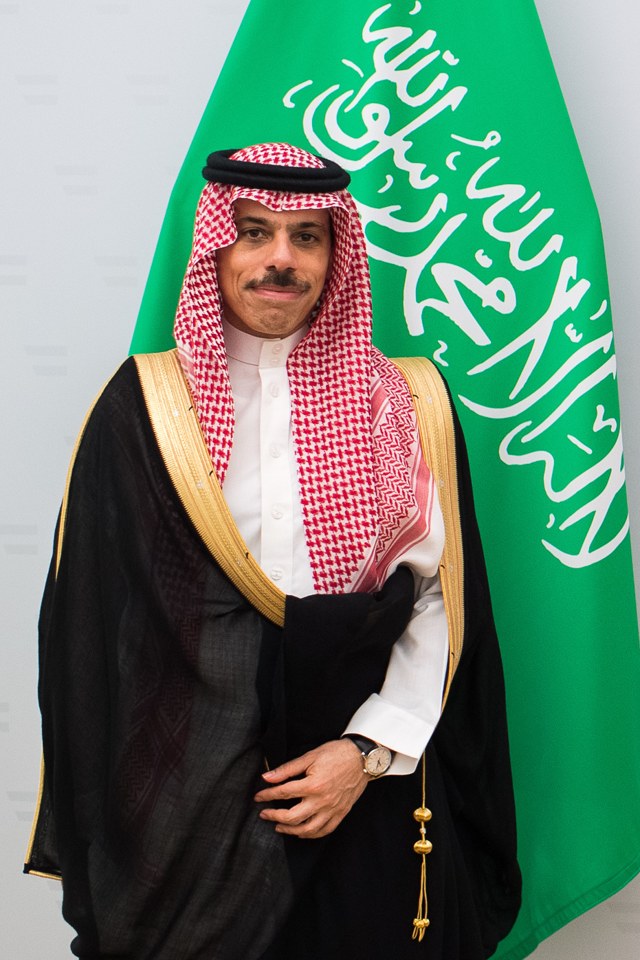
Photo: Austrian Federal Ministry for European and International Affairs (BMEIA / Gruber), CC BY 2.0
Faisal bin Farhan Al Saud
Minister of Foreign Affairs · 2019 to present
Faisal bin Farhan Al Saud: Read more
Foreign minister since October 2019; delivered Saudi Arabia's address to the UN General Assembly in 2023 and met US Secretary of State Rubio on 28 September 2026.
In their words
“Security and stability are not possible without cooperation and coordination between States to prevent an arms race to acquire these destructive weapons.”
“We'll focus on prospects for a future focused on technology and achieving the Sustainable Development Goals (SDGs). It will be an excellent opportunity to promote projects with universal impact that can foster cooperation to find solutions through innovation, inclusiveness, and sustainability.”
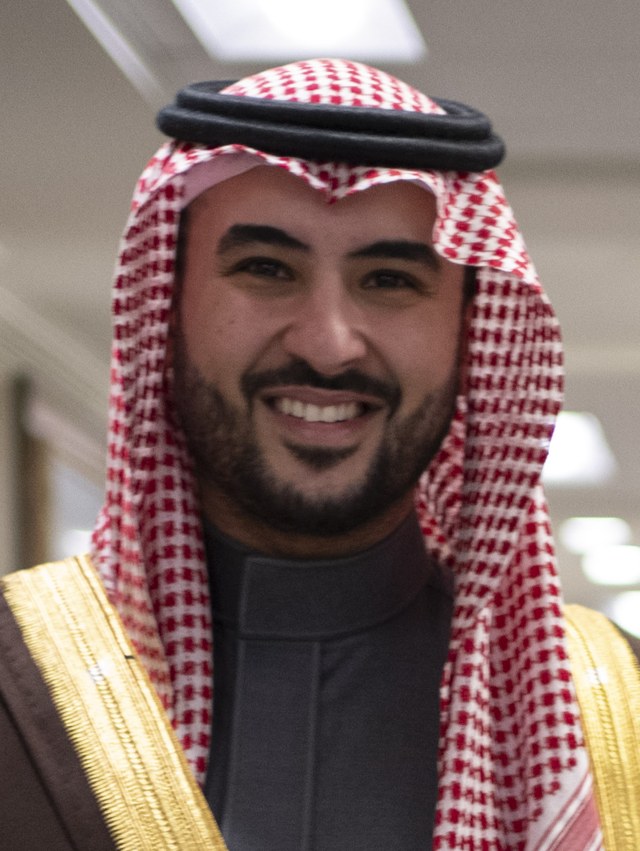
Photo: U.S. Secretary of Defense (U.S. Department of Defense), Public domain (U.S. federal government work)
Khalid bin Salman Al Saud
Minister of Defence · 2022 to present
Khalid bin Salman Al Saud: Read more
Defence minister since 27 September 2022, a post the crown prince held before him; the crown prince's brother.
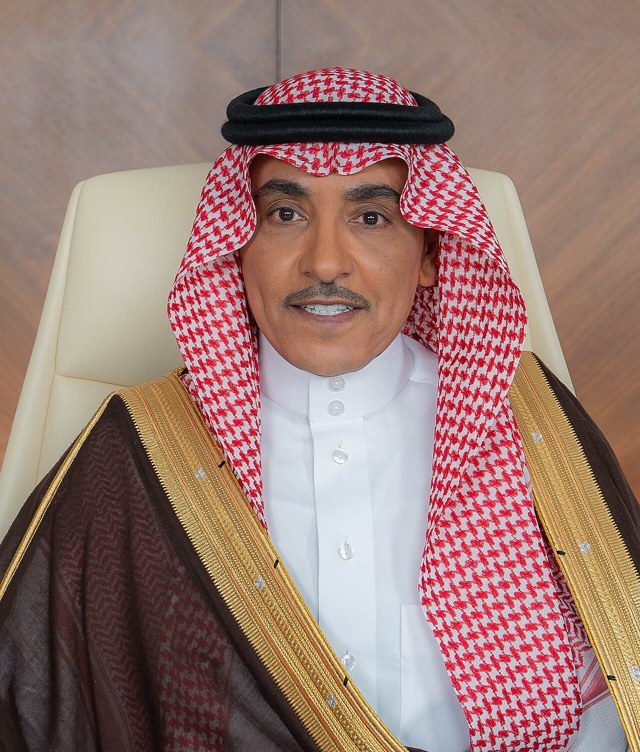
Minister of media since 5 March 2023 and chairman of the board of the Saudi Press Agency; opened the Saudi Media Forum of February 2025.
In their words
“In the equation of influence, the sender is Saudi Arabia, and the recipient is more than 8 billion people on this planet, and the message from Saudi Arabia is: We build the human being, inspire the world, and create the future.”
“All these events are non-stop media events, through which the news, title and main headline are made.”
AANo public-domain or openly licensed portrait found. Nearest: source, tagged CC0 on Commons, not used because its provenance in the Ministry of Media could not be verified.
Abdullah Al-Maghlouth
Deputy Minister of Media · 12 February 2026 to present
Abdullah Al-Maghlouth: Read more
Named deputy minister of media by royal order on 12 February 2026; earlier undersecretary for communication and founder of the Government Communication Center.
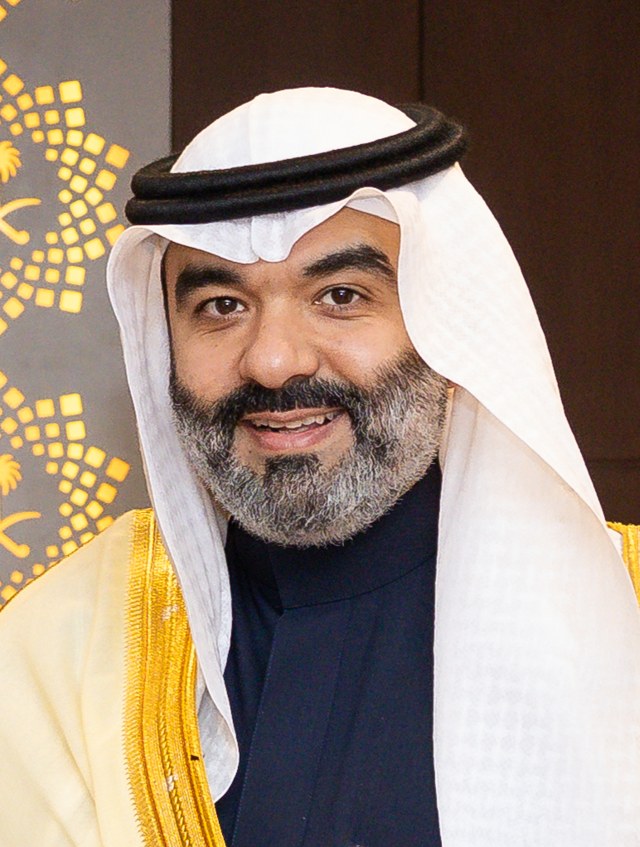
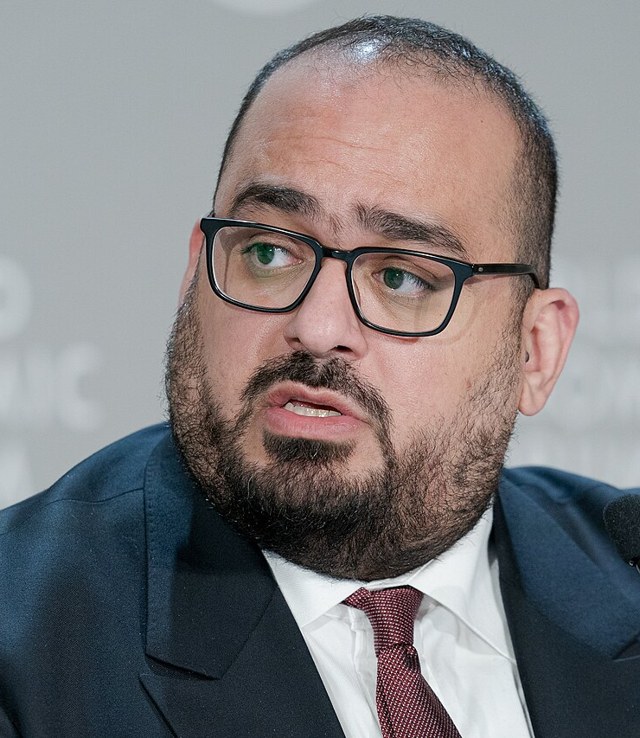
Photo: Department for Science, Innovation and Technology (UK), CC BY 2.0
Abdullah Alswaha
Minister of Communications and Information Technology · 2017 to present
Abdullah Alswaha: Read more
Minister of communications and information technology since 23 April 2017, responsible for the digital infrastructure and technology policy under Vision 2030.
HBNo public-domain or openly licensed portrait found. Nearest: none located in the Commons and institutional searches made for this page.
Hassan bin Mohammed Al-Asmari
Acting President of the Saudi Press Agency · 2026 (acting)
Hassan bin Mohammed Al-Asmari: Read more
Described by SPA as its acting president in 2026; SPA is the state news agency and publishes the royal orders and cabinet statements.
AANo public-domain or openly licensed portrait found. Nearest: none located in the Commons and institutional searches made for this page.
Abdulrahman Alrowaita
Chairman of the Saudi Research and Media Group · listed as chairman since at least 2021
Abdulrahman Alrowaita: Read more
Chairs SRMG, the listed company that publishes Asharq Al-Awsat and Arab News and runs Asharq News.
JANo public-domain or openly licensed portrait found. Nearest: none located in the Commons and institutional searches made for this page.
Jomana Alrashid
Chief Executive Officer of the Saudi Research and Media Group · 2020 to present
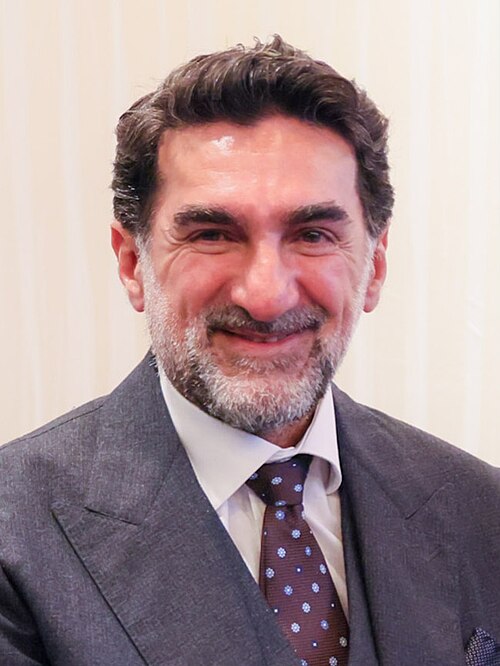
Governor of the Public Investment Fund · 2015 to present
Yasir Al-Rumayyan: Read more
Governor of the sovereign Public Investment Fund, whose board the crown prince chairs, and which carries many Vision 2030 projects.
Background and rise to power
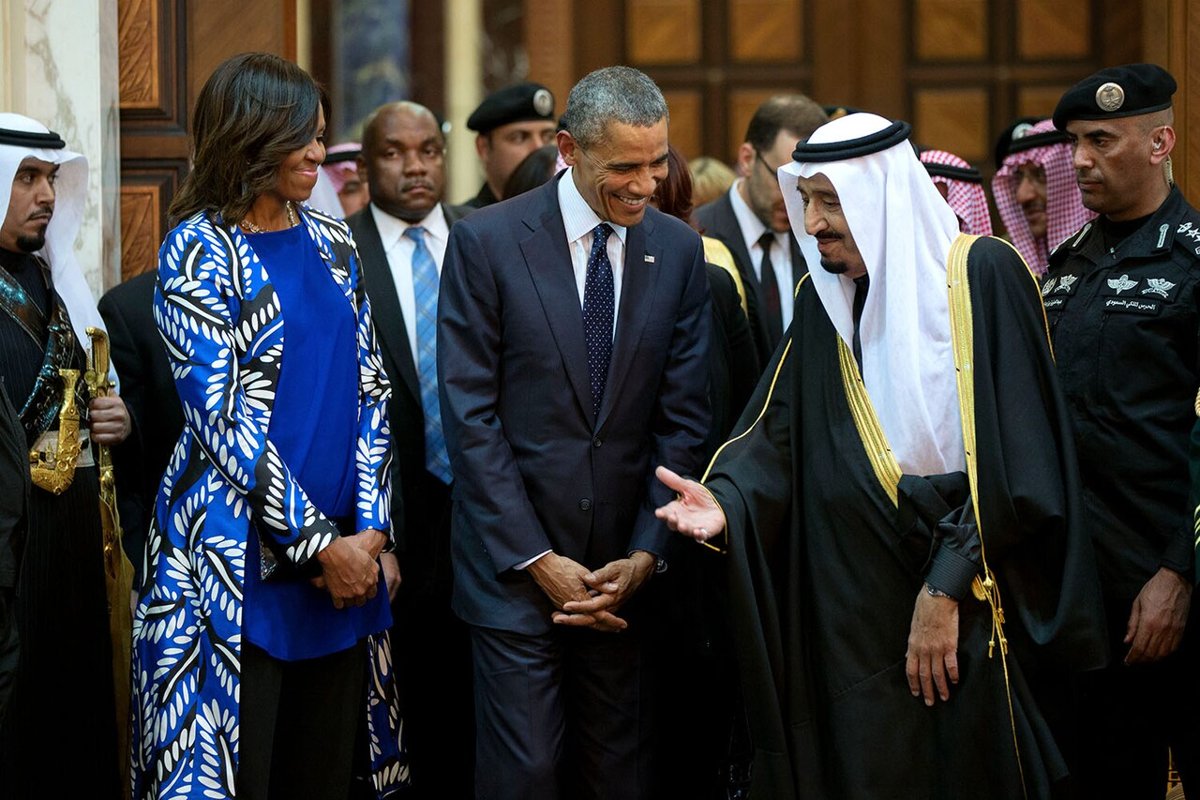
Salman bin Abdulaziz Al Saud, born in 1935 and defence minister from 2011, became king on 23 January 2015, when his half-brother Abdullah died (Al Jazeera profile). In his first televised address he said, in the translation carried by VOA: "We will remain, God willing, holding the straight course that this country has walked on since its establishment by the late King Abdulaziz." Under Article 5 of the Basic Law, the right to rule is "confined to the sons of the Founder, King Abdul Aziz bin Abdul Rahman Al Saud (Ibn Saud), and the sons of sons", and "The King names the Crown Prince and may relieve him of his duties by Royal Order."
King Salman, who acceded on 23 January 2015, receiving President Barack Obama and Michelle Obama at Erga Palace, Riyadh, 27 January 2015. Official White House photograph by Pete Souza. Source: Official White House Photo by Pete Souza, 27 January 2015, Public domain (U.S. federal government work, official White House photograph; tagged public domain on Wikimedia Commons).
The king's son Mohammed bin Salman held the defence portfolio until 27 September 2022 and was deputy crown prince when Vision 2030 was announced on 25 April 2016 (Arab News). On 21 June 2017 a royal order relieved Muhammad bin Nayef as crown prince and named Mohammed bin Salman in his place, as reported by the Saudi Press Agency (SPA) (CNBC). In November 2017 scores of royals, ministers and businessmen were detained at the Ritz-Carlton hotel in Riyadh in what the authorities called an anti-corruption campaign; the government later said it had raised about $106 billion in settlements (CNBC, 30 January 2019). Observers read the episode differently. Andrew Leber of the Carnegie Endowment describes the decade since 2015 as including "the personalization of political power around Crown Prince Mohammed bin Salman" (Carnegie, 10 March 2025). A royal order of 27 September 2022 made the crown prince prime minister, an office the Basic Law had assigned to the king, and the same day Prince Khalid bin Salman became defence minister (Basic Law of Governance, Article 56; Arab News, 27 September 2022).
This page gives the roster as of 2 October 2026, taken from SPA reports, ministry sites and royal orders. Changes in 2026: royal orders of 12 February named Fahad Al-Saif minister of investment, moved Khalid Al-Falih to minister of state, and named Dr Abdullah Al-Maghlouth deputy minister of media (Arab News; Media Post). Saudi Arabia has a Ministry of Media, which handles information policy, and a separate Ministry of Communications and Information Technology, which handles telecommunications and digital policy; this page lists both.
How power was organized
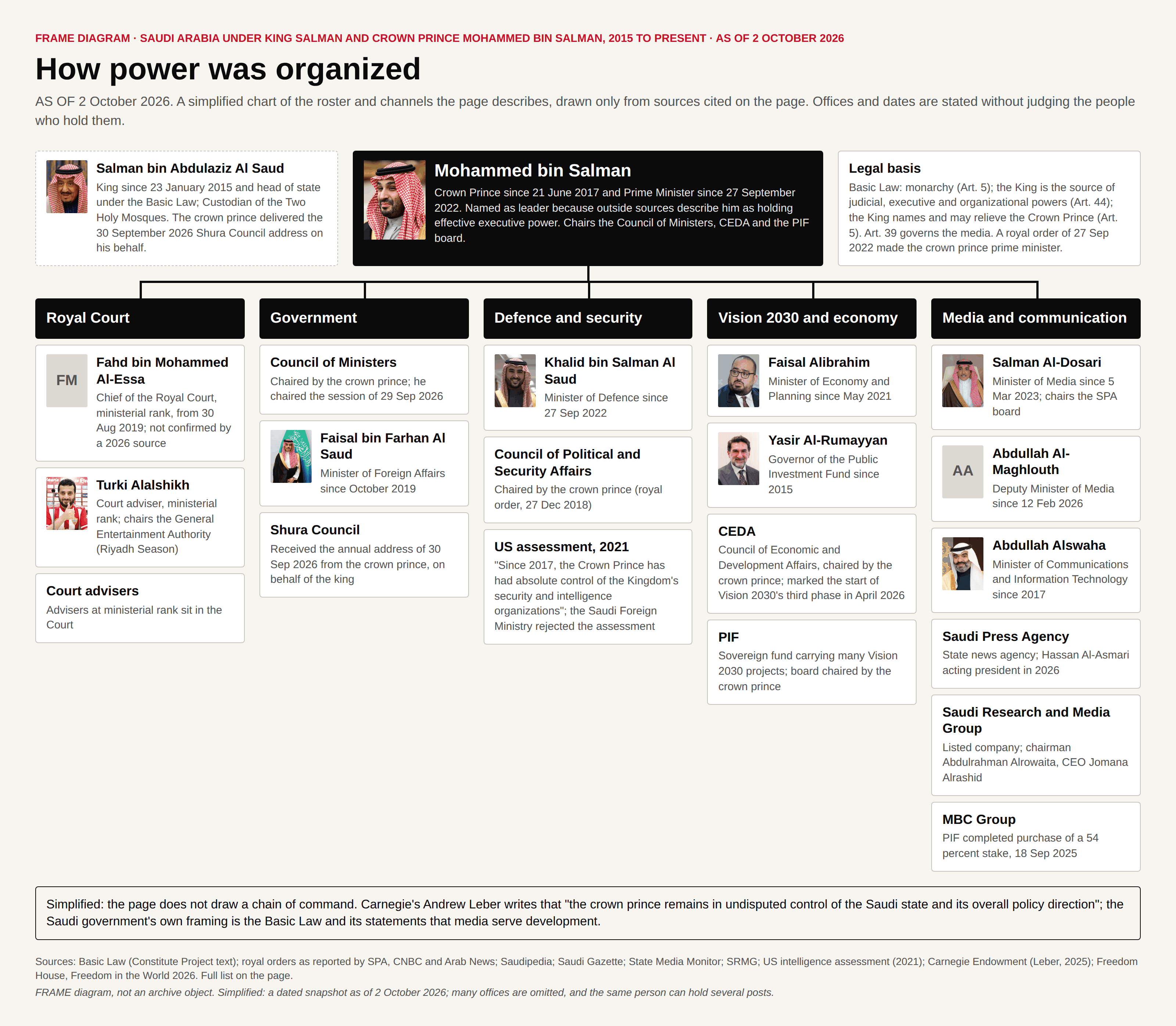
The Basic Law makes the state a monarchy (Article 5). Article 44 says "The King is the ultimate source of all these authorities", meaning the judicial, executive and organizational powers, and Article 56 says "The King shall be the Prime Minister" (Constitute Project text). Since the 2022 order the crown prince has held the premiership. SPA reported that he chaired the cabinet session of 29 September 2026 (SPA, via GlobalSecurity). On 30 September 2026 he delivered the annual address to the Shura Council "on behalf of" the king, who remains head of state (Saudi Gazette). Saudipedia lists his other posts as chairman of the Council of Economic and Development Affairs (CEDA), chairman of the Council of Political and Security Affairs (royal order of 27 December 2018), and chairman of the boards of the Public Investment Fund (PIF), Aramco's supreme council and several giga-project companies.
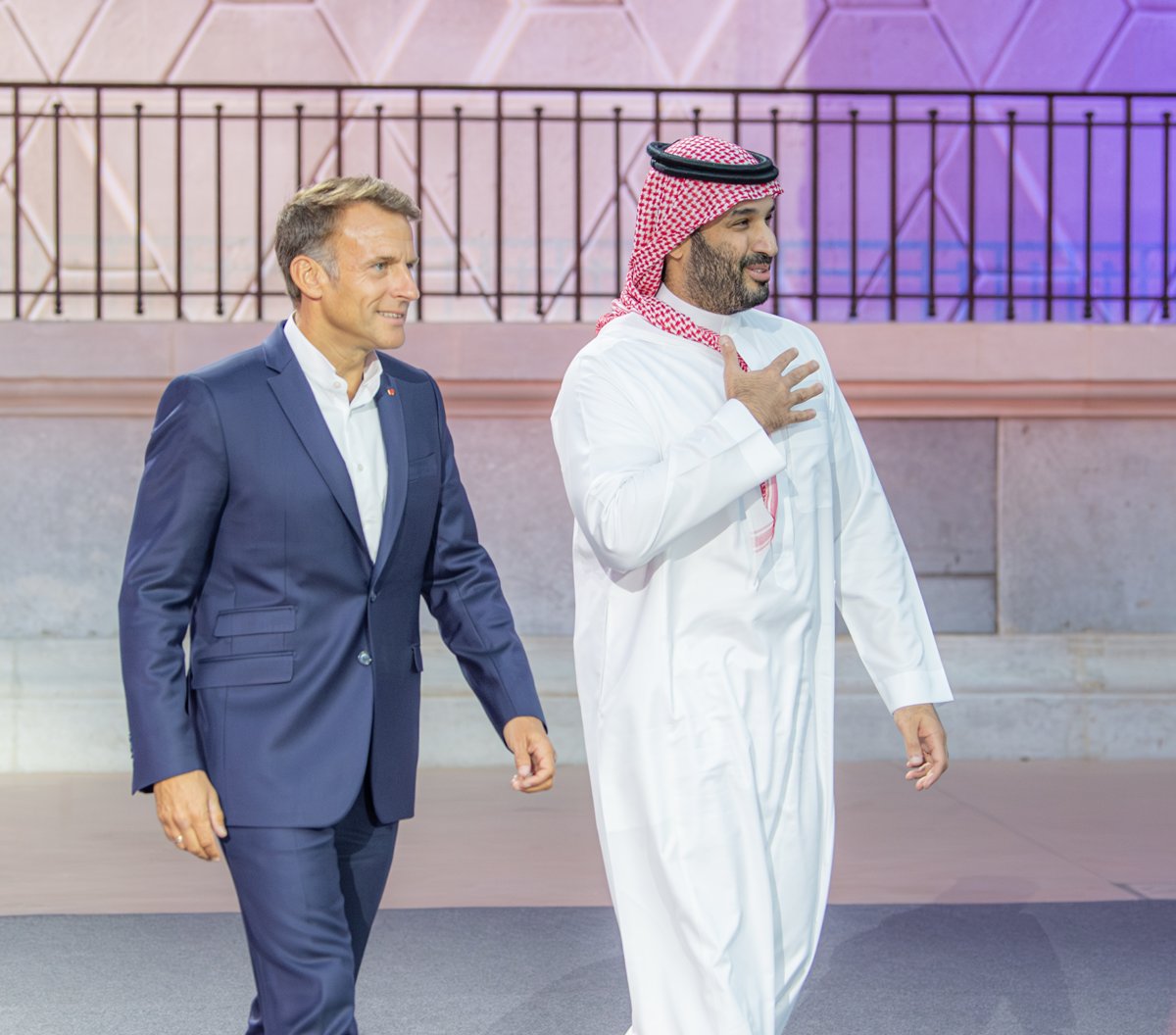
Crown Prince and Prime Minister Mohammed bin Salman and the French president at the closing ceremony of the Esports World Cup, 2026, as titled by the Saudi Press Agency, which published the photograph on its Saudi Photos platform on 2 September 2026. Source: Saudi Press Agency, Saudi Photos platform, "HRH Prince Mohammed bin Salman bin Abdulaziz Al Saud, Crown Prince and Prime Minister, and French President at Esports World Cup Closing Ceremony (2026)", published 2 September 2026 (media id 10714863), CC BY-SA 4.0, as stated in the platform's terms at https://cc.spa.gov.sa/en/terms.
Power structure of Saudi Arabia as of 2 October 2026, simplified from the sources cited on this page. Source: FRAME diagram. Portraits, cropped to thumbnails: Photo: UK Department for Science, Innovation and Technology, CC BY 2.0, 16 February 2025; Photo: World Economic Forum, CC BY 2.0, 19 January 2023; Photo: Austrian Foreign Ministry, CC BY 2.0, 22 June 2021; U.S. Department of Defense photo, 24 February 2025; The White House, 18 November 2025; Photo: دوقلة, CC BY-SA 4.0, 6 April 2024; U.S. Department of State photo, 20 February 2020; Photo: LaMons, CC BY-SA 4.0, 25 September 2019; Photo: Cabinet Secretariat of Japan, CC BY 4.0, 1 December 2025, CC BY-SA 4.0 (the portraits that carry it); other portraits: CC BY 2.0; CC BY 4.0; Public domain (U.S. federal government work).
Outside assessments of where decisions are made differ in wording but not in direction. The 2021 US intelligence assessment says that "Since 2017, the Crown Prince has had absolute control of the Kingdom's security and intelligence organizations", and the Saudi Foreign Ministry rejected that report's assessment of "the Kingdom's leadership" (see below). Carnegie's Leber writes that "the crown prince remains in undisputed control of the Saudi state and its overall policy direction". Freedom House's Freedom in the World 2026 scores the country 9 out of 100, "Not Free", and says "No officials at the national level are elected" (Freedom House). The same report records limited social reforms, including implementing regulations in February 2025 that widened women's rights in divorce and custody while keeping the male guardianship system in general. This page names the crown prince as leader because outside sources describe him as the holder of effective executive power, and names the king because he is the head of state under the Basic Law.
The Royal Court is the king's executive office and the link to the government. Its chief, with ministerial rank, is Fahd bin Mohammed Al-Essa, named on 30 August 2019; he had run the crown prince's office at the Defence Ministry (Arab News). No royal order replacing him was found, but no 2026 report confirming him by name was found either; this is the least certain entry on the roster. Advisers at ministerial rank sit in the Court; the best known in public life is Turki Alalshikh, who also chairs the General Entertainment Authority. Under the ministers, the Ministry of Foreign Affairs is led by Prince Faisal bin Farhan (since October 2019), the Ministry of Defence by Prince Khalid bin Salman, the Ministry of Media by Salman Al-Dosari (since 5 March 2023), and the Ministry of Economy and Planning, a Vision 2030 office, by Faisal Alibrahim (since May 2021). Yasir Al-Rumayyan has been governor of the PIF, the sovereign fund that carries many Vision 2030 projects, since 2015. In April 2026 the PIF board, chaired by the crown prince, approved a 2026 to 2030 strategy (Arab News).
Illustration, not an archive object
The propaganda apparatus
Constitutional frame. Article 39 of the Basic Law reads: "Mass media, publication facilities and other means of expression shall function in a manner that is courteous and fair and shall abide by State laws. They shall play their part in educating the masses and boosting national unity. All that may give rise to mischief and discord, or may compromise the security of the State and its public image, or may offend against man's dignity and rights shall be banned." The text names the state's "public image" as a protected interest.
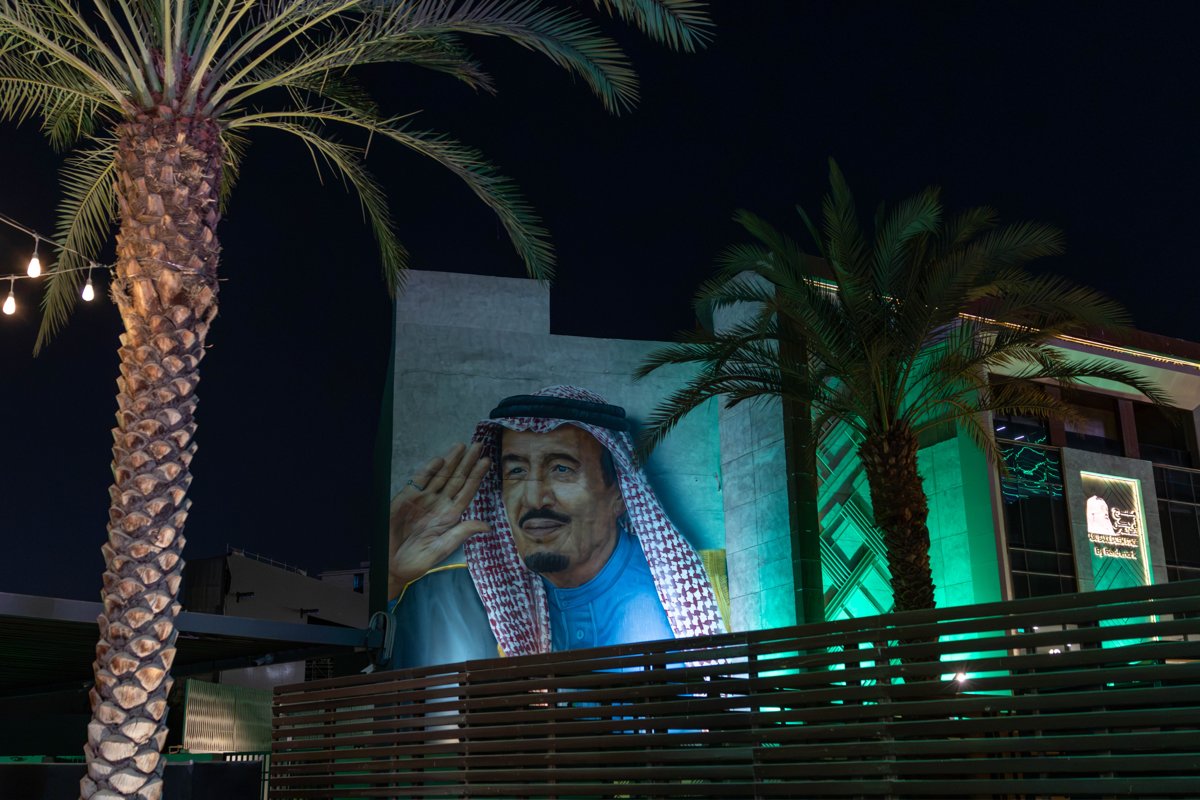
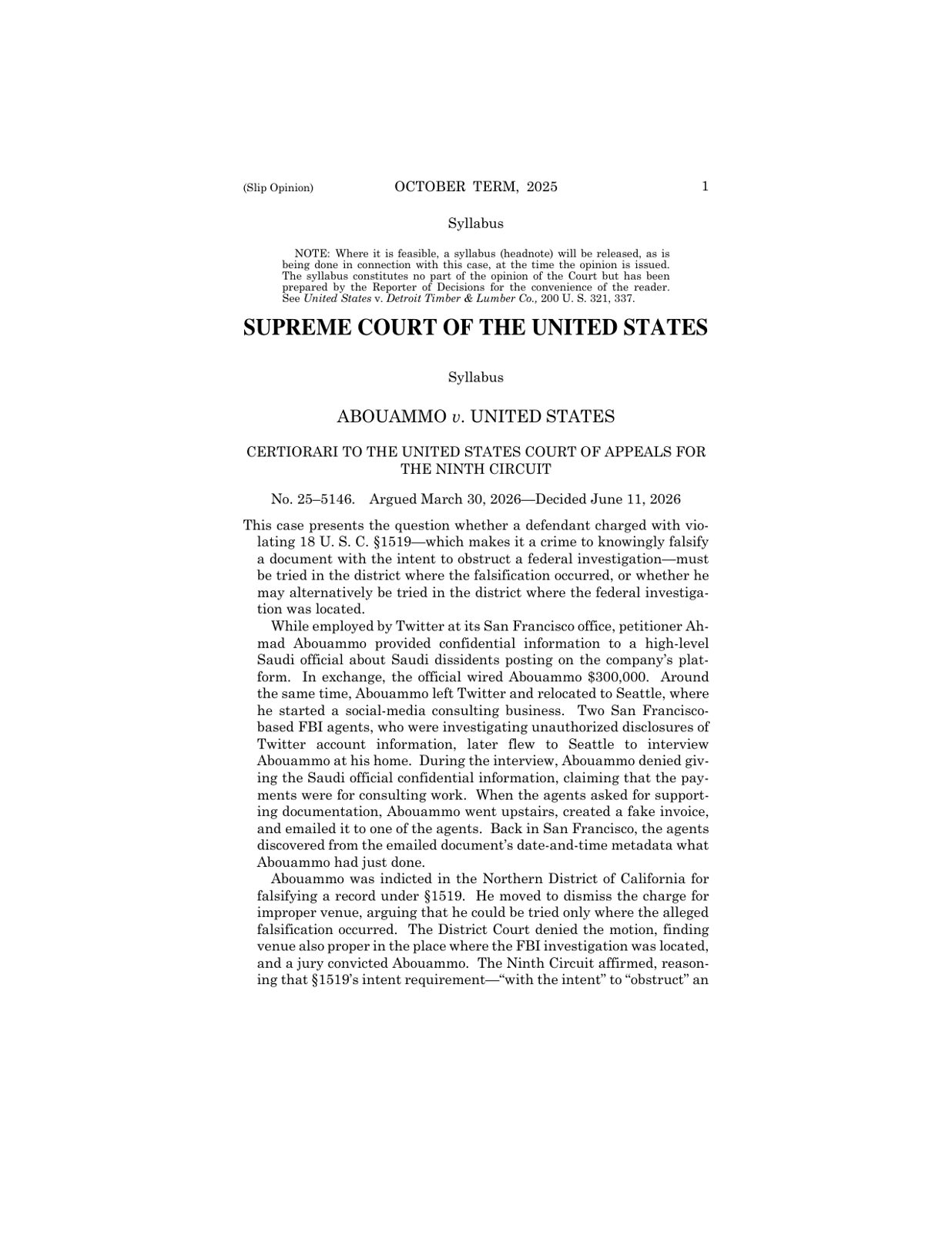
A large image of the king displayed on a building at Boulevard City, Riyadh, for Saudi National Day 2026, as titled by the Saudi Press Agency, which published the photograph on its Saudi Photos platform on 1 October 2026. Source: Saudi Press Agency, Saudi Photos platform, "Boulevard City Celebrates Saudi National Day (2026)", published 1 October 2026 (media id 10933130), CC BY-SA 4.0, as stated in the platform's terms at https://cc.spa.gov.sa/en/terms.The U.S. Supreme Court's opinion of 11 June 2026 in Abouammo v. United States, which reversed and remanded on venue for one count of the conviction of the former Twitter employee. Source: Supreme Court of the United States, Abouammo v. United States, No. 25-5146, slip opinion syllabus, decided June 11, 2026, Public domain (US federal court opinion; work of the US government, no copyright in judicial opinions).
Offices and state media. The Ministry of Media is led by Salman Al-Dosari, who chairs the board of SPA, the state news agency (State Media Monitor). SPA's day-to-day head in 2026 is Hassan bin Mohammed Al-Asmari, described by SPA as acting president. State Media Monitor, a research project that classifies SPA as state-controlled, says "There is no legal statute, regulatory framework or external oversight mechanism in Saudi Arabia that guarantees the editorial independence of SPA", though the agency was formally made an independent public body in 2012. Reporters Without Borders (RSF) says that "Even privately owned Saudi media follow government guidelines set out by the Saudi Press Agency (SPA)" and that "Independent media is non-existent in Saudi Arabia" (RSF country page). Those are RSF's findings; the Saudi government's position is Article 39 and its statements that media serve development.
The Saudi Research and Media Group (SRMG) is a listed company that publishes Asharq Al-Awsat, Arab News and other titles, and runs Asharq News; its chairman is Abdulrahman Alrowaita and its chief executive is Jomana Alrashid (SRMG). Al Arabiya is a channel of MBC Group. The PIF completed its purchase of a 54 percent stake in MBC Group on 18 September 2025 (Saudi Gazette). In 2018 the terms on which MBC's owner Waleed Al Ibrahim left detention were reported differently. A senior MBC executive told Reuters that he would keep management control and his 40 percent stake (Arab News, Reuters, 29 January 2018), while Arabian Business, citing unnamed sources, reported that Saudi Arabia would take a controlling stake (Arabian Business; other outlets relayed similar Financial Times reporting, which were not opened for this page). No primary document settling it has been published. RSF writes that MBC "benefits from ample resources, and its influence extends beyond the country's borders".
Stated strategy. Speaking to the fourth Saudi Media Forum on 19 February 2025, Minister Al-Dosari said: "In the equation of influence, the sender is Saudi Arabia, and the recipient is more than 8 billion people on this planet, and the message from Saudi Arabia is: We build the human being, inspire the world, and create the future." He added, of the Kingdom's events, "All these events are non-stop media events, through which the news, title and main headline are made", and announced priorities for a "Year of Media Influence" (Saudi Gazette). The fifth forum, on 2 February 2026, launched 12 initiatives, among them a bootcamp in "augmented journalism" and "virtual presenters" with the national data and AI authority (Asharq Al-Awsat, citing SPA). Asharq Al-Awsat is an SRMG title.
Vision 2030 as brand. The crown prince presented Vision 2030 on 25 April 2016 in his first television interview, given to Al Arabiya; an Arab News retrospective by a former Al Arabiya editor describes the day. The document's foreword promises: "We will be transparent and open about our failures as well as our successes, and will welcome ideas on how to improve." It names "moderation, tolerance, excellence, discipline, equity, and transparency" as its bedrock values. On 30 September 2026 the crown prince told the Shura Council that "the performance indicators for the Vision's programs and strategies achieved 93 percent of their targets", and CEDA marked the start of the third phase in April 2026 (Arab News). That 93 percent figure is the government's own. Leber's independent review credits "undeniable progress in building a Saudi economy that can 'live without oil'" and warns that "the program is in danger of enriching elites while overlooking the needs of most Saudi citizens".
National days and image-making. The Kingdom marks National Day on 23 September, for the unification under King Abdulaziz in 1932, and since a royal order of 27 January 2022 also marks Founding Day on 22 February, for the first Saudi state of 1727 (Al Arabiya). SPA runs a photo service, the Saudi Photos platform, whose terms say its content may be used under Creative Commons Attribution-ShareAlike 4.0 (cc.spa.gov.sa). The state-produced images shown on this page come from it. They include a large image of the king displayed on a building at the Boulevard City venue for National Day 2026.
Sports and entertainment framing. The General Entertainment Authority, chaired by Turki Alalshikh, announced on SPA that Riyadh Season 2026 opens on 21 October (SPA). FIFA named Saudi Arabia host of the 2034 men's World Cup on 11 December 2024 (Al Jazeera). Asked by Fox News in September 2023 about the charge of "sports washing", the crown prince answered: "If sports washing going to increase my GDP by way of one percent, then I will continue doing sport washing. I don't care." The head of the 2034 bid, Hammad Albalawi, has denied that sportswashing is behind the bid (Sky Sports). Amnesty International and Human Rights Watch have criticised the award on labour, speech and discrimination grounds (Amnesty; HRW). "Sportswashing" is the critics' term, not a neutral finding.
Center for International Communication. The Ministry of Culture and Information announced the Center for International Communication (CIC) on 26 August 2017. The Saudi Gazette, citing SPA, said it aimed at "boosting relations with the international media" and that the ministry "has established the center within its information plan that aims to boost communication with the external media so as to portray the Kingdom's image and its accomplishments in culture and development" (Saudi Gazette, 27 August 2017). It was to send out "authenticated information and data" in several languages. Dr Abdullah Al-Maghlouth, who founded the related Government Communication Center, presented the CIC at the World Governments Summit in February 2023 as a deputy minister, and became deputy minister of media on 12 February 2026 (Al-Iqtisad profile; World Governments Summit). Who heads the CIC in 2026 could not be confirmed.
The Twitter case and the platform takedowns. In United States v. Abouammo, a federal indictment of 19 November 2019 charged Ahmad Abouammo, Ali Alzabarah and Ahmed Almutairi with acting as agents of the Saudi government without notifying the Attorney General. The Justice Department said Abouammo and Alzabarah, while working at Twitter, "accessed without authorization and provided to officials of the government of Saudi Arabia nonpublic information about Twitter users that were of interest to the government of Saudi Arabia, including dissidents and critics of the government" (DOJ, Northern District of California). A jury convicted Abouammo on 9 August 2022 of acting as an agent of a foreign government, conspiracy to commit wire fraud, money laundering and falsifying a record; it acquitted him on five wire-fraud counts. In its June 2026 opinion the Supreme Court summarised the facts: he "provided confidential information to a high-level Saudi official about two Saudi dissidents posting on the company's platform" and "the official wired Abouammo a total of $300,000". The Court held unanimously on 11 June 2026 that the falsification count had to be tried in Seattle, and reversed and remanded on that point (opinion). The other two defendants were charged but no record of either in US custody was found. This is a surveillance channel, not a persuasion tactic, and the record names a Saudi official only as "a high-level Saudi official".
Separately, Twitter disclosed in December 2019 that it had removed nearly 6,000 accounts it said were part of a coordinated effort by Saudi government agencies and individuals, amplifying messages favourable to Saudi authorities "mainly through aggressive liking, retweeting and replying", and linked to the marketing firm Smaat (AP). It disclosed a further network of 5,350 accounts in April 2020 and, according to press reports, more than 30 accounts in October 2020. The campaign write-up sets out these disclosures, the Stanford Internet Observatory analysis and the limits of the evidence. Twitter's own posts could not be opened from the research environment, so this page relies on press and Stanford accounts of them. The Saudi government did not, in the reports I read, publicly address the Abouammo allegations.
Saudi media output about Qatar in 2017. On 25 May 2017 Saudi Arabia and the UAE blocked Qatari media, including Al Jazeera (Al Jazeera, summarising HRW). On 5 June, the day Saudi Arabia, the UAE, Bahrain and Egypt cut ties with Qatar, the Saudi government revoked Al Jazeera's licence and ordered its Riyadh office closed. SPA reported that the Ministry of Media accused the network of "promoting the plans of terrorist groups, inciting separatism, and threatening the kingdom's sovereignty" (CPJ). Al Jazeera's summary of a Human Rights Watch report said the UAE, Saudi Arabia and Bahrain "have threatened criminal sanctions under existing laws against people who criticise moves taken by their governments against Qatar, or who have expressed sympathy towards the country" (Al Jazeera is Qatar-funded; the report is HRW's). The bloc's demands on Qatar included closing Al Jazeera, and Qatar rejected the accusations against it. The rift began with fabricated quotes posted on the Qatar News Agency site on 24 May 2017, whose source is disputed: the Washington Post reported, citing US officials, that senior UAE officials discussed a hacking plan, the UAE called the report false, and no public technical report settles it. The Qatari side's channels, Al Jazeera and registered lobbying in Washington, are covered in the campaign write-up and in State television across borders, and the rift ended with the Al-Ula declaration of 5 January 2021.
The Khashoggi killing and the shifting Saudi accounts. Jamal Khashoggi, a Saudi journalist and Washington Post contributor, entered the Saudi consulate in Istanbul on 2 October 2018 and did not leave. The official Saudi account changed over six weeks, as the statements themselves show.
7 October 2018: an official at the consulate "strongly denounced these baseless allegations" that he had been killed there (SPA statement).
19 to 20 October: the Public Prosecutor said preliminary investigations "revealed that the discussions that took place between him and the persons who met him during his attendance in the Kingdom's consulate in Istanbul led to a quarrel and a brawl with the citizen /Jamal Khashoggi, resulted in his death", and that 18 Saudi nationals were being investigated (SPA, English text as published by Al Jazeera).
25 October: the Public Prosecution said Turkish information indicated the suspects "committed their act with a premeditated intention" (SPA, via GlobalSecurity).
15 November: a Public Prosecution briefing said an order had been issued to bring Khashoggi back "by means of persuasion, and if persuasion fails, to do so by force", that the head of the negotiation team "decided to murder the victim if the negotiations failed", and that he was "forcibly restrained and injected with a large amount of a drug resulting in an overdose" and his body dismembered. Eleven people were referred to court and the prosecutor sought death sentences for five (SPA briefing; SPA, Foreign Minister Adel Al-Jubeir). The same day the Media Minister, Dr Awwad Alawwad, said the statement showed "the leadership's keenness on achieving justice, clarifying the truth and punishing whoever the culprit" and that it stopped "some international miserable attempts by some unprofessional parties, people and media outlets to politicize the case while the case is criminal" (SPA).
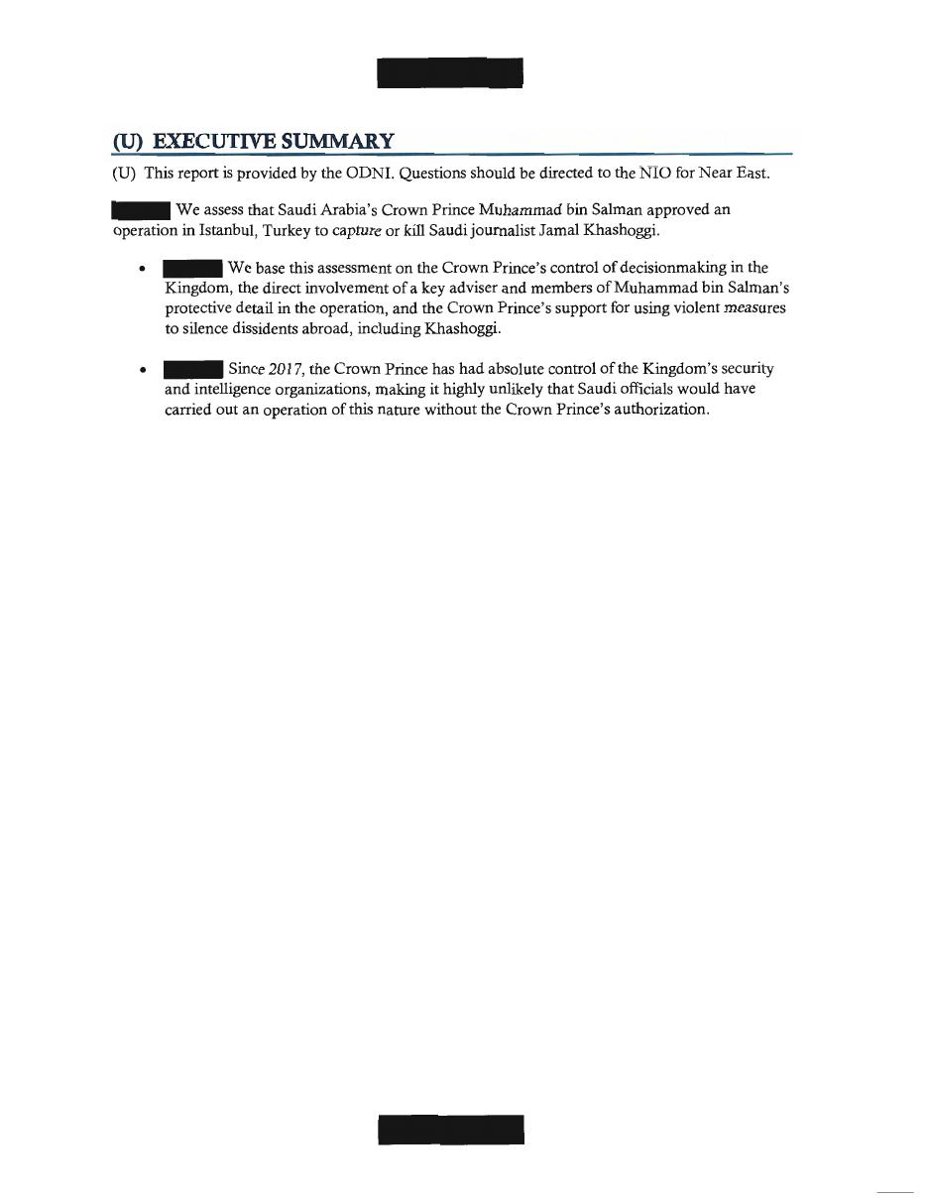
The UN Special Rapporteur on extrajudicial executions, Agnès Callamard, reported in June 2019 that "Mr. Khashoggi's killing constituted an extrajudicial killing for which the State of the Kingdom of Saudi Arabia is responsible", that "there is credible evidence, warranting further investigation of high-level Saudi Officials' individual liability, including the Crown Prince's", and that the Saudi and Turkish investigations "failed to meet international standards" (A/HRC/41/CRP.1). In September 2019 the crown prince told CBS: "Absolutely not. This was a heinous crime. But I take full responsibility as a leader in Saudi Arabia, especially since it was committed by individuals working for the Saudi government" (CBS News). On 25 February 2021 the Director of National Intelligence declassified an assessment dated 11 February: "We assess that Saudi Arabia's Crown Prince Muhammad bin Salman approved an operation in Istanbul, Turkey to capture or kill Saudi journalist Jamal Khashoggi." It added that it did "not know whether these individuals knew in advance that the operation would result in Khashoggi's death" (ODNI). It says the team included officials tied to the Saudi Center for Studies and Media Affairs at the Royal Court, led by Saud al-Qahtani. The Saudi Foreign Ministry said the Kingdom "completely rejects the negative, false and unacceptable assessment in the report pertaining to the Kingdom's leadership", called the killing "an abhorrent crime and a flagrant violation of the Kingdom's laws and values", and pointed to prosecutions in which five people received 20-year sentences and three received seven to ten years (Saudi statement, via GlobalSecurity). The two accounts remain unreconciled.
Counter side. RSF ranks Saudi Arabia 176th of 180 countries in its 2026 index, down from 162nd in 2025, and lists 15 journalists detained there as of 2 October 2026. It says the authorities executed the journalist Turki al-Jasser in 2025. The Saudi Interior Ministry announced his execution on 14 June 2025 and said he had committed "terrorist crimes"; the Committee to Protect Journalists reported the charges as treason and terrorism and said the authorities did not give evidence for them (CPJ). Freedom House says the authorities rely on "pervasive surveillance, the criminalization of dissent, appeals to sectarianism and ethnicity, and public spending supported by oil revenues". Foreign media supplied much of the reporting this page relies on. Reuters reported on 7 October 2018 that Khashoggi had been killed in the consulate, the report the Saudi consulate official denounced as "baseless" the same day; the Washington Post, for which Khashoggi wrote, reported in 2017 on UAE officials' discussion of the Qatar News Agency hack; AP reported the 2019 Twitter removal; and CBS put the Khashoggi questions to the crown prince in 2019. These outlets and the monitors above have their own funding and positions, as do SRMG and Al Jazeera.
Timeline
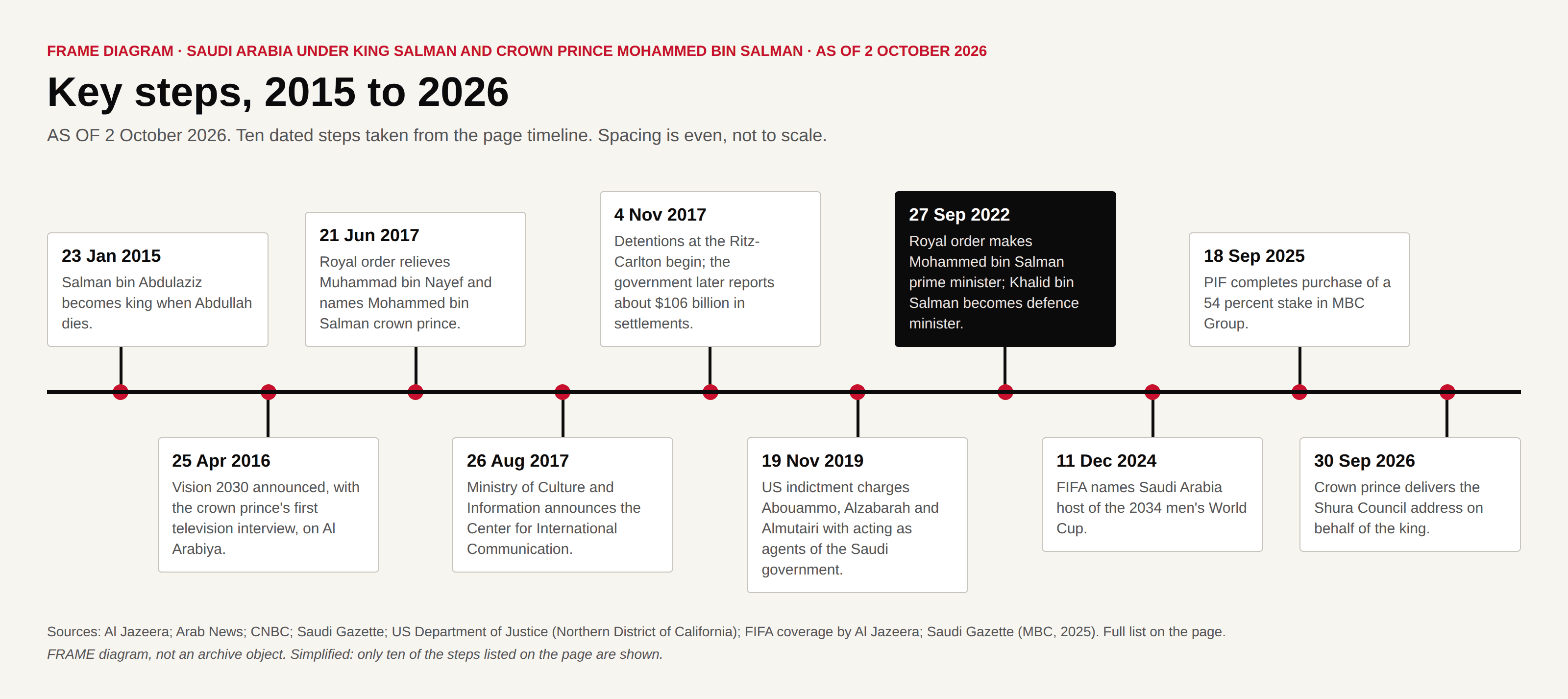
January 2015: King Salman accedes on 23 January.
April 2016: Vision 2030 announced on 25 April, with a first television interview on Al Arabiya.
May to June 2017: fabricated Qatar News Agency quotes (24 May); Saudi Arabia and the UAE block Qatari media (25 May); ties cut with Qatar and Al Jazeera's Riyadh office closed (5 June).
June 2017: Mohammed bin Salman named crown prince (21 June).
August 2017: Center for International Communication launched (26 August).
November 2017: detentions at the Ritz-Carlton begin (4 November).
October to November 2018: Jamal Khashoggi killed (2 October); Saudi statements of 7 October, 19 to 20 October, 25 October and 15 November.
2019: Callamard report published (19 June); Fahd Al-Essa named Royal Court chief (30 August); Twitter removes Saudi-linked accounts (20 September and 20 December); Faisal bin Farhan named foreign minister (23 October); Abouammo, Alzabarah and Almutairi charged (November).
January 2021: Al-Ula declaration ends the Gulf rift (5 January).
February 2021: US intelligence assessment declassified (25 February); Saudi Foreign Ministry rejects it.
January 2022: royal order creating Founding Day (27 January).
August 2022: Abouammo convicted on six of eleven counts (9 August).
September 2022: Mohammed bin Salman becomes prime minister; Khalid bin Salman becomes defence minister (27 September).
March 2023: Salman Al-Dosari becomes minister of media (5 March).
December 2024: FIFA names Saudi Arabia 2034 World Cup host (11 December).
February 2025: Media Minister's "equation of influence" speech (19 February).
June 2025: execution of journalist Turki al-Jasser announced (14 June).
September 2025: PIF completes purchase of 54 percent of MBC Group (18 September).
February 2026: royal orders name Al-Saif investment minister and Al-Maghlouth deputy media minister (12 February).
April 2026: CEDA opens Vision 2030's third phase.
June 2026: US Supreme Court decides Abouammo v. United States on venue (11 June).
September 2026: cabinet session chaired by the crown prince (29 September); Shura Council address (30 September).
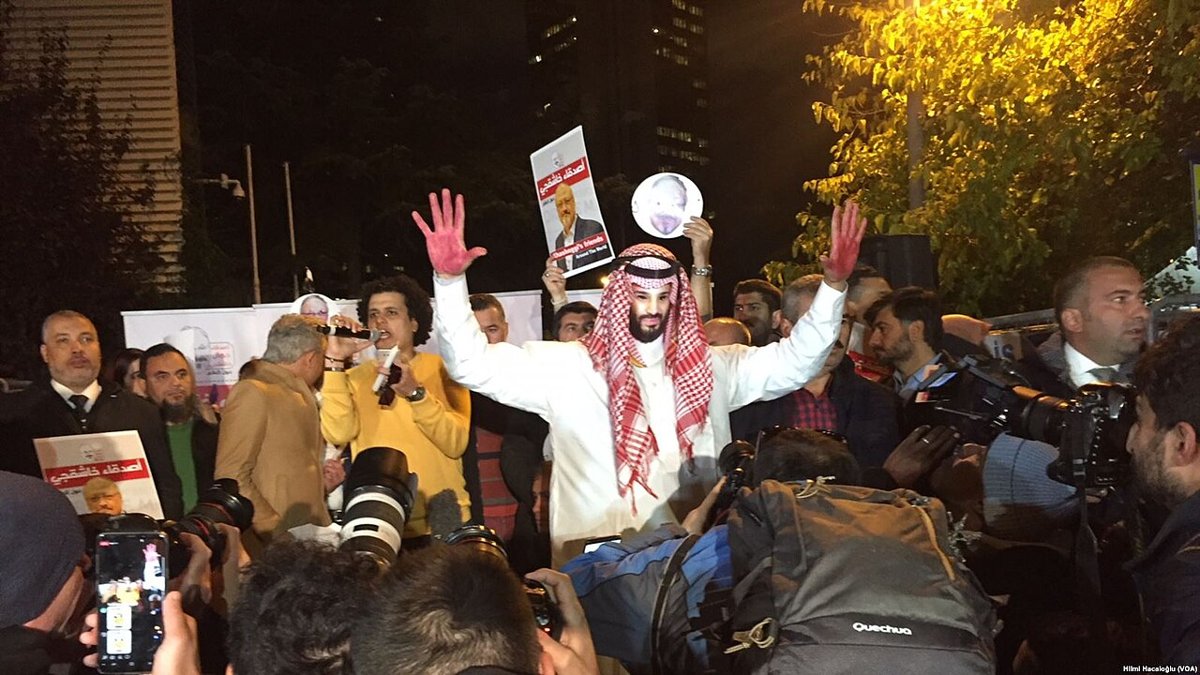
A protest in front of the Saudi Consulate General in Istanbul after the killing of Jamal Khashoggi there on 2 October 2018; Commons dates the photograph 25 October 2018. A participant in a white robe and headdress, hands painted red, addresses the crowd. Photograph by Hilmi Hacaloglu, Voice of America. Source: Hilmi Hacaloglu (VOA), photograph dated 25 October 2018 on Commons, Public domain (tagged {{VOA}} on Wikimedia Commons, a work of the U.S. Voice of America; the VOA source page was not separately opened).The Executive Summary of the U.S. Office of the Director of National Intelligence assessment on the role of the Saudi government in Jamal Khashoggi's death, released on 26 February 2021. Source: Office of the Director of National Intelligence, "Assessing the Saudi Government's Role in the Killing of Jamal Khashoggi", declassified 26 February 2021; page 2 (Executive Summary), Public domain (U.S. federal government work).
Ten dated steps, 2015 to 2026, simplified from the sources cited on this page. Source: FRAME diagram, drawn from the sources listed on this page, CC BY 4.0 (FRAME archive content).
Same-standard note
Illustration, not an archive object
This page uses the same structure, definitions and register as every other regime page, and the archive's working definitions of influence operations and state propaganda on the same terms. The roster is a dated snapshot as of 2 October 2026 and will change. The sources differ in kind: this page leans on court records, a declassified US assessment, a UN report and Saudi government statements, each attributed, and it marks where an outlet or monitor is funded by a party to the dispute. The archive documents state-run image-making and covert account networks elsewhere, among them Russia, where a US indictment and platform reports likewise supply the record, and the Qatari-funded and lobbying channels on the other side of the 2017 rift. Scale and context differ: Stanford counted 5,350 accounts and about 36.5 million tweets in the April 2020 dataset, with most accounts at a few hundred followers, and the Abouammo case concerns access to user data, which is a different thing from persuasion. This page does not claim the Saudi apparatus is larger or smaller than any other, and a Saudi official's account of an event stands beside the outside record without being ranked above or below it.

.jpg)
_(cropped).jpg)
.jpg)
.jpg)
.jpg)
.jpg)

.jpg)
.jpg)
.jpg)

