Also called Astroturfing, Fake grassroots
Fake or rented grassroots: personas, pages, or crowds that are not what they claim.
The tell
New accounts, shared infrastructure, identical phrasing, proxy geolocation, or paid 'local' voices.
Not this
A real membership organization that discloses funding.
History and effect
The term (from the artificial-turf brand) dates to 1990s US political consulting and now covers coordinated inauthentic behavior more broadly.
It manufactures the appearance of independent, organic public support, which the audience's own bandwagon instinct then treats as evidence.
Lineage: 1990s US coinage; inauthentic coordinated behavior
How it works
Astroturf has three layers. A sponsor (a government, military, party, company, trade association or consultancy) has an interest. A delivery layer hides the sponsor: a named front group, a network of invented personas, or real people paid or recruited without disclosure. An audience, often including legislators, journalists and ranking algorithms, is meant to read the output as spontaneous public feeling. The word is usually traced to US Senator Lloyd Bentsen, who in 1985 described mail generated by insurance interests as AstroTurf rather than grass roots. Before the internet the delivery layer was typically an organisation with a civic-sounding name, a letterhead and some real members, producing letters, calls, advertisements and rallies.
Online, the delivery layer became accounts. Documented operations combine persona accounts with invented names and faces (stock, stolen or, from about 2019, machine-generated); pages built around an identity (a region, a faith, an ethnic or political community) that post ordinary material for months before carrying the sponsor's message; small staffs each running many accounts; and amplification by paid influencers or unwitting real people. Jonathan Corpus Ong and Jason Cabañes (2018), who interviewed Philippine disinformation workers, describe a hierarchy of advertising and PR strategists at the top, paid influencers in the middle and fake-account operators at the bottom, hired by politicians across parties.
The main variants are the front group (a real organisation with a false account of its independence), the sock-puppet network (invented individuals), the rented crowd (real people paid to post or appear without disclosure) and the employee model, in which civil servants post as private citizens as part of their jobs. Meta has published reports on "coordinated inauthentic behavior" since 2018, attributing removed networks to governments, militaries, parties and commercial PR firms in many countries, the United States included. In every variant three things are hidden: who is speaking, how many independent people agree, and who paid.
Why it works
People use other people as evidence. Robert Cialdini's principle of social proof (1984) and Morton Deutsch and Harold Gerard's informational social influence (1955) describe how, under uncertainty, people treat what others appear to think as a guide to what is correct. Stephen Harkins and Richard Petty (1981) found that the same arguments persuaded more when they came from several sources than from one; astroturf counterfeits that independence. Elisabeth Noelle-Neumann's spiral of silence (1974) adds that people who believe they are in the minority speak up less, so a fabricated majority can quiet real opponents.
Hiding the sponsor also switches off a defence. Marian Friestad and Peter Wright's persuasion knowledge model (1994) shows that audiences discount a message once they recognise it as a strategic persuasion attempt. A post from "a local mother" does not trigger that discount; the same words under a company or ministry logo would.
Examples across eras and sides
- Crusade for Freedom (1950-1970s, United States, CIA). A national campaign asked Americans to donate to Radio Free Europe and to sign "Freedom-Grams" saying they were among the millions of citizens funding the stations, while their main funding came from the US government through the CIA until 1971 (Richard H. Cummings, Radio Free Europe's "Crusade for Freedom", 2010). See Freedom-Gram: Help Truth Fight Communism and Give Freedom to the Captive Nations! Fight Communism!.
- Citizens for a Free Kuwait (1990, United States, Kuwaiti government and Hill & Knowlton). A group presenting itself as Kuwaiti citizens hired Hill & Knowlton to build US support for military action against Iraq; its Foreign Agents Registration Act filings showed almost all its money came from the Kuwaiti government. It arranged the October 1990 congressional caucus testimony of "Nayirah", later identified as the daughter of Kuwait's ambassador to the US (John R. MacArthur, Second Front, 1992).
- National Smokers Alliance (1993 onwards, United States, Philip Morris and Burson-Marsteller). Philip Morris funded and Burson-Marsteller organised a membership group presented as a smokers' rights movement against smoking restrictions (John Stauber and Sheldon Rampton, Toxic Sludge Is Good for You, 1995). Industry documents released through litigation show similar company-created coalitions, such as R.J. Reynolds's "Get Government Off Our Back" (Apollonio and Bero, American Journal of Public Health, 2007).
- The Zhanggong propaganda-office archive (2013-2014, China, local government propaganda office). Gary King, Jennifer Pan and Margaret Roberts (American Political Science Review, 2017) analysed leaked email from a county-level internet propaganda office in Jiangxi and estimated that government employees write about 448 million social media posts a year posing as ordinary users. Most were cheerleading and distraction rather than argument, written by civil servants as part of their jobs; the authors found no evidence for the per-post payment implied by the popular nickname "50 Cent Party".
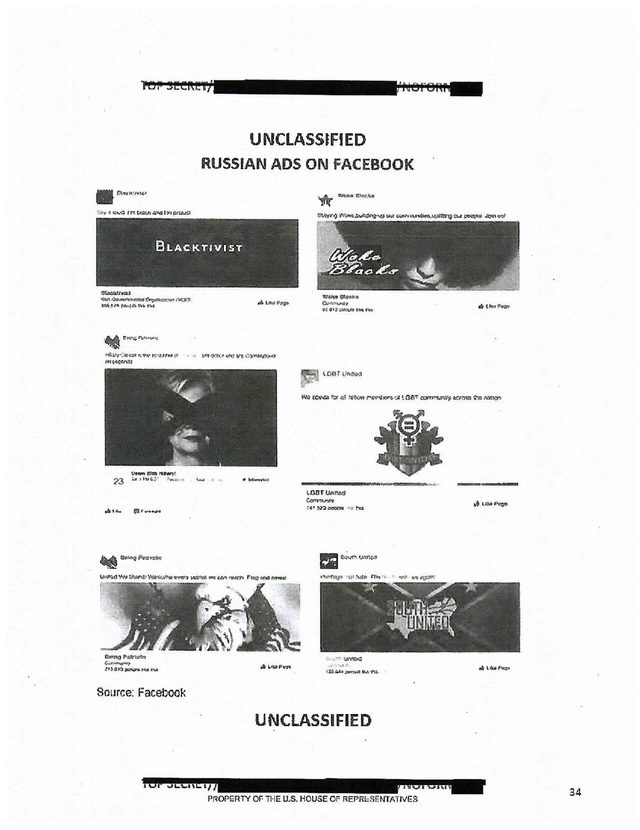
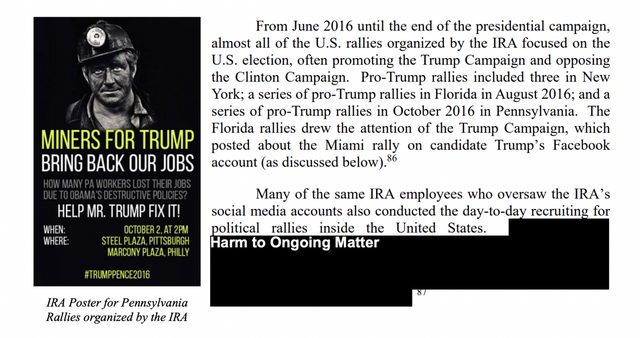
- Internet Research Agency (2014-2017, Russia, targeting the United States). The Special Counsel's report and the Senate Intelligence Committee (Vol. 2), both 2019, describe a St Petersburg company running pages posing as Black activists, Christian conservatives, Texas secessionists, Muslim Americans and others, and recruiting unwitting Americans to stage rallies. See 'Russian Ads on Facebook' (House Intelligence Committee exhibit) and 'Miners for Trump' rally poster (Internet Research Agency).
- US military persona programmes (2011-2022, US Central Command and others, Middle East and Central Asia). The Guardian reported in 2011 that Central Command had contracted for "online persona management" software letting one operator run several fake identities in languages including Arabic, Farsi, Urdu and Pashto (Operation Earnest Voice); the command said it would not target US audiences. In 2022 Graphika and the Stanford Internet Observatory ("Unheard Voice") analysed pro-Western persona networks removed by Twitter and Meta; Meta attributed part of the activity to individuals associated with the US military, and most posts drew little engagement.
- US domestic campaigns on both sides (2017-2020, United States). The New York Times reported in 2018 that Democratic-aligned technologists, funded with money from Reid Hoffman (who said he had not known of the tactics and apologised), ran a Facebook page aimed at conservatives during the 2017 Alabama Senate special election. In 2020 the Washington Post reported that Rally Forge, a firm working for Turning Point Action, paid teenagers in Arizona to post pro-Trump messages from their own accounts without disclosure; Facebook removed the accounts and banned the firm, and Turning Point Action described the programme as genuine activism by real people.
How to spot it
- Can you find the organisation's funders, officers and registration, and does its founding date line up with the policy fight it has joined?
- Do many "independent" accounts share creation dates, profile-photo styles, posting schedules or identical sentences?
- Does the claimed identity (a veteran, an activist, a local parent) hold up against the account's history, language and posting hours?
- Is a supposedly spontaneous campaign using professional materials, such as pre-written letters, printed signs or paid ads, with no named organisers?
- Would the message lose force if you learned who paid for it? If so, look for who did.
- Do takedown reports, foreign-agent or lobbying registrations, court filings or leaked documents link the many voices to one sponsor?
Where it ends: edge cases and legitimate persuasion
- A membership organisation that campaigns under its own name and discloses its funding (the page's "Not this") is attributed advocacy, however well funded. Disclosure has to be findable; fine-print disclosure shades into Disclosure theater.
- Organised is not fake. Unions, churches, NGOs and industry groups routinely give supporters template letters and talking points. The line is whether the senders are real, consenting supporters who know who organised them.
- Paid but undisclosed real people, as in the Rally Forge case, sit on the boundary: the people exist, the spontaneity does not.
- Neighbours: Manufactured consensus is the effect astroturf aims at, Bandwagon the appeal it feeds, Narrative laundering the passing of a message through a legitimate-looking surface (see The Hanover Institute: reports written for chatbots to cite, a think-tank site with no named staff), and Synthetic media increasingly supplies the faces.
- Test hoaxes use the method and then reveal it: 'Gennady Rakitin,' an invented pro-war poet records a fabricated pro-war poet built by anti-war Russian exiles and disclosed by them in 2024. The reveal is what separates it from an ongoing operation.
- A government speaking under its own name is attributed persuasion. Covert state personas are astroturf whichever government runs them.
Sources
- Apollonio, Dorie E., and Lisa A. Bero. "The Creation of Industry Front Groups: The Tobacco Industry and 'Get Government Off Our Back'." American Journal of Public Health 97, no. 3 (2007).
- Cialdini, Robert B. Influence: The Psychology of Persuasion. William Morrow, 1984.
- Cummings, Richard H. Radio Free Europe's "Crusade for Freedom": Rallying Americans Behind Cold War Broadcasting, 1950-1960. McFarland, 2010.
- Deutsch, Morton, and Harold B. Gerard. "A Study of Normative and Informational Social Influences upon Individual Judgment." Journal of Abnormal and Social Psychology 51, no. 3 (1955).
- Fielding, Nick, and Ian Cobain. "Revealed: US Spy Operation That Manipulates Social Media." The Guardian, 2011.
- Friestad, Marian, and Peter Wright. "The Persuasion Knowledge Model." Journal of Consumer Research 21, no. 1 (1994).
- Graphika and Stanford Internet Observatory. Unheard Voice: Evaluating Five Years of Pro-Western Covert Influence Operations. 2022.
- Harkins, Stephen G., and Richard E. Petty. "Effects of Source Magnification of Cognitive Effort on Attitudes: An Information-Processing View." Journal of Personality and Social Psychology 40 (1981).
- King, Gary, Jennifer Pan, and Margaret E. Roberts. "How the Chinese Government Fabricates Social Media Posts for Strategic Distraction, Not Engaged Argument." American Political Science Review 111, no. 3 (2017).
- MacArthur, John R. Second Front: Censorship and Propaganda in the Gulf War. Hill and Wang, 1992.
- Meta. Coordinated Inauthentic Behavior and Adversarial Threat Reports, 2018 onwards.
- Mueller, Robert S., III. Report on the Investigation into Russian Interference in the 2016 Presidential Election. US Department of Justice, 2019.
- Noelle-Neumann, Elisabeth. "The Spiral of Silence: A Theory of Public Opinion." Journal of Communication 24, no. 2 (1974).
- Ong, Jonathan Corpus, and Jason Vincent A. Cabañes. Architects of Networked Disinformation. Newton Tech4Dev Network, 2018.
- Shane, Scott, and Alan Blinder. "Secret Experiment in Alabama Senate Race Imitated Russian Tactics." The New York Times, 2018.
- Stanley-Becker, Isaac. "Pro-Trump Youth Group Enlists Teenagers in Secretive Campaign Likened to a 'Troll Farm'." The Washington Post, 2020.
- Stauber, John, and Sheldon Rampton. Toxic Sludge Is Good for You. Common Courage Press, 1995.
- US Senate Select Committee on Intelligence. Russian Active Measures Campaigns and Interference in the 2016 U.S. Election, Vol. 2: Russia's Use of Social Media. 2019.
Case studies
- Anti-Rohingya propaganda in Myanmar, 2012-2018: the 'Bengali' label, the monks' sermons and the military's covert Facebook pages — Anti-Rohingya propaganda in Myanmar, 2012-2018
- The Nayirah testimony: a Kuwaiti government PR campaign at a House human rights caucus — The Nayirah testimony: a Kuwaiti government PR campaign at a House human rights caucus
- COINTELPRO: the FBI's covert media and information operations against U.S. groups, 1956-1971 — COINTELPRO: the FBI's covert media and information operations against U.S. groups, 1956-1971
- RICU and the Integrity Initiative: UK government-funded messaging that did not show its source — RICU and the Integrity Initiative: UK government-funded messaging that did not show its source
- Israel's Strategic Affairs Ministry paid for news content, and a later ministry's STOIC campaign aimed at U.S. lawmakers — Israel's Strategic Affairs Ministry paid for news content, and a later ministry's STOIC campaign aimed at U.S. lawmakers
- Torches of Freedom: the 1929 Easter Parade cigarette march — Torches of Freedom: the 1929 Easter Parade cigarette march
- 'For whites only': the forged Klan letters sent to Olympic committees in 1984 — Forged Klan letters to Olympic teams, 1984
- Wartime radio voices: open and hidden broadcasts aimed at the enemy, 1939-1945 — Wartime radio voices, open and hidden
- Union and Confederate print, 1861-1865 — Union and Confederate print, 1861-1865
- India's Emergency: 'India is Indira' and the censored press — India's Emergency: 'India is Indira' and the censored press
- Xinjiang's 'vocational training centres': the government's messaging and its critics' — Xinjiang's 'vocational training centres': the government's messaging and its critics'
- Indian Chronicles: fake local outlets, revived NGOs and a borrowed professor — Indian Chronicles: fake local outlets, revived NGOs and a borrowed professor
- Marcos's martial law: the 'New Society' and the online contest over its memory — Marcos's martial law: the 'New Society' and the online contest over its memory
- Facebook's April 2019 takedowns in India: a Congress IT cell, a BJP-linked IT firm and a Pakistani military network — Facebook's April 2019 takedowns in India: a Congress IT cell, a BJP-linked IT firm and a Pakistani military network
- Labor organizing and anti-union campaigns in the United States, 1910-1941 — Labor organizing and anti-union campaigns in the United States, 1910-1941
- Black Lives Matter and Blue Lives Matter: two slogans, their campaigns, and a foreign operation that posed as both — Black Lives Matter and Blue Lives Matter: two slogans, their campaigns, and a foreign operation that posed as both
- MAGA and the Resistance: grassroots organising for and against Trump, 2016-2021 — MAGA and the Resistance: grassroots organising for and against Trump, 2016-2021
- South Africa's information war: the apartheid state's secret projects and the ANC's Radio Freedom — South Africa's information war: the apartheid state's secret projects and the ANC's Radio Freedom
- Britain's Ministry of Information and Political Warfare Executive: posters at home, black radio abroad — Britain's Ministry of Information and Political Warfare Executive: posters at home, black radio abroad