- When
- February 24, 2022
- Actor
- Government of Ukraine (President's Office, border guard service, Ukrposhta) and unnamed advertisers and activists in Ukraine
- Target
- Ukrainian citizens and international audiences during the first weeks of the full-scale invasion
- Source
- Identified Openly sourced: the speaker is who they say they are
- Confidence
- documented Primary documents, court records, official disclosures
- Techniques
- Name-callingTransfer
In one line: On 24 February 2022, the first day of the full-scale invasion, a radio exchange between a Russian warship and the garrison of Snake Island (Zmiinyi) was reported by Ukrainian officials; the phrase the garrison used in reply was on billboards within two weeks and on a state postage stamp on 12 April 2022, a sequence in which a battlefield moment was turned into a national emblem while the first account of the garrison's fate turned out to be wrong.
What happened
- 24 February 2022. Ukrainian officials report that a Russian warship called on the island's garrison to surrender and that the defenders refused with a profane phrase. The phrase is shortened in print to "Russian warship, go...".
- Late February 2022. Ukrainian officials first say the garrison died. The soldiers are later reported alive as prisoners and are released in an exchange in March 2022 (catalogue entry for the Ternopil billboard).
- 9 March 2022. A billboard in Ternopil carries the phrase in blue letters on white over a yellow bar, with the expletive asterisked, beside a cosmetics advertisement. The sponsor is not shown. The photograph is held as the Ternopil billboard.
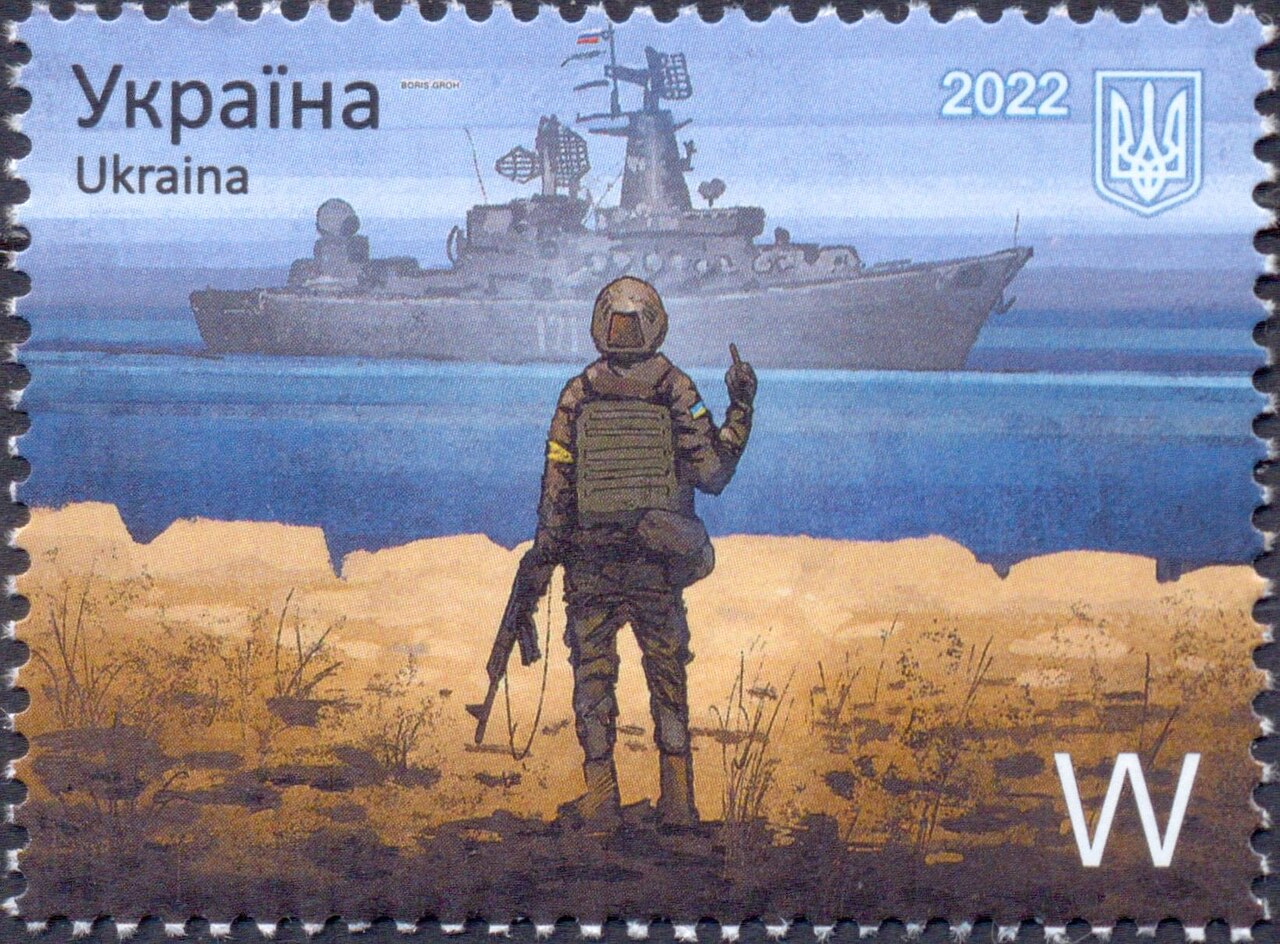
- 12 April 2022. Ukraine's postal service, Ukrposhta, issues a stamp of a soldier in body armour with his back to the viewer, raising a middle finger at a grey warship. It shows the state trident, the name of the country and the year. It is a sheet of six at denomination W, printed in a run of 500,000, with an F-denomination variant (the stamp).
- After April 2022. The phrase spreads as graffiti, merchandise and billboards in Ukraine and abroad (catalogue entry).

How it works
- Name-calling: the billboard reduces the whole target to "Russian ship" and dismisses it with invective and no claim or reason. The entry scores the label-plus-command form.
- Transfer: on the stamp, the trident, the country name, the year and a face value turn a front-line moment into a state postal issue, so that the prestige of the island episode is carried onto the issuing state.
- A first account that did not hold. The announcement that the garrison had died was corrected within weeks. The phrase stayed in use after the correction, which is why the case sits between a verified event (the exchange was reported by officials) and a symbol.
Positions on the record
- What is documented. The date of the exchange as reported by Ukrainian officials; the billboard of 9 March 2022; the stamp of 12 April 2022 and its run; the prisoners' release in March 2022.
- What the archive has not traced. The recording itself, and who paid for the Ternopil billboard.
- Not ruled on here. The conduct of the war. The page records how a phrase was used and by whom.
Same-method test
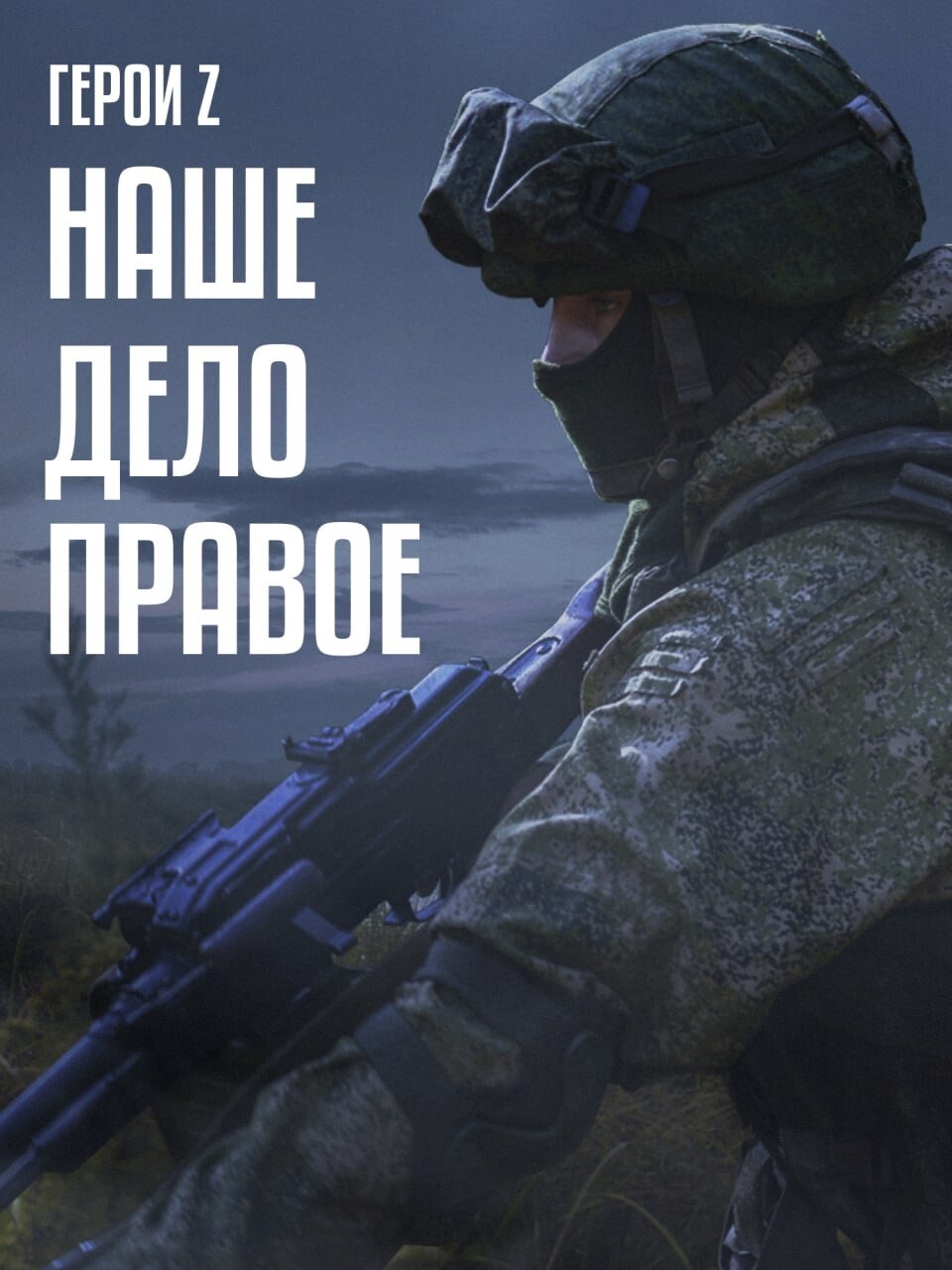
The test is whether a government or its agents turn a wartime episode into a symbol and then use official channels to fix it. The Russian Ministry of Defence did the same with a numbered poster series in 2022, among them Heroes of Z, which reuses a sentence from Molotov's address of 22 June 1941. The two differ in form, issuer and scale: a postage stamp and private billboards on one side, a ministry's own series on the other. Both appear on Ukraine war propaganda.
How to spot it
- Check the date of the first report against later corrections.
- Ask whether a symbol is being attached to an issuing body, such as a state's trident on a stamp.
- Note when the sponsor of a public display is not shown.
Sources
- Catalogue entries: Ternopil billboard (photograph by Mykola Vasylechko, CC BY-SA 4.0) and Ukrposhta stamp.