Have Eggs When Eggs Are Scarce: Hatch Early
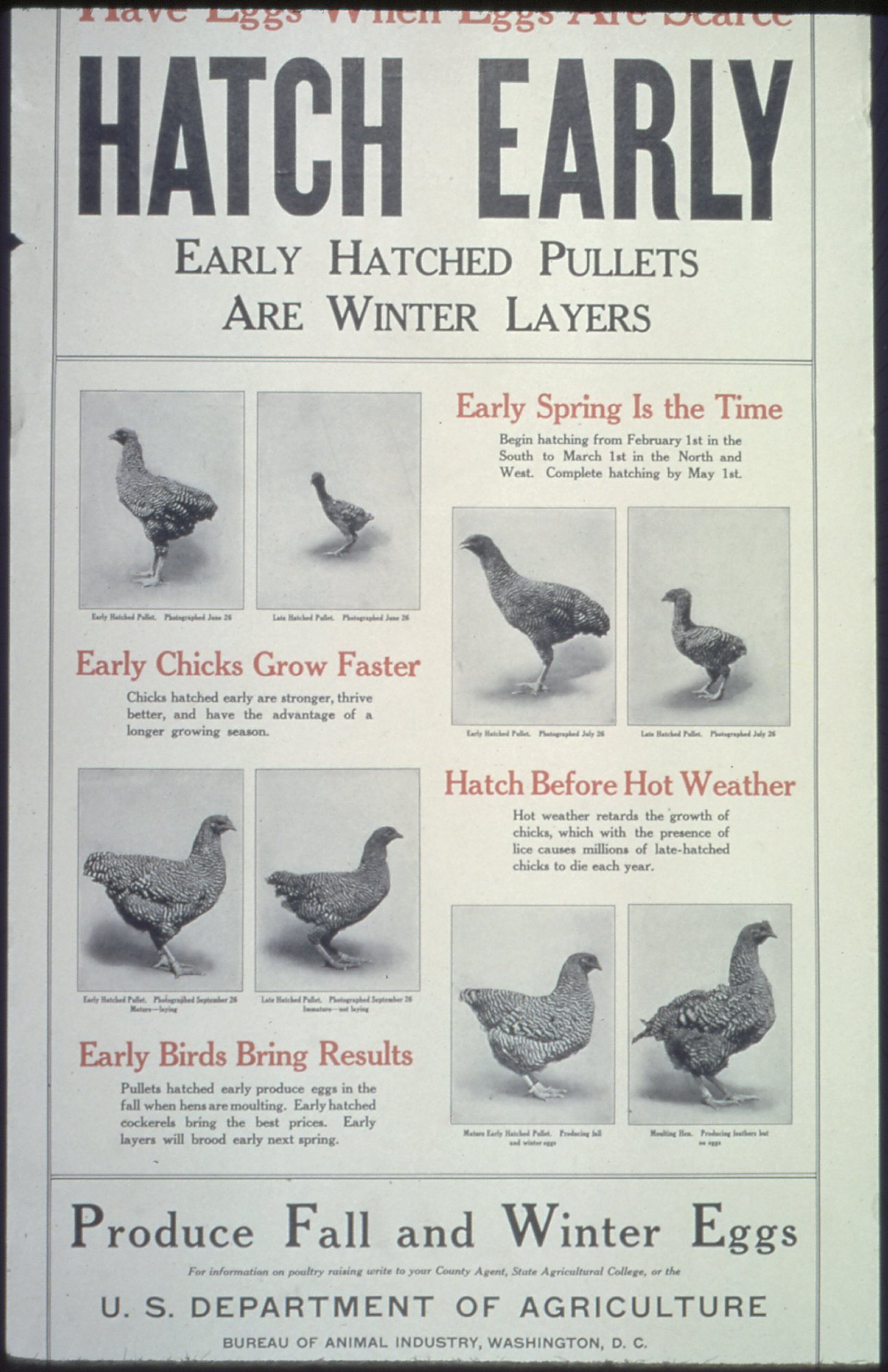
A text-and-photograph instruction sheet shows paired photographs of early- and late-hatched pullets at different ages, with short paragraphs on hatching dates and winter egg laying. Its appeal rests on the side-by-side photographic comparison offered as evidence, and it ends with a plain request to produce fall and winter eggs and an address for further advice.
Propaganda techniques used in this poster
- Date
- 1917
- Period
- First World War
- Made by
- U.S. Department of Agriculture, Bureau of Animal Industry
- Region
- North America
- Country
- United States
- Medium
- Poster
- Issuer type
- State
- Regime
- Wilson Administration
- Leader
- Woodrow Wilson
- Audience
- Domestic public
- Purpose
- Mobilize or secure compliance
- Themes
- Home front, Economy and finance
- Event
- World War I
- Regime
- Wilson administration
- Leader
- Woodrow Wilson
- Source
- Identified Openly sourced: the speaker is who they say they are
- Source
- U.S. National Archives (NARA), RG 4 (U.S. Food Administration), World War I Posters (NAID 512439), retrieved October 3, 2026
- Rights
- NARA Unrestricted; hosted by owner decision
U.S. Department of Agriculture, Bureau of Animal Industry. National Archives and Records Administration, 4-P-106.
Text on the object
Have Eggs When Eggs Are Scarce

HATCH EARLY

EARLY HATCHED PULLETS ARE WINTER LAYERS

Early Spring Is the Time
Begin hatching from February 1st in the South to March 1st in the North and West. Complete hatching by May 1st.

Early Chicks Grow Faster
Chicks hatched early are stronger, thrive better, and have the advantage of a longer growing season.

Hatch Before Hot Weather
Hot weather retards the growth of chicks, which with the presence of lice causes millions of late-hatched chicks to die each year.

Early Birds Bring Results
Pullets hatched early produce eggs in the fall when hens are moulting. Early hatched cockerels bring the best prices. Early layers will brood early next spring.

[photograph captions]
Early Hatched Pullet. Photographed June 26
Late Hatched Pullet. Photographed June 26
Early Hatched Pullet. Photographed July 26
Late Hatched Pullet. Photographed July 26
Early Hatched Pullet. Photographed September 26 Mature—laying
Late Hatched Pullet. Photographed September 26 Immature—not laying
Mature Early Hatched Pullet. Producing fall and winter eggs
Moulting Hen. Producing feathers but no eggs

Produce Fall and Winter Eggs
For information on poultry raising write to your County Agent, State Agricultural College, or the

U. S. DEPARTMENT OF AGRICULTURE
BUREAU OF ANIMAL INDUSTRY, WASHINGTON, D. C.
The top line (Have Eggs When Eggs Are Scarce) is partly cropped at the upper edge of the scan. Photograph captions are very small but legible and are listed after the body text in reading order.