Also called Argument against the person, Attacking the messenger, Personal attack
Attack the character, motives or circumstances of the person making a claim in place of the claim itself.
How to spot Ad hominem: the tell
The reply is about who said it; delete the attack and nothing is left that bears on whether the claim is true.
What Ad hominem is not
Documented conflicts of interest or a record of false statements, raised as relevant to how much weight a witness gets.
History and effect of Ad hominem propaganda
The Latin phrase means "to the person". In logic textbooks the fallacy has three usual forms. The abusive form attacks the speaker's character. The circumstantial form points to the speaker's job, wealth, nationality or group and says the claim is therefore not worth hearing. The tu quoque ("you too") form answers a criticism by saying the critic does the same thing. John Locke discussed the argumentum ad hominem in 1690, but in a narrower sense: pressing a person with consequences of his own stated principles. The modern meaning, an attack on the arguer, is the one used here.
Explain moreShow less
This page covers how the move is used in persuasion, by every kind of speaker. It differs from two neighbouring pages. Name-calling attaches a loaded label ("traitor", "hooligan") to a target so the audience rejects it without checking. Ad hominem takes the place of the argument: the speaker is given a motive, a record or a background, and that is offered as the reason the claim fails. A label can be the vehicle for either, and many real texts do both. Whataboutism is the tu quoque form made into a standing habit of reply: the reply points at the critic's own conduct and the first charge is left standing.
It works by moving the audience's judgment from a claim, which takes effort to check, to a person, which does not. If the audience already distrusts the person, the claim is discarded with them. It also raises the cost of speaking: a person who expects to be attacked personally may stay silent.
Lineage: Classical logic (argumentum ad hominem); Locke 1690
How Ad hominem propaganda works
- A claim, criticism or report is made by an identifiable person or group.
- The reply names a trait of the speaker: a supposed motive, a past act, an origin, a loyalty, a private matter.
- The trait is presented as settling the question, or the question is simply dropped.
- The audience's feelings about the person (contempt, suspicion, disgust) carry over to the claim.
Why Ad hominem propaganda works
Judging people is faster than judging evidence, and audiences are more willing to accept a conclusion they already prefer. See Motivated reasoning on how a motive to reject a claim produces reasons to reject it, In-group favoritism on why an attack on an outsider is welcomed, and Moral outrage on how a charge of bad character gets a stronger response than a dry correction.
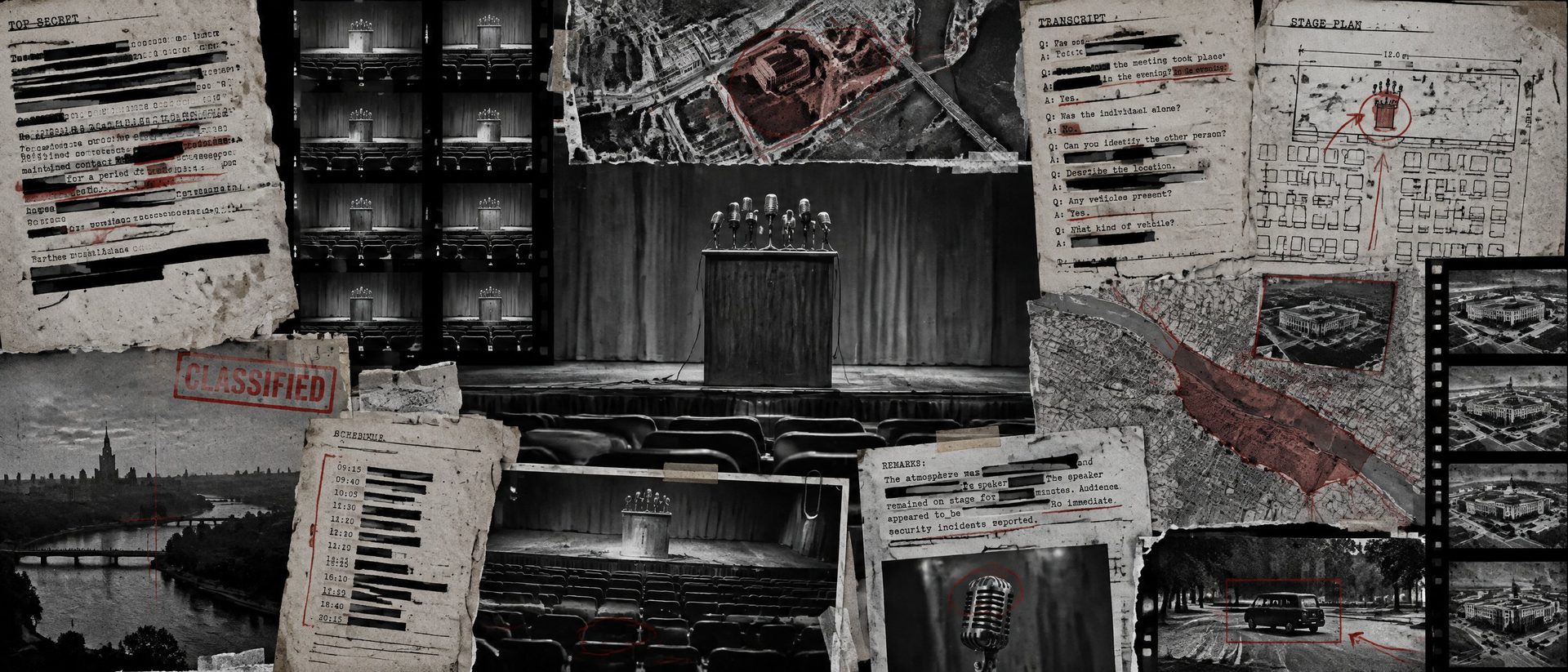
Ad hominem propaganda examples across eras and sides
Each case below records what was said and done. None is scored here as true or false about the person attacked, and scale and intent differ between them, as stated.
Explain moreShow less
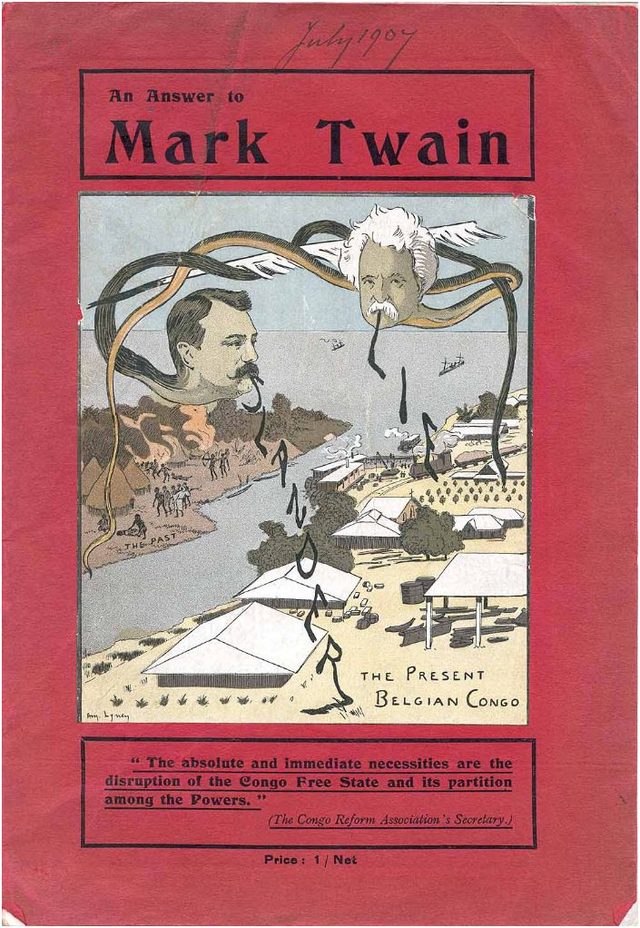
- Belgium, 1907. Mark Twain published King Leopold's Soliloquy in 1905, a satire of Leopold II's defence of his rule in the Congo Free State, as part of the Congo reform campaign alongside E. D. Morel. The Leopold side's print reply in this archive, an anonymous Brussels pamphlet cover titled An Answer to Mark Twain (1907), draws Twain and Morel with tongues spelling LIES and SLANDER. The cover carries a charge against the two men and no reply to the evidence about the Congo.
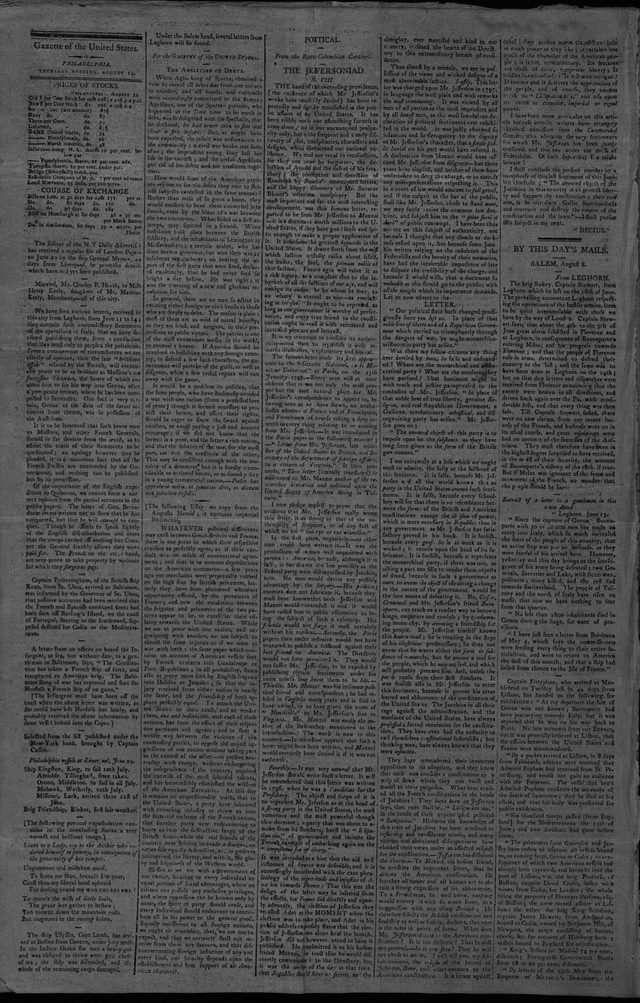
- United States, 1800. In the 1800 election between John Adams and Thomas Jefferson, the Federalist Gazette of the United States (Philadelphia) printed an essay signed "Decius" on 14 August 1800, reprinted from a Boston paper, attacking Jefferson over a private 1796 letter to Philip Mazzei. The essay calls the Democratic-Republicans an "abominable faction" and Jefferson a "Jacobin chieftain". Whether the letter was authentic is a question of fact. The labels do not address it.
- Weimar Germany, 1920, and Nazi Germany. On 24 August 1920 a mass meeting at the Berlin Philharmonic, led by Paul Weyland, attacked Einstein's theory of relativity. According to the Wikipedia account of Weyland, speakers described the theory as reflecting "Jewish arrogance" and ended with the line "Relativity theory is scientific Dadaism". After the Nazis entered politics, the physicists Philipp Lenard and Johannes Stark labelled relativity "Jewish physics" and campaigned for physics to be "German" and "Aryan". The origin of the theorist stood in for any ruling on the theory. This is the circumstantial form, applied to a group. In the same period, other critics of relativity published physical and philosophical objections, for example in the 1931 volume Hundert Autoren gegen Einstein; those are arguments about the theory and are not ad hominem.
- Soviet Union, 1958. After Boris Pasternak was named Nobel laureate in literature in October 1958, the Soviet Literaturnaya Gazeta said the award was made "for an artistically squalid, malicious work replete with hatred of socialism" and called him a traitor. Pravda called him a "malevolent Philistine" and said he would regret the prize if there were "a spark of Soviet dignity left in him" (TIME, 3 November 1958). The Wikipedia article on Doctor Zhivago records a Literaturnaya Gazeta article, "Reactionary Propaganda Uproar over a Literary Weed", and the KGB surrounding his dacha. The novel was not published in the Soviet Union, so most readers could not check the attacks against the book.
- United States, 1971. After Daniel Ellsberg gave the Pentagon Papers to newspapers in 1971, the White House "plumbers" led by E. Howard Hunt broke into the Los Angeles office of his psychiatrist, Lewis Fielding, on 3 September 1971, looking for material to discredit him (Smithsonian Magazine). Hunt had drafted a proposal to "neutralize Ellsberg". The break-in surfaced during Ellsberg's trial, and the judge dismissed all charges, citing government misconduct. This is a covert operation by a government against a person's reputation, a different scale from a headline or a speech.
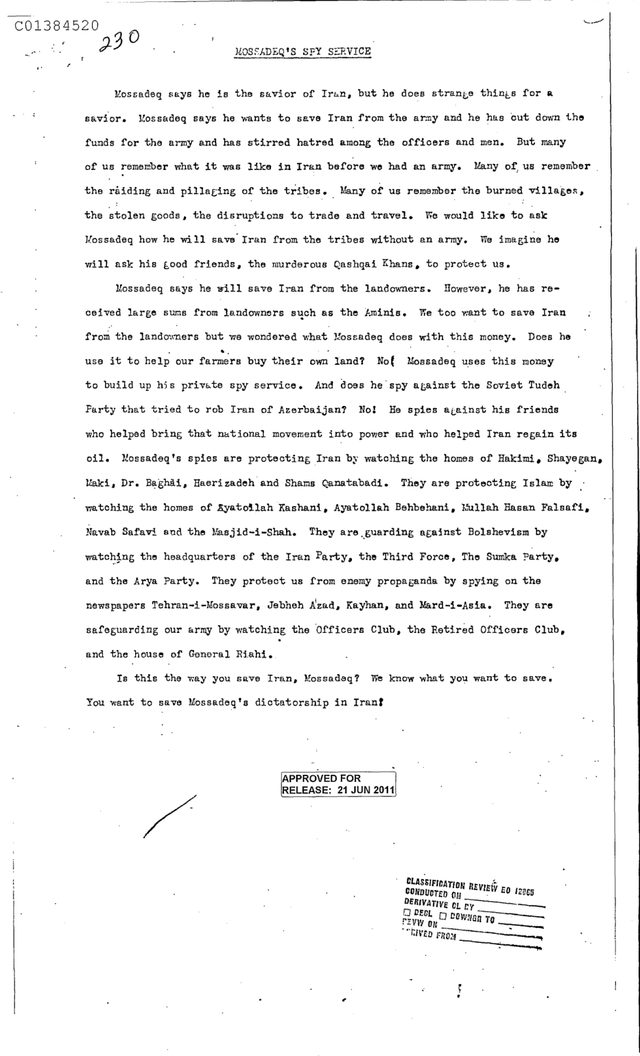
- Iran, 1953. A CIA text prepared in summer 1953 for placement in Iranian media, "Mossadeq's Spy Service" (released in 2011, National Security Archive Electronic Briefing Book no. 435), is written as if by ordinary Iranians. It accuses Prime Minister Mohammad Mossadeq of running a private spy service against his own allies and calls the Qashqai khans "murderous". It argues from the man's conduct, not from any policy of his government, and it hides its author.
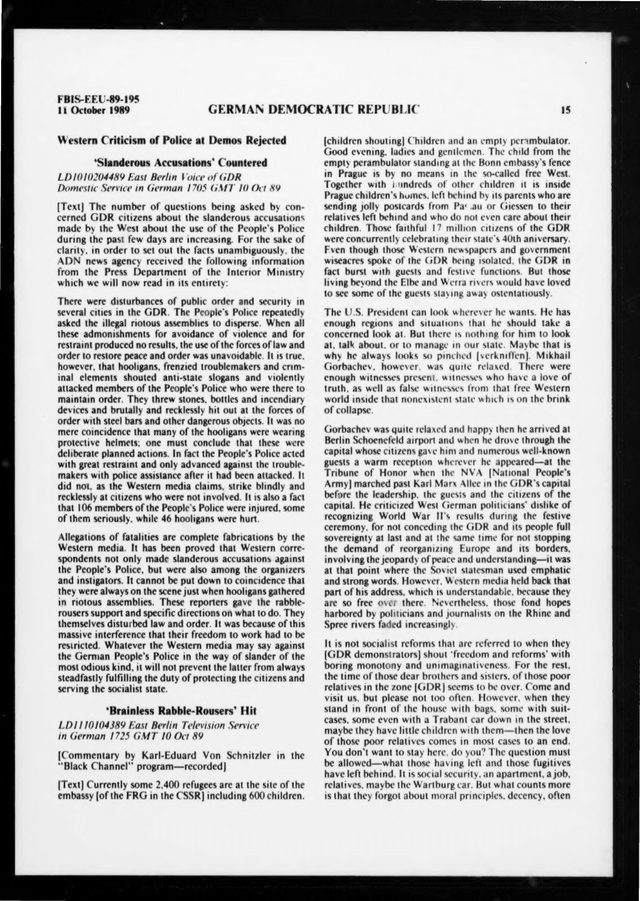
- East Germany, 1989. The FBIS Daily Report of 11 October 1989 translates two East German state broadcasts of 10 October. An Interior Ministry statement calls demonstrators "hooligans" and "criminal elements" and accuses Western reporters of instigating unrest; Karl-Eduard von Schnitzler's "Black Channel" commentary calls emigrants "fugitives" who abandoned their children. The demonstrators' demands are not answered.
- United Kingdom, 2016. On 4 November 2016 the Daily Mail ran the front-page headline "Enemies of the people" over photographs of three High Court judges who had ruled in the Miller case that Parliament's consent was needed before the government triggered Article 50. Mail Online described one of them, Sir Terence Etherton, as an "openly-gay ex-Olympic fencer" and changed the wording after criticism. The Independent Press Standards Organisation received more than 1,000 complaints. Former Lord Chief Justice Igor Judge called the attacks, particularly the homophobic ones, "very unpleasant". The legal reasoning of the ruling was a matter for the Supreme Court, which dismissed the government's appeal in January 2017. Mail editors have defended the headline as a comment on the political consequences of the ruling.
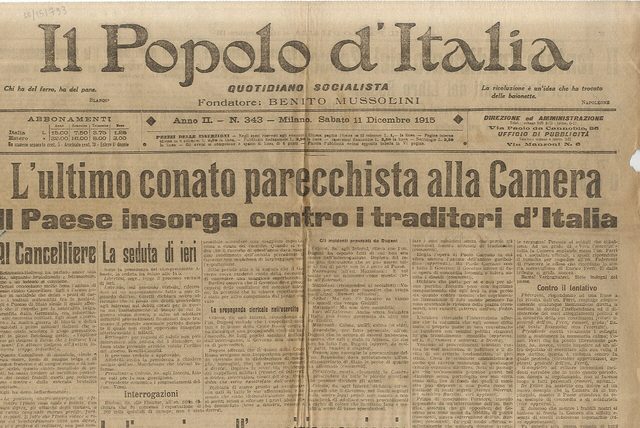
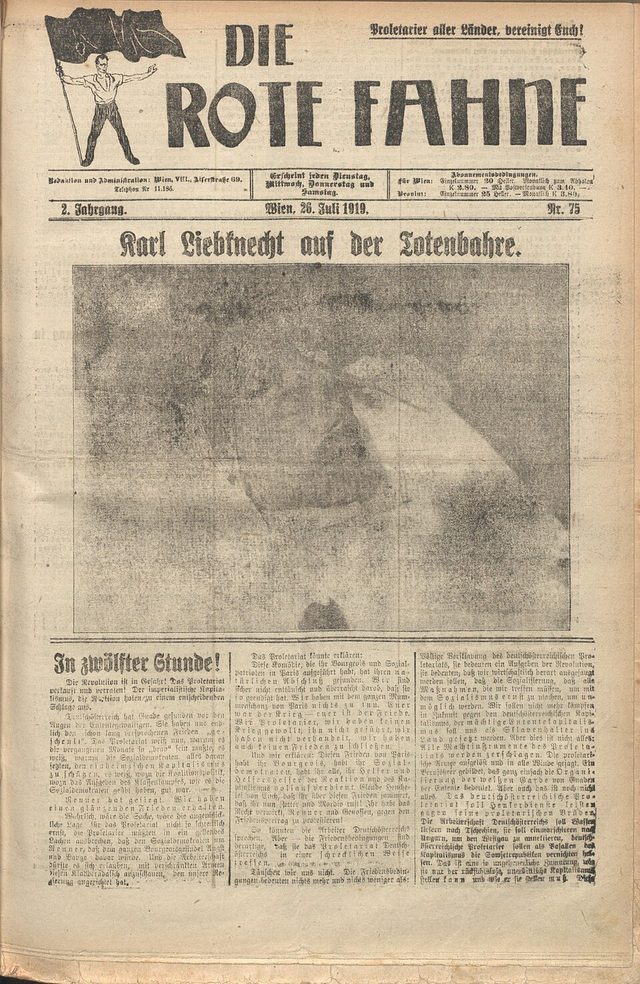
The Italian case in the archive, Il Popolo d'Italia of 11 December 1915, is a similar pattern: it calls deputies who followed Giovanni Giolitti's neutralist line "traditori d'Italia" (traitors). The Austrian case, Die Rote Fahne of 26 July 1919, calls the Social Democrats' protest "Elende Heuchelei" (wretched hypocrisy). Both attach a motive to the opponent in place of an answer.
How to spot Ad hominem propaganda
- Ask what the reply says about the claim. If the answer is nothing, the reply is about the person.
- Remove the personal part. If no argument remains, the personal part was the argument.
- Check whether the trait named bears on the claim. A witness's financial stake in a result does; a witness's family origin or private life does not.
Show all 5Show fewer
- Check whether the attack changes by speaker, not by claim. The same fact from a friend gets a pass.
- Look for the tu quoque shortcut: "you do it too" may be true, and it still does not answer the first charge.
Where Ad hominem propaganda ends: edge cases and legitimate persuasion
Not every reference to the speaker is a fallacy.
Not every reference to the speaker is a fallacy. A documented conflict of interest, a proven record of false statements, or a lack of access to the facts is relevant to how much weight a witness deserves, and courts, auditors and journalists routinely say so. The test is relevance: the point has to bear on this claim, be documented, and be offered alongside, not in place of, a check of the claim itself. A circumstantial point can be sound where the bias is real and relevant and can be fallacious where it is merely assumed. Even then, a biased source can be right, so the claim still has to be checked on its merits.
Sources and further reading
Sources
7 items · Wikipedia, "Ad hominem" (forms; Locke's discussion).
- Wikipedia, "Ad hominem" (forms; Locke's discussion).
- Wikipedia, "King Leopold's Soliloquy" (publication in 1905).
- Archive entries for the 1907 Brussels pamphlet, the 14 August 1800 Gazette of the United States, the 11 October 1989 FBIS Daily Report and the CIA 1953 text, each with the source page named in its entry; the CIA text is from the National Security Archive's Electronic Briefing Book no. 435.
- Wikipedia, "Paul Weyland"; Wikipedia, "Deutsche Physik"; Wikipedia, "Hundert Autoren gegen Einstein".
- TIME, 3 November 1958: "Foreign News: Pasternak's Way"; Wikipedia, "Doctor Zhivago (novel)".
- Smithsonian Magazine, "The World's Most Famous Filing Cabinet" (3 September 1971 break-in).
- Wikipedia, "Enemies of the People (headline)"; CNN Business, 4 November 2016.
Sourcing note (7 October 2026): quotations were checked against the linked pages as retrieved by the build environment; the Wikipedia pages are cited for what they state and were not independently confirmed against primary documents.
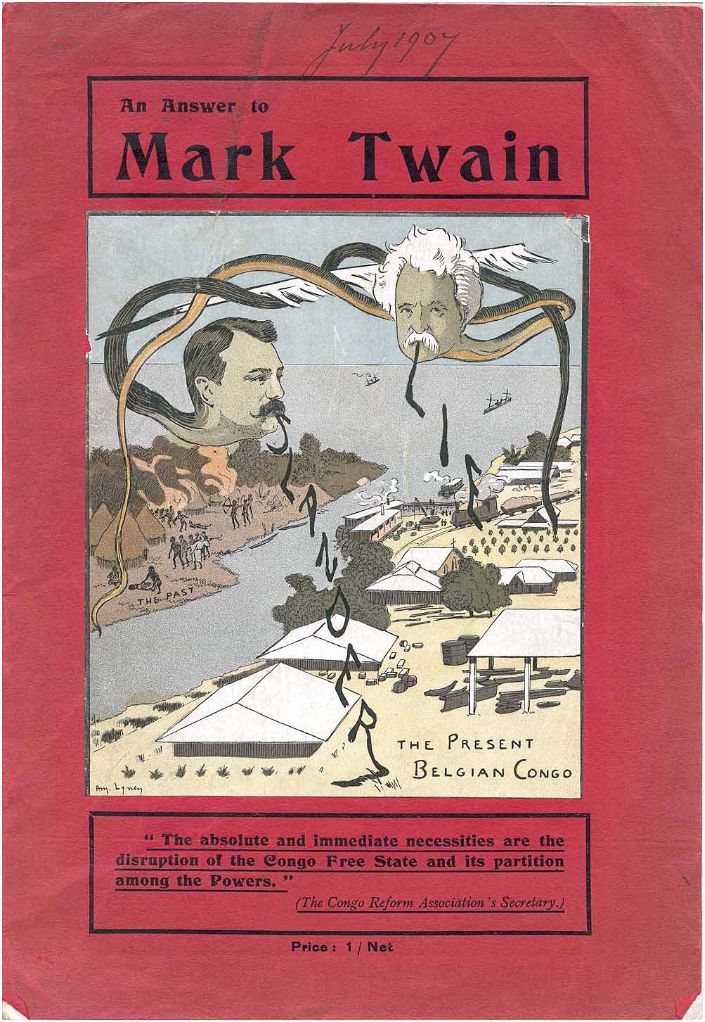
An Answer to Mark Twain, anonymous pamphlet cover, Brussels, 1907, the Leopold side's reply to the Congo reform campaign. Scan via the American Museum of Natural History digital library, via Wikimedia Commons. Public domain (anonymous work published 1907).
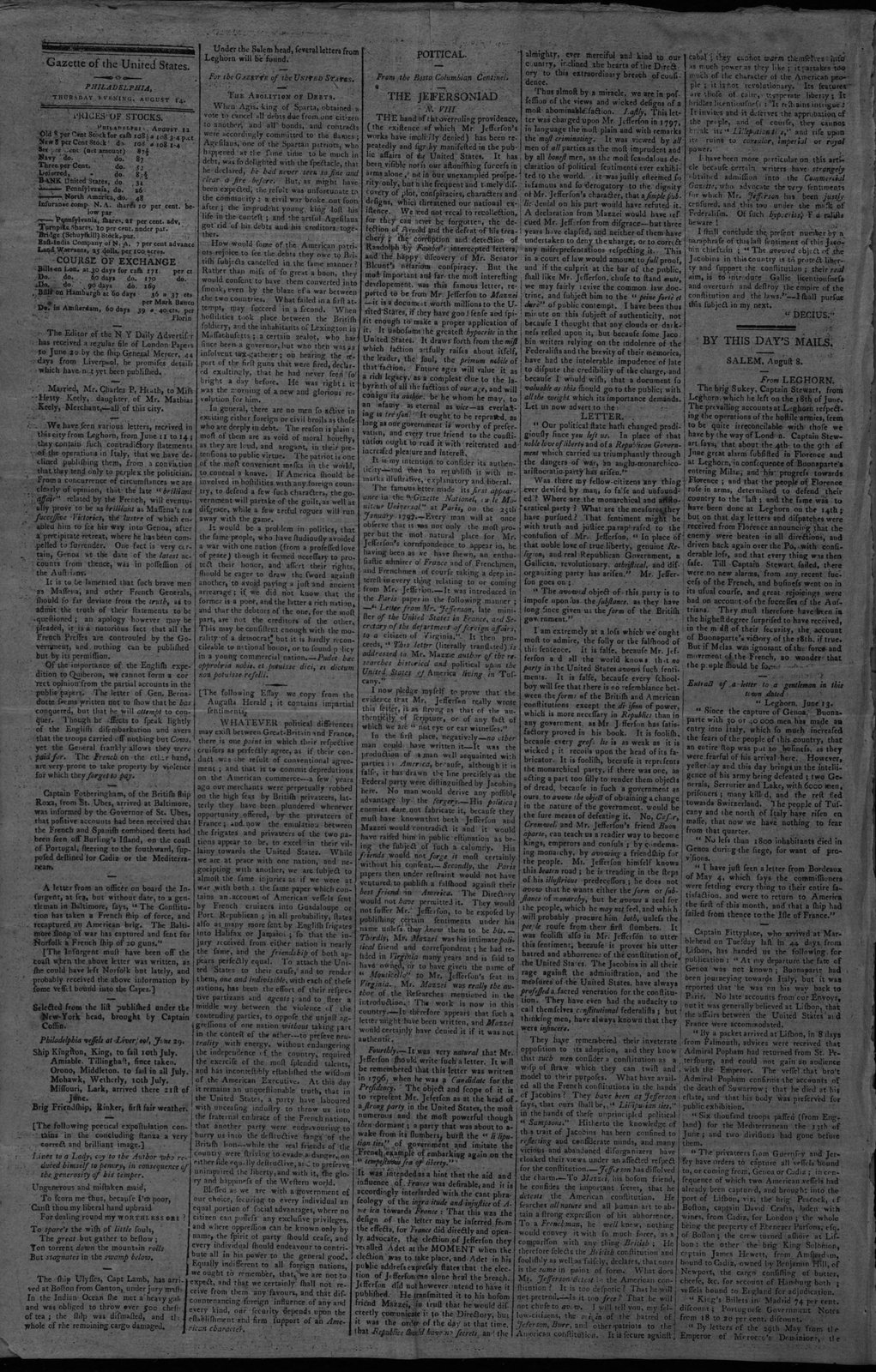
Gazette of the United States & Daily Advertiser, Philadelphia, 14 August 1800, page 2, carrying "The Jeffersoniad" no. VIII, signed "Decius". Internet Archive / Library of Congress Chronicling America scan. Public domain (published 1800).
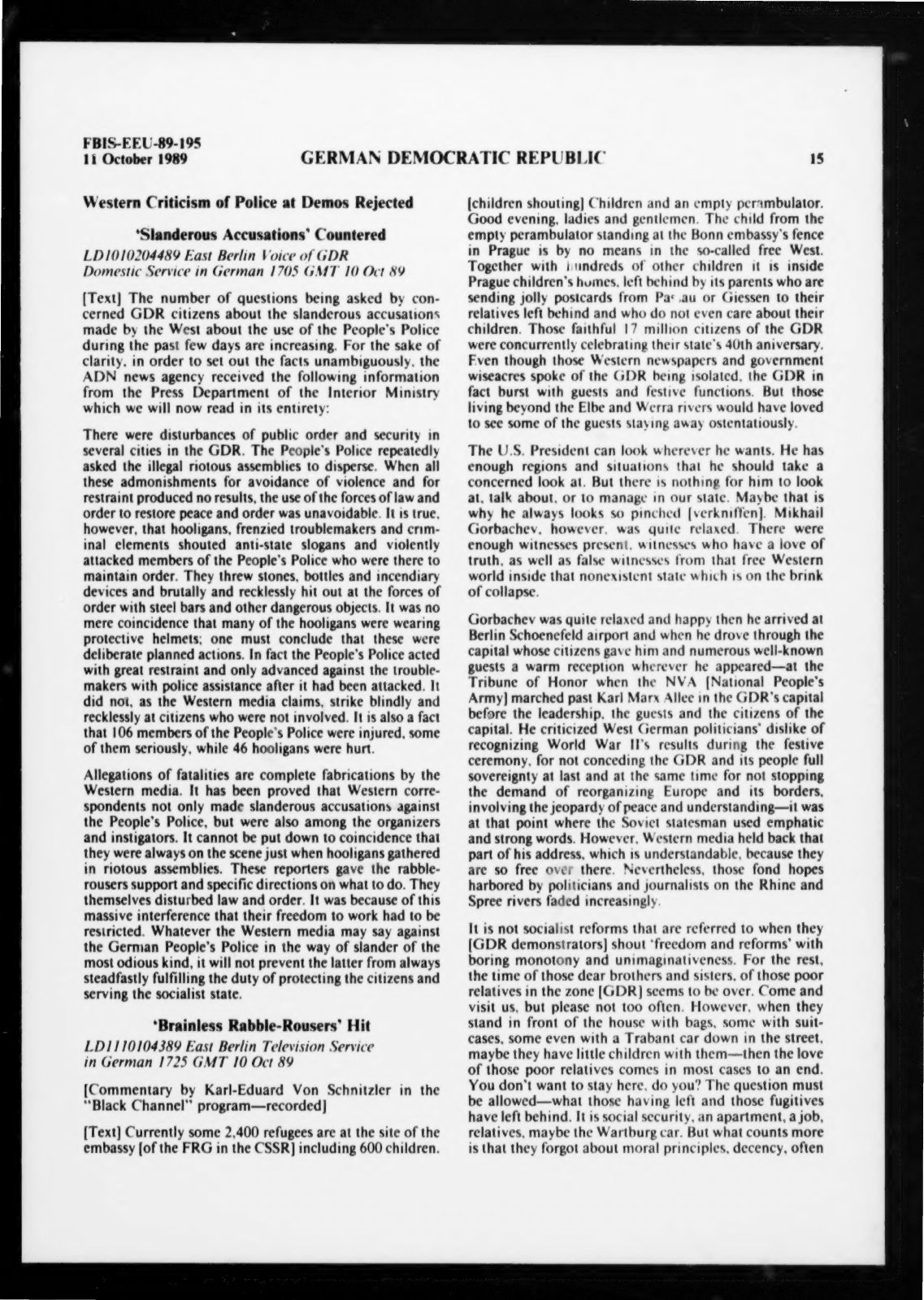
Voice of GDR and East Berlin Television Service broadcasts of 10 October 1989, as translated in the FBIS Daily Report, East Europe, 11 October 1989, page 15. Internet Archive (FBIS collection). Public domain (U.S. government work).
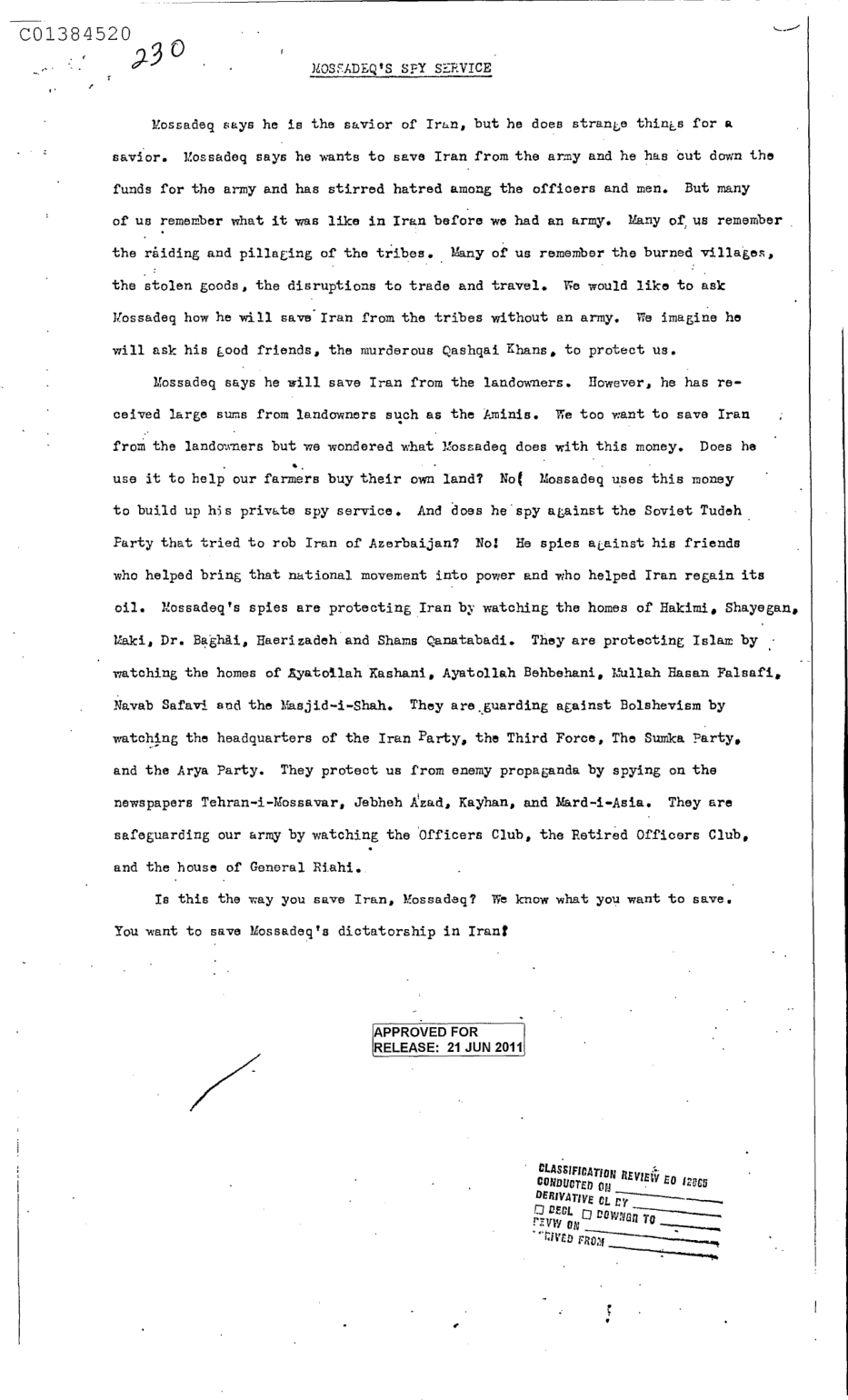
'Mossadeq's Spy Service', CIA-prepared text for placement in Iranian media, summer 1953. National Security Archive, George Washington University (CIA record released 21 June 2011). Public domain (U.S. government work).
The science
Research on the psychology this technique relies on, from the Learn library:
Research on the psychology this technique relies on, from the Learn library:
- Motivated reasoning — Motivated reasoning
- In-group favoritism — In-group favoritism
- Moral outrage — Moral outrage