Content note. This page quotes a wartime broadcast about death and maiming, and it links to a transcript addressed to Black U.S. soldiers by race. Both are shown as recorded.
In one line: Hanoi Hannah was the name U.S. troops gave Trịnh Thị Ngọ, an announcer on the Democratic Republic of Vietnam's Radio Hanoi English service to American servicemen. The two transcripts hosted here are credited to the station; they do not name her.

What happened
- 1965. Radio Hanoi, the Voice of Vietnam, starts an English-language programme for U.S. troops. Its best-known announcer, Trịnh Thị Ngọ, broadcast as Thu Hương ("Autumn Fragrance"). GIs called her Hanoi Hannah. A broadcast quoted by reporter Tom Tiede in a syndicated Newspaper Enterprise Association column of January 1966 opens: "How are you, GI Joe? It seems to me that most of you are poorly informed about the going of the war, to say nothing about a correct explanation of your presence over here. Nothing is more confused than to be ordered into a war to die or to be maimed for life without the faintest idea of what's going on." The original newspaper printing was not reached; the quotation is the one carried in the secondary accounts listed below.
- The scripts. The Washington Post's obituary says her scripts were written by the army's propaganda department. The same obituaries say the names and hometowns of American dead that the programme read came mainly from the U.S. military newspaper Stars and Stripes, and that the programme also carried news of antiwar protests in the United States and American pop songs.
- 23 June 1968 and 3 July 1968. Two U.S. government monitoring transcripts of Radio Hanoi's English service are in this archive: Hanoi in English: a defector's recorded letter to 'his colored buddies', 23 June 1968 and Hanoi in English: 'Comments on America's Independence Day', 3 July 1968. Each names the station. Neither names Trịnh Thị Ngọ. This page does not credit either broadcast to her.
- What the nickname was. "Hanoi Hannah" is the troops' name, as "Tokyo Rose" was a GI term for more than one woman on Japanese radio (see Wartime radio voices: open and hidden broadcasts aimed at the enemy, 1939-1945). The on-air name in the record used here is Thu Hương.
- 30 September 2016. Trịnh Thị Ngọ dies in Ho Chi Minh City. Voice of Vietnam gives her age as 87. Other accounts, based on a 1931 birth year, give 85. This page does not choose between those ages.
Content note: Wartime broadcast text urging U.S. troops to refuse orders, with accusations of genocide and racism against the U.S. government. This object is shown as it was published. Why 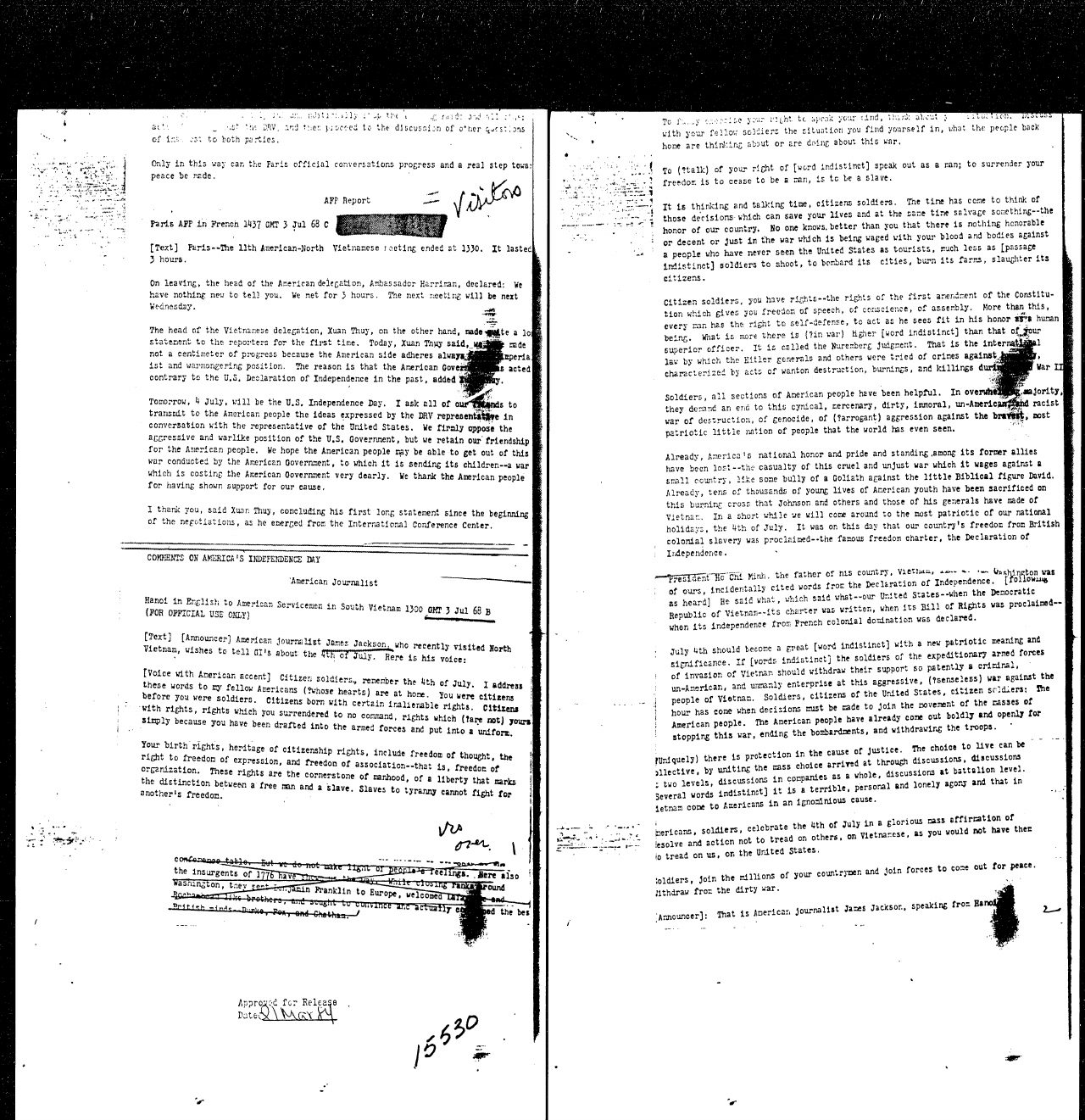
Hanoi in English: 'Comments on America's Independence Day', 3 July 1968: monitoring transcript of Radio Hanoi's English service, 3 July 1968. The speaker is identified only by the announcer. Library of Congress POW/MIA Database. Public domain (U.S. government work).
How it works
- Fear appeal: the January 1966 broadcast quoted by Tiede tells GIs they have been "ordered into a war to die or to be maimed for life" and offers a "correct explanation" of why they are there. The cost named in that quotation is death or maiming. What the same quotation offers is the station's explanation, not a stated route home.
- Card stacking: reading real names of American dead, beside antiwar news and pop songs, uses true items. The selection is what makes the pile read one way. The obituaries attribute that selection to the scripts, not to an announcer inventing the names.
- Testimonial: the hosted transcripts put an American voice on the station's side of the microphone. On 3 July 1968 an announcer introduces a self-described American journalist. On 23 June 1968 an announcer introduces a recorded letter from a named U.S. soldier, said to have crossed to the National Liberation Front. The transcripts do not verify either speaker's circumstances. They are Radio Hanoi's testimonials, whoever read the announcement.
Colour. Radio Hanoi named itself. The programme is white. The GI nickname is a label the audience added; it is not a hidden source.
Content note: Wartime broadcast text addressed to Black U.S. soldiers by race, using period terms such as 'colored', and alleging atrocities. This object is shown as it was published. Why 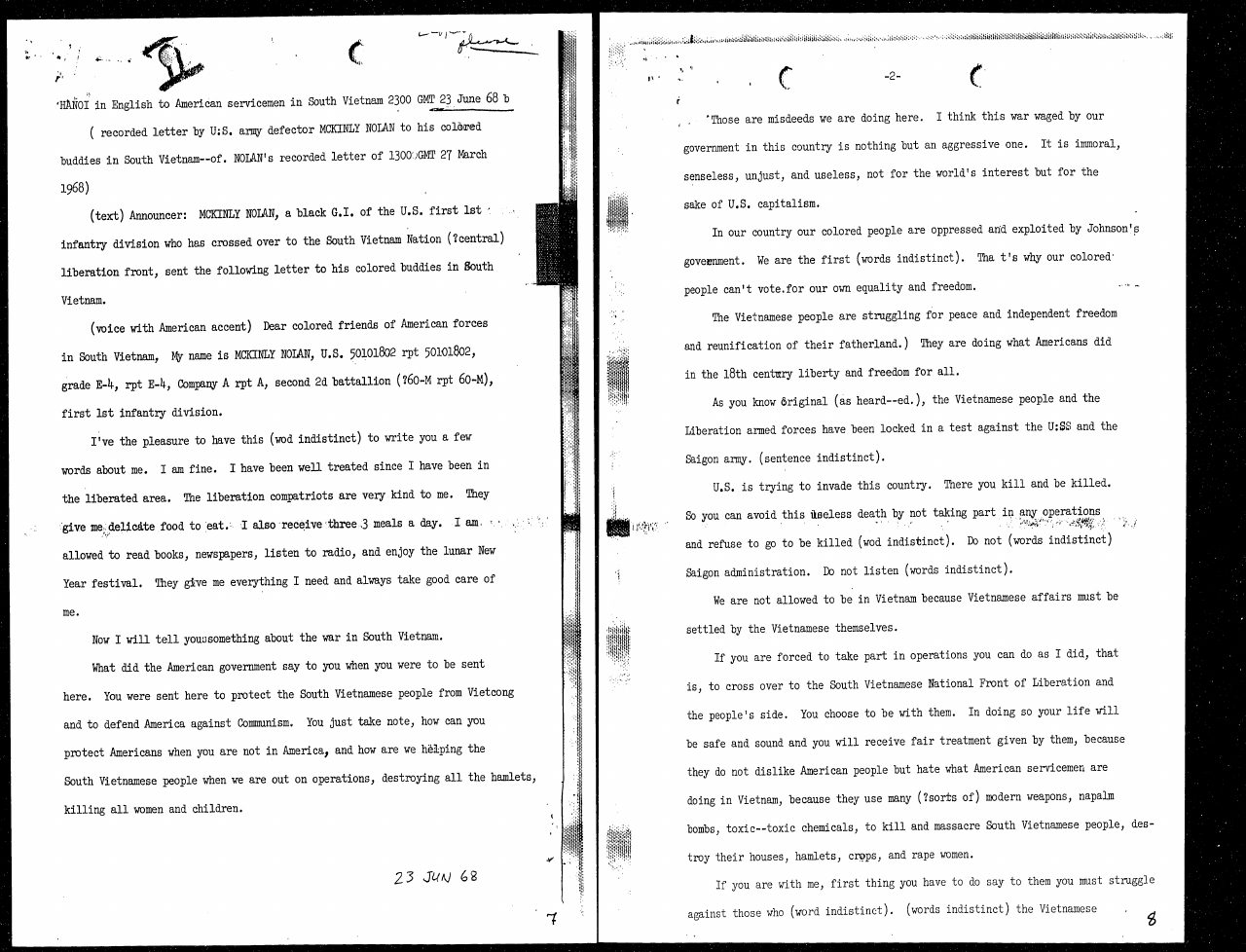
Hanoi in English: a defector's recorded letter to 'his colored buddies', 23 June 1968: monitoring transcript, 23 June 1968, of a recorded letter addressed to Black soldiers. Library of Congress POW/MIA Database. Public domain (U.S. government work).

Then and now
The other direction in the same war is Chieu Hoi and Radio Hanoi: both sides' propaganda aimed at the other side's soldiers in Vietnam: Saigon and the U.S. mission printed leaflets and safe-conduct passes asking National Liberation Front and North Vietnamese soldiers to change sides. Both are appeals to the other side's troops. The differences are on that page: leaflet volume in the billions on the U.S. and Saigon side, and a few English programmes a day from Hanoi.
The wartime precedent for the nickname is on Wartime radio voices: open and hidden broadcasts aimed at the enemy, 1939-1945. The U.S. National Archives' wording there is that "Tokyo Rose" was a GI term for a variety of female Japanese broadcasters, and that Iva Toguri was one of them. The same distinction applies here. The nickname is not a finding that one woman read every English broadcast.
Positions on the record
- The station. Voice of Vietnam announced her death and gave her age as 87.
- The obituaries. The Washington Post says the army's propaganda department wrote the scripts. NPR's 2016 obituary and a 2025 NPR segment treat the programme as both taunt and entertainment for GIs. Those are the outlets' characterizations.
- What this page does not find. It does not measure any effect on U.S. morale. It does not say she read the two hosted transcripts. It does not settle her age. The sources checked here do not include a statement by her of the programme's aims.
Same-method test
A named American voice on Radio Hanoi and a named rallier on a Saigon Chieu Hoi poster are both testimonial. A list of real dead, chosen and ordered, is card-stacking whoever reads it. A warning that the listener will die or be maimed unless he takes the offered way out is a fear appeal whoever broadcasts it. Scale is separate from the definition: Hanoi's English service was a radio programme; the leaflet campaign on the other side was counted in the billions.
How to spot it
- Separate the nickname from the person and from the station. A GI label can stick to one announcer and still get used for a whole service.
- Credit a transcript to the name printed on it. If the page names the station and not the announcer, the announcer is not the source.
- A true list can still be a stacked list. Ask what a broadcast of real names leaves out.
Images
| Image | Source | Licence |
|---|---|---|
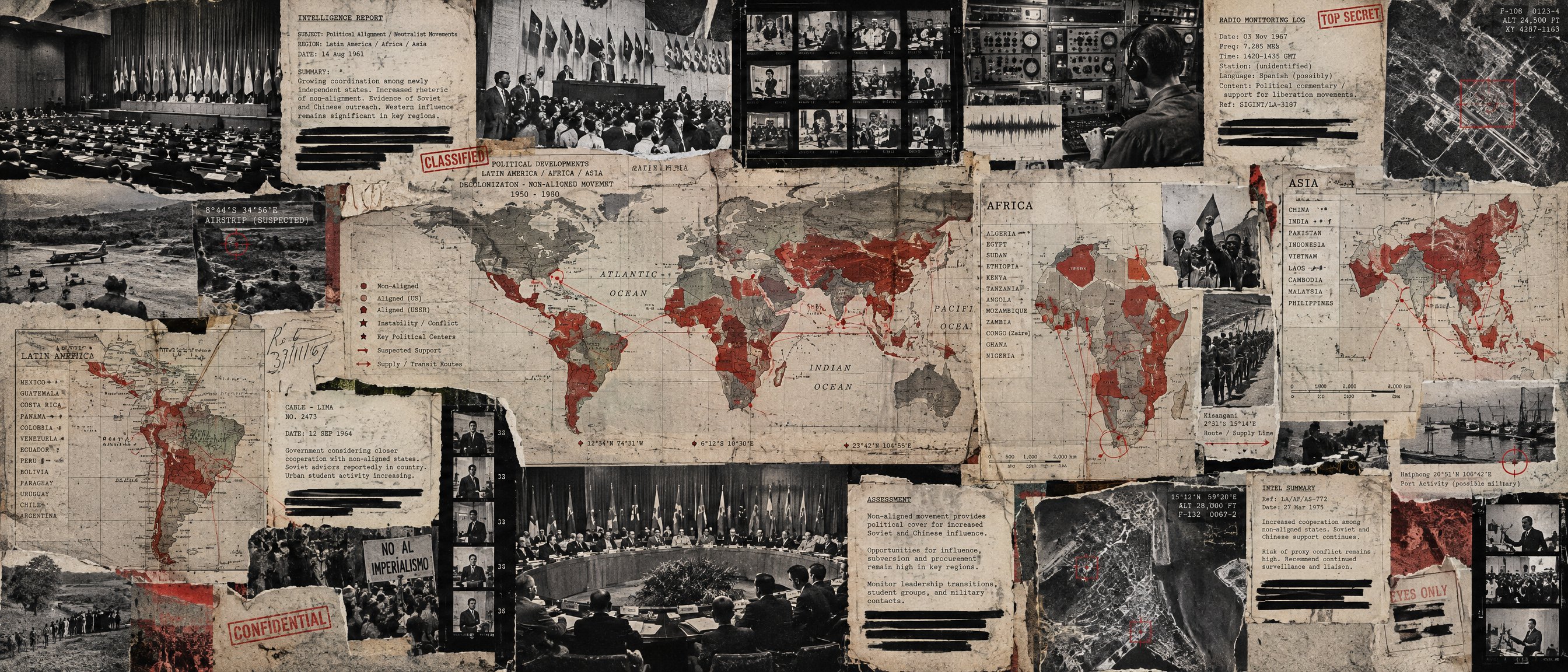
| Mechanism diagram (above) | Drawn for FRAME from the sources below | CC BY 4.0, FRAME |
| Radio Hanoi English transcript, 3 July 1968 | FRAME gallery, from the Library of Congress POW/MIA Database, pwmaster_102535 | Public domain (U.S. government work) |
| Radio Hanoi English transcript, 23 June 1968 | FRAME gallery, from the Library of Congress POW/MIA Database, pwmaster_112969 | Public domain (U.S. government work) |
Image gaps
- Photographs of Trịnh Thị Ngọ. Commons carries portraits tagged under Vietnamese law. They are not used. Their U.S. status is not established here.
- Recordings of the broadcasts. No openly licensed copy was found. A Commons copy of other Vietnam tapes with an unknown author is not a substitute.
The both-sides overview, and the other issuers, are on Vietnam War propaganda.
Sources
- NPR, 5 October 2016: "Hanoi Hannah," whose broadcasts taunted and entertained American GIs, dies
- Washington Post, 6 October 2016: Trinh Thi Ngo obituary
- Taipei Times (AFP), 5 October 2016: Vietnam War's "Hanoi Hannah" dies aged 87
- NPR, 27 April 2025: Hanoi Hannah revisited
- Tom Tiede, syndicated column, Newspaper Enterprise Association, January 1966. Quoted from the secondary accounts above. The original newspaper printing was not reached.
- Herbert A. Friedman, "Hanoi Hannah", psywarrior.com.
- U.S. monitoring transcripts in this archive: Hanoi in English: 'Comments on America's Independence Day', 3 July 1968, Hanoi in English: a defector's recorded letter to 'his colored buddies', 23 June 1968.