Content note. Some broadcasts quoted or shown here use slurs and abuse as they were aired: antisemitic lines from wartime Axis and Allied stations, "scum" and "worms" from Cuban state radio, appeals addressed by race in Radio Hanoi's English service. They are reported as evidence of how the broadcasts worked, not as this archive's description of anyone.
What is propaganda radio, and how do you tell its kinds apart?
Propaganda radio is broadcasting used by a state, party or movement to move listeners, from Lord Haw-Haw and "Tokyo Rose" to Radio Free Europe and Radio Moscow. The sorting test is the source: white propaganda names its sender, black conceals or falsifies it, and grey blurs it. Accuracy is a separate question.
What does the collection hold?
The archive tags 30 objects with the medium "broadcast", from 20 countries and dated 1944 to 2026: 28 are rated white and 2 grey (counts made from the entry files in examples/entries/). The tag covers television and addresses as well as radio. No audio is hosted: the objects are transcripts, monitoring digests and title cards. Twenty name the Foreign Broadcast Information Service (FBIS) in the title or caption. FBIS recorded and translated foreign radio for the U.S. government, so those pages are U.S. translations of other states' broadcasts, and the selection reflects what that service monitored. Four of the 30 were issued by U.S. bodies. The counts show what has been hosted with a clear rights basis, not how much each side broadcast.
What is the white, grey and black source test?
Garth Jowett and Victoria O'Donnell's textbook Propaganda and Persuasion sorts propaganda by how honestly it names its source. White comes from a correctly identified source and tends to be accurate. Black is material where "the source is concealed or credited to a false authority". Grey sits between: the source may or may not be correctly identified. FRAME applies the source test first, and then asks station by station whether the content was accurate. Colour is not a moral ranking; the method is what is scored. Definitions are in the working definition.
Who were Lord Haw-Haw, Axis Sally and Tokyo Rose?
All three were open-origin voices. The case study Wartime radio voices separates the nicknames from the people.
Explain moreShow less
- William Joyce ("Lord Haw-Haw"). Born in Brooklyn, a former British Union of Fascists organiser, Joyce left Britain in late summer 1939 and joined the German state radio's English service; his talks opened "Germany calling". The Daily Express radio critic named "Lord Haw-Haw" on 18 September 1939, though the voice first heard is widely thought to have been another announcer. A BBC Listener Research study found that in January 1940 about one adult in six in Britain listened regularly and about three in six occasionally, mostly from curiosity or frustration with official news. He was convicted of high treason on 19 September 1945, on the ground that his British passport bound him to allegiance. The Lords dismissed his appeal and he was hanged on 3 January 1946; the House of Lords Library notes the conviction has been criticised because he was not a British subject.
- Mildred Gillars ("Axis Sally"). Born in Portland, Maine, she announced for German state radio from 1940. Her programmes mixed American dance music with attacks on Roosevelt, Churchill and Jews. In Vision of Invasion (11 May 1944) she played a mother dreaming of her son's death in the Channel. She was convicted on 10 March 1949 on one count, for that play, and paroled in 1961.
- Iva Toguri ("Tokyo Rose"). The National Archives describes "Tokyo Rose" as "a GI term used to refer to a variety of female Japanese broadcasters". Toguri, a U.S. citizen born in Los Angeles in 1916, was visiting a sick aunt in Japan when the Pacific war began and refused to renounce her citizenship. From late 1943 she hosted segments of Radio Tokyo's Zero Hour as "Orphan Ann". An Australian prisoner of war, Major Charles Cousens, directed the programme; scripts were written by a U.S. POW and a Filipino POW. She was convicted on 29 September 1949 on one count and released in January 1956. In 1976 two key prosecution witnesses said they had been pressured and coached, and President Ford pardoned her on 19 January 1977. The record does not show that her own segments contained the taunts GIs described.
What did the Allies broadcast?
The Allies ran open and false-origin stations too. The BBC German Service was open-origin and built a reputation for accurate news. Britain's Political Warfare Executive ran Gustav Siegfried Eins (1941), whose "Der Chef" posed as a Prussian officer inside Germany, and Soldatensender Calais (1943 to 1945), whose formula was "cover, cover, dirt, cover, dirt": true news and music around hostile items. The U.S. 12th Army Group ran Radio 1212, posing as loyal Rhinelanders; the U.S. Holocaust Memorial Museum says its false reports of Allied positions led civilians to flee. Germany's Büro Concordia ran five stations posing as British dissidents. Treason law reached Joyce, Gillars and Toguri because they broadcast against their own states; it did not reach Allied staff who broadcast for theirs.
Explain moreShow less
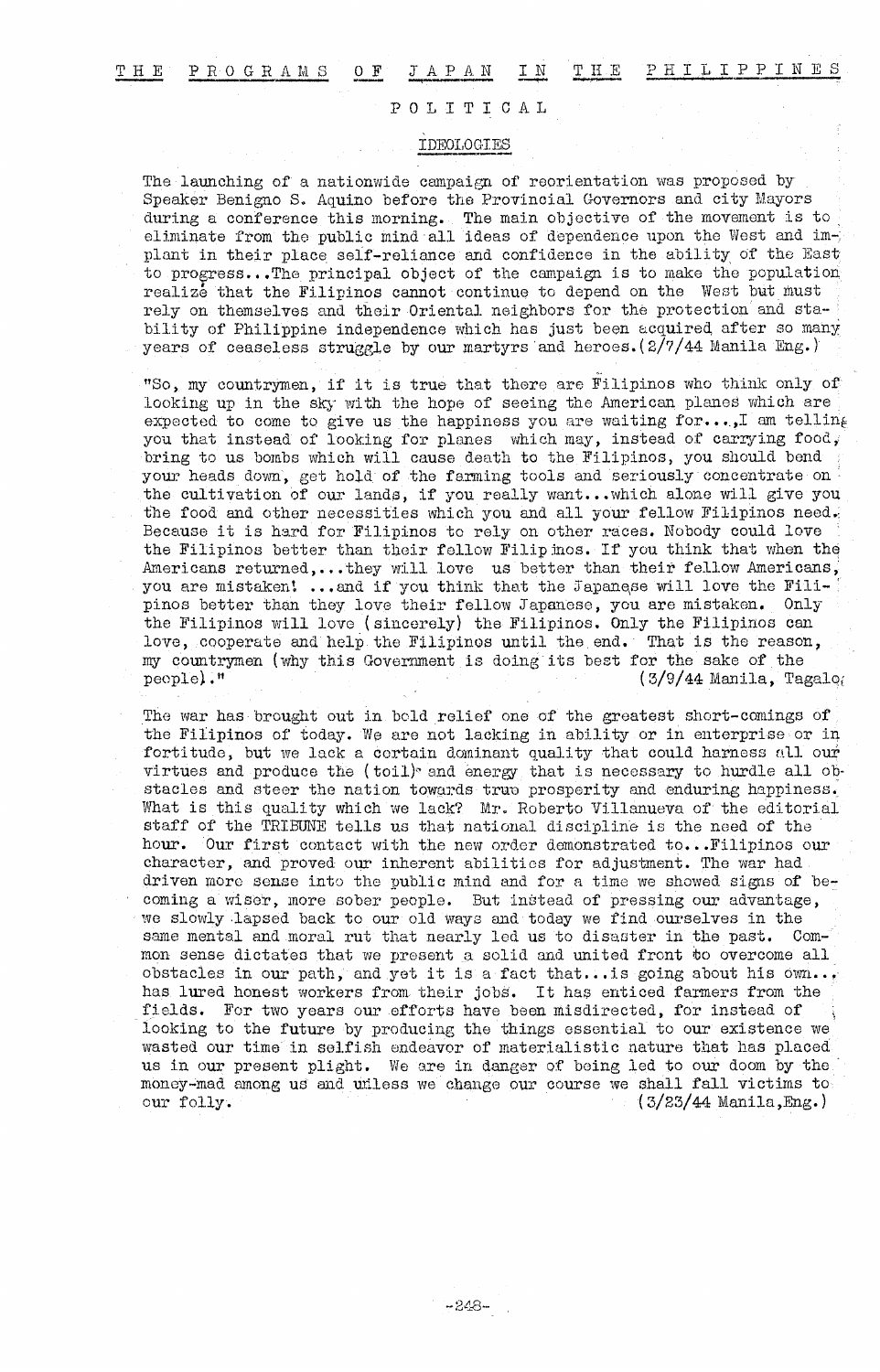
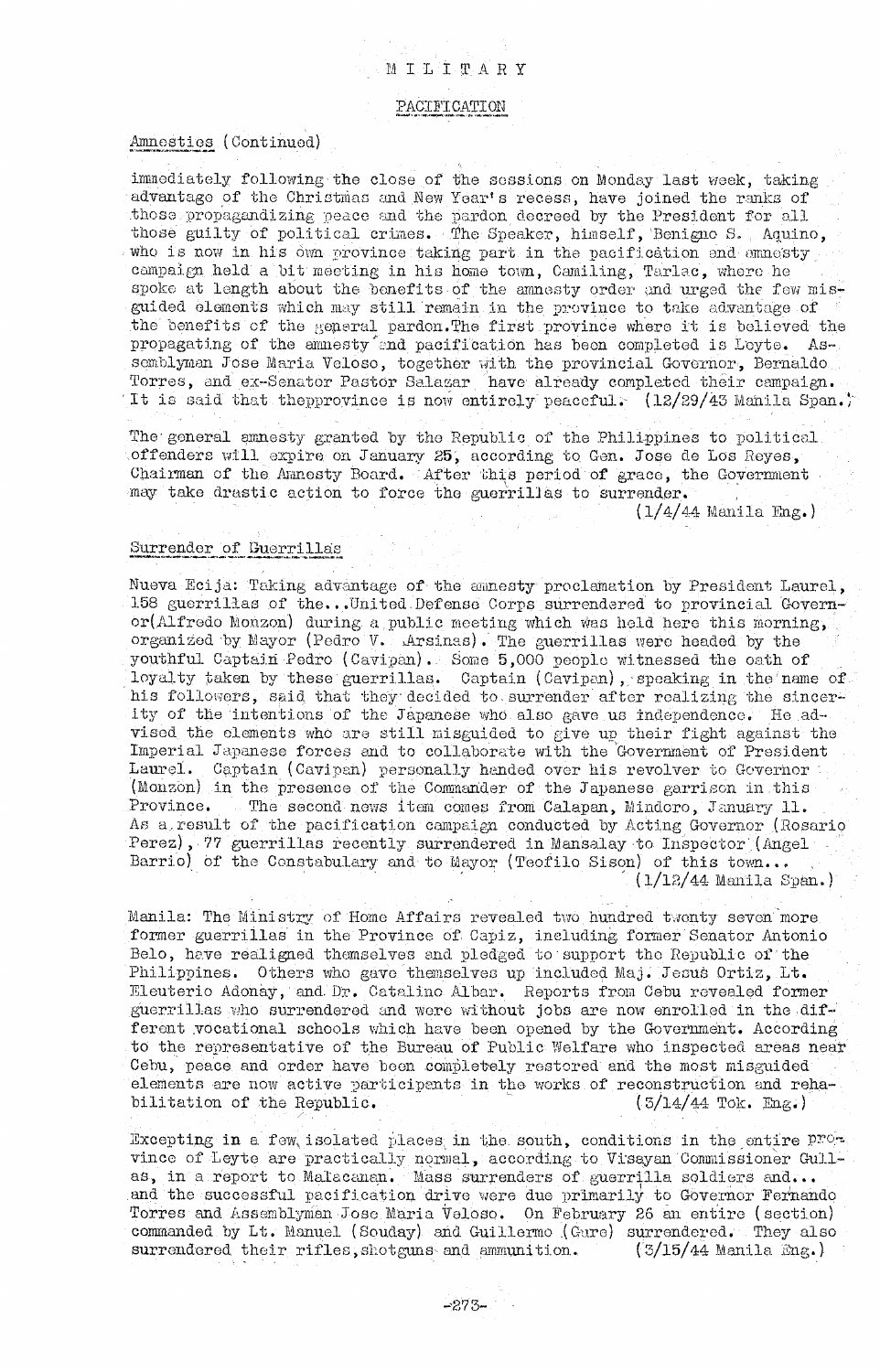
Two Japanese-controlled broadcast digests show the Pacific side as U.S. wartime monitors recorded it.
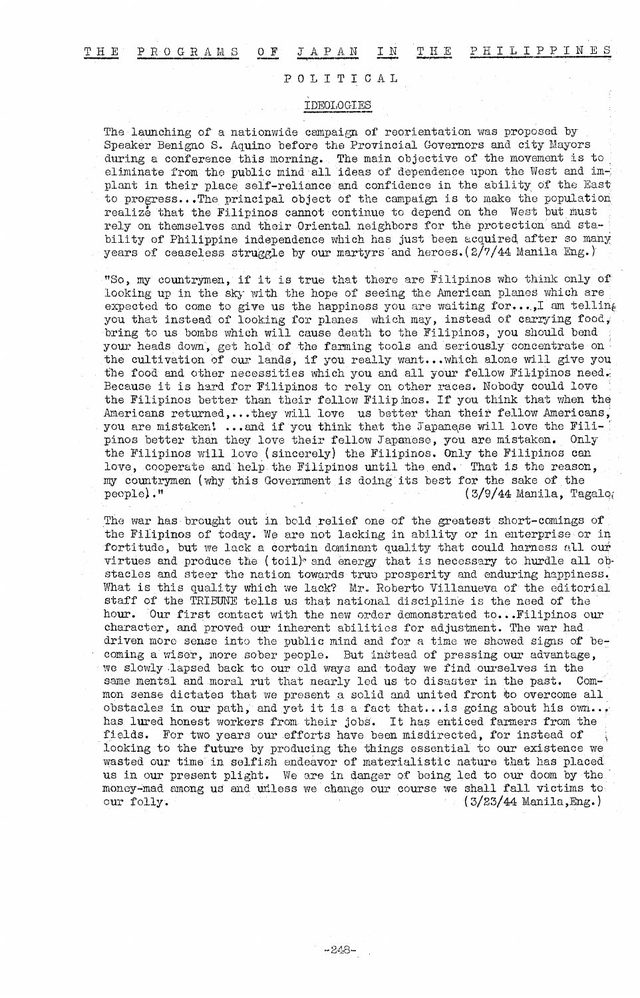
An OSS Research and Analysis digest of 1944 quotes a Tagalog talk of 9 March 1944 telling Filipinos who watch the sky that American planes may bring bombs, not food (fear appeal). The speaker is not named. Rated grey.
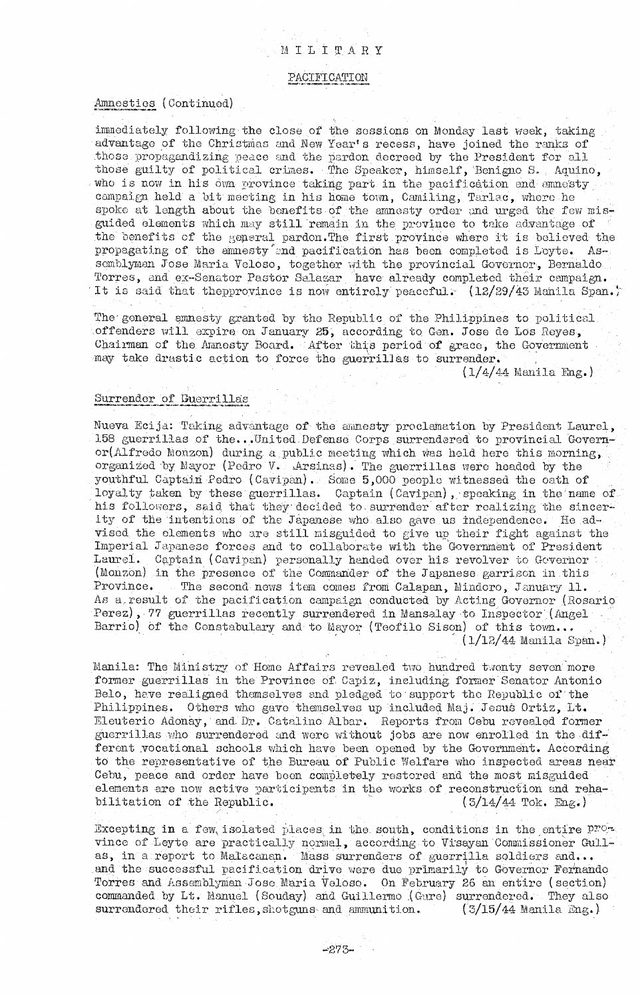
A second page quotes broadcasts on a guerrilla amnesty, with surrender counts of 158, 77 and 227 and the phrase "misguided elements" (bandwagon, euphemism). The OSS report does not verify the figures.
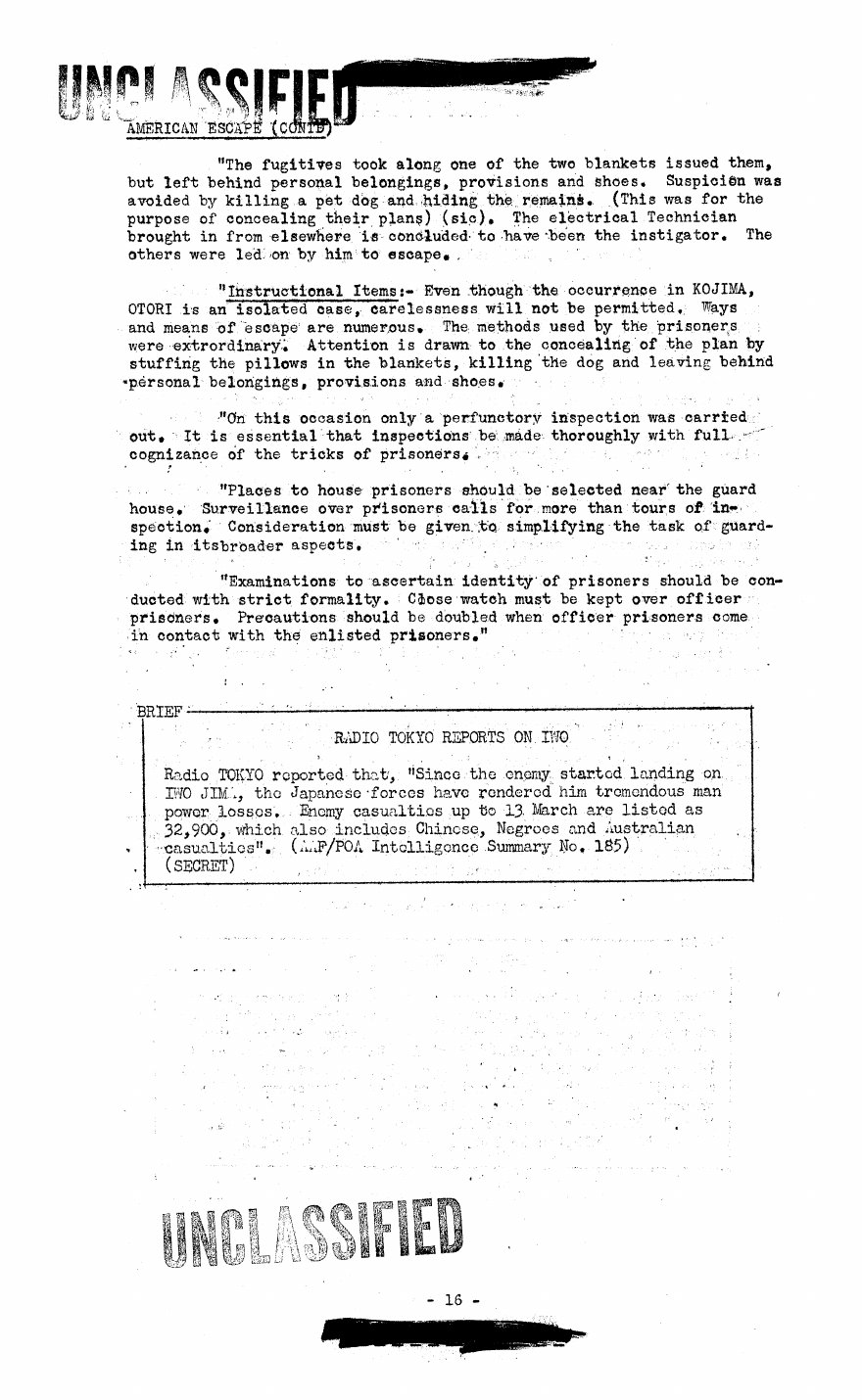
A U.S. Army bulletin of 6 April 1945 quotes a Radio Tokyo claim of 32,900 Allied casualties on Iwo Jima with no source and no Japanese figure (card-stacking). Only the U.S. translation survives. Read the technique: card stacking.
How did Cold War stations broadcast, and who paid?
Radio Free Europe began broadcasting to Czechoslovakia on 4 July 1950. Its parent, the National Committee for a Free Europe, presented itself as a private body of citizens, but its money came mainly from the CIA. Senator Clifford Case told the Senate on 25 January 1971 that "several hundred million dollars" from secret CIA budgets had paid "almost totally" for Radio Free Europe and Radio Liberty for 20 years. Congress began funding both openly under the International Broadcasting Act of 1973. The Crusade for Freedom raised donations on the stations' behalf. See The Crusade for Freedom.
Explain moreShow less
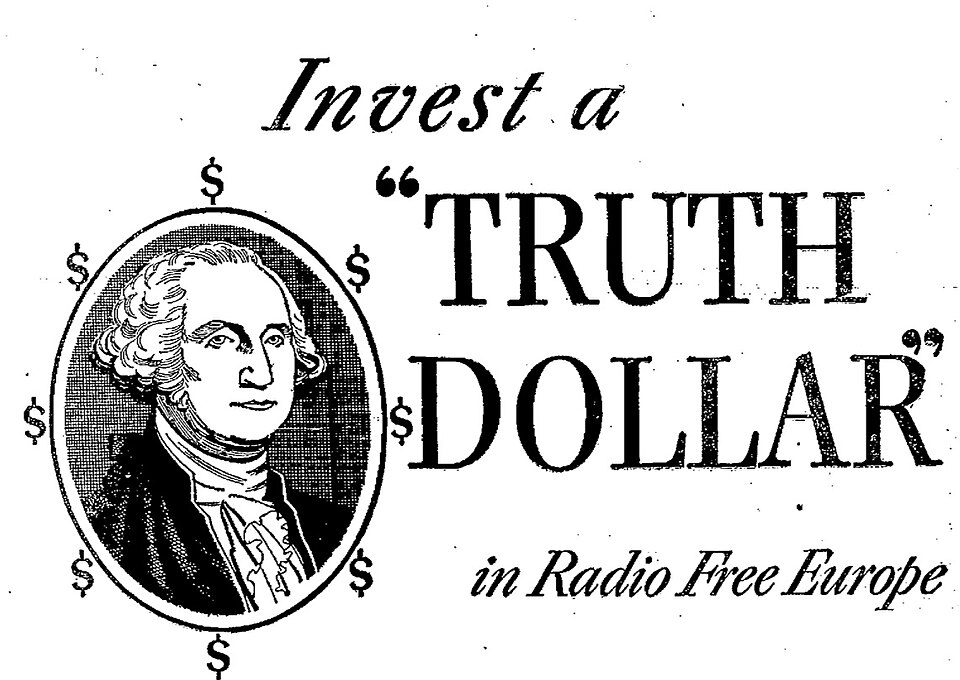
This 1954 advertisement asks Americans to "Invest a 'Truth Dollar'" and says nothing of the station's main funder (glittering generalities, transfer). Rated grey.
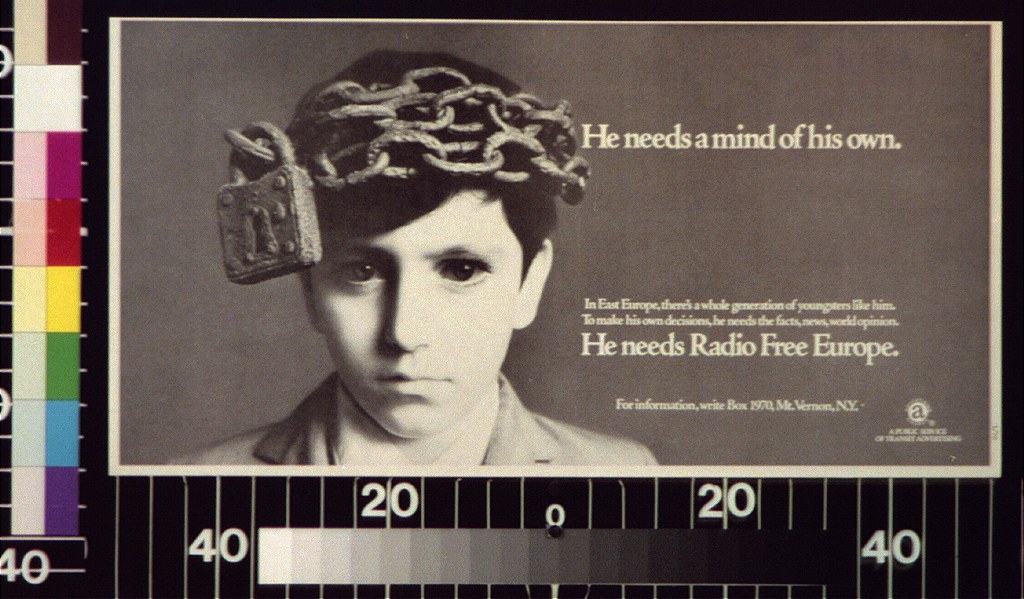
A 1970 transit advertisement, placed as a public service with the Advertising Council, ties the chain on a child to the station's cause. Rated grey. Read the technique: transfer.
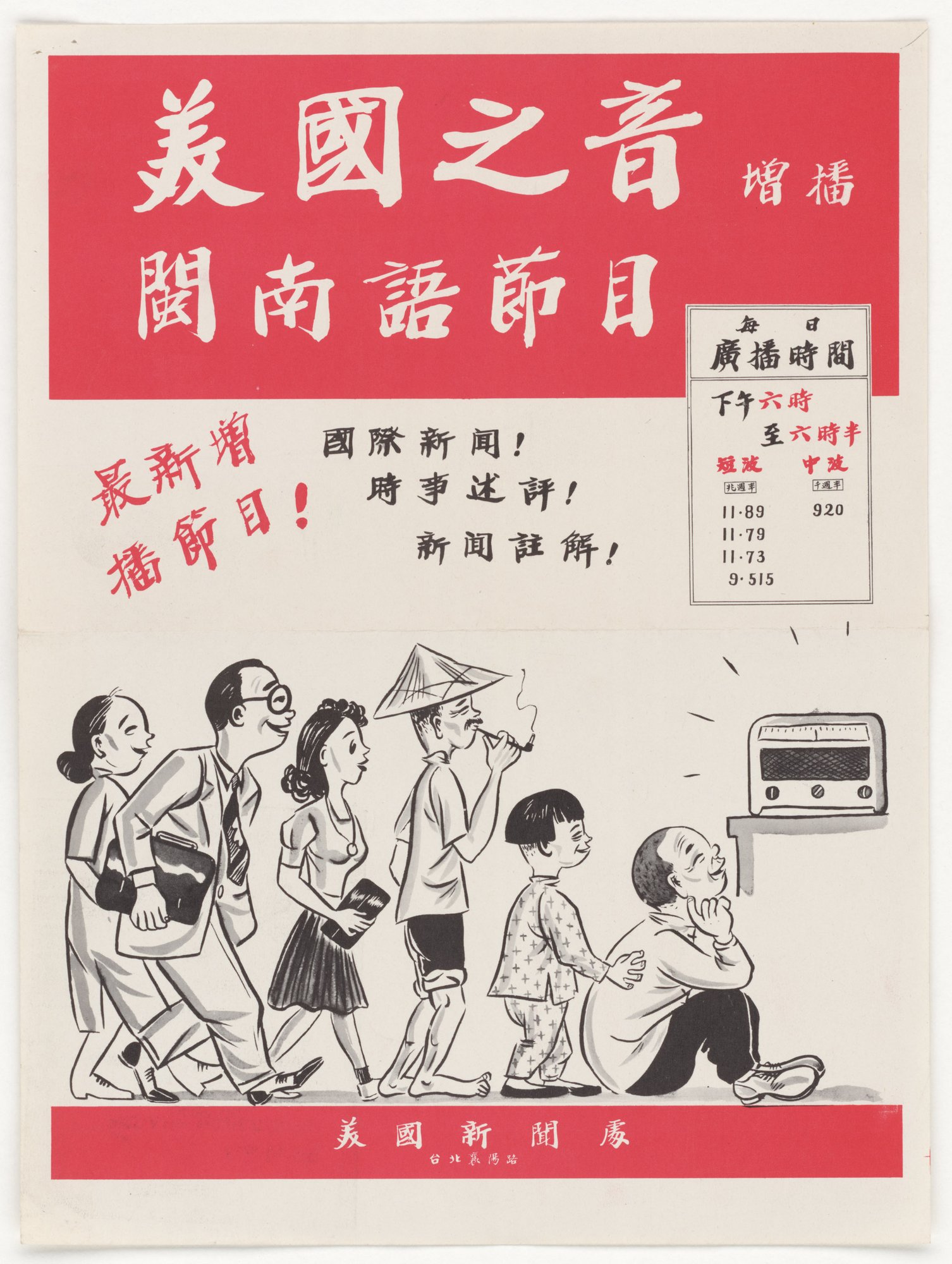
Not every sponsor was hidden. This Voice of America sheet and a Korean War leaflet name theirs.
A USIS Taipei poster of April 1951 gives the Southern Min schedule and frequencies, and a queue of figures walking toward a set implies everyone tunes in (bandwagon).
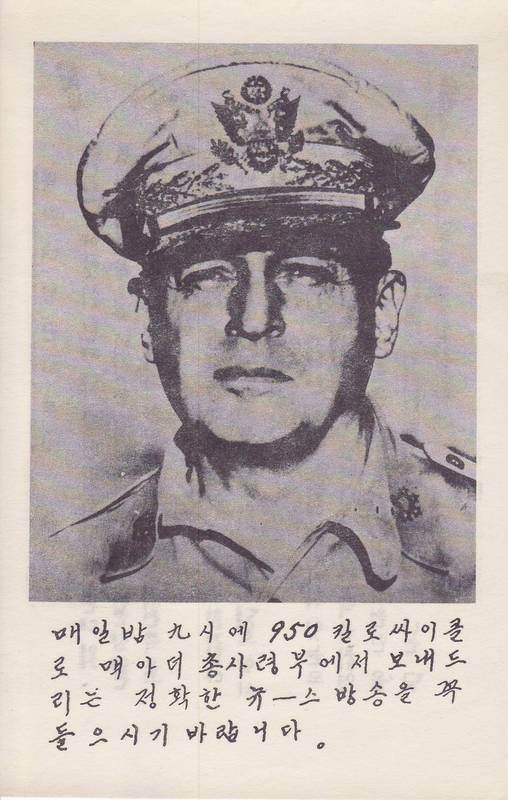
A 1950 leaflet credited to United Nations Command psychological warfare puts General Douglas MacArthur's portrait over a request to listen nightly on 950 kilocycles; his face is the only argument offered for the news's accuracy (transfer).
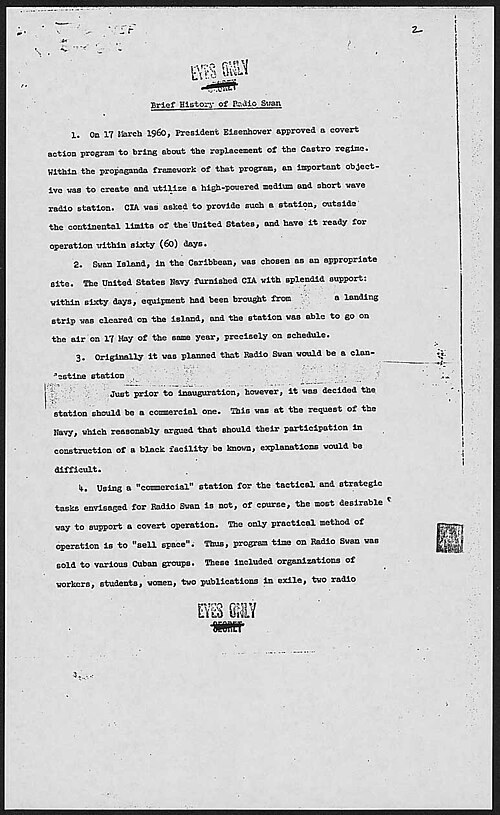
Radio Swan is the documented hidden-sponsor case. In May 1960 it began broadcasting in Spanish to Cuba from Great Swan Island, owned on paper by the Gibraltar Steamship Corporation and in fact run by the CIA.
A 1961 annex held by the Kennedy Library says the station was first planned as clandestine and then made "commercial" at the Navy's request. During the April 1961 Bay of Pigs operation it broadcast coded messages to agents inside Cuba. See the Cuba-US radio war.
East Germany answered Western radio with display cases and with its own false-origin station: Deutscher Freiheitssender 904 (1956 to 1971) claimed to speak from a cellar in West Germany for the banned Communist Party but was produced on East German territory and funded by the ruling SED, per the wartime-voices case study.
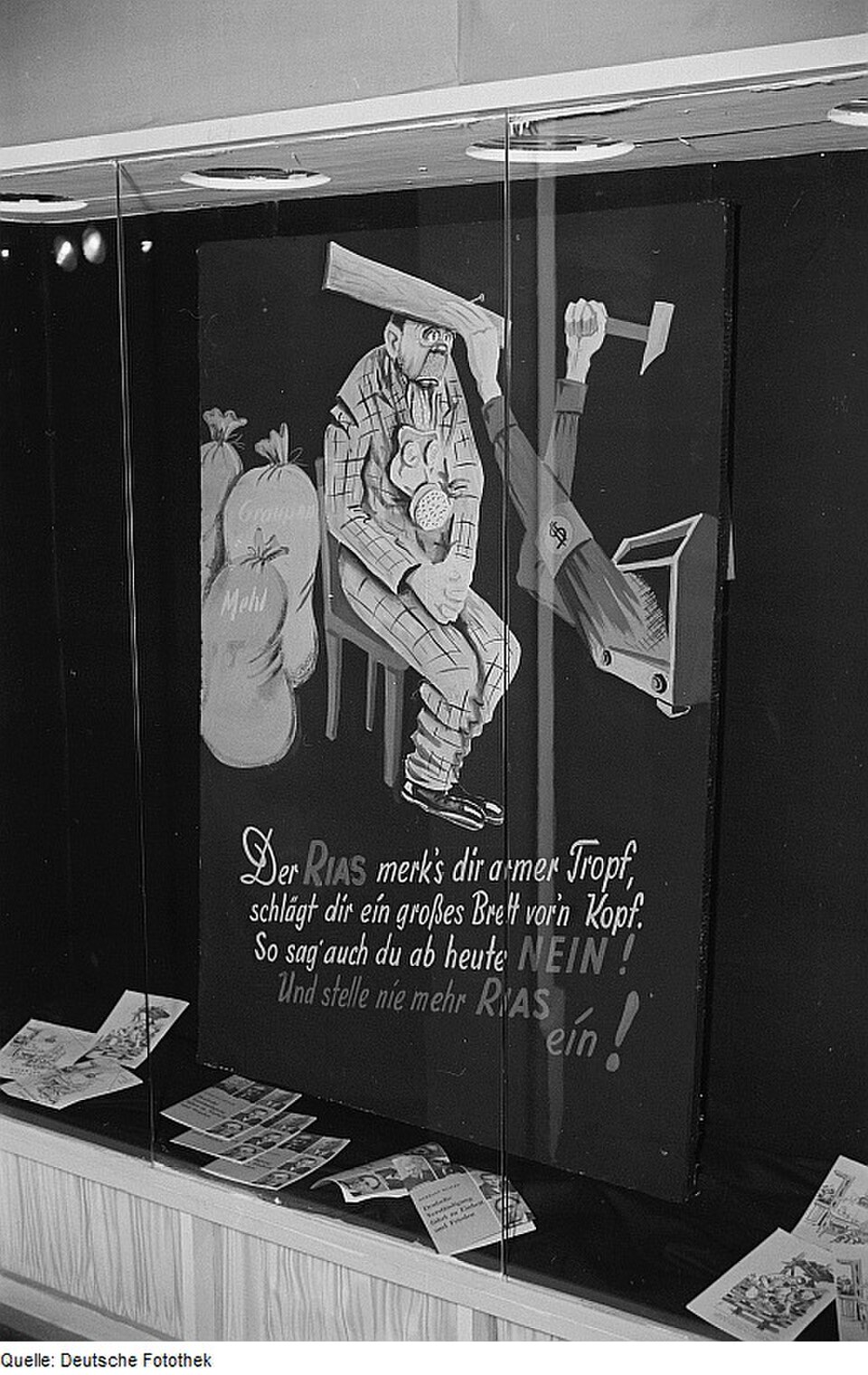
A 1952 panel in Leipzig attacks RIAS, the U.S.-funded West Berlin broadcaster, by pasting a dollar-marked sleeve and a plank onto its listener (name-calling by image). Who ordered the panel is not recorded, so it is grey.
What did Hanoi, Havana and Cairo broadcast?
Radio Hanoi began an English-language programme for U.S. troops in 1965, reading out names of American dead alongside antiwar news and pop songs; the case study on Chieu Hoi and Radio Hanoi sets it beside Saigon's leaflets aimed at the other side's soldiers. Cairo's Voice of the Arabs (from 1953) called pro-Western rulers "lackeys of imperialism" while Britain ran an Arabic station presented as commercial; see the Suez radio war.
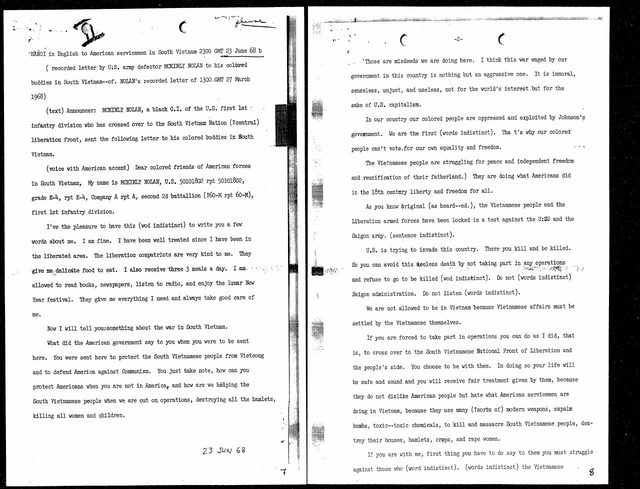
Content note: Wartime broadcast text addressed to Black U.S. soldiers by race, using period terms such as 'colored', and alleging atrocities. This object is shown as it was published. Why 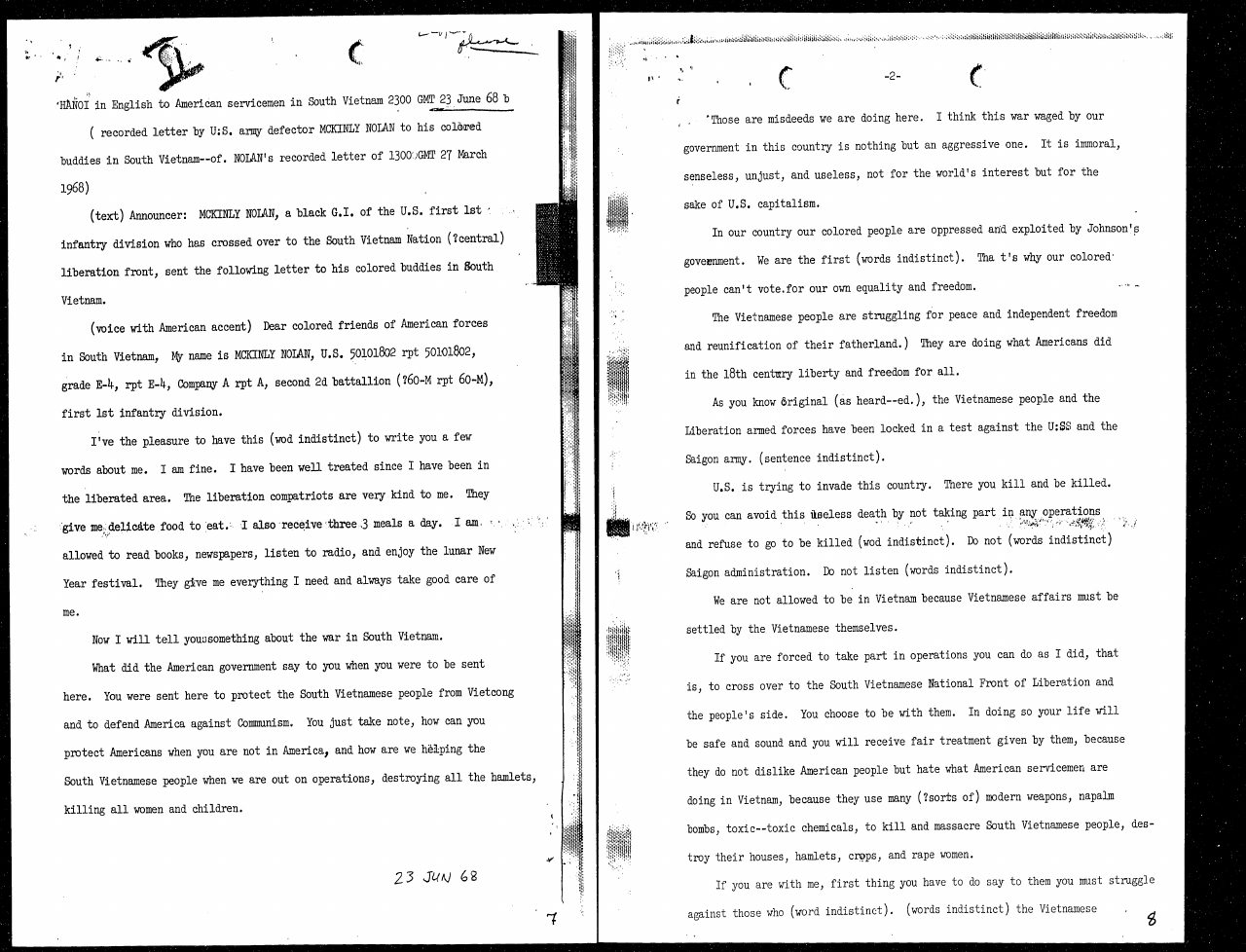
Explain moreShow less
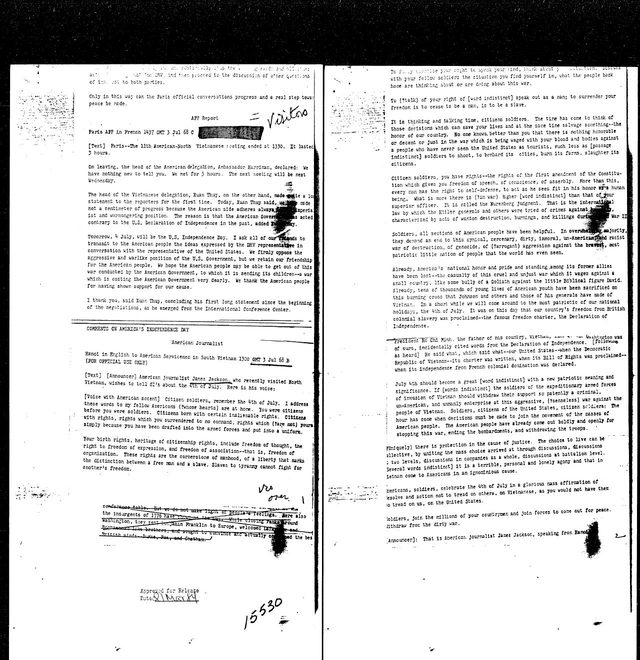
A U.S. Government transcript of 23 June 1968 carries a recorded letter from a named U.S. soldier said to have crossed to the National Liberation Front, addressed to Black soldiers (testimonial). Nothing in the transcript verifies the speaker's circumstances. Read the technique: testimonial.
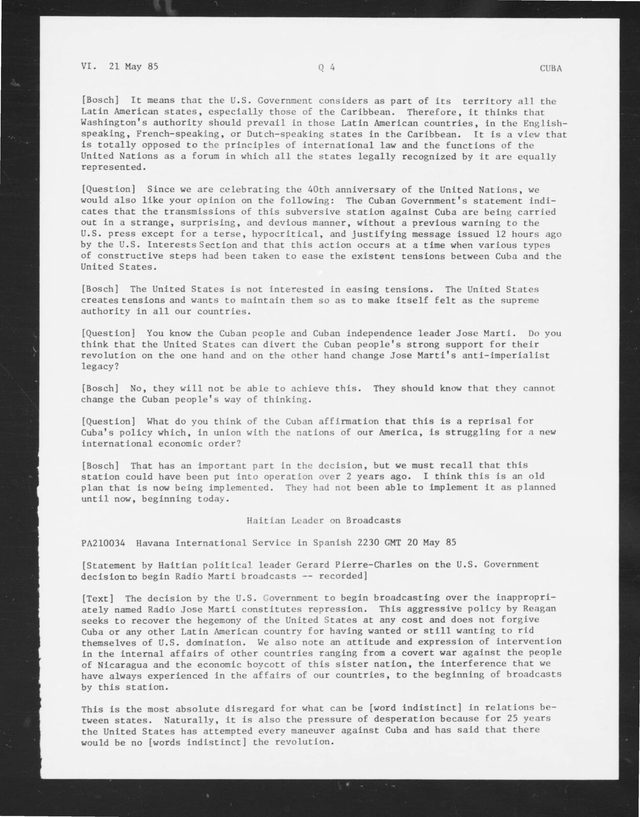
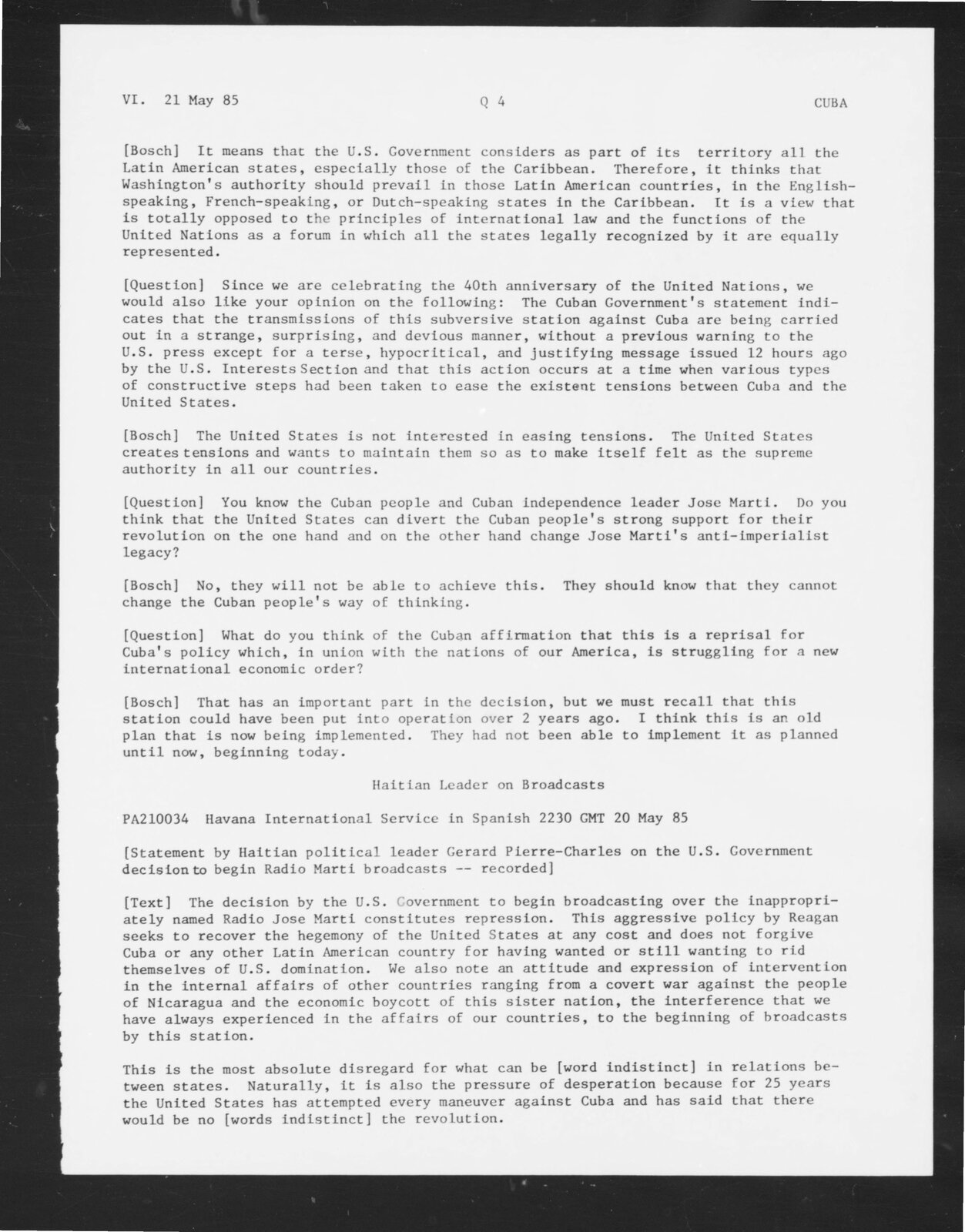
When the U.S. government's Radio Martí began on 20 May 1985, Havana International Service aired friendly foreign figures to attack the station's name and launch (testimonial, name-calling). Both states were broadcasting to the other's public.
How did states jam foreign radio?
The Soviet Union began jamming Western broadcasts in 1948. It stopped jamming the Voice of America, BBC and Deutsche Welle on 19 June 1963, resumed on 21 August 1968, stopped in 1973, resumed in August 1980, stopped again in 1987, and ended jamming of Radio Free Europe and Radio Liberty in November 1988. Britain jammed Athens Radio in Cyprus from 1956 to 1959, and Cuba has jammed Radio and TV Martí. Radio Liberty's surveys of travelling Soviet citizens, from a non-random sample run by the broadcaster, suggest jamming reduced listening but did not stop it: the Voice of America reached nearly 15 per cent of Soviet adults in an average week in 1978 to 1990. Moscow called Western stations "enemy voices" and centres of subversion; Western governments cited Article 19 of the Universal Declaration of Human Rights. Both positions are on Cold War radio jamming.
What do FBIS monitored transcripts show?
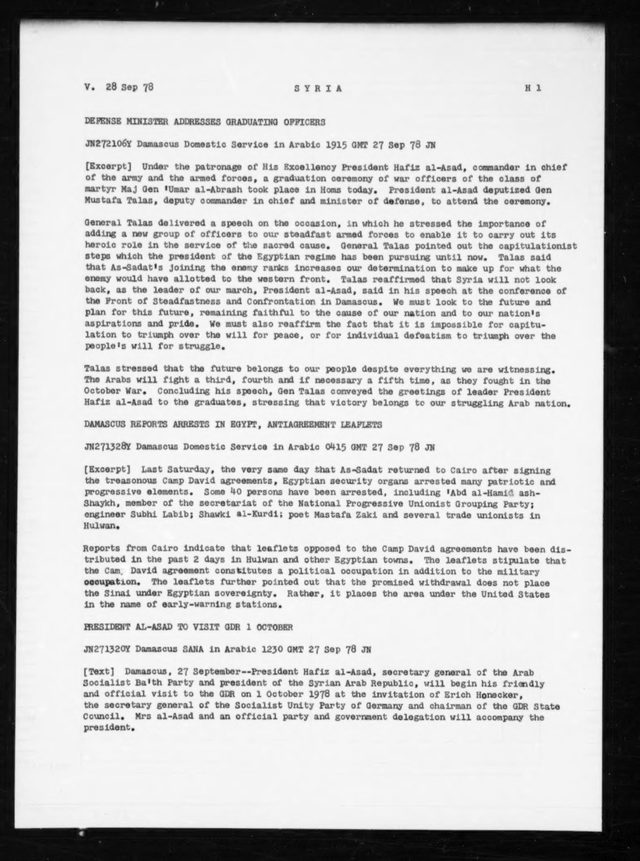
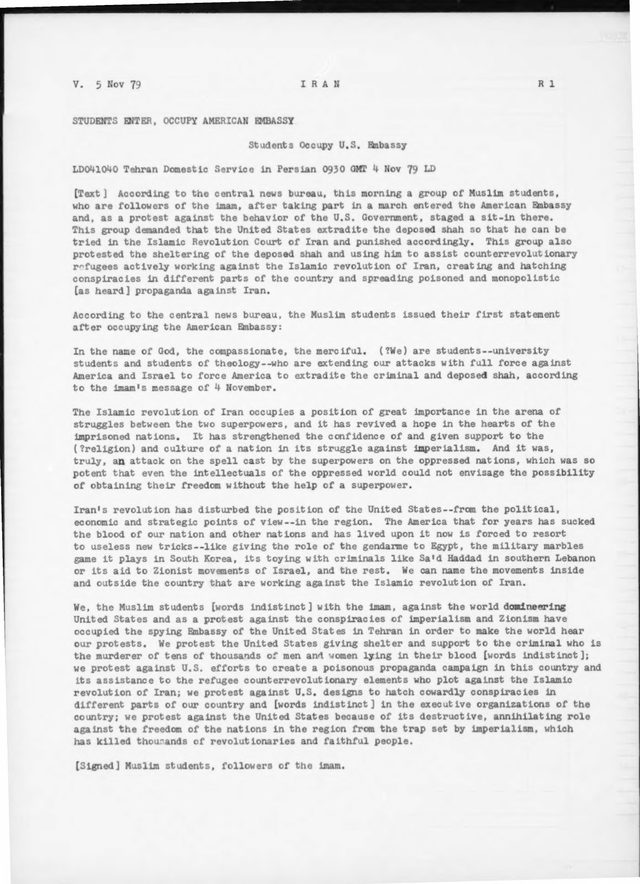
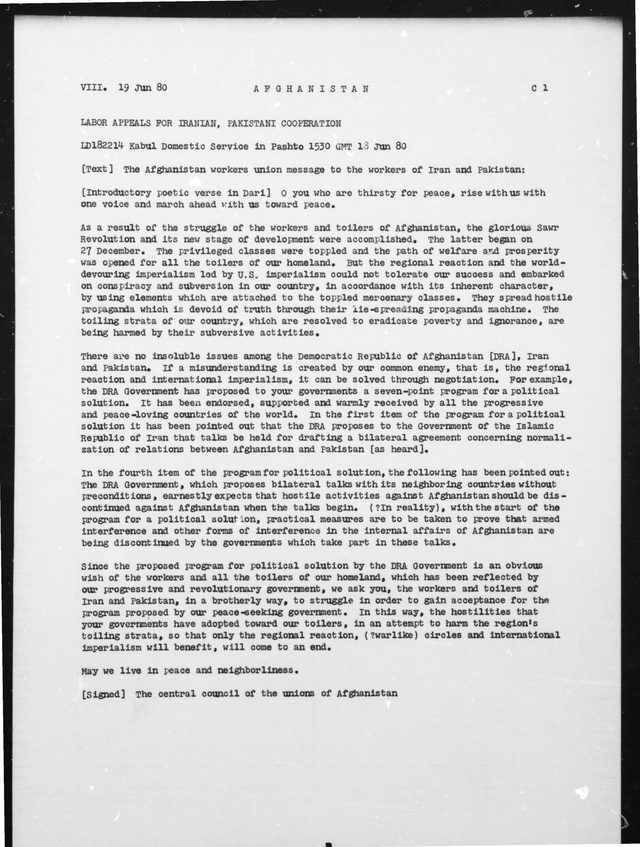
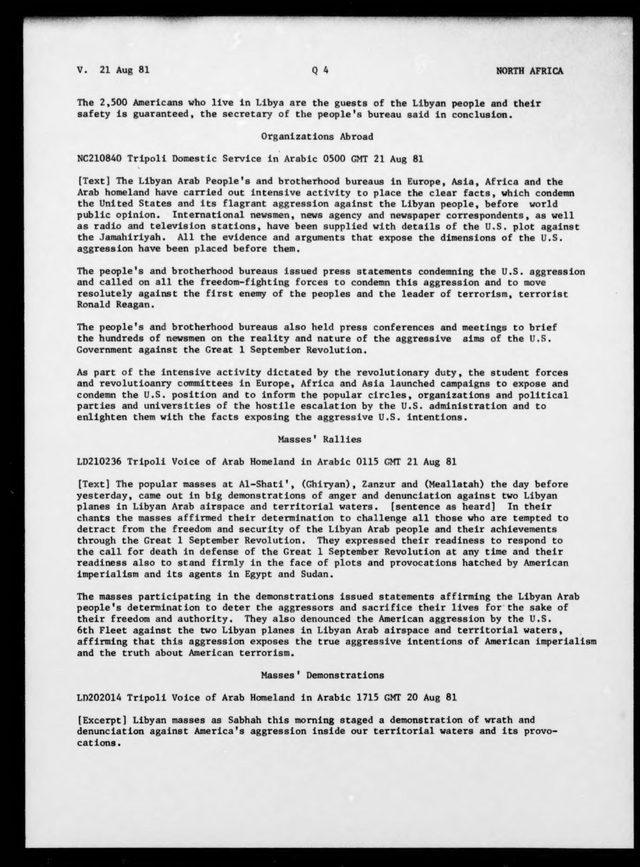
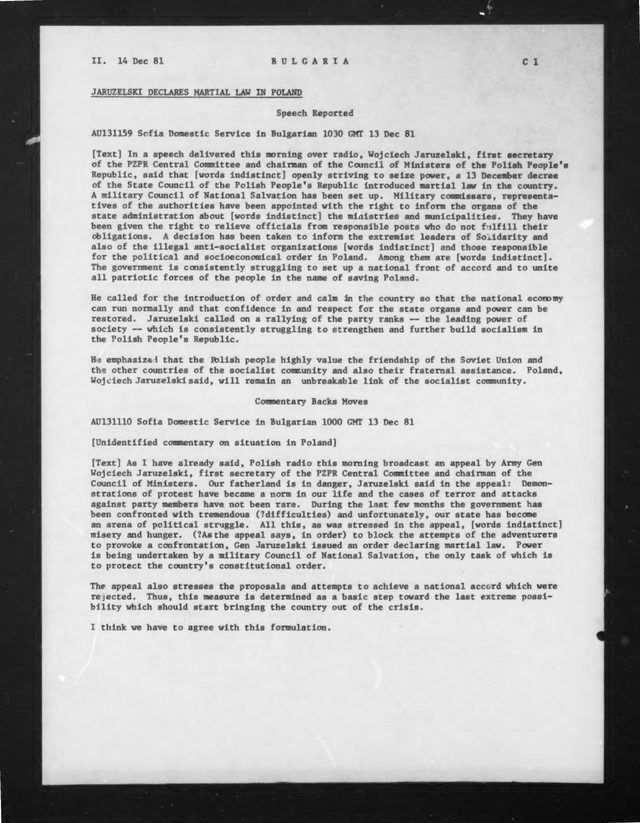
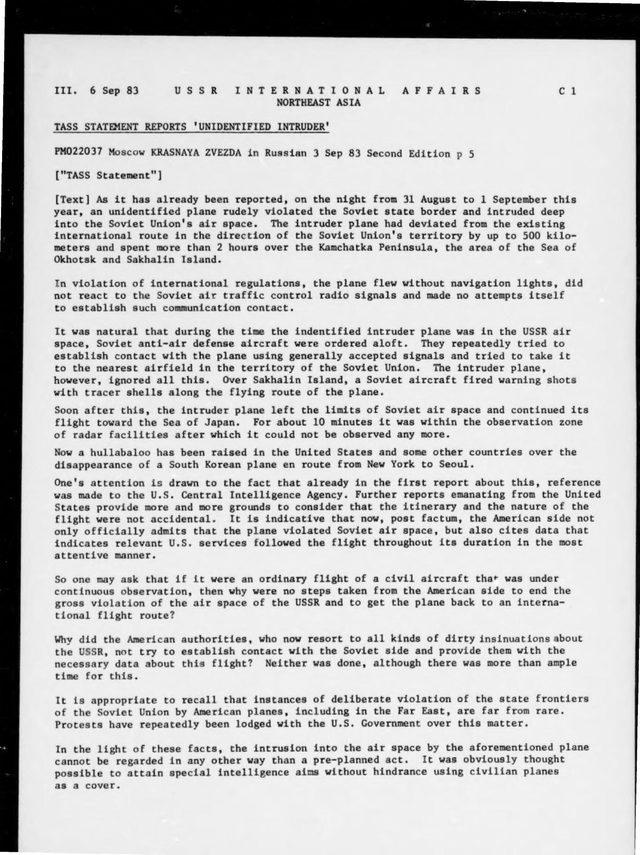
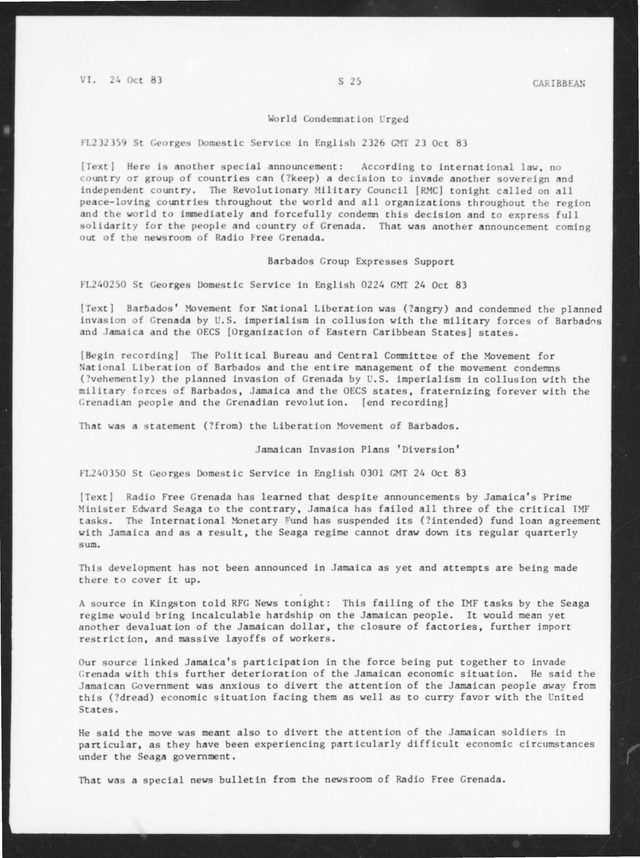
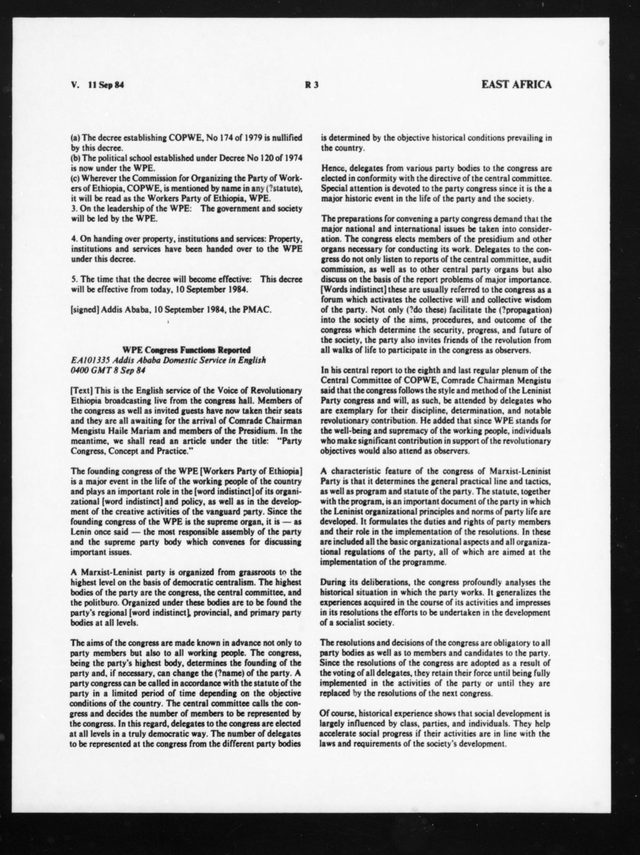
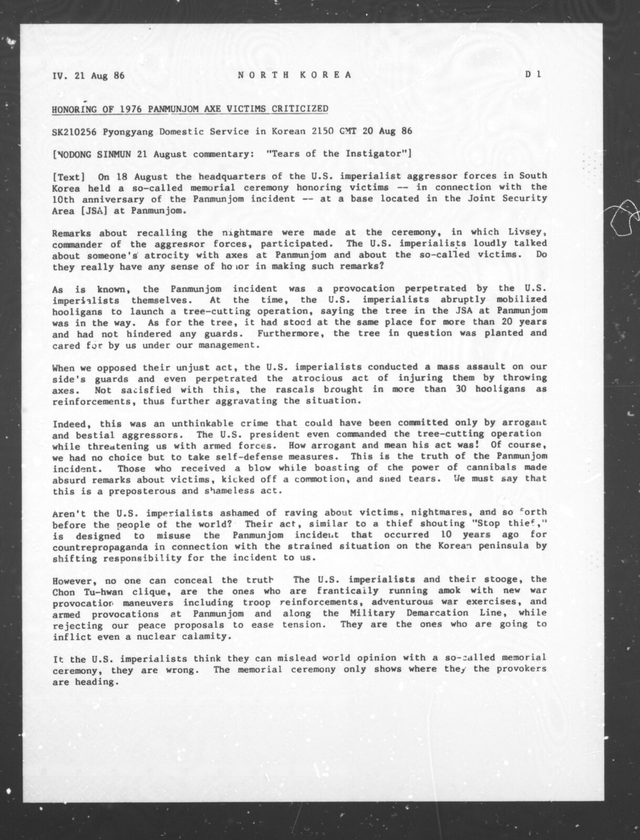
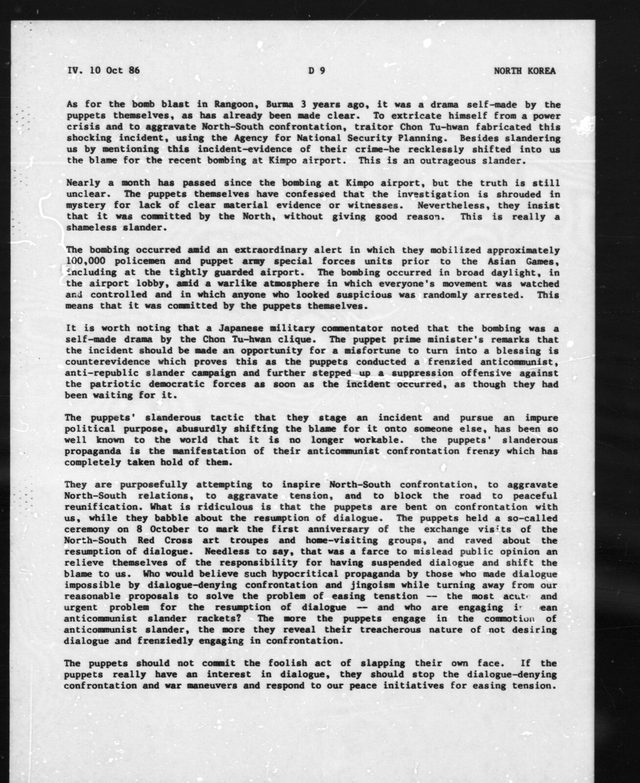
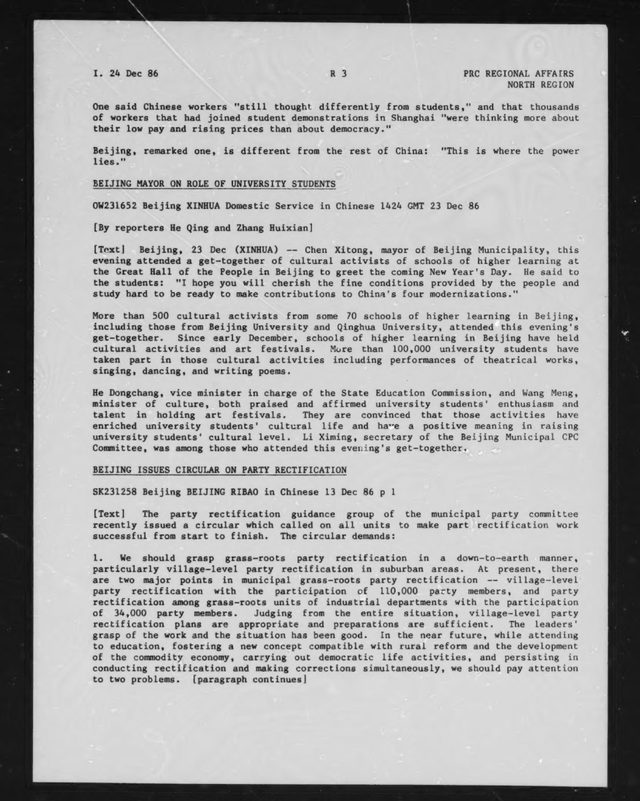
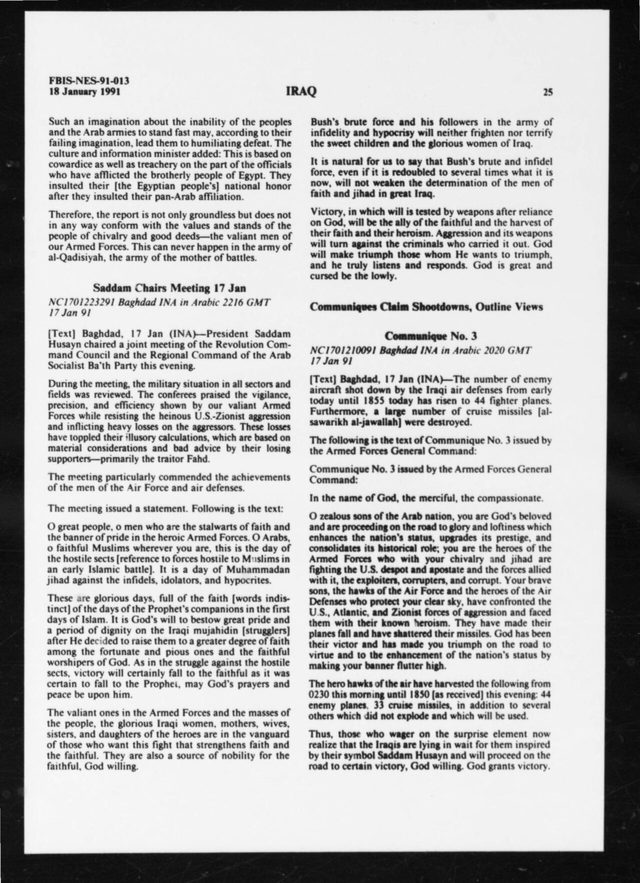
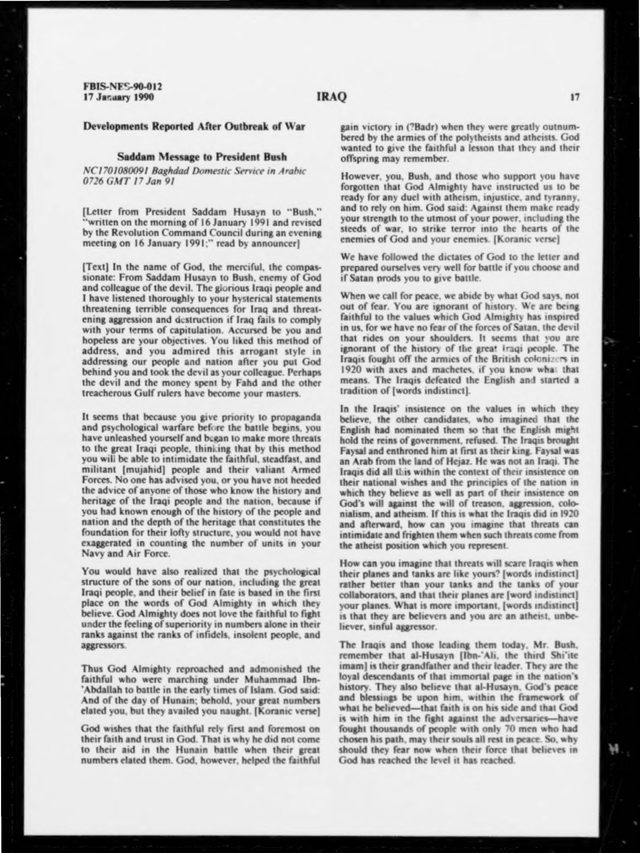
The 20 FBIS pages are U.S. translations or transcripts of state radio, news-agency and television items. Each shows a broadcaster speaking as itself, the white-propaganda case. FBIS chose what to record, so they are a monitored selection.
Explain moreShow less
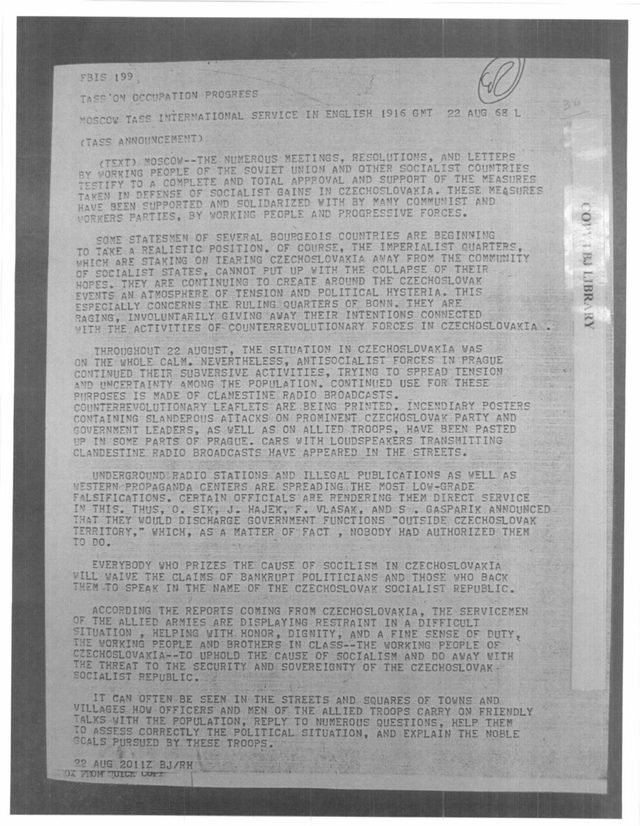
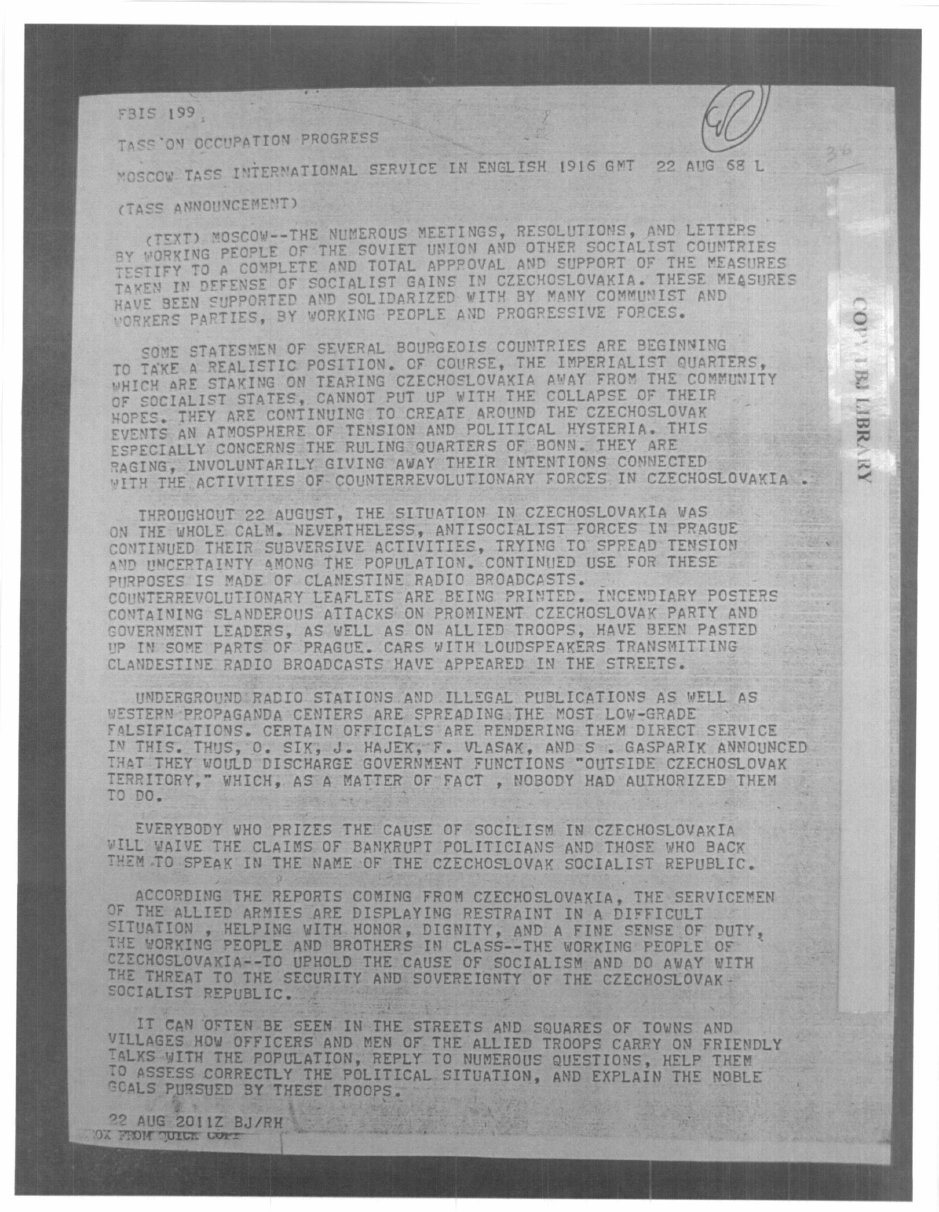
TASS International Service, 22 August 1968, calls the Warsaw Pact troops "allied", cites "numerous meetings, resolutions, and letters" as approval, and labels opponents "counterrevolutionary" and "bankrupt politicians" (name-calling, bandwagon, euphemism).
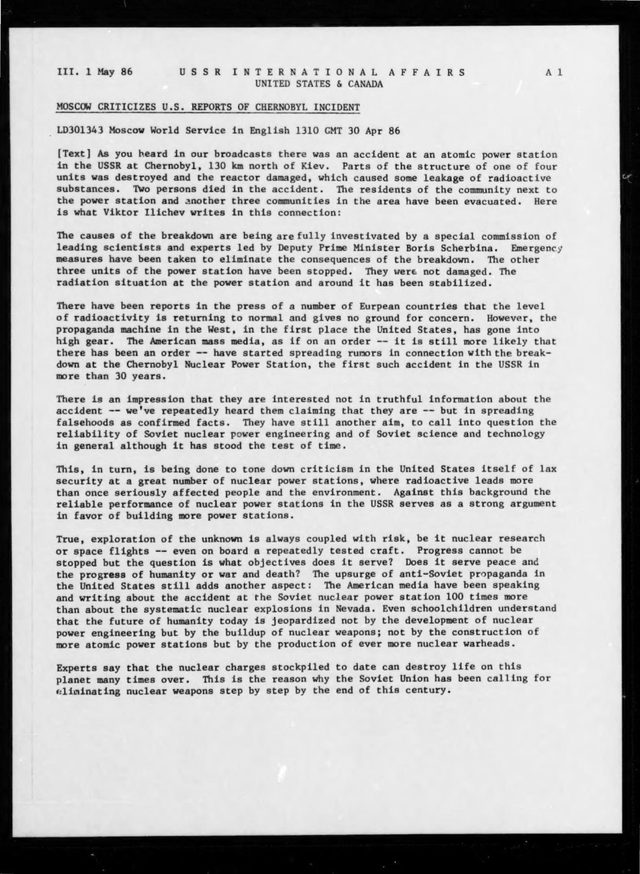
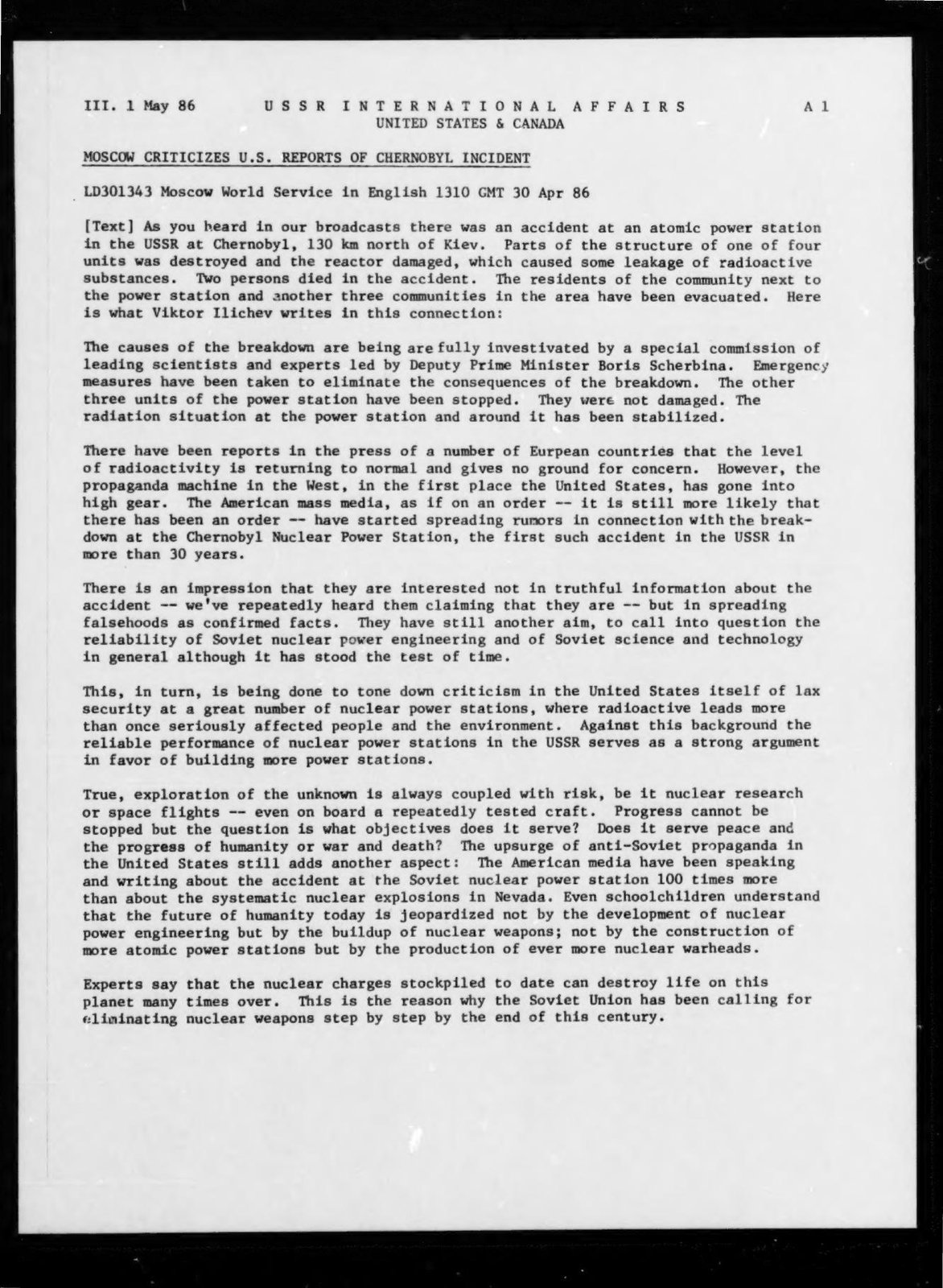
Radio Moscow World Service on 30 April 1986, four days after the reactor explosion, gave an official account of two deaths and then turned on the U.S. press for "spreading rumors". The entry notes later assessments recorded 28 deaths from acute radiation syndrome among plant and emergency staff, and that unconfirmed Western claims of thousands of deaths were not borne out.
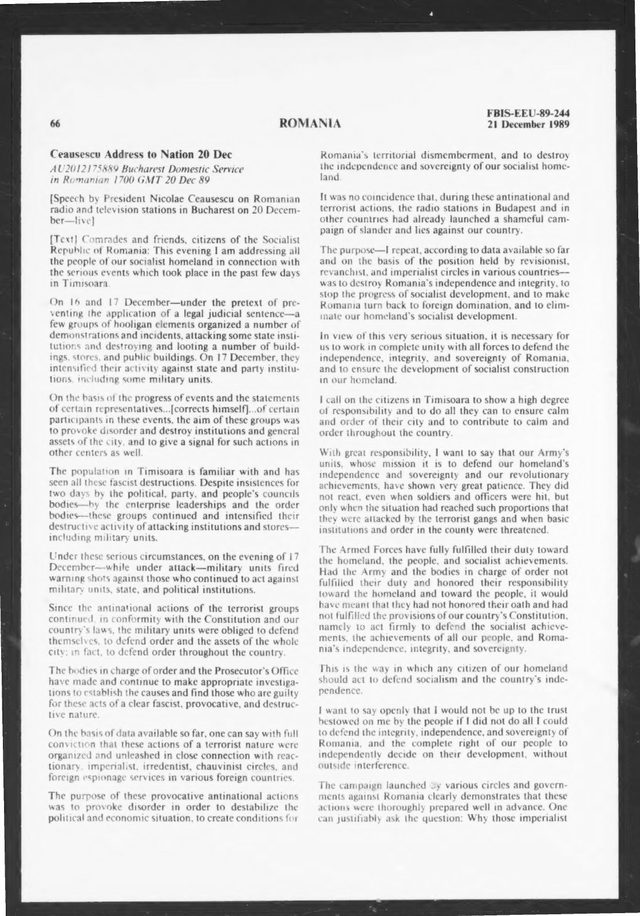
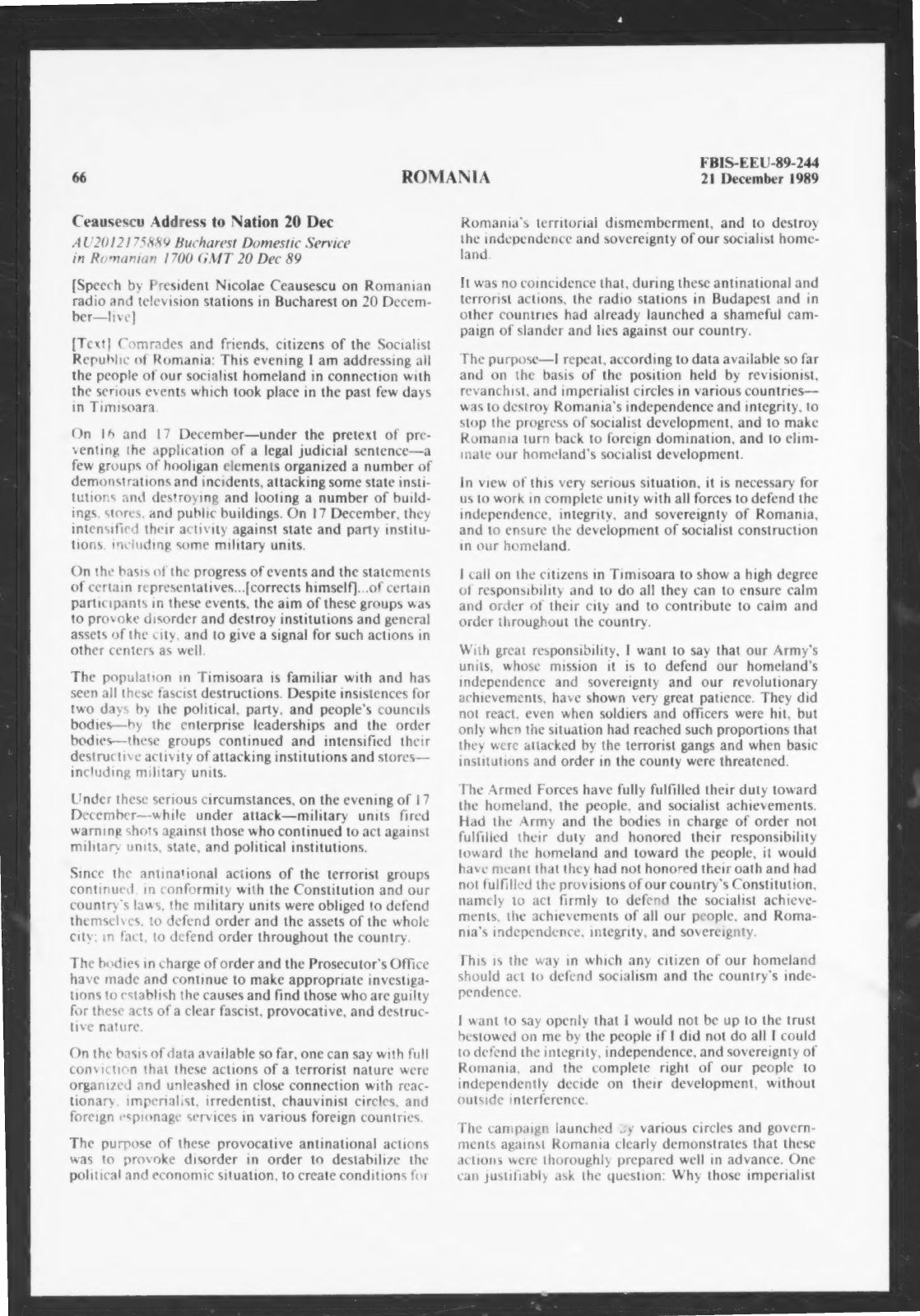
Bucharest radio and television carried Nicolae Ceausescu's address of 20 December 1989, calling demonstrators "hooligan elements" and "terrorist gangs" and the army's fire "warning shots".
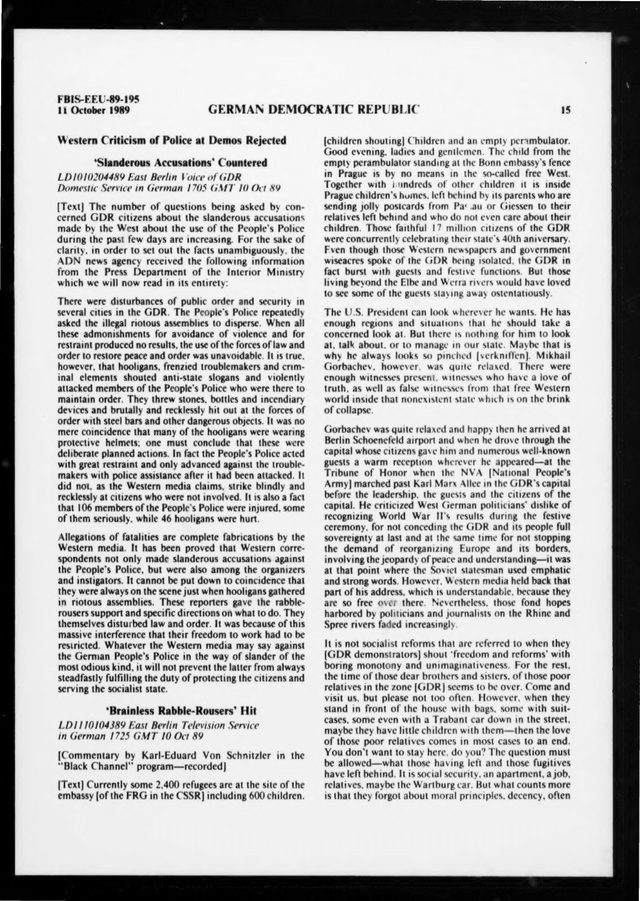
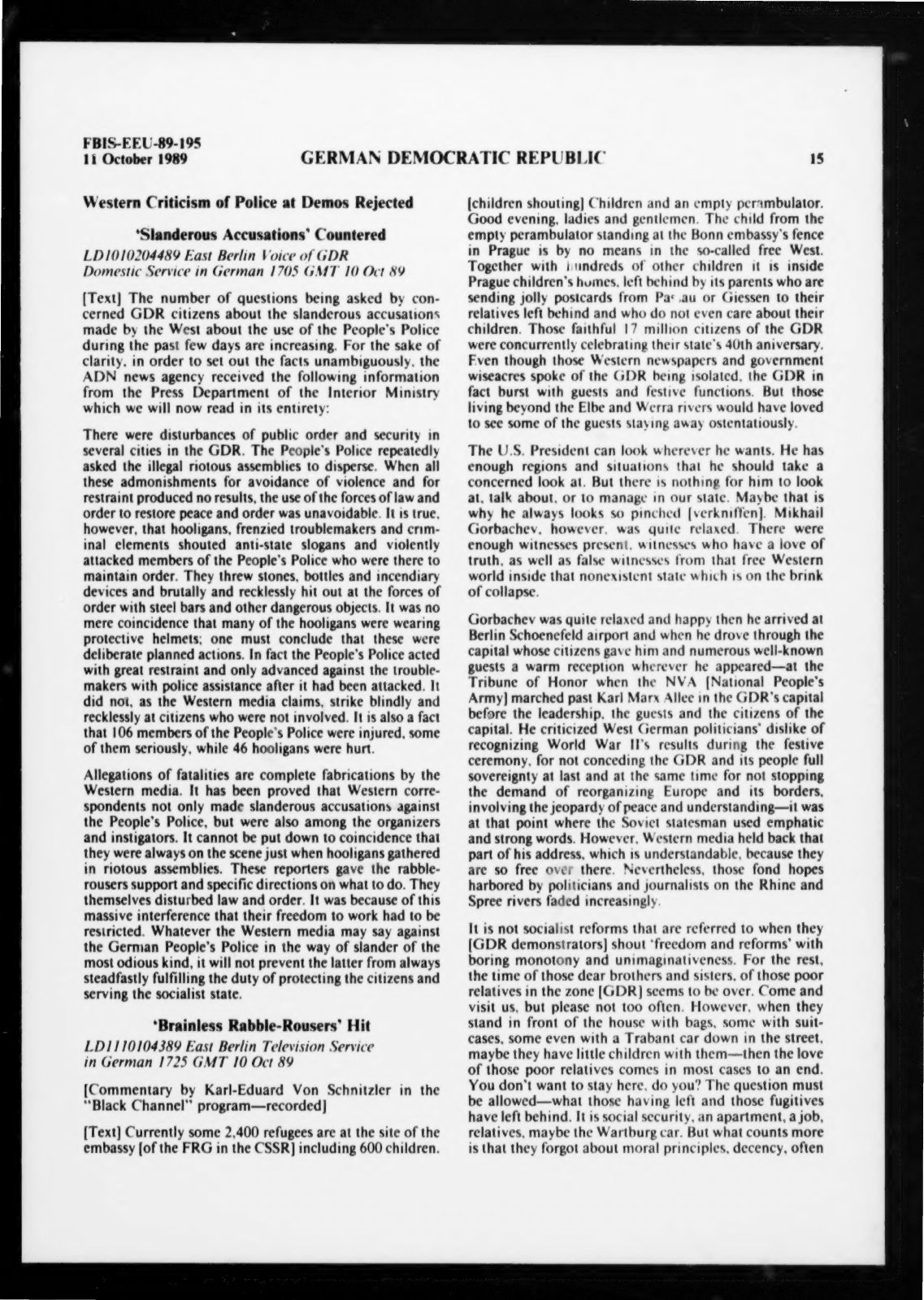
East German radio and television on 10 October 1989 called demonstrators "hooligans" and denied reported deaths as "complete fabrications"; Karl-Eduard von Schnitzler's Black Channel called emigrants "fugitives".
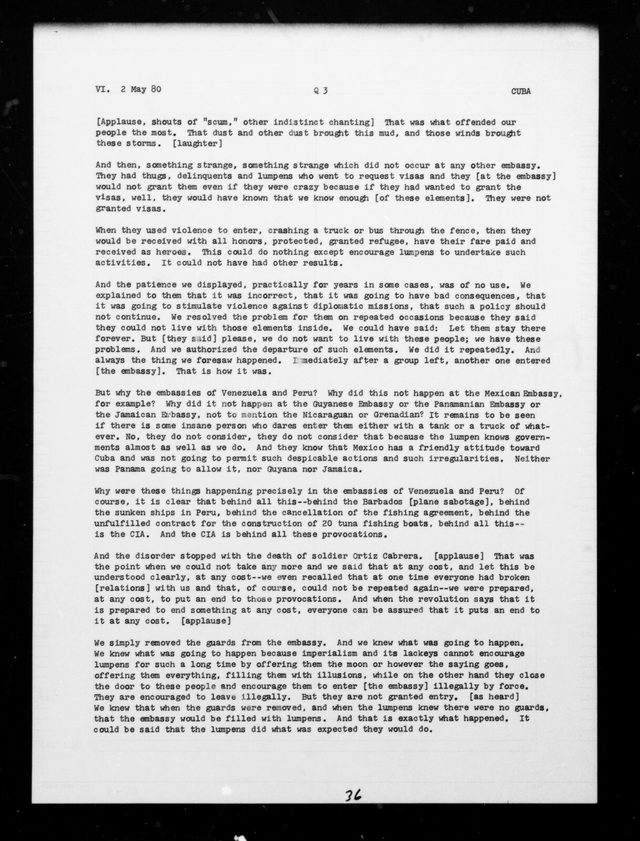
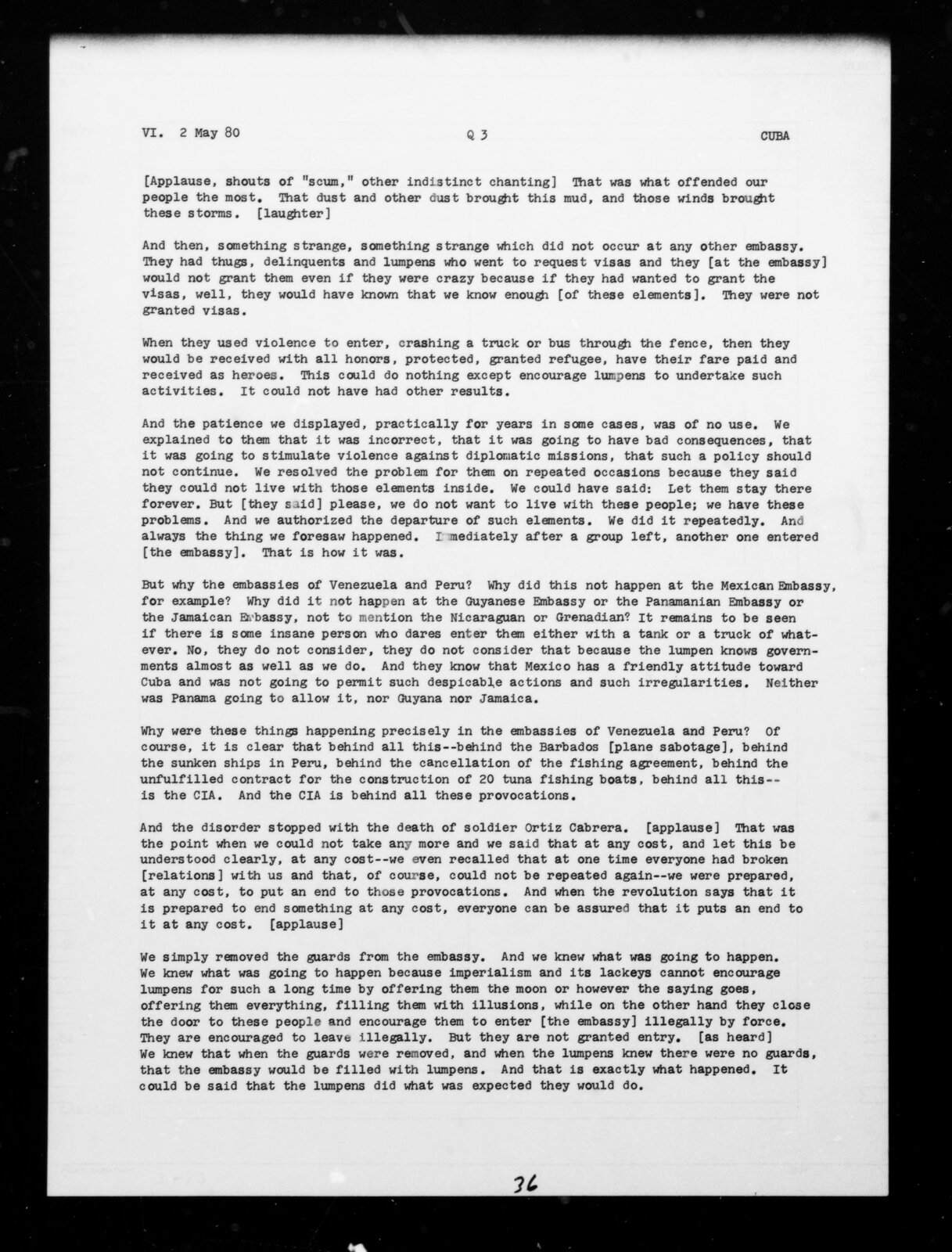
On 1 May 1980 Fidel Castro called people who entered the Peruvian embassy "lumpens", "thugs" and "delinquents" and said the CIA was behind the provocations (name-calling, scapegoating). Read the technique: name-calling.
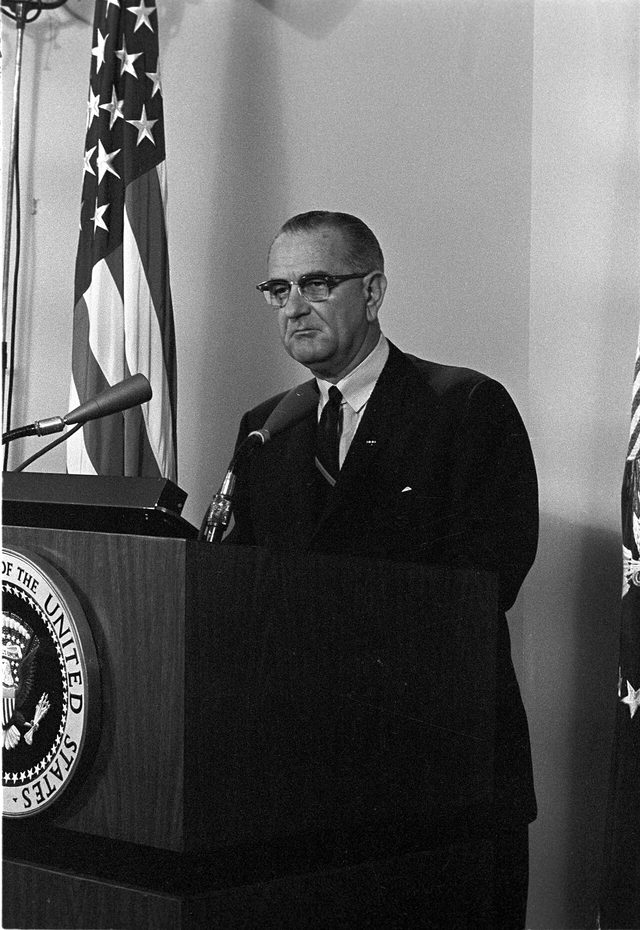
The collection also holds a U.S. presidential broadcast on the same terms: Lyndon Johnson's broadcast address of 4 August 1964 on the Gulf of Tonkin, which the National Security Agency's own historian later concluded described a second attack that did not take place (card-stacking). For a broadcast that filled the schedule instead of news, see the Swan Lake broadcast and Yeltsin's tank appeal.
What to look for in a radio broadcast
- Where the transmitter is and who pays. A station claiming to be inside the target country makes a checkable claim.
- The mix. True news, sport and music are cheap to verify; the items that matter are the ones that are not.
- Personas. An angry officer or worried mother is a production choice until shown otherwise.
- Nicknames. "Tokyo Rose" and "Lord Haw-Haw" were audience labels that covered several voices.
Browse propaganda radio and broadcasts
The grid below shows the broadcast objects in the collection. Each opens an object page with the holding institution, a link to the original record, a transcription and translation of any text, and the rights basis for hosting. For related pages, see propaganda films, psychological operations, Vietnam War propaganda and disinformation.
Sources and further reading
Sources and rights
Pages come from the U.S.
Pages come from the U.S. Foreign Broadcast Information Service, the Office of Strategic Services, the Library of Congress, the U.S. National Archives, the Kennedy Library and Wikimedia Commons. Each object page gives its own rights basis. Transcriptions are verbatim.