Illustration: a dossier collage of an evidence wall of pinned propaganda posters, leaflets and printed matter from many eras, with contact sheets and catalog labels.

Collection

Propaganda leaflets: examples by technique and issuer

Propaganda leaflets from 1828 to 2003, dropped on armies or handed to voters, from many issuers, tagged by technique, with source and rights shown.

Illustration, not an archive object

Content note. Wartime leaflets include racial and political caricature, atrocity claims, threats, a sexualised appeal aimed at enemy troops, and safe-conduct offers that were also a means of pressure. They are shown as they were issued, from several sides, as evidence of what each issuer told its audience. Showing a leaflet is not endorsing it.

Short answer

A propaganda leaflet is a small printed sheet, dropped from aircraft, fired in shells, floated on balloons or handed out, meant to reach an audience that posters and broadcasts cannot: enemy soldiers, civilians under occupation, or voters at a campaign stop. This page shows leaflets from the United States, Britain, Austria-Hungary, the Soviet Union, Japan, Iraq and Chile, each tagged by technique, with the same method for every issuer.

What makes a leaflet different from a poster

A poster is displayed to whoever walks past it. A leaflet is delivered to a person, so the issuer chooses an audience and often a moment: soldiers in a trench, civilians in a city about to be bombed, a unit that has just lost its officers. Many leaflets in this collection were issued by military units to enemy troops or civilians, and they often carry features a poster rarely does: serial or code numbers, a safe-conduct pass to be shown on surrender, a second language, or a request to pass the sheet on. Leaflets from political campaigns and parties, such as the 1828 handbill below, use the same format to reach voters. The collection records the issuer, audience and stated purpose of each one, and applies one working definition of propaganda to all of them (how FRAME defines propaganda). For the doctrine behind military leaflet programmes on one side, see US psychological-operations doctrine; for the other major sides, see Soviet agitprop. For the poster counterpart to this page, see propaganda posters.

Before aircraft: a campaign handbill, 1828
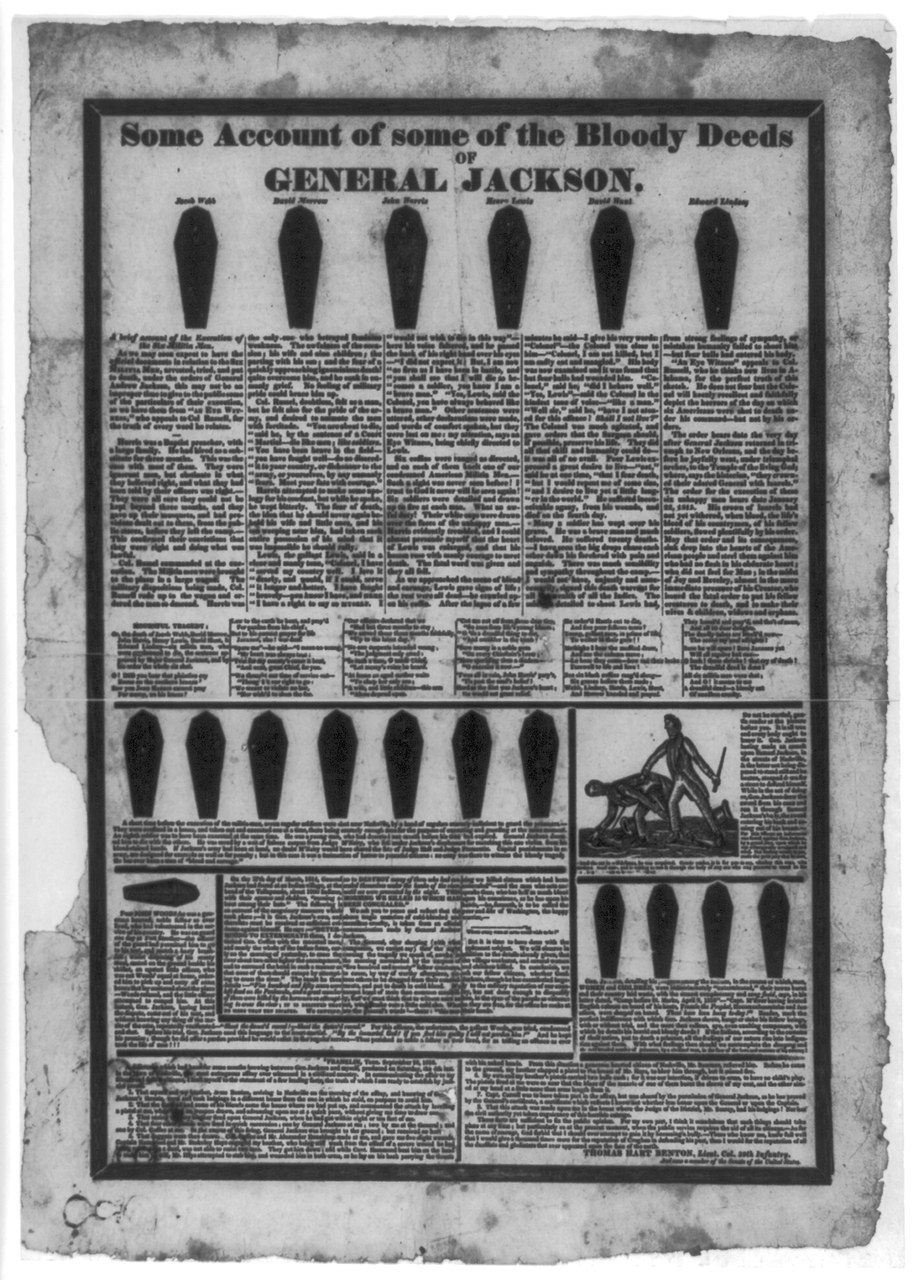
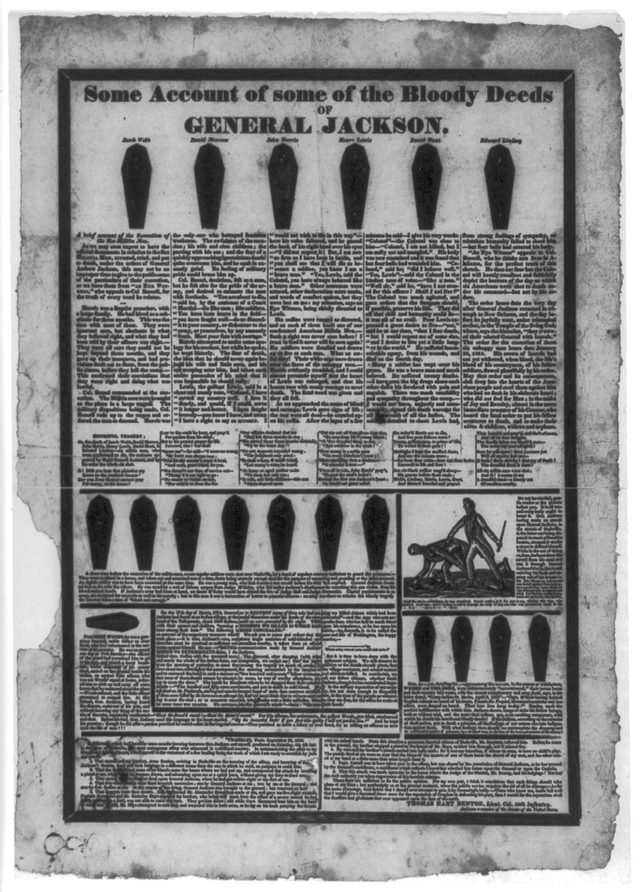
Some Account of some of the Bloody Deeds of General Jackson: a broadside with six black coffin woodcuts above dense columns of text

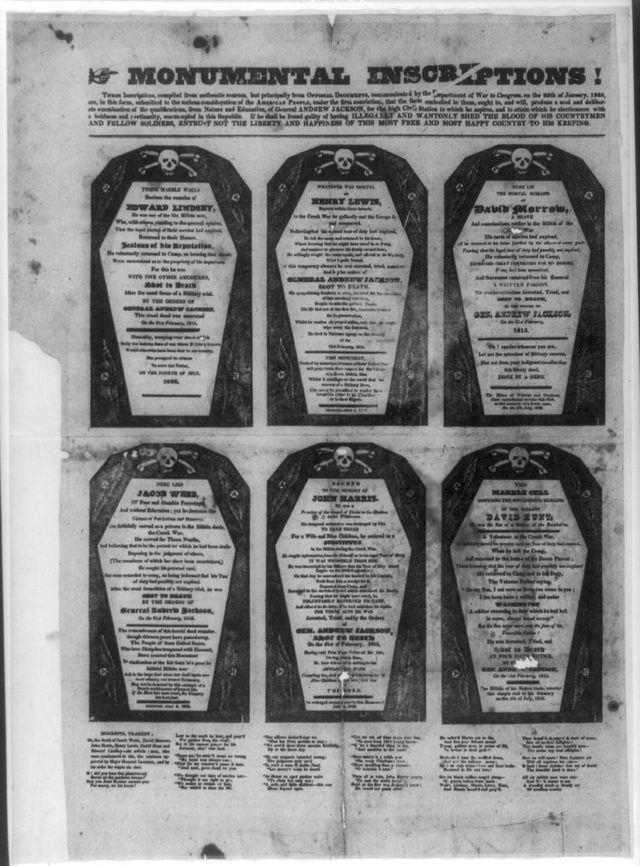
Leaflets did not begin with air power. In the 1828 United States presidential campaign, supporters of John Quincy Adams circulated "coffin handbills" against Andrew Jackson, which the Library of Congress traces to the Republican editor John Binns. This broadside, headed "Some Account of some of the Bloody Deeds of General Jackson", runs six black coffin woodcuts, each labelled with the name of a militiaman executed under Jackson's orders, above dense columns of narrative. The loaded title and a list built only from killings charged against Jackson are the tells: name-calling and card stacking. The catalogue notes a companion broadside on the same theme. Read the technique: name-calling and card stacking.

The First World War: leaflets to soldiers on both sides
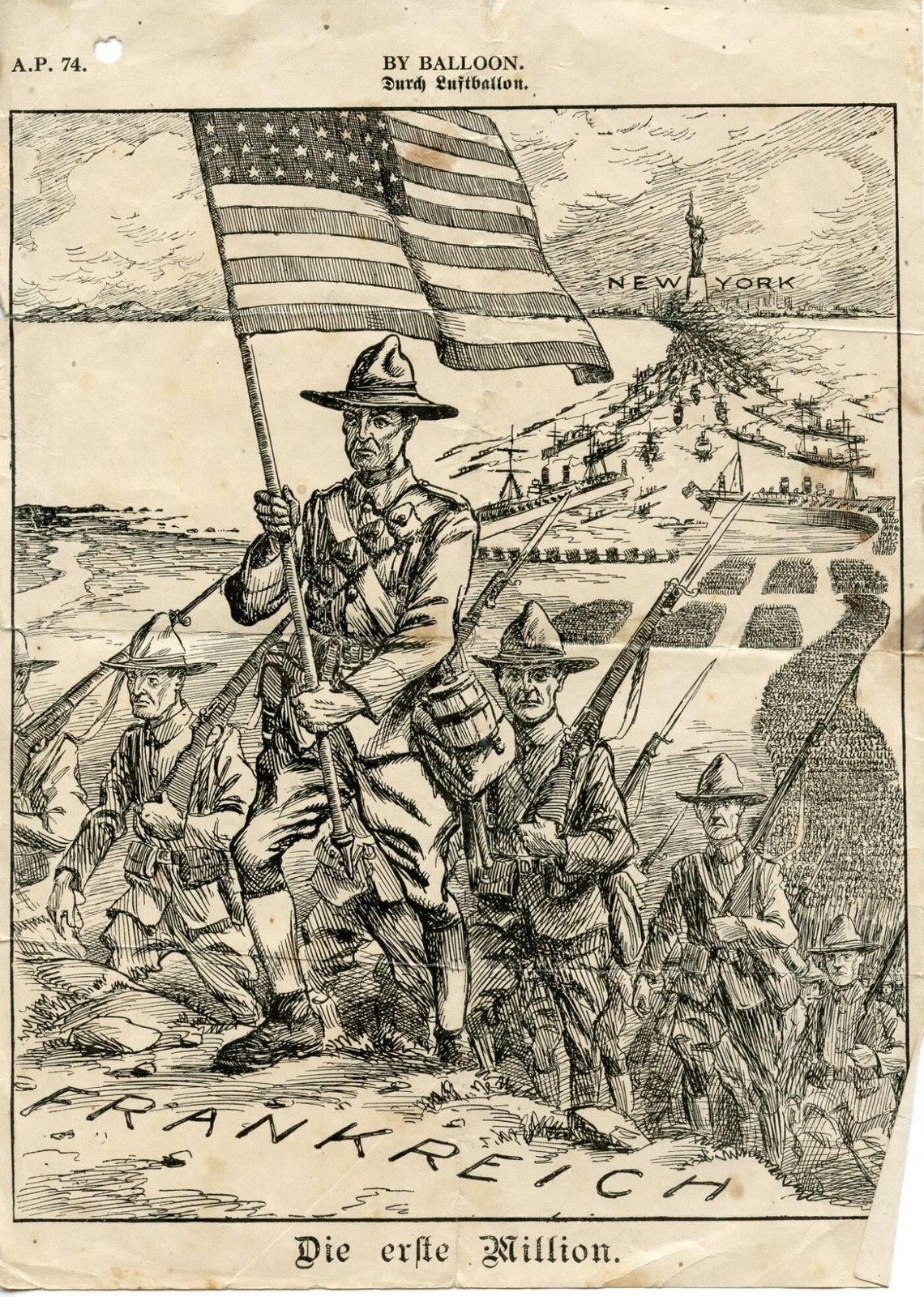
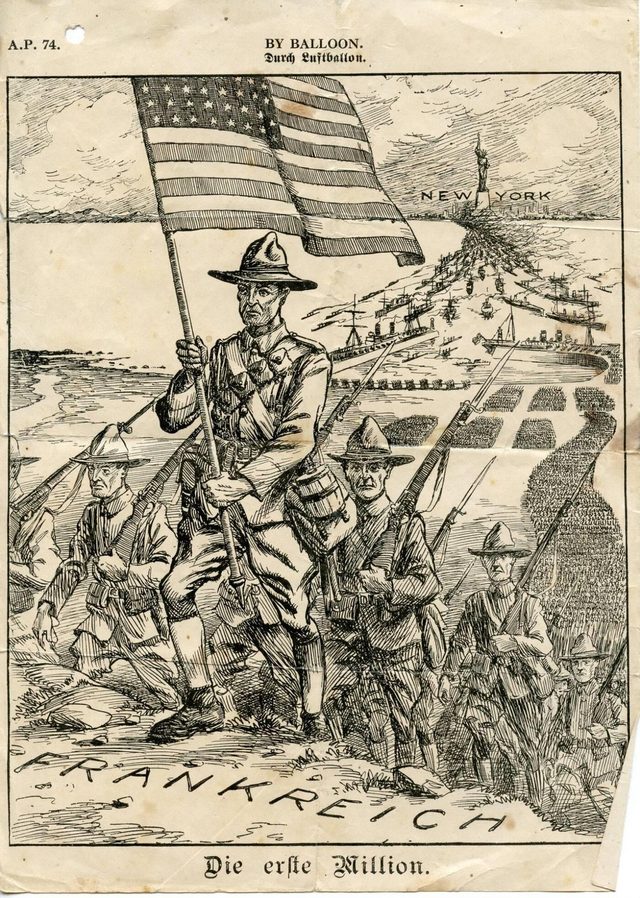
A British balloon leaflet in German: an American soldier carries the Stars and Stripes at the head of a column that runs back to the Statue of Liberty

A British balloon leaflet of 1918, in German and marked "By balloon", shows an American soldier carrying the Stars and Stripes at the head of a column that runs back through marching ranks and transports to the Statue of Liberty at New York, above the word "Frankreich". The unbroken column and the fixed bayonets stage American manpower as arriving without limit: bandwagon and fear appeal. The scan comes from a Saxon artillery gunner's family collection of Allied leaflets picked up on the Western Front in 1918. Read the technique: bandwagon.
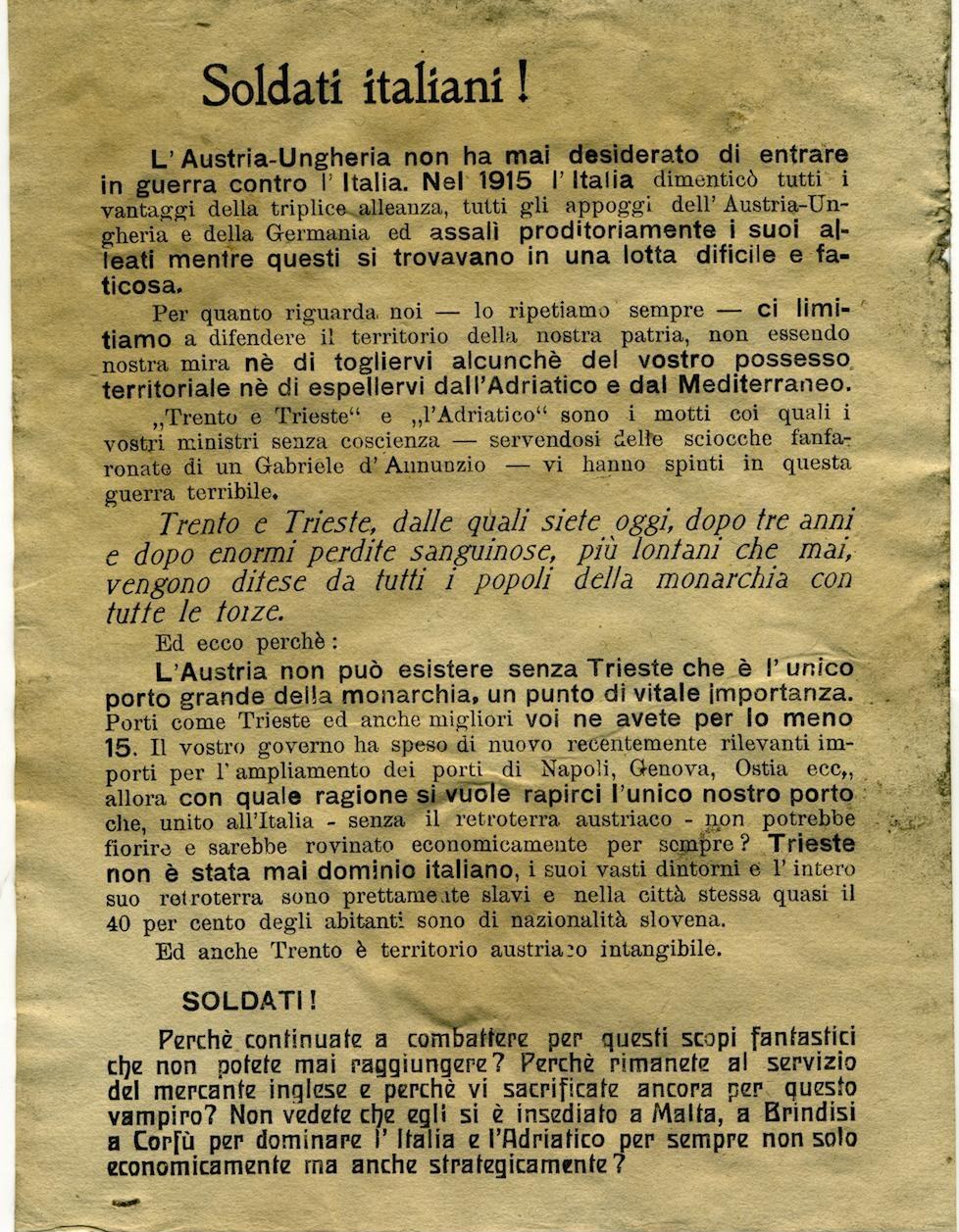
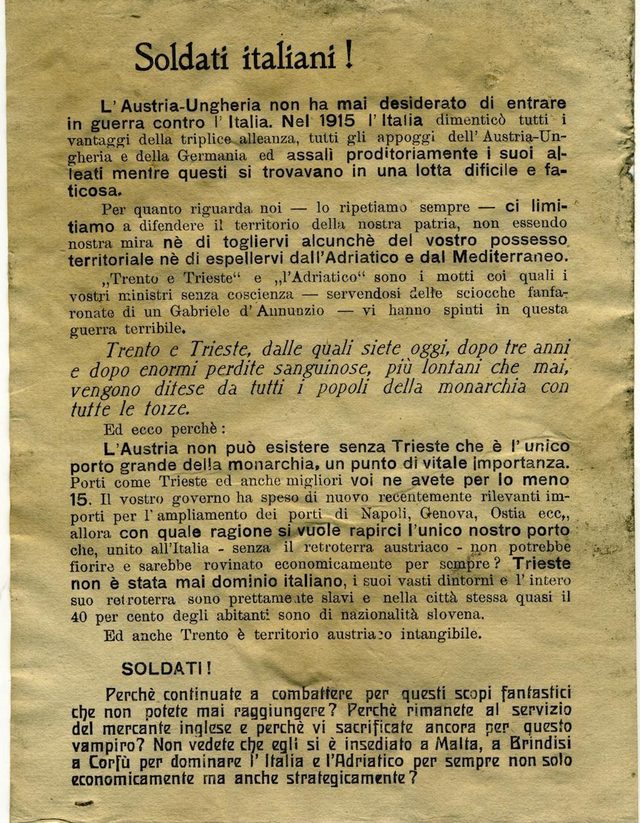
Soldati italiani! A text-only Austro-Hungarian leaflet addressed to Italian troops

The same war produced leaflets from the other side. A text-only Austro-Hungarian leaflet headed "Soldati italiani!" tells Italian troops that the monarchy never wanted war with Italy, that Trieste is "never Italian", and that Italy's ministers, aided by Gabriele d'Annunzio's "foolish bluster", led them into the war. Blame is placed on named Italian politicians and on Britain, and the leaflet closes with "the English merchant" as "this vampire". It is tagged name-calling and scapegoating, the same tags a British or American leaflet would receive for the same moves. Read the technique: scapegoating. More on the war's propaganda: WW1 propaganda posters.

The Second World War: leaflets to enemy civilians and troops
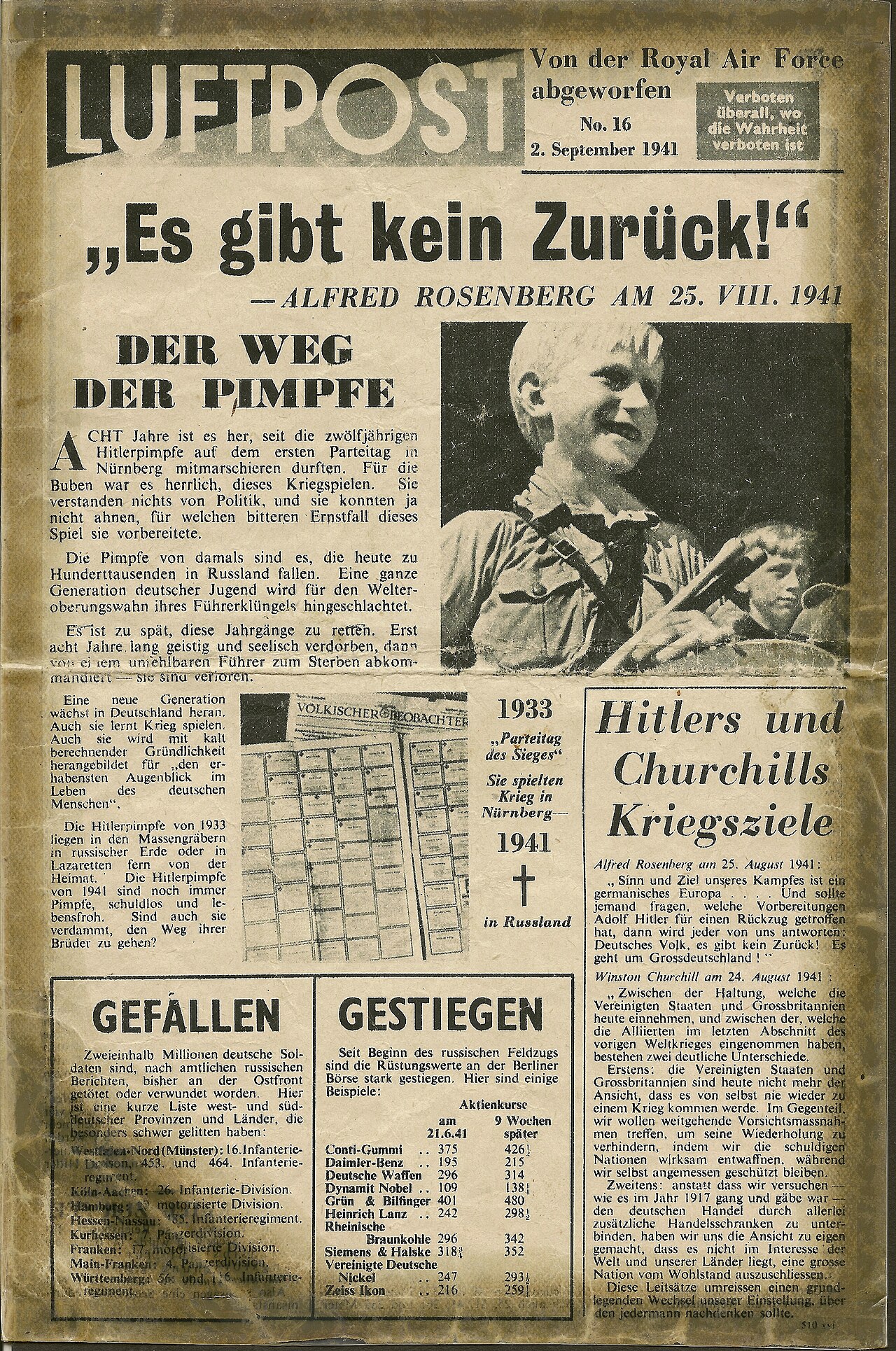
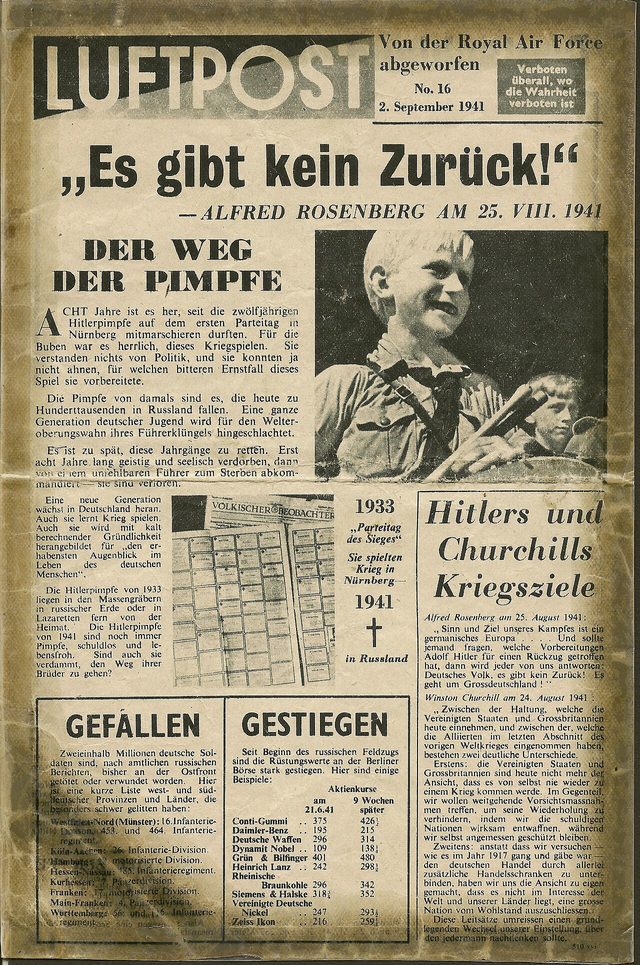
Luftpost No. 16: a German-language leaflet newspaper with a photograph of two Hitler Youth boys and boxes headed Fallen and Risen

Luftpost was a German-language leaflet newspaper dropped by the Royal Air Force over Germany. Issue 16, of 2 September 1941, sets a photograph of two Hitler Youth boys beside an article on boys "falling by the hundred thousand in Russia", and two boxes below: "Fallen" (German losses, from "official Russian reports") against "Risen" (share prices of arms firms). The selective pairing and the closing question to parents carry the appeal: card stacking, fear appeal and name-calling. The page names only the Royal Air Force as the source. Read the technique: fear appeal.

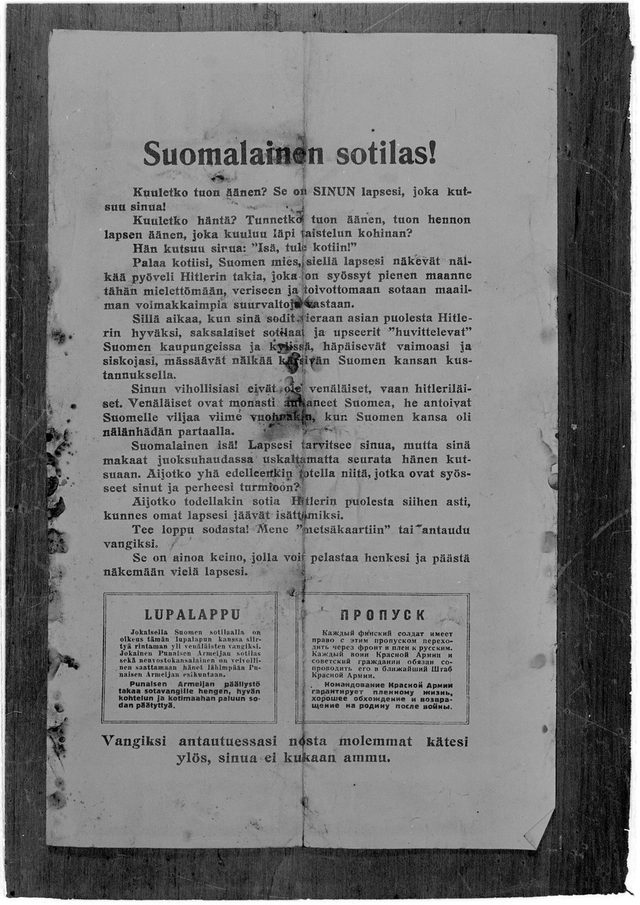
Content note: Wartime leaflet that alleges German soldiers dishonoured Finnish women and stages children left fatherless This object is shown as it was published. Why Suomalainen sotilas: a Finnish-language leaflet photographed flat, with two boxed safe-conduct passes
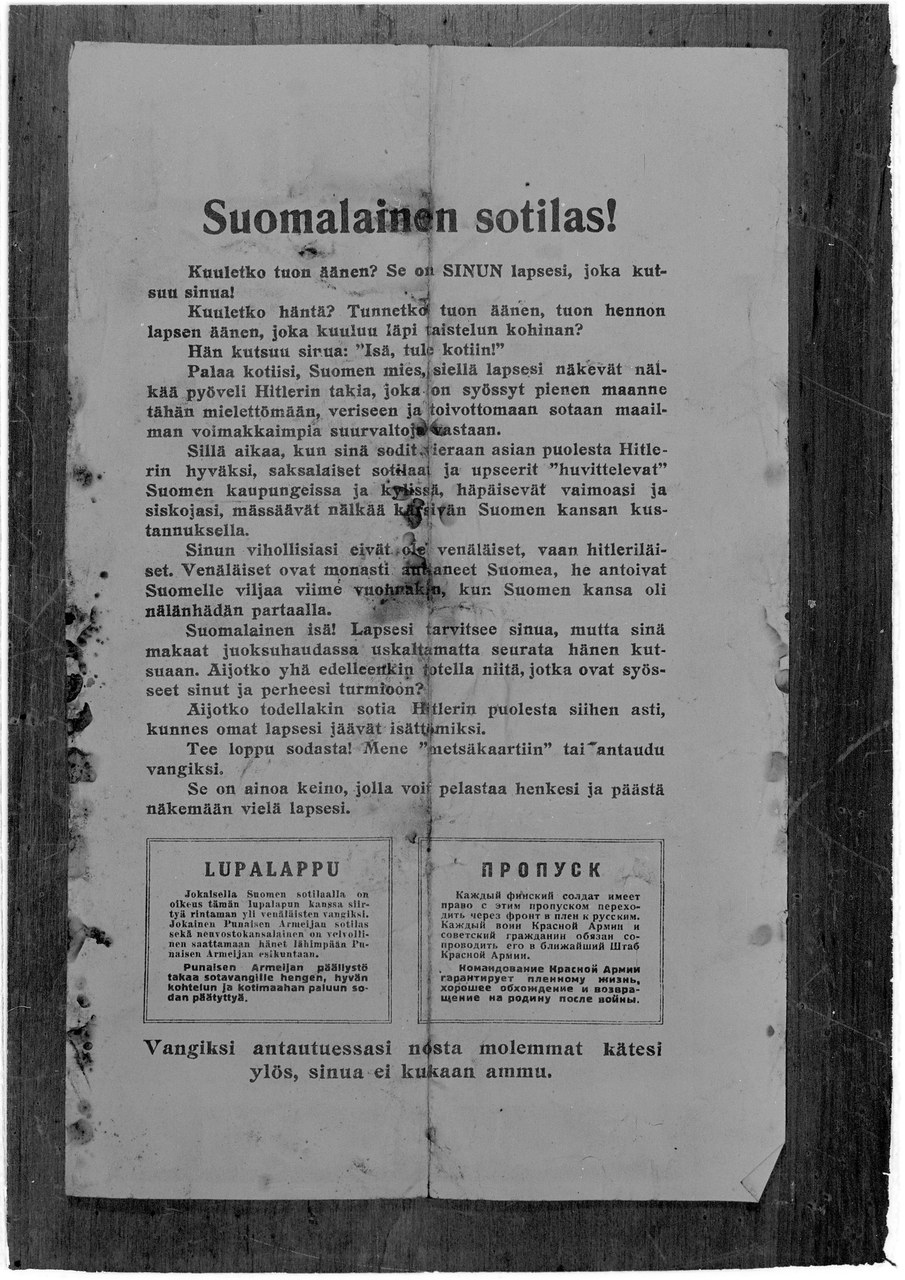
A Soviet leaflet, photographed in early 1942 and held in the Finnish Wartime Photograph Archive, is addressed to "Finnish soldier!" It opens with a child's voice calling "Father, come home!", tells him that his real enemies are "the Hitlerites" rather than the Russians, and ends with two boxed safe-conduct passes, one in Finnish and one in Russian. The risk that his children will be left fatherless, and the blame placed on Hitler's side for the war, are the fear appeal and scapegoating tells, the same tags given to the Austro-Hungarian leaflet above. No issuing unit is printed on it.

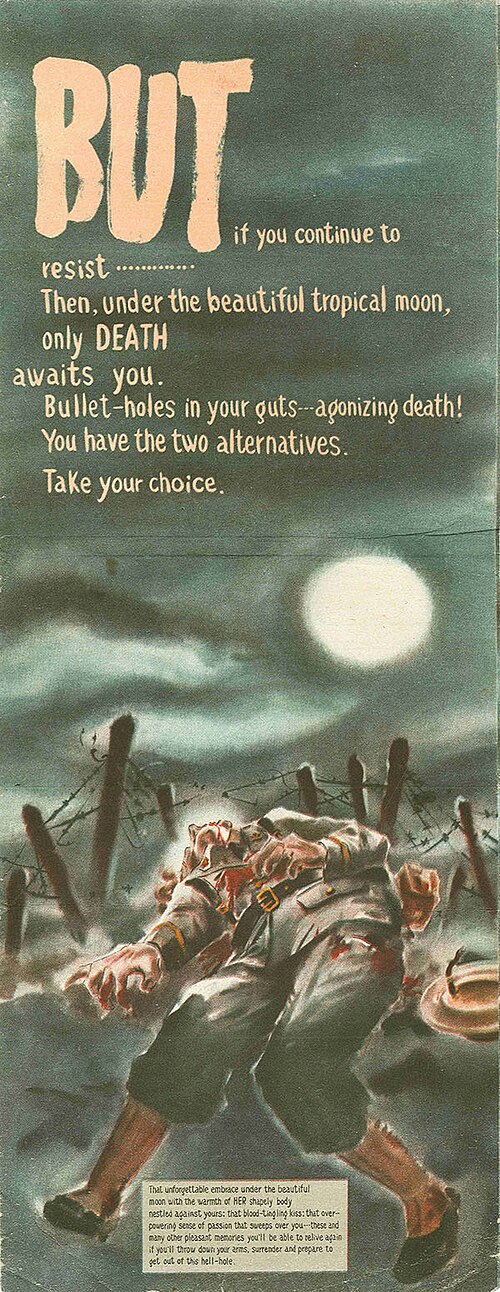
Content note: Drawn woman and suggestive first-person text addressed to enemy soldiers. This object is shown as it was published. Why Don't wait to die: a Japanese leaflet in English with a hand-lettered headline and a pencil drawing of a smiling woman
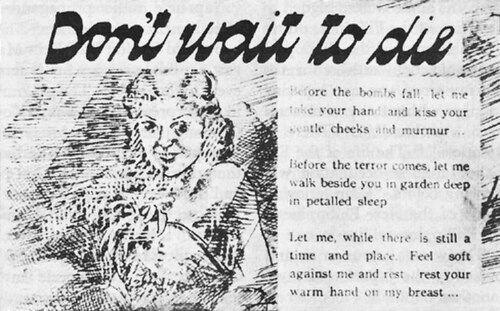
A Japanese military leaflet distributed during the Battle of the Philippines is in English, with a hand-lettered headline, "Don't wait to die", beside a pencil-style drawing of a smiling woman and a first-person text that begins "Before the bombs fall" and "Before the terror comes". The headline and the two "before" lines stage imminent death from bombing, and the text offers one remedy, intimacy with the speaker. This is a fear appeal in an unusual register, and it is shown as issued.
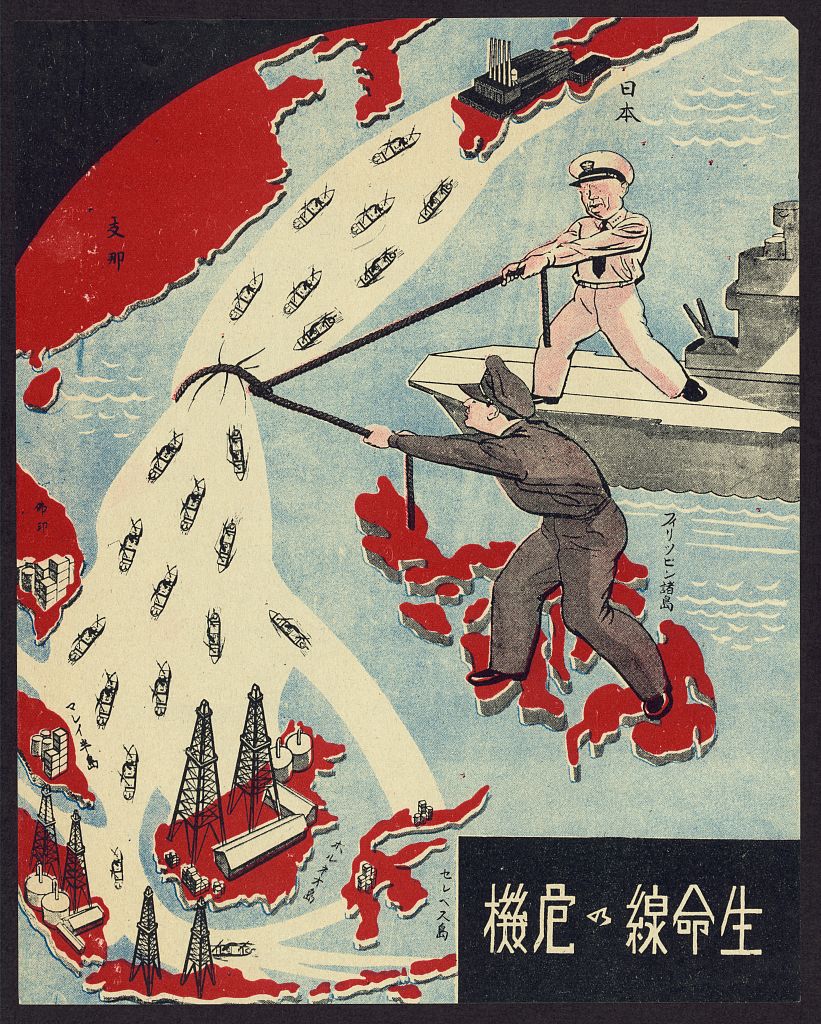
Japan's life line: two officers in American service dress haul on a rope that cuts a shipping lane from Southeast Asia to Japan

The U.S. Army Forces, Pacific, Psychological Warfare Branch issued a leaflet to Japanese troops in about 1944 in which two officers in American service dress haul on a rope that cuts a pale shipping lane running from the oil derricks and rubber and tin stores of Southeast Asia to Japan. The severed lane with ships strung along it asserts that fuel and raw materials will stop reaching Japan. It is also tagged fear appeal, the same tag as the Soviet and Japanese leaflets above.

The Korean and Vietnam wars: leaflets as policy
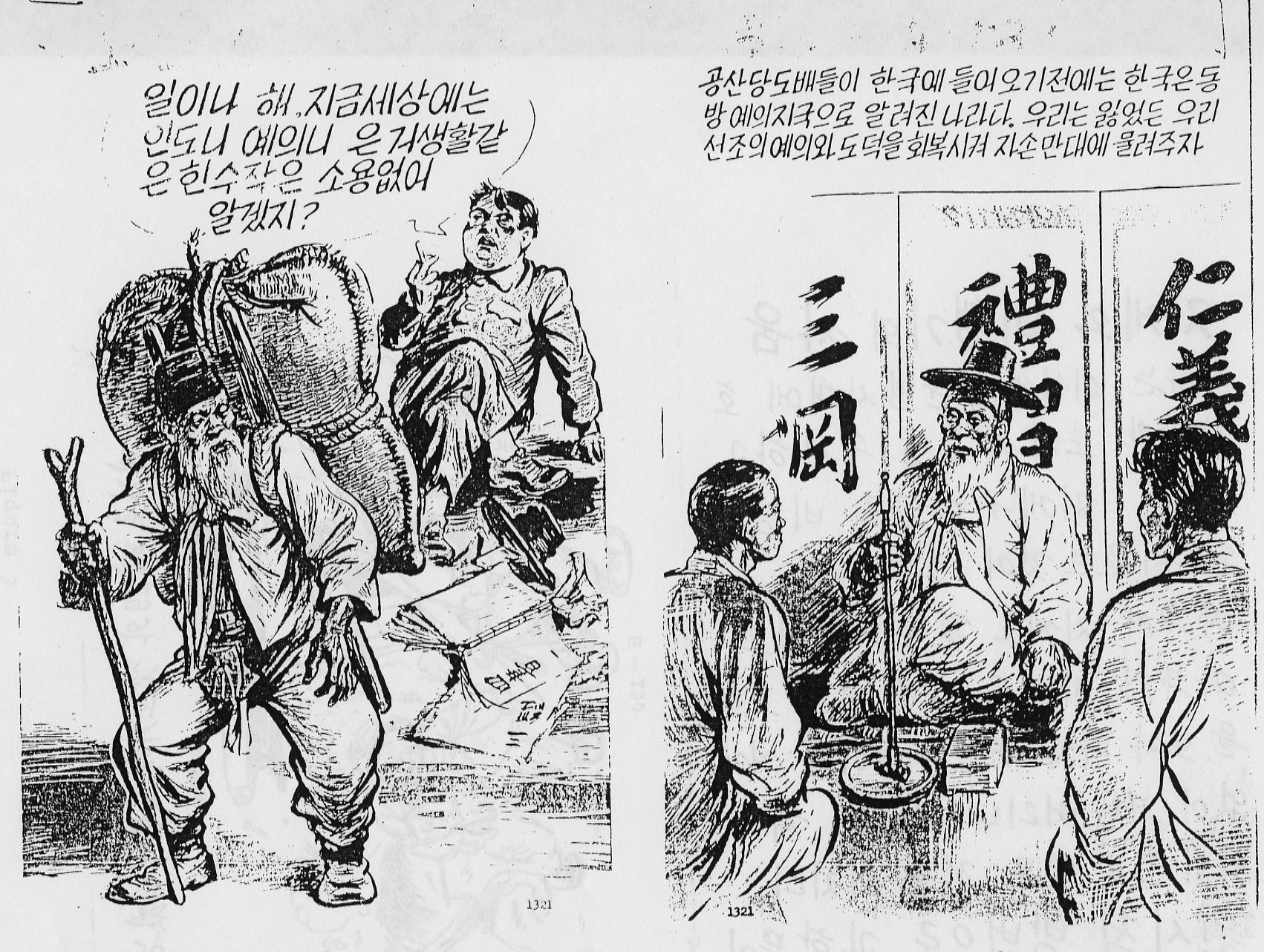
United Nations Command leaflet 1321: a Korean scholar teaching beneath Confucian scrolls, and the same old man bent under a heavy load

A Korean-language leaflet of 1952, serial 1321, issued by United Nations Command psychological warfare, shows a bearded scholar teaching students beneath scrolls of Confucian virtue words, and the same old man bent under a huge load while a stout, cigarette-smoking man orders him to work. A 1993 conference paper that reproduces it from the Kennedy Special Warfare Museum names the stout man as Kim Il Sung; the leaflet itself names no one. The virtue-word backdrop set against a before-and-after picture is the tell: glittering generalities and scapegoating. Read the technique: glittering generalities.
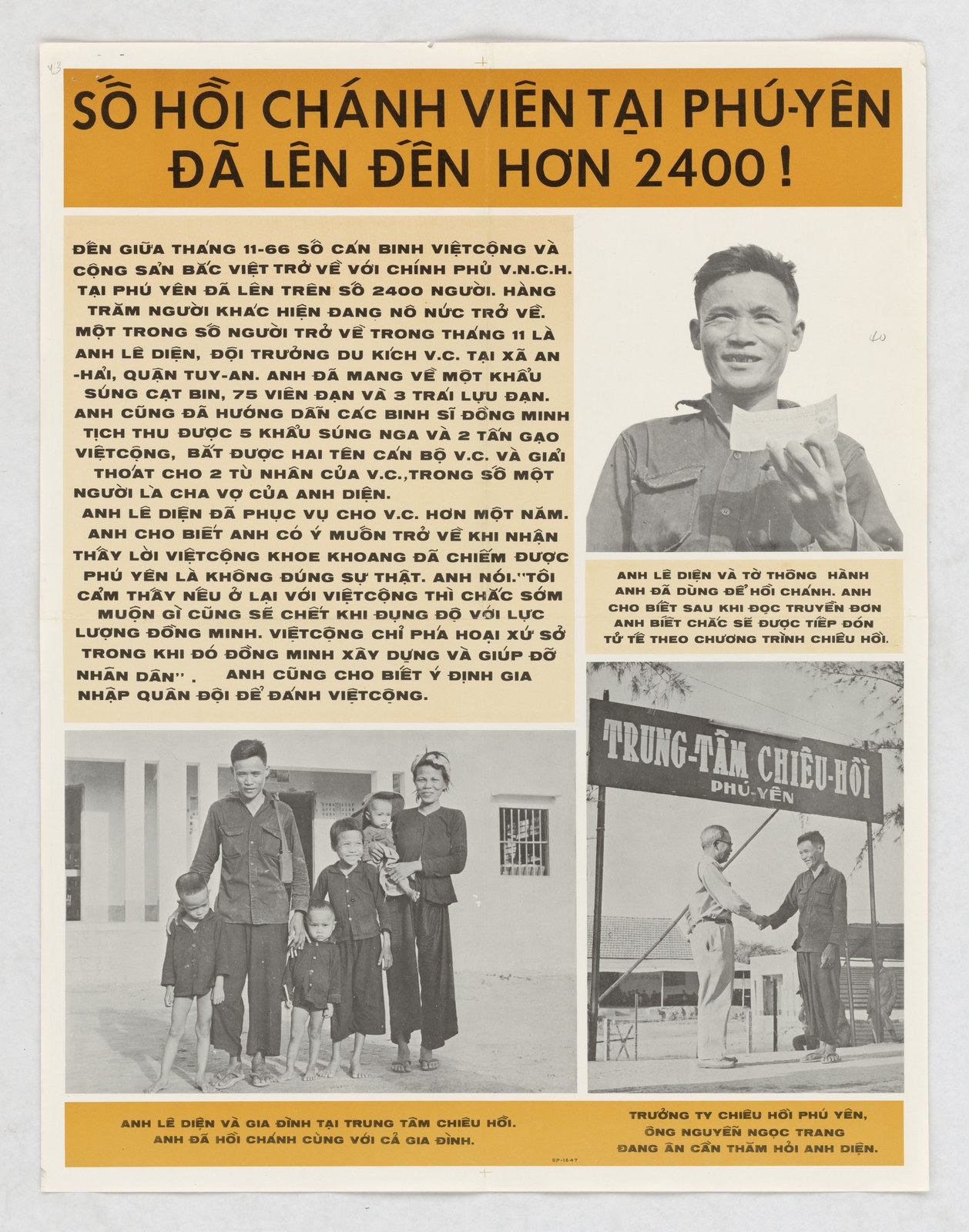
Chieu Hoi: a poster listing returns to the Saigon government in Phu Yen and quoting a named rallier

The Chieu Hoi ("Open Arms") programme used leaflets and posters to invite fighters to rally to the Saigon government. A 1966 sheet printed by the Joint U.S. Public Affairs Office says that more than 2,400 fighters in Phu Yen had returned and that "hundreds of others are now eagerly returning." It quotes a named rallier, guerrilla squad leader Lê Diện, who says he felt he would "sooner or later die in a clash with Allied forces". A running count stated by the issuer, a named witness and a safe-conduct pass are the bandwagon, testimonial and fear-appeal tells. Other Chieu Hoi leaflets in the collection, including Australian-issued ones, carry the same kinds of tags. For the programme, see Cold War propaganda posters.

From 1980 on: leaflets by other issuers

Content note: Wartime leaflet pairing a devotional portrait of Imam Ali with a warning that divine wrath will pursue attacking troops. This object is shown as it was published. Why Notice to Iranians: a Persian-language leaflet with a portrait captioned as Imam Ali
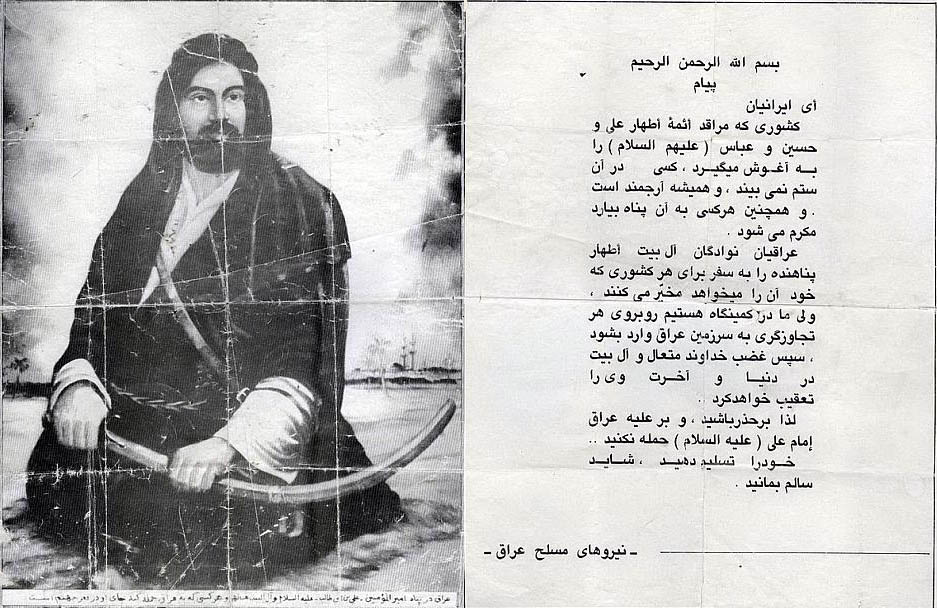
A Persian-language leaflet from the Iraqi armed forces, dated by Commons only to between 1980 and 1988, is addressed to Iranian troops, with a portrait captioned as Imam Ali. It presents Iraq as keeper of the Imams' shrines, warns that God's and the Prophet's household's wrath will pursue any attacker in this world and the next, and tells the reader to surrender in order to survive. The devotional portrait lends its prestige to the threat: transfer and fear appeal. Read the technique: transfer.

Content note: Wartime leaflet showing gas-masked soldiers, an explosion and a biohazard sign, with a threat of retribution. This object is shown as it was published. Why Do not use weapons of mass destruction: both faces of a Coalition leaflet in English and Arabic
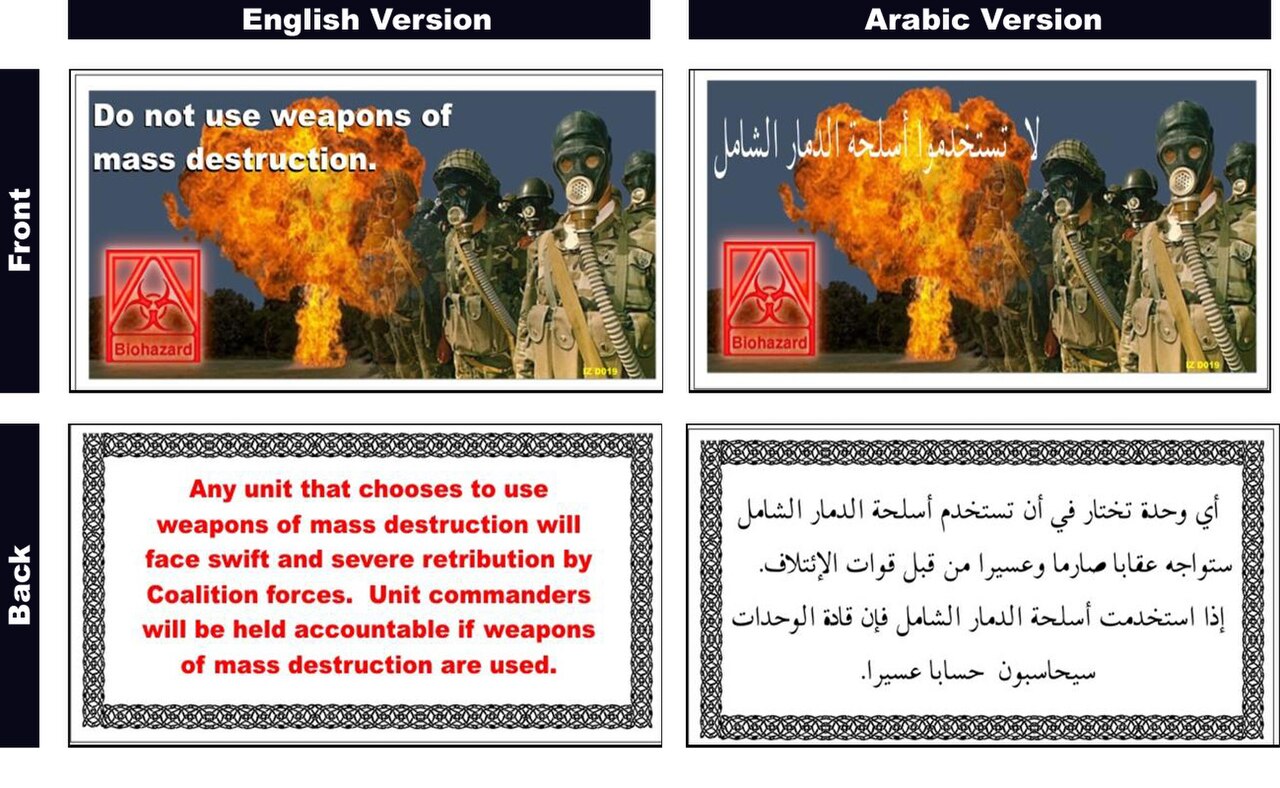
A Coalition leaflet in English and Arabic from February 2003, published by the U.S. Navy, shows a line of gas-masked soldiers before a fireball and a biohazard sign under the words "Do not use weapons of mass destruction", with a reverse threatening "swift and severe retribution" and personal accountability for unit commanders. The U.S. Navy release says Coalition aircraft dropped such leaflets in the weeks before the March 2003 invasion. The pairing of a picture of the harm with a named consequence aimed at a specific audience is the fear-appeal tell.
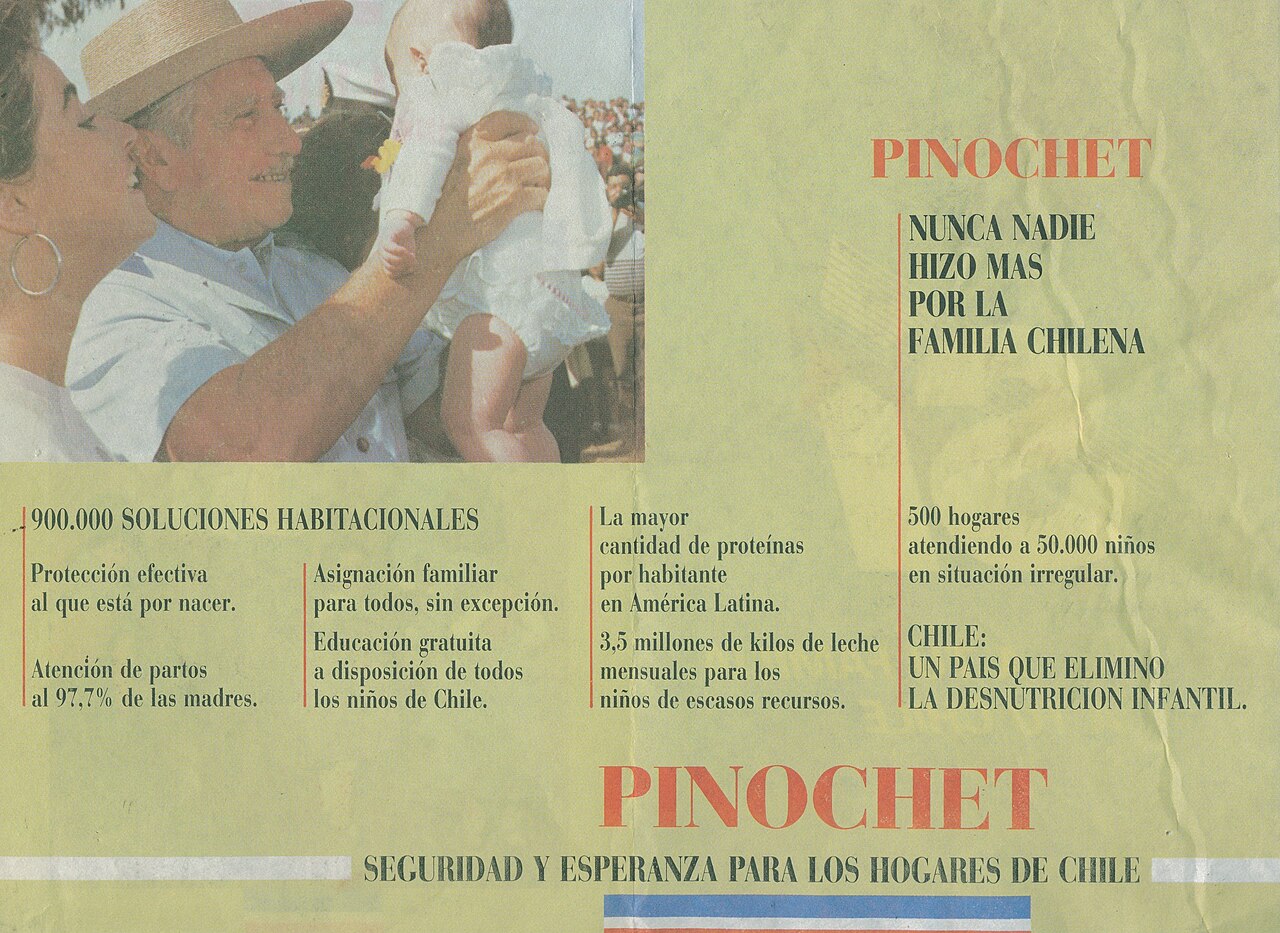
Nunca nadie hizo más por la familia chilena: a pamphlet panel with a man lifting a baby and a grid of figures

Not every modern leaflet is addressed to an enemy. A pamphlet for the "Sí" campaign in Chile's 1988 plebiscite, held by the Biblioteca del Congreso Nacional, sets a man lifting a baby beside the claim "Never has anyone done more for the Chilean family" and a grid of figures: housing solutions, births attended, free education, milk, and a country that "eliminated child malnutrition". Only credits are counted, with no costs or contrary figures: card stacking, and a virtue claim to match. The same method is applied to it as to a leaflet from any side.

How to read a propaganda leaflet

The questions that apply to posters apply here, with two additions. Ask who delivered it and how: a leaflet dropped over an army, one pushed under a door, and one handed out at a rally are different acts even when the words are similar. And ask what it offers the reader: many military leaflets pair a threat with a safe-conduct pass, which is an offer and a pressure at once. The five general questions (who issued it, who it was for, what it asks, which technique carries it, and what it leaves out) are set out in propaganda posters, and worked examples of each classic technique from several sides are in propaganda examples.

Browse propaganda leaflets

The grid below shows leaflets from the collection. Each opens an object page with the holding institution, a link to the original record, a verbatim transcription with a labelled translation, and the rights basis for hosting. For every object, not only leaflets, use the full collection, filtered by technique, era, country and medium.

Sources and rights

Leaflets here come from the Library of Congress, the U.S. National Archives, Europeana, Wikimedia Commons, the Finnish Wartime Photograph Archive and the Biblioteca del Congreso Nacional de Chile, among others. Rights bases vary and are stated on each object page: works published before 1931, U.S. government works, items released by the holding institution under an open licence, and works whose rights status is noted as limited. Transcriptions are verbatim, and translations are labelled as such.
Leaflets in the collection

Showing 60 of 173 objects. Filter the whole collection.
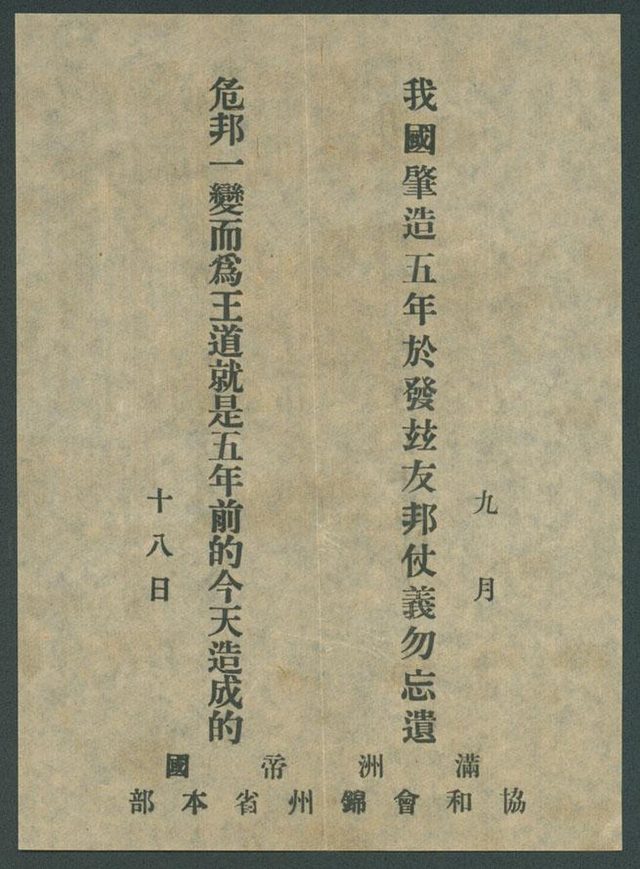
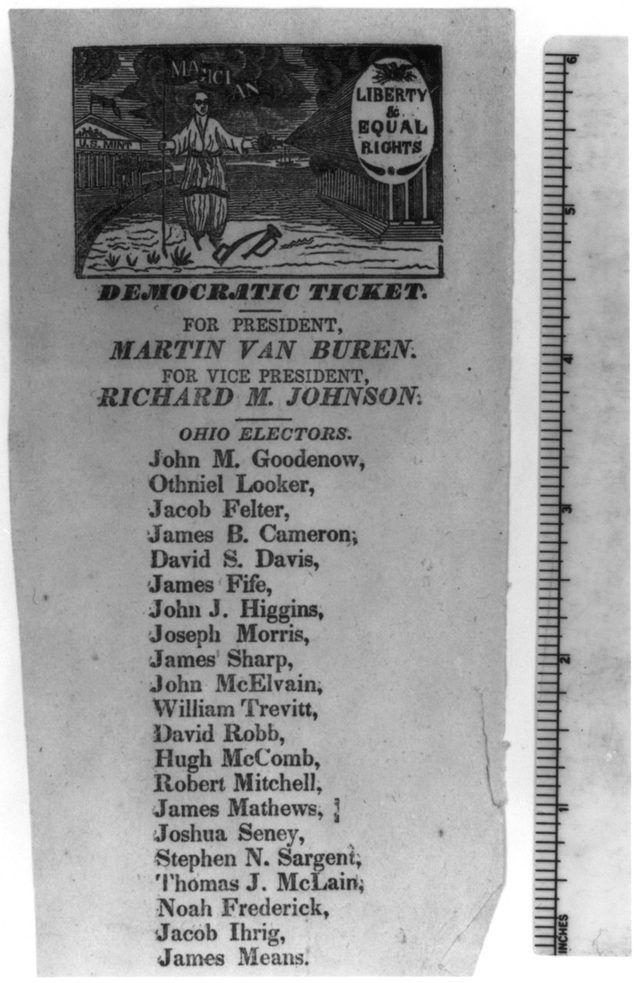
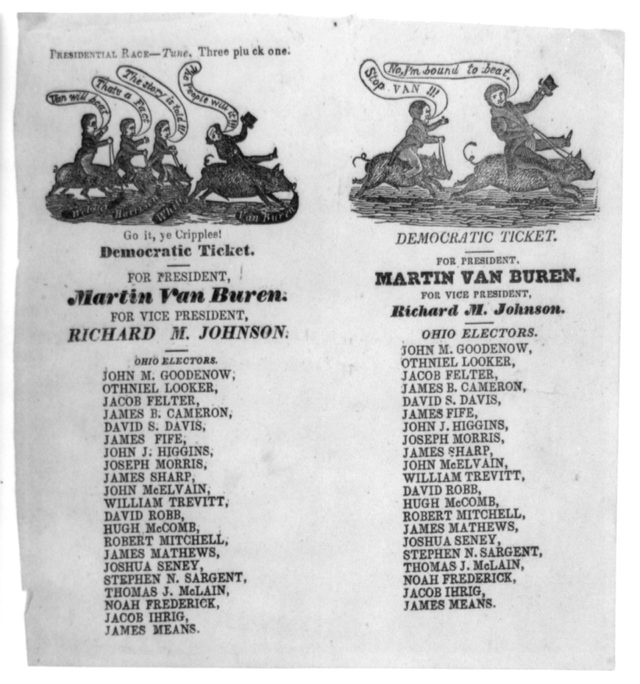
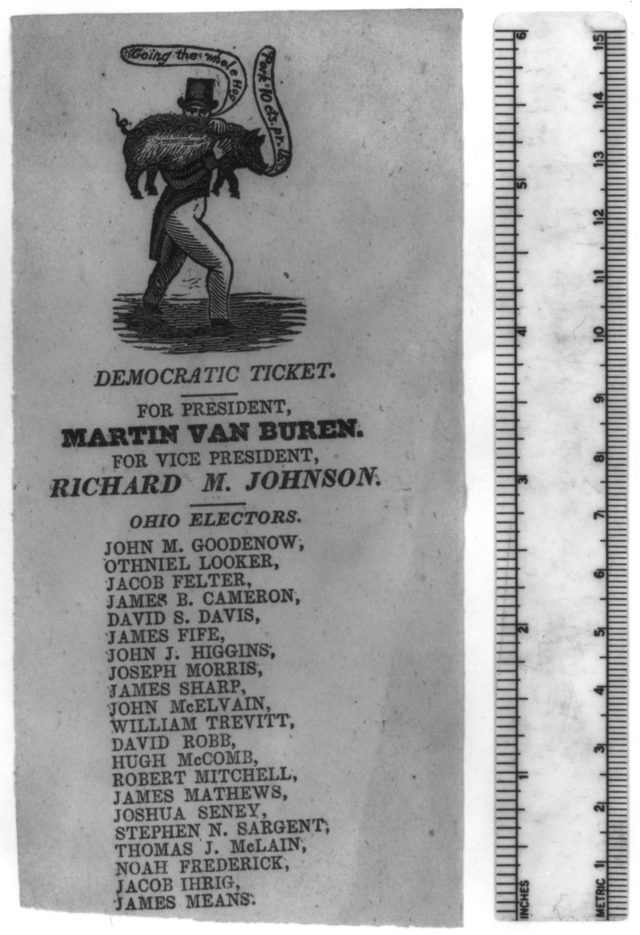
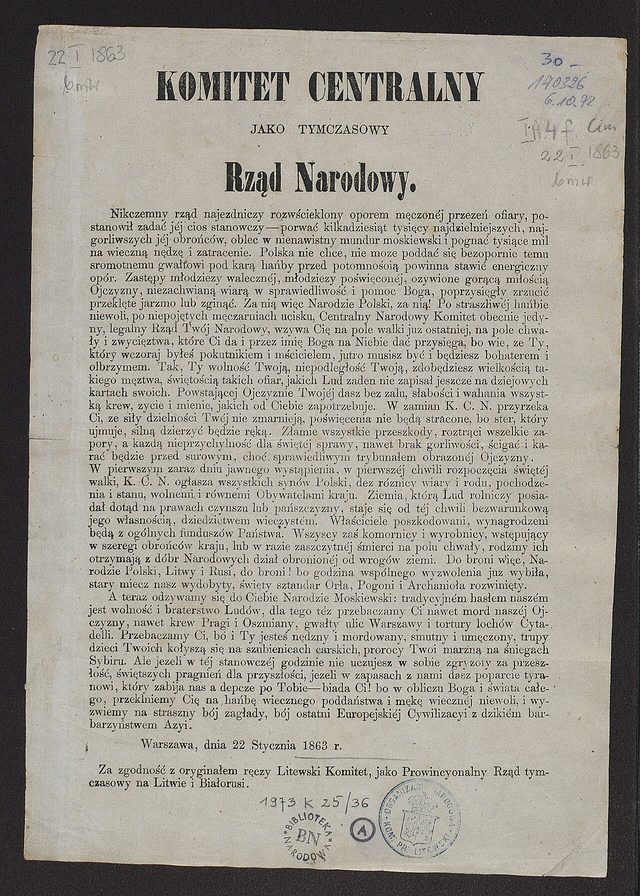
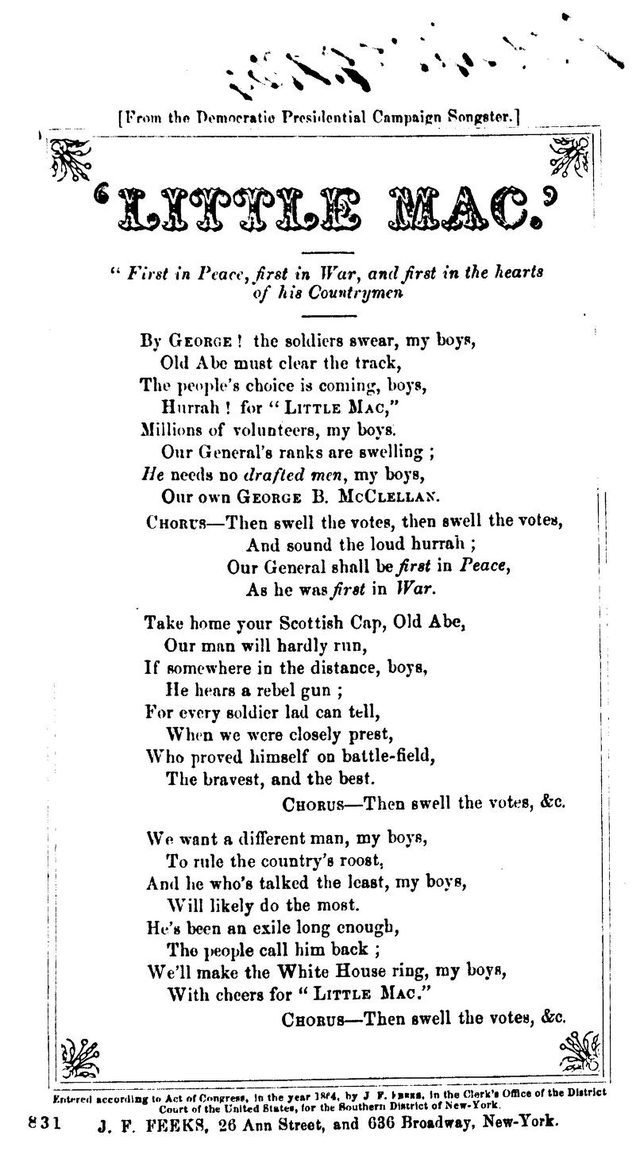
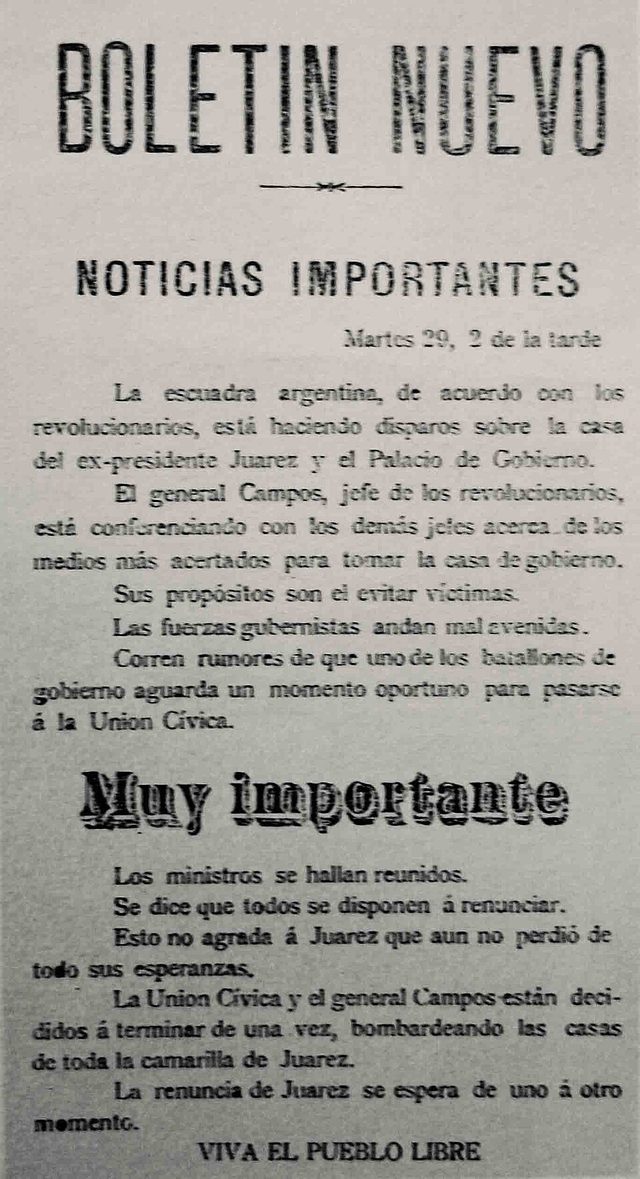
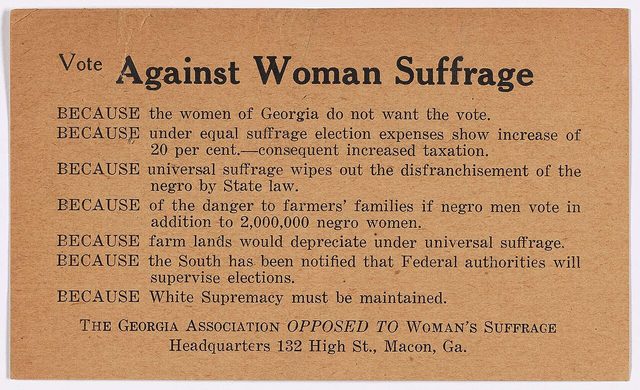
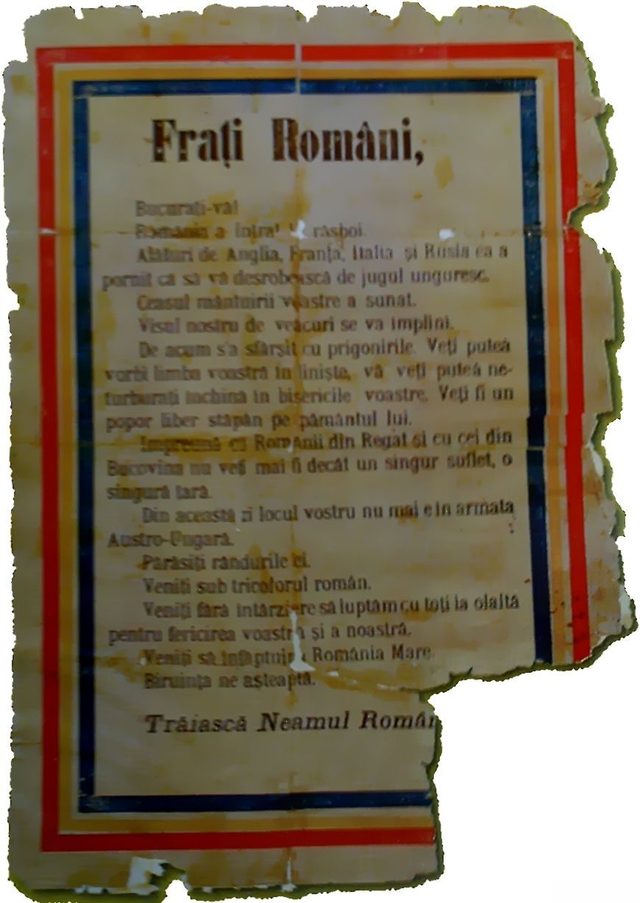
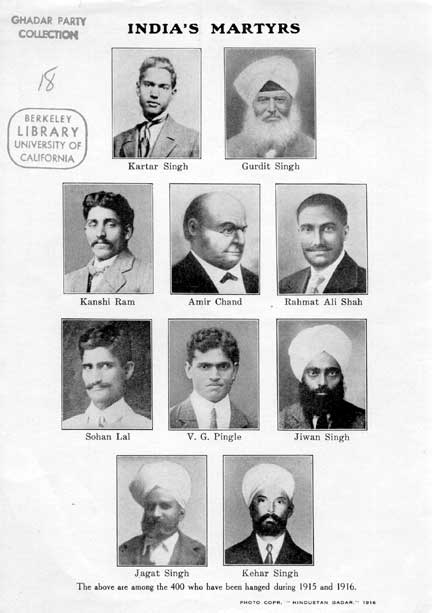
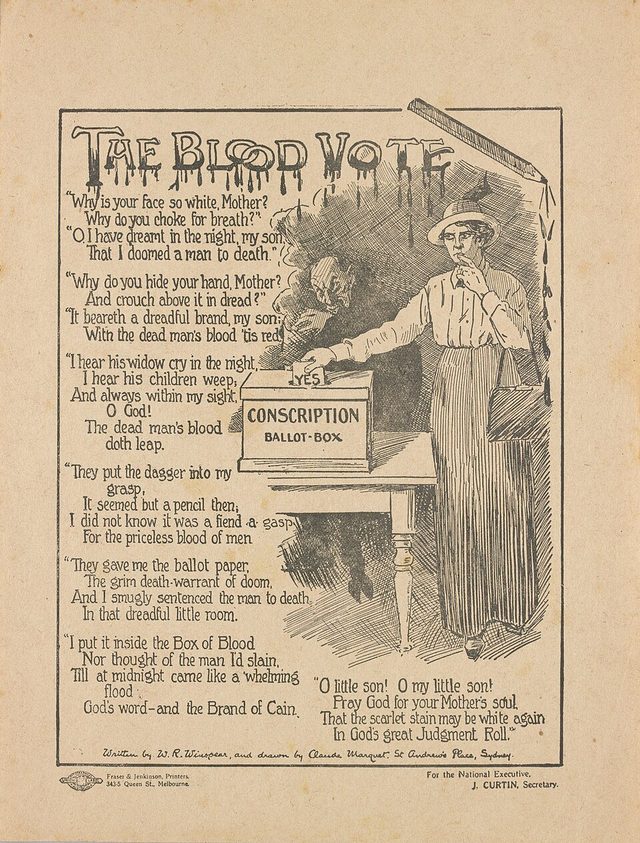
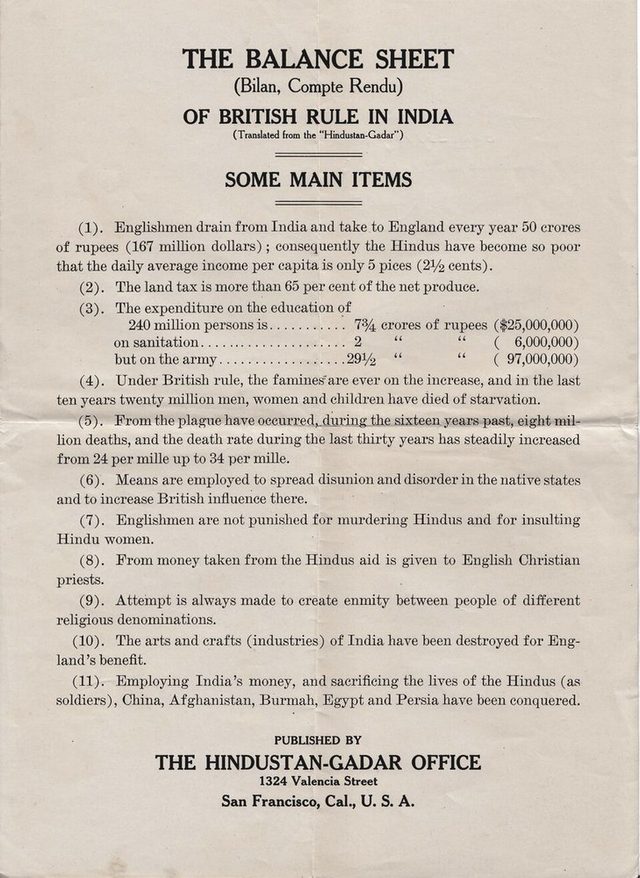
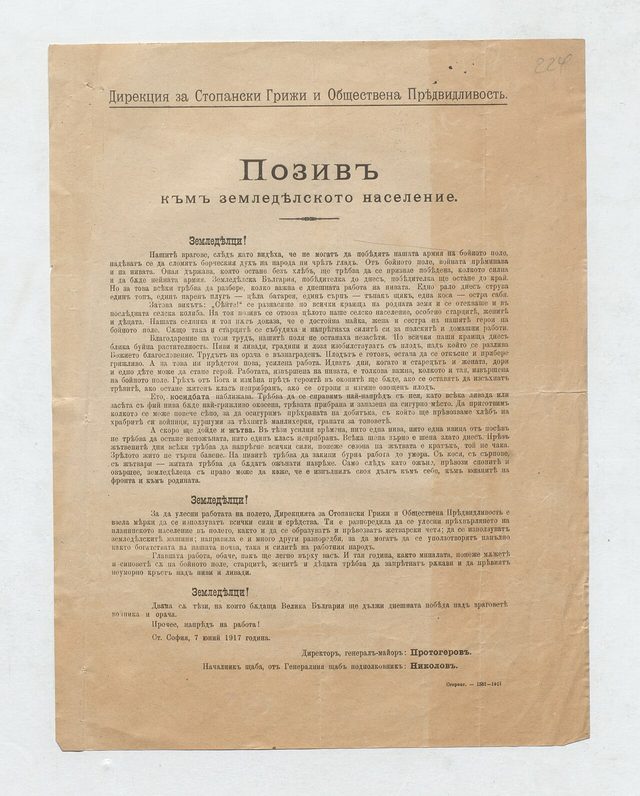
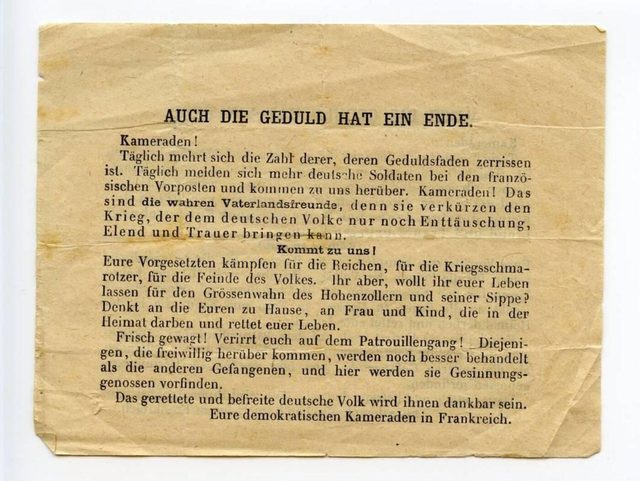
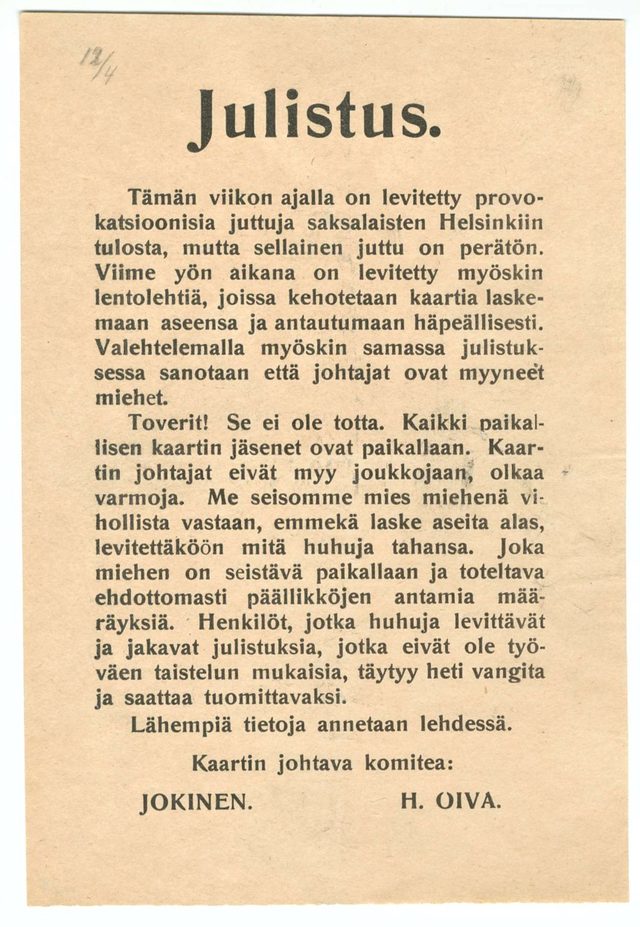
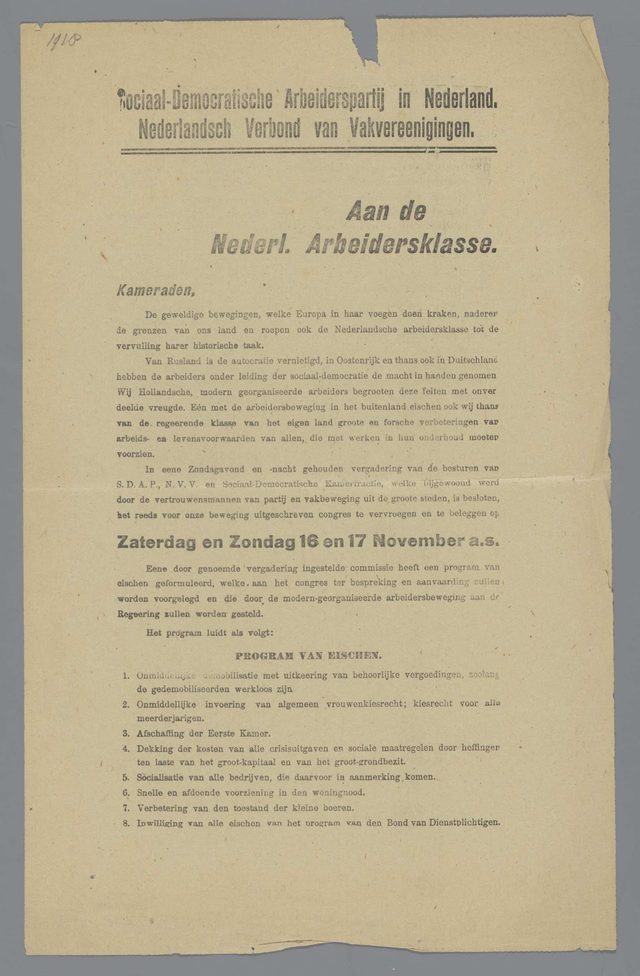
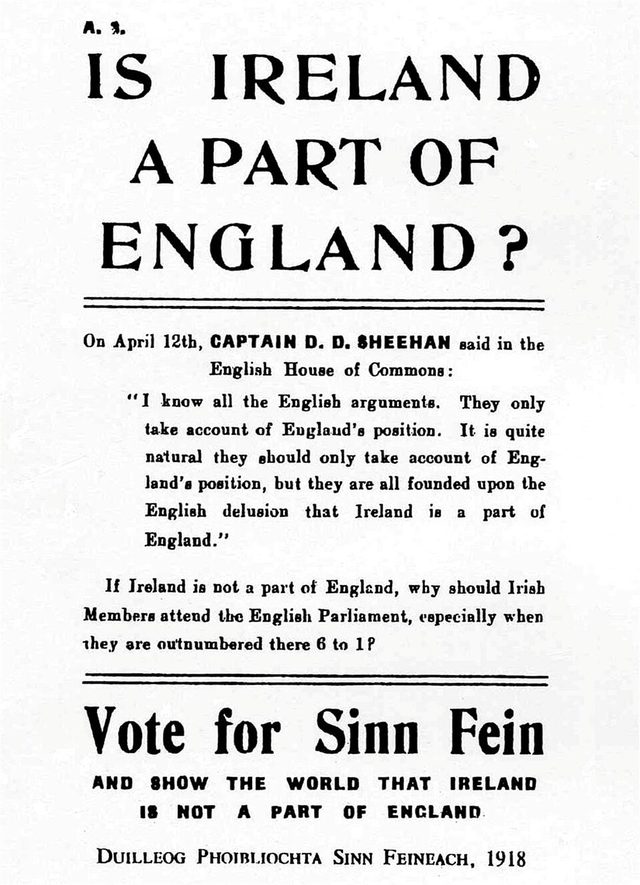
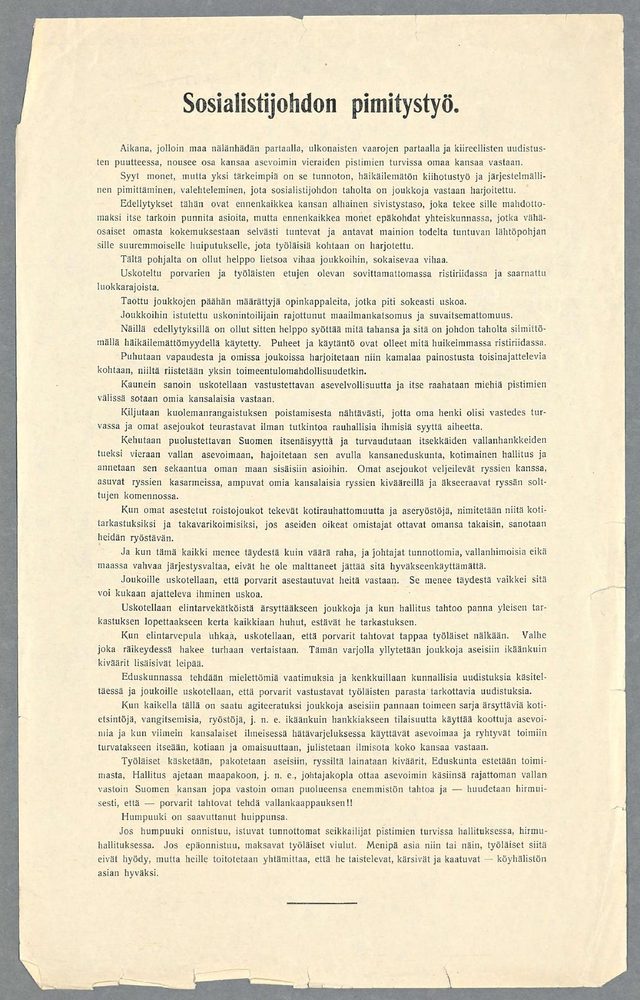
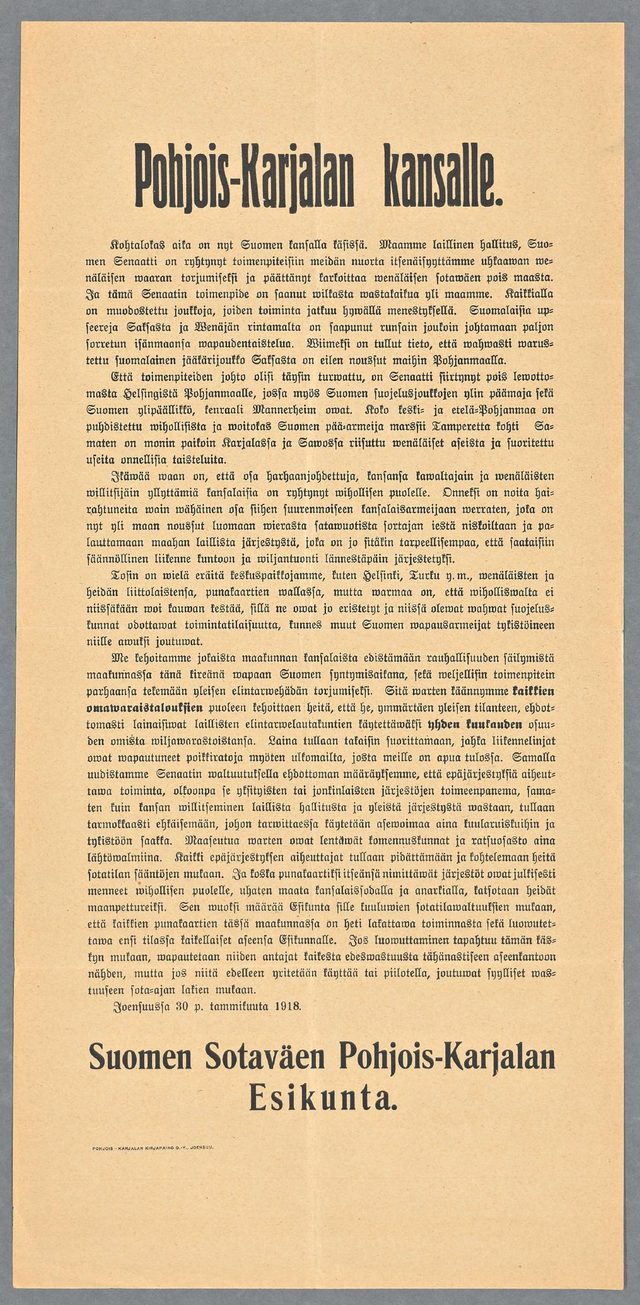
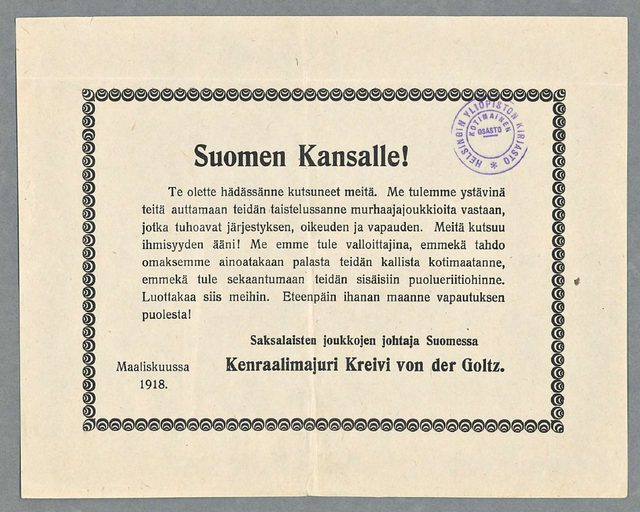
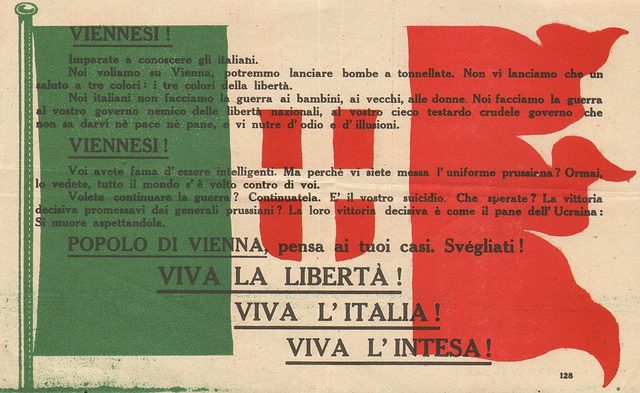
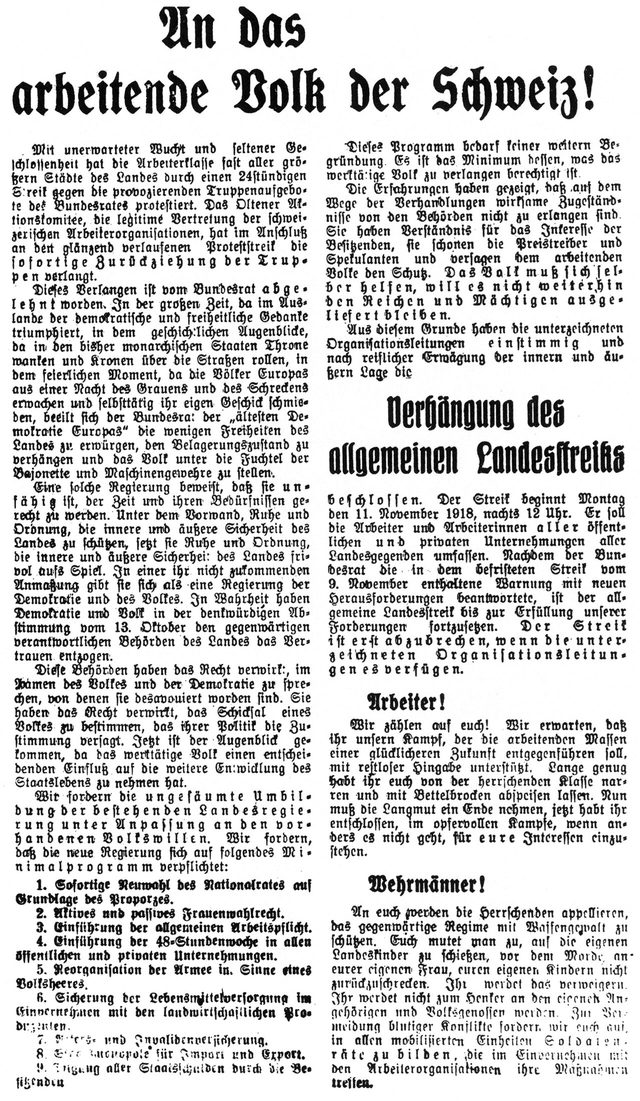
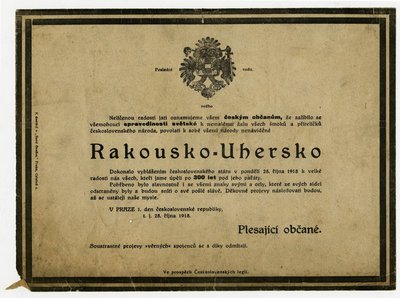
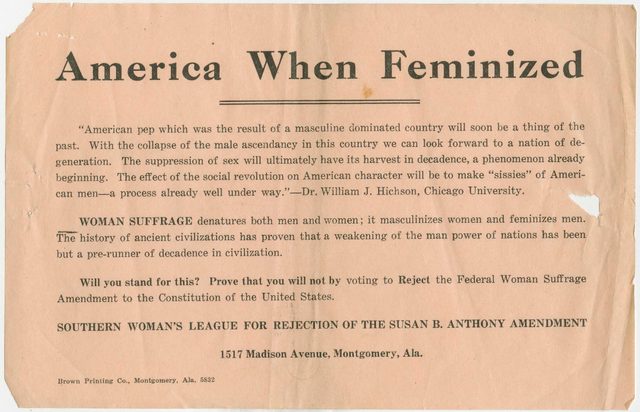
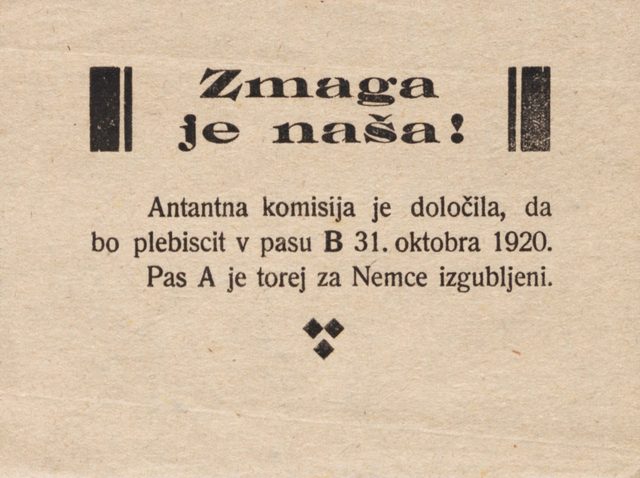
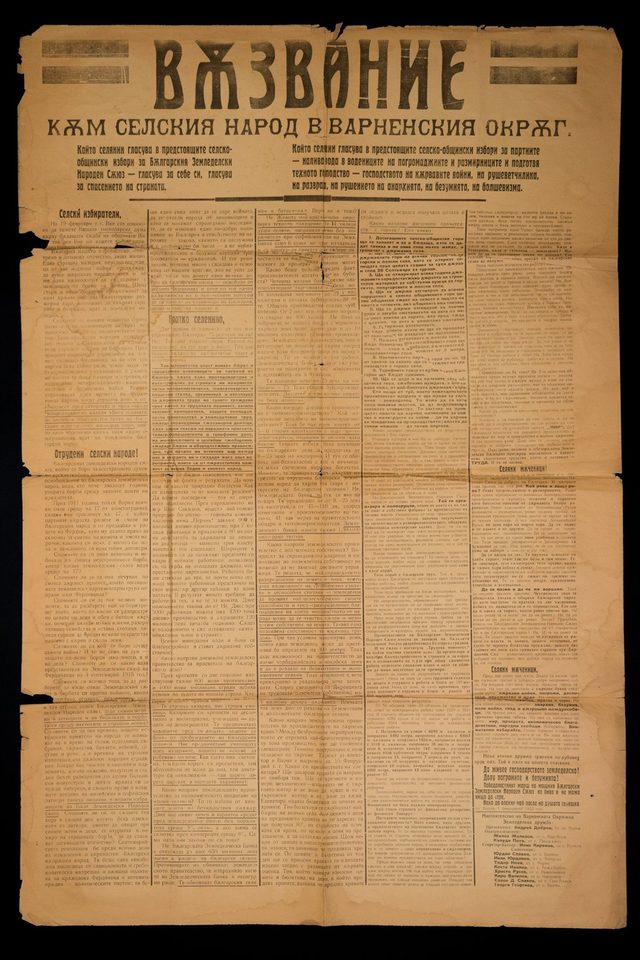
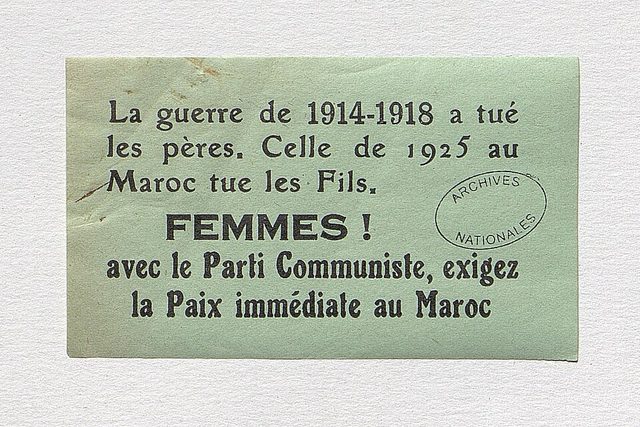
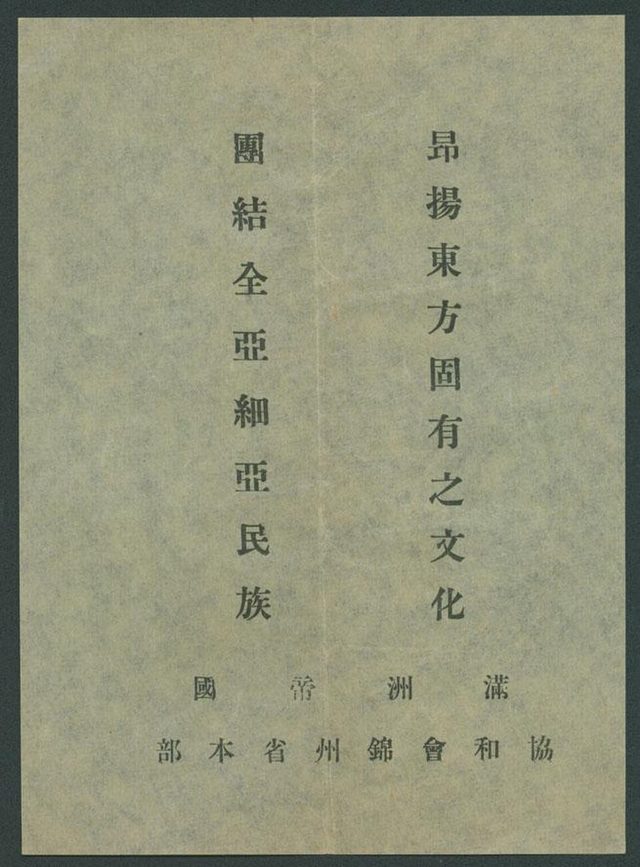
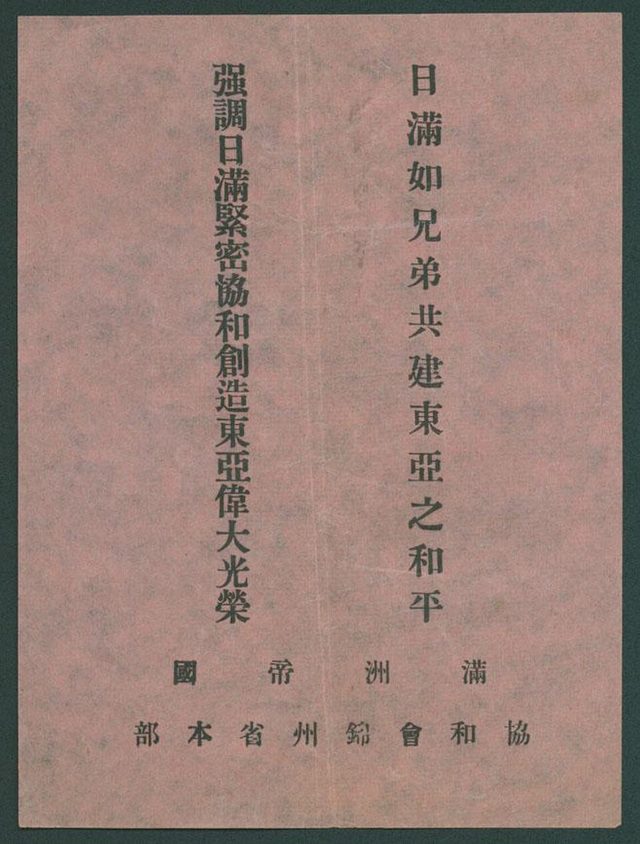
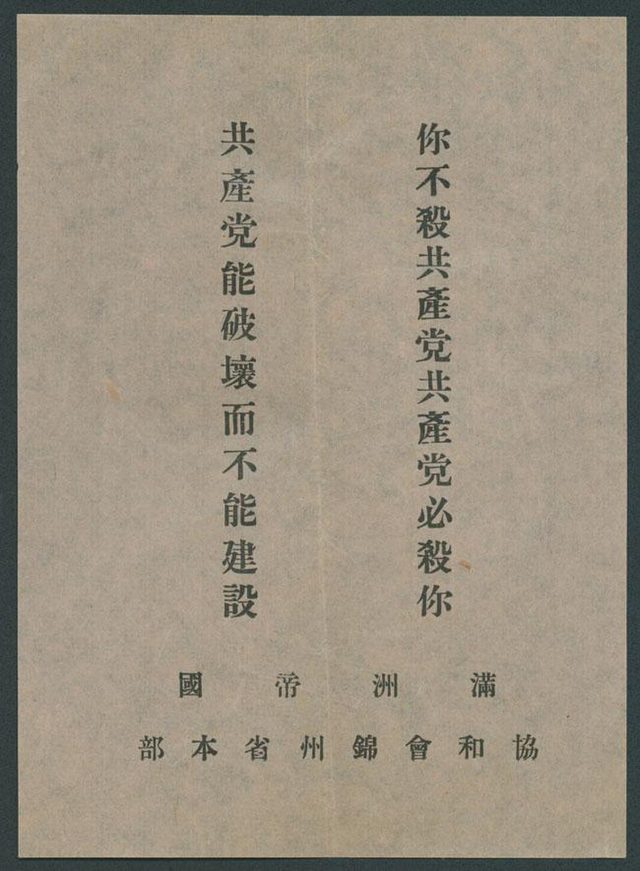
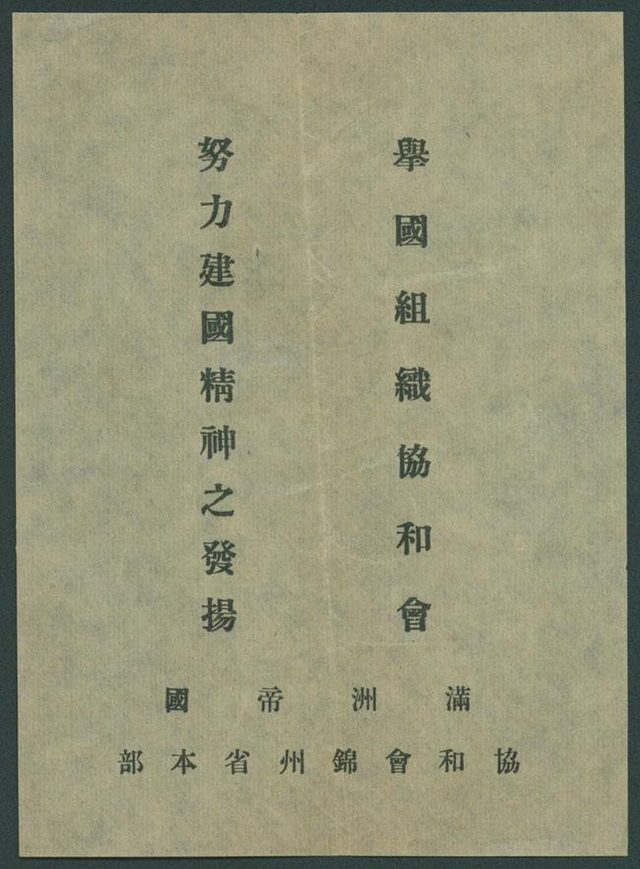
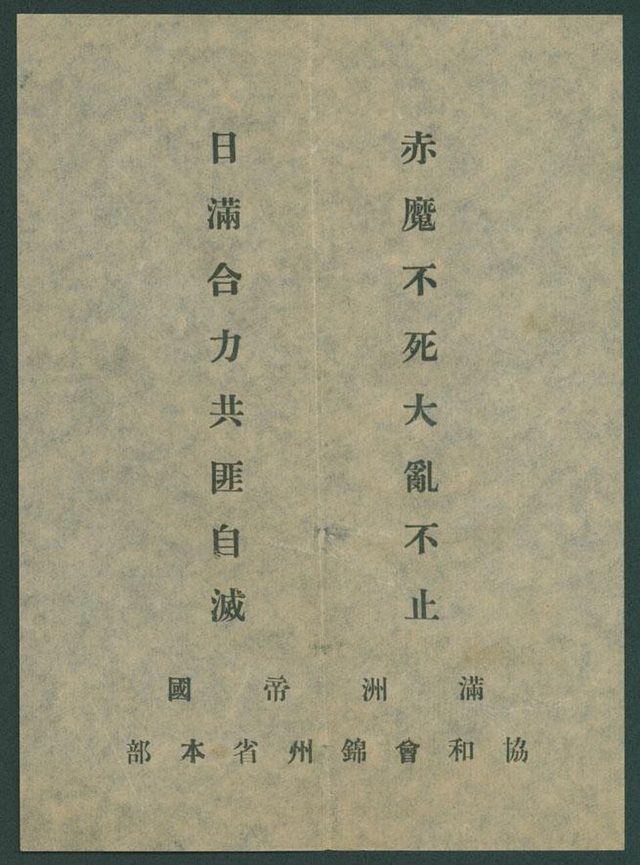
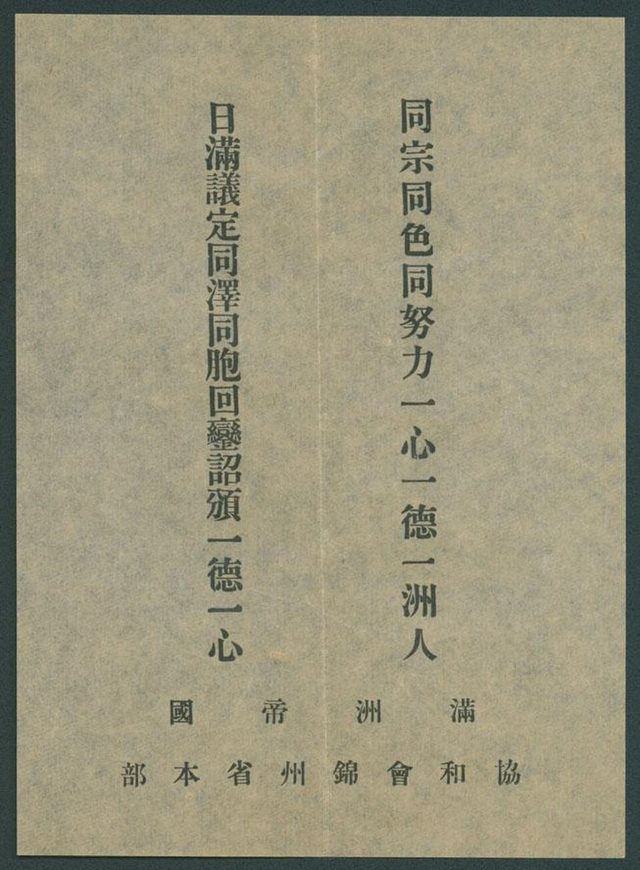
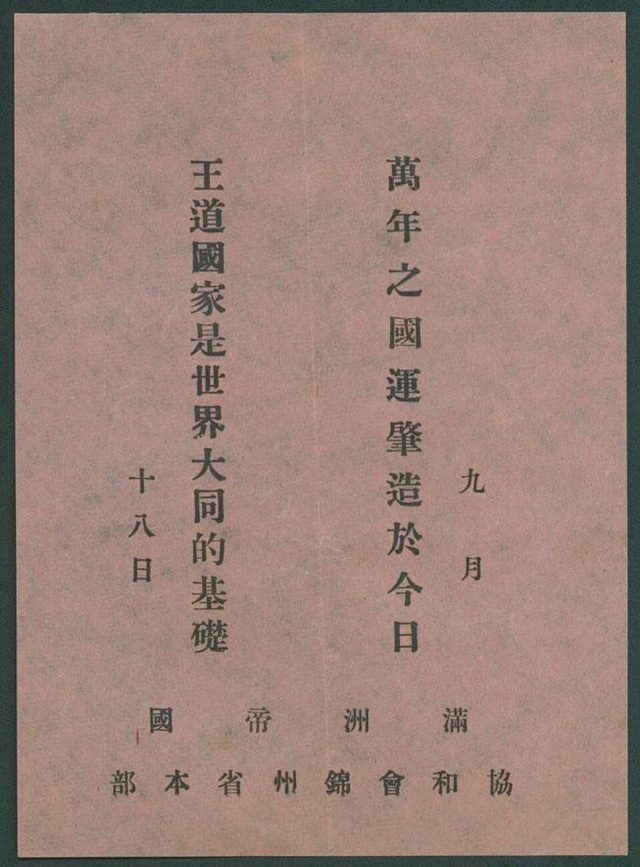
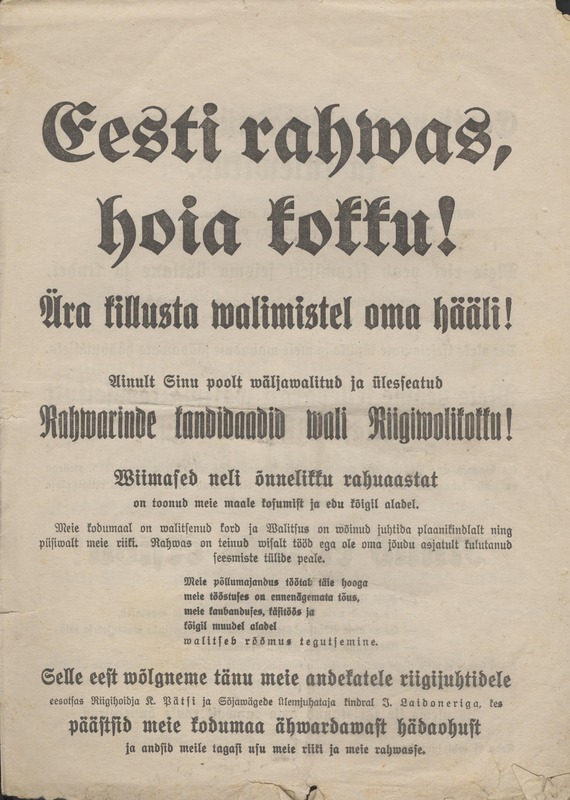
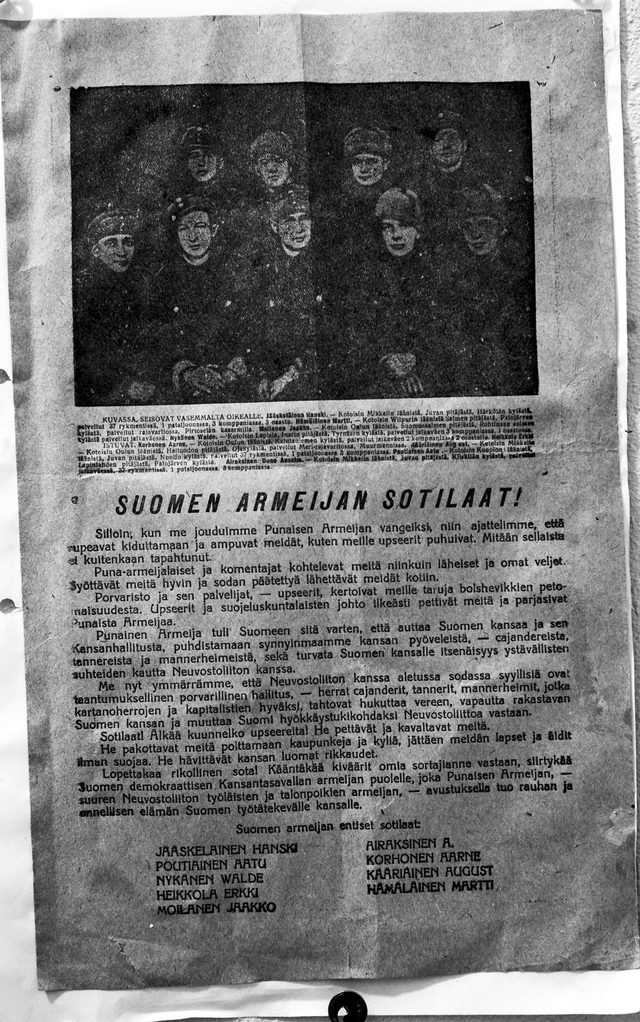
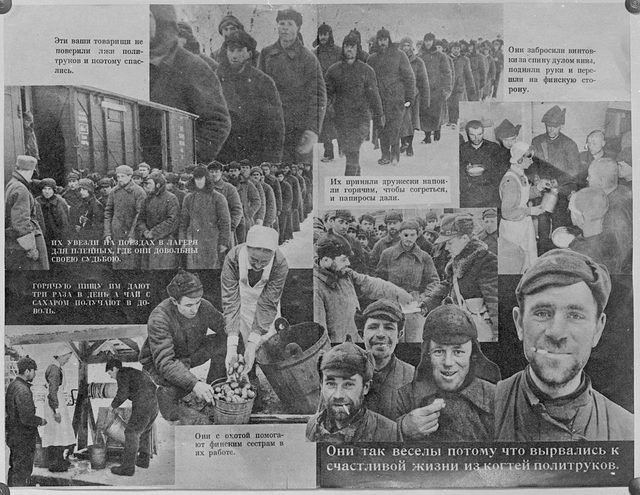
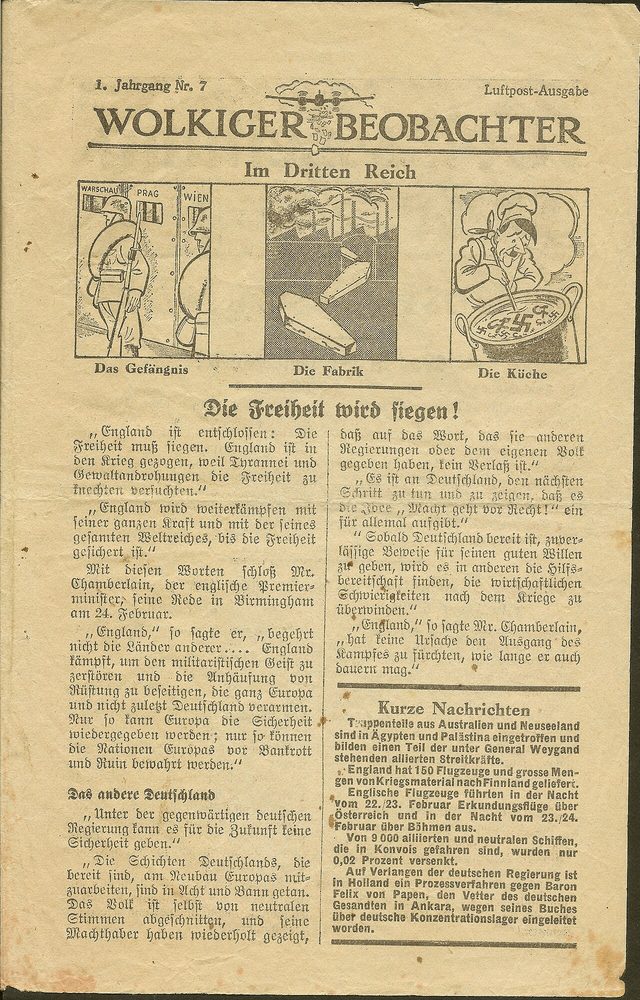
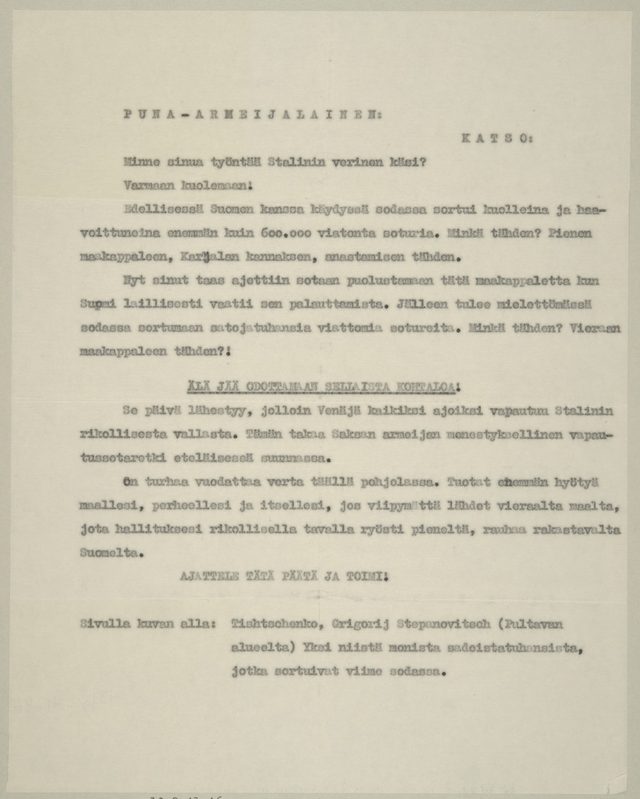
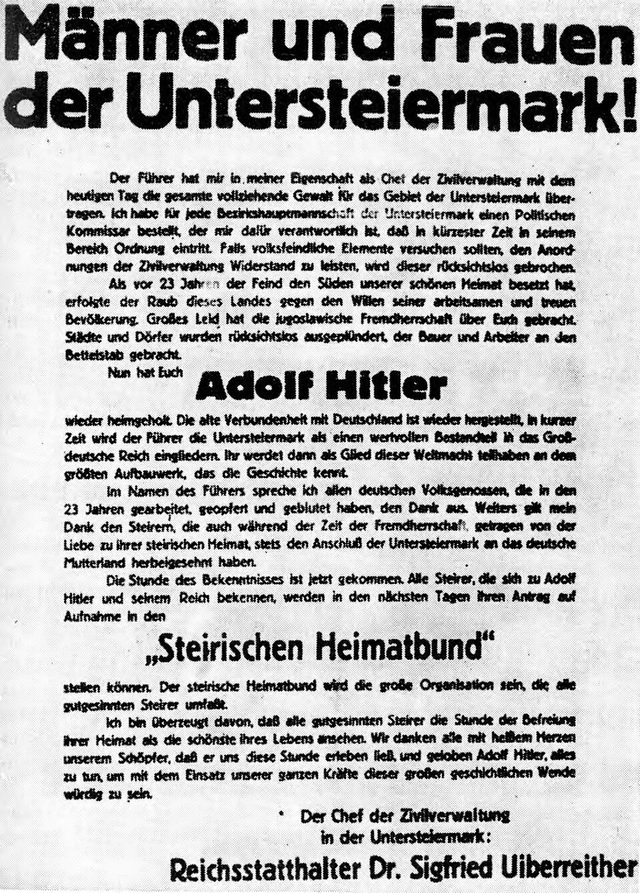
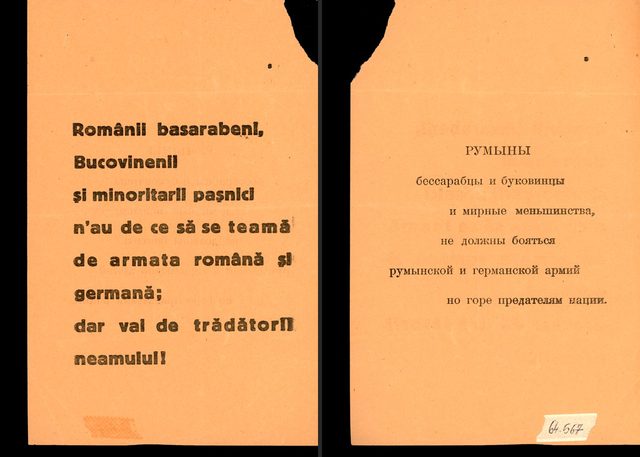
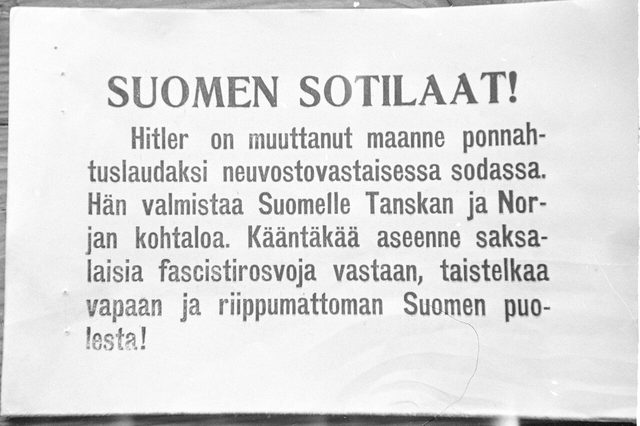
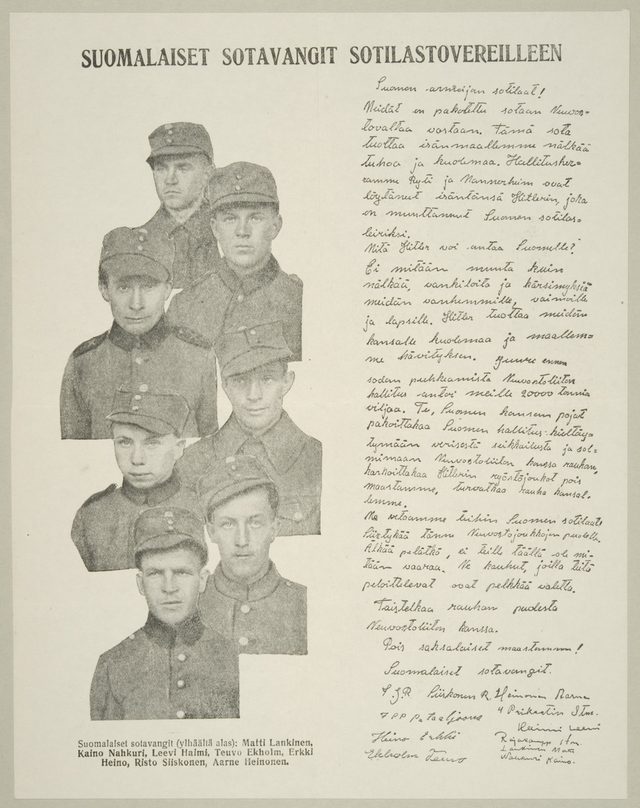
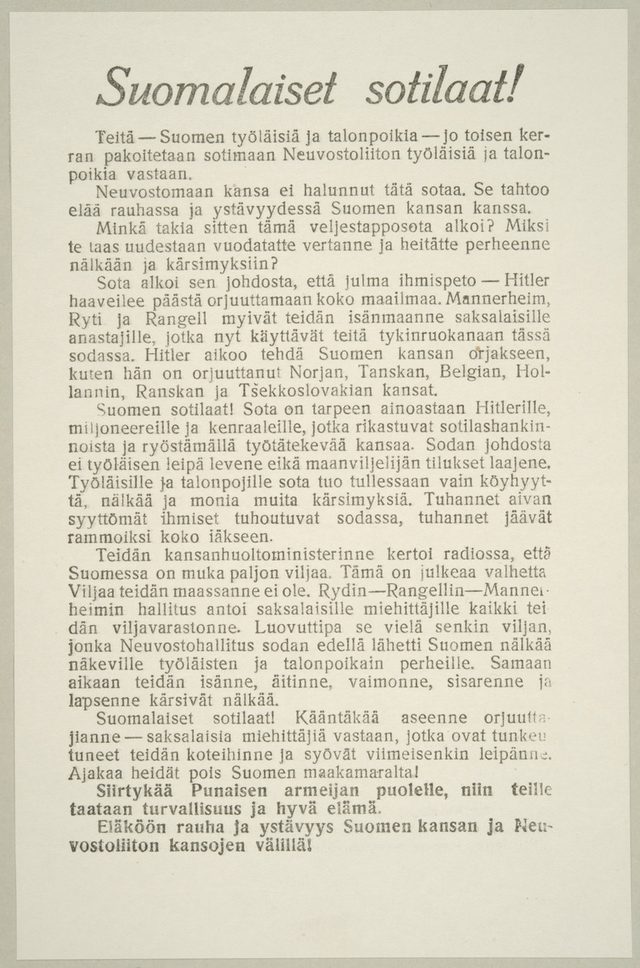
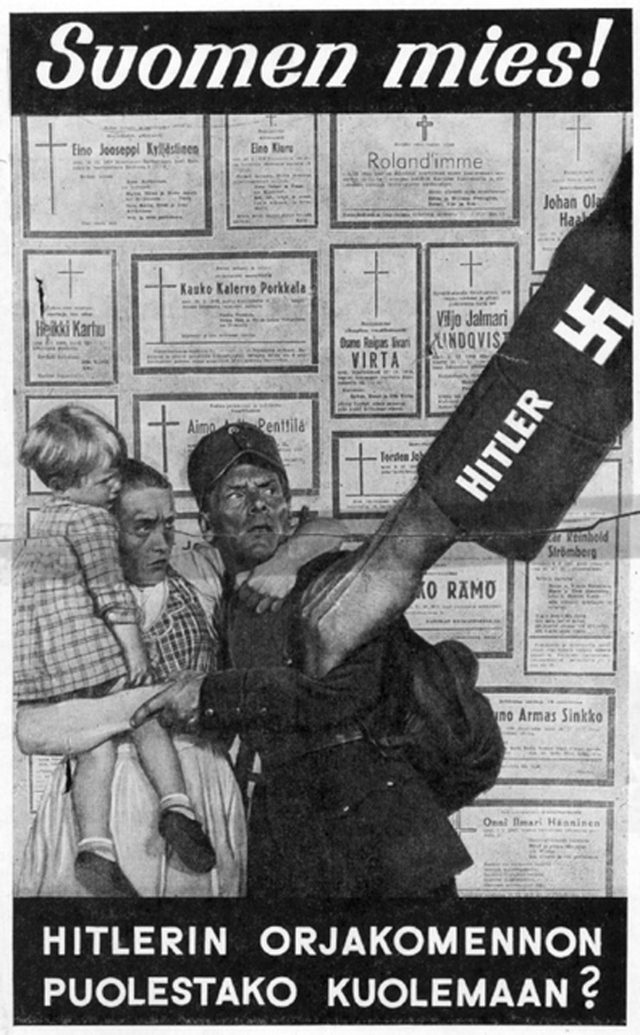
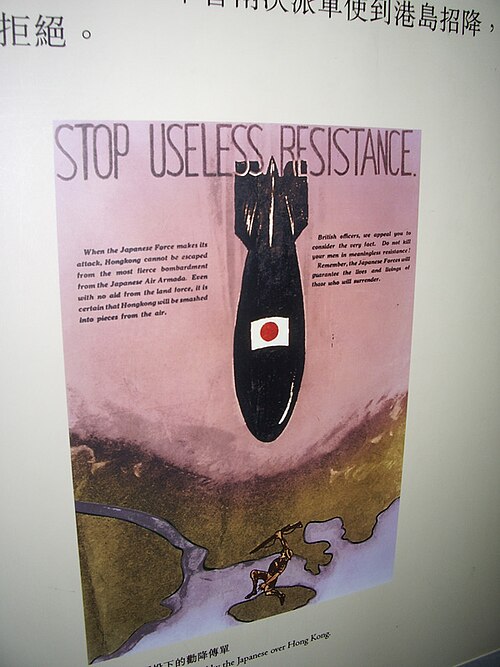
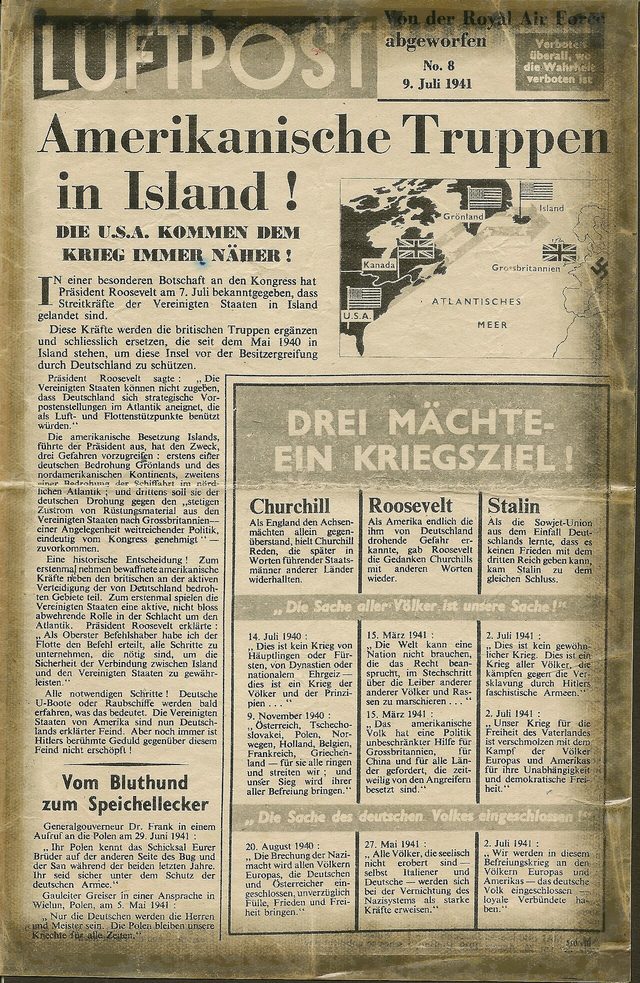
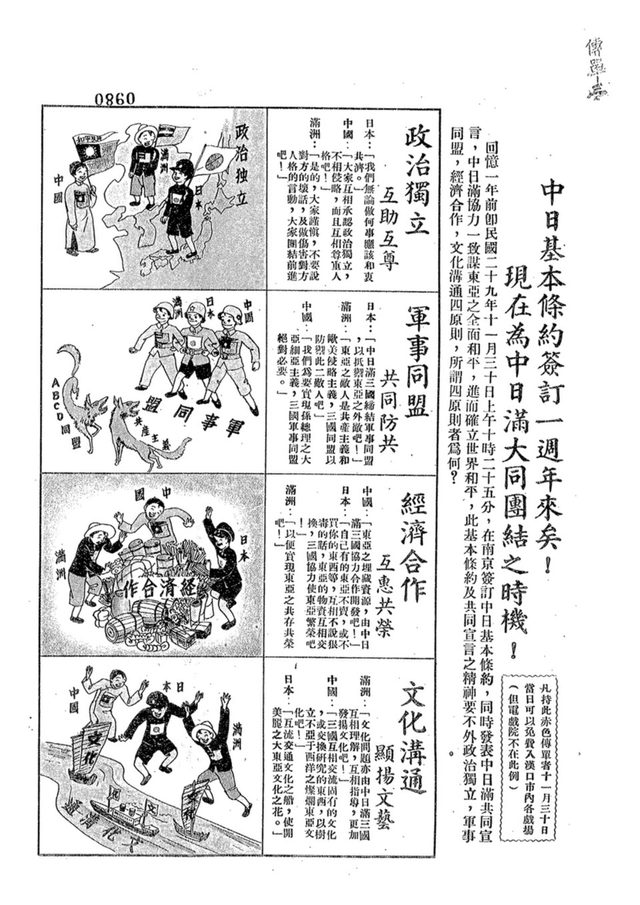
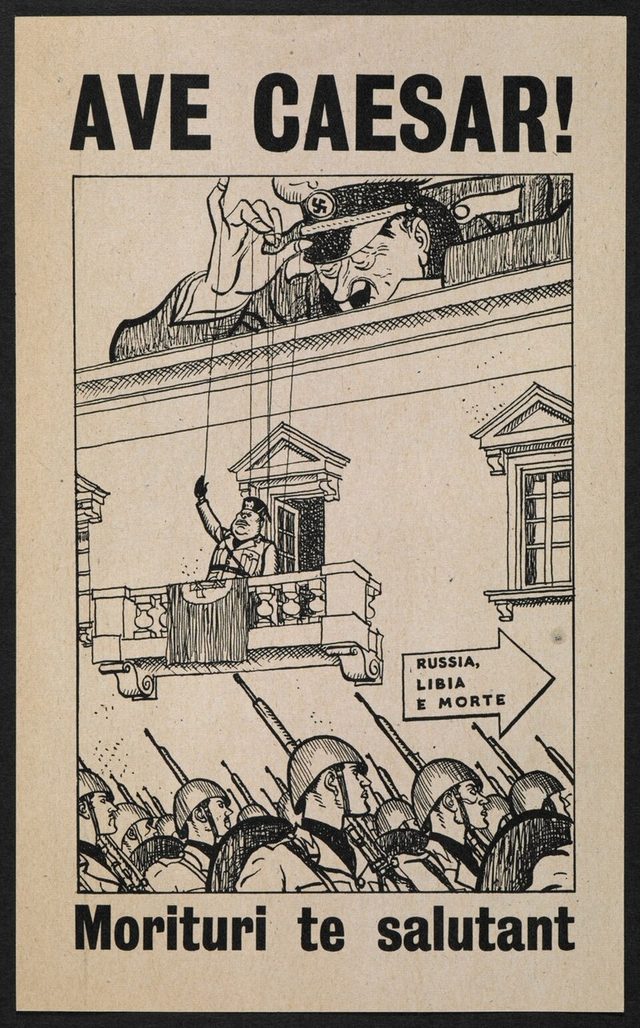
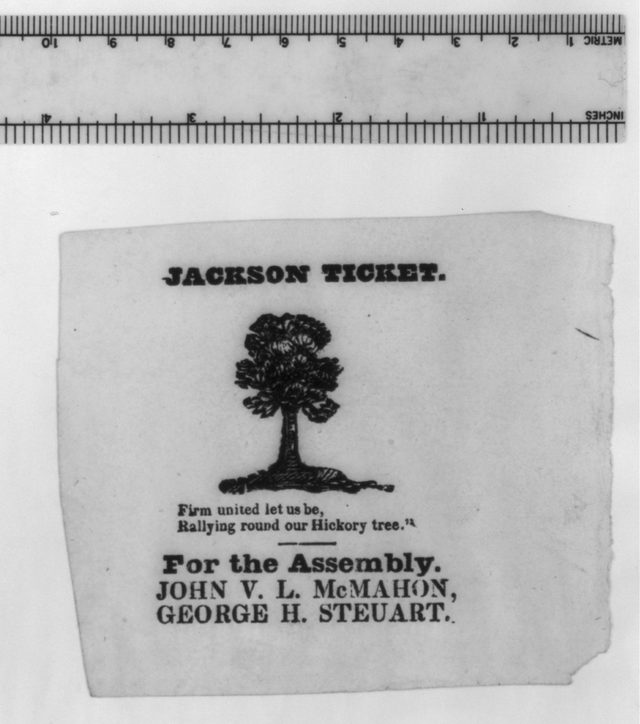
"Some Account of some of the Bloody Deeds of General Jackson" coffin handbill (1828)United States"Some Account of some of the Bloody Deeds of General Jackson" coffin handbill (1828)1828 · Name-calling, Card stackingContent note"Jackson ticket" with Hickory tree motto, Baltimore (1828)United States"Jackson ticket" with Hickory tree motto, Baltimore (1828)1828 · Bandwagon, Transfer"Monumental Inscriptions!" coffin broadside (1828)United States"Monumental Inscriptions!" coffin broadside (1828)1828 · Card stacking, TransferContent noteDemocratic ticket, "Liberty & equal rights" (Ohio electors for Van Buren and Johnson), 1836United StatesDemocratic ticket, "Liberty & equal rights" (Ohio electors for Van Buren and Johnson), 18361836 · Glittering generalities, TransferDemocratic tickets, "Go it, ye Cripples!" and "Stop Van!!!" (Ohio electors, Van Buren and Johnson), 1836United StatesDemocratic tickets, "Go it, ye Cripples!" and "Stop Van!!!" (Ohio electors, Van Buren and Johnson), 18361836 · Name-calling, BandwagonDemocratic ticket, "Going the whole hog" (Ohio electors for Van Buren and Johnson), 1836United StatesDemocratic ticket, "Going the whole hog" (Ohio electors for Van Buren and Johnson), 18361836 · BandwagonKomitet Centralny jako Tymczasowy Rząd Narodowy: Manifest (Central Committee as Provisional National Government: Manifesto of 22 January 1863)Russian EmpireKomitet Centralny jako Tymczasowy Rząd Narodowy: Manifest (Central Committee as Provisional National Government: Manifesto of 22 January 1863)Jan 22, 1863 · Name-calling, Glittering generalitiesContent note'Little Mac.' (from the Democratic presidential campaign songster)United States'Little Mac.' (from the Democratic presidential campaign songster)1864 · Bandwagon, Plain folksBoletín nuevo: Noticias importantes (New Bulletin: Important News), Revolución del ParqueArgentinaBoletín nuevo: Noticias importantes (New Bulletin: Important News), Revolución del ParqueJul 29, 1890 · Bandwagon, Name-callingVote Against Woman SuffrageUnited StatesVote Against Woman Suffrage1915 · Fear appeal, BandwagonFrați Români, Bucurați-vă! (Romanian Brethren, Rejoice!)Kingdom of RomaniaFrați Români, Bucurați-vă! (Romanian Brethren, Rejoice!)1916 · Glittering generalities, BandwagonIndia's Martyrs (Ghadar Party handbill, San Francisco, 1916)United StatesIndia's Martyrs (Ghadar Party handbill, San Francisco, 1916)1916 · TransferThe Blood Vote (anti-conscription leaflet)AustraliaThe Blood Vote (anti-conscription leaflet)1916 · Transfer, Fear appealThe Balance Sheet of British Rule in India (Hindustan-Gadar broadside)United StatesThe Balance Sheet of British Rule in India (Hindustan-Gadar broadside)1917 · Card stackingПозивъ към земледѣлското население (Appeal to the Farming Population)BulgariaПозивъ към земледѣлското население (Appeal to the Farming Population)Jun 7, 1917 · Transfer, Fear appealAuch die Geduld hat ein Ende (Even Patience Has an End), German-language leaflet for German soldiersTransnationalAuch die Geduld hat ein Ende (Even Patience Has an End), German-language leaflet for German soldiers1918 · Scapegoating, Semantic hijackingDie erste Million (The First Million), British balloon leaflet A.P. 74United KingdomDie erste Million (The First Million), British balloon leaflet A.P. 741918 · Bandwagon, Fear appealJulistus (Proclamation): Red Guard committee denies rumours and orders rumour-spreaders arrestedFinlandJulistus (Proclamation): Red Guard committee denies rumours and orders rumour-spreaders arrested1918 · Identity fusionAan de Nederl. Arbeidersklasse (SDAP and NVV manifesto calling a congress, Netherlands, November 1918)NetherlandsAan de Nederl. Arbeidersklasse (SDAP and NVV manifesto calling a congress, Netherlands, November 1918)1918 · BandwagonIs Ireland a part of England? Vote for Sinn Fein (Sinn Féin publicity sheet, 1918 general election)United KingdomIs Ireland a part of England? Vote for Sinn Fein (Sinn Féin publicity sheet, 1918 general election)1918 · TestimonialSoldati italiani! (Austro-Hungarian leaflet on Trieste and Trento)Austria HungarySoldati italiani! (Austro-Hungarian leaflet on Trieste and Trento)1918 · Name-calling, ScapegoatingSosialistijohdon pimitystyö (The obscurantism of the socialist leadership): anonymous anti-socialist broadsheet, 1918FinlandSosialistijohdon pimitystyö (The obscurantism of the socialist leadership): anonymous anti-socialist broadsheet, 19181918 · Name-calling, ScapegoatingContent notePohjois-Karjalan kansalle (To the people of North Karelia): White staff proclamation, 30 January 1918FinlandPohjois-Karjalan kansalle (To the people of North Karelia): White staff proclamation, 30 January 1918Jan 30, 1918 · Bandwagon, Fear appealContent noteSuomen Kansalle! (To the Finnish People!): German commander von der Goltz says German troops come as friendsGerman EmpireSuomen Kansalle! (To the Finnish People!): German commander von der Goltz says German troops come as friendsMar 1918 · Glittering generalities, Euphemism / doublespeak'Viennesi!' tricolour leaflet dropped over Vienna in D'Annunzio's flight, 9 August 1918Kingdom of Italy'Viennesi!' tricolour leaflet dropped over Vienna in D'Annunzio's flight, 9 August 1918Aug 9, 1918 · Transfer, BandwagonAn das arbeitende Volk der Schweiz! Aufruf zum Landesstreik (To the working people of Switzerland! Call for the general strike), 11 November 1918SwitzerlandAn das arbeitende Volk der Schweiz! Aufruf zum Landesstreik (To the working people of Switzerland! Call for the general strike), 11 November 1918Nov 11, 1918 · Bandwagon, Fear appealMock death notice for Austria-Hungary, Prague, 28 October 1918CzechoslovakiaMock death notice for Austria-Hungary, Prague, 28 October 1918Oct 28, 1918 · Name-callingAmerica When FeminizedUnited StatesAmerica When Feminized1920 · Fear appeal, Testimonial"Zmaga je naša!" Carinthian plebiscite leaflet (1920)Kingdom of Serbs, Croats and Slovenes"Zmaga je naša!" Carinthian plebiscite leaflet (1920)1920 · BandwagonВъзвание към селския народ в Варненския окръг (Appeal to the peasant people of the Varna district)BulgariaВъзвание към селския народ в Варненския окръг (Appeal to the peasant people of the Varna district)Feb 1, 1922 · Fear appeal, Name-calling"Femmes ! ... exigez la paix immédiate au Maroc" (PCF sticker, Rif war, 1925)France"Femmes ! ... exigez la paix immédiate au Maroc" (PCF sticker, Rif war, 1925)1925 · Fear appeal昂揚東方固有之文化 (Exalt the East's Inherent Culture), Concordia Association Jinzhou leafletManchukuo昂揚東方固有之文化 (Exalt the East's Inherent Culture), Concordia Association Jinzhou leaflet1936 · Glittering generalities日滿如兄弟 (Japan and Manchukuo Like Brothers), Concordia Association Jinzhou leafletManchukuo日滿如兄弟 (Japan and Manchukuo Like Brothers), Concordia Association Jinzhou leaflet1936 · Glittering generalities你不殺共產党共產党必殺你 (If You Do Not Kill the Communists, the Communists Will Kill You), Concordia Association Jinzhou leafletManchukuo你不殺共產党共產党必殺你 (If You Do Not Kill the Communists, the Communists Will Kill You), Concordia Association Jinzhou leaflet1936 · Fear appeal舉國組織協和會 (Organise the Concordia Association Nationwide), Concordia Association Jinzhou leafletManchukuo舉國組織協和會 (Organise the Concordia Association Nationwide), Concordia Association Jinzhou leaflet1936 · Glittering generalities赤魔不死 日滿合力 (Red Devils Not Dead; Japan and Manchukuo United), Concordia Association Jinzhou leafletManchukuo赤魔不死 日滿合力 (Red Devils Not Dead; Japan and Manchukuo United), Concordia Association Jinzhou leaflet1936 · Name-calling同宗同色同努力 (Same Ancestry, Same Colour, Same Effort), Concordia Association Jinzhou leafletManchukuo同宗同色同努力 (Same Ancestry, Same Colour, Same Effort), Concordia Association Jinzhou leaflet1936 · Glittering generalities萬年之國運肇造於今日 (The Ten-Thousand-Year National Destiny Was Founded Today), Concordia Association Jinzhou leafletManchukuo萬年之國運肇造於今日 (The Ten-Thousand-Year National Destiny Was Founded Today), Concordia Association Jinzhou leaflet1936 · Glittering generalities我國肇造五年 (Our Country Founded Five Years Ago), Concordia Association Jinzhou leaflet for 18 SeptemberManchukuo我國肇造五年 (Our Country Founded Five Years Ago), Concordia Association Jinzhou leaflet for 18 SeptemberSep 1936 · Glittering generalitiesEesti rahwas, hoia kokku! (Estonian people, hold together!): Rahvarinne election leafletEstoniaEesti rahwas, hoia kokku! (Estonian people, hold together!): Rahvarinne election leaflet1938 · Identity fusion, Glittering generalitiesSuomen armeijan sotilaat! (Soldiers of the Finnish Army!): Soviet leaflet signed by named Finnish prisonersSoviet UnionSuomen armeijan sotilaat! (Soldiers of the Finnish Army!): Soviet leaflet signed by named Finnish prisoners1939 · Testimonial, ScapegoatingОни так веселы потому что вырвались к счастливой жизни (They Are So Cheerful Because They Broke Free to a Happy Life): Finnish leaflet for Red Army soldiersFinlandОни так веселы потому что вырвались к счастливой жизни (They Are So Cheerful Because They Broke Free to a Happy Life): Finnish leaflet for Red Army soldiers1940 · Card stacking, ScapegoatingWolkiger Beobachter, Luftpost-Ausgabe, 1. Jahrgang Nr. 7 (Cloudy Observer, air-mail edition, front page)United KingdomWolkiger Beobachter, Luftpost-Ausgabe, 1. Jahrgang Nr. 7 (Cloudy Observer, air-mail edition, front page)1940 · Glittering generalities, Card stackingContent notePuna-armeijalainen: Katso! Minne sinua työntää Stalinin verinen käsi? (Red Army soldier: Look! Where Is Stalin's Bloody Hand Pushing You?): Finnish-language leaflet textFinlandPuna-armeijalainen: Katso! Minne sinua työntää Stalinin verinen käsi? (Red Army soldier: Look! Where Is Stalin's Bloody Hand Pushing You?): Finnish-language leaflet text1941 · Fear appeal, Name-calling, Card stackingContent noteMänner und Frauen der Untersteiermark! (leaflet for enrolment in the Styrian Homeland League)Nazi GermanyMänner und Frauen der Untersteiermark! (leaflet for enrolment in the Styrian Homeland League)1941 · Semantic hijacking, Scapegoating, Name-callingContent noteRomânii basarabeni, Bucovinenii și minoritarii pașnici (leaflet for Bessarabia and Northern Bukovina, Romanian and Russian sides)RomaniaRomânii basarabeni, Bucovinenii și minoritarii pașnici (leaflet for Bessarabia and Northern Bukovina, Romanian and Russian sides)1941 · Fear appeal, Identity fusionSuomen sotilaat! (Soldiers of Finland!): Soviet leaflet on a springboard against the USSR and the fate of Denmark and NorwaySoviet UnionSuomen sotilaat! (Soldiers of Finland!): Soviet leaflet on a springboard against the USSR and the fate of Denmark and Norway1941 · Fear appeal, Name-callingSuomalaiset sotavangit sotilastovereilleen (Finnish prisoners of war to their fellow soldiers): Soviet leaflet with seven named prisonersSoviet UnionSuomalaiset sotavangit sotilastovereilleen (Finnish prisoners of war to their fellow soldiers): Soviet leaflet with seven named prisoners1941 · Testimonial, ScapegoatingSuomalaiset sotilaat! (Finnish soldiers!): Soviet leaflet on a 'fratricidal war' and German mastersSoviet UnionSuomalaiset sotilaat! (Finnish soldiers!): Soviet leaflet on a 'fratricidal war' and German masters1941 · Scapegoating, Name-callingSuomen mies! (Man of Finland!): Soviet leaflet with a Hitler-armband arm pushing a soldier past death noticesSoviet UnionSuomen mies! (Man of Finland!): Soviet leaflet with a Hitler-armband arm pushing a soldier past death notices1941 · Fear appeal, Scapegoating'Stop useless resistance' (Japanese leaflet to the Hong Kong garrison)Empire of Japan'Stop useless resistance' (Japanese leaflet to the Hong Kong garrison)1941 · Fear appealLuftpost No. 8, 9 July 1941: "Amerikanische Truppen in Island!" and "Drei Mächte - ein Kriegsziel!"United KingdomLuftpost No. 8, 9 July 1941: "Amerikanische Truppen in Island!" and "Drei Mächte - ein Kriegsziel!"Jul 9, 1941 · Testimonial, Bandwagon, Name-callingContent noteLuftpost No. 16, 2 September 1941: "Es gibt kein Zurück!" and "Der Weg der Pimpfe"United KingdomLuftpost No. 16, 2 September 1941: "Es gibt kein Zurück!" and "Der Weg der Pimpfe"Sep 2, 1941 · Card stacking, Fear appeal, Name-callingContent note中日基本條約簽訂一週年來矣! (The Sino-Japanese Basic Treaty's first anniversary has come!), four-panel leaflet for HankouEmpire of Japan中日基本條約簽訂一週年來矣! (The Sino-Japanese Basic Treaty's first anniversary has come!), four-panel leaflet for HankouNov 1941 · Glittering generalities, Fear appealAve Caesar! Morituri te salutant (British leaflet to Italy)United KingdomAve Caesar! Morituri te salutant (British leaflet to Italy)1942 · Name-calling, Fear appealContent note'BUT if you continue to resist...' (Japanese leaflet to Australian troops)Empire of Japan'BUT if you continue to resist...' (Japanese leaflet to Australian troops)1942 · Fear appealContent noteNeen, Coen, ook wij burgers zullen niet dispereeren! (No, Coen, we citizens too shall not despair!)Dutch East IndiesNeen, Coen, ook wij burgers zullen niet dispereeren! (No, Coen, we citizens too shall not despair!)1942 · Transfer, Glittering generalitiesJapanese leaflet in English, "Don't wait to die" (Philippines, 1942)Empire of JapanJapanese leaflet in English, "Don't wait to die" (Philippines, 1942)1942 · Fear appealLietuvos darbo žmonės! Lietuviai! (Working People of Lithuania! Lithuanians!): Soviet May Day leaflet for German-occupied LithuaniaSoviet UnionLietuvos darbo žmonės! Lietuviai! (Working People of Lithuania! Lithuanians!): Soviet May Day leaflet for German-occupied Lithuania1942 · Name-calling, Bandwagon, Fear appealSuomalainen sotilas! (Finnish Soldier!): Soviet safe-conduct leaflet, Continuation WarSoviet UnionSuomalainen sotilas! (Finnish Soldier!): Soviet safe-conduct leaflet, Continuation War1942 · Fear appeal, Scapegoating