U.N. Day Poster #3: Some Places Made Almost No Economic Progress for Lack of Technology and Tools (Japanese poster distributed in Asia)
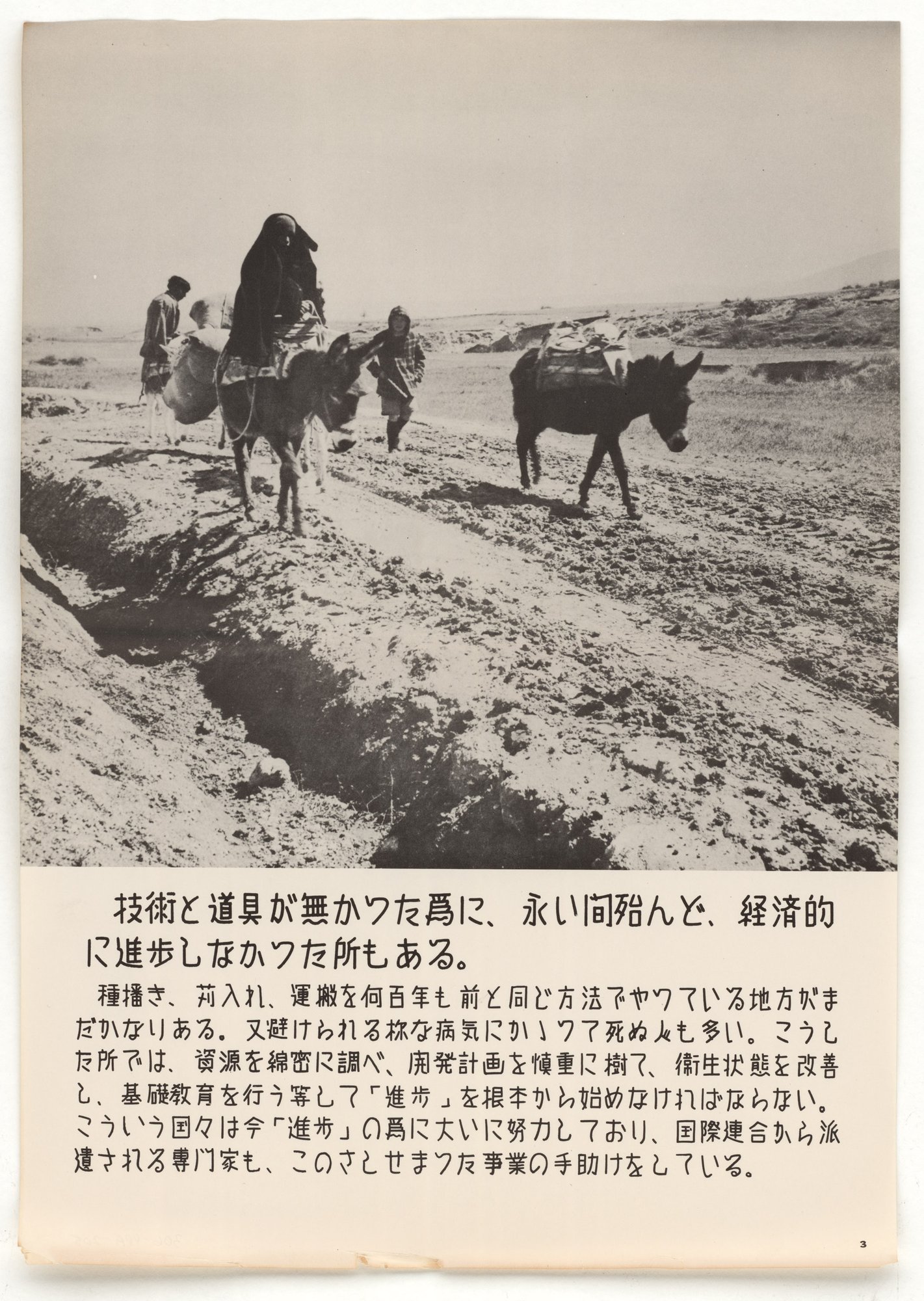
A photograph of a muddy dirt road with a veiled rider on a donkey, a second laden donkey and walkers. Japanese text says some regions have sowed, reaped and carried goods the same way for hundreds of years and many die of preventable diseases, so progress must start from the roots through surveys of resources, development plans, better hygiene and basic education, with United Nations experts helping. The tell is card-stacking: one image of hardship stands for whole regions, and the remedy is given as technical aid.
Propaganda techniques used in this poster
- Date
- September 14, 1953
- Period
- Cold War
- Made by
- U.S. Information Agency (predecessor: State Department International Information and Educational Exchange Program), Propaganda Posters Distributed in Asia series
- Region
- North America
- Country
- United States
- Medium
- Poster
- Issuer type
- State
- Regime
- Eisenhower Administration
- Leader
- Dwight D. Eisenhower
- Audience
- Foreign public
- Purpose
- Persuade or win support
- Themes
- Economy and finance, Science and technology
- Event
- Cold War
- Source
- Unidentified Source blurred: contractors, cutouts, buried disclosure
- Source
- U.S. National Archives (NARA), Record Group 306, Propaganda Posters Distributed in Asia, retrieved October 3, 2026
- Rights
- Public domain (U.S. government work; NARA RG 306)
U.S. Information Agency / Department of State, September 14, 1953. National Archives, Record Group 306 (NAID 5730105, 306-PPA-205).
Text on the object
技術と道具が無かつた為に、永い間殆んど、経済的に進歩しなかつた所もある。

種播き、刈入れ、運搬を何百年も前と同じ方法でやつている地方がまだかなりある。又避けられる様な病気にかかつて死ぬ人も多い。こうした所では、資源を綿密に調べ、開発計画を慎重に樹て、衛生状態を改善し、基礎教育を行う等して「進歩」を根本から始めなければならない。こういう国々は今「進歩」の為に大いに努力しており、国連から派遣される専門家も、このさしせまつた事業の手助けをしている。

3
For lack of technology and tools, there are also places that for a long time made almost no economic progress.

There are still quite a few regions that sow, reap and transport goods by the same methods as hundreds of years ago. Many people also die of diseases that could be avoided. In such places, 'progress' must be begun from the foundations by surveying resources closely, drawing up development plans carefully, improving sanitary conditions and giving basic education. These countries are now striving greatly for 'progress', and experts sent by the United Nations are helping with this pressing work.

3