In one line: From the liberation of Albania in November 1944 until the collapse of one-party rule in 1990 to 1991, Enver Hoxha (to his death on 11 April 1985) and then Ramiz Alia governed Albania through the Party of Labour as a one-party state with a secret police, a state-run press, the closure of all places of worship in 1967, a policy of near-total economic and diplomatic self-reliance after breaks with Yugoslavia (1948), the Soviet Union (1961) and China (1978), and a programme of concrete bunkers that Albanian and foreign sources count in the hundreds of thousands.
The leader and the people under the leader
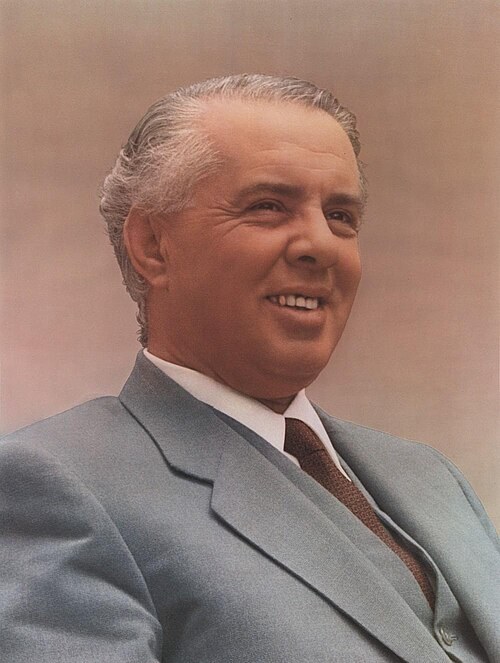
Photo: Petrit Kumi (as credited on Commons), Public domain (Commons PD-Albania-exempt: official creation)
Enver Hoxha
First Secretary of the Party of Labour of Albania; Prime Minister 1944 to 1954 · 1944 to 1985
Enver Hoxha: Read more
Led the Communist Party (renamed the Party of Labour in 1948) from 1943 until his death on 11 April 1985; prime minister from 1944 to 1954 and, for much of that time, also foreign minister, defence minister and commander-in-chief.
In their words
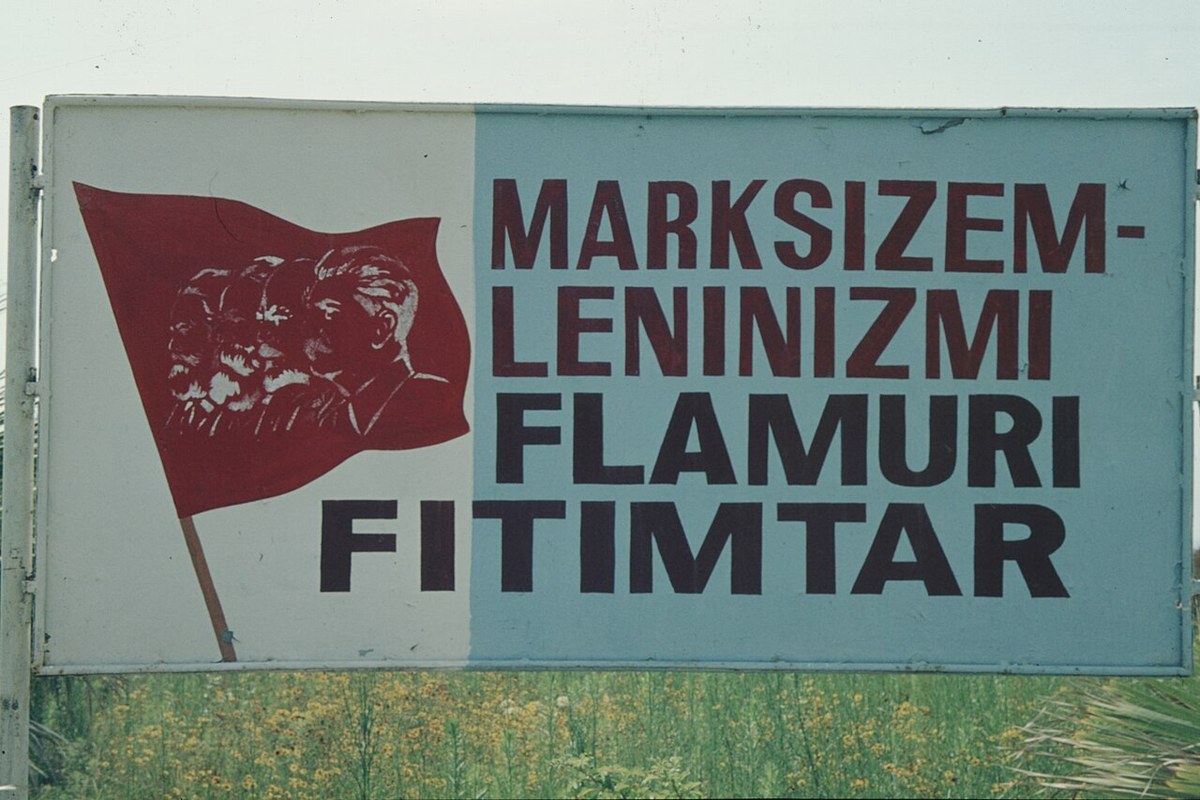
“We must go to the Moscow meeting, not with "several variants" but with a clear-cut stand, not with ten banners but with one, the banner of Marxism-Leninism.”
“[...] the Albanian people and their Party of Labor will live even on grass, if need be, but they will never sell themselves for 30 pieces of silver, for they prefer to die standing and with honour rather than live with shame and knelt down.”
“People of Albania, You must gather the fruits of your heroic war yourselves, because they belong to you, and you have paid for them in blood, so that they will not be snatched from you and stolen by thieves, speculators, intriguers, and tricky politicians, by those parasites who used to live on your backs.”
Leader and head of state
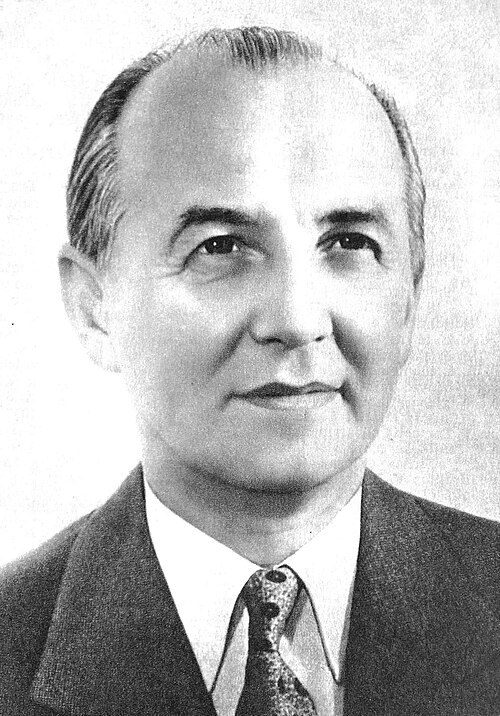
Photo: Albanian State (as credited on Commons), Public domain (Commons: official creation, Albanian Copyright Law no. 35/2016, Art. 12(1)(b))
Ramiz Alia
Chairman of the Presidium of the People's Assembly (head of state); First Secretary of the Party of Labour · 1982 to 1991
Ramiz Alia: Read more
Head of state from 22 November 1982 and Hoxha's successor as First Secretary from 13 April 1985 to 1991; ended mass repression, granted amnesties in 1986 and 1989, signed the law permitting political parties on 12 December 1990 and was President of the republic from 30 April 1991 to 3 April 1992.
HLNo clearly public-domain or openly licensed portrait found. Commons holds a 1945 photograph tagged public domain under Albanian law (source), but a published Albanian work of that date may still be protected in the United States, so it is not hosted here.
Haxhi Lleshi
Chairman of the Presidium of the People's Assembly (head of state) · 1953 to 1982
Haxhi Lleshi: Read more
Wartime commander who was minister of internal affairs from 22 October 1944 to 23 March 1946 and the formal head of state from 1 August 1953 until Alia succeeded him on 22 November 1982; died in 1998.
Party and ideology
HKNo public-domain or openly licensed portrait checked or hosted. See the Commons category for Hysni Kapo: source.
Hysni Kapo
Member of the Politburo of the Party of Labour · 1948 to 1979
Hysni Kapo: Read more
Ambassador to Yugoslavia, deputy foreign minister and deputy prime minister in the 1940s and 1950s, and a Politburo member from 1948 until his death in Paris on 23 September 1979; one of Hoxha's closest colleagues.
NHNo public-domain or openly licensed portrait checked or hosted. See the Commons category: source.
Nexhmije Hoxha
Director of the Institute of Marxist-Leninist Studies; chair of the Democratic Front · 1966 to 1990
Nexhmije Hoxha: Read more
Hoxha's wife; led the Albanian Women's Union from 1946 to 1952, directed from 1966 the institute responsible for ideological work and the publication of Hoxha's works, chaired the Democratic Front from 1985 until her resignation in December 1990, was arrested on 10 December 1991 and died on 26 February 2020.
Government
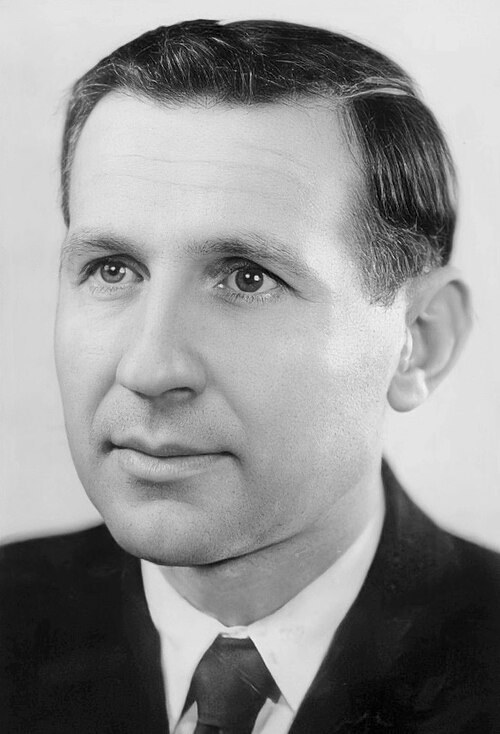
Photo: New York World-Telegram and Sun staff photographer (unknown), Public domain (Library of Congress, no known restrictions)
Mehmet Shehu
Prime Minister · 1954 to 1981
Mehmet Shehu: Read more
Interior minister from 23 November 1948 to 23 July 1954, then prime minister from 20 July 1954 and minister of defence from 28 October 1974; found shot dead on 17 December 1981 (the official account was suicide, which some contemporaries disputed) and denounced posthumously in Hoxha's book The Titoites.
AÇNo public-domain or openly licensed portrait checked or hosted. See the Commons category: source.
Adil Çarçani
Prime Minister · 1981 to 1991
Adil Çarçani: Read more
Prime minister from 18 December 1981, the day after Shehu's death, until 22 February 1991, took over the chair of the Democratic Front in December 1990 and was convicted of abuse of power in 1994; died under house arrest in 1997.
Security and armed forces
KXNo clearly public-domain portrait found for hosting. Commons holds a May 1949 trial photograph from the Albanian State Archive tagged public domain under Albanian law (source), but a published Albanian work of 1949 may still be protected in the United States, so it is not hosted here.
Koçi Xoxe
Minister of the Interior and Deputy Prime Minister · 1946 to 1948
Koçi Xoxe: Read more
Headed the interior ministry and, through it, the secret police from 22 March 1946, favoured closer ties with Yugoslavia, was stripped of his posts in October 1948, tried in May 1949 and hanged on 11 June 1949.
KHNo public-domain or openly licensed portrait checked or hosted. See the Commons category: source.
Kadri Hazbiu
Minister of Internal Affairs; later Minister of People's Defence · 1954 to 1980
Kadri Hazbiu: Read more
Head of the Sigurimi and deputy interior minister from 1950, minister of internal affairs from 23 July 1954 to 26 April 1980 and defence minister in 1982; arrested in October 1982 and executed on 15 September 1983 after a secret trial.
FSNo public-domain or openly licensed portrait checked or hosted. See the Commons category: source.
Feçor Shehu
Minister of Interior · 1979 to 1982
Feçor Shehu: Read more
Held the interior ministry, and so the Sigurimi, from 27 December 1979 to 14 January 1982; condemned in a secret trial and executed with Hazbiu on 15 September 1983.
BBNo public-domain or openly licensed portrait checked or hosted. See the Commons category: source.
Beqir Balluku
Minister of Defence · 1953 to 1974
Beqir Balluku: Read more
Defence minister from 1 August 1953; accused in July 1974 of revisionist ideas and plotting a coup, removed on 28 October 1974 and shot on 5 November 1975; some historians read the case as a pre-emptive strike against the army's wish for less party control.
Opposition and transition
SBNo portrait cleared for hosting. See the Commons category: source.
Sali Berisha
Co-founder and leader of the Democratic Party · 1990 to 1991
Sali Berisha: Read more
Cardiologist and early public voice of the movement; with Gramoz Pashko and others he led the Democratic Party founded on 12 December 1990, which took about 30 per cent in the 1991 elections and won the 1992 elections.
GPNo portrait cleared for hosting. See the Commons category: source.
Gramoz Pashko
Co-founder of the Democratic Party · 1990 to 1991
Gramoz Pashko: Read more
Economist who with Berisha and others founded the Albanian Democratic Party on 12 December 1990, the first legal opposition party since the 1940s.
Background and rise to power
Albania became independent in 1912 and was a kingdom under Zog I from 1928. Italy invaded on 7 April 1939 and Germany occupied the country after Italy's armistice in September 1943. The Communist Party of Albania was founded in Tirana on 8 November 1941 with the help of emissaries of the Yugoslav party; Enver Hoxha, a former schoolteacher, became its First Secretary in 1943 (Hoxha's own account, Enver Hoxha Speaks; Vickers; Pearson). Its fighters formed the core of the National Liberation Army, which fought the Italian and German occupiers and also fought the nationalist Balli Kombëtar and royalist forces in a civil war (Fischer; Pearson). Hoxha headed the provisional "Democratic Government" proclaimed in October 1944, and the country was cleared of German troops by 29 November 1944. In his speech in Tirana that day, he told the population that they had to "gather the fruits" of the war themselves (see the quotation on his card).
In the single-list election of December 1945 the Democratic Front, led by the Communists, was reported to have won nearly all the votes, and on 11 January 1946 the Constituent Assembly proclaimed the People's Republic of Albania (Pearson; LoC Country Study). Hoxha became prime minister, foreign minister and commander-in-chief, and held several offices at once for most of the following decade. Until 1948 the state depended on Yugoslavia; after the Tito-Stalin split, Koçi Xoxe, the minister of the interior and head of the secret police, who had favoured closer ties with Belgrade, was dismissed, put on trial in May 1949 and hanged on 11 June 1949 (LoC Country Study; Pearson). Albania then looked to the Soviet Union, joined Comecon in February 1949 and the Warsaw Pact in 1955, and received a Soviet submarine base on Sazan Island (LoC Country Study). Albania withdrew from the Warsaw Pact in September 1968, after the Soviet-led invasion of Czechoslovakia.
How power was organized
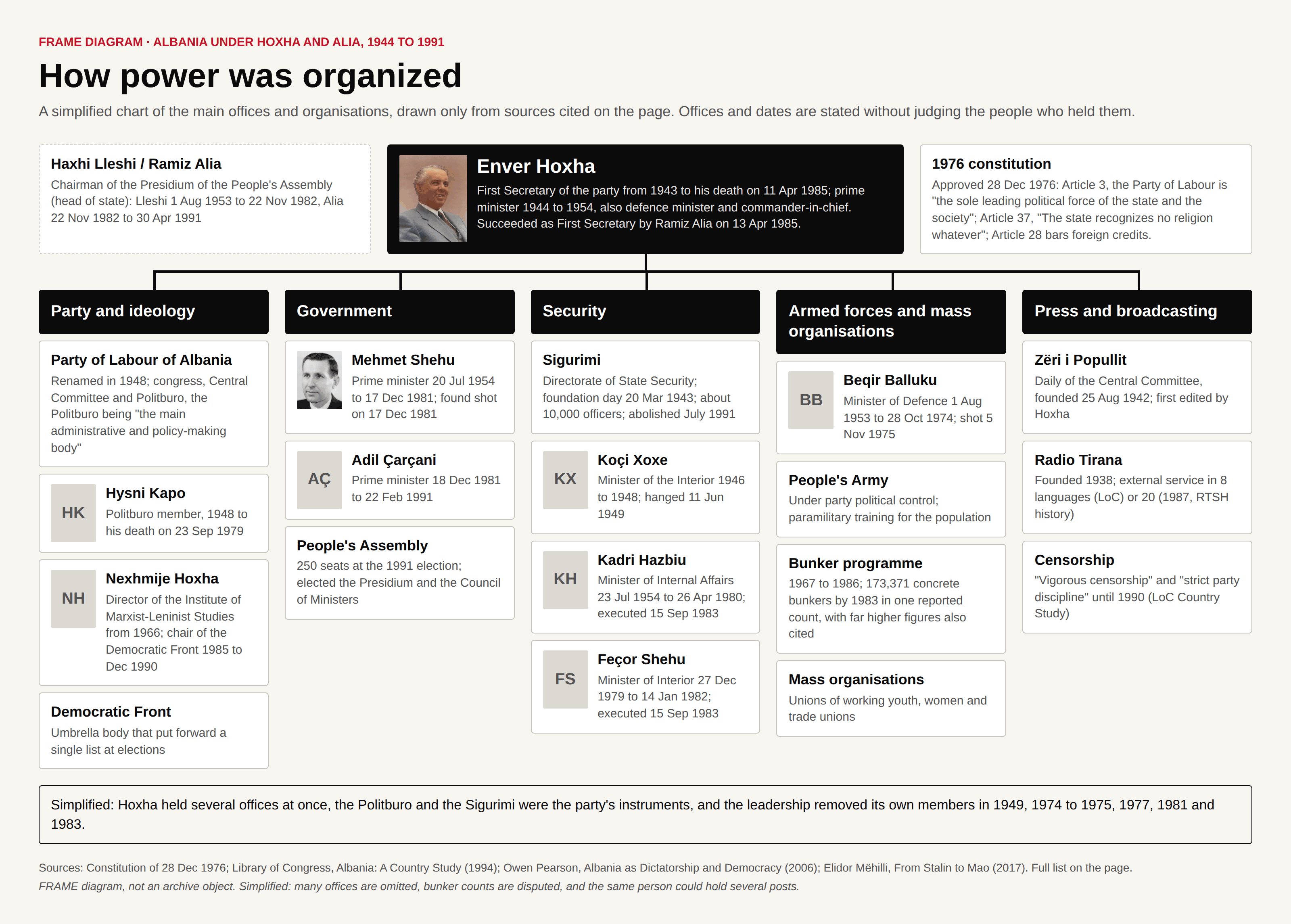
The Albanian Communist Party took the name Party of Labour of Albania (PLA) in 1948 and, like the Soviet party, was organised under a congress, a Central Committee and a Politburo, the last being "the main administrative and policy-making body" (LoC Country Study). The constitution of 28 December 1976, which renamed the state the People's Socialist Republic of Albania, put the arrangement in writing: Article 3 called the Party of Labour "the sole leading political force of the state and the society" and Marxism-Leninism "the dominant ideology". The People's Assembly (250 seats at the 1991 election) elected a Presidium whose chairman was head of state: Haxhi Lleshi from 1953 to 1982, then Ramiz Alia. Hoxha himself was first secretary of the party from 1941 to 1985 and prime minister from 1944 to 1954; Mehmet Shehu was prime minister from 1954 to his death in December 1981, and Adil Çarçani from December 1981 to February 1991. Voters in this period were offered a single list put forward by the Democratic Front, an umbrella body, and the unions of youth, women and workers were organised as party-led mass organisations (LoC Country Study).
The main offices and organisations of the Albanian state under Hoxha and Alia, 1944 to 1991, simplified from the sources cited on this page. Source: FRAME diagram. Portraits, cropped to thumbnails: Photograph by Petrit Kumi, 1968, reproduced in the Albanian Encyclopedic Dictionary (pp. 382-383), via Wikimedia Commons; Library of Congress, New York World-Telegram and Sun Collection, via Wikimedia Commons, CC BY 4.0 (FRAME archive content); portraits are public domain or CC0: Public domain (Commons PD-Albania-exempt: official creation); Public domain (Library of Congress, no known restrictions).
The Directorate of State Security (Sigurimi), whose foundation day was marked on 20 March 1943, was the party's instrument for internal control. The LoC Country Study puts it at about 10,000 officers, with offices in each of the 26 districts, concentrating on "political and ideological opposition" rather than ordinary crime, and reports that "every third citizen had either served time in labor camps or been interrogated" by it; the study gives no totals of executions or prisoners and says so. Penalties were set in the 1977 penal code, which threatened three to ten years' imprisonment for "religious propaganda" and the keeping of religious literature. The leadership also removed its own members: Xoxe (1949), Defence Minister Beqir Balluku (accused in July 1974 and shot on 5 November 1975), a number of cultural, military and economic officials from 1973, a group of senior officers in 1977, and Prime Minister Shehu, who was found shot on 17 December 1981 (the official account was suicide; some contemporaries disputed it) and was denounced in Hoxha's book The Titoites. Interior Minister Kadri Hazbiu and Feçor Shehu, one of his successors at the head of the security apparatus, were tried in secret and executed on 15 September 1983 (Pearson; Vickers; Fevziu).
The economy was run on a Soviet model, with collectivised farming from 1955, and after 1978 on a policy of "self-reliance". Article 28 of the 1976 constitution forbade foreign concessions, joint companies "with bourgeois and revisionist capitalist monopolies and states" and "obtaining credits from them". Albania was the only European state not to take part in the 1975 Helsinki Conference (LoC Country Study). On the other side of the ledger, the same sources record that illiteracy was "virtually eliminated" by the late 1980s and school enrolment rose from under 60,000 in 1939 to over 750,000 in 1987, in a country of about three million people.
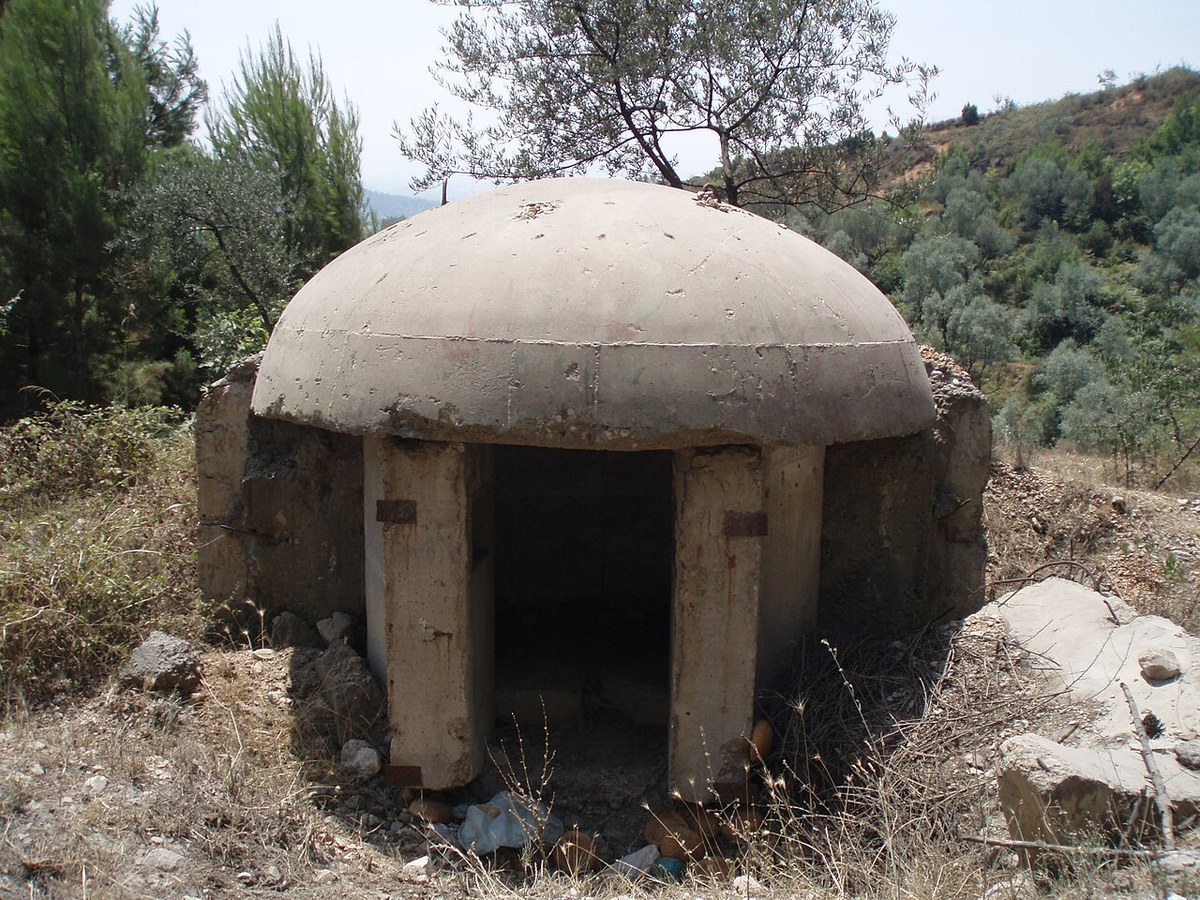
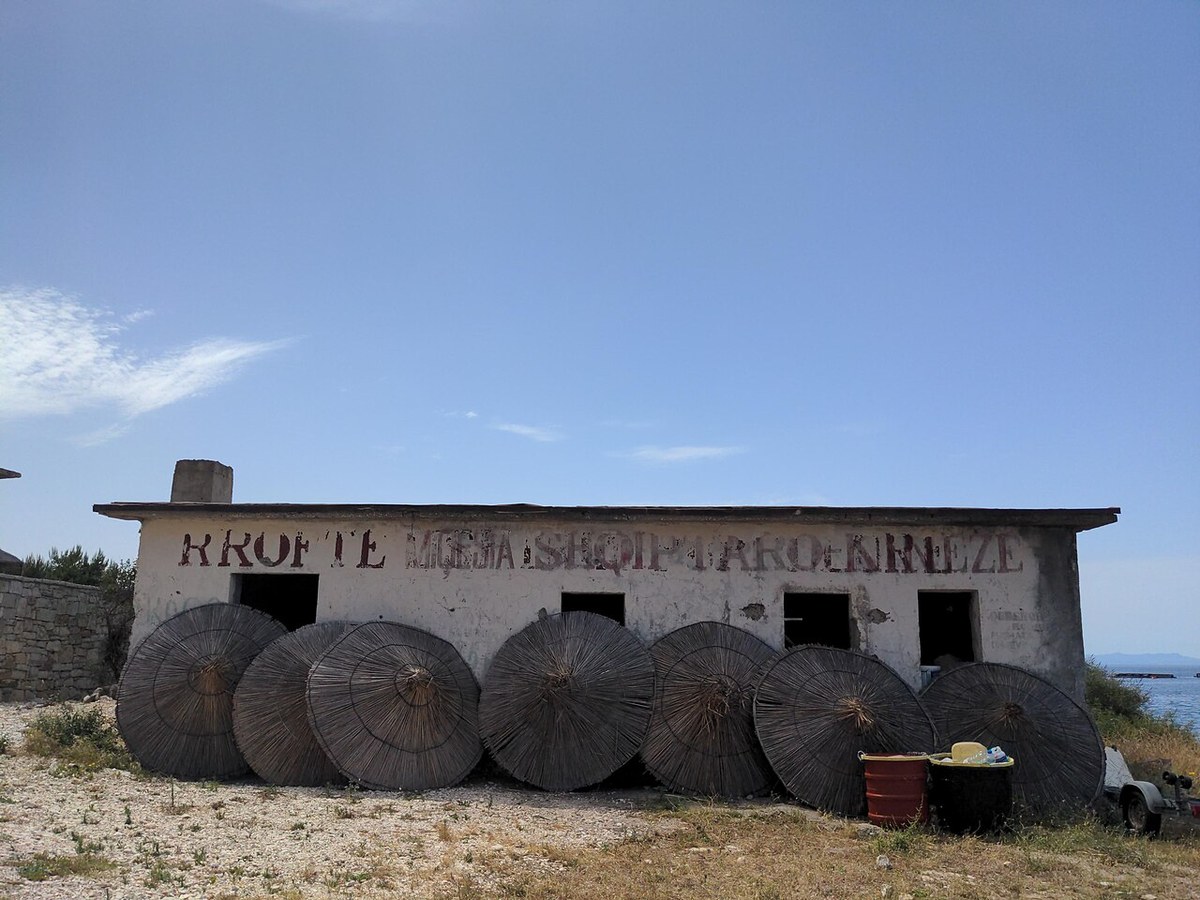
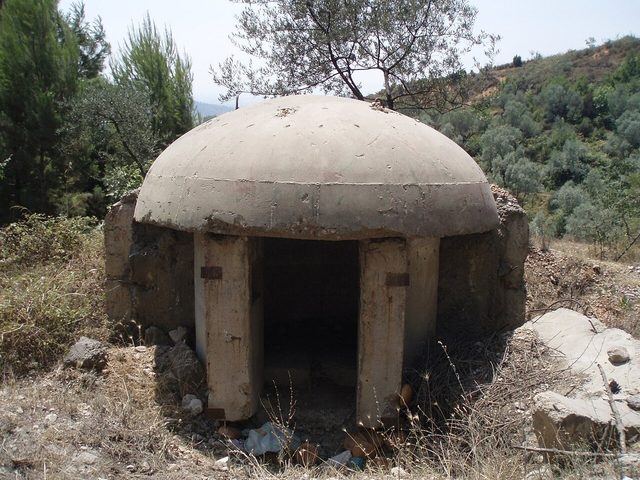
The bunker programme (Bunkerisation). From 1967 to 1986 the state built concrete bunkers and pillboxes across the country, a programme commonly linked to fear of attack after the 1968 invasion of Czechoslovakia and to a doctrine of "people's war" in which every citizen was to be a defender (Mëhilli; Pearson). The count is uncertain. Reports of Albanian defence-ministry records released in 2014 give 173,371 bunkers built by 1983, a figure repeated in much English-language reporting; far larger numbers, often 700,000 to 750,000, are also widely repeated, and sources differ on whether such totals count small one-man pillboxes, planned rather than finished structures, or all fortifications built since 1944. This page therefore states the order of magnitude ("more than 170,000", the count most often cited from records) and not a precise total, and it has not seen the primary record. The cost is also disputed, and no figure is cited here. The structures that remain are among the most visible surviving objects of the period (see the photographs on this page).
Illustration, not an archive object
The propaganda apparatus
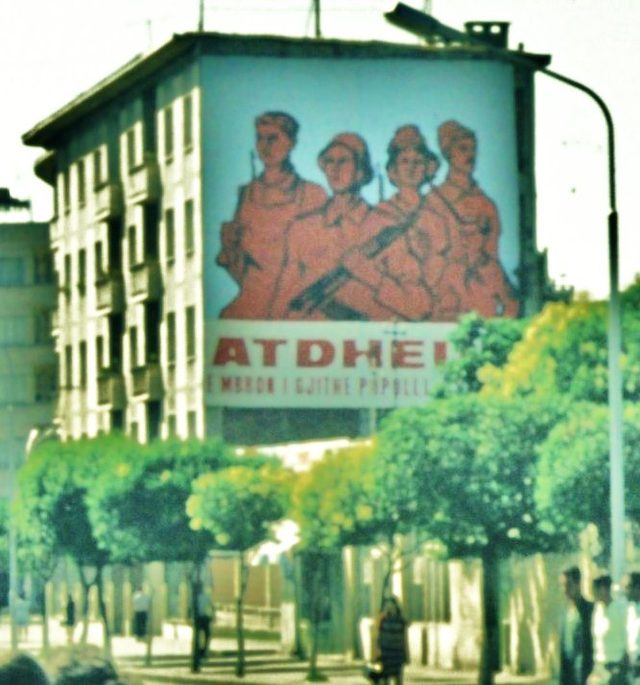
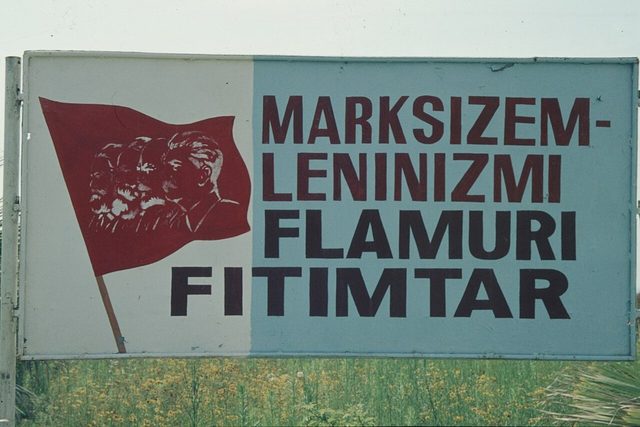
Press and agencies.Zëri i Popullit ("Voice of the People"), founded on 25 August 1942 and at first edited by Hoxha, was the daily organ of the party's Central Committee and the main place where the line was set; other papers, the news agency ATA and the publishing houses worked under what the LoC Country Study calls "vigorous censorship" and "strict party discipline" until 1990. The Institute of Marxist-Leninist Studies, directed from 1966 by Hoxha's wife Nexhmije Hoxha, was described by a later biographical source as the body "responsible for ensuring ideological purity and spreading propaganda"; it handled the party's ideological work (Fevziu; Pearson).
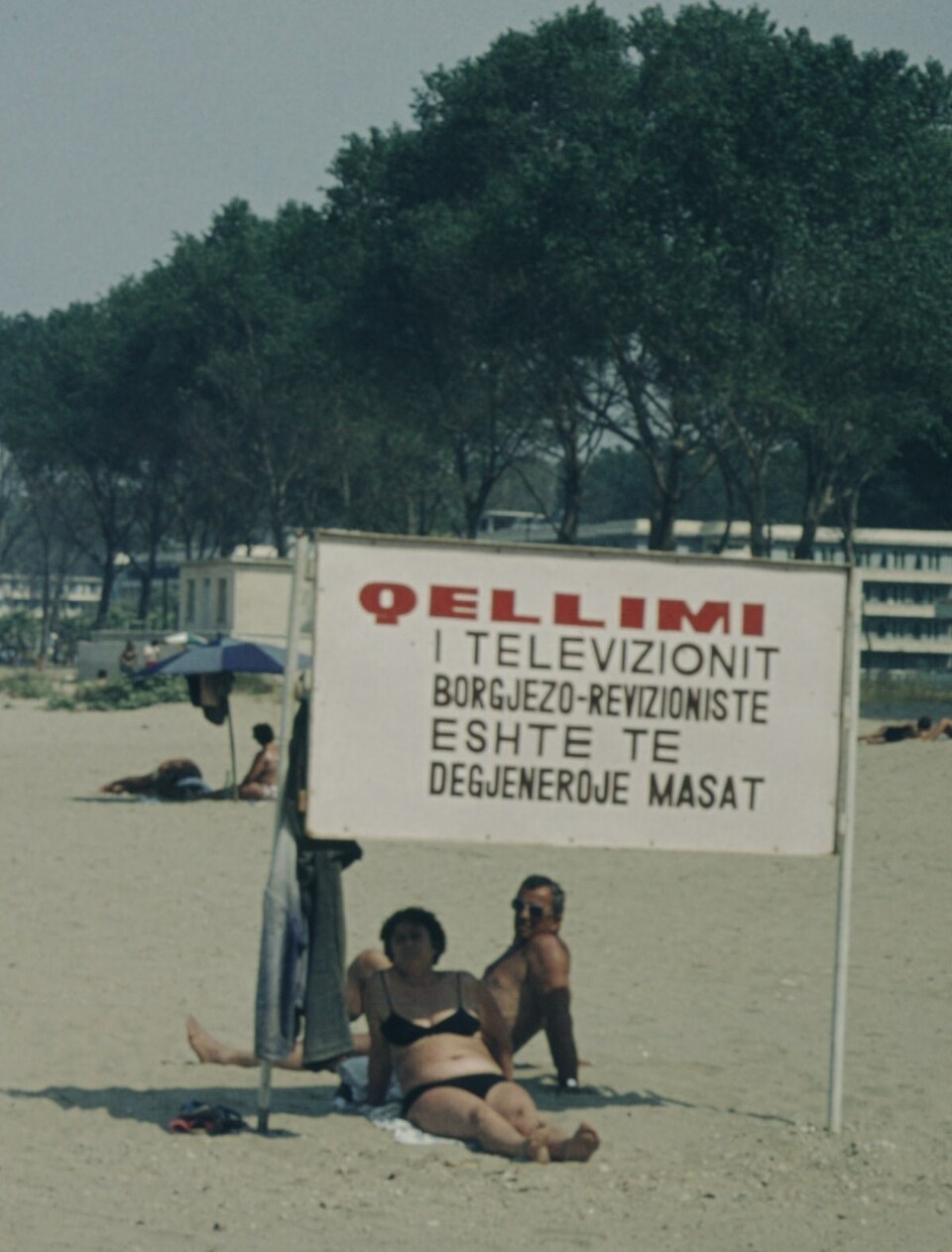
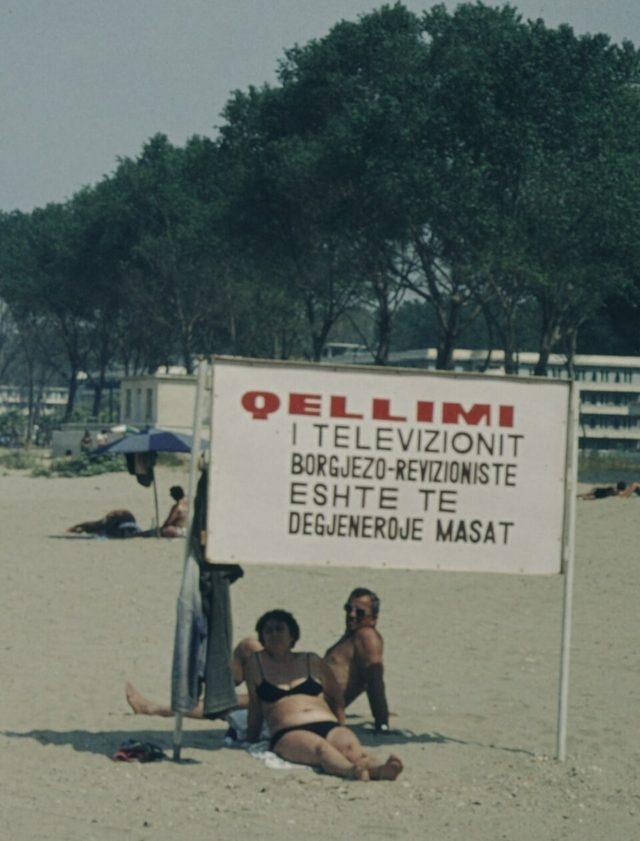
Content note: Sign applying the labels 'bourgeois-revisionist' to foreign television; people sunbathing in swimwear are visible beneath it. This object is shown as it was published. Why
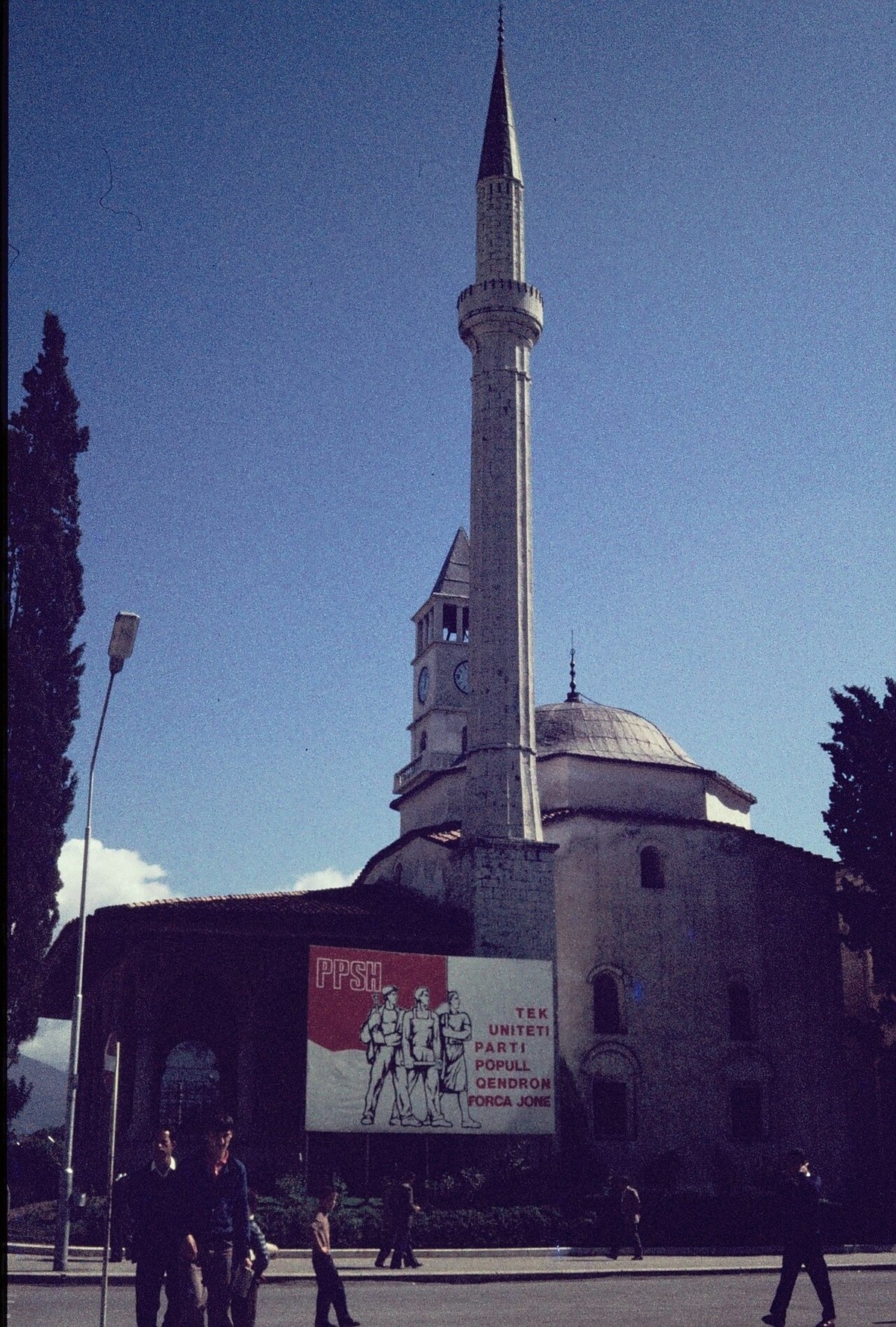
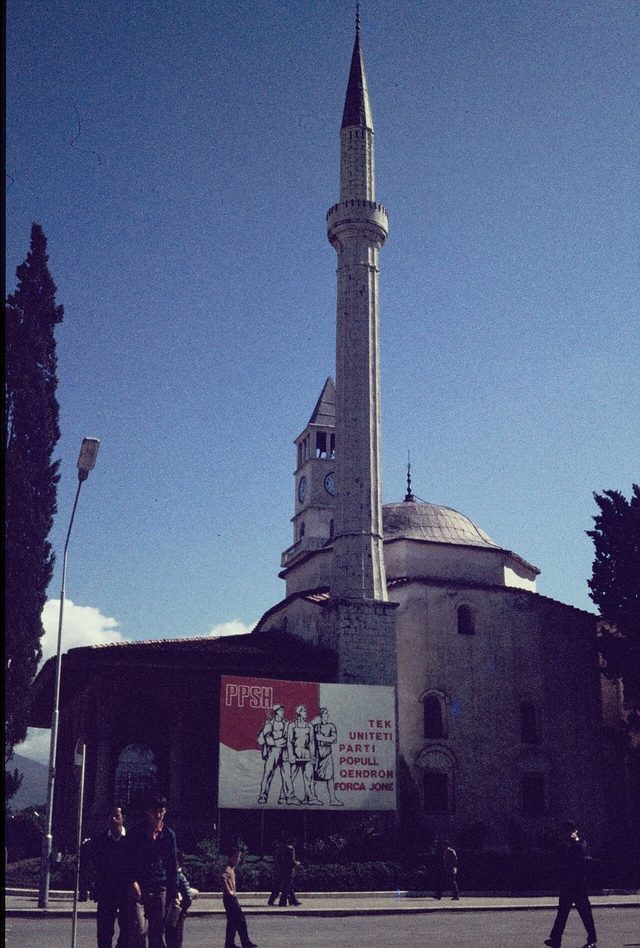
Content note: Party political board placed in front of a mosque closed under the 1967 ban on religion. This object is shown as it was published. Why
Radio and television. Radio Tirana, begun under King Zog in 1938, became a party broadcaster after 1944. Its external service was among the larger ones relative to the size of the country: the LoC Country Study describes it as "one of the largest" in the world, transmitting in eight foreign languages plus Albanian, while a later history of the broadcaster puts the service at 66 hours a day in 20 foreign languages by 1987; the two sources differ and are given as found. Programme titles included Marxism-Leninism, an Ever-Young and Scientific Doctrine and Culture and Art in Socialist Albania (history of Radio Televizioni Shqiptar). At home, about 514,000 radio receivers and 255,000 television sets were in use in 1987 (LoC Country Study), and television began regular broadcasts in 1971. The Country Study notes that, despite the policy of isolation, young Albanians were "exposed to Western broadcasts".
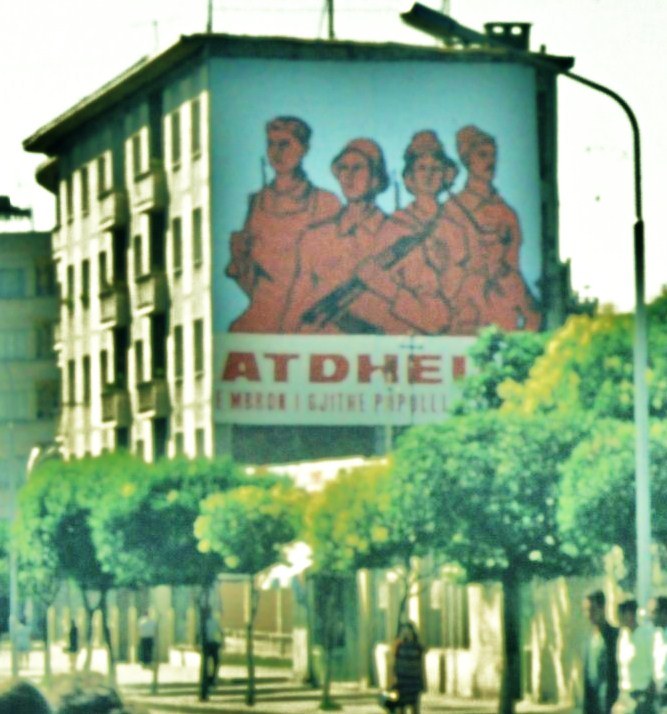
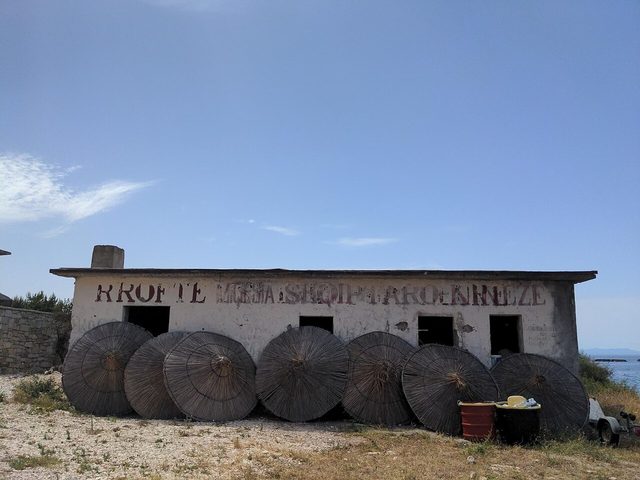
The isolation narrative. The state presented Albania as a small country that alone held to Marxism-Leninism, beset by "imperialists" and by "revisionists" in Belgrade, Moscow and, after 1978, Beijing. In 1960 Hoxha told a Central Committee plenum that the party would go to the Moscow meeting "not with ten banners but with one", and in November 1961 that the people "will live even on grass, if need be" rather than yield. The same story justified the bunkers, the closed borders and the prohibition on foreign credits, and the 1980s posters surviving on Wikimedia Commons urge citizens to "break the blockade" of the country. The break with the Soviet Union (1960 to 1961) and with China (13 July 1978, when China ended its aid) were each told as proof of the party's independence (LoC Country Study; Mëhilli).
The atheism campaign. In February 1966 the party launched a "Cultural and Ideological Revolution", influenced by events in China, against bureaucracy, religion and "backward" customs, and in 1967 religious institutions were closed or converted; the LoC Country Study counts 2,169 churches, mosques, cloisters and shrines seized by May 1967, reports over 200 clerics imprisoned, and records that about 95 per cent of mosques and churches were destroyed or demolished in the communist period. Albania was proclaimed the first atheist state; Article 37 of the 1976 constitution stated that "the state recognizes no religion whatever and supports atheist propaganda for the purpose of inculcating the scientific materialist world outlook in people", and Article 55 banned "religious" organisations and activity. The ban was lifted in December 1990. Officials themselves admitted by the 1980s that the campaign was "not entirely successful, and indeed probably was counterproductive" (LoC Country Study).
The cult of Hoxha. Hoxha's name and writings appeared on university and school buildings (the main university in Tirana bore his name by the late 1980s), in a statue in Skanderbeg Square in Tirana, in portraits and slogans, and in a museum, the pyramid in Tirana, which opened on 14 October 1988 as the Enver Hoxha Museum, designed by a team that included his daughter Pranvera Hoxha. After he died on 11 April 1985, the cult carried on under Alia, but the Country Study records that "political apathy and cynicism were pervasive" in the late 1980s.
Timeline
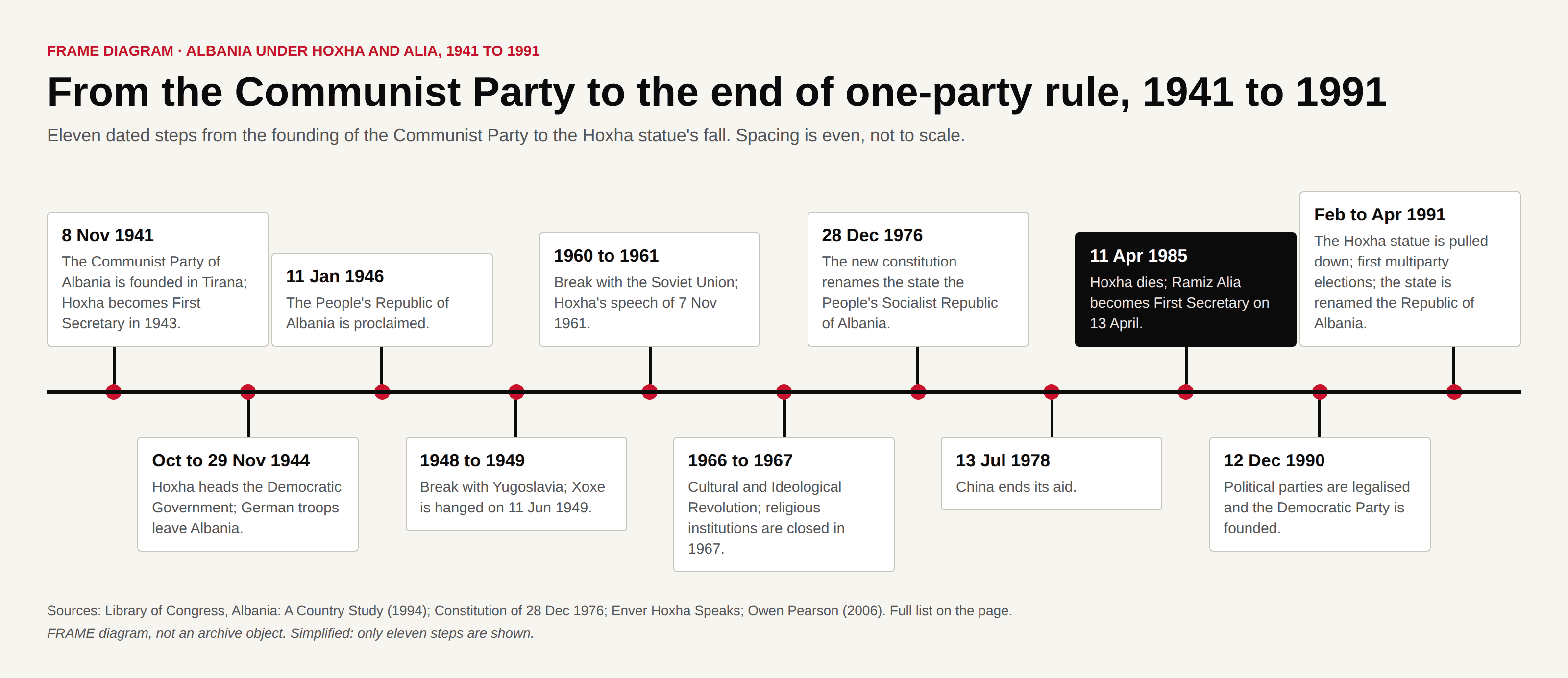
8 November 1941: the Communist Party of Albania is founded in Tirana; Hoxha becomes its First Secretary in 1943.
25 August 1942: Zëri i Popullit first appears.
October to 29 November 1944: Hoxha heads the "Democratic Government"; the last German troops leave and the war ends in Albania.
11 January 1946: the People's Republic of Albania is proclaimed.
1948: break with Yugoslavia; the party takes the name Party of Labour of Albania; 11 June 1949, Xoxe is hanged.
February 1949: Albania joins Comecon; 1955, the Warsaw Pact.
1960 to 1961: break with the Soviet Union; Hoxha's speech of 7 November 1961.
February 1966: start of the "Cultural and Ideological Revolution"; 1967, closure of all religious institutions.
September 1968: Albania leaves the Warsaw Pact; from 1967 to 1986, the bunker programme.
1973 to 1977: purges of cultural, military and economic officials; Balluku shot 5 November 1975.
28 December 1976: the new constitution renames the state the People's Socialist Republic of Albania.
13 July 1978: China ends its aid.
17 December 1981: Prime Minister Shehu is found shot; 15 September 1983, Hazbiu and Feçor Shehu are executed.
22 November 1982: Alia succeeds Lleshi as chairman of the Presidium.
11 April 1985: Hoxha dies; 13 April, Alia becomes First Secretary.
January 1990: Alia announces modest reforms at the Ninth Plenum; July 1990, about 5,000 Albanians seek refuge in foreign embassies in Tirana.
12 December 1990: Alia signs the law allowing political parties; the Democratic Party is founded the same day.
February 1991: the Hoxha statue in Skanderbeg Square is pulled down amid student protests; March to April 1991, the first multiparty elections.
April 1991: a constitutional law ends the name "People's Socialist Republic"; July 1991, the Sigurimi is abolished.
Albania, 8 November 1941 to April 1991, using the dates given on this page; spacing is even, not to scale, simplified from the sources cited on this page. Source: FRAME diagram, drawn from the sources listed on this page, CC BY 4.0 (FRAME archive content).
How it ended
Alia, chosen by Hoxha before he died, ended mass repression, granted amnesties in 1986 and 1989 and eased relations with Greece, Italy, Turkey and Yugoslavia, but the Country Study reports that his government "was not able, or willing" to change the system's repressive elements. Protests followed in 1989 and 1990, and the writer Ismail Kadare defected to France in October 1990. On 12 December 1990 political parties were legalised and the Democratic Party, led by Sali Berisha and Gramoz Pashko, was founded. Protesters pulled the Hoxha statue down in February 1991; the Party of Labour, renamed the Socialist Party in June 1991, won about two-thirds of the 250 seats in the first multiparty elections, but lost power in March 1992 after receiving about 26 per cent. Alia became President of the republic in April 1991 and served until 3 April 1992. The Sigurimi was abolished in July 1991 and replaced by a National Intelligence Service.
Same-standard note
This page uses the same structure and the same definitions as every other regime page. A technique is listed only where the archive's working definition and a documented example fit, and the same technique ids are applied to every regime. This regime governed a small country of about three million people for 46 years and its sources vary in quality: much of the evidence for the scale of repression and for the bunker count is secondary, and the page says where figures are disputed. It does not imply equivalence with any other regime on the site; scale, aims and context differ and are stated as the sources give them.
Sources
The Constitution of the People's Socialist Republic of Albania, approved by the People's Assembly on 28 December 1976 (Articles 1 to 3, 28, 37 and 55), republished at data.globalcit.eu.
Enver Hoxha, Enver Hoxha Speaks (Tirana: Foreign Languages Publishing House), including the speeches of 28 November 1944, 6 September 1960 and 7 November 1961, online at marxists.org.
Raymond Zickel and Walter R. Iwaskiw (eds.), Albania: A Country Study (Library of Congress, Federal Research Division, 1994), chapters on the Hoxha regime, religion, mass media, internal security, the Soviet and Chinese breaks and reform politics, as mirrored at countrystudies.us/albania.
Owen Pearson, Albania in the Twentieth Century: A History, vol. 3, Albania as Dictatorship and Democracy, 1945 to 99 (London: I. B. Tauris, 2006).
Elidor Mëhilli, From Stalin to Mao: Albania and the Socialist World (Ithaca: Cornell University Press, 2017).
Miranda Vickers, The Albanians: A Modern History (London: I. B. Tauris, 1995); Blendi Fevziu, Enver Hoxha: The Iron Fist of Albania (London: I. B. Tauris, 2016); Bernd J. Fischer, Albania at War, 1939 to 1945 (West Lafayette: Purdue University Press, 1999).
Bunker counts: reporting on the 2014 release of Albanian defence records, for example Emerging Europe, and the survey at Wikipedia, "Bunkers in Albania", which gives the 750,000 figure; neither is a primary record.
Biographical dates in the people roster: the English-language Wikipedia articles on Ramiz Alia, Haxhi Lleshi, Mehmet Shehu, Koçi Xoxe, Nexhmije Hoxha, Beqir Balluku, Kadri Hazbiu, Feçor Shehu, Hysni Kapo and Adil Çarçani (secondary; checked against the sources above where possible); Radio Television of Albania and Zëri i Popullit articles for the broadcaster and paper histories; Pyramid of Tirana article for its opening date and architects.
.jpg)
.jpg)
.jpg)
.jpg)
