Also called Political gaslighting, State gaslighting, Reality denial
Deny or rewrite what the audience saw, heard or lived through, so they come to distrust their own perception and memory and defer to the speaker's account.
How to spot Gaslighting: the tell
A documented event, recording or prior statement is flatly denied or recast, and doubting the denial is framed as confusion or bad faith.
What Gaslighting is not
A correction backed by new evidence that the audience can check for themselves.
History and effect of Gaslighting propaganda
The word comes from the stage and screen. Patrick Hamilton's play Gas Light (1938) shows a husband who dims the house lights in secret, then insists they are not dimming, so that his wife believes she is going mad. George Cukor's film Gaslight (1944) made the story famous. The psychological sense, manipulating one person into doubting their own mind, was in use by 1961 (Merriam-Webster). That interpersonal meaning is the origin and stays outside this page.
Explain moreShow less
This page covers the public and state form. Merriam-Webster named "gaslighting" its 2022 word of the year after a 1,740 percent rise in lookups, and the dictionary now lists a second sense, "grossly misleading someone especially for one's own advantage". Sociologist Paige Sweet has argued in the American Sociological Review (2019) that gaslighting is a social pattern that works through unequal power and not only a private abuse, which is the reading that applies to governments. The emotional effect is disorientation. An audience that watched or lived the event is told it did not happen, or happened differently, and the cost of insisting is to look unreasonable.
Lineage: Hamilton, Gas Light (1938); Cukor film (1944); political usage since the 2010s
How Gaslighting propaganda works
The technique has three moves. First, deny: an event, a statement or a recording is said not to exist. Second, recast: if the denial cannot hold, the event is renamed, minimised, or moved onto someone else. Third, shift the burden: the person who notices the gap is described as confused, hostile, or a tool of the enemy. The speaker never needs to win the argument. The aim is for the audience to stop trusting its own record, so that the official account is the only one left standing.
Explain moreShow less
It differs from a plain lie in its target. A lie about a hidden fact may never be checked. Gaslighting is aimed at facts the audience can check, such as a crowd it stood in, a bombing, a famine in its own village, or a speech it heard. It works best when the speaker controls the main channels, because then the denial is repeated while the contrary account is not.
Why Gaslighting propaganda works
Repetition makes statements feel more true. Hasher, Goldstein and Toppino (1977) found that repeated statements were rated as more likely true, and Fazio and colleagues (2015) found the effect even when people knew better. A retraction does not fully undo a first account either: Johnson and Seifert (1994) showed people keep using information they have been told was withdrawn, if nothing replaces it in their picture of events. A group makes it stronger. When nobody around you repeats what you remember, you may conclude you are alone, which is the pluralistic ignorance that the Learn library describes. Authority adds weight: a government, a ministry or a leader is assumed to know more than the individual does.
Gaslighting propaganda examples across eras and sides
- Soviet Union, 1933 and later. On 31 March 1933 the New York Times printed Walter Duranty's dispatch "Russians Hungry, But Not Starving" from Moscow, which said "There is no actual starvation or deaths from starvation, but there is widespread mortality from diseases due to malnutrition," and said the Welsh journalist Gareth Jones's "judgment was somewhat hasty". Soviet authorities did not acknowledge the famine of 1932 to 1933 at home. The January 1937 census, which showed the population shortfall, was locked away and its organisers were arrested (Merridale, 1996). Leonid Kravchuk later recalled that a "counter-propaganda machine was put into motion" and that he "was one of its wheels". Duranty was a U.S. correspondent, not a Soviet official, and the Pulitzer Board found no clear evidence of deliberate deception on his part. The record of the famine is covered in Collectivisation, the 1932-33 famine and its denial: the kulak label, the silence and the foreign press.
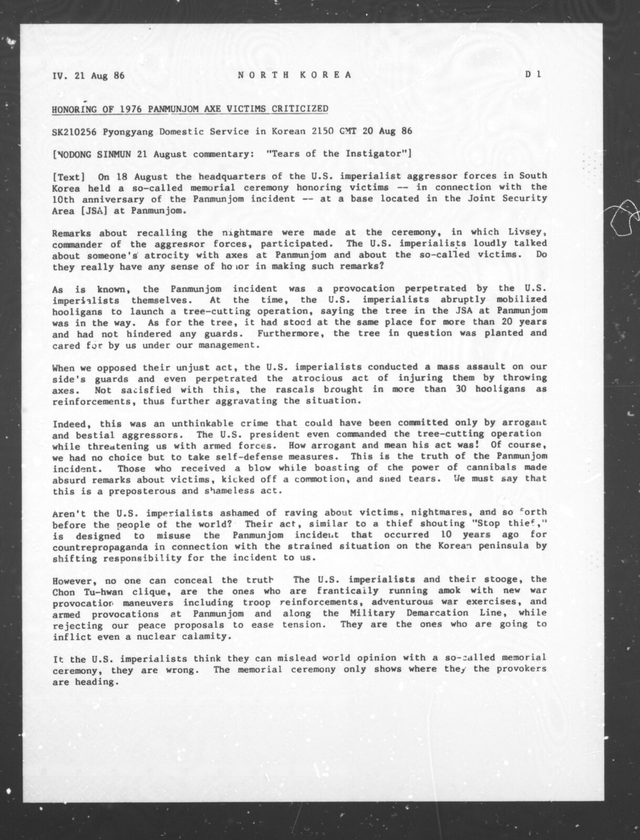
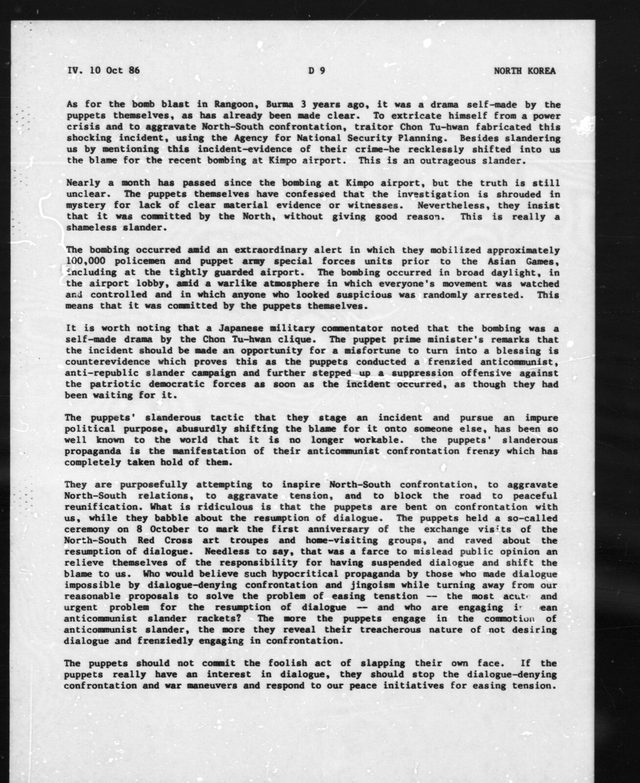
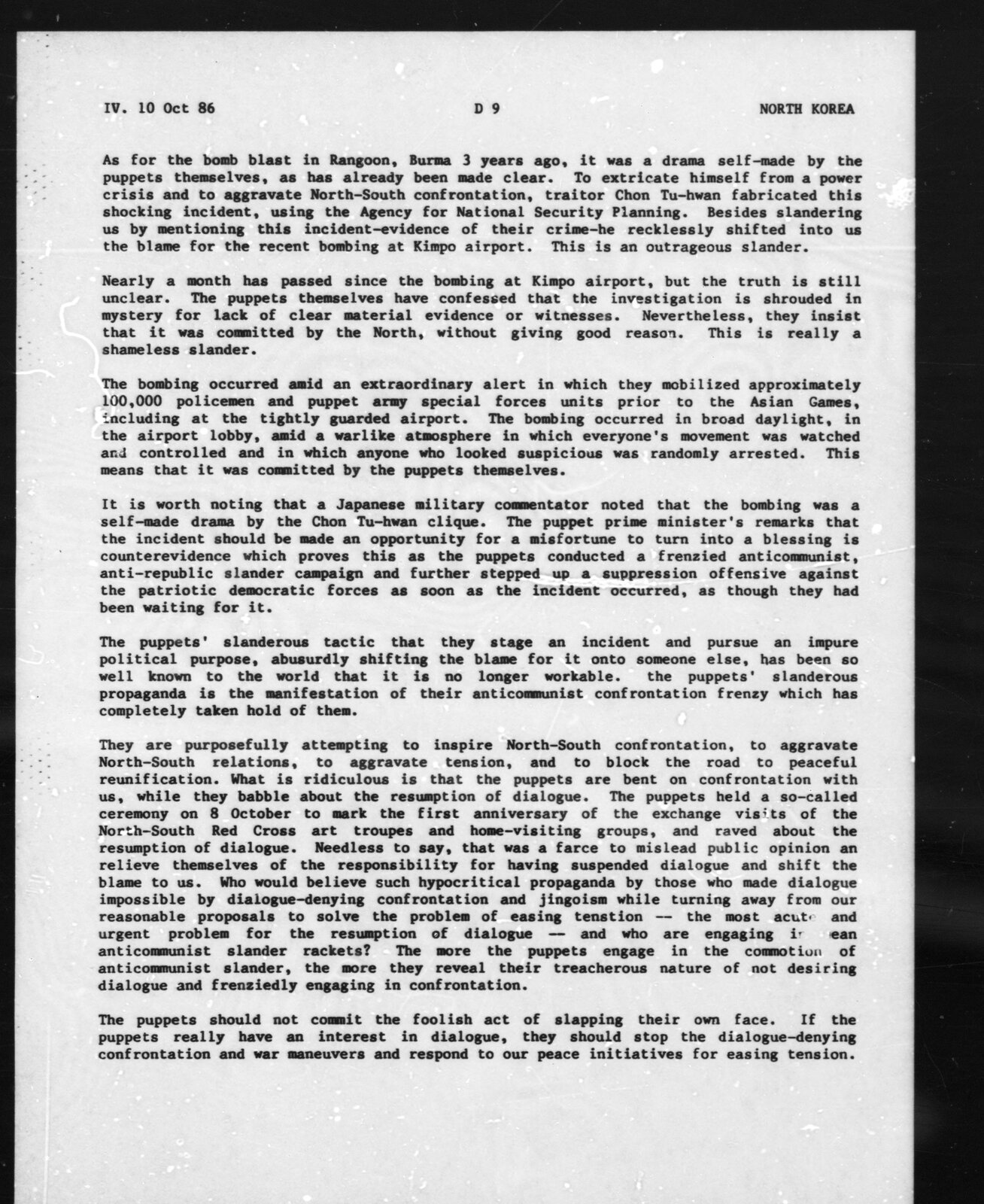
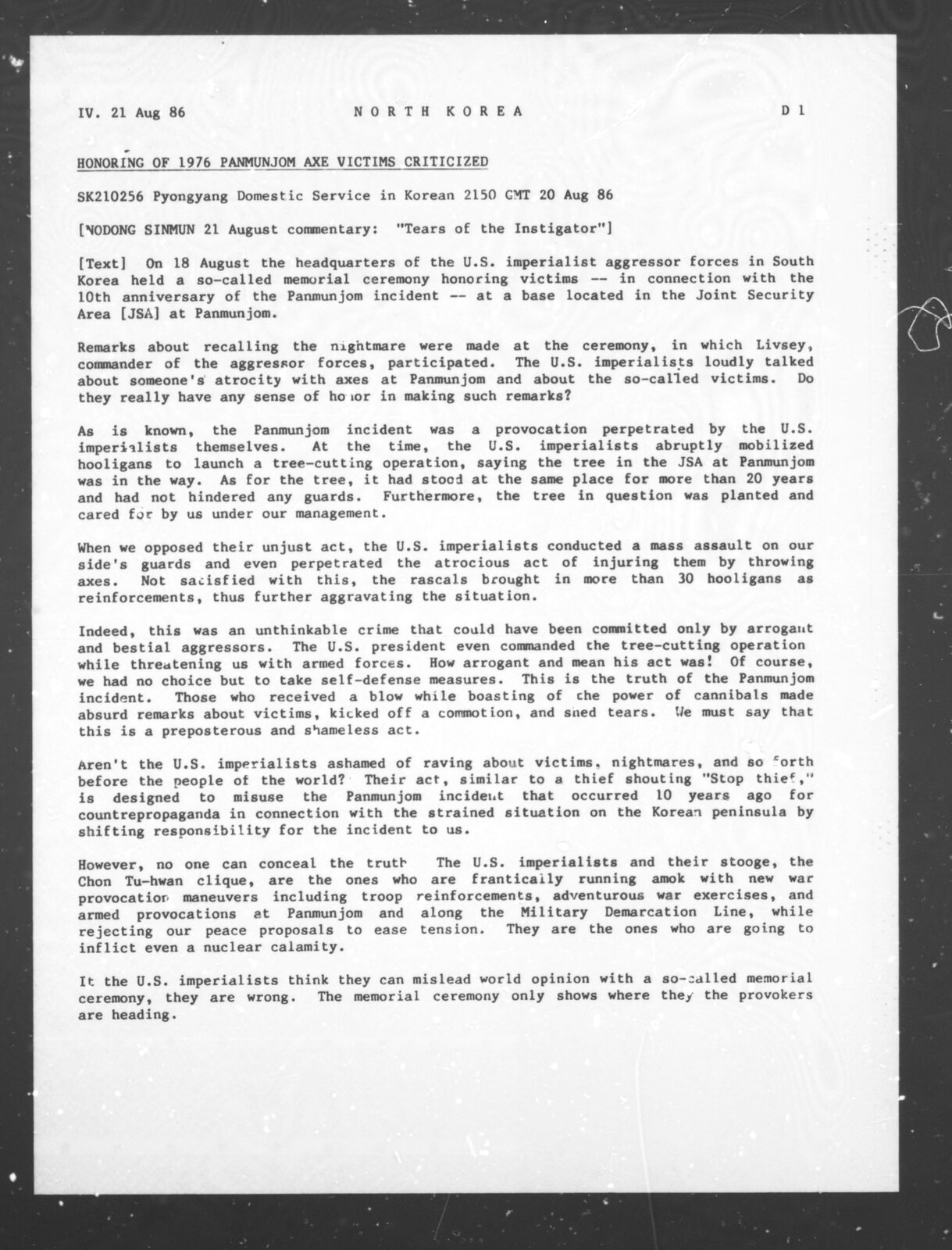
- North Korea, 1976 to 1986. After the axe killing of two U.S. Army officers at Panmunjom on 18 August 1976, North Korea said the Americans had come in with axes on their own initiative and called its guards' response self-defence against a "reckless provocation", though on 21 August Kim Il Sung's message expressed regret that an incident had occurred. A Nodong Sinmun commentary read on Pyongyang radio on 21 August 1986 called the incident "a provocation perpetrated by the U.S. imperialists themselves". On 9 October 1983 a bomb at the Martyrs' Mausoleum in Rangoon killed 21 people, among them four South Korean ministers, and Burmese investigators traced the attackers to North Korea. One arrested man, Kang Min-chul, confessed, and on 4 November 1983 Burma cut diplomatic ties. A Pyongyang commentary of 9 October 1986 still called the bombing a "drama self-made by the puppets", meaning South Korea's government (FBIS translation).
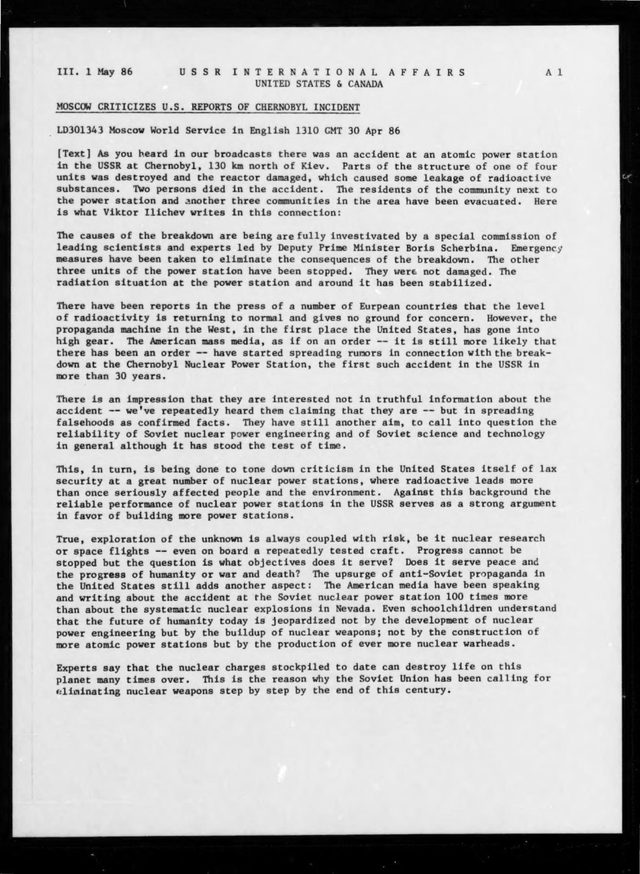
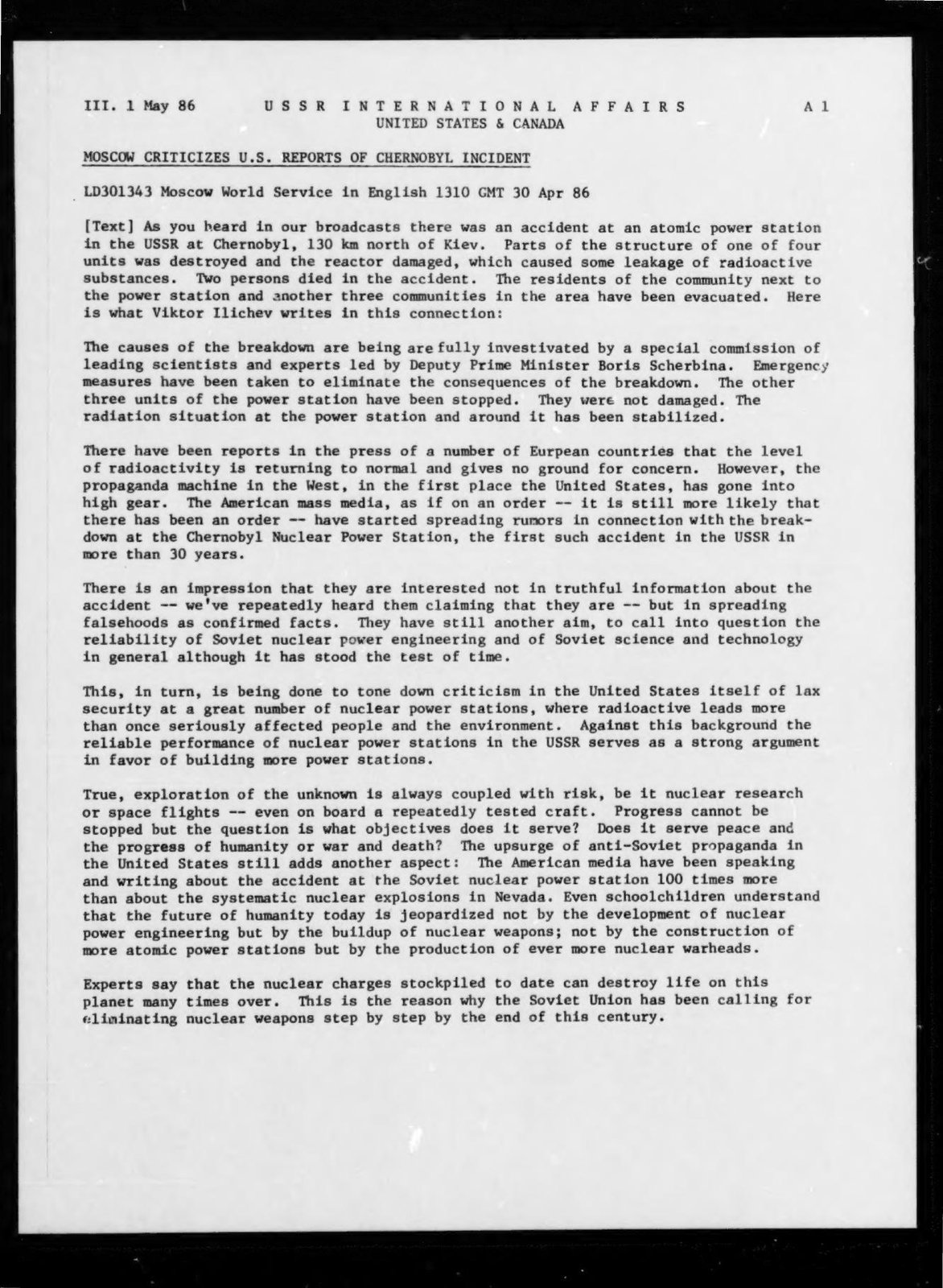
- Soviet Union, 1986. On 28 April 1986 radiation alarms at Sweden's Forsmark plant led Sweden to ask Moscow about an accident, and the Soviet side at first denied one. That evening the Vremya news carried a 20-second statement that one reactor was damaged. A Radio Moscow commentary of 30 April, preserved in a U.S. monitoring report, gave a short account (one unit damaged, two dead, the radiation situation stabilised) and then accused the U.S. press of "spreading rumors". The Kyiv May Day parade went ahead on 1 May.
Show all 7Show fewer
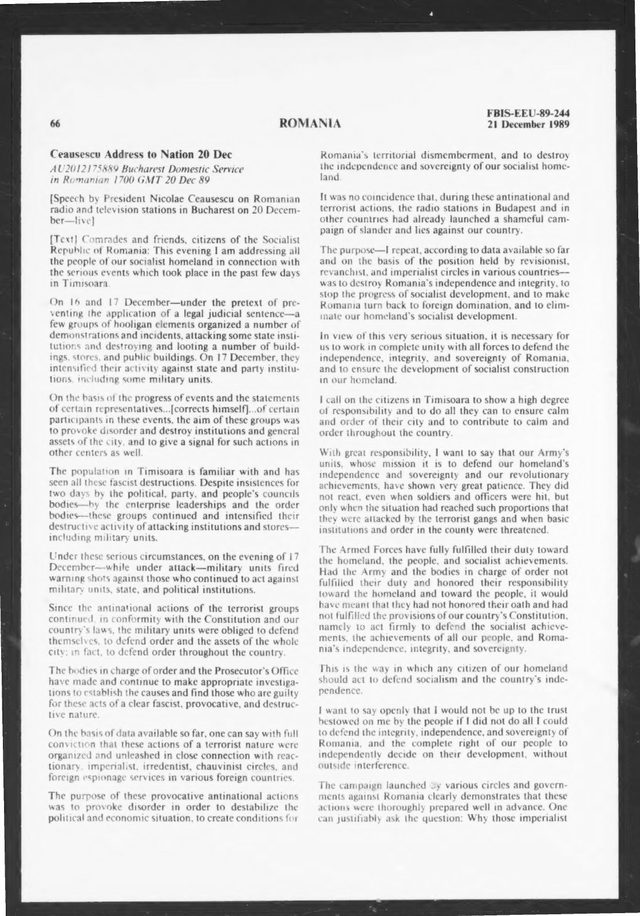
- Romania, 1989. In a televised address on 20 December 1989, Nicolae Ceausescu described the Timisoara protests as the work of "hooligan elements" and of "foreign espionage services" and called the army's fire "warning shots". The translated text carries no mention of demonstrators killed. Later Romanian investigations recorded deaths among the demonstrators in Timisoara in the days before the speech.
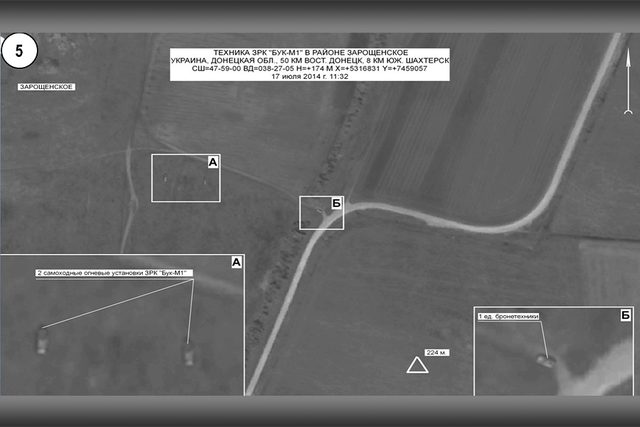
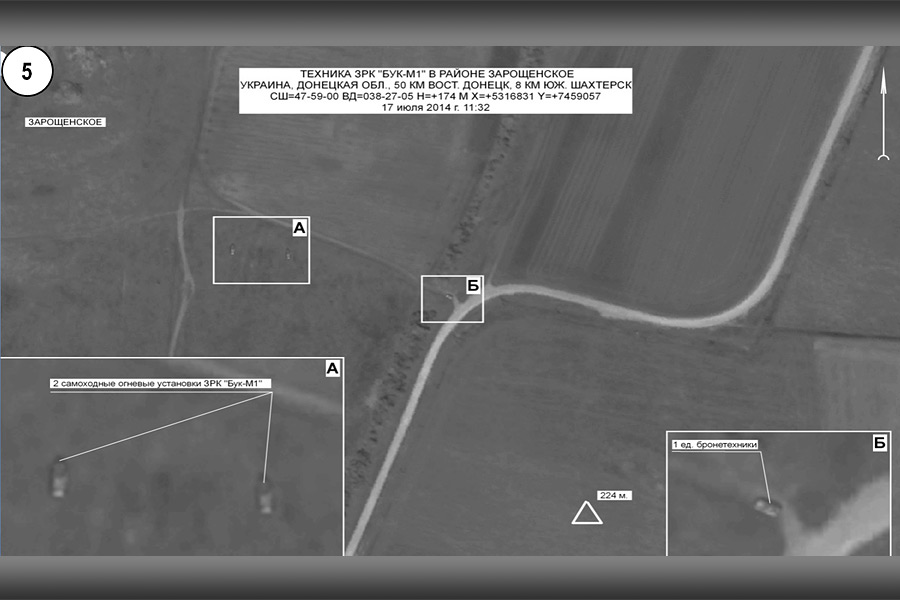
- Russia, 2014. On 4 March 2014 President Vladimir Putin said at a Moscow news conference that the armed men who had blockaded Ukrainian bases in Crimea were local self-defence units and not Russian forces (the exact English wording differs between the NPR and RIA Novosti reports, so it is paraphrased here). On 17 April he said on the televised Direct Line, "Of course, the Russian servicemen did back the Crimean self-defence forces." In March 2015 a state-television documentary had him describe ordering special forces deployed and ask "why hide it?" (RFE/RL, 2019). After Malaysia Airlines Flight 17 was shot down over eastern Ukraine on 17 July 2014 with 298 killed, Russian officials gave accounts that contradicted each other. A Dutch-led investigation concluded in 2018 that the Buk missile came from a Russian army brigade, and a Dutch court convicted three men in absentia in 2022. Russia denied involvement.
- United States, 1986 and 1987. On 13 November 1986 President Ronald Reagan told the nation, "We did not—repeat—did not trade weapons or anything else for hostages, nor will we." On 4 March 1987, after the Tower Commission report, he said, "My heart and my best intentions still tell me that's true, but the facts and the evidence tell me it is not." The second statement is a public correction. It is included because it shows the other possible end of the pattern: the denial was withdrawn when the record was undeniable.
- United States, 2017. At his first briefing on 21 January 2017, White House press secretary Sean Spicer said, "That was the largest audience to witness an inauguration, period." PolitiFact found that his Metro figures compared a full day with a morning count, that photographs contradicted his claim that the space was full, and that crowd estimates for the 2009 Obama inauguration were higher; it rated the claim "Pants on Fire". Counsellor Kellyanne Conway described the statements the next day as "alternative facts".
Explain moreShow less
These cases differ in scale and in intent. A denial of mass death by a state that controls the press, as in 1933, has no counterpart in a briefing-room dispute about crowd size, where photographs were in every newspaper. The Reagan case ended in an admission. Whether a speaker knew the statement was false is a separate question from whether the pattern is present, and this page scores the pattern in the record, not the person.
Pyongyang Domestic Service commentary, 9 October 1986, FBIS Daily Report, Asia & Pacific, 10 October 1986, p. D 9 (FBIS-APA-86-197). U.S. Foreign Broadcast Information Service translation, via the Internet Archive. Public domain (U.S. government work).
Pyongyang Domestic Service reading a Nodong Sinmun commentary, 21 August 1986, FBIS Daily Report, Asia & Pacific, 21 August 1986, p. D 1. The page does not mention that two U.S. officers died. Via the Internet Archive. Public domain (U.S. government work).
Radio Moscow World Service in English (Soviet state broadcasting), commentary by Viktor Ilichev, 30 April 1986, page A 1 of the FBIS Daily Report for the Soviet Union, 1 May 1986. Internet Archive, US FBIS collection. Public domain (U.S. government work).
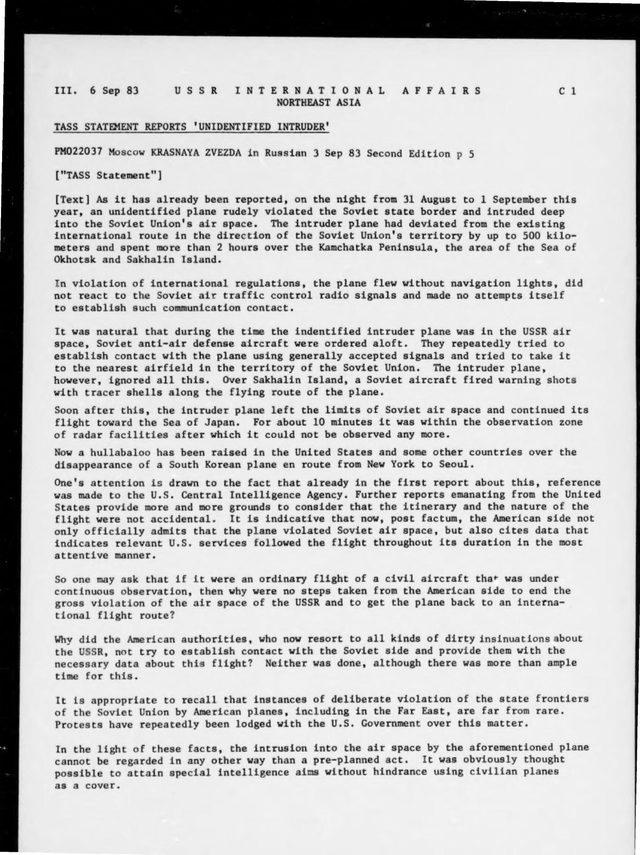
Satellite image shown at a Russian Defence Ministry briefing, 21 July 2014, four days after the shooting down of Flight 17. Ministry of Defence of the Russian Federation (mil.ru), via Wikimedia Commons. CC BY 4.0.
How to spot Gaslighting propaganda
- Is there a record the audience can check independently, such as a recording, a photograph, a census, a prior speech, a body count, and does the speaker's account contradict it?
- Is the event denied outright, or renamed ("warning shots", "special operation", "stabilised") so that the claim cannot be tested?
- Does the reply turn to the questioner's motive ("rumors", "hostile press", "enemies") instead of the record?
Show all 6Show fewer
- Did the speaker say something different earlier, and is that earlier statement now treated as never having been made?
- Does the denial stay in place after independent evidence arrives, or is it withdrawn, as in 1987?
- Is the denial repeated through channels that the audience cannot easily cross-check?
Where Gaslighting propaganda ends: edge cases and legitimate persuasion
5 items · A correction backed by checkable new evidence is the opposite of this technique. The test…
- A correction backed by checkable new evidence is the opposite of this technique. The test is whether the audience is shown the evidence or told to trust the speaker.
- Real disagreement about what happened is not gaslighting. Eyewitnesses differ, and an official may sincerely hold a mistaken account. The pattern requires that a documented record exists and is dismissed.
- A government that has a different reading of agreed facts, for example calling the same event a "defence" or an "attack", is competing on interpretation. It becomes gaslighting only when the facts themselves are denied.
- The term is often used too broadly in political arguments, including by critics of every party, and experts have warned about it (Washington Post, 2022, as noted in Wikipedia's summary). A claim you disagree with is not gaslighting by that fact alone.
- Silence about an event, without any denial, belongs to Card stacking. A partial admission that guards the core claim is a Limited hangout. A volume of conflicting denials is Firehosing. Naming a killing a "special operation" is Euphemism / doublespeak.
Sources and further reading
Sources
15 items · Hamilton, Patrick. Gas Light . 1938 play; Cukor, George (dir.), Gaslight , 1944.…
- Hamilton, Patrick. Gas Light. 1938 play; Cukor, George (dir.), Gaslight, 1944. Overview: Wikipedia, "Gaslighting".
- Merriam-Webster, "Word of the Year 2022: Gaslighting" (1,740 percent rise in lookups; definition) and Merriam-Webster, "gaslighting" (first known use 1961; second sense).
- Sweet, Paige L. "The Sociology of Gaslighting." American Sociological Review 84(5), 2019. ASA feature summary.
- Duranty, Walter. "Russians Hungry, But Not Starving." The New York Times, 31 March 1933. Transcription at garethjones.org.
- Wikipedia, "Holodomor denial" (Merridale, "The 1937 Census and the Limits of Stalinist Rule," Historical Journal 39, 1996; Kravchuk, Mayemo te, shcho mayemo, 2002). Pulitzer Prize Board, "Statement on Walter Duranty", 21 November 2003.
- Wikipedia, "Korean axe murder incident" (18 August 1976; North Korean account; Kim Il Sung's message of 21 August 1976).
- Wikipedia, "Rangoon bombing"; Htun Khaing, "North Korea's carnage at the mausoleum", Frontier Myanmar (21 killed; Kang Min-chul's confession; Burma cut ties on 4 November 1983).
- FBIS Daily Report, Asia & Pacific, 10 October 1986, p. D 9, and 21 August 1986, p. D 1, via the Internet Archive: micro_IA41152803_0280 and micro_IA41152803_0285.
- Wikipedia, "Chernobyl disaster" (Forsmark, 28 April 1986; Vremya announcement; May Day in Kyiv, citing Sveriges Radio and Schmemann, The New York Times, 1986). FBIS Daily Report, Soviet Union, 1 May 1986, Internet Archive micro_IA1176914_1080.
- FBIS Daily Report, East Europe, 21 December 1989, p. 66, "Ceausescu Address to Nation 20 Dec", Internet Archive micro_IA1176903_1454; Wikipedia, "Romanian Revolution" (Timisoara, December 1989).
- Schreck, Carl. "From 'Not Us' To 'Why Hide It?': How Russia Denied Its Crimea Invasion, Then Admitted It." RFE/RL, 26 February 2019; Kremlin.ru, "Direct Line with Vladimir Putin", 17 April 2014.
- Wikipedia, "Malaysia Airlines Flight 17" (Joint Investigation Team conclusion of 24 May 2018; Dutch verdict of 17 November 2022).
- Reagan, Ronald. "Address to the Nation on the Iran Arms and Contra Aid Controversy", 13 November 1986, American Presidency Project; "Address to the Nation on Iran Arms and Contra Aid", 4 March 1987, Ashbrook Center.
- Qiu, Linda. "Trump had biggest inaugural crowd ever? Metrics don't back that up." PolitiFact, 22 January 2017; Global News, "Inflated inauguration numbers called 'alternative facts' by top Trump advisor Kellyanne Conway" (22 January 2017).
- Hasher, Lynn, David Goldstein and Thomas Toppino. "Frequency and the Conference of Referential Validity." Journal of Verbal Learning and Verbal Behavior 16(1), 1977. Fazio, Lisa K., and colleagues. "Knowledge does not protect against illusory truth." Journal of Experimental Psychology: General 144(5), 2015. Johnson, Hollyn M., and Colleen M. Seifert. "Sources of the continued influence effect." Journal of Experimental Psychology: Learning, Memory, and Cognition 20(6), 1994.
Gaps. No sourced case from China, Latin America or a Western European government is included yet. The definition applies unchanged and a sourced case will be added when one is found. The Chernobyl and Romania entries rest on the archived broadcast pages plus secondary summaries; the Soviet statement of 28 April 1986 and the Timisoara death toll were not checked against primary documents.
The science
Research on the psychology this technique relies on, from the Learn library:
Research on the psychology this technique relies on, from the Learn library:
- Illusory truth effect — Illusory truth effect
- Continued influence effect — Continued influence effect
- Pluralistic ignorance — Pluralistic ignorance
- Obedience to authority — Obedience to authority