Where does Keep Calm and Carry On come from?
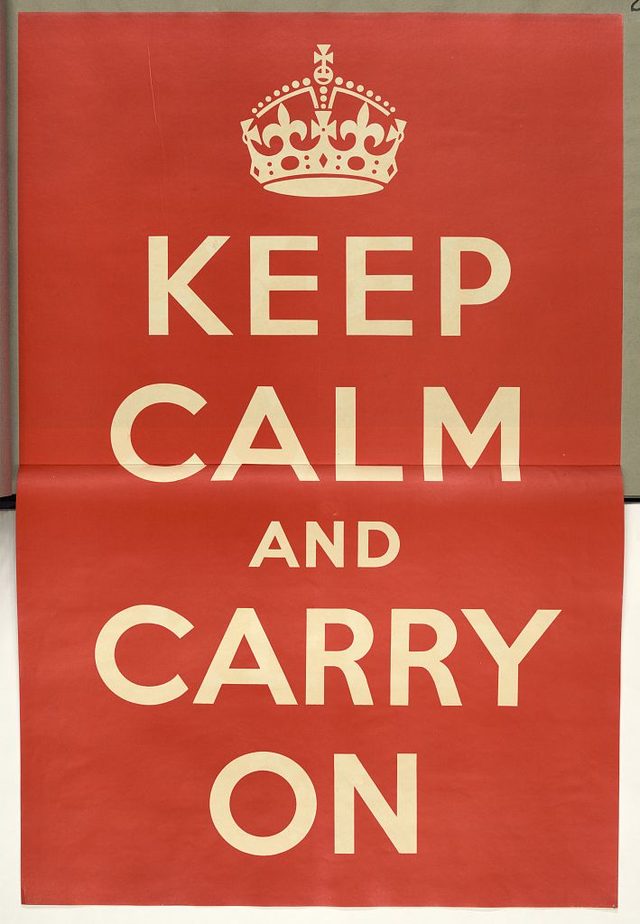
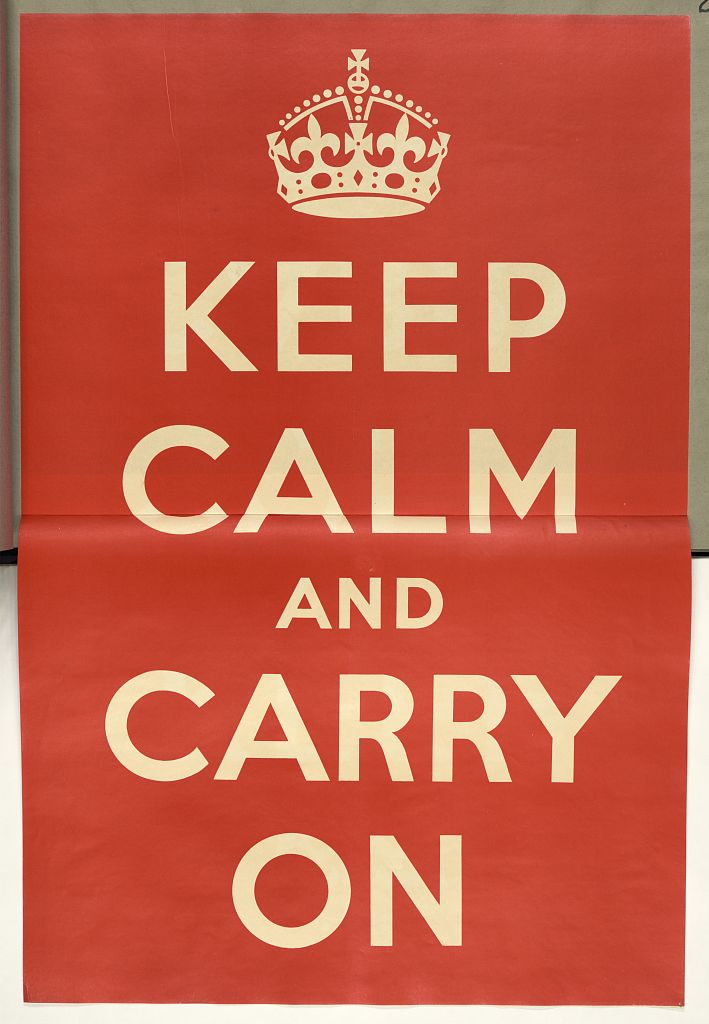
Keep Calm and Carry On is a British Ministry of Information poster designed between 27 June and 6 July 1939. Almost 2.5 million copies were printed, but it was held back for a crisis such as heavy bombing and never issued for general display. It became widely known only after a copy turned up at Barter Books, Alnwick, in 2000.
Explain moreShow less
UK Ministry of Information, 1939, Home Publicity series. The only image is the crown, which lends the Crown's authority to an instruction: Transfer. This copy is in a Library of Congress album of British war posters collected by John Belfort Keogh, U.S. vice consul at Bradford.
The 1939 trio and what the record does not say
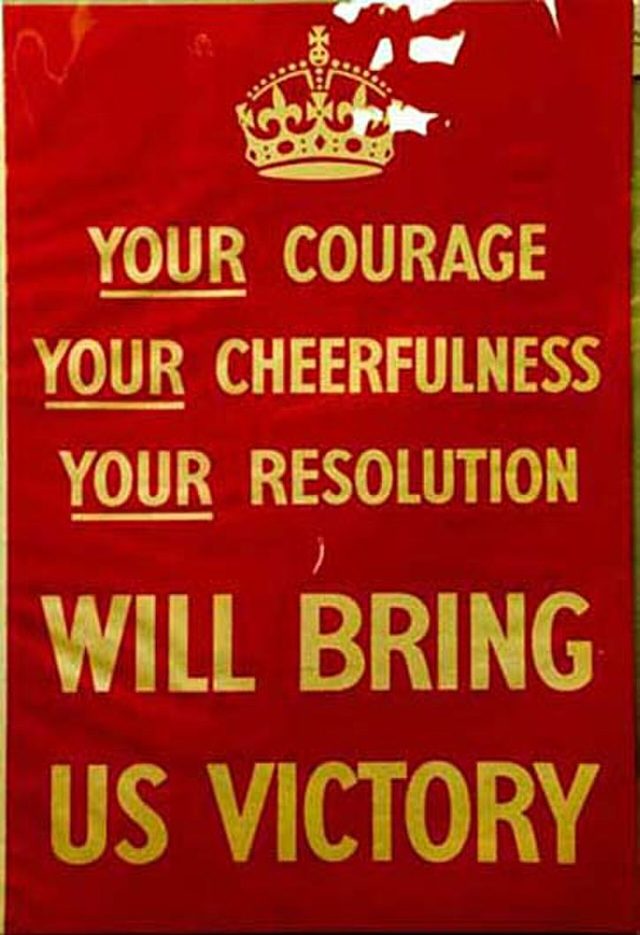
The collection's entry places this poster third in a series of three Home Publicity sheets. Its companions are "Freedom Is in Peril" and "Your courage, your cheerfulness, your resolution". The collection holds the second of these, from a photograph of a worn copy. It does not hold "Freedom Is in Peril".
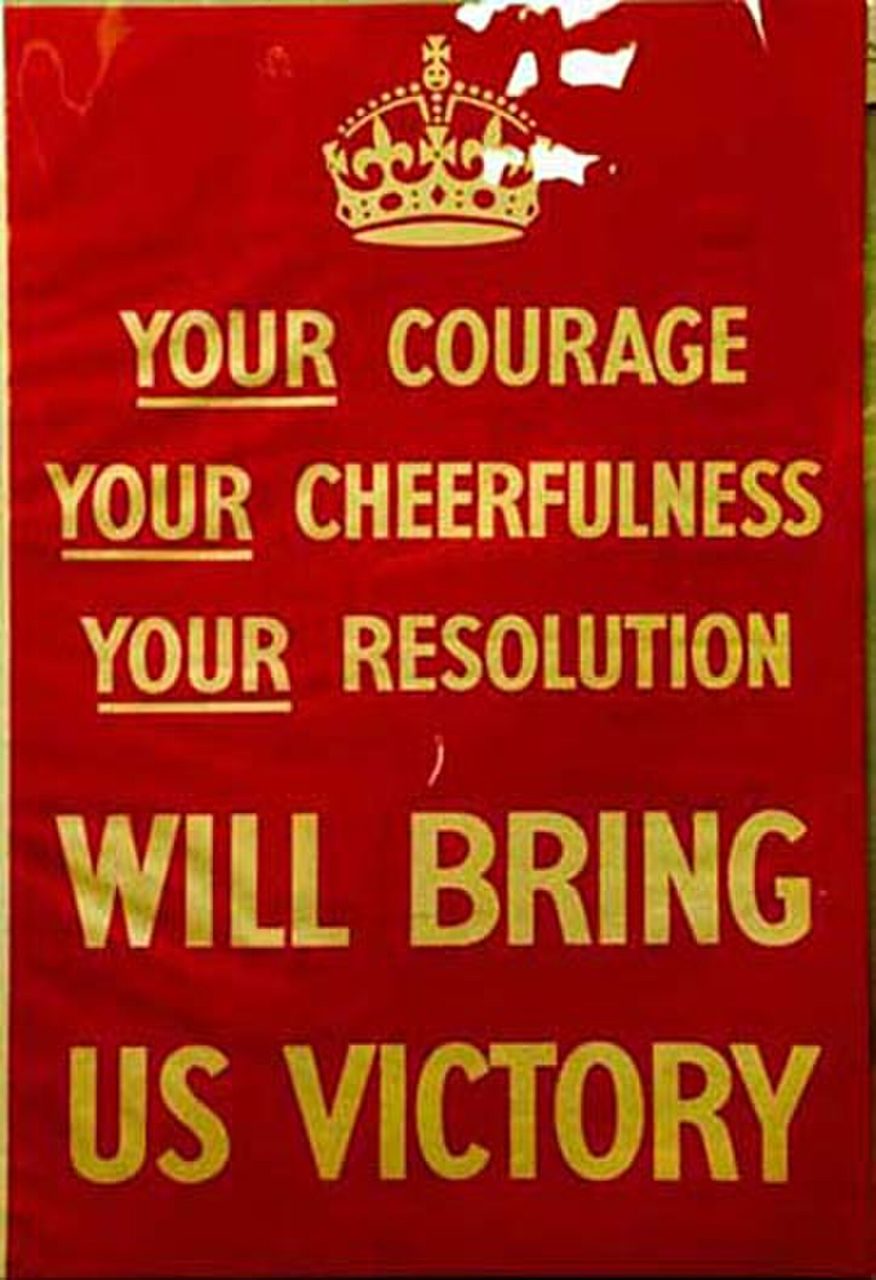
UK Ministry of Information, 1939. Three virtue words stand in for any plan (Glittering generalities), and the crown lends the state's authority (Transfer).
The modern slogan versions are later redrawings, not the 1939 sheets.
Other British morale and instruction sheets, 1939 to 1941
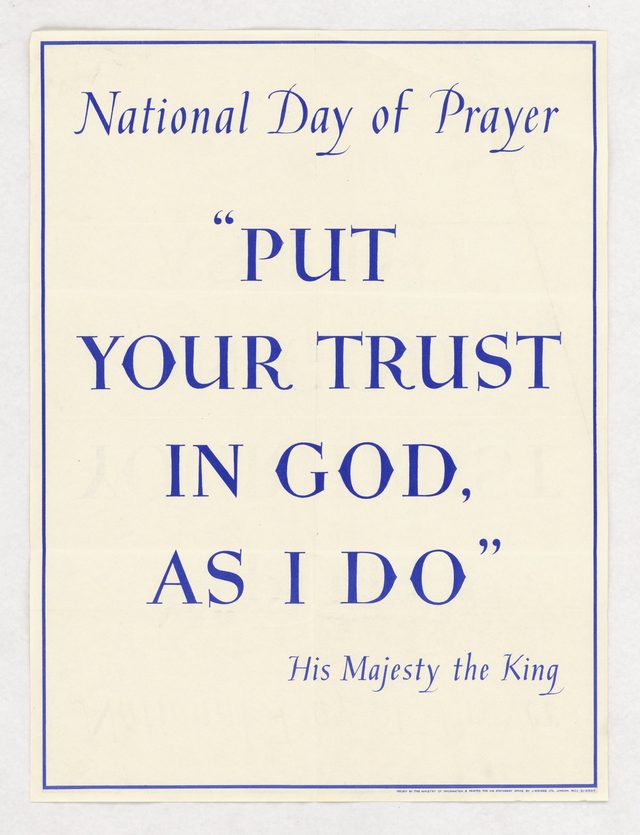
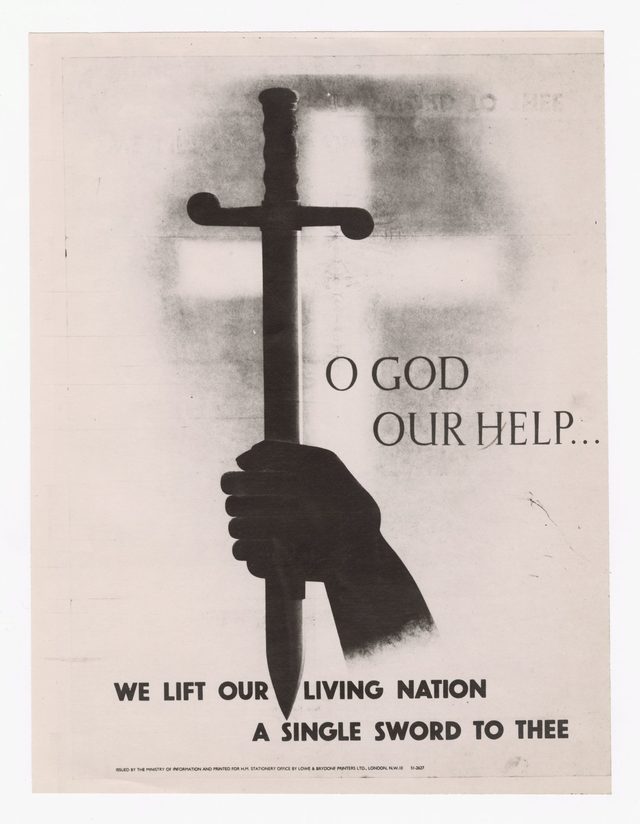
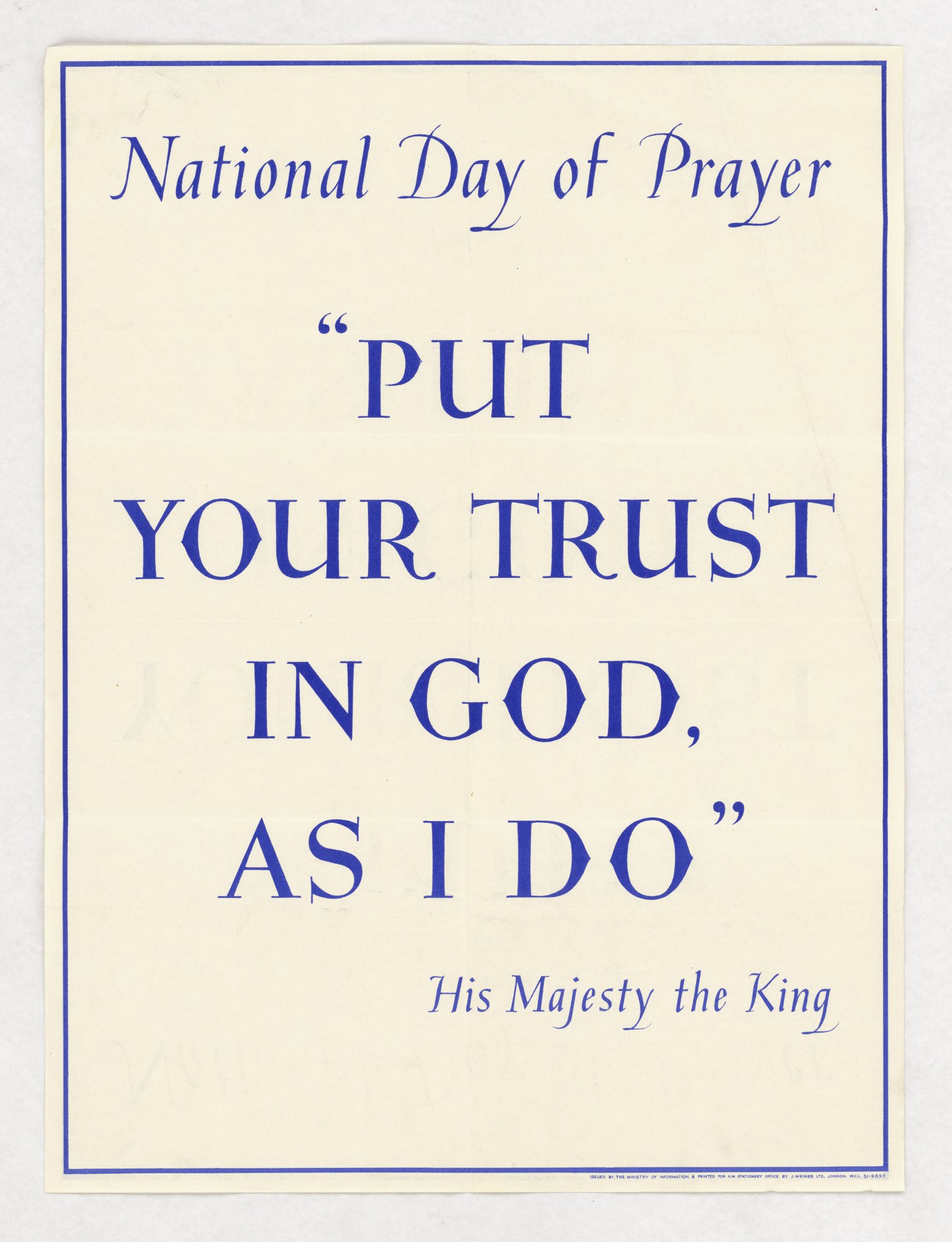
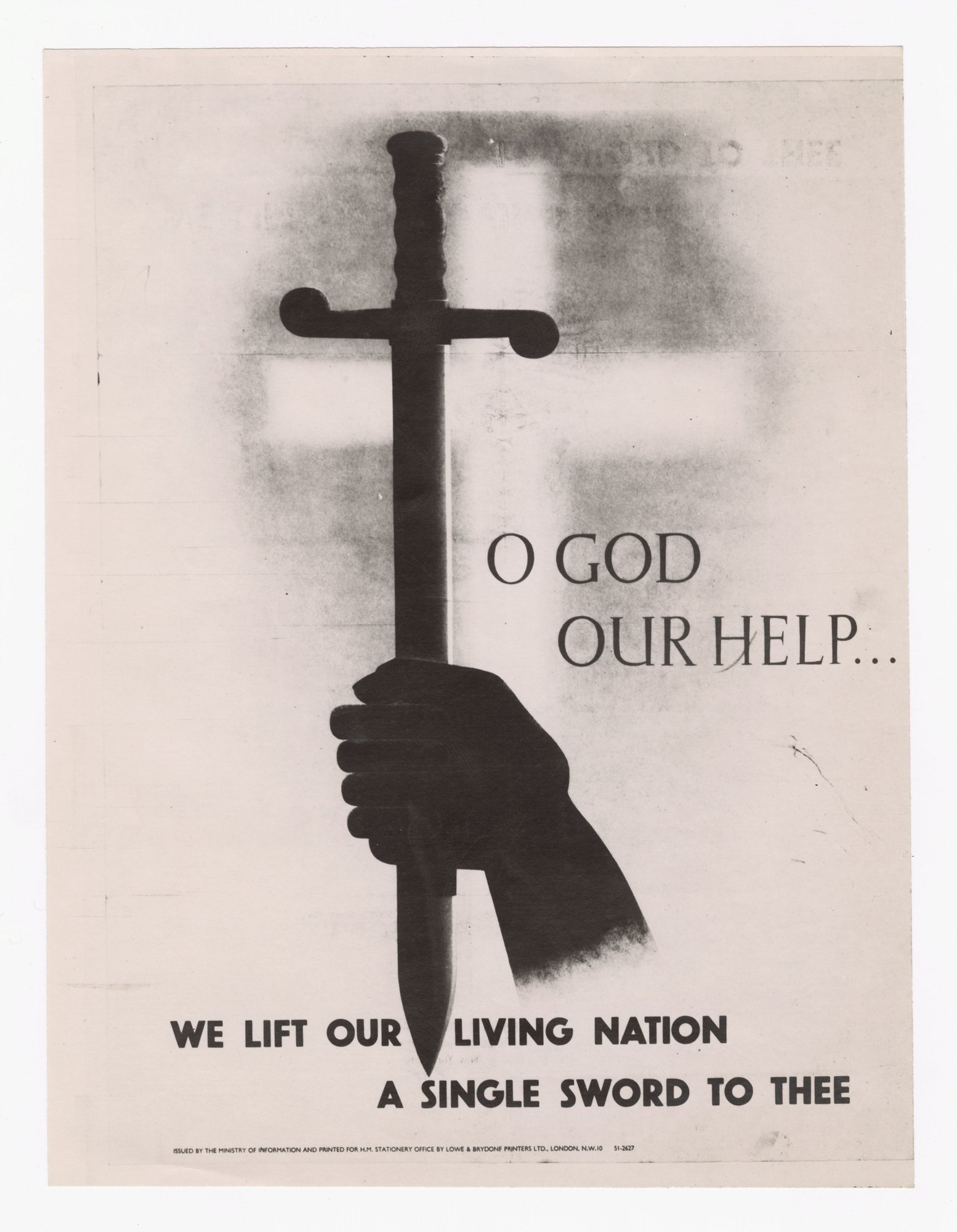
Other Ministry of Information posters of the same years borrowed authority too. Two use faith.
Explain moreShow less
Ministry of Information, printed for HMSO by J. Weiner Ltd. The sovereign's quoted words are the Testimonial. The National Archives gives no year.
Ministry of Information, printed for HMSO by Lowe & Brydone. A cross and a hymn-like line borrow religious authority (Transfer).
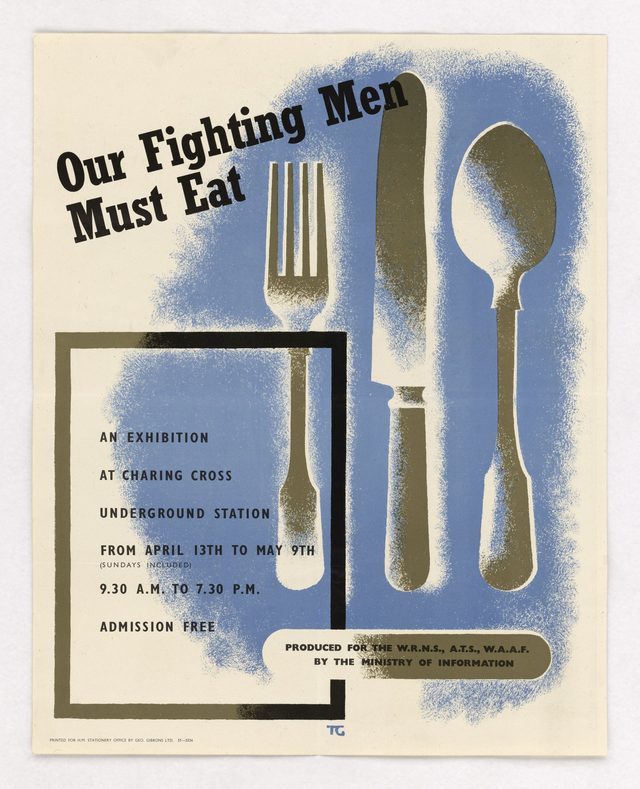
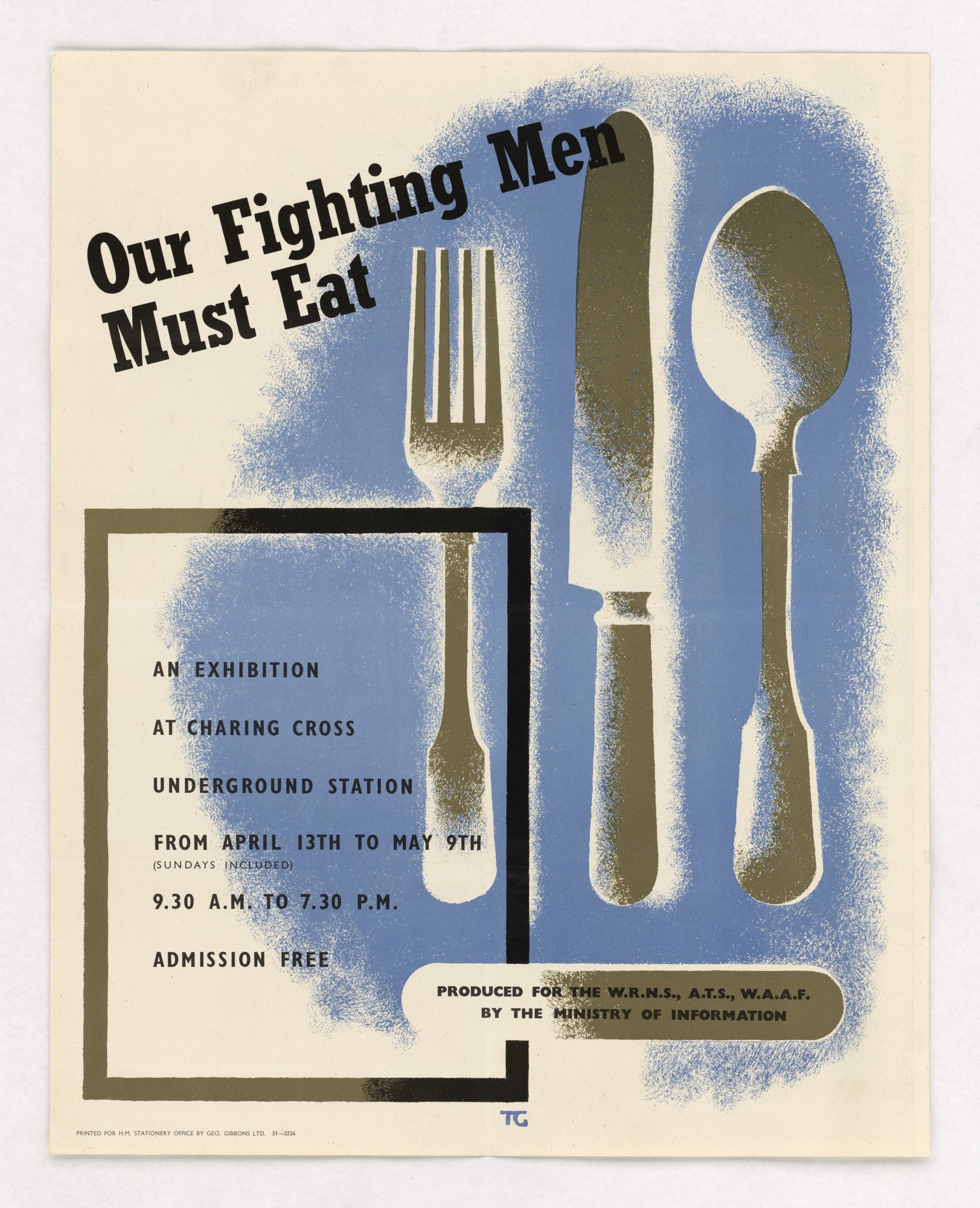
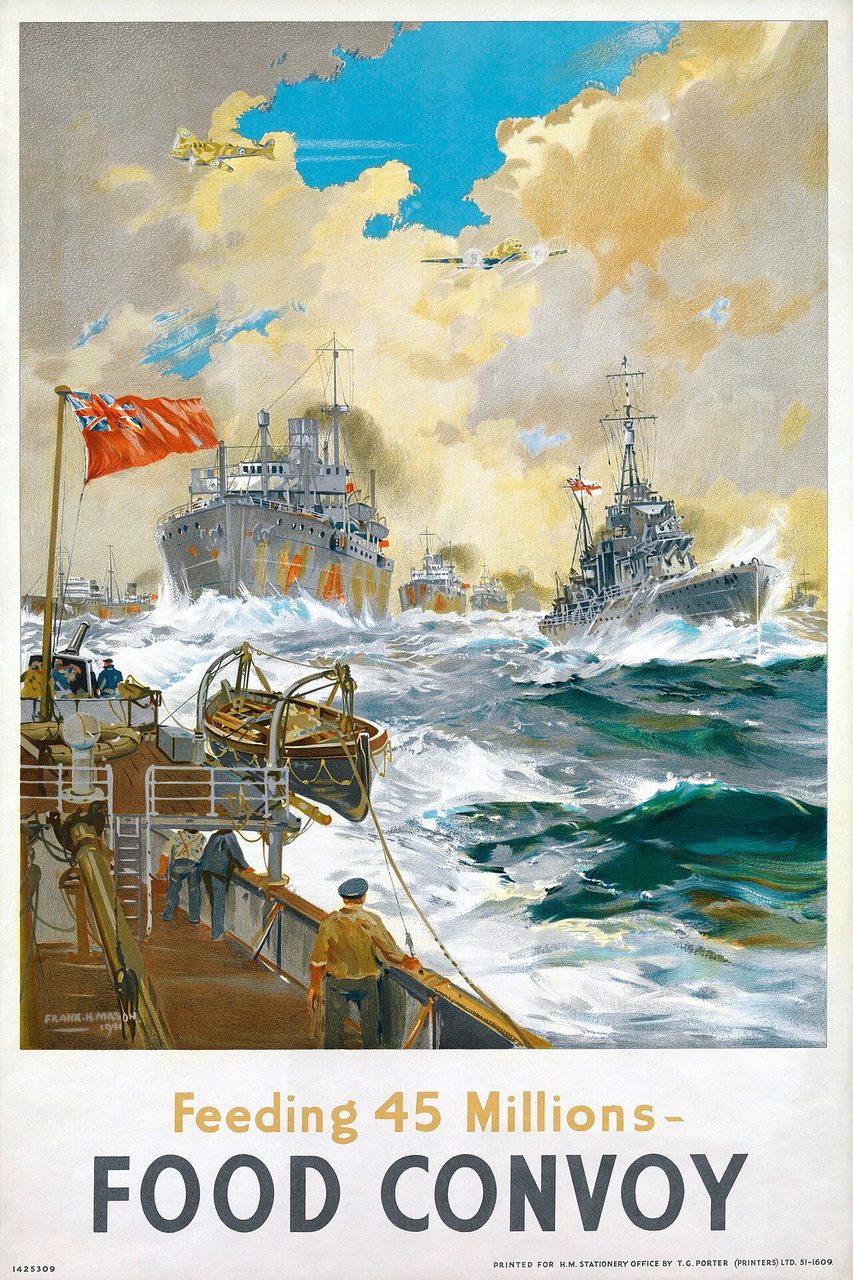
Others ask for a task.
Ministry of Information for the W.R.N.S., A.T.S. and W.A.A.F., 1939 to 1945. The headline casts the viewer's work as fighting (Identity fusion).
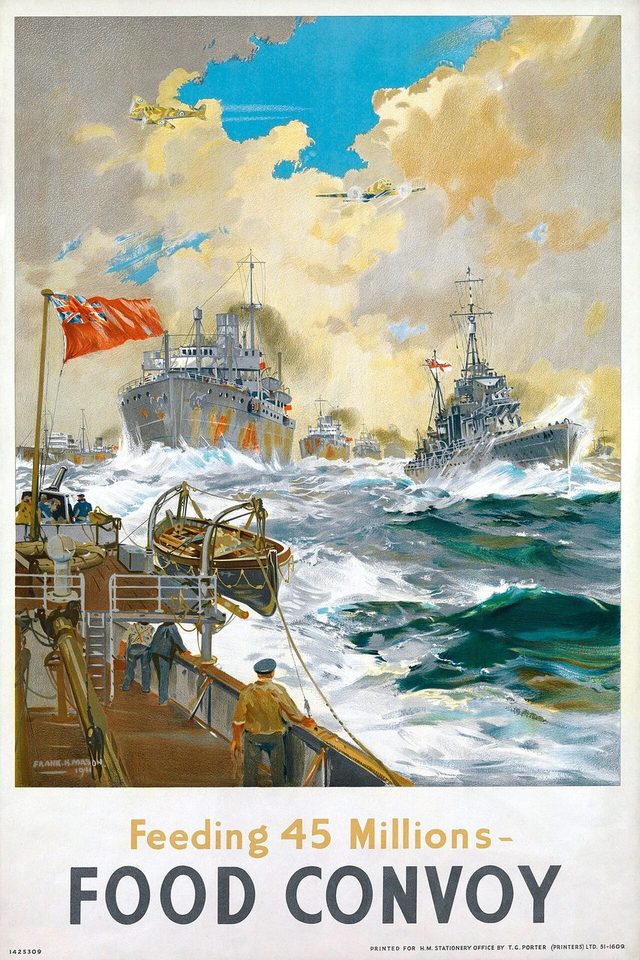
Ministry of Information, artist Frank H. Mason, about 1941 (the Imperial War Museums date it only 1939 to 1945). The navy's protection is shown as the food supply (Transfer).
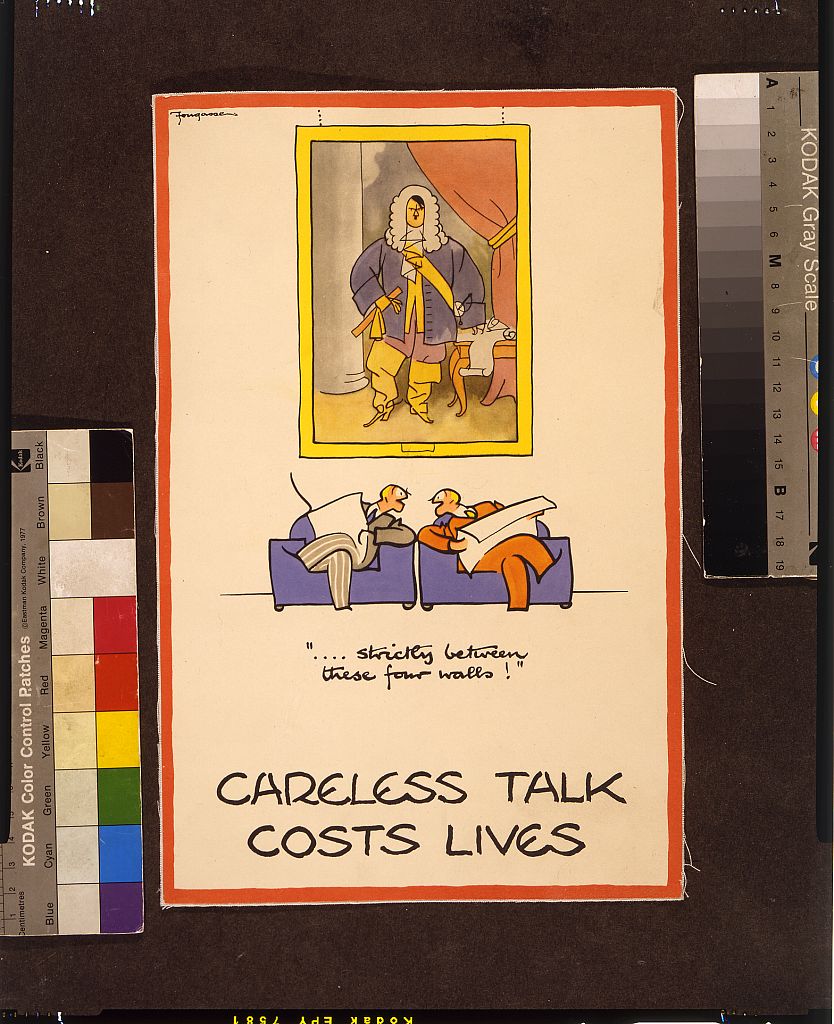
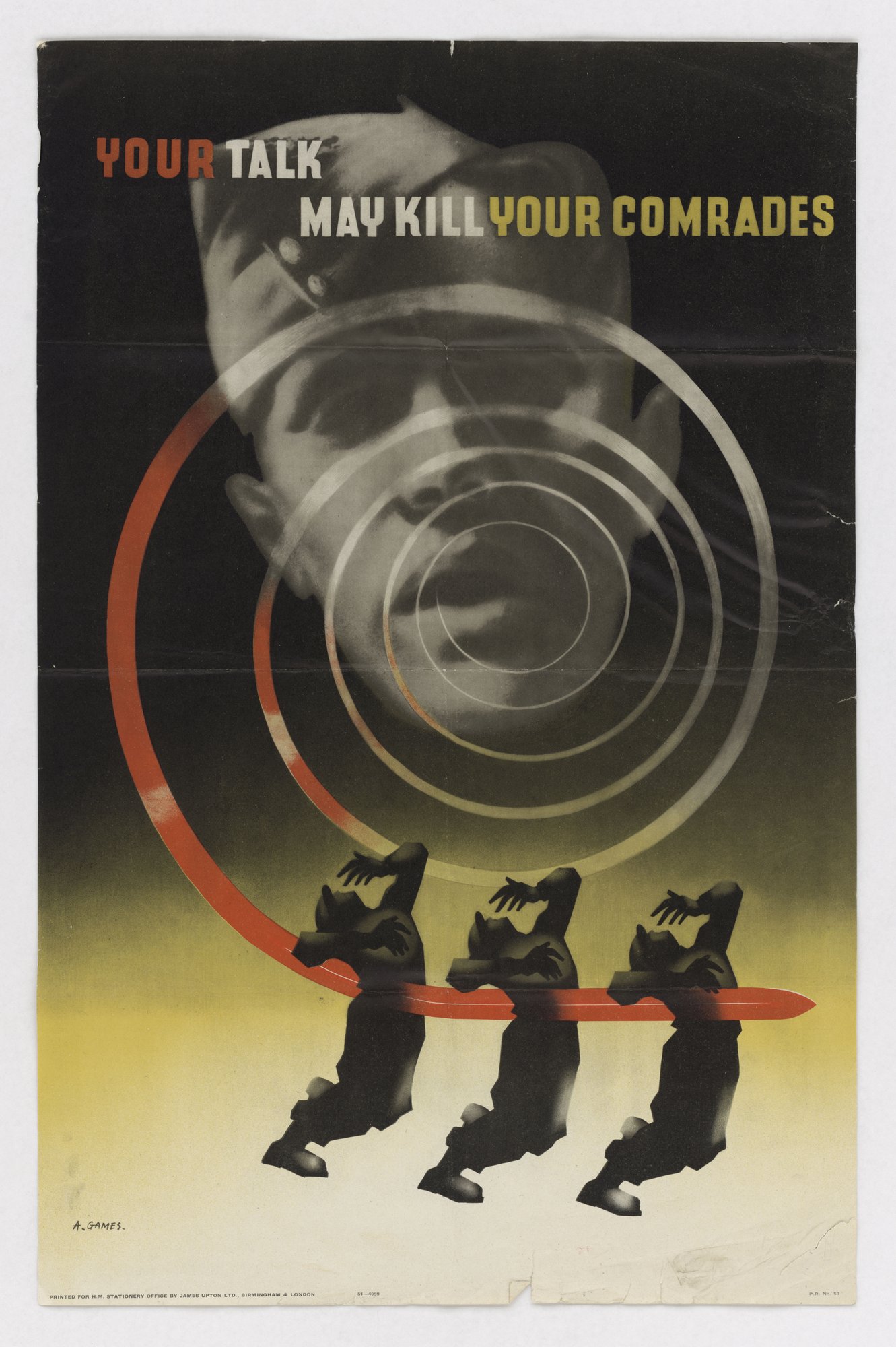
Security posters followed, one in a joke and one stating death.
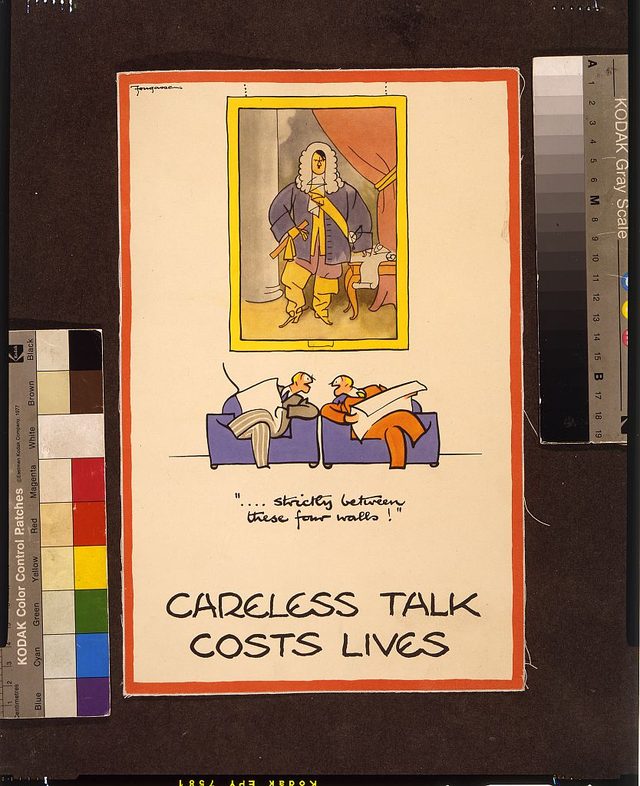
Ministry of Information, artist Fougasse, 1940. The unseen listener and the loss-of-life slogan carry a Fear appeal in a light tone.
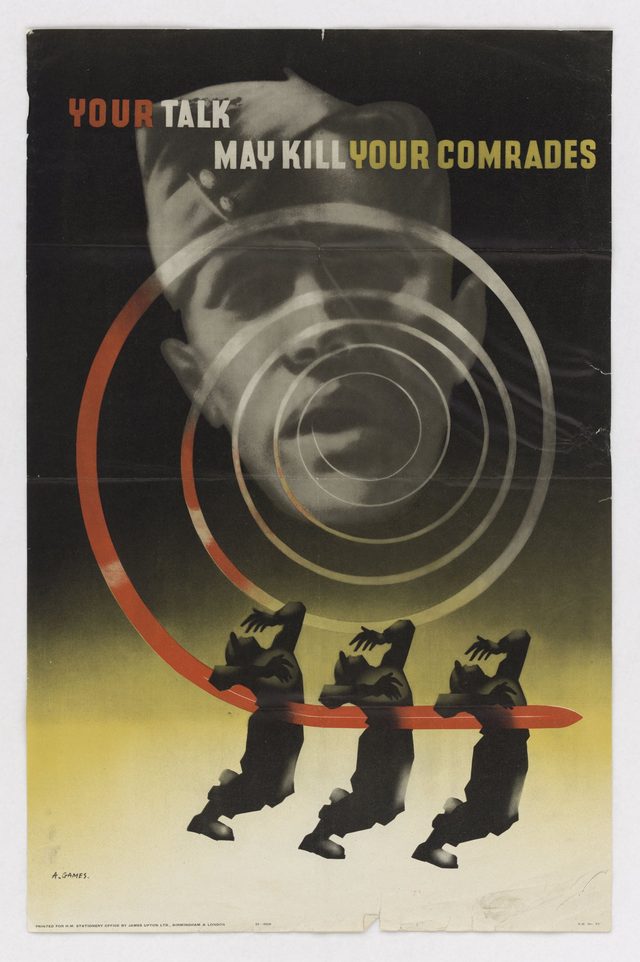
HMSO imprint, artist Abram Games, 1939 to 1945. The harm is staged as imminent (Fear appeal). See also wartime careless-talk posters and British propaganda posters.
"Your Country Needs You" and the pointing-finger family
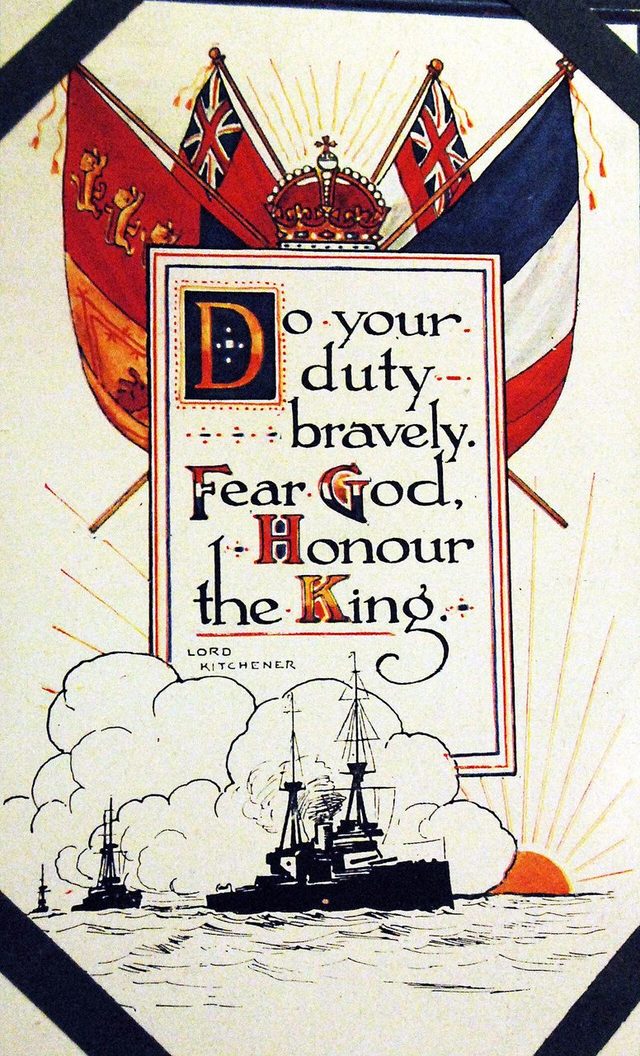
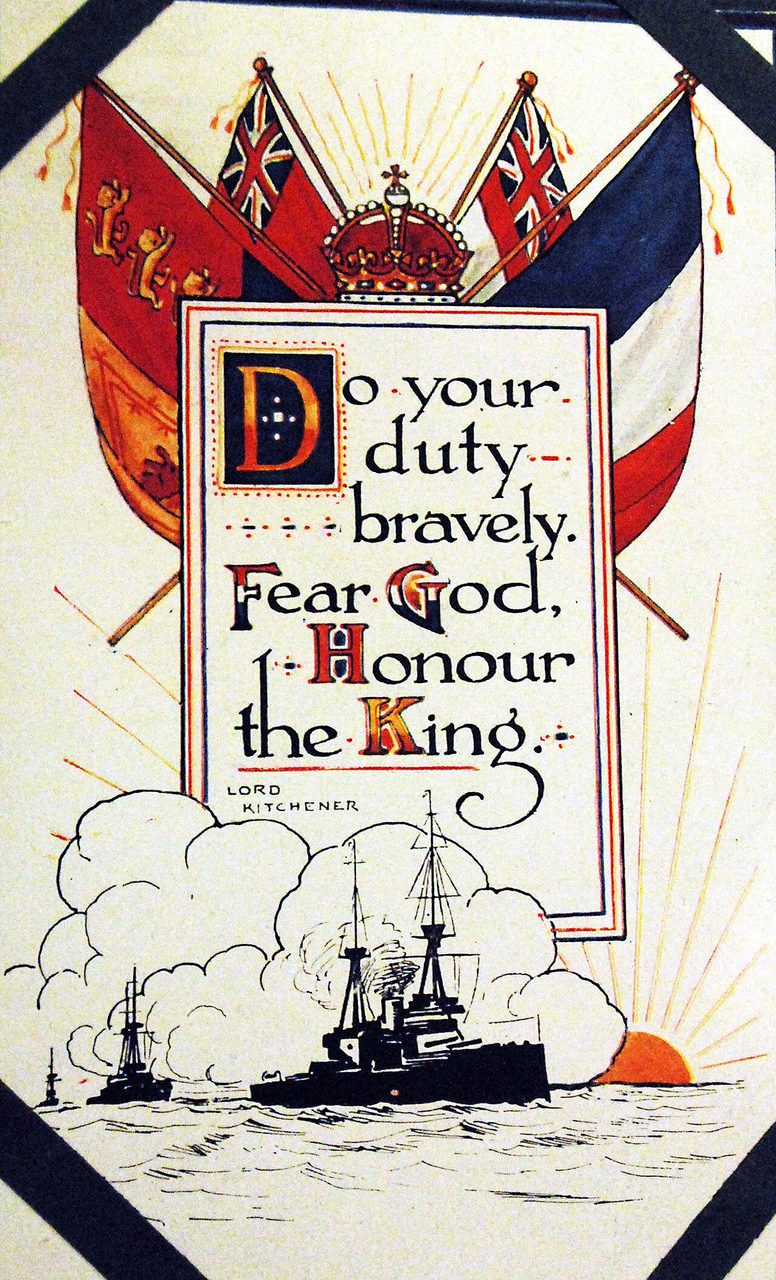
The collection holds no copy of Alfred Leete's 1914 image of Lord Kitchener, so this page cannot show it. It holds a Kitchener postcard of about 1914, which is a different item: Kitchener's instruction from his August 1914 message to troops, under a crown and crossed flags.

Explain moreShow less
Publisher not named, about 1914. The named authority's vouching is the message (Testimonial, Transfer).
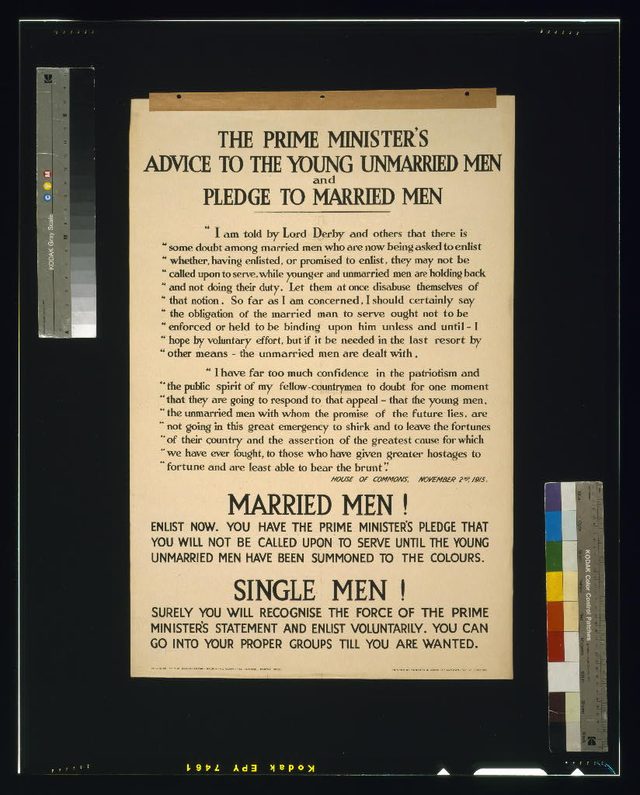
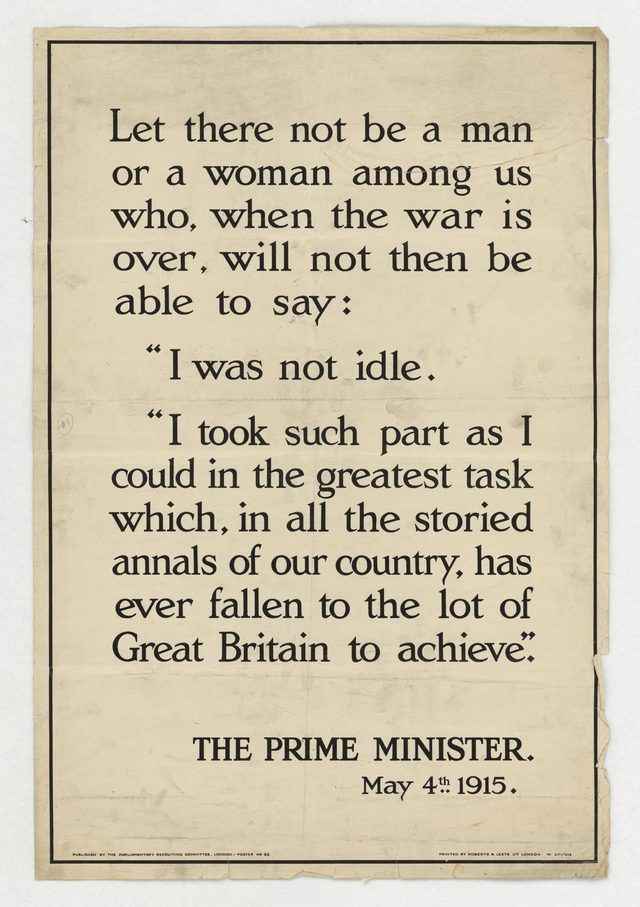
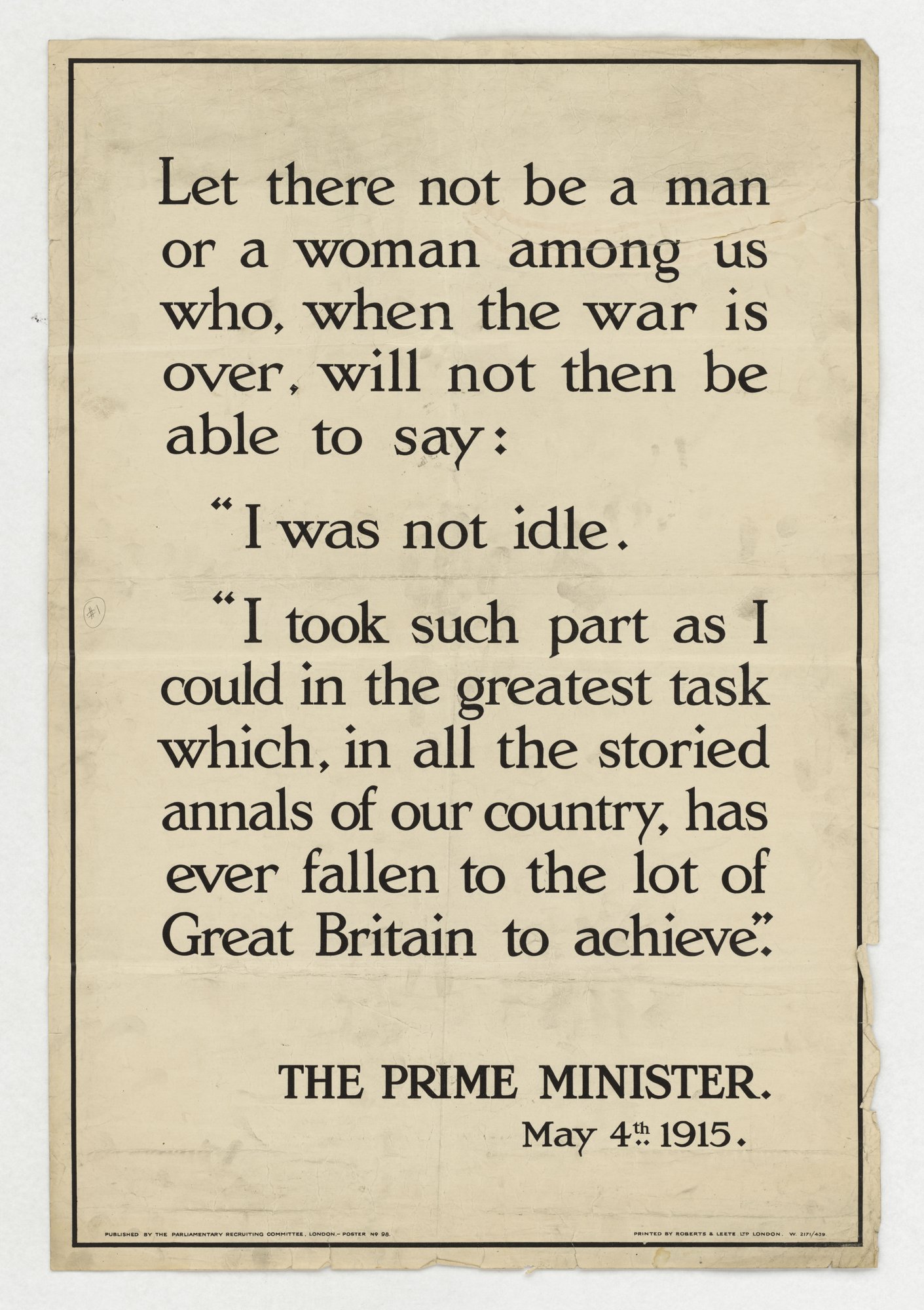
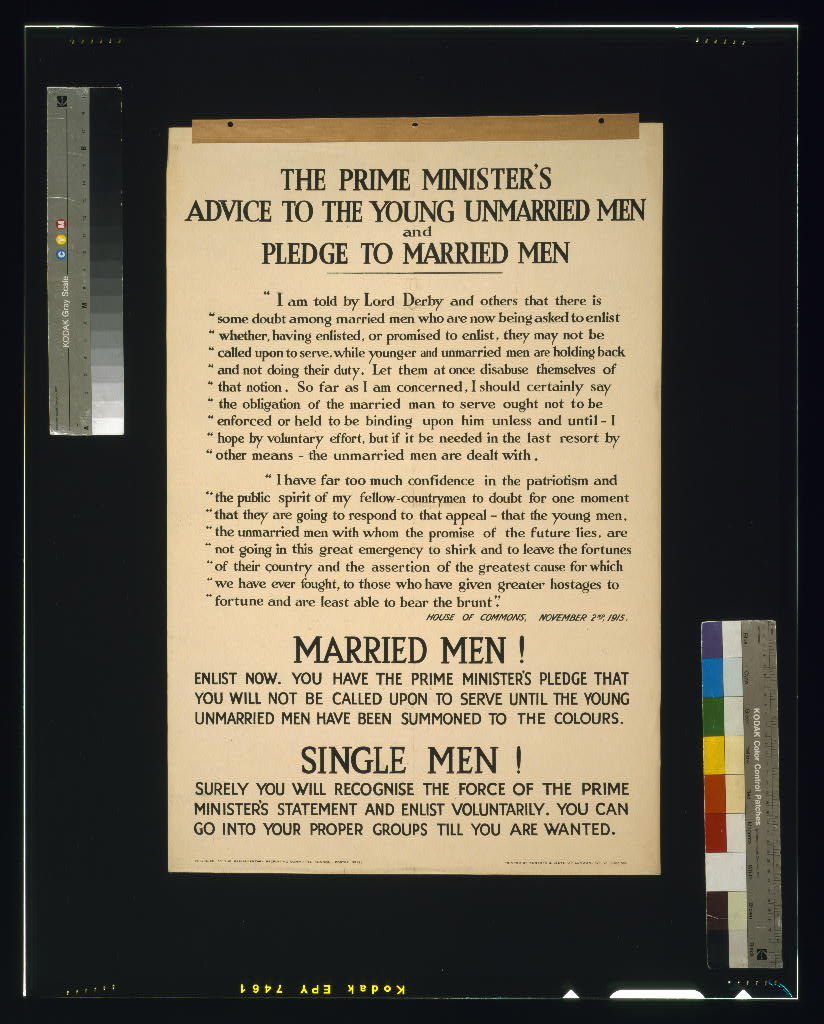
British recruiting in 1915 used text and a named office-holder.
Parliamentary Recruiting Committee, 1915. Elevated virtue language with no named action (Glittering generalities).
Parliamentary Recruiting Committee, 1915. The office-holder's own words are the whole argument (Testimonial).
How widely the Leete poster was posted is a point on which accounts differ, and no entry here cites a source for either view, so this page gives no figure. The entries record only that Leete's 1914 image was the model for later pointing figures.
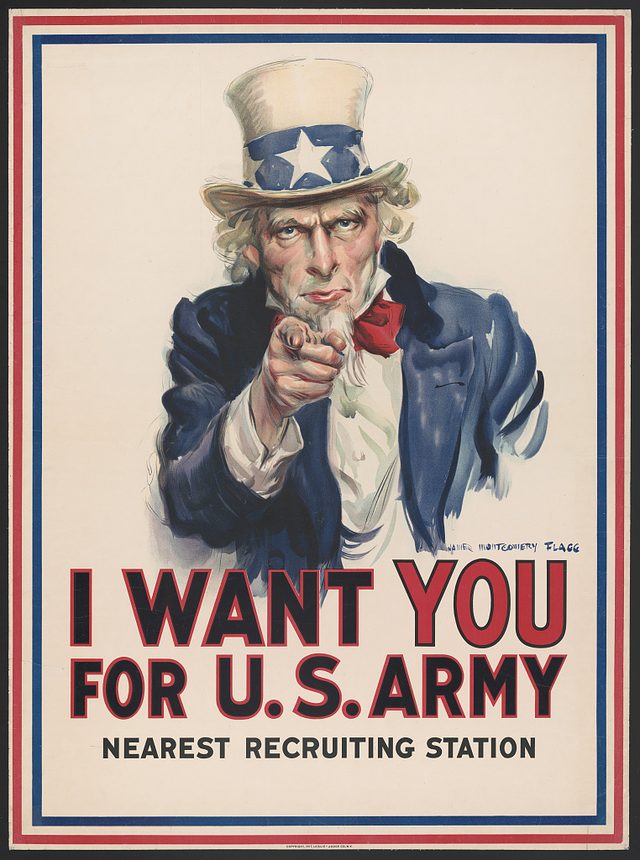
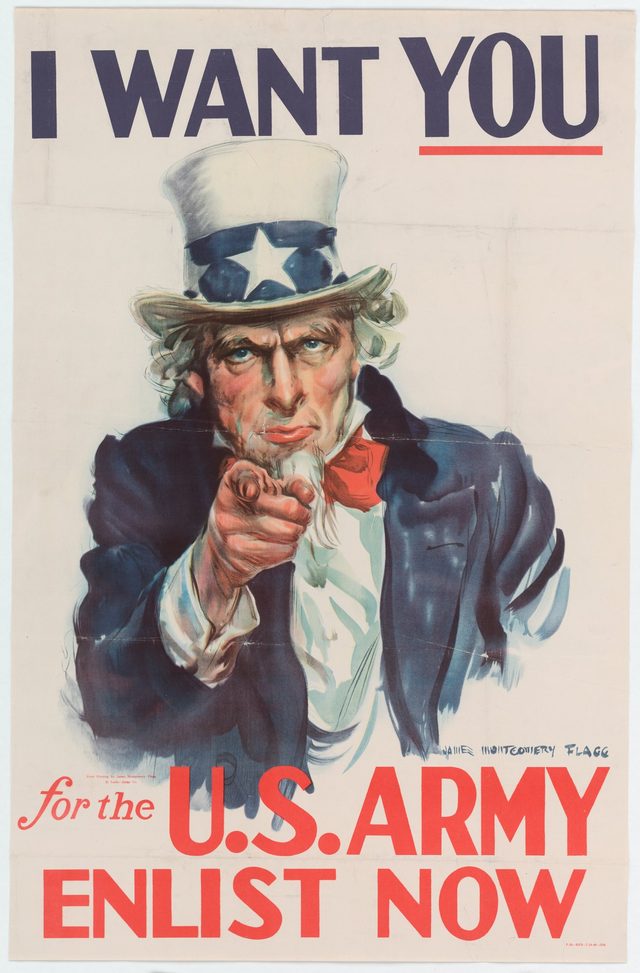
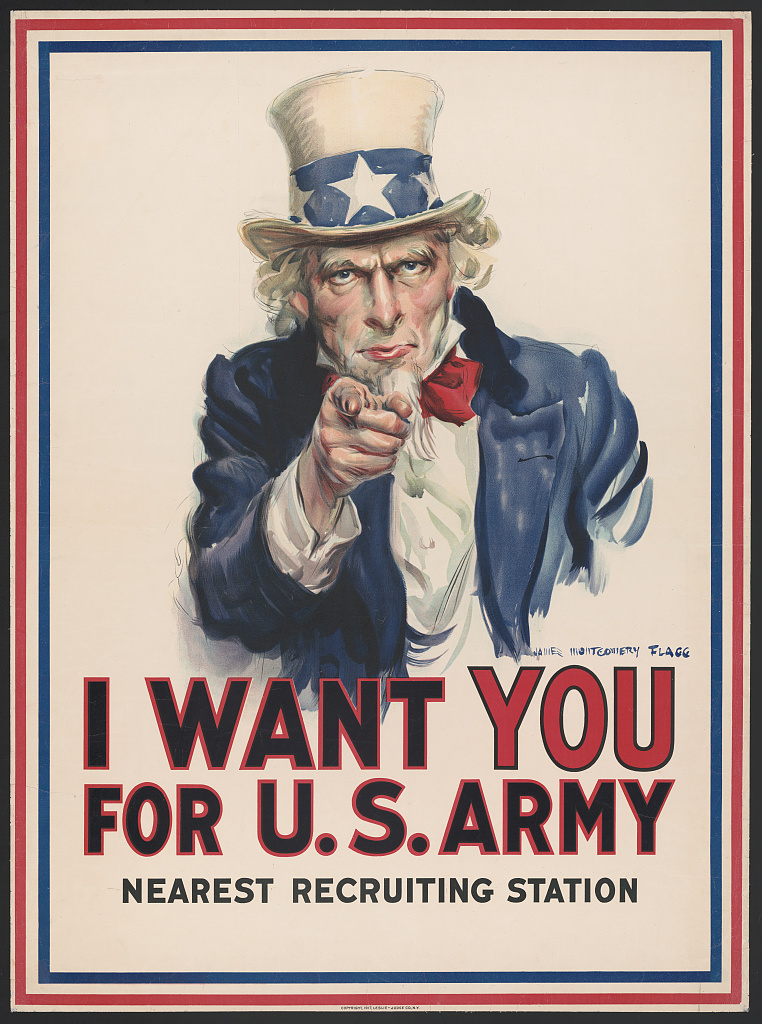
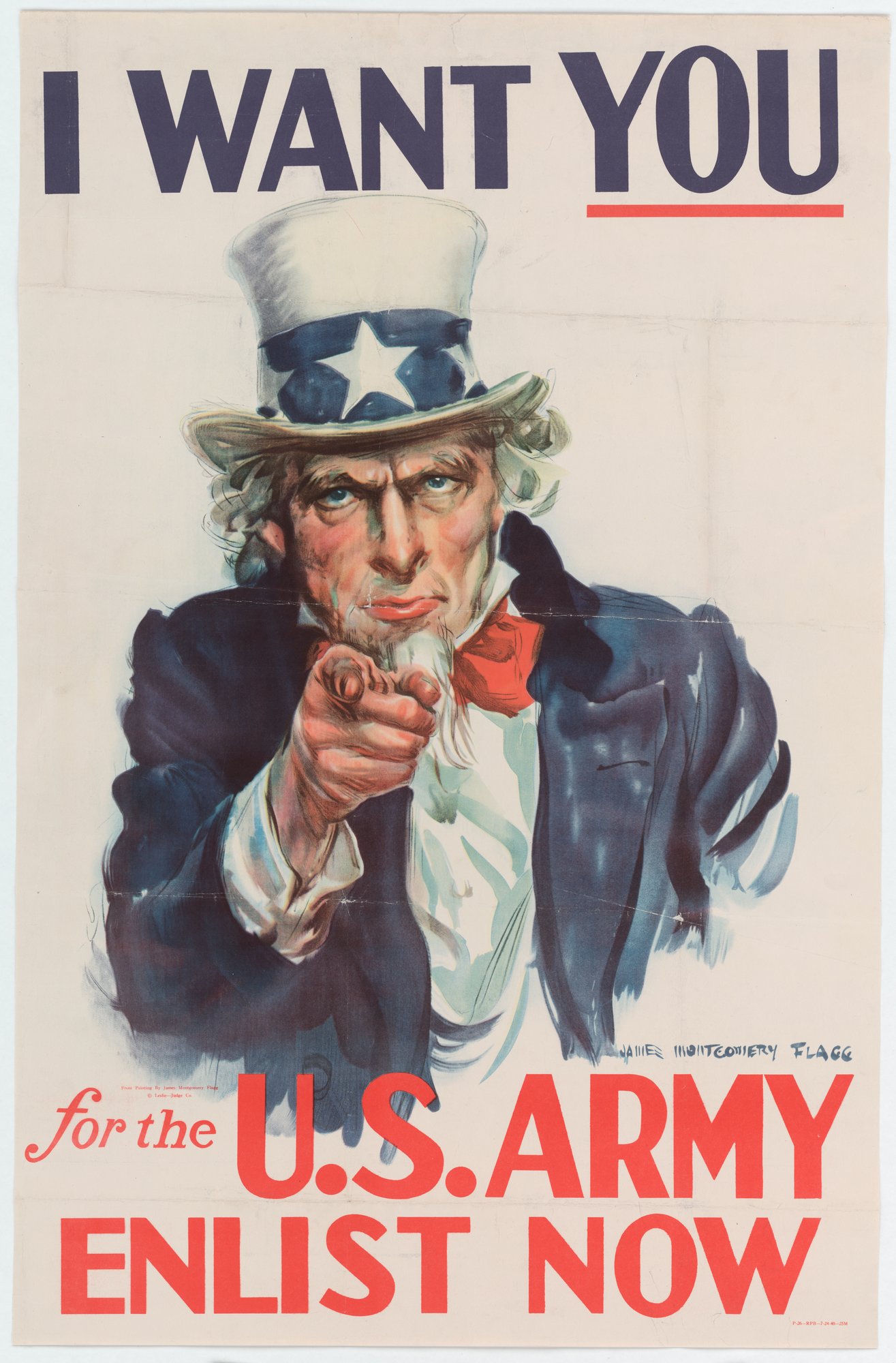
The US descendant is James Montgomery Flagg's Uncle Sam. The Flagg entry says the pointing, direct-address composition follows Leete, that Flagg first drew it for Leslie's Weekly on 6 July 1916, and that the Library of Congress counts more than four million copies in 1917 and 1918. See the Uncle Sam poster.
U.S. Army recruiting, artist James Montgomery Flagg, 1917. The national personification makes the request (Transfer).
U.S. Army, 1940 reprint of the 1917 design with "Enlist Now" (Identity fusion, Transfer).
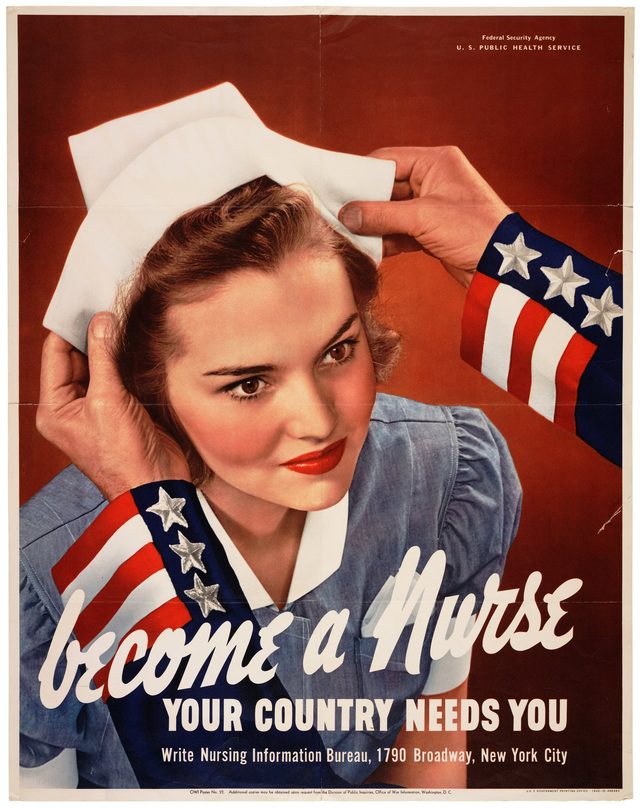
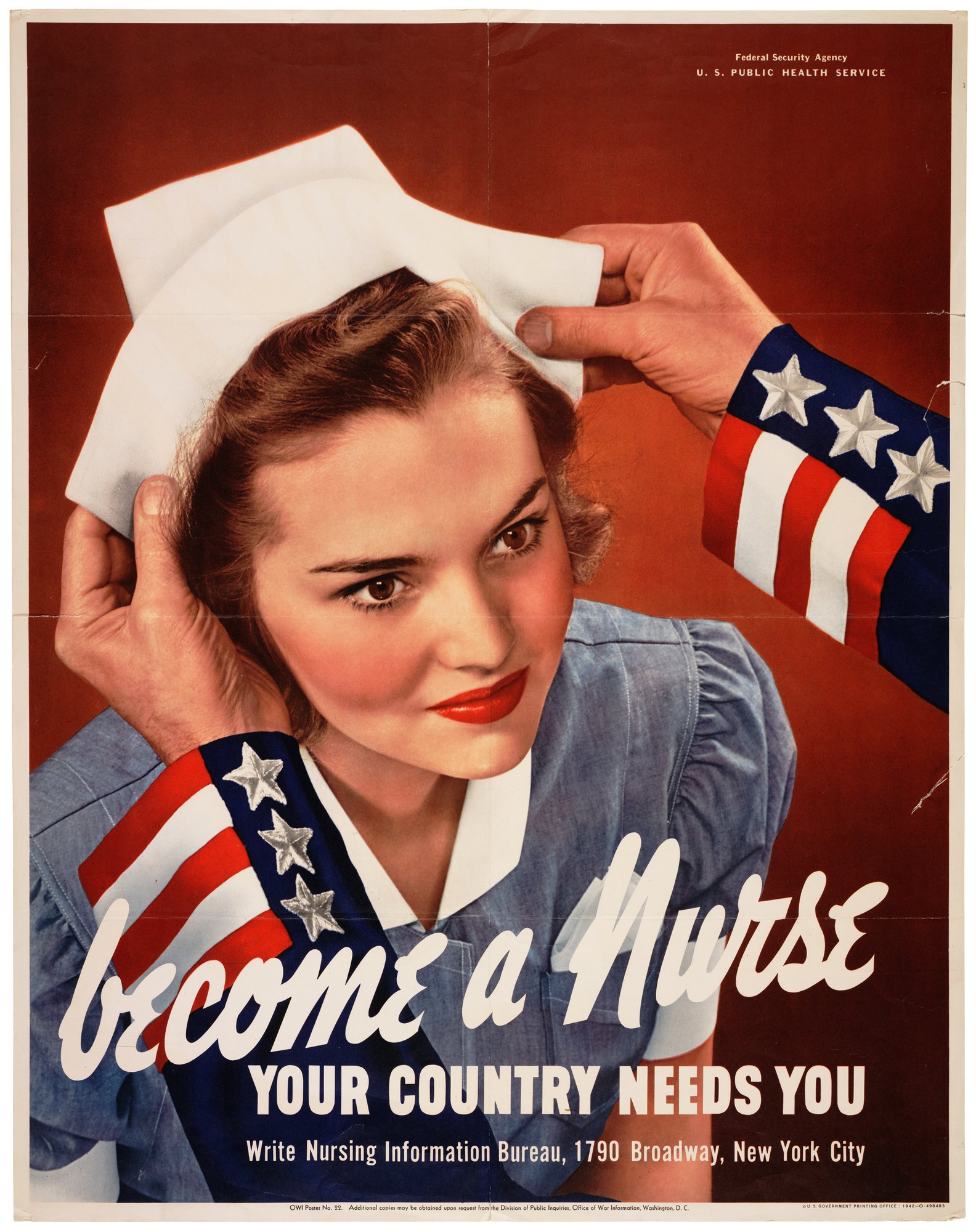
The phrase itself recurs on a 1942 nurse recruitment poster.
Federal Security Agency, U.S. Public Health Service, 1942. Flag symbolism lends national authority (Transfer).
A 2020 Moscow poster borrows the same pose for a hospital building deadline.
Moscow City Government, 21 March 2020. A recruitment format lent to a civilian deadline (Transfer).
Sources and further reading
Sources
Library of Congress (Keep Calm and Carry On, Flagg and Parliamentary Recruiting Committee posters); U.S.
Library of Congress (Keep Calm and Carry On, Flagg and Parliamentary Recruiting Committee posters); U.S. National Archives, Record Group 44; Imperial War Museums via Wikimedia Commons; Wikimedia Commons (Kitchener postcard). Each item's entry carries its own source and rights note. More: recruiting posters, WW2 propaganda posters.