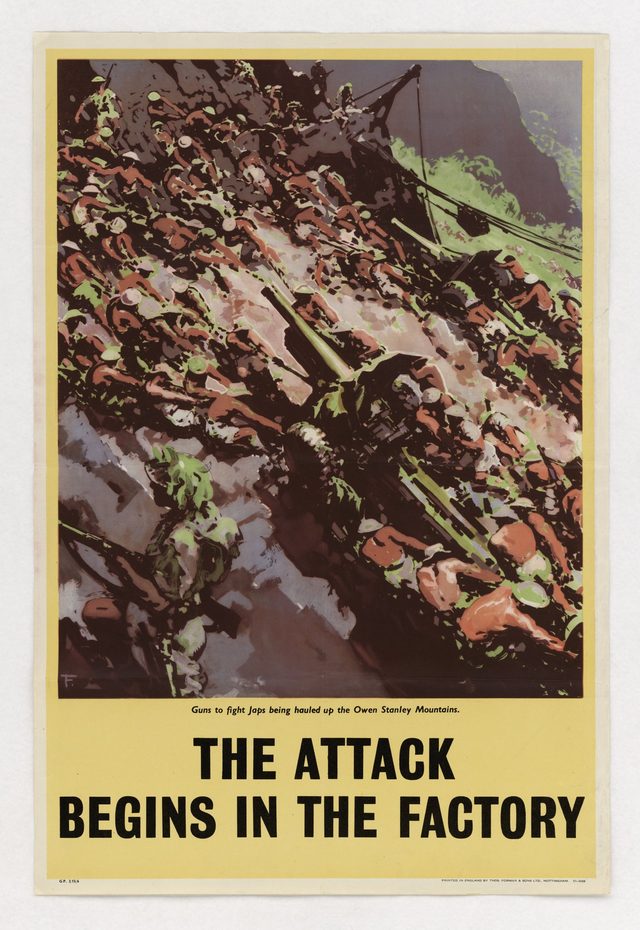
Content note. Some British wartime posters use the slur "Japs" and show enemy dead, including one printed for East African soldiers, and one security poster uses a photograph of dead soldiers on barbed wire. A First World War poster uses the label "German barbarians". They are shown as issued, as evidence of what the public and the forces were told. Showing a poster is not endorsing it.
What are British propaganda posters?
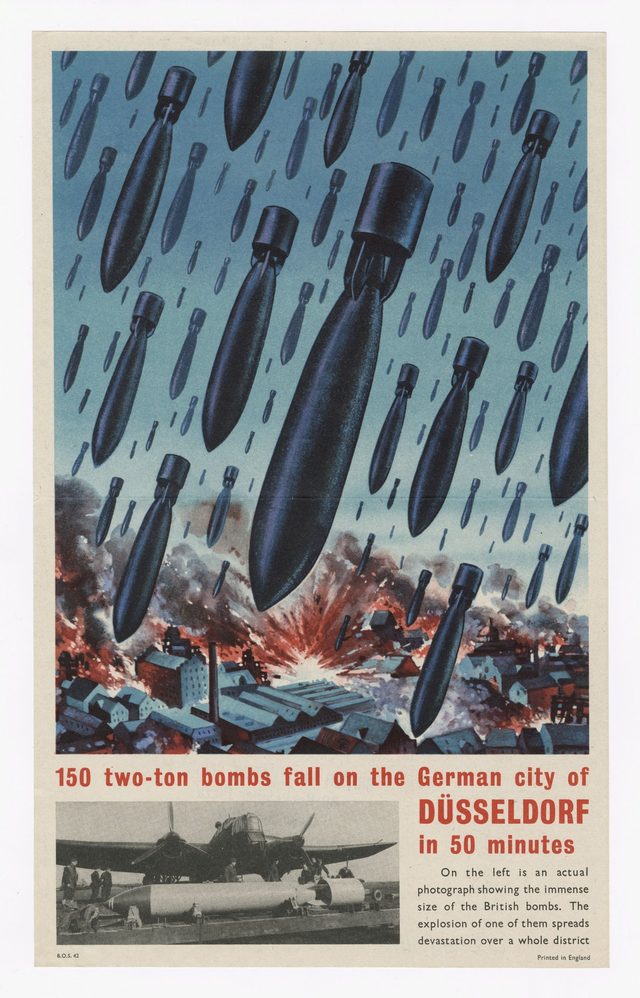
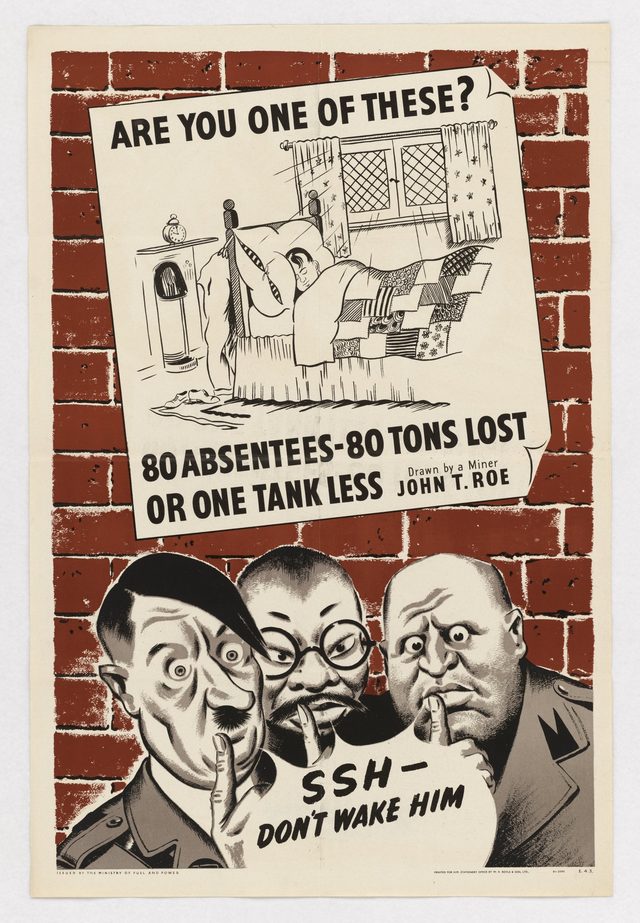
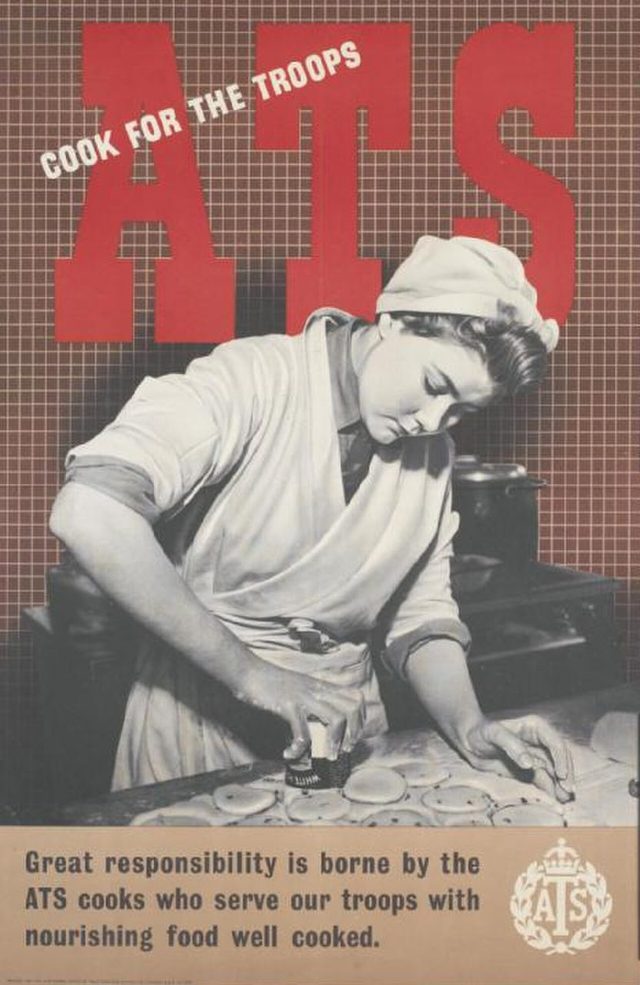
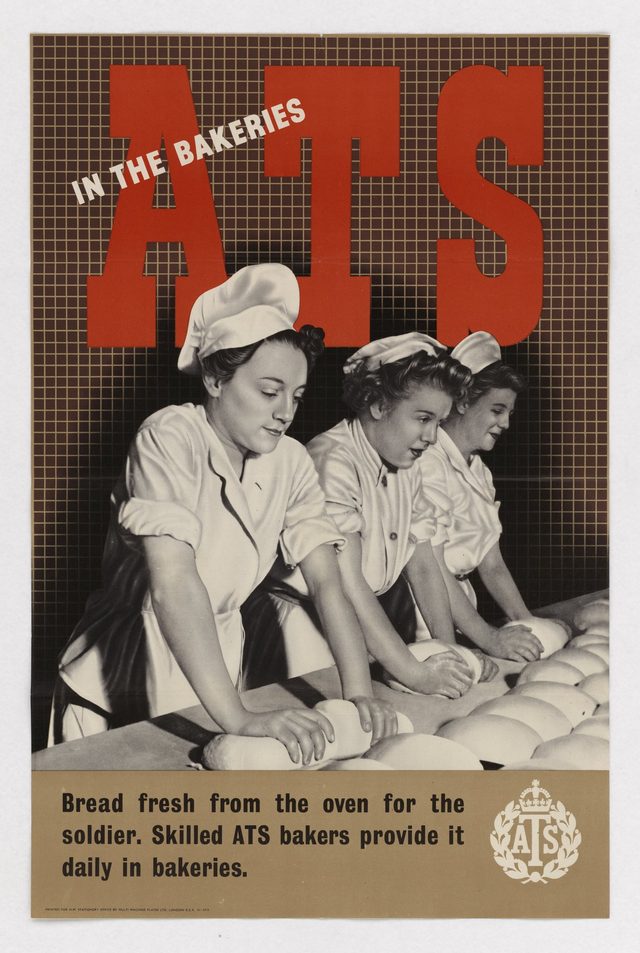
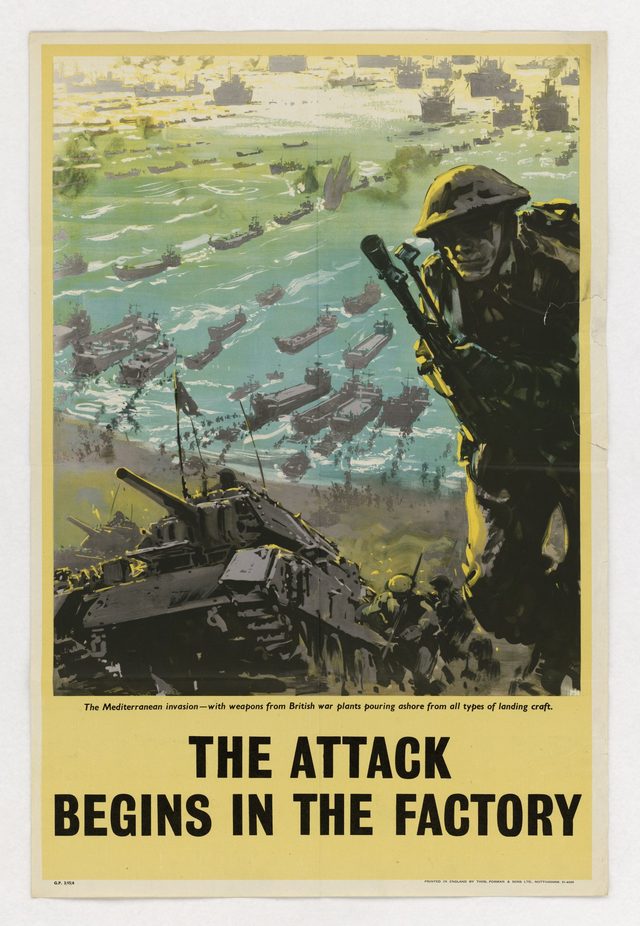
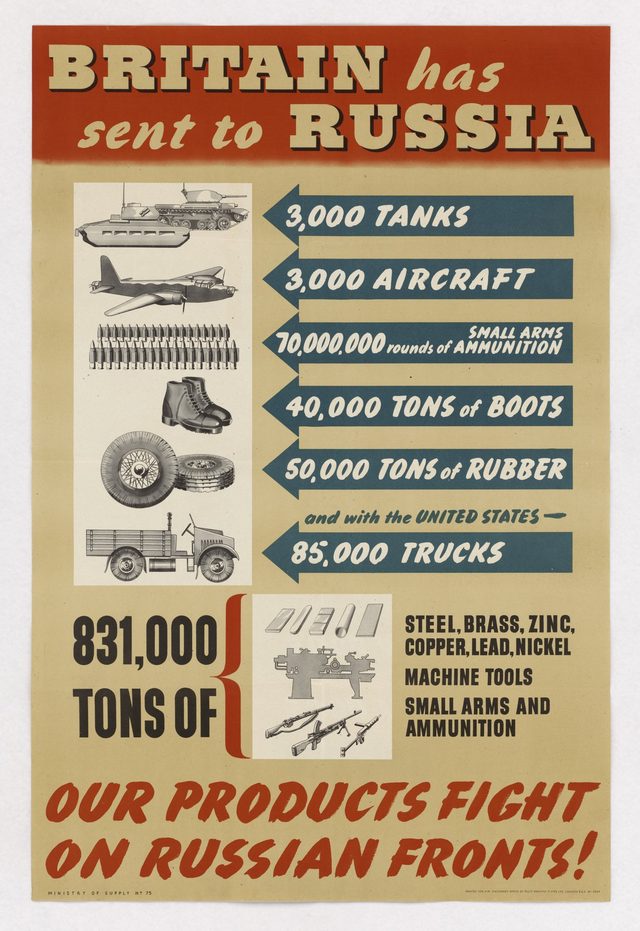
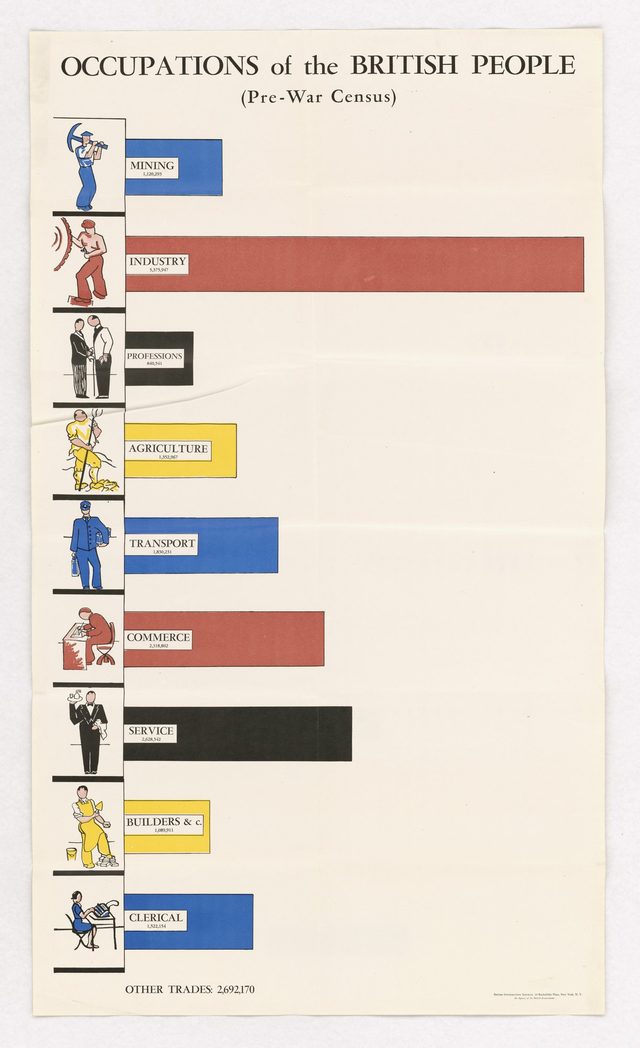
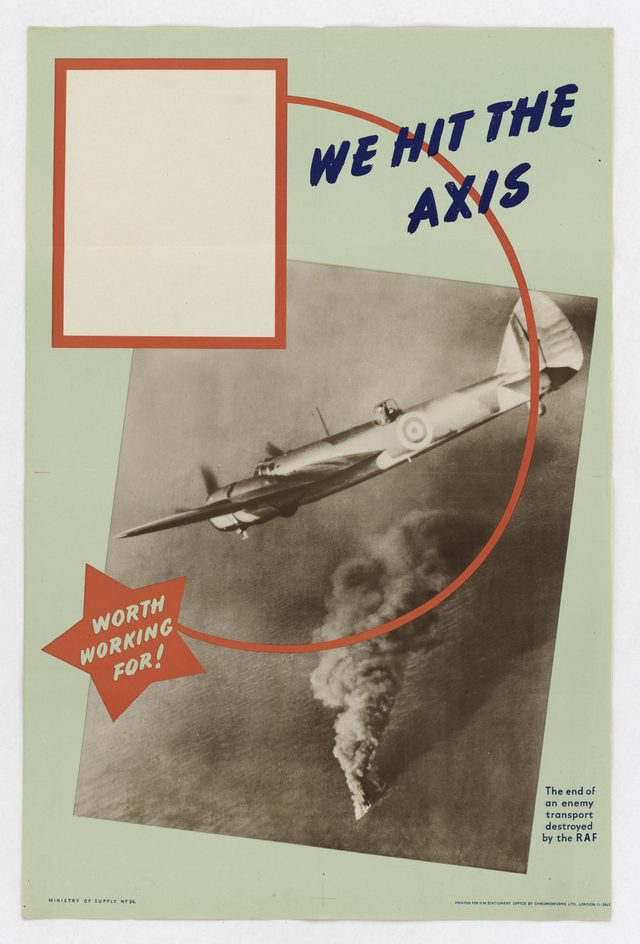
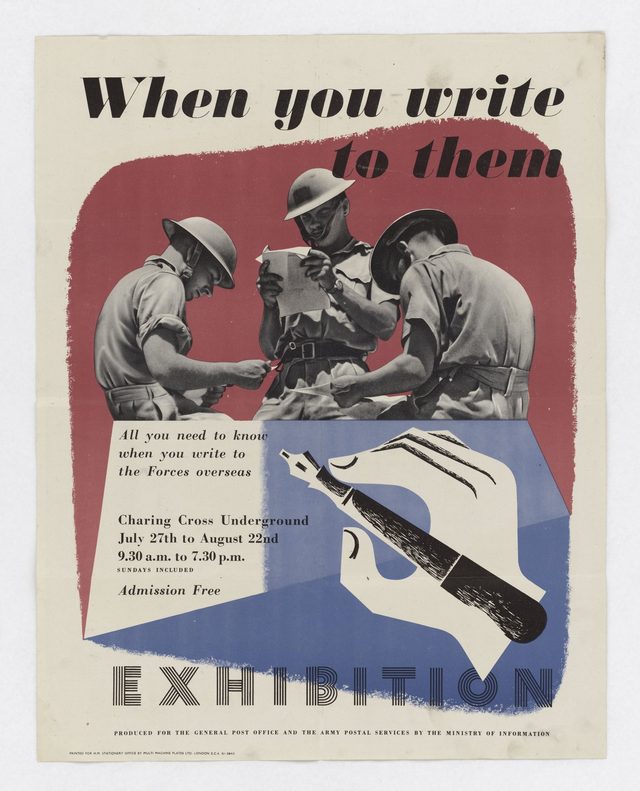
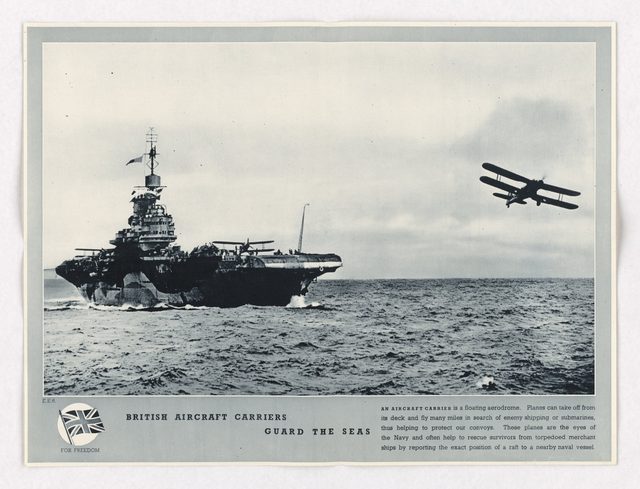
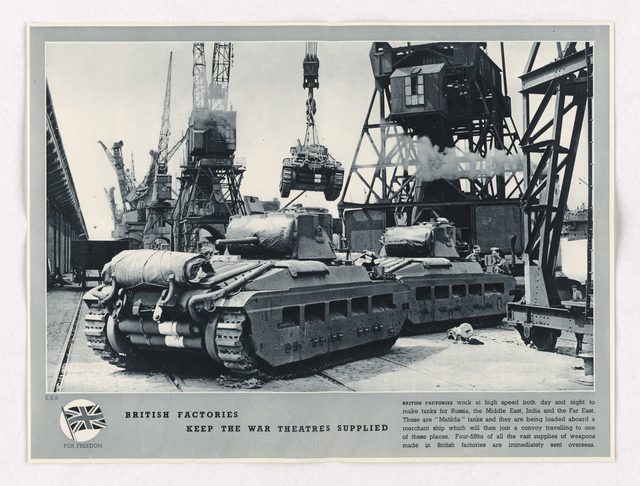
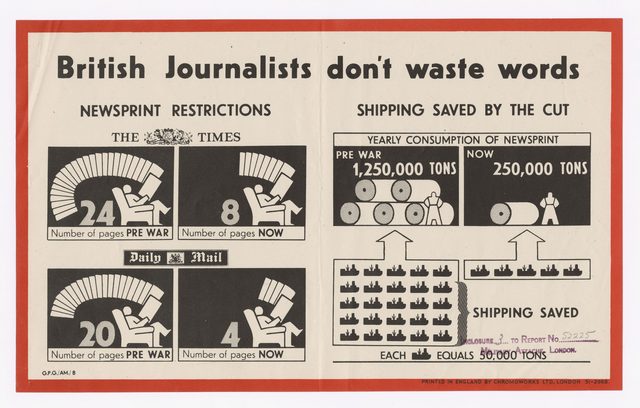
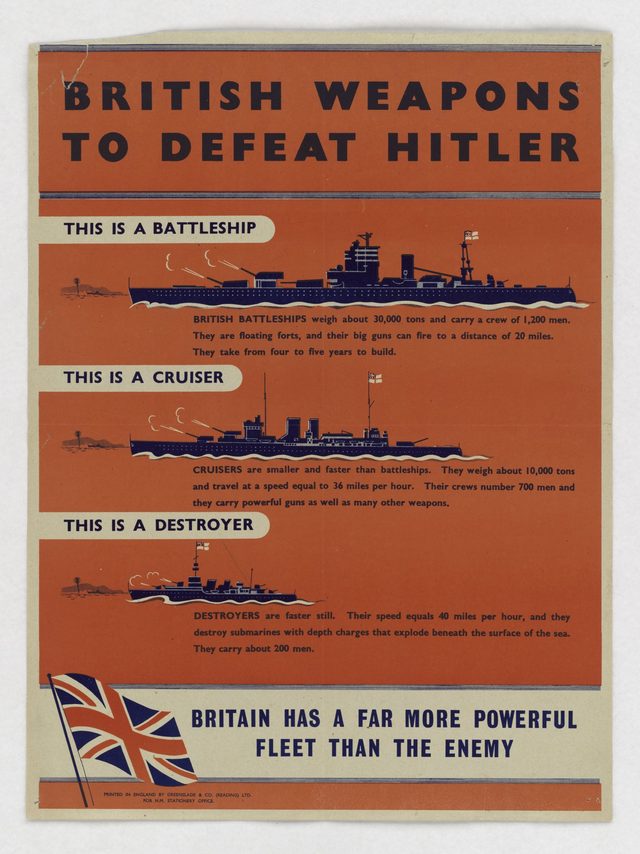
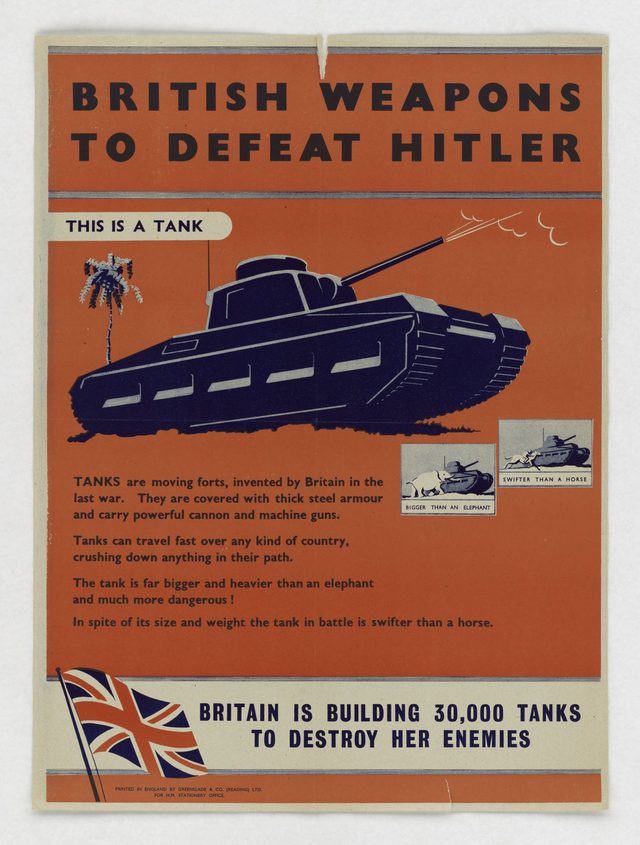
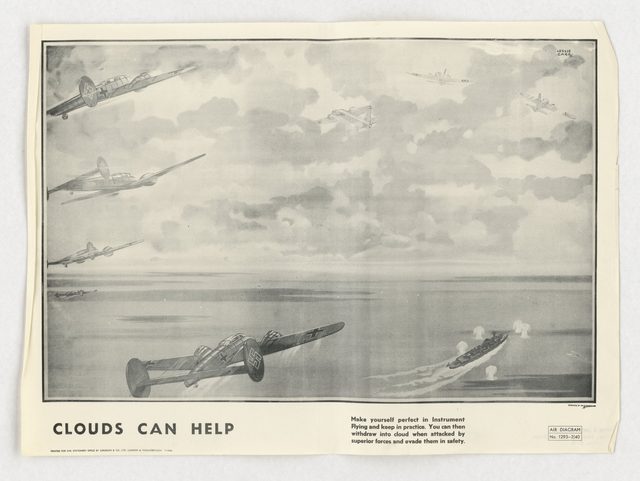
British propaganda posters are printed sheets issued in the United Kingdom, mostly by government bodies, to change public behaviour in wartime. The main waves date from 1914 to 1918 (the Parliamentary Recruiting Committee) and 1939 to 1945 (the Ministry of Information and supply ministries). The collection holds 737, of which 713 are Second World War and 19 First World War.
The count reflects what the archive has found and can host, not British output as a whole. One working definition applies to every country (how FRAME defines propaganda), so the same questions are asked of a British poster as of an American or German one. For the world-wide view, see propaganda posters.
What was the Ministry of Information and what did it print?
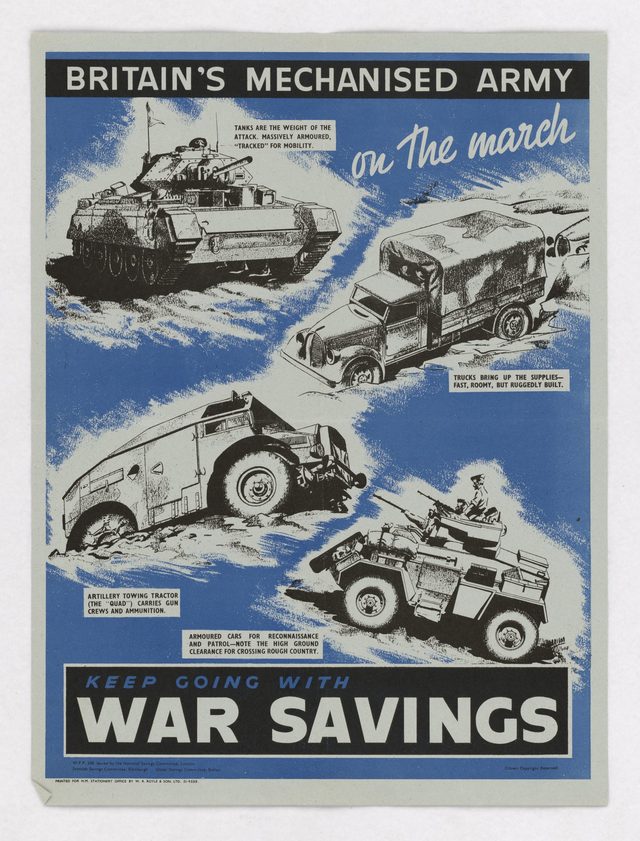
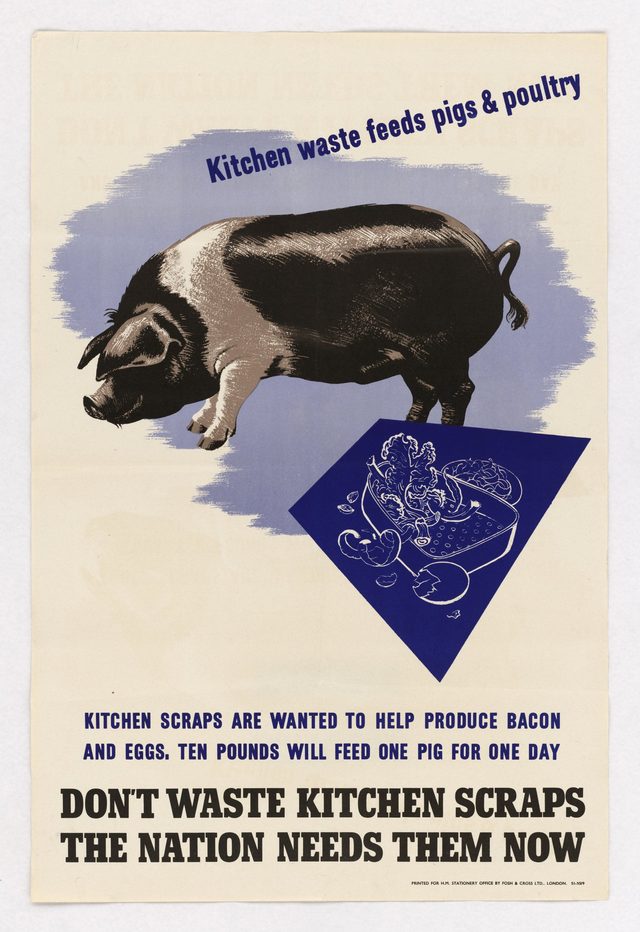
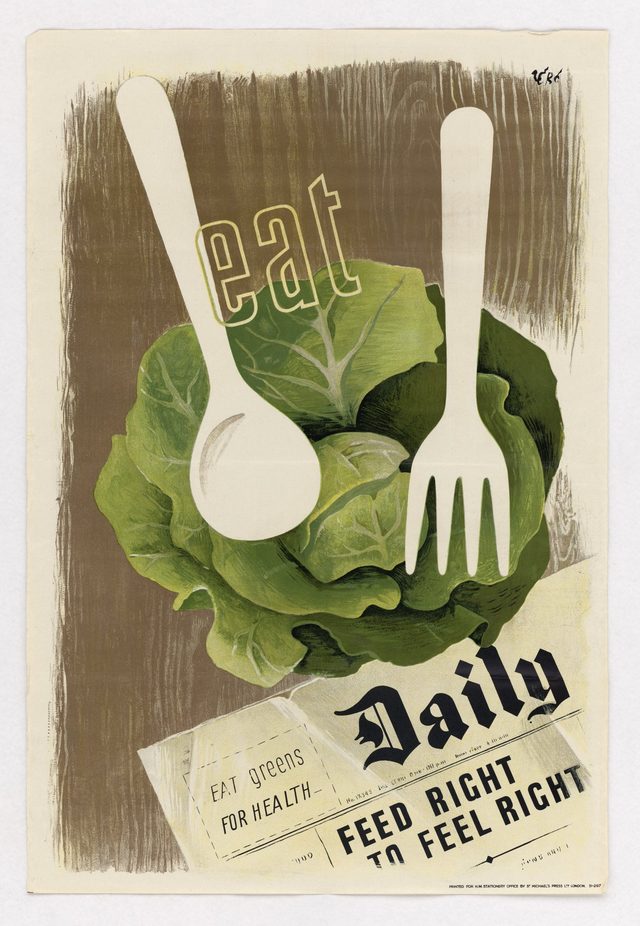
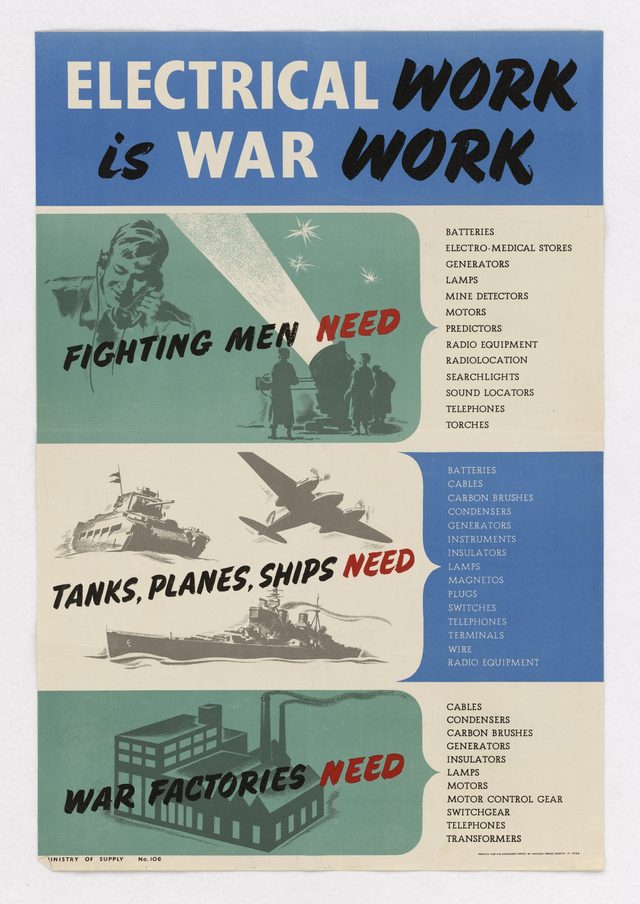
The Ministry of Information (MoI) was set up on 4 September 1939, the day after Britain declared war, as the department that managed news and public messaging. The National Archives describes its poster work as drawing on artists and advertising styles, with £270,000 spent on posters, art and exhibitions in 1942 out of a £3.45 million publicity budget. Brendan Bracken ran it for most of the war. FRAME's case study Britain's Ministry of Information and Political Warfare Executive covers its posters and the separate, secret operations aimed abroad. Other issuers include the National Savings Committee, the Ministry of Supply, the War Office and London Transport, and many sheets carry only a His Majesty's Stationery Office imprint.
What was "Keep Calm and Carry On", and was it ever used?
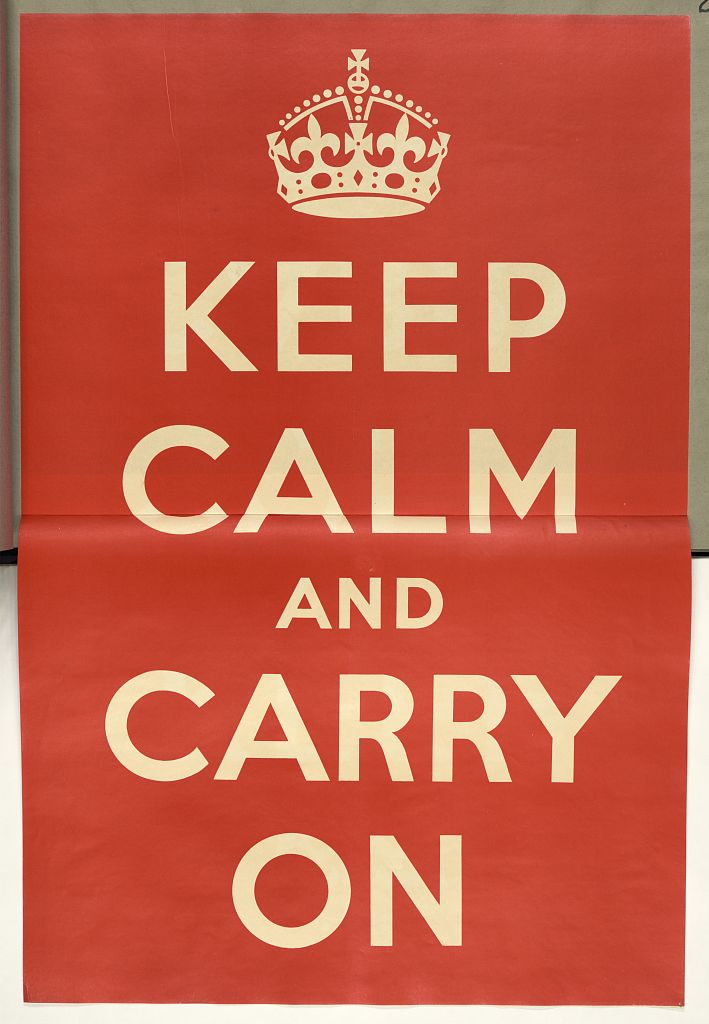
"Keep Calm and Carry On" was the third of three "Home Publicity" posters designed by the Ministry of Information between 27 June and 6 July 1939. According to the collection record, almost 2.5 million copies were printed, and the poster was held back for a crisis such as heavy bombing and never issued for general display. The Imperial War Museums give the same account: it was distributed to centres in September 1939, was never officially displayed, and was kept in reserve when the expected bombing did not come for about a year and the other two posters met a lukewarm response. It became widely known only after a copy turned up at a bookshop in Alnwick, Northumberland. The Imperial War Museums date the rediscovery to 2001, while the collection record gives the year as 2000, so this page does not choose between them.
The only image on the poster is the royal crown. That borrows the authority of the Crown for an instruction that offers no argument and no fact. This copy survives in an album that a U.S. vice consul, John Belfort Keogh, collected in Bradford between September 1939 and May 1941, now held by the Library of Congress. Read the technique: transfer.
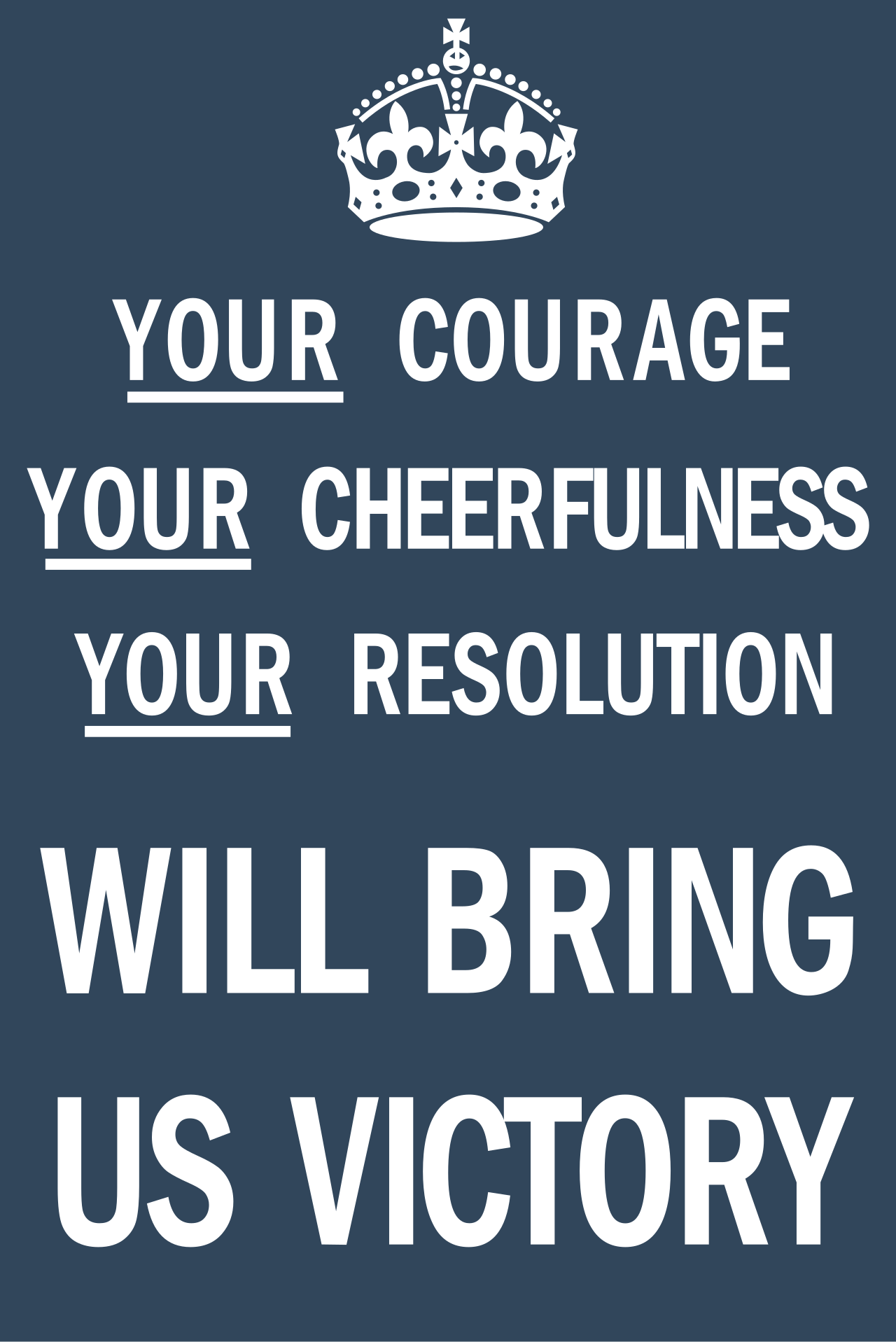
The poster that was displayed was its sibling. "Your courage, your cheerfulness, your resolution will bring us victory" went up across Britain from September 1939. The collection image is a modern vector redrawing, not a scan, and is labelled so on its object page. The line names three virtues and promises victory with no instruction and no fact, the glittering-generalities tell. The record notes that Mass-Observation reported a largely negative response, some readers taking "your" against "us" as the public's sacrifice winning victory for the government and the upper classes, and that the campaign was dropped in October 1939. Read the technique: glittering generalities.
Who made the "Careless Talk Costs Lives" posters?
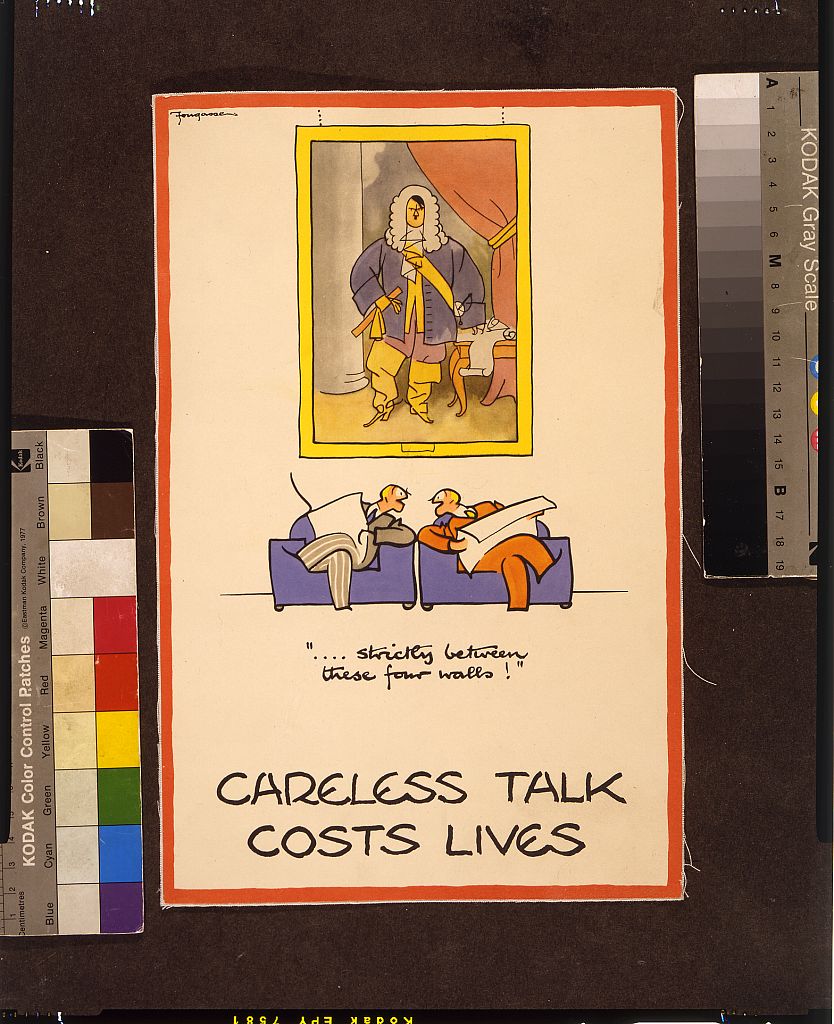
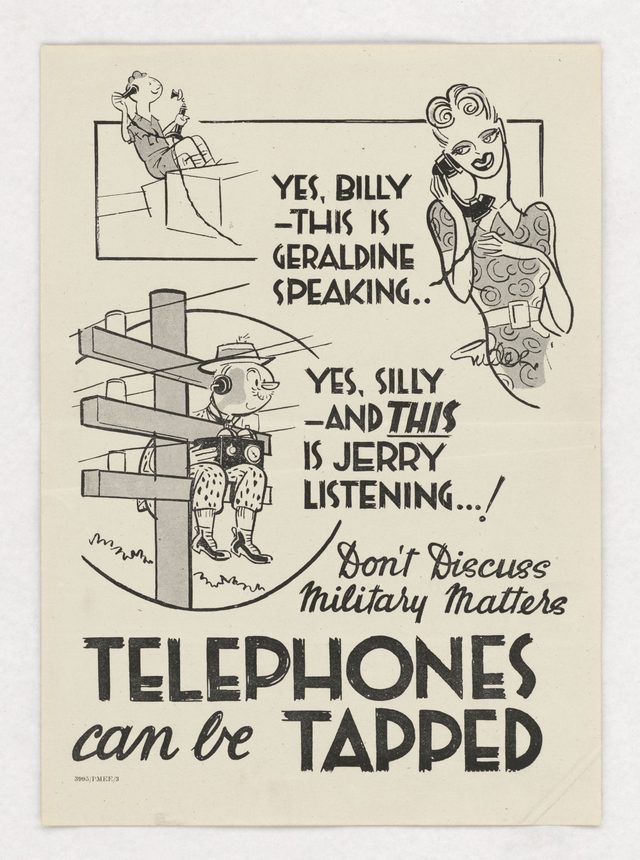
The Ministry of Information launched its anti-gossip campaign in February 1940, and the artist was Cyril Kenneth Bird, the Punch art editor who signed as Fougasse. He drew eight cartoon posters for it, and the collection record notes he designed this series and many other government posters without charge. In this one, two men talk in armchairs, sure they are private, while the old portrait on the wall above them is Hitler in a periwig, listening. The claim that ordinary talk can cost lives is carried by a joke, not a threat. Read the technique: fear appeal.
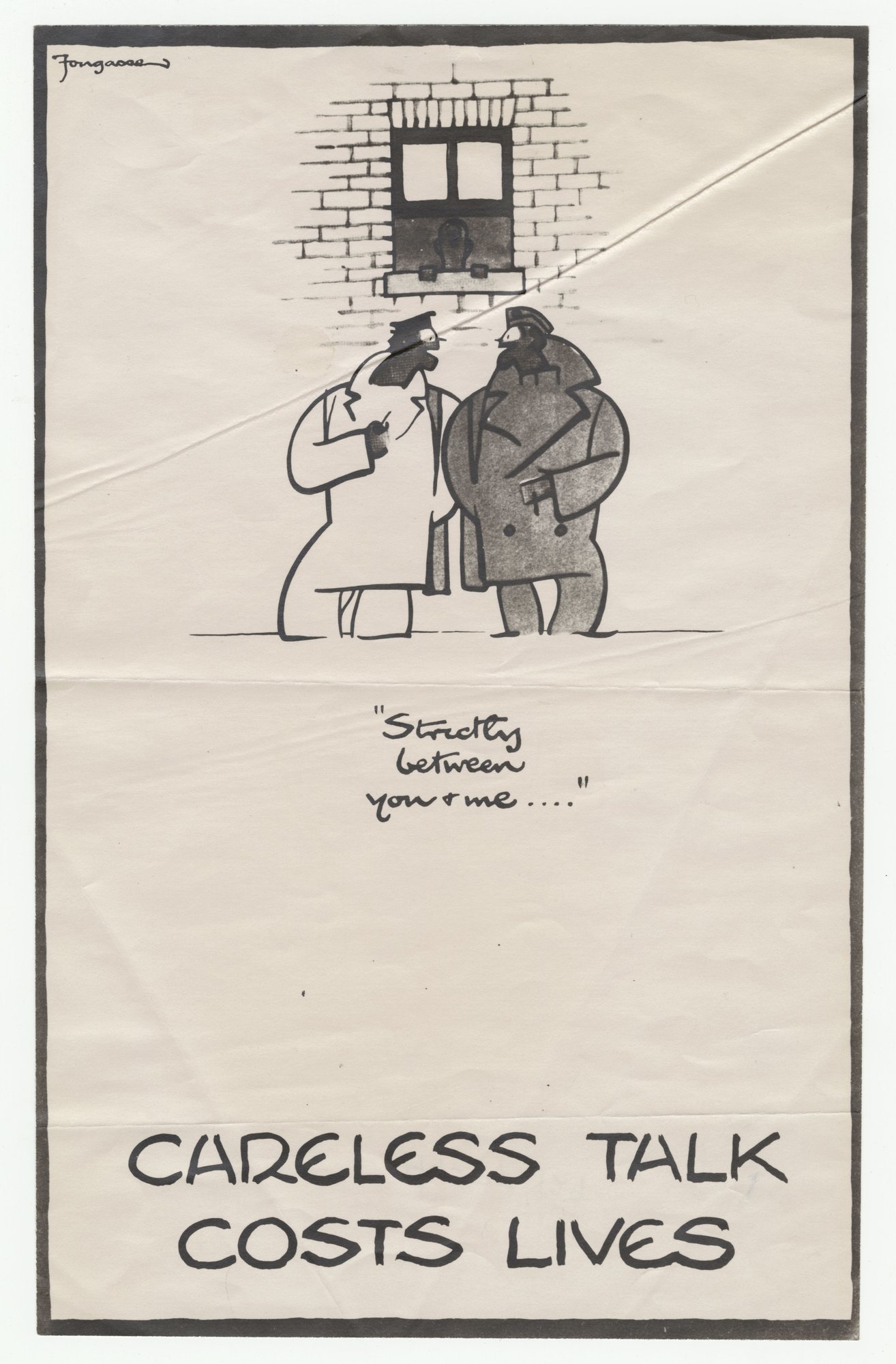
A second Fougasse design adds a third figure listening at a window. The tell is the unseen listener and one remedy, silence.
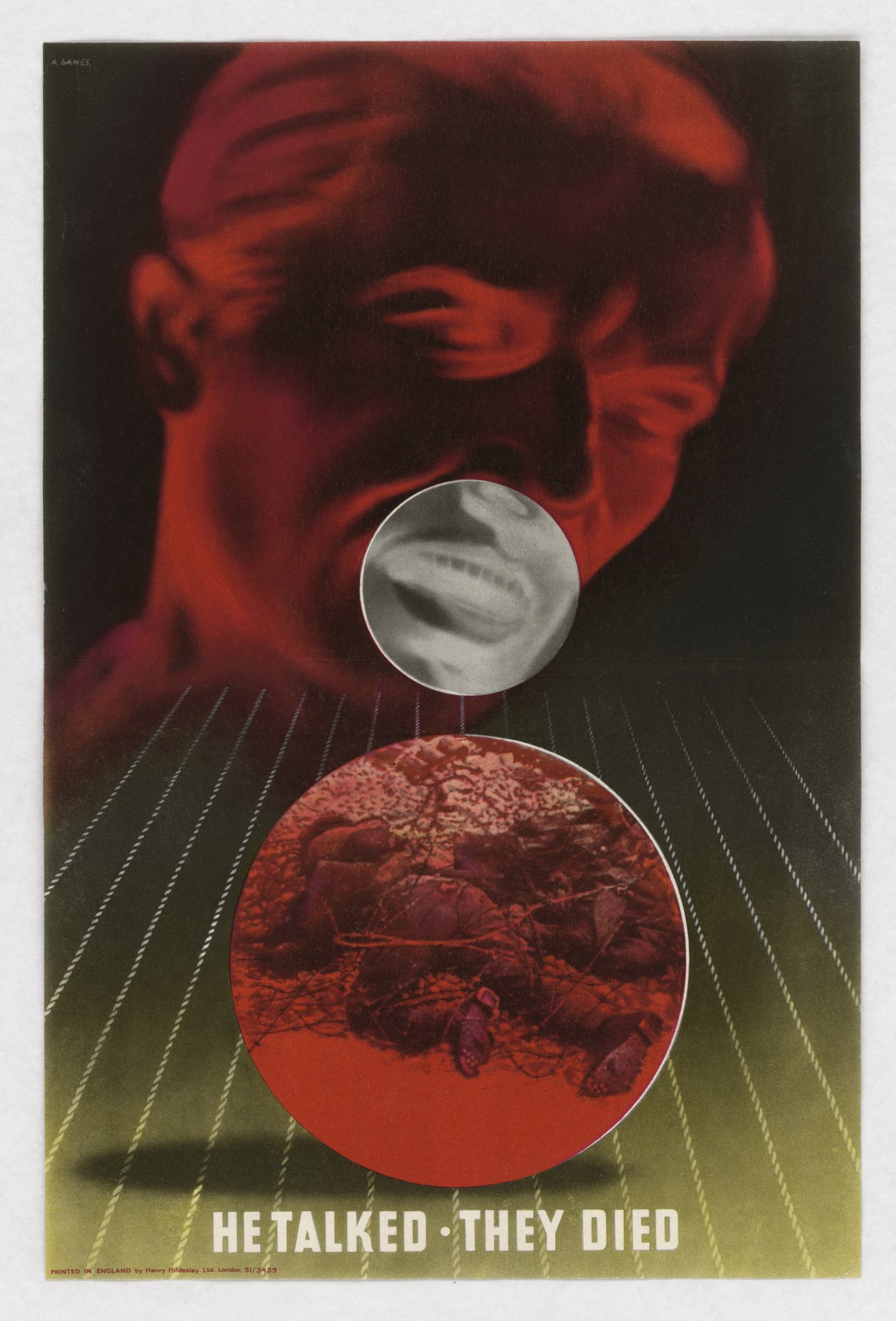
Not every British security poster used a joke. Abram Games signed "He talked - they died", which pairs a photograph of an open mouth with a roundel of dead soldiers on barbed wire. The sheet names no case and gives no figures, and the sponsoring ministry is not stated on it. It makes the same causal claim as the Fougasse cartoons in a harsher register. More careless-talk posters from several countries are on the sibling page WW2 careless talk posters.
What was "Dig for Victory"?
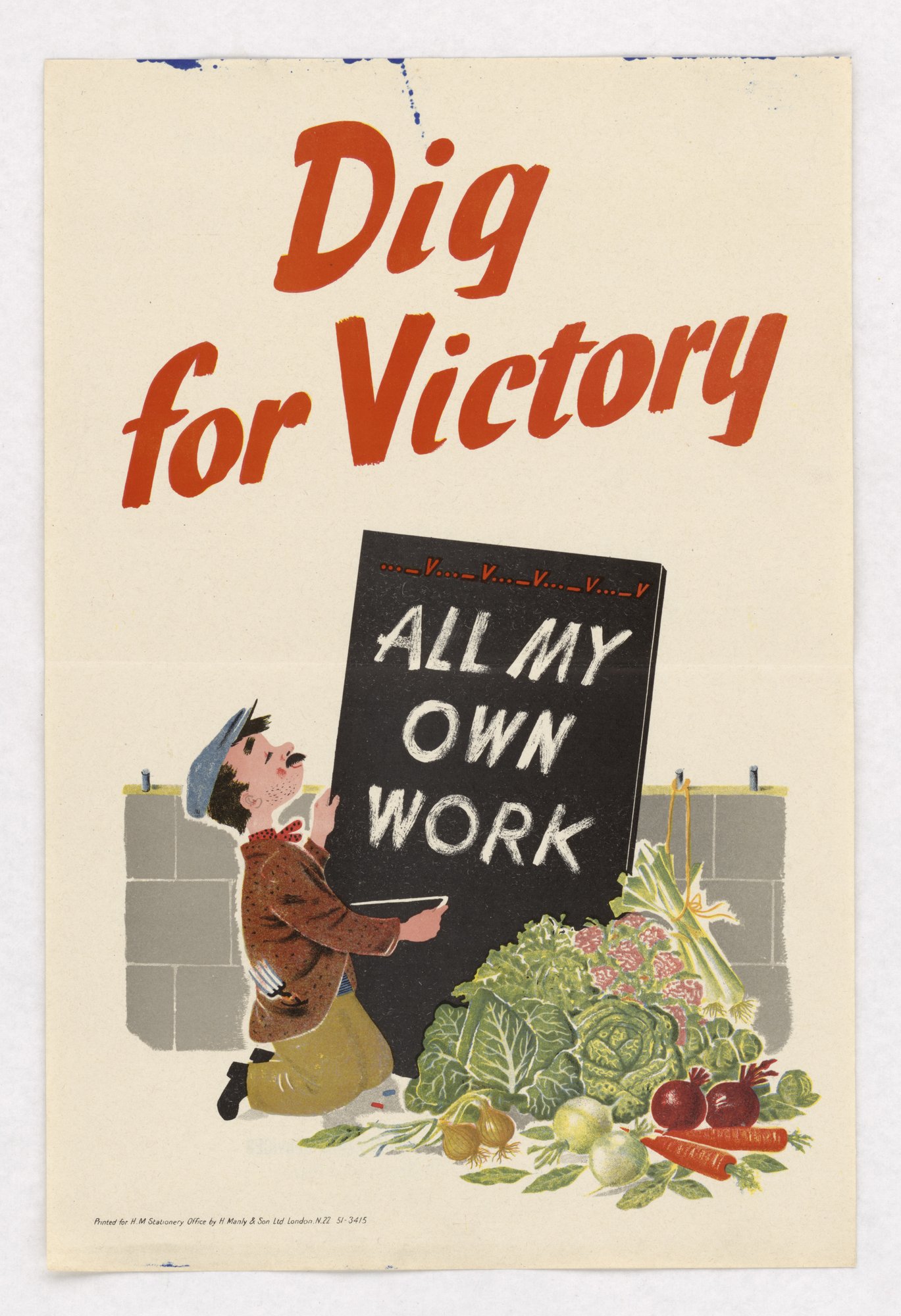
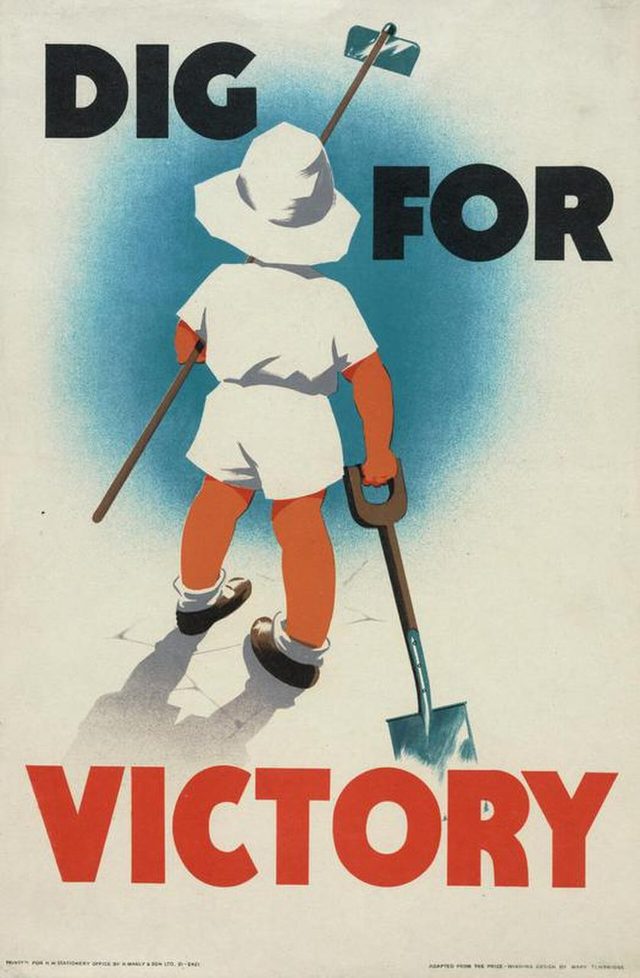
"Dig for Victory" asked British households to grow their own food from autumn 1939, as the collection records the campaign's start. The Ministry of Agriculture and Fisheries issued the child-with-hoe version also held here, which the Imperial War Museums date only to "between 1939 and 1945", and its imprint credits an adaptation of a prize-winning design by Mary Tunbridge. The poster shown here has a boy in a cap kneeling with chalk beside a blackboard that reads "All my own work", above a heap of home-grown vegetables. "Victory" is a virtue word attached to a garden task, and the ordinary schoolboy shows growing food as something anyone can do, so the tells are glittering generalities and plain folks. Read the technique: plain folks. Food, salvage and clothes posters are on WW2 rationing and salvage posters.
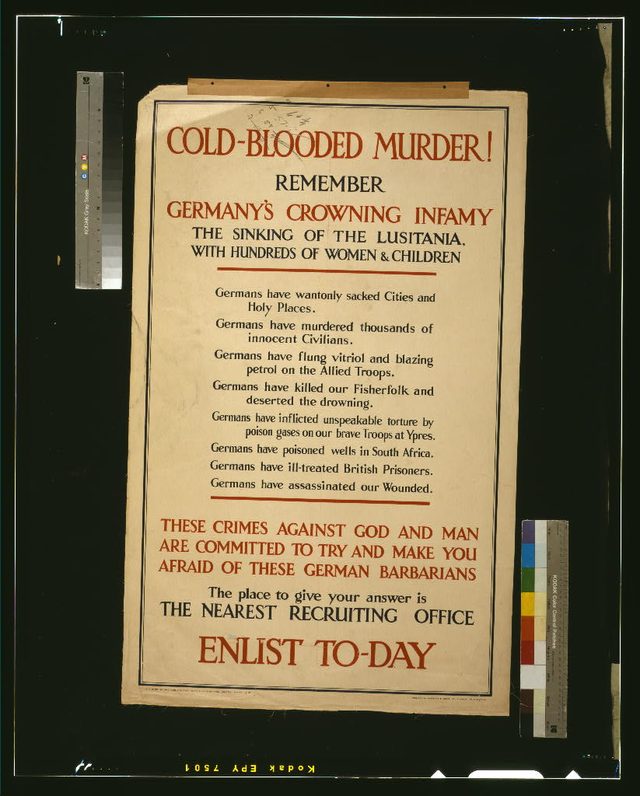
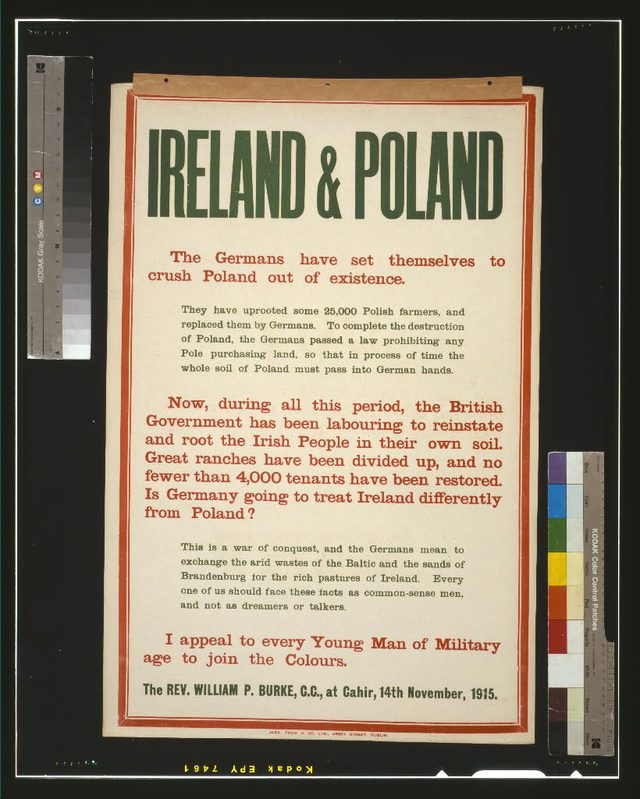
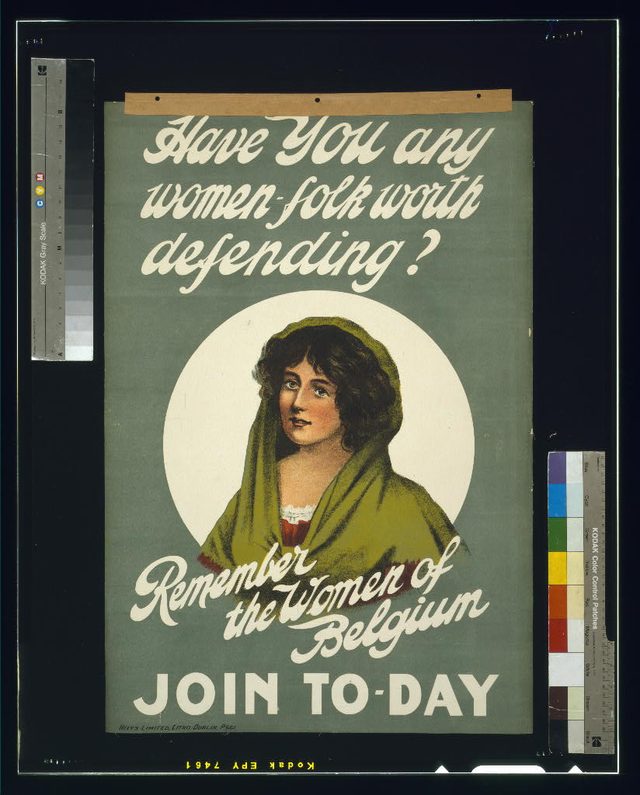
What did British posters of the First World War look like?
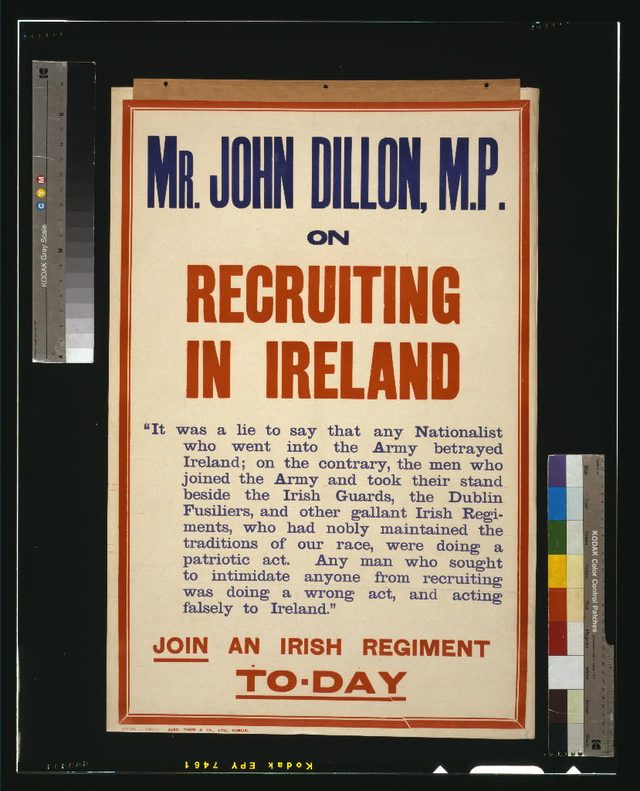
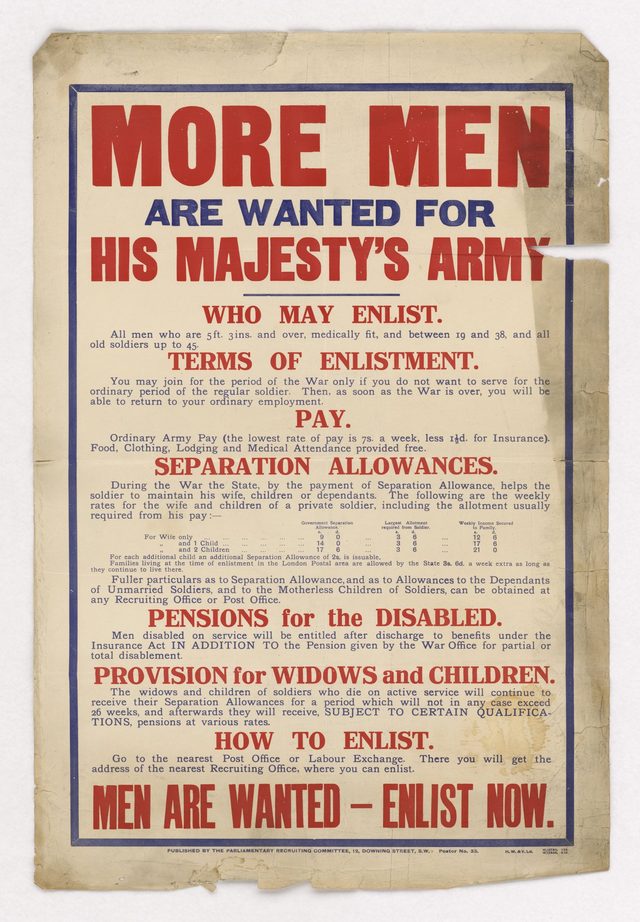
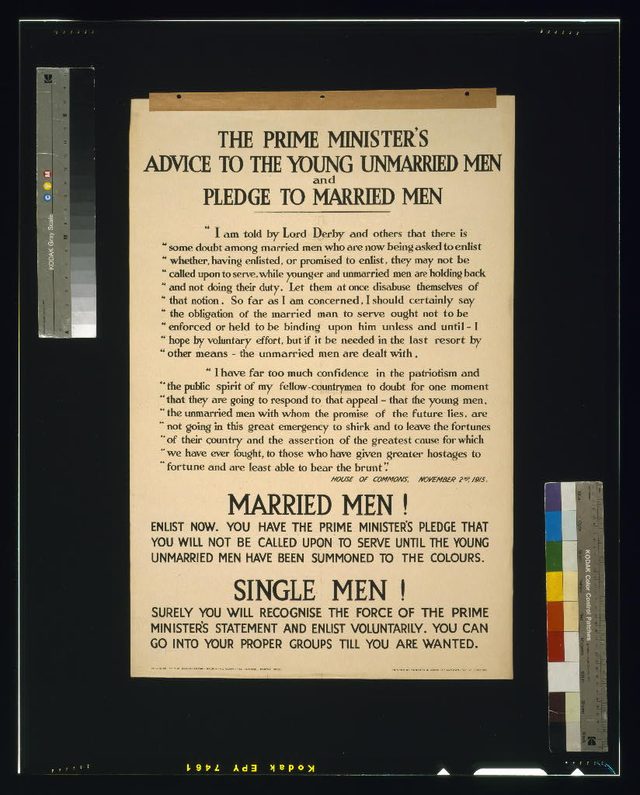
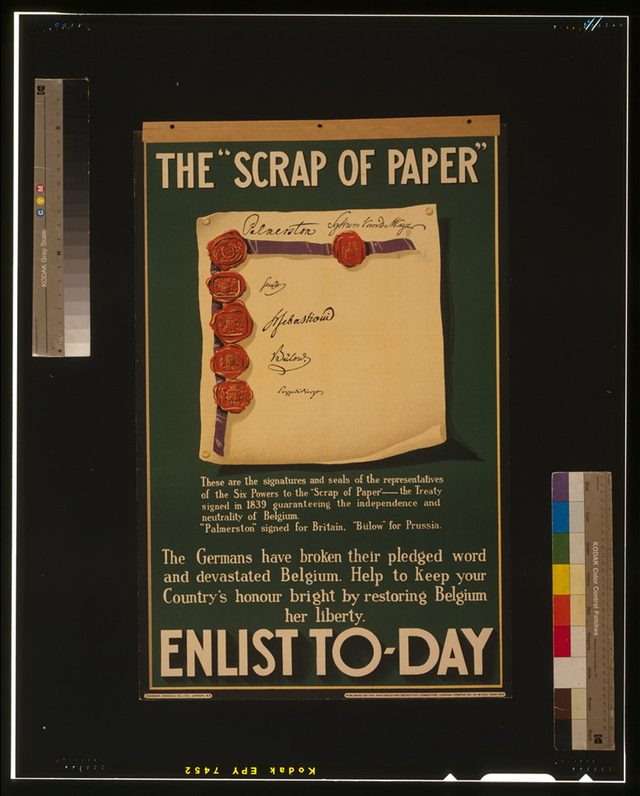
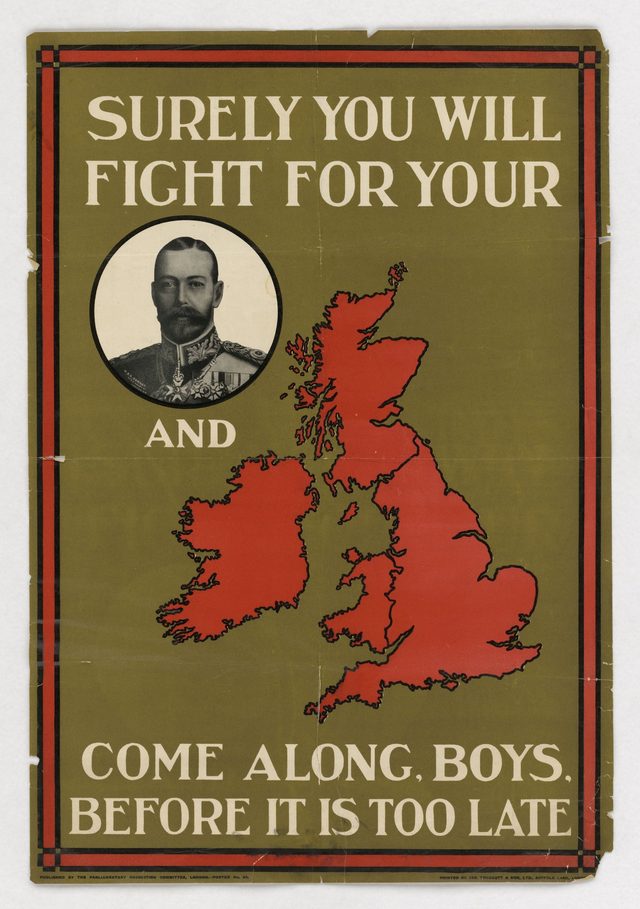
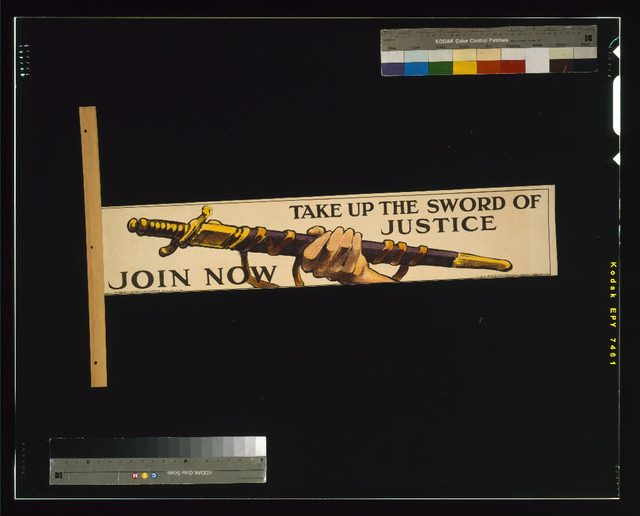
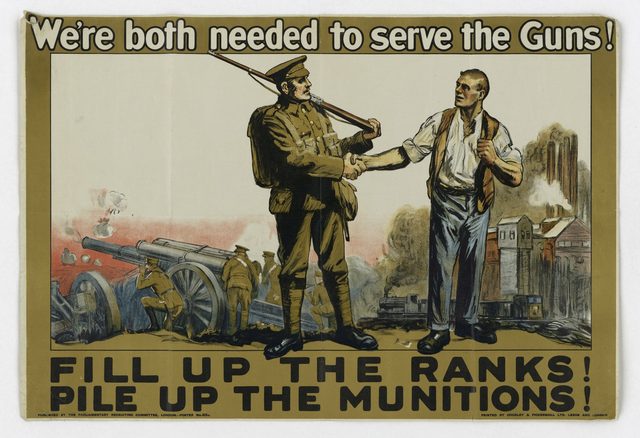
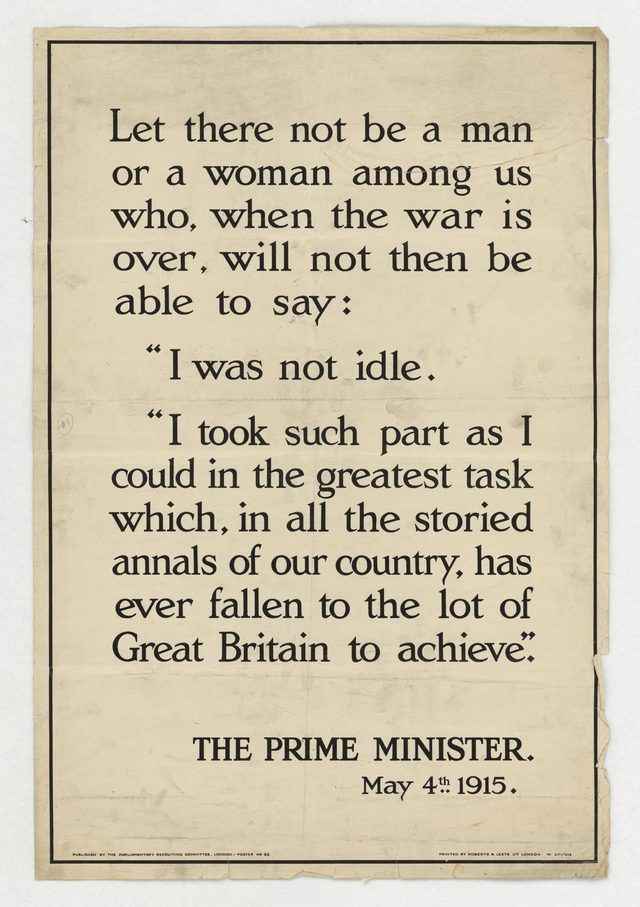
The Parliamentary Recruiting Committee (PRC) was a cross-party body formed in August 1914 and chaired by the Prime Minister, Herbert Asquith. The AIM25 record of its administrative history says it commissioned about 200 posters for voluntary enlistment, and that its recruiting work ended when conscription began in January 1916.
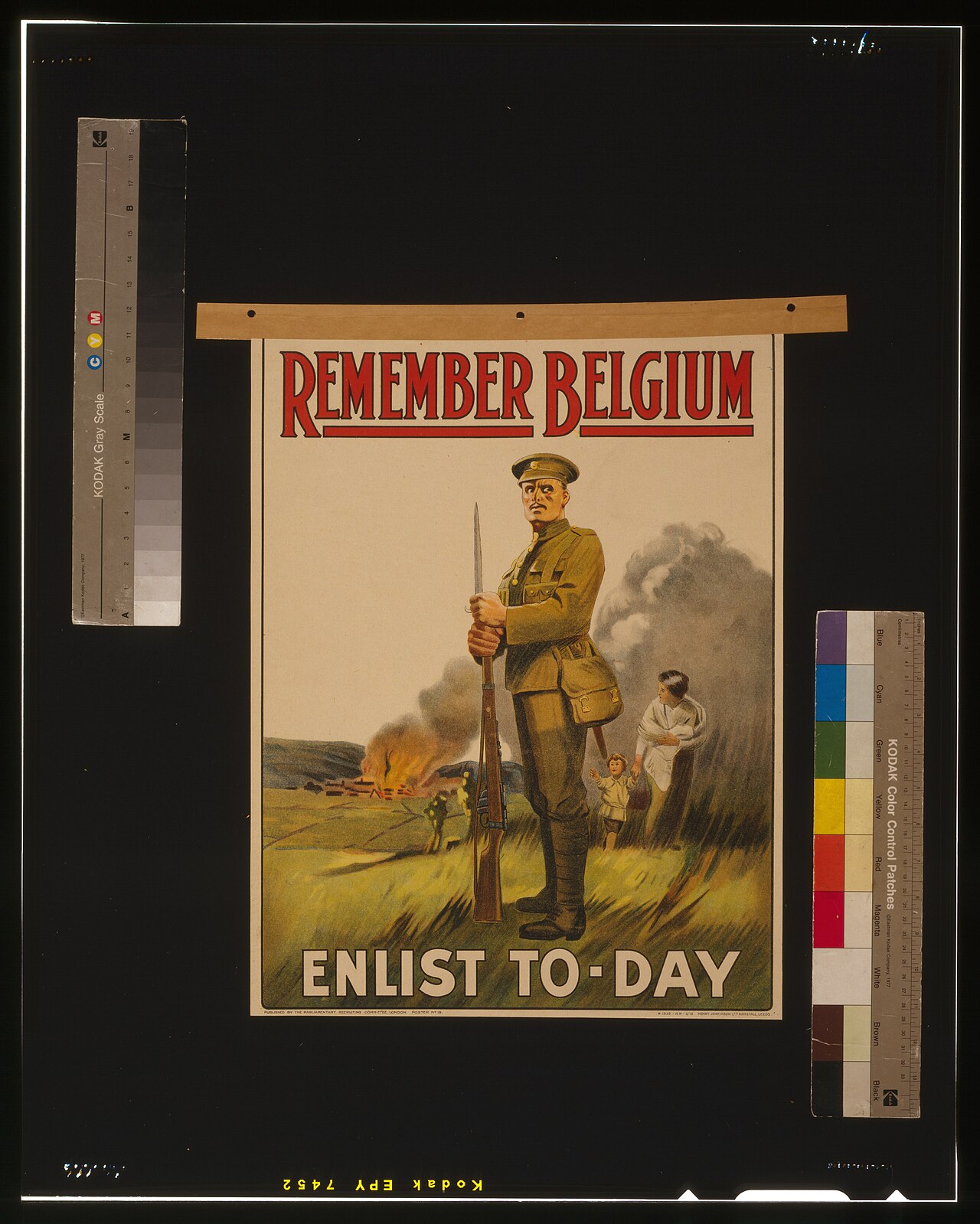
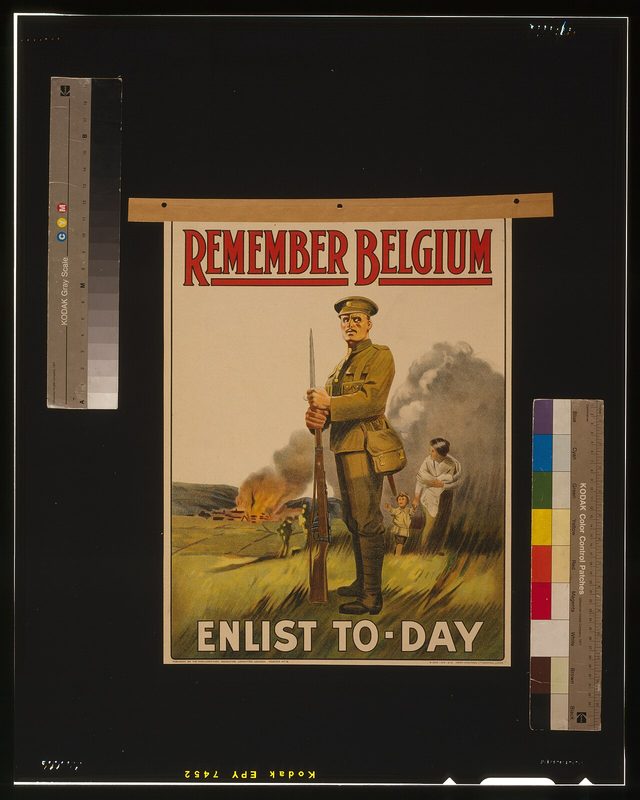
PRC poster No. 19 compresses the 1914 invasion of Belgium into one soldier and one fleeing mother and child, with "Enlist To-Day" as the only way out. The underlying invasion and occupation were real and documented; the tell is the single villain and single remedy. Read the technique: fear appeal. See also the Bryce Report, 1915.
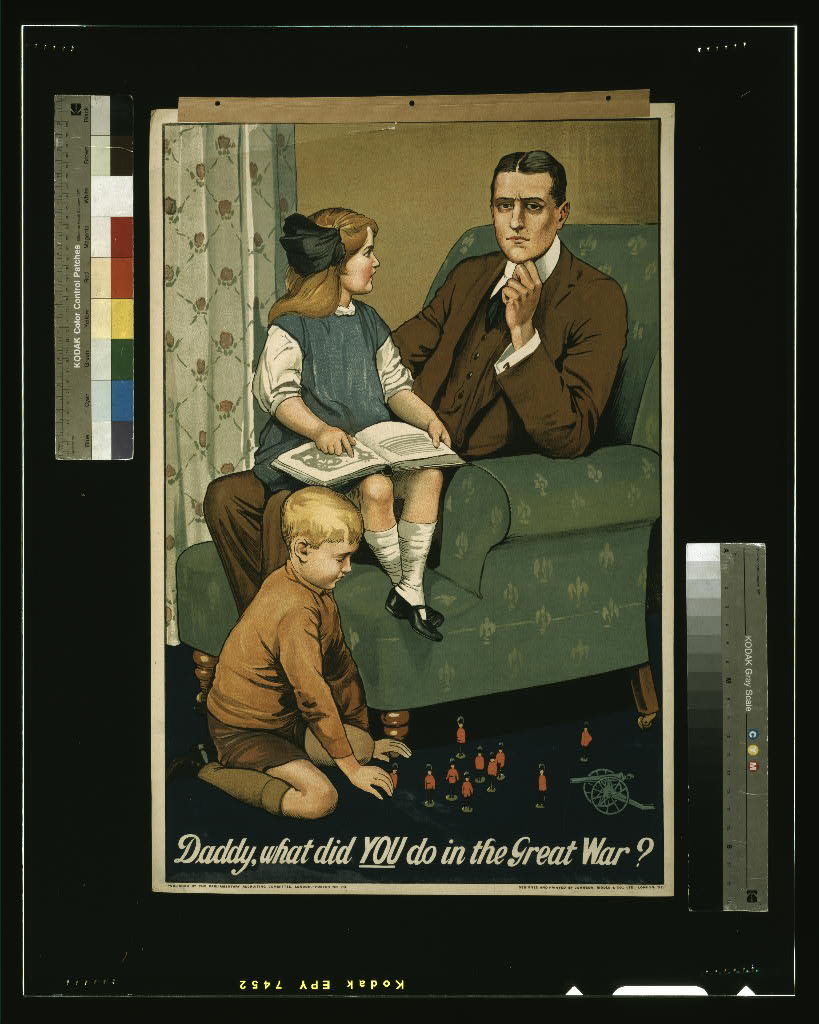
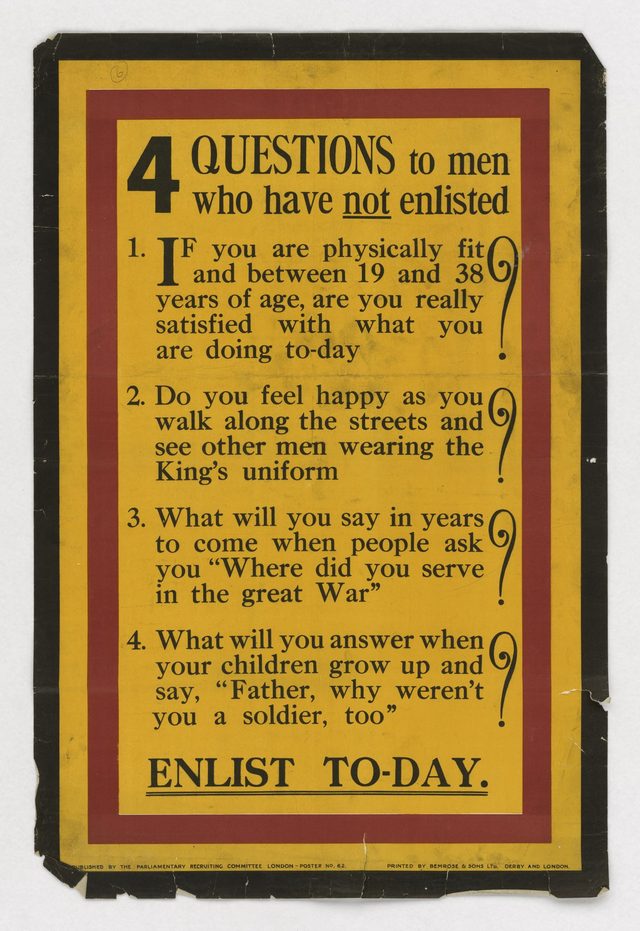
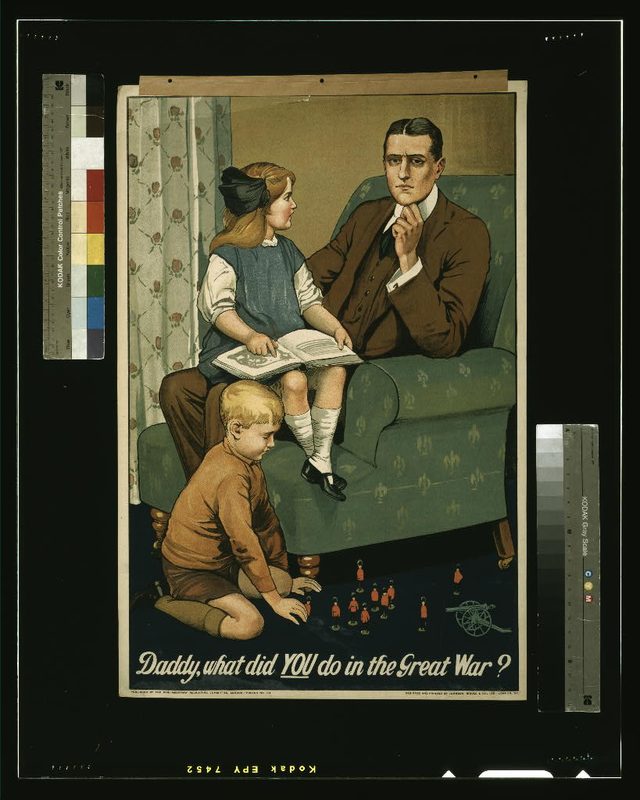
Savile Lumley's PRC poster No. 79 stages a different threat. The harm is not the enemy but future shame before one's own children, and the poster leaves one way to avoid it, enlisting now. Possible costs of enlisting sit outside the frame.
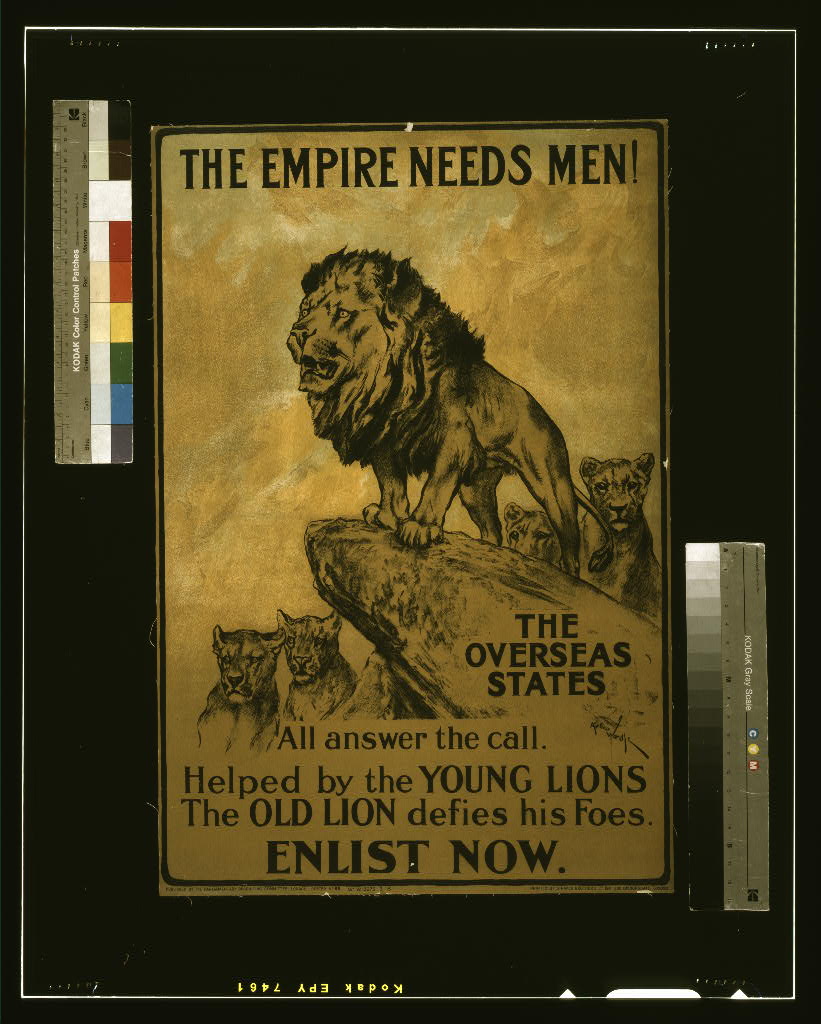
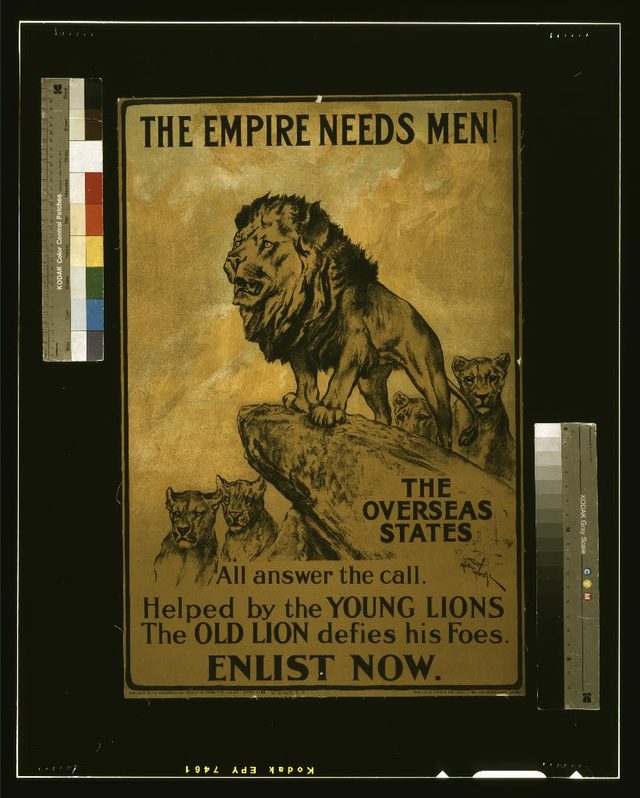
PRC poster No. 58, with art by Arthur Wardle, shows a lion on a rock above lionesses and cubs and says that "the overseas states all answer the call". It names no dominion and gives no figures. "All answer the call" tells the viewer that others have already joined, which is the bandwagon tell. Read the technique: bandwagon.
Did British posters address the empire?
Yes. The collection includes British sheets made for audiences in Africa and Asia as well as ones made at home about the empire.
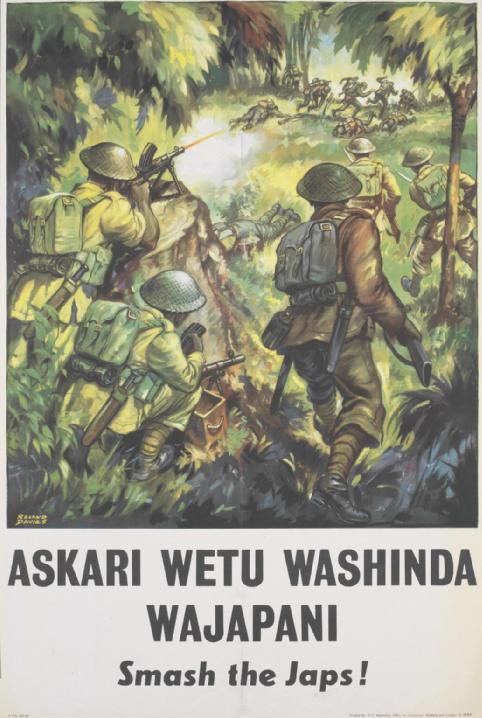
This Swahili and English poster, signed by Roland Davies and printed for H.M. Stationery Office for East African audiences, shows African soldiers routing Japanese troops. The Swahili headline says "our soldiers defeated the Japanese", and the English line "Smash the Japs!" makes the slur the call to action. The Imperial War Museums catalogue it as a Kenya poster dated between 1939 and 1945. Read the technique: name-calling.
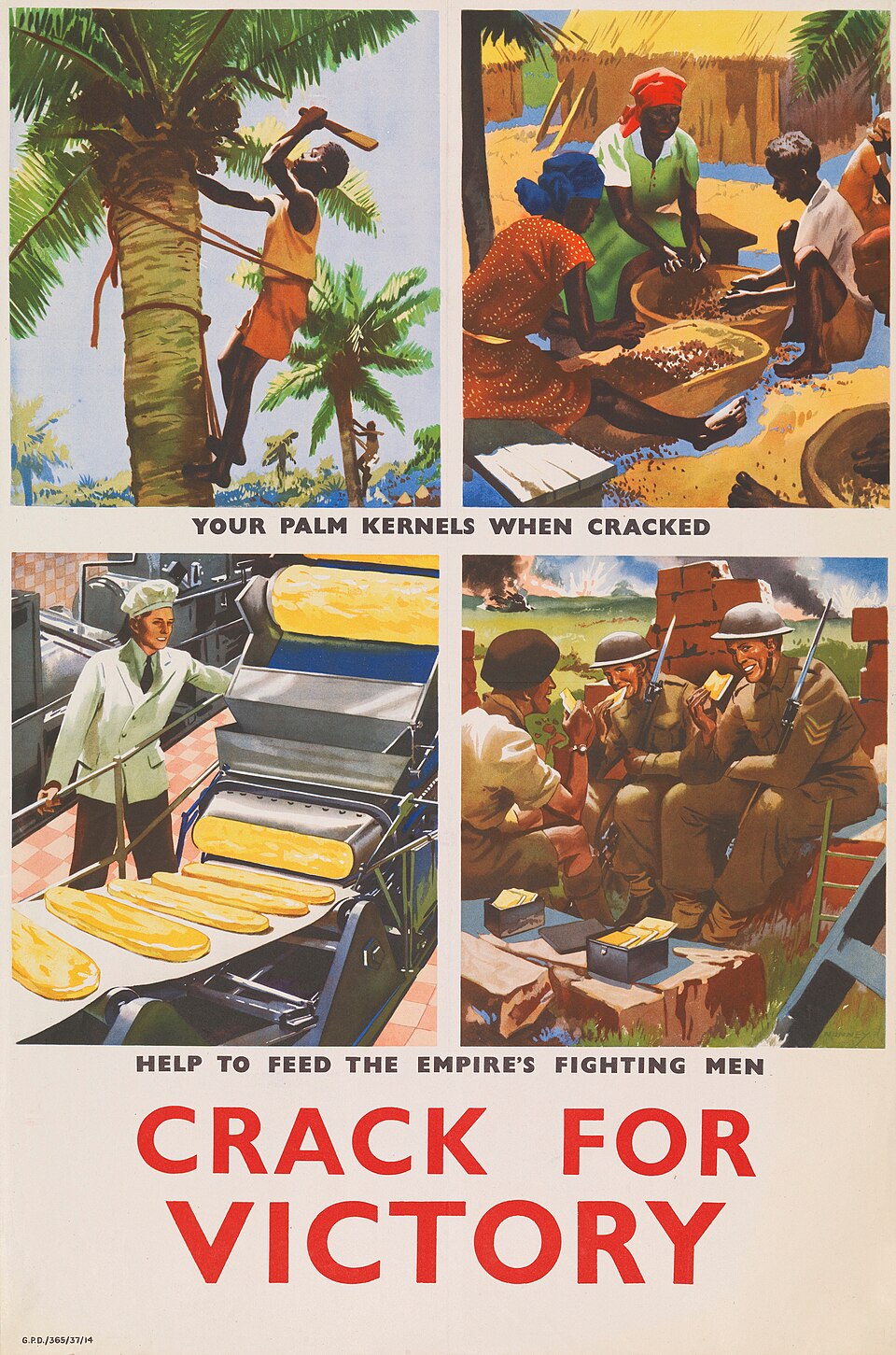
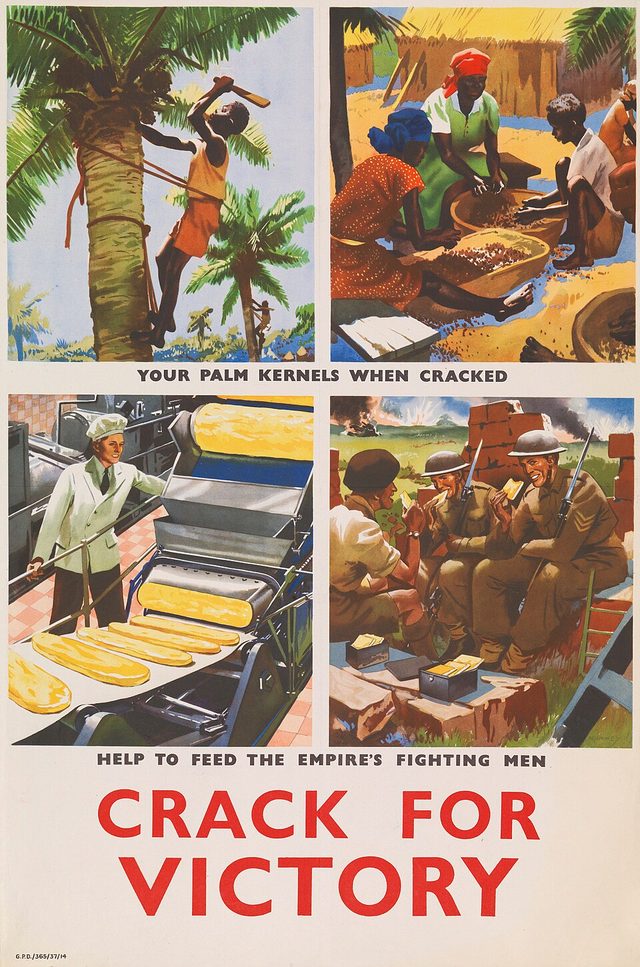
A four-panel poster for West African palm-kernel producers (Imperial War Museums, Art.IWM PST 15800) runs from a man climbing an oil palm, to women and a child sorting kernels, to a factory worker, to soldiers eating from a ration tin. "Help to feed the Empire's fighting men" links village work to the front line, and "victory" stands in for the task of cracking kernels. Read the technique: glittering generalities.
A British Information Services pictorial map of India, distributed from New York for American viewers, lists crops and industries and none of population, wages, famine or political status. The record notes its production claims were not checked against statistics.
How do British posters compare with American and German ones?
The same technique vocabulary fits all three, and the differences are in tone, issuer and scale. British careless-talk posters, such as the Fougasse cartoons, make the threat through humour, with a listener hidden in the scene. The American "Wanted! For Murder" poster (American propaganda posters) names a single glamorous woman as the killer of soldiers, which is scapegoating, while "Loose Lips Might Sink Ships" collapses the many causes of a sinking into one cause the viewer can control. The British "He talked - they died" is closer in severity to the American poster than to the Fougasse designs, so no single national style holds within one campaign.
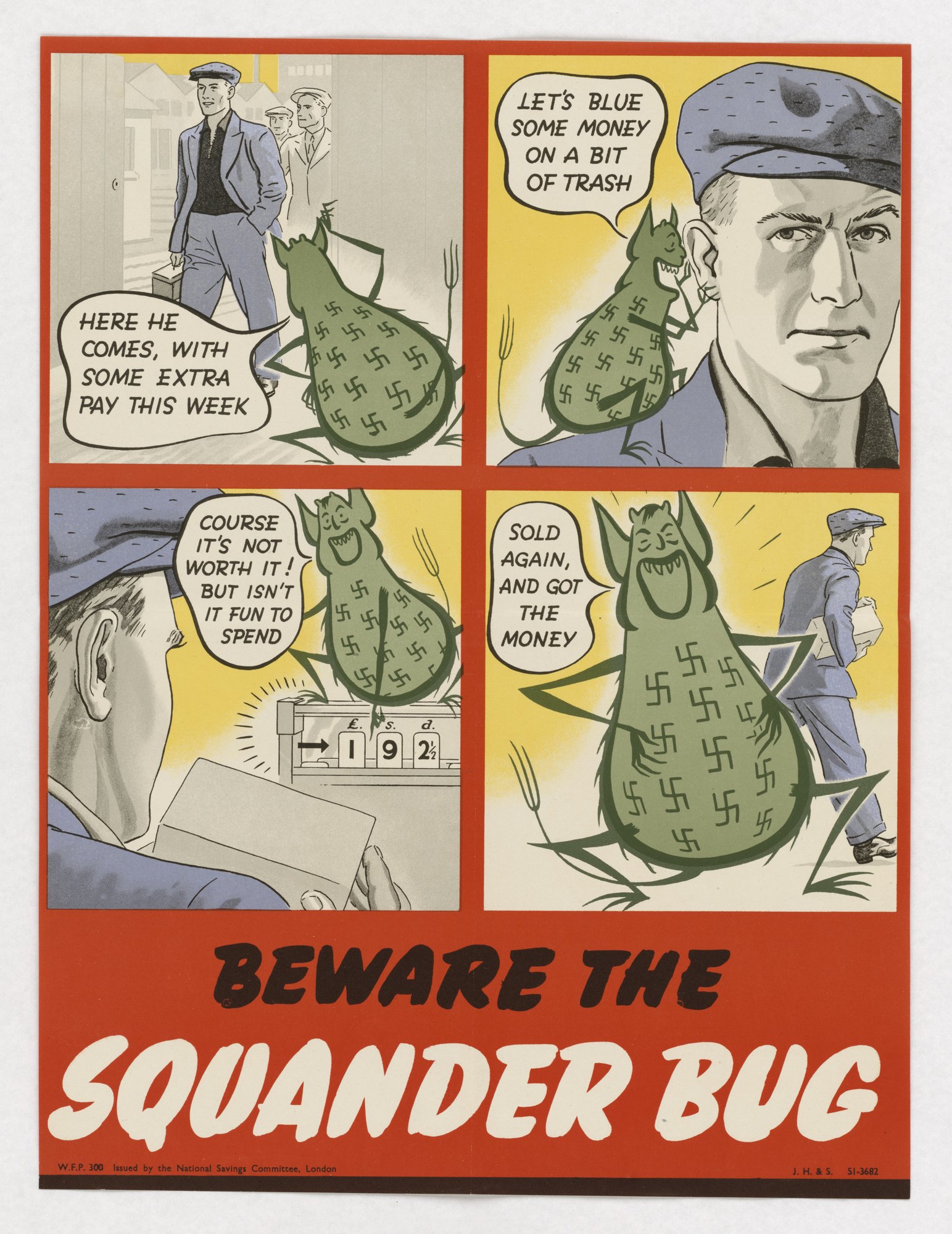
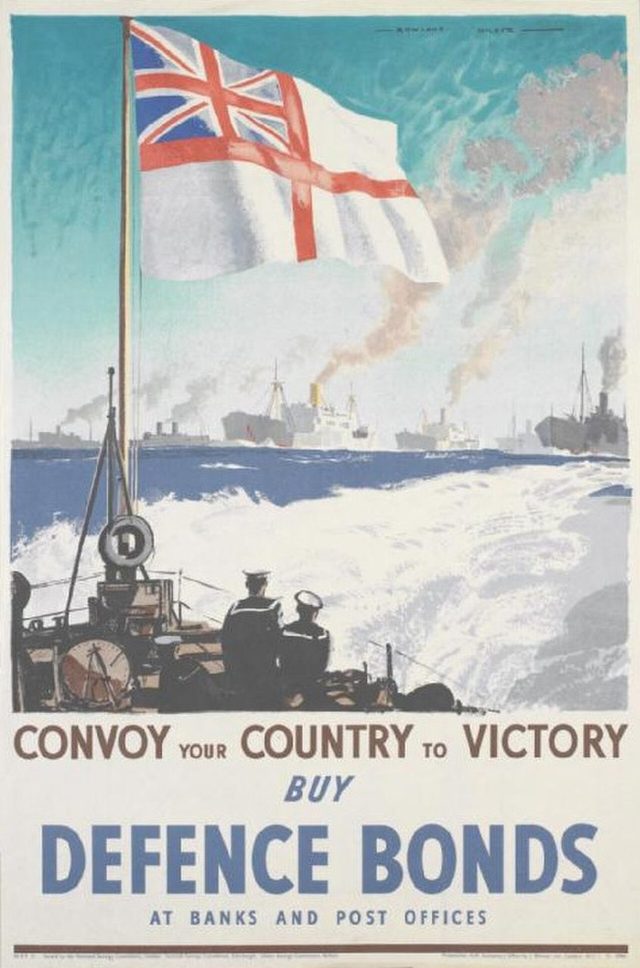
On thrift, the British National Savings Committee's "Beware the Squander Bug" uses name-calling and fear appeal: a green insect-devil covered in swastikas urges a worker to spend, then gloats "Sold again, and got the money". German occupation authorities in the Netherlands used scapegoating in a type-only poster, "Engelsche hongerblokkade", that assigns a Dutch food shortage to a single outside party and puts "so-called allies" in scare quotes. The Allied blockade of German-controlled Europe was real and did restrict imports; the poster does not mention that German authorities also requisitioned Dutch food for the Reich, which is the tell. All three used fear appeals, virtue words and national symbols; they differ in who is named as the cause and what the poster asks. For the American agency, see the OWI domestic branch; for the wider picture, WW2 propaganda.
What should you look for in a British poster?
- The imprint. "Printed for H.M. Stationery Office" shows a government print job, but many sheets do not name the ministry.
- The crown or roundel. An emblem lends authority without argument, which is the transfer tell.
- The register. Cartoon humour, plain schoolchildren and shock imagery all appear, and the tone is part of the method.
- The audience. Posters for East or West Africa, for American viewers and for British households address different readers.
- The date. Many sheets carry only a 1939 to 1945 range, so the object page notes when a year is the start of a range.
Browse British propaganda posters
The grid below shows posters in the collection issued in the United Kingdom or by British bodies abroad. Each opens an object page with the holding institution, a link to the original record, a transcription of any text and the rights basis for hosting. For every object, not only posters, use the full collection, filtered by technique, era, country and medium. Related pages: Canadian propaganda posters, WW2 war bonds posters and WW2 women posters.
Sources and rights
Posters on this page come from the Library of Congress, the U.S. National Archives (Record Group 44, World War II Foreign Posters), the Imperial War Museums via Wikimedia Commons, and a Wikimedia Commons redrawing, as each object page states. British government sheets of this period are treated as having expired Crown copyright, as noted on each record. Transcriptions are verbatim. Background history is from the Imperial War Museums, the National Archives and AIM25.
![Rumania's Day, poster for the Central Committee for National Patriotic Organisations, London, [1918]](../collection/images/rumanias-day-central-committee-1918-640.jpg)