Content note. Some recruiting posters show invasion and atrocity scenes, one portrays Germans as a blood-covered ape-like ogre, and one Second World War sheet recruited for the Waffen-SS. They are shown as issued, as evidence of what potential recruits were told. Showing a poster is not endorsing it.
What are recruiting posters, and what did they ask?
Recruiting posters are public notices that ask men, and later women, to enlist in an army, navy or air force. Most name a branch, a place to apply and one reason to go: duty, shame, fear, pay, training or glory. This page asks the same four questions of every country: who issued it, who it addressed, what it asked, and which technique carried the ask.
The collection tags 363 posters with the purpose "recruit": 269 from the United States, 52 from the United Kingdom, 9 from Australia, 8 from Canada and 25 from other countries (count made from the entry files in examples/entries/). That tag also covers women's services, nursing and farm labour, so it is wider than "army recruiting posters". For the wars behind them, see WW1 propaganda posters, WW2 propaganda and propaganda posters.
Who made the "I Want You" poster?
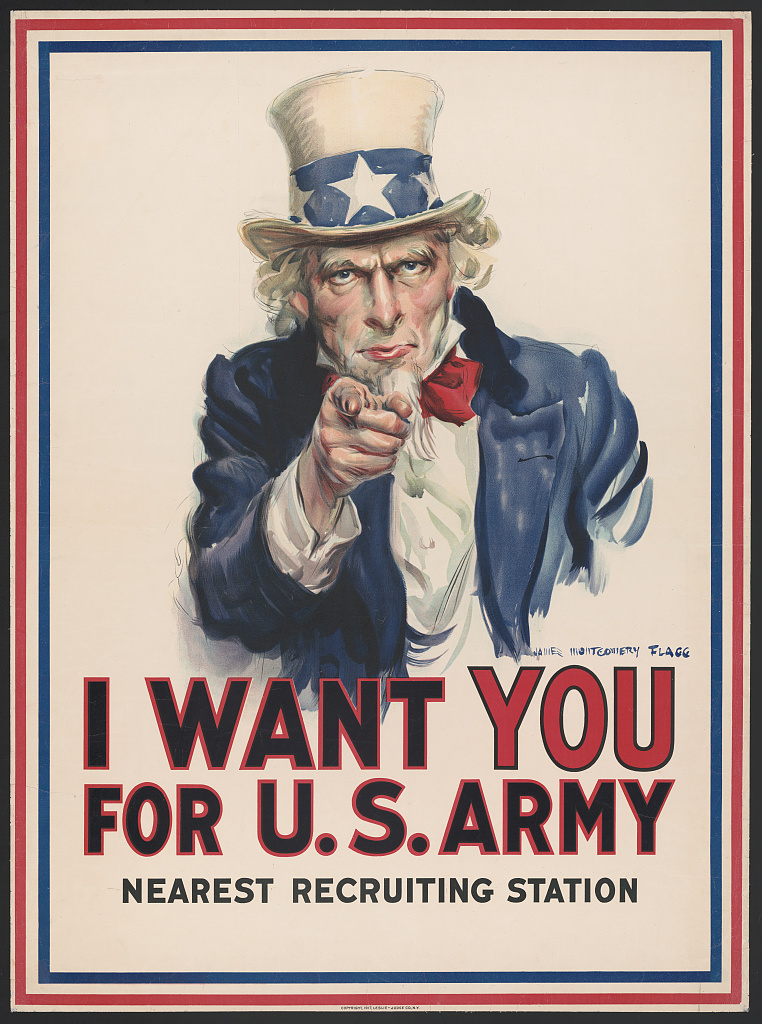
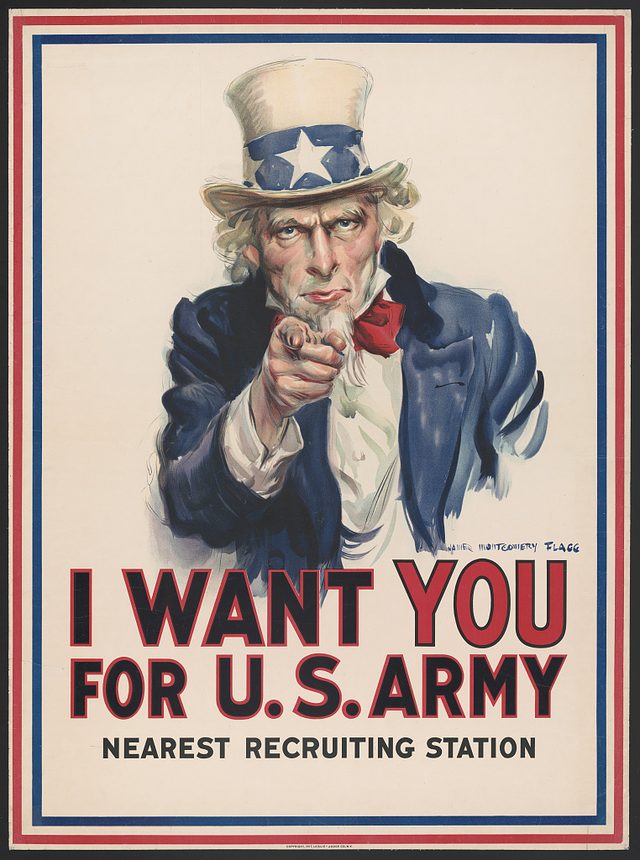
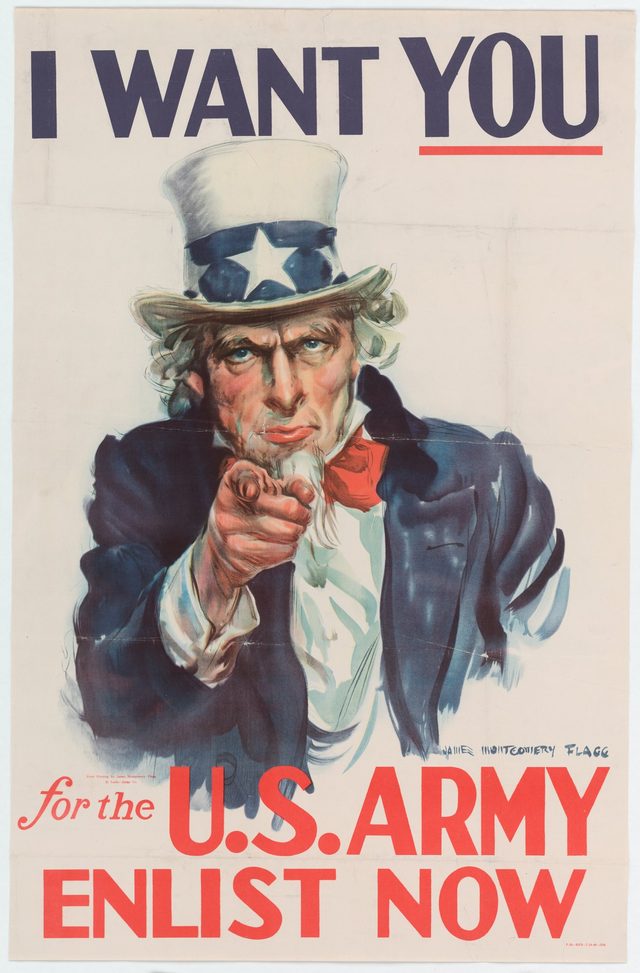
The collection's entry, held by the Library of Congress, dates it to 1917 and credits U.S. Army recruiting and the artist James Montgomery Flagg. Flagg first drew the image as a cover for Leslie's Weekly on 6 July 1916 under the heading "What Are You Doing for Preparedness?", and the poster carries a Leslie-Judge Co. copyright. The entry records that he modelled Uncle Sam's face on his own and that the composition follows Alfred Leete's 1914 British image of Lord Kitchener. The Library of Congress states that more than four million copies were printed. The nation itself makes the request, so its standing stands in for any case about why this viewer should go. Read the technique: transfer.
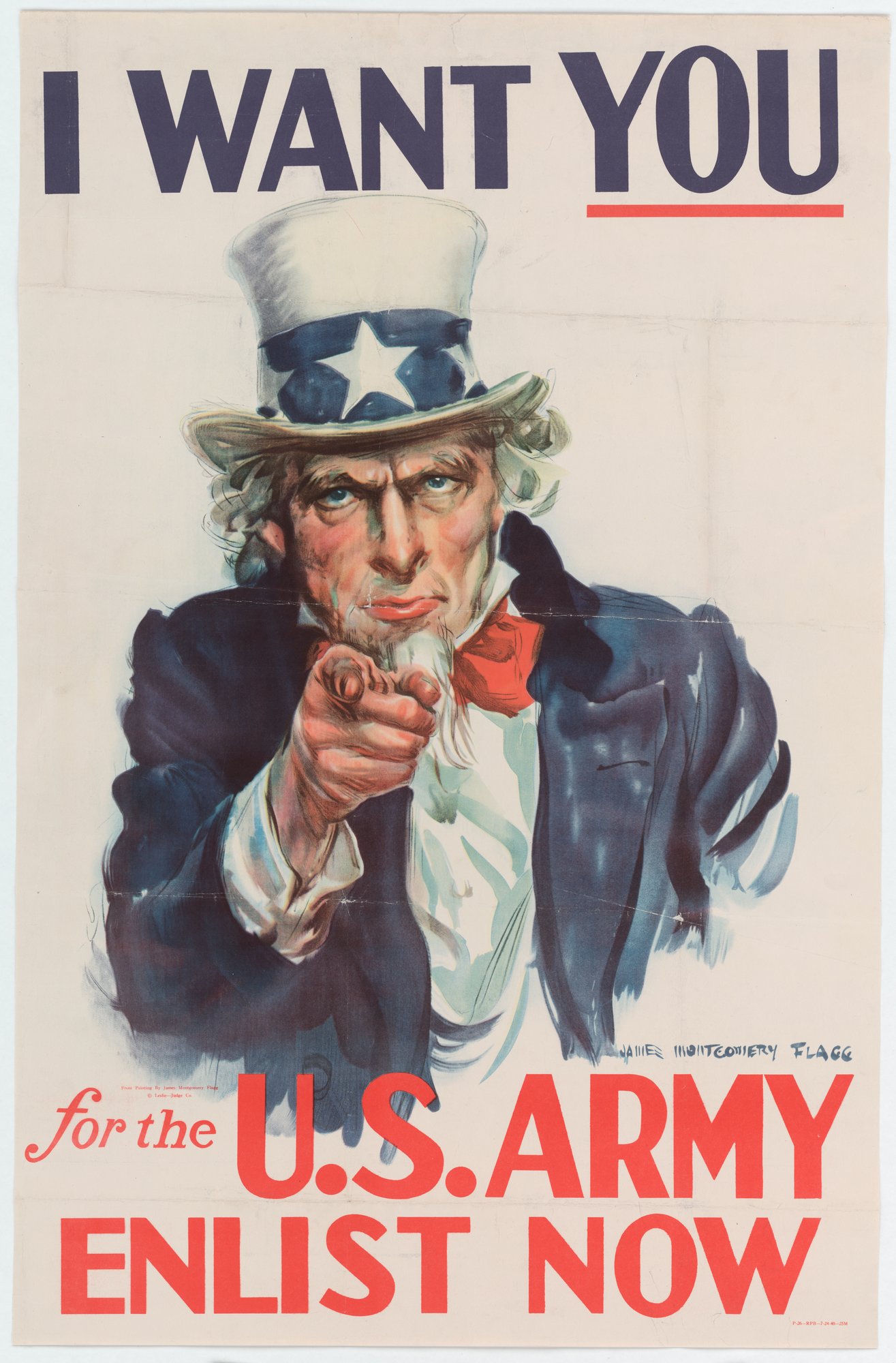
The National Archives holds a 1940 printing of the design, dated from the printed imprint, with "enlist now" in place of the earlier wording. The entry tags it identity fusion as well as transfer: the figure speaks as the country, so refusing reads as refusing the country. The U.S. sheets in this slice are discussed further on the American propaganda posters page.
Did Kitchener really say "Your Country Needs You"?
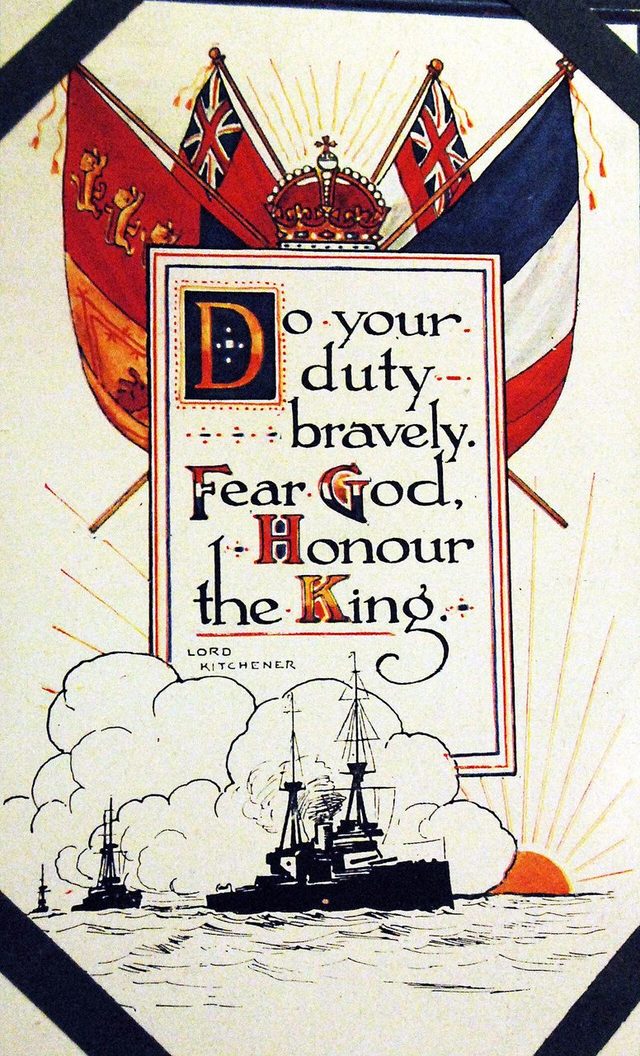
The collection holds no copy of Alfred Leete's Kitchener poster, so this page cannot show it. The entry for the Flagg poster names Leete's 1914 image as the model for the pointing pose. What the collection does hold is a postcard of about 1914 with Kitchener's own written instruction.
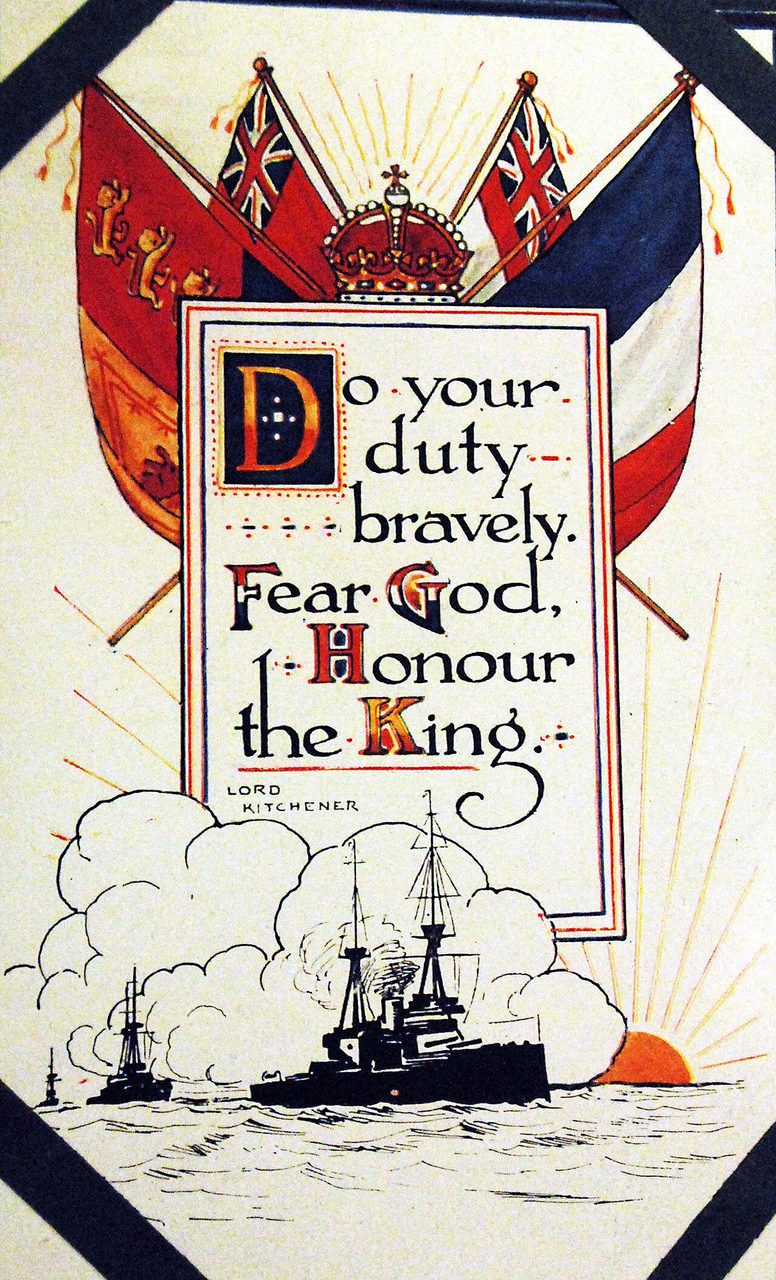
The postcard, from a publisher not named on the card, sets the words "Do your duty bravely. Fear God, Honour the King." under the name Lord Kitchener, above warships. The entry tags it testimonial and transfer: a named authority's word is the message, with crown, flags, God and navy stacked around a plain order. It is a postcard, not a poster, and it does not recruit by itself. Read the technique: testimonial.
How did British recruiting posters work in 1914 and 1915?
The Parliamentary Recruiting Committee issued numbered sheets in London. Their appeals ran from social pressure to fear to duty. See also British propaganda posters.
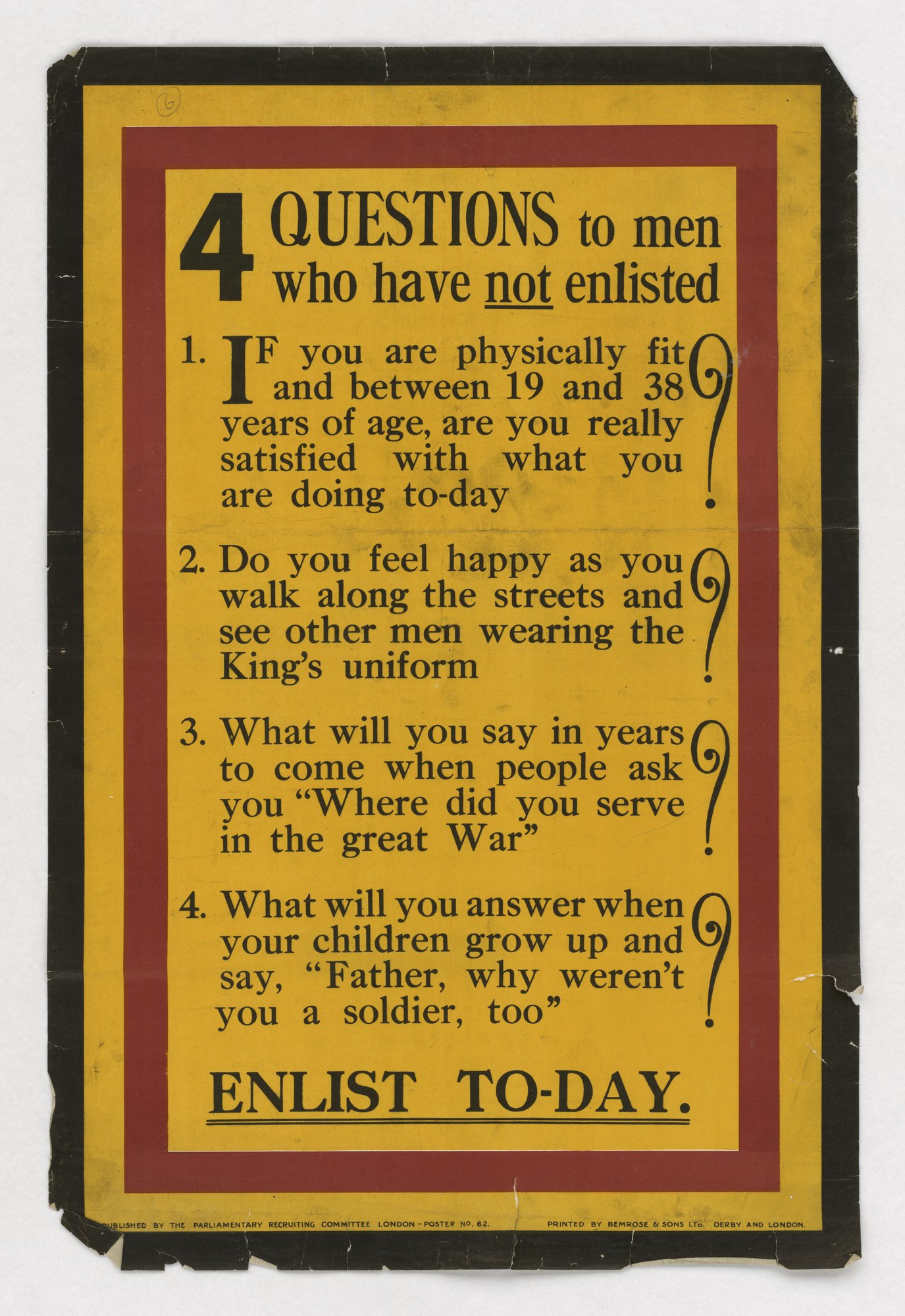
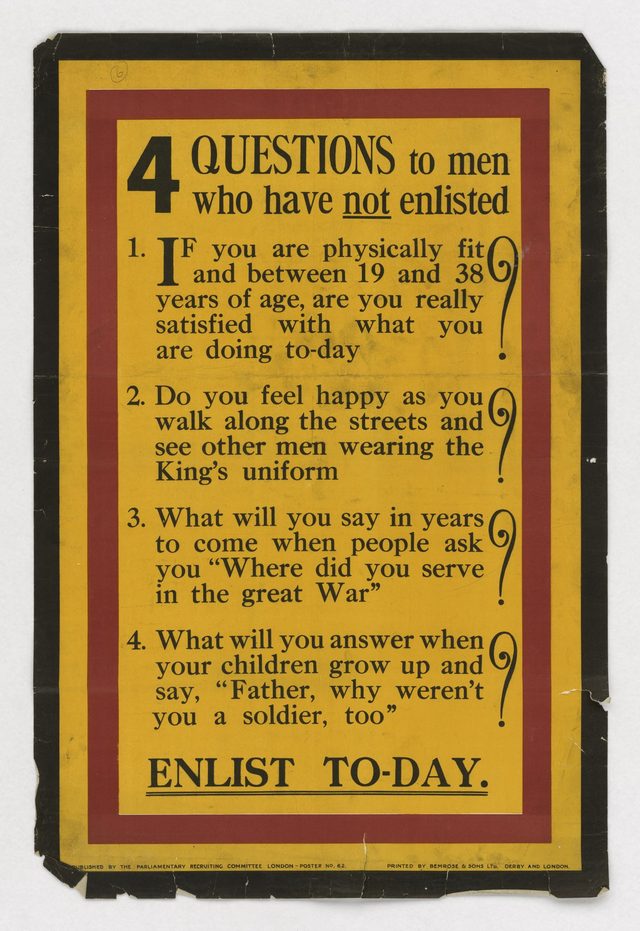
Poster No. 62 (printed by Bemrose & Sons) addresses men aged 19 to 38 and asks what they will answer when others ask why they did not serve. The entry tags it bandwagon: other men in uniform and later social judgment are the reasons given. Read the technique: bandwagon.
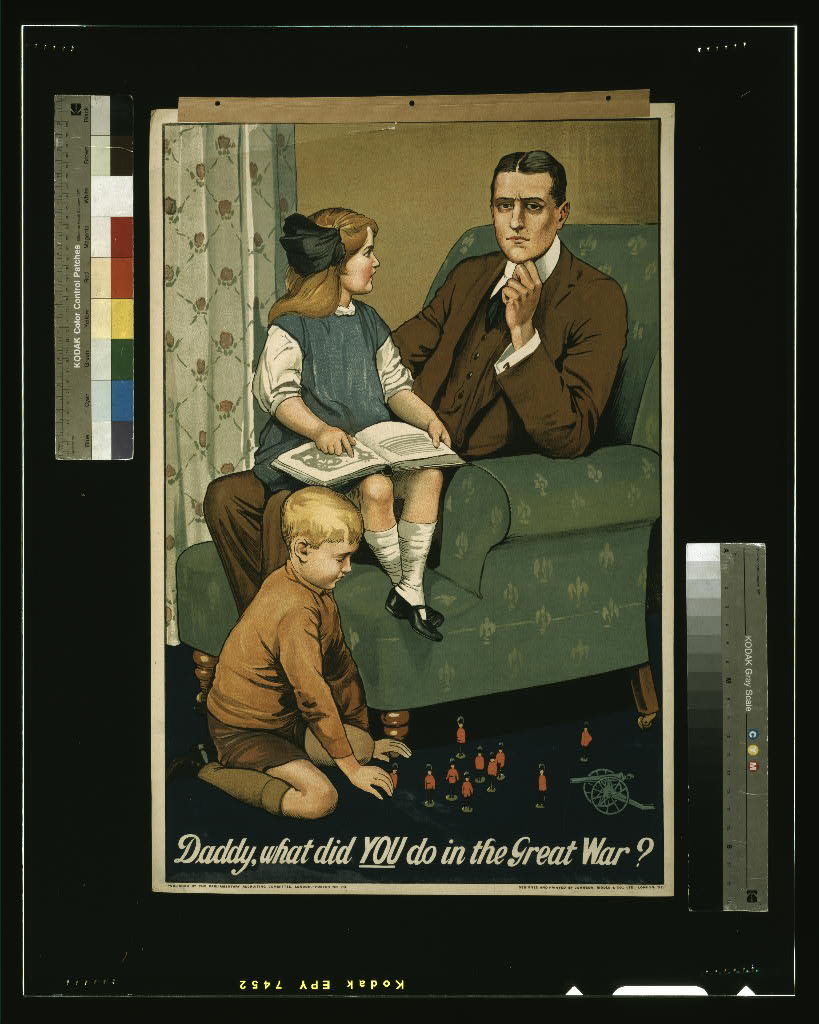
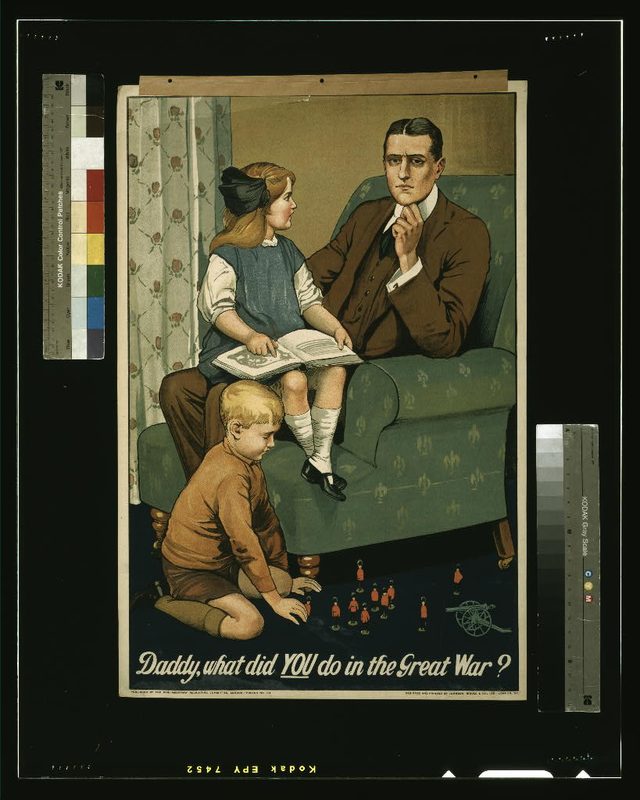
Savile Lumley's 1915 sheet for the same committee stages future shame in front of one's own children. The collection notes that the harm shown is not the enemy but the family's opinion, and enlistment is the only way to prevent it. Read the technique: fear appeal.
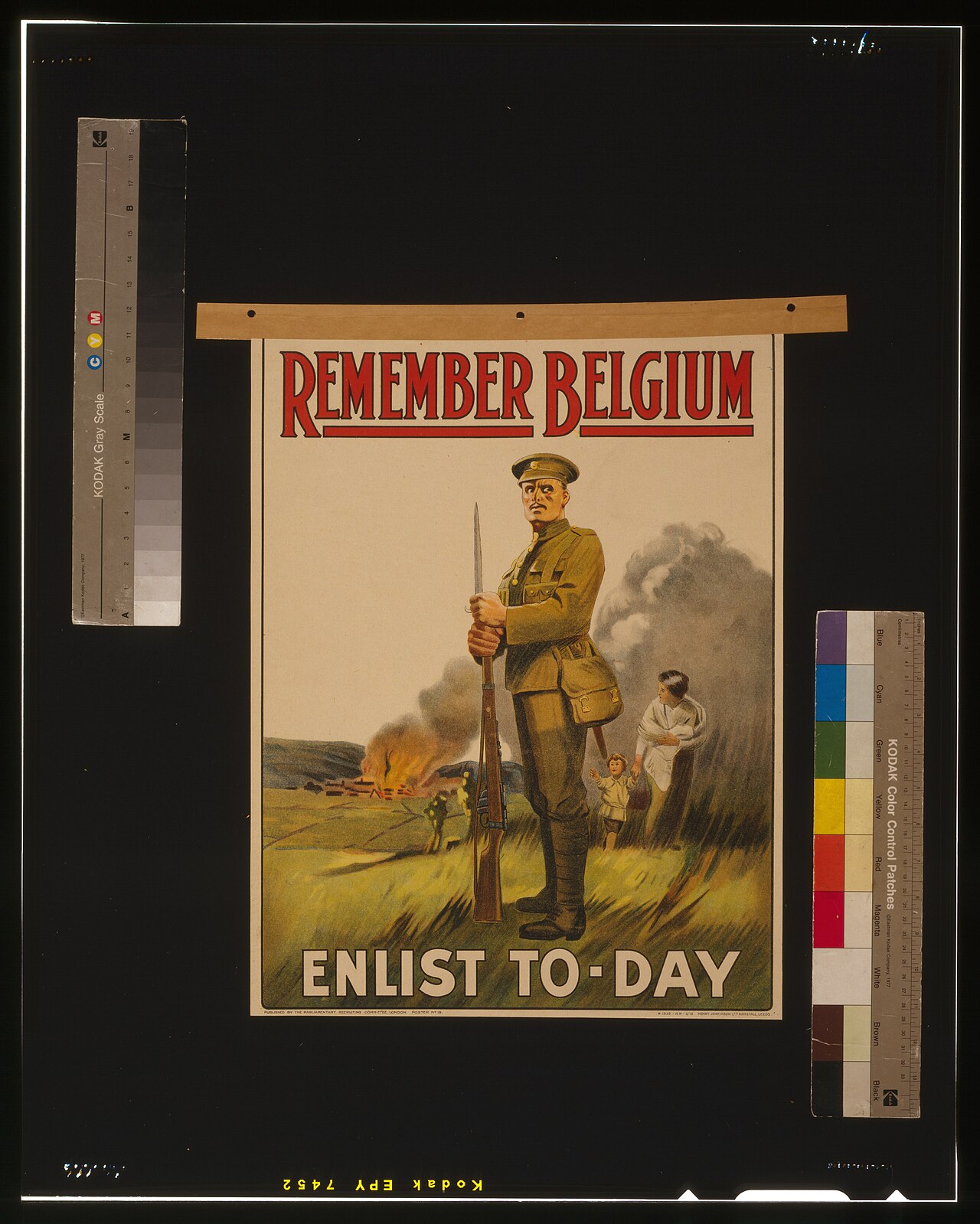
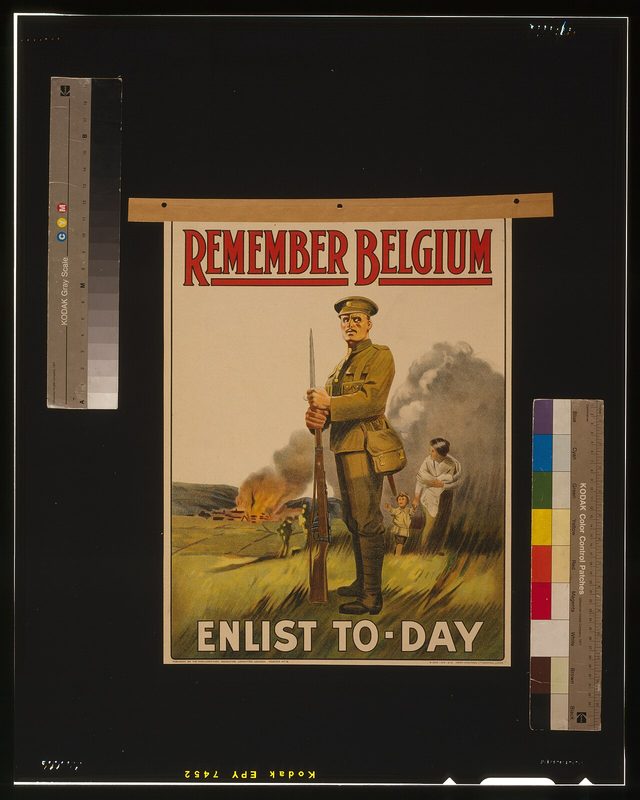
The entry says the 1914 atrocity reporting this poster draws on was real and documented, and that the poster compresses it into one silhouette so that "enlist" reads as the only response. It tags fear appeal, scapegoating and transfer. A different Allied poster in the collection shows the same theme with an explicit scene, which is why this page carries a content note.
How did German recruiting posters differ?
The collection holds no recruiting poster issued by the Kaiser's army or by the Wehrmacht, so there is no German state sheet to set beside the Allied ones; the tag finds none. What it holds from the German side of the Second World War are two foreign-volunteer sheets issued for Waffen-SS units, printed in the languages of the men they targeted.
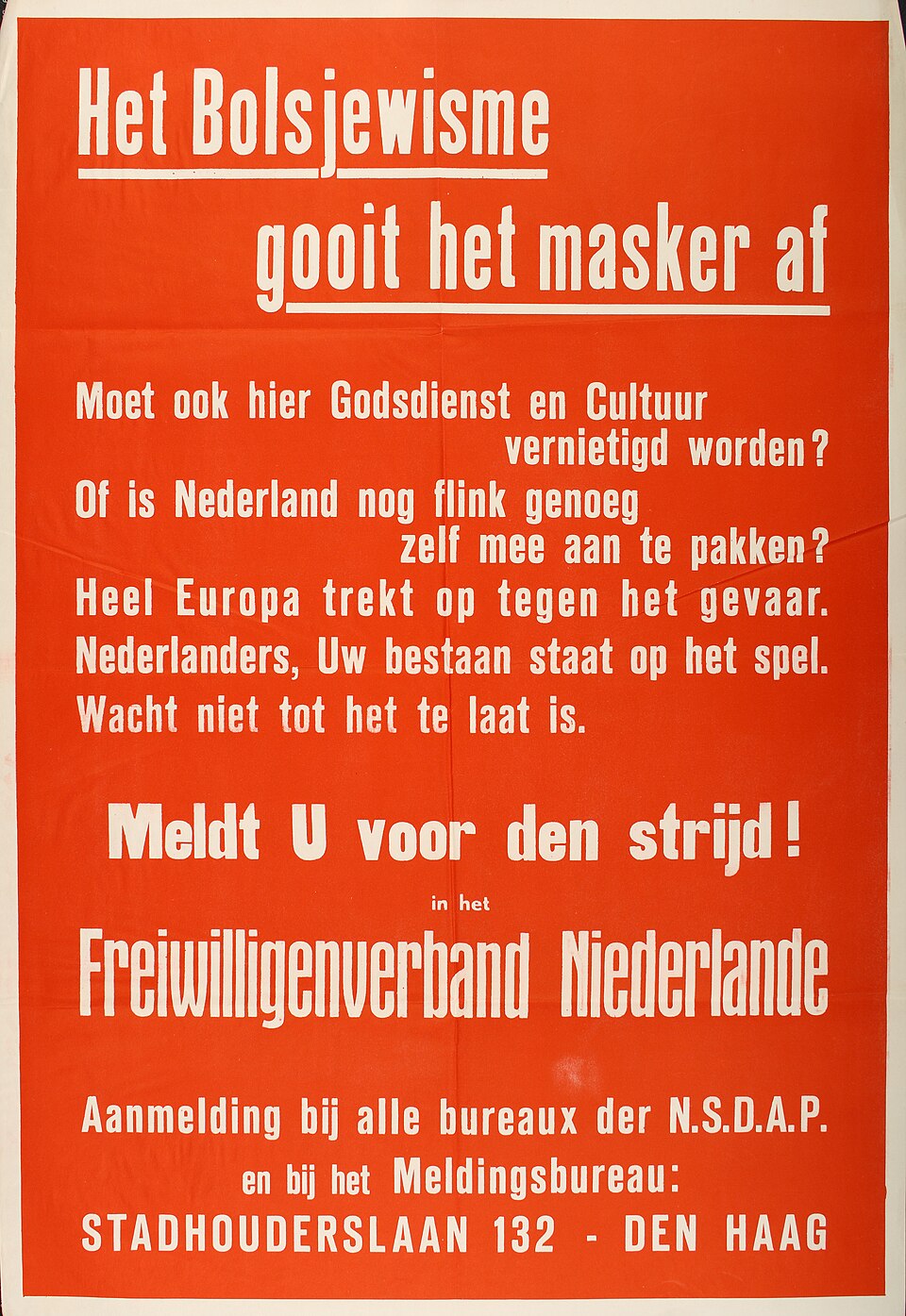
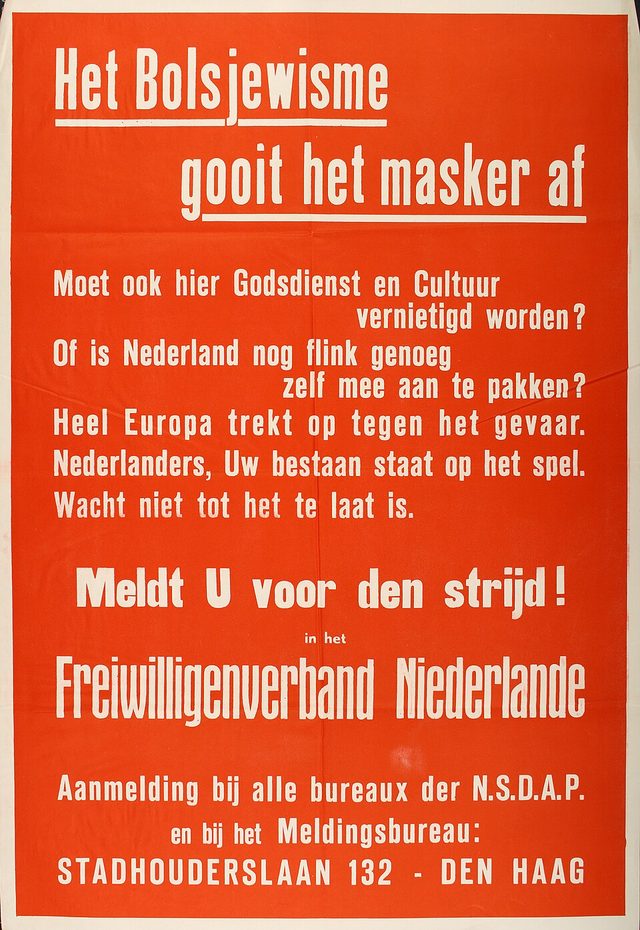
The Dutch sheet of July 1941 was issued by the recruiting office for the Freiwilligenverband Niederlande in The Hague, per the Stadsarchief Deventer. Its text asks whether religion and culture are to be destroyed in the Netherlands too and says all Europe is marching against the danger. The entry tags fear appeal and bandwagon. Read the technique: fear appeal.
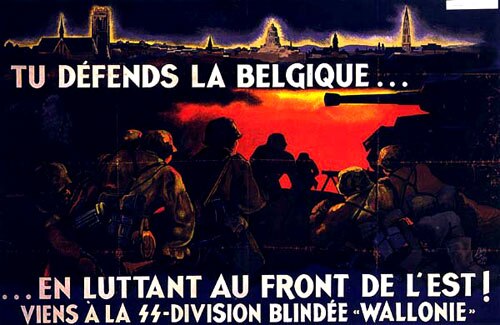
The French-language Walloon sheet (1943) redefines "defending Belgium" as fighting on the Eastern Front and lends the home skyline to a foreign front. The entry tags it semantic hijack and transfer. The same technique definitions apply as for any Allied sheet. Read the technique: semantic hijack.
How did Soviet and Hungarian revolutionary recruiting posters differ?
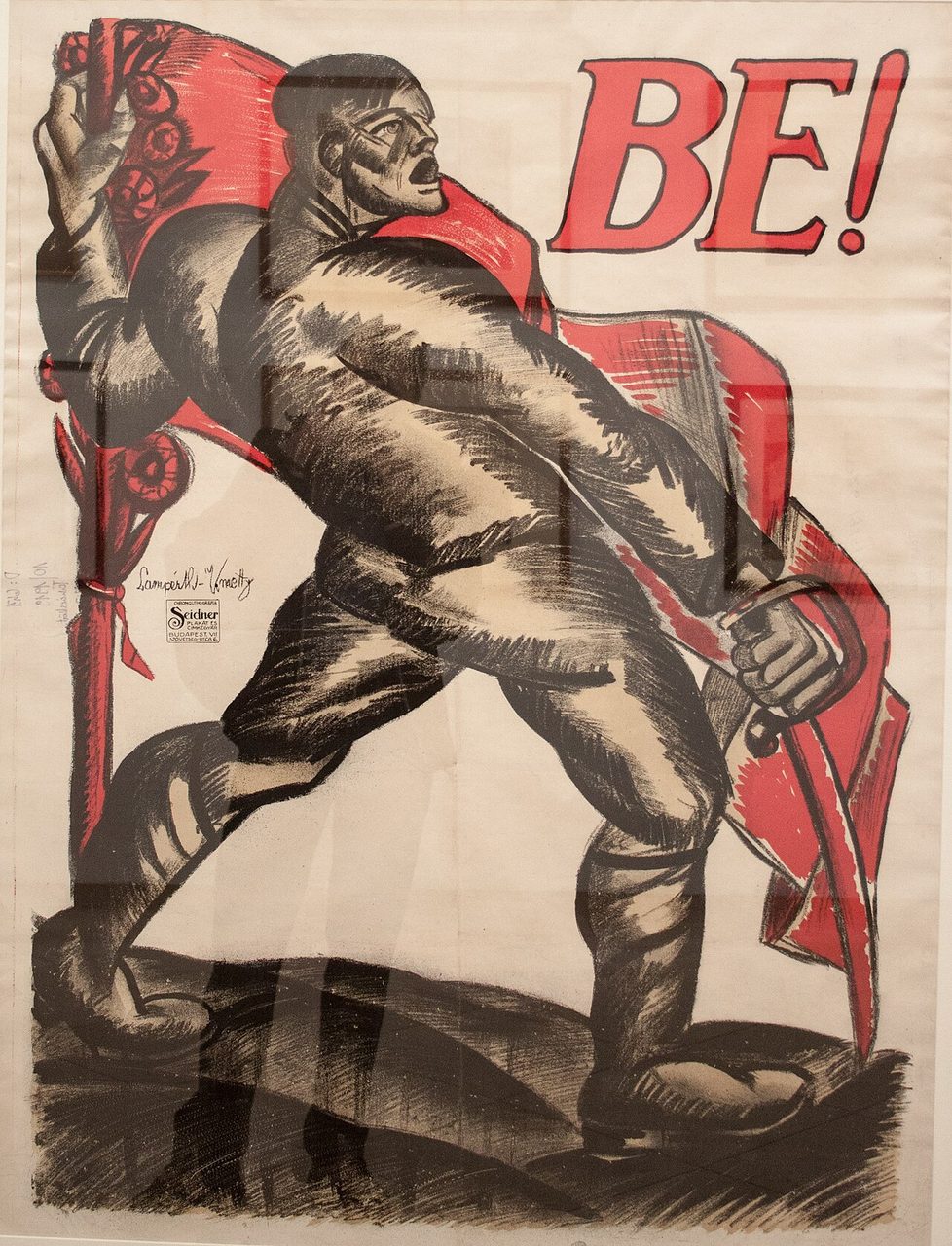
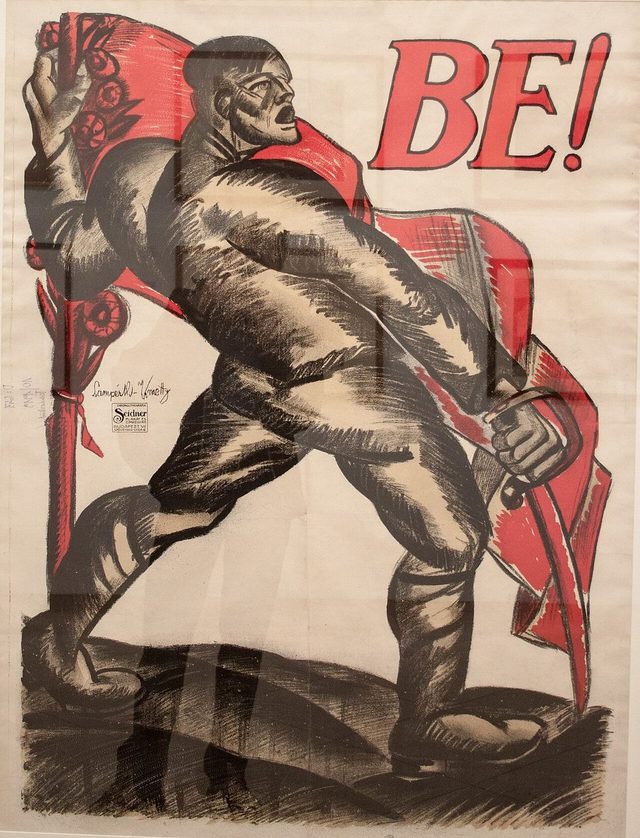
The 1919 Hungarian Soviet Republic poster by József Nemes Lampérth, printed by Seidner in Budapest, uses one word, "BE!" ("In!"). The entry notes the red flag carried as the figure's cloak and standard, which lends the revolution's symbol to the call to enlist. Read the technique: transfer.
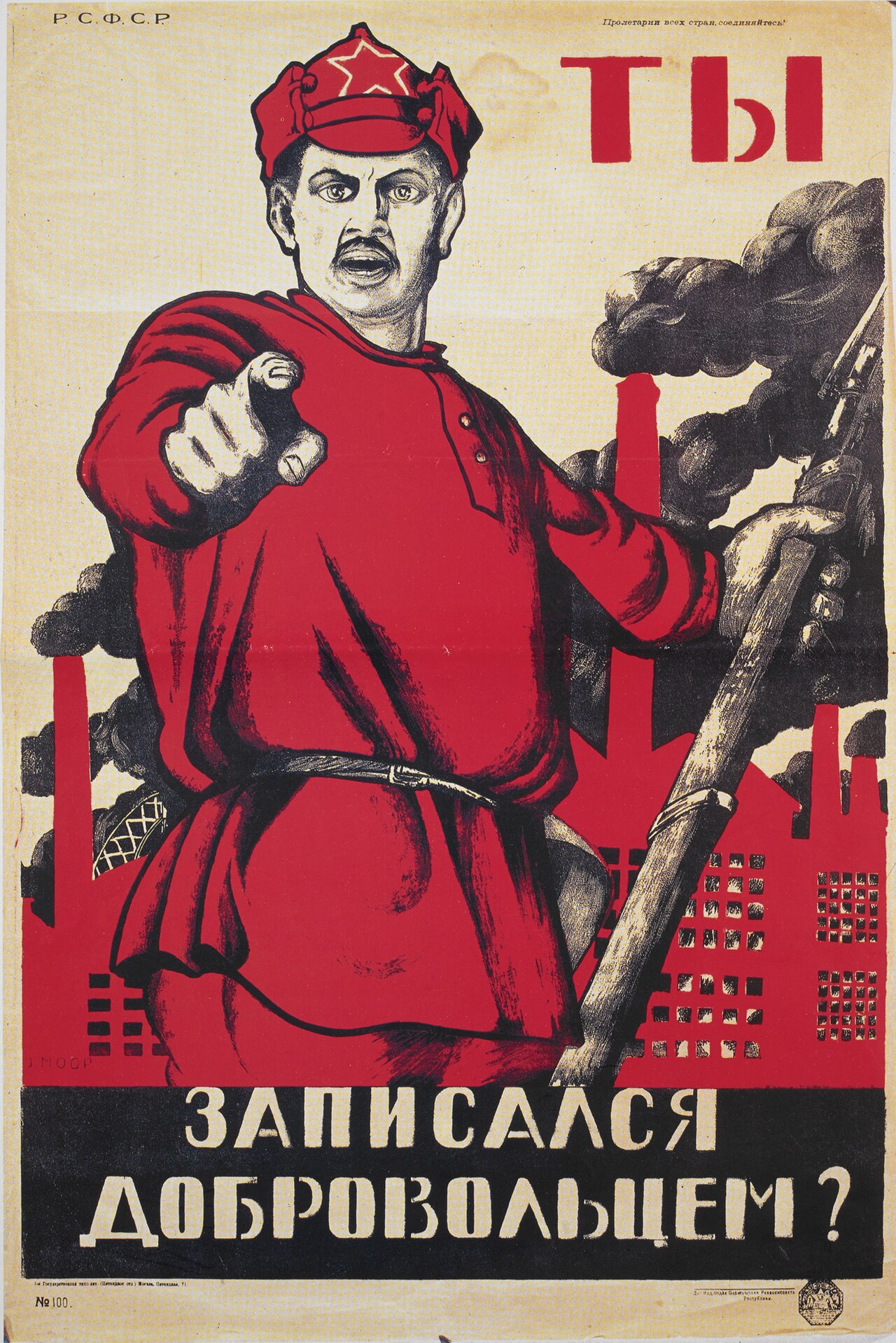
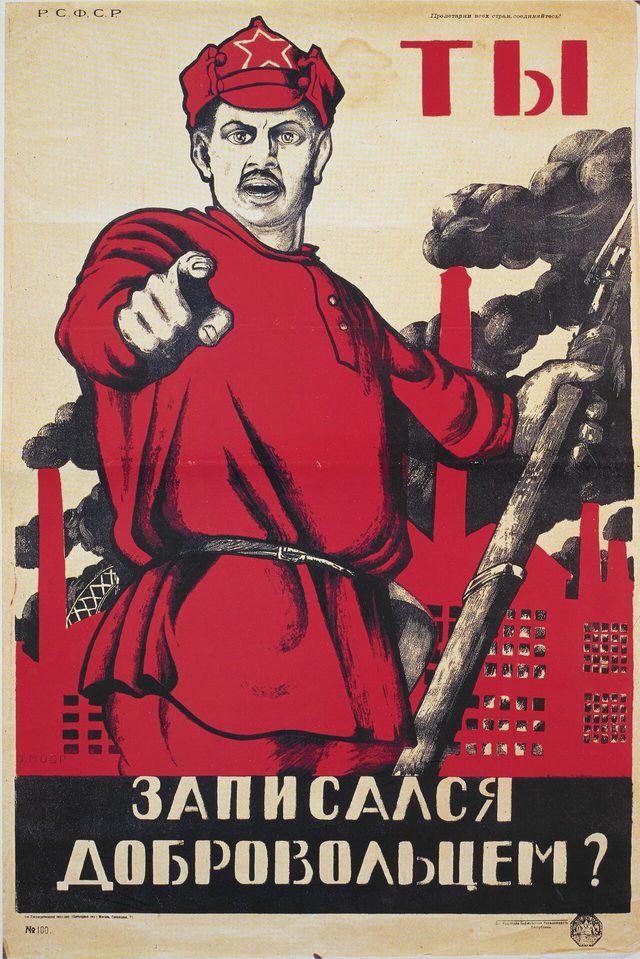
Dmitry Moor's June 1920 poster for the Russian Soviet Federative Socialist Republic puts a Red Army soldier in the same direct-address pose as the Kitchener and Uncle Sam images. The collection notes that his accusing gaze places the burden of proof on the viewer. It is tagged transfer. For the wider record, see Soviet propaganda posters.
How did Canadian and other Commonwealth recruiting posters differ?
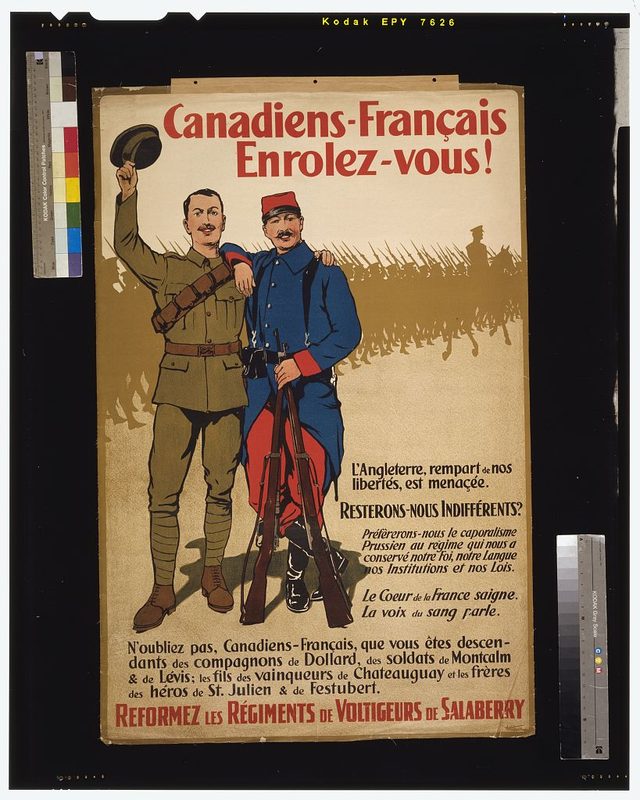
Canada recruited in two languages, and the collection holds French-language sheets from both wars. See Canadian propaganda posters.
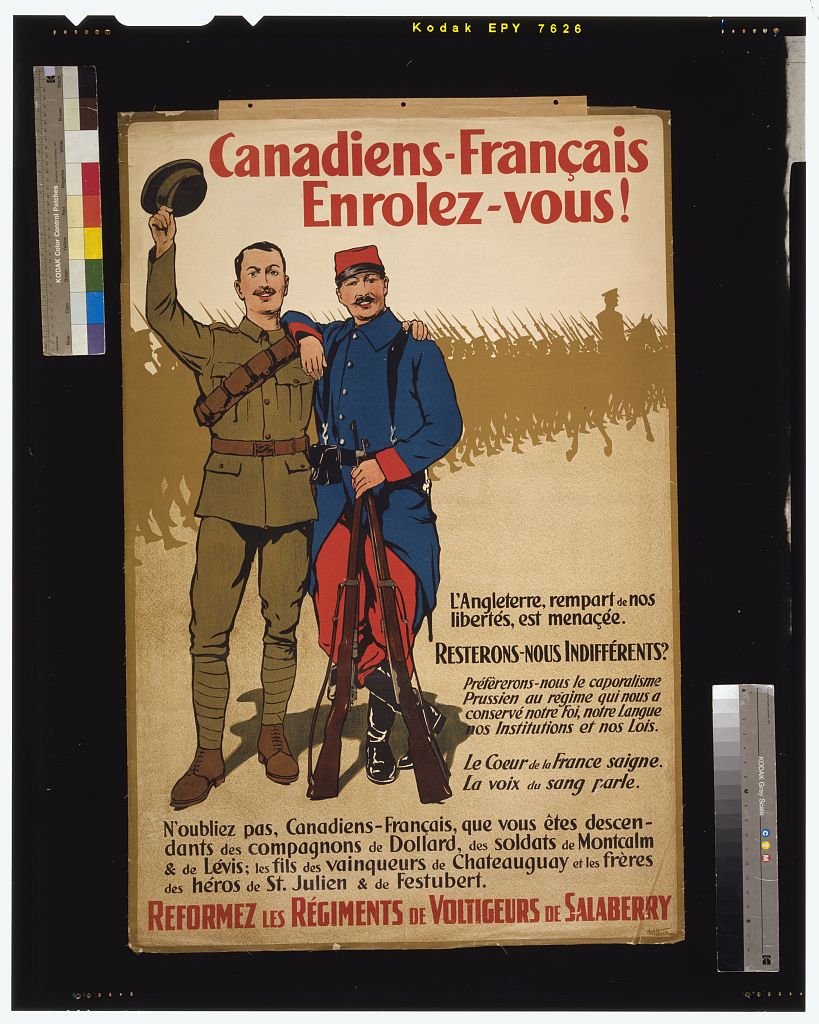
This 1915 Library of Congress sheet addresses French Canadians alone and invokes Dollard, Montcalm, Levis and Chateauguay, attaching ancestral prestige to enlistment. The entry says the issuing body and artist are not identified on the sheet. It is tagged transfer and fear appeal. Read the technique: transfer.
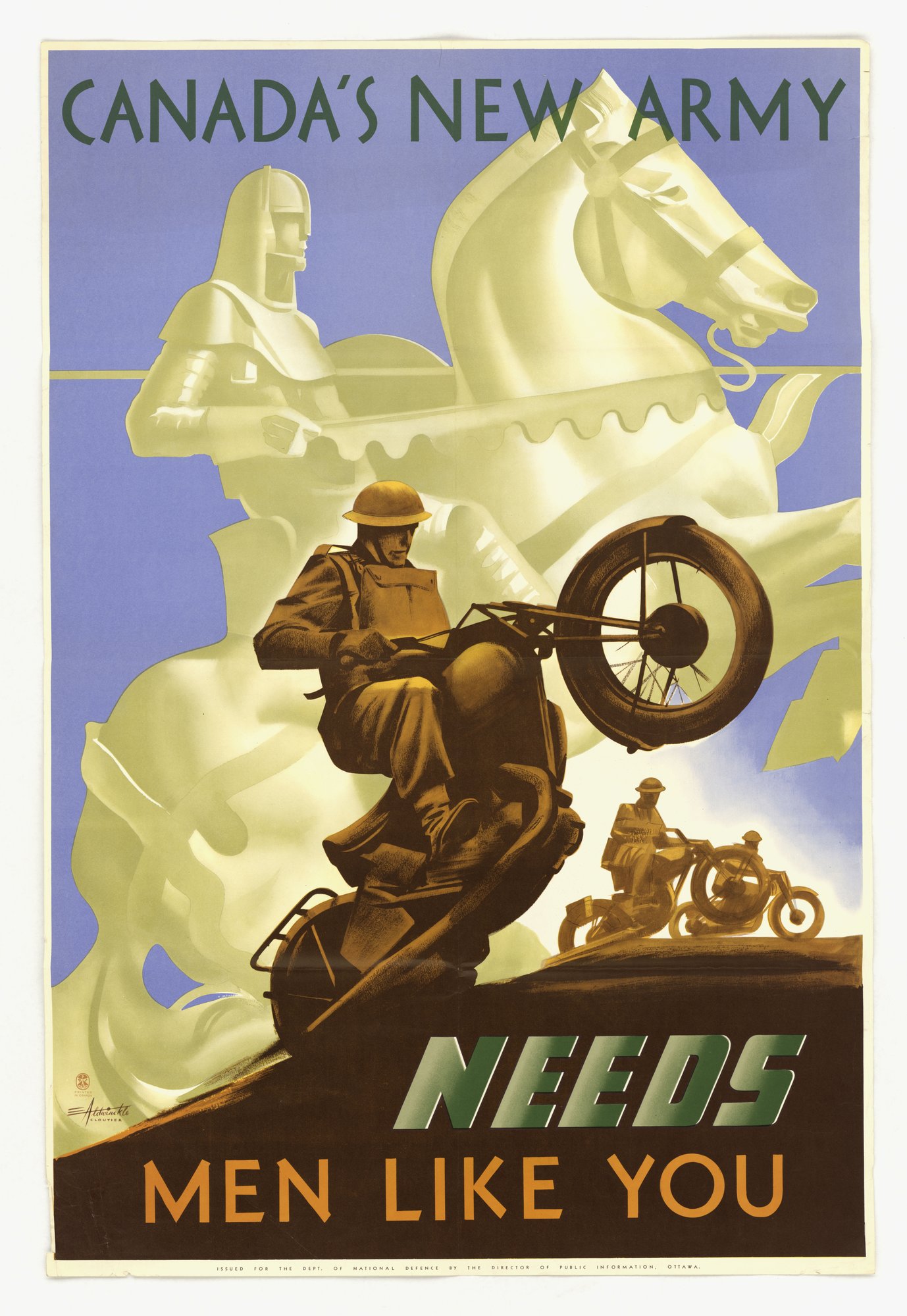
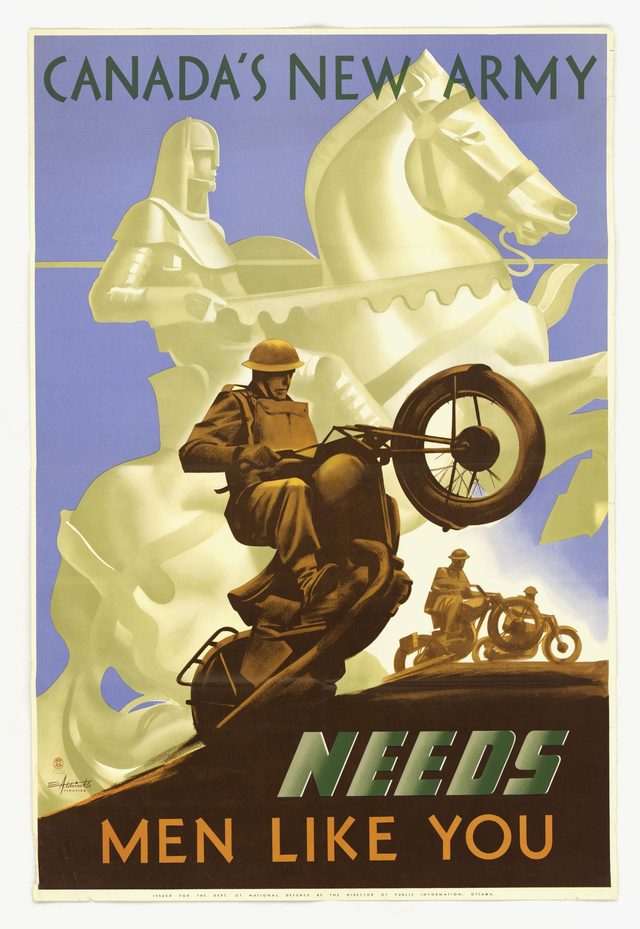
The 1939 Department of National Defence sheet, issued by the Director of Public Information in Ottawa, borrows the prestige of a medieval knight for mechanised service. The entry tags it transfer.
Content note: Invasion-atrocity imagery: German soldiers threatening civilians, a body on the ground and a burning building. This object is shown as it was published. Why 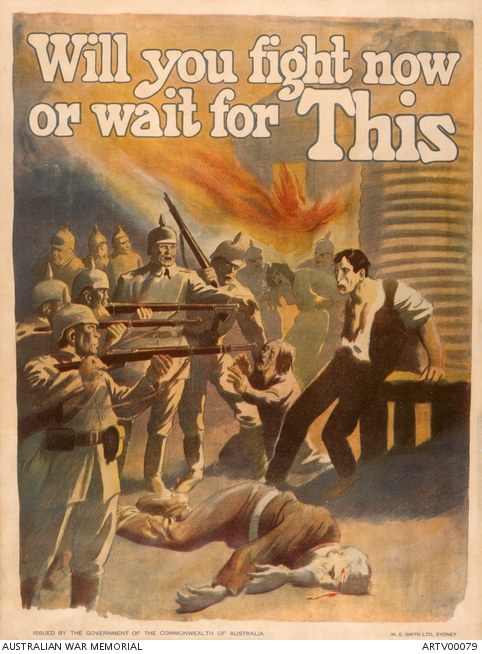
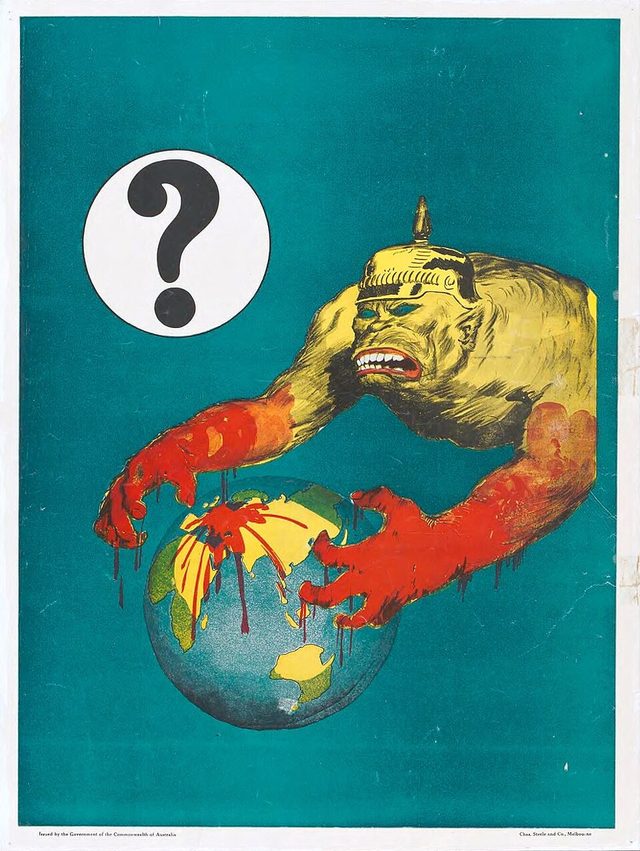
Norman Lindsay's 1918 Australian sheet stages an invasion of Australian soil as the alternative to enlisting and offers enlistment as the only way to prevent it (fear appeal). The Australian War Memorial holds it. Another Lindsay design in the same campaign draws Germans as a blood-covered ogre and is tagged name-calling and fear appeal.
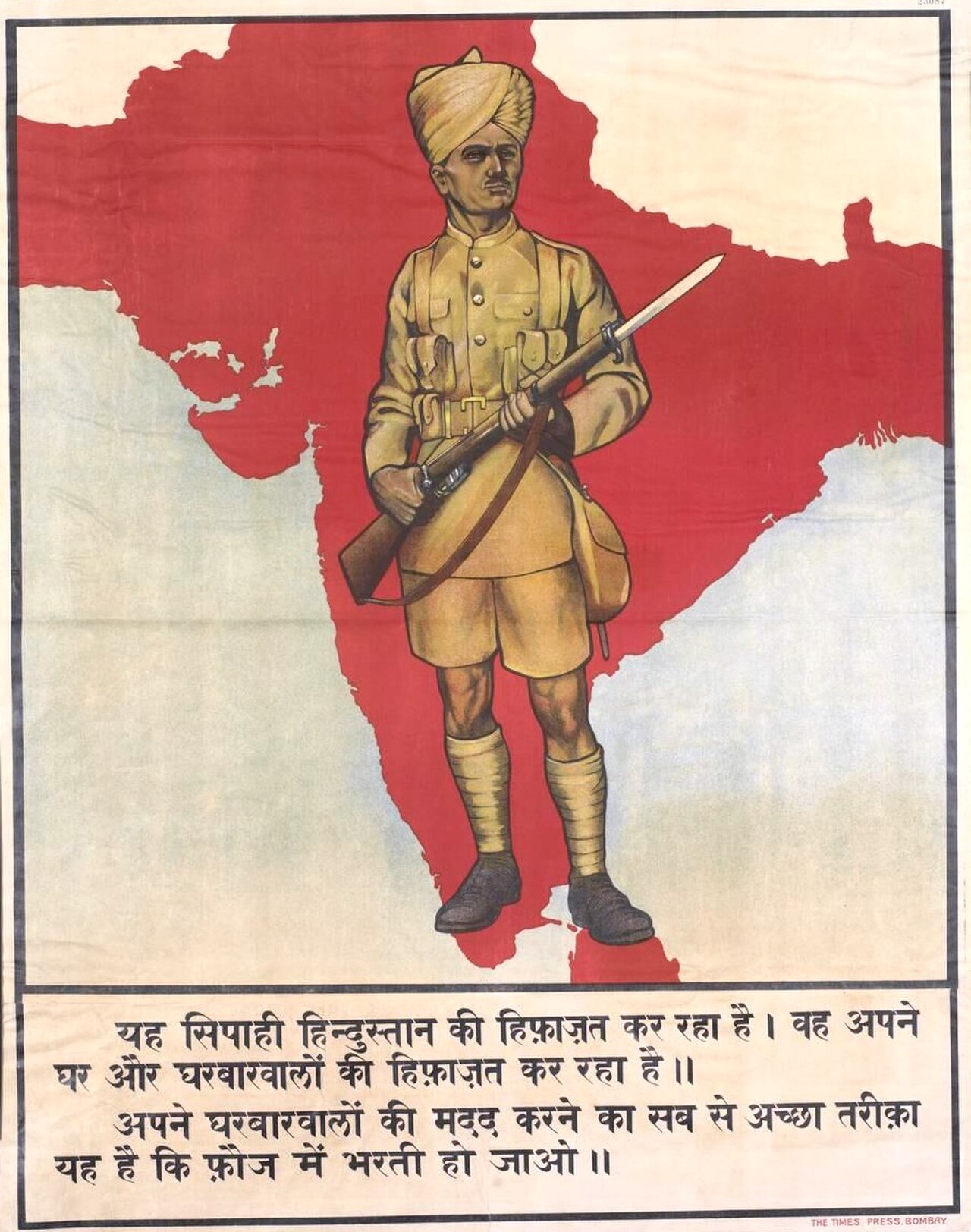
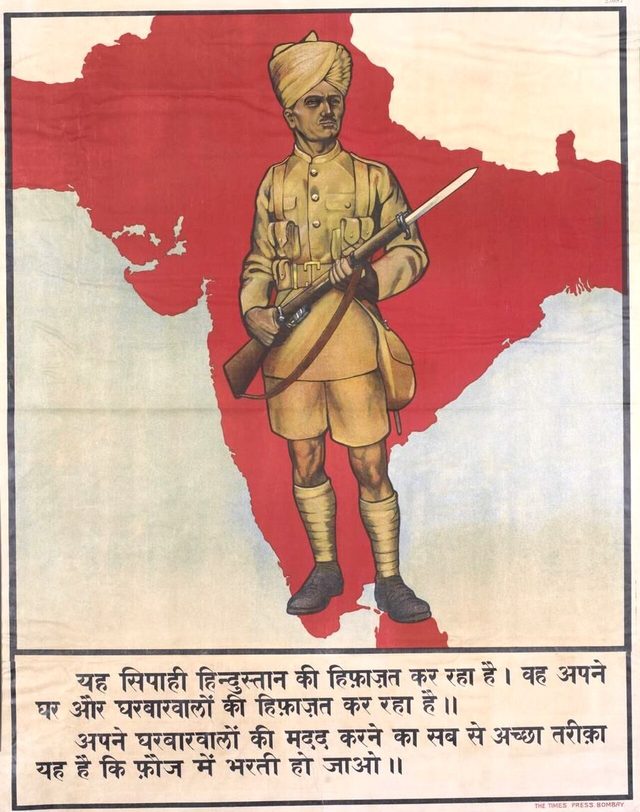
This Bombay sheet of 1914, printed by The Times Press, frames enlistment as the same duty as protecting one's household. The entry tags it transfer: the pull of family loyalty is moved onto army service. Its sponsor is not named on the sheet.
How did Polish and Cold War recruiting posters compare?
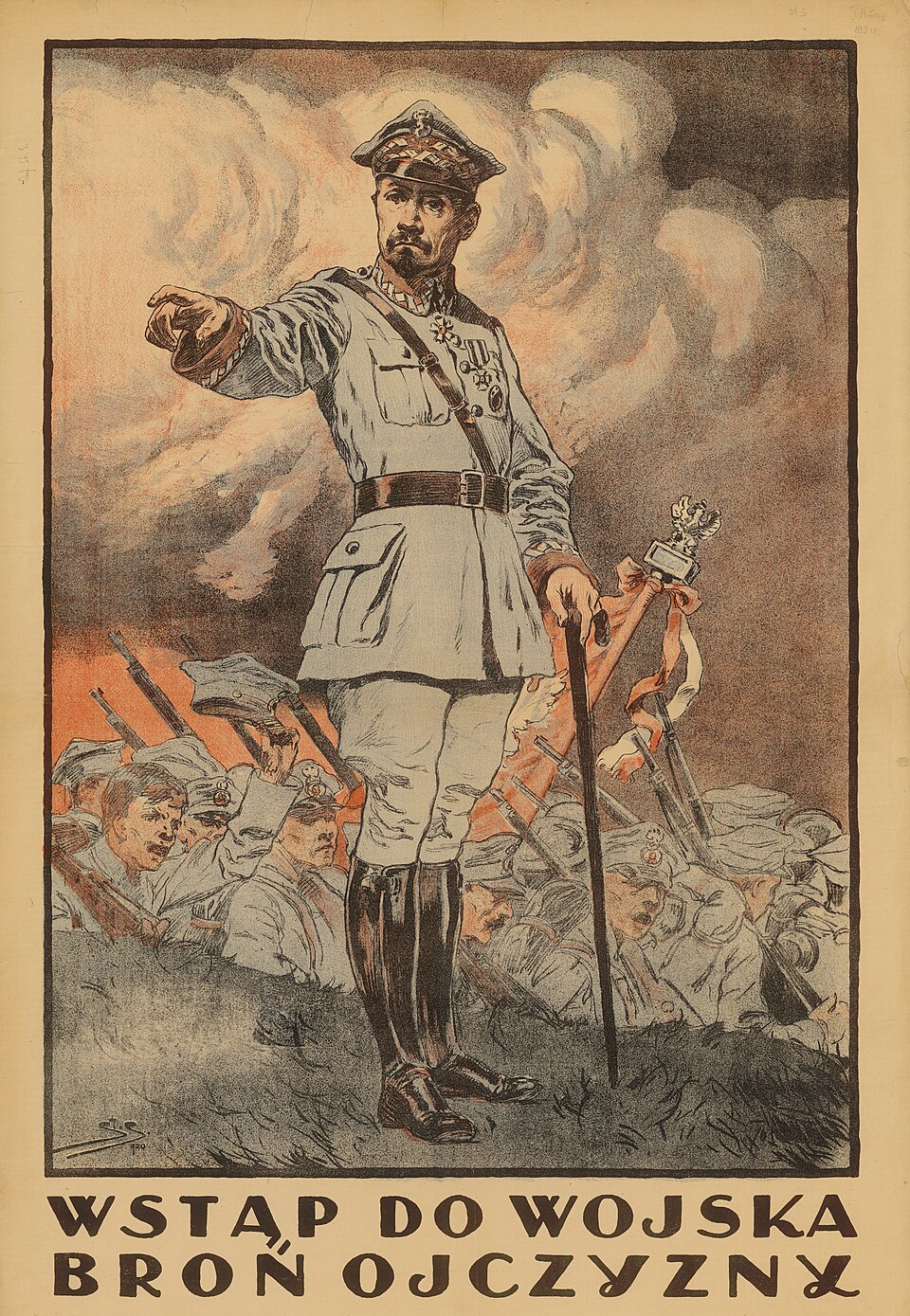
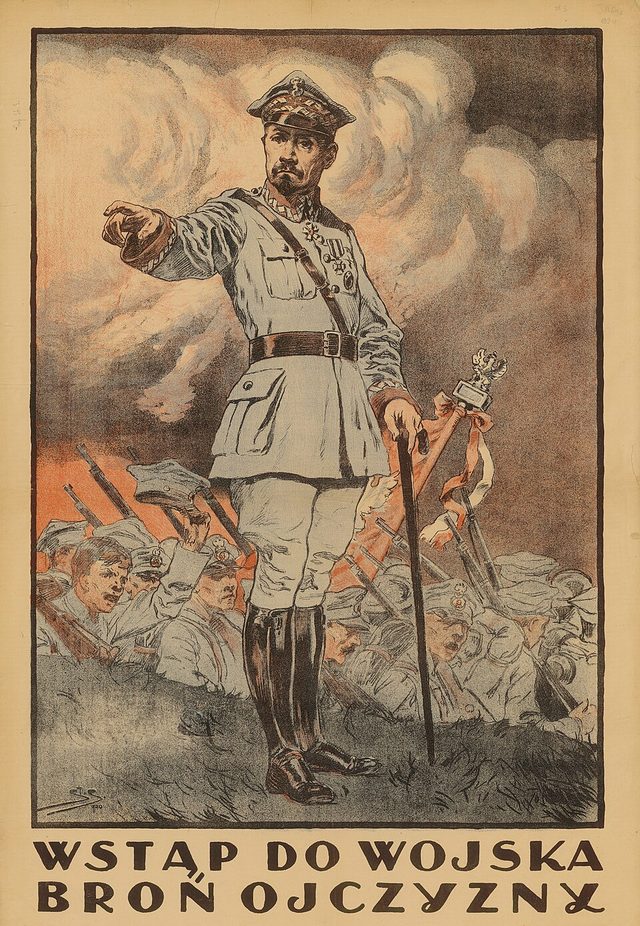
Stanislaw Sawiczewski's 1920 Polish Army appeal comes from the Polish-Soviet war. The sponsor is not named on the print, and the entry notes that the officer's scale and decorations, beside the national eagle, lend the army's authority to the call. Read the technique: transfer.
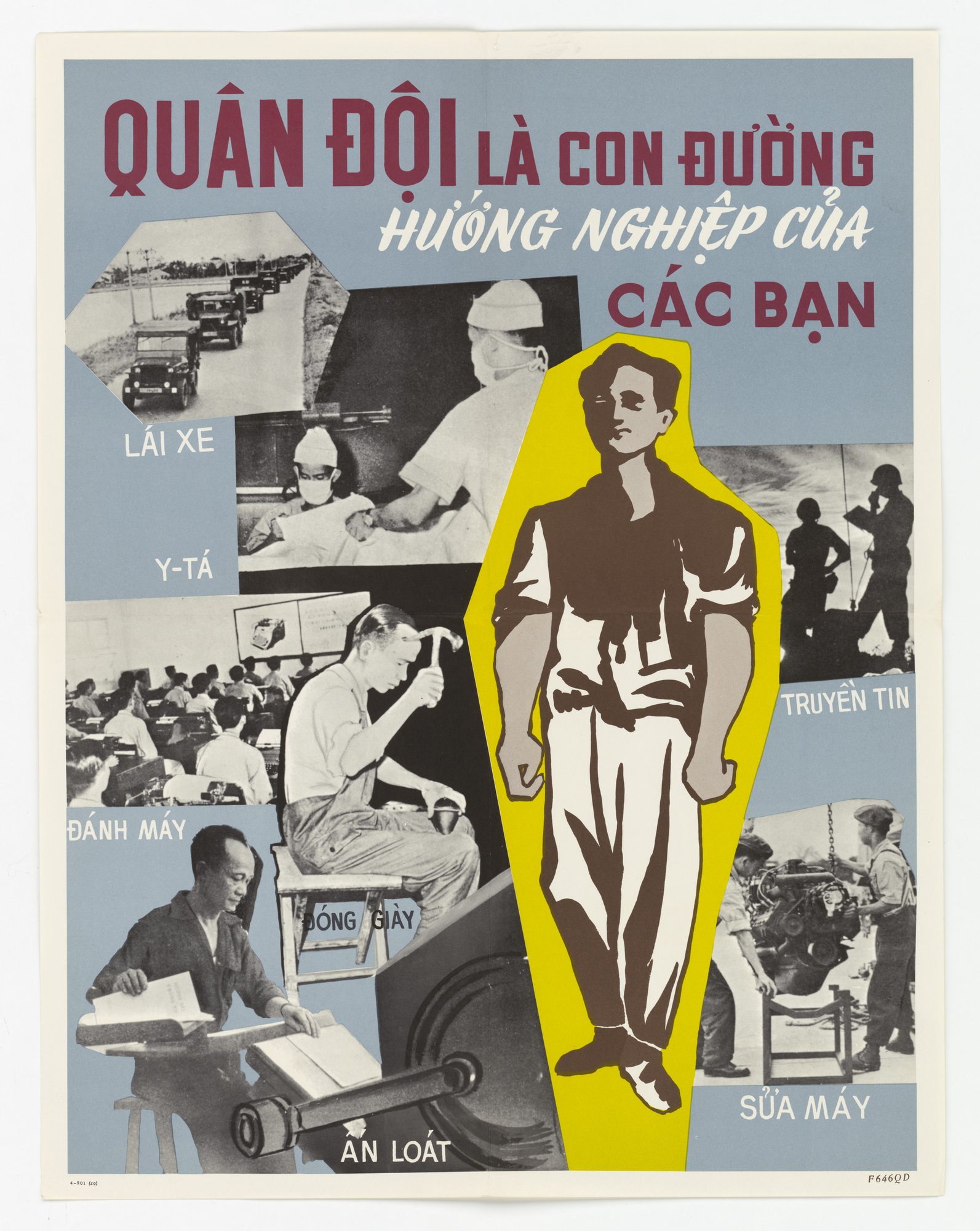
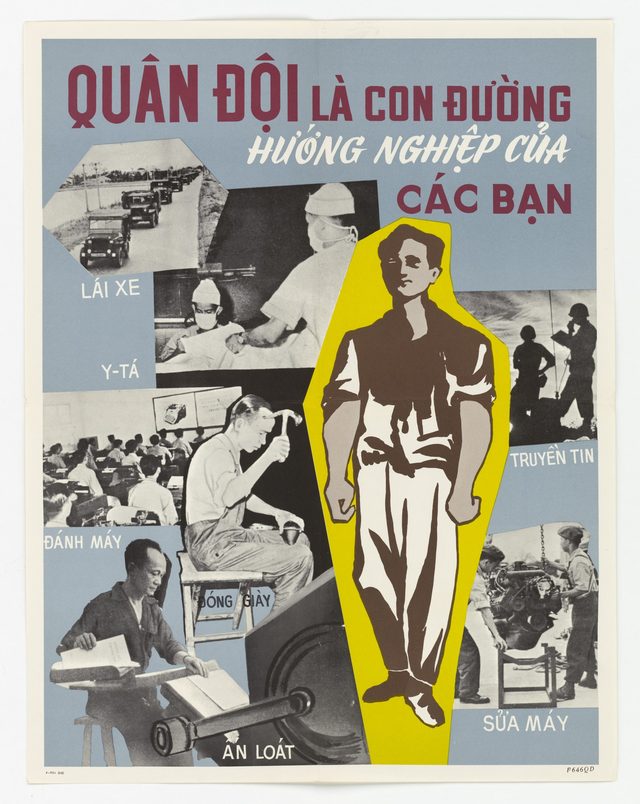
By the 1960s the appeal had shifted. This 1964 Vietnamese-language poster, held by the U.S. National Archives (Record Group 306) and distributed in Saigon, offers army service as vocational training: driving, nursing, printing, engine repair. The entry tags plain folks, glittering generalities and bandwagon.
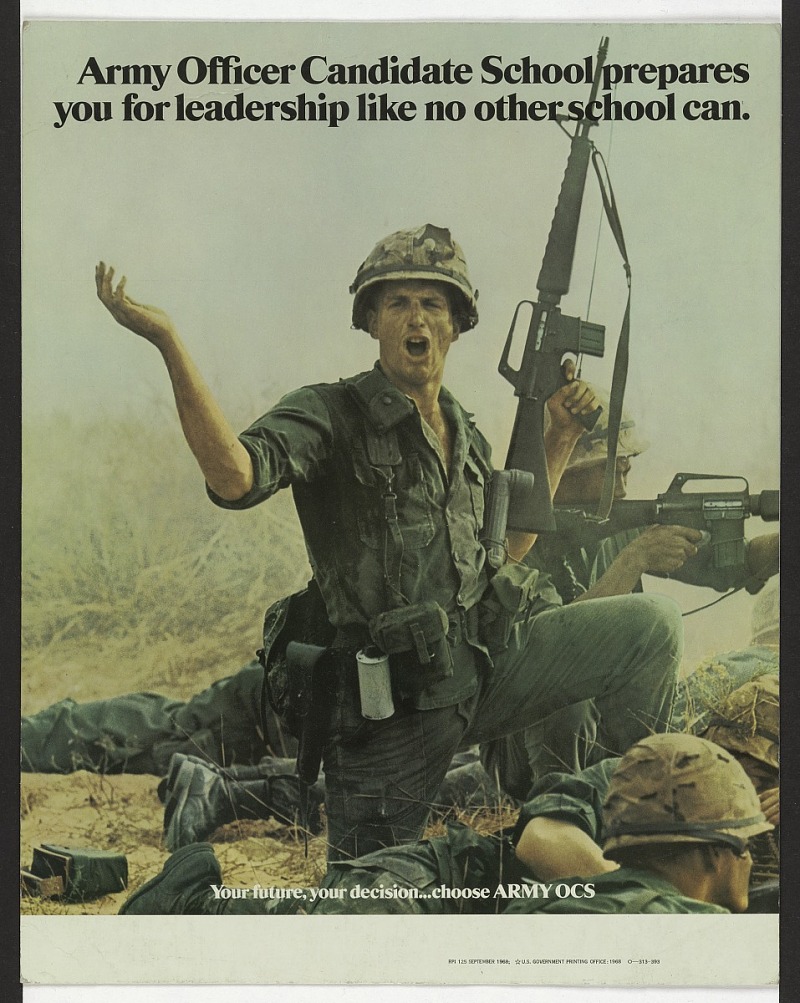
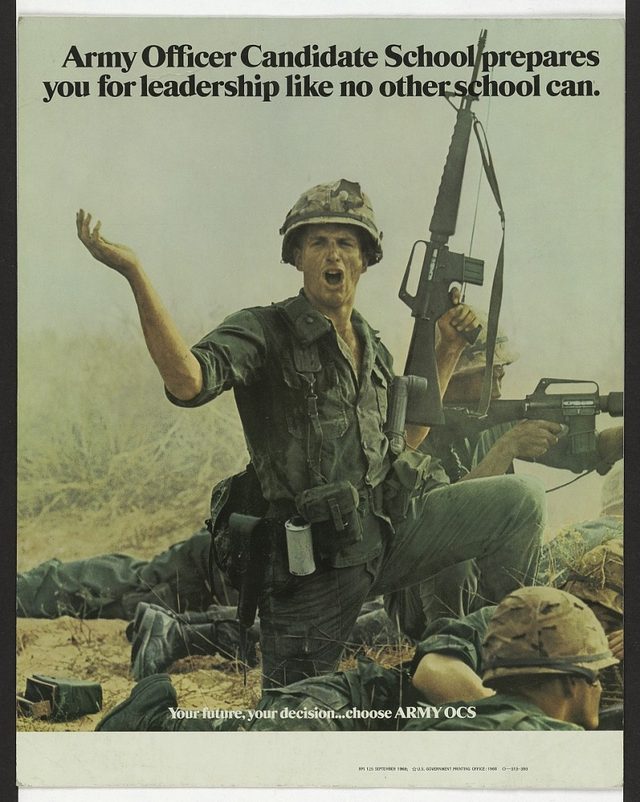
A 1968 U.S. Army sheet printed by the Government Printing Office, held by the Smithsonian, ends "Your future, your decision...choose ARMY OCS." The entry points out that "like no other school" is an unmeasured superlative, and that the text names no term of service or place. It is tagged glittering generalities. Read the technique: glittering generalities.
How did Second World War services recruit women?
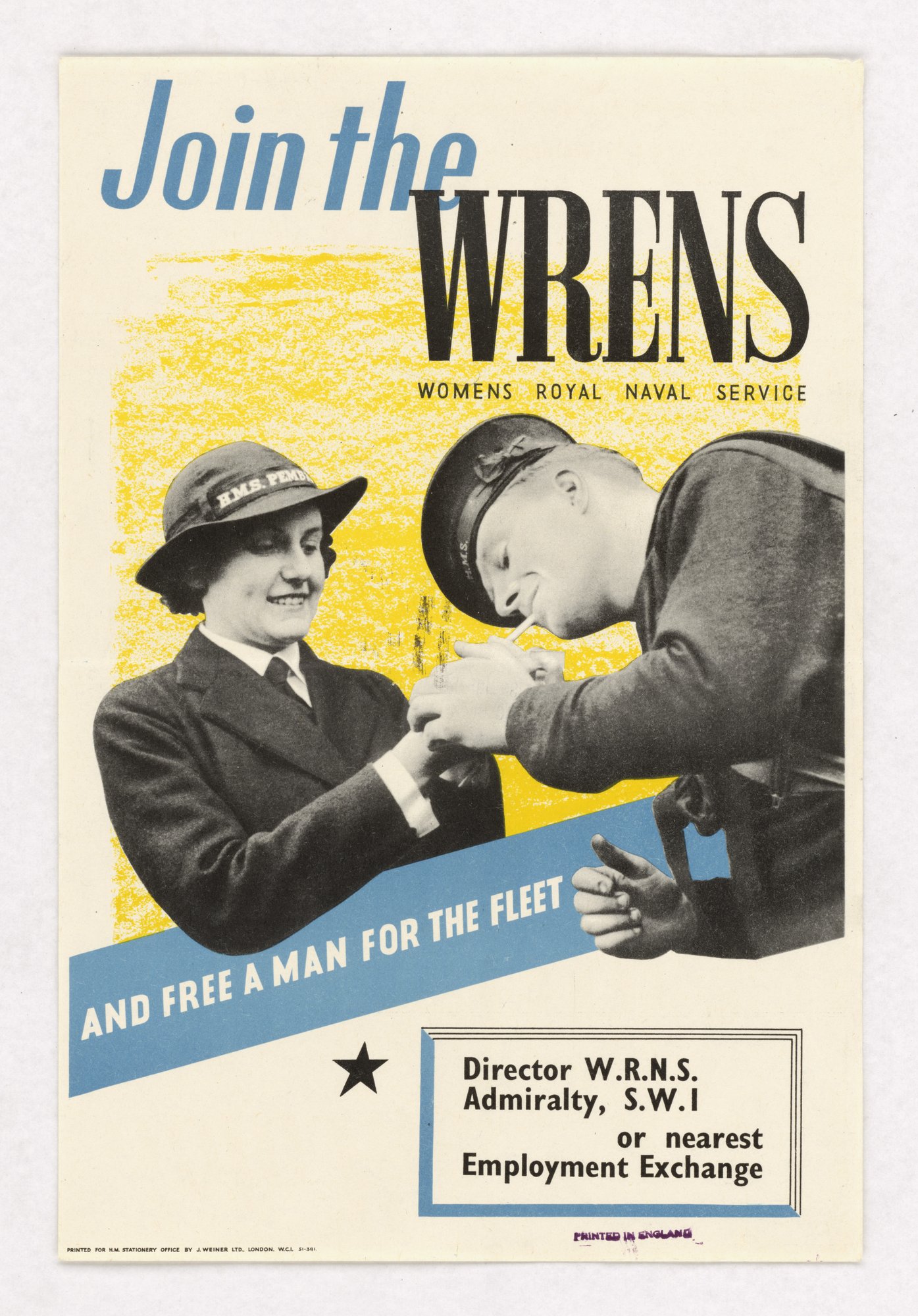
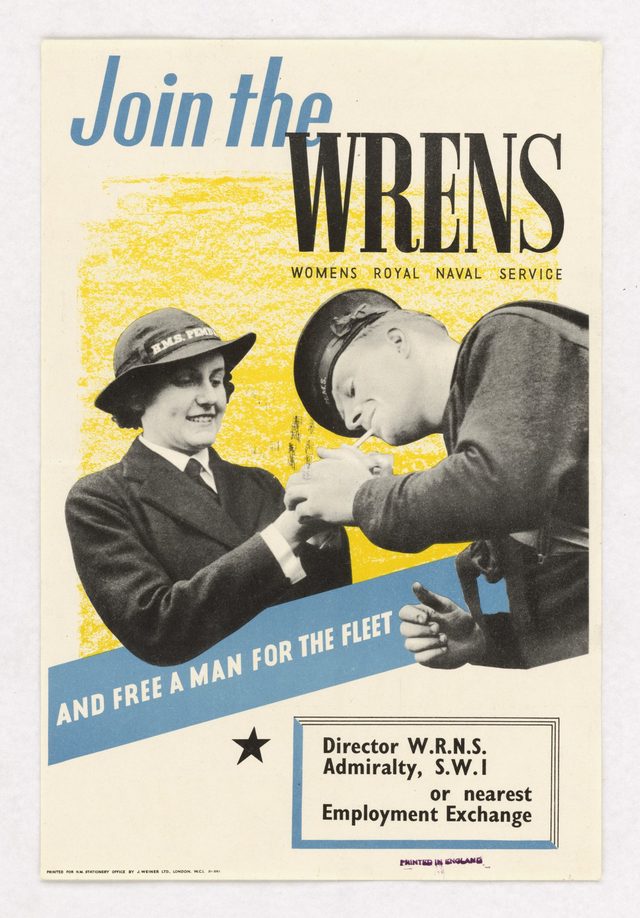
The Admiralty's Director W.R.N.S. issued this 1939 sheet, printed for H.M. Stationery Office. The slogan presents women's service as releasing men for sea duty, and the friendly scene stands for service itself (transfer). The collection holds many similar British and American sheets for women's services, covered on the women in WW2 posters page.
Which techniques do recruiting posters use?
The same short list appears in every country in this slice, using the same definitions for each:
- Transfer. A flag, knight, general, national figure or ancestor lends prestige to the act of enlisting. Uncle Sam, the Hungarian banner, the Polish eagle and the Canadian knight all work this way. Transfer.
- Fear appeal. An invasion, atrocity or future shame is shown, with enlistment as the single remedy: "Remember Belgium", Lindsay's Australian sheet, the Dutch SS sheet. Fear appeal.
- Bandwagon. Other men are already going. Bandwagon.
- Direct address. A pointing figure puts the choice on the viewer. The Flagg, Kitchener-model and Moor posters share this pose.
- Glittering generalities. Cold War and late Second World War sheets sell adventure, training and leadership in unmeasurable terms. Glittering generalities.
Differences are in who issued them and what was asked. The Allied sheets above were issued by governments, parliamentary committees or armies for their own forces. The two SS sheets were issued by recruiting offices of an occupying power's foreign-volunteer units. The collection does not rule on whether any poster worked.
What to look for in a recruiting poster
- Who is speaking. Check for a ministry, committee, army, publisher or a printer's line only.
- Who is addressed. Age bands, a language, a religion, a region or a sex.
- The reason offered. Duty, shame, fear, pay or training, and what is left out, such as term of service or risk.
- The remedy. Enlistment is nearly always the only action shown.
Browse recruiting posters
The grid below shows recruiting posters from the collection. Each opens an object page with the holding institution, a link to the original record, a transcription of any text and the rights basis for hosting. For related pages, see American propaganda posters, British propaganda posters, Canadian propaganda posters, Soviet propaganda posters, and propaganda posters.
Sources and rights
Posters on this page come from the Library of Congress, the U.S. National Archives, the Smithsonian, the Australian War Memorial and Wikimedia Commons (including scans from the Imperial War Museums, the Stadsarchief Deventer and Polona). Each object page gives its own rights basis. Transcriptions are verbatim.