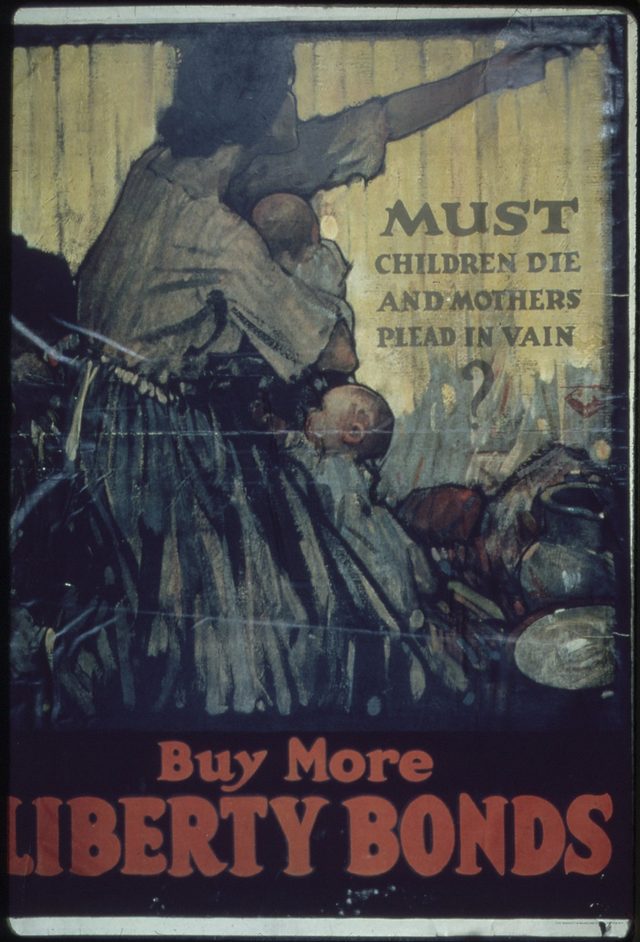
Content note. One poster here uses the claim that Belgian women were assaulted as a reason to enlist, and another shows civilian suffering to sell bonds. They are shown as issued; showing an item is not endorsing it.
How did WW1 posters address and portray women?
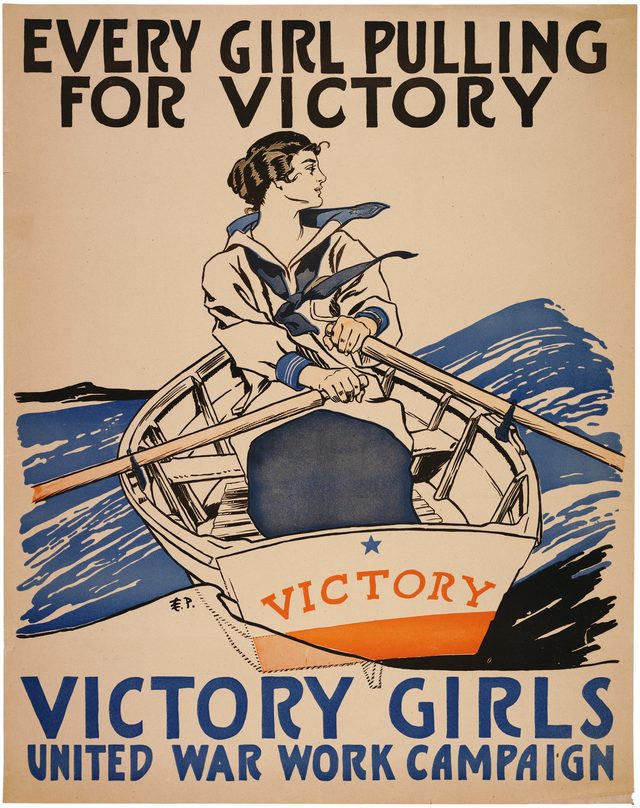
WW1 posters used women in three ways: as a target audience (bond buyers, food savers, volunteers), as a symbol (nurse, mother, allied labourer) and as a reason for men to enlist. Governments, the Red Cross, the YWCA and the Salvation Army issued them. The collection holds them mostly from the US, Britain, France and Canada.
Nurses and the Red Cross
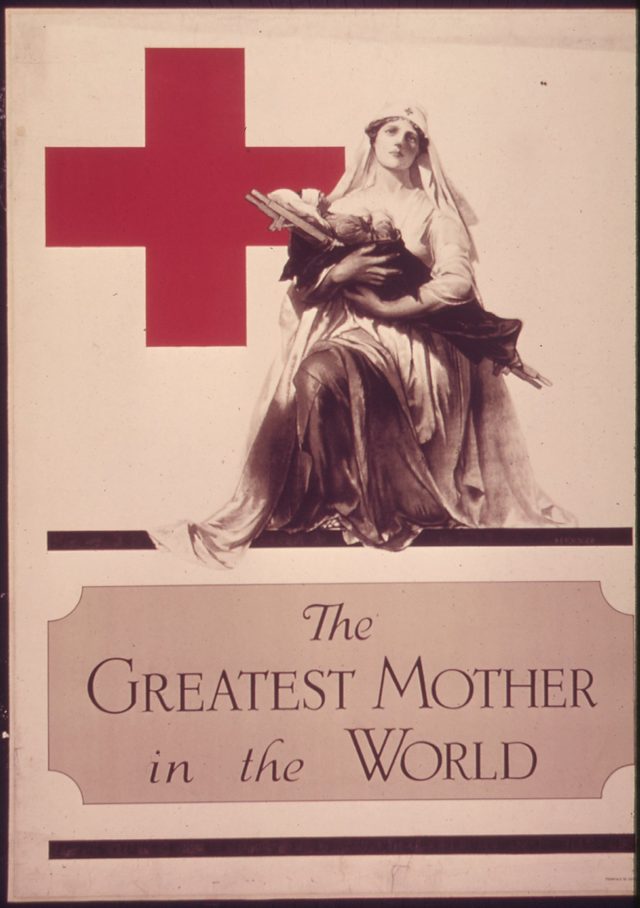
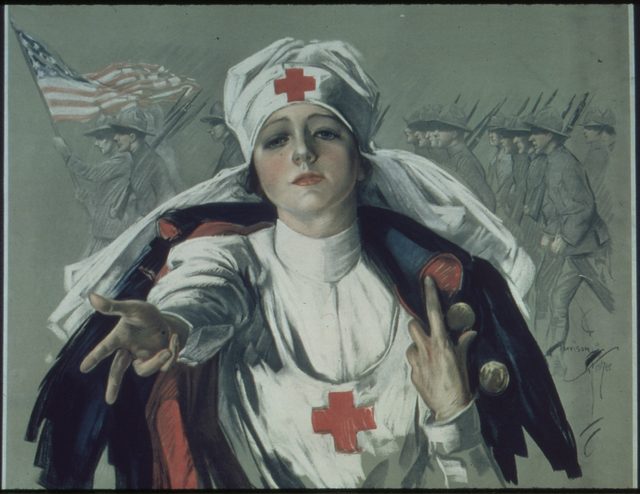
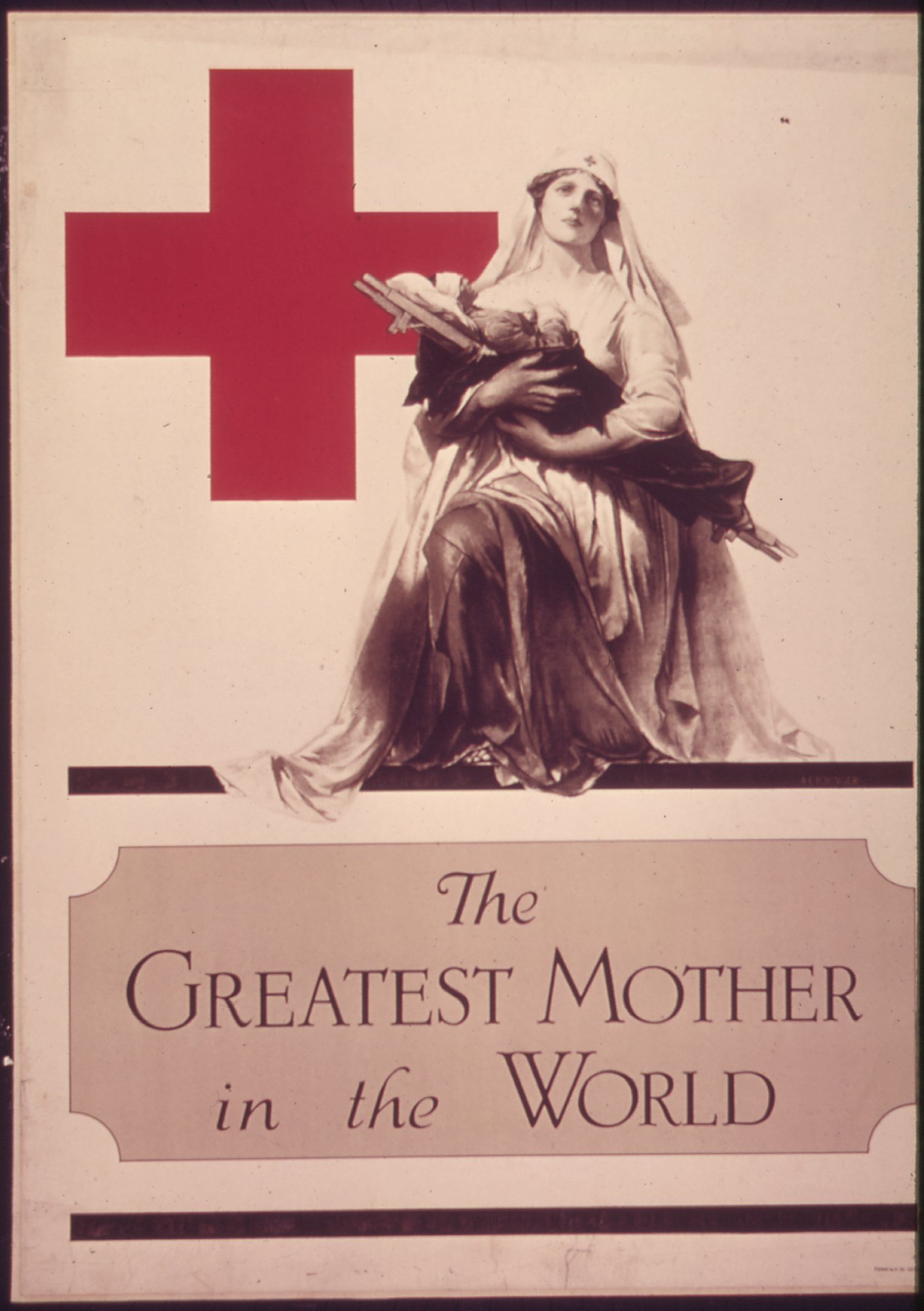
"The Greatest Mother in the World" (American Red Cross, 1918) borrows the pose of a Madonna and child for a nurse and a stretcher-borne soldier, which is Transfer: the weight of motherhood and religious imagery is lent to the organisation. "Red Cross Nurse" does the same with a flag and marching troops.
Explain moreShow less
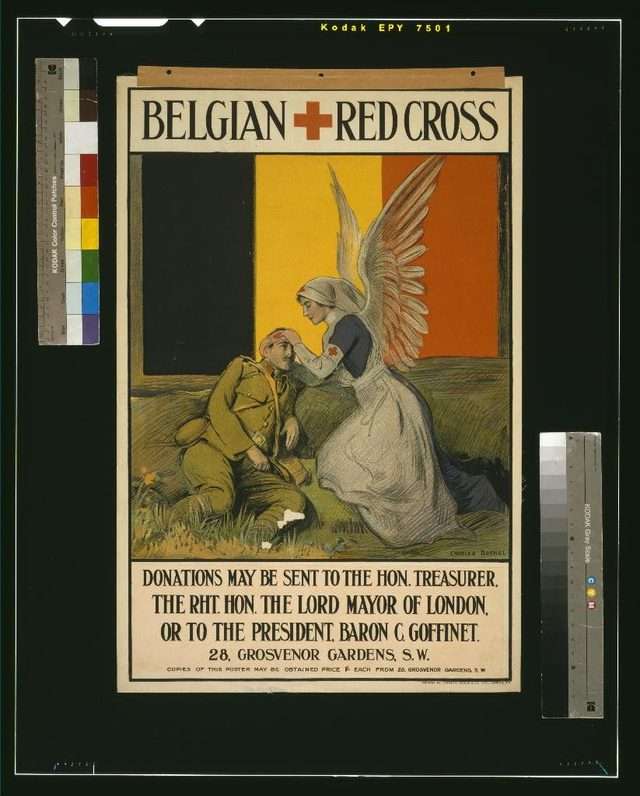
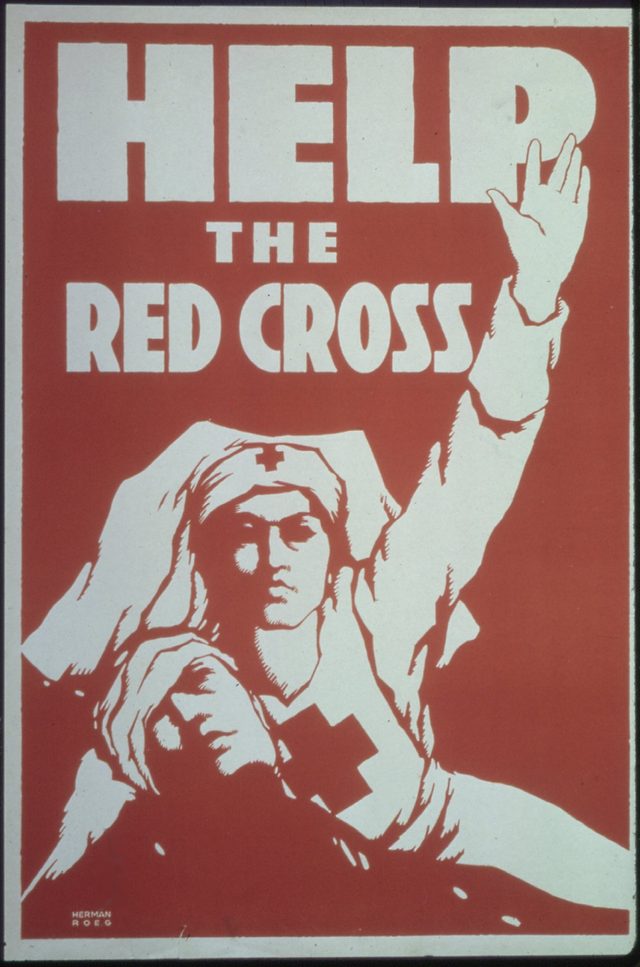
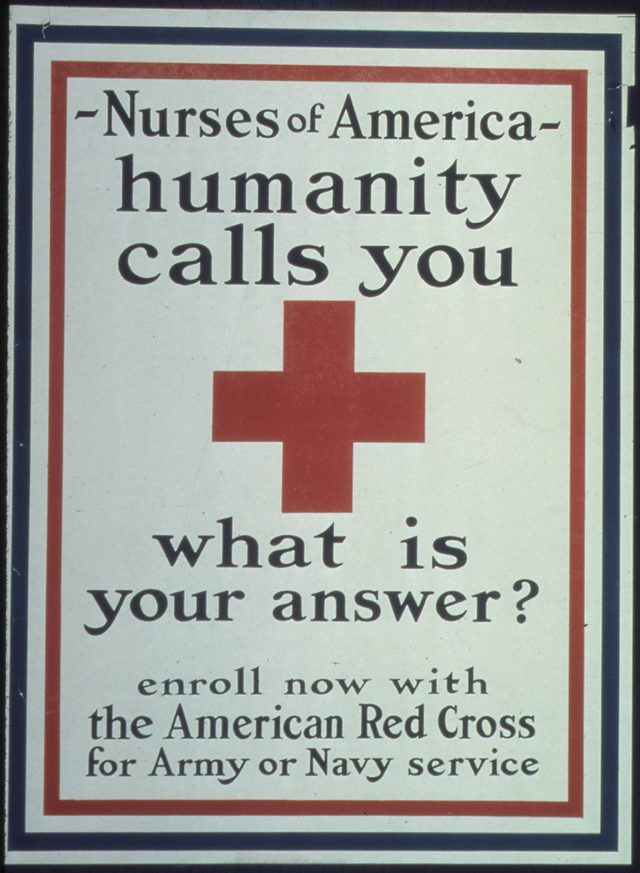
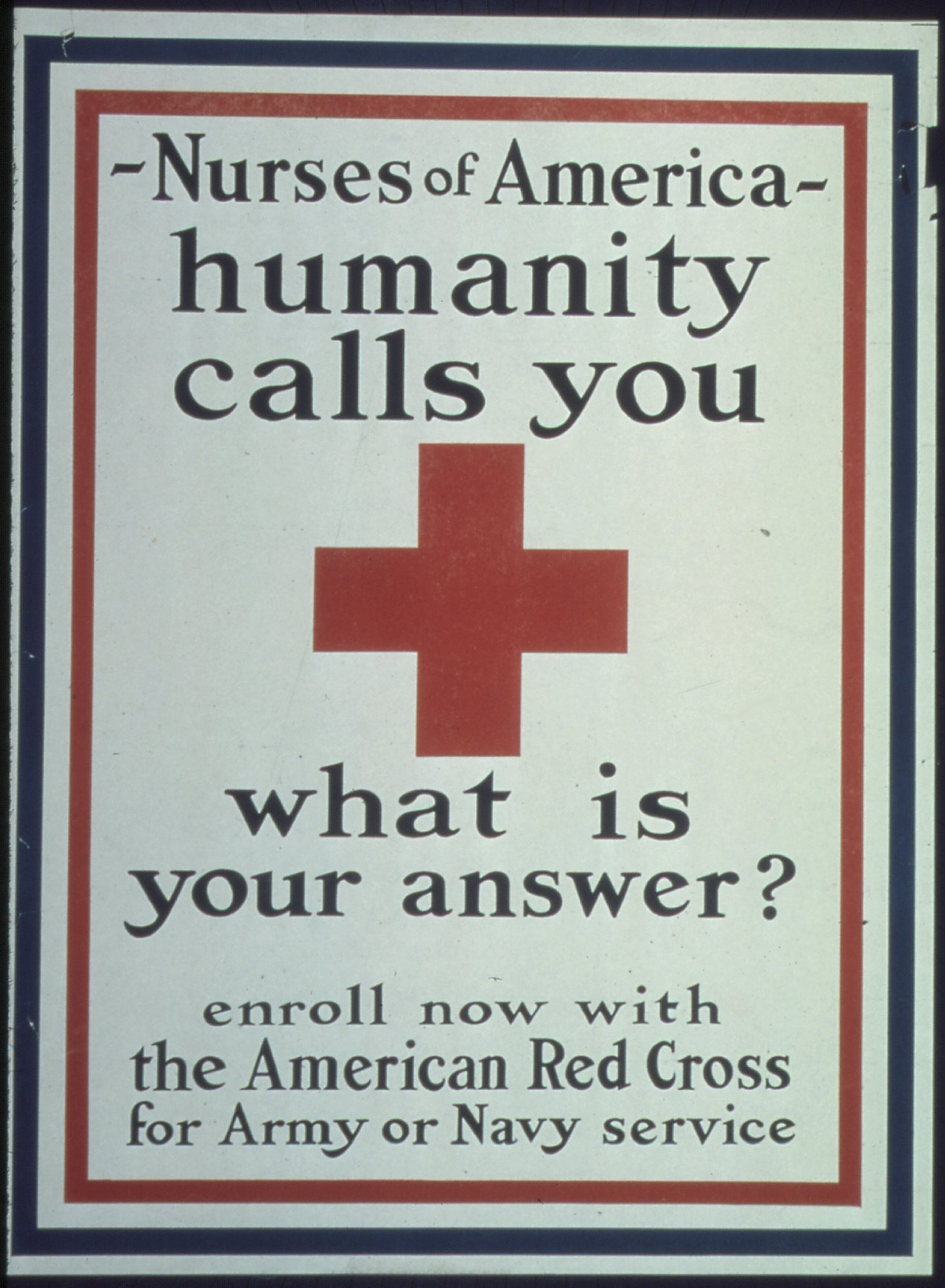
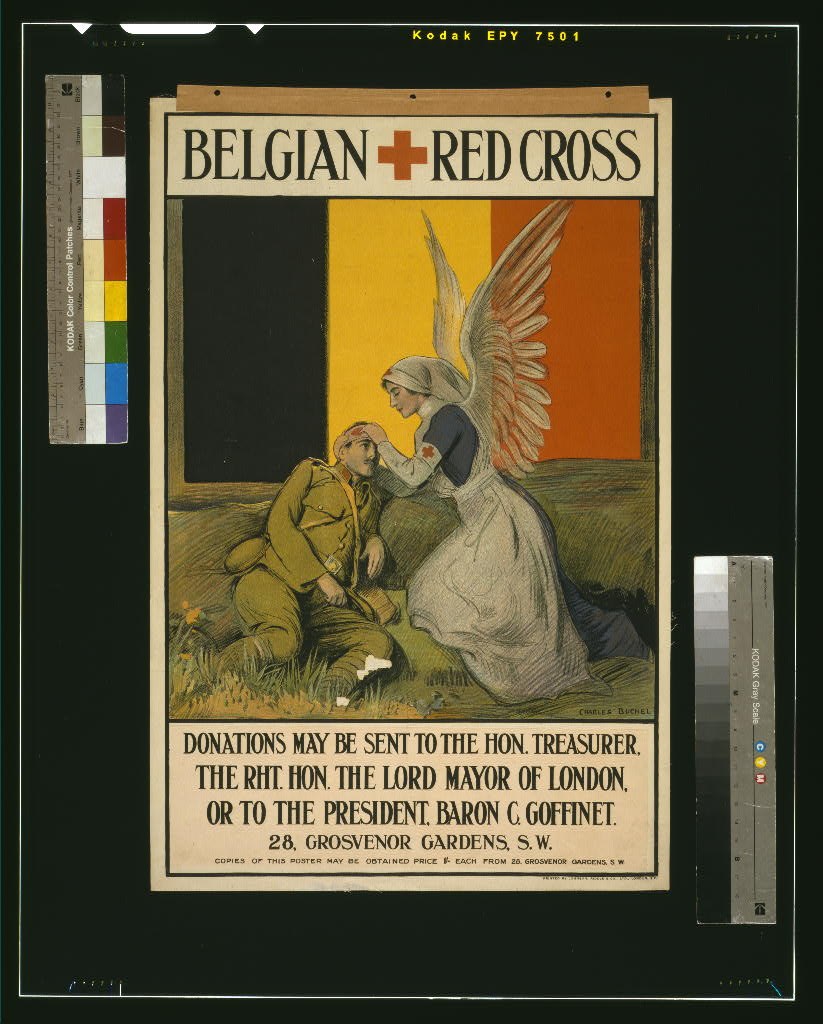
"Nurses of America, Humanity Calls You" is a recruiting sheet for Army and Navy nursing; its tag is Glittering generalities, since "humanity" is the caller. Britain's Belgian Red Cross appeal by Charles Buchel gives its nurse angel's wings, and a 1917 Red Cross poster, "Help the Red Cross", holds a figure against a nurse's chest.
Women at work: the allied labourer
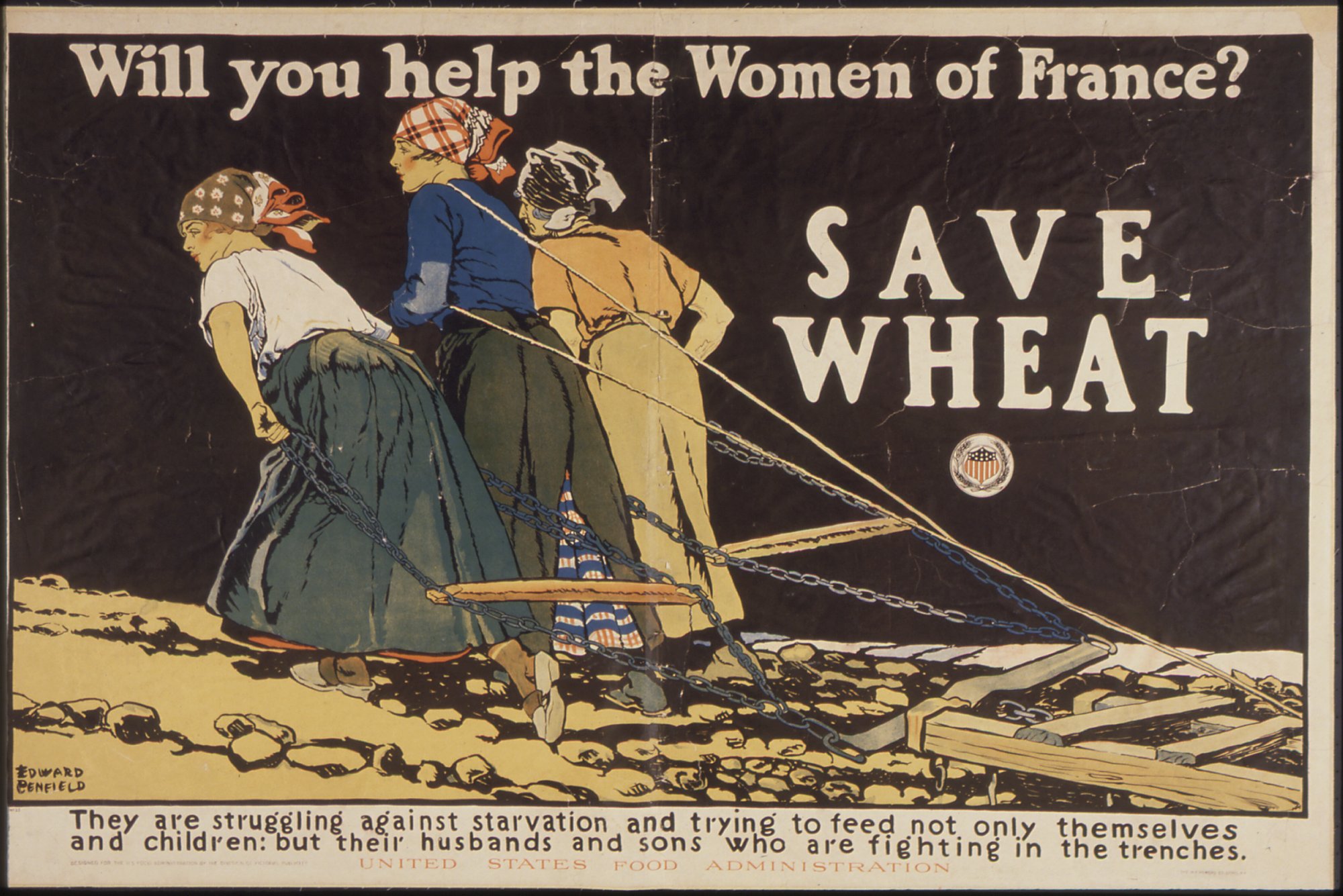
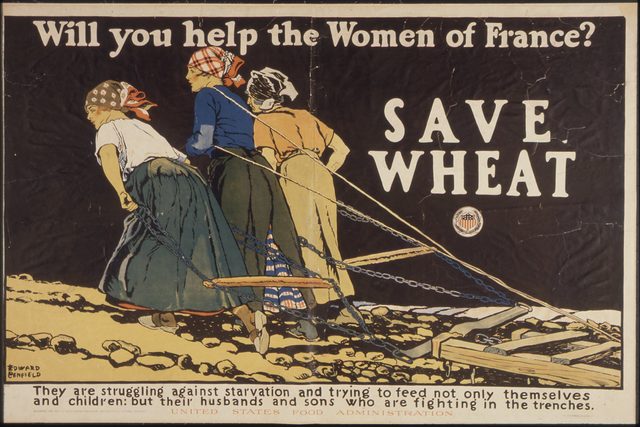
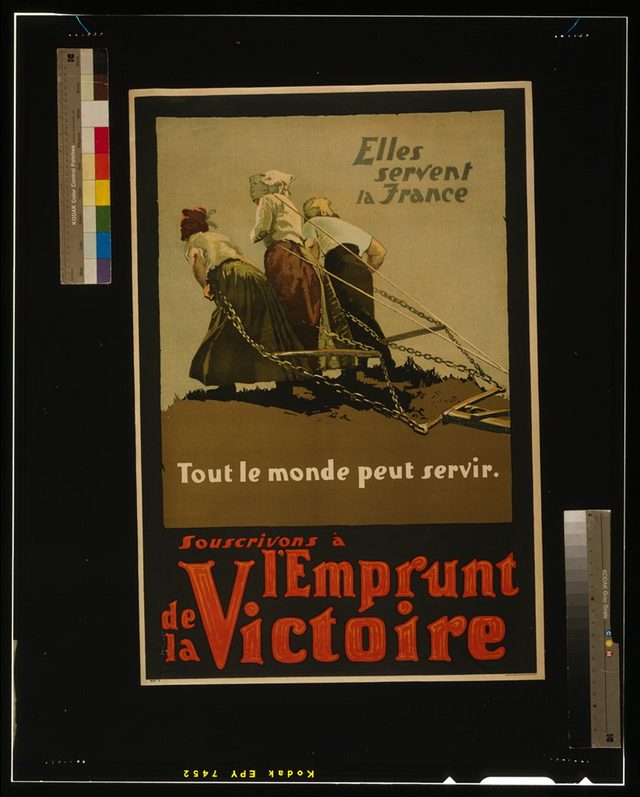
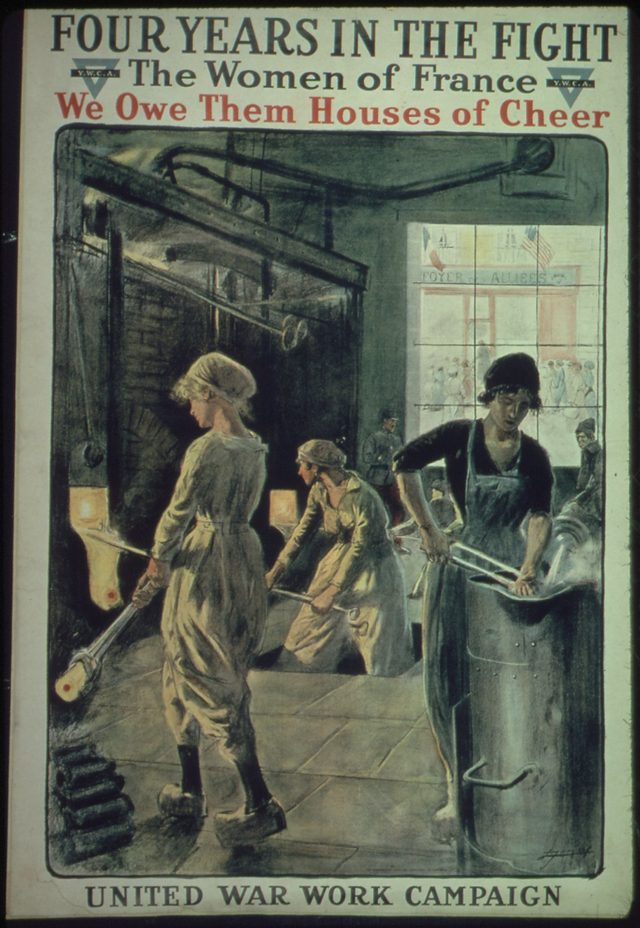
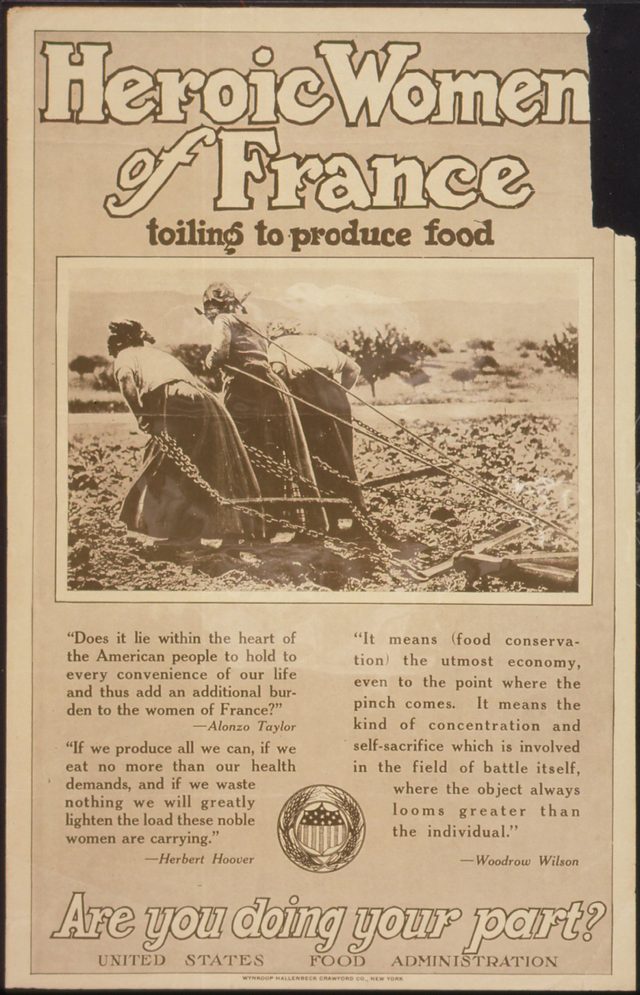
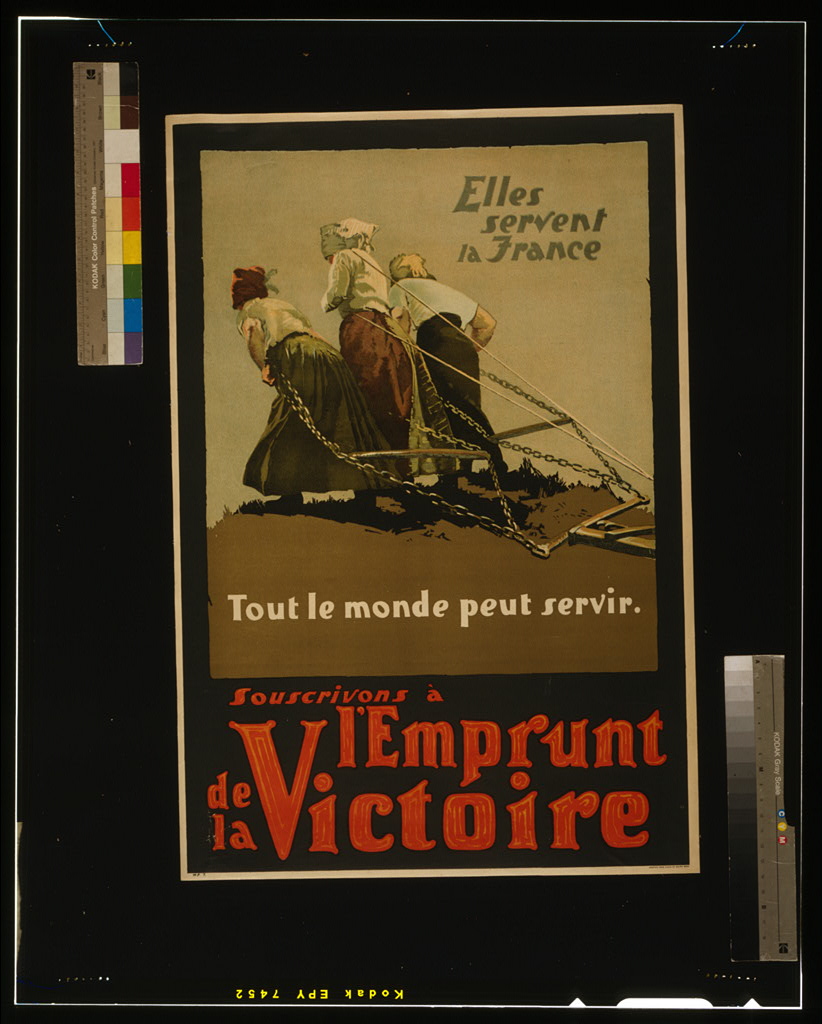
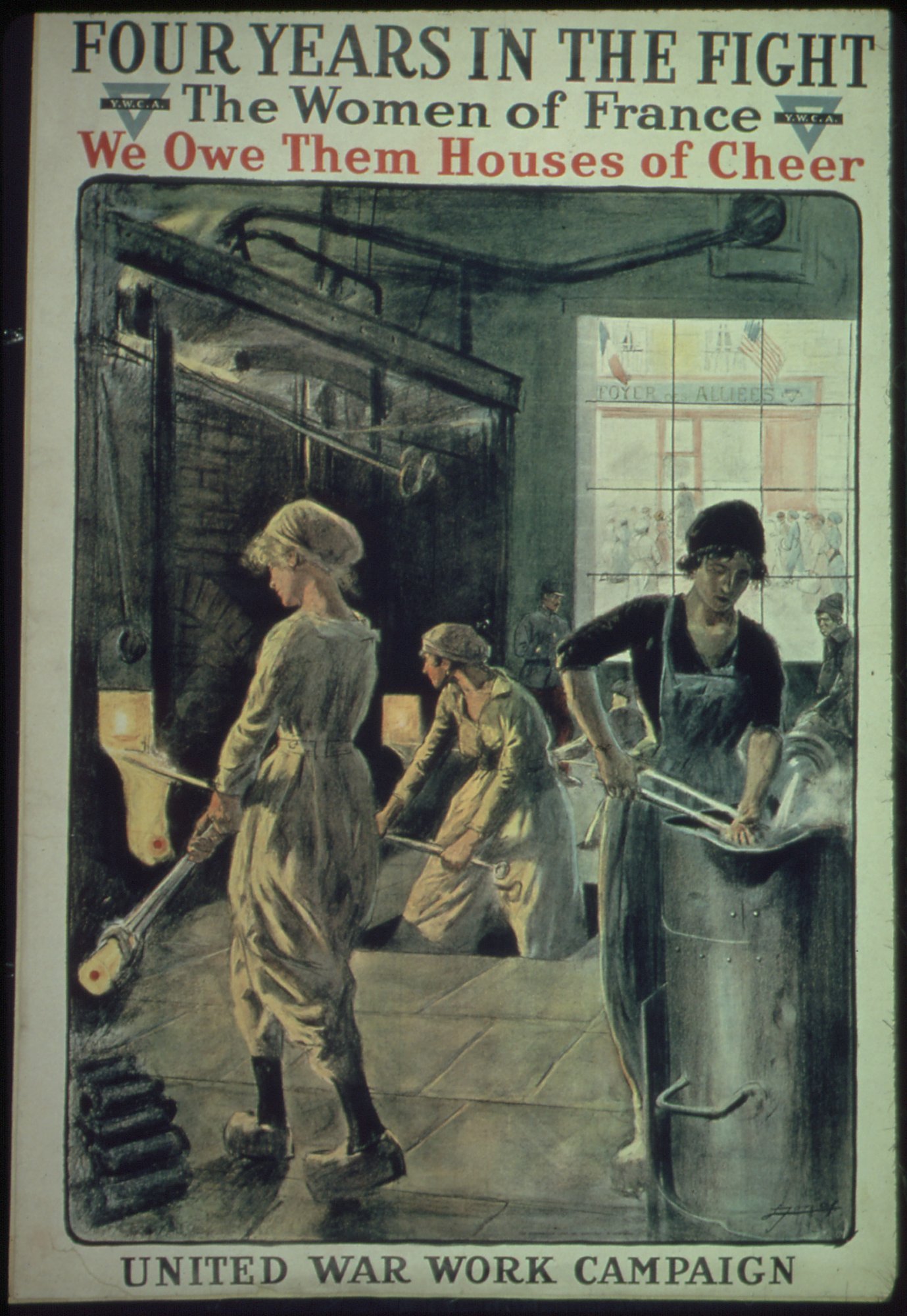
One motif, French women pulling a plough, appears on sheets from three issuers. The US Food Administration asked Americans to save wheat; the YWCA sought money for recreation huts; Canada's Victory Loan sheet, "Elles servent la France", asked for bond purchases. Each uses Transfer: regard for the women's labour is attached to an unrelated request.
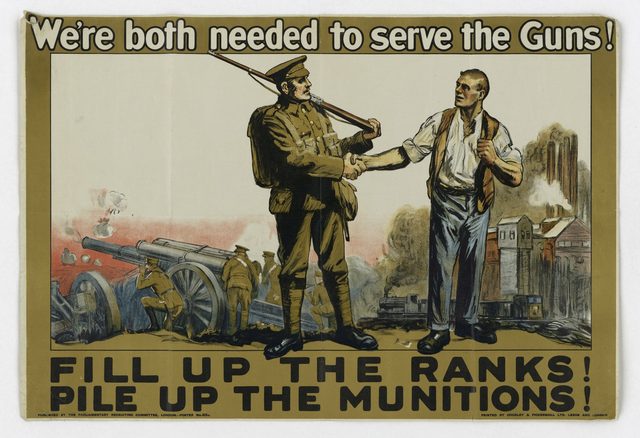
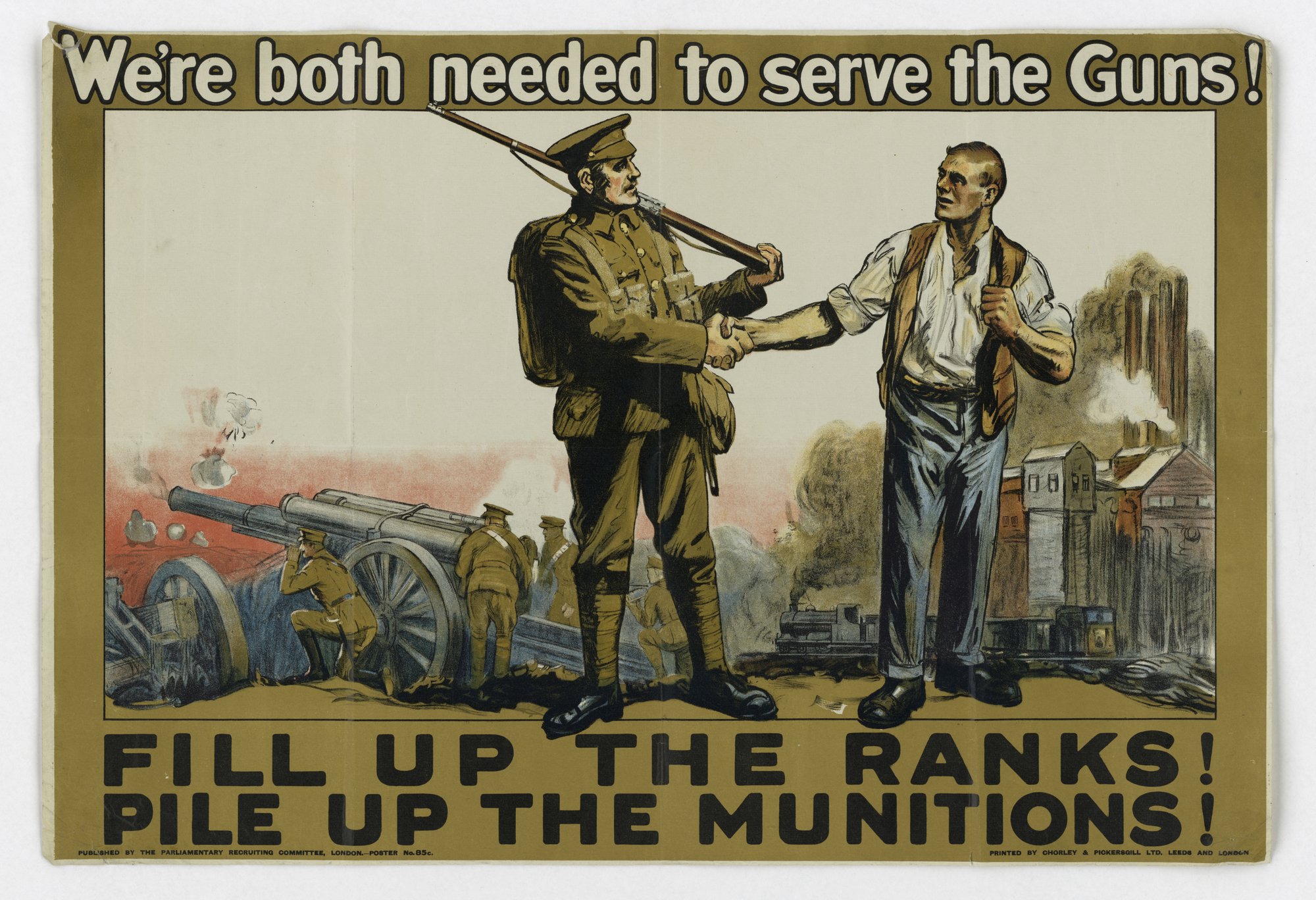
Britain's Parliamentary Recruiting Committee paired a soldier and a munitions worker in "We're Both Needed to Serve the Guns", an Identity fusion of enlisting and producing.
Women as the home front
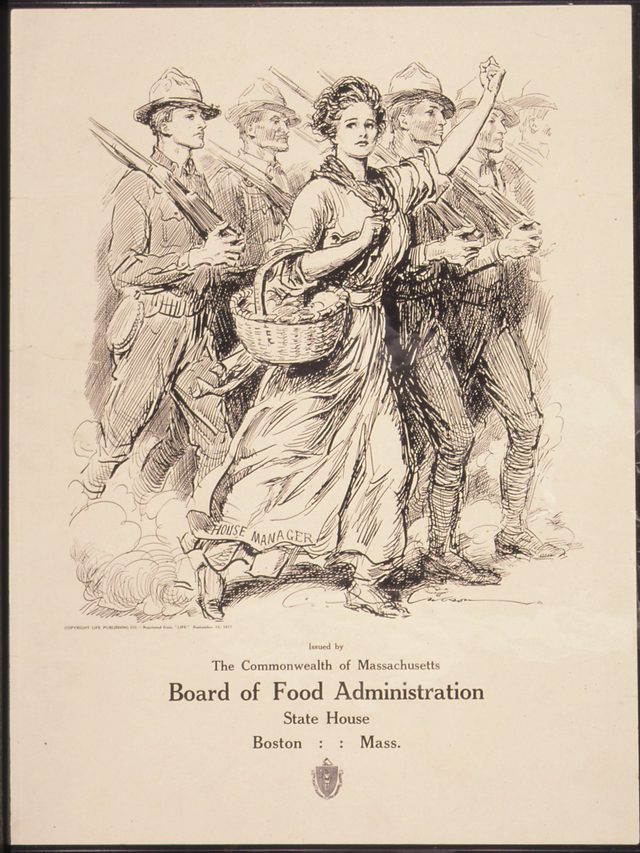
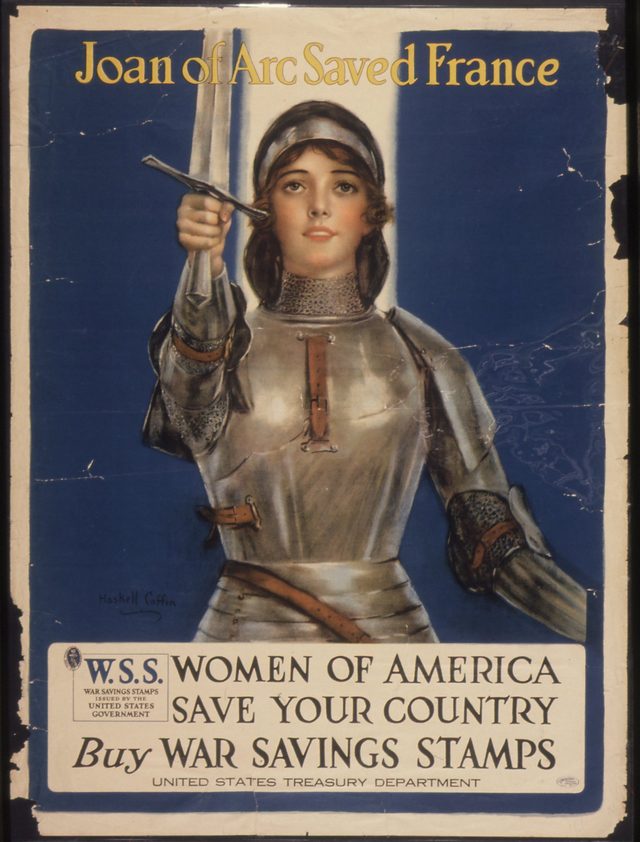
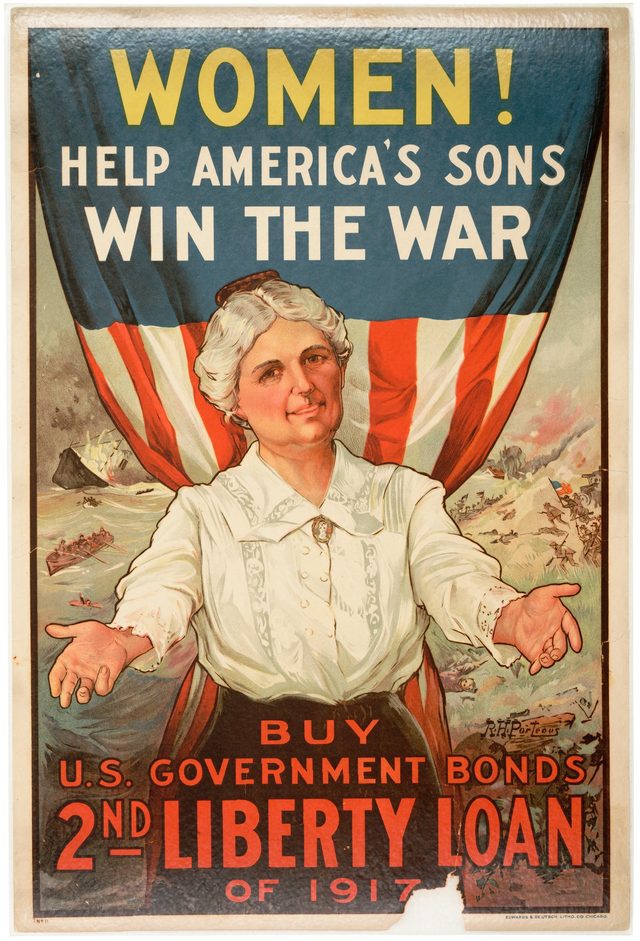
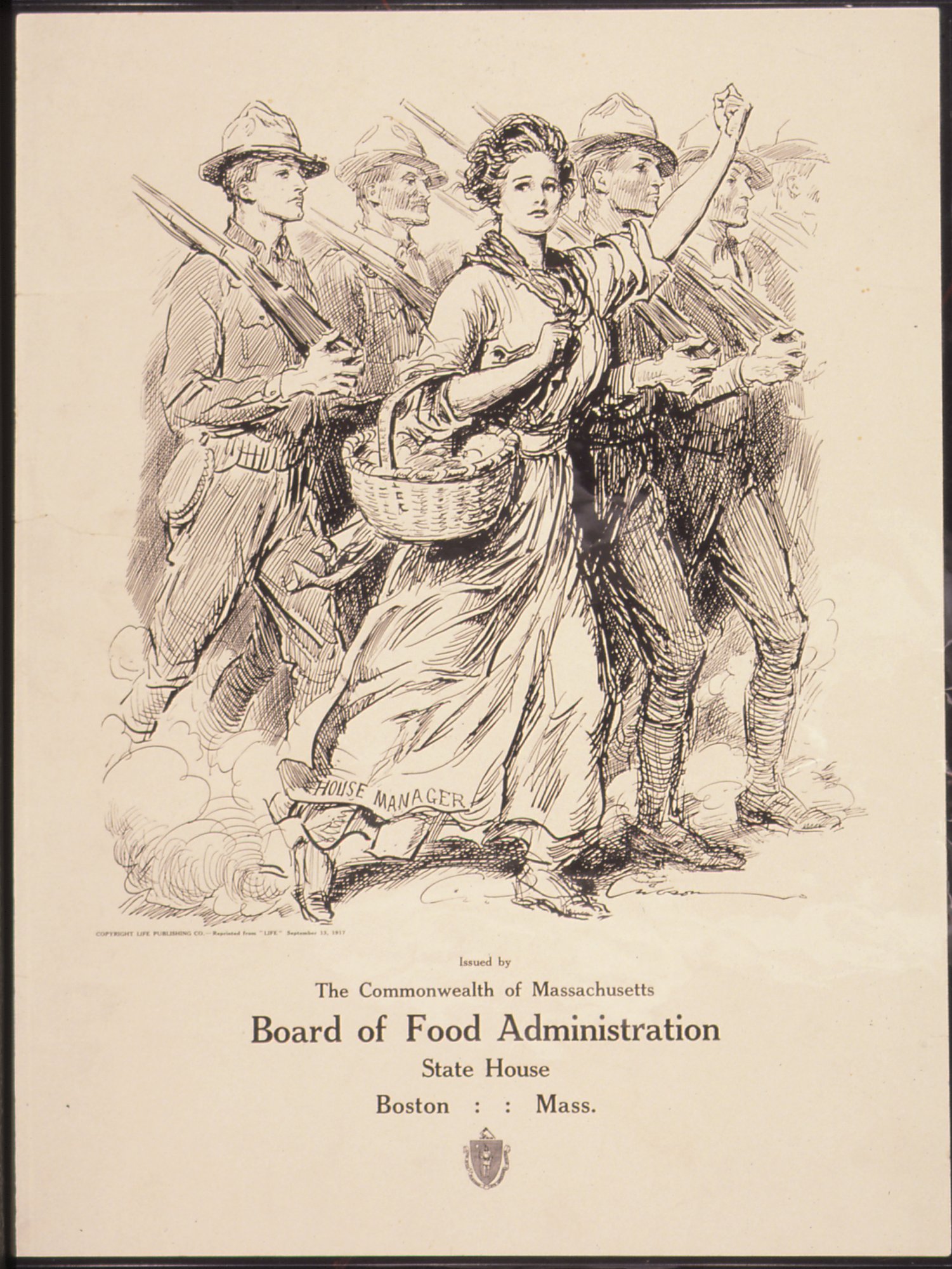
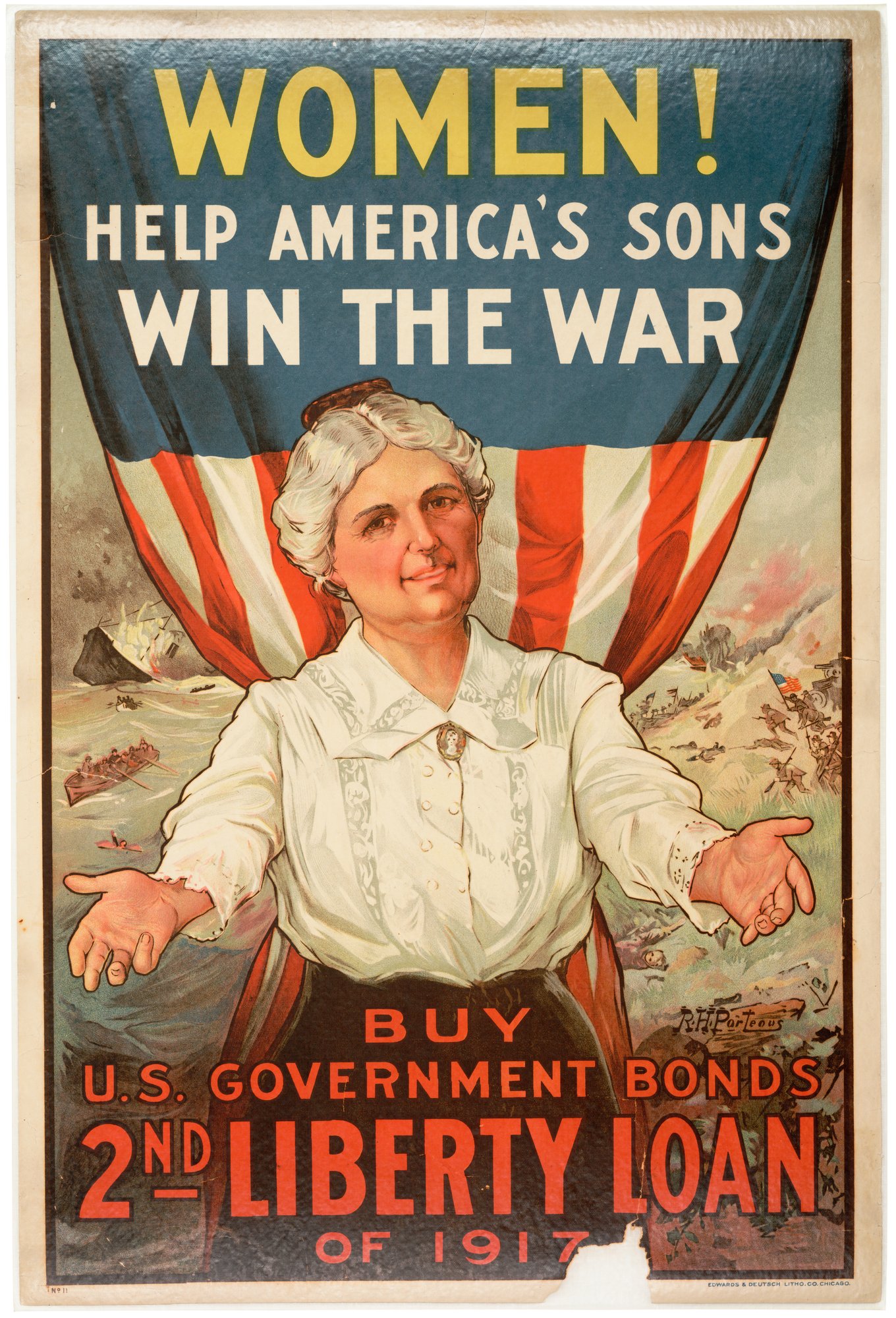
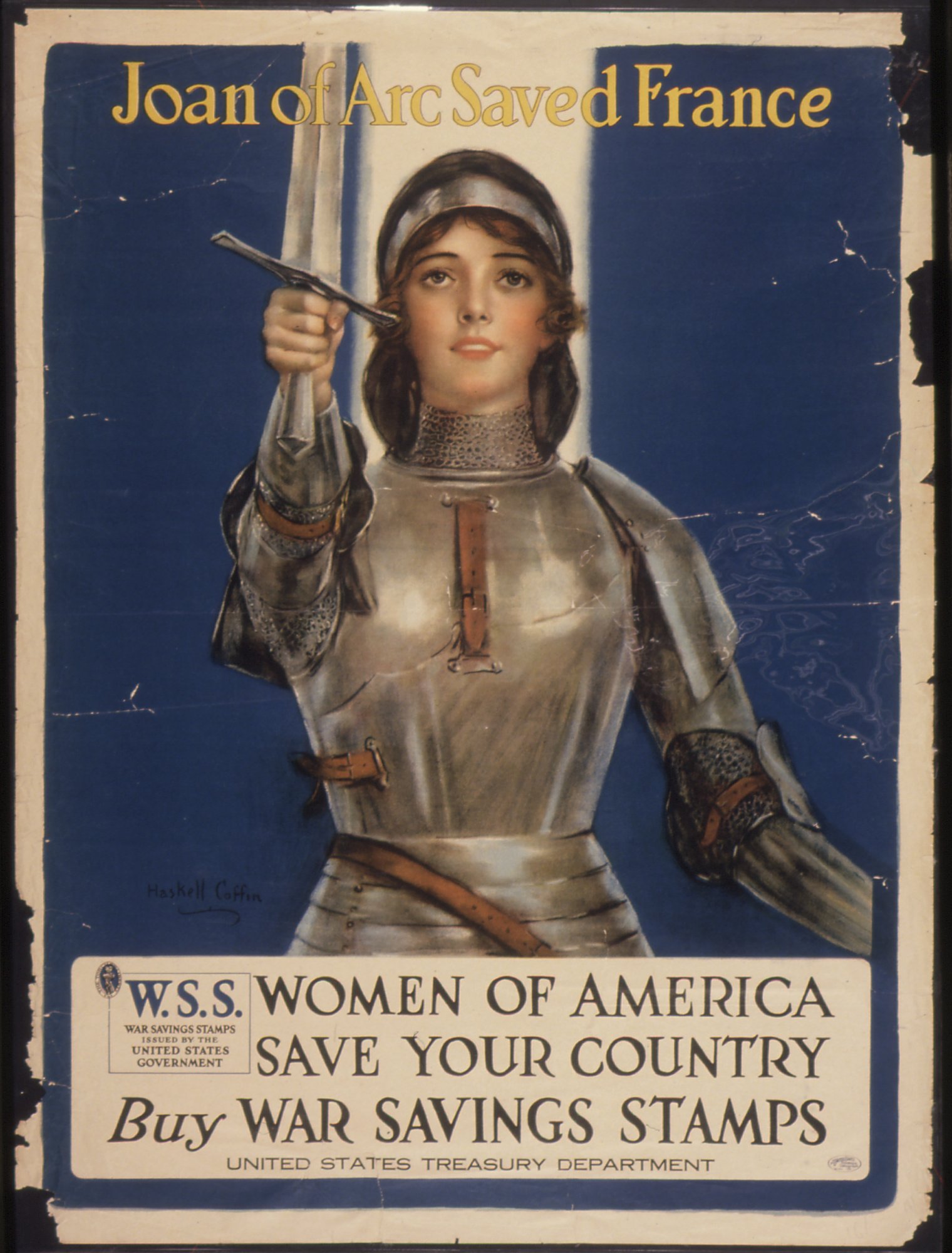
"The House Manager" (Massachusetts, 1917) places a housekeeper ahead of a column of soldiers, so household food management reads as service (Transfer). "Women! Help America's Sons Win the War" (2nd Liberty Loan, 1917) pairs a maternal figure with a torpedoed ship and a battlefield, a Fear appeal about sons. "Joan of Arc Saved France" addresses "Women of America" with a heroine's prestige.
Explain moreShow less
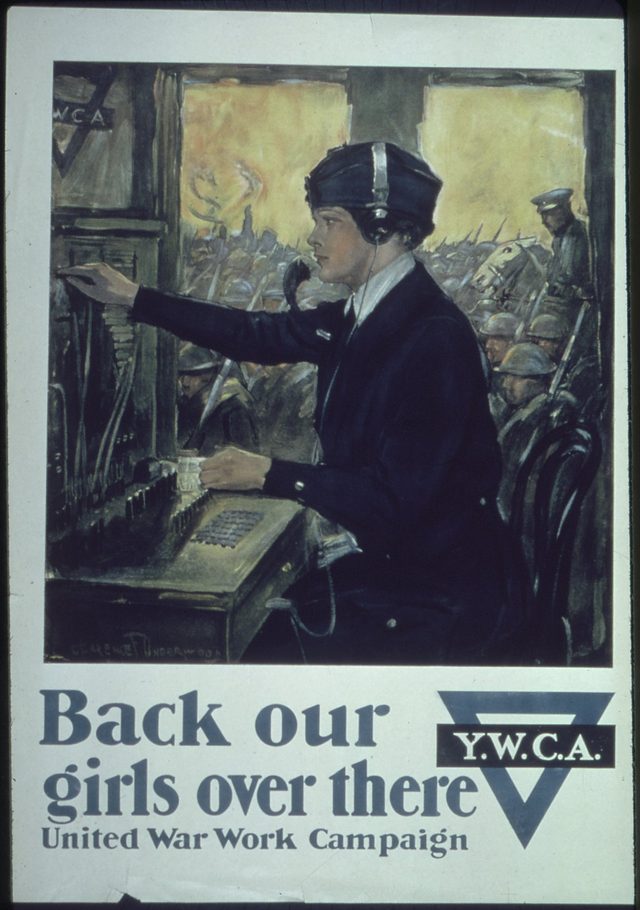
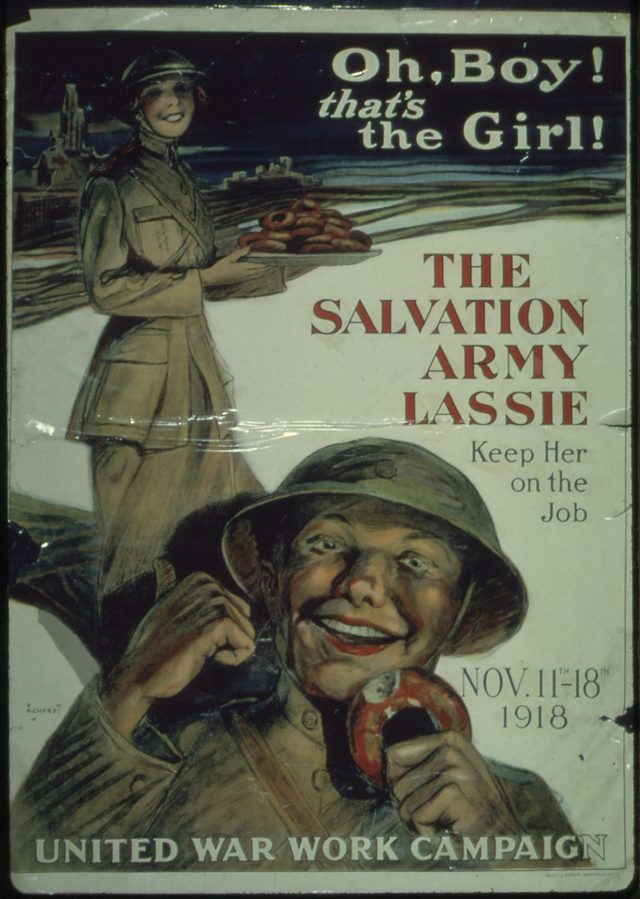
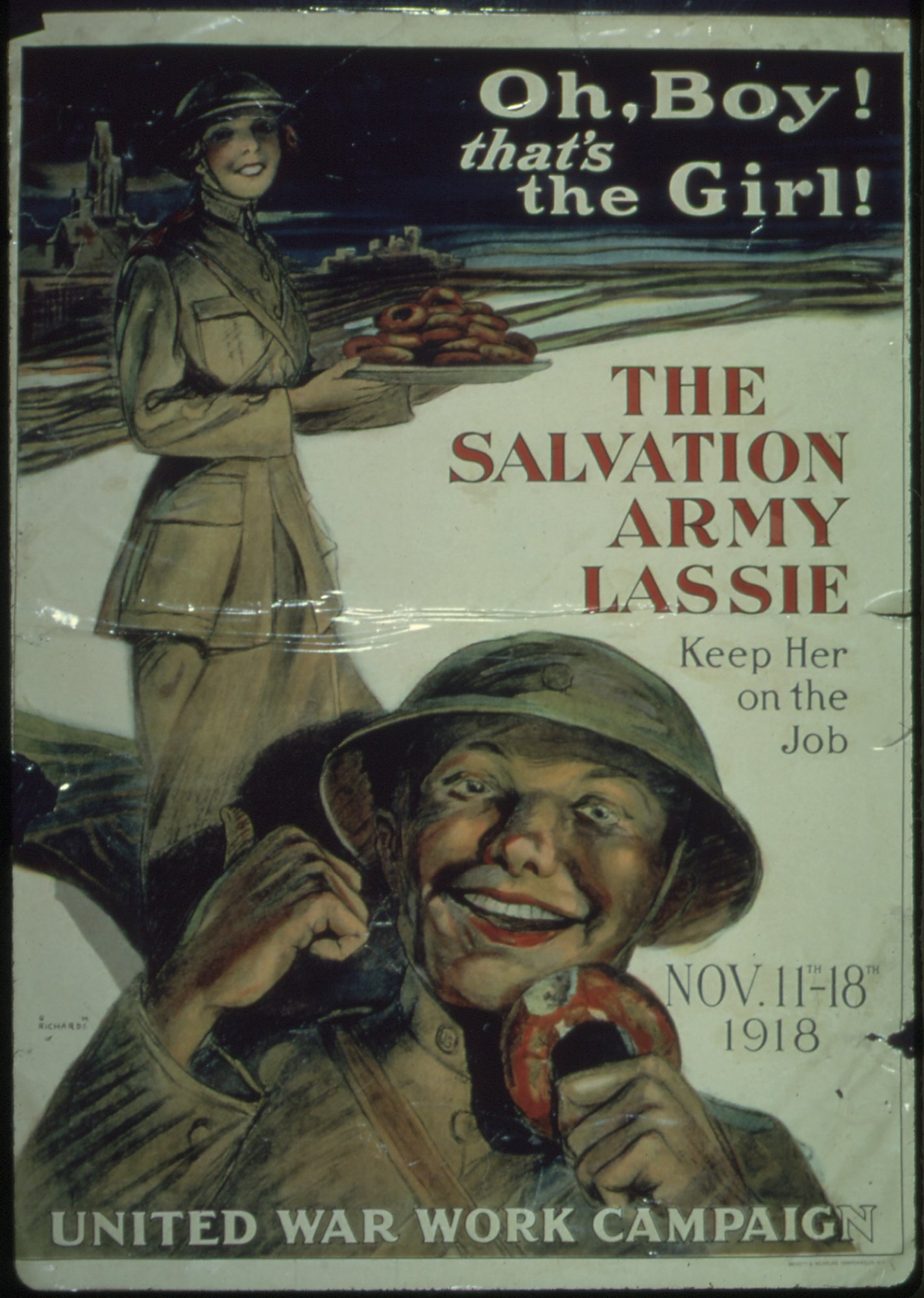
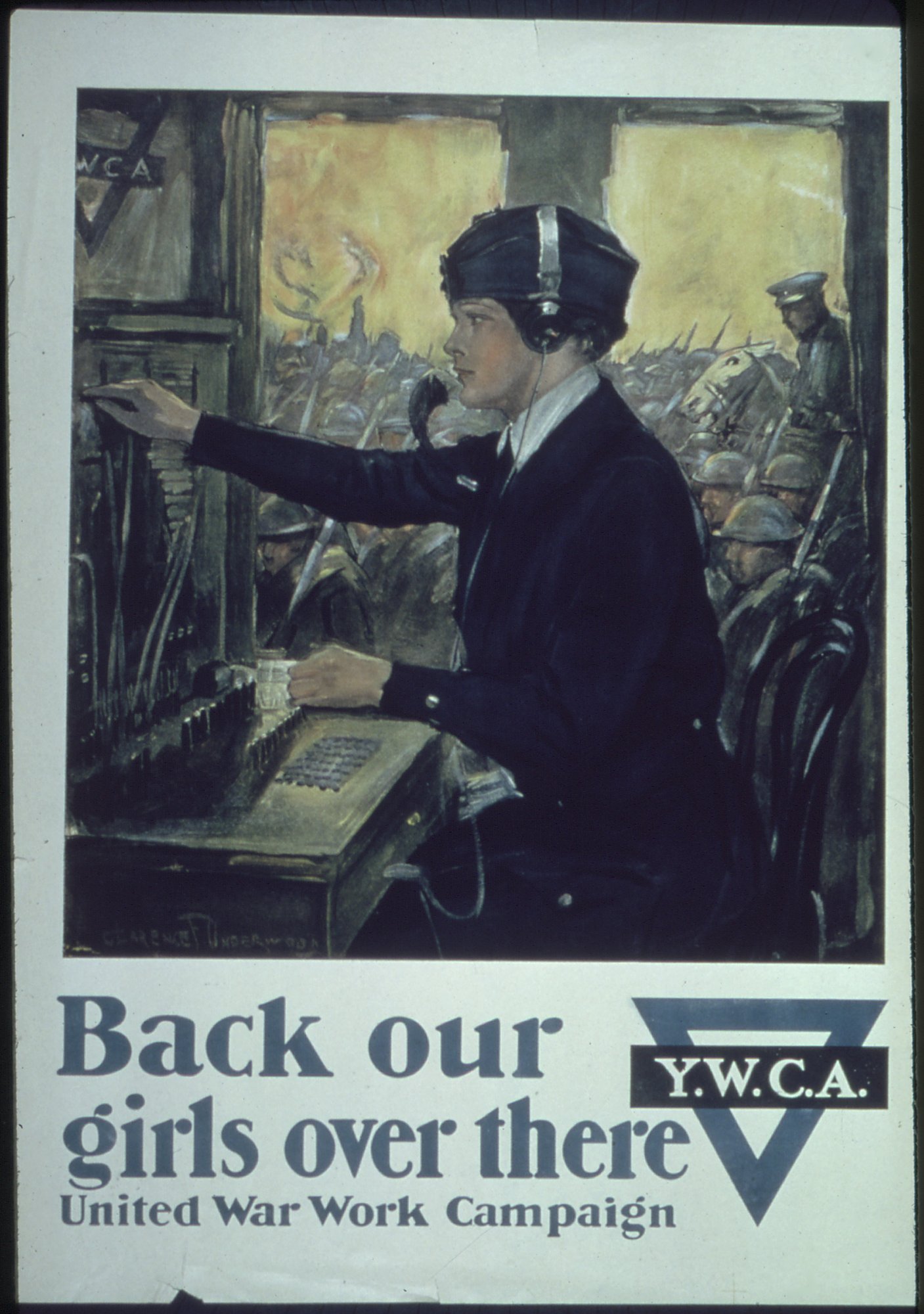
The Salvation Army doughnut sheet ("Oh, Boy That's the Girl!") and the YWCA's "Back Our Girls Over There" show women's service to soldiers, again by Transfer.
Women as a reason to fight
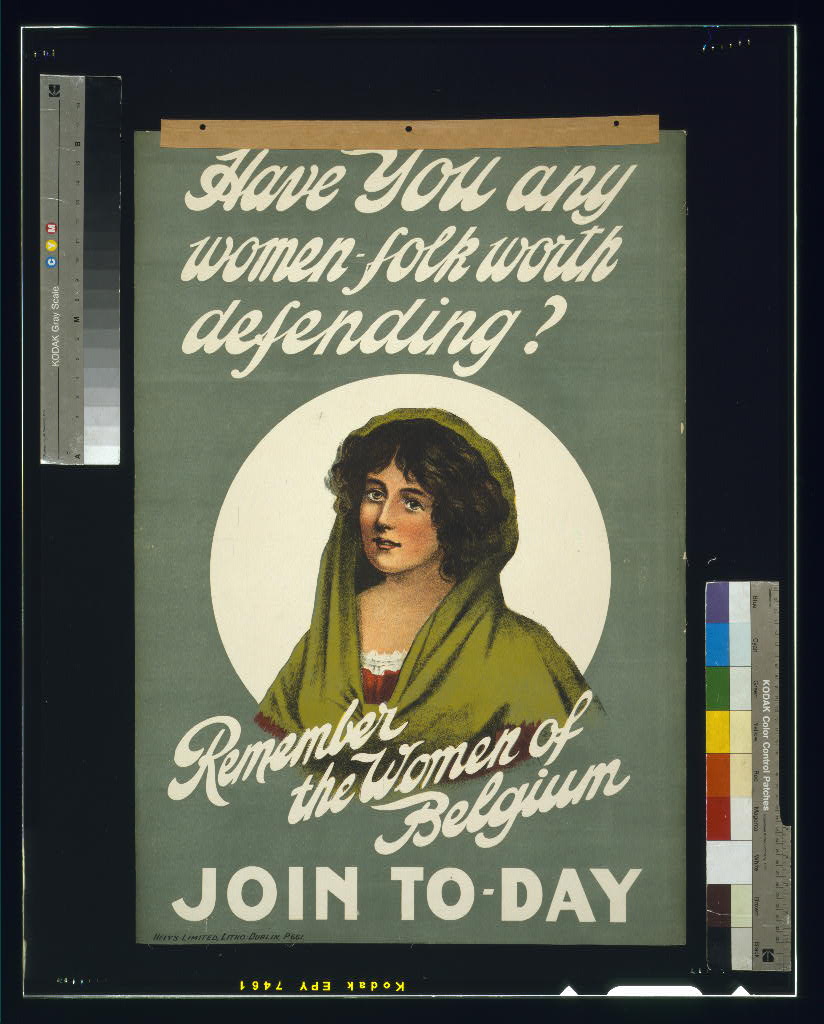
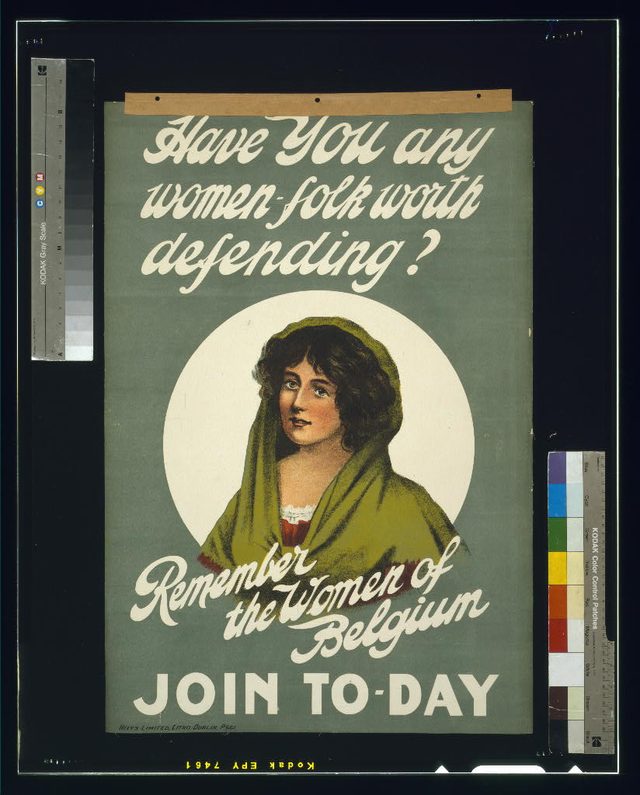
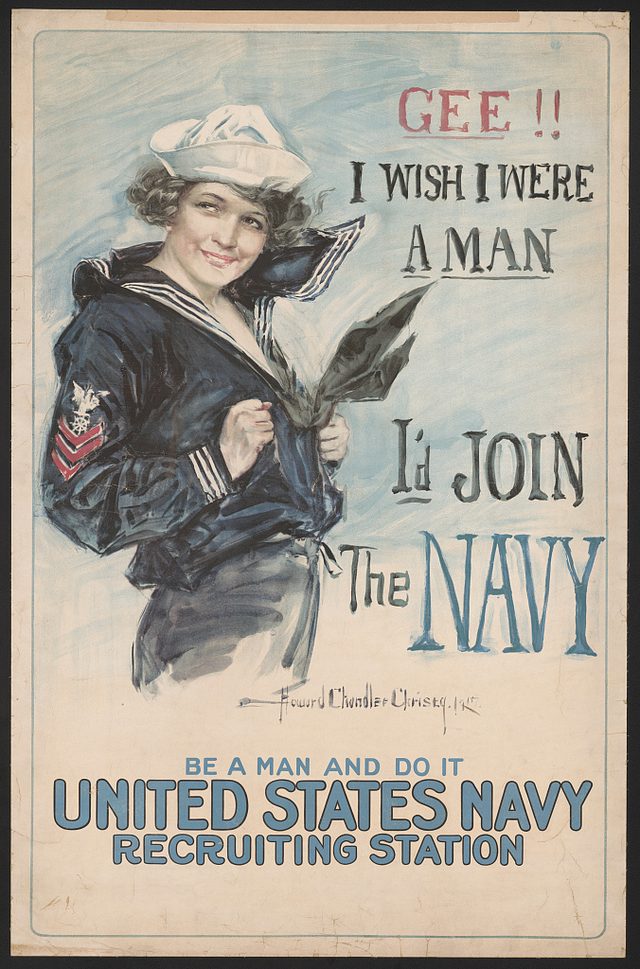
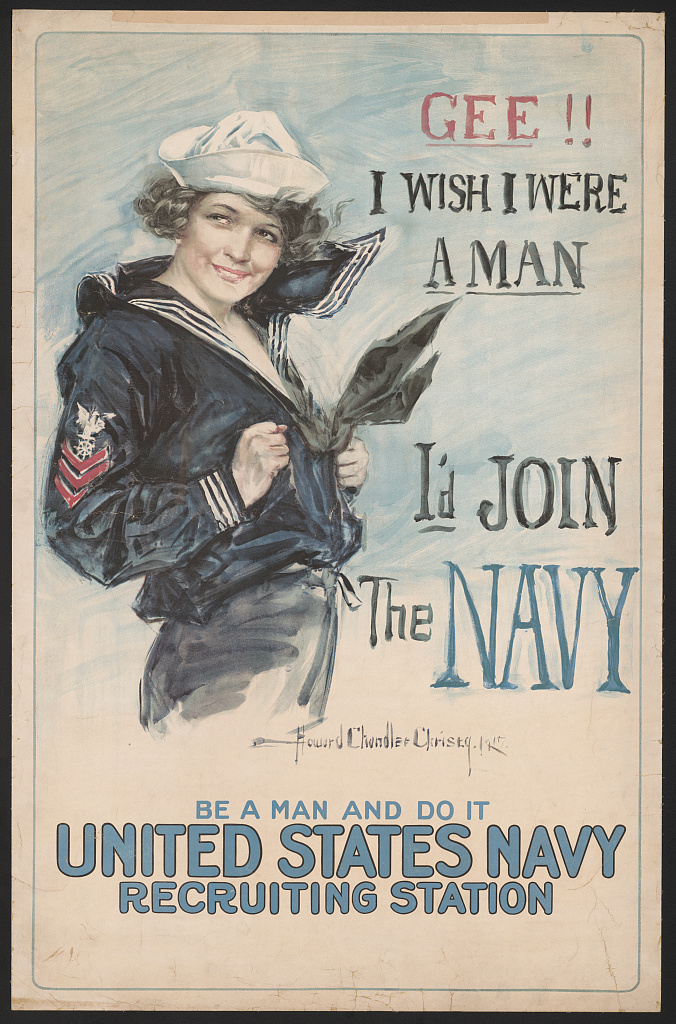
An Irish recruiting poster of 1915 asks "Have you any women-folk worth defending?" and points to reports of violence against Belgian women, never shown: a Fear appeal that moves the threat onto the viewer's family. Howard Chandler Christy's Navy poster has a young woman say "I wish I were a man", then adds "Be a man and do it", lending her appeal to recruiting.
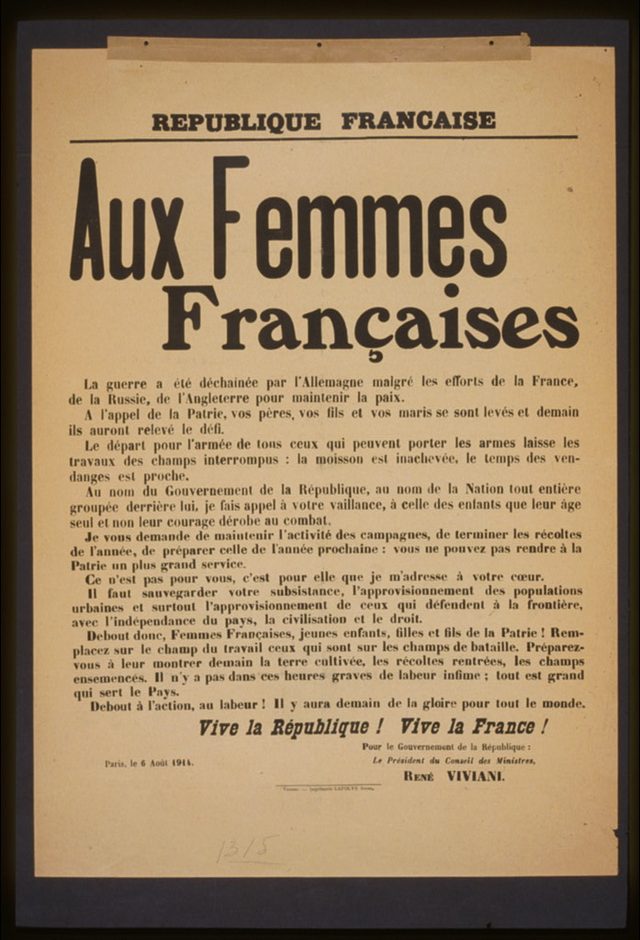
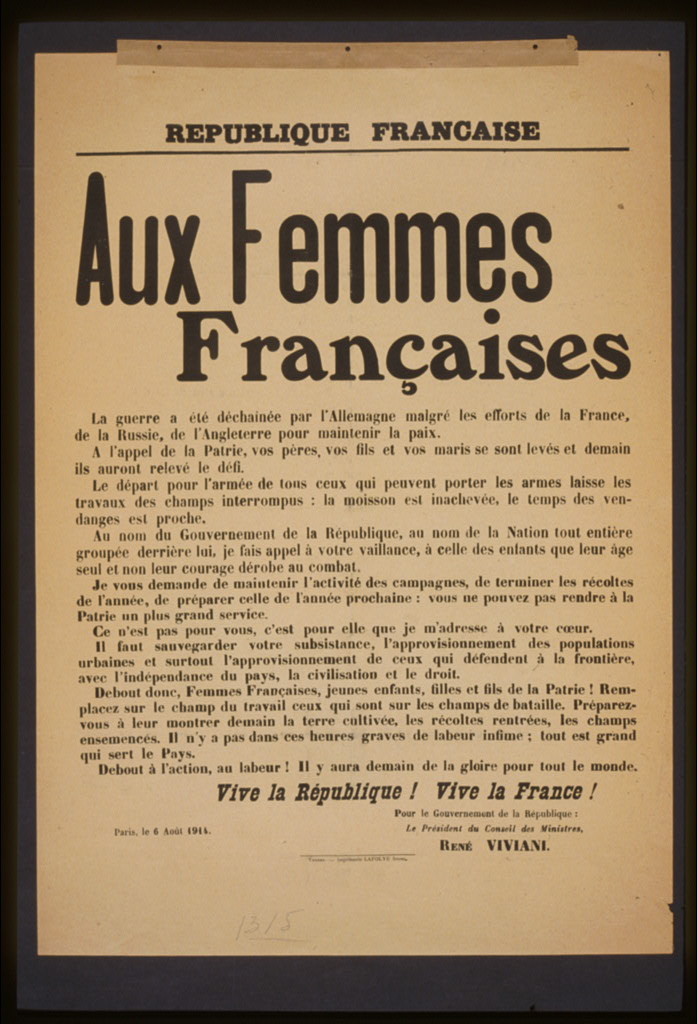
The French proclamation "Aux Femmes Françaises" (6 August 1914) is text only and asks women, children and the elderly to bring in the harvest.
Differences worth stating
The collection's holdings differ by country: most of the sheets shown here are American, and the British, French, Irish and Canadian items are fewer, so the page does not measure how much each government addressed women. The intent differs too: a charity asked for gifts, a treasury for loans, a recruiting committee for enlistment. The same techniques recur across all of them.
What the collection does not hold
- Not here: British Women's Land Army posters of 1917 to 1919; the collection's Land Army items date from the Second World War.
- Not here: German, Austrian, Russian or Italian posters addressed to women, or women's own posters (suffrage items are filed separately as cartoons and leaflets).
- Thin: British munitions-worker posters; one sheet stands for the subject.
For wider context see WW1 posters by country, Liberty Loan posters and recruiting posters.
Sources and further reading
Sources
National Archives and Records Administration, World War I posters (record groups 4-P and 44-PF).
National Archives and Records Administration, World War I posters (record groups 4-P and 44-PF). Library of Congress, Prints and Photographs Division, World War I Posters. Maurice Rickards, Posters of the First World War (1968). Each item carries its own source and rights note.