Content note. Several posters here call Germans "the Hun" and show German soldiers threatening women and children, as issued in 1918. They are shown with their sponsors named, and showing an item is not endorsing it.
What were Liberty Loan posters?
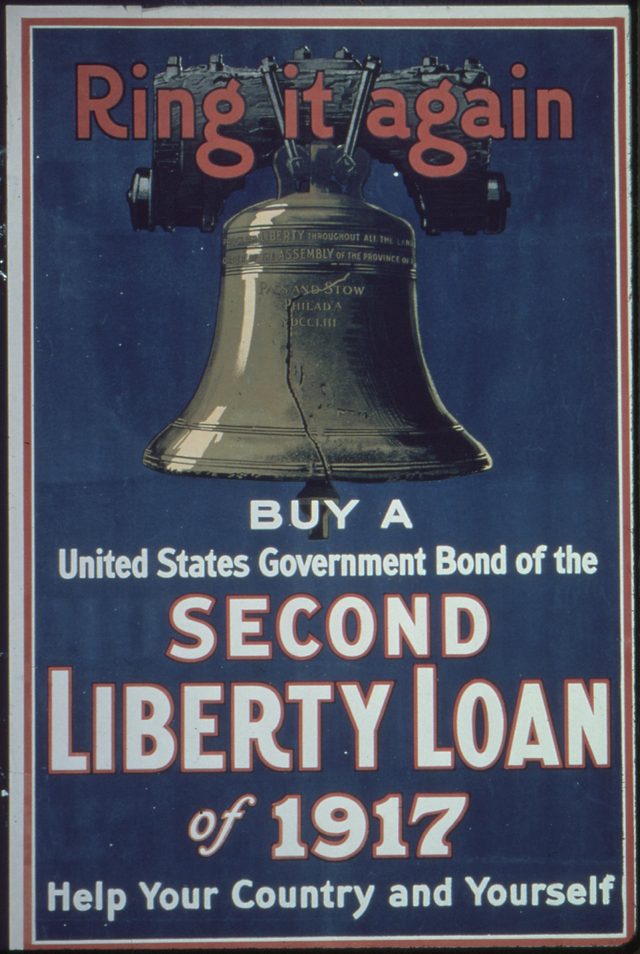
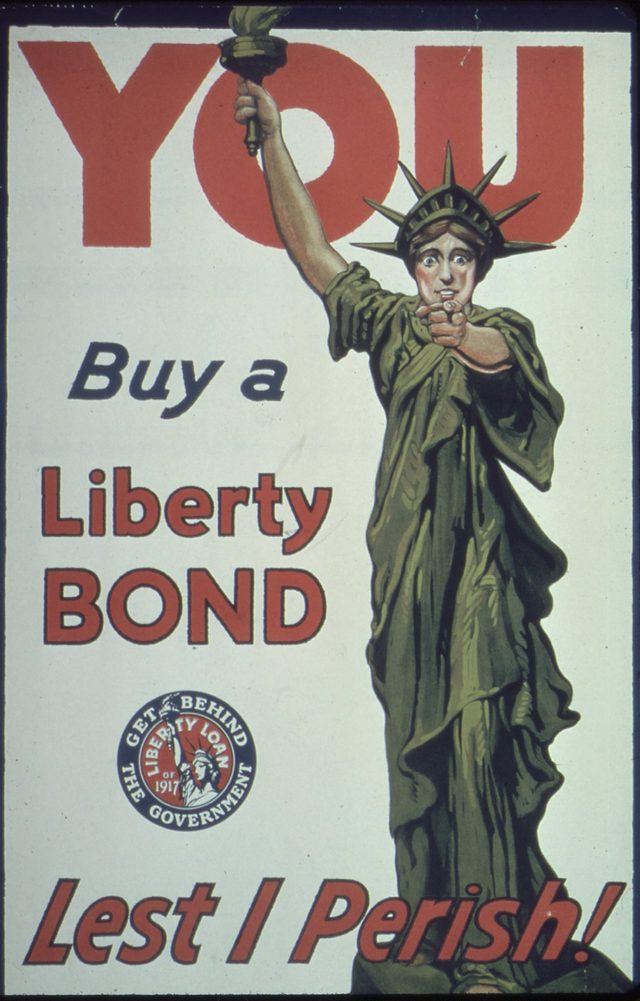
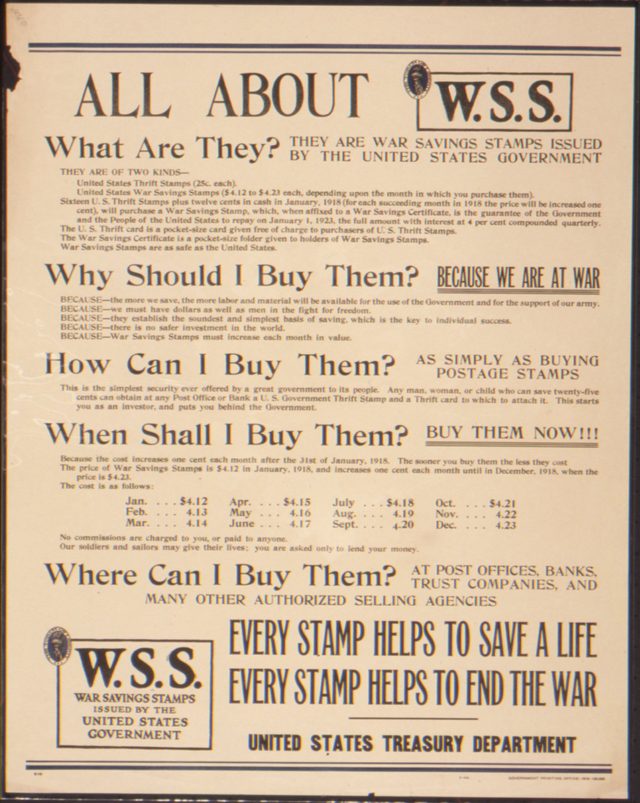
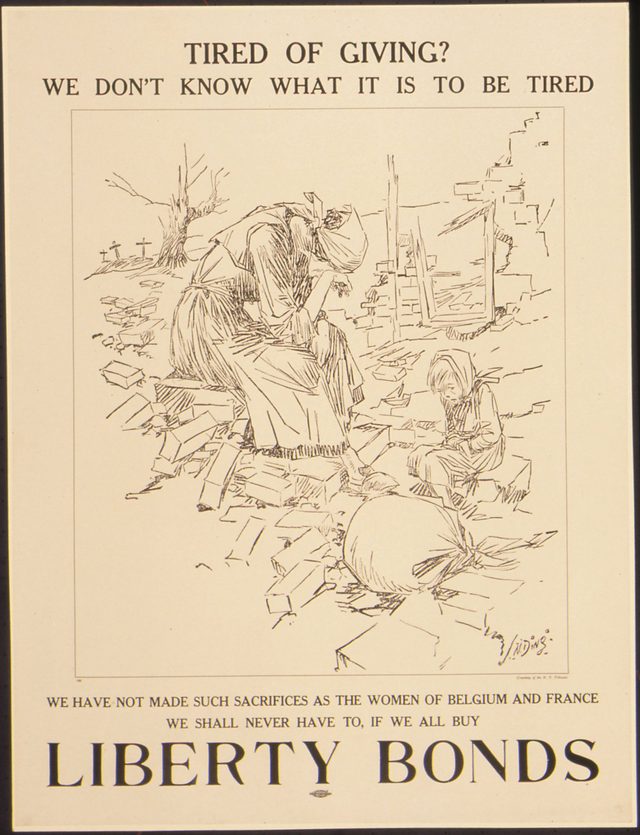
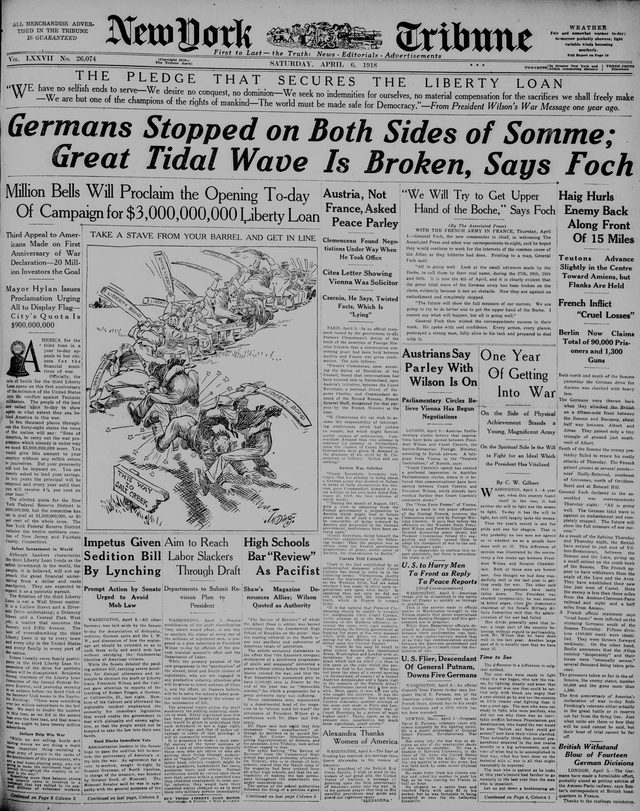
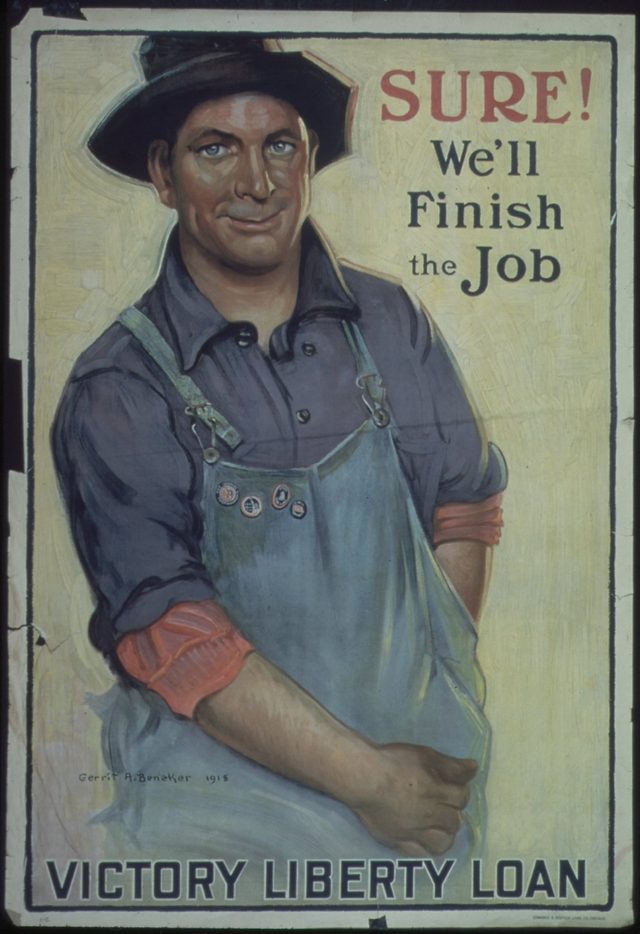
Liberty Loan posters were the advertising for the US government's First World War bond drives: four Liberty Loans in 1917 and 1918, and the Victory Liberty Loan in spring 1919. The Treasury and local Liberty Loan committees issued them, with War Savings Stamps posters for small savers. Canada ran its own Victory Loan campaigns, and France, Italy, Russia, Germany and Austria-Hungary sold war loans with posters too. They asked the public to lend money for the war.
The American loans
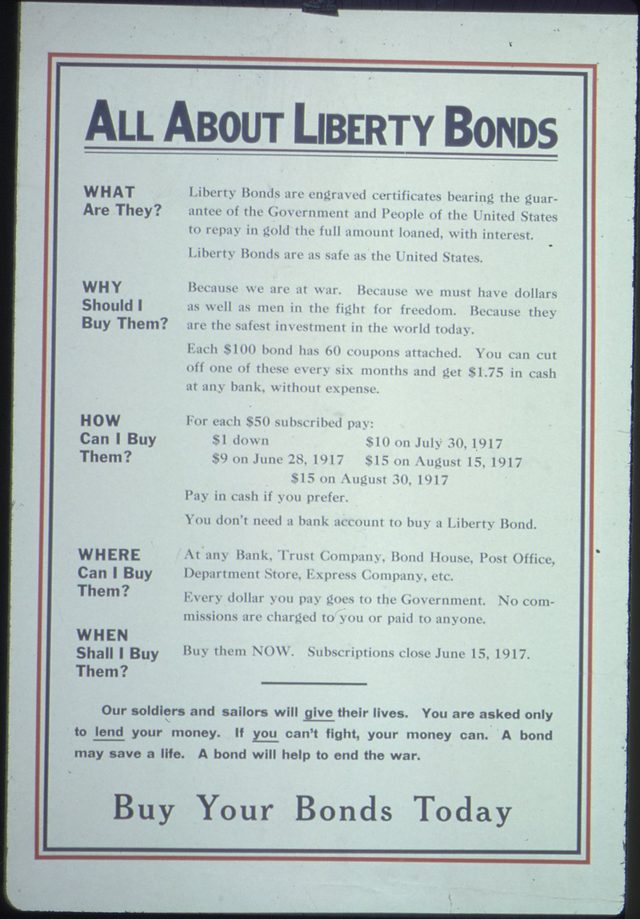
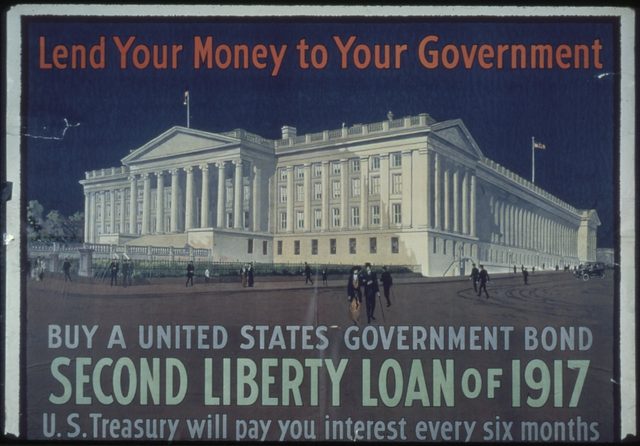
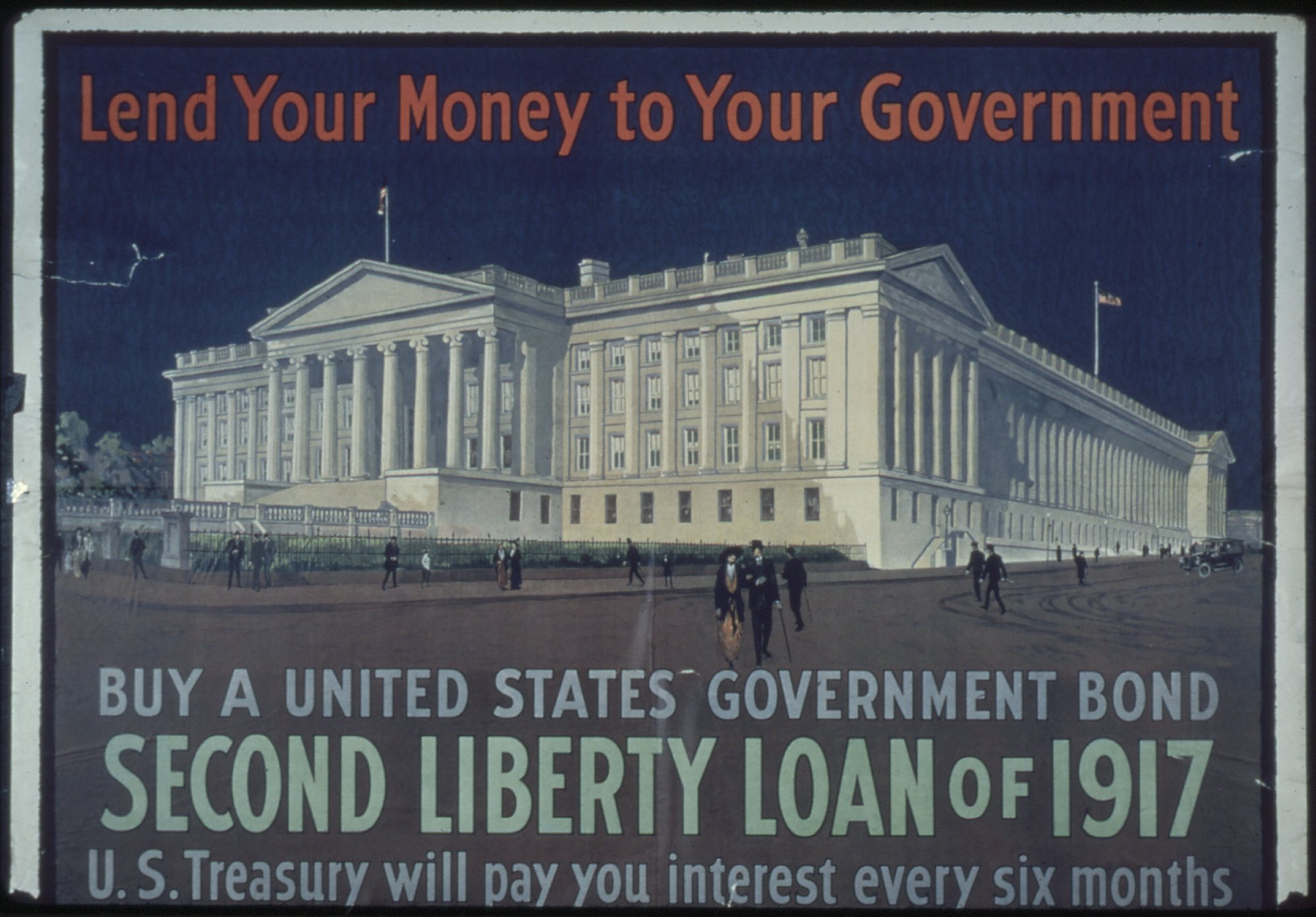
The plainest US sheet is the Second Liberty Loan's "Lend your money to your government" (1917): a night view of the Treasury building, with the interest dates stated in the text. Its only emotional register is the dignity of the institution (Glittering generalities). Most later sheets say less about terms and more about the war.
Explain moreShow less
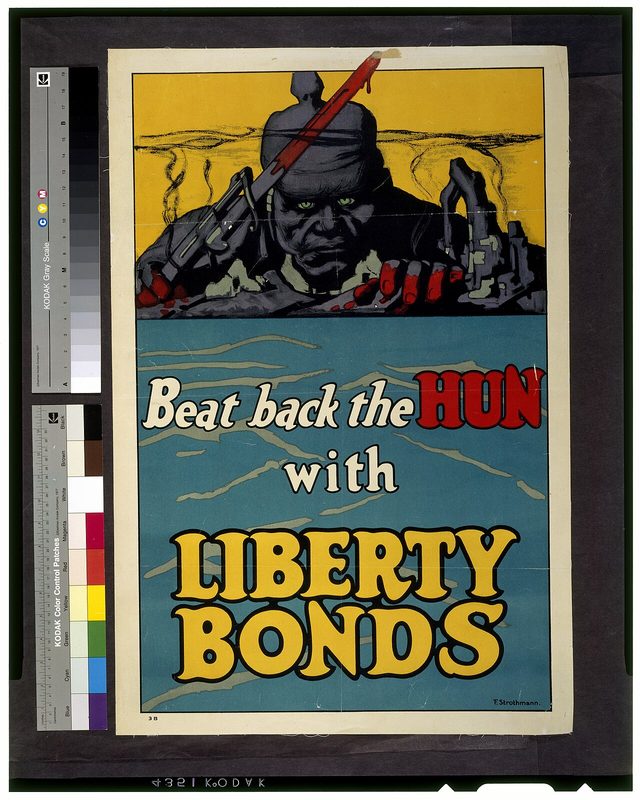
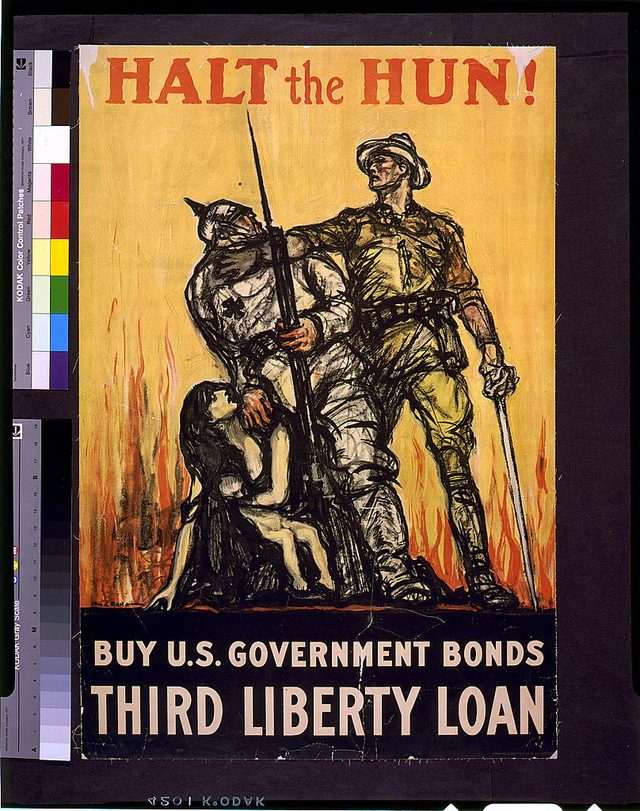
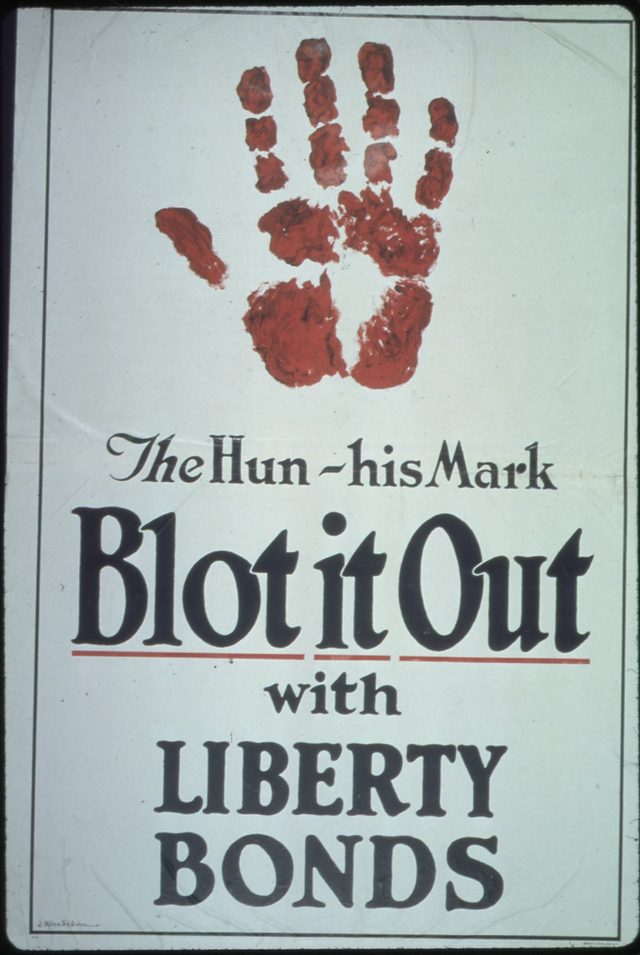
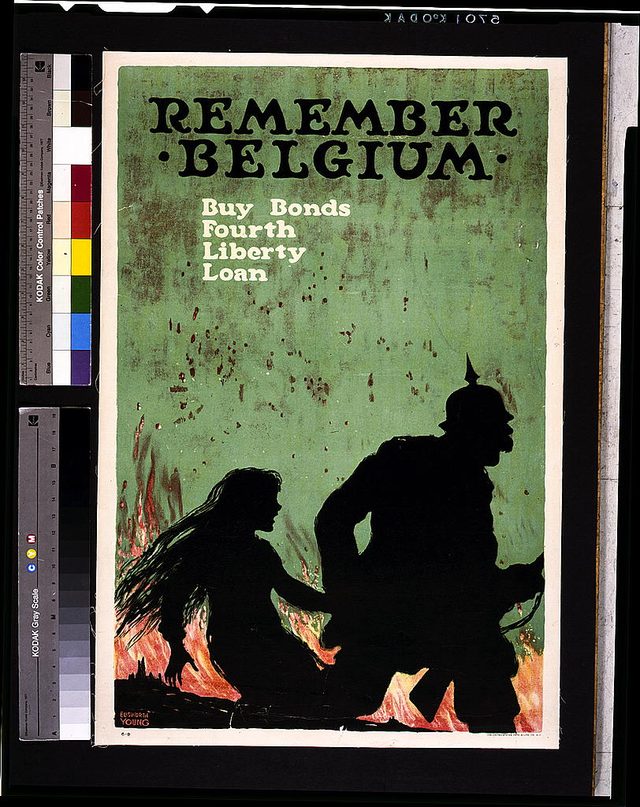
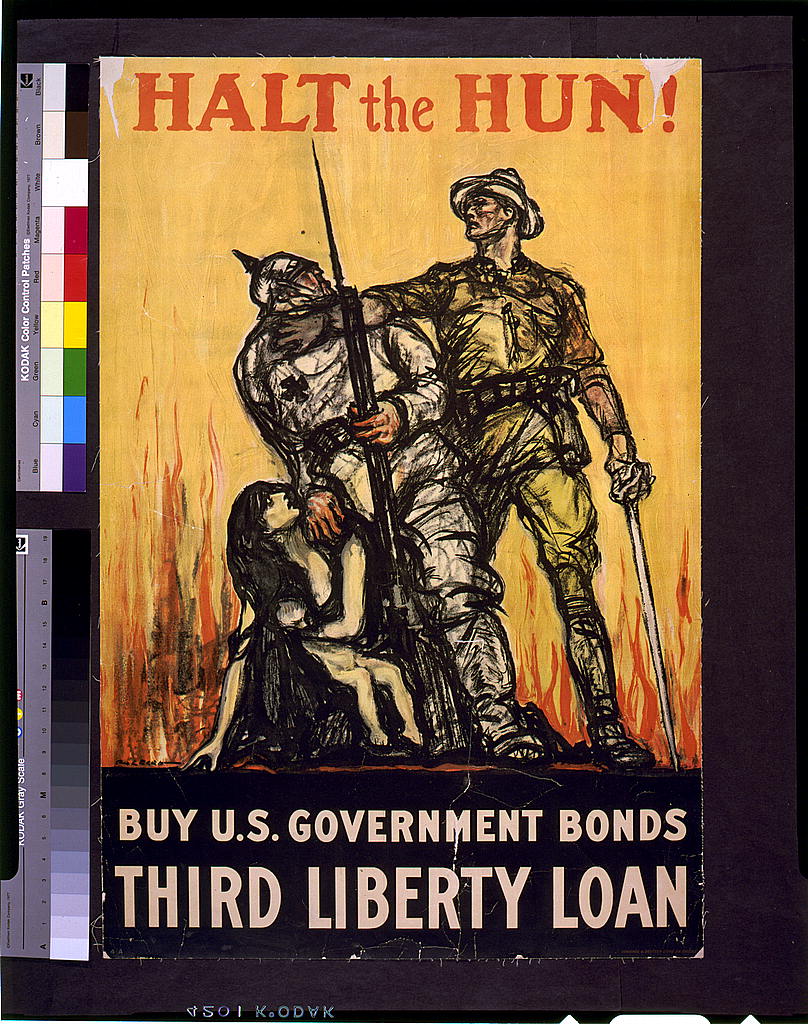
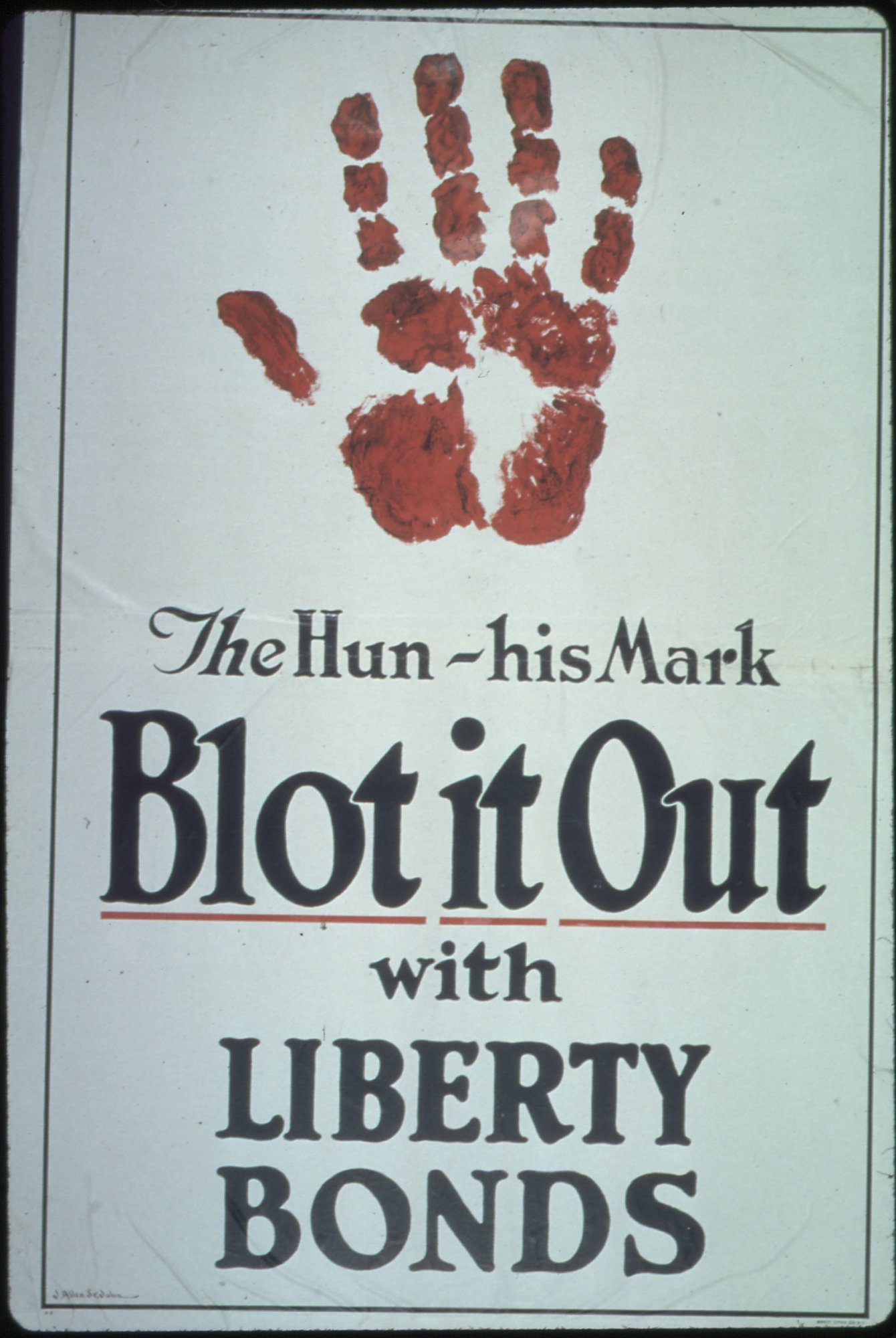
"Halt the Hun!" (Henry Raleigh, Third Liberty Loan, 1918) labels the enemy and stages an assault on a mother and child above a single remedy, buying bonds (Name-calling). Ellsworth Young's "Remember Belgium" (Fourth Liberty Loan, 1918) offers a silhouetted soldier, a girl and a burning town, recalling events of 1914 (Fear appeal). The Treasury's "The Hun: his mark" is a bloody handprint with nothing else on the sheet.
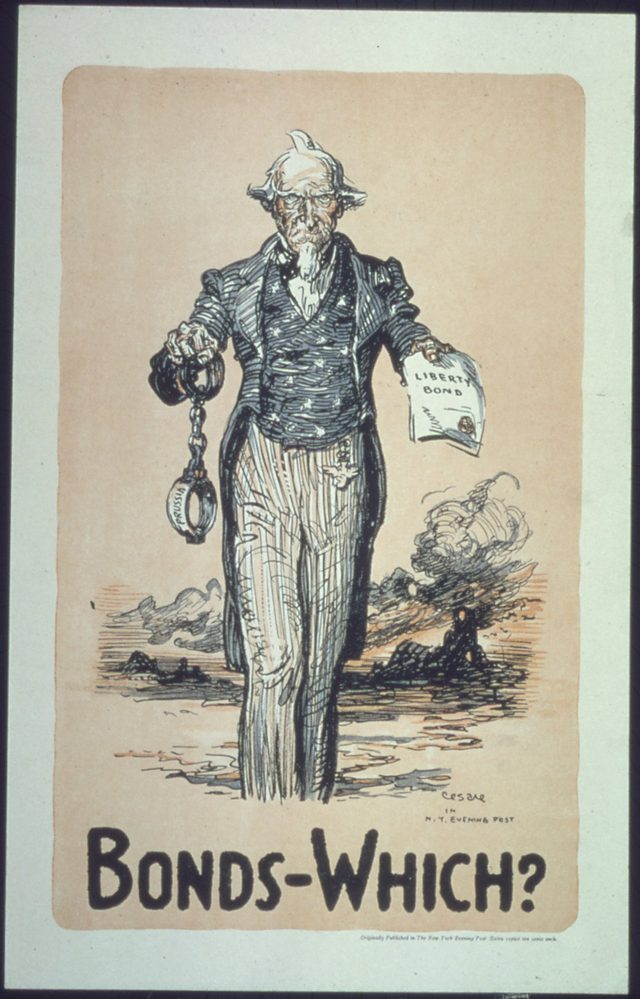
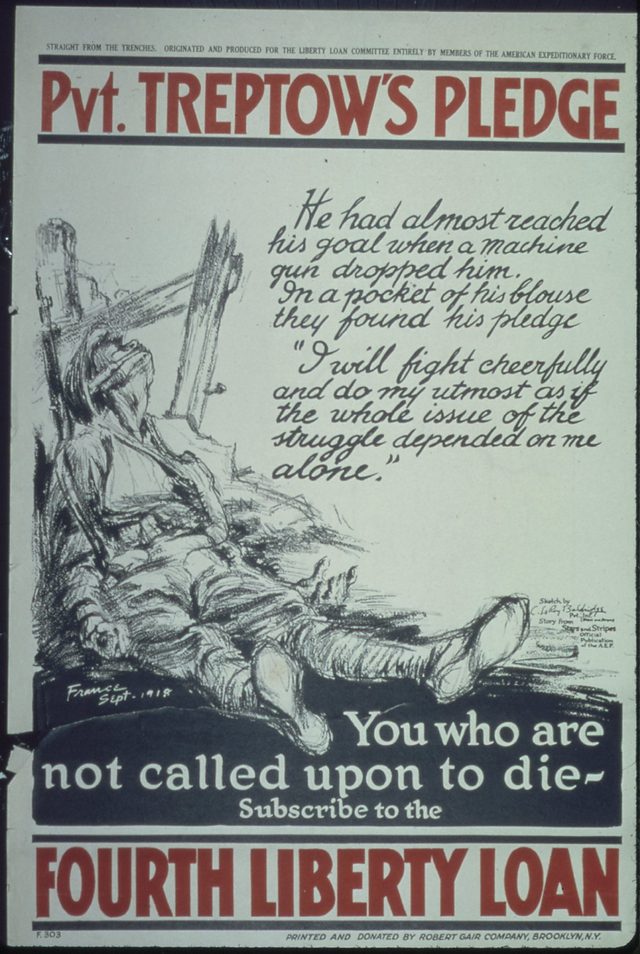
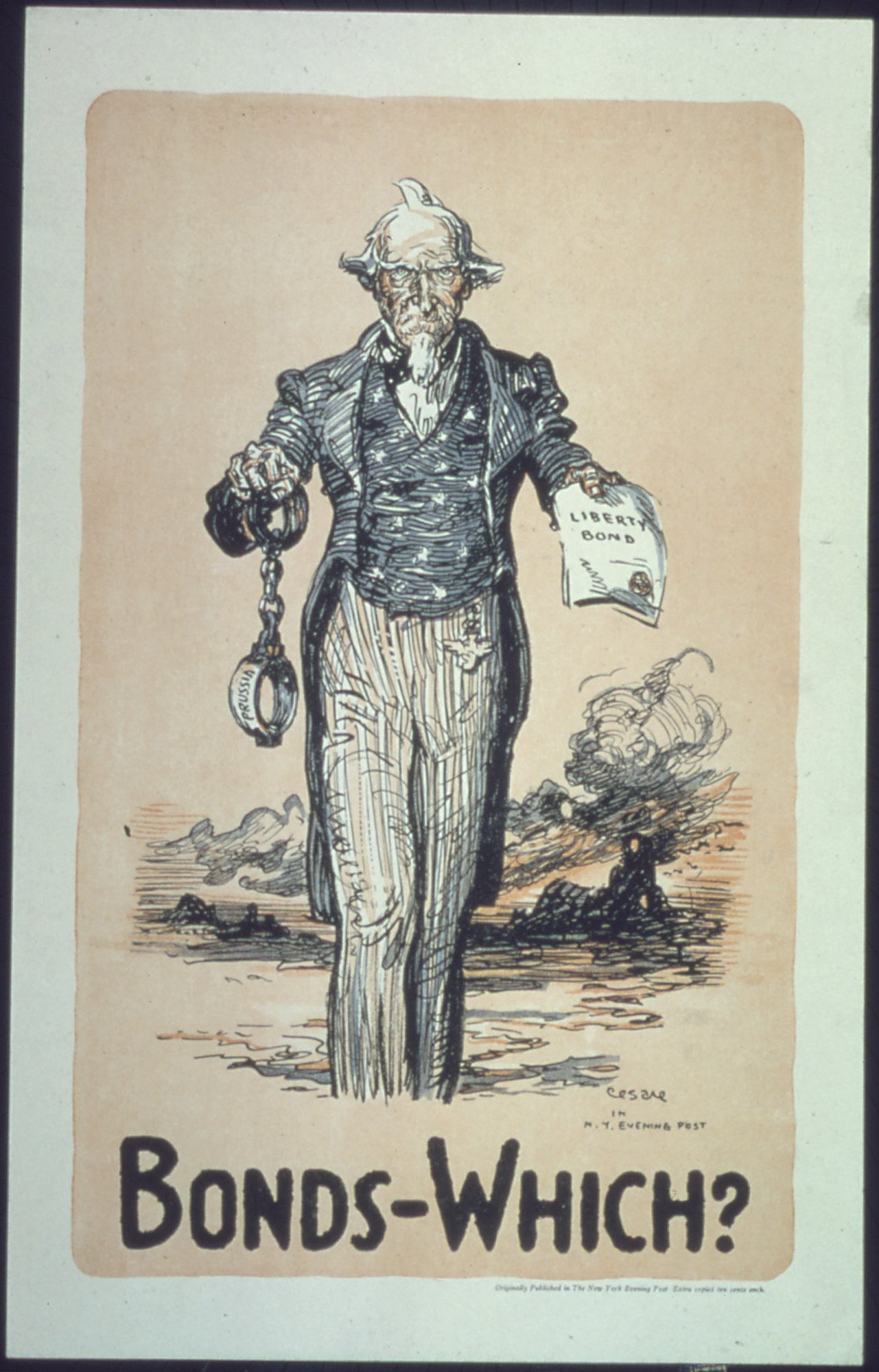
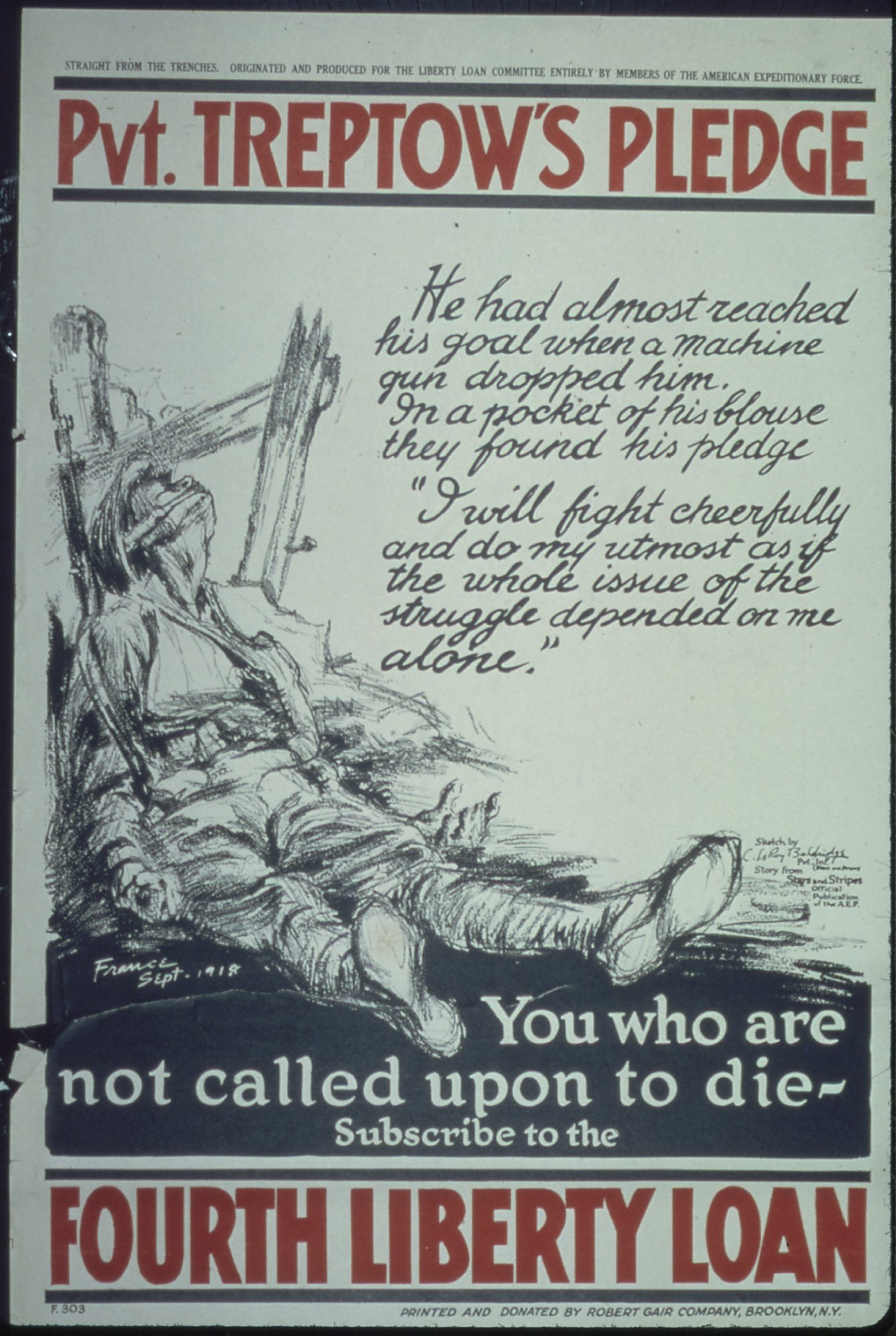
"Bonds-Which?" is a New York Evening Post cartoon that presents bonds or bondage as the only two options (False dilemma). "Pvt. Treptow's Pledge", made by members of the American Expeditionary Force for the Liberty Loan Committee, quotes a dead soldier's pledge and ends "You who are not called upon to die, subscribe" (Testimonial).
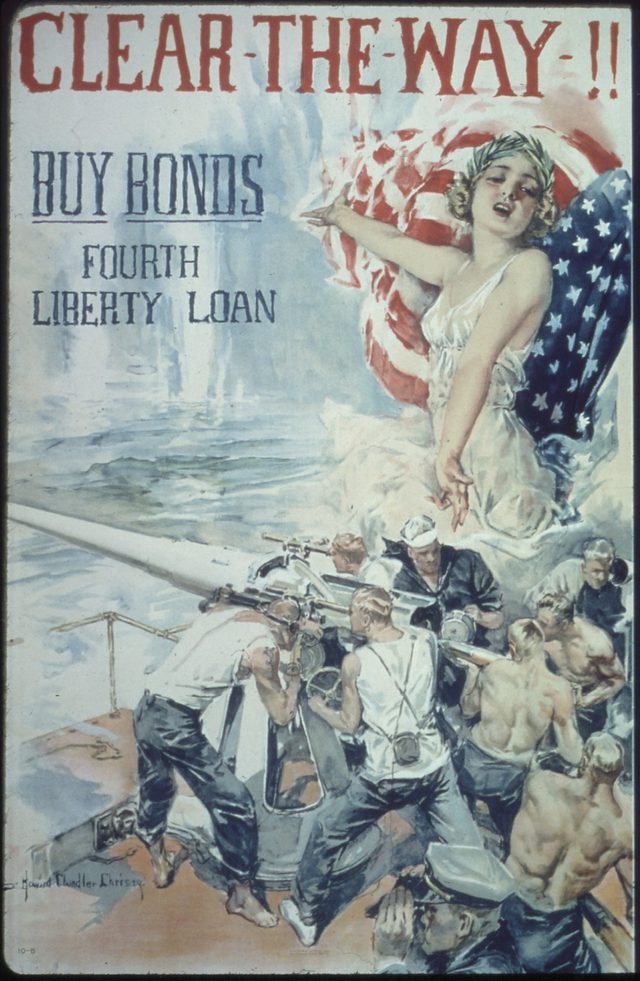
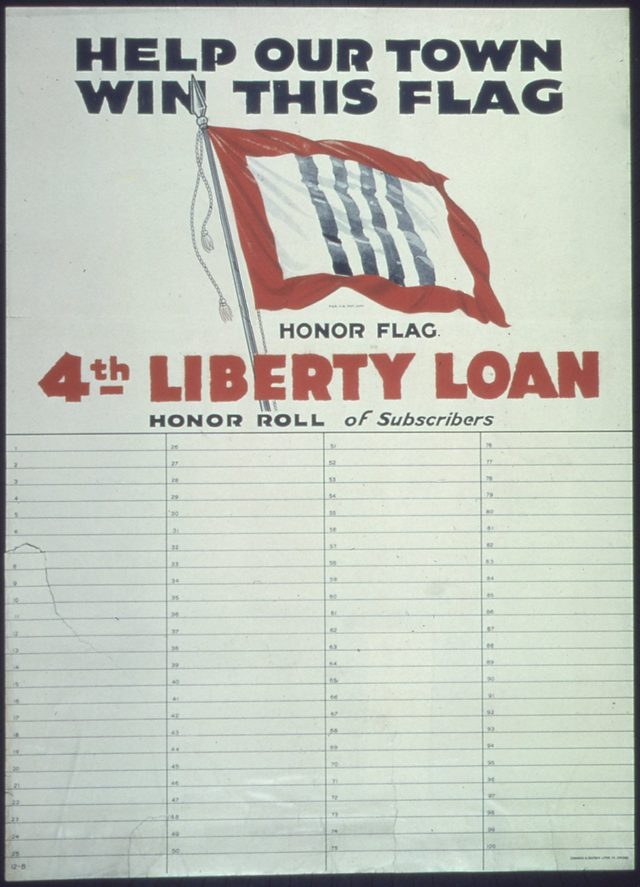
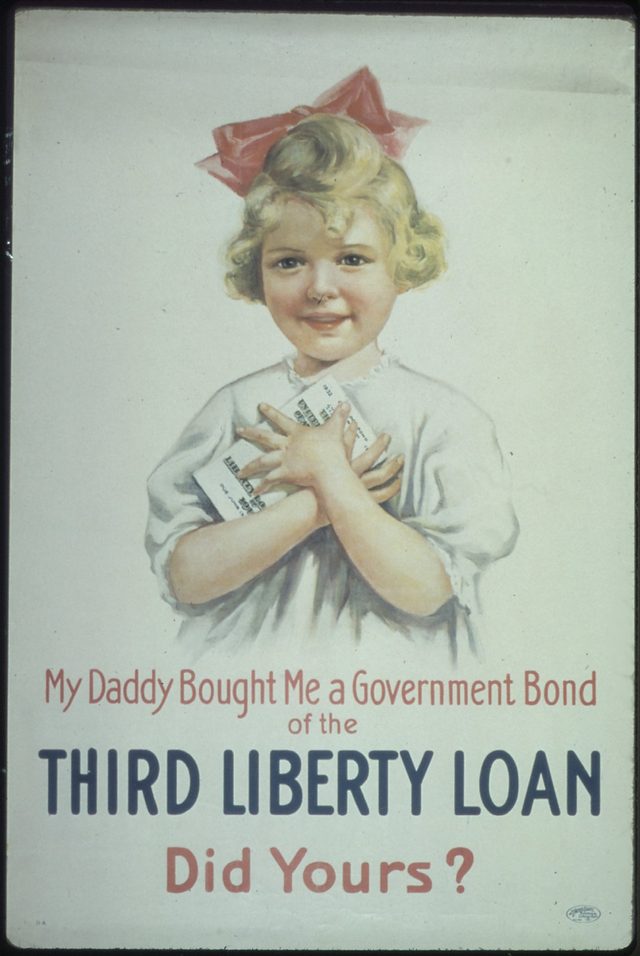
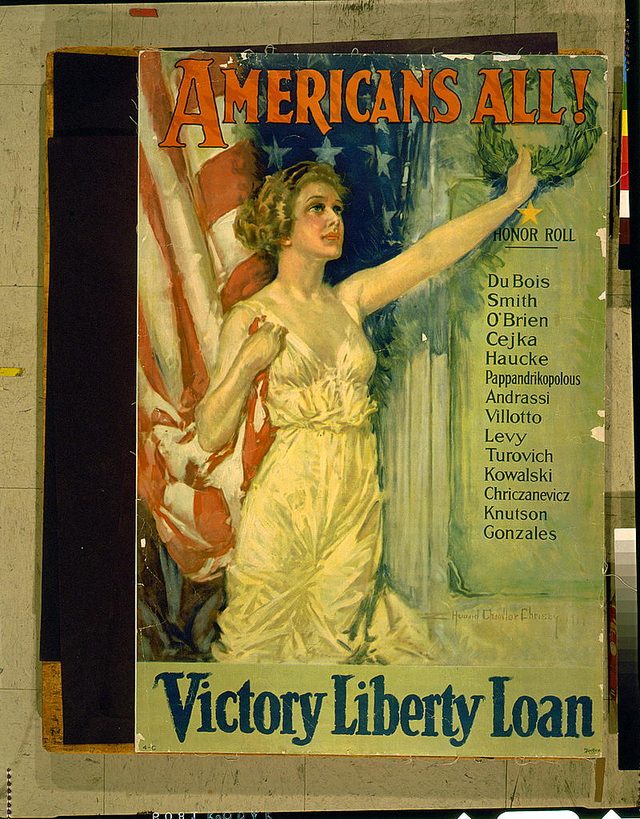
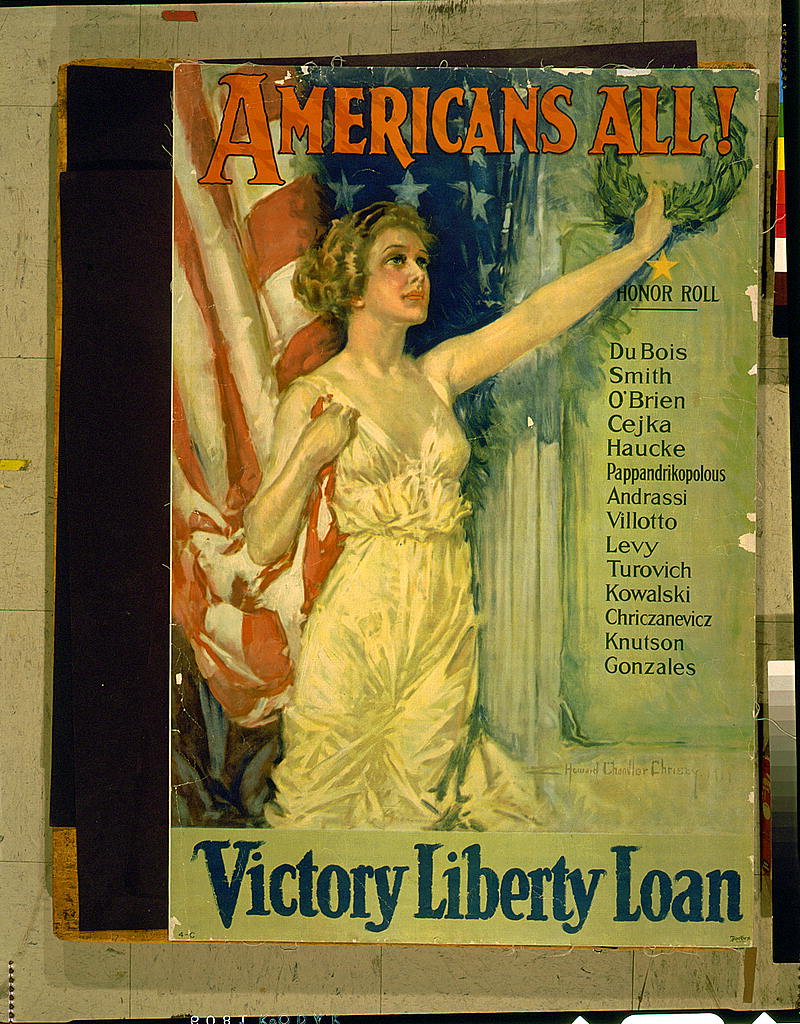
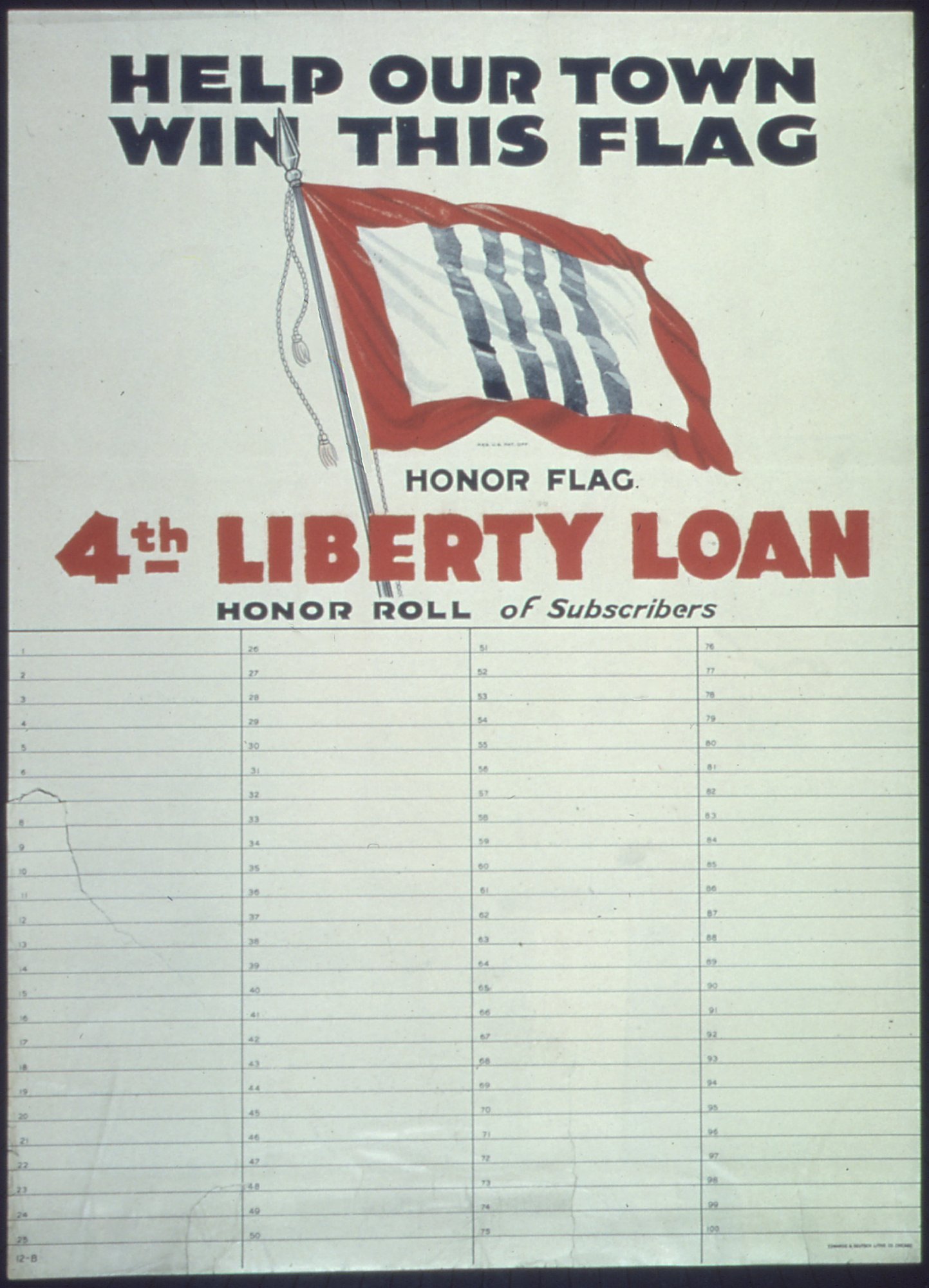
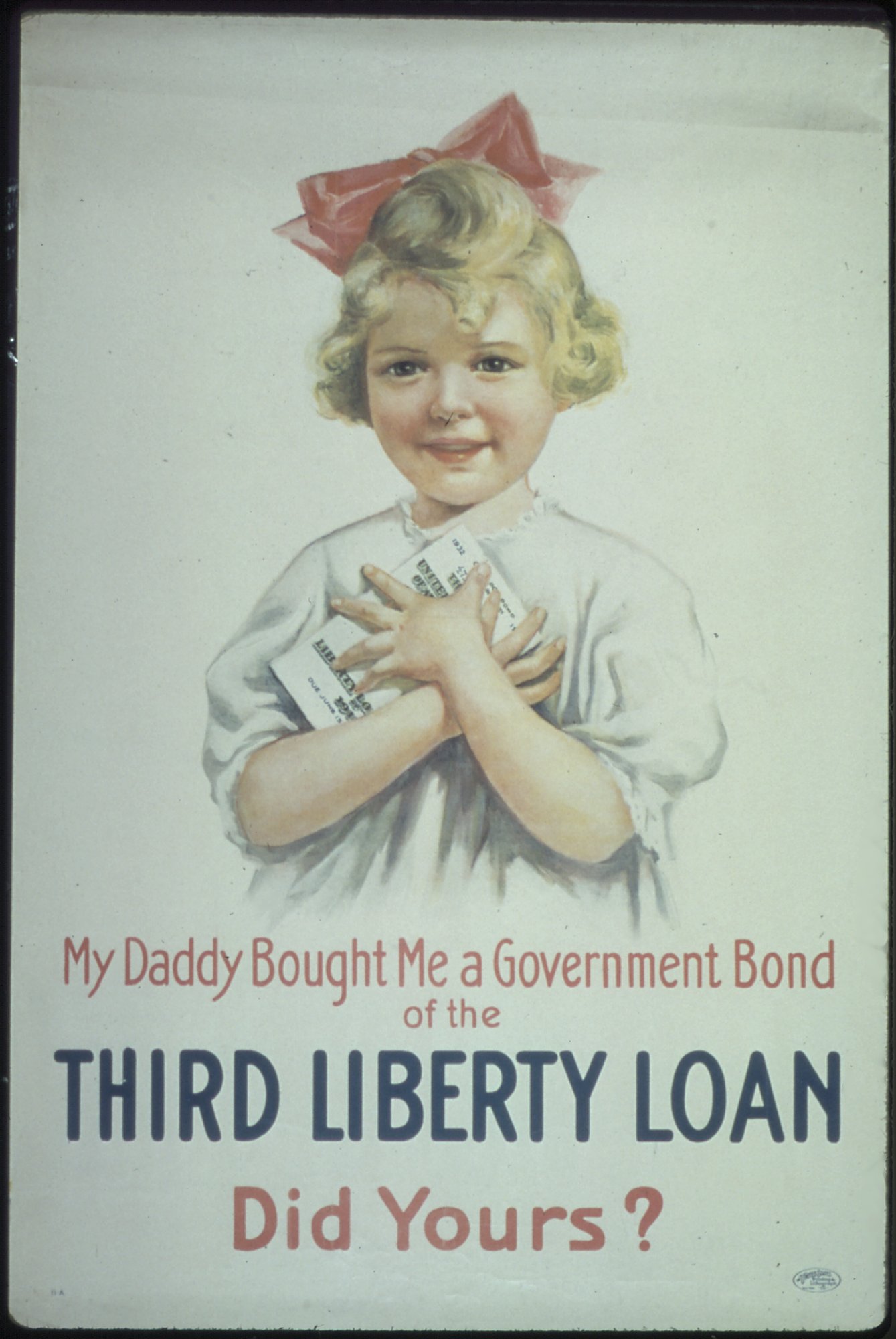
Howard Chandler Christy's "Americans All!" (Victory Liberty Loan, 1919) lists surnames such as Du Bois, O'Brien, Levy, Kowalski and Gonzales, so that every group appears already enrolled (Bandwagon). "My Daddy bought me a Government Bond" uses a child's voice to ask each household whether it has joined (Bandwagon), and the honor-flag poster turns the loan into a town contest (Identity fusion).
War Savings Stamps
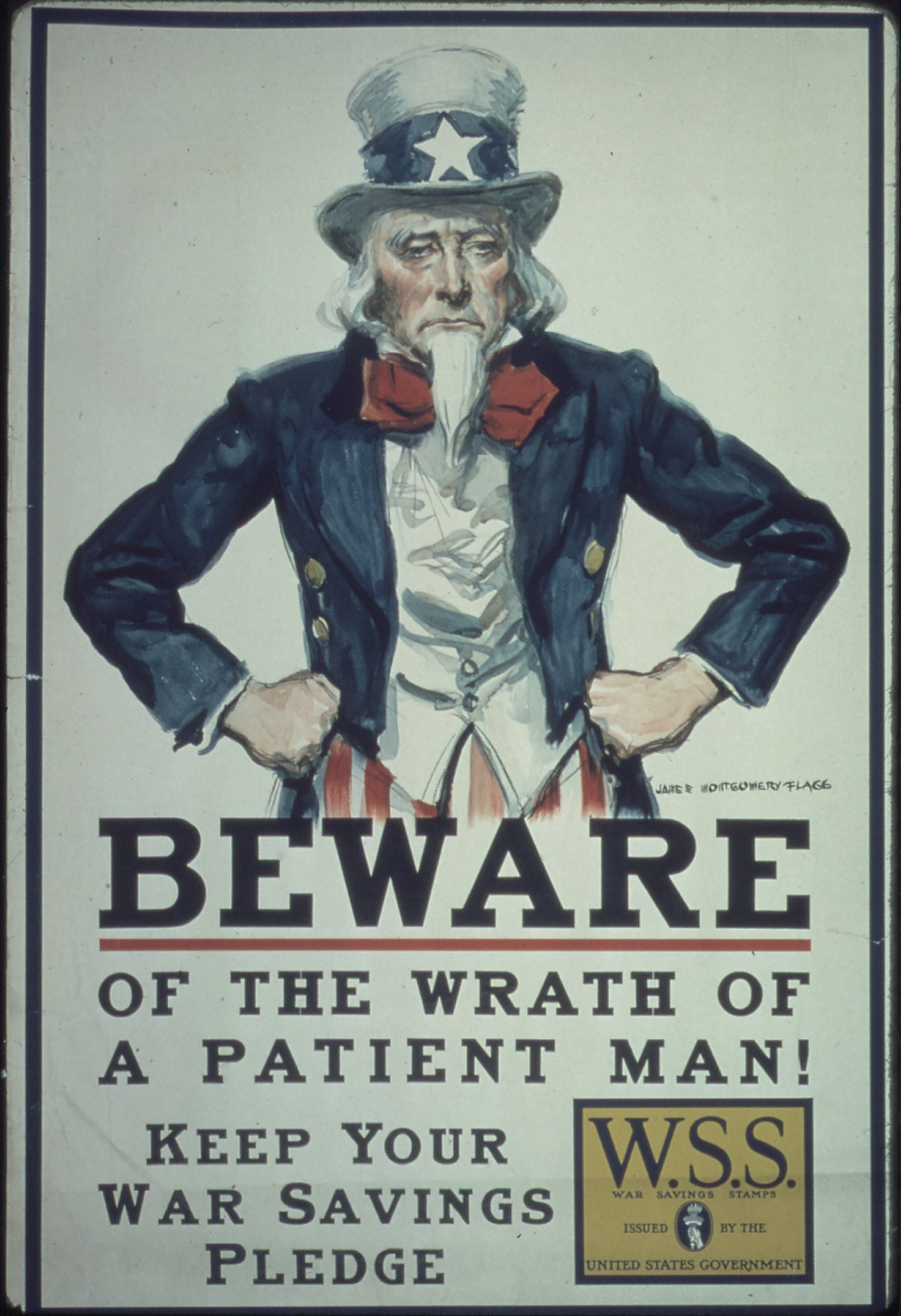
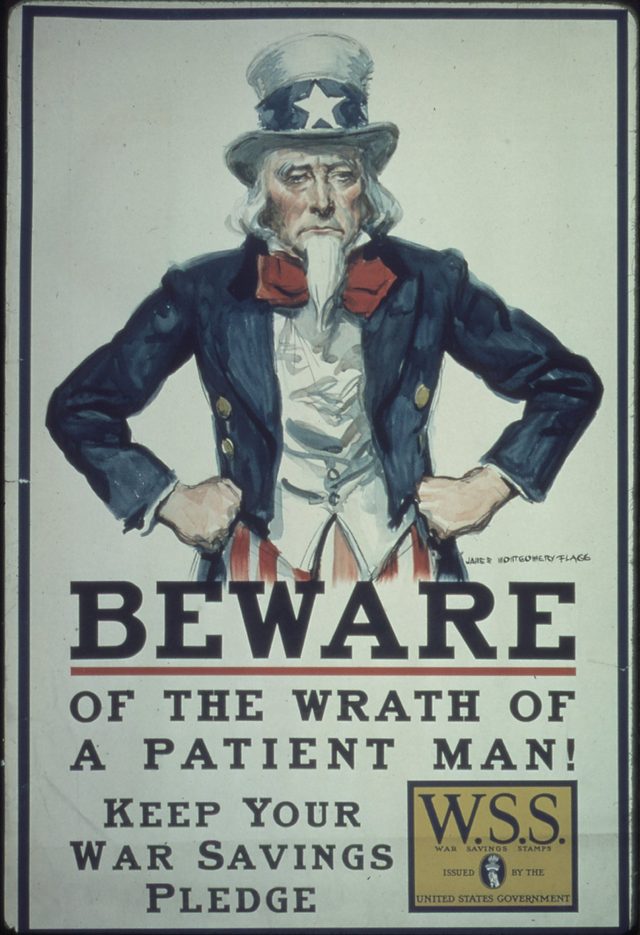
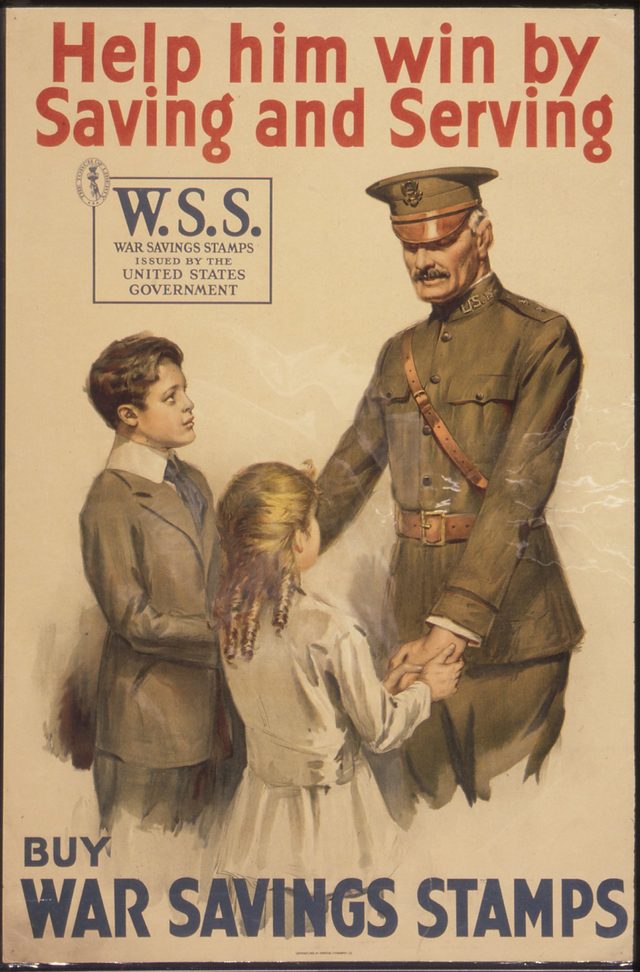
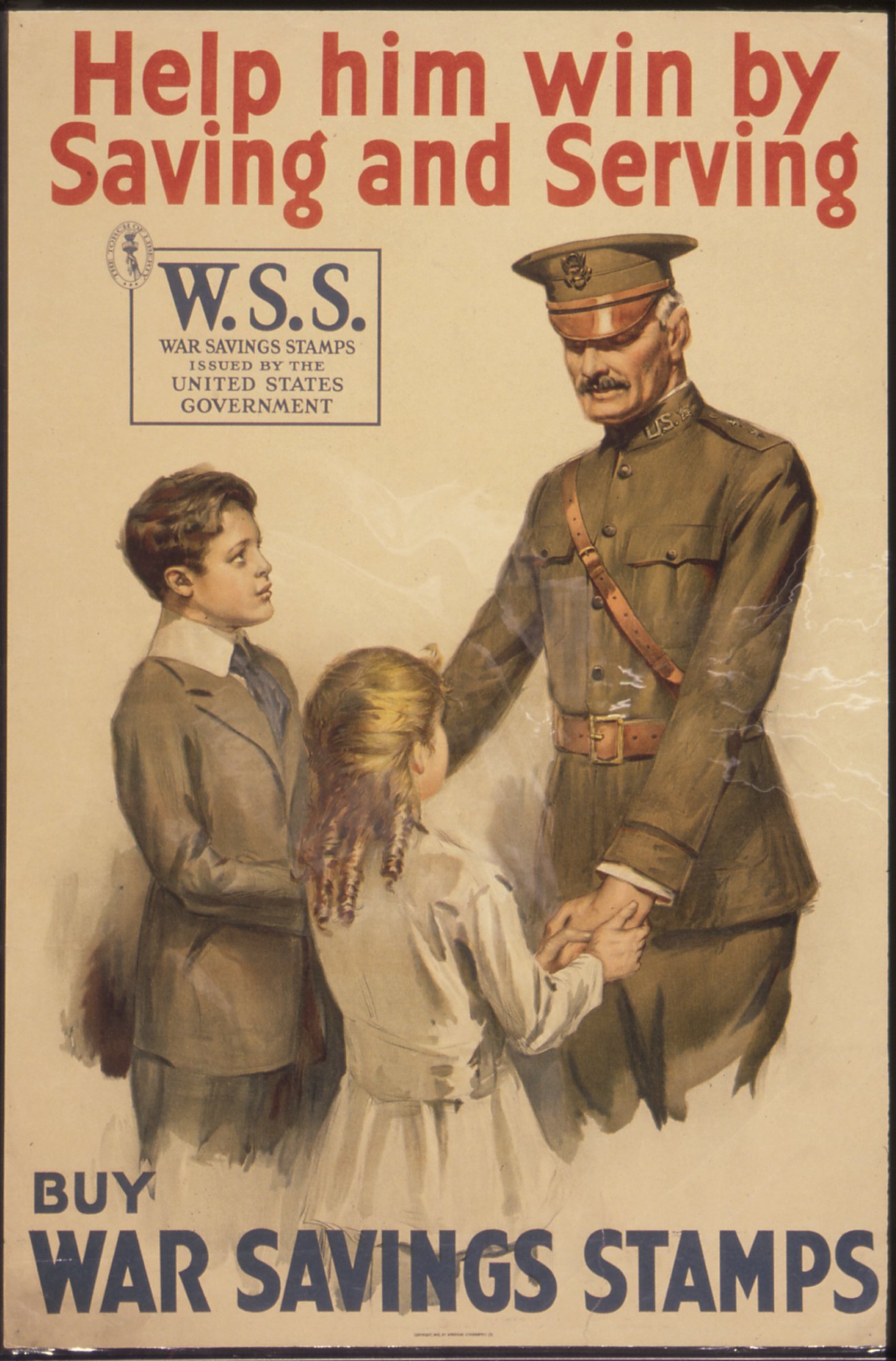
War Savings Stamps sold small denominations to people who could not buy a bond. "Beware of the wrath of a patient man!" casts Uncle Sam as a warning figure and makes a savings pledge a matter of owing him (Fear appeal). "Help Him Win by Saving and Serving" puts an Army general beside two children, lending his authority to the purchase (Transfer).
Canada and the other allies
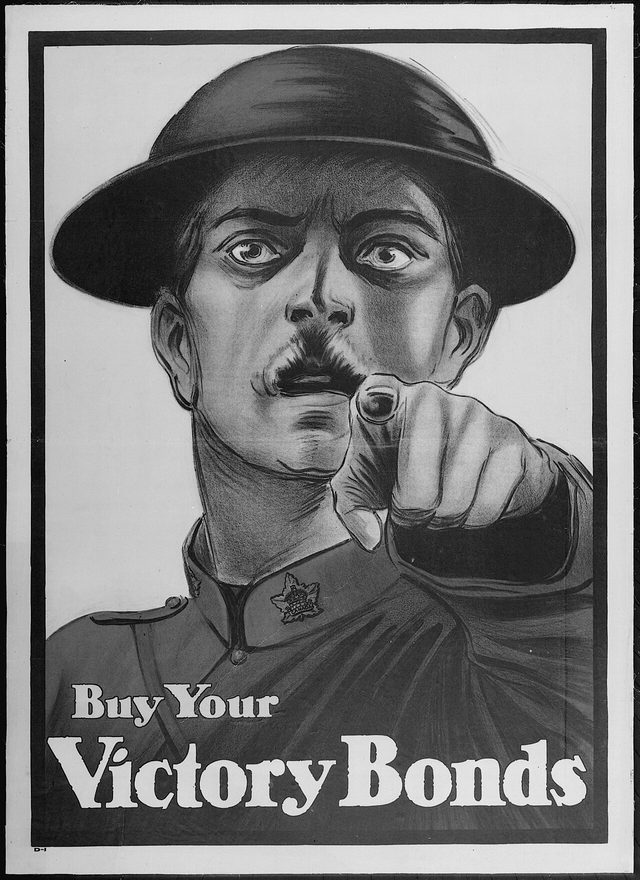
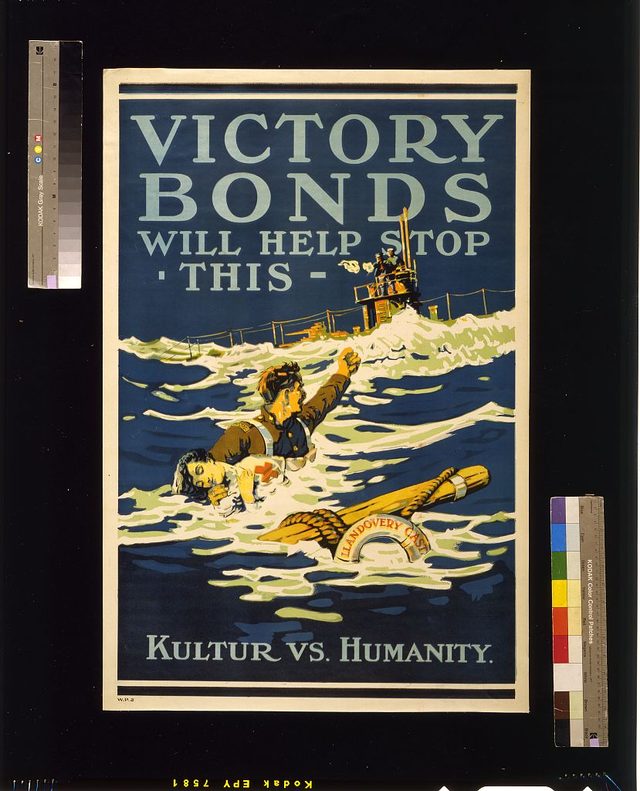
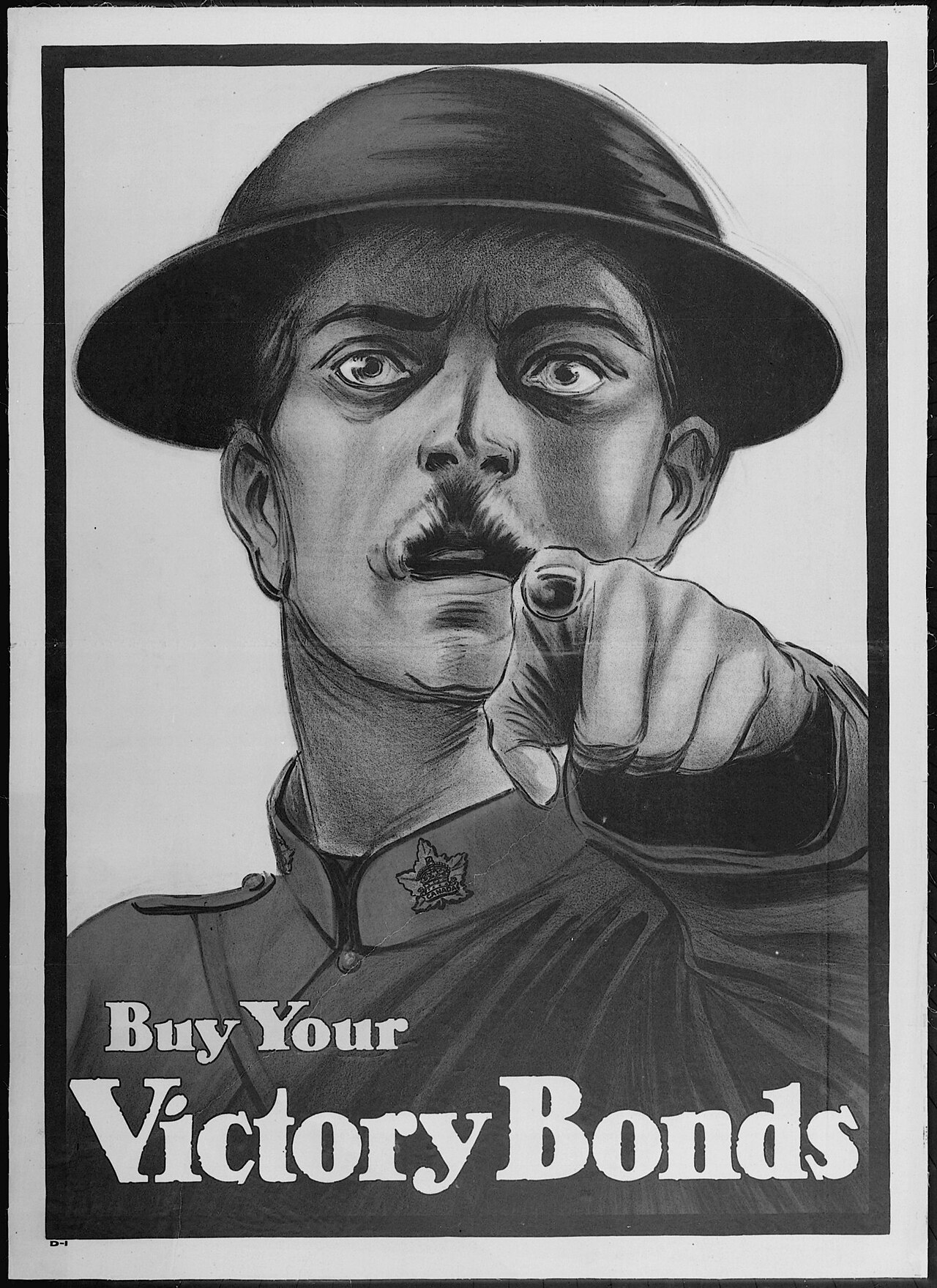
The Victory Bond Committee in Ottawa issued a pointing soldier with no rate, term or reason (Transfer). The 1918 Canadian sheet "Kultur vs. humanity" pairs the hospital ship Llandovery Castle with a drowned nurse and sets "Kultur" against "humanity" (Name-calling), while "Faith in Canada" places an open treasure chest beside advancing soldiers (Glittering generalities).
Content note: Depicts a drowned nurse held by a soldier beside a hospital-ship lifebuoy, with a German submarine in the background This object is shown as it was published. Why 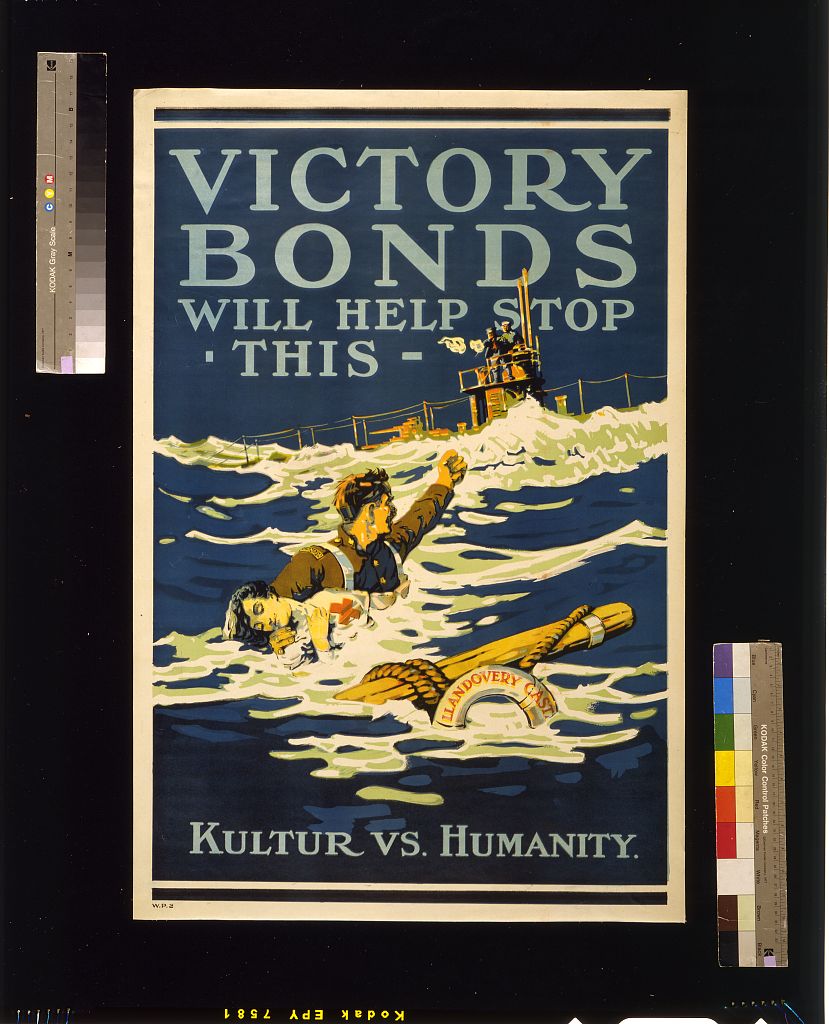
Explain moreShow less
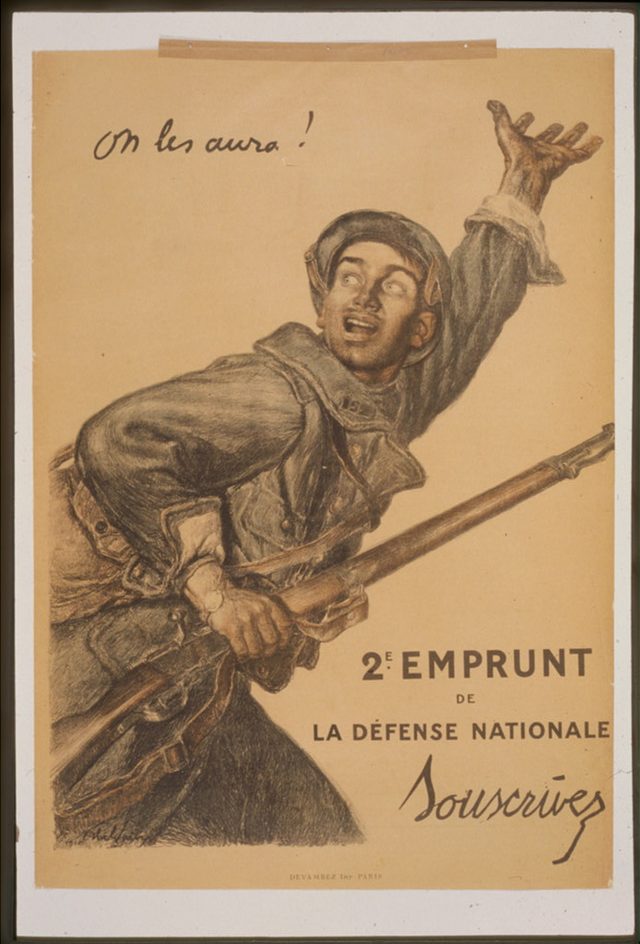
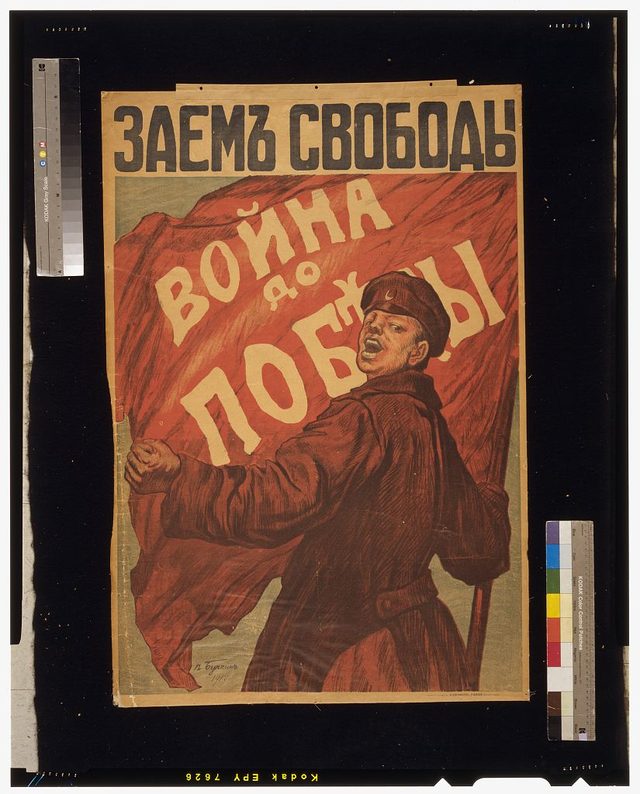
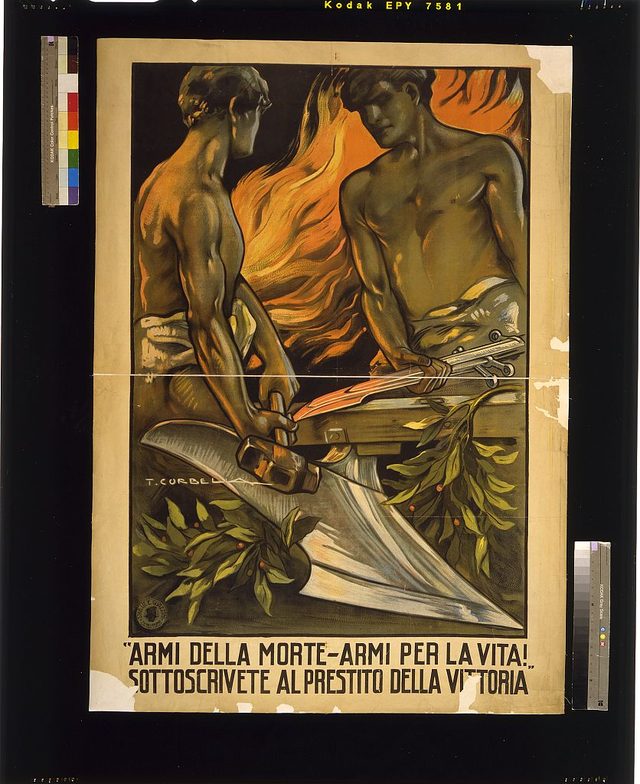
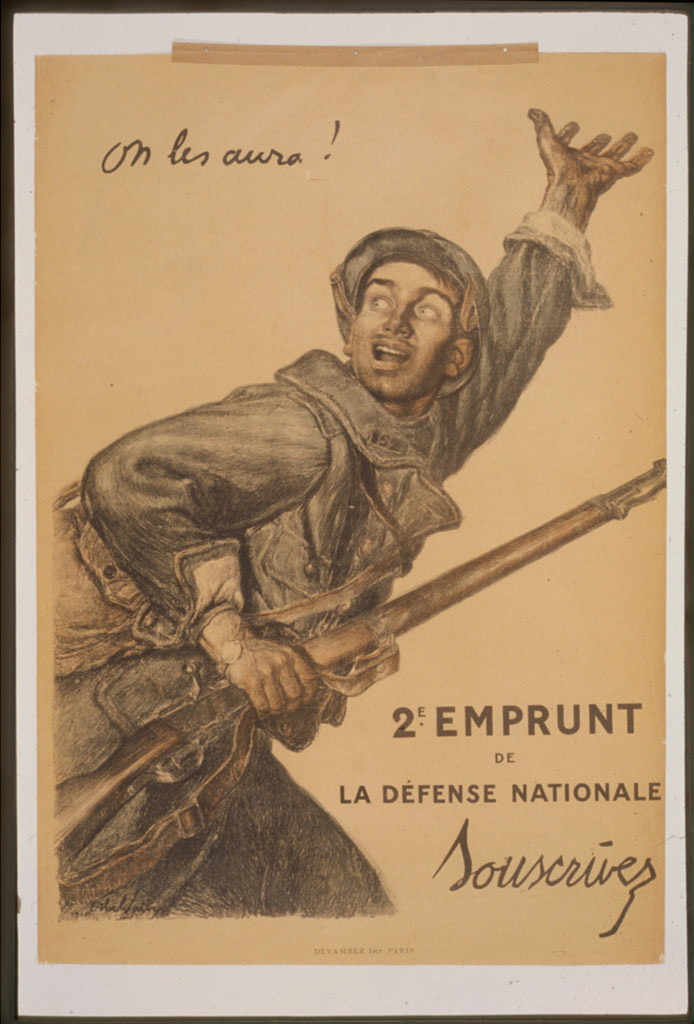
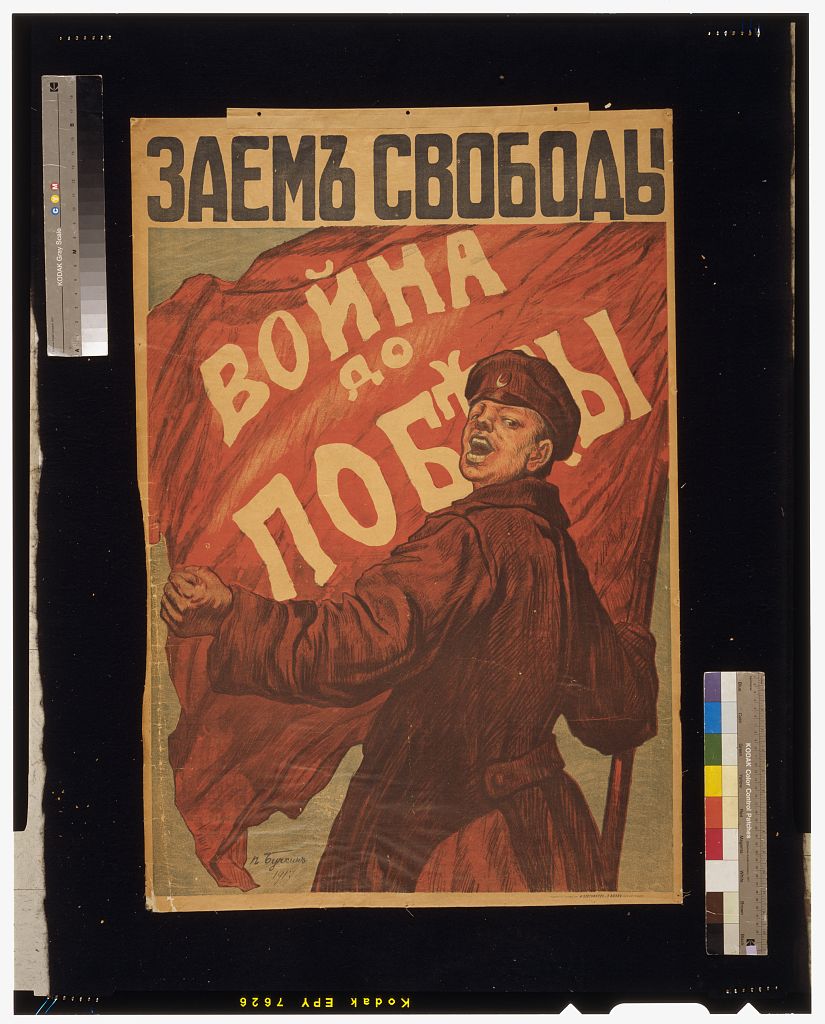
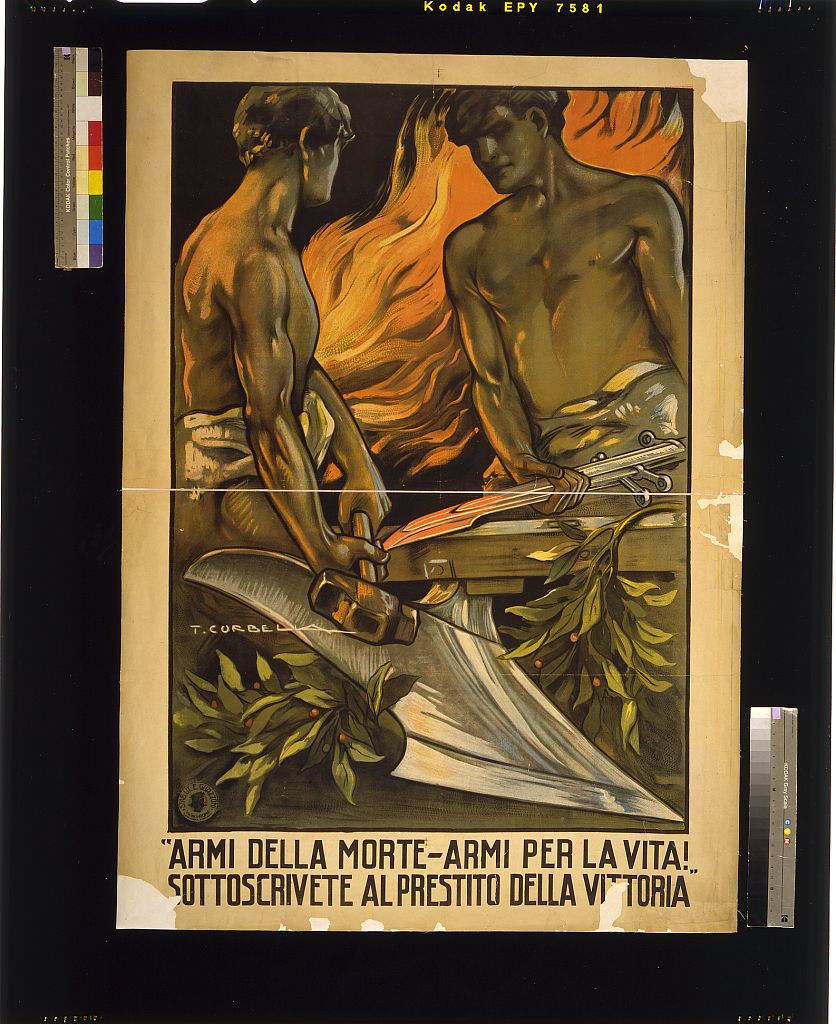
Abel Faivre's "On les aura!" (France, 1916) uses a charging infantryman to make subscribing read as joining the advance (Transfer). The Russian Provisional Government's "Liberty Loan: war until victory" (1917) carries the red flag of the February Revolution for continuing the war (Glittering generalities), and an Italian sheet turns swords into ploughshares under "Subscribe to the Victory Loan".
The same job was done on every side. German and Austro-Hungarian war-loan posters are on the German WW1 page, and the wider set is in WW1 posters by country. The Second World War sequel is on the war bonds posters page.
What the collection does not hold
- British National War Bonds and War Savings posters. We hold no British war-loan sheet from 1914 to 1919.
- Most of the thousands of US posters. Local committee, bank and newspaper sheets are only sampled here.
- Sales figures and response data. The posters show what was said, not what moved buyers.
Sources and further reading
Sources
US National Archives (Record Group 44) and Library of Congress, Prints and Photographs Division, for the American, Canadian,…
US National Archives (Record Group 44) and Library of Congress, Prints and Photographs Division, for the American, Canadian, French, Italian and Russian sheets. George Creel, How We Advertised America (Harper, 1920). David M. Kennedy, Over Here: The First World War and American Society (Oxford University Press, 1980). Each item in the grid carries its own source and rights note.