Content note. Some First World War posters shown here use the epithets "Hun", "Kultur" and "German barbarians", show an assault on a woman and child, or caricature an enemy soldier. One French advertisement imitates a pidgin speech given to colonial soldiers. They are shown as issued, as evidence of what each public was told. Showing a poster is not endorsing it.
What did WW1 propaganda posters look like in each country?
Every major belligerent printed posters for the same jobs: recruiting, war loans and home-front conduct. Britain leaned on recruiting appeals and atrocity charges. Germany, Austria-Hungary, France, Italy and Russia leaned on war loans. The United States and Canada used both, with strong enemy labels. Techniques repeat across sides. Scale and issuer differ.
The collection holds 394 First World War posters, counted from examples/entries/ (medium poster, era wwi): United States 298, United Kingdom 19, Germany 17, France 13, Austria-Hungary 10, Canada 10, Australia 8, Italy 6, Russia 2 and 11 from other countries. The counts reflect what can be hosted, not each country's real output. For the era overall, see WWI propaganda posters: who made them and how they worked. This page asks the same four questions of each country: who issued it, who it was for, what it asked, and which technique carried it.
What did British WWI propaganda posters show?
Most British posters in the collection date from 1915 and were issued by the Parliamentary Recruiting Committee (PRC), which was led by the Prime Minister and the Conservative and Labour leaders. They were aimed at men who had not yet volunteered, because Britain had no peacetime conscription until the Military Service Act of January 1916. The ask was nearly always "enlist now". For the full run of British sheets, including the Second World War, see British propaganda posters.
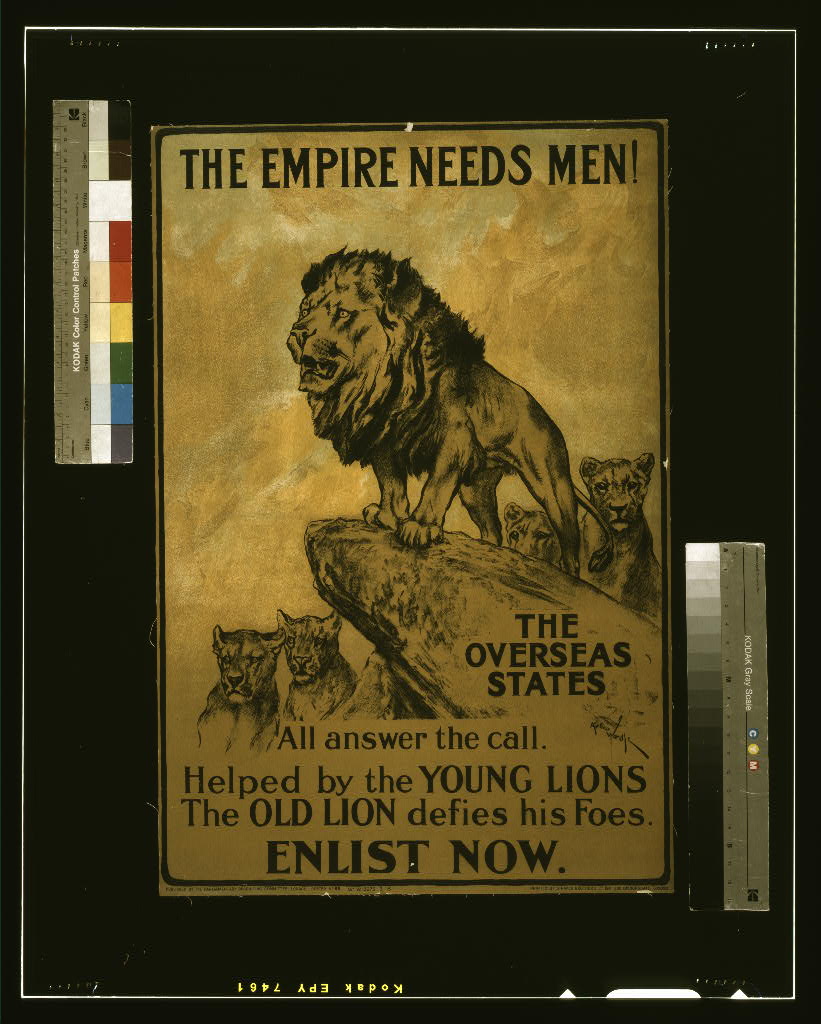
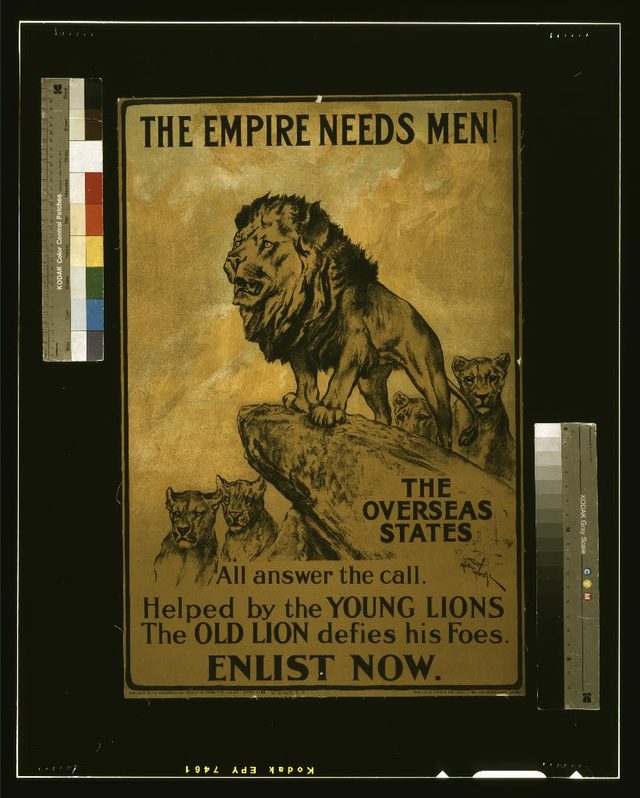
PRC poster no. 58, art by Arthur Wardle, shows a lion with younger lions under "The overseas states all answer the call". The collection tags it bandwagon and transfer: the line says others have already joined, so enlisting completes the group. Read the technique: bandwagon.
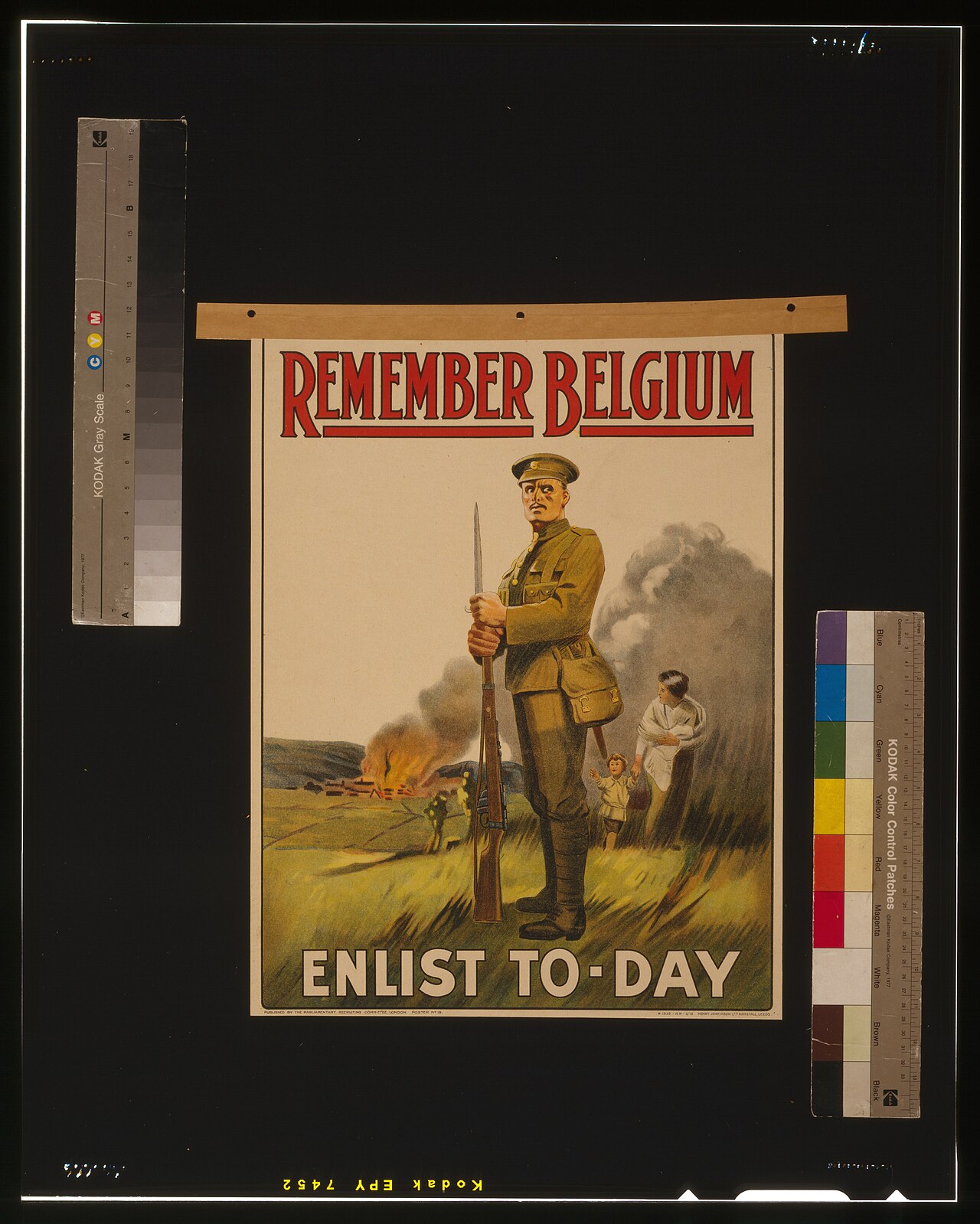
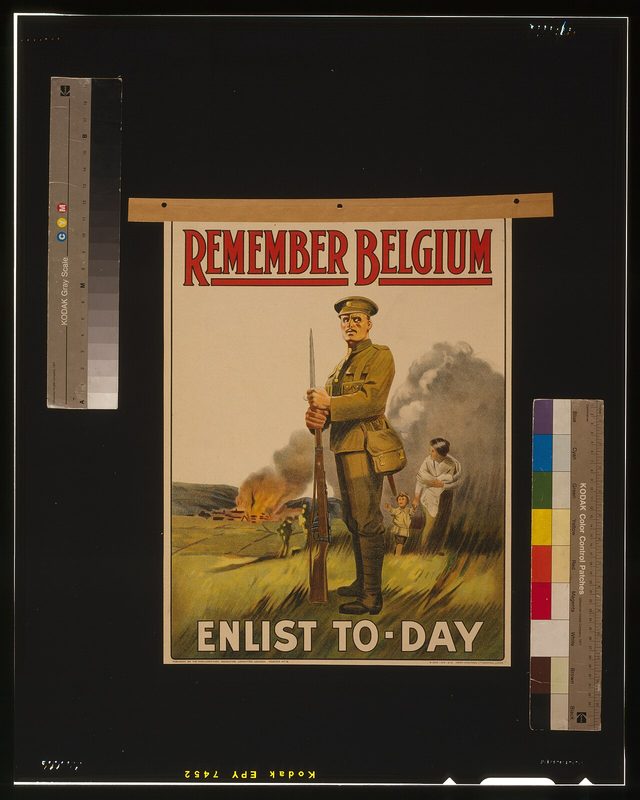
"Remember Belgium" (PRC, 1915) invokes the 1914 invasion. The collection's caption says the atrocity was real and documented, and that the poster compresses it into one silhouette so that enlisting looks like the only response. It is tagged fear appeal, scapegoating and transfer. Read the technique: fear appeal.
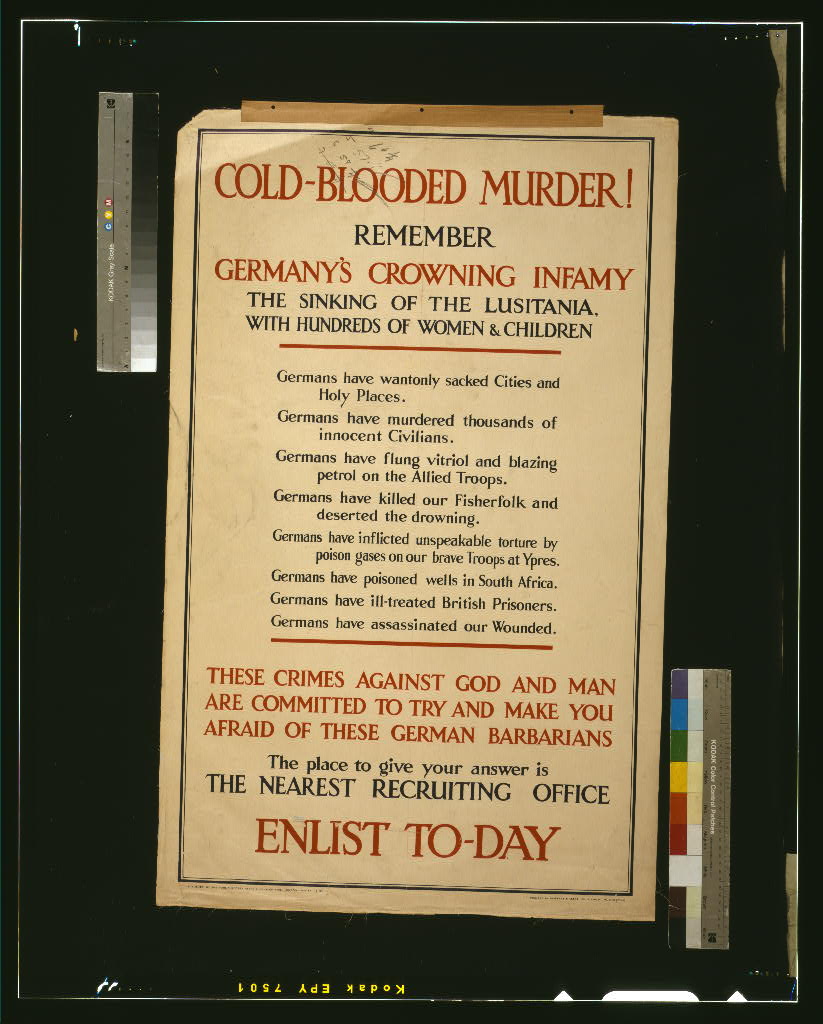
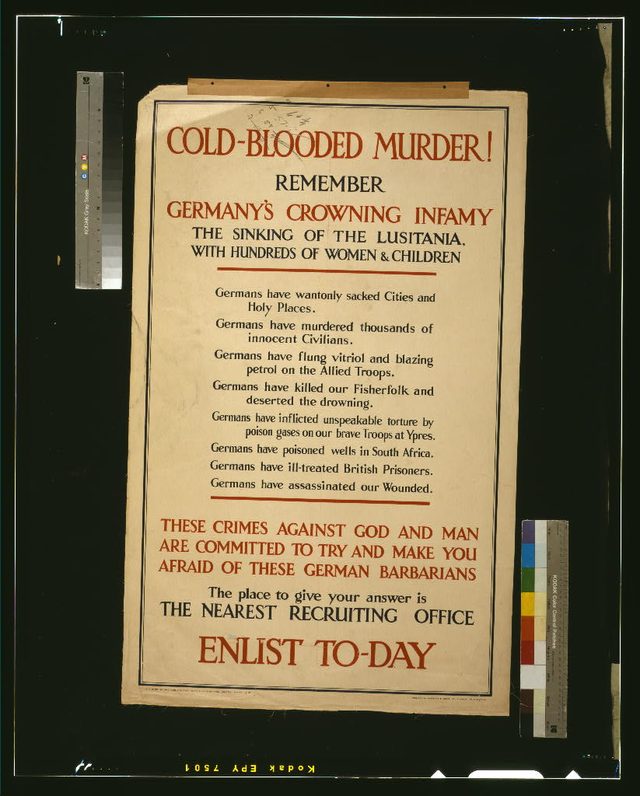
PRC poster no. 97 lists eight charges, from the Lusitania sinking and gas at Ypres to poisoned wells in South Africa, and ends with the label "German barbarians". The entry says some items are confirmed by later research and others are not substantiated in the sources used, yet all appear in one typeface with no dates or sources. That is card stacking. See card stacking and the Bryce Report case study.
What did German WWI propaganda posters show?
German posters in the collection are mostly war-loan sheets. The Reich issued nine war bonds between 1915 and 1918, and the hub page cites more than 1.4 million posters for the sixth loan alone. The audience was the German public with savings, and the ask was to subscribe. Issuers were the Imperial government campaigns, plus savings banks and, in 1914 and 1915, the occupation authorities in Belgium.
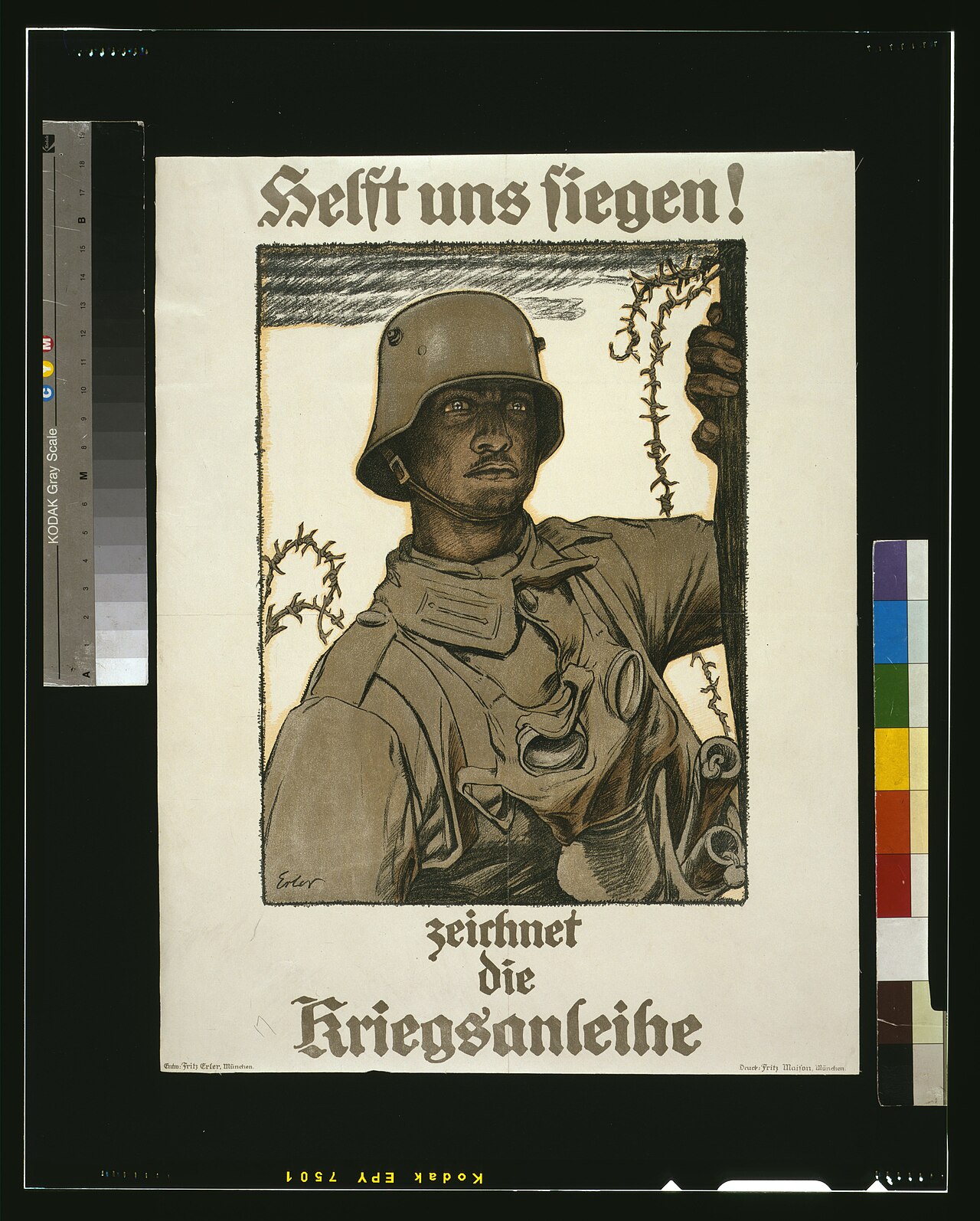
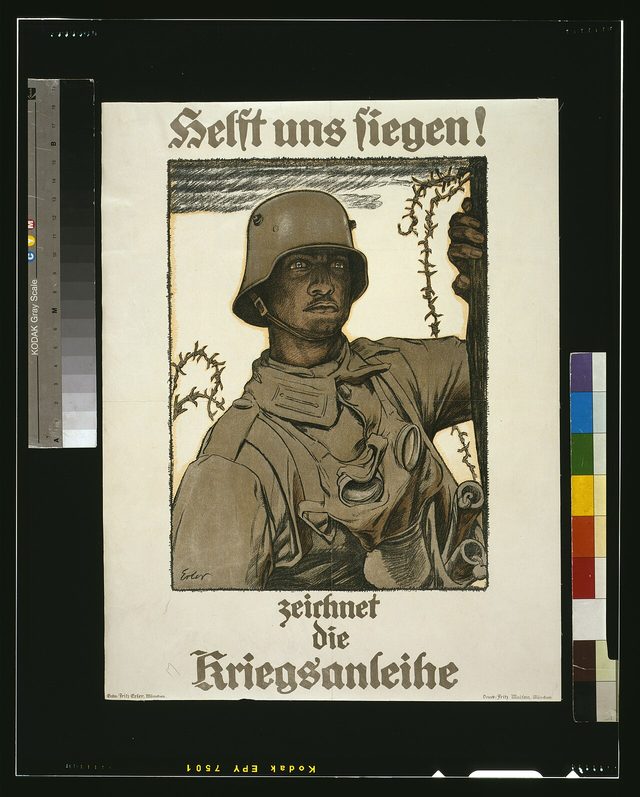
Fritz Erler's 1917 war-loan poster puts an exhausted infantryman above "Help us win!". The caption says his resolve is transferred onto the bond, while "winning" is an undefined virtue word. It is tagged fear appeal, transfer and glittering generalities. Read the technique: transfer.
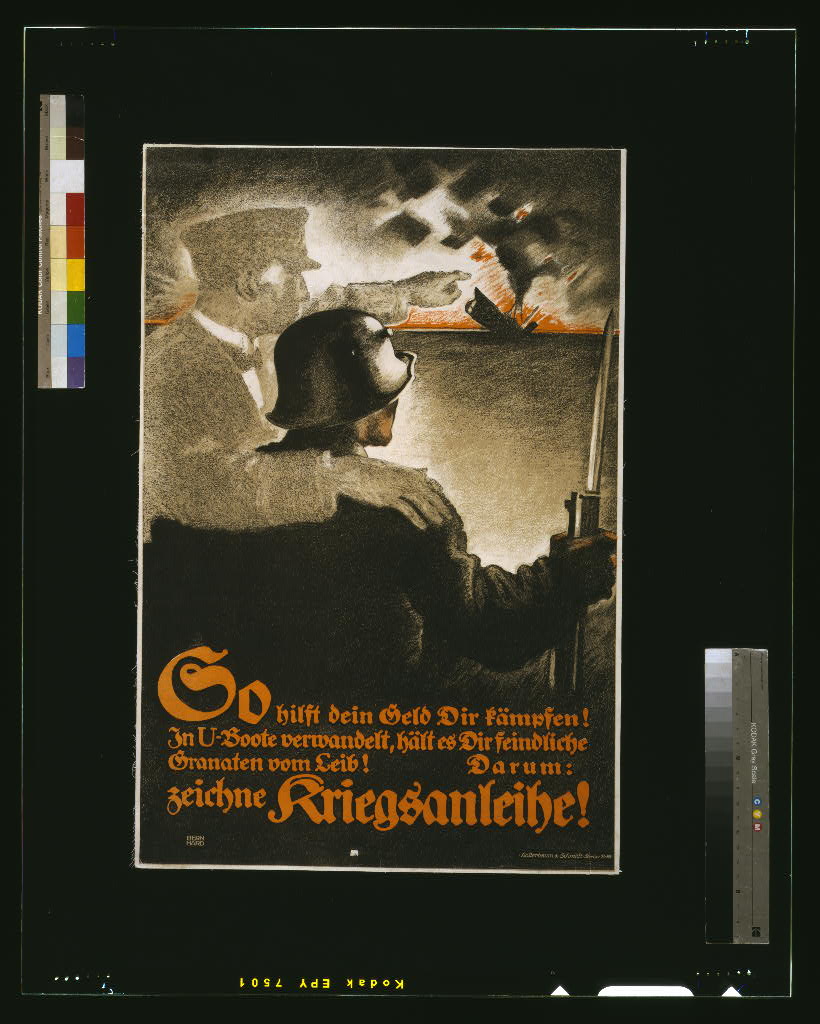
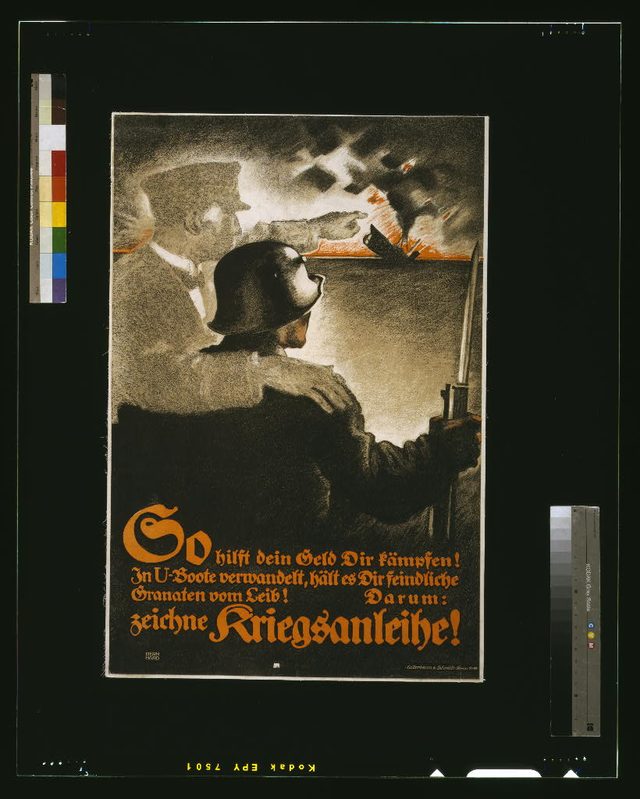
Lucian Bernhard's 1917 sheet turns money into U-boats and U-boats into shells that never reach the soldier. The entry notes a one-step chain with no figures for tonnage sunk, submarine losses or the campaign's wider consequences. Read the technique: card stacking.
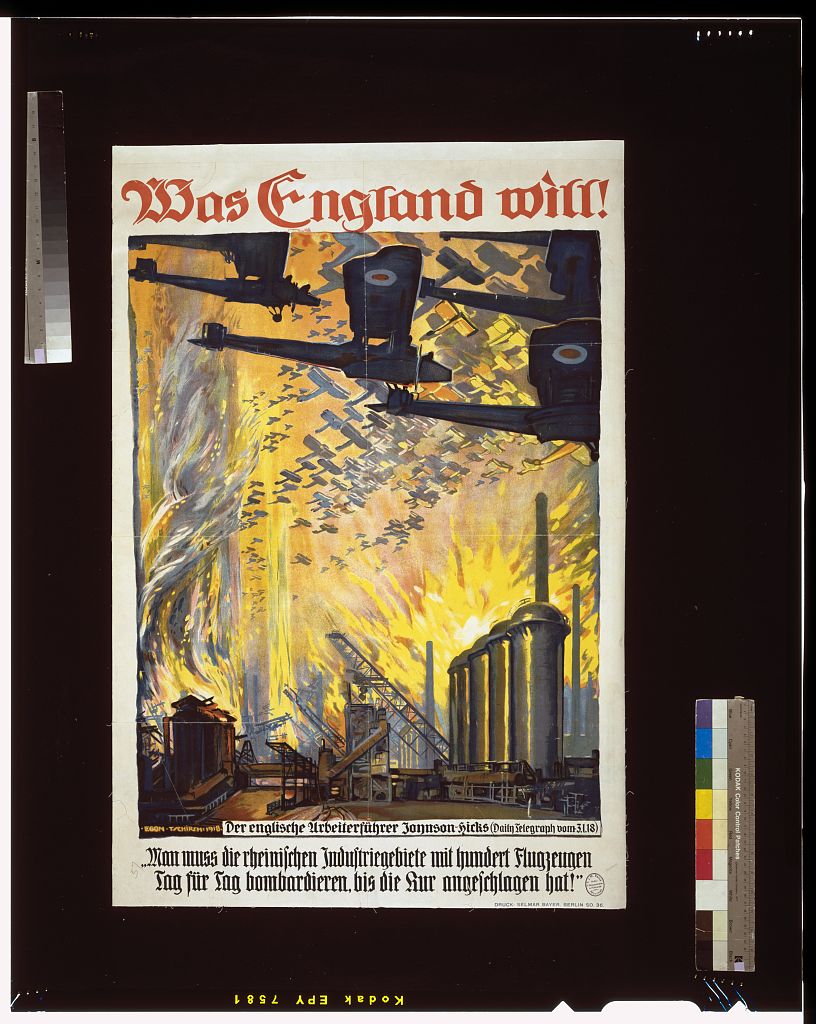
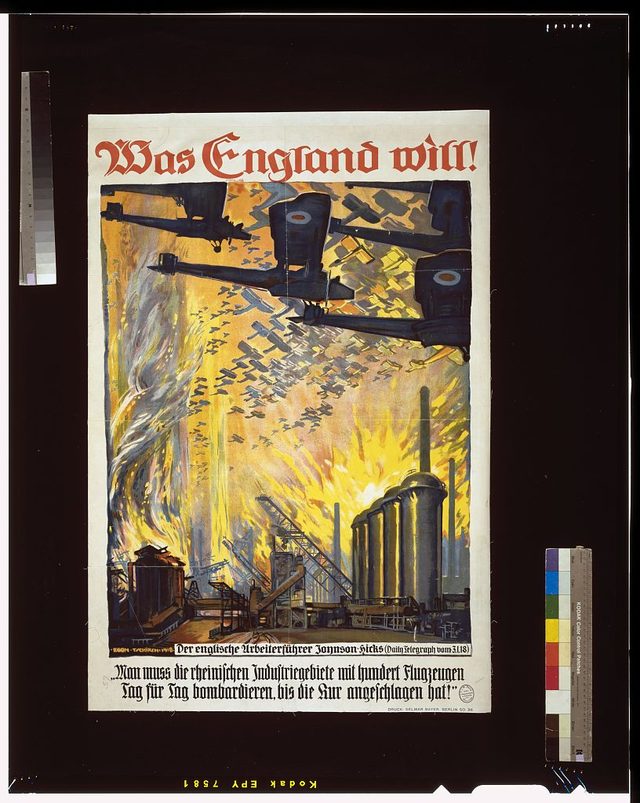
This 1918 home-front poster by Egon Tschirch quotes one politician, William Joynson-Hicks, to stand for what "England wants". The sponsor is not named on the sheet. The entry tags it fear appeal and card stacking.
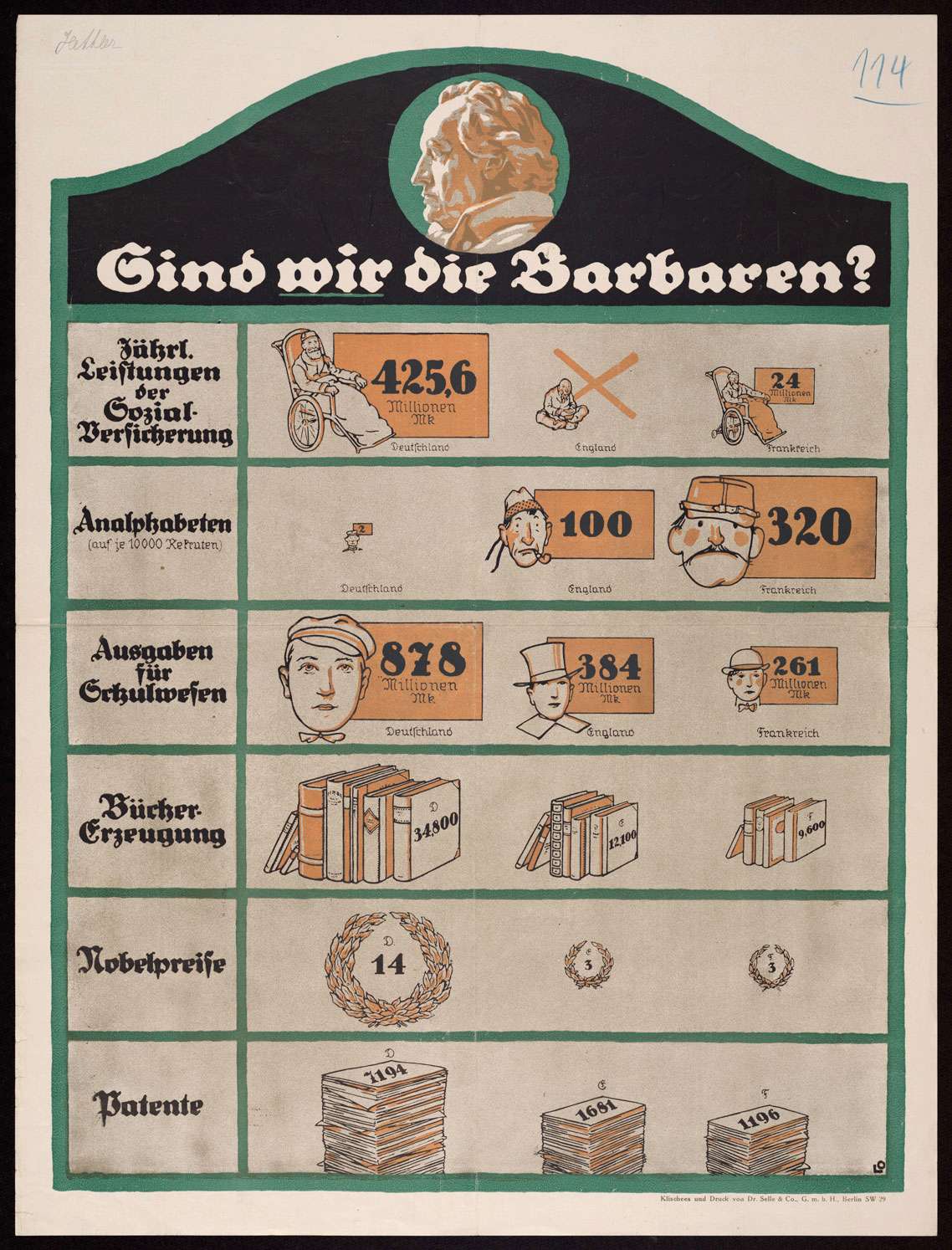
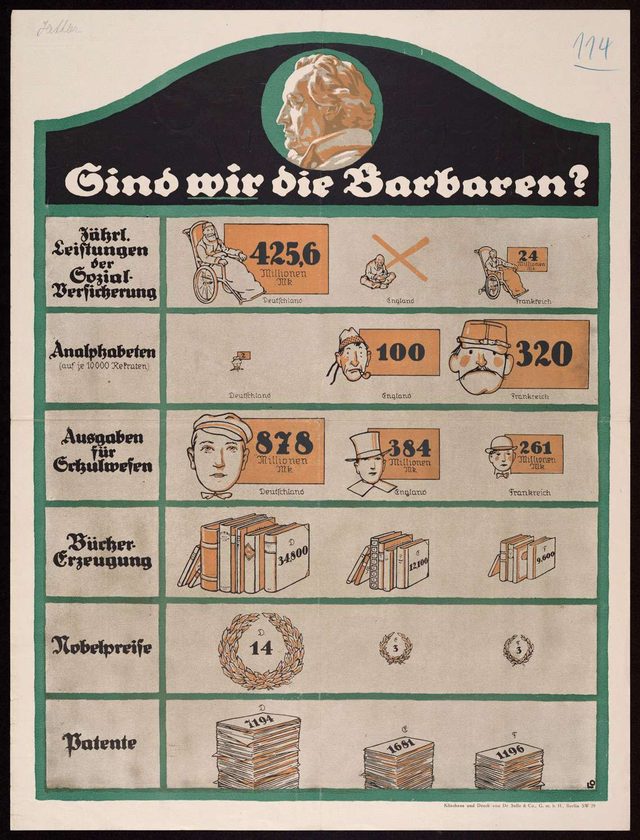
"Are We the Barbarians?" (1916, artist Louis Oppenheim) was issued by the Imperial government to rebut Allied atrocity claims. It answers an accusation with a different comparison chosen by the issuer, which the collection tags whataboutism and card stacking. See whataboutism and the Manifesto of the 93 case study.
What did French WWI propaganda posters show?
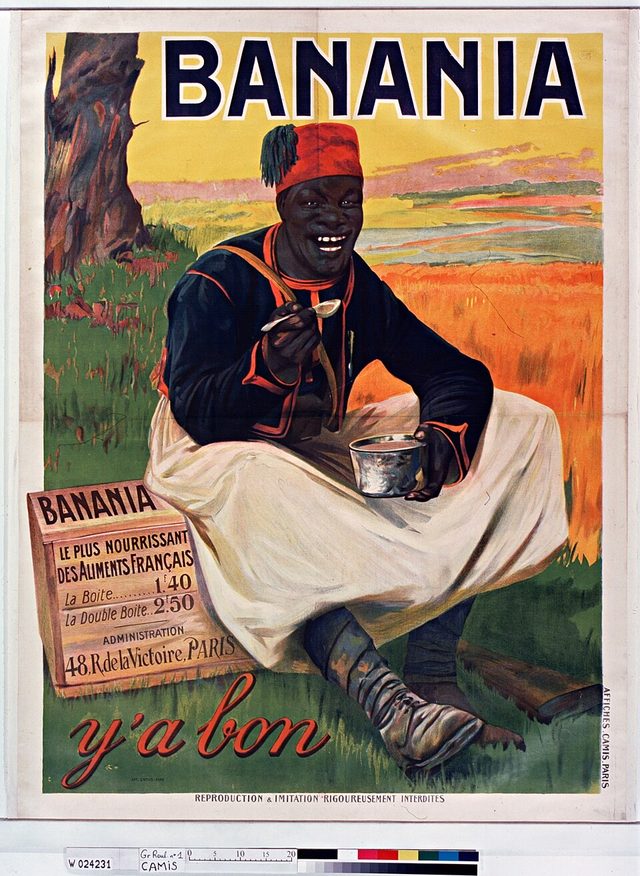
France sold its National Defence Loans on posters, and the state censored the press. Soldiers called the resulting optimism bourrage de crâne, "skull-stuffing"; see the case study. Audiences were savers, civilians and, in one sheet, the colonial troops shown in advertising.
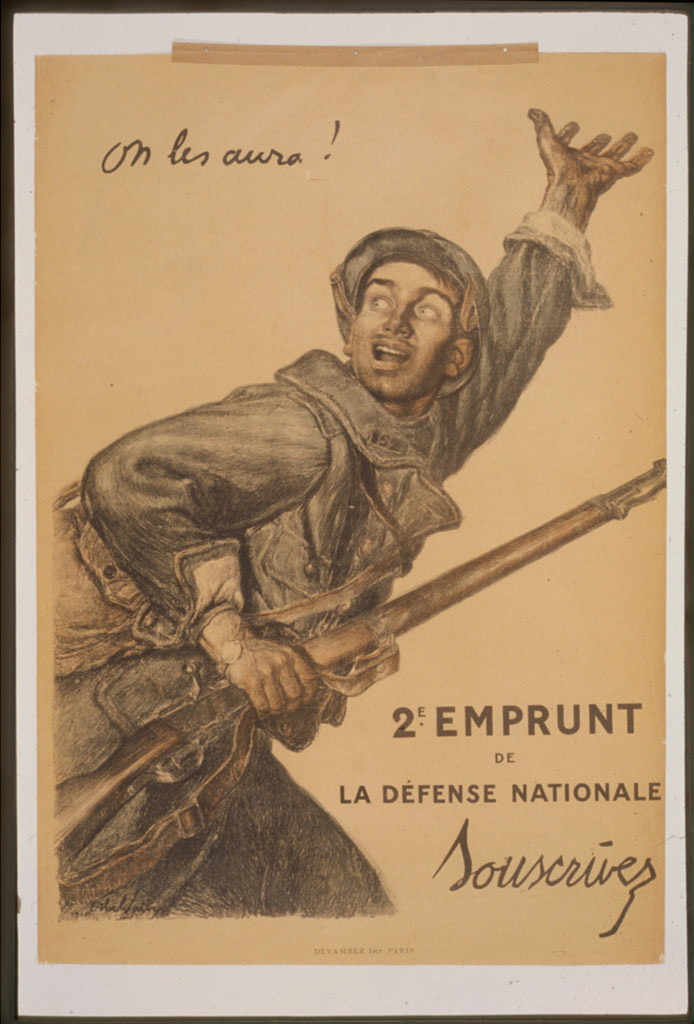
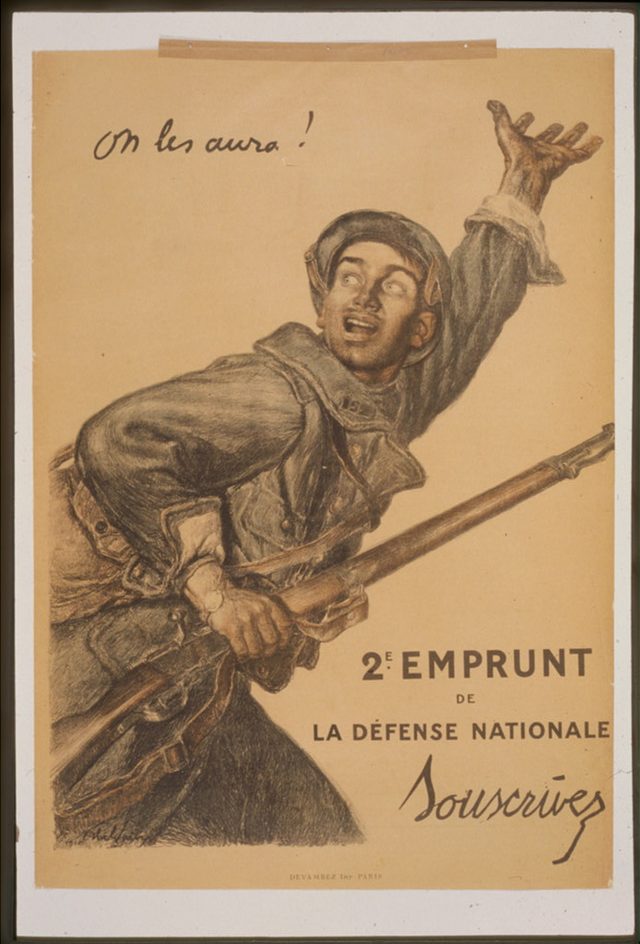
Abel Faivre's poster for the Second National Defence Loan (1916) has the soldier shout "We'll get them!" above a call to subscribe. Courage is transferred onto buying a bond, so subscribing reads as joining the advance. Read the technique: transfer.
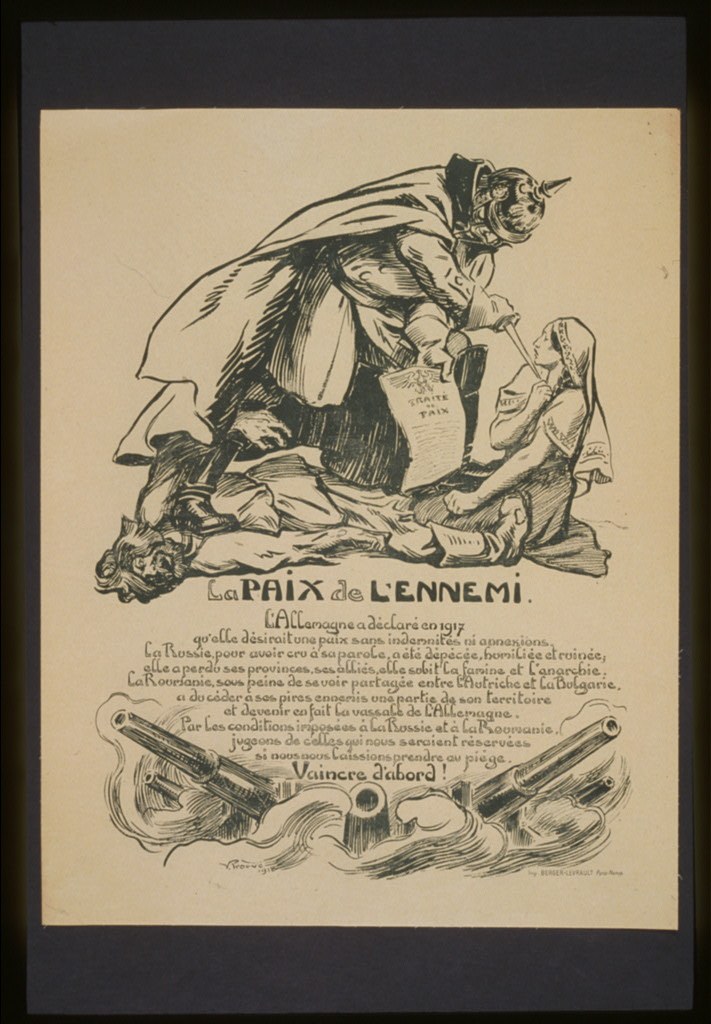
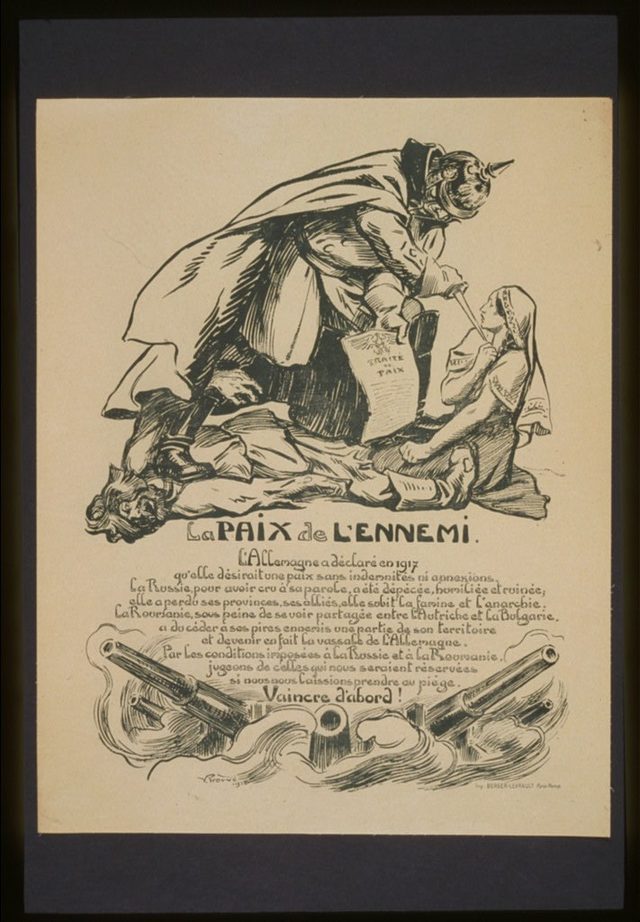
Signed V. Prouvé (1918, sponsor not named), this sheet lists what befell Russia and Romania and asks readers to judge what France would be offered. The entry says the argument runs from two hand-picked cases to one predicted fate, tagging it fear appeal and card stacking. It also shows an assault on a woman. Read the technique: fear appeal.
Content note: Advertising poster showing a grinning colonial soldier with a mock-pidgin caption ('y'a bon'). This object is shown as it was published. Why 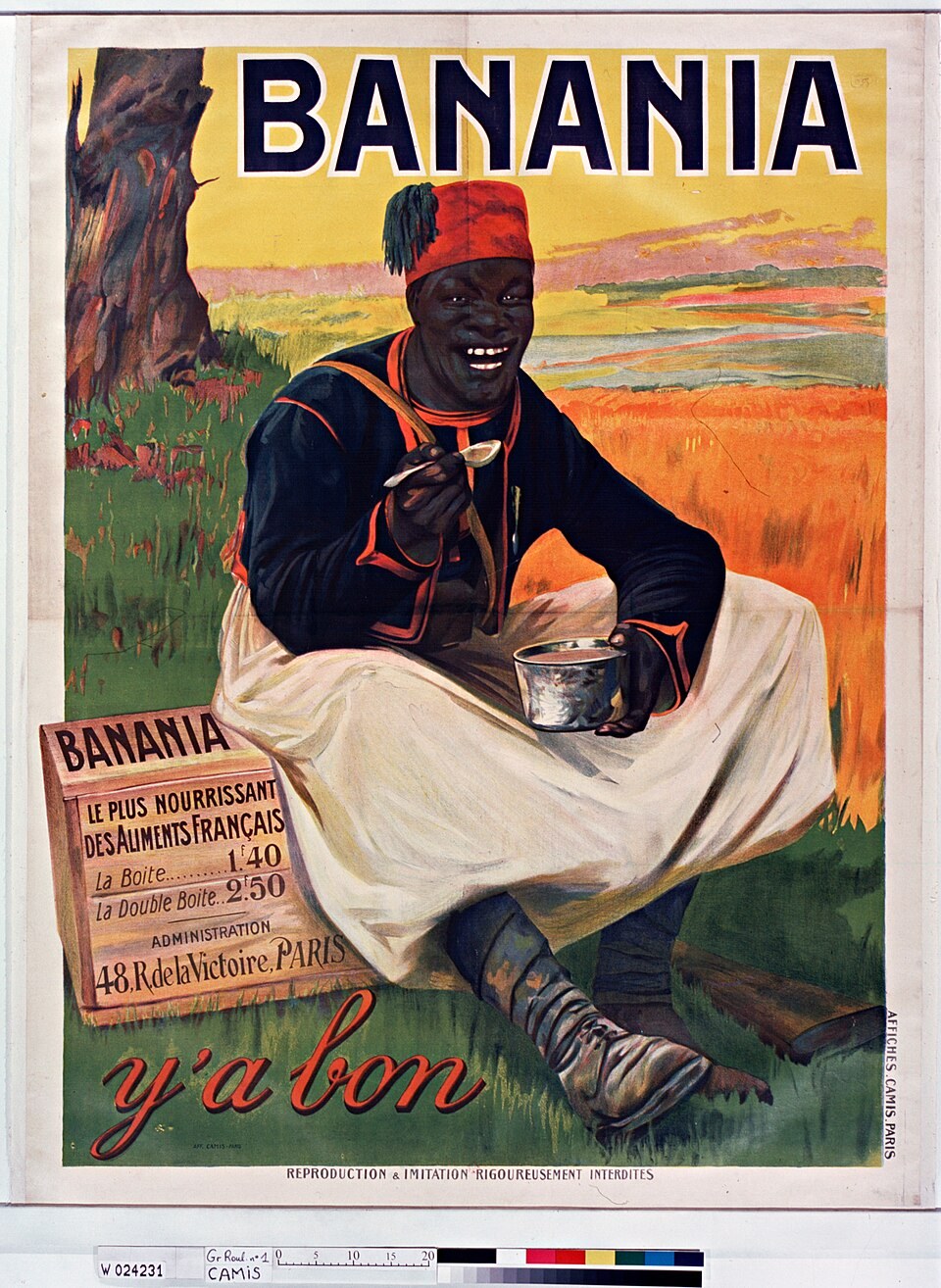
This 1915 advertisement by the Paris firm Banania ties a breakfast food to the image of the colonial infantry, with a mock-dialect slogan. The entry notes the phrase later drew criticism in France as a racial stereotype. It is a commercial poster, not a state one, and is tagged transfer.
What did American WWI propaganda posters show?
The United States created the Committee on Public Information on 13 April 1917, a week after declaring war, under George Creel. Posters came from volunteer artists for departments and patriotic societies. The collection holds far more American sheets than any other (298 of 394), so counts say more about what is hosted than about output. See the CPI case study and American propaganda posters.
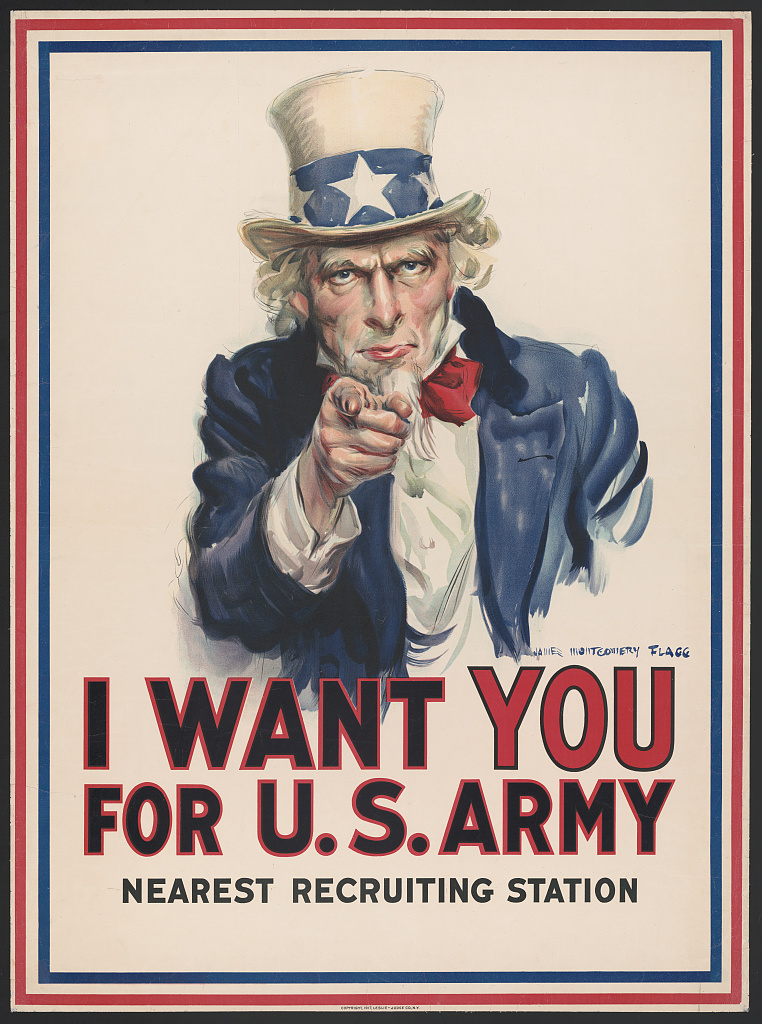
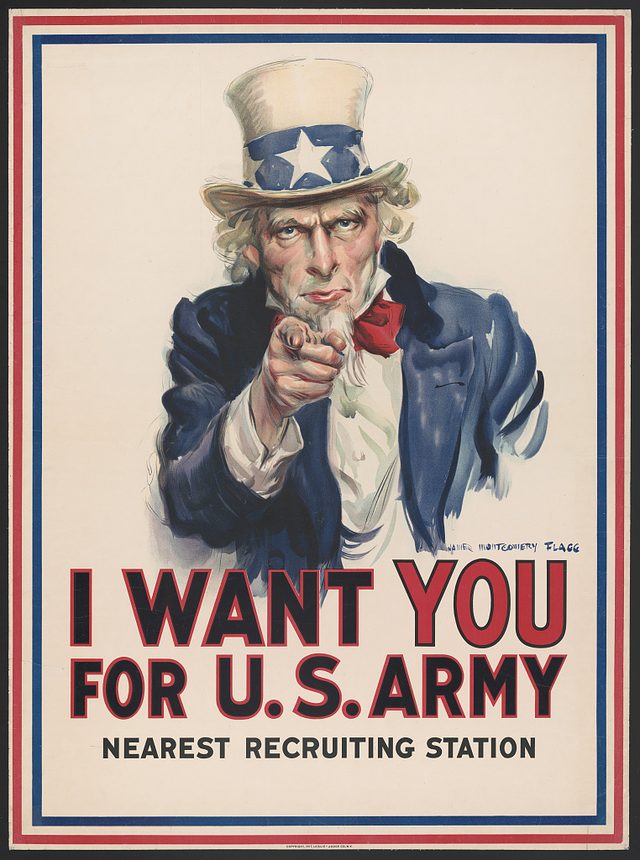
James Montgomery Flagg's Army recruiting sheet (1917) lets the national figure make the request. The caption says the nation's standing replaces any argument for why this viewer should enlist. Read the technique: transfer.
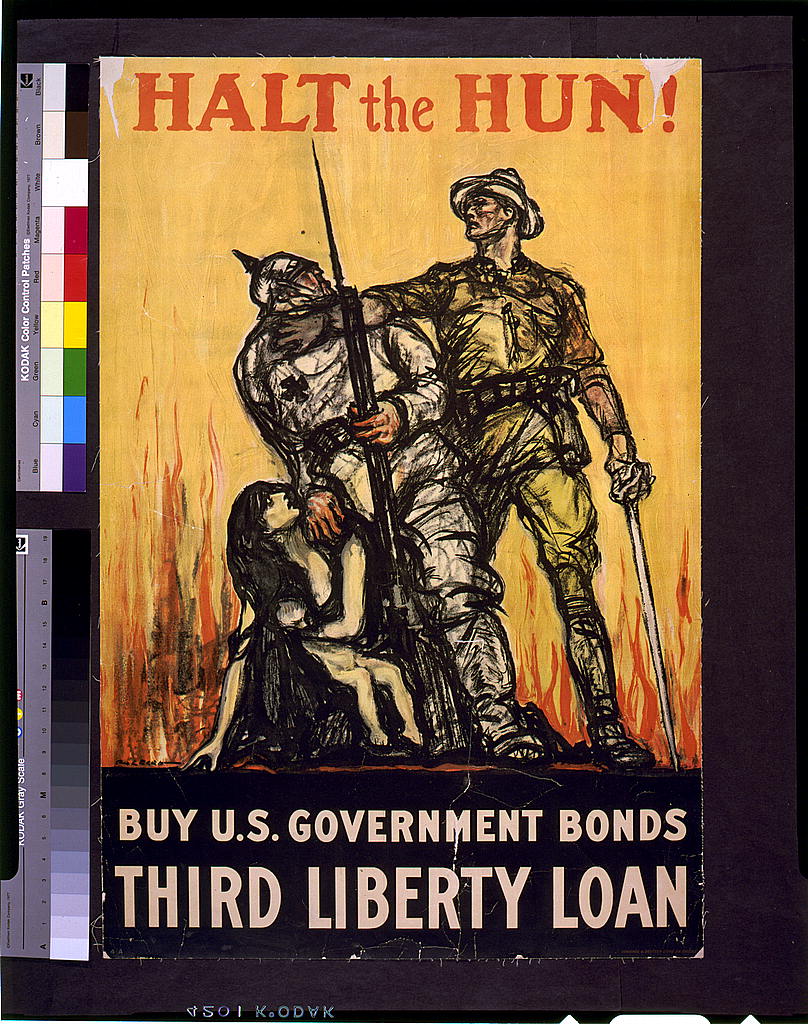
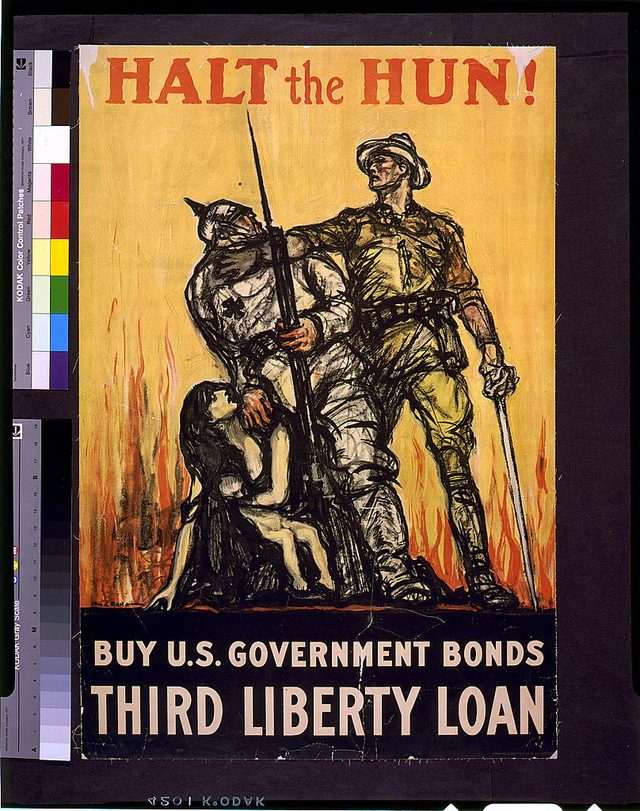
Henry Raleigh's Third Liberty Loan poster for the U.S. Treasury (1918) shows a German soldier seizing a half-clothed woman and child. The entry notes that it belongs to the Allied "Rape of Belgium" iconography. Some 1914 atrocity stories were later shown to be false or unverified, while about 6,500 civilians were killed by German troops in Belgium and France in 1914 (Horne and Kramer). The poster points at none of this. It is tagged name-calling and fear appeal. Read the technique: name-calling.
What did Canadian WWI propaganda posters show?
Canadian posters came from battalions, the Patriotic Fund, the Victory Loan campaigns and, in 1917, a party coalition. They were printed in English and French. Audiences included French Canadians, who were addressed in their own language. See Canadian propaganda posters.
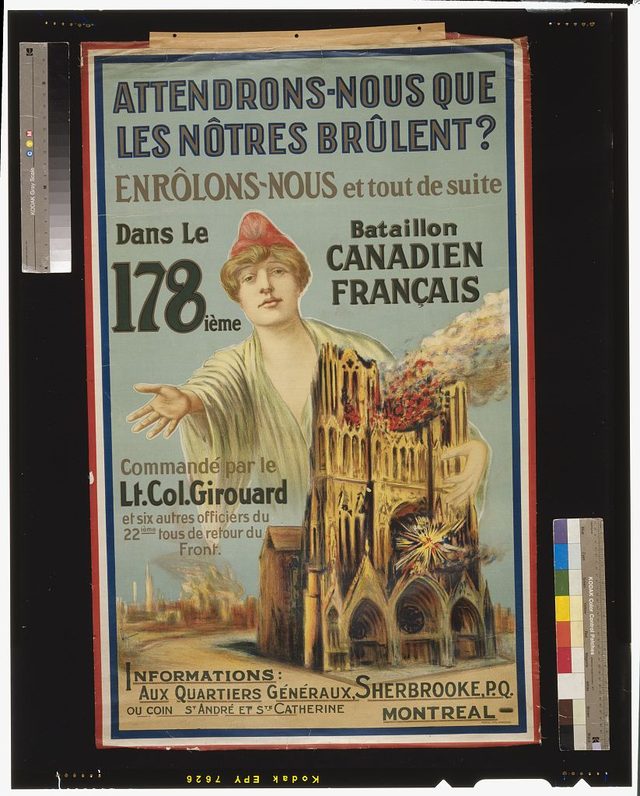
Content note: Wartime atrocity imagery: a burning cathedral with shell bursts. This object is shown as it was published. Why 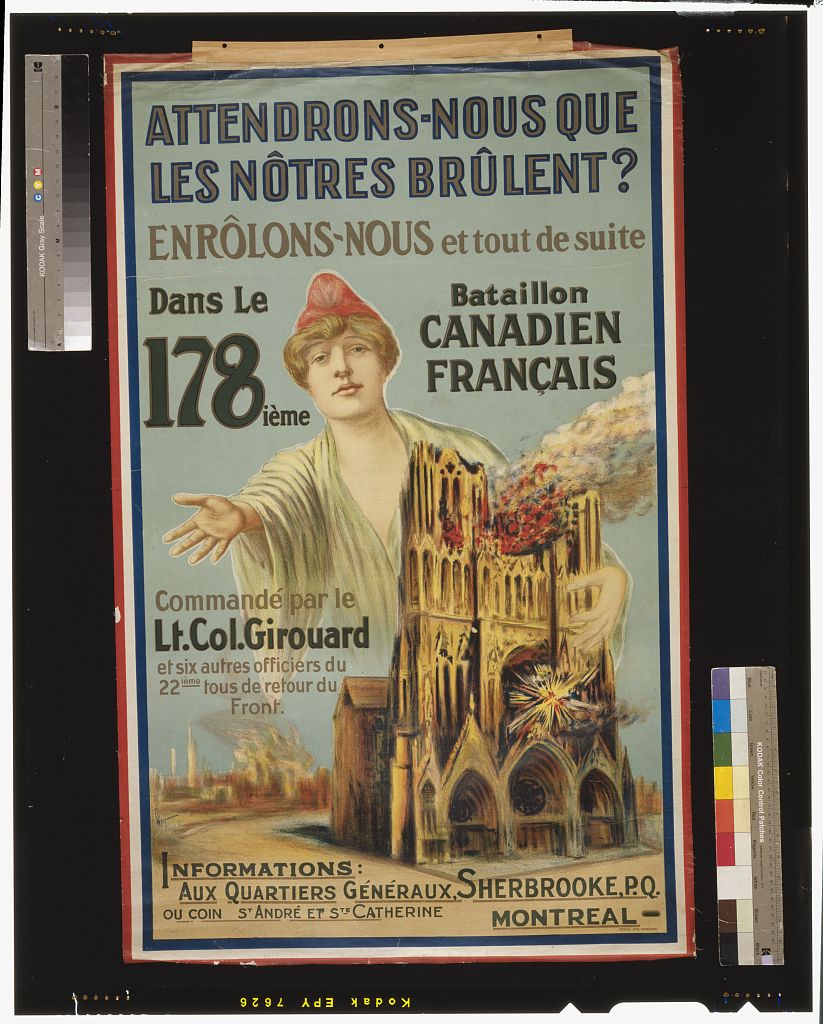
A 1916 recruiting sheet for the 178th (French-Canadian) Battalion asks "Shall we wait until our own burn?". The French national symbol and the cathedral are attached to enlisting. The entry tags fear appeal and transfer. Read the technique: fear appeal.
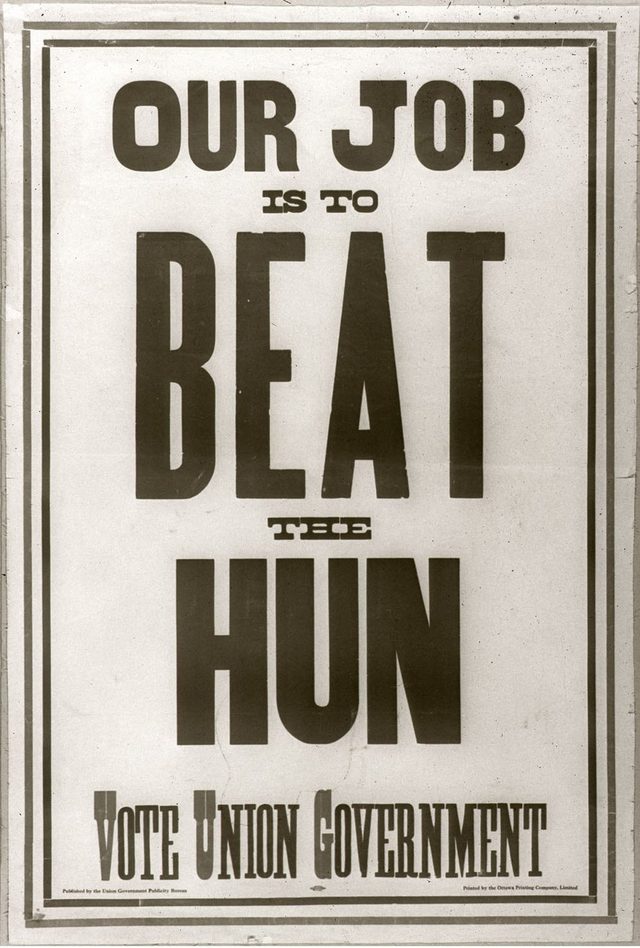
Content note: Wartime slur: the label 'Hun' for Germans on a 1917 election poster. This object is shown as it was published. Why 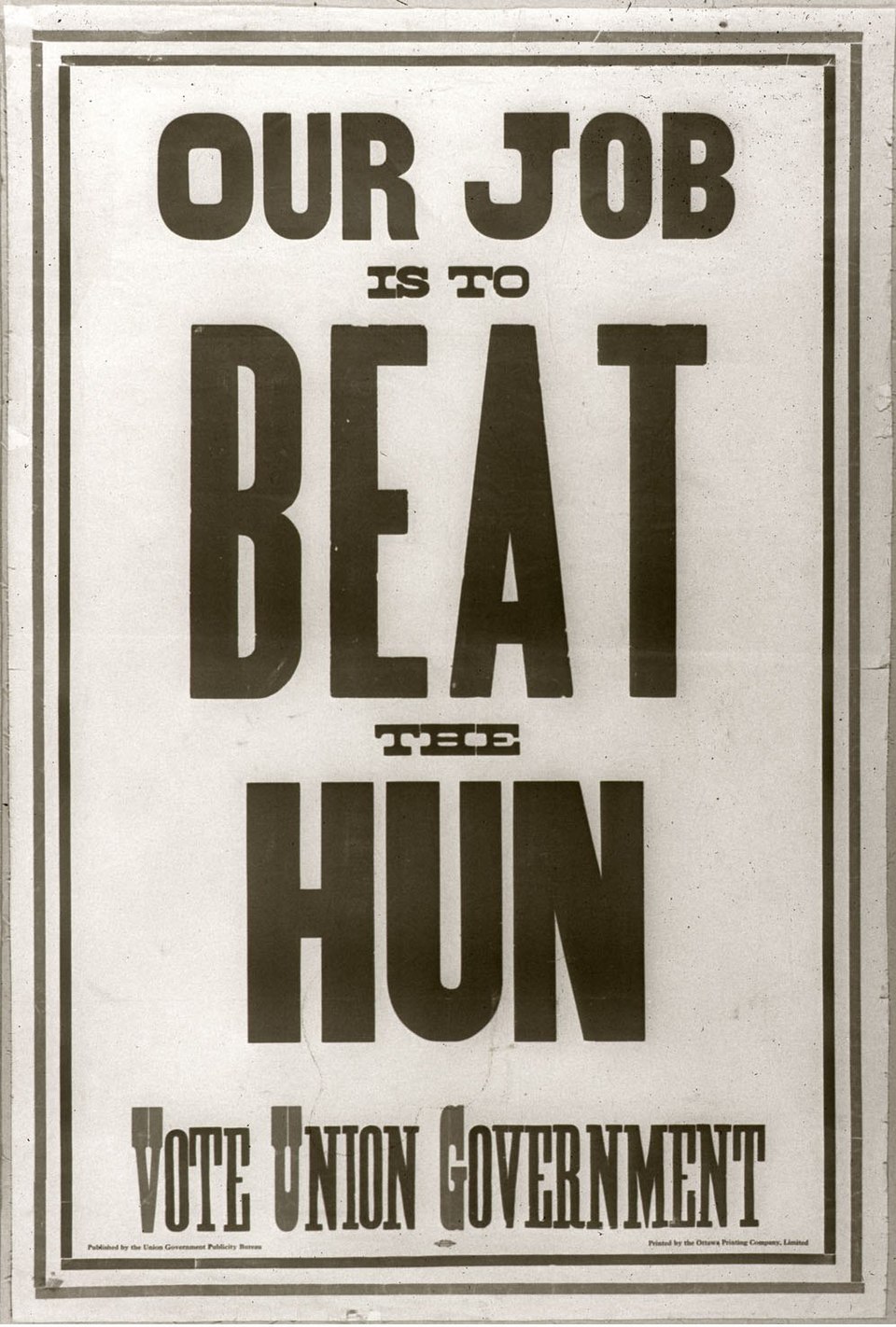
The Union Government Publicity Bureau's 1917 election poster joins two acts: beating "the Hun" and voting for the coalition. The collection tags it name-calling and identity fusion. Read the technique: identity fusion.
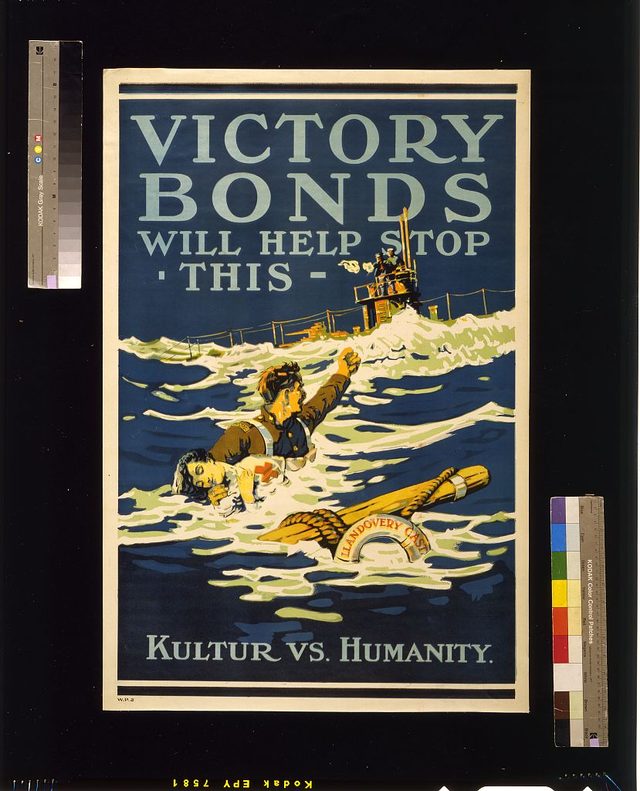
Content note: Depicts a drowned nurse held by a soldier beside a hospital-ship lifebuoy, with a German submarine in the background This object is shown as it was published. Why 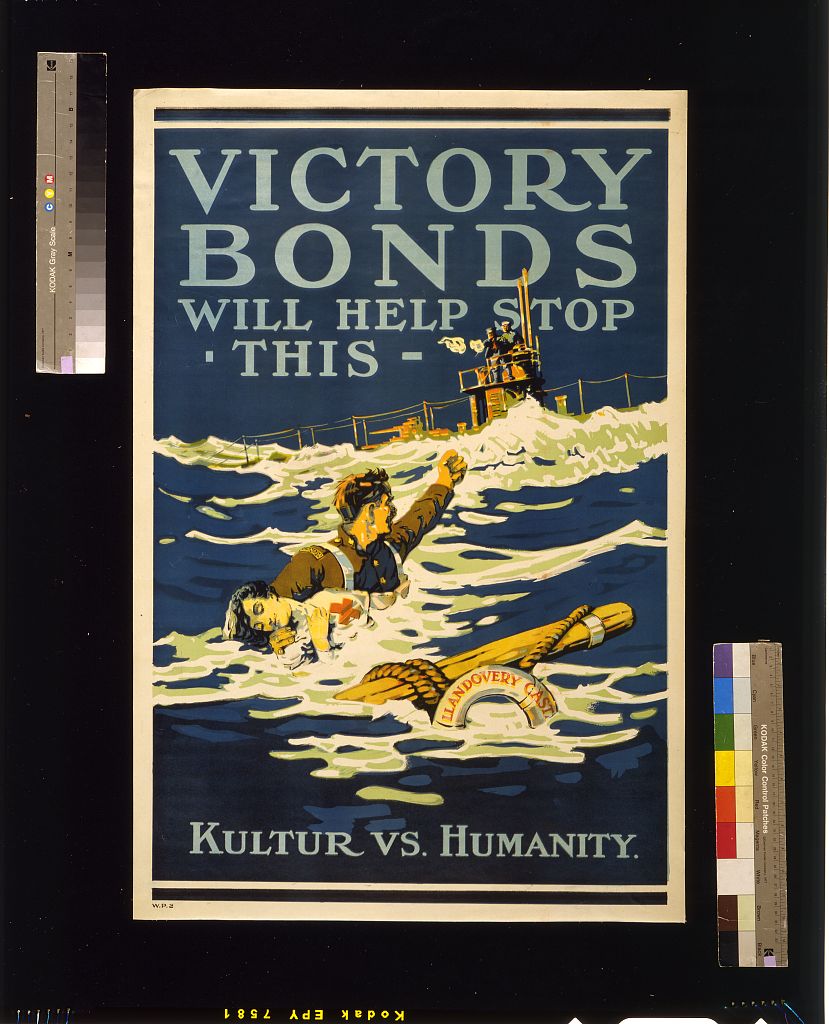
The 1918 Victory Loan sheet refers to the hospital ship Llandovery Castle and sets "Kultur" against "humanity". Issuer and artist are not printed on it. The entry tags name-calling and transfer.
What did Austria-Hungary's WWI posters show?
Austria-Hungary's posters in the collection are mainly war-loan and relief sheets in German, Czech and Polish, from banks, committees and the military administration. Audiences were the monarchy's many language groups.
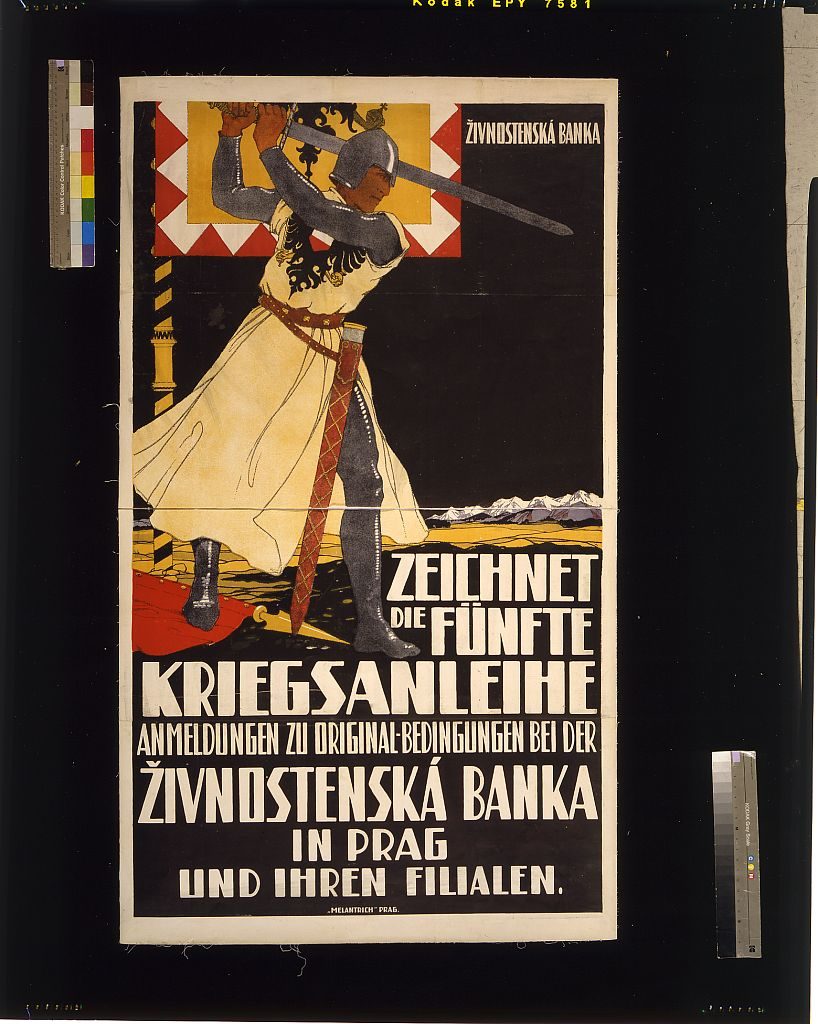
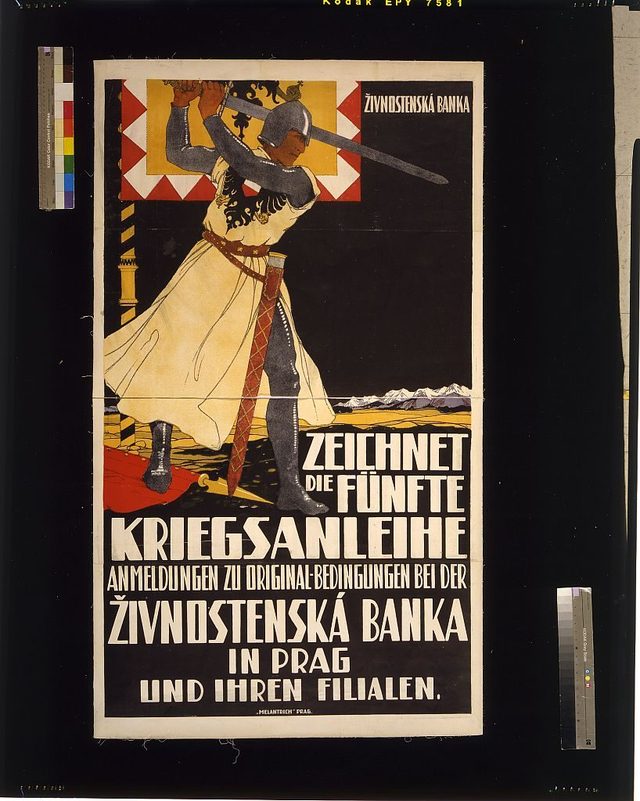
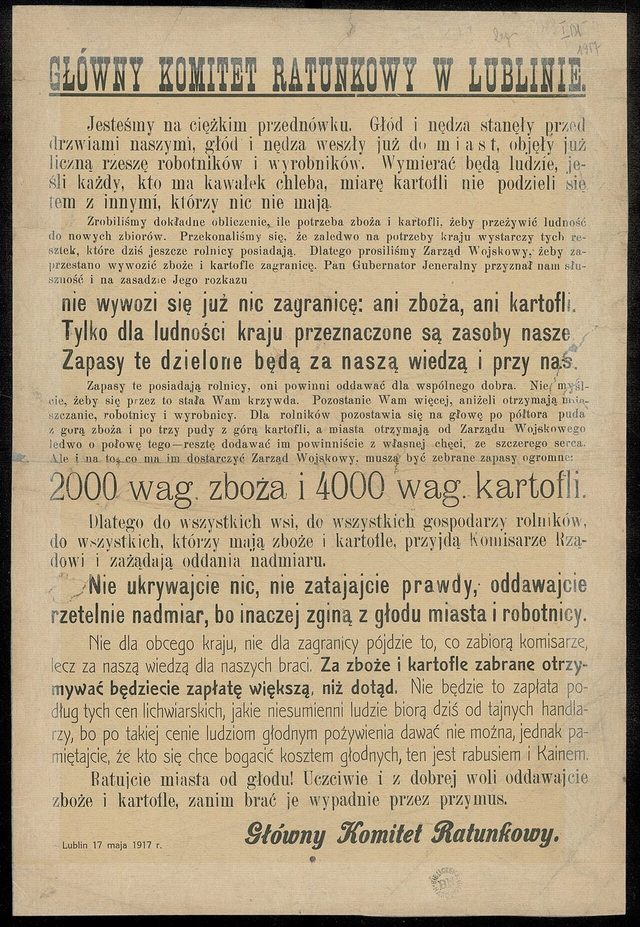
The Živnostenská banka of Prague issued this 1916 sheet for the fifth war loan. The knight and imperial eagle attach chivalric prestige to a bond, with no rate or term shown (transfer). A Polish-language relief appeal from Lublin (1917), under the military administration, instead warns that people will die and calls grain hoarders "robber and Cain". Read the technique: transfer.
What did Russian WWI posters show?
The collection holds two Russian posters in this era, plus one print. Issuers were the imperial government in 1916 and the Provisional Government in 1917. Audiences were bond buyers. See the Russia 1914-1918 case study.
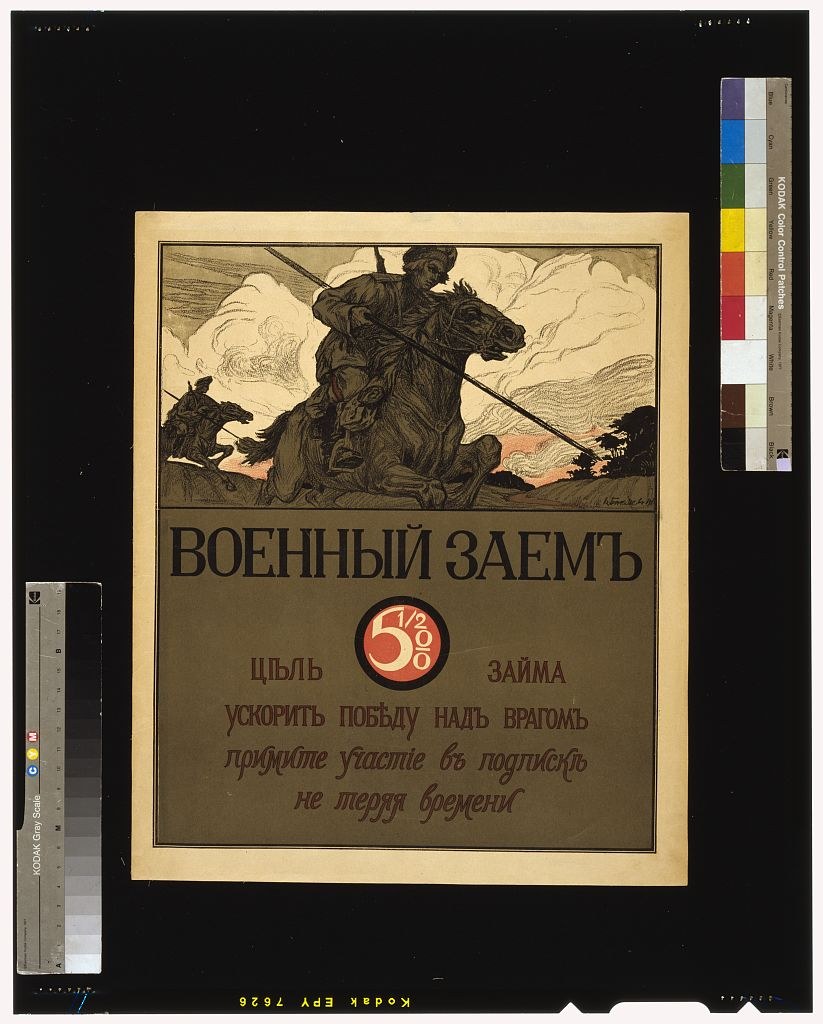
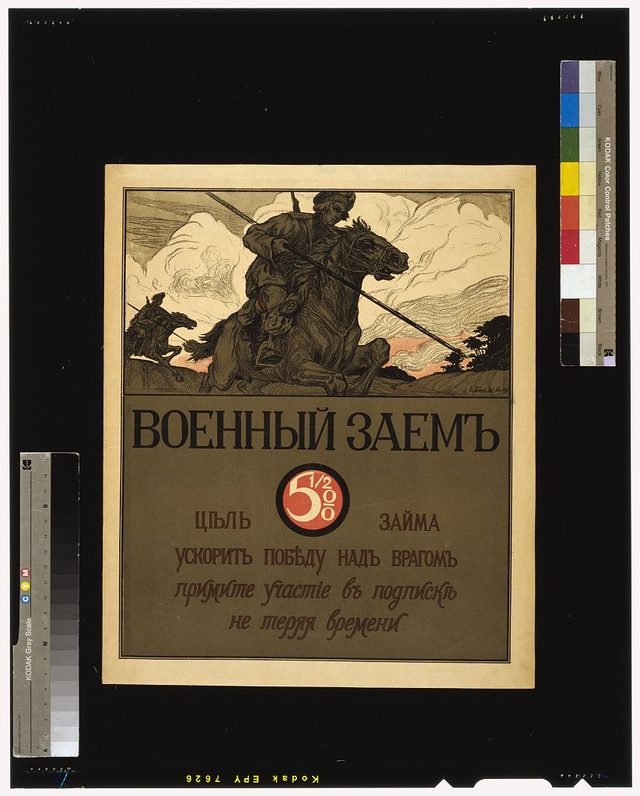
The 1916 imperial war-loan sheet sets the lancer's charge over the bond notice, which says its purpose is "to hasten victory over the enemy". The issuer and printer are not named. The entry tags transfer.
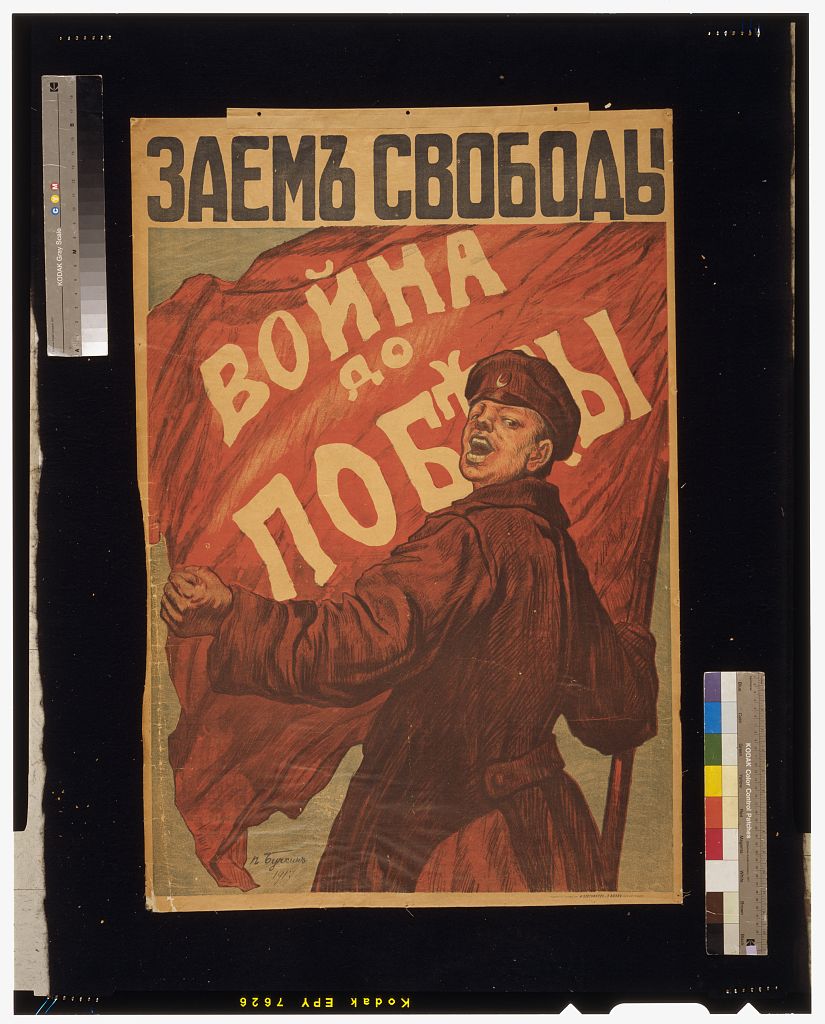
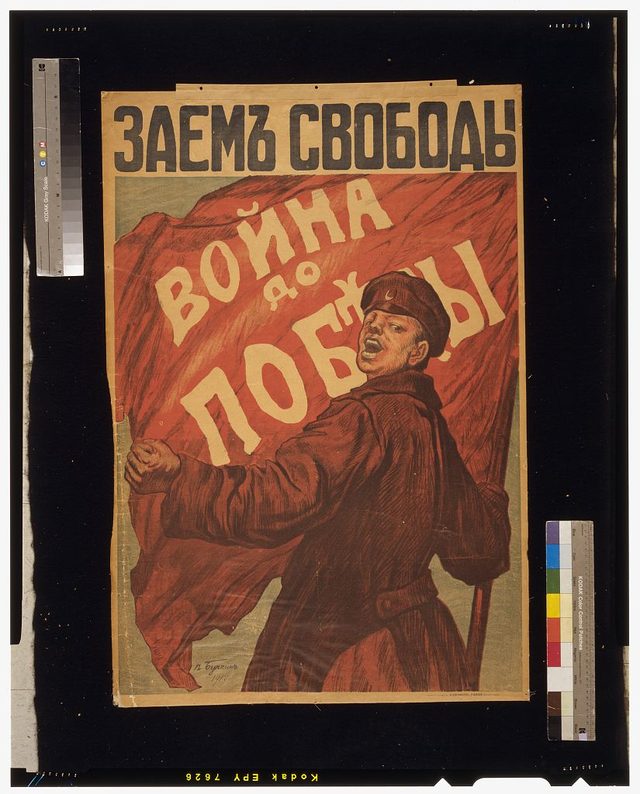
The 1917 Liberty Loan poster carries the banner "War until victory". The collection notes that the February Revolution's red flag is used for continuing the war, and that "liberty" names a 5 percent government bond. It is tagged glittering generalities and transfer. Read the technique: glittering generalities.
What did Italian WWI propaganda posters show?
Italy's six posters include a national loan consortium sheet and a home-front sheet with no named sponsor. Audiences were savers and civilians.
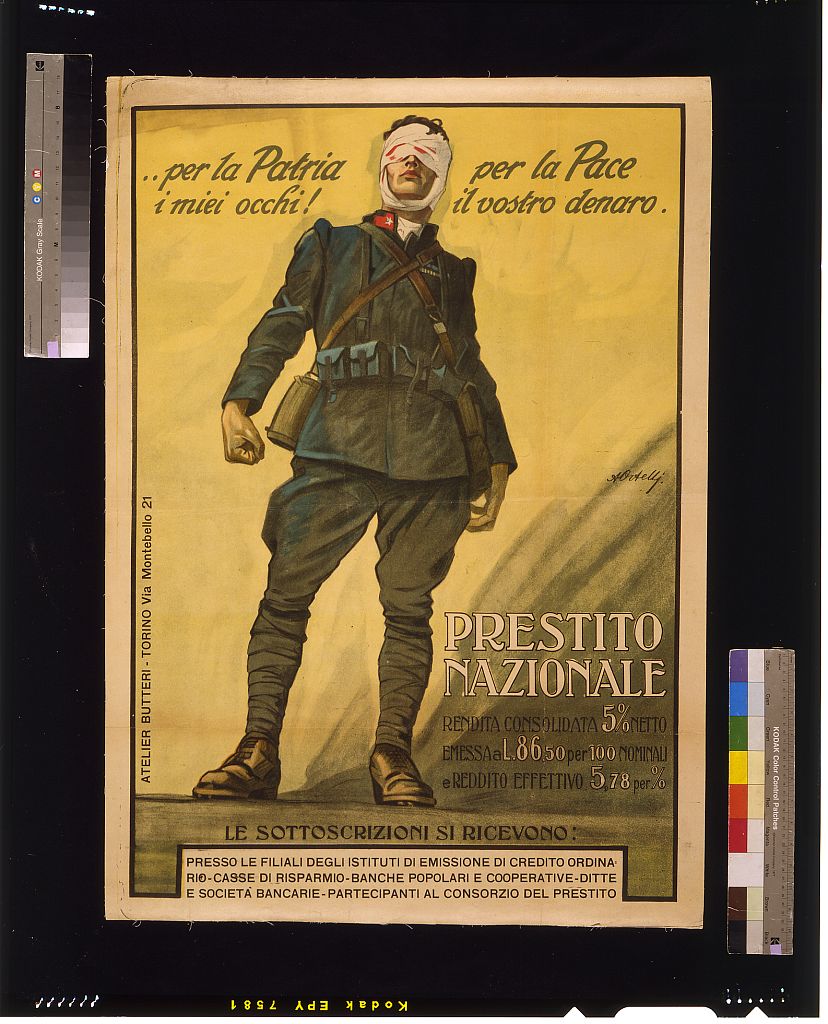
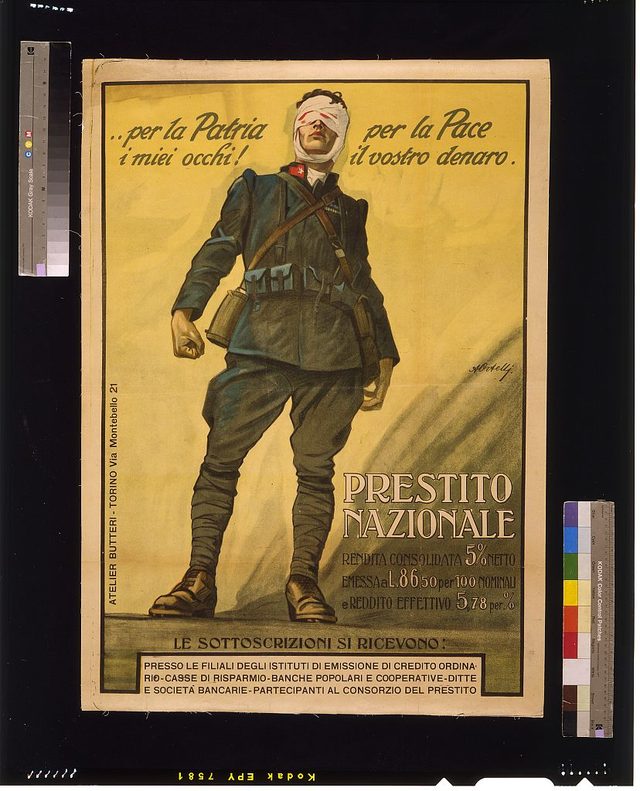
The 1918 Prestito Nazionale poster by Alfredo Ortelli pairs a soldier's blinding with the buyer's money. The entry calls it the civilian counterpart of a sacrifice already made (transfer). Read the technique: transfer.
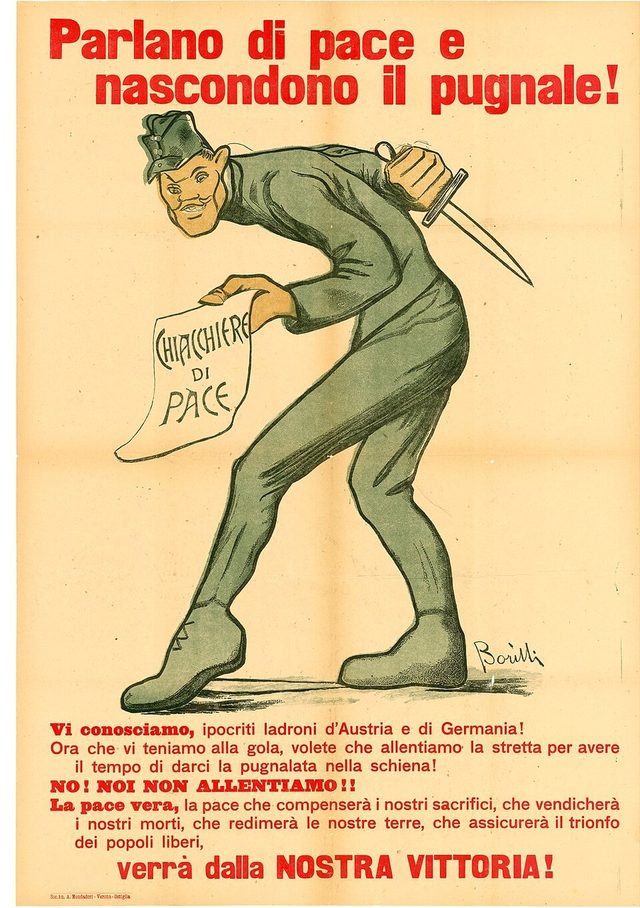
Content note: Caricature of an Austro-German soldier as a hypocrite with a hidden dagger; text calls the enemy 'hypocritical thieves'. This object is shown as it was published. Why 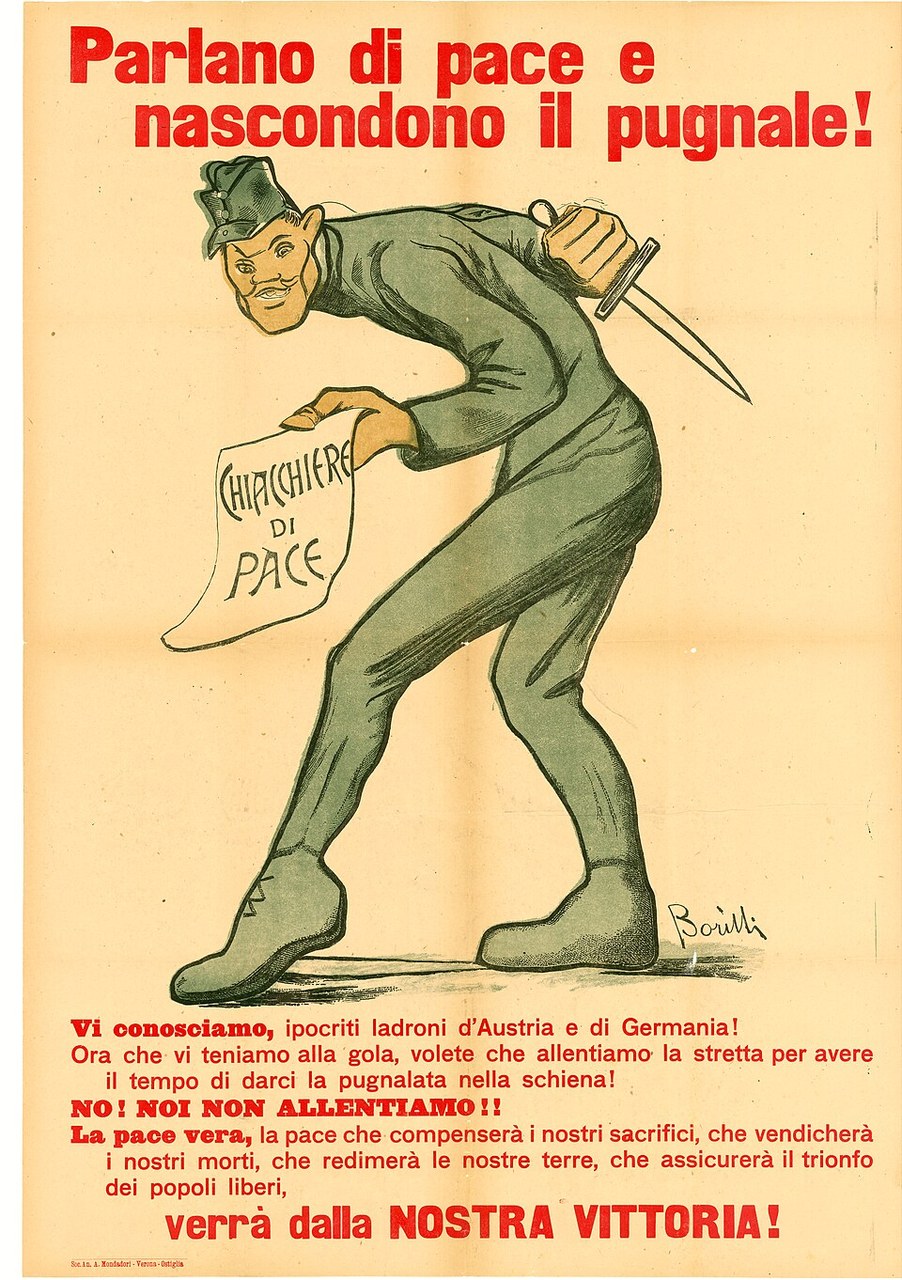
Borilli's 1918 sheet, with no sponsor named, calls the enemy "hypocrite thieves of Austria and Germany" and draws a caricature. The entry compares it to the French "La paix de l'ennemi" and the German "Weg zum Frieden", which each present an opponent's peace terms as a trap. It is tagged name-calling and glittering generalities. Read the technique: name-calling.
What about other countries?
The collection holds eight Australian posters, mostly recruiting and conscription-referendum sheets from 1915 to 1918. Eleven more come from British India (2), the Czechoslovak National Council (2), New Zealand, Belgium, Sweden, the Netherlands, Greece, Estonia and the Ukrainian People's Republic. They are in the grid below.
How do the countries compare?
The same tells recur. Britain, the United States and Canada put atrocity and enemy labels on recruiting and loan sheets. German, Austrian, French, Italian and Russian sheets mostly attach a soldier's courage to a bond. Each side also presented the other's peace terms as a trap. The record supports these similarities in technique. It does not support a ranking by scale or intent, and no source used here measures what any poster achieved. For other eras, see propaganda posters.
Browse WW1 propaganda posters by country
The grid below shows the First World War posters on this page. Each opens an object page with the holding institution, a link to the original record, a transcription of any text and the rights basis for hosting.
Sources and rights
Images come from the Library of Congress, the Bibliothèque nationale de France, the Plakatmuseum Wien, Library and Archives Canada and other institutions, directly or through Wikimedia Commons. Each object page gives its rights basis. Background facts come from the sources listed on the WWI hub page and the case studies linked above.