Content note. One poster here names Hitler as the source of an unannounced gas attack, and several show bombs, gas and fire as the threat. They are shown as issued. Showing an item is not endorsing it.
What were civil defense posters?
Civil defense posters were official notices telling civilians how to survive and help during an attack from the air: when the siren meant take cover, how to black out windows, how to fit a gas mask, who the wardens were. Governments issued them. Most of the collection's examples date from 1939 to 1945 in Britain and the United States; the Cold War atomic era is represented by one booklet.
Britain, 1939 to 1941: gas, fire and darkness
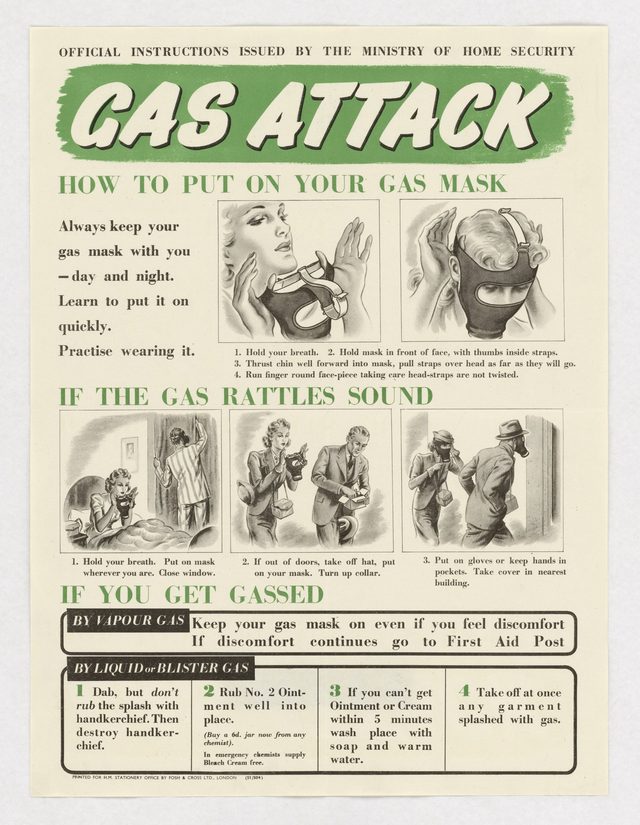
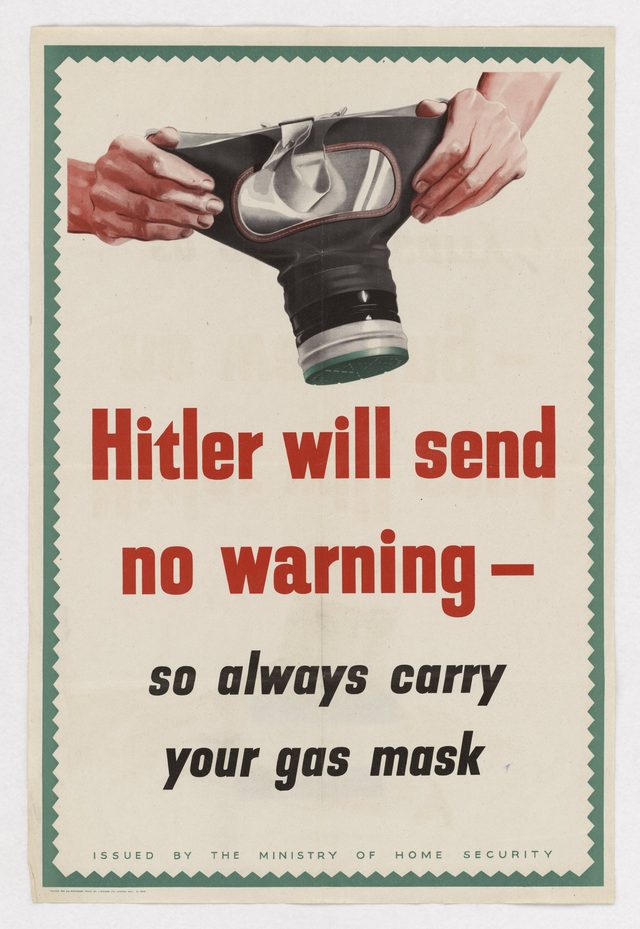
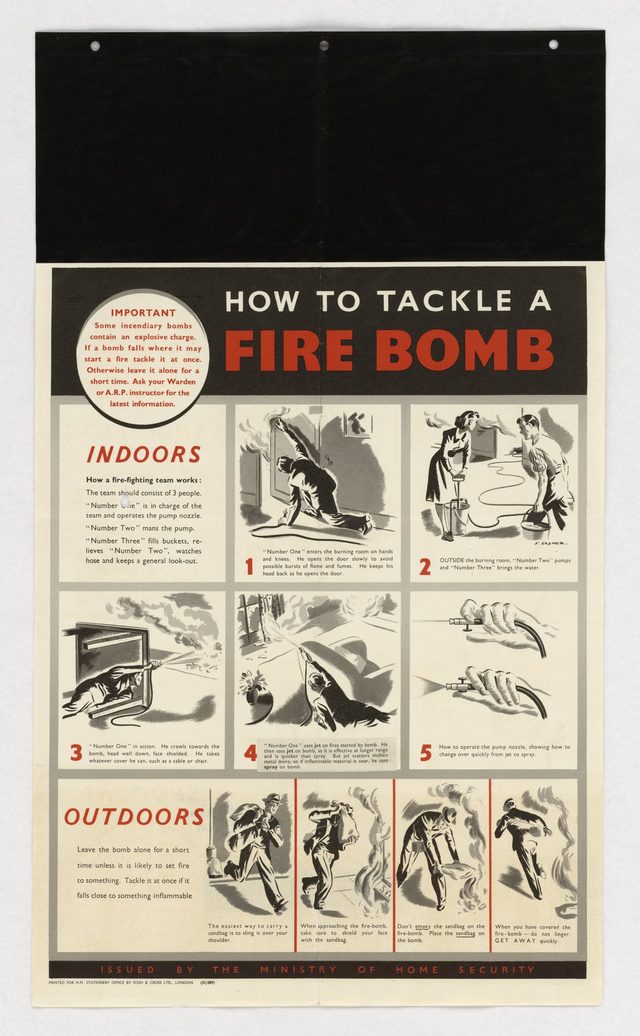
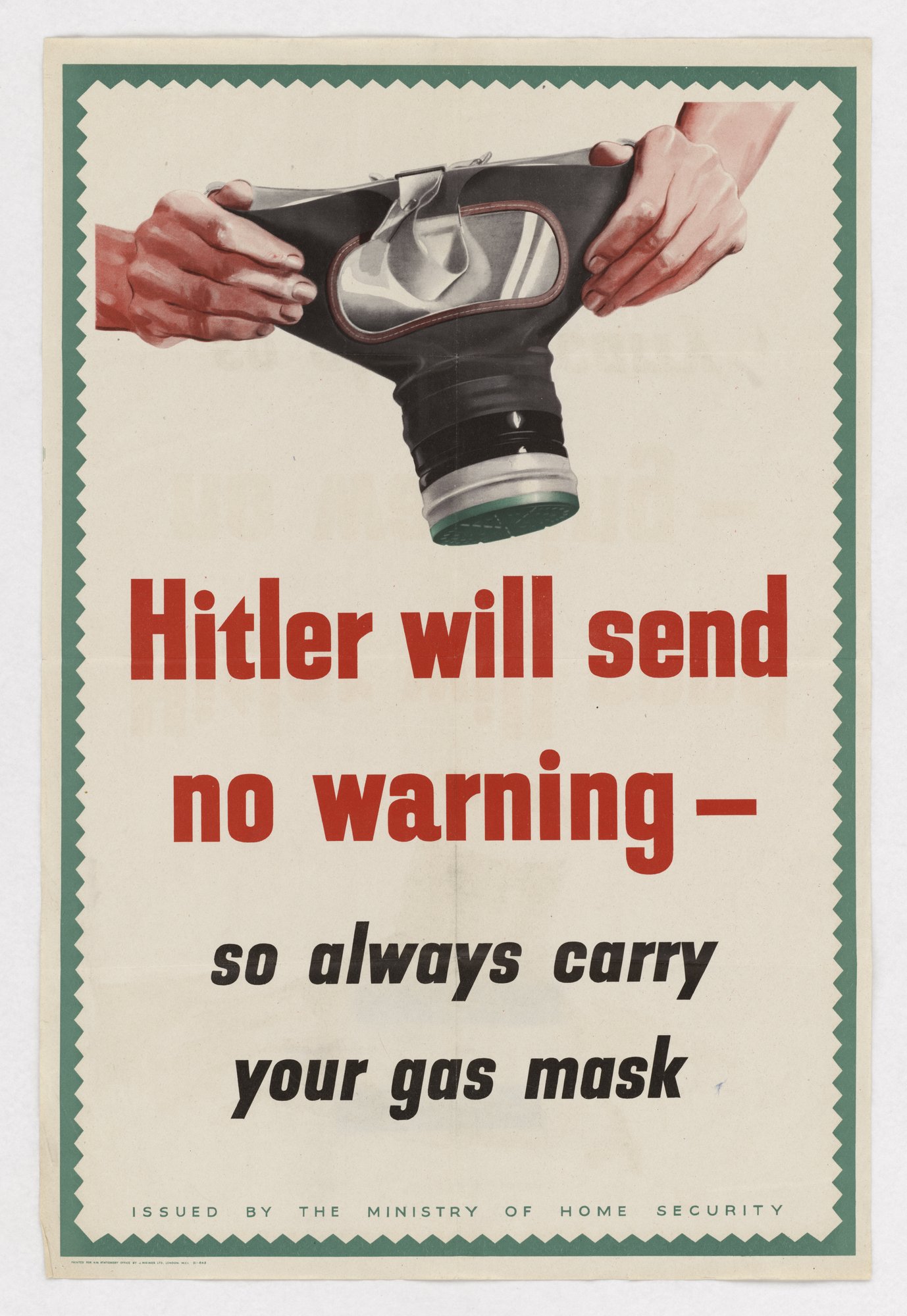
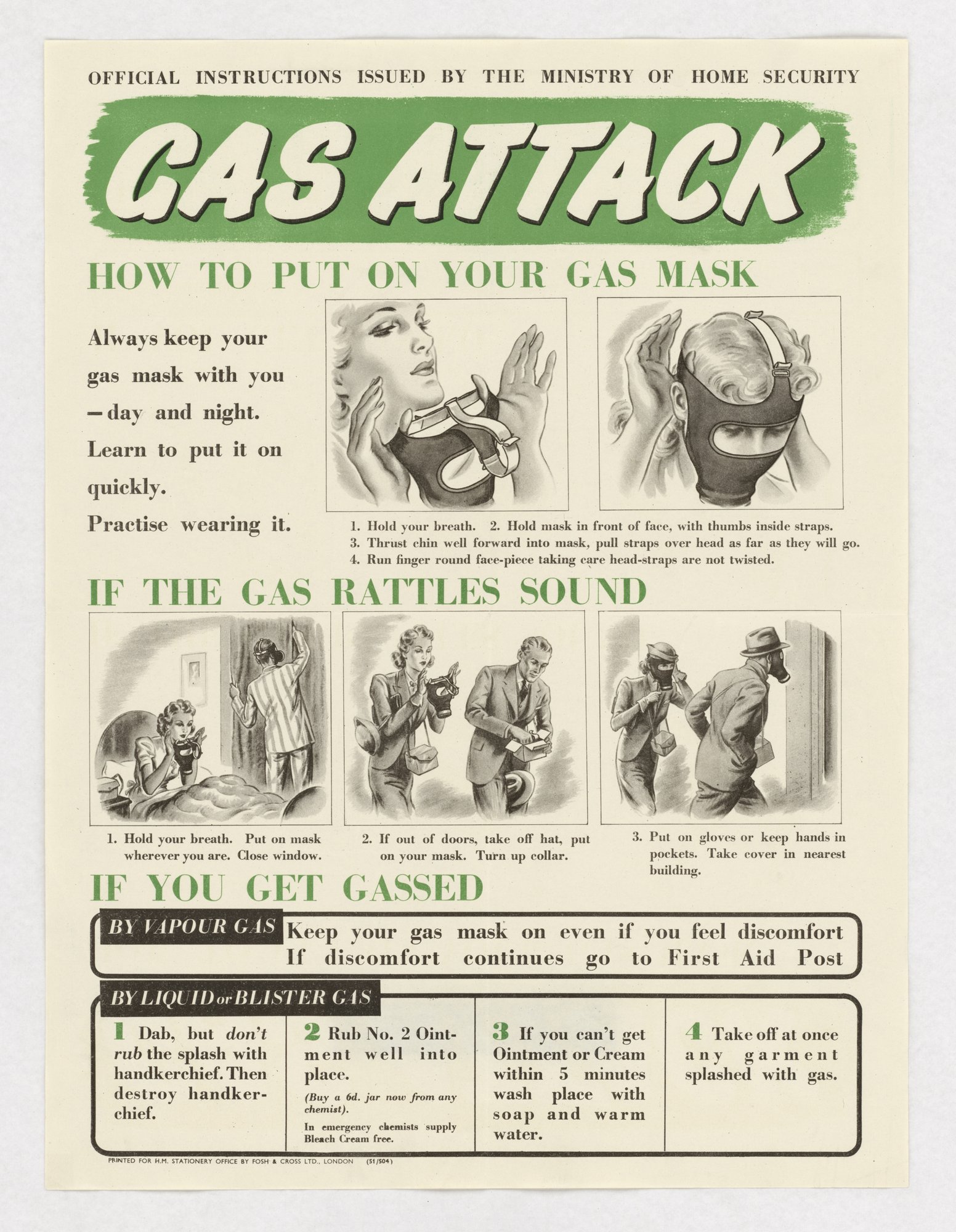
The Ministry of Home Security, through H.M. Stationery Office, named the enemy and the lack of warning on its gas-mask poster, and the tag is Fear appeal. Its companion sheet is mostly instruction.
Explain moreShow less
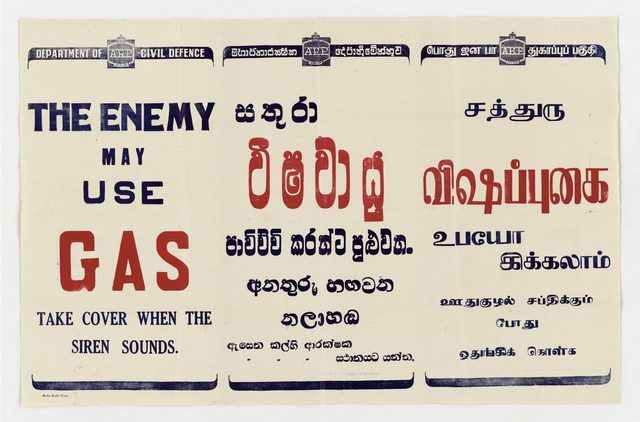
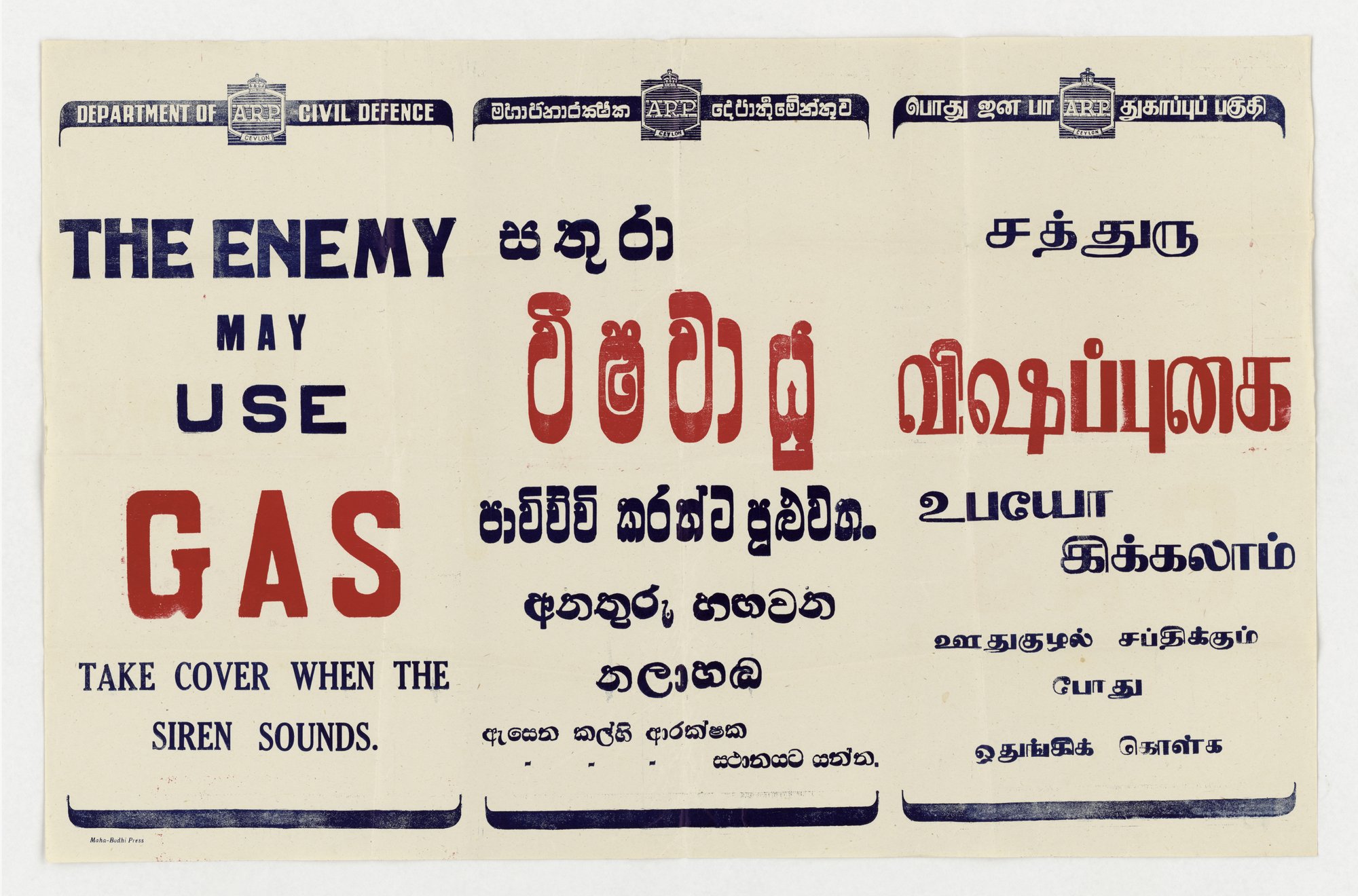
A text-only sheet from Ceylon's Department of Civil Defence carries the same message in English, Sinhala and Tamil.
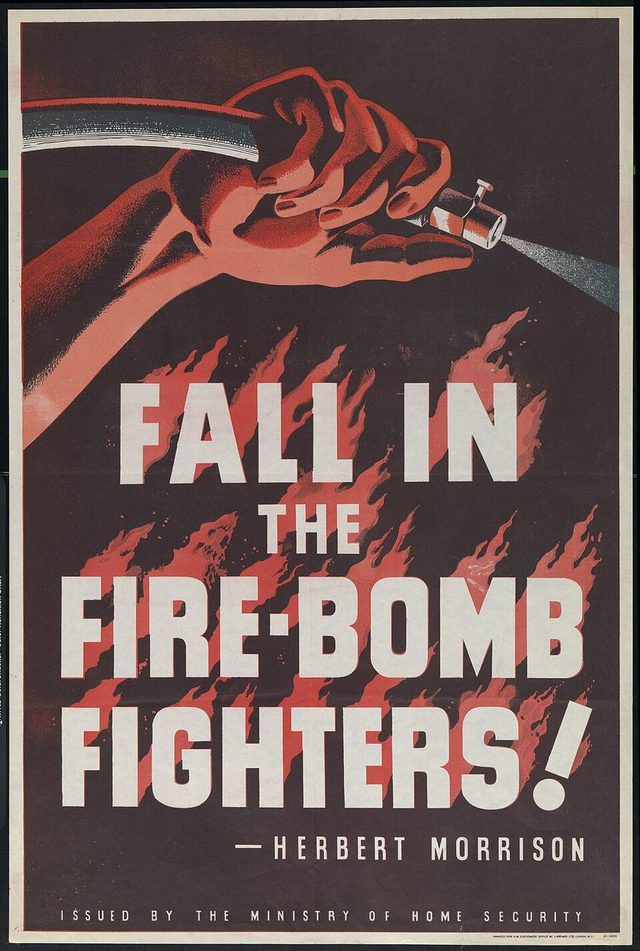
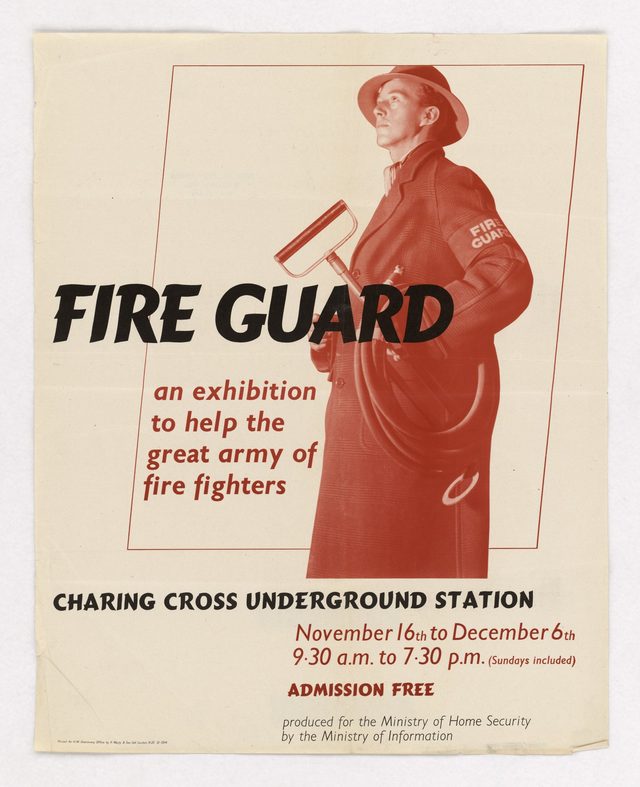
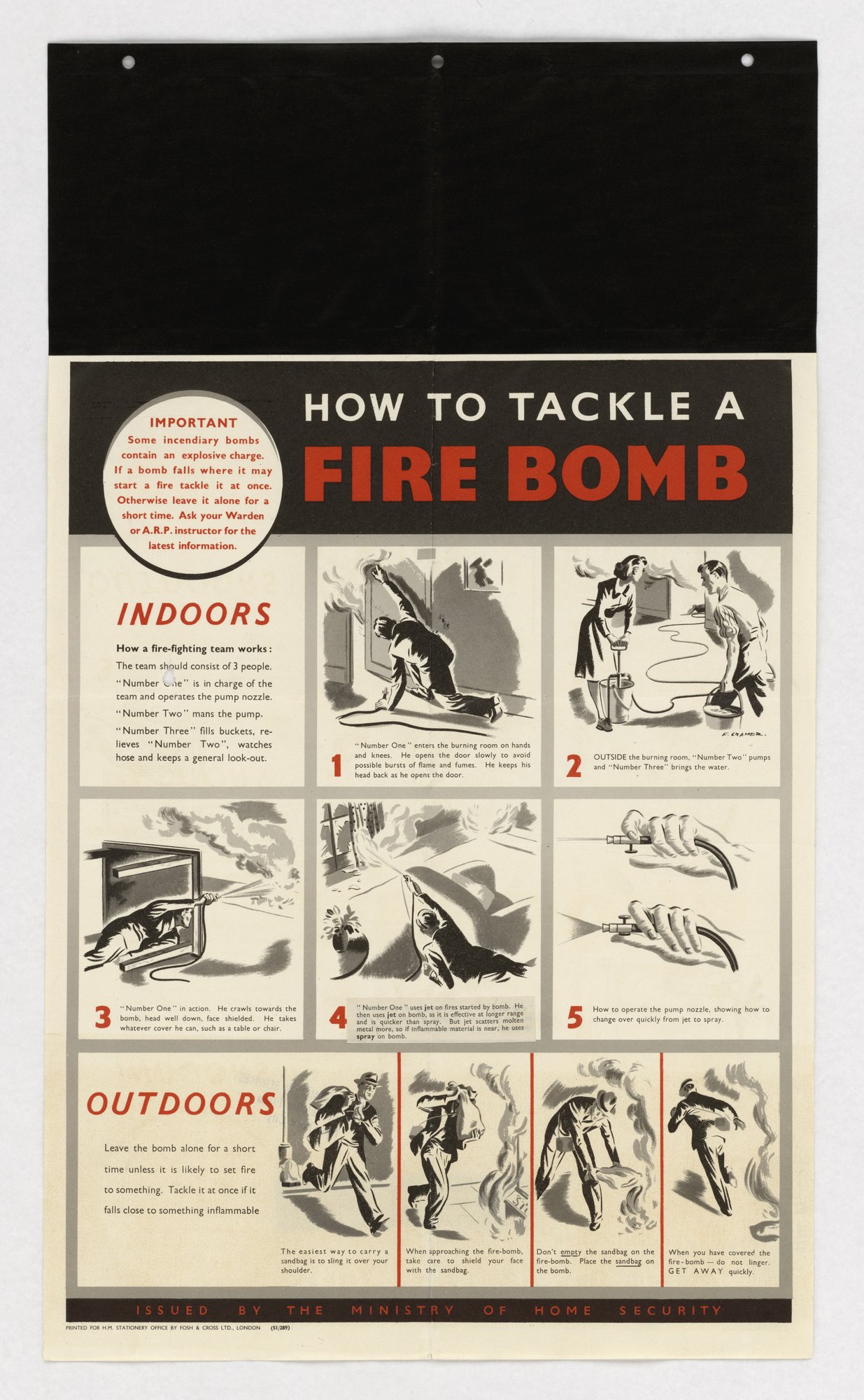
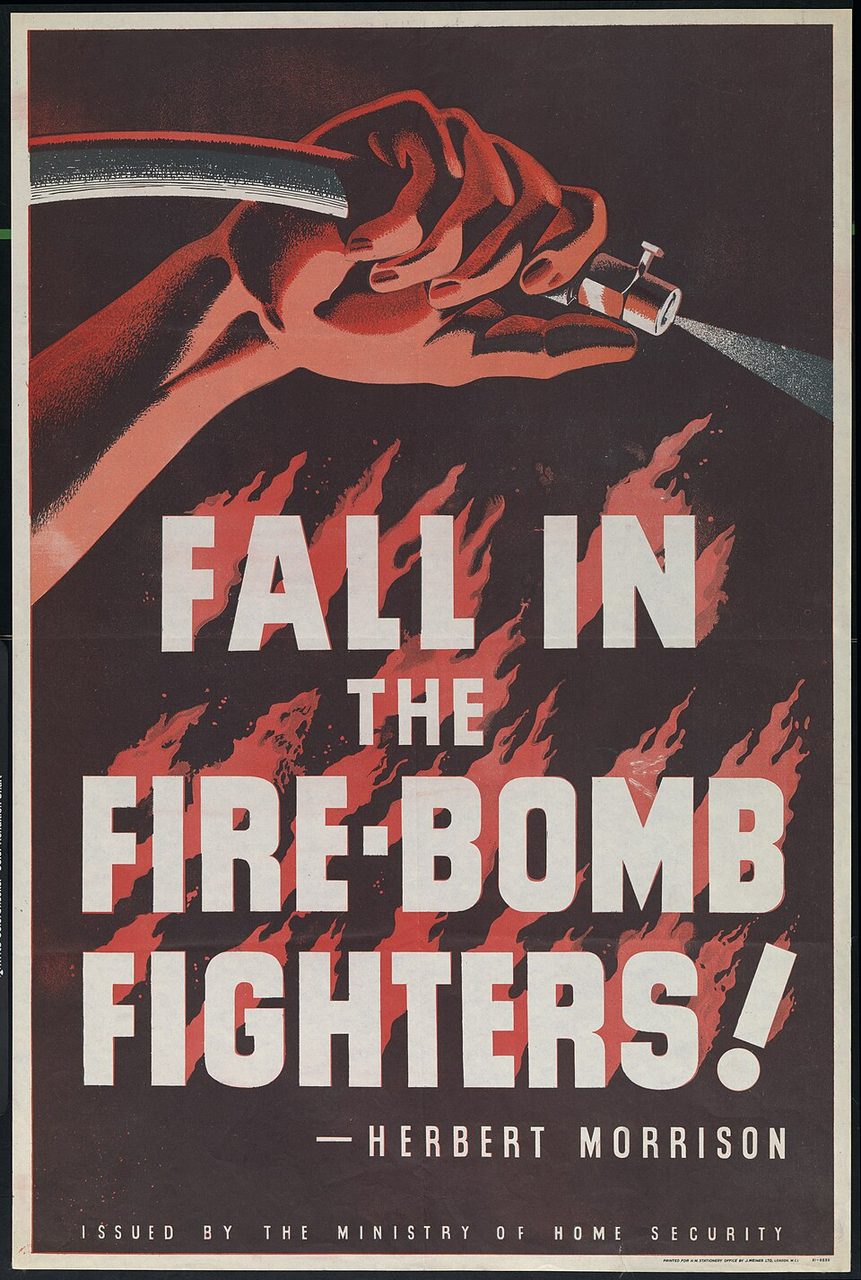
For fire, the Ministry showed a man and a woman with a stirrup pump and buckets, ordinary people as models for the task (Plain folks). In 1940 it issued a call signed by Herbert Morrison, whose name and office carry the appeal (Testimonial).
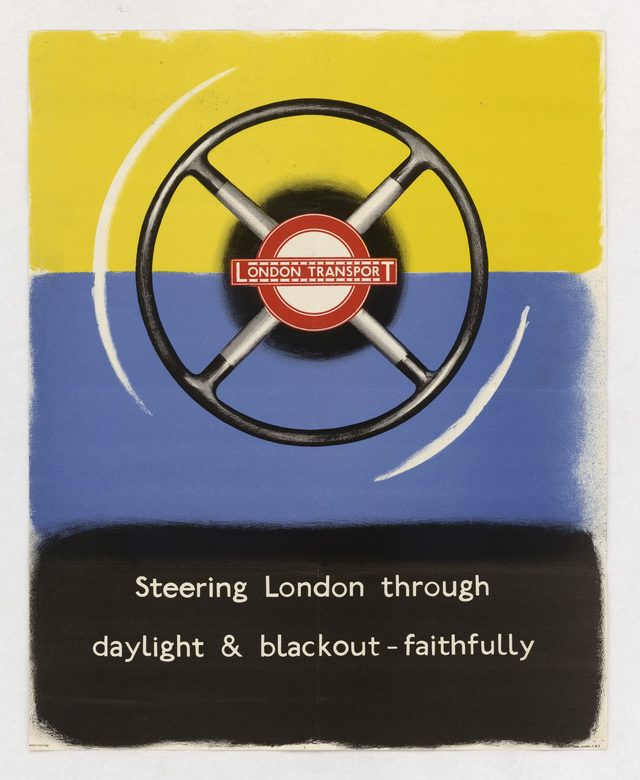
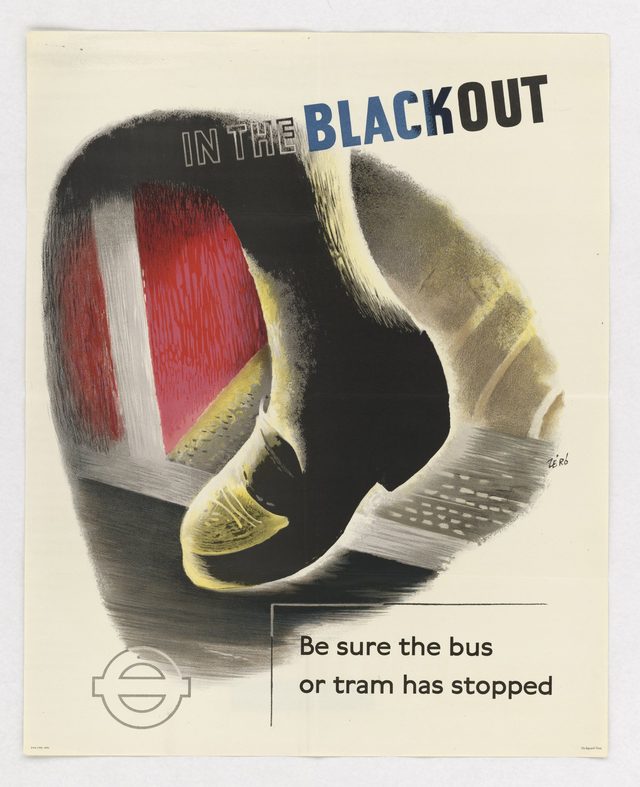
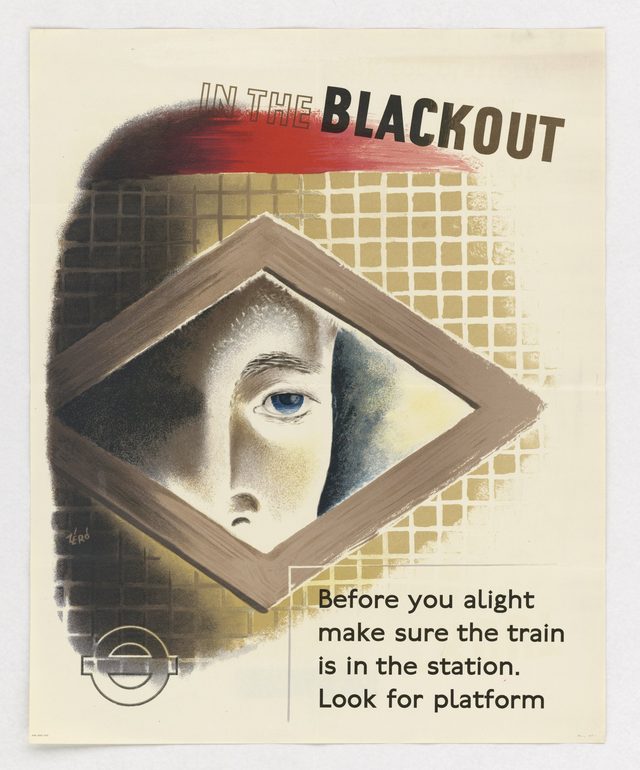
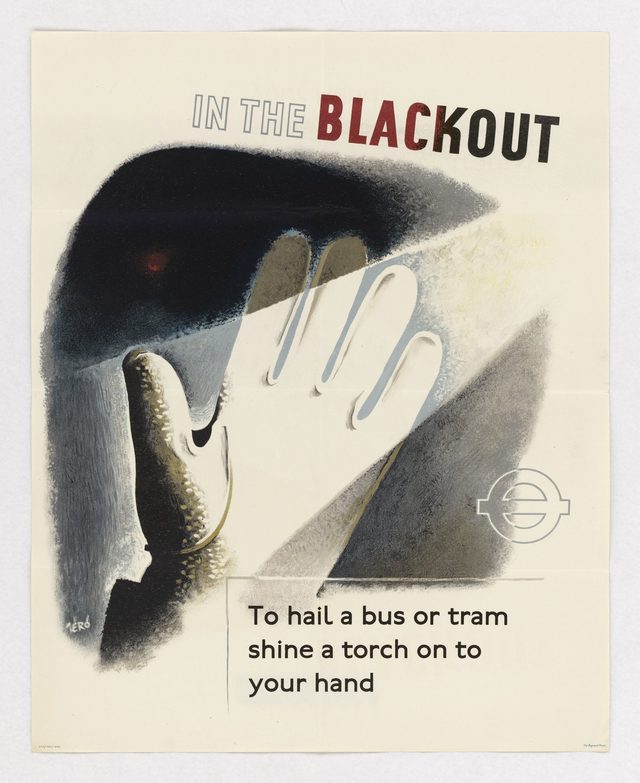
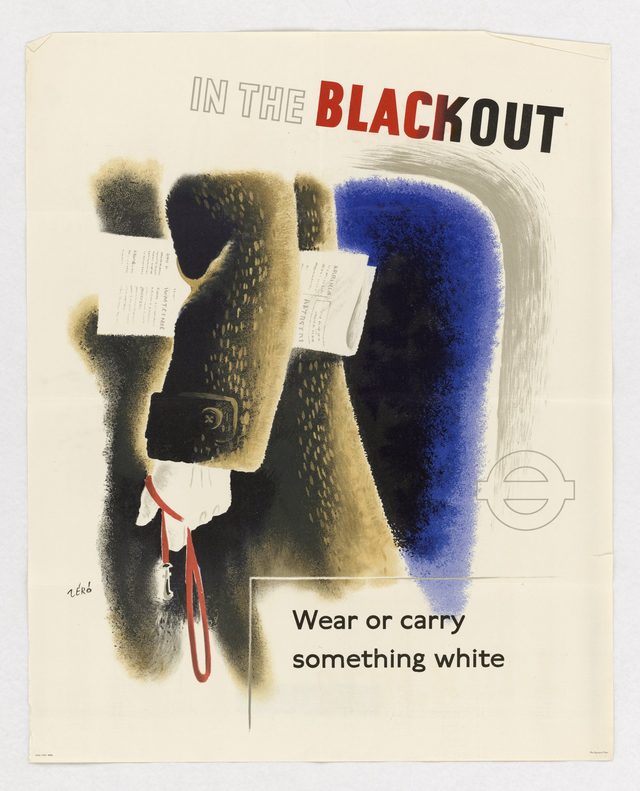
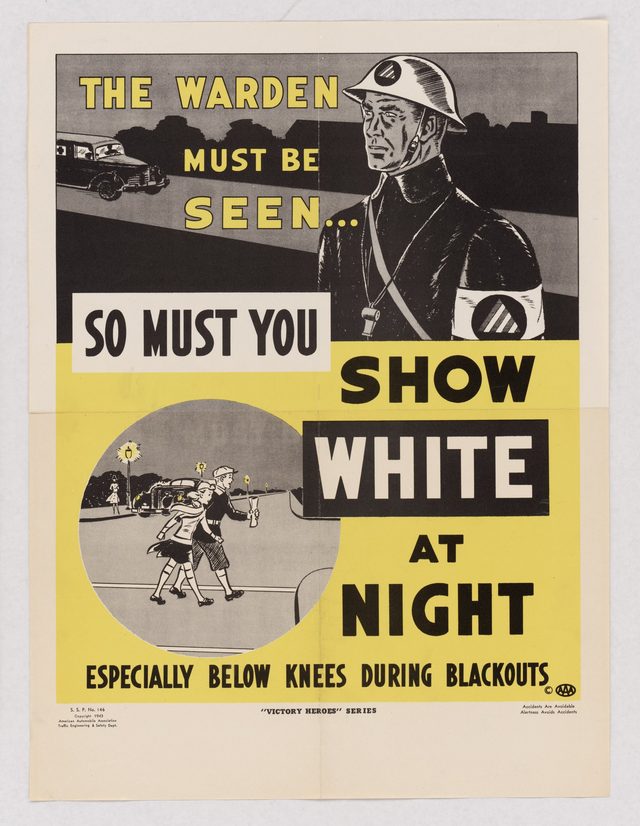
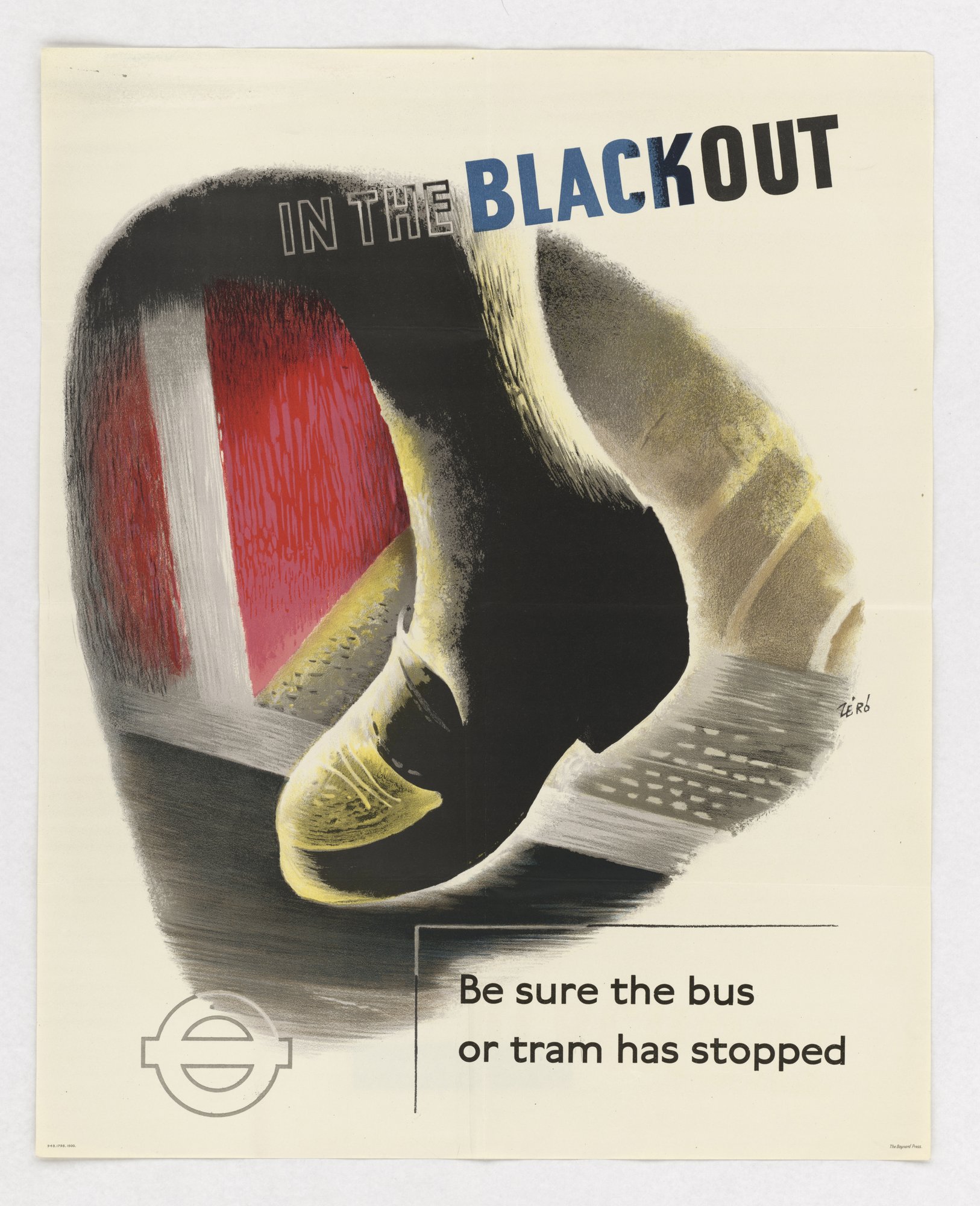
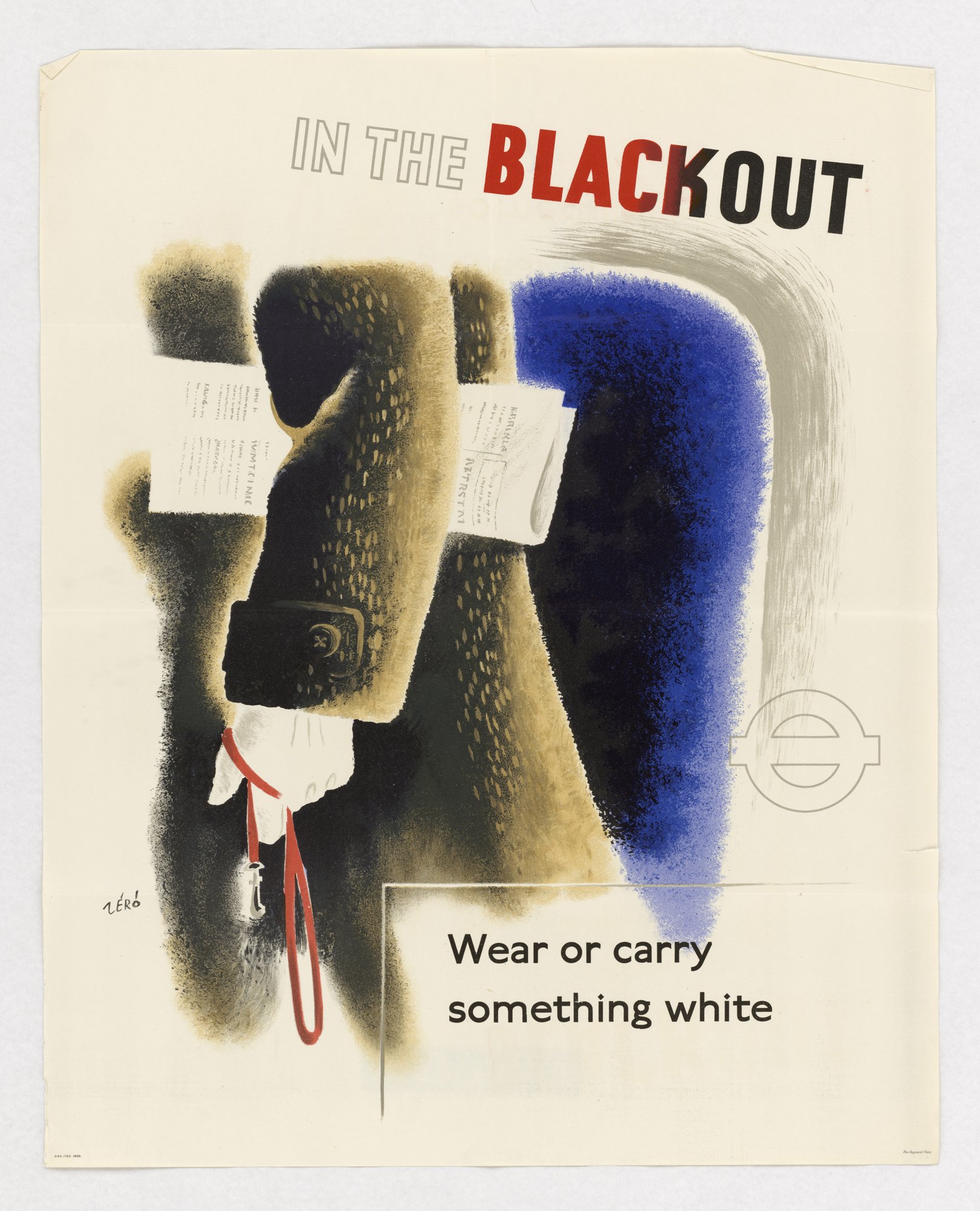
London Transport, not a ministry, issued the blackout posters. Hans Schleger's shoe stepping into shadow stages a risk of injury (Fear appeal); the white-glove poster lends the transport roundel's authority to an instruction (Transfer).
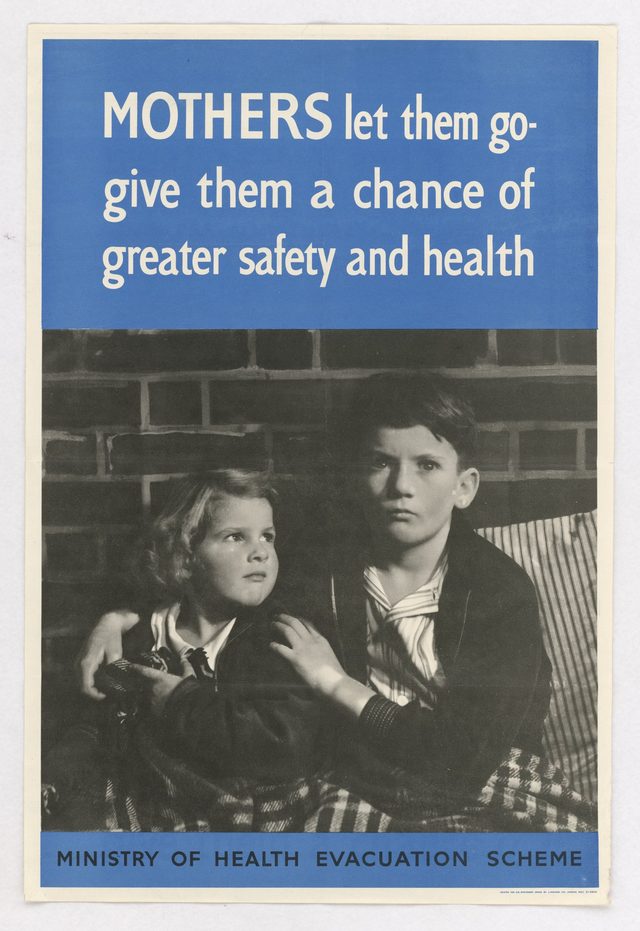
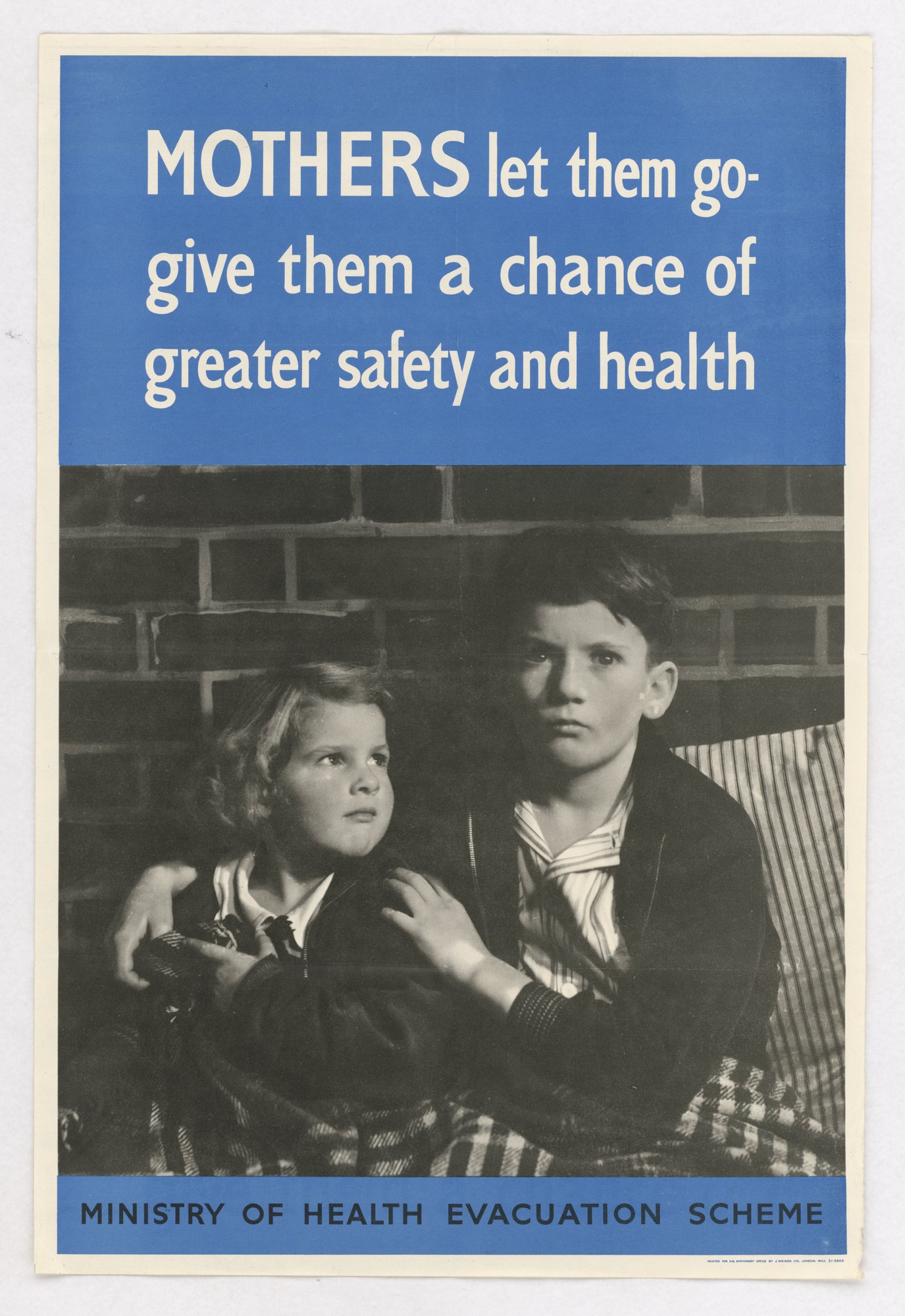
The Ministry of Health's evacuation poster uses a photograph of two children and the virtue words "safety and health" (Glittering generalities).
The United States, 1941 to 1943: wardens and volunteers
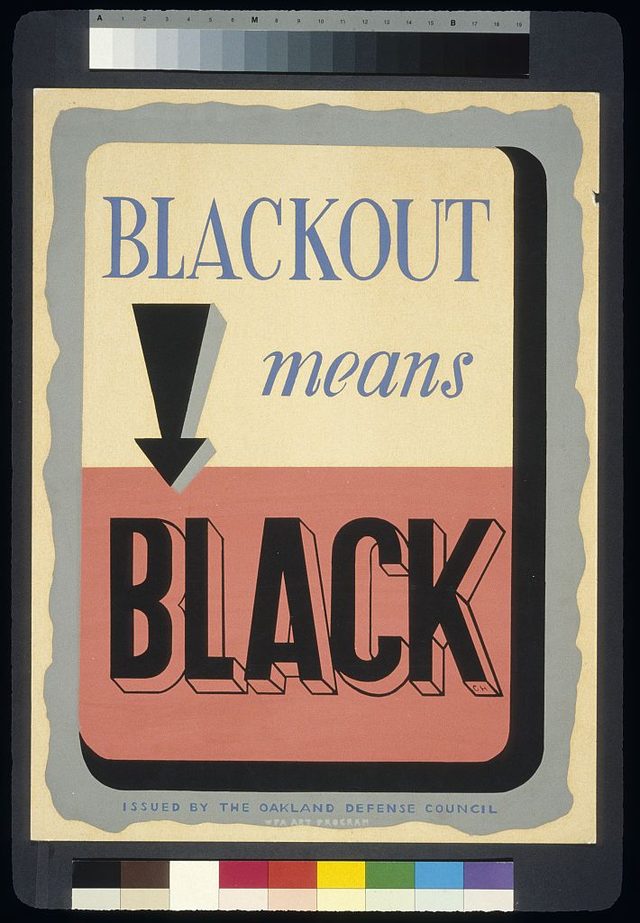
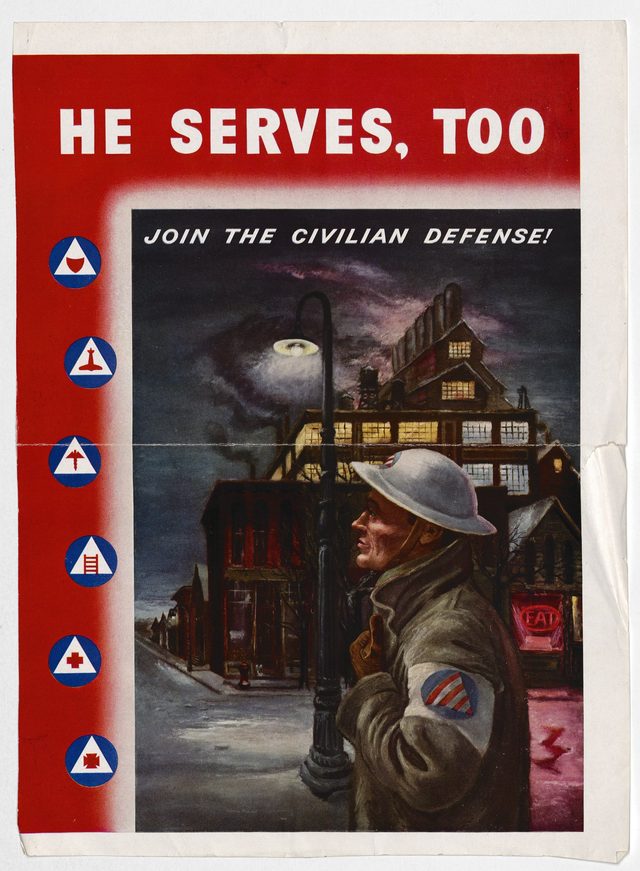
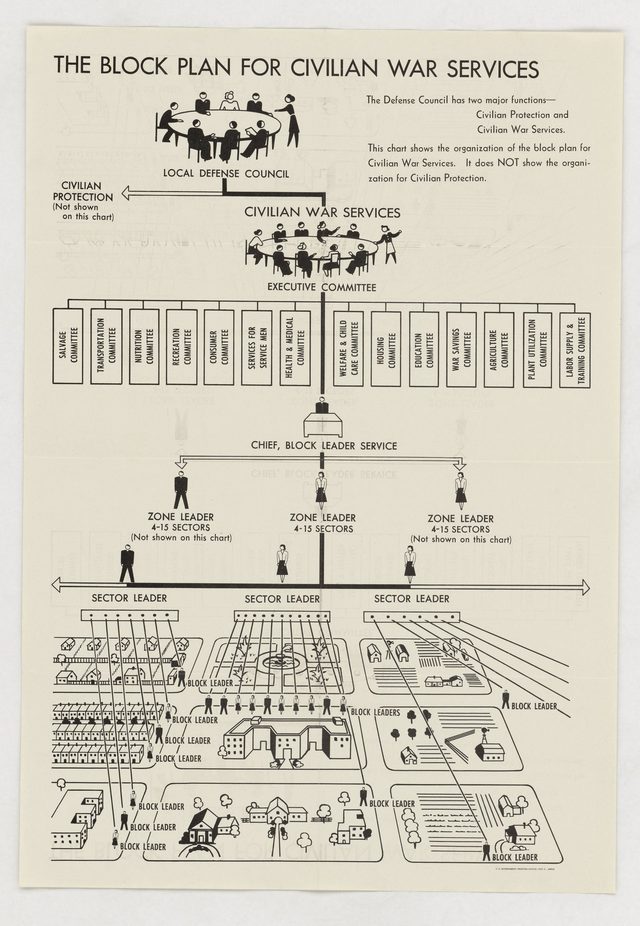
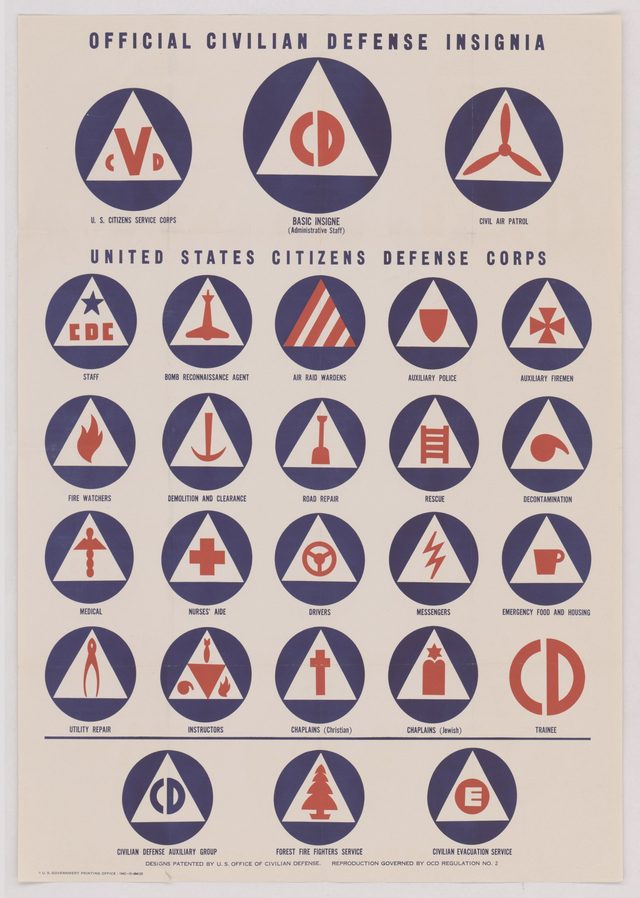
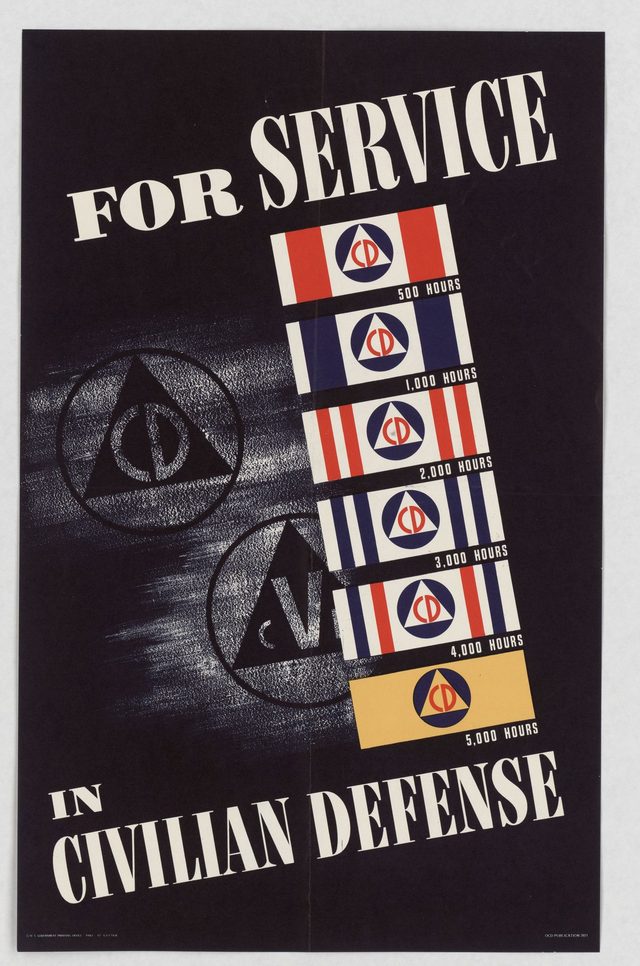
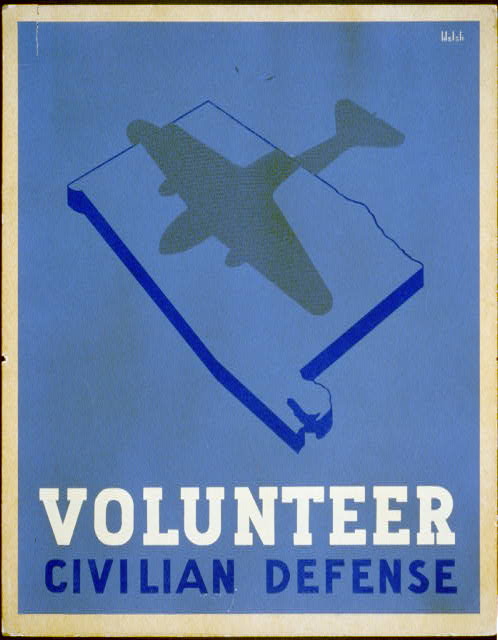
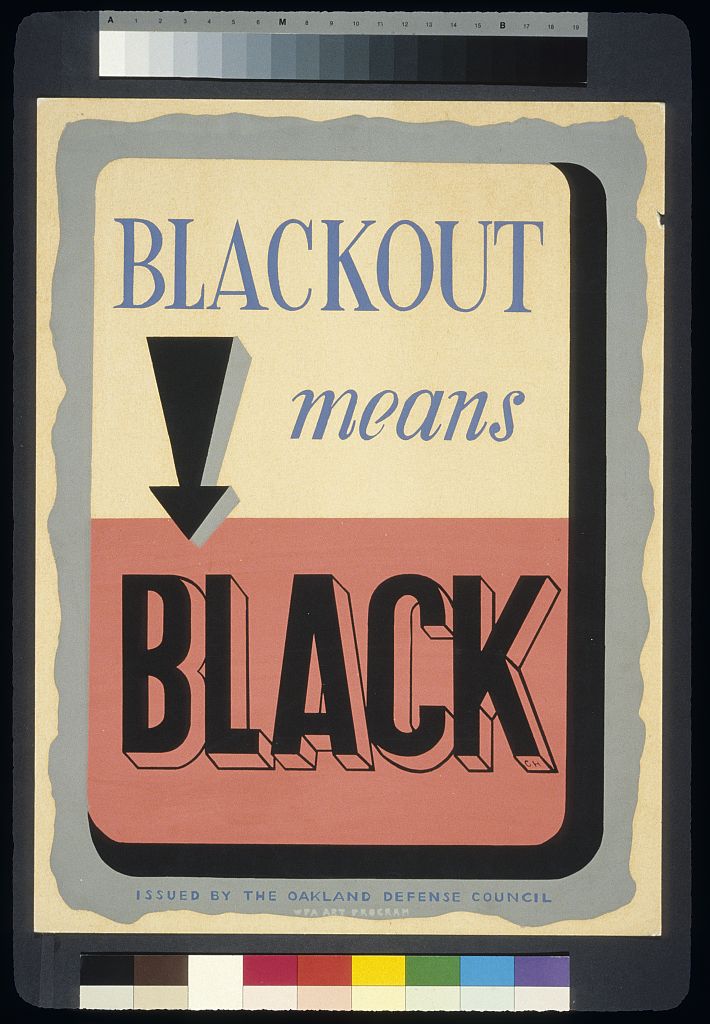
The Office of Civilian Defense, and state and city councils, recruited volunteers and explained systems. The Work Projects Administration printed some of them. The Alabama poster puts a bomber's shadow across the state (Fear appeal) and the Oakland poster repeats its key word (Repetition and the illusory truth effect).
Explain moreShow less
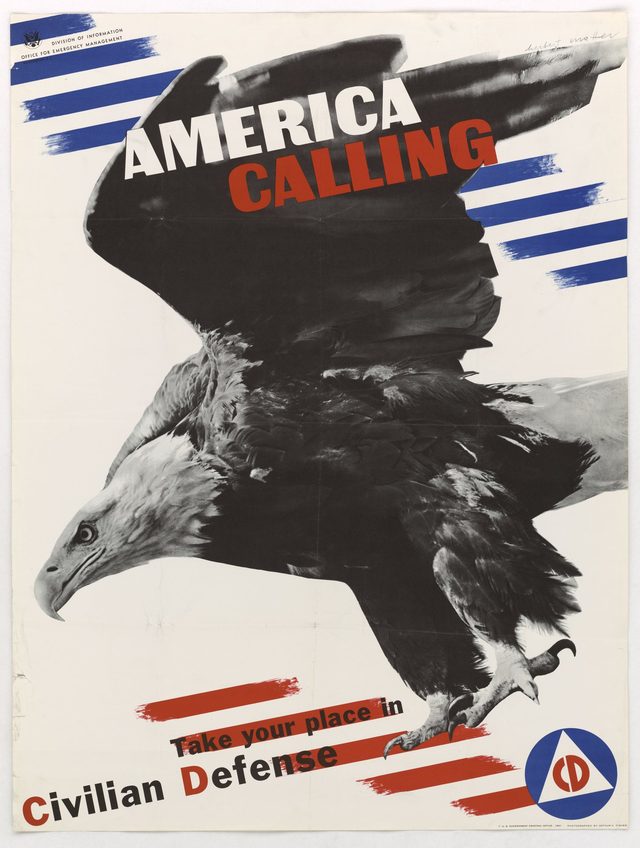
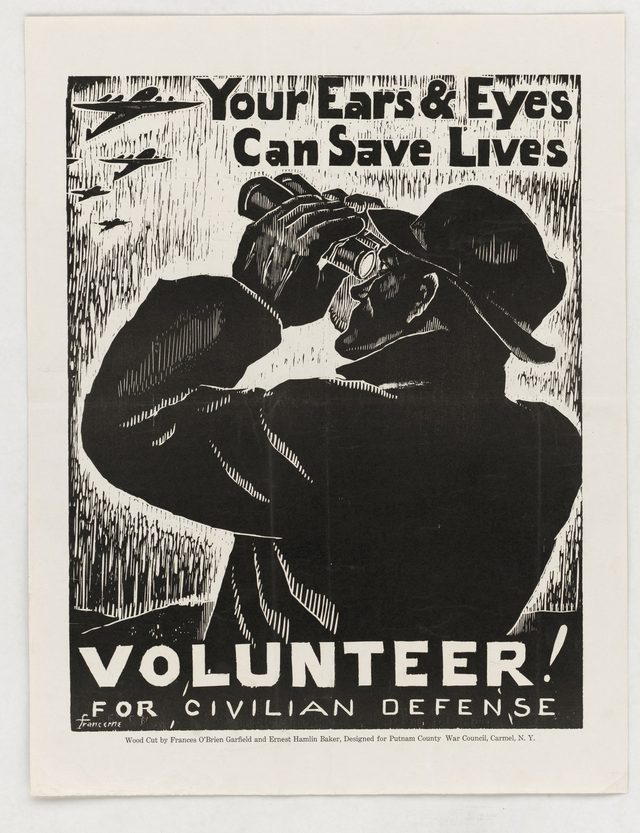
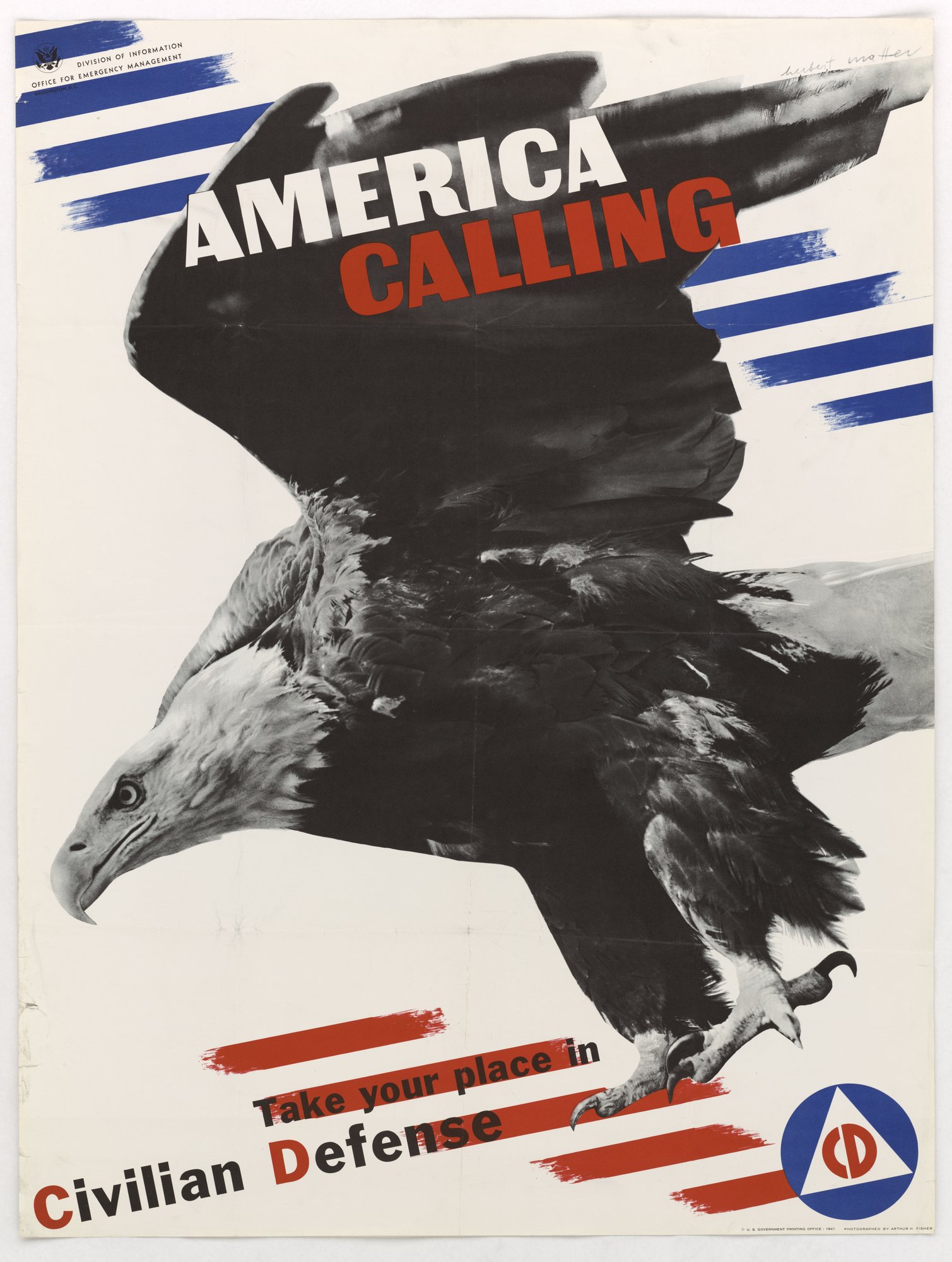
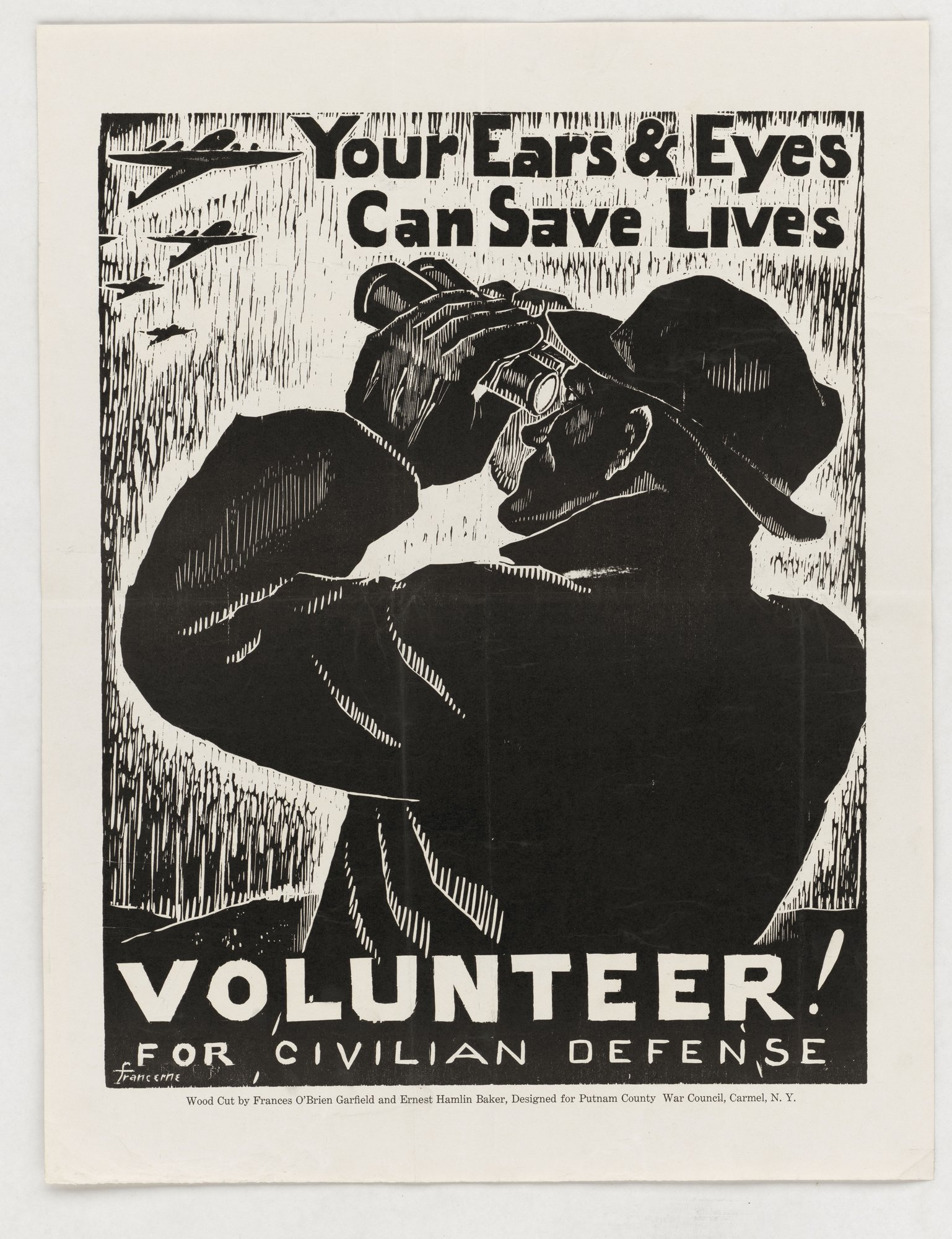
The federal recruiting poster "America Calling" relies on an eagle and a broad patriotic call with no task named (Glittering generalities). A Putnam County, New York, council woodcut shows a man with binoculars watching aircraft, a local post with an implied threat.
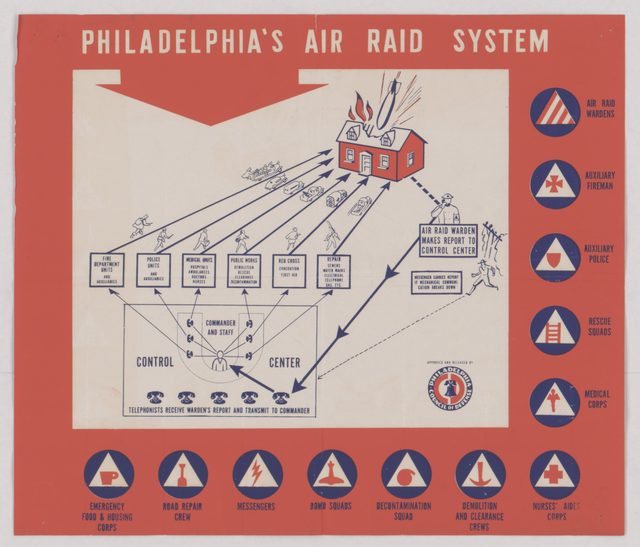
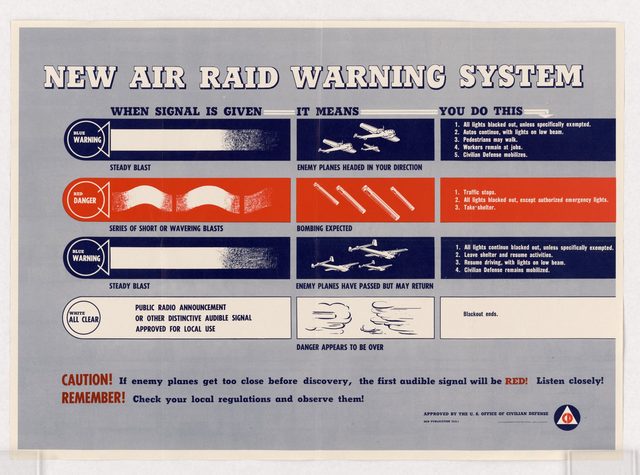
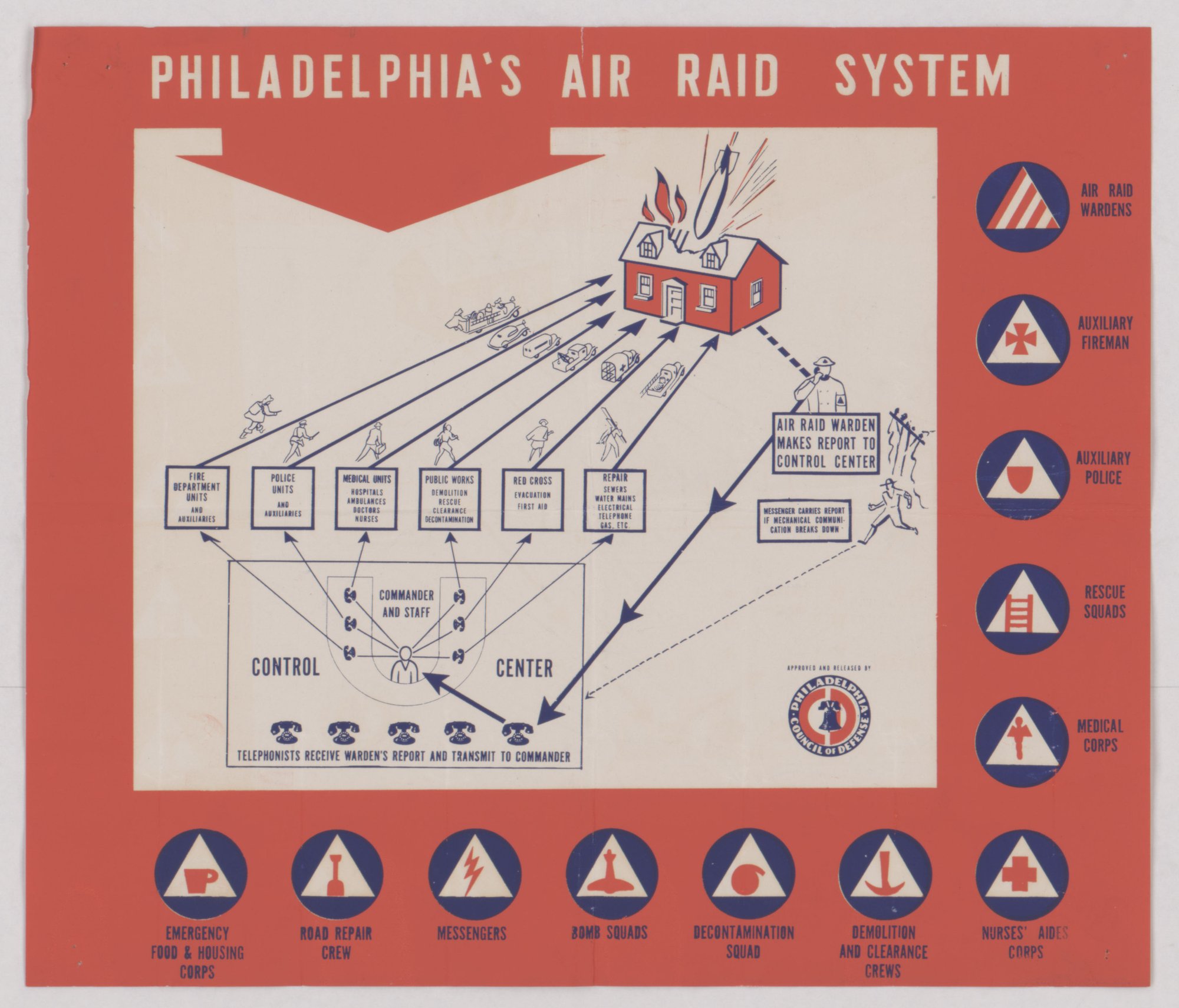
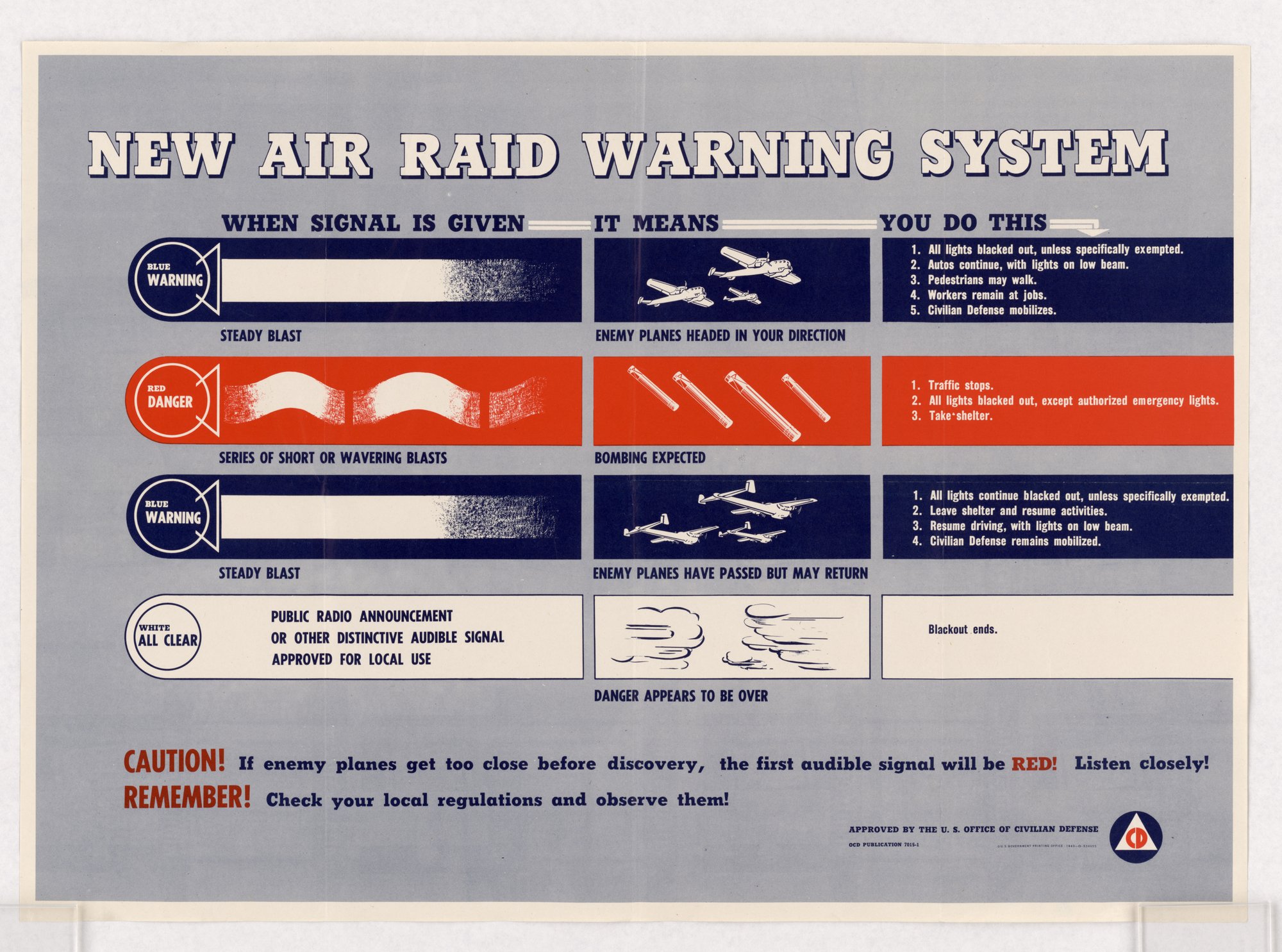
Some sheets inform more than they persuade. Philadelphia's diagram follows a bomb strike through warden, control centre and rescue units, and the Office of Civilian Defense's 1943 chart sets out the Blue, Red and White signals.
The Cold War: atomic survival
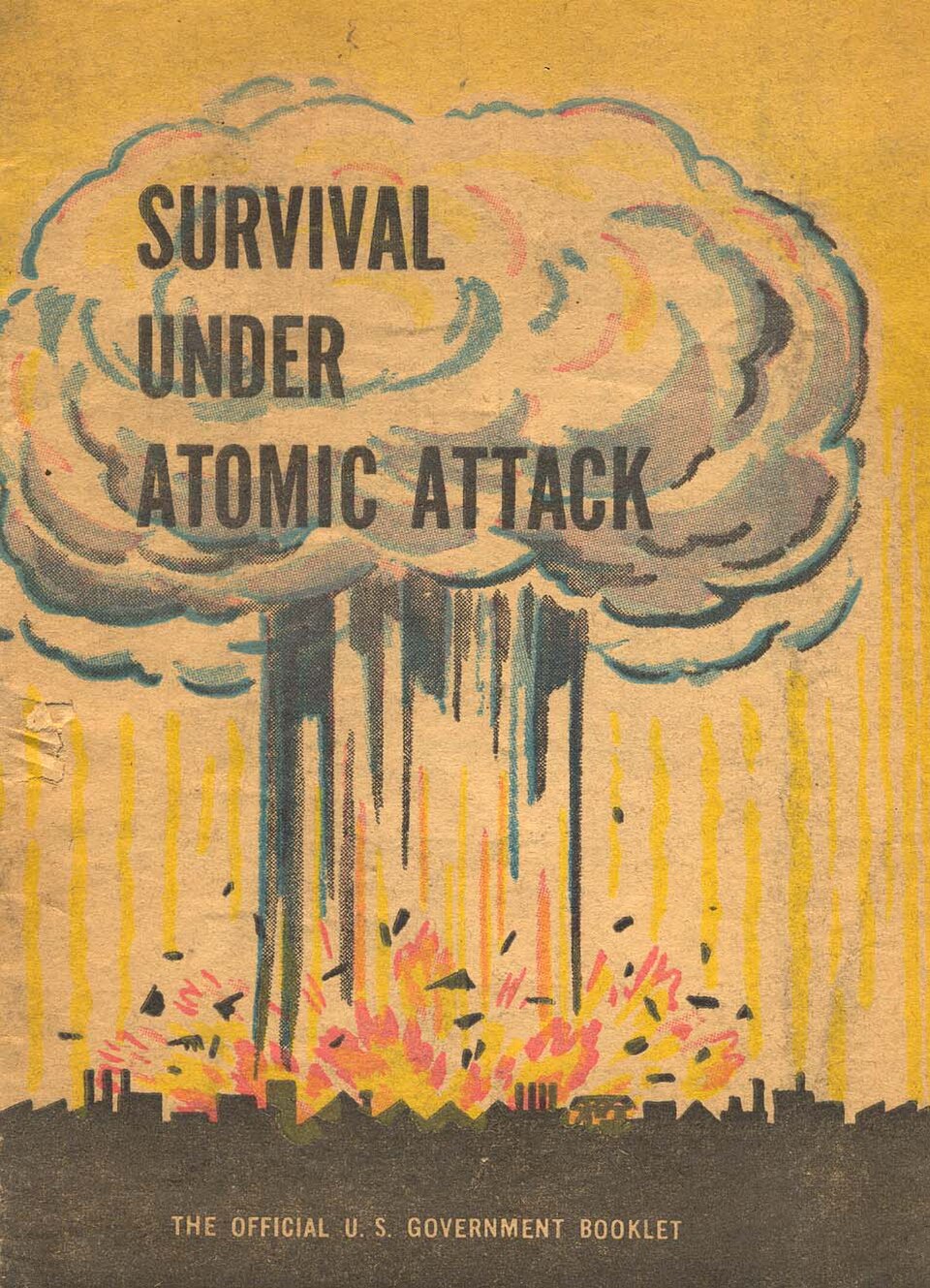
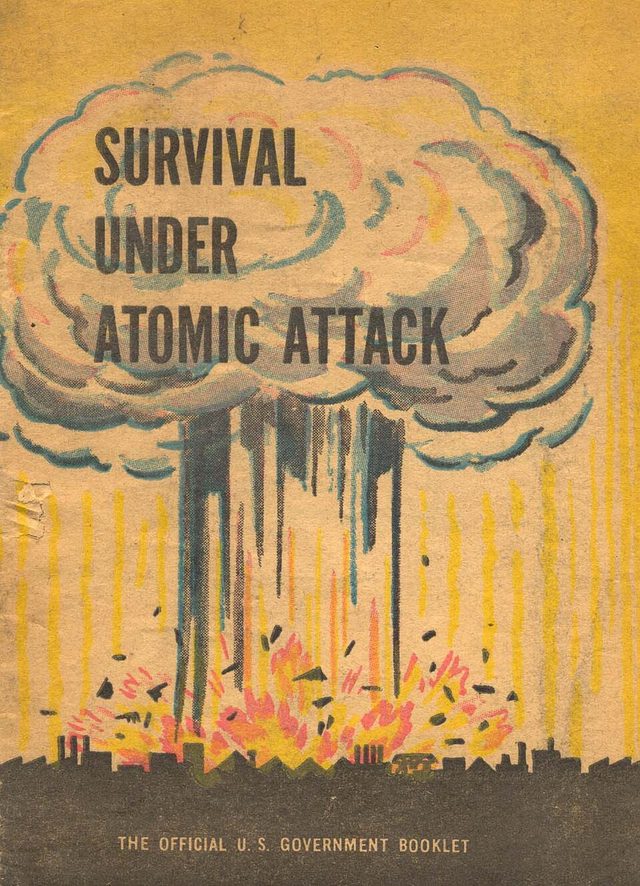
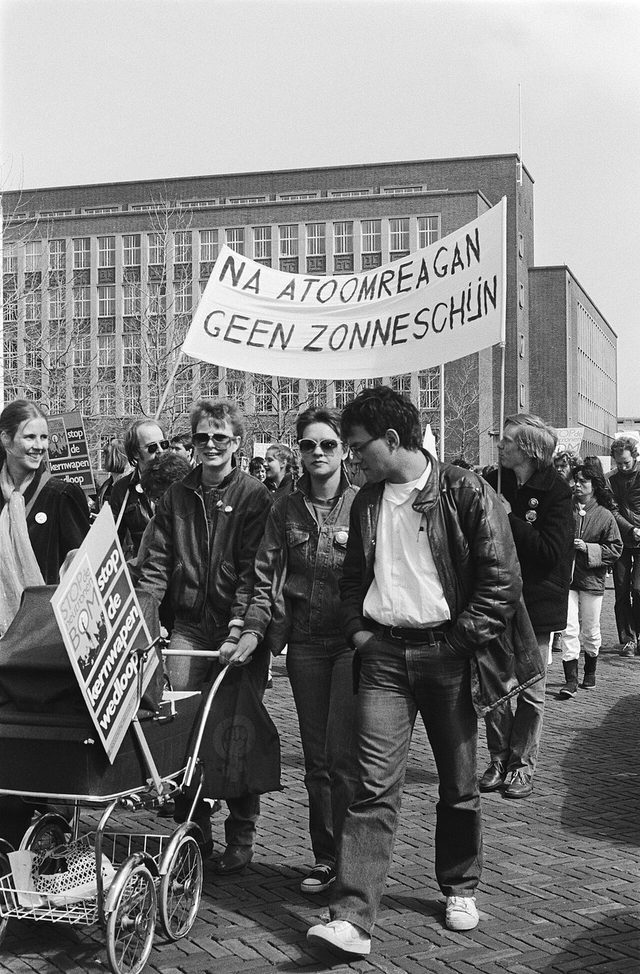
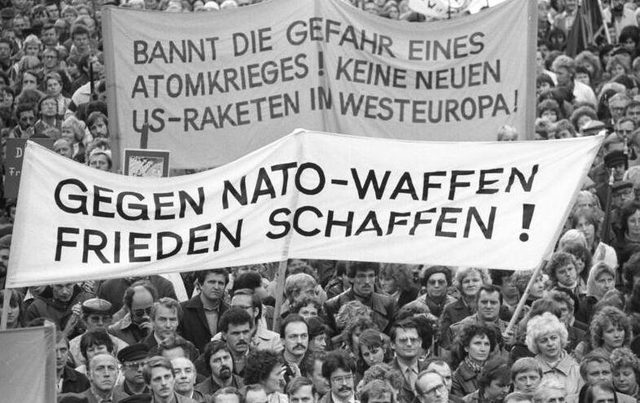
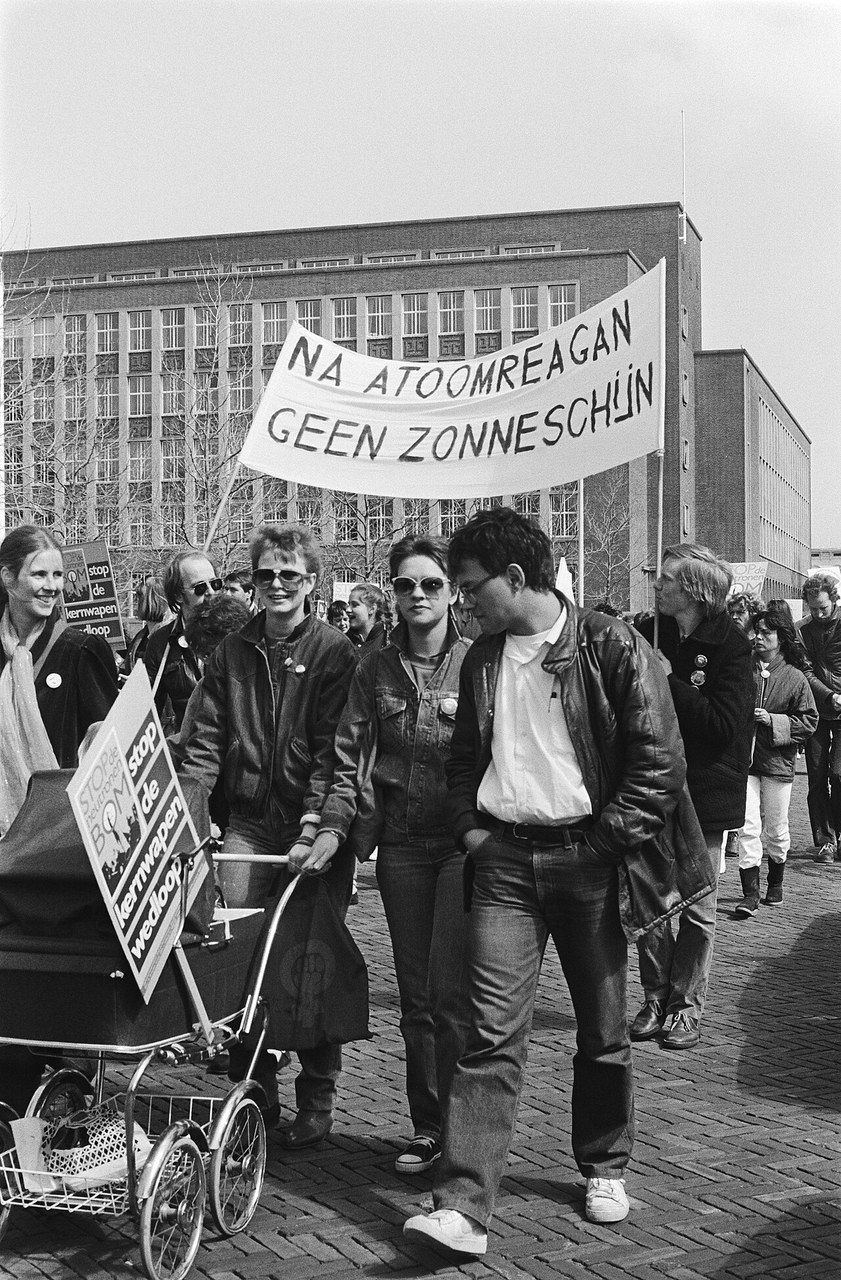
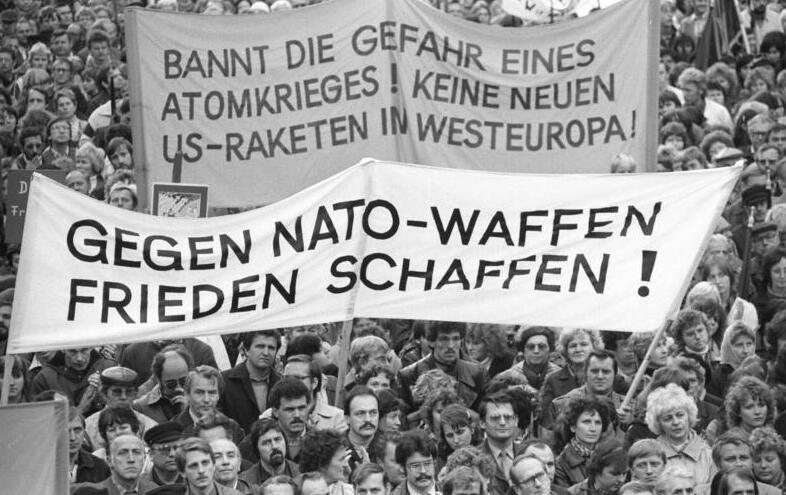
The National Security Resources Board's Civil Defense Office published Survival Under Atomic Attack in 1950 through the Government Printing Office. Its cover shows the harm in full before the protective advice, and its "official U.S. Government booklet" line names the source (Fear appeal). Outside government, the same fear drove opposing protest: a Dutch banner of 1982 turns "Reagan" into "atomic rain", and an East German state-organised rally in 1983 names only American and NATO weapons.
What the collection does not hold
- Not here: a "Duck and Cover" poster or film frame, fallout-shelter signs, or Soviet civil defence material. The Cold War civil defence holding is one booklet.
- Not here: German, Japanese or Soviet air-raid material of the war years, or British posters from the 1950s.
- Not here: evidence of how many people read or followed any of these; the items show what was issued, not its effect.
Sources and further reading
Sources
National Archives and Records Administration (US civil defense posters and the Government Printing Office imprints); NARA's WWII…
National Archives and Records Administration (US civil defense posters and the Government Printing Office imprints); NARA's WWII foreign posters and Imperial War Museums (Ministry of Home Security posters); National Security Resources Board, Survival Under Atomic Attack (1950); Nationaal Archief, Anefo (The Hague banner); Bundesarchiv, ADN-Zentralbild (Halle). Each item in the grid carries its own source and rights note. See also wartime careless-talk posters and WPA posters.