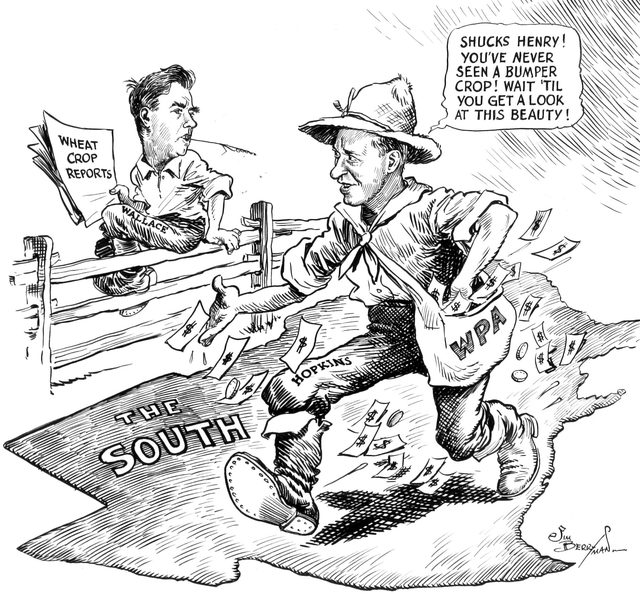
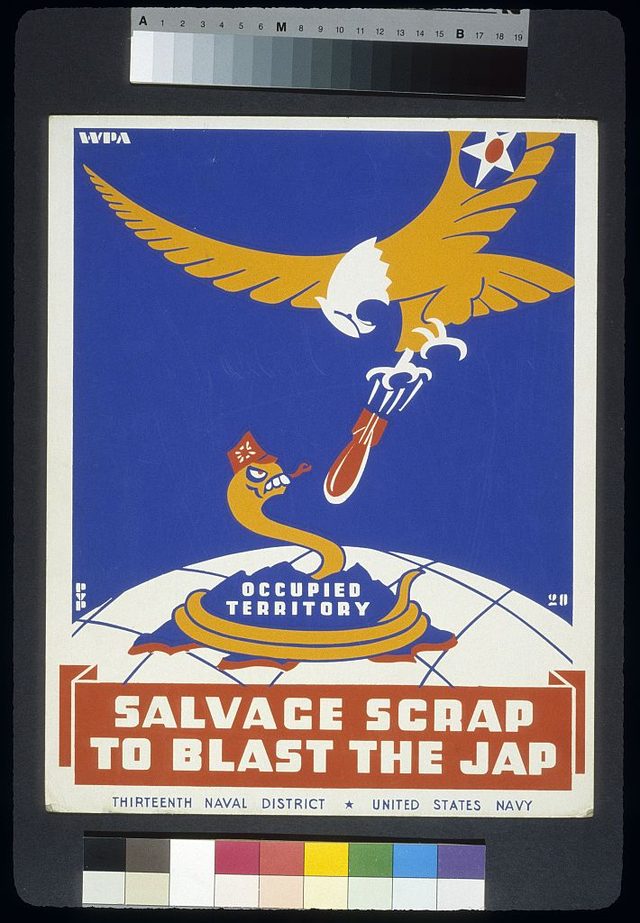
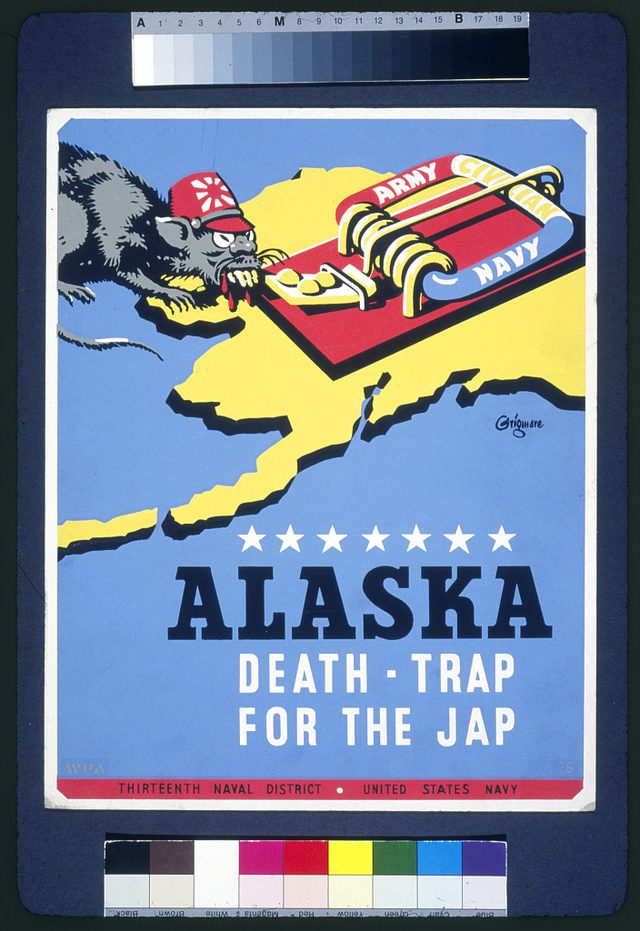
Content note. Two wartime posters here, from 1941 and 1942, use a slur for Japanese people in their titles and draw the enemy as vermin; they are shown as issued, with the other WPA posters. Showing an item is not endorsing it.
What are WPA posters?
WPA posters are silkscreen, woodblock and lithograph posters made between 1936 and 1943 by artists paid through the Works Progress Administration (renamed the Work Projects Administration in 1939), chiefly in its Federal Art Project and Federal Theatre Project. The state and city art programmes made them for other public bodies: the National Park Service, city defence councils, libraries, and later the armed forces. Because they were made by federal employees, the Library of Congress lists most of them as having no known restrictions on publication.
Explain moreShow less
They are propaganda in the plain sense that their sponsor was a government asking the public to do something, or to think well of a service, and in a second sense: some of them advertise the work-relief programme that made them.
The 1936 to 1939 posters: parks, theatre and the programme itself
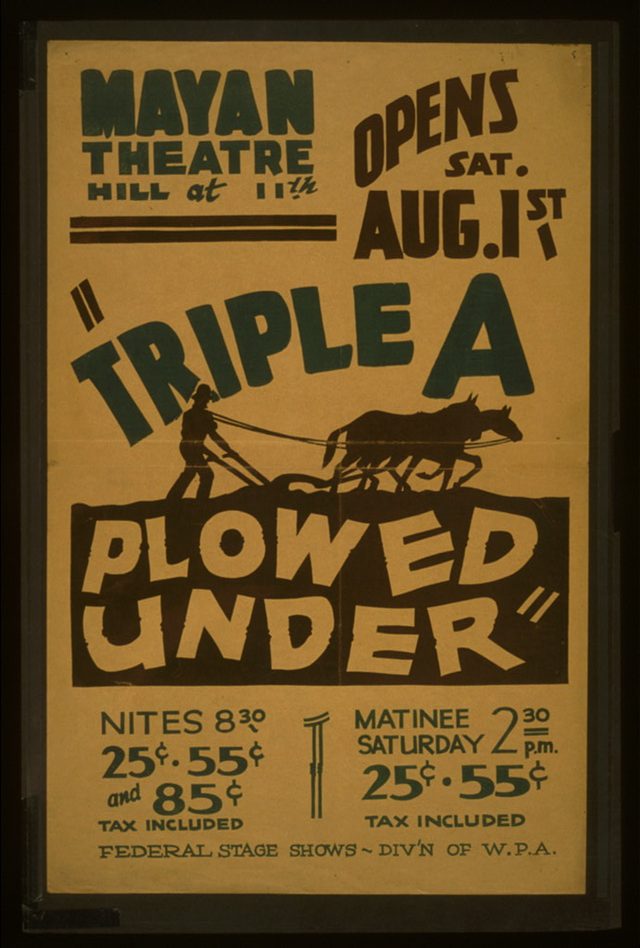
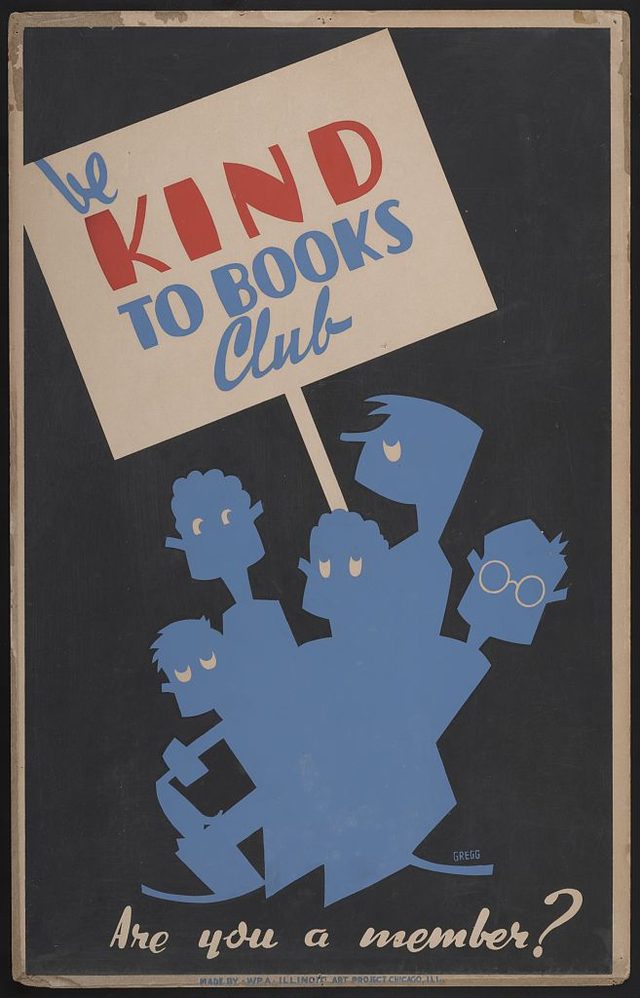
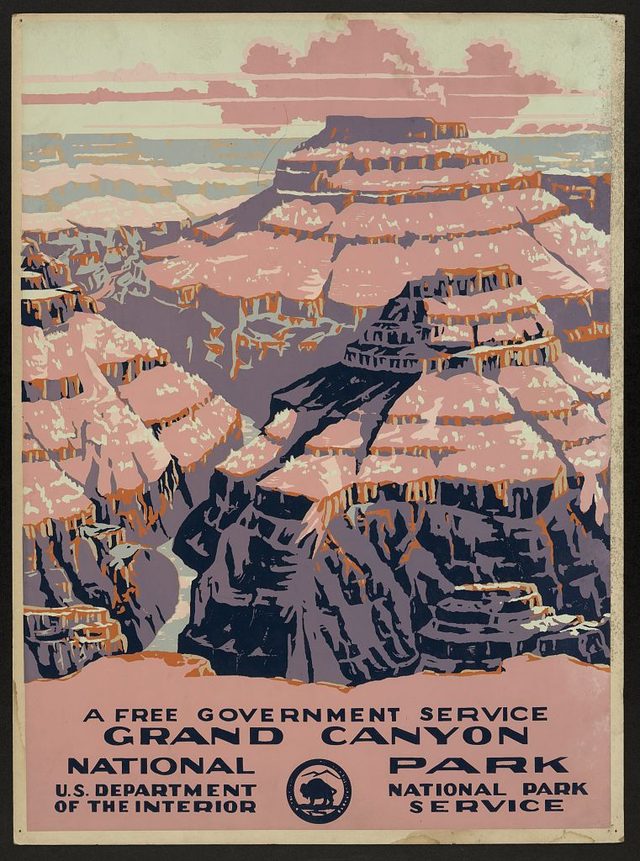
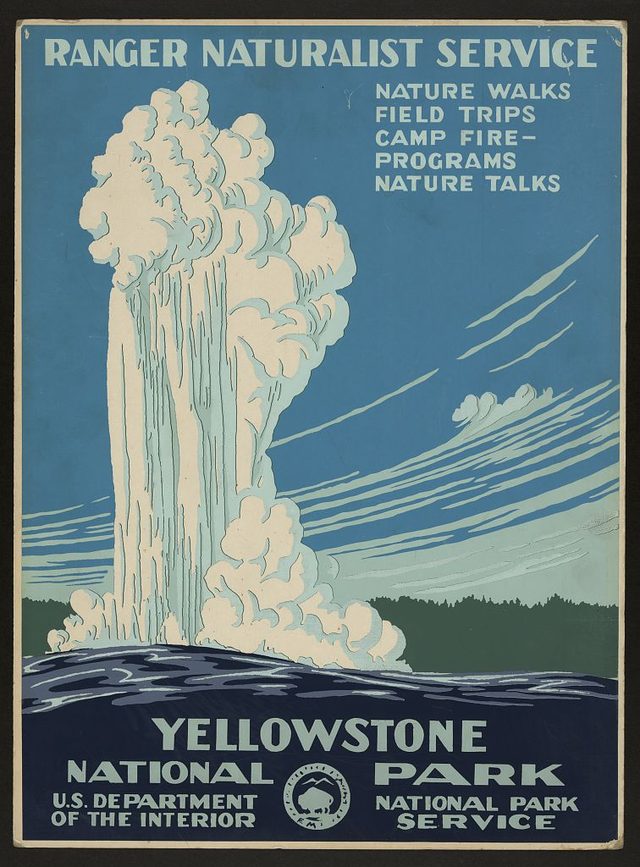
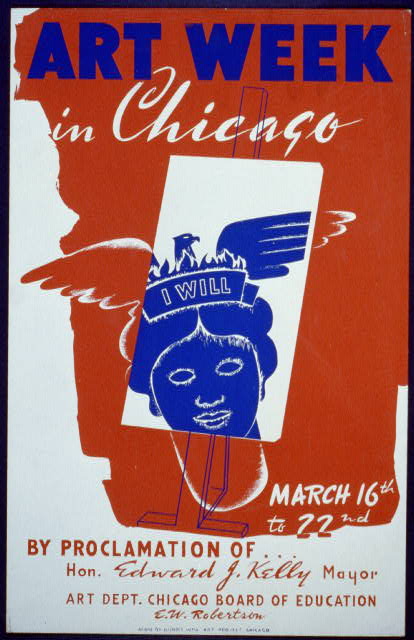
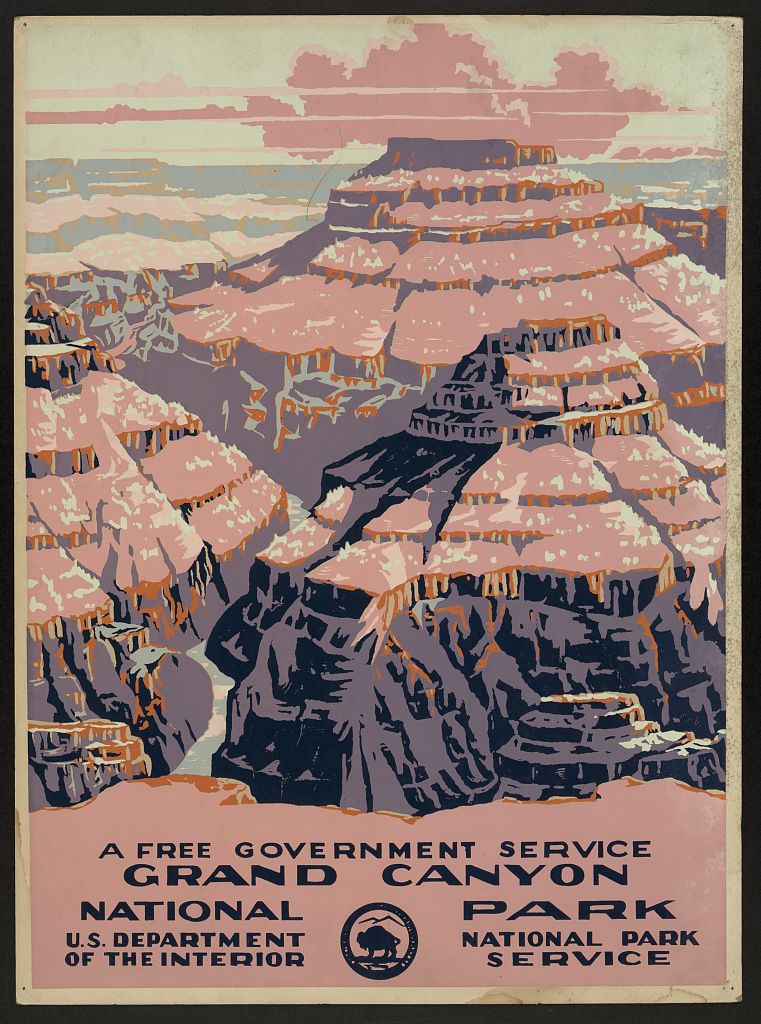
The National Park Service posters of about 1938, designed by C. Don Powell, sell the service as much as the scenery: "A free government service" is printed beside the Grand Canyon, and "Ranger Naturalist Service" beside Old Faithful. The tag is Glittering generalities. The Federal Theatre Project's "Triple A Plowed Under" (1936) is a Living Newspaper, a staged account of the farm-relief programme and the court decision that ended its tax, advertised as a "Federal stage show". Posters for Chicago's Art Week and a children's book club show the programme promoting the public services it served.
Explain moreShow less
The Federal Art Project's own purpose is worth stating in both directions. Supporters saw it as work for unemployed artists and a public gallery; critics, then and later, saw in it a government paying for its own publicity. The record here is the posters themselves and who made them.
The 1941 to 1943 war posters
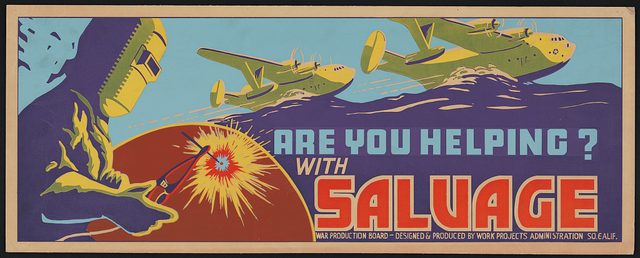
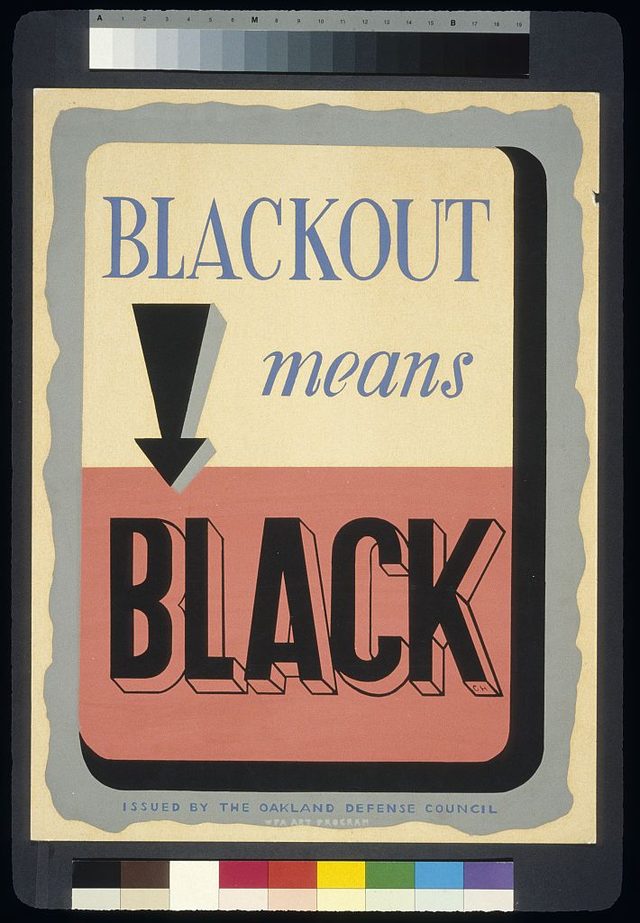
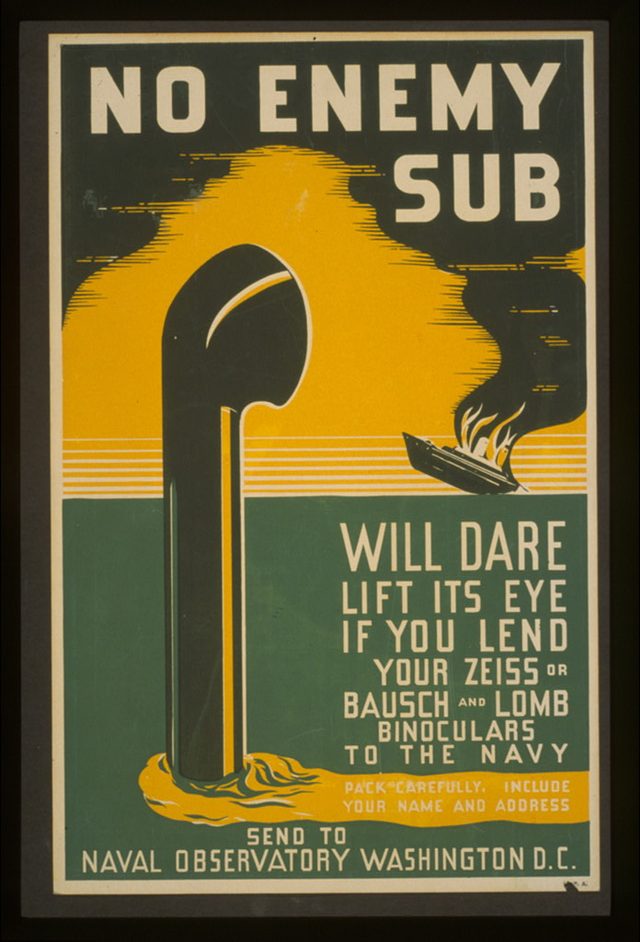
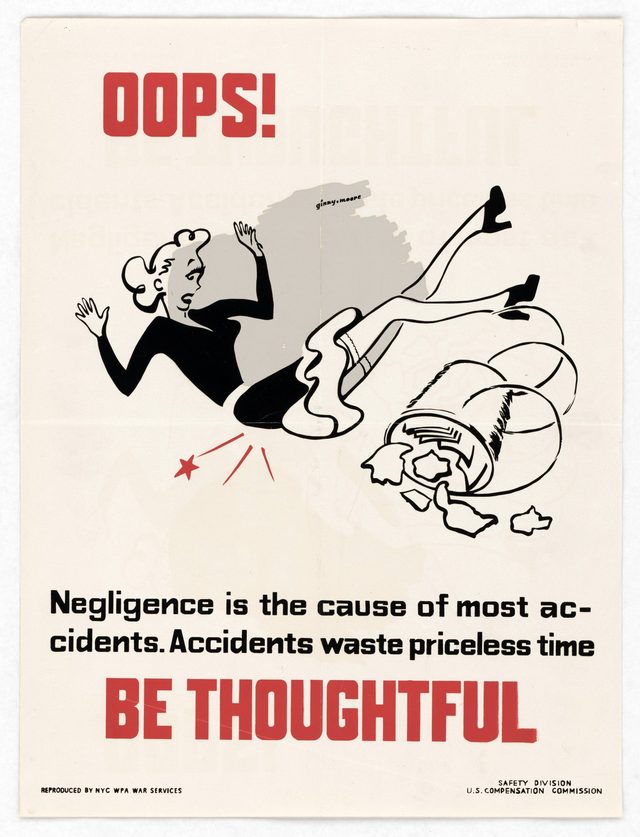
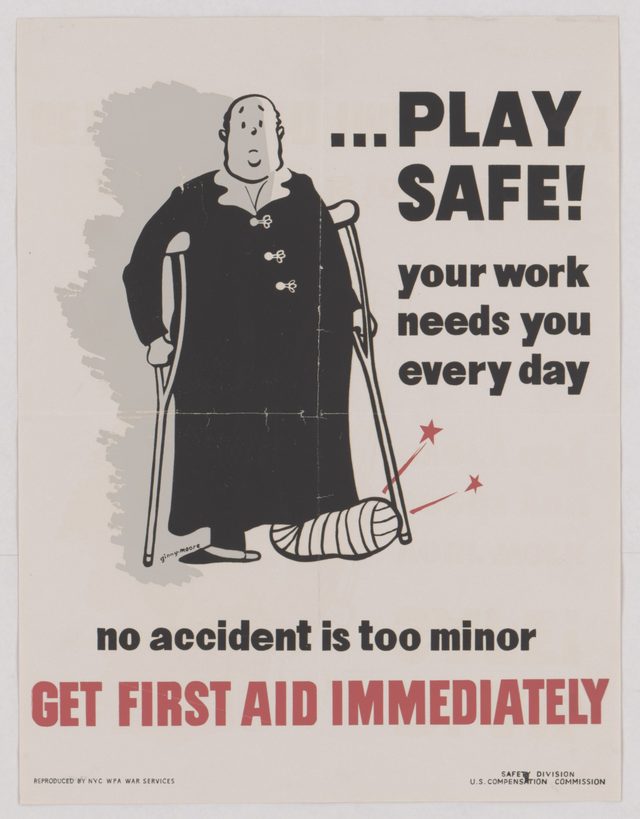
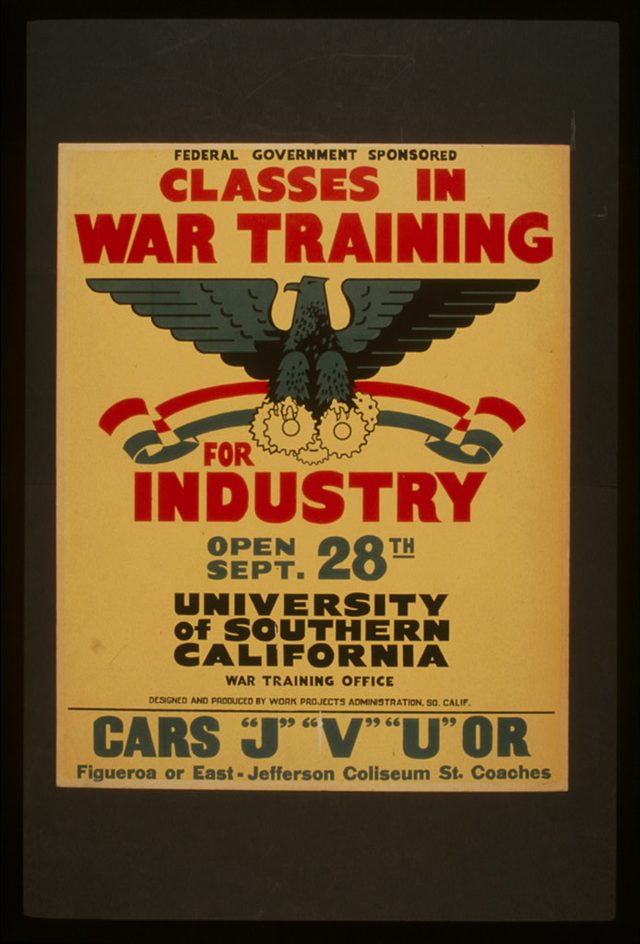
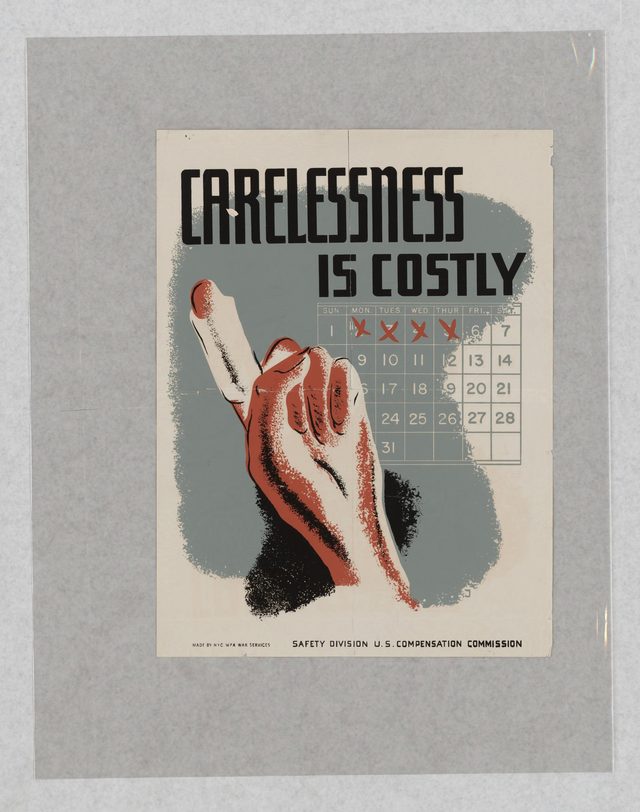
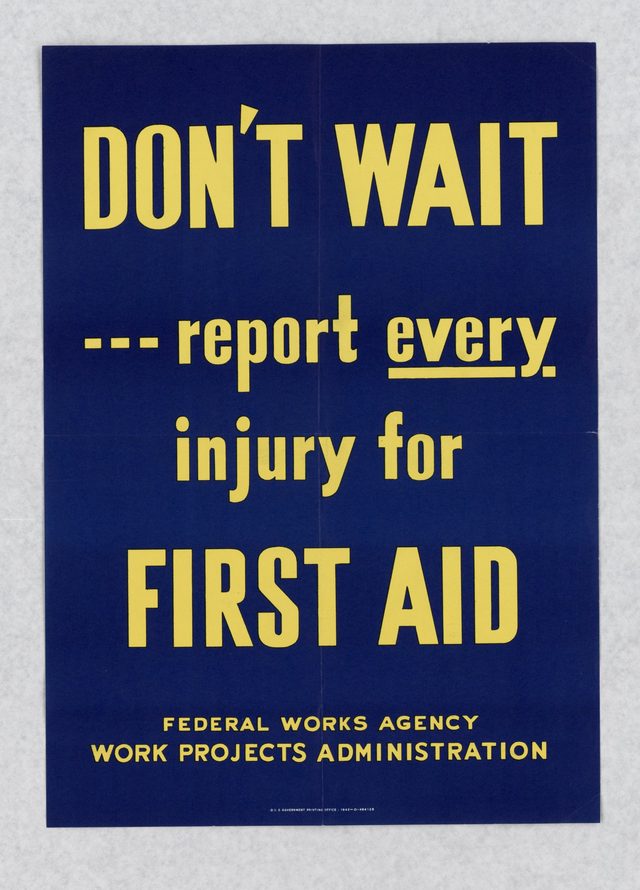
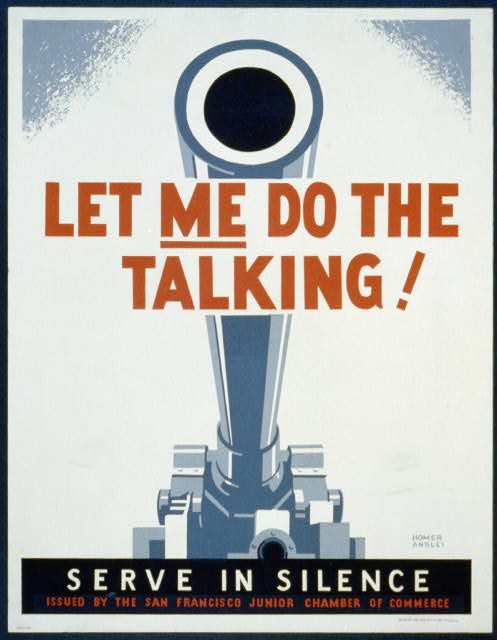
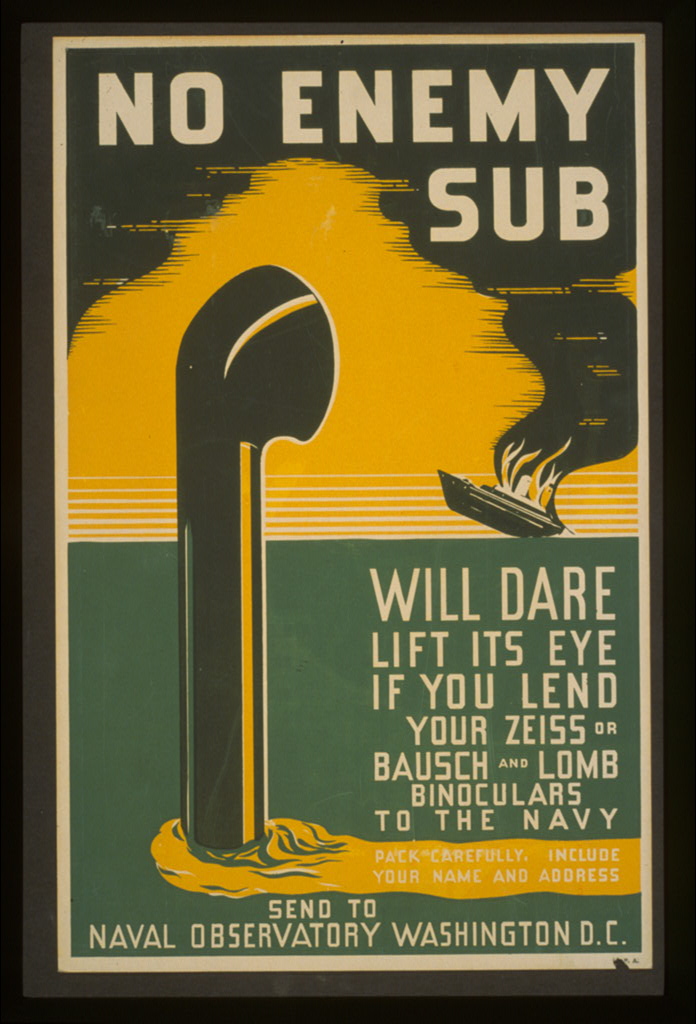
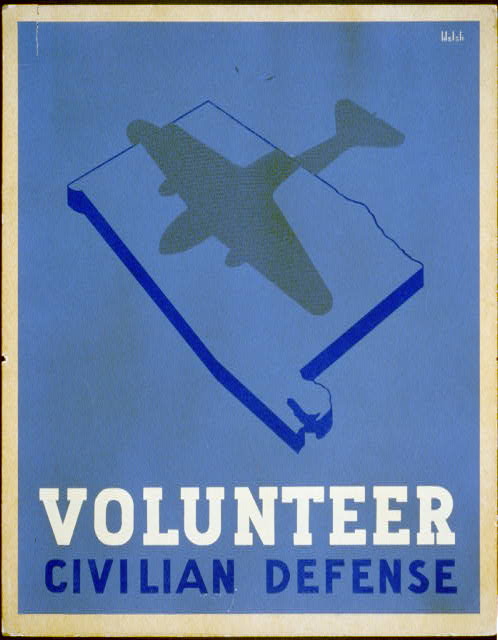
From 1941 the programmes turned to civil defence, salvage, war training and security. "Volunteer Civilian Defense" puts a bomber's shadow across the outline of Alabama; "Blackout Means Black" repeats its key word (Repetition and the illusory truth effect); "Let Me Do the Talking! Serve in Silence" puts a cannon in the speaker's place (Fear appeal); and a Navy appeal asks households to lend privately owned binoculars. The collection also holds the Navy and safety posters that WPA war-services units reproduced for other agencies, held in the National Archives.
What the collection does not hold
- Not here: the theatre posters that make up most of the Library's WPA collection (about 190 sheets for plays, revues and concerts), which are advertising, not messaging, and are held for a later pass.
Sources and further reading
Sources
Library of Congress, Prints and Photographs Division, "By the People, For the People: Posters from the WPA, 1936-1943".
Library of Congress, Prints and Photographs Division, "By the People, For the People: Posters from the WPA, 1936-1943". Francis V. O'Connor, Federal Support for the Visual Arts: The New Deal and Now (New York Graphic Society, 1969). Each item in the grid carries its own source and rights note.