Content note. One 2018 poster blames "Zionists" for the September 11 attacks and uses a Star of David cufflink to do it; a 1979 radio report calls the Shah "criminal". They are shown or quoted as issued, and the collection tags them as examples of the techniques named, not as endorsed. Showing an item is not endorsing it.
What is Iranian propaganda?
Iranian propaganda is persuasion issued by Iranian governments, parties, newspapers and movements, from the Pahlavi monarchy through the 1979 revolution to the Islamic Republic. The collection also holds foreign material aimed at Iran, from the United States and Iraq, and held to the same test: who issued it, when, and which technique it uses.
The Pahlavi monarchy, 1938 to 1976
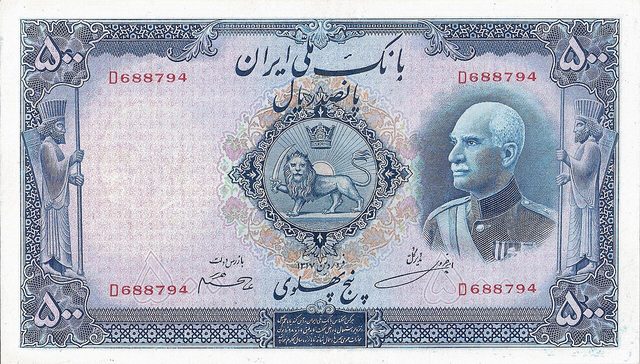
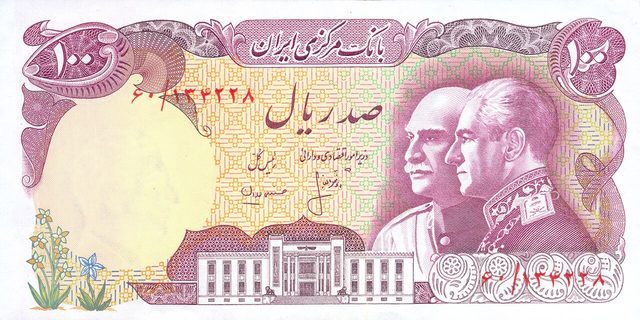
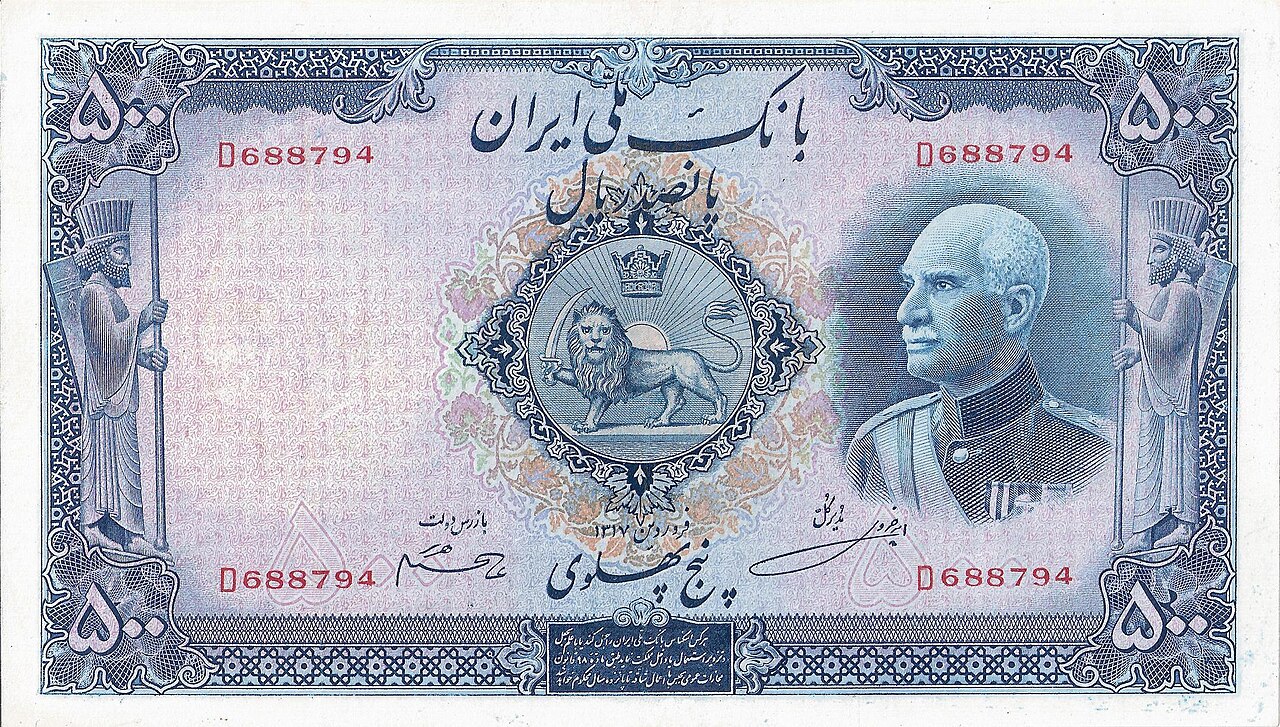
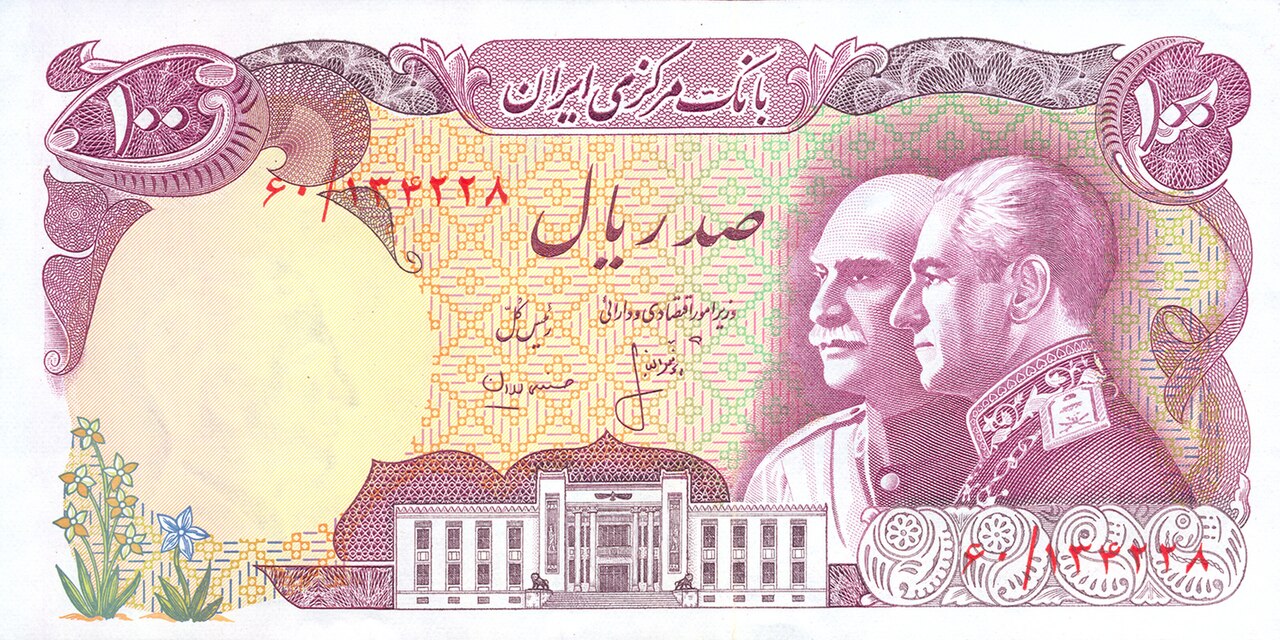
Money carried the ruler. A Bank Melli 500-rial note of 1938 prints Reza Shah's profile with the Lion and Sun emblem and ancient-Persian guardsmen (Transfer). A Central Bank 100-rial note of 1976 pairs Reza Shah and Mohammad Reza Shah to mark fifty years of the dynasty.
Explain moreShow less
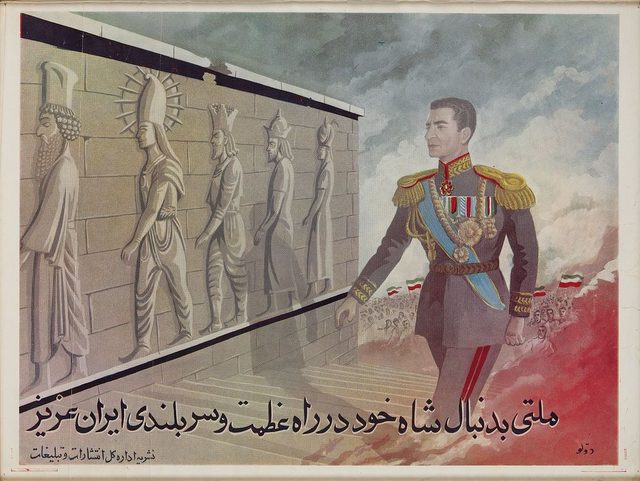
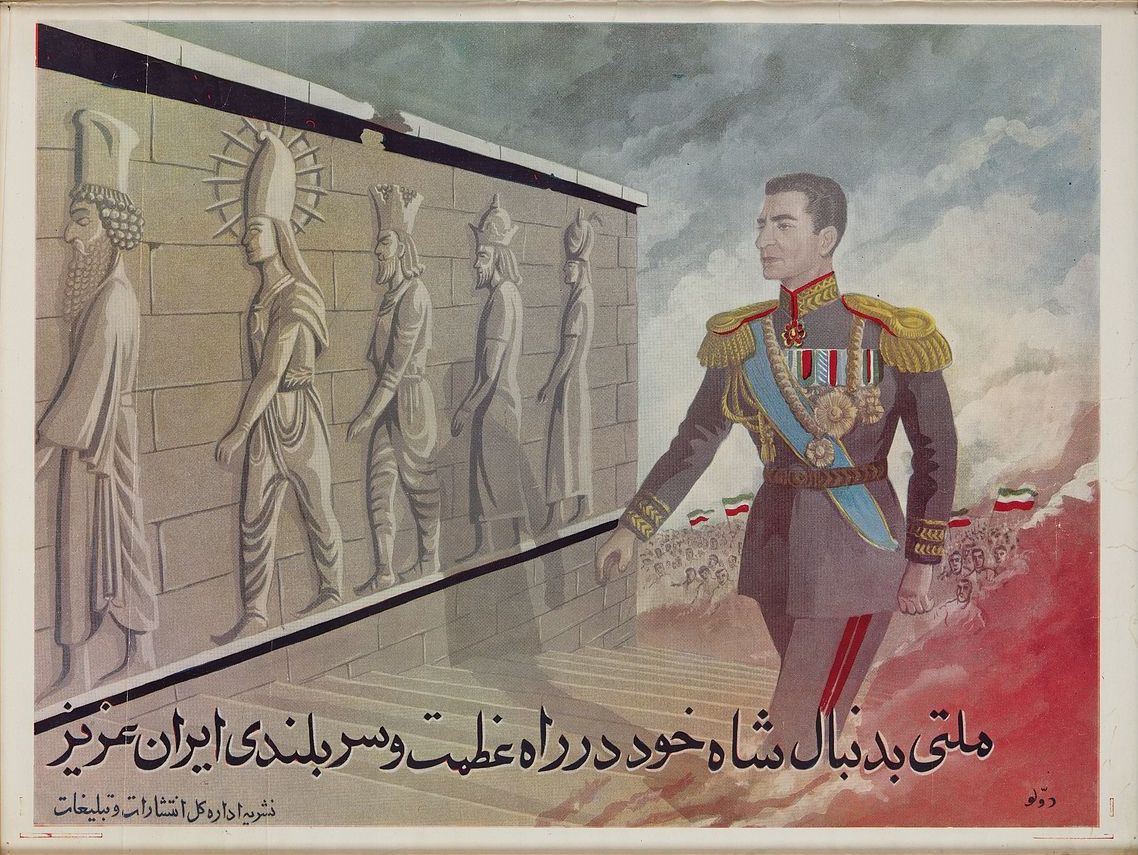
A 1965 poster from the government's General Directorate of Publications and Propaganda puts the Shah beside a Persepolis relief under a slogan of "greatness" and "honour" (Transfer, Glittering generalities).
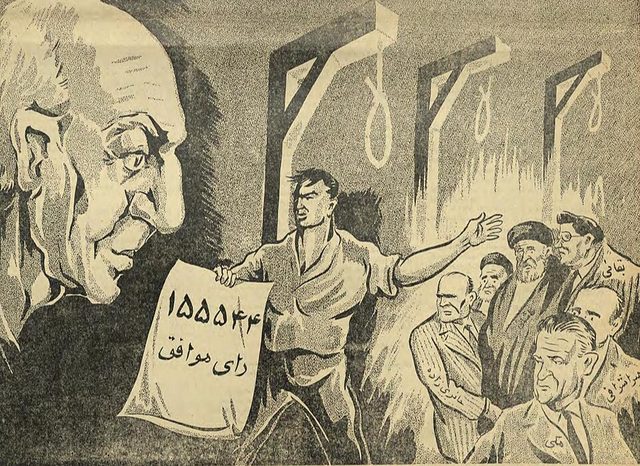
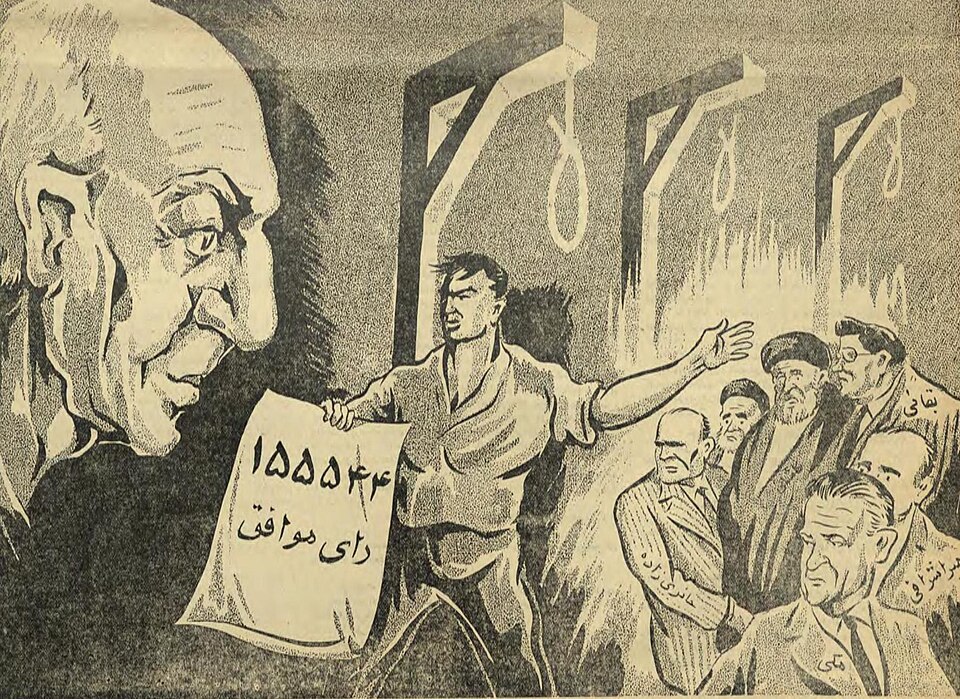
Domestic politics used the press as well. The newspaper Shooresh printed a cartoon on 8 August 1953 that offers a referendum count of 155,544 votes as proof while named opponents file toward gallows (Bandwagon, Name-calling).
The United States in Iran, 1953 to 1958
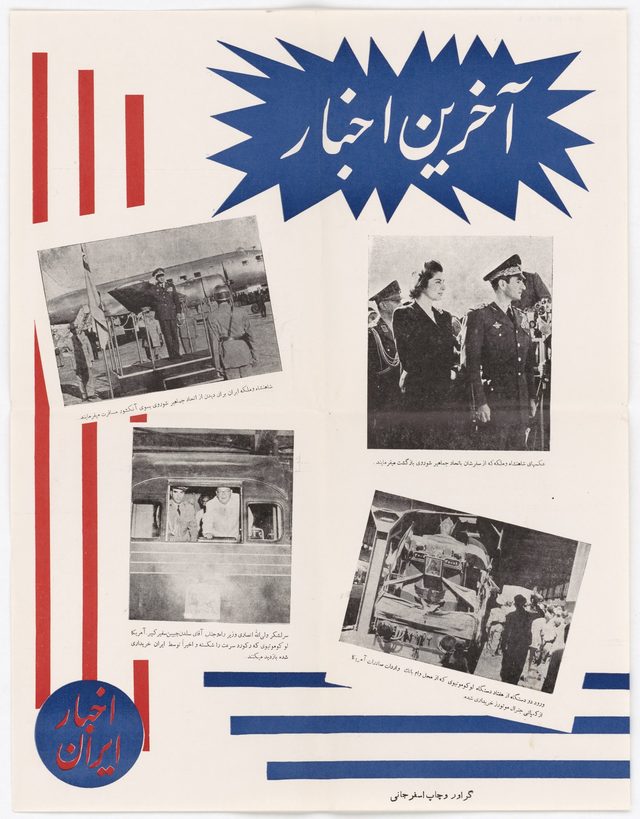
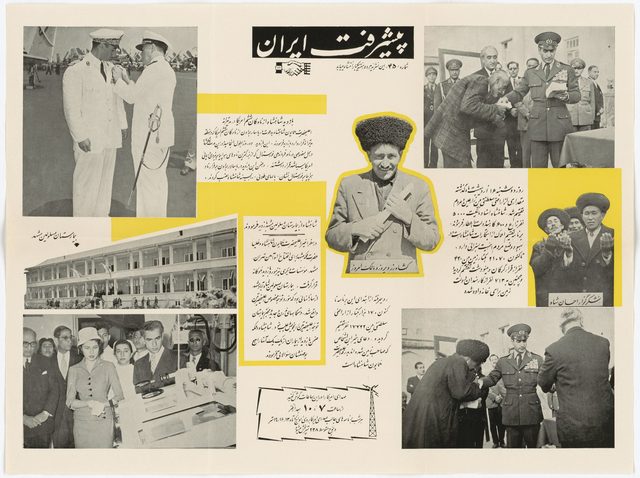
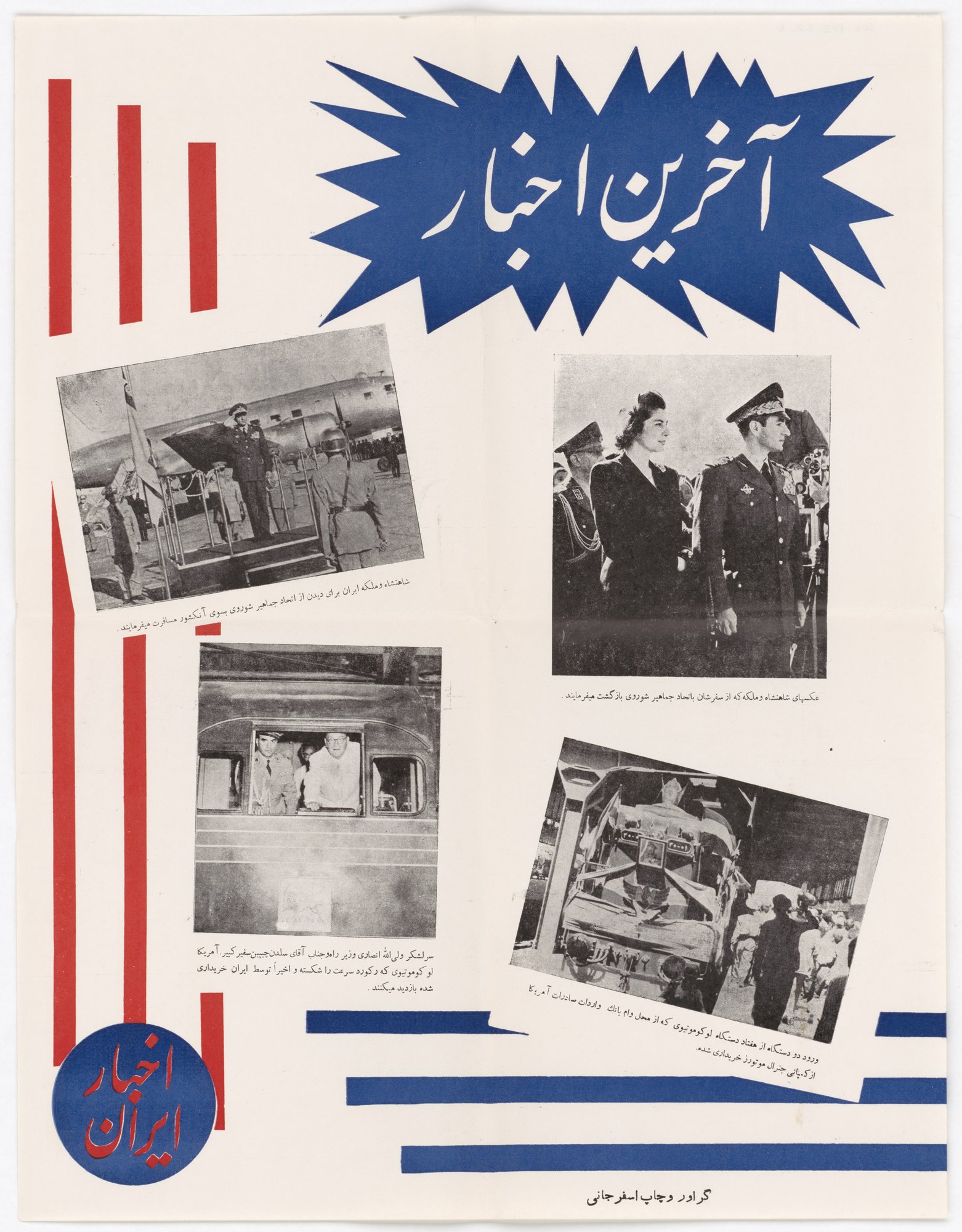
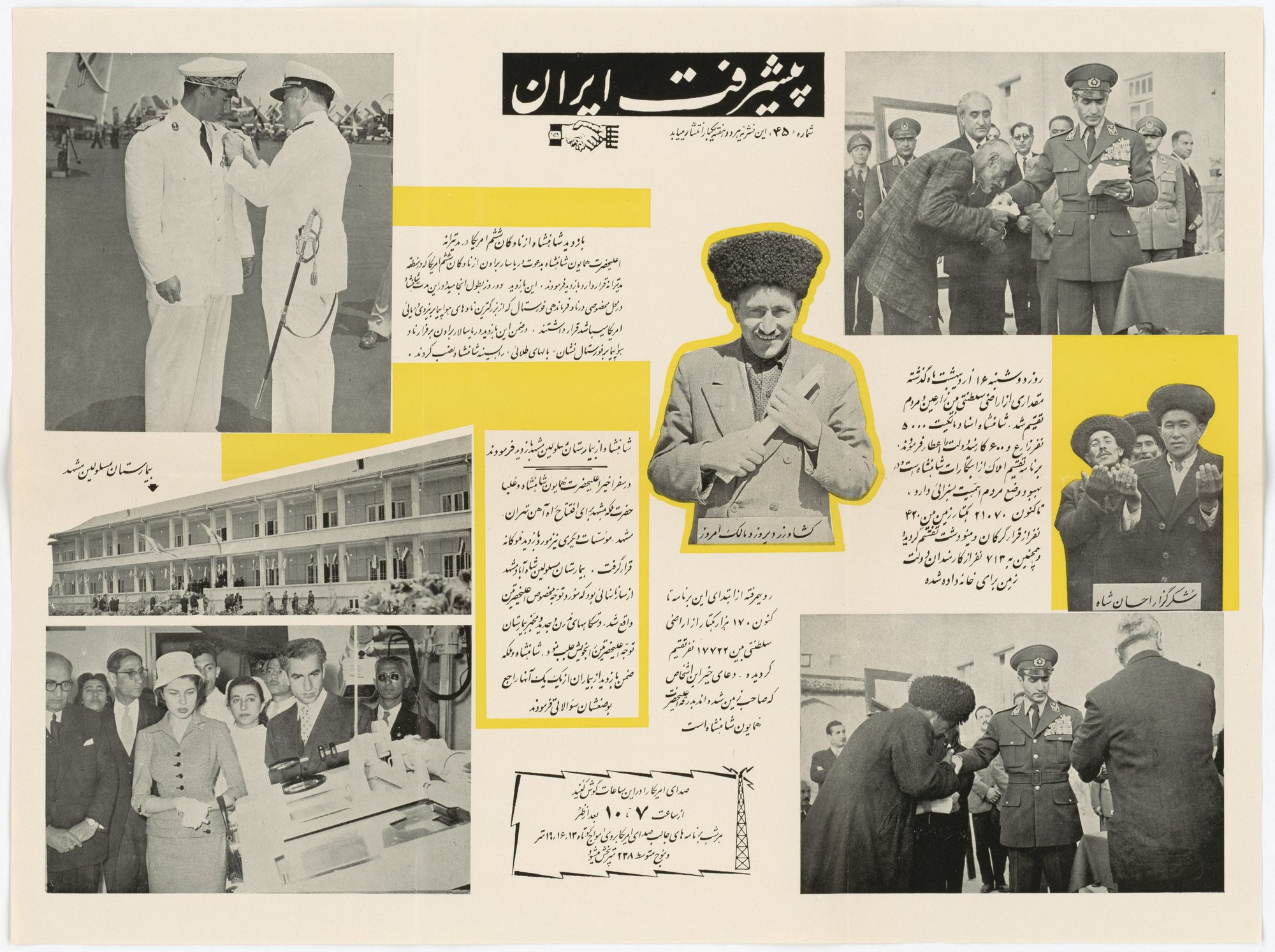
The U.S. Information Agency distributed Farsi wall sheets in Tehran. They set American aid, the U.S. ambassador and the Shah in one frame. One of 1956 shows the Shah's Soviet trip beside locomotives bought with a U.S. Export-Import Bank loan; a 1957 sheet shows the Shah handing land deeds to farmers captioned "Grateful for the Shah's bounty" next to a U.S. Navy visit. The tag in both is Transfer. The collection also lists a CIA-prepared 1953 text, "Mossadeq's Spy Service", as a card-stacking example; its page has no image.
The revolution, 1979 to 1980
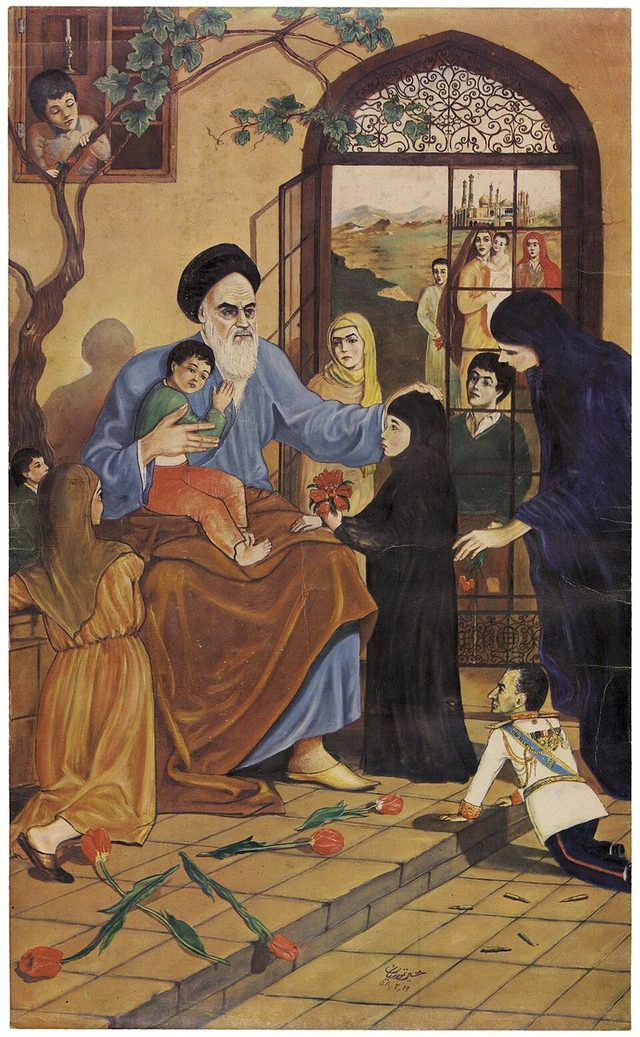
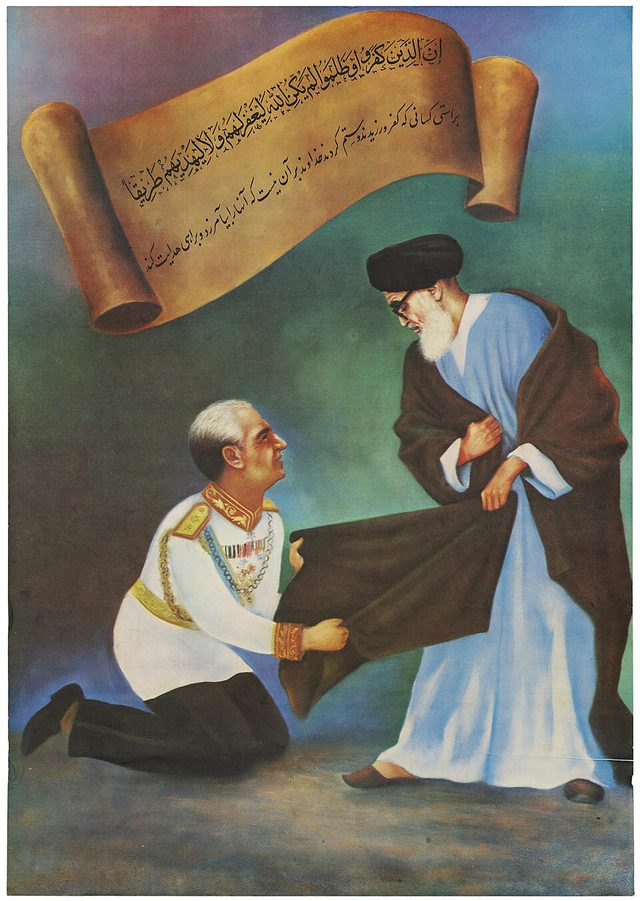
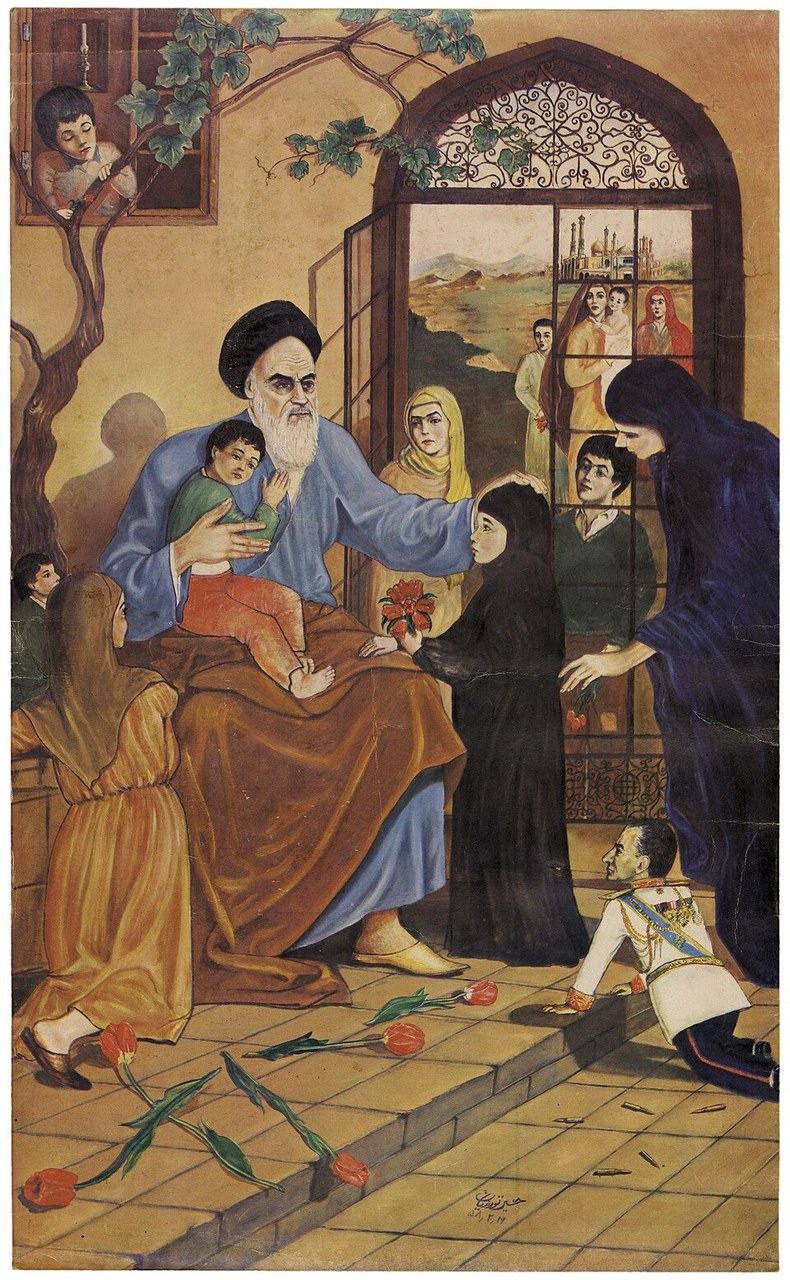
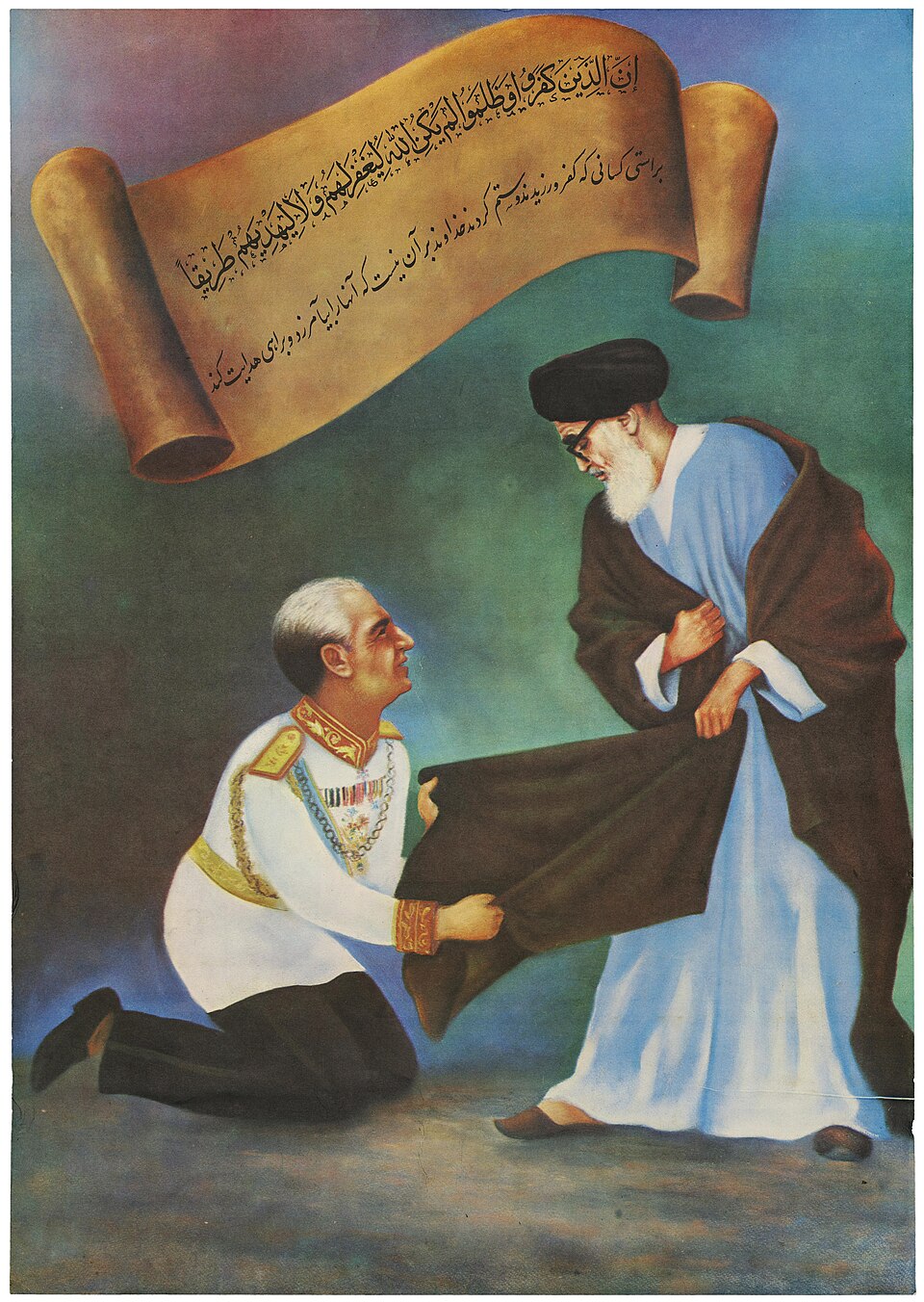
Revolutionary posters borrowed older art. Hossein Norouzian's painting of 1979 sets Khomeini among widows and orphans in the manner of a Persian miniature, with the fallen Shah crawling at lower right (Transfer). An anonymous 1980 poster shows the Shah kneeling before Khomeini beneath a Quranic verse about those who "disbelieved and did wrong" (Name-calling).
Explain moreShow less
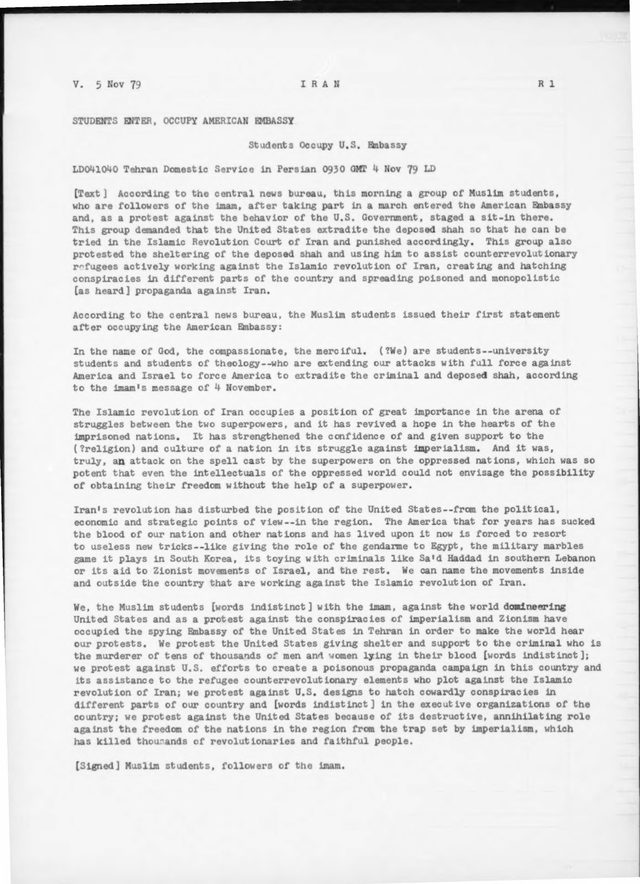
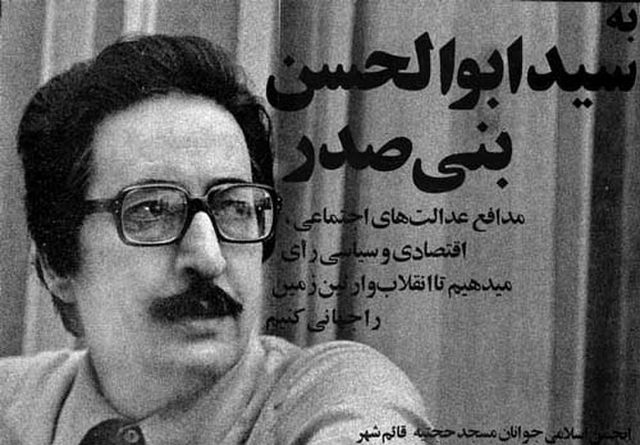
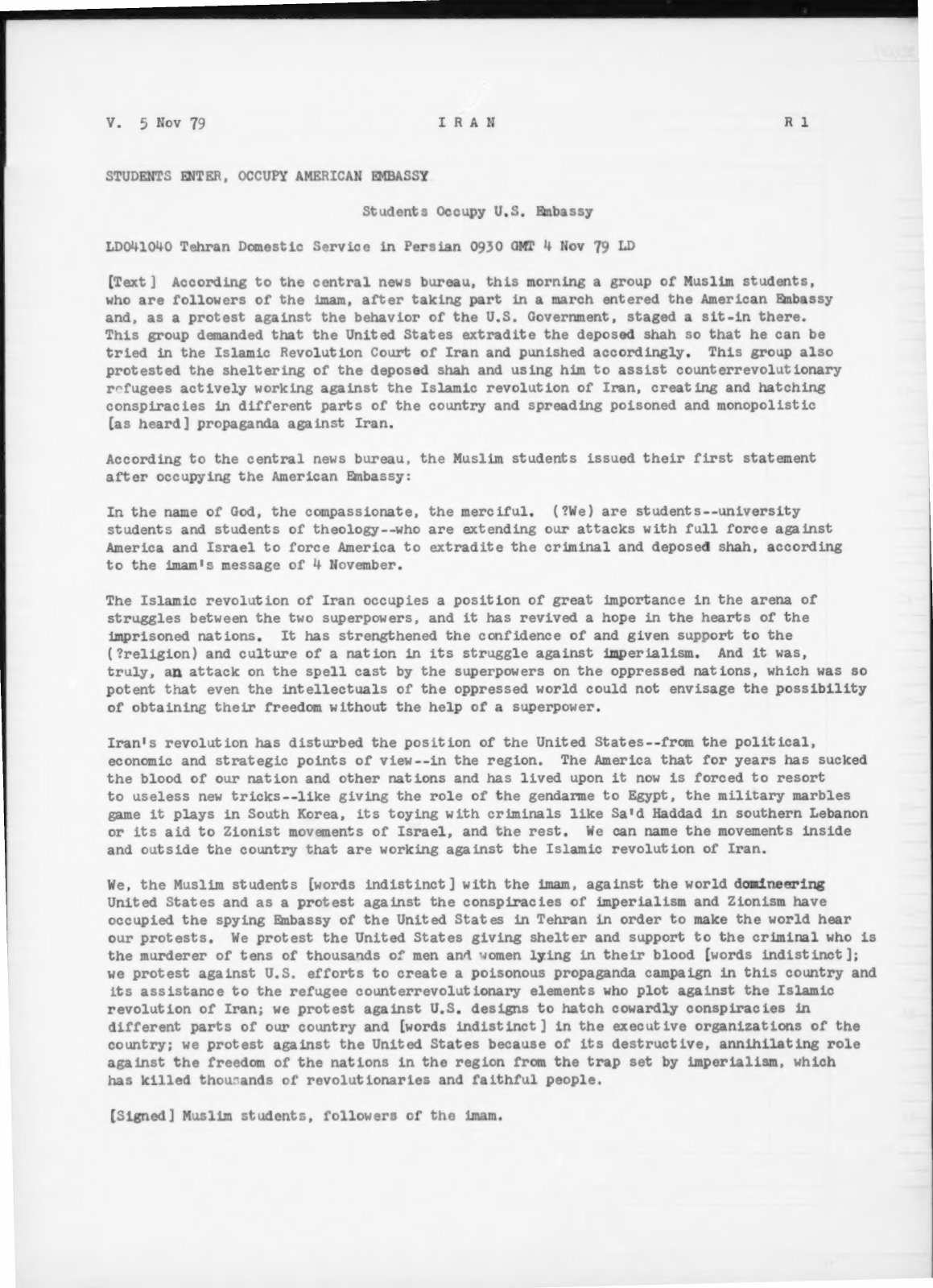
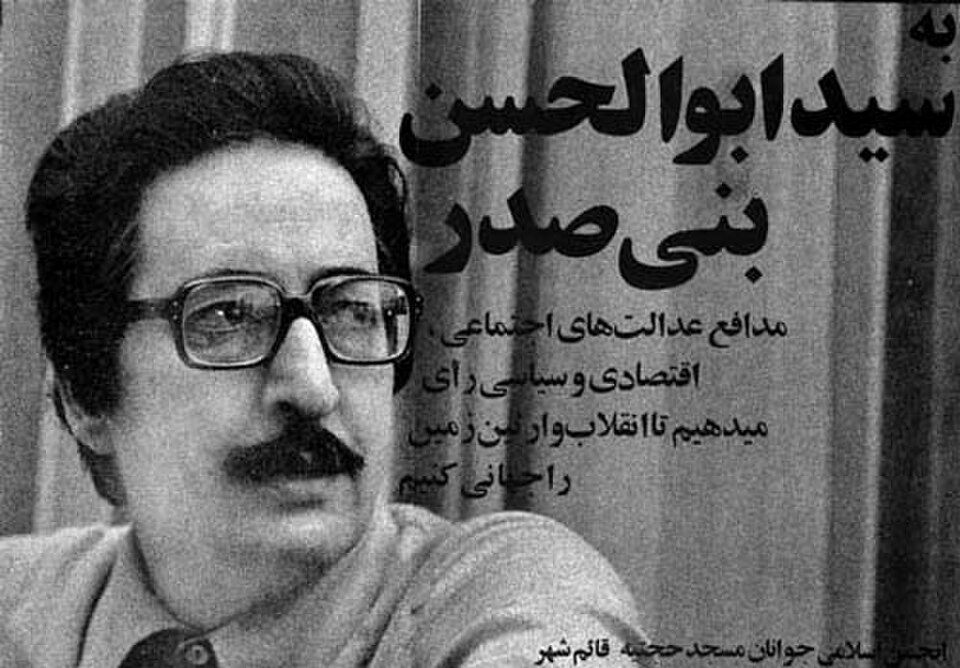
On 4 November 1979 Tehran Domestic Service relayed the embassy occupiers' statement calling the ex-shah "the criminal and deposed shah" and the embassy "the spying Embassy" (FBIS translation; Name-calling, Scapegoating). A 1980 election poster for Abolhassan Banisadr, signed by a mosque youth association in Qaemshahr, promises "justice" without a programme (Glittering generalities).
The Iran-Iraq War and the 1980s
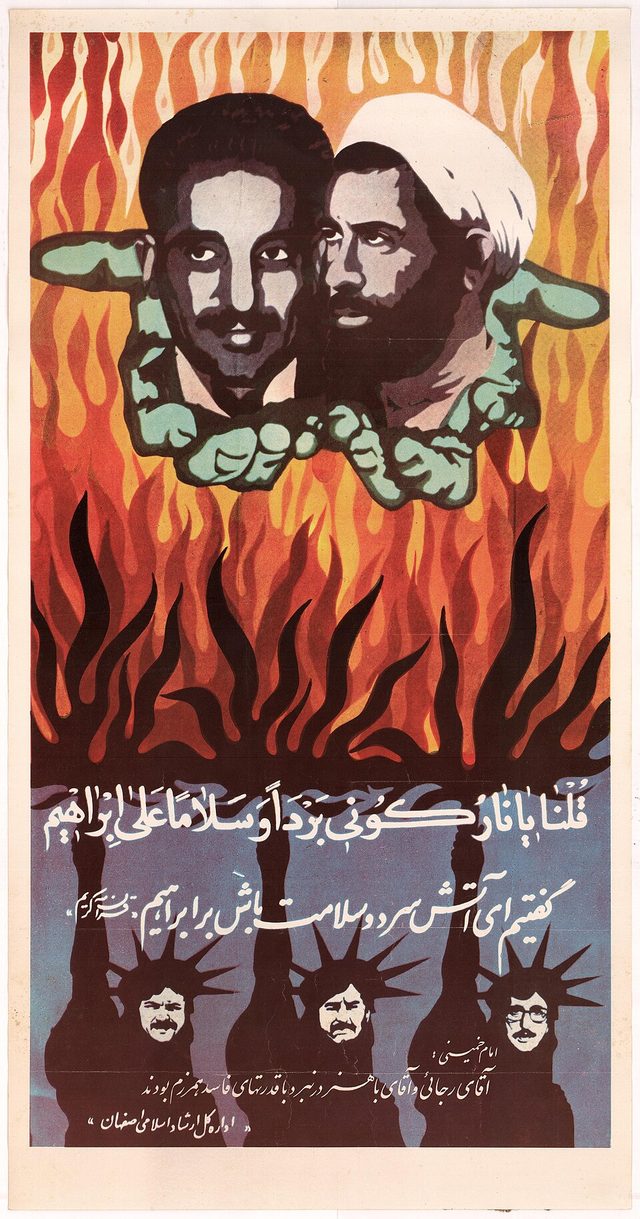
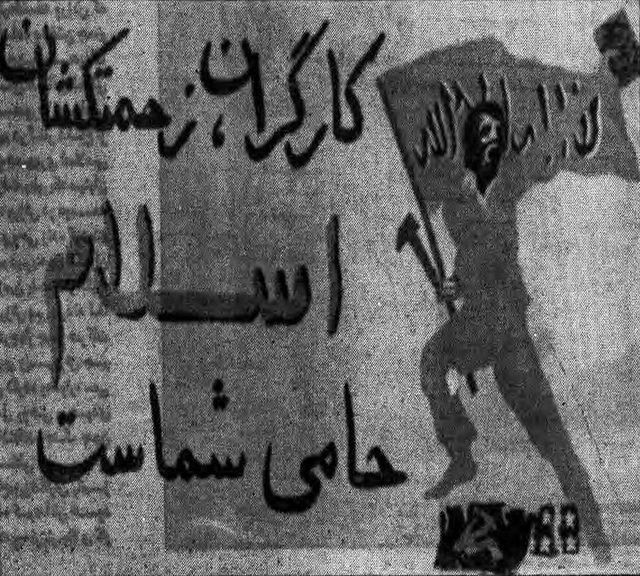
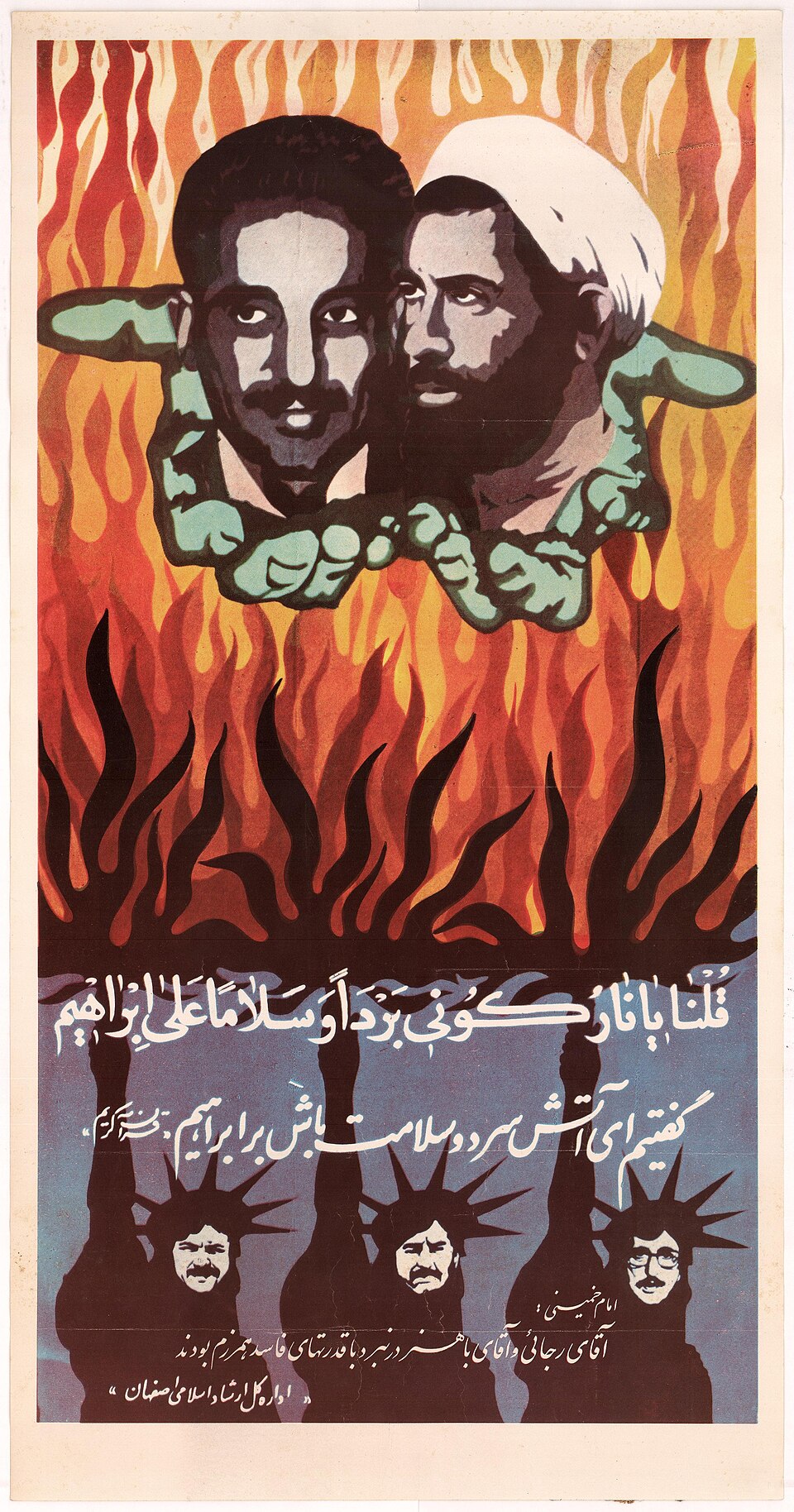
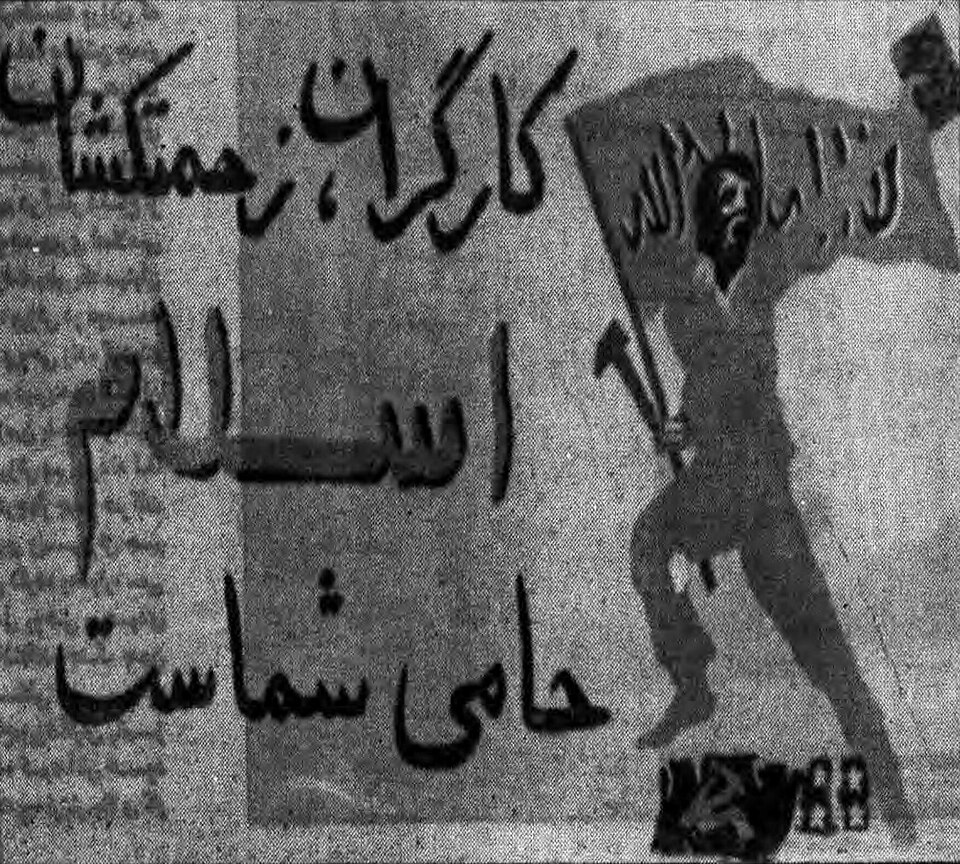
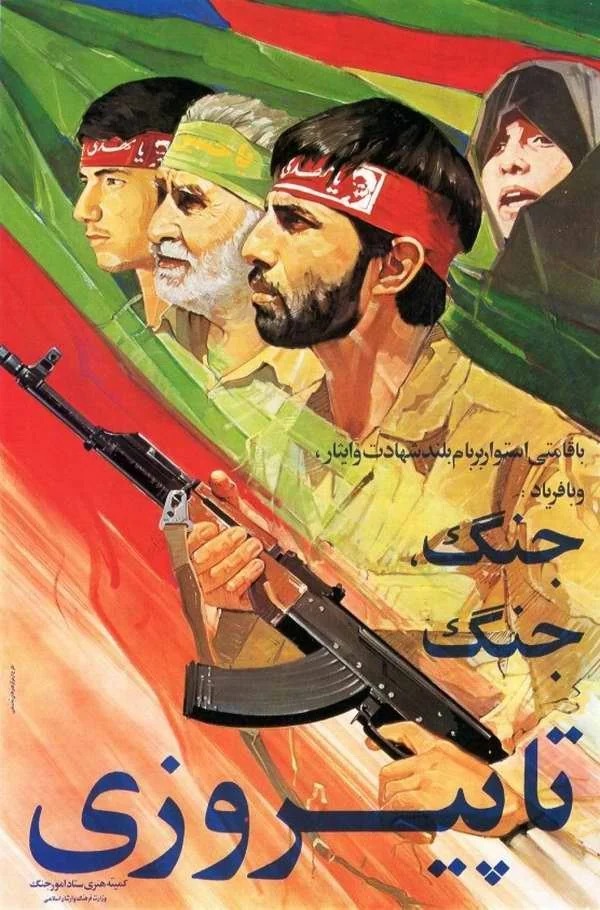
The General Office of Islamic Guidance in Isfahan issued a 1981 poster that places Rajai and Bahonar in divine palms above Statue-of-Liberty figures labelled as opposition leaders (Testimonial, Name-calling). Jomhouri-e Eslami printed "Workers, toilers! Islam is your supporter" in 1982, and the War Affairs Headquarters poster "War, war, until victory" names a goal with no stated aim (Glittering generalities).
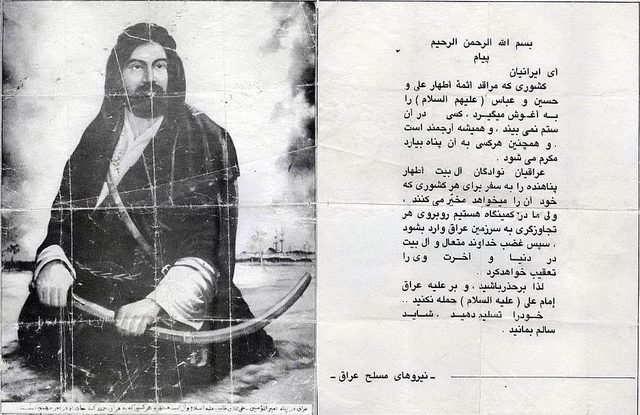
Content note: Wartime leaflet pairing a devotional portrait of Imam Ali with a warning that divine wrath will pursue attacking troops. This object is shown as it was published. Why 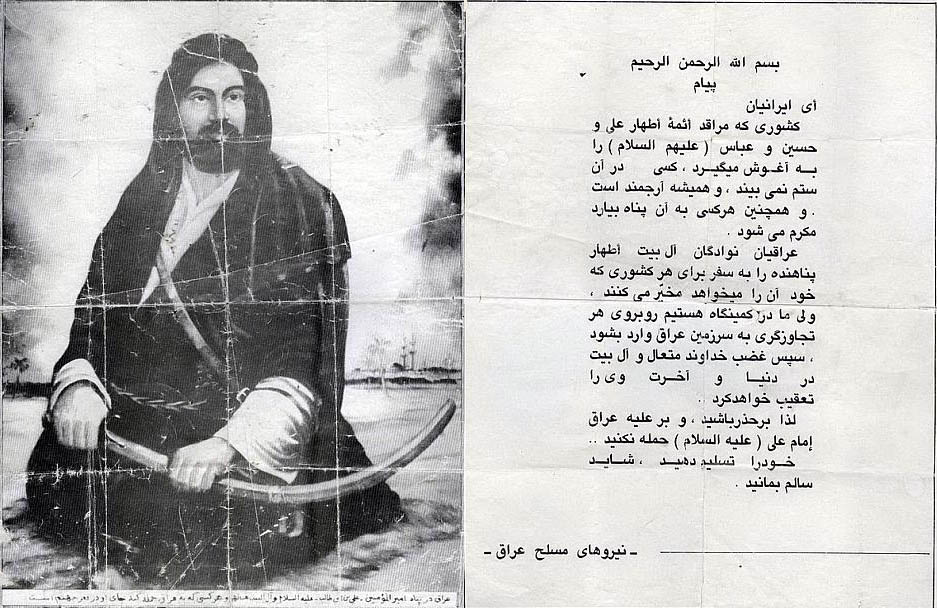
Explain moreShow less
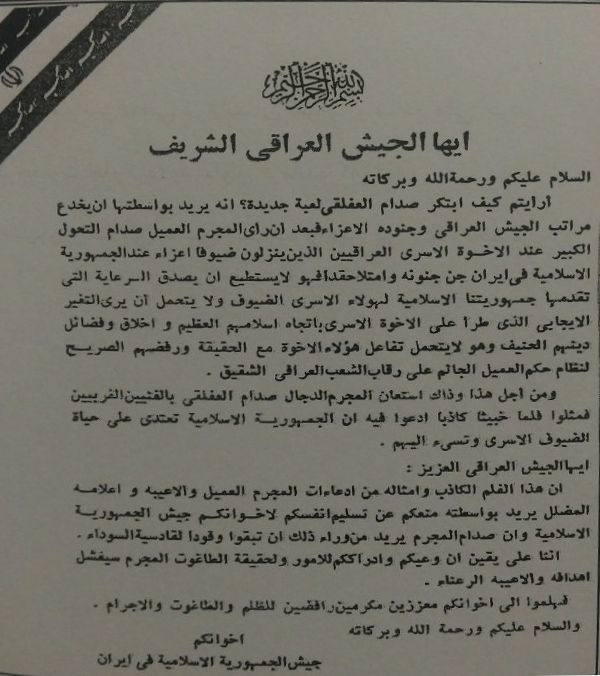
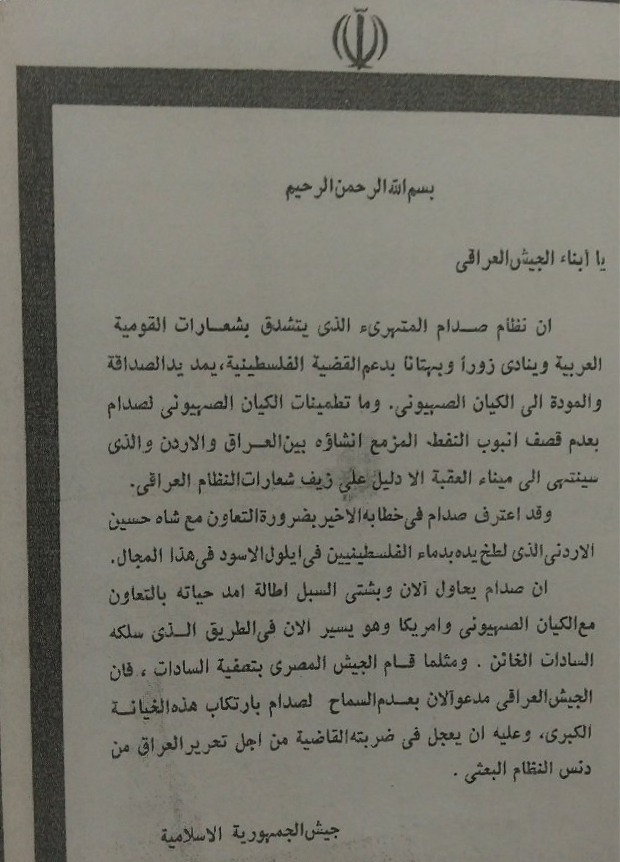
The other side used religion too. An Iraqi armed forces notice of 1980 shows Imam Ali, presents Iraq as keeper of the shrines and tells Iranian troops to surrender (Fear appeal, Transfer). The collection also holds two Iranian Army leaflets to Iraqi soldiers, 1980 and 1981, without images.
The Islamic Republic after 1989
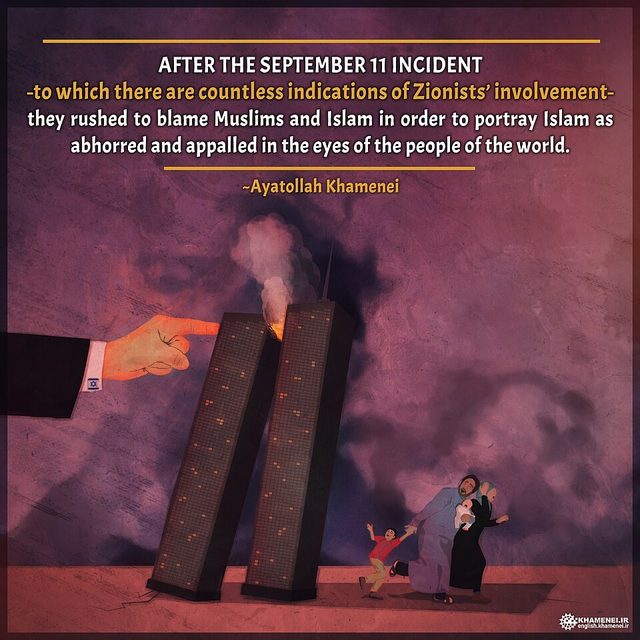
The Office of the Supreme Leader publishes posters at khamenei.ir. One of 11 September 2018 quotes Khamenei and blames "Zionists" for the 2001 attacks with no evidence shown (Scapegoating).
Content note: Poster attributing the 11 September 2001 attacks to 'Zionists', showing a hand with a Star of David cufflink pointing at the burning Twin Towers This object is shown as it was published. Why 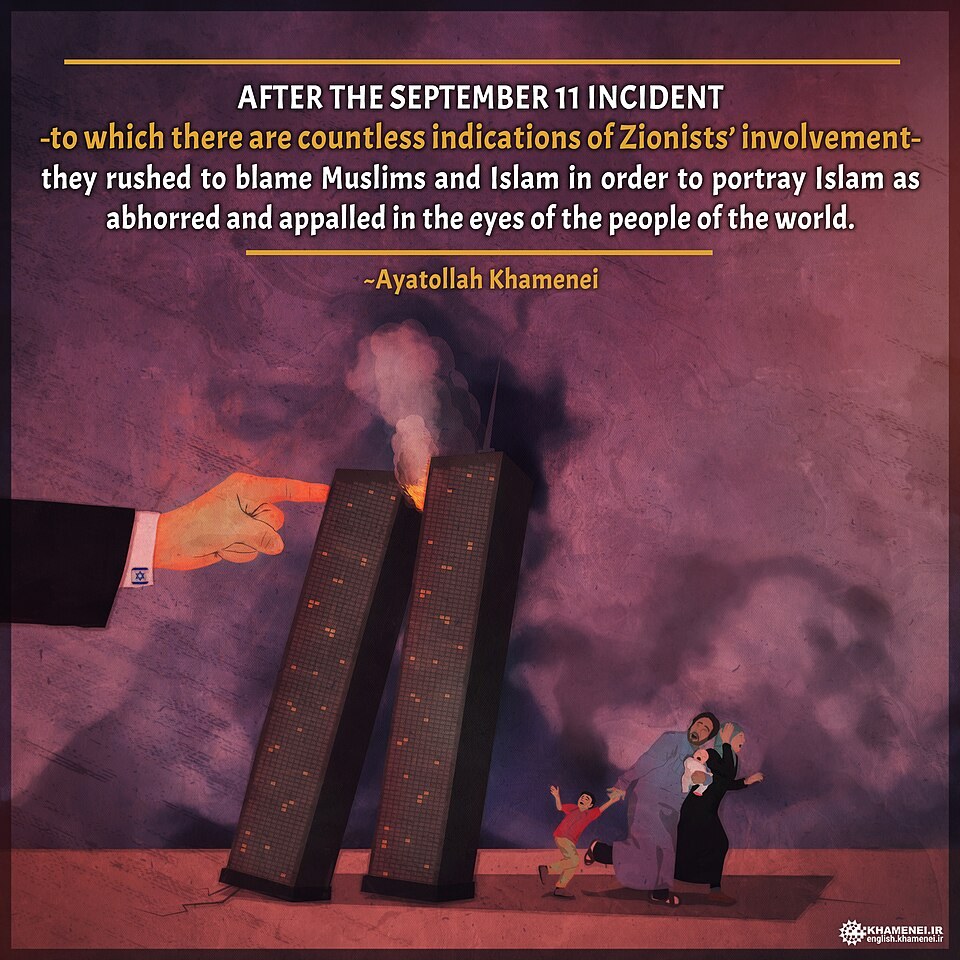
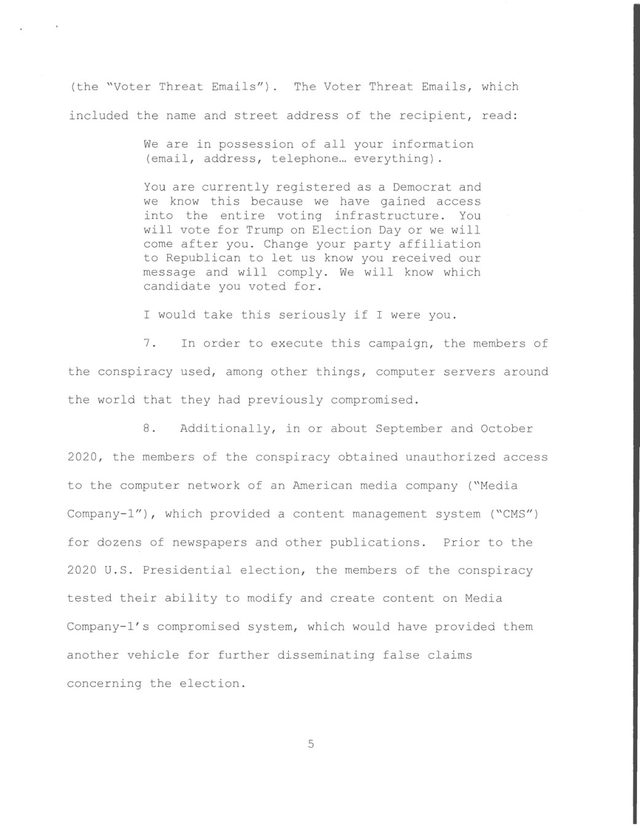
Content note: Threatening message to voters (threat of harm if the recipient does not vote a demanded way) This object is shown as it was published. Why 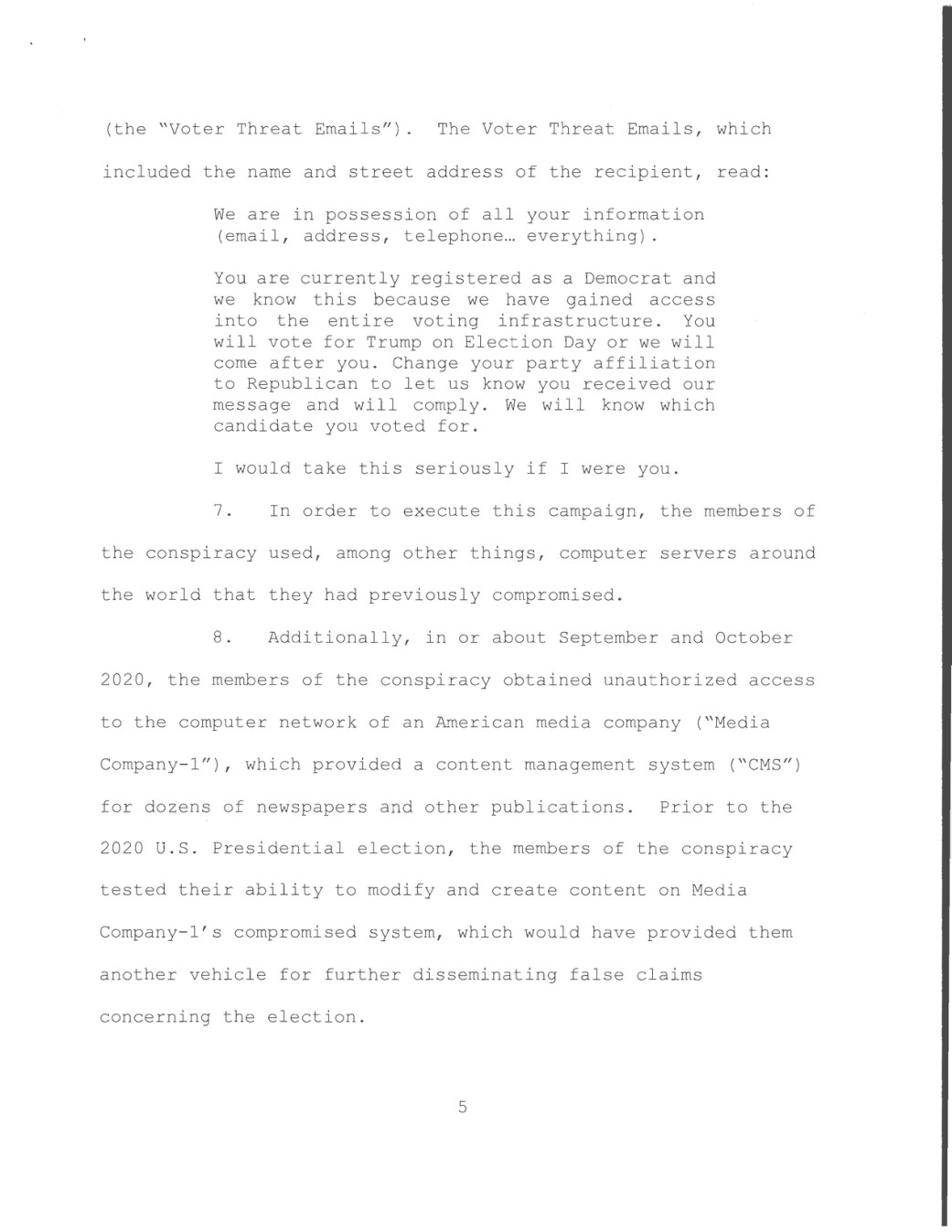
Explain moreShow less
The record also covers Iranian state action abroad, documented as charged history. A U.S. indictment unsealed on 18 November 2021 quotes an October 2020 email sent to registered Democrats, purportedly from the Proud Boys, that read "You will vote for Trump on Election Day or we will come after you" (Fear appeal). The indictment attributes it to the contractor Emennet Pasargad; the defendants are accused, not convicted.
Reading these objects
Each issuer used the same small set of techniques, whether monarchy, revolution, republic, Washington or Baghdad: borrowed prestige, virtue words, named enemies. Scale, intent and means differ, and each entry says so.