Also called Everyone's doing it, Social proof
Treat popularity, momentum, or 'everyone knows' as proof.
The tell
Polls, view-counts, or 'the tide' offered in place of the claim's merits.
Not this
Reporting a real majority as a political fact.
History and effect
IPA 1937; later formalized in social psychology as social proof and conformity pressure (Asch's line experiments, Cialdini's influence research).
Perceived consensus substitutes for evidence, exploiting the audience's aversion to being the lone holdout.
Lineage: IPA 1937
How it works
The bandwagon device answers the question "why should I?" with "because everyone else is." The Institute for Propaganda Analysis listed it among its seven devices, and Alfred McClung Lee and Elizabeth Briant Lee's The Fine Art of Propaganda (1939) described it as an appeal to follow the crowd: the propagandist tries to convince the audience that all members of a group it belongs to already accept the program, so it should join them. The message has three moving parts: a display of the crowd (a number, a picture, a count, a result), an identification of that crowd with the audience ("your neighbours", "the nation", "people like you"), and an implied cost of standing apart, whether isolation, disloyalty or being on the losing side.
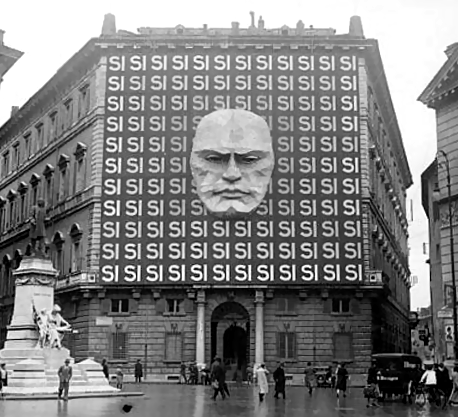
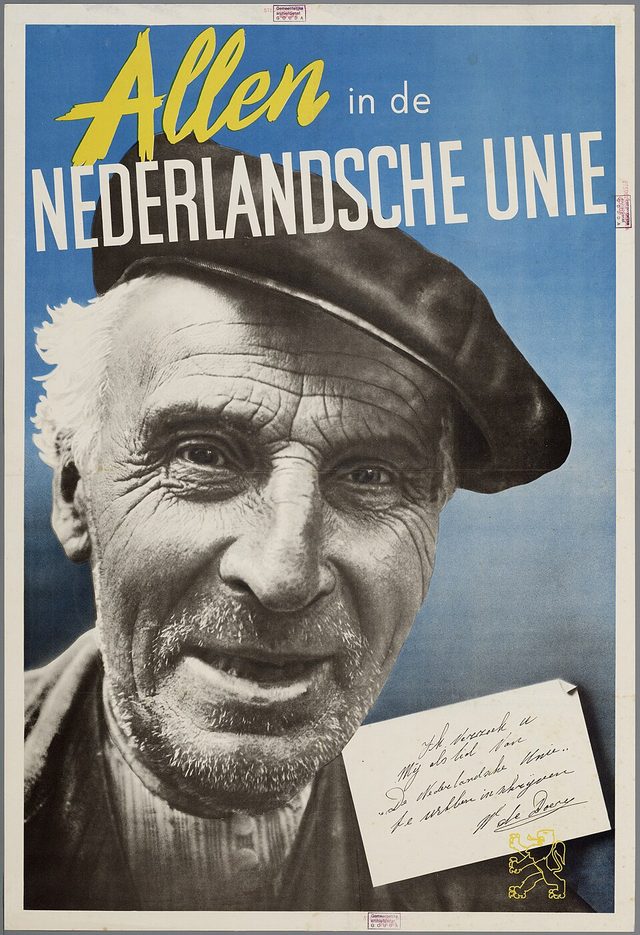
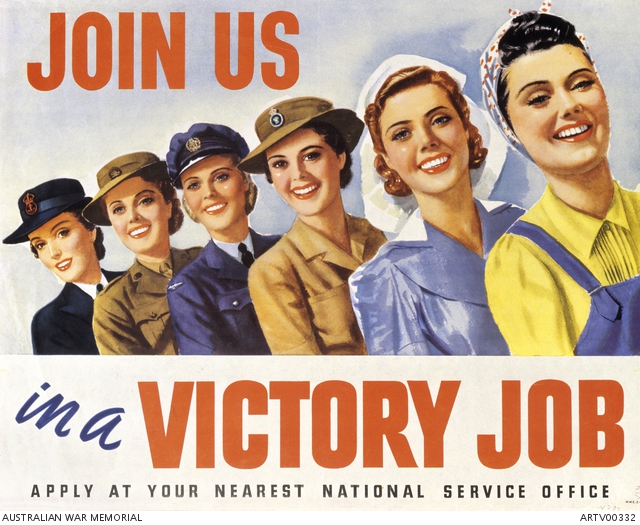
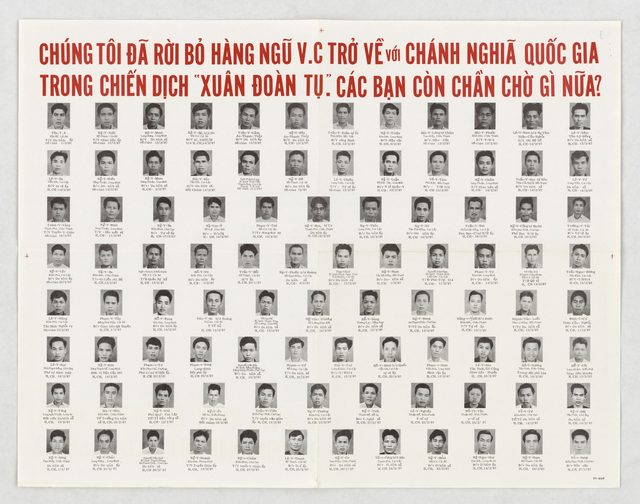
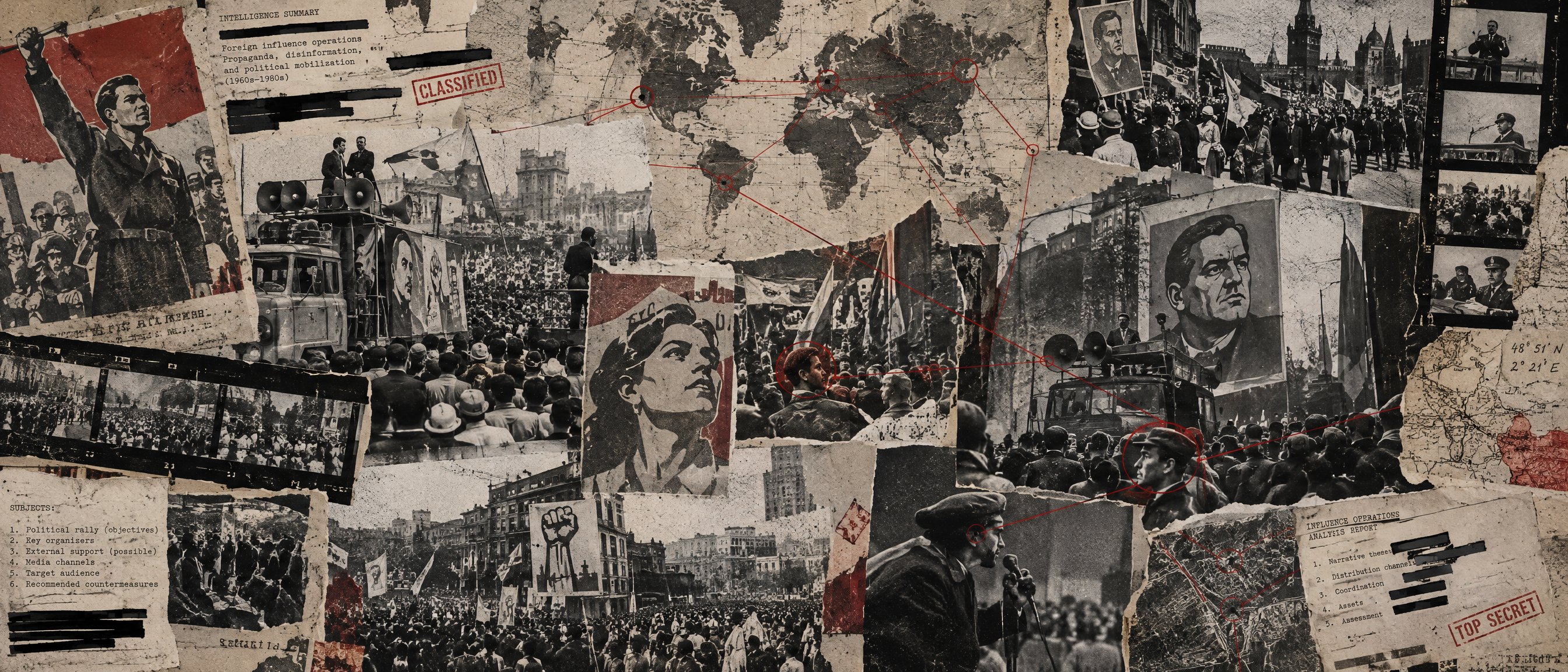
The crowd can be shown in several registers. Numerical: sales figures, poll leads, vote shares, signatures, view and follower counts. Visual: rallies filmed from above, massed uniforms, flags in every window, badges and stickers that make participation visible in the street or at work. Temporal: "momentum", "the tide", "a movement whose time has come", which claims that the crowd is growing and will soon include everyone. Ritual: elections or plebiscites whose near-unanimous results are published as proof that the whole people stands behind a leader or program.
Two variants recur. In open competition (elections, markets) the claim is that the crowd is winning and latecomers will miss out; campaigns of both major US parties talk up momentum and release favourable internal polls, and advertisers cite sales as proof of quality. In closed systems the claim is that the crowd is already total: the published result, the filmed rally and the workplace quota all show dissent as a rounding error, which also tells any doubter that they are alone. In the social-media era the counters are built into the interface (likes, shares, trending lists), which makes the displayed crowd both more persuasive and easier to inflate. That is the point where the device shades into Manufactured consensus and Astroturfing.
Why it works
Popularity is sometimes real evidence: if many independent people chose something, they may know something. The device exploits that shortcut when the crowd is not independent, not informed, or not real. Robert Cialdini called the shortcut social proof (Influence, 1984): under uncertainty, people look at what others do to decide what is correct. Solomon Asch's line-judgement experiments (1951, 1956) found that when a unanimous group of confederates gave an obviously wrong answer, participants went along on roughly a third of the critical trials, and that a single dissenting ally sharply reduced conformity. Morton Deutsch and Harold Gerard (1955) separated the two pressures at work: informational influence (the group probably knows) and normative influence (the wish to be accepted).
Elisabeth Noelle-Neumann's spiral of silence (1974) adds the political dimension: people monitor the climate of opinion, and those who believe they are in the minority speak up less, which makes the apparent majority look larger still. Experiments show the same loop in online systems. Matthew Salganik, Peter Dodds and Duncan Watts (2006) found in an artificial music market that showing download counts made popular songs more popular and outcomes less predictable. Lev Muchnik, Sinan Aral and Sean Taylor (2013) found that a single artificial up-vote on a news-site comment raised the chance of further up-votes and its final score. David Rothschild and Neil Malhotra (2014) found that telling survey respondents a policy had majority support modestly raised their own support for it. See Social proof and Conformity in the Learn library.
Examples across eras and sides
- Triumph of the Will (1935, Germany, NSDAP). Leni Riefenstahl's film of the 1934 Nuremberg party rally devotes much of its length to massed formations of party, SA, SS and Labour Service members and to cheering crowds, presenting the movement as the whole nation in step. The case is carried by scale and uniformity rather than by stated policy (Susan Sontag, "Fascinating Fascism", New York Review of Books, 1975).
- War-bond payroll drive (1943, United States, U.S. Treasury). Treasury posters asked workplaces to reach a shared savings target; Let's Fly This Flag: Everybody at Least 10 Percent in War Bonds offers the shop a flag to fly once "everybody" puts at least 10 percent of pay into war bonds. The reason given is collective participation, not the merits of the bond (U.S. National Archives, NARA 514865; Lawrence R. Samuel, Pledging Allegiance: American Identity and the Bond Drive of World War II, 1997).
- "More Doctors Smoke Camels" (from 1946, United States, R.J. Reynolds). Cigarette advertising from the 1930s to the early 1950s paired physician imagery with popularity claims, and the Camel campaign presented a brand's standing among doctors as a reason to smoke it. The popularity claim stood in for evidence about health, overlapping with Testimonial (Martha Gardner and Allan Brandt, American Journal of Public Health, 2006).
- Single-list elections (1937-1984, Soviet Union; 2014, North Korea; ruling parties). Soviet elections to the Supreme Soviet offered one approved candidate per seat, and official results regularly reported turnout and support above 99 percent for the "bloc of Communists and non-party people", published as proof of unanimous backing (Jerome Gilison, "Soviet Elections as a Measure of Dissent: The Missing One Percent", American Political Science Review, 1968). North Korea's state news agency reported turnout and approval at or near 100 percent for the 2014 Supreme People's Assembly election. Unlike a poll lead in a competitive election, these figures were produced where abstaining or voting against carried personal risk, so they measure compliance at least as much as opinion.
- "Big Mo" in US primaries (1980 and 1984, United States, Republican and Democratic campaigns). After winning the 1980 Iowa caucuses, George H. W. Bush told reporters he had "Big Mo", presenting momentum itself as a reason to back him; Gary Hart's 1984 campaign surged on the same logic after New Hampshire. Larry Bartels's study of the primary process found that expectations about a candidate's chances do shift voters' preferences, which is why campaigns compete to be seen as rising (Presidential Primaries and the Dynamics of Public Choice, 1988).
- Purchased followers (2010s, United States and worldwide, Devumi). A New York Times investigation reported that the company Devumi sold millions of fake Twitter followers and engagements to entertainers, business people, political figures and others, many of the accounts built from copied profiles of real users (Nicholas Confessore and colleagues, "The Follower Factory", 2018). In 2019 the New York Attorney General announced a settlement with the company, stating that selling fake followers and engagement is illegal deception. A follower count is a bandwagon signal; buying one is the commercial form of Manufactured consensus.
- Networked campaigning (2016, Philippines, consultants working across parties). Jonathan Corpus Ong and Jason Vincent Cabañes interviewed the strategists, paid influencers and fake-account operators behind Philippine political campaigns and found them working for politicians of several camps, using coordinated accounts to make candidates and hashtags appear popular and trending (Architects of Networked Disinformation, Newton Tech4Dev Network, 2018).
How to spot it
- If you delete the crowd (the number, the rally shot, the trending badge), is any argument left for the claim itself?
- Who counted, and can the count be checked? Is it an independent poll with a published method, a campaign's own internal poll, or an unaudited counter?
- Could the people in the crowd have said no without cost? A 99 percent result where dissent is punished measures compliance, not agreement.
- Is the crowd defined as "people like you" (your workplace, your nation, your faith), so that disagreeing feels like leaving the group?
- Does the message sell inevitability ("the tide", "momentum", "don't be left behind") rather than reasons?
- For online numbers: do the accounts behind the likes or follows look real (account age, activity, copied photos, bursts within the same minute)?
Where it ends: edge cases and legitimate persuasion
- Reporting a real majority is not the device (see Not this). A poll story that gives its sample, method and margin of error lets the audience weigh popularity as one fact among others. The device begins when the number is offered as the reason a claim is true or a choice is right.
- Descriptive-norm messages in public-service campaigns use the same lever: hotel cards noting that most guests reuse their towels (Noah Goldstein, Robert Cialdini and Vladas Griskevicius, Journal of Consumer Research, 2008) or UK tax letters stating that most people pay on time (Michael Hallsworth and colleagues, Journal of Public Economics, 2017). They are attributed and the statistics are true, which is where the line sits; they still persuade through conformity rather than argument, and readers can judge them on that basis.
- A crowd of experts is a different case. Citing a scientific consensus appeals to the independent judgements of qualified people and can be checked against the literature; it becomes bandwagon only when the headcount replaces the evidence or is misstated. Presenting a lopsided expert field as a tie is the opposite error, Bothsidesism.
- When the crowd is fabricated (bots, paid posters, inflated counts) the technique becomes Manufactured consensus; when the fake crowd poses as spontaneous citizens it is Astroturfing.
- When the display claims the whole people rather than a majority and treats dissent as leaving the nation, it overlaps with Identity fusion, as in Ein Volk, ein Führer, ein Ja (One People, One Leader, One Yes), where official results gave about 92 and 95 percent. Repeated displays of support that move what is considered acceptable to say are Overton window shifting.
Sources
- Asch, Solomon E. "Effects of Group Pressure upon the Modification and Distortion of Judgments." In Harold Guetzkow (ed.), Groups, Leadership and Men. Carnegie Press, 1951.
- Asch, Solomon E. "Studies of Independence and Conformity: I. A Minority of One Against a Unanimous Majority." Psychological Monographs 70(9), 1956.
- Bartels, Larry M. Presidential Primaries and the Dynamics of Public Choice. Princeton University Press, 1988.
- Cialdini, Robert B. Influence: How and Why People Agree to Things. William Morrow, 1984.
- Confessore, Nicholas, and colleagues. "The Follower Factory." The New York Times, 2018.
- Deutsch, Morton, and Harold B. Gerard. "A Study of Normative and Informational Social Influences upon Individual Judgment." Journal of Abnormal and Social Psychology 51(3), 1955.
- Gardner, Martha N., and Allan M. Brandt. "'The Doctors' Choice Is America's Choice': The Physician in US Cigarette Advertisements, 1930-1953." American Journal of Public Health 96(2), 2006.
- Gilison, Jerome M. "Soviet Elections as a Measure of Dissent: The Missing One Percent." American Political Science Review 62(3), 1968.
- Goldstein, Noah J., Robert B. Cialdini and Vladas Griskevicius. "A Room with a Viewpoint: Using Social Norms to Motivate Environmental Conservation in Hotels." Journal of Consumer Research 35(3), 2008.
- Hallsworth, Michael, John A. List, Robert D. Metcalfe and Ivo Vlaev. "The Behavioralist as Tax Collector: Using Natural Field Experiments to Enhance Tax Compliance." Journal of Public Economics 148, 2017.
- Lee, Alfred McClung, and Elizabeth Briant Lee. The Fine Art of Propaganda. Harcourt, Brace, for the Institute for Propaganda Analysis, 1939.
- Muchnik, Lev, Sinan Aral and Sean J. Taylor. "Social Influence Bias: A Randomized Experiment." Science 341, 2013.
- New York State Office of the Attorney General. Announcement of settlement with Devumi, 2019.
- Noelle-Neumann, Elisabeth. "The Spiral of Silence: A Theory of Public Opinion." Journal of Communication 24(2), 1974.
- Ong, Jonathan Corpus, and Jason Vincent A. Cabañes. Architects of Networked Disinformation: Behind the Scenes of Troll Accounts and Fake News Production in the Philippines. Newton Tech4Dev Network, 2018.
- Riefenstahl, Leni (director). Triumph des Willens (Triumph of the Will). 1935.
- Rothschild, David, and Neil Malhotra. "Are Public Opinion Polls Self-Fulfilling Prophecies?" Research & Politics 1(2), 2014.
- Salganik, Matthew J., Peter Sheridan Dodds and Duncan J. Watts. "Experimental Study of Inequality and Unpredictability in an Artificial Cultural Market." Science 311, 2006.
- Samuel, Lawrence R. Pledging Allegiance: American Identity and the Bond Drive of World War II. Smithsonian Institution Press, 1997.
- Sontag, Susan. "Fascinating Fascism." The New York Review of Books, 1975.
- U.S. National Archives and Records Administration. "Let's Fly This Flag: Everybody at Least 10 Percent in War Bonds" (poster), NARA 514865.
Case studies
- Big-character posters: how the opening labels of China's Cultural Revolution did the work of charges (1966-68) — Big-character posters and the labels of the Cultural Revolution
- Chieu Hoi and Radio Hanoi: both sides' propaganda aimed at the other side's soldiers in Vietnam — Chieu Hoi and Radio Hanoi: propaganda aimed at the other side's soldiers
- The second Ku Klux Klan: selling membership as '100% Americanism' — The second Ku Klux Klan: selling membership as '100% Americanism'
- Film under Goebbels: Triumph des Willens (1935) and Der ewige Jude (1940) — Film under Goebbels: Triumph des Willens and Der ewige Jude
- Octavian, Antony and the Res Gestae: how Augustus wrote his own reign — Octavian, Antony and the Res Gestae: how Augustus wrote his own reign
- The Great Leap Forward's 'sputnik' harvests and the famine that followed — The Great Leap Forward's 'sputnik' harvests and the famine that followed
- The Institute for Propaganda Analysis (1937-1942) — The Institute for Propaganda Analysis (1937-1942)
- Mood over argument: "Morning in America" (Reagan-Bush 1984) and "Hope" / "Yes We Can" (Obama 2008) — Mood over argument: "Morning in America" (Reagan-Bush 1984) and "Hope" / "Yes We Can" (Obama 2008)
- Votes for Women and the anti-suffrage campaigns, 1908 to 1920 — Votes for Women and the anti-suffrage campaigns, 1908 to 1920
- Temperance, Prohibition and the wets: the dry campaigns and their opponents, 1874 to 1933 — Temperance, Prohibition and the wets: the dry campaigns and their opponents, 1874 to 1933
- The civil rights movement and the Citizens' Councils: boycotts and marches, 'outside agitator' labels, state money and economic pressure — The civil rights movement and the Citizens' Councils: boycotts and marches, 'outside agitator' labels, state money and economic pressure
- The Reich Ministry of Public Enlightenment and Propaganda, 1933-1945 — The Reich Ministry of Public Enlightenment and Propaganda, 1933-1945
- Before the state: the NSDAP's propaganda in its fringe years, 1920-1923 — Before the state: the NSDAP's propaganda in its fringe years, 1920-1923
- Hitler über Deutschland: the 1932 campaigns that made the NSDAP a mass party — Hitler über Deutschland: the 1932 campaigns that made the NSDAP a mass party
- The SA in the street: uniforms, a martyr and staged disorder as proof only the NSDAP could 'restore order' (1921-1933) — The SA in the street: uniforms, a martyr and staged disorder as proof only the NSDAP could 'restore order' (1921-1933)
- Before Triumph of the Will: staging scale for a fringe party at Nuremberg, 1923-1933 — Before Triumph of the Will: staging scale for a fringe party at Nuremberg, 1923-1933
- From a fire to a vote: the Reichstag Fire Decree and the Enabling Act, February-March 1933 — From a fire to a vote: the Reichstag Fire Decree and the Enabling Act, February-March 1933
- Bolshevik agitprop, 1917-1921: soviets, decrees, agit-trains and the ROSTA windows — Bolshevik agitprop, 1917-1921: soviets, decrees, agit-trains and the ROSTA windows
- The Lenin cult after 1924: an embalmed body, a mausoleum and a doctrine called "Leninism" — The Lenin cult after 1924: an embalmed body, a mausoleum and a doctrine called "Leninism"
- 'Trotskyism or Leninism': the press campaign that removed Trotsky from Soviet leadership (1924-1929) — 'Trotskyism or Leninism': the press campaign that removed Trotsky from Soviet leadership (1924-1929)
- "Liquidate the kulaks as a class": the propaganda campaign for collectivization (1929-1933) — "Liquidate the kulaks as a class": the propaganda campaign for collectivization (1929-1933)
- Propaganda of the Chinese Civil War, 1945-1949: land reform, surrender leaflets and the fall of the mainland — Propaganda of the Chinese Civil War, 1945-1949: land reform, surrender leaflets and the fall of the mainland
- Land reform and the struggle session: how the CCP's class labels decided who kept their land, 1946-1952 — Land reform and the struggle session: how the CCP's class labels decided who kept their land, 1946-1952
- The Mao cult before the state: 'Mao Zedong Thought' and 'The East Is Red', 1943-1949 — The Mao cult before the state: 'Mao Zedong Thought' and 'The East Is Red', 1943-1949
- The Gestapo's Denunciation Apparatus: Policing by Public Tip-Off, 1933-1945 — The Gestapo's denunciation apparatus: policing by public tip-off, 1933-1945
- Manufactured unanimity: the Nazi single-list plebiscites, 1934-1938 — Manufactured unanimity: the Nazi single-list plebiscites, 1934-1938
- The German Labour Front and Strength Through Joy, 1933-1945 — The German Labour Front and Strength Through Joy, 1933-1945
- The Agitprop Department: the Communist Party's standing propaganda apparatus, 1920-1991 — The Agitprop Department: the Communist Party's standing propaganda apparatus, 1920-1991
- Pravda, Izvestia and TASS: the institutional structure of the Soviet press monopoly, 1912-1991 — Pravda, Izvestia and TASS: the institutional structure of the Soviet press monopoly, 1912-1991
- The danwei: how the work unit became China's basic unit of political control, 1951-2003 — The danwei: how the work unit became China's basic unit of political control, 1951-2003
- The Hundred Flowers and Anti-Rightist Campaigns: soliciting criticism, then purging it (1956-1959) — The Hundred Flowers and Anti-Rightist Campaigns: soliciting criticism, then purging it (1956-1959)
- The Hitler Youth: from a party wing to a legal duty, 1926-1945 — The Hitler Youth: from a party wing to a legal duty, 1926-1945
- The Bund Deutscher Mädel: raising Nazi Germany's girls for the Volk — The Bund Deutscher Mädel: raising Nazi Germany's girls for the Volk
- Nazi control of school curriculum and teachers, 1933-1938 — Nazi control of school curriculum and teachers, 1933-1938
- Two ladders to the top: the Napolas, the Adolf Hitler Schools, and the Reich's rival cadet pipelines (1933-1945) — Two ladders to the top: the Napolas, the Adolf Hitler Schools, and the Reich's rival cadet pipelines (1933-1945)
- The All-Union Pioneer Organization: scouting rebuilt as a communist pipeline, 1922-1991 — The All-Union Pioneer Organization: scouting rebuilt as a communist pipeline, 1922-1991
- The Komsomol: youth pipeline, mass mobilization and internal discipline, 1918-1991 — The Komsomol: youth pipeline, mass mobilization and internal discipline, 1918-1991
- The Little Octobrists (Oktyabryata): a red star badge for seven-year-olds — The Little Octobrists (Oktyabryata): a red star badge for seven-year-olds
- A corner of the flag on a six-year-old: the Young Pioneers of China — A corner of the flag on a six-year-old: the Young Pioneers of China
- Red scarf to Party card: a century of the Communist Youth League of China — Red scarf to Party card: a century of the Communist Youth League of China
- Class struggle in the classroom: nationalizing China's school curriculum and textbooks, 1949-1977 — Class struggle in the classroom: nationalizing China's school curriculum and textbooks, 1949-1977
- The Red Guards: how Mao turned millions of students into a political weapon, 1966-68 — The Red Guards: how Mao turned millions of students into a political weapon, 1966-68
- Down to the countryside: how China rebranded a mass relocation of youth as revolutionary 're-education' (1968-1980) — Down to the countryside: how China rebranded a mass relocation of youth as revolutionary 're-education' (1968-1980)
- Yeltsin on the tank: the broadcast image that framed the August 1991 coup's collapse — Yeltsin on the tank: the broadcast image that framed the August 1991 coup's collapse
- Grief on schedule: Mao's death, Hua Guofeng's succession and the 'two whatevers', 1976-1978 — Grief on schedule: Mao's death, Hua Guofeng's succession and the 'two whatevers', 1976-1978
- The Gang of Four: arrest, denunciation and a trial that closed the Cultural Revolution's books (1976-1981) — The Gang of Four: arrest, denunciation and a trial that closed the Cultural Revolution's books (1976-1981)
- History will absolve me: the 26th of July Movement and Batista's press, 1953–1959 — History will absolve me: the 26th of July Movement and Batista's press, 1953–1959
- A committee on every block: Cuba's Committees for the Defense of the Revolution — A committee on every block: Cuba's Committees for the Defense of the Revolution