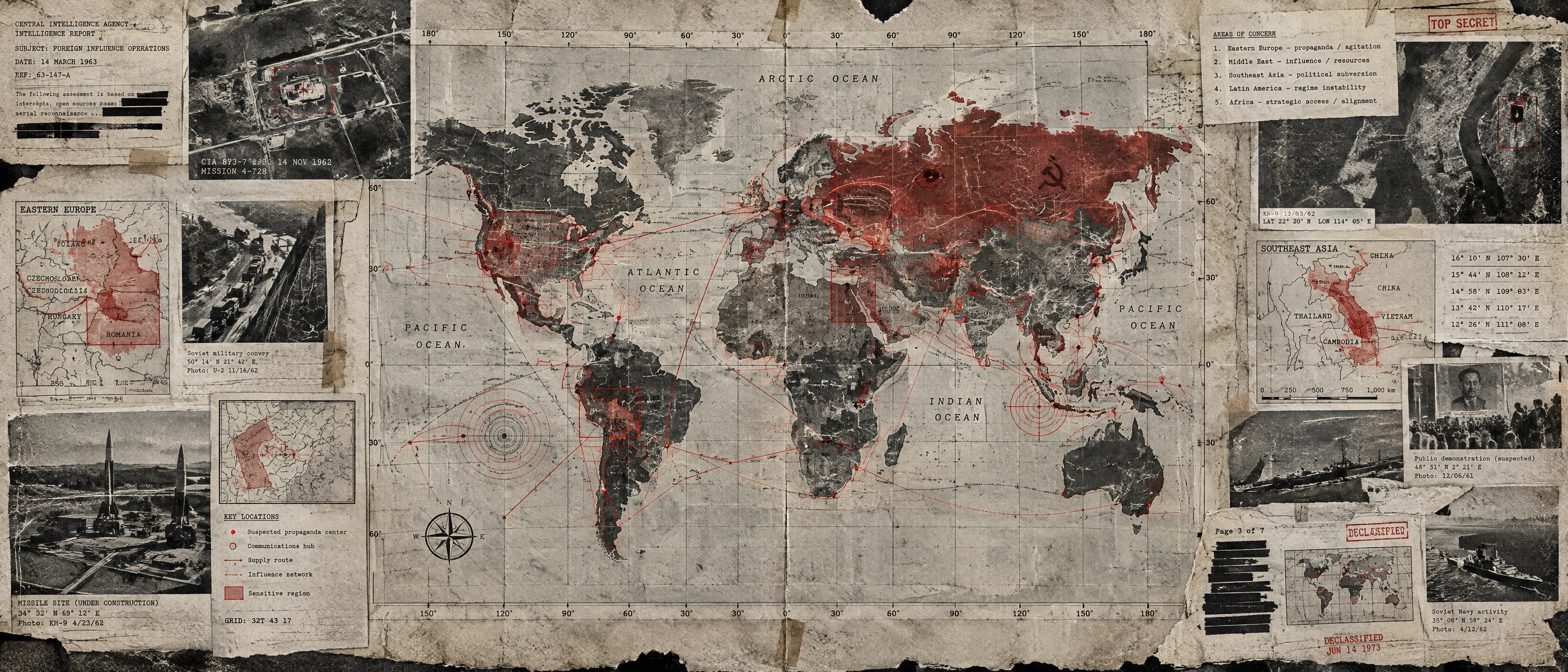
Name-calling:when the label comes before the evidence
Illustration, not an archive object
By the end: Tell a loaded label standing in for a claim from accurate naming of documented conduct, and check what is left when the label is removed. About 7 minutes.
What it is
Definition
Attach a loaded label so the audience rejects the target without checking the claim.
The tell
The insult does the work; evidence is optional or arrives later as decoration.
Not this
Accurate naming of a documented crime or office.
Name-calling attaches a loaded label to a person, group or idea so that the audience rejects the target without checking the claim.
The Institute for Propaganda Analysis named it as one of its seven devices in 1937, to help American students recognise domestic and Axis propaganda alike. The move itself is far older: Roman political invective ran on the same logic.
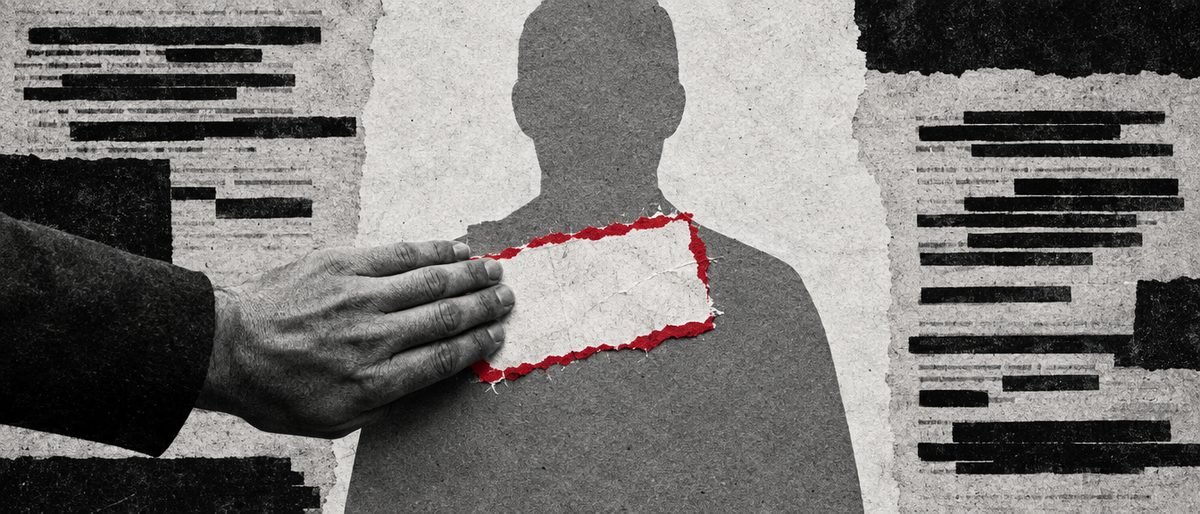
Illustration, not an archive object How it works
It works in three steps.
- Choose the word. The label already carries a verdict in the audience's vocabulary: "traitor", "vermin", "criminal", a wartime epithet for a nation. It names a category, not an act that can be checked.
- Substitute. The label stands in for the whole chain of what the target did and why it matters. Any evidence that appears comes afterwards and is picked to fit.
- Repeat. A short label can be chanted, printed or turned into a hashtag, and the people repeating it do much of the spreading.
The label only works if the audience already treats the category as bad. That is why it often borrows from fear of disease, dirt, animals and betrayal.
Why it works on people
- Categories. Gordon Allport (1954) argued that some labels have "primary potency": once a person is named by one, it crowds out everything else about them. Tajfel and Turner (1979) showed that people sort others into in-groups and out-groups quickly, so a label can turn rejection into a matter of loyalty.
- Dehumanising labels. Nick Haslam (2006) separates labels that deny people human traits, such as animal terms, from labels that deny them feeling. Kteily and colleagues (2015) linked rating an out-group as less "evolved" to support for hostile policies. This is correlational, and whether such language causes hostility or expresses it is still debated.
- Repetition. Hasher, Goldstein and Toppino (1977) found that repeated statements are rated more likely to be true, and Fazio and colleagues (2015) found this holds even when people know better.
Same device, different stakes (1 of 3)
Three real objects from the archive. The technique is the same in each; the setting, the choice the audience had and what was at stake are not.
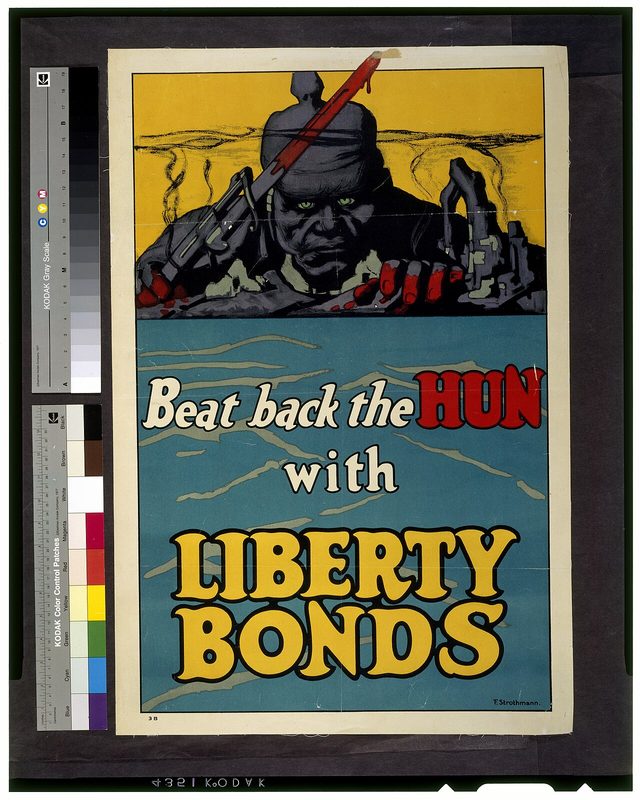
Beat Back the Hun with Liberty Bonds · 1918 · U.S. Treasury Department (Liberty Loan campaign) · Full recordContent note: Dehumanizing caricature of Germans as an ape-like figure, and bloody imagery. Notice: A bloody, ape-like caricature of a German soldier looms over a burning village under the single label 'THE HUN'. The epithet, which the archive traces to Kaiser Wilhelm II's 1900 speech, replaces any specific claim, and the ask is to buy Liberty Bonds. The sender is a government in wartime and the target is an enemy army.
Same device, different stakes (2 of 3)
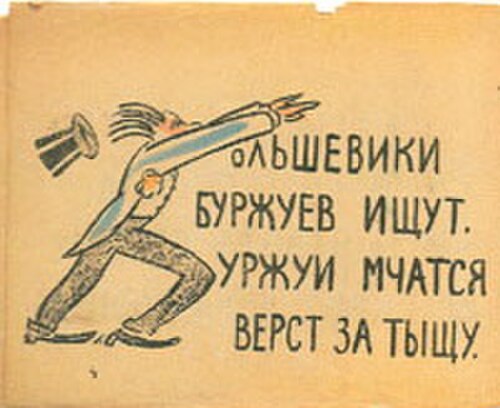
Mayakovsky, Советская азбука (Soviet Alphabet), letter Б (Moscow, 1919) · 1919 · Vladimir Mayakovsky (text and drawings), Moscow · Full record Notice: In a rhymed picture alphabet for children, a lanky figure in a top hat runs from 'the Bolsheviks', and the verse gives the verdict: 'bourgeois'. The target is a class, not a nation, and the setting is a children's book from the Russian Civil War year 1919, with no request for action. The record does not identify the publisher.
Same device, different stakes (3 of 3)
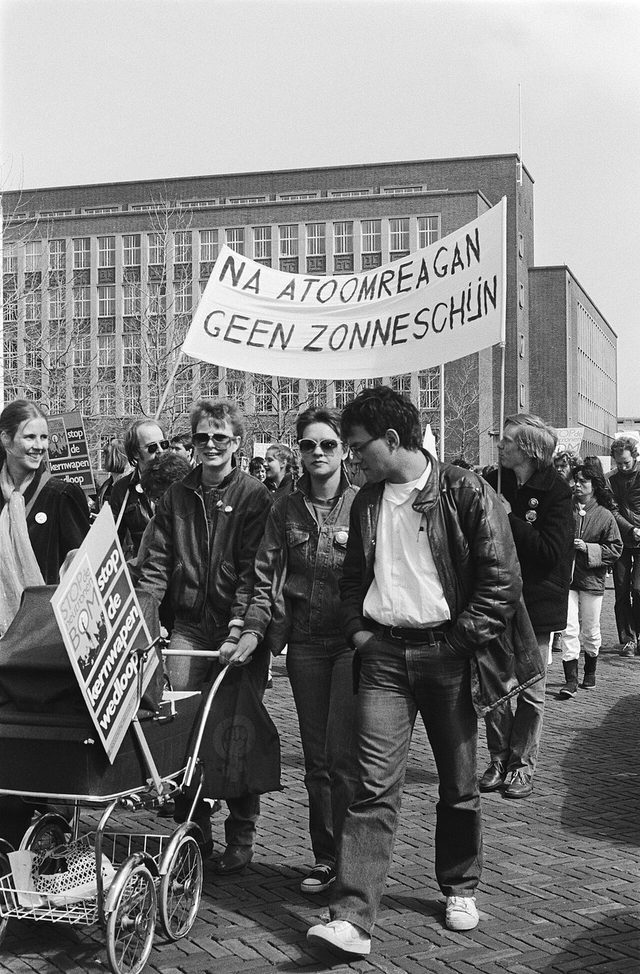
"Na atoomreagan geen zonneschijn": banner at a Dutch anti-nuclear demonstration · Apr 17, 1982 · Participants in an anti-nuclear-weapons demonstration, The Hague (photographed by Anefo) · Full record Notice: Marchers in The Hague carry a hand-lettered banner that fuses the US president's surname into 'atomic rain', turning a Dutch proverb into 'after atom-Reagan, no sunshine'. The sender is a crowd of citizens carrying an openly unsigned protest sign, not a state, and the target is a serving head of government. The archive scores the banner's wording, not the merits of either side's arms policy.
Check yourself
A newspaper describes a person who was convicted of fraud in court as a 'convicted fraudster'. Is that name-calling?
Show the answer
No. It is accurate naming of a documented fact. It would become name-calling if the label were applied to a category of people before or instead of evidence. Right. Strip the label out and a checkable claim remains: a conviction. A label applied consistently to documented conduct is a description.
Spot it in the archive
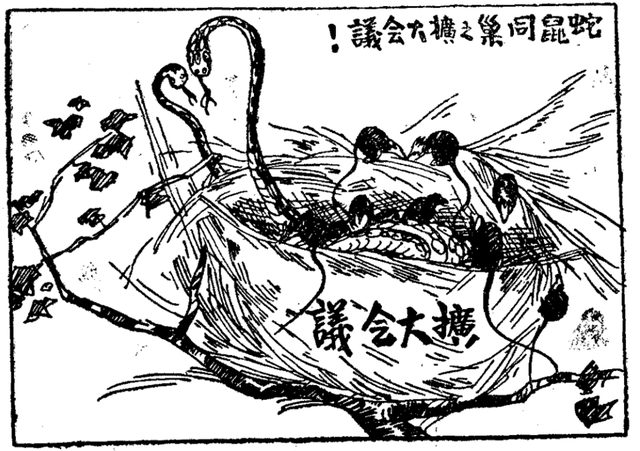
蛇鼠同巢之擴大会議 (Snakes and Rats in One Nest: The Enlarged Conference), cartoon from Xinsheng magazine no. 12 · 1930 · Xinsheng (《新聲》, 'New Voice') magazine, China; sponsor not stated on the Commons page · Full record A 1930 line cartoon from a Chinese magazine shows snakes and rats crowded into a nest that carries the name of a real political gathering, the Enlarged Conference. It offers nothing about who took part or what was decided. Which technique is doing the work?
Animal labels are pinned on a named gathering, and the drawing gives no evidence about its members or decisions. The label is the whole message. The record does not state the magazine's political affiliation, so it is a periodical's cartoon, not an official product.
Show the answer
Name-calling Animal labels are pinned on a named gathering, and the drawing gives no evidence about its members or decisions. The label is the whole message. The record does not state the magazine's political affiliation, so it is a periodical's cartoon, not an official product.
How to spot it, and what next
- Is the strongest word a category label that arrives before any specific act, date or document?
- Strip the label out. Can you still state what the target is accused of doing?
- Does the label compare people to animals, vermin, disease or dirt, or place them outside the nation?
- Would the sender use the same word for someone on their own side who did the same thing?
Read the full page: Name-calling in the technique library · All 116 examples in the collection