Content note. This page includes a clandestine Communist front page whose strike slogan uses a vulgar word, shown as printed; a photograph of SA men in uniform with swastika armbands beside a Hitler election poster (1932); a frame from a Japanese military propaganda film made in occupied Java, which its archive warns may reflect erroneous, biased or politically extreme ideas; and plebiscite verse presenting a Slovene woman as a possession to be defended. They are shown as issued; showing an item is not endorsing it.
What is plain folks propaganda?
Plain folks propaganda presents a speaker or a message as that of an ordinary person, so the audience trusts it as coming from one of its own. The tell is a borrowed sign of ordinariness (work clothes, dialect, slang, a kitchen table, a family) offered as the reason to believe the message. The full definition is on the plain folks technique page. This page gathers fourteen dated examples issued by governments, parties, armies and newspapers between 1789 and 2016.
What counts as plain folks, and what does not?
A person who really is a soldier, farmer or factory worker, speaking in their own register, is not doing plain folks. The technique begins when an issuer who is more powerful, wealthier or more distant from the audience (a state agency, a party, an army, a company, a candidate) stages the identity of an ordinary person so the message seems to come from inside the group. The question is not whether ordinary people appear in the picture. It is whether the ordinariness is doing the work of a reason.
Explain moreShow less
That line is applied the same way to every issuer here. A poster can show a worker and still make an argument on its merits; a leaflet can use slang and still be a plain statement. The tag does not say the cause was wrong or the claim false.
Plain folks propaganda in wartime: the soldier who talks like a mate
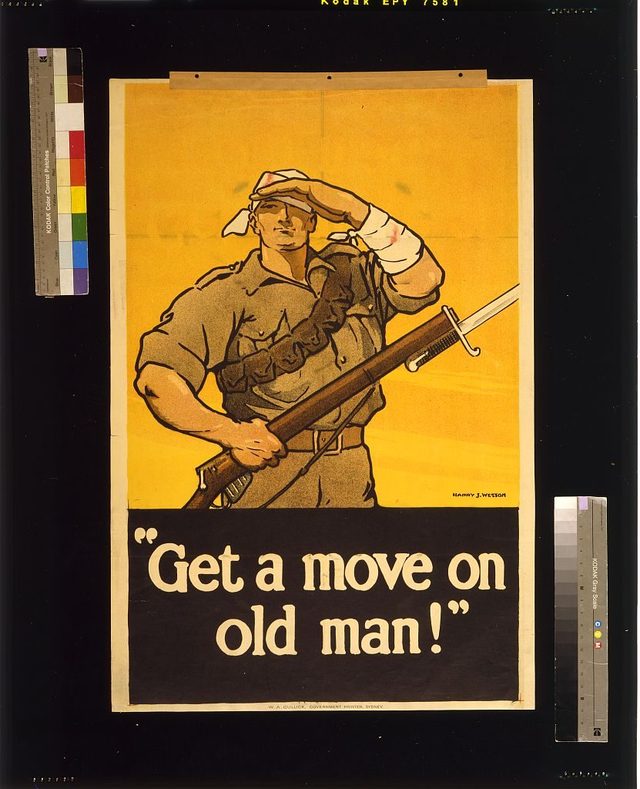
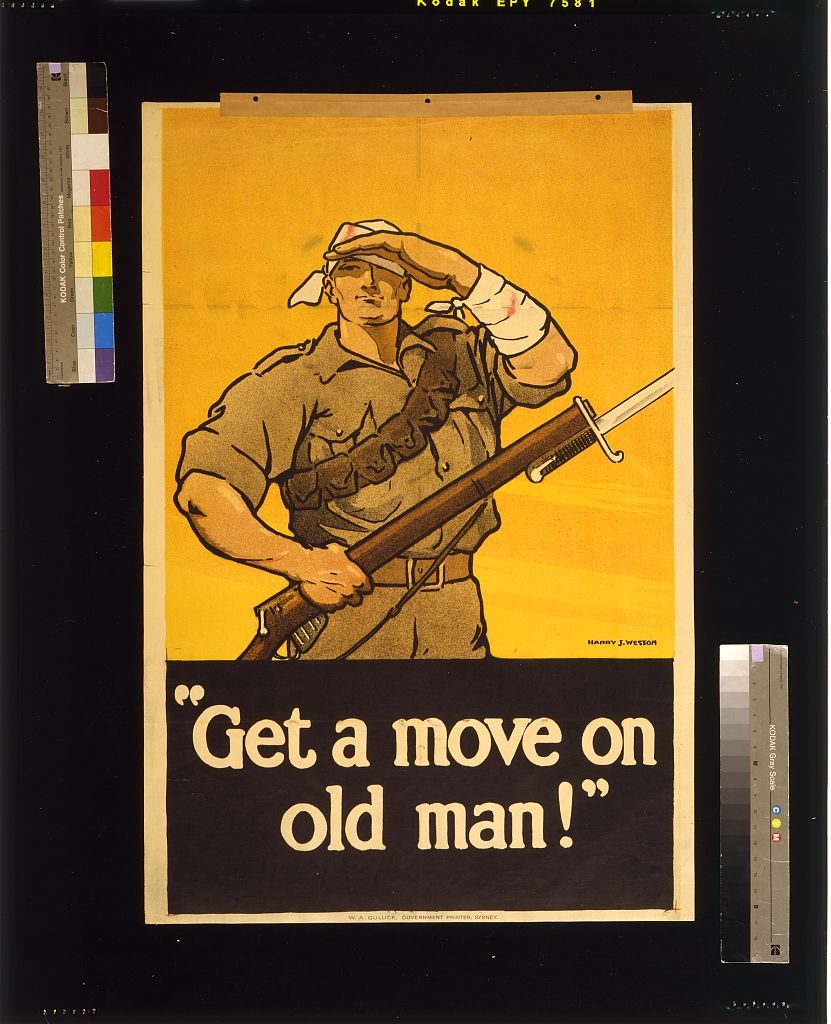
Australia, 1915. Harry J. Weston signed this recruiting poster, printed by W. A. Gullick, Government Printer, Sydney, and the Library of Congress dates it 1915. A shirt-sleeved soldier with a bandaged hand speaks to the viewer in quotation marks: "Get a move on old man!". The sign of ordinariness is the slang. Enlistment arrives as a mate's nudge rather than an official's argument.
Explain moreShow less
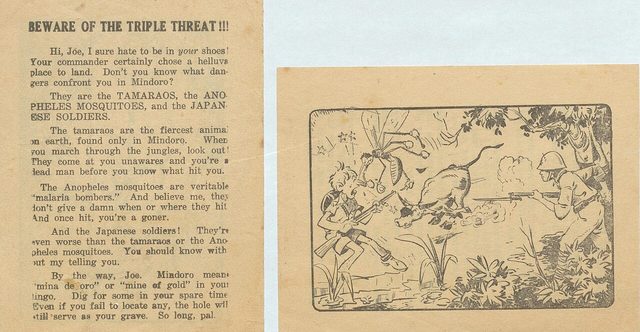
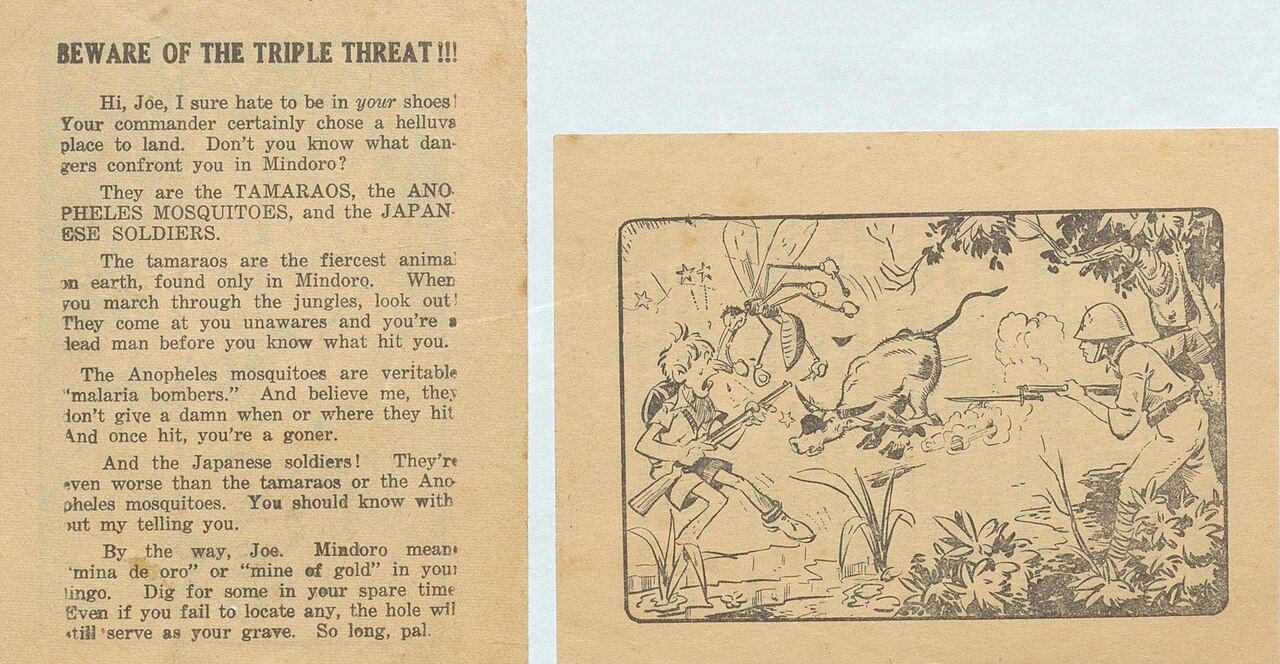
Japan, December 1944. This English-language leaflet for U.S. troops on Mindoro opens "Hi, Joe, I sure hate to be in your shoes!" and signs off "So long, pal." The Thomas Fisher Rare Book Library, which holds it, names no issuer; the archive attributes it to Japan because the text names "the Japanese soldiers" as a threat to the readers and because U.S. forces landed on Mindoro on 15 December 1944. The sign of ordinariness is a buddy's voice carrying a list of dangers that ends in a grave.
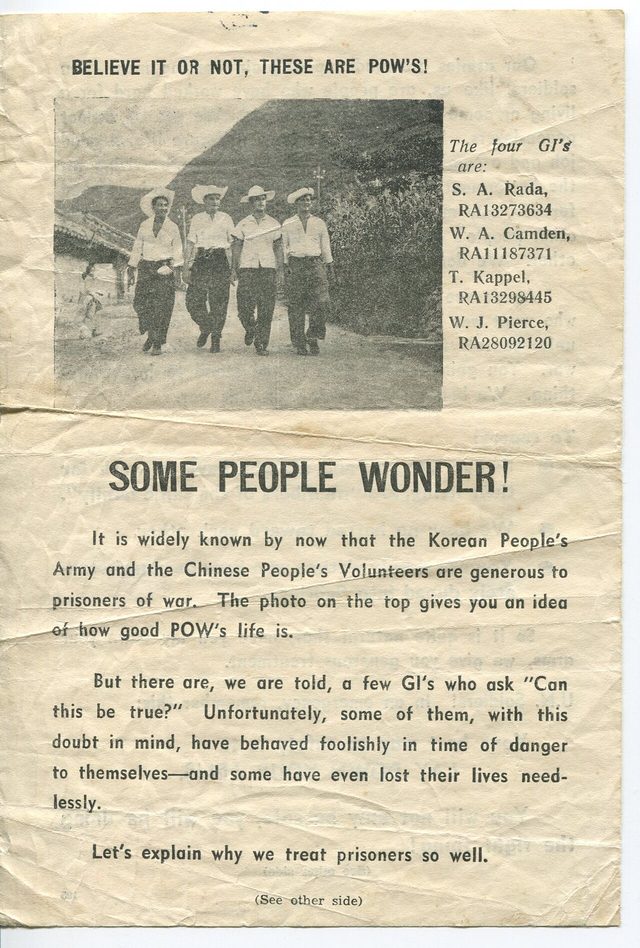
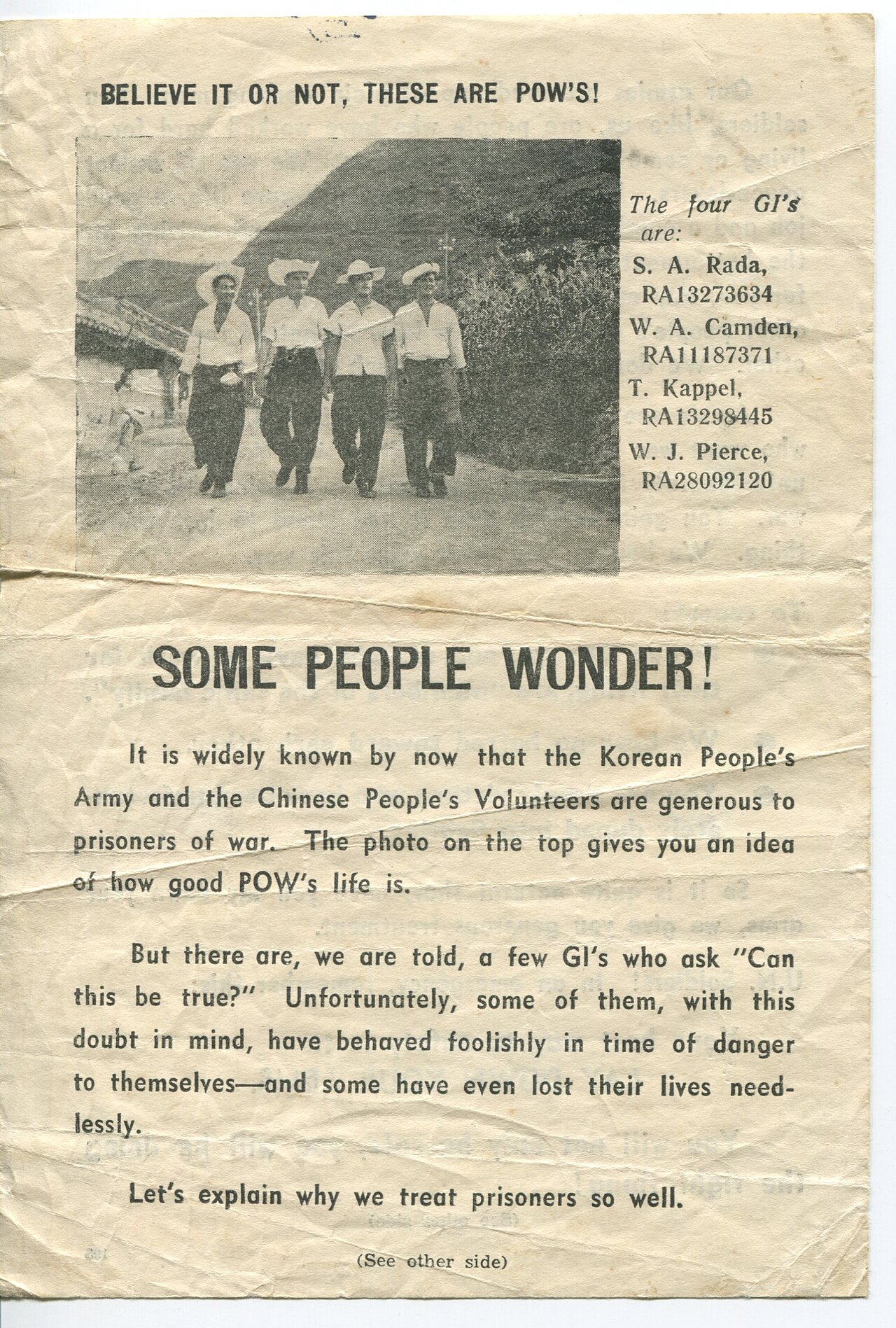
North Korea and China, Korean War. A leaflet in the names of the Korean People's Army and the Chinese People's Volunteers addresses United Nations soldiers. The sheet is undated, so 1951 is a placeholder within the 1950 to 1953 war. Its reverse reads: "Our armies are made up of plain working men." The sign of ordinariness is shared class: the readers are recast as fellow workers and the blame is placed on "a handful of U.S. billionaires".
Plain folks propaganda about workers and farmers
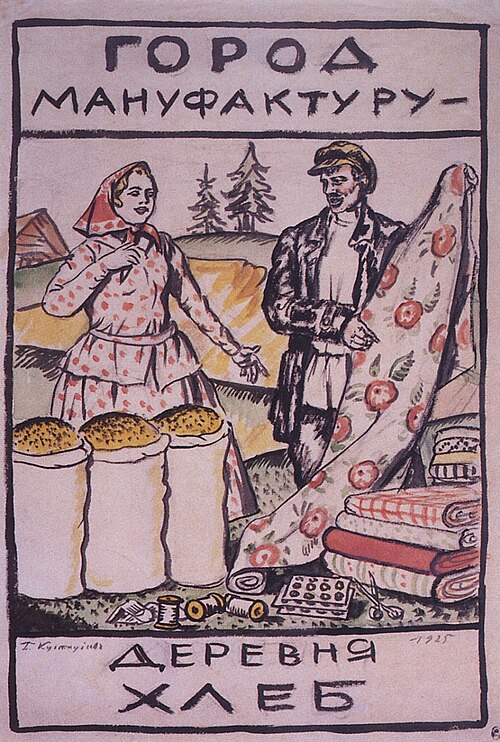
Soviet Union, 1925. Boris Kustodiev's signed design shows a smiling worker with patterned cloth and a smiling peasant woman with grain under the words "Town: manufactured goods" and "Village: bread". It illustrates the smychka, the link between town and countryside on which the New Economic Policy (1921 to 1928) rested. Two ordinary figures stand for a whole town and a whole village, and the swap looks simple and willing. Prices and taxes are outside the picture.
Explain moreShow less
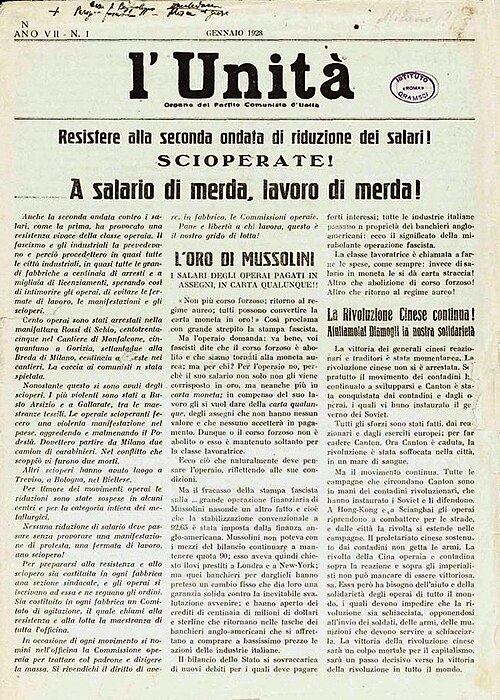
Italy, January 1928. This front page of l'Unità, organ of the Communist Party of Italy, was produced clandestinely after the 1926 exceptional laws banned the opposition press. It calls for strikes against a "second wave" of wage cuts in the idiom of the shop floor: "A salario di merda, lavoro di merda!" The sign of ordinariness is the workers' own coarse speech, used by a party newspaper to sound like the people it addresses.
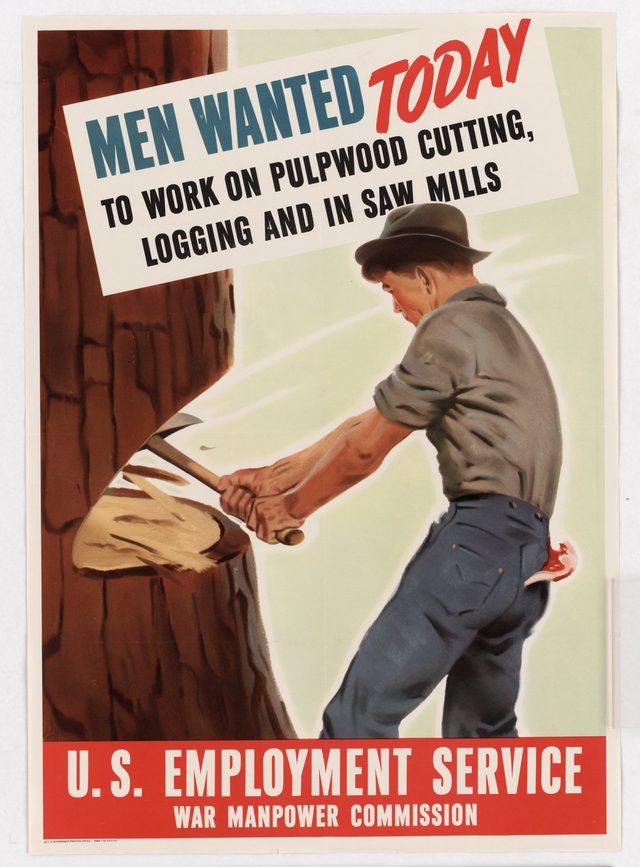
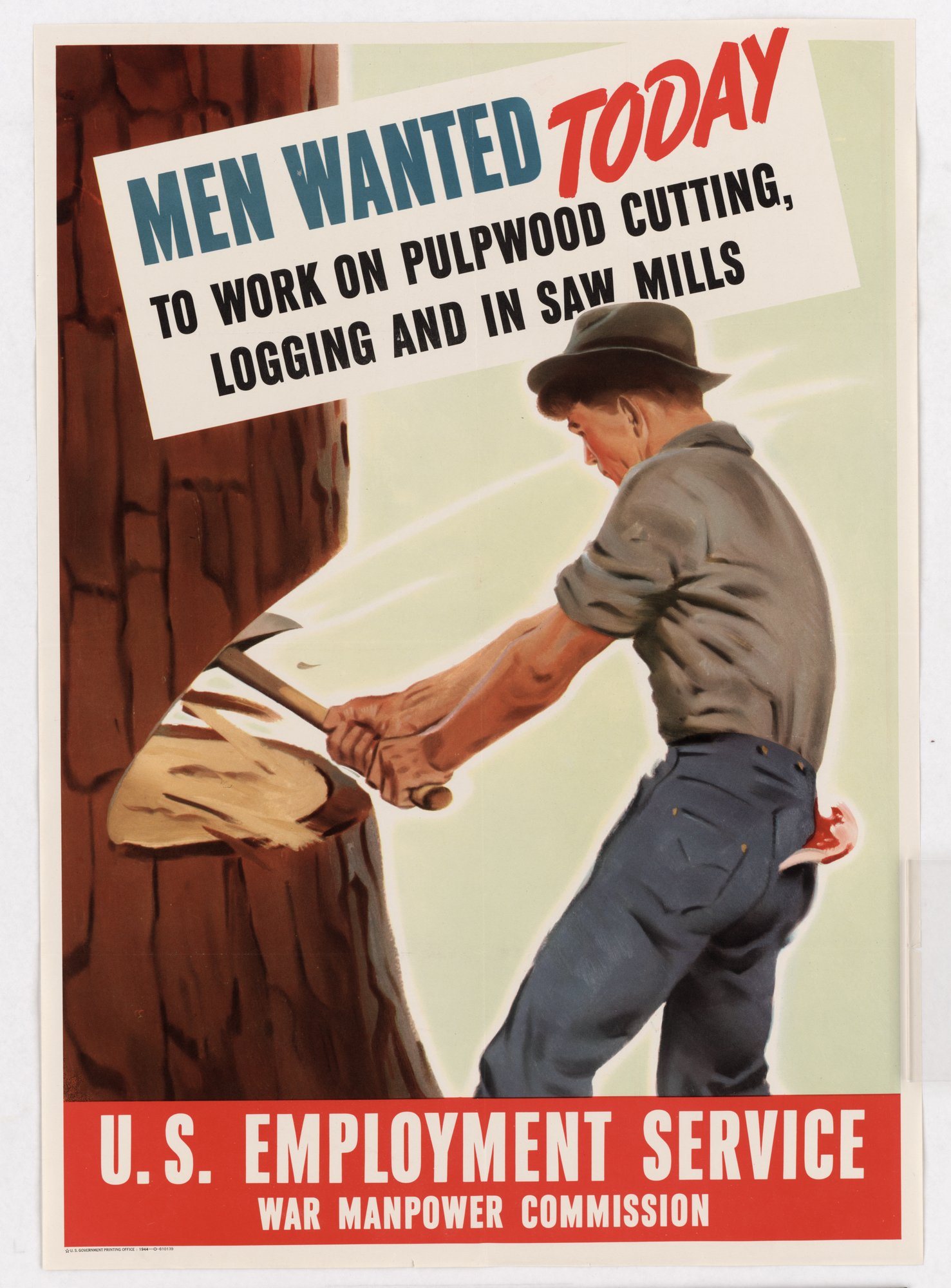
United States, 1944. The U.S. Employment Service and the War Manpower Commission issued this recruiting poster, imprinted by the Government Printing Office in 1944. A lumberman in a felt hat and work clothes swings an axe under the words "MEN WANTED TODAY TO WORK ON PULPWOOD CUTTING, LOGGING AND IN SAW MILLS". The sign of ordinariness is the working man himself, who stands for the job. The poster states no pay or conditions.
Plain folks propaganda at home: women, households and couples
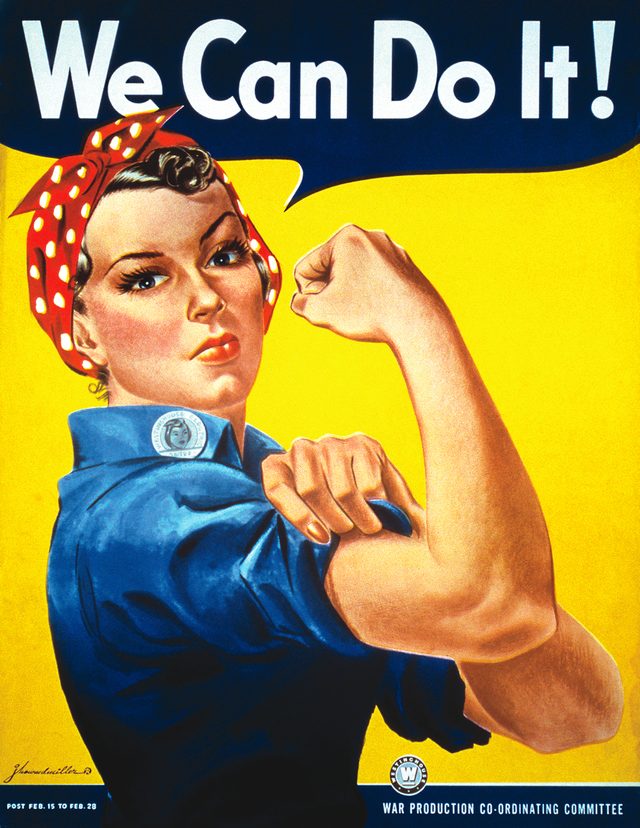
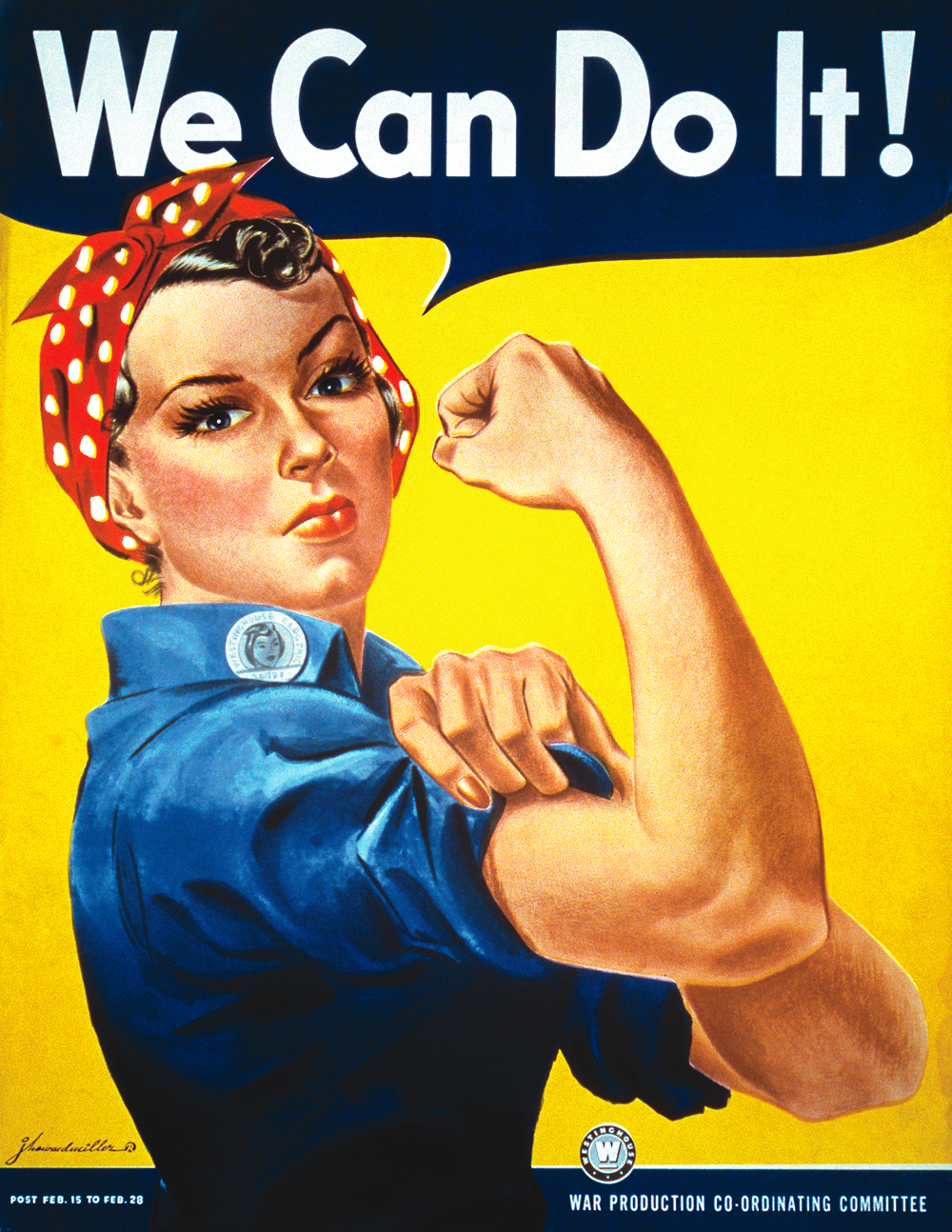
United States, 1943. J. Howard Miller's "We Can Do It!" was issued by the Westinghouse Electric company with the War Production Co-ordinating Committee, and the sheet is marked for posting from 15 to 28 February. A woman in a red bandana flexes her arm. It was an internal motivational poster for employees, adopted as an emblem of women's wartime labor later. The sign of ordinariness is the worker's own face and pose delivering management's message.
Explain moreShow less
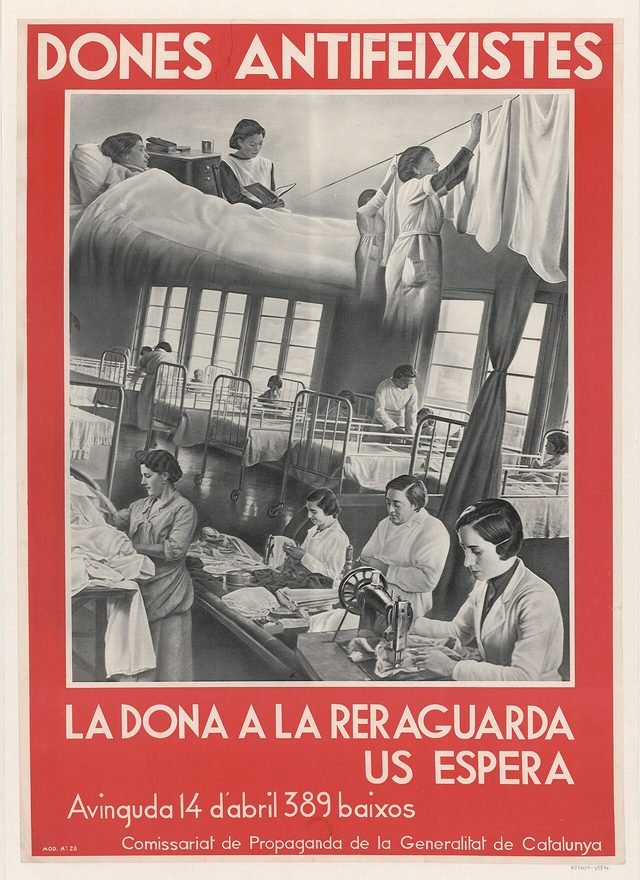
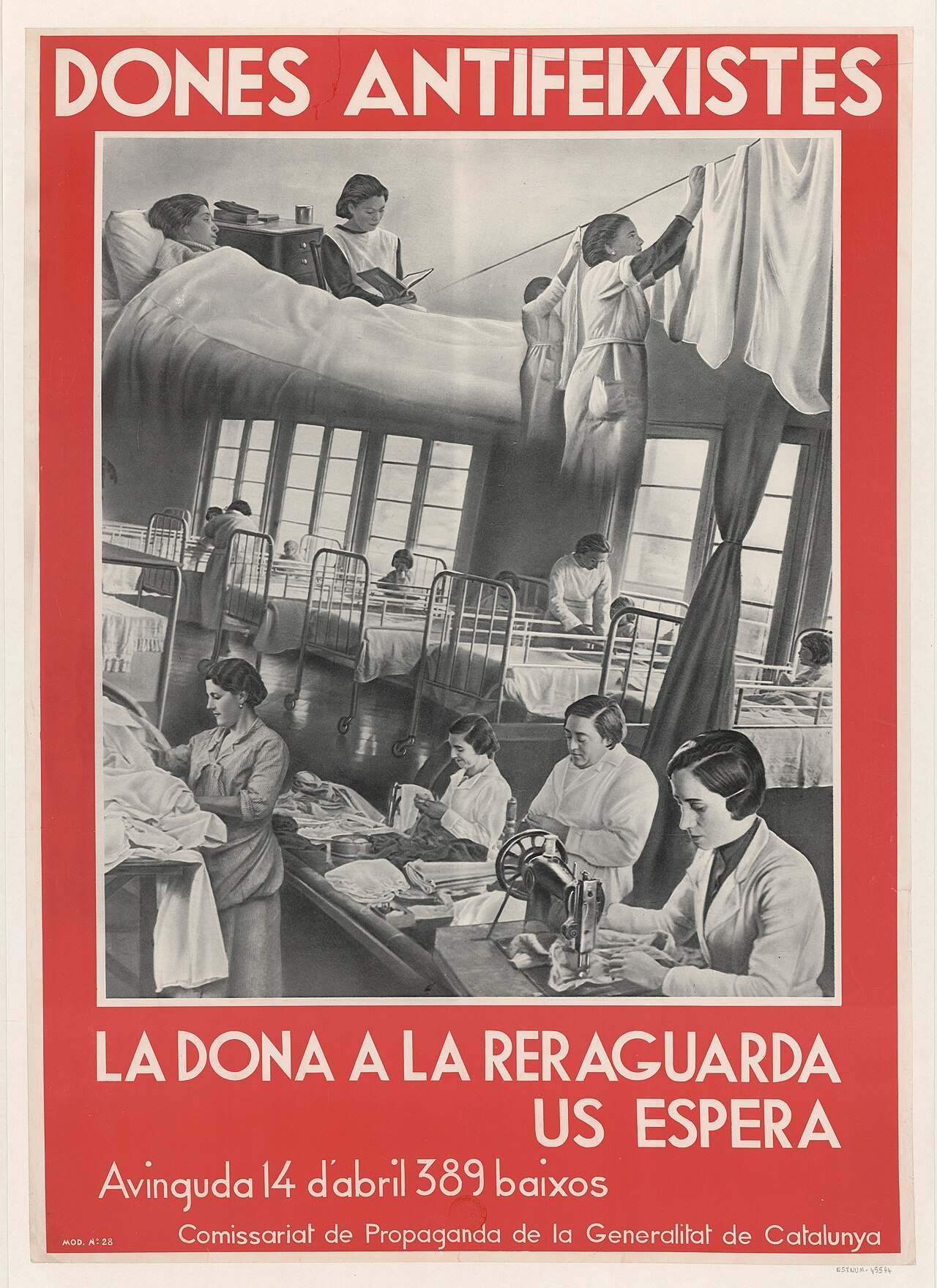
Catalonia, 1937. The Comissariat de Propaganda of the Generalitat de Catalunya issued this poster, headed "DONES ANTIFEIXISTES" and "LA DONA A LA RERAGUARDA US ESPERA", the rear being the zone behind the fighting. A photomontage shows women sewing at machines beside a hospital ward. The sign of ordinariness is domestic care: recruitment into war work is pictured as the orderly, familiar labour of the household.
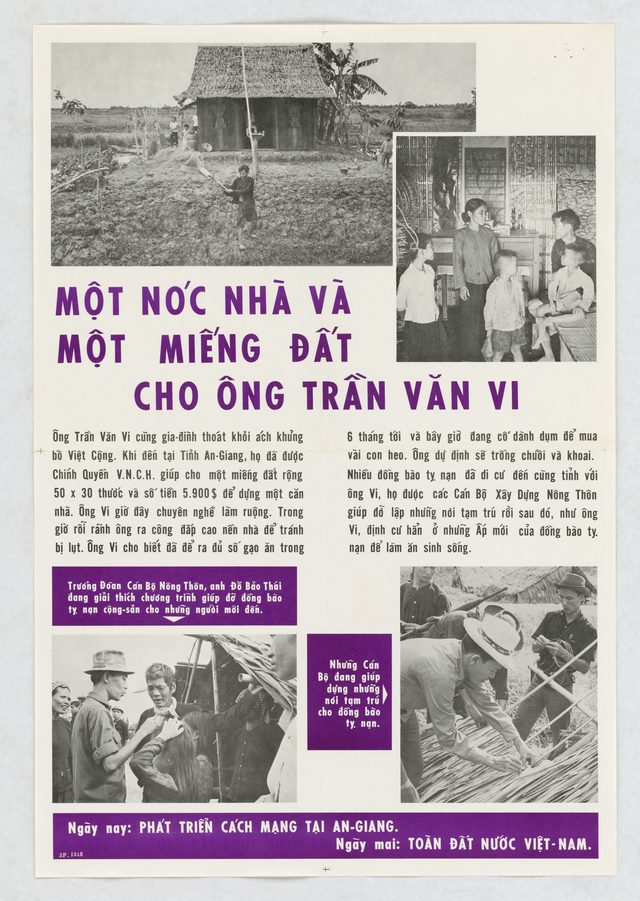
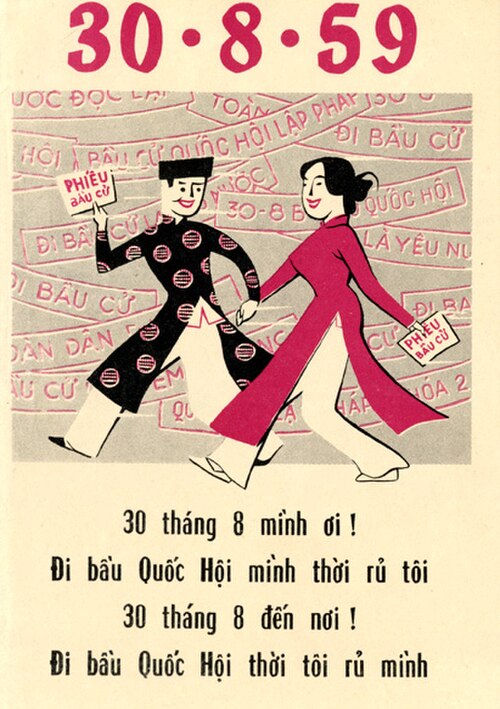
South Vietnam, 1959. The Government of the Republic of Vietnam issued this flyer for the National Assembly election held on 30 August 1959. A young couple walk hand in hand, each holding a ballot, over a four-line couplet that begins "30 tháng 8 mình ơi!" ("30 August, my dear!", in the archive's literal rendering). The state speaks in the teasing voice of husband and wife inviting each other to vote. This entry records the flyer's appeal and does not assess the election.
A borrowed village voice
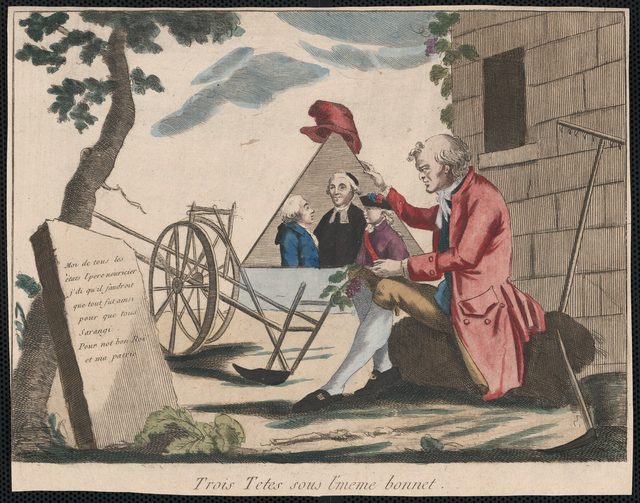
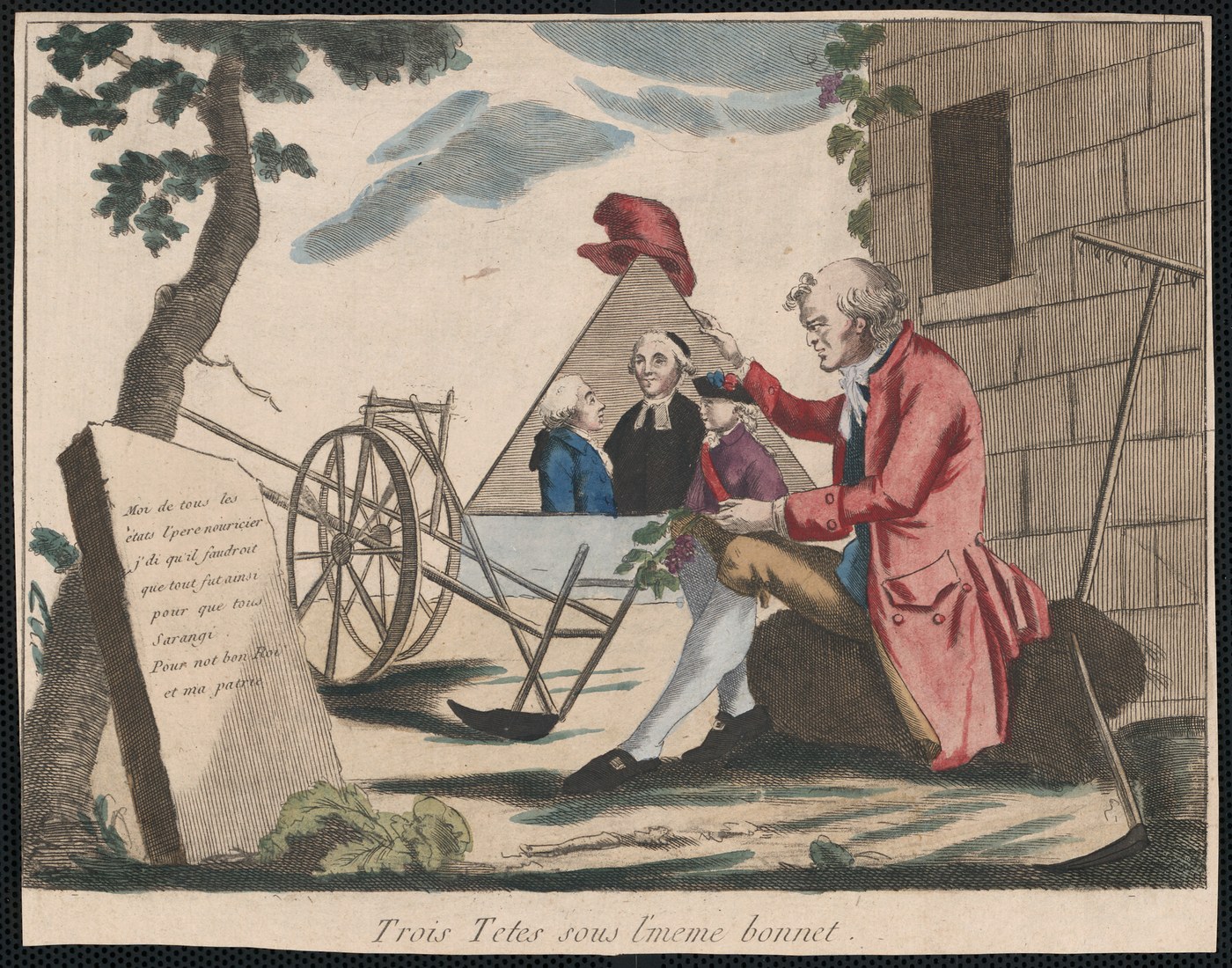
France, 1789. An anonymous print, held by the Library of Congress and catalogued there as 1789 in brackets, shows a rustic among a plough, a rake and a scythe raising a red cap over a nobleman, a cleric and a young commoner. His words are in country dialect ("j'di", "not' bon Roi") and recommend the three orders' union "for our good King and my country". The likely context is the 1789 debate over the Estates-General; the sheet names no publisher or artist. The sign of ordinariness is the homespun speech.
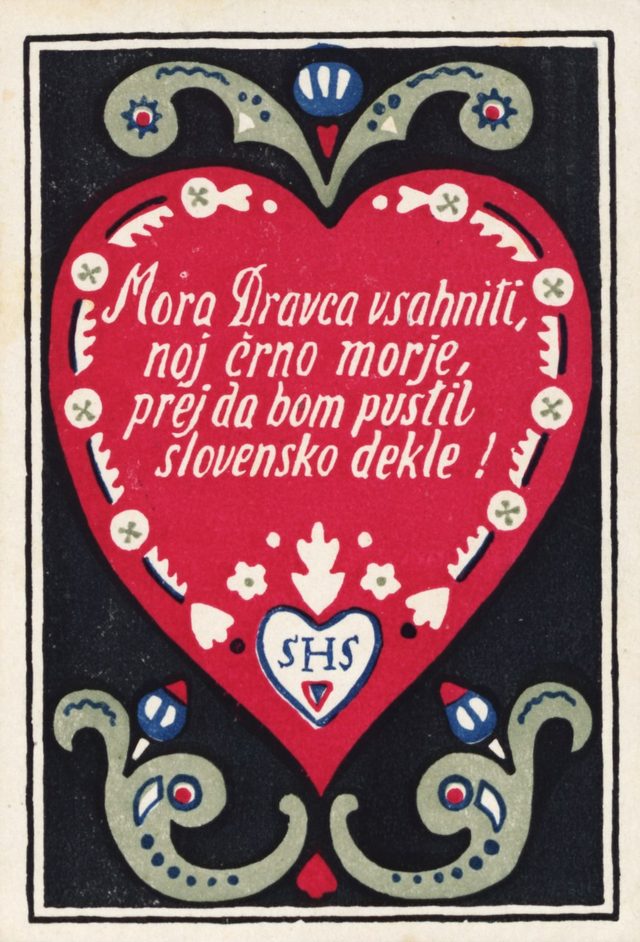
Content note: Plebiscite propaganda verse presenting a Slovene woman as a possession to be defended; no depiction of violence. This object is shown as it was published. Why 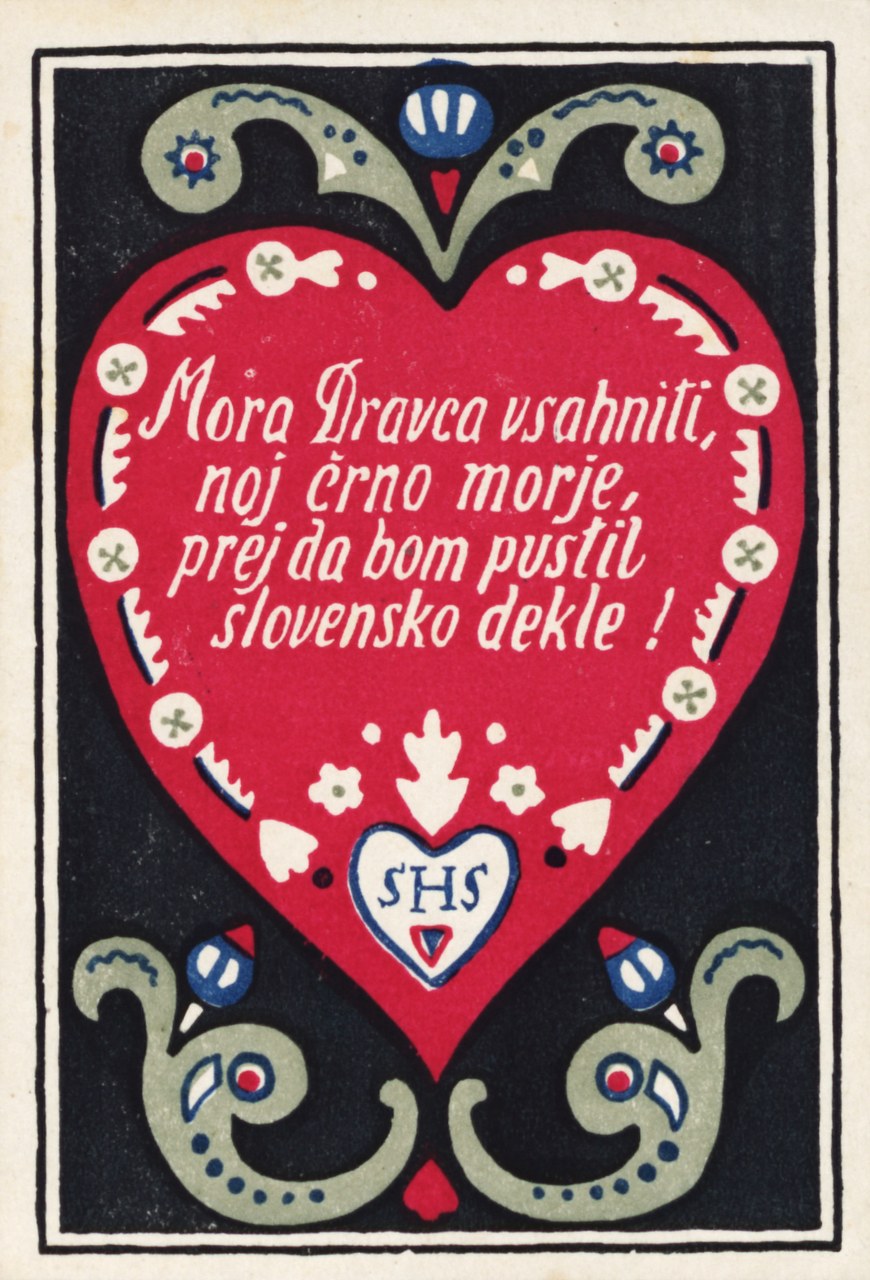
Content note: Frame from a Japanese military propaganda film made in occupied Java; the archive warns the films may reflect erroneous, biased or politically extreme ideas. This object is shown as it was published. Why 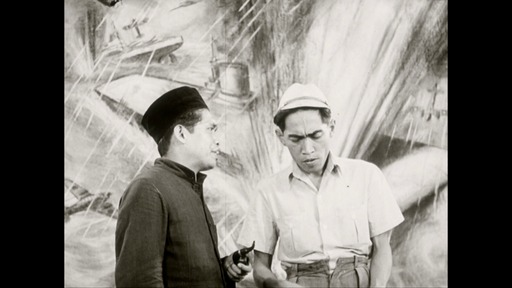
Explain moreShow less
Carinthia, 1920. The National Council for Carinthia issued this postcard on the Yugoslav side of the Carinthian plebiscite campaign. In a folk-art heart, a first-person dialect vow reads "Mora Dravca vsahniti, noj črno morje, prej da bom pustil slovensko dekle!", rendered in the entry as "The Drava must dry up, and the Black Sea, before I shall leave a Slovene girl!" A small "SHS" monogram marks the state. The sign of ordinariness is a peasant voice carrying a territorial claim. The Zone A vote on 10 October 1920 went 59.1 percent for Austria and 40.9 percent for the Kingdom of Serbs, Croats and Slovenes (Wikipedia, "Carinthian Plebiscite").
Java, about 1944. This frame comes from a seven-minute film made for the propaganda department of the Japanese military administration in the Dutch East Indies. Two Indonesian men, a visitor and a gallery attendant, discuss the strength of the American fleet before a painted battle. The Netherlands Institute for Sound and Vision, which holds the film, states that the conversation is staged. The sign of ordinariness is the pair of ordinary local speakers delivering the message in place of an officer.
The leader or party as one of the people
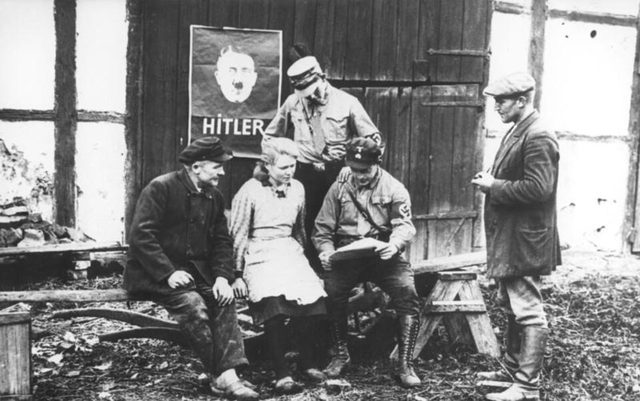
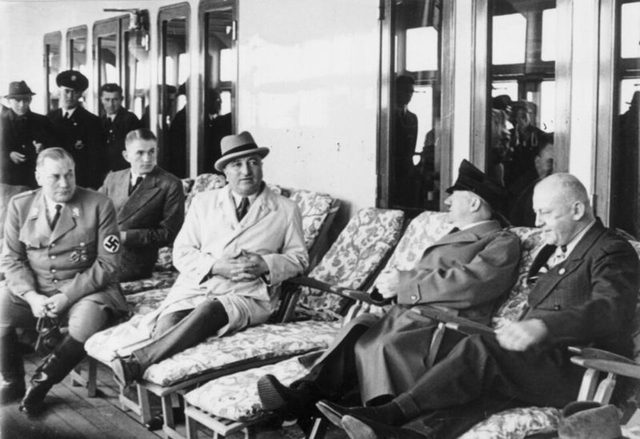
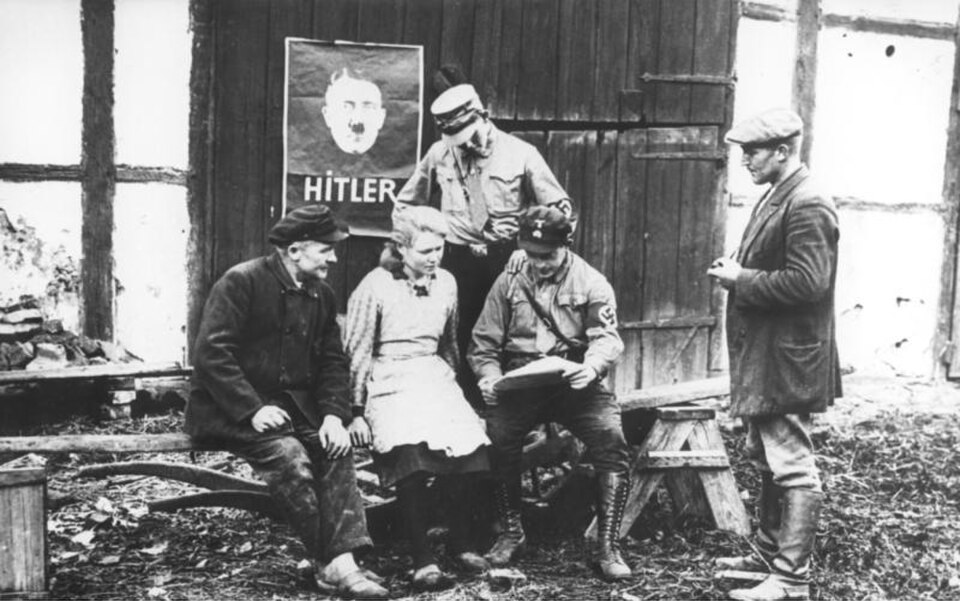
Germany, June 1932. A Federal Archive photograph from the NSDAP campaign for the July 1932 Reichstag election shows two SA men and three civilians outside a half-timbered barn in Mecklenburg, beside a poster of Hitler's face. The archive's original caption is party publicity text and speaks of preparing even the smallest farm for "Stimmenfang" (vote-catching). The sign of ordinariness is the farmyard, which presents a uniformed party as a guest at an ordinary household.
Explain moreShow less
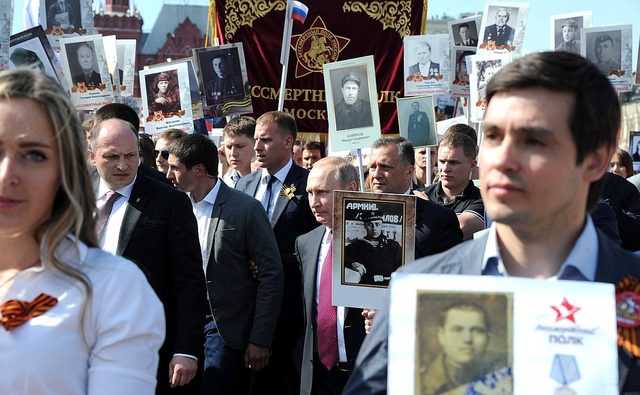
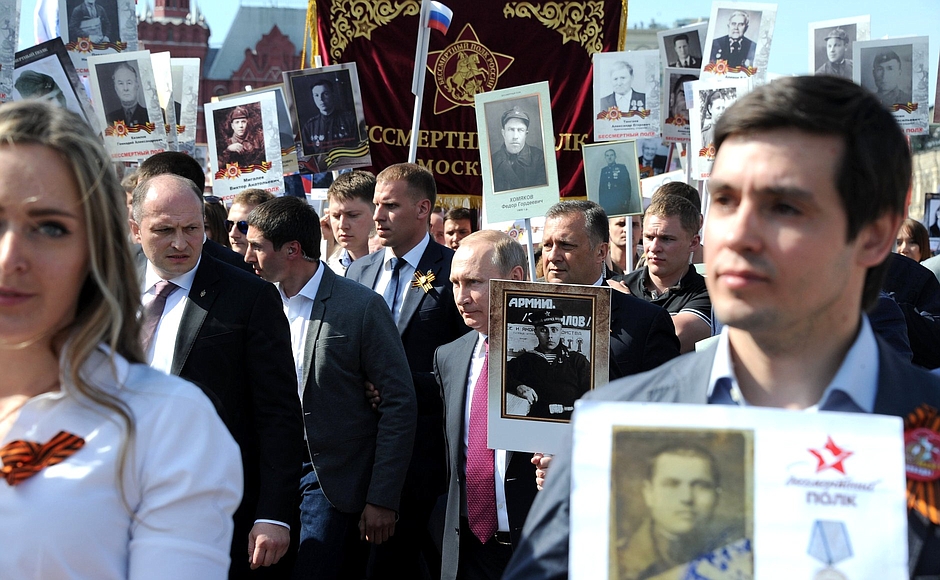
Russia, 9 May 2016. The Presidential Press and Information Office photographed President Putin walking in the Moscow Immortal Regiment column with a framed portrait. The Kremlin's caption, as quoted on the Commons file page, says he carried a portrait of his father, a frontline veteran. The march began as a local initiative in Tomsk in 2012. The sign of ordinariness is the private family portrait, carried among marchers with their own. The archive notes that both the family-memory element and a state-endorsed national narrative of the war are visible in the frame.
How does the same technique look on different sides?
Every issuer above uses the same device: a sign of ordinariness stands in for a reason. Governments used it for recruiting (Australia 1915, the United States 1944), for elections (South Vietnam 1959), and for commemoration (Russia 2016). Parties used it in opposition, as the clandestine Italian paper did, and in campaigns, as the 1932 German photograph shows. Armies used it on the enemy: the Japanese leaflet imitates an American soldier, and the Korean War leaflet addresses opposing soldiers as fellow workers. A company used it on its own staff. Scale and context differ: an anonymous 1789 print, a single postcard and a state film unit are not comparable in reach or authority, and the entries make no claim about effect. The form of the claim is the same: trust the message because the speaker is like you.
How do you spot plain folks propaganda?
- A costume or setting does the arguing. Overalls, an axe, a barn, a kitchen: ask what the picture proves besides who is standing in it.
- The voice is borrowed. Slang, dialect or a pet name ("mate", "pal", "my dear") from an issuer that is not part of the group it imitates.
- The speaker has more power than the audience. A state, party, army, company or candidate presents itself as a peer.
Show all 5Show fewer
- Shared class or identity replaces the case. "We are all workers" or "one of us" appears where evidence or terms (pay, prices, conditions) would be.
- Someone else is cast as the outsider. The ordinary figure is often set against a distant elite, a profiteer or an enemy.
Browse more plain folks examples
The grid below shows more plain folks objects from the collection, each with its issuer, date, transcription and rights basis. For the definition and mechanisms, read the plain folks technique page. For other techniques and sides, see propaganda examples, types of propaganda and propaganda posters.
Sources and further reading
Sources and rights
Items on this page come from the U.S.
Items on this page come from the U.S. National Archives, the Library of Congress, the Federal Archives of Germany, the Netherlands Institute for Sound and Vision, the Dr. Franc Sušnik Central Library of Carinthia (through Europeana), Michigan State University Archives, the Thomas Fisher Rare Book Library, the Presidential Press and Information Office and the Istituto Gramsci, directly or through Wikimedia Commons. Each object page gives its rights basis: U.S. government works and older prints are public domain, and some scans carry open licences such as CC BY 4.0. The 1937 Catalan poster is hosted on a stated public-domain tag whose U.S. status has not been cleared. Transcriptions are verbatim, and translations are marked as such on the object pages.