Content note. Several items below show racist, antisemitic or ethnic slurs, caricatures of religious figures and an ape-like drawing of enemy soldiers, and one typed poem uses vulgar insults. They are shown whole, as issued, because the label is the evidence. Showing an item is not endorsing it.
What is name-calling propaganda?
Name-calling propaganda attaches a loaded label to a person, group or idea so that the audience rejects the target without examining the evidence. The tell is that the insult does the work and any proof is optional or arrives later as decoration. This page gives fourteen dated examples from twelve countries, issued by governments, parties, magazines, a military unit and anonymous makers between 1895 and 2008, each with the exact label and what it replaces. For the full definition and the research behind it, see the name-calling technique.
What counts as name-calling (and what does not)?
A label is only part of an argument when it names something that can be checked. Naming an office holder by title, or a defendant by a documented verdict, describes a fact. The technique starts when the word stands in for the case: it assigns the target to a category the audience already rejects, such as "traitor", "Hun" or "stooge", and no act, date or source is offered.
Explain moreShow less
The line is about how the message is built, not about who is right on the underlying dispute. A label can be partly true and still work as name-calling. Each example is tagged for what the item does on the page.
Which labels were used against enemies in war?
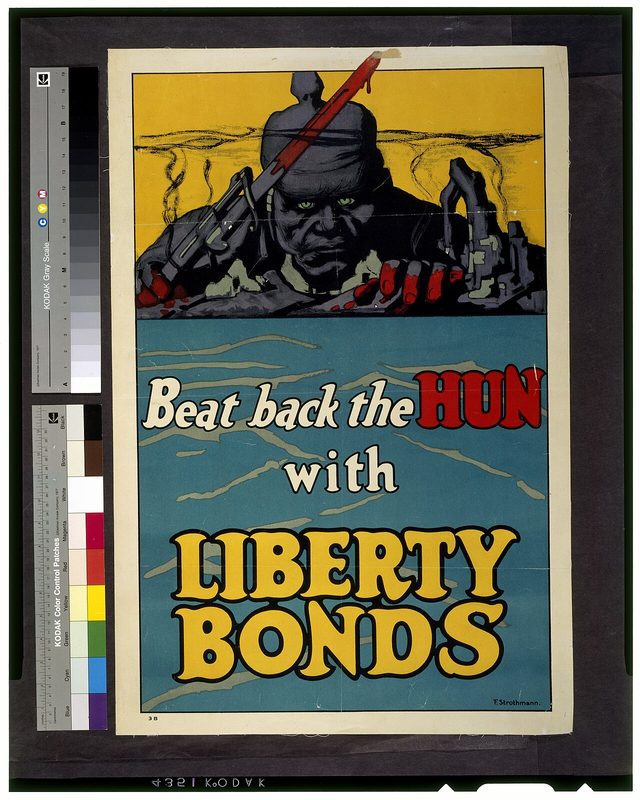
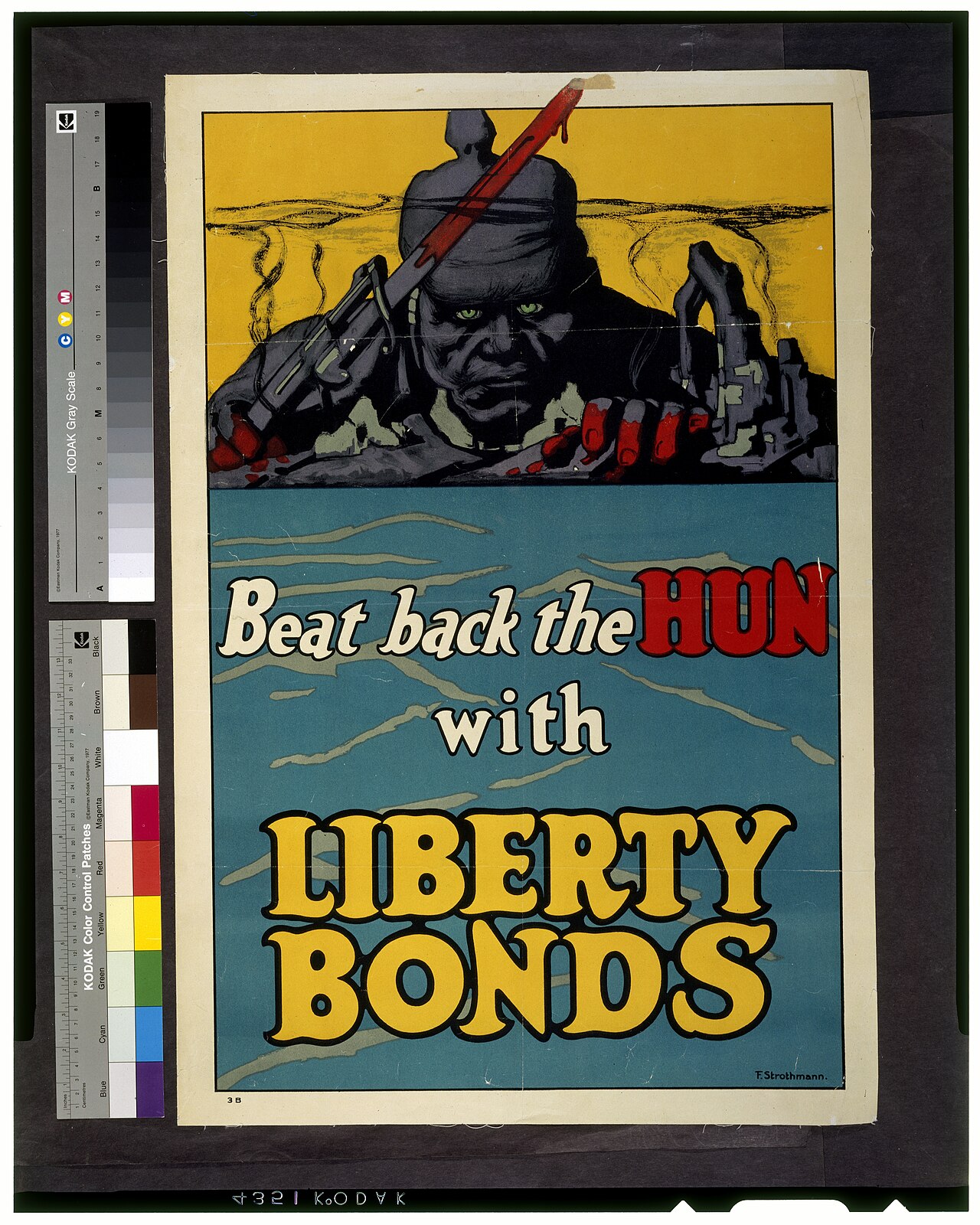
United States, 1918. Frederick Strothmann drew this Liberty Loan poster for the U.S. Treasury Department. It sets the single epithet "THE HUN." over an ape-like figure and a burning village, and asks readers to "Beat back the HUN with LIBERTY BONDS". The label, which Allied propaganda took from Kaiser Wilhelm II's 1900 speech urging troops to fight like the Huns of old, replaces any named place, date or act. Read the technique: name-calling.
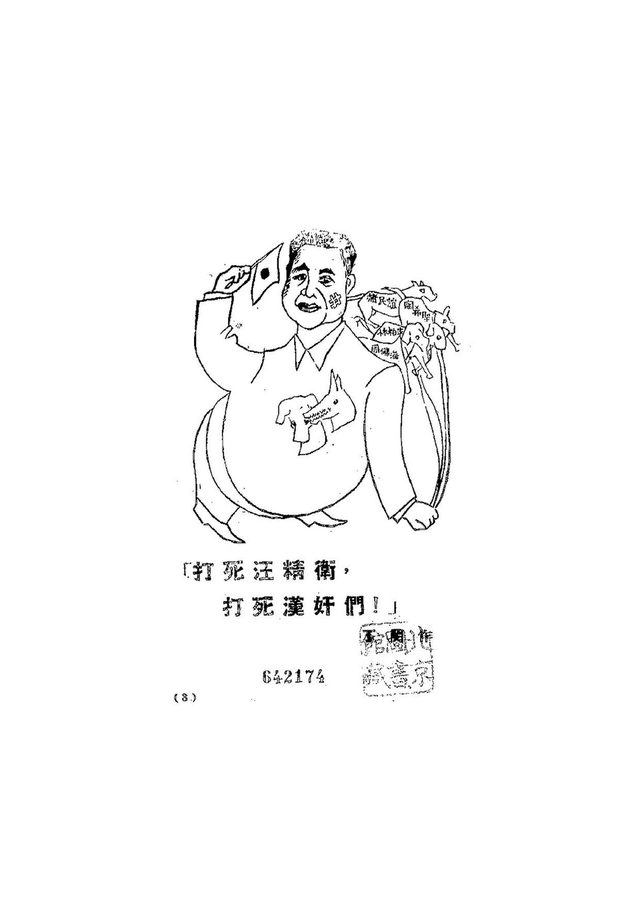
Content note: Caricature of a named political leader as an obese figure carrying animals labelled with associates' names, with a slogan calling for his death. This object is shown as it was published. Why 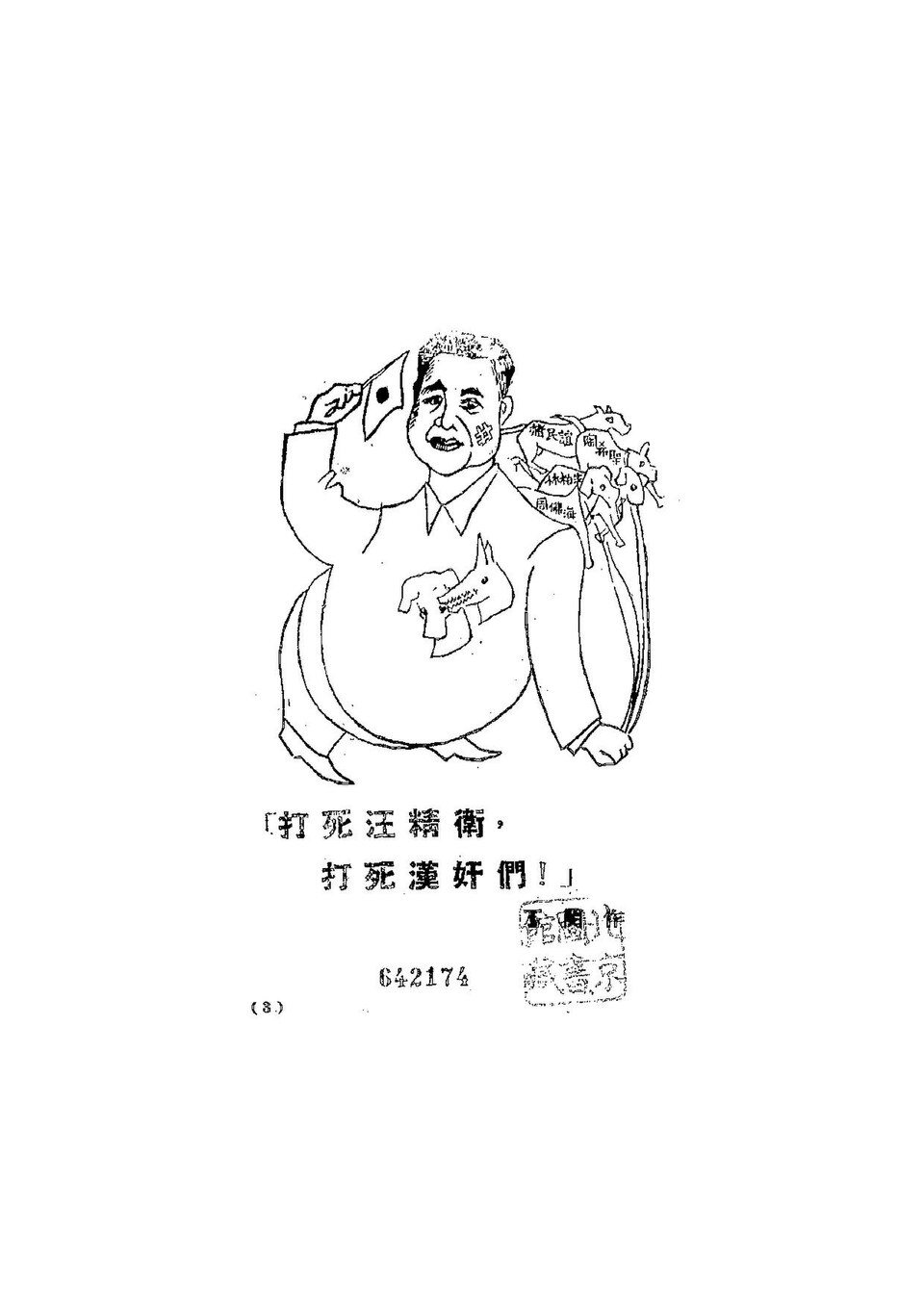
Content note: Ethnic slur against Japanese people in the headline. This object is shown as it was published. Why 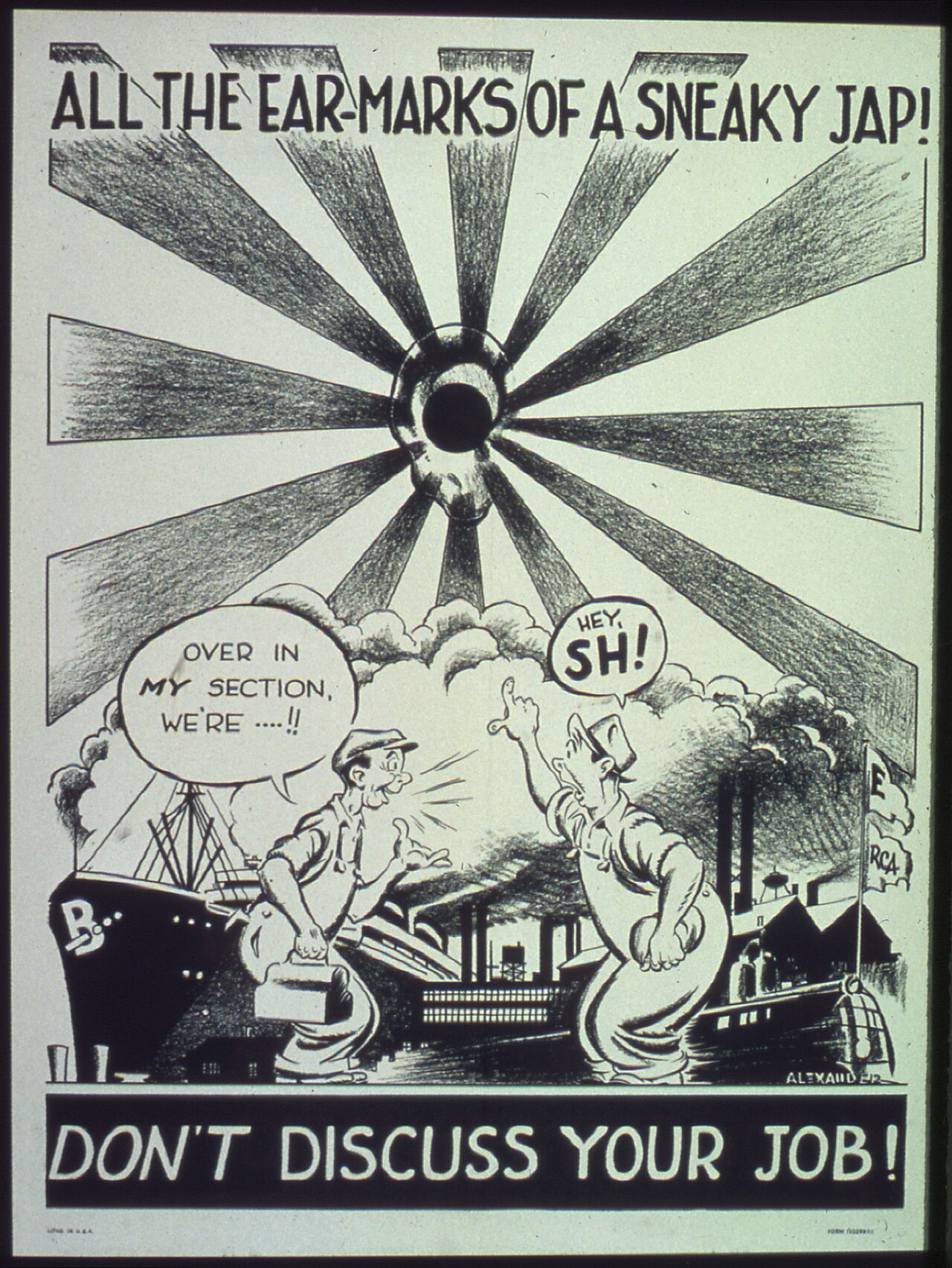
Explain moreShow less
China, 1939. A Nationalist-government propaganda section in Zhejiang printed this cartoon in its Kangweijun Pictorial. Wang Jingwei is drawn as a fat figure with a small Japanese flag held over his face, carrying four animals labelled with the names of his associates, under the slogan "Beat Wang Jingwei to death, beat the traitors to death!" Wang did head a Japanese-backed government in Nanjing from March 1940, so the dispute was real, but the page conveys "traitor" by labels and symbols, not by an account of what each man did.
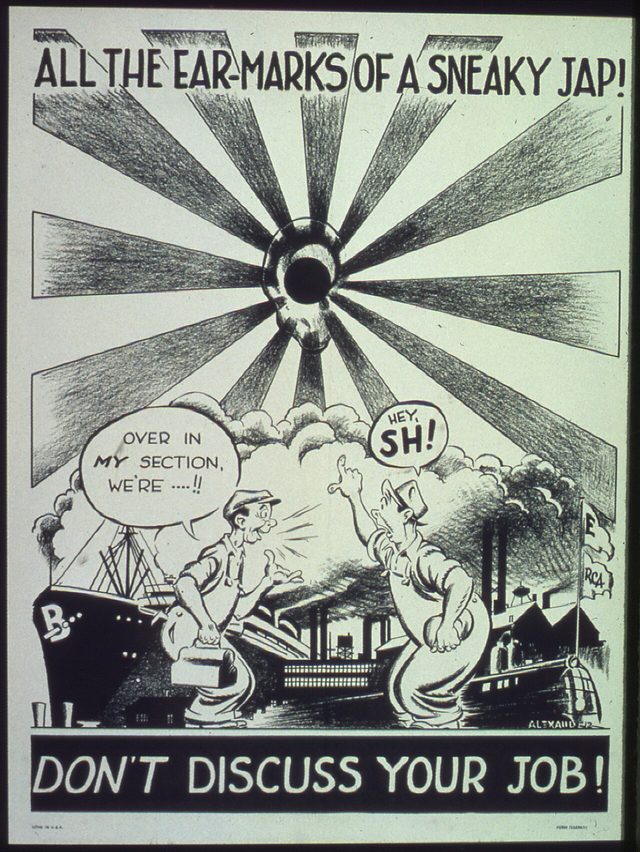
United States, 1941 to 1945. This plant-security poster, signed Alexander and held in a U.S. wartime poster file, shows a shipyard scene, with one worker hushing another, under the headline "ALL THE EAR-MARKS OF A SNEAKY JAP!" Beneath it runs the line "DON'T DISCUSS YOUR JOB!" The headline attaches a slur and a trait to a whole nationality, and the label carries the warning. The National Archives dates it only to those years. On 19 February 1942 Executive Order 9066 led to the forced removal and incarceration of about 120,000 people of Japanese ancestry, most of them U.S. citizens (see the entry's own note).
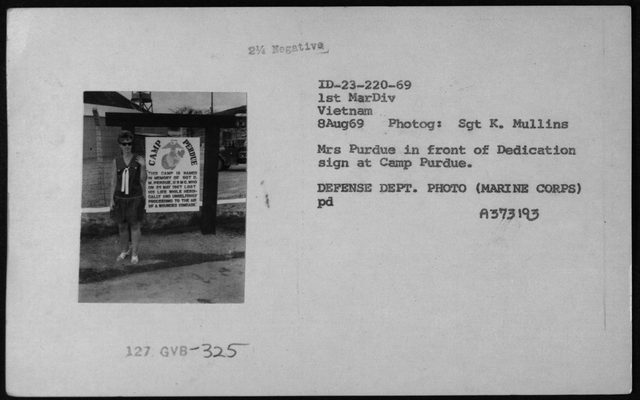
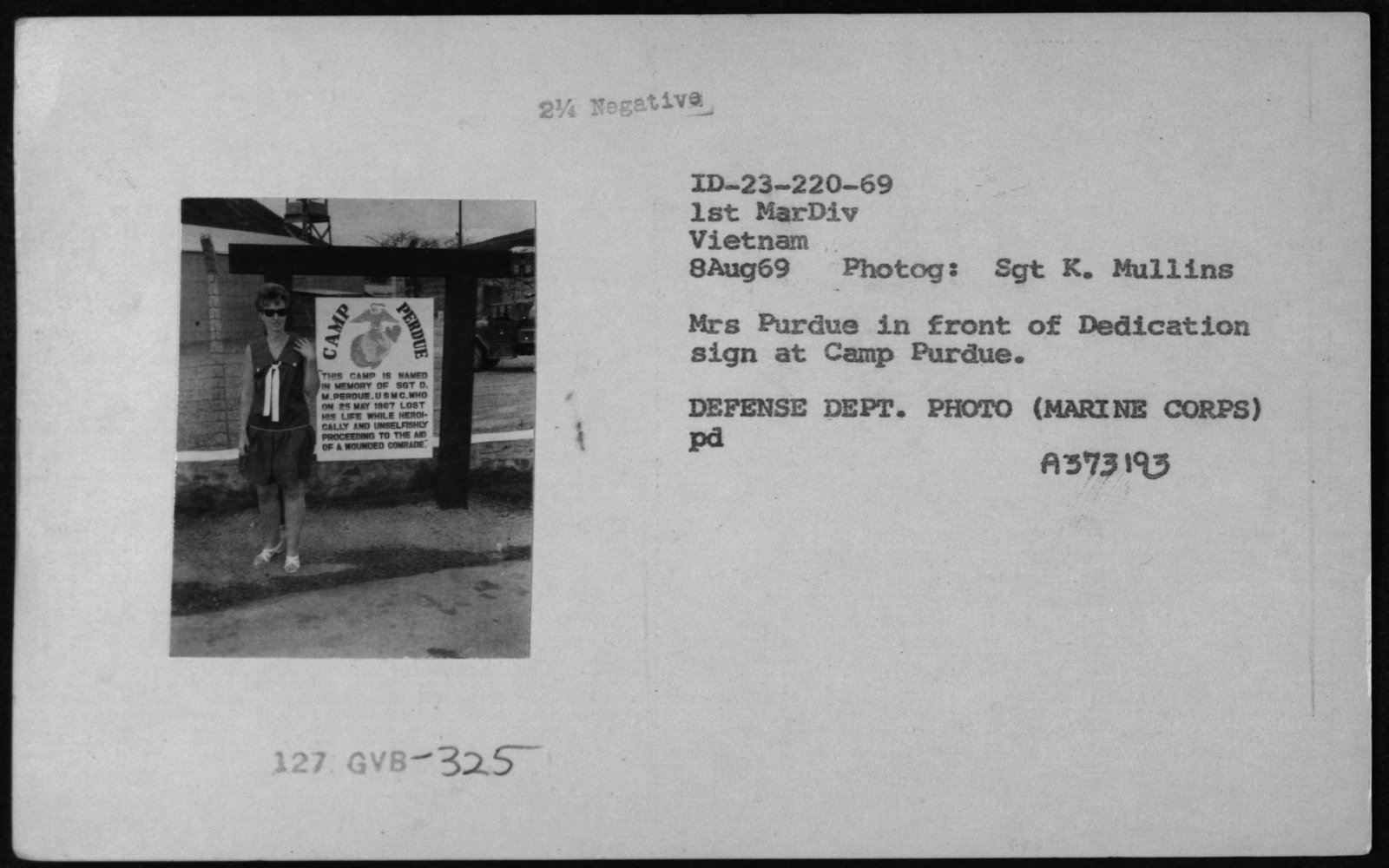
United States, 1969. A U.S. Marine Corps photographer recorded this sign on 8 August 1969 among a set of signs in Vietnam. It reads "CONG RAT IS DEAD" and was aimed at the Marines' own forces. "Cong" is shorthand for the Viet Cong, and "rat" casts the enemy as vermin while announcing a death. It is a unit-level sign, not a campaign.
Which labels were used against domestic rivals and critics?
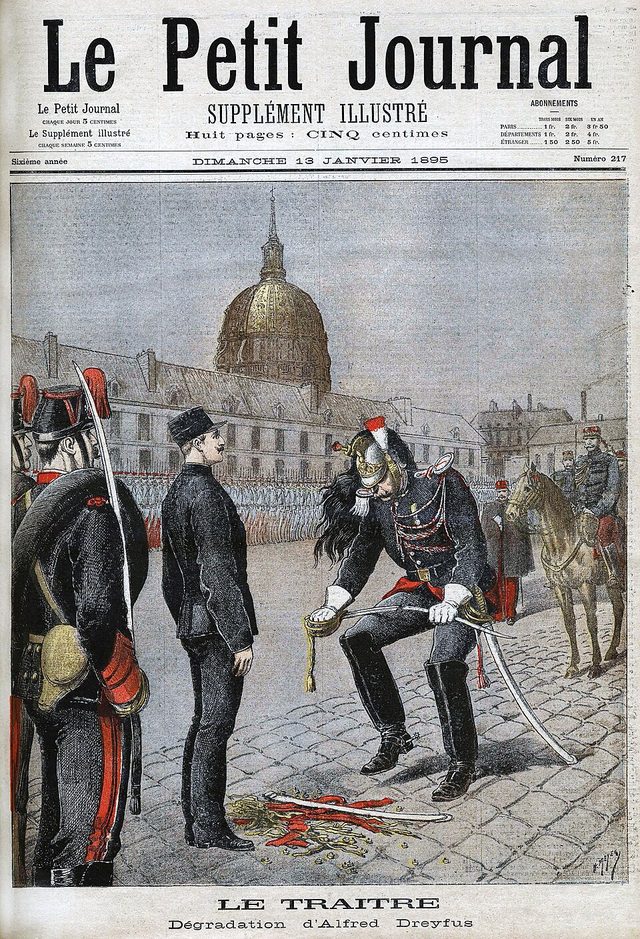
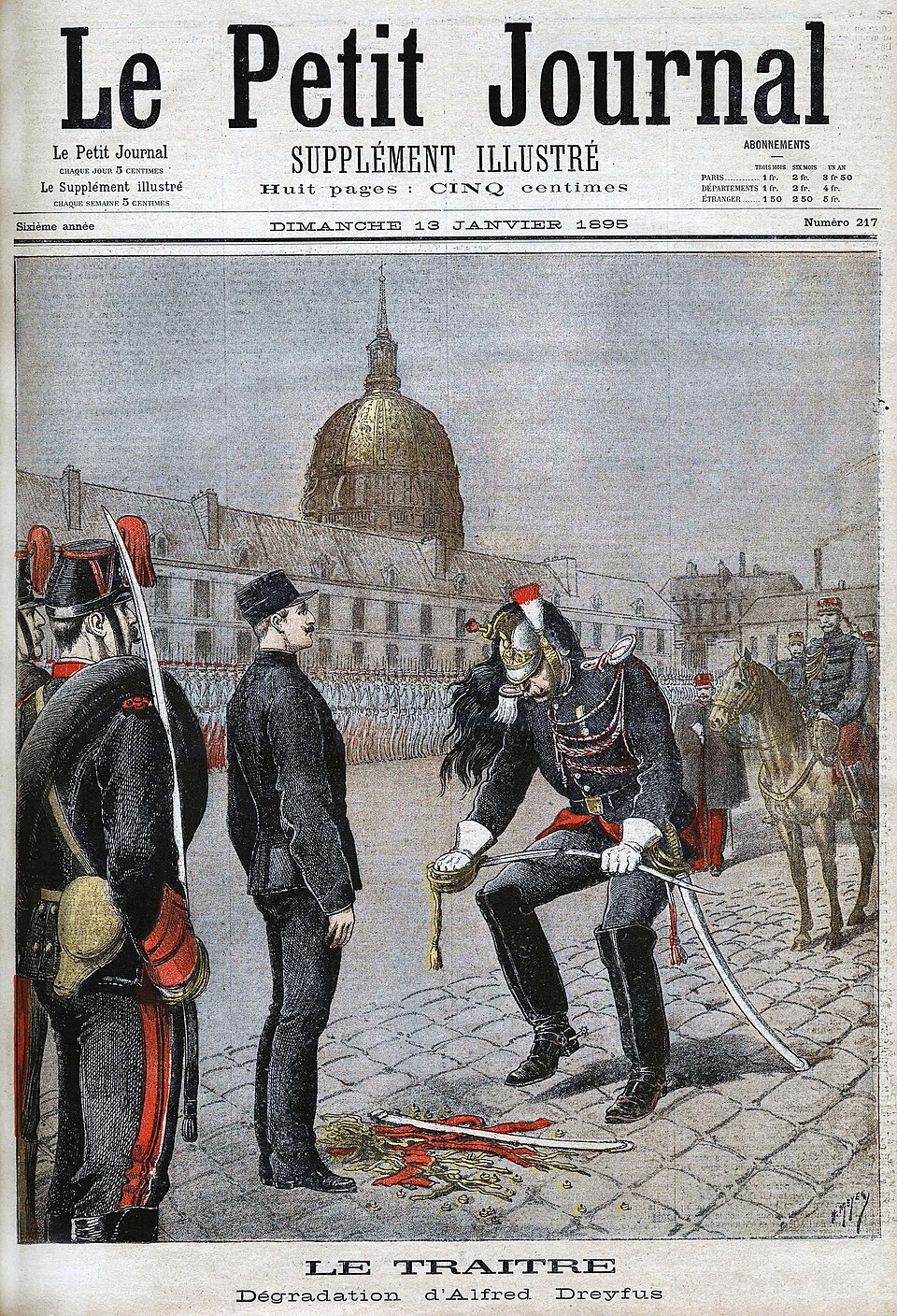
France, 1895. The Sunday supplement of Le Petit Journal, one of the highest-circulation French papers, ran Henri Meyer's picture of the public degradation of Captain Alfred Dreyfus on 13 January 1895 under the caption "LE TRAITRE", placed ahead of his name. The label restated the court-martial verdict of 22 December 1894, which the Cour de cassation annulled on 12 July 1906. The entry tags the cover for what it did at the time of printing: a one-word verdict used as a title.
Explain moreShow less
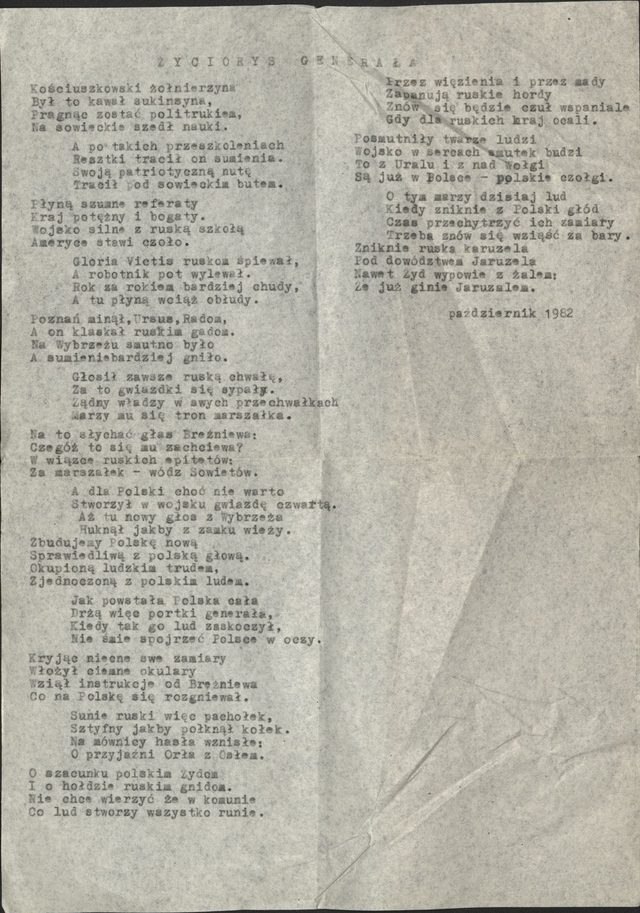
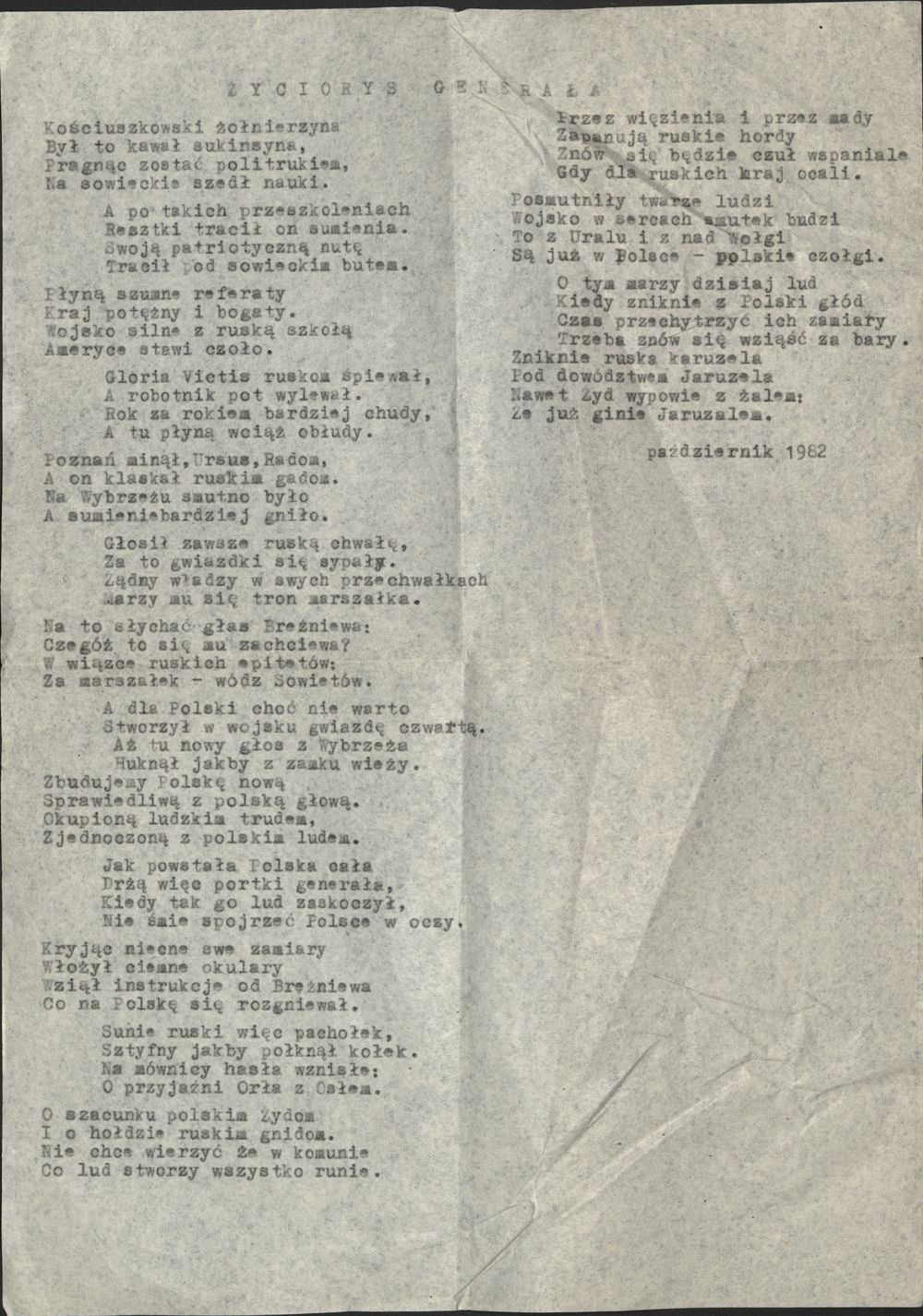
Poland, October 1982. An anonymous typed verse "Życiorys generała" ("Curriculum vitae of the general") was deposited at the Europeana 1989 collecting day in Poznań, and the catalogue connects it to General Wojciech Jaruzelski and the martial-law period. It carries no author or organisation. It builds a biography from epithets, among them "son of a bitch", "Russian lackey" and "Russian nits", and repeats the claim that he serves Moscow. The entry scores those accusations as labels and does not adjudicate them. The last couplet is an ethnic pun.
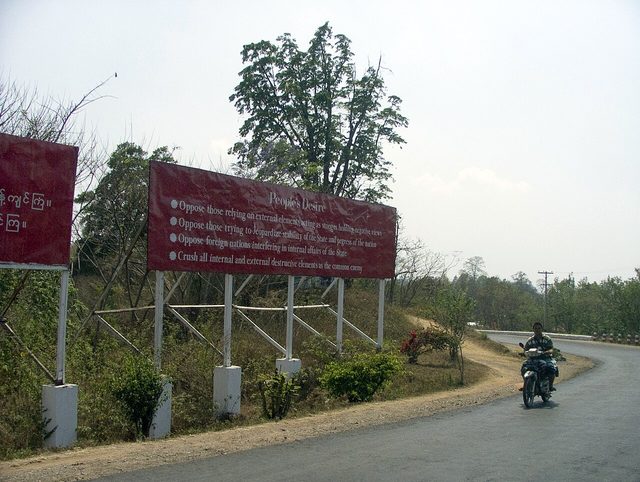
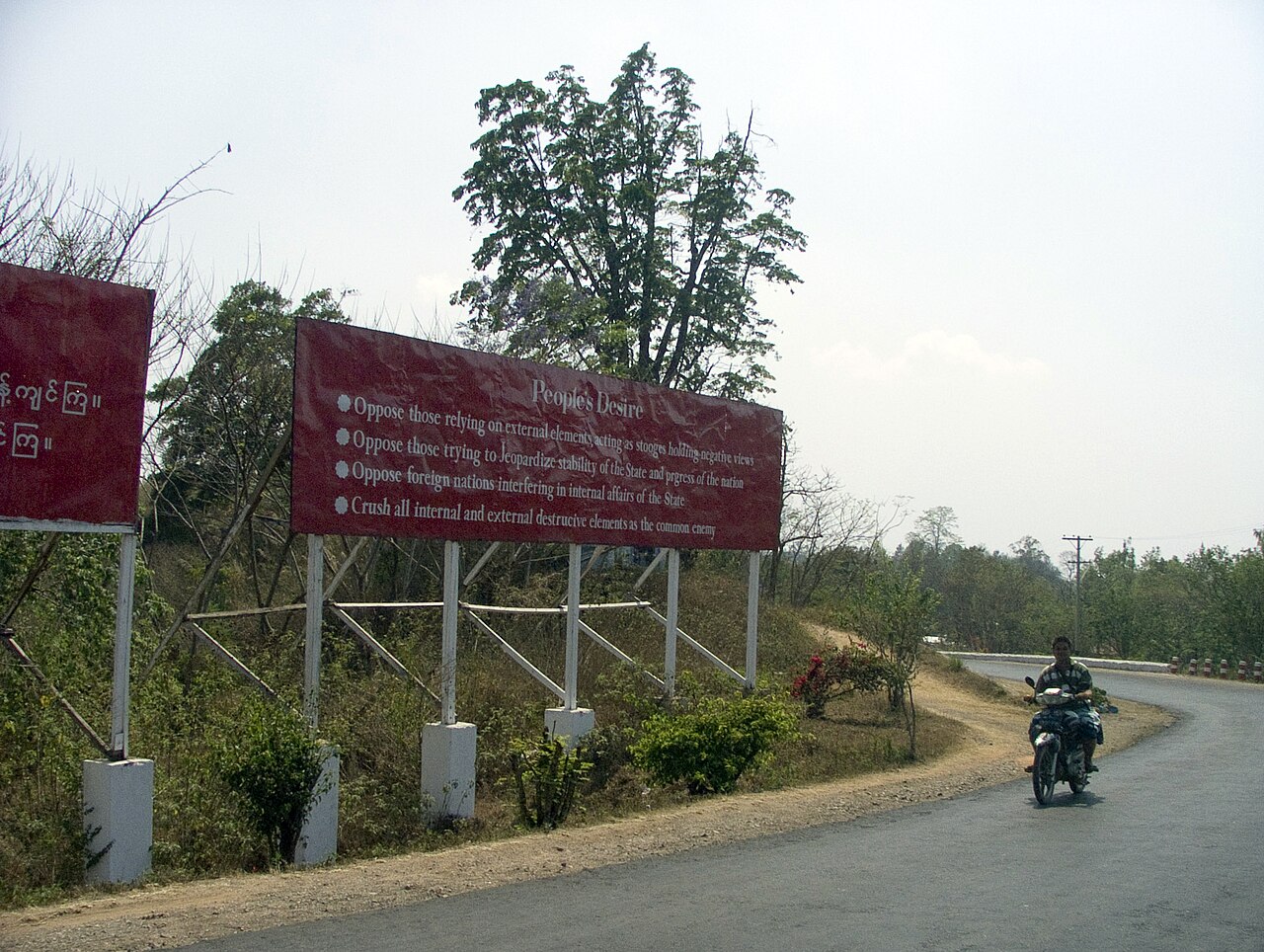
Myanmar, 2008. A photographer recorded this red roadside billboard, headed "People's Desire", on 22 March 2008. The sign names no sponsor. The entry attributes it to the military government, then the State Peace and Development Council, because the slogan set is widely reported on its boards and state media. Its English text calls for opposing "those relying on external elements acting as stooges holding negative views" and for crushing "all internal and external destructive elements as the common enemy". No person is named, so any critic can be placed under the labels.
Which labels targeted classes, faiths and ethnic groups?
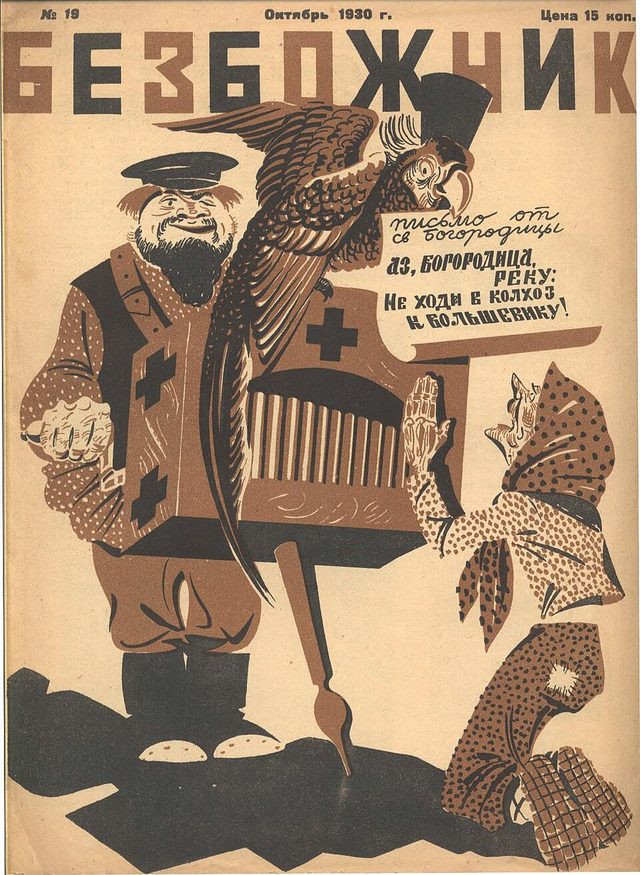
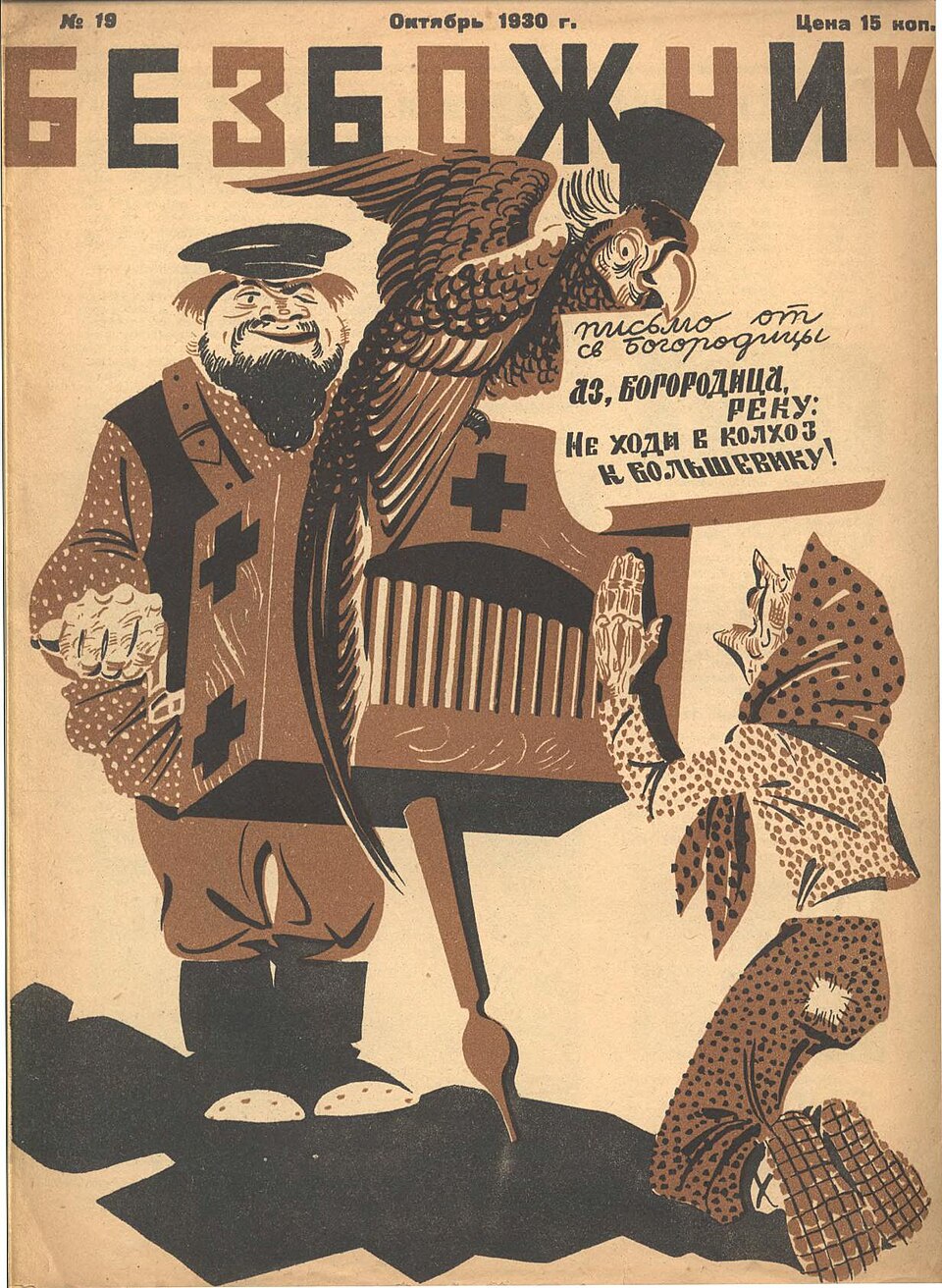
Soviet Union, October 1930. Bezbozhnik ("The Godless"), the illustrated magazine of the Soviet militant-atheist movement in Moscow, put this cover on issue No. 19 for a domestic readership during the collectivisation drive. A bearded man grinds a hand-organ marked with crosses while a parrot holds a "letter from the holy Mother of God" reading "DO NOT GO INTO THE KOLKHOZ TO THE BOLSHEVIK!" The church is labelled a barrel organ and its message a parrot's repetition, so ridicule replaces any answer to those appeals.
Explain moreShow less
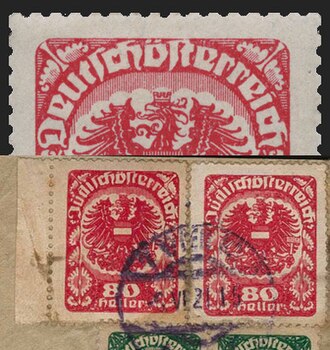
Austria, about 1920. An anonymous maker altered the inscription on the Austrian 80 Heller stamp from "Deutschösterreich" ("German Austria") to "Jüdischösterreich" ("Jewish Austria"). It is dated only circa 1920 and is neither an official nor a party issue. It gives one maker's version of a charge current in the early First Republic, that the state and its governing parties were Jewish-run. The label replaces the country's own name.
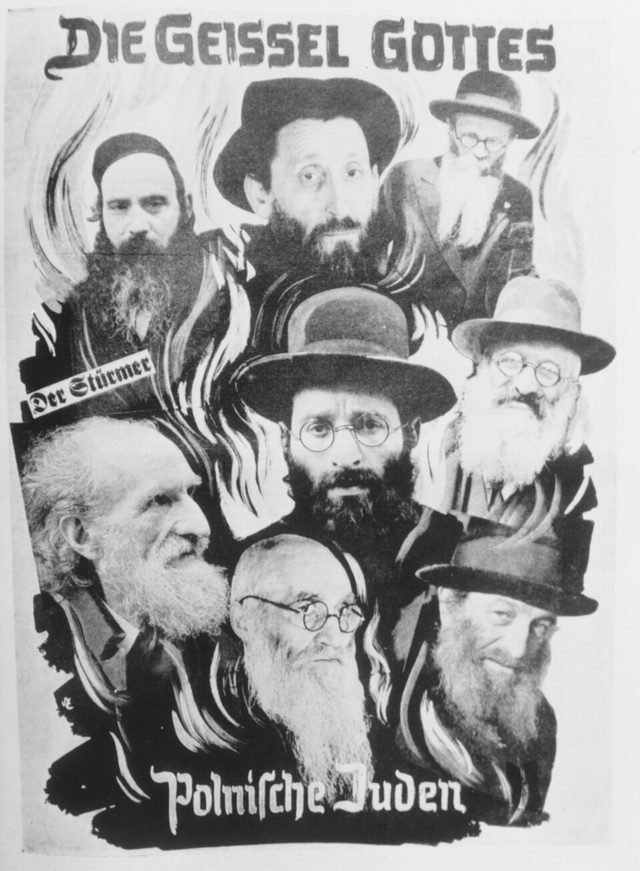
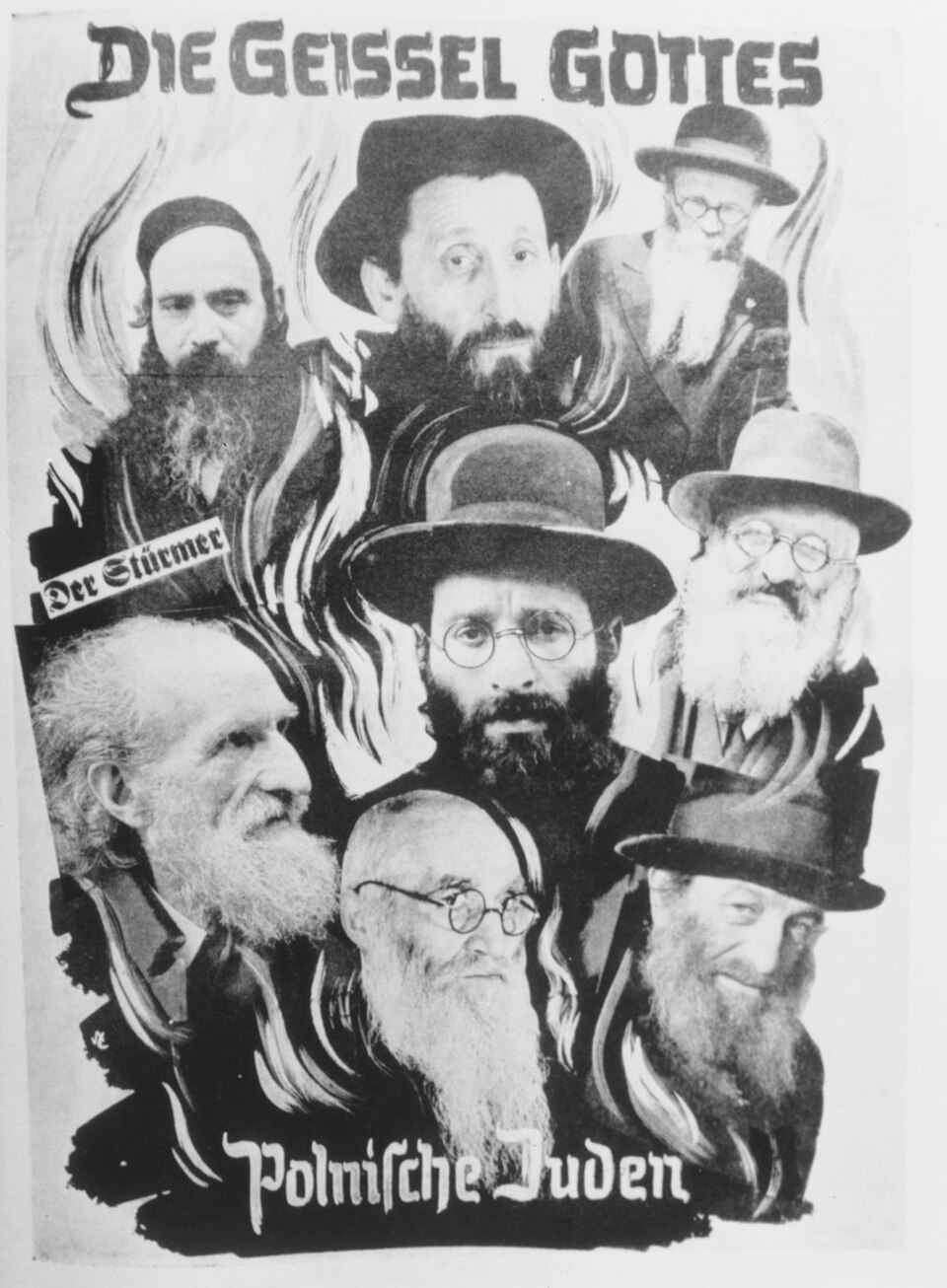
Germany, October 1939. Der Stürmer, the Nuremberg weekly published by Julius Streicher, ran this montage weeks after the German invasion of Poland. It is headed "Die Geissel Gottes" ("The scourge of God") and captioned "Polnische Juden" ("Polish Jews") over eight photographs set against flames. The page was later introduced as evidence at the Nuremberg trial, and on 1 October 1946 the International Military Tribunal convicted Streicher of crimes against humanity for incitement to persecution and extermination. The headline label and the flames stand in for any claim a reader could check.
Which labels were aimed at foreign states and their leaders?
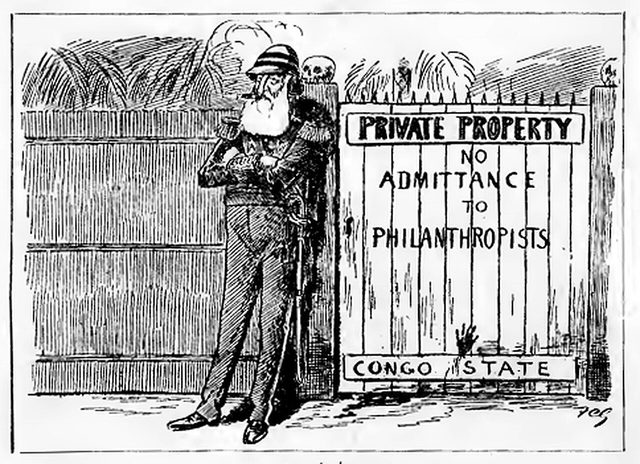
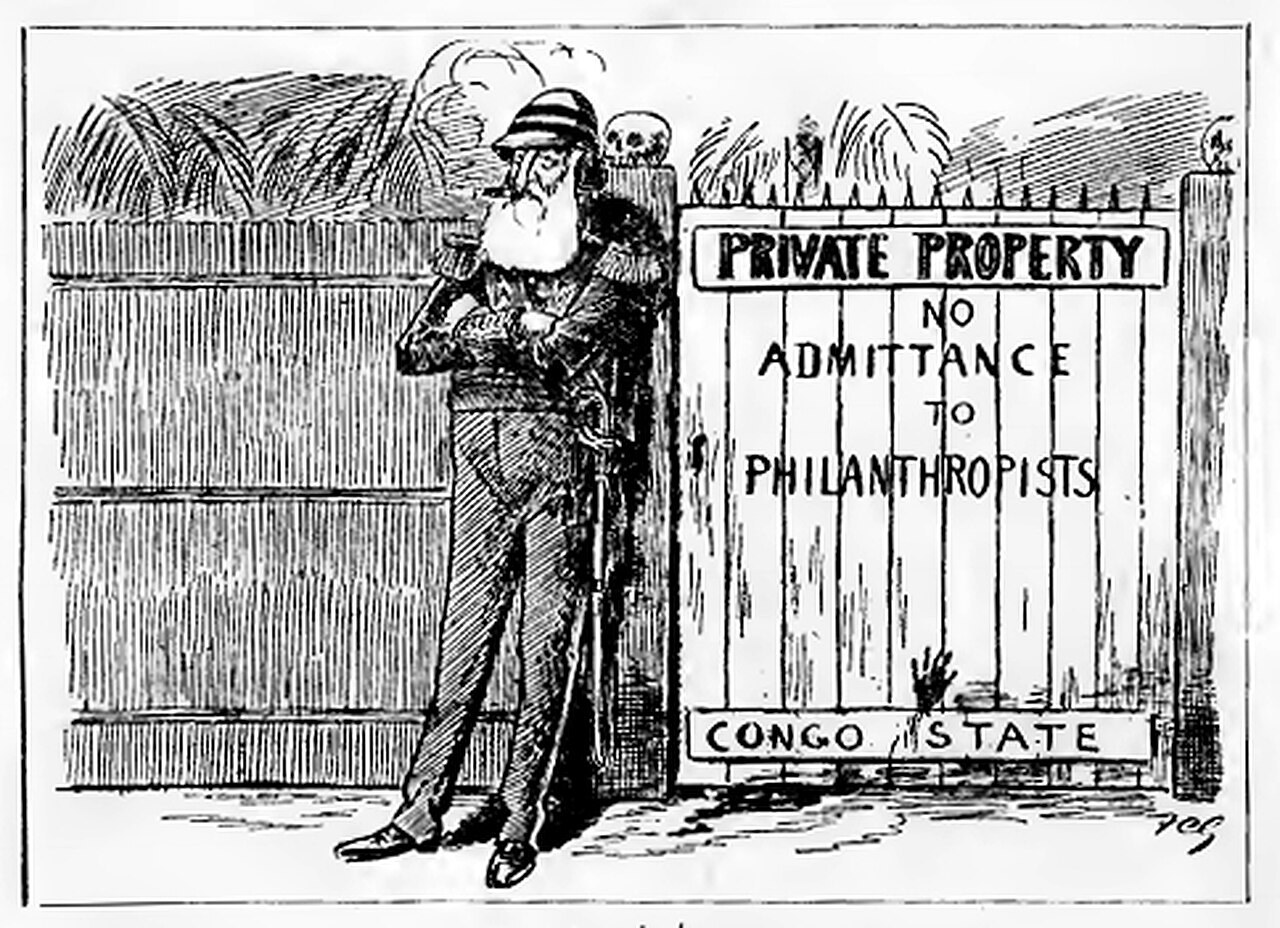
United Kingdom, July 1906. Francis Carruthers Gould published this cartoon in his collection Picture-Politics. Commons identifies the man as Leopold II of the Belgians, who ruled the Congo Free State as a personal possession until Belgium took it over in 1908. The cartoon belongs to the Congo Reform Association campaign in Britain against forced rubber collection. The sign turns Leopold's own claim of ownership into the label, and a skull and a handprint make the accusation. The Free State's own denials are not shown on the sheet.
Explain moreShow less
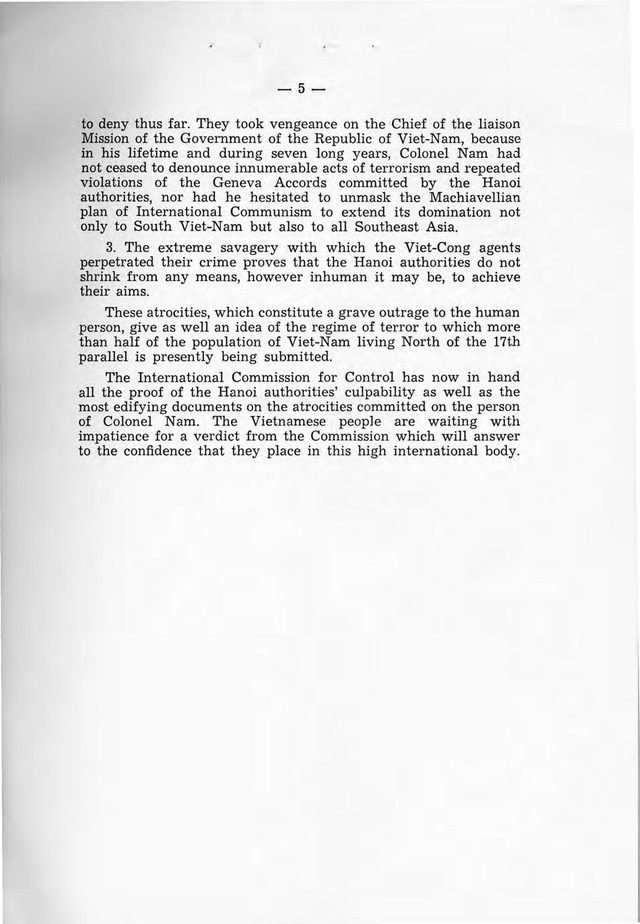
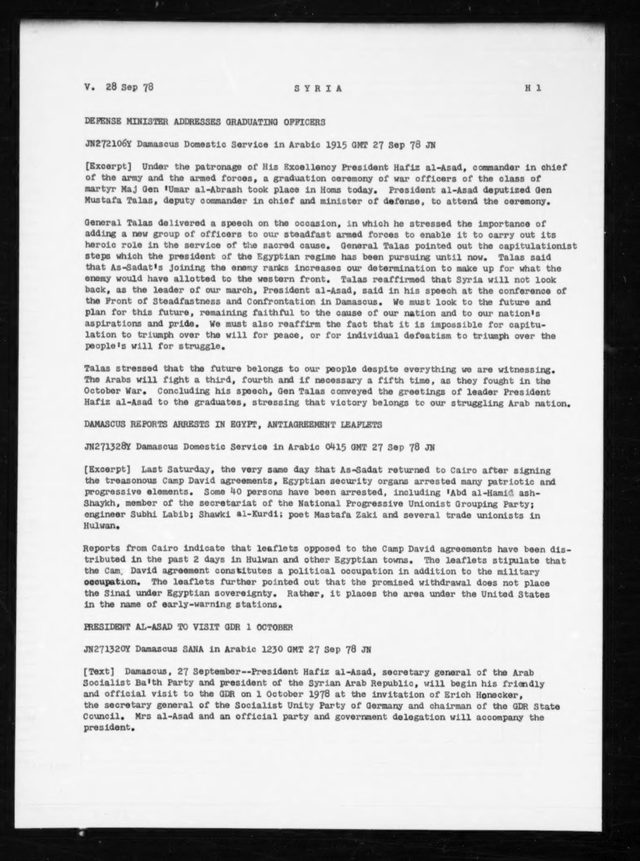
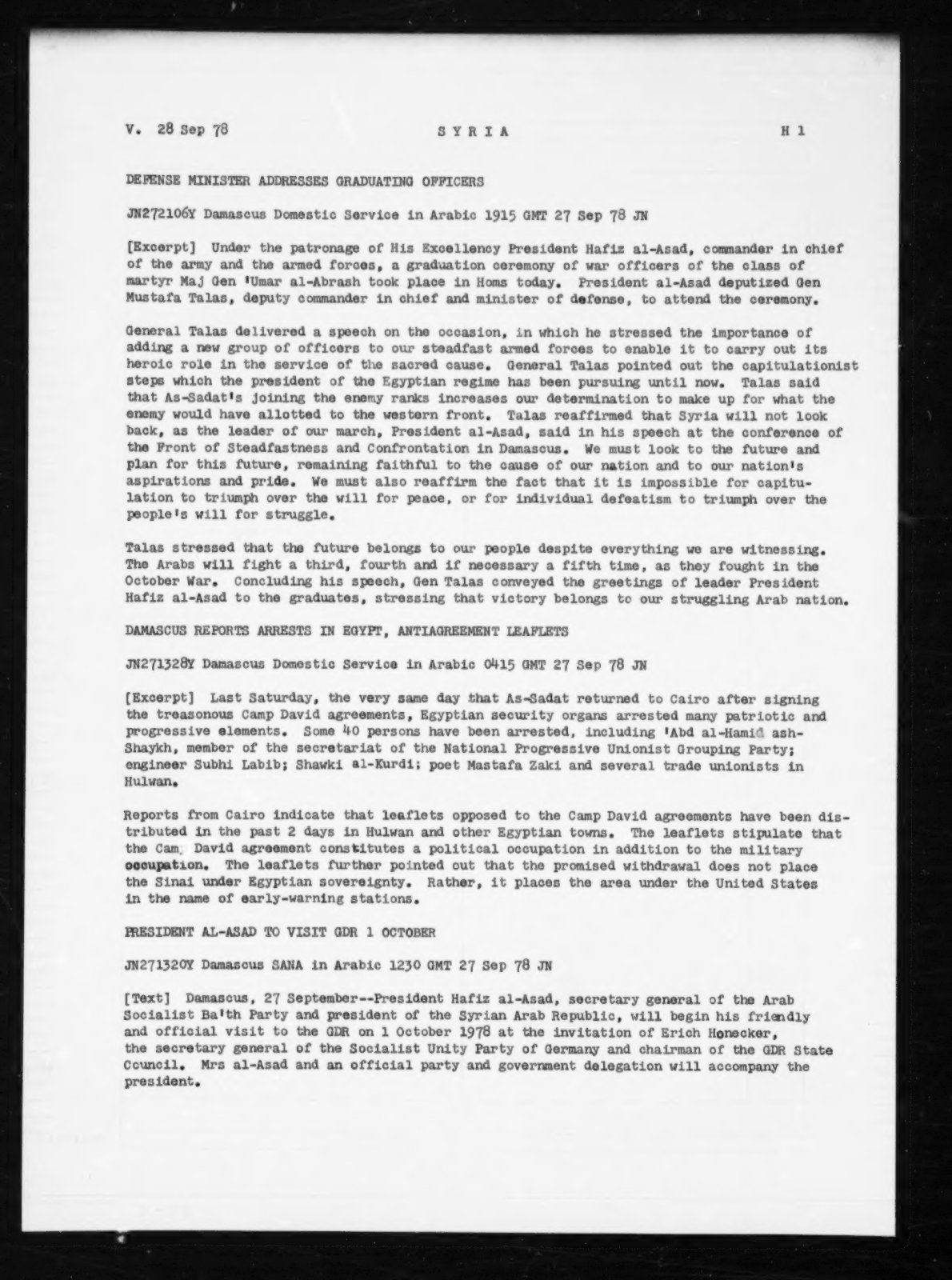
Syria, September 1978. This page of the U.S. Foreign Broadcast Information Service report for 28 September 1978 translates Damascus Domestic Service, the Syrian state radio, ten days after the Camp David Accords were signed. A defence-minister speech speaks of "the capitulationist steps" of Egypt's president and of "As-Sadat's joining the enemy ranks", and a news item refers to "the treasonous Camp David agreements". The labels sit in news reporting as well as in the speech.
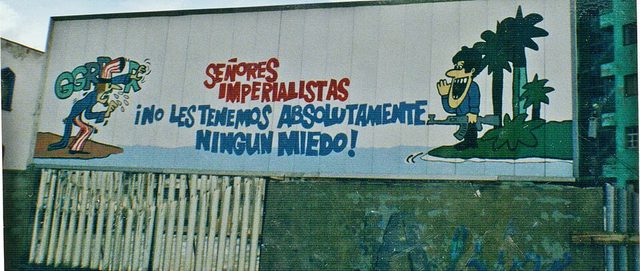
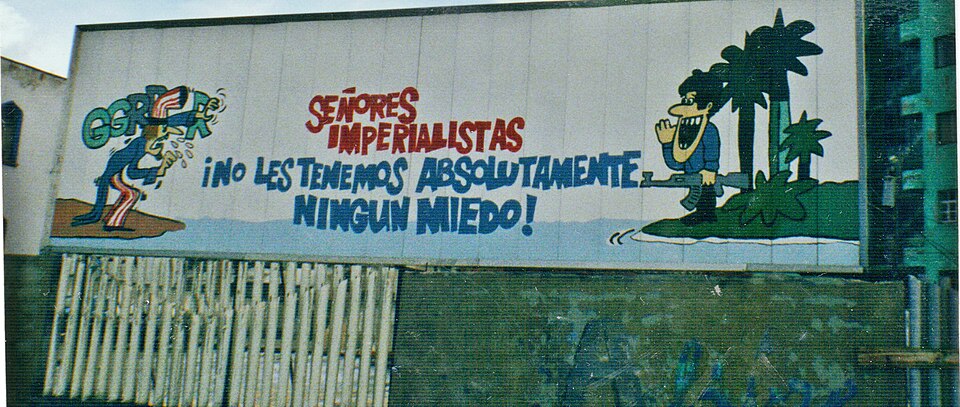
Cuba, 2002. Robert Schediwy photographed this painted billboard in Havana, facing the U.S. mission, which in 2002 was the U.S. Interests Section. No sponsor is printed on it. It reads "SEÑORES IMPERIALISTAS, ¡NO LES TENEMOS ABSOLUTAMENTE NINGÚN MIEDO!" ("Gentlemen imperialists, we are not the least bit afraid of you!") beside a figure in stars-and-stripes trousers. The word "imperialistas" is the whole characterisation of the addressee, and the board shows the opponent afraid and the in-group fearless instead of making a claim that can be tested.
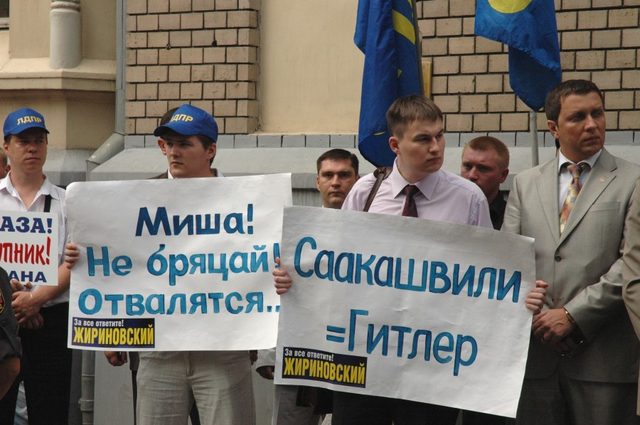
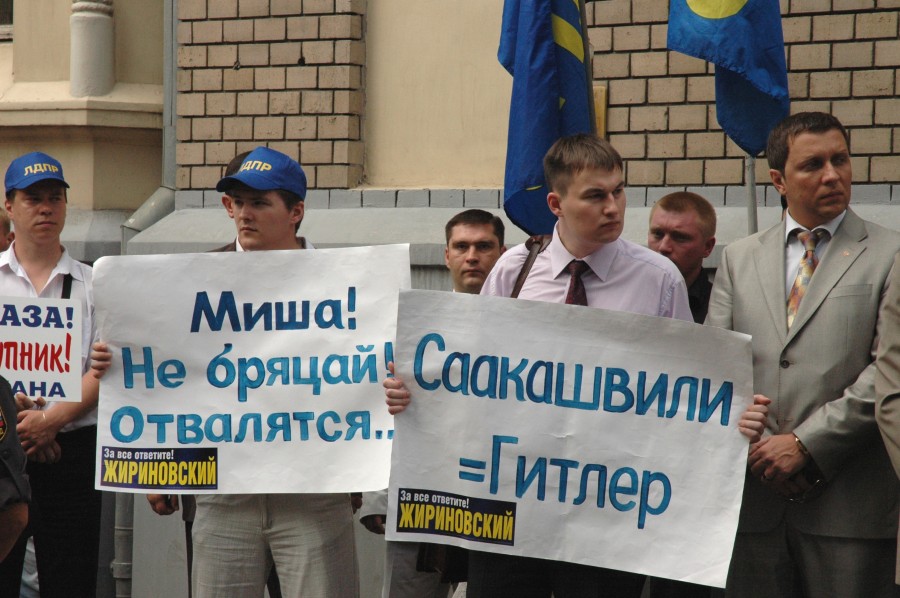
Russia, 13 August 2008. Activists of the Liberal Democratic Party of Russia held hand-lettered placards at the Georgian embassy in Moscow the day after the ceasefire in the Russo-Georgian War. One reads "Саакашвили = Гитлер" ("Saakashvili = Hitler"), tagged with the name of the party's leader, Vladimir Zhirinovsky. The comparison is attached to a living head of state without a stated charge. Georgian-side material of the same weeks also used strong comparisons about Russian leaders, and the entry applies the same definition to both.
How does the same technique look on different sides?
The examples above come from governments, a military unit, a party, magazines and papers, and anonymous makers on several sides of several conflicts. They share one construction: a short label, often a single word, stands where a stated act would go. The differences lie elsewhere. The Der Stürmer page was printed by a party publisher in Nazi Germany, and a tribunal later convicted its publisher of incitement. The Marine Corps sign is one hand-painted board seen by one unit. The Dreyfus label restated a court verdict that was later annulled, the Wang Jingwei label attached to a man who did lead a Japanese-backed government, and the "Hun" and "Jap" labels covered whole nations. A label can therefore be a legal verdict, a partial truth, a political dispute or a call to violence, and the technique is the same device in each case. Similarity of method is not equivalence of scale, intent or consequence.
How to spot name-calling
- Look for the single word. A short noun or adjective such as "traitor", "stooge", "Hun" or "imperialist" carries the whole verdict.
- Ask what act the label replaces. If the item names no place, date, deed or source, the label is doing the argument's work.
- Check who the label sorts. A label covering a whole nation, faith, class or party leaves no individual to examine.
Show all 5Show fewer
- Watch for borrowed imagery. Animals, vermin, disease or monstrous figures make the label feel like a description. Check whether the picture is doing the accusing that the word leaves unproved.
- Separate the label from the dispute. The underlying quarrel may be real, so test whether the item argues it or only attaches a name to the other side.
Browse more name-calling examples
The collection holds further name-calling items from every period and side. Start from the name-calling technique page, which gives the definition, the psychology and the edge cases. For other devices side by side, see propaganda examples for each of the seven classic techniques and types of propaganda for the wider families. For the print medium, see propaganda posters.
Sources and further reading
Sources and rights
Every item above is held in the collection with its own entry, which gives the issuer, date, transcription and rights basis.
Every item above is held in the collection with its own entry, which gives the issuer, date, transcription and rights basis. The images come from the U.S. National Archives, the National Library of China, Europeana, the Internet Archive's copy of the Foreign Broadcast Information Service reports and Wikimedia Commons. The 1895 to 1939 items are public domain on publication date or expired authorship. The U.S. government items are public-domain federal works. The Cuban and Myanmar billboard photographs and the Russian party photograph are used under the Creative Commons licences stated on their entries, and the Polish typescript carries the provider's own Public Domain Mark, which is not independently verified. Transcriptions and translations are given as recorded in the entries, without alteration.