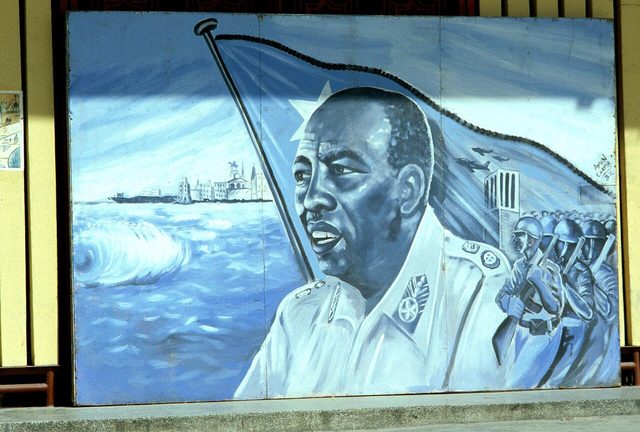
Content note. Some objects here are offensive or disturbing and are shown as issued: a soldier making an obscene gesture at a Russian warship; a tribute to a general and the army that destroyed the Canudos settlement, with a fallen body in the foreground; photographs of dead civilians, including children, arranged as a bleeding swastika; a counterfeit Nazi charity stamp booklet with caricatures, including a soldier with a smashed face; a party flag marked with what the archive calls blood; and a likeness of Hitler with Iron Cross imagery. Showing an object is not endorsing it.
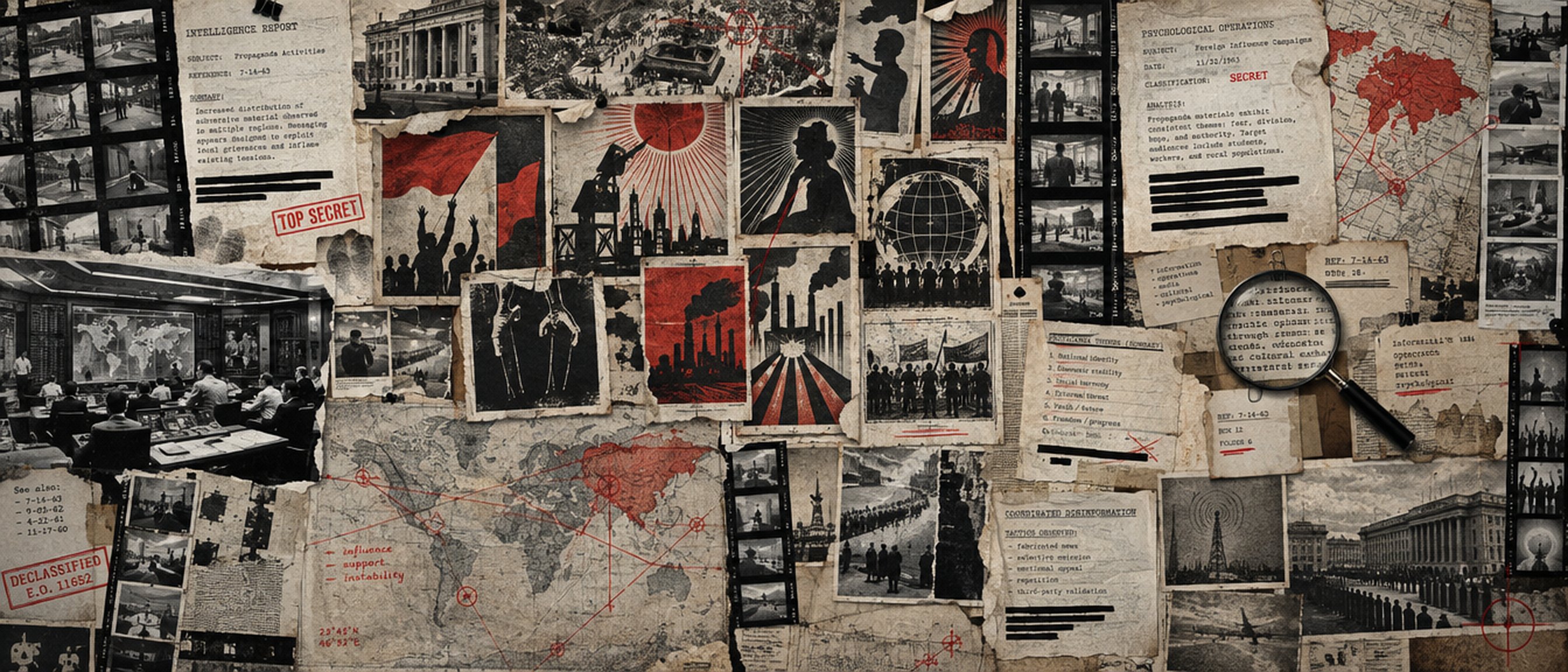
Transfer propaganda borrows the prestige of a respected symbol, or the stigma of a hated one, and attaches it to a cause, a person or a purchase, so the audience's feeling about the symbol does the work an argument would otherwise do. The tell is a flag, saint, hero, ancestor, scripture, enemy emblem or official look sitting beside a message it has no stated connection to. This page shows fourteen dated examples, from 1619 to 2022. The definition is the one on the transfer technique page, applied the same way to every issuer.
What counts as transfer (and what does not)
An office that prints its own name and flag is stating an affiliation as a fact. Transfer begins when the symbol is placed beside something it has no stated connection to and the audience is left to carry the feeling across: a bond beside a soldier's courage, a candidate beside a dead leader's gaze, a driver beside Hitler.
Explain moreShow less
The line concerns how the message is built, not whether the cause is right. A cause the viewer supports can use transfer, and so can one the viewer opposes. The tag says what the object does, not that the claim was false or that one side used the device more than another.
Borrowed prestige: flags, ancestors and heroes
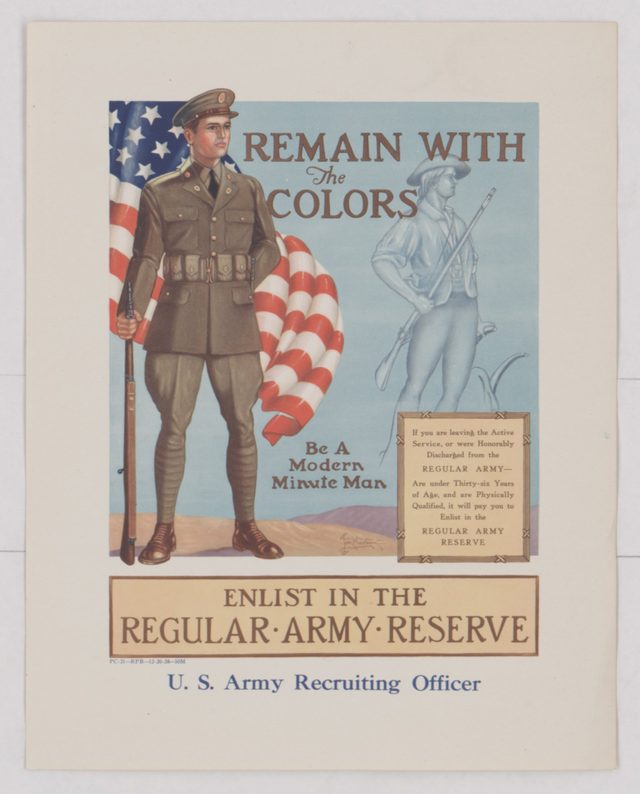
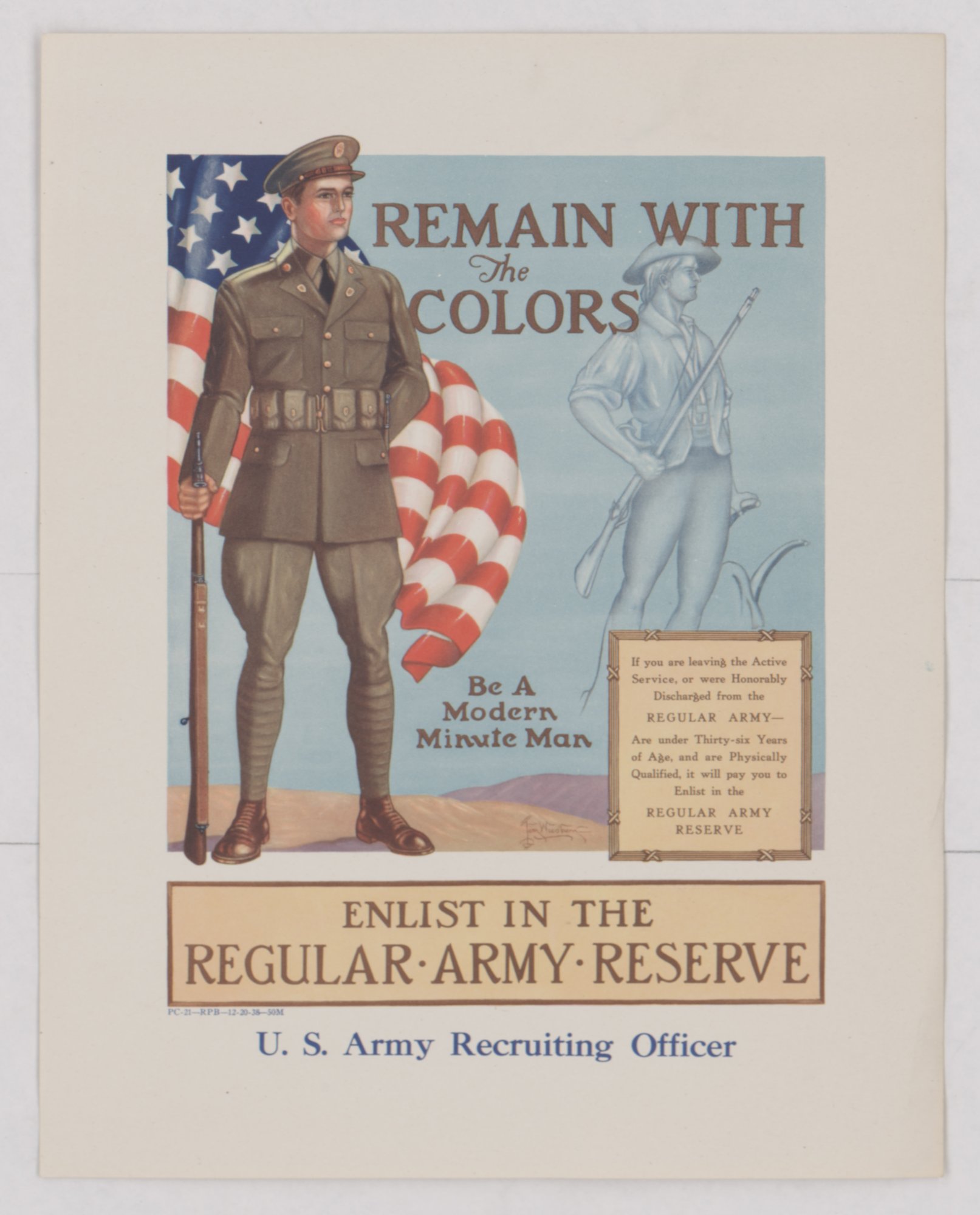
United States, 1938: "Remain with the Colors." A U.S. Army sheet for the Regular Army Reserve, dated from its form code to 20 December 1938, puts a soldier before a large flag with a minuteman of 1775 fading in behind him. The headline "Be A Modern Minute Man" ties the enlistee to the Revolutionary militia, and a text box then gives the Reserve terms. The 1775 tradition's prestige is lent to signing up. The sheet is held by the U.S. National Archives. Read the technique: transfer.
Explain moreShow less
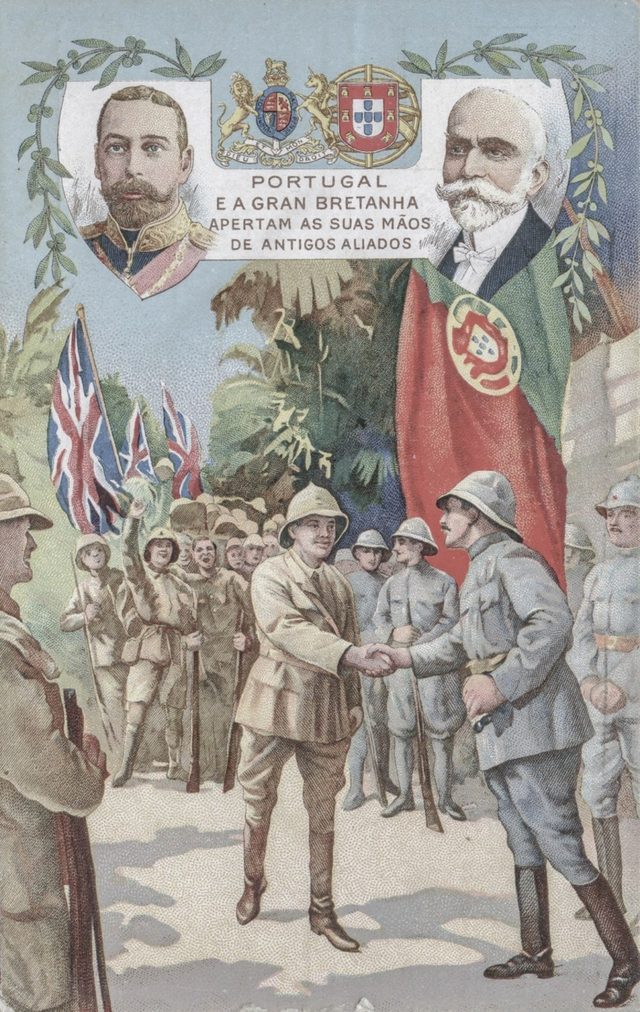
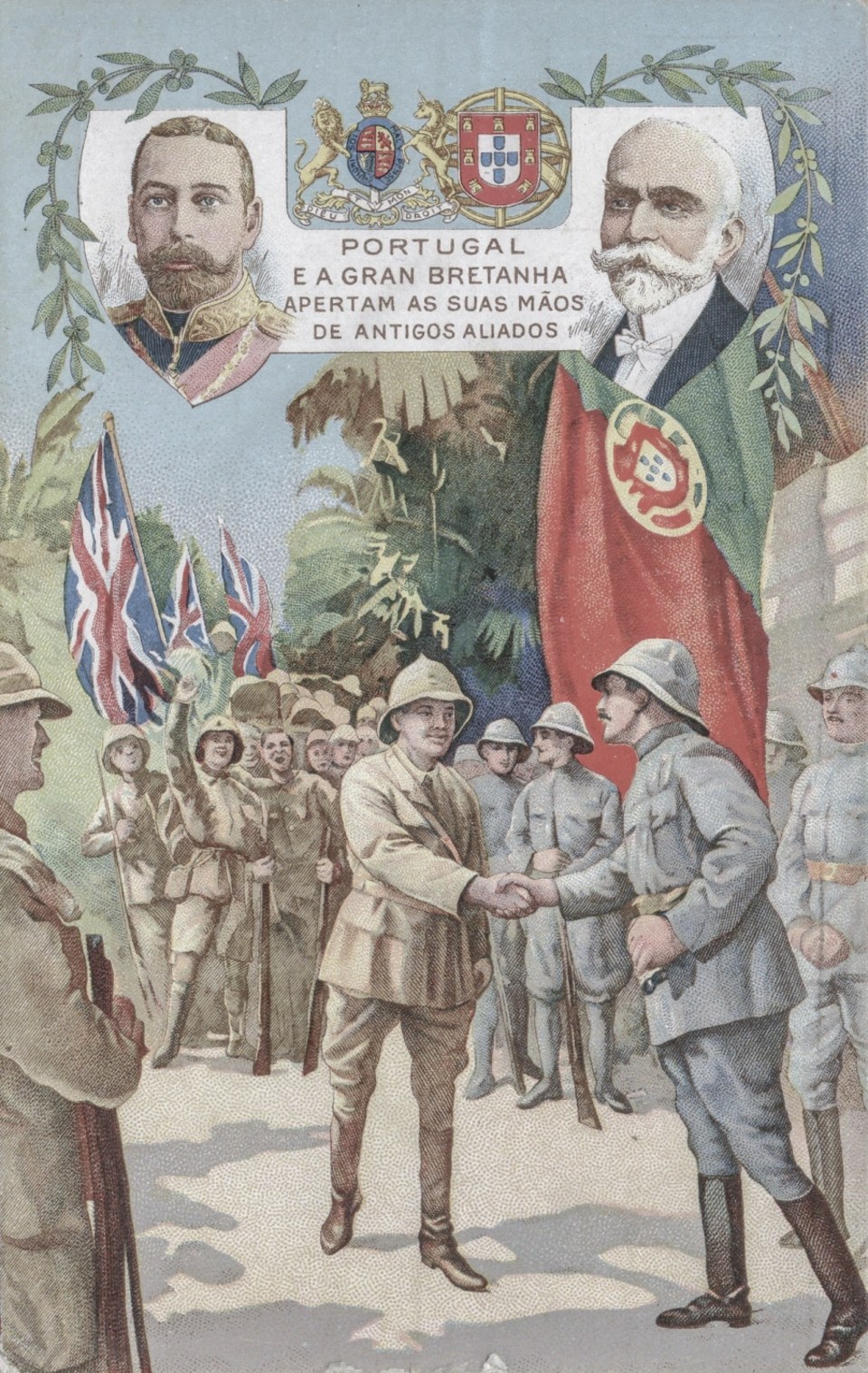
Portugal, 1917: a postcard to a diplomat. This colour postcard, with no publisher or artist named, shows a British and a Portuguese soldier shaking hands between flags, under portraits of George V and a civilian whom Wikimedia Commons identifies as President Bernardino Machado. The Portugal 1914-1918 portal records it as sent on 20 June 1917 by Luís Barreto to João Chagas, Portugal's minister in Paris. Portugal had been Britain's ally since the Treaty of Windsor of 1386 and sent an expeditionary corps to France in 1917. Arms, flags and heads of state lend that old alliance's standing to the wartime effort.
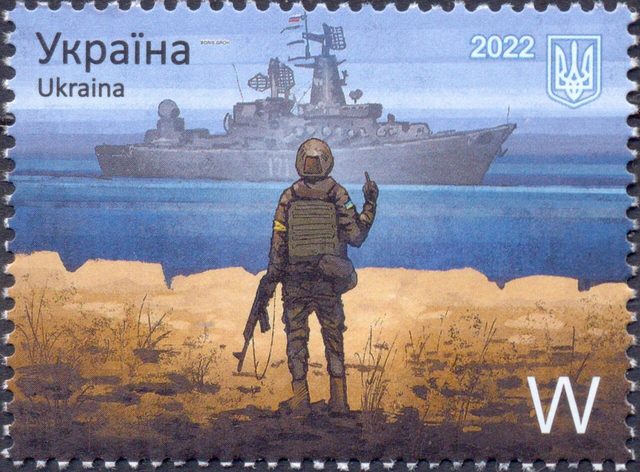
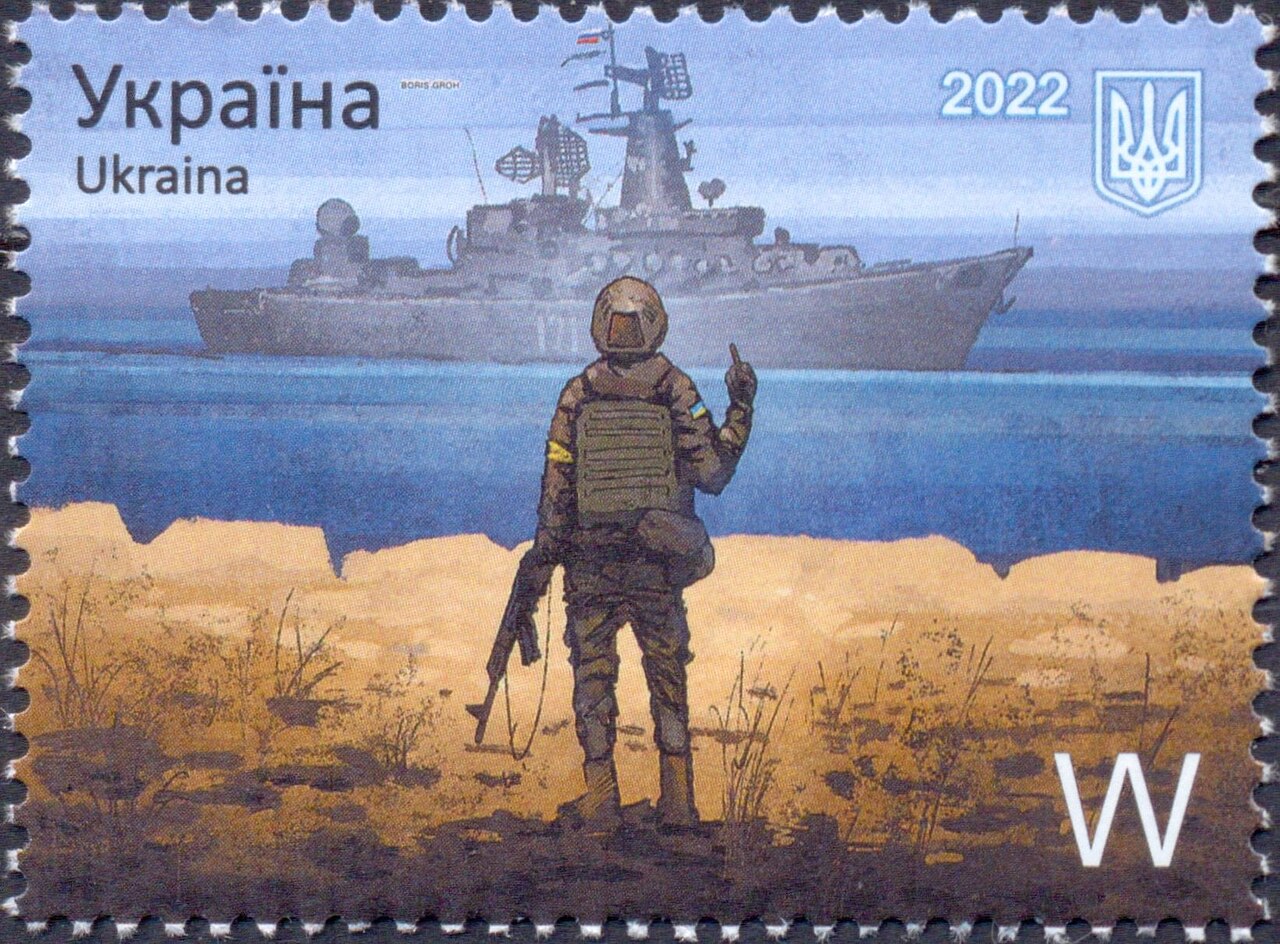
Ukraine, 2022: a state postage stamp. Ukrposhta, the state postal operator, issued this stamp on 12 April 2022, art by Boris Groh, seven weeks after the Snake Island exchange of 24 February that it commemorates. The face carries only the state trident, the country name, the year and a face-value letter. That official frame turns a front-line moment into a state postal issue, so the episode's prestige is carried onto the issuing state.
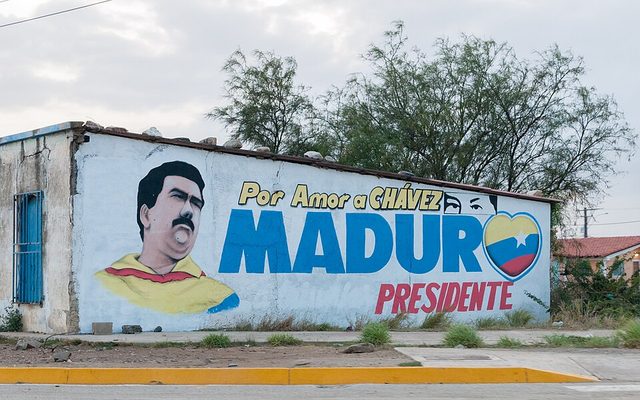
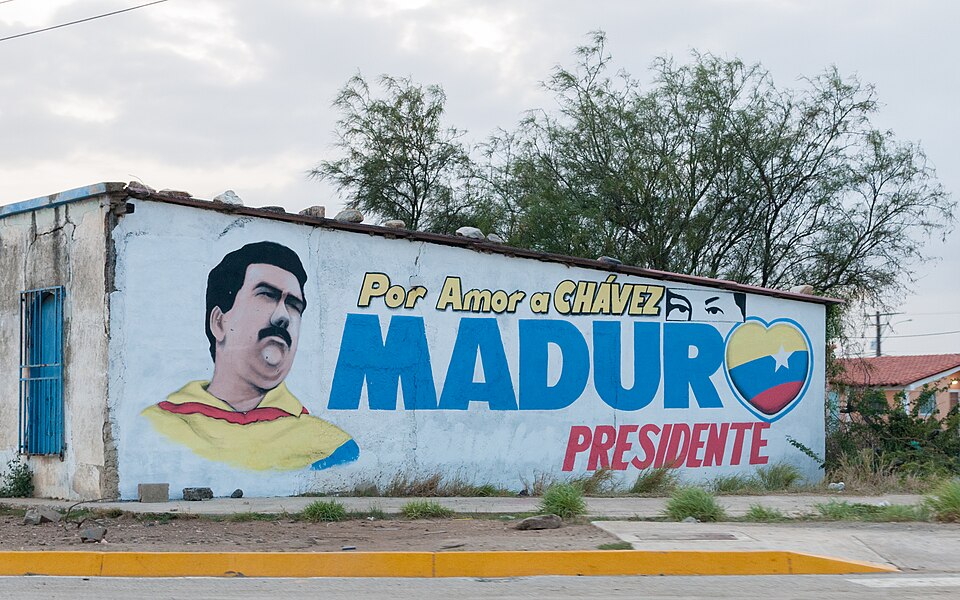
Venezuela, 2013: a campaign mural. A wall on Margarita Island, photographed on 31 May 2013 by Wilfredor, carries a portrait of Nicolás Maduro and the words "For love of Chávez" in the entry's translation. Chávez had died on 5 March 2013, and Maduro, then acting president, stood in the special election of 14 April. The case for the candidate is the dead leader's name and painted eyes, and Maduro's own platform appears nowhere on the wall.
Borrowed authority: scripture, saints and the heavens
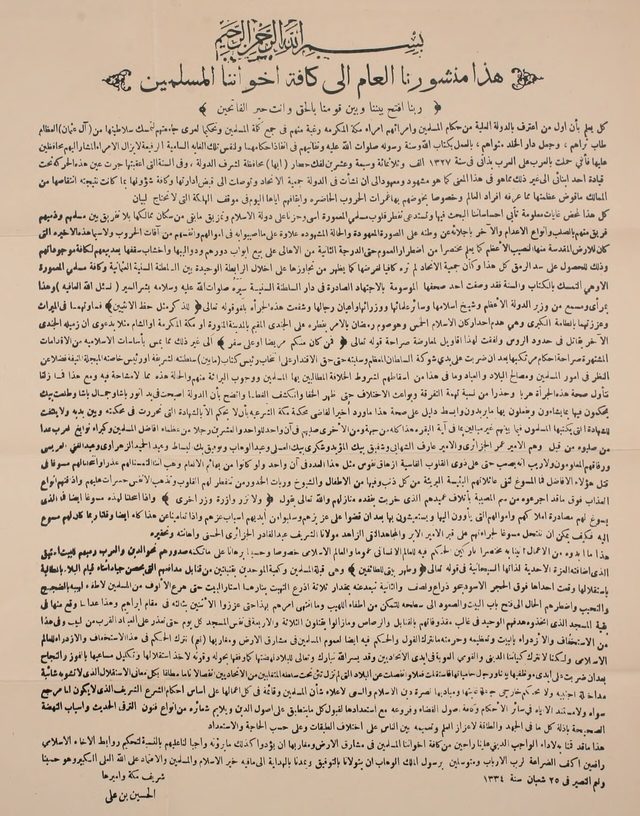
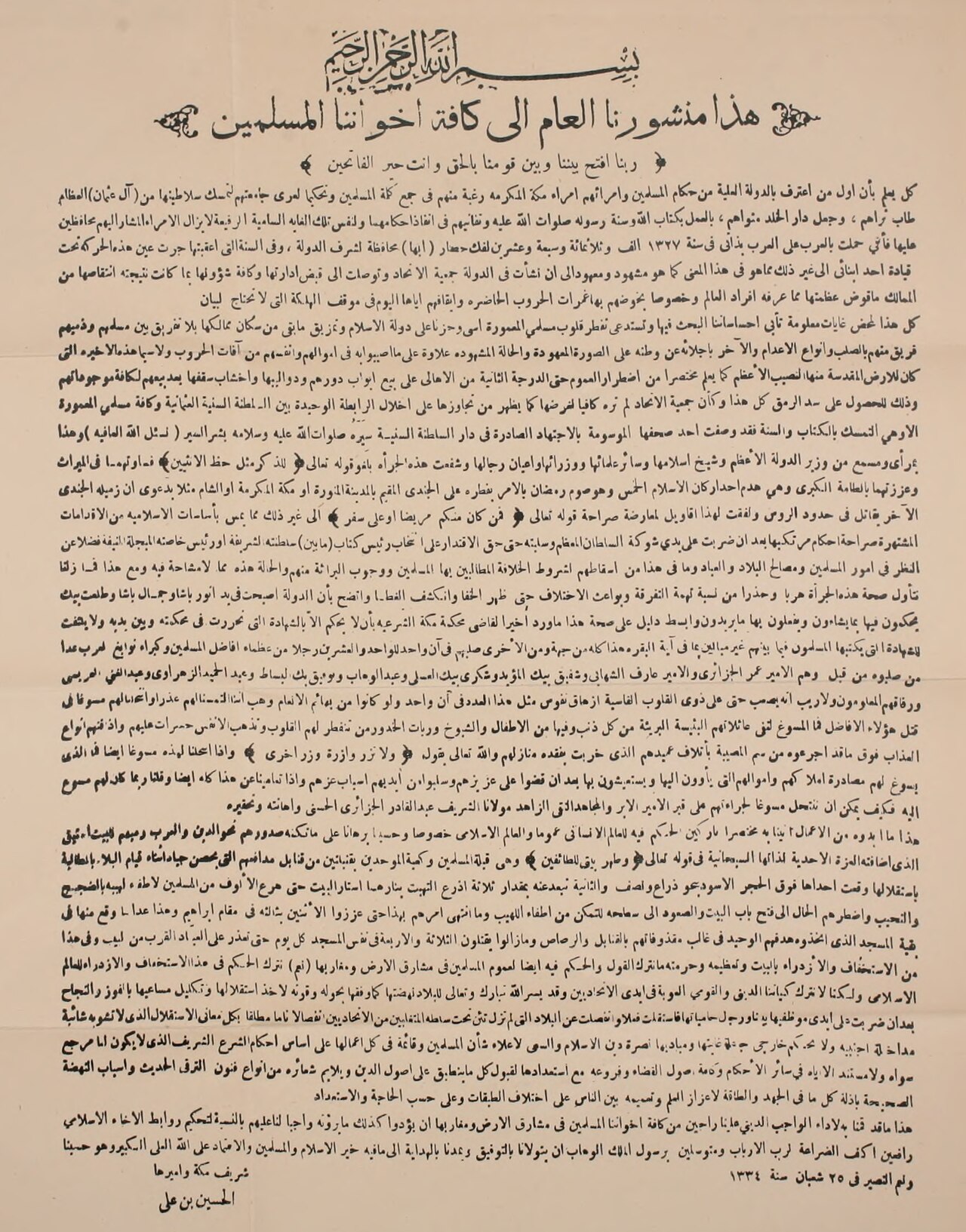
Mecca, 1916: the proclamation of the Arab Revolt. Hussein bin Ali, Sharif and Emir of Mecca, issued this sheet dated 27 June 1916, shown in a facsimile from Frederick Stanley's 1917 book The King of Hedjaz and Arab Independence. It opens "In the name of God", addresses "all our Muslim brothers" and quotes a verse asking God to decide between "us and our people in truth". A political break with the Ottoman government is framed in scripture, so the text's authority is borrowed from the sacred sources it invokes. Ottoman supporters denounced the action as rebellion against the Caliph-Sultan, and the revolt had British subsidies and officers.
Explain moreShow less
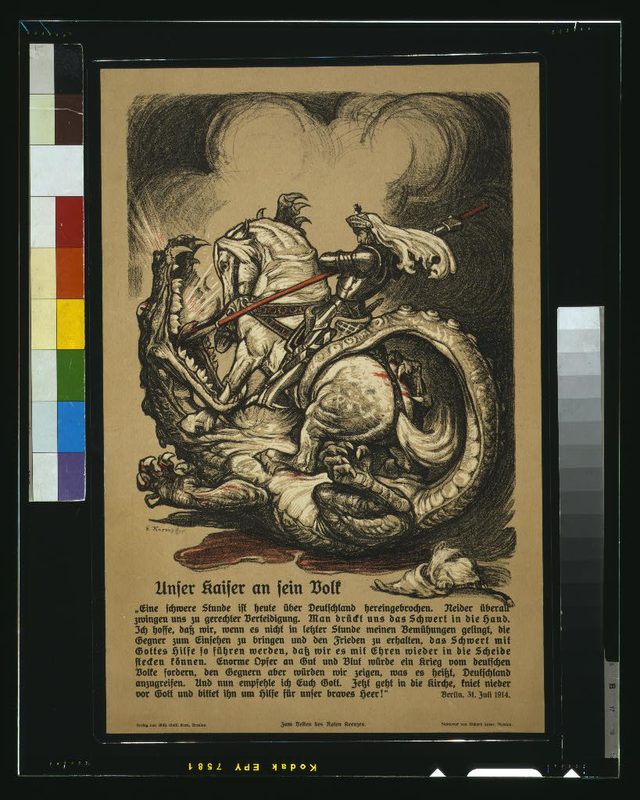
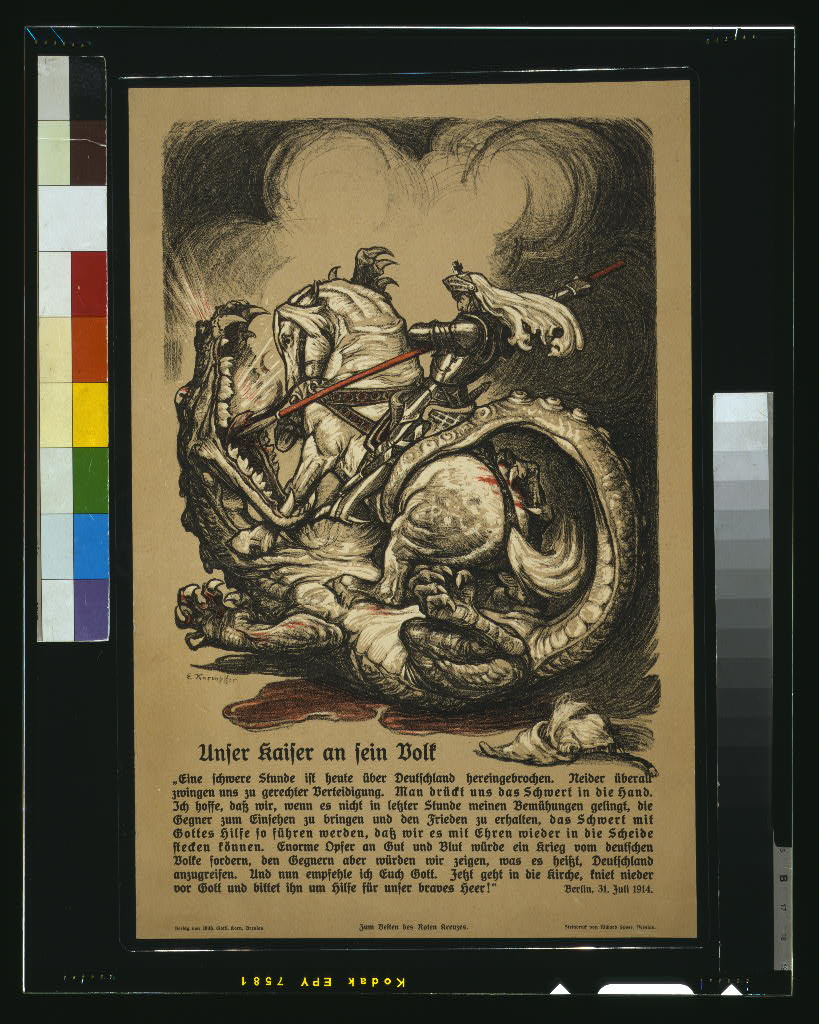
Germany, 1914: Saint George and the Kaiser's address. A print sold for the benefit of the Red Cross reproduces Wilhelm II's address of 31 July 1914 beneath an armoured Saint George spearing a dragon, signed E. Kaempffer. The text says "envious rivals everywhere" force Germany into "just defence" and ends with a call to kneel in church. The saint and the closing call lend a religious sanction to the claim of a defensive war. Historians have long disputed German responsibility for the war, and the print is tagged for its religious framing, not for its position on that question. The copy is held by the Library of Congress.
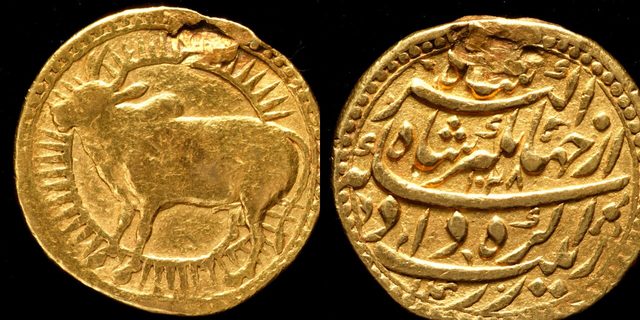
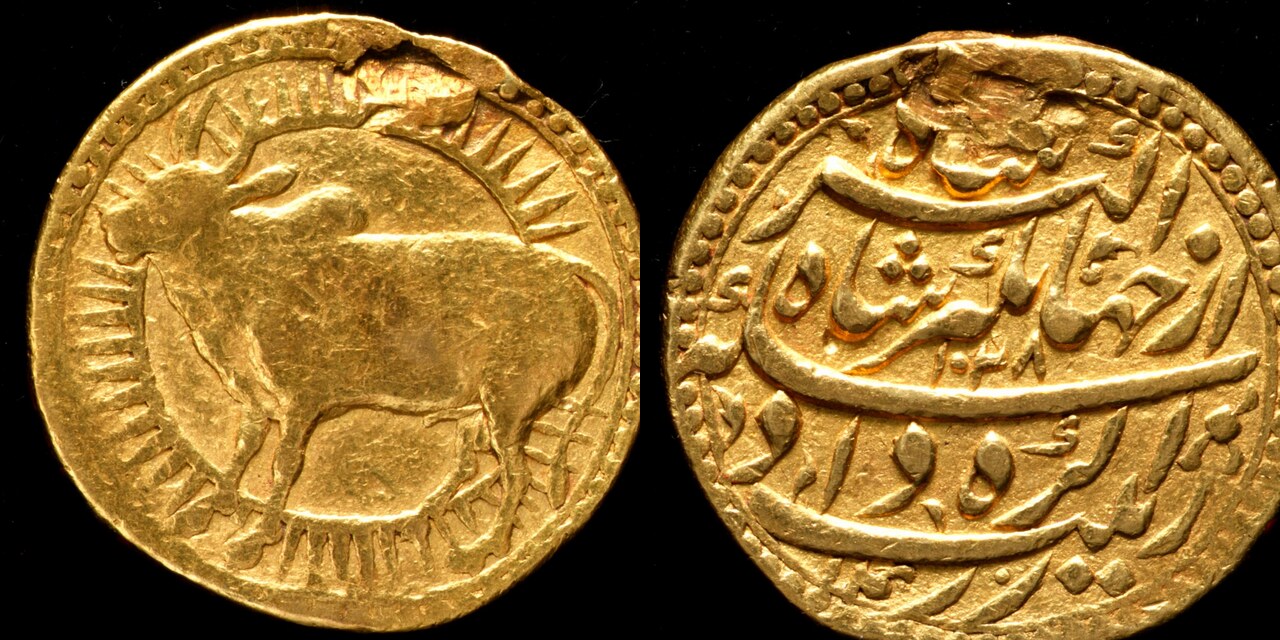
Mughal Empire, 1619: a gold zodiac coin. The Metropolitan Museum of Art holds this gold coin, dated 1028 AH (1619 CE) and made at Agra. The Met's record names no ruler. The collection attributes it to Emperor Jahangir, who issued zodiac coins in 1618 to 1627 (John F. Richards, The Mughal Empire, 1993). One face shows a bull inside a ring of sun rays. The archive's reading is that a celestial sign and the sun's rays on the emperor's gold attach cosmic prestige to the issuer.
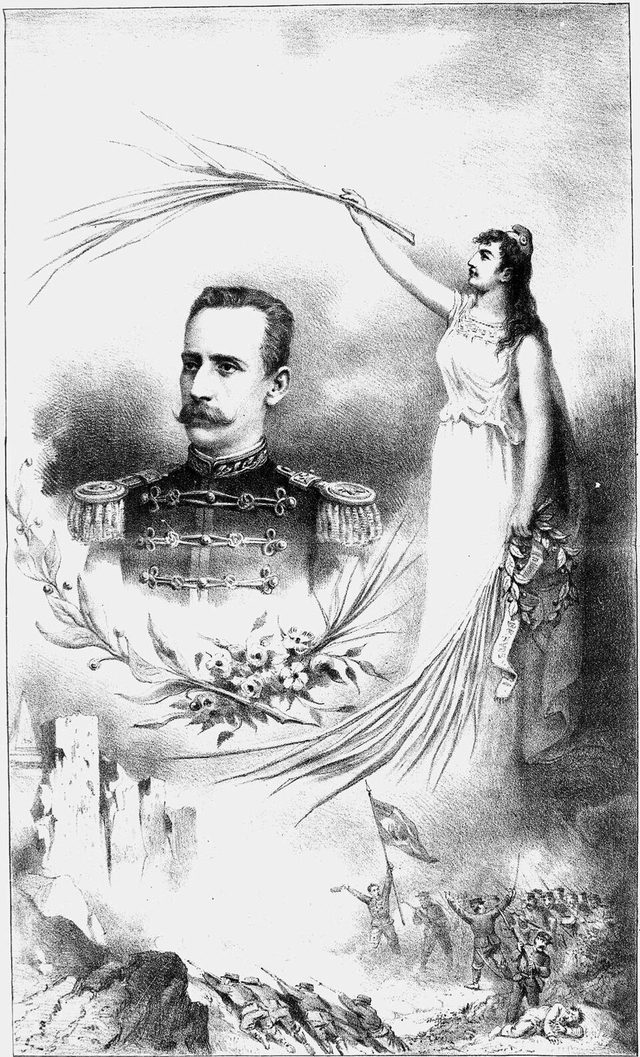
Content note: Celebratory tribute to a general and the army that destroyed the Canudos settlement; a fallen body is shown in the foreground. This object is shown as it was published. Why 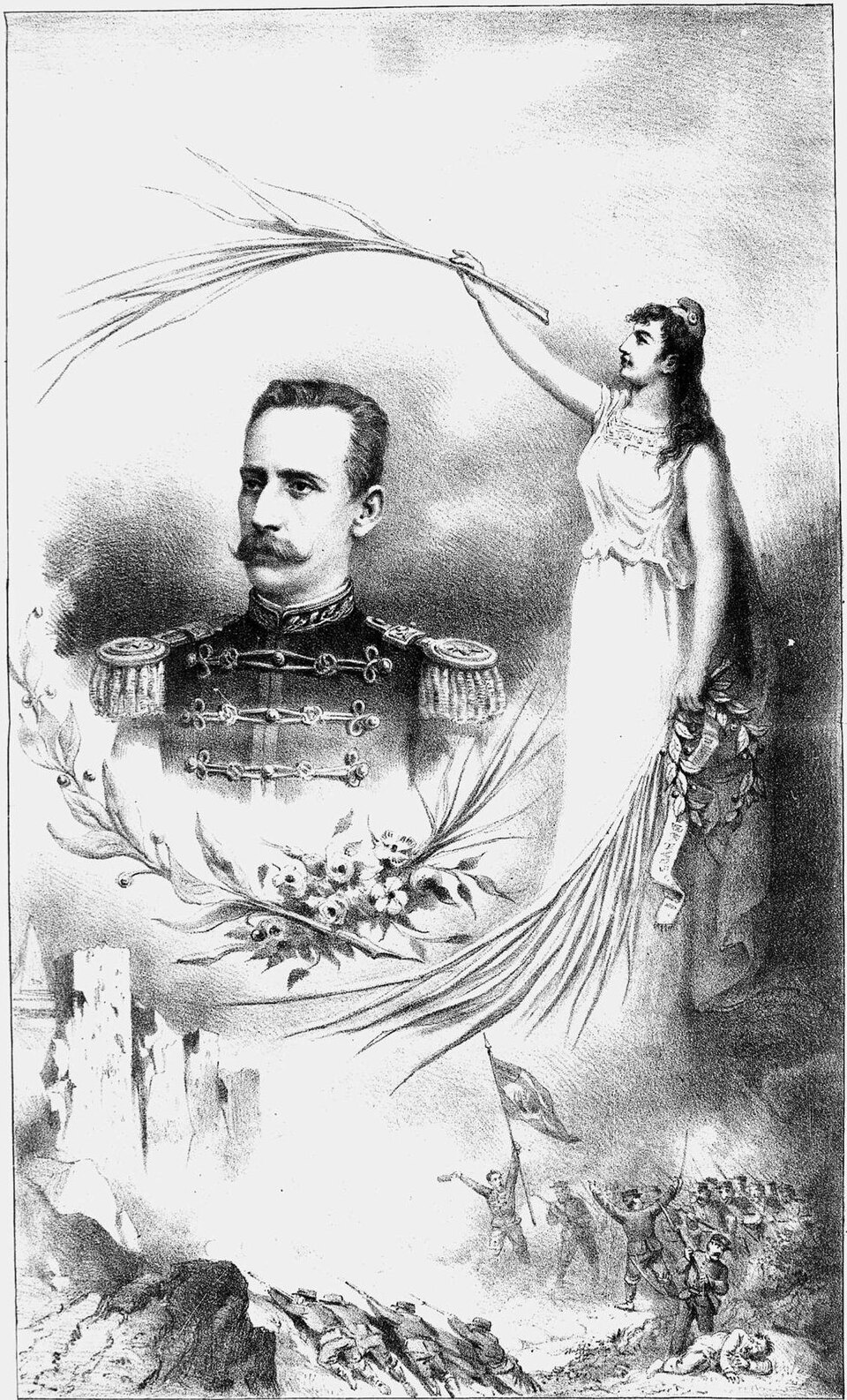
Borrowed victory and the weight of war
Brazil, 1897: a newspaper tribute to a general. The Rio de Janeiro weekly Revista Illustrada printed this full page in issue no. 734. A bust of a uniformed general, named by Wikimedia as Artur Oscar, sits in a laurel wreath while an allegorical woman in a Phrygian cap sweeps a palm over him. The Republic figure, palm and laurel lend the prestige of victory to the commander and the army. The army had destroyed the Canudos settlement in October 1897, and the page shows the campaign only from the victors' side.
Explain moreShow less
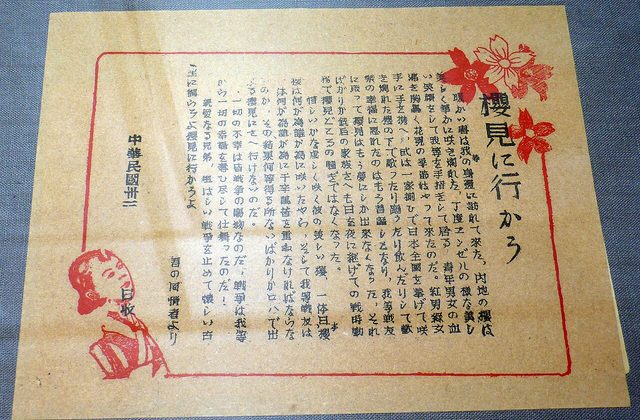
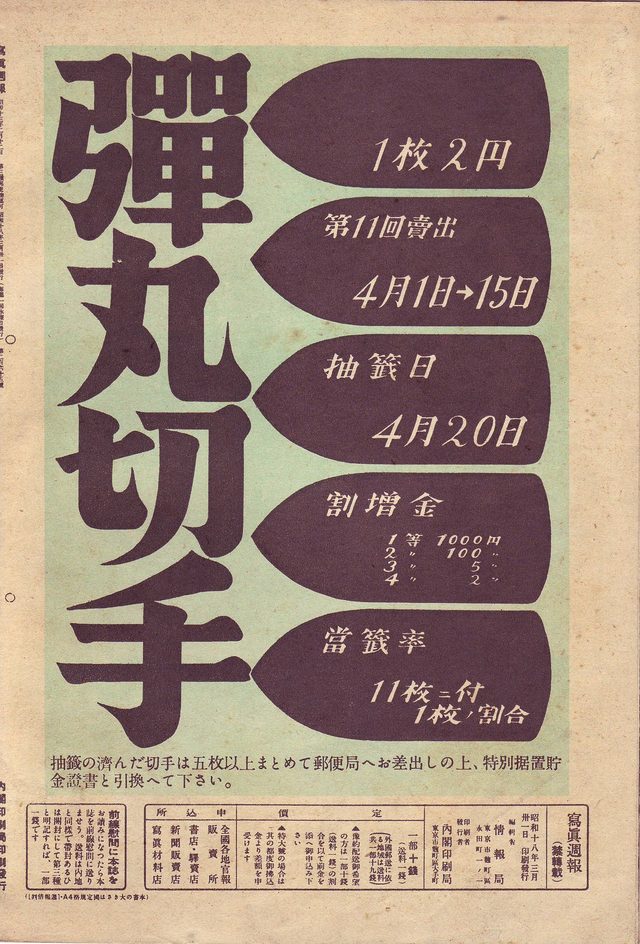
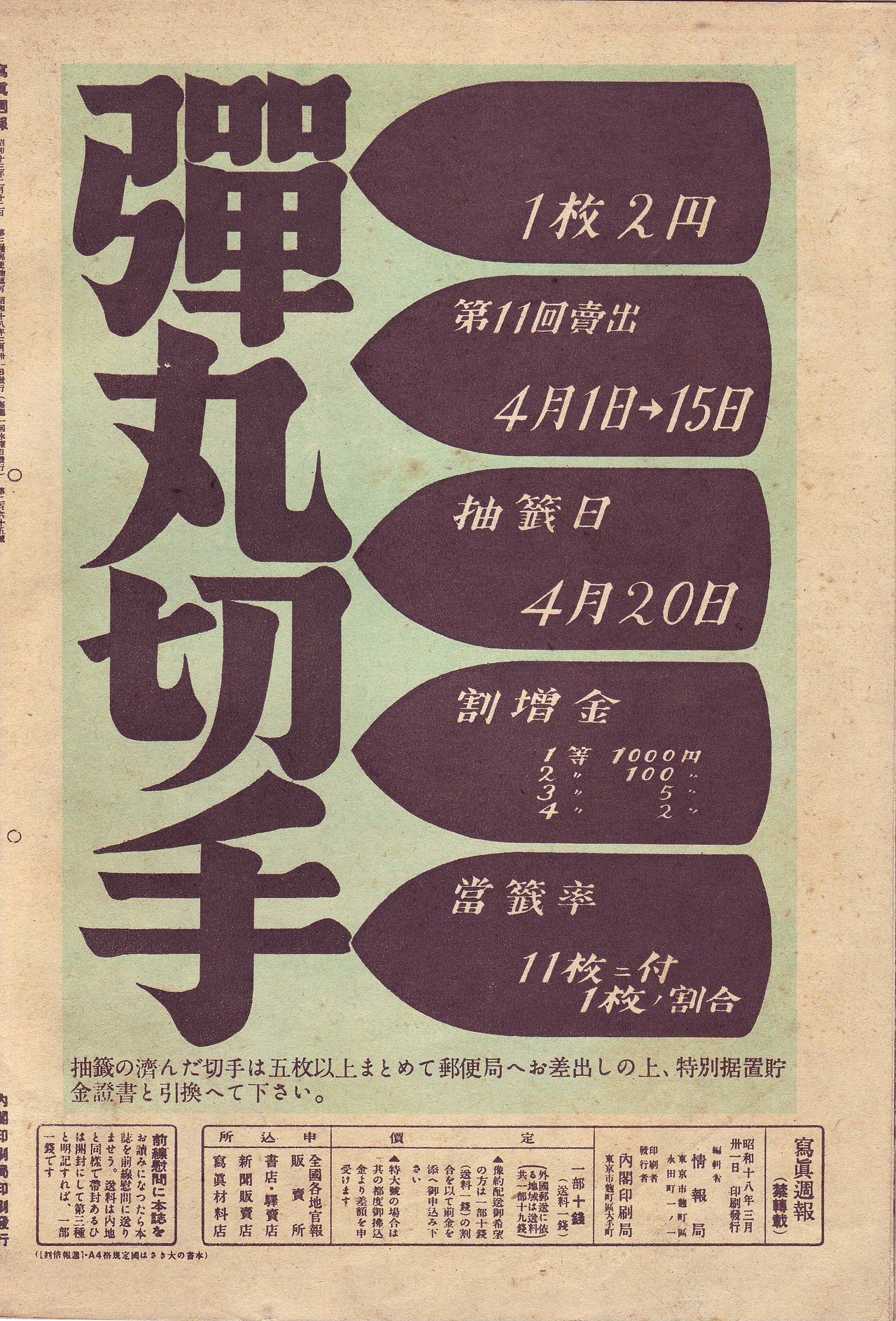
Japan, 1943: "Bullet Stamps." The back cover of the government photo weekly Shashin Shūhō, printed on 31 March 1943, advertises two-yen war-savings stamps drawn as rifle bullets. Prizes ran from 1,000 yen down to 2 yen. The Ministry of Finance and the Cabinet Information Bureau were the issuers. The bullet shapes carry the weight of the fighting onto a household savings purchase,.
Borrowed stigma: attaching a hated symbol to an opponent
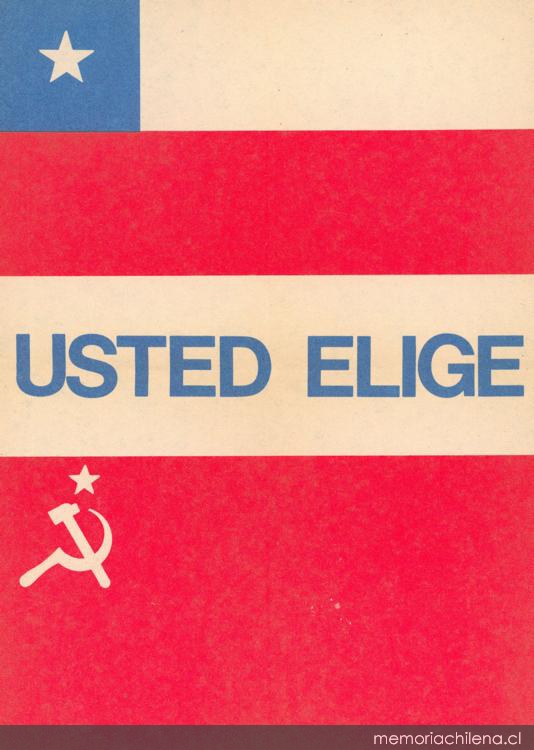
Chile, 1988: "Usted elige." A leaflet stacks the Chilean flag over a red field with a hammer, sickle and star, with "YOU CHOOSE" in between. The two-item menu frames the choice as homeland or communism, and the emblem's stigma is pasted onto the unnamed alternative. The sheet names no sponsor and prints no date. The Memoria Chilena catalogue ties it to the 1988 plebiscite period. A later Commons redrawing credits the pro-Pinochet campaign, an attribution that does not appear on the sheet.
Explain moreShow less
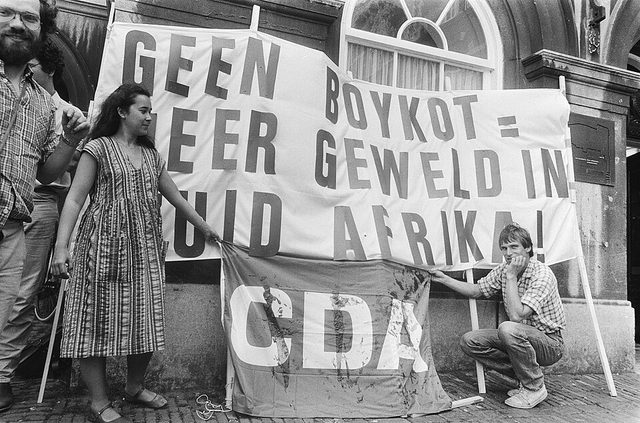
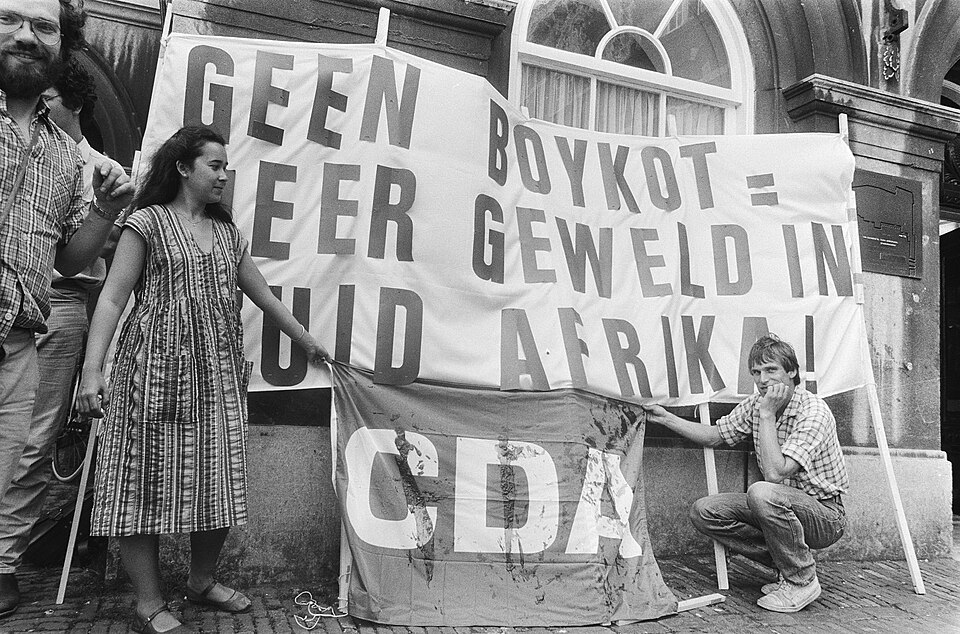
Netherlands, 1983: a stained party flag. Rob Bogaerts photographed this protest outside the Tweede Kamer in The Hague on 21 June 1983 for the Anefo agency, now in the Nationaal Archief. A banner reads "No boycott = more violence in South Africa!" above a flag of the Christian Democratic Appeal, then the senior party in the governing coalition, marked with stains the archive calls blood. The flag pastes the stigma of violence onto a governing party's own symbol. The banner's claim is the protesters' own and is not assessed here. People who opposed boycotts argued the opposite on effectiveness and cost.
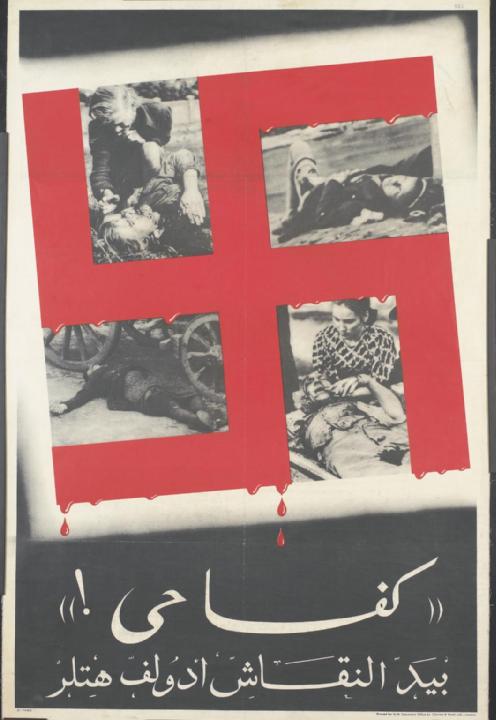
United Kingdom, 1939 to 1945: an Arabic-language poster. Printed in Britain for H.M. Stationery Office, presumably for audiences abroad according to the Imperial War Museums, this poster sets four photographs of dead civilians, among them children, inside a red swastika. The Arabic caption reads "My Struggle! By the hand of the sculptor (engraver) Adolf Hitler" in the entry's translation. The Nazi symbol is made to carry the stigma of the victims shown inside it. The IWM gives no issue date, only the Second World War.
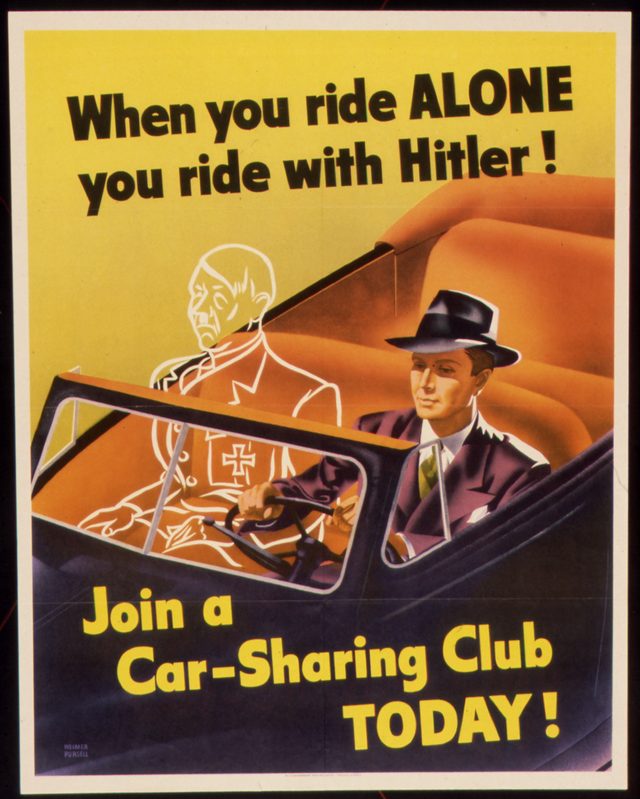
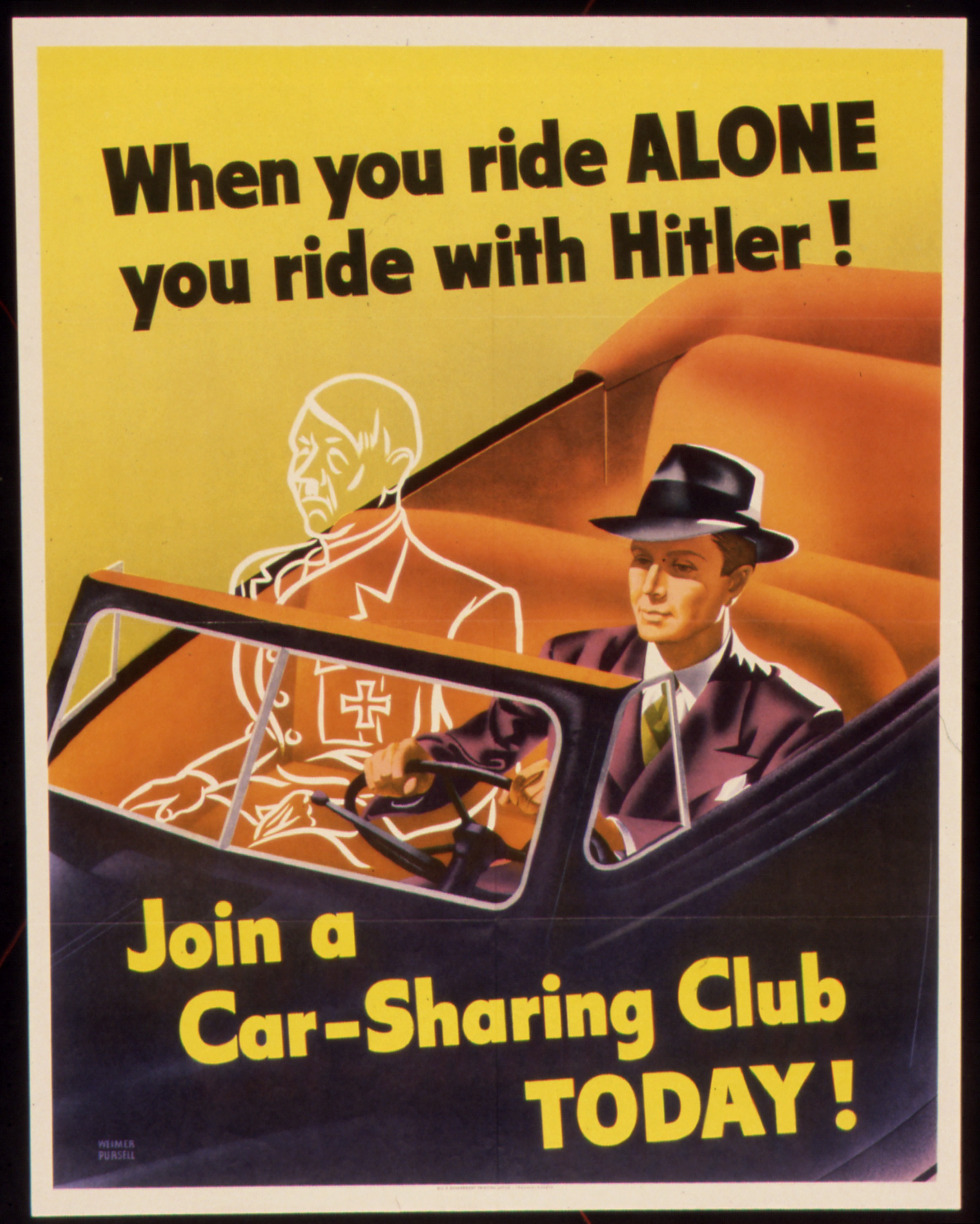
United States, 1943: "When you ride ALONE you ride with Hitler!" A U.S. home-front poster by Weimer Pursell, urging gasoline and rubber conservation, puts an outline Hitler with an Iron Cross beside a man driving alone and adds "Join a Car-Sharing Club TODAY!". Hitler's stigma is pasted onto driving alone. The link is rhetorical, since the poster cites no figures.
Borrowed look: imitating an official source
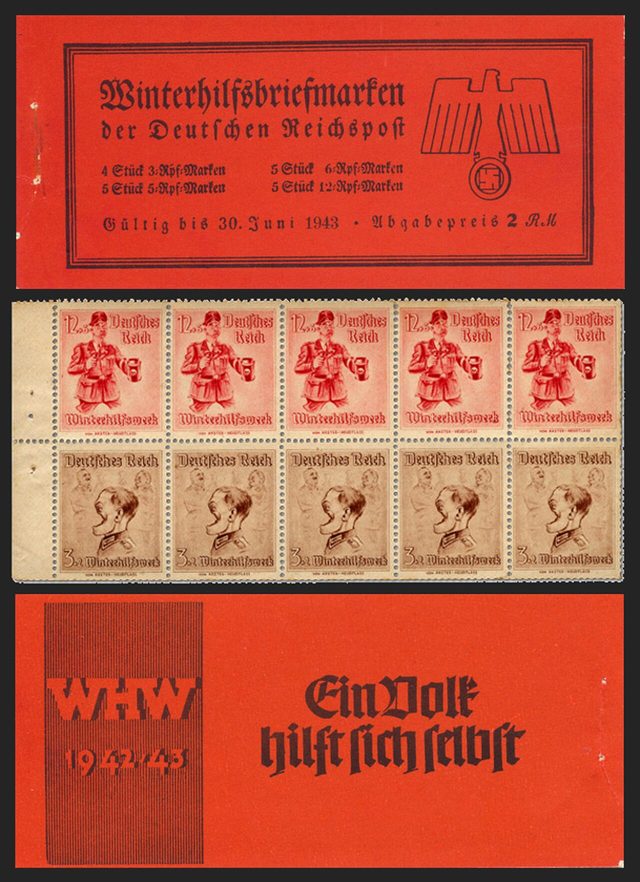
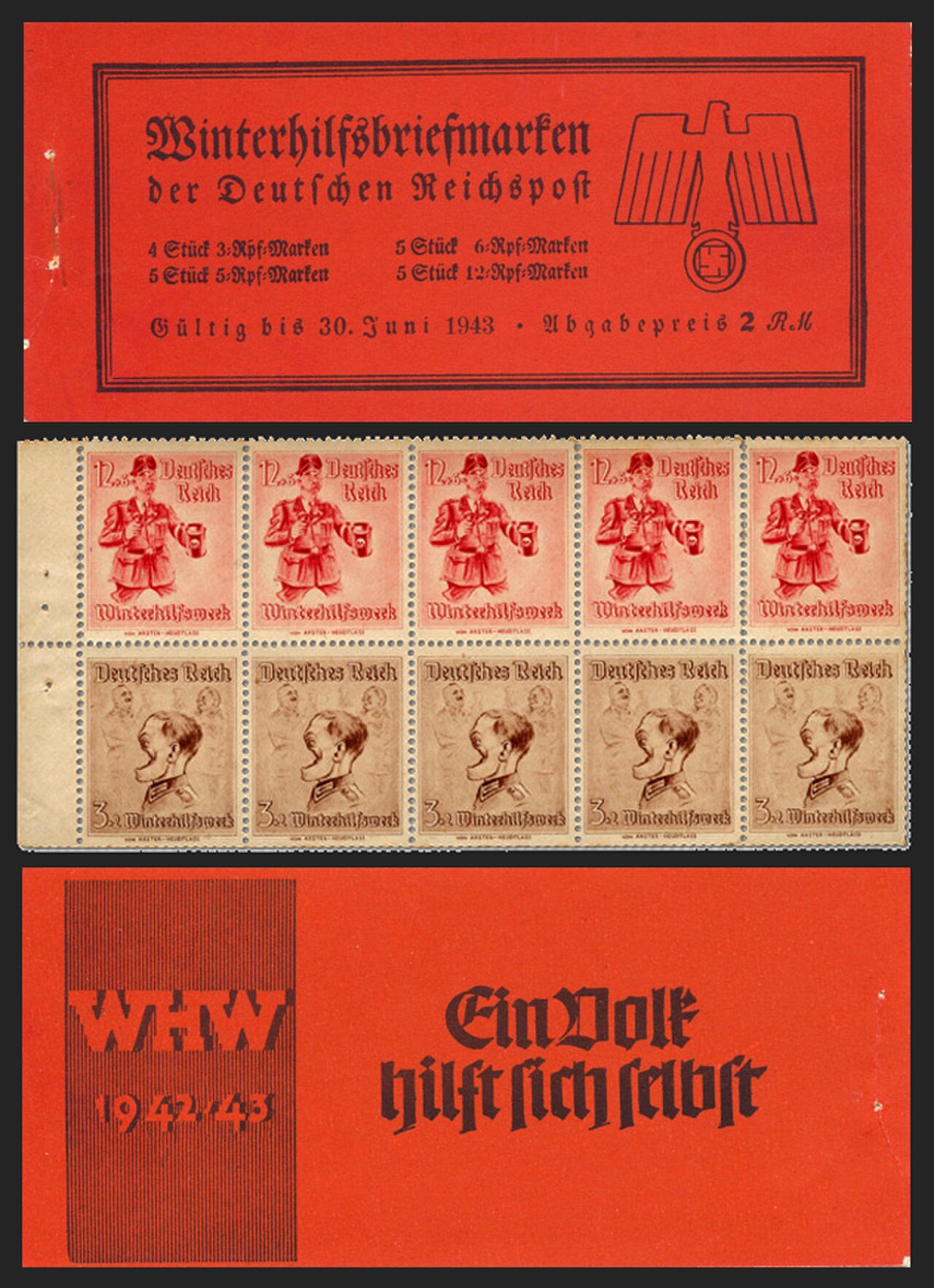
United Kingdom, 1943: a forged German charity booklet. The Political Warfare Executive, a British wartime body, produced this counterfeit of a Winterhilfswerk stamp booklet of the German Reichspost, with a red cover bearing the Reich eagle and stamps whose pictures are caricatures. Its back cover carries the charity's slogan "Ein Volk hilft sich selbst". The booklet borrows an official eagle, format and slogan for a hostile message, and nothing on it shows a British origin, which also makes it black propaganda. Ellic Howe describes the Executive's stamp forgeries in The Black Game (1982).
How the same technique looks on different sides
The issuers include a Mughal emperor, a German Kaiser, a Sharif of Mecca, a Brazilian weekly, the Japanese and Ukrainian states, a British wartime body and the U.S. Army, plus a Venezuelan campaign, a Dutch protest and an unnamed Chilean leaflet-maker. The construction is the same: a symbol already loaded with feeling is placed beside a message. The differences are in scale, intent and context. The Ukrainian stamp is an openly attributed state issue and the Japanese page names its ministry and bureau, while the Chilean leaflet and the Dutch banner name no sponsor and the British booklet hides its origin. None of this settles whether any cause was right.
How to spot transfer
- A flag, saint, scripture, uniform or emblem sits beside a message it has no stated connection to.
- The symbol does the persuading: remove it and no reason remains to agree.
- A dead leader, ancestor or founder stands in for the platform.
- An enemy symbol or party flag is attached to an ordinary choice, such as a vote, a policy or how someone drives.
- The look of an official source (a stamp booklet, a masthead, a seal) is borrowed, so the origin is not what it seems.
Browse more transfer examples
The grid below shows more transfer examples from the collection. Each opens an object page with the holding institution, a link to the original record, a transcription of any text and the rights basis for hosting. For the technique itself, read the transfer technique page. For wider hubs, see propaganda examples, types of propaganda and propaganda posters.
Sources and further reading
Sources and rights
Objects come from the U.S.
Objects come from the U.S. National Archives, the Library of Congress, the Imperial War Museums, the Metropolitan Museum of Art, the Nationaal Archief, Memoria Chilena, the Portugal 1914-1918 portal and Wikimedia Commons. Each is hosted under the rights basis on its object page: public domain by age or as a government work, Creative Commons or CC0 dedications for the more recent photographs and stamps, or the holder's free-reuse statement. Transcriptions are verbatim and shown on the object pages.