Content note. One newspaper page uses period colonial terms for Indians, a colonial booklet shows Congolese labourers under white overseers, and a 1932 photograph and a 1921 banknote carry German nationalist messages. They are shown as issued. Showing an item is not endorsing it.
What is bandwagon propaganda?
Bandwagon propaganda treats popularity, momentum or "everyone is doing it" as the reason to act, so the crowd becomes the argument. The tell is a count, a roll of names, a vote share or a picture of a crowd standing where the case for the claim should be. This page gives fourteen dated examples from ten countries and six periods, from a 1905 newspaper to a 2015 comic. For the definition, see the technique: bandwagon.
What counts as bandwagon, and what does not?
Reporting a real majority is not bandwagon. A newspaper that prints an election result is giving information. The technique starts when the count is used as the reason: the audience is told that most people have already joined, or that the tide is running, and is invited to follow.
Explain moreShow less
The same test applies to every issuer here. A figure may be accurate and still do bandwagon work if it replaces the argument. Each entry is tagged for what the item does, not for whether its cause was right. Where the collection notes that a figure is unchecked, this page says so.
Which posters show everyone already joining?
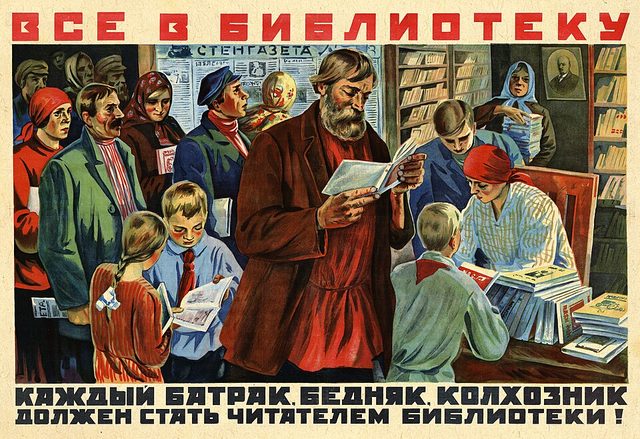
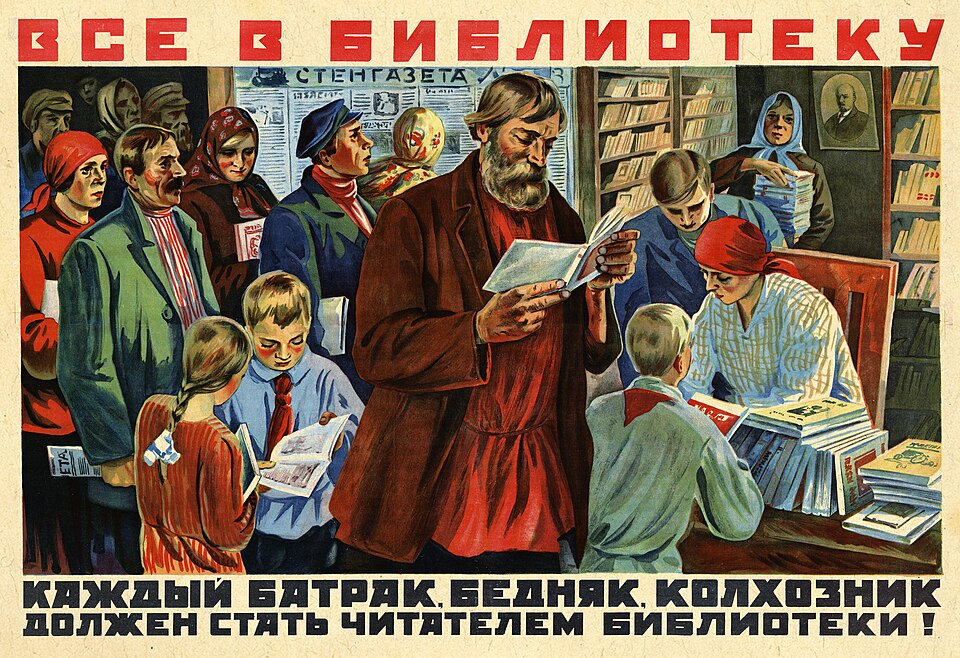
A Soviet poster of 1929, published by the State Publishing House (Gosizdat) in Moscow and Leningrad, calls "everyone" to the library. It names three rural groups, farmhands, poor peasants and collective farmers, and shows a reading room full of peasants, women and children queuing behind a reader in a red shirt. The headline asks for a crowd and the picture shows it already assembled. Read the technique: bandwagon.
Explain moreShow less
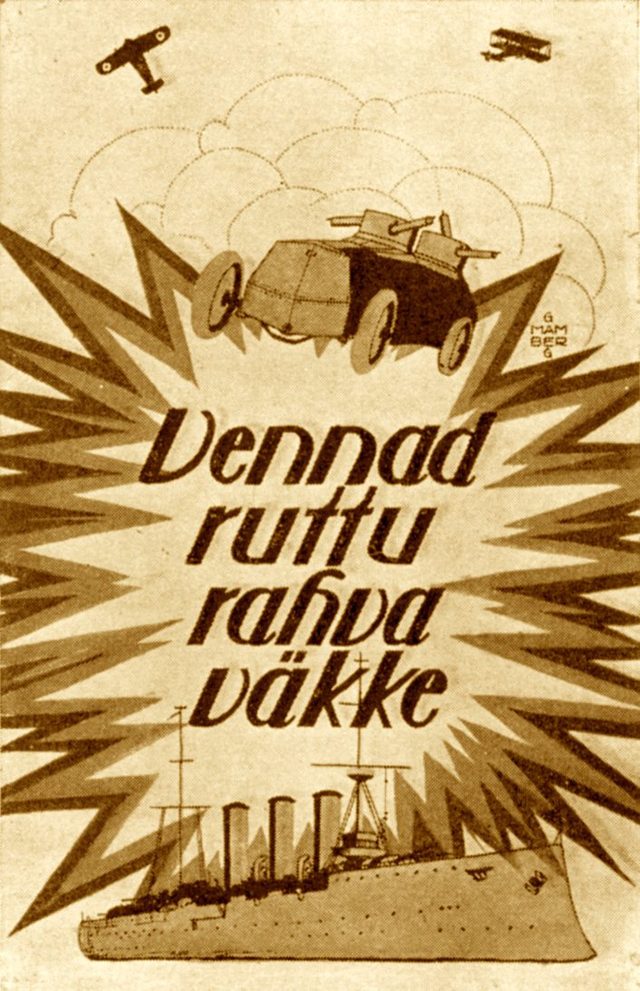
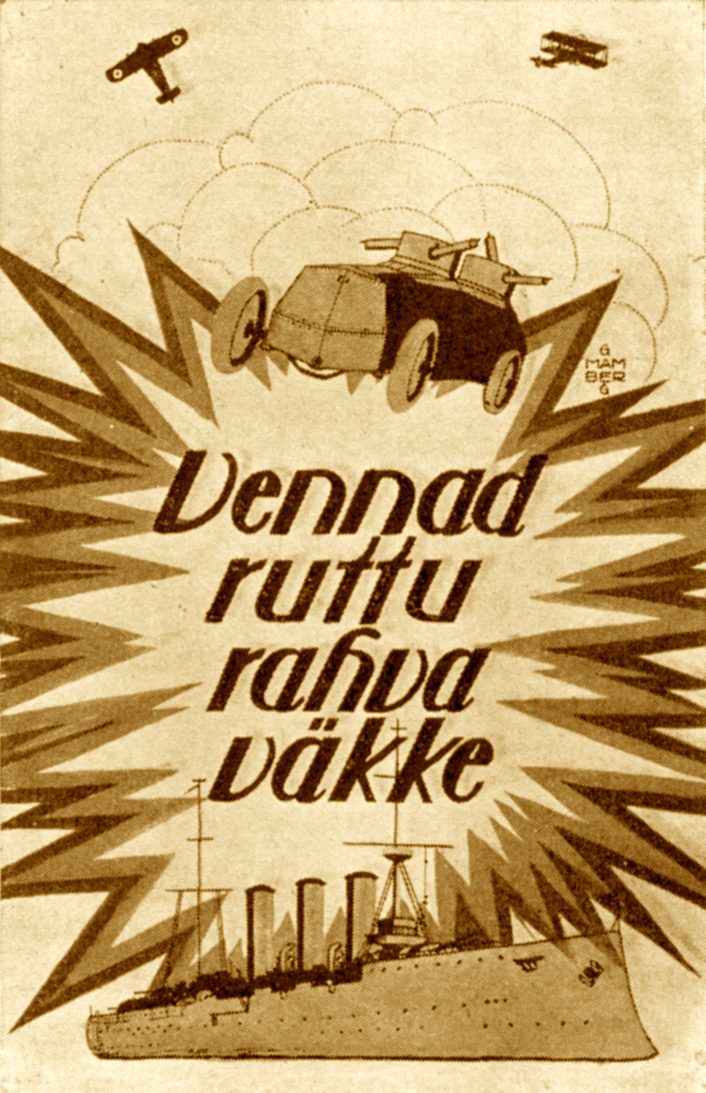
An Estonian recruiting poster of 1918, signed G. Mamberg and attributed to the Provisional Government, reads "Vennad ruttu rahva väkke" ("Brothers, hurry into the people's force"). An armoured car, two aircraft and a warship are already pictured, so the force is shown armed and moving, and the viewer is told to hurry. The image is a halftone from a 1937 history of the war.
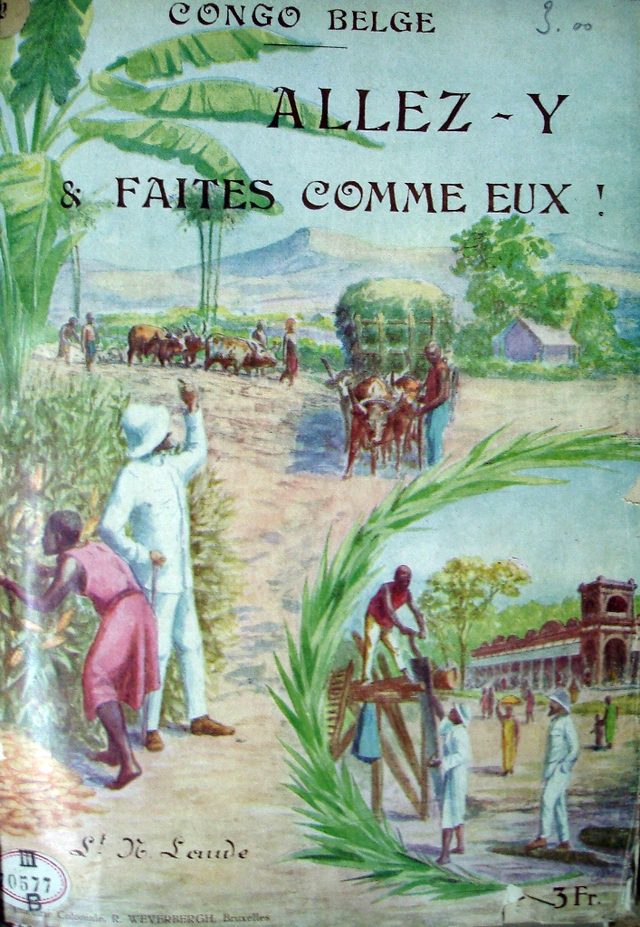
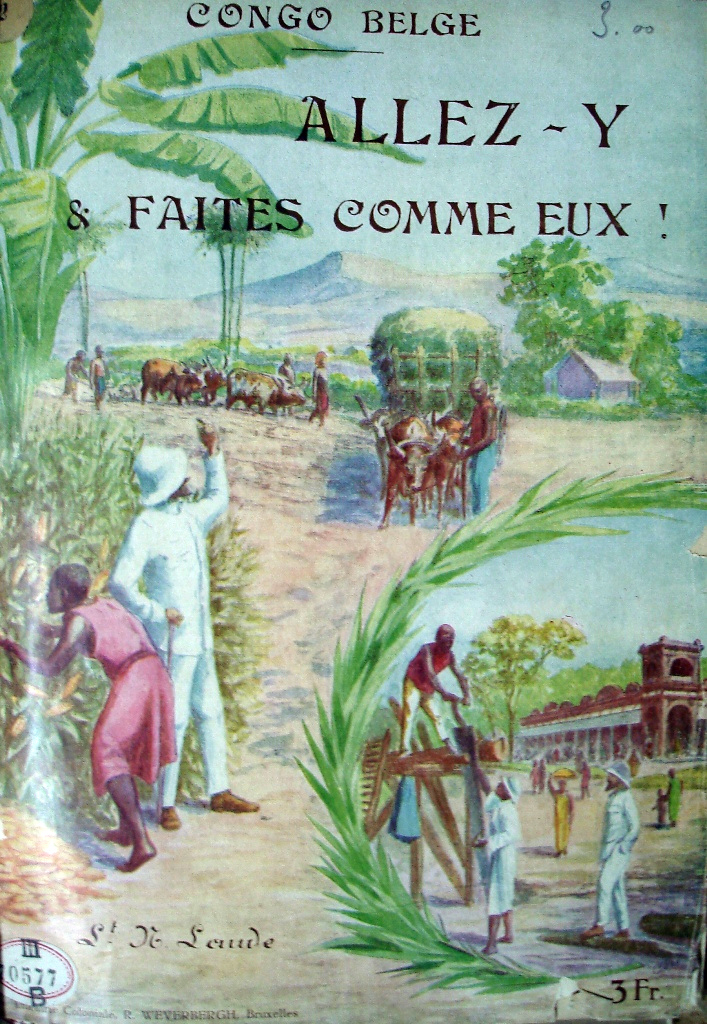
A Belgian colonial booklet cover of about 1922, published by the Librairie Coloniale in Brussels, tells readers "Allez-y & faites comme eux !" The words amount to "go there, and do as they do". The pictured settlers are offered as the crowd to join. The sheet names the publisher; a link to the Ministry of Colonies rests on a Commons description and is not confirmed. The pitch is aimed at Belgian readers.
How do issuers present themselves as the winning side?
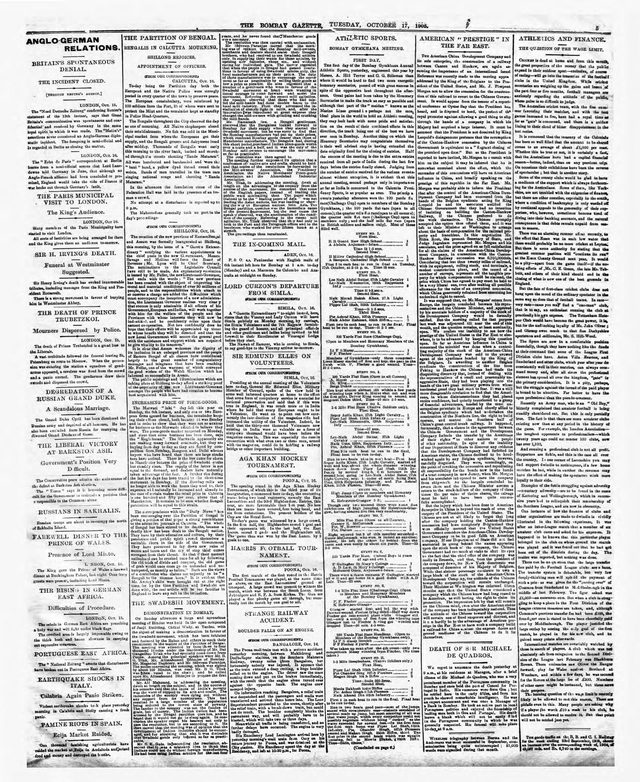
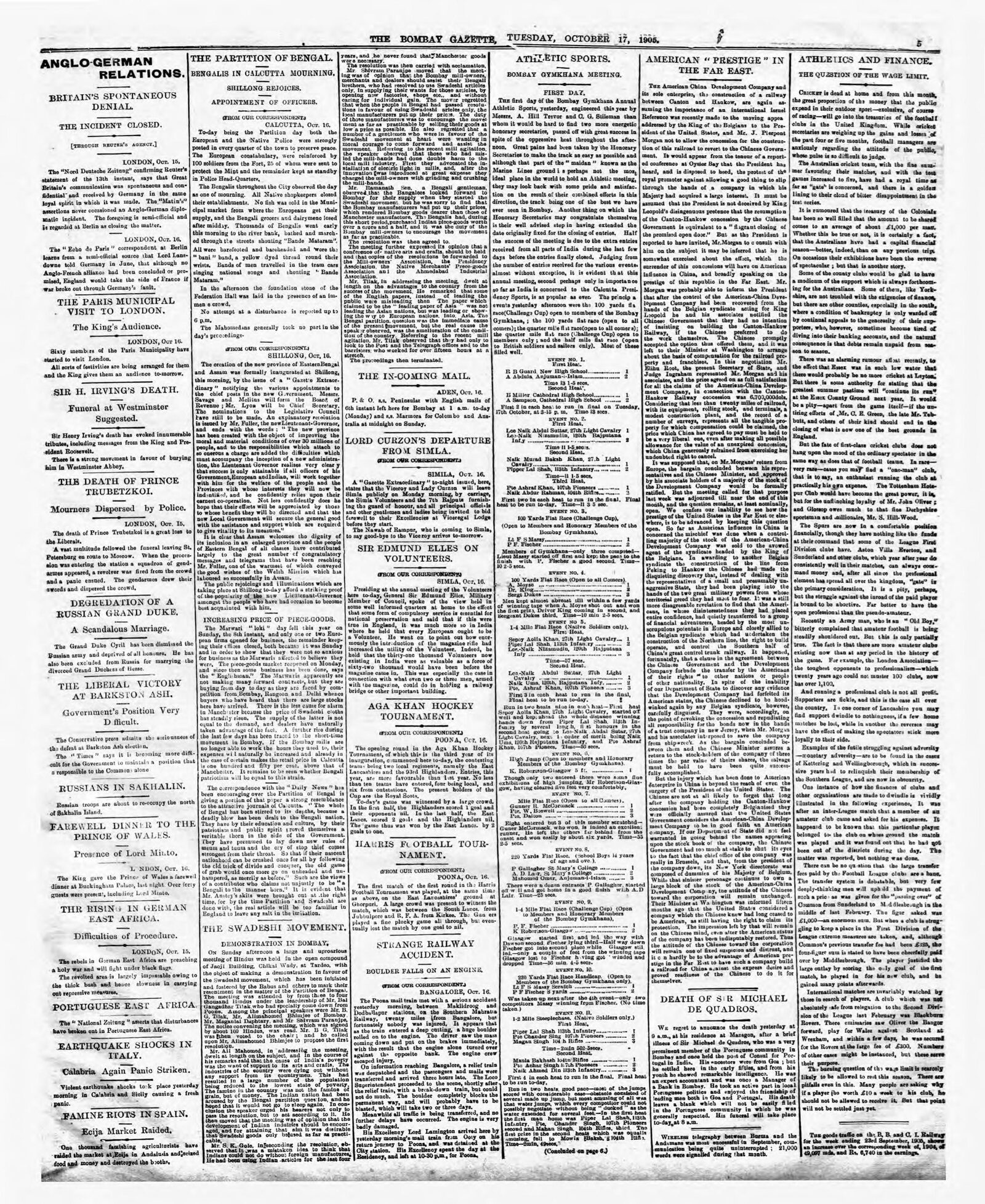
The Bombay Gazette, an Anglo-Indian daily, printed on 17 October 1905 its correspondents' reports from the day the Partition of Bengal took effect. The Shillong correspondent writes that "public rejoicings and illuminations" there "afford a striking proof of the popularity of the new Lieutenant-Governor". Festivities are offered as the evidence of public mood. The same page prints the Calcutta correspondent's account of a day of mourning, shuttered shops and marchers shouting "Bande Mataram". The paper printed both views; the proof-of-popularity framing is the Shillong correspondent's.
Explain moreShow less
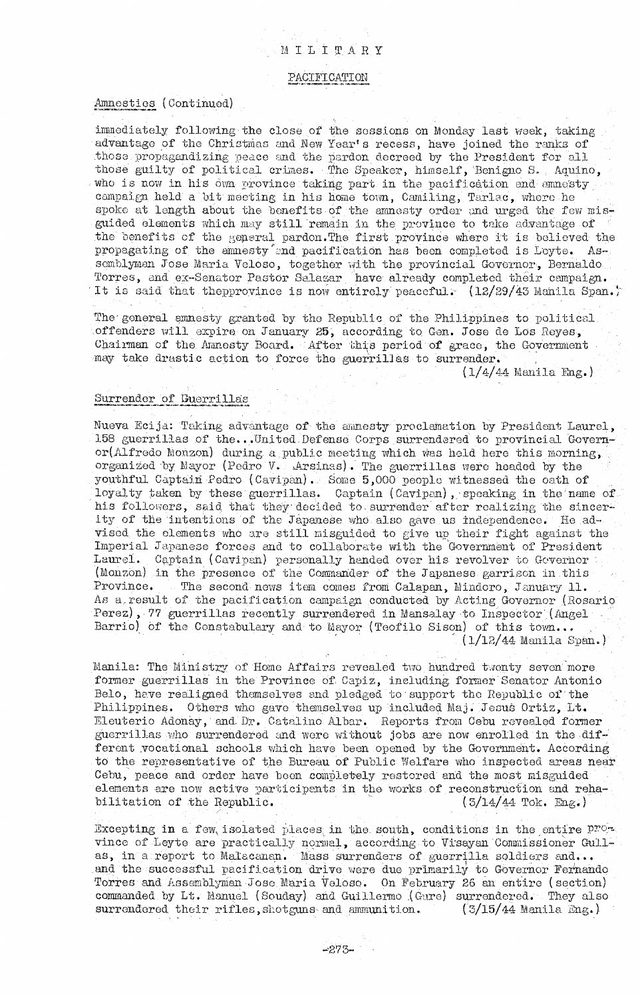
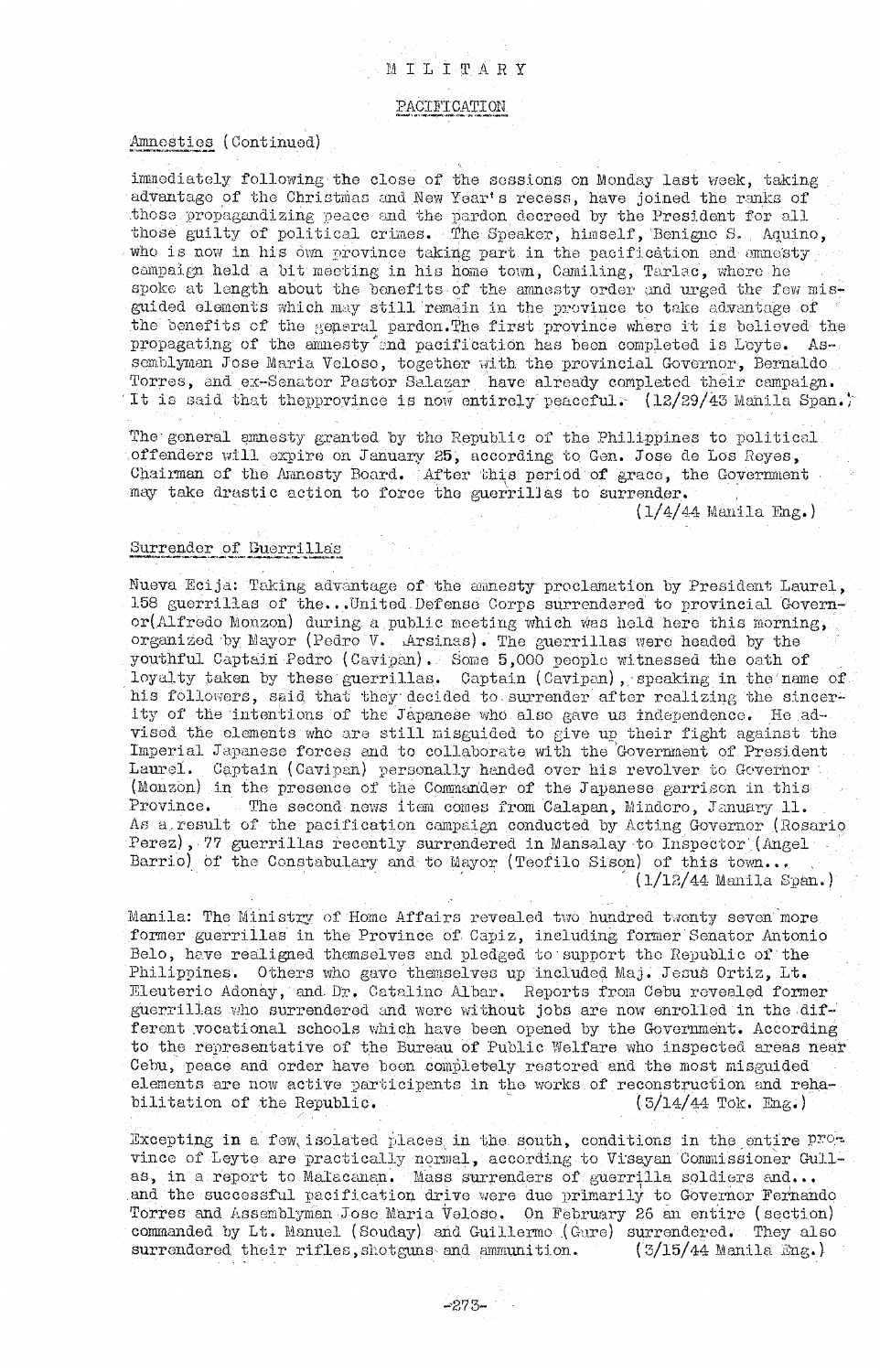
This is an American intelligence digest, not a Japanese publication: the U.S. Office of Strategic Services monitored Japanese-controlled broadcasts in 1943 and 1944. The items announce surrenders under an amnesty proclaimed by President Laurel of the Japanese-sponsored Philippine Republic: 158 guerrillas in Nueva Ecija, 77 in Mindoro, 227 more in Capiz, and a province said to be "entirely peaceful". The tally of those who have already come in is the argument. The digest does not verify the figures, and the same page warns that the government "may take drastic action to force the guerrillas to surrender" once the grace period ended.
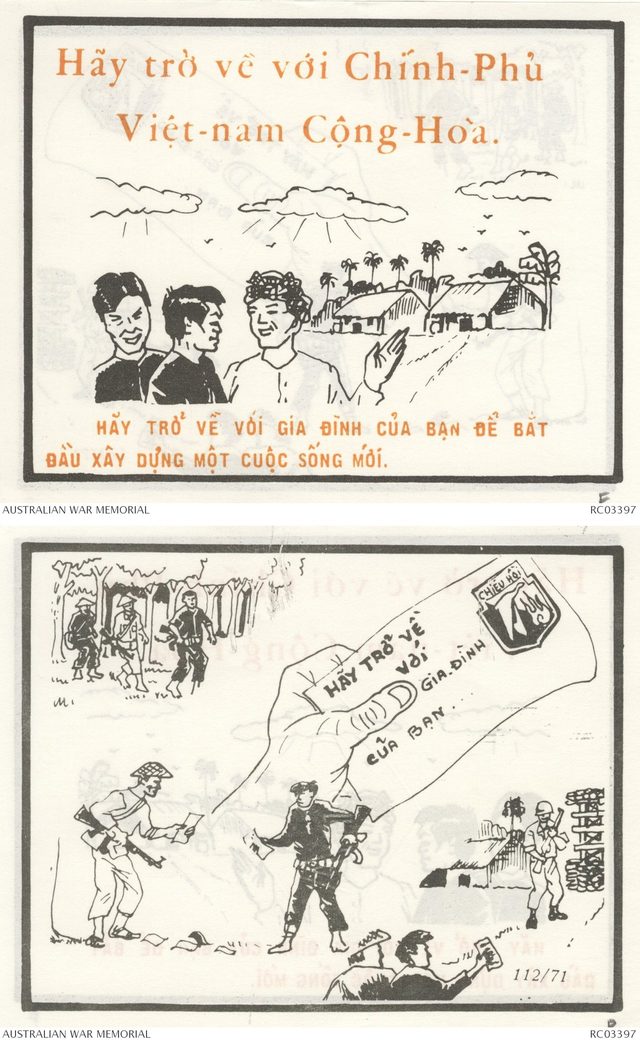
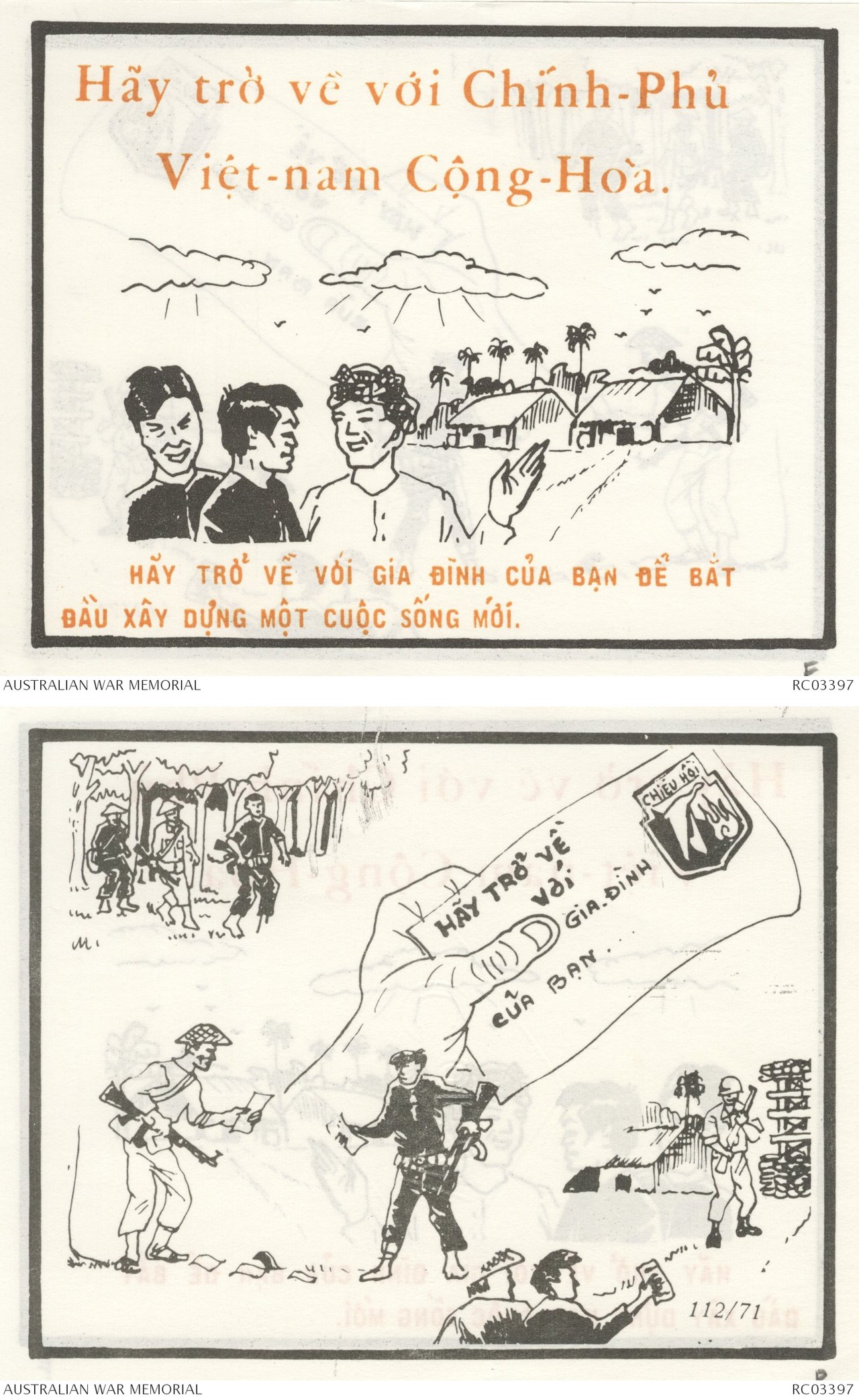
An Australian psychological operations unit at Nui Dat printed this leaflet in June 1971 for the South Vietnamese Chieu Hoi programme, to induce Viet Cong fighters to rally. One side urges a return to family "to begin building a new life". The other is a picture story in which guerrillas find dropped leaflets, read them and rally. The desired act is shown as already being done by others like them. The Australian War Memorial holds the leaflet.
How is a crowd used as proof?
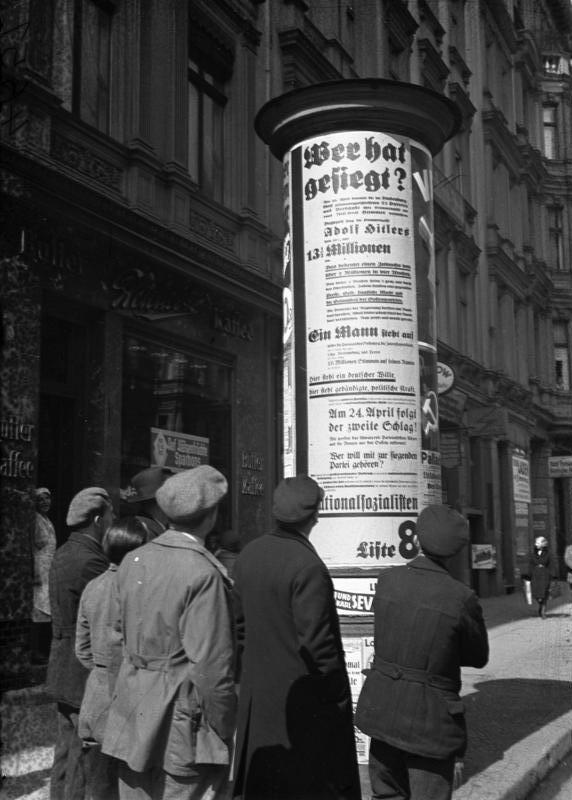
In April 1932 the Nazi Party put up a text poster on an advertising column in Prussia, photographed by Georg Pahl for the German Federal Archive. It is headed "Wer hat gesiegt?" ("Who has won?") and cites "Adolf Hitlers 13 Millionen", the votes he received in the second round of the presidential election on 10 April, which Paul von Hindenburg won. It then announces "Am 24. April folgt der zweite Schlag!" for the Prussian state election, signed "Nationalsozialisten, Liste 8". A vote total that did not win is recast as a victory to be followed.
Content note: German municipal emergency note of 1921 promoting a 97% vote for Germany in the Upper Silesia plebiscite; nationalist messaging, shown as printed. This object is shown as it was published. Why 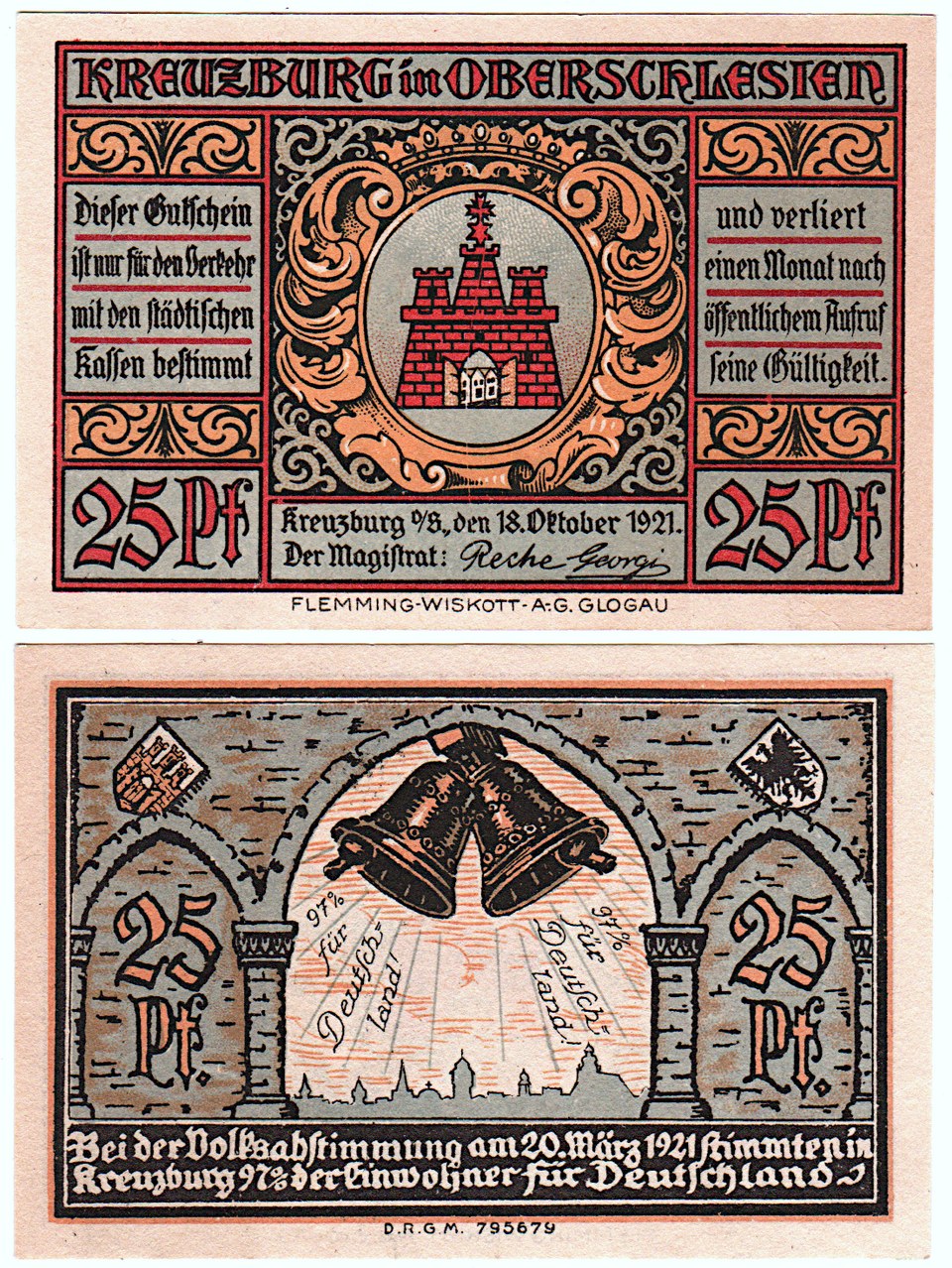
Explain moreShow less
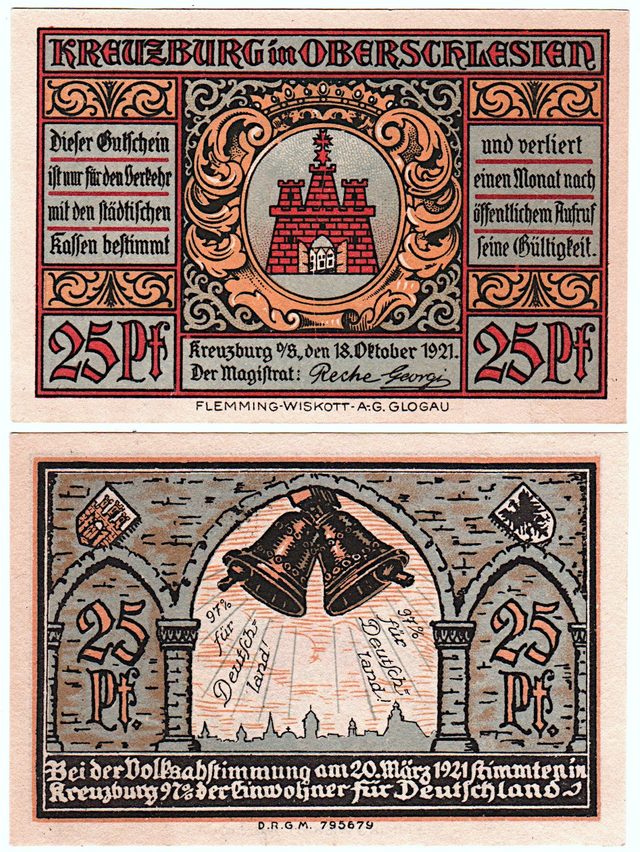
The back of a municipal emergency note issued by the town council of Kreuzburg in Upper Silesia (now Kluczbork, Poland) on 18 October 1921 reads "97% für Deutschland!" and states that 97 percent of the town's inhabitants voted for Germany in the plebiscite of 20 March 1921. A vote share is printed on money as the message. The 97 percent is the note's own claim, which the collection has not checked against town tallies. Across the whole plebiscite area the vote was roughly 60 percent for Germany and 40 percent for Poland.
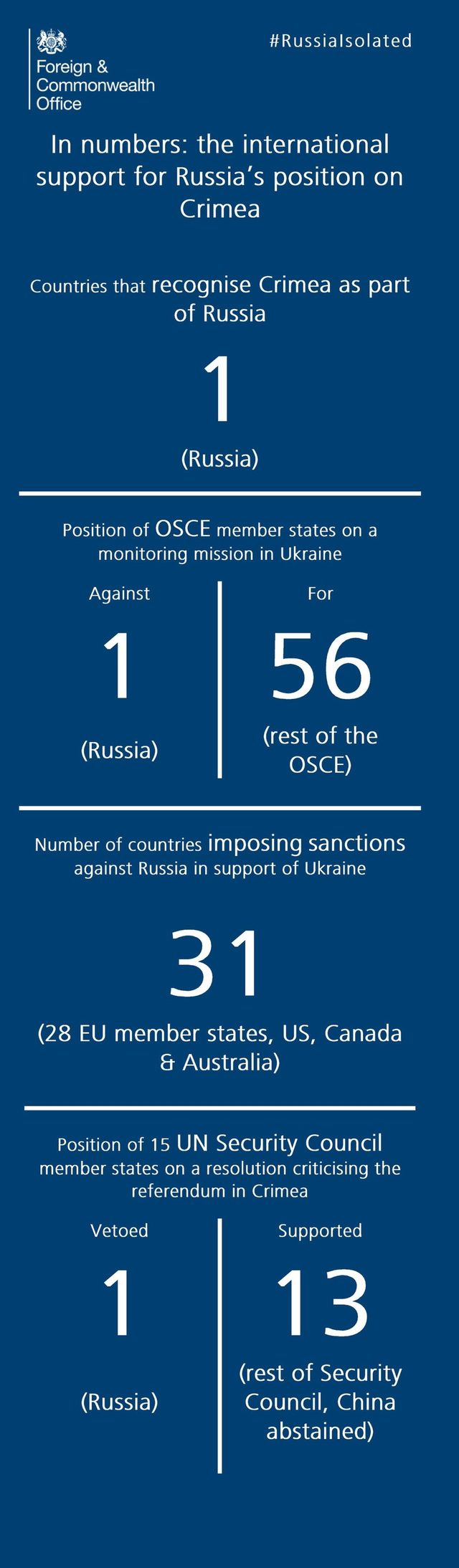
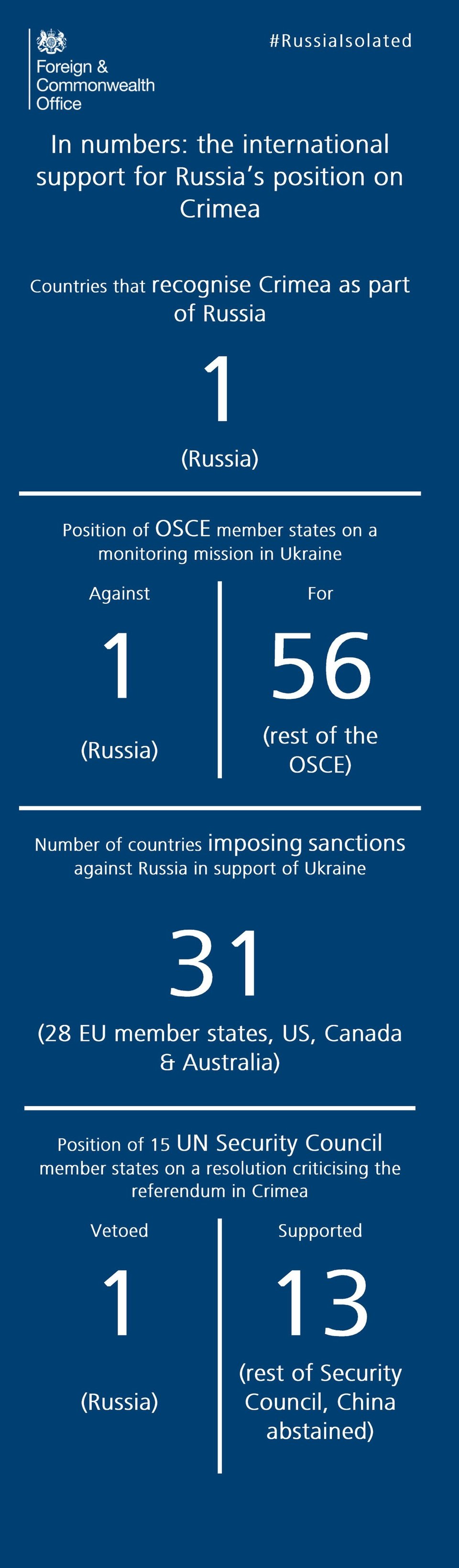
The UK Foreign and Commonwealth Office posted this infographic on 21 March 2014 as "#RussiaIsolated", five days after the Crimean referendum. It stacks four tallies with Russia alone on one side: 1 country recognising Crimea as part of Russia, 1 against 56 on an OSCE monitoring mission, 31 sanctioning states, and a Security Council vote of 13 in favour with one veto. The entry notes that abstaining states are not tallied, and that the UN General Assembly adopted a resolution on 27 March 2014 by 100 votes to 11 with 58 abstentions, a wider spread than the counts shown.
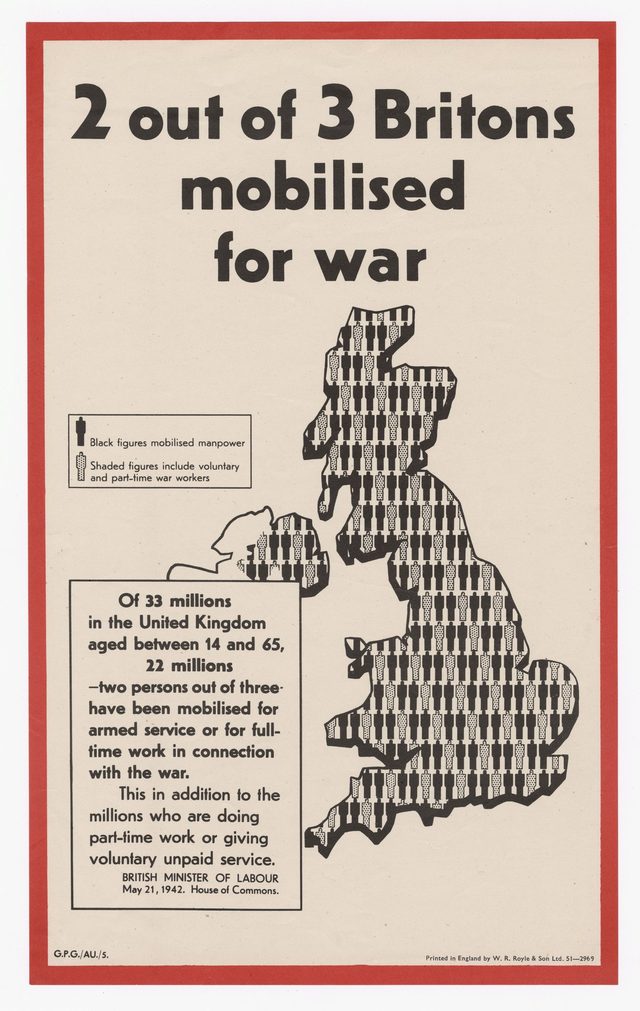
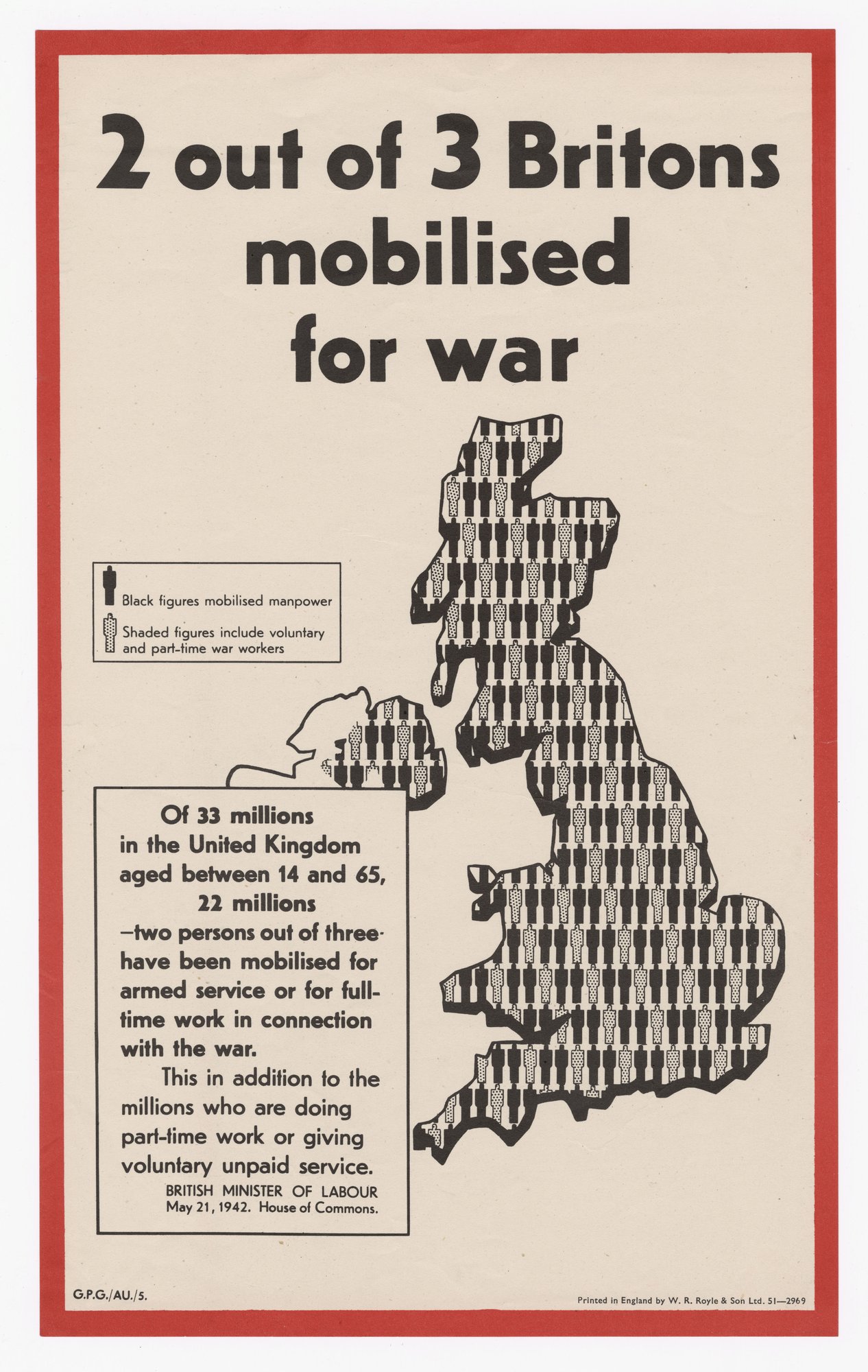
A British wartime poster of 1942, printed by W. R. Royle and Son with no issuing body named, fills a map of Britain with figures under "2 out of 3 Britons mobilised for war". A boxed statement by the Minister of Labour, dated 21 May 1942, gives 22 million of 33 million people aged 14 to 65 as mobilised for armed service or full-time war work. The figure is an official count, so the entry is tagged for presentation: the layout shows mobilisation as what most people had already done.
How do quotas, rolls and pledges work?
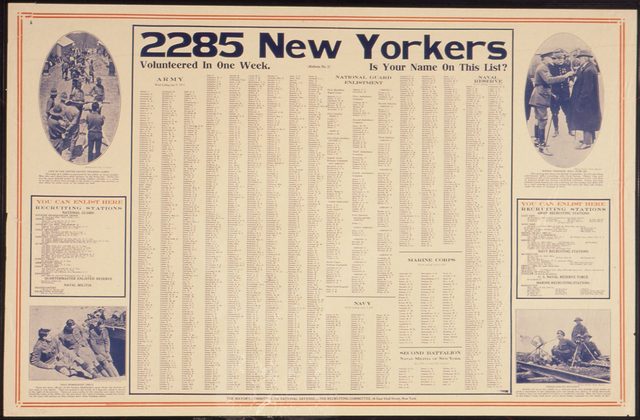
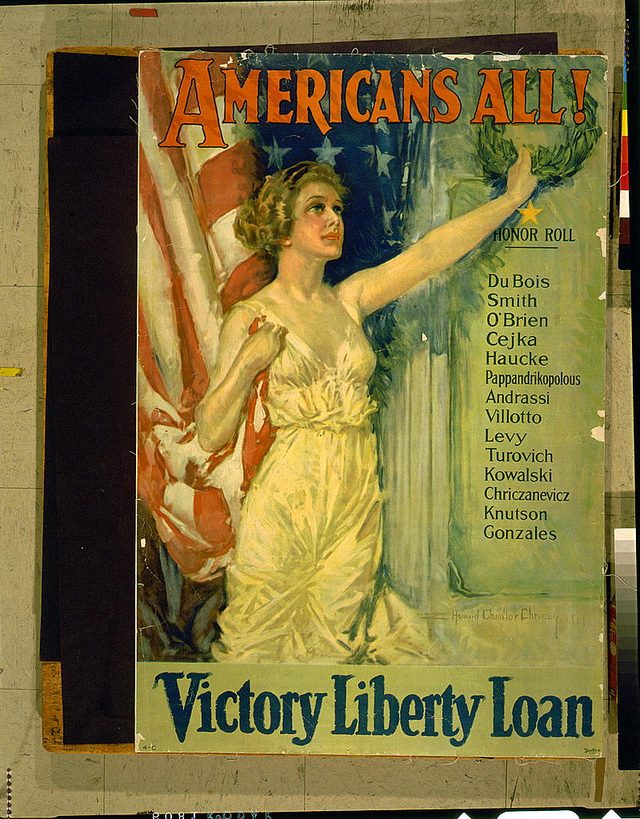
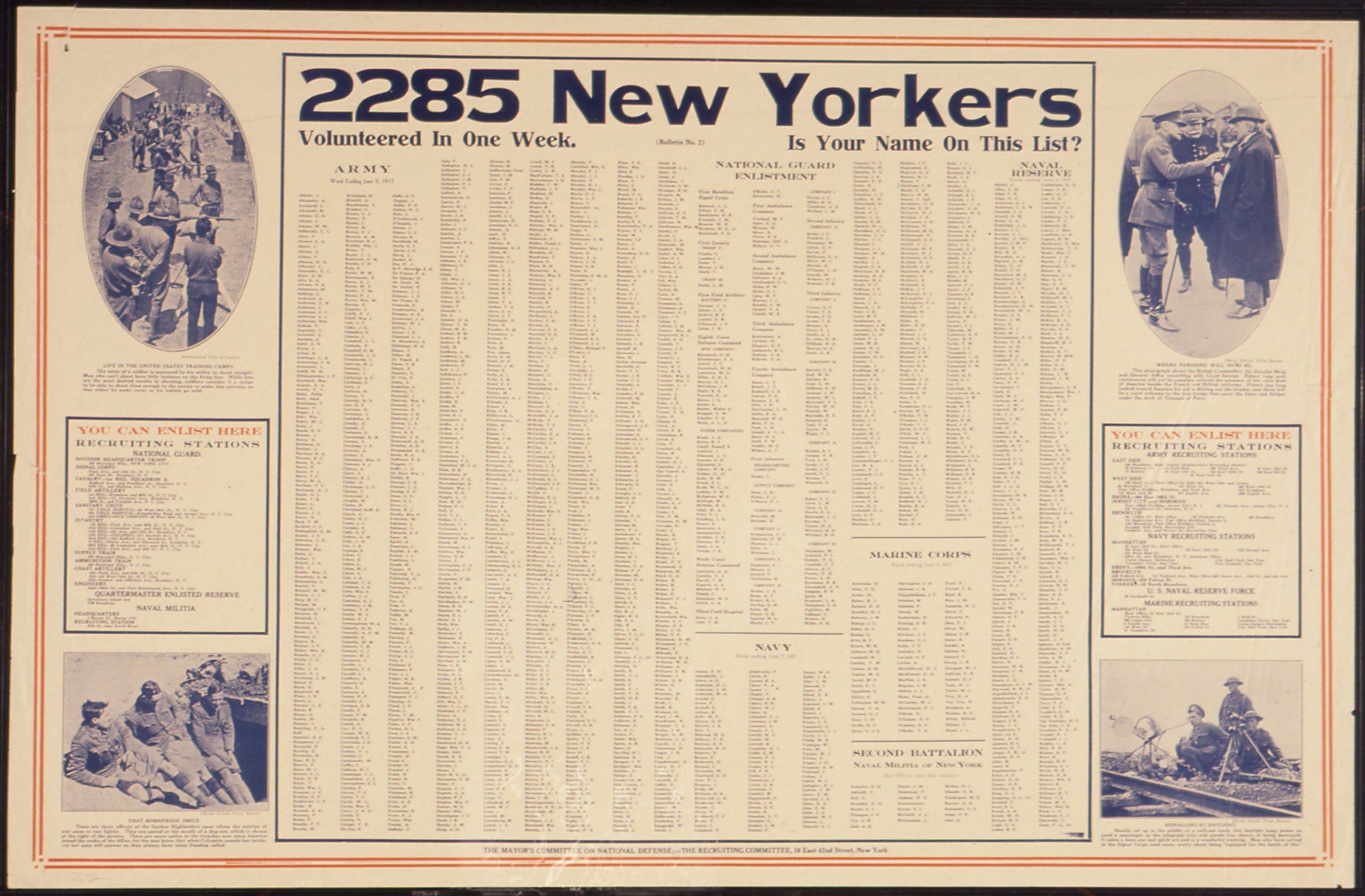
The Mayor's Committee on National Defense in New York issued this broadsheet in 1917 as Bulletin No. 2, with lists for the weeks ending 2 and 9 June. Columns of the names of enlisted volunteers fill the sheet under the question "Is Your Name On This List?" The reader is asked to find, or be missing from, a roll of neighbours who have already signed up.
Explain moreShow less
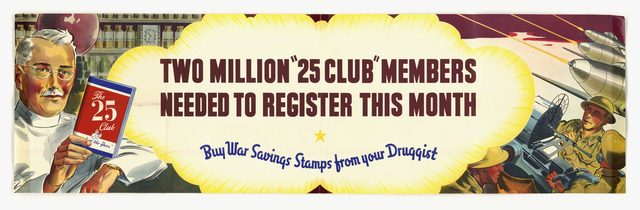
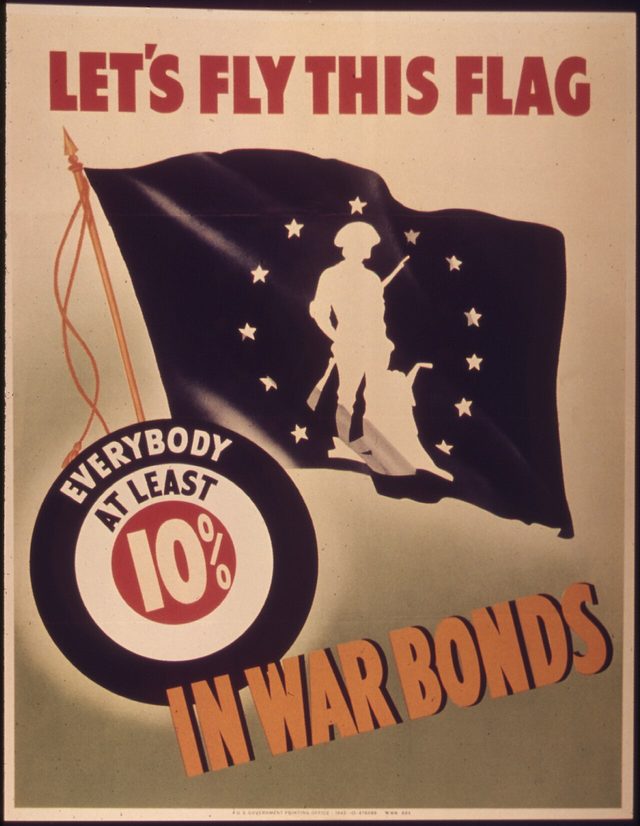
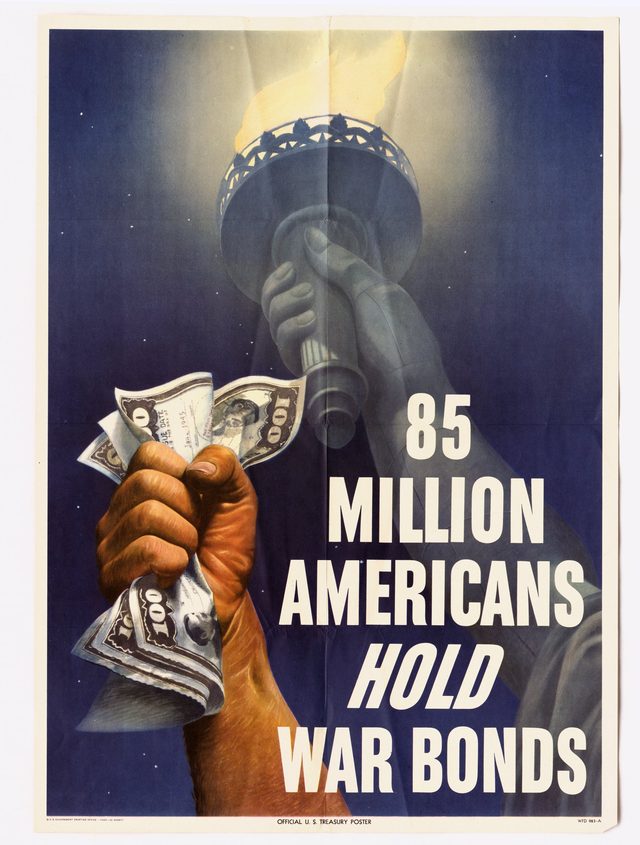
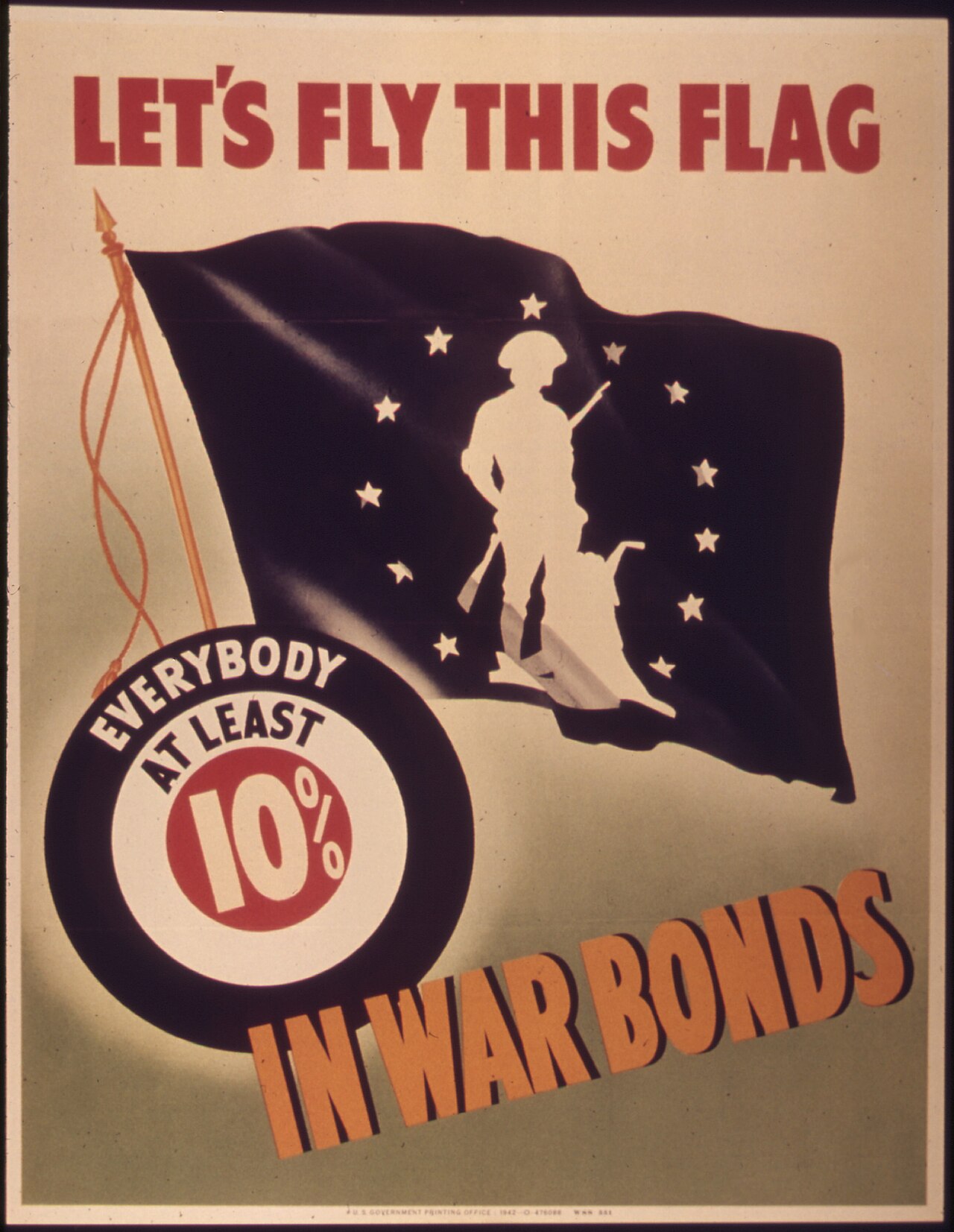
A U.S. Treasury poster of 1943, part of the payroll-savings drive, reads "LET'S FLY THIS FLAG / EVERYBODY / AT LEAST / 10% / IN WAR BONDS". The flag is the reward for a whole workplace reaching a shared rate of saving, so an individual's purchase counts toward a collective badge. The entry notes that the poster gives no reason to buy beyond the fact that the whole shop is expected to.
Where does bandwagon show up in advertising and consumer appeals?
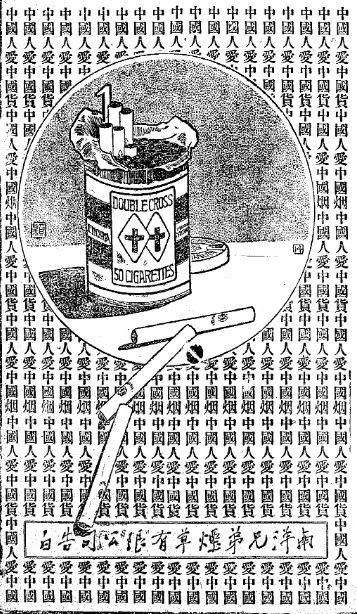
The Nanyang Brothers Tobacco Company, a Chinese-owned firm, placed this advertisement in the Hong Kong newspaper Chinese Mail on 22 December 1925. The whole background is one line repeated, "中國人愛中國貨" ("Chinese people love Chinese goods"), with variants on cigarettes and on China, around a tin of Double Cross cigarettes. The slogan is printed hundreds of times as if the whole readership already said it, and it ties a brand to national loyalty. The entry places it among the "national goods" appeals used during the boycott campaigns of 1925, citing Sherman Cochran's history of Chinese business.
Explain moreShow less
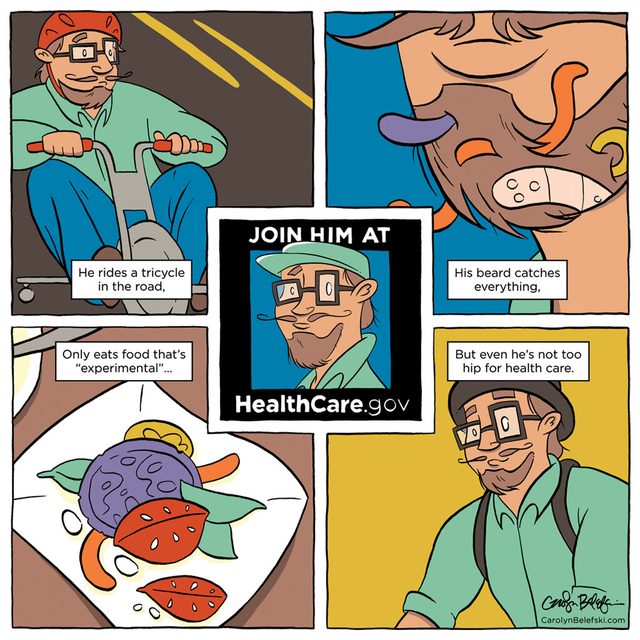
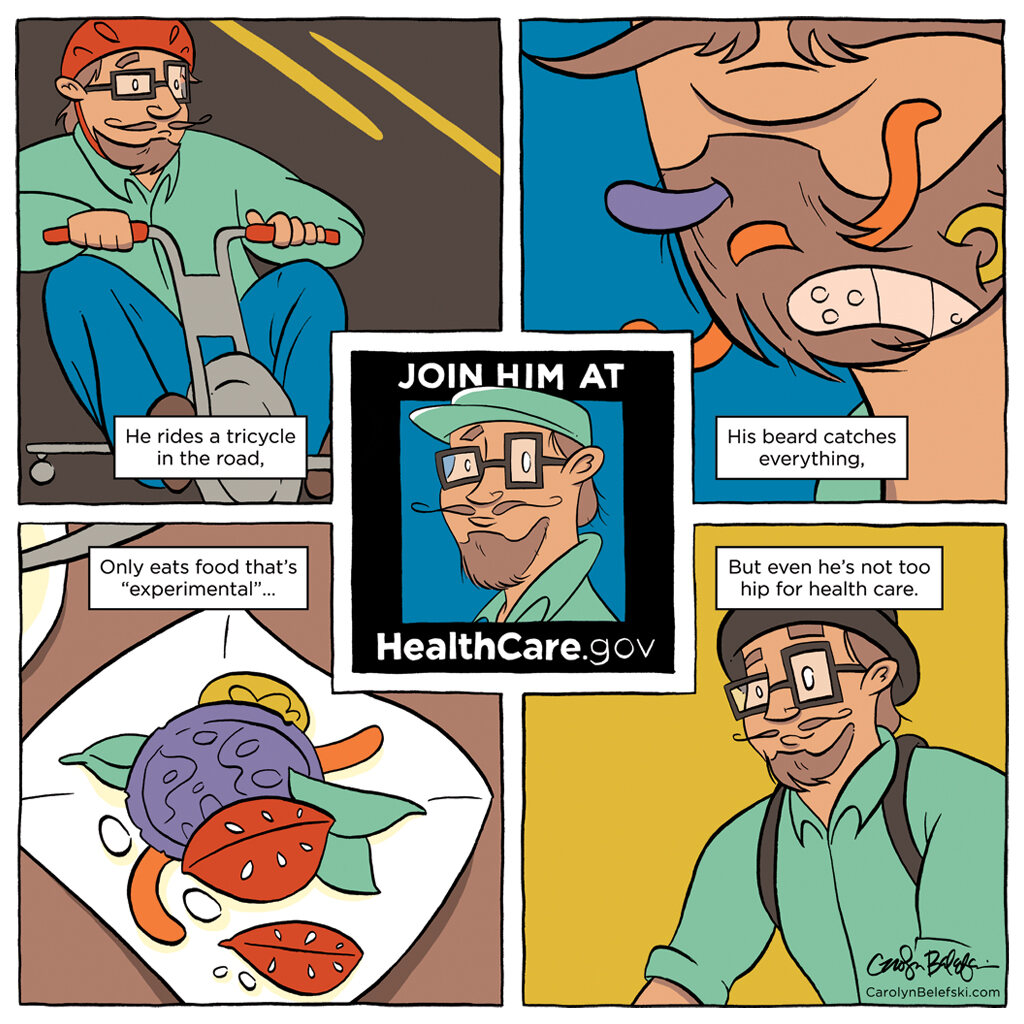
The White House posted this comic by the artist Carolyn Belefski on 27 January 2015, one of seven strips released before the 15 February deadline for enrolment through HealthCare.gov. Four panels describe a bearded cyclist who "rides a tricycle in the road" and eats only "experimental" food, and end "But even he's not too hip for health care", beside the line "JOIN HIM AT HealthCare.gov". The strip's structure is that someone unlikely to enrol has done so, and the viewer is invited to join him. The entry notes that the comic makes no claim about cost or coverage.
How does the same technique look on different sides?
The items come from governments, a political party, a municipality, a publisher, a newspaper, an advertiser and a military unit, in democracies, empires, an occupation and a one-party state. The mechanism is the same in each: a crowd is shown, the audience is placed inside or outside it, and the case is left out. Scale, intent and context differ. A recruiting committee printing volunteers' names and a payroll campaign setting a shared quota each made their appeal to the public in an open press, and the payroll campaign tied it to a shared quota. The Philippine broadcast tallies came from a military administration that warned of coercion, and the OSS digest records what was claimed, not what was verified. A plebiscite share on a banknote and a vote total declared a victory both turn a count into a claim of right. The tags say what each item does; they do not rank causes or say that one side used the method more than another.
How do you spot bandwagon propaganda?
- A count stands where the argument should be. Look for numbers of people, states, votes or signatures offered as the reason.
- The crowd is pictured or listed. Rolls of names, full reading rooms and marching columns show the audience a group it is meant to join.
- Momentum is claimed. Words such as "hurry", "already", "tide" and "everybody" say the outcome is settled and the audience is late.
Show all 5Show fewer
- Absent voices go uncounted. Check who is missing from the tally, such as abstainers, non-voters or those who declined.
- Check the number itself. Ask who counted, when, and whether a wider or later figure tells a different story.
Browse more bandwagon examples
The grid below shows further items from the collection tagged bandwagon, from recruiting posters and war-bond drives to election publicity and advertising. Each opens an object page with the holding institution, a link to the original record, a transcription and the rights basis. For the definition and research, see the technique: bandwagon. For wider collections, see propaganda examples, types of propaganda and propaganda posters.
Sources and further reading
Sources and rights
Items on this page come from the U.S.
Items on this page come from the U.S. National Archives, the Australian War Memorial, the Internet Archive, the German Federal Archive, the Russian State Library and the UK Foreign and Commonwealth Office, directly or through Wikimedia Commons, and from the archived White House website. Hosting rests on public-domain status by date or government work, open government licences, Creative Commons licences or institutional statements, and each object page gives its own basis. Transcriptions are verbatim. Historical context comes from the entry records, including the sources they cite.