Content note. One broadcast text below is addressed to Black U.S. soldiers by race, using period terms such as "colored", and alleging atrocities. One advertisement for a patent tonic has no offensive content; its health claims are the advertiser's own and unverified. Both are shown as issued.
What is testimonial propaganda, and how do you recognise it?
Testimonial propaganda is a technique in which a named person or institution vouches for a message, so that the audience stops checking and trusts the voucher instead. The tell is a name, rank, uniform or office doing the work that evidence should do: a general, a sovereign, a church, a tonic's famous customer, a soldier who says he was well treated. The technique is defined on its own page: Read the technique: testimonial. This page gives fifteen dated examples from fifteen countries or states, from a coin of 1099 to a billboard of 2023, in posters, newspapers, a newsreel card, a broadcast transcript, a leaflet, a school copybook and a street banner.
What counts as testimonial propaganda (and what does not)?
Testimony and endorsement are ordinary parts of public life. A witness who describes what she saw, or a scientist who shows the data behind a recommendation, is not using the technique. The same holds when the endorser's link to the sender is stated.
Explain moreShow less
The line this archive draws is the same for every side: the technique is in use when the voucher's name replaces the case. The voucher may know nothing about the question, or may say something that cannot be checked from the page. A tag says how the object is built, not that the claim was false or the cause wrong.
Which leaders and commanders lent their names to wartime posters?
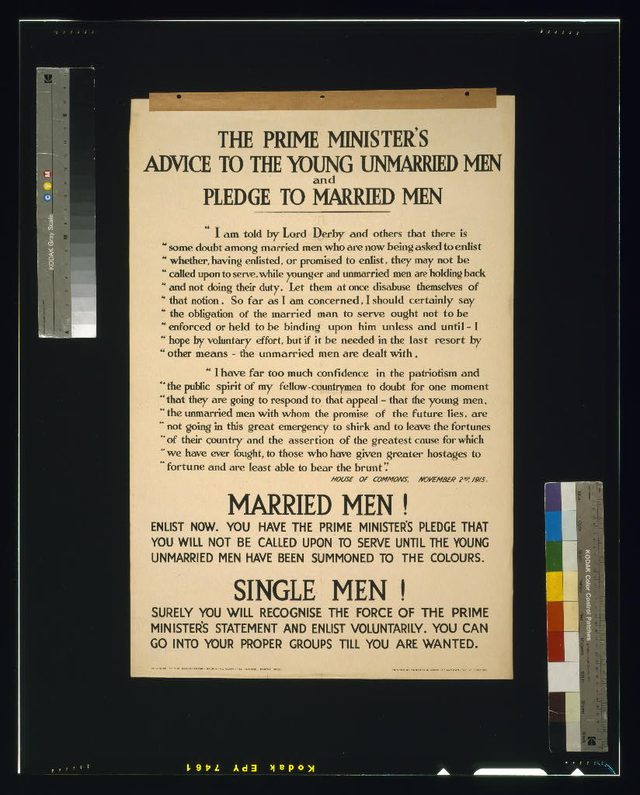
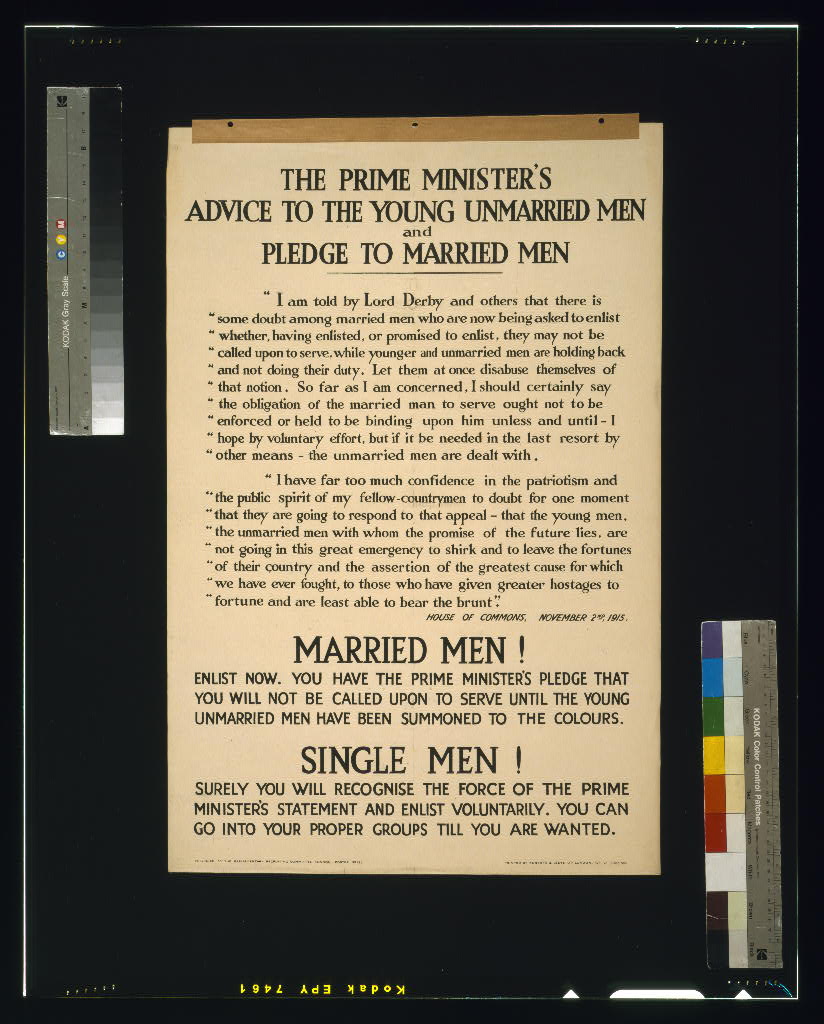
United Kingdom, 1915. Parliamentary Recruiting Committee poster no. 135 sets a long passage from H. H. Asquith's speech in the House of Commons of 2 November 1915 under the heading "The Prime Minister's advice", then tells married men "ENLIST NOW" and asks single men to "RECOGNISE THE FORCE OF THE PRIME MINISTER'S STATEMENT". The office-holder's own words are the whole argument. The quoted speech makes its promise conditional ("unless and until" the unmarried men are dealt with), and the poster restates it as a "pledge". Conscription of single men followed in January 1916 (Library of Congress catalogue; collection entry).
Explain moreShow less
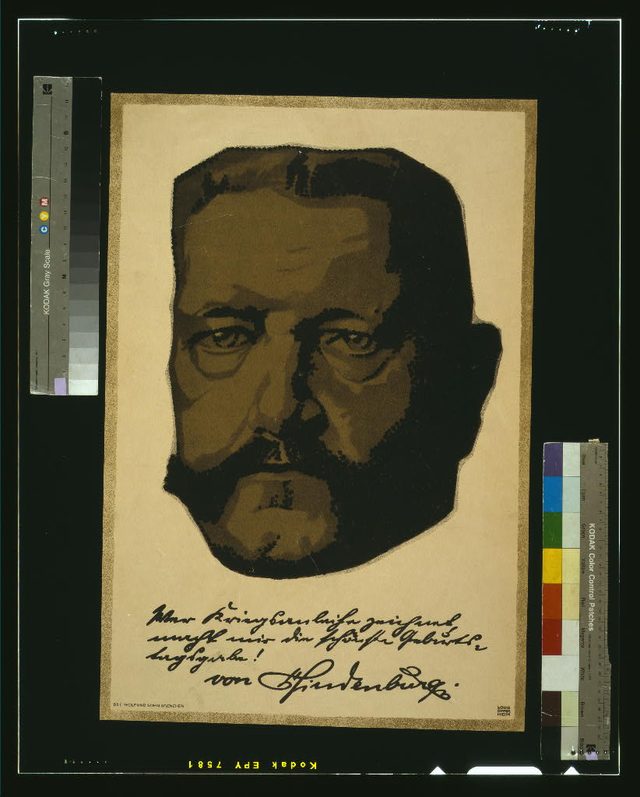
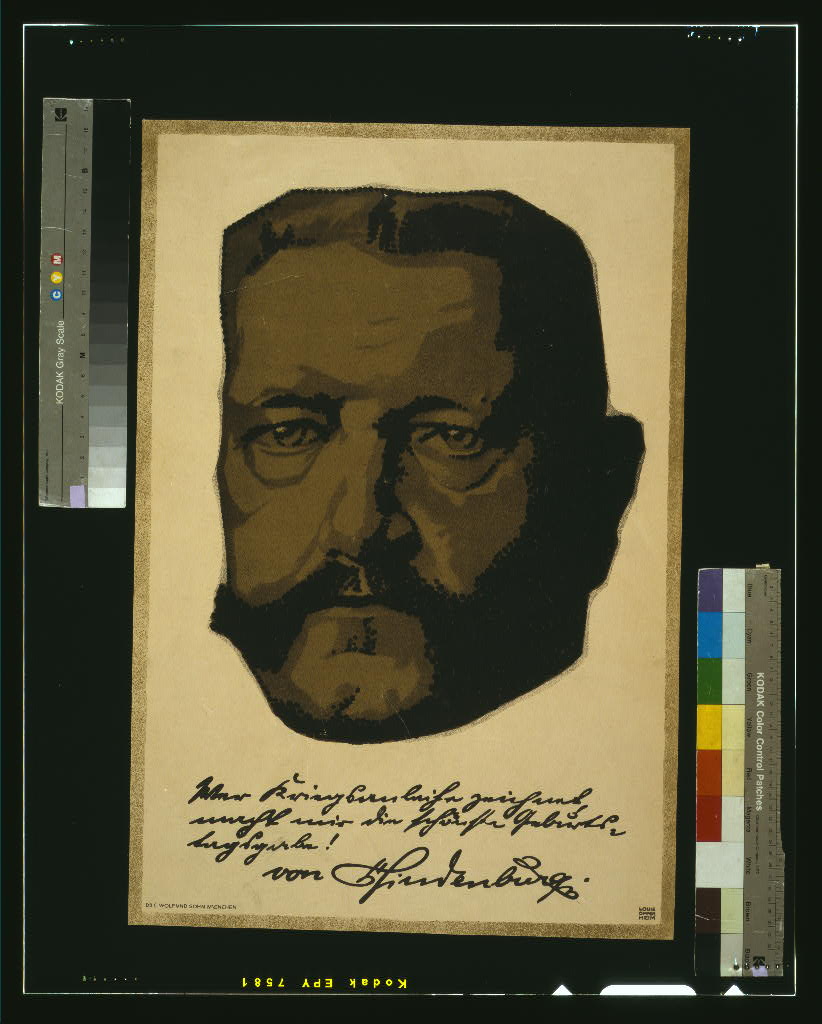
German Empire, 1917. An imperial war-loan poster by Louis Oppenheim shows a portrait of Field Marshal Paul von Hindenburg above his signed line, "Whoever subscribes to the war loan gives me the finest birthday present!" Hindenburg turned 70 on 2 October 1917, during the seventh war-loan drive. The ask rests on his name and signature, and the sheet gives no figures about the loan.
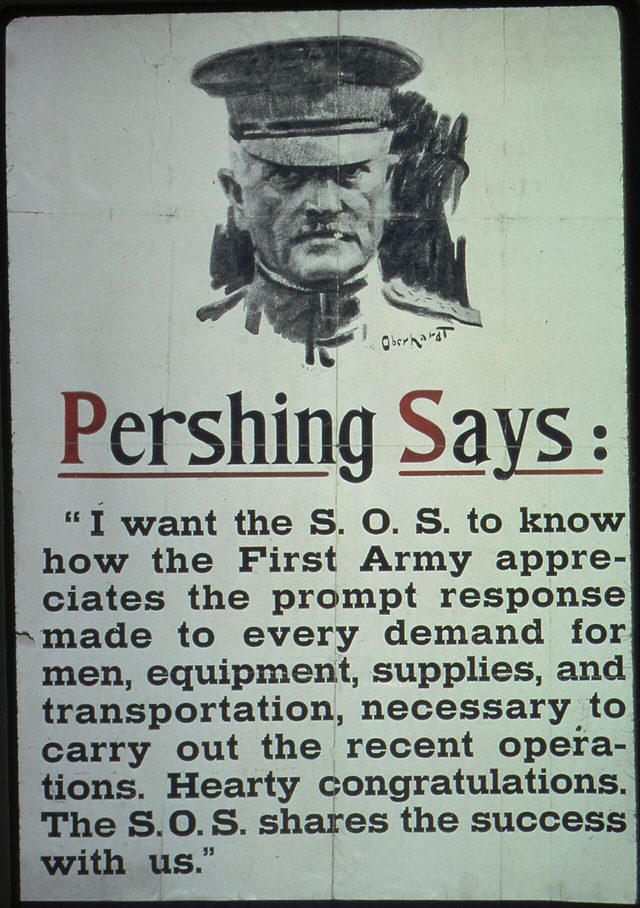
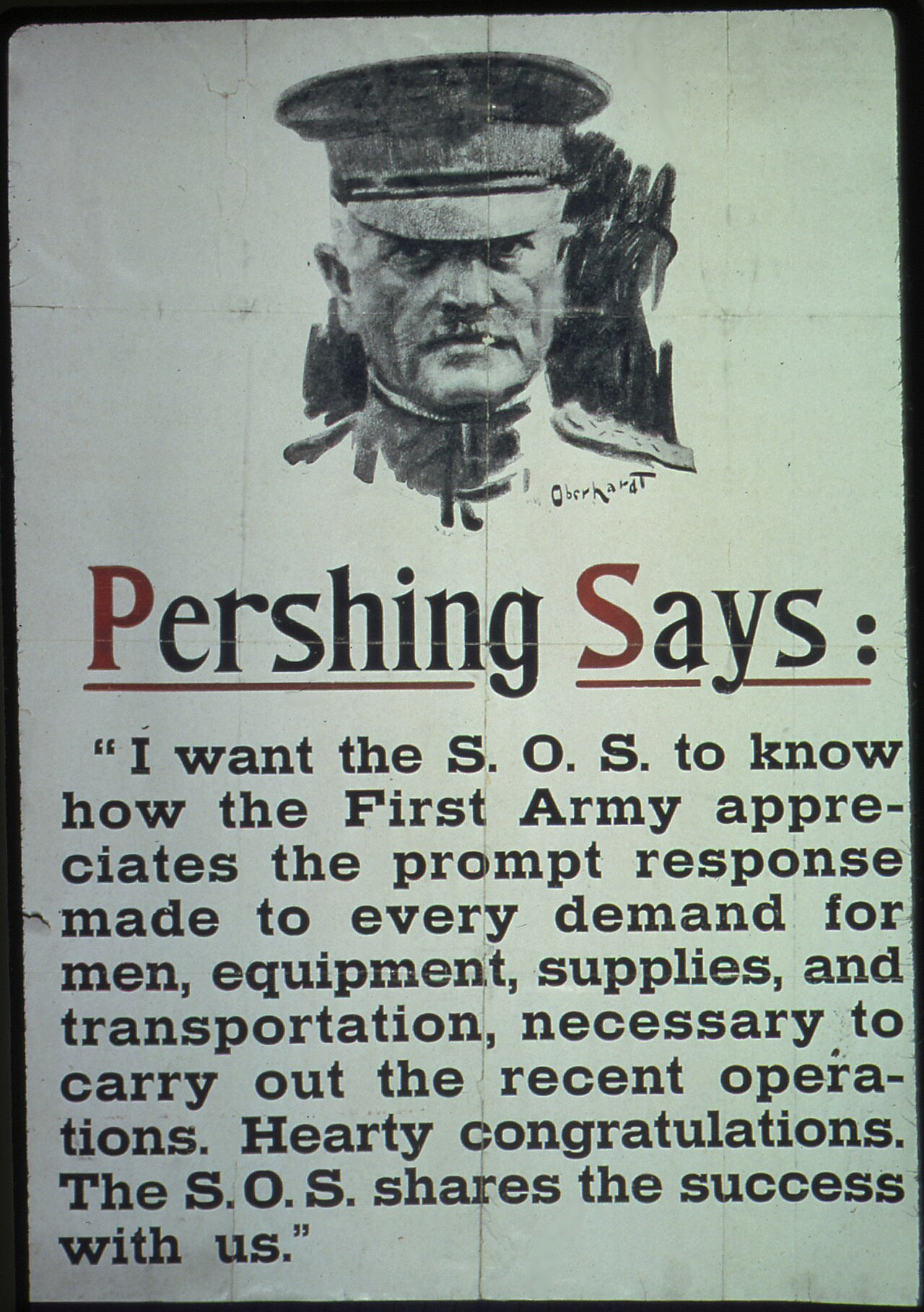
United States, 1918. An American Expeditionary Forces morale poster quotes General John J. Pershing thanking the Services of Supply for "the prompt response made to every demand for men, equipment, supplies, and transportation". It was addressed to supply personnel. His rank stands in for any account of what was delivered. Read the technique: testimonial.
How do churches, rulers and advertisers use a trusted name?
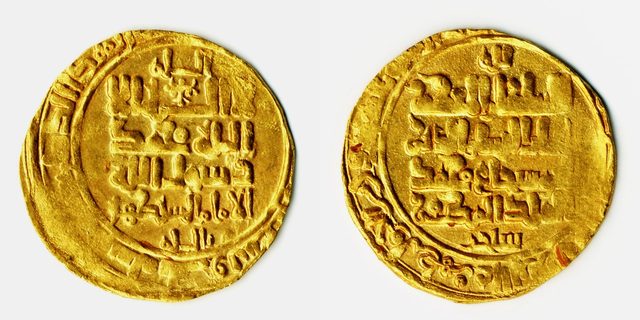
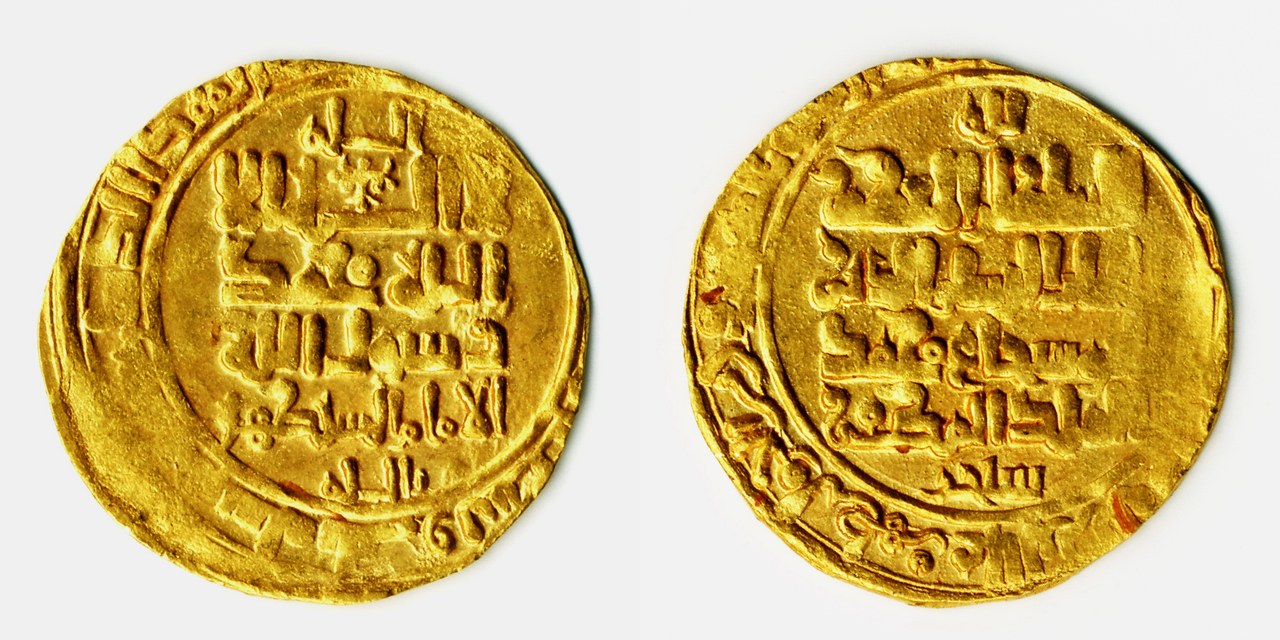
Great Seljuq lands, 1099. The Metropolitan Museum of Art dates this gold dinar to 1099 CE and attributes it to Sanjar, then a prince in Khurasan under his brother, the sultan Barkyaruq. Its lower lines name the reigning Abbasid caliph, al-Mustazhir bi-llah. Naming the caliph on coinage was the standard sign in the Sunni Muslim world that a ruler acknowledged his authority. The coin carries no argument: a religious office vouches for the issuer.
Explain moreShow less
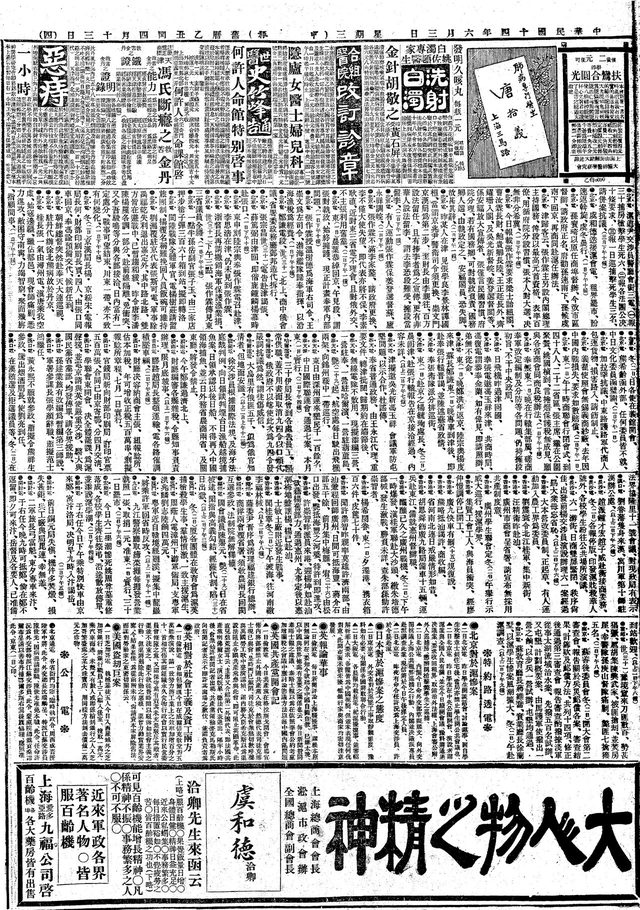
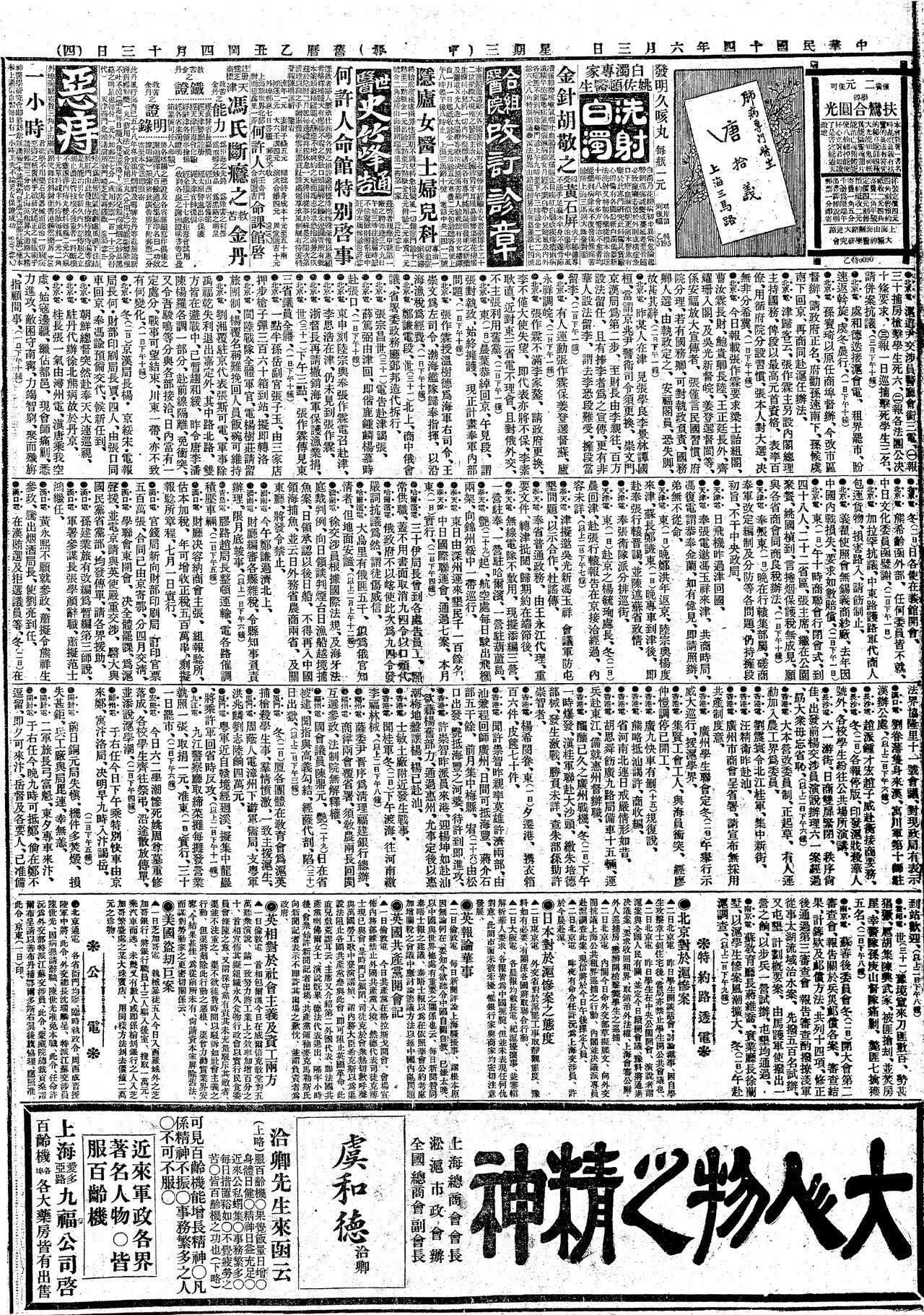
China, 1925. On 3 June 1925, Shenbao of Shanghai ran a full-width advertisement placed by the Jiufu Company for Baling Ji tonic tablets, headed "The spirit of great men". It quotes a letter from Yu Xiaqing, introduced by his offices as president of the Shanghai General Chamber of Commerce and vice-president of the national chamber, saying he feels more energetic. A side panel adds that well-known military and political figures all take it. The page gives no clinical or other evidence. This is the advertising practice from which the technique grew.
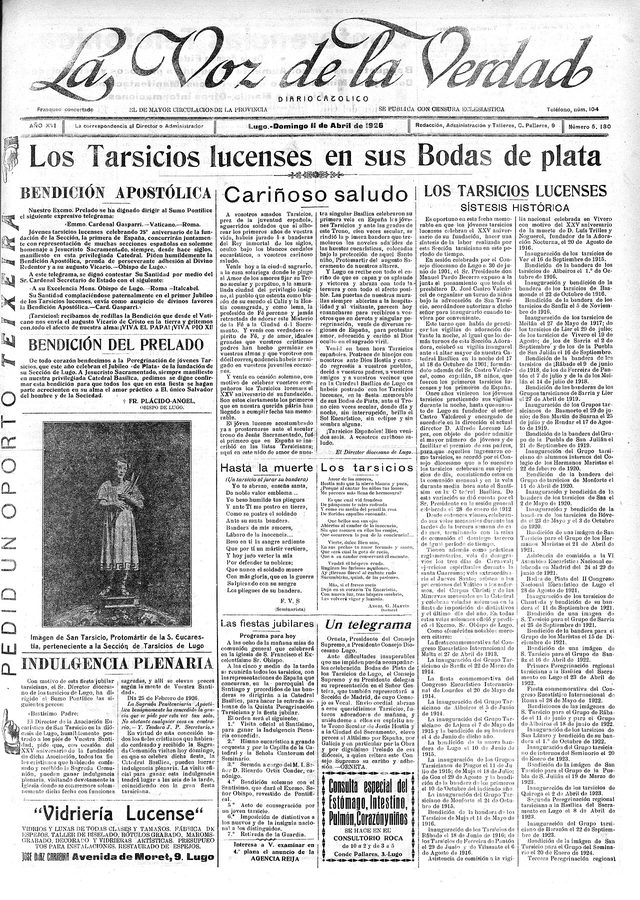
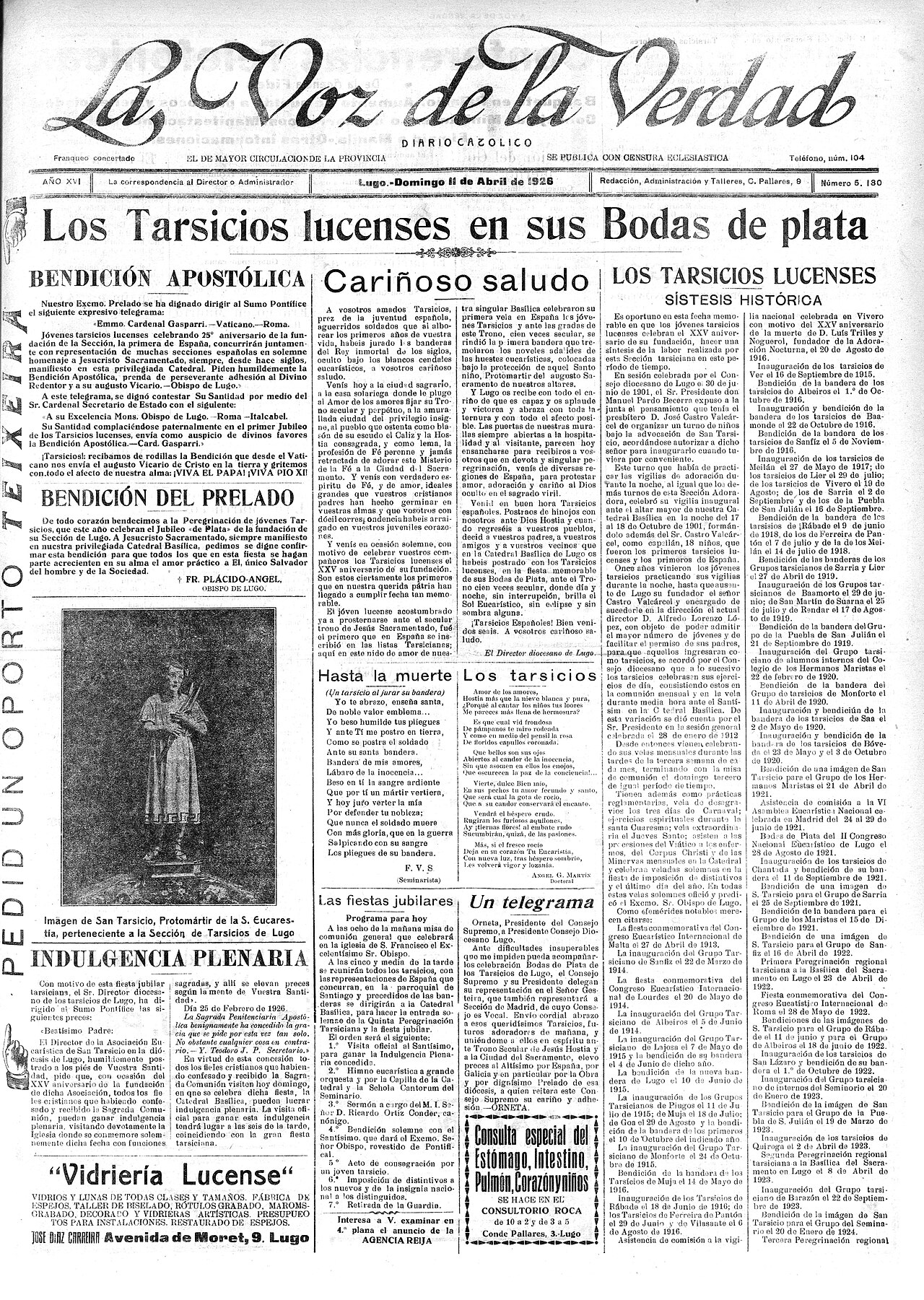
Spain, 1926. The front page of La Voz de la Verdad, a Catholic daily in Lugo published "con censura eclesiástica", marks the 25th anniversary of the local Tarsicios, a youth Eucharistic association. It prints the bishop's telegram to Cardinal Gasparri and the apostolic blessing sent back, so the Pope and the bishop vouch for the group. The page is an open organ of the Church addressed to Catholic readers; this archive does not assess the religious claims. Read the technique: testimonial.
How did states quote a leader or a figure from the past between the wars and in the Second World War?
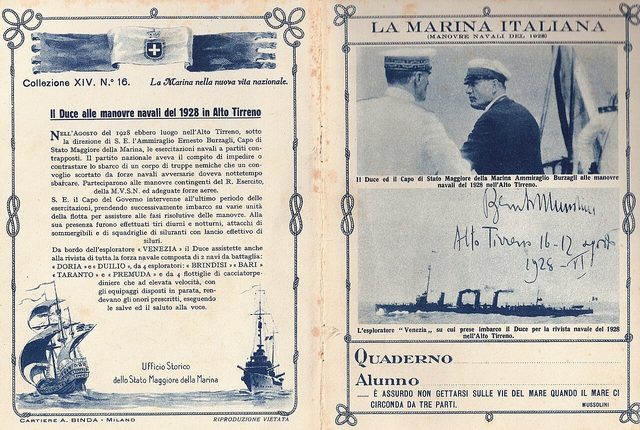
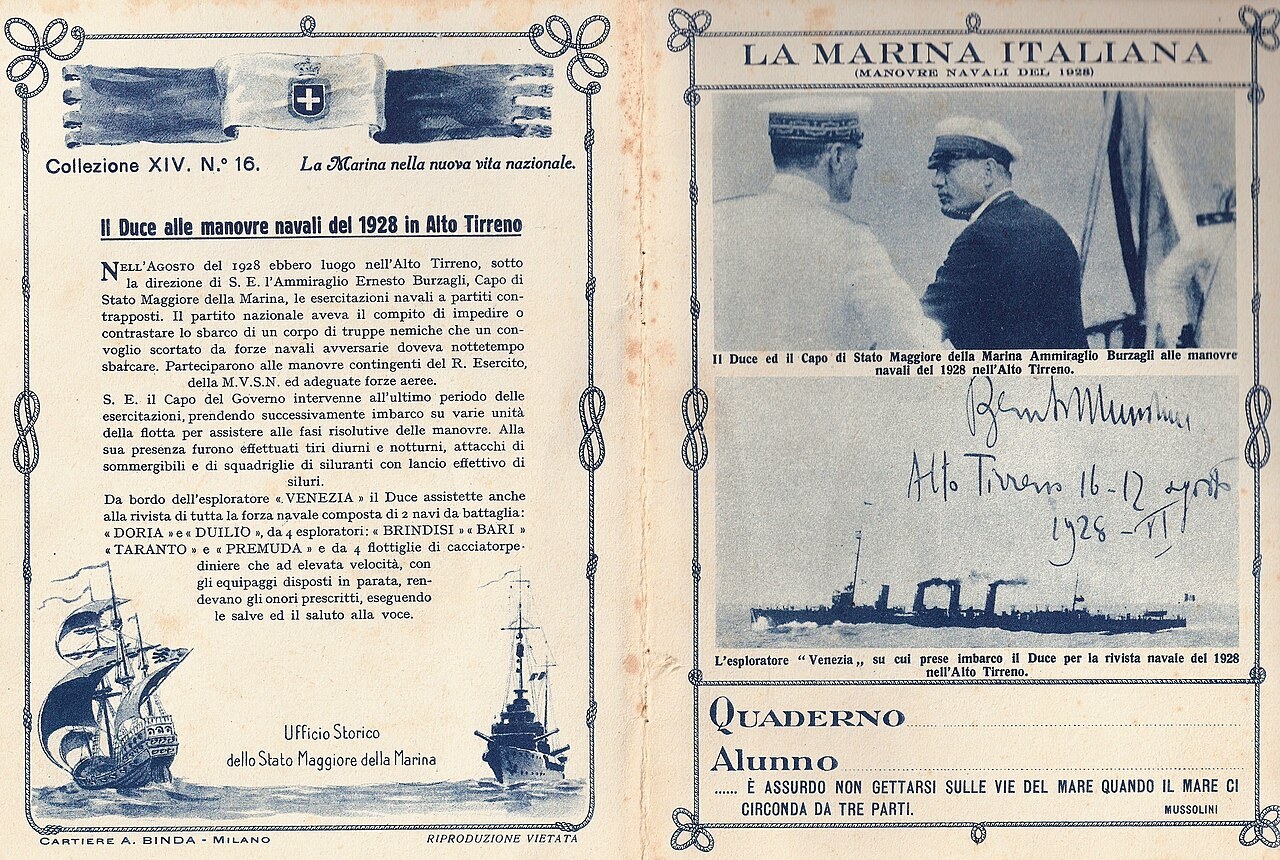
Italy, 1928. The navy's historical office supplied the cover text for a school exercise book printed in Milan by Cartiere A. Binda, "La Marina Italiana (Manovre navali del 1928)". The cover pairs a photograph of Benito Mussolini with Admiral Ernesto Burzagli, a signed inscription, and a slogan credited to him: "It is absurd not to throw oneself on the sea routes when the sea surrounds us on three sides." The leader's words reach the classroom beside the pupil's name line.
Explain moreShow less
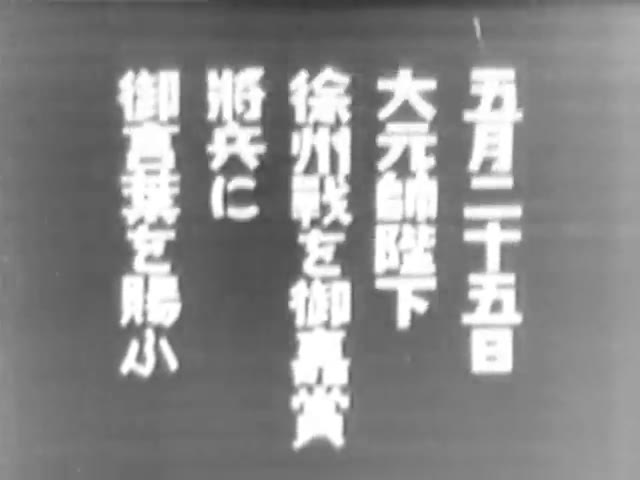
Japan, May 1938. A title card from a captured Japanese newsreel, now held among U.S. National Archives film, reads in translation: "25 May. His Majesty the Generalissimo commends the Xuzhou battle and bestows words upon the officers and men." The sovereign's praise is the news item. The reel's producer is not named, and the date is inferred from the card's reference to Xuzhou, which fell in May 1938.
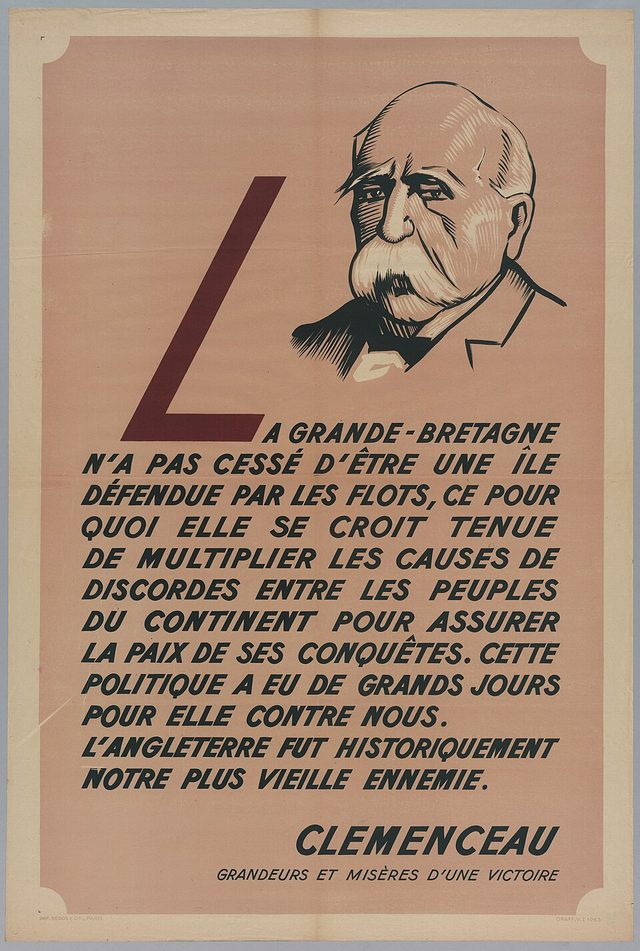
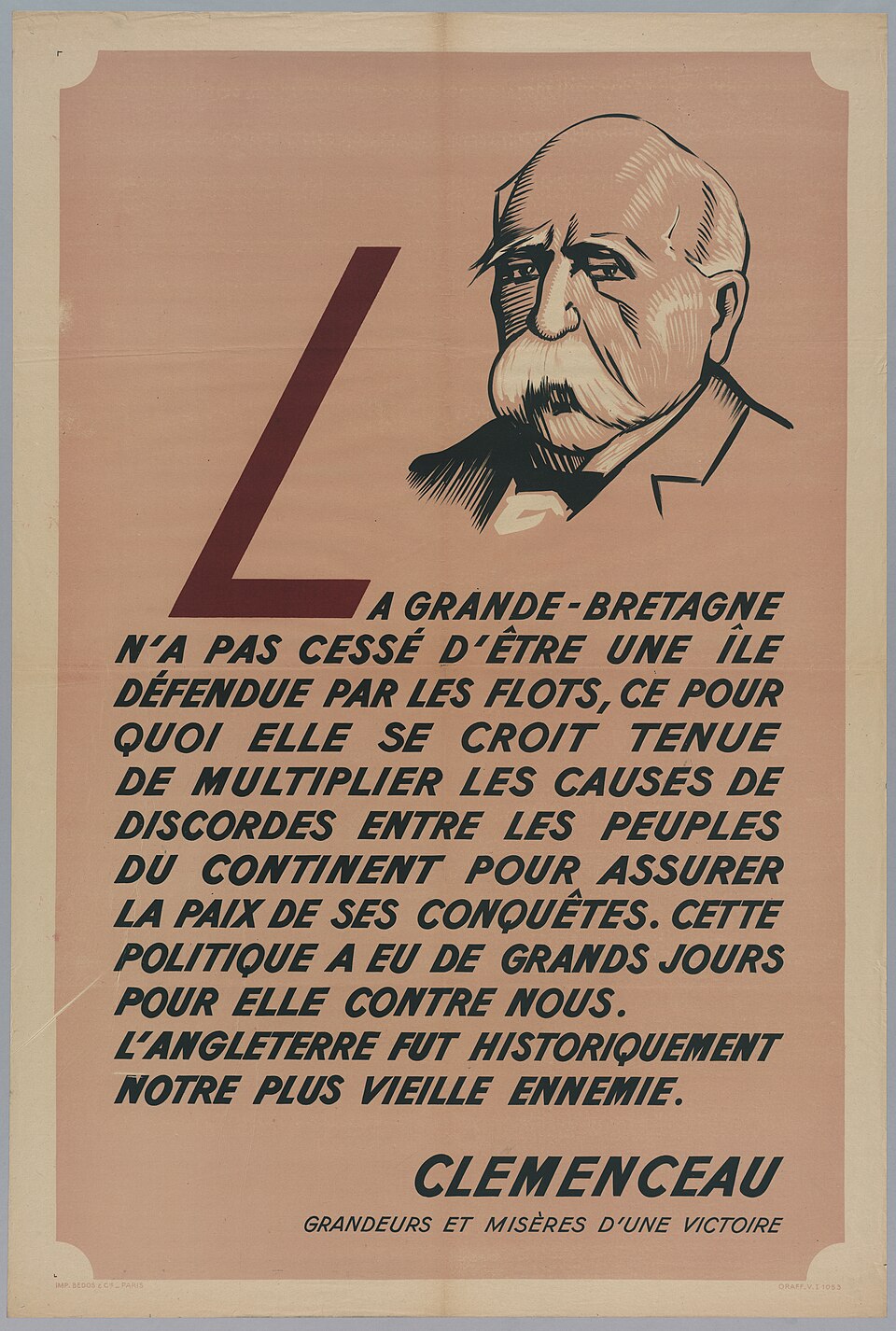
France (Vichy), 1943. A poster issued through ORAFF, the office that allocated poster space under the Vichy government, sets a portrait of Georges Clemenceau above a block of his words about Britain, signed with the title of his posthumous book Grandeurs et misères d'une victoire (1930). The poster offers no argument of its own and borrows a First World War leader's authority for an anti-British claim. Read the technique: testimonial.
Content note: Studio photograph of a detained 17-year-old being interviewed; the caption calls him and three others criminals and accuses West Berlin's mayor of inciting border provocations. This object is shown as it was published. Why 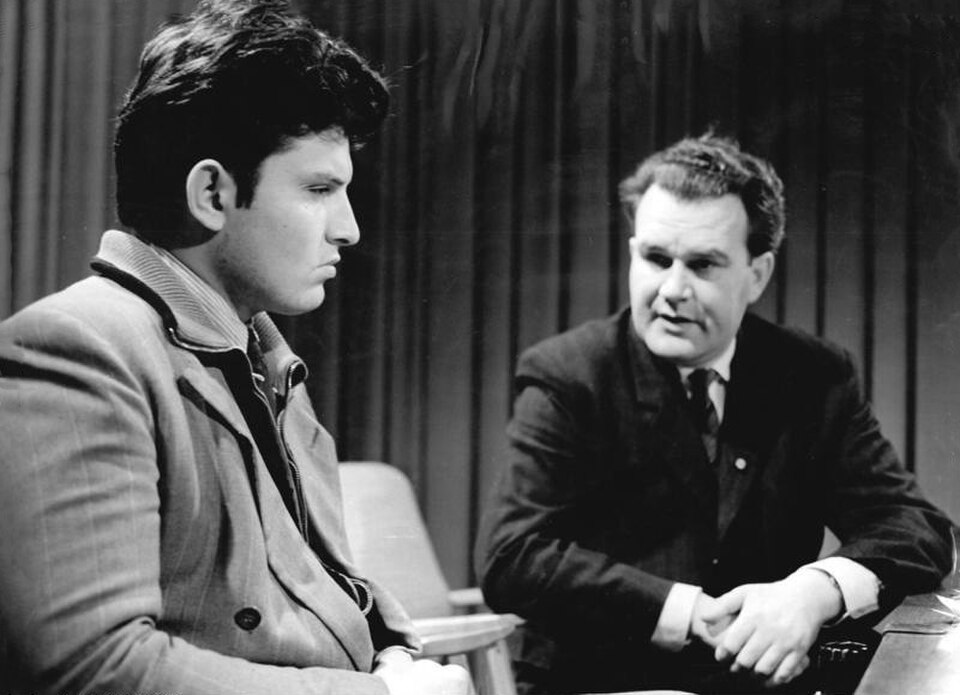
When is an ordinary speaker the voucher in the Cold War?
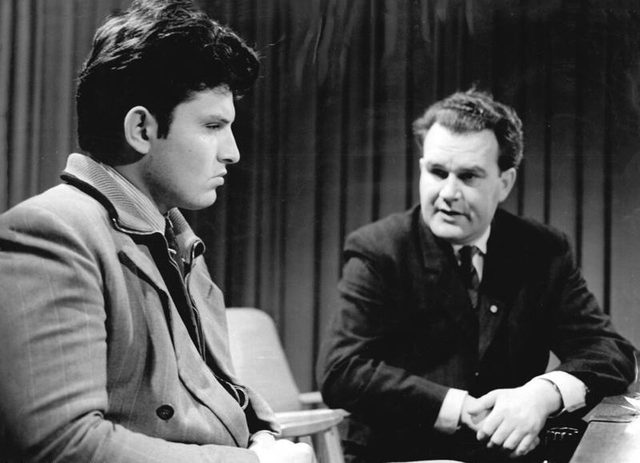
East Germany, 1961. A Zentralbild photograph by Werner Krisch, dated 21 December 1961, shows an interview on the state television programme Aktuelle Kamera. The agency caption names Rainer Schröter, 17, a West Berliner held on remand, and presents his on-air warning as evidence that West Berlin's mayor, Willy Brandt, was inciting border provocations. The record holds neither what Schröter said nor the conditions of his appearance, so the entry scores only how the caption uses him.
Content note: Wartime broadcast text addressed to Black U.S. soldiers by race, using period terms such as 'colored', and alleging atrocities. This object is shown as it was published. Why 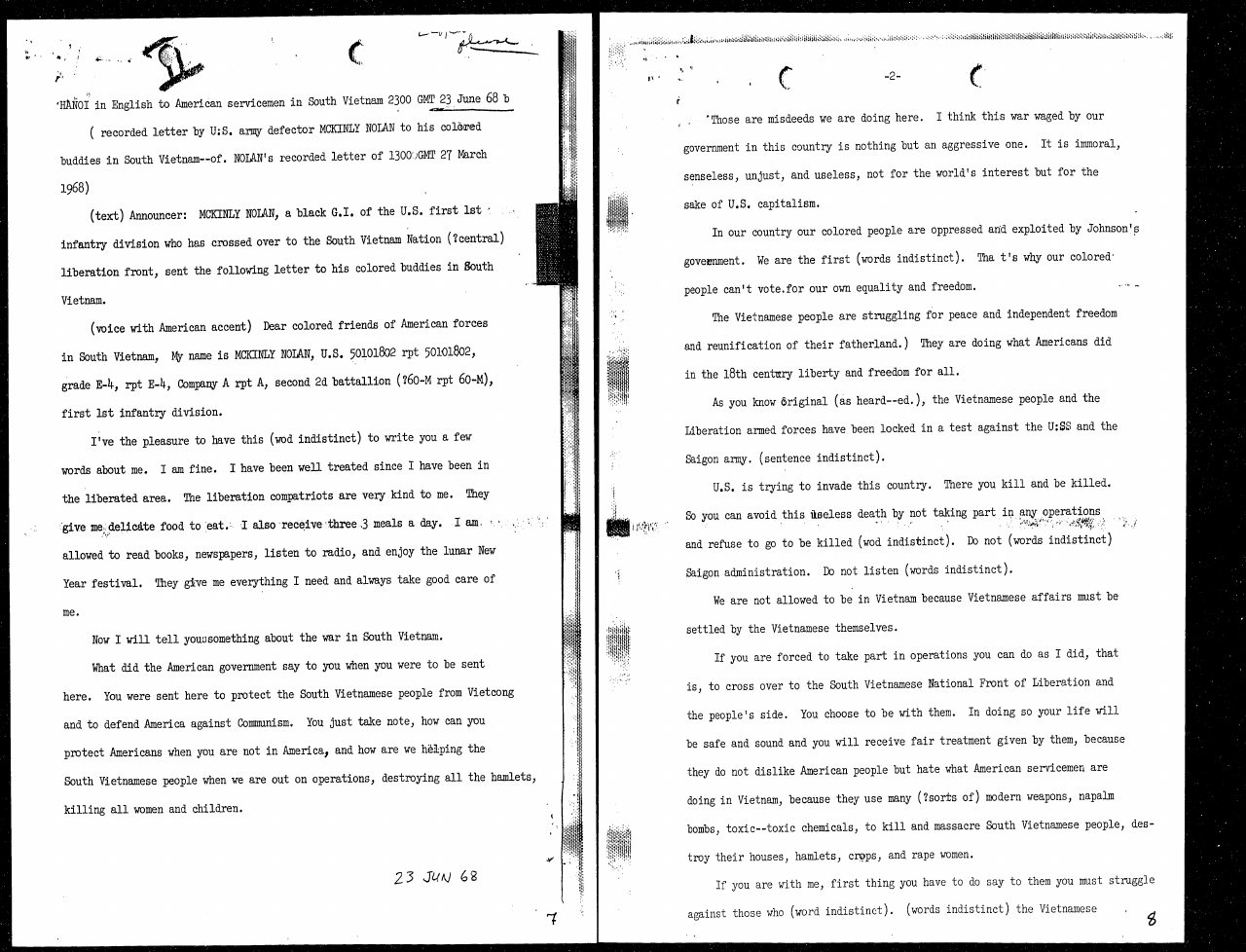
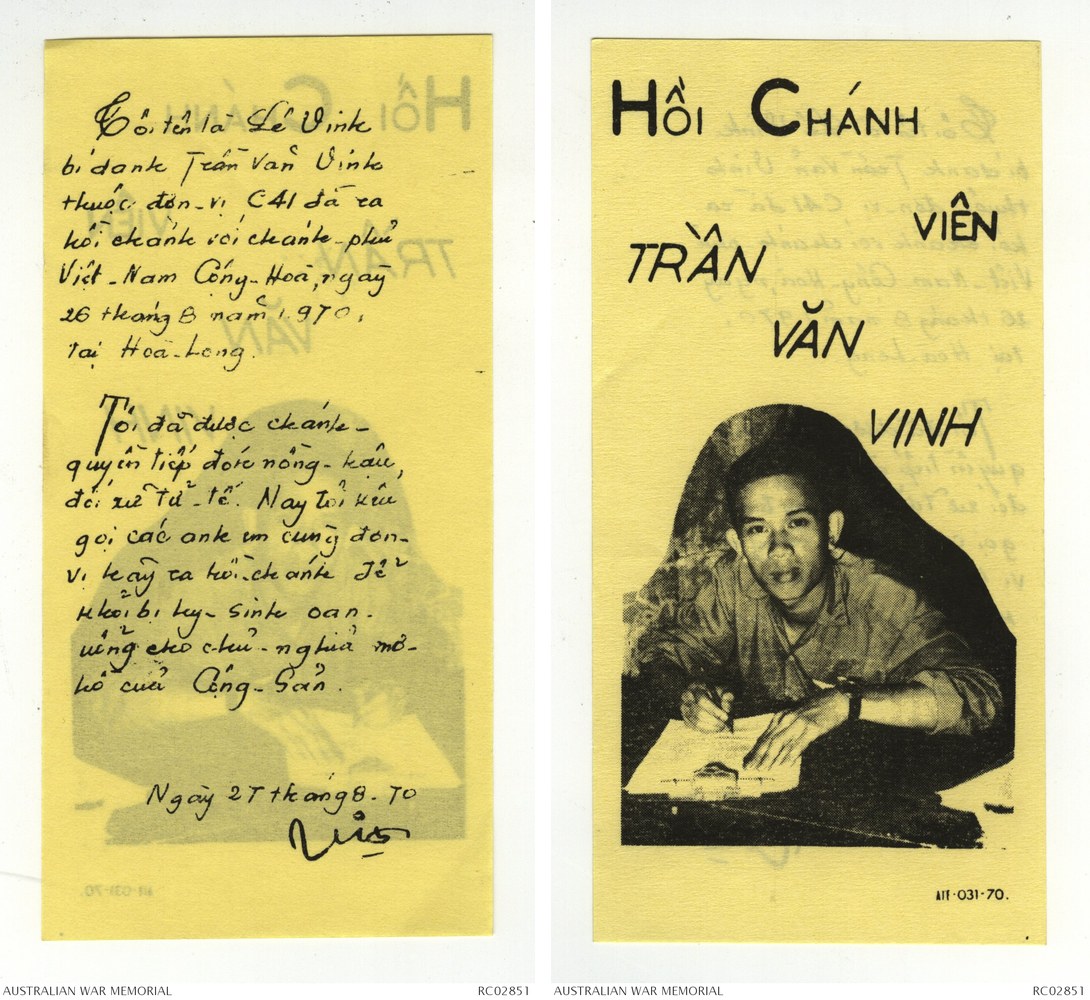
Explain moreShow less
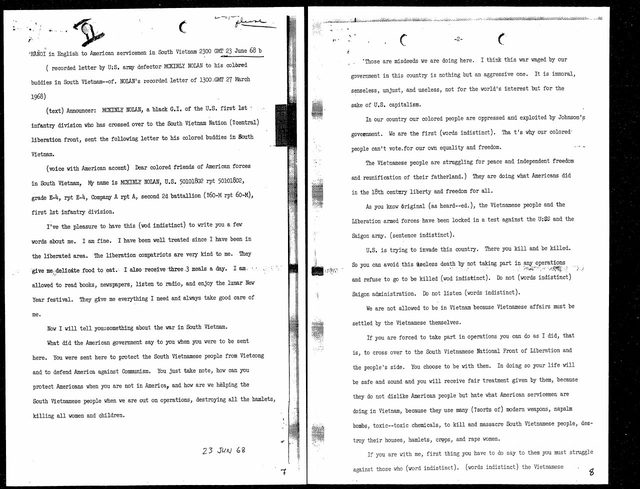
Democratic Republic of Vietnam, 1968. Radio Hanoi's English-language service for American servicemen in South Vietnam broadcast, on 23 June 1968, a recorded letter from a soldier the U.S. Government transcript spells McKinly Nolan, said to have crossed to the National Liberation Front. Addressed to Black soldiers, it gives his rank and unit and says "I have been well treated since I have been in the liberated area." The transcript verifies nothing about his circumstances. The announcer frames the appeal by race.
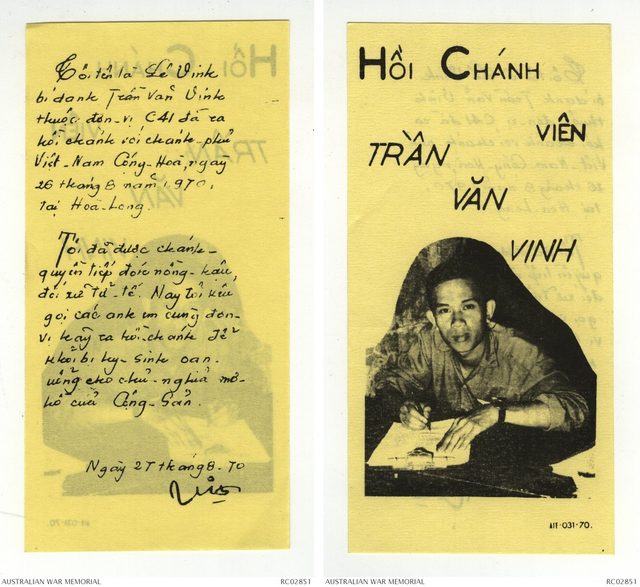
Australia and South Vietnam, 1970. The 1st Psychological Operations Unit of the 1st Australian Task Force at Nui Dat made this leaflet on 30 August 1970 for the South Vietnamese Chieu Hoi programme, in 100,000 copies according to the Australian War Memorial. A photograph shows a young man writing, and a handwritten message in his name says he returned to the government on 26 August 1970, was well received, and calls on his former unit to follow. This archive has not checked his account. It is the same device as the Hanoi letter, aimed the other way.
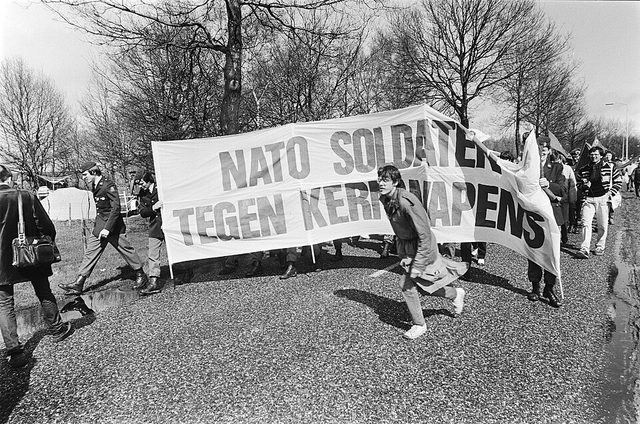
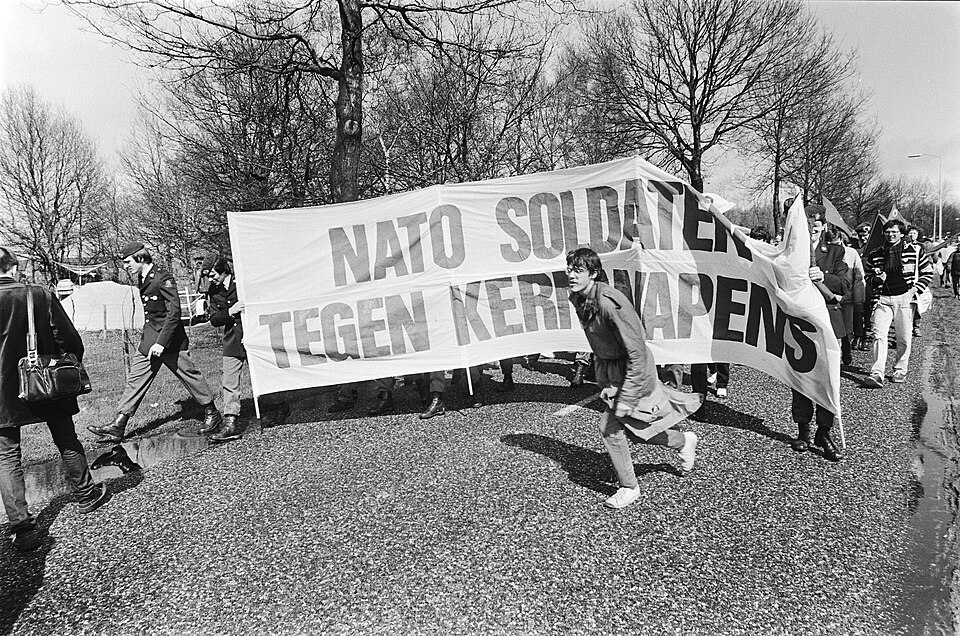
Netherlands, 1982. In an Anefo photograph of 12 April 1982, marchers at a demonstration at Volkel air base carry a banner reading "NATO soldaten tegen kernwapens" (NATO soldiers against nuclear weapons). Men in military-style uniform hold its ends. The record does not say whether they were serving soldiers or which group they represented, so the occupational claim is not verified. The entry scores the banner's wording, not either side's arms policy.
What do recent examples look like?
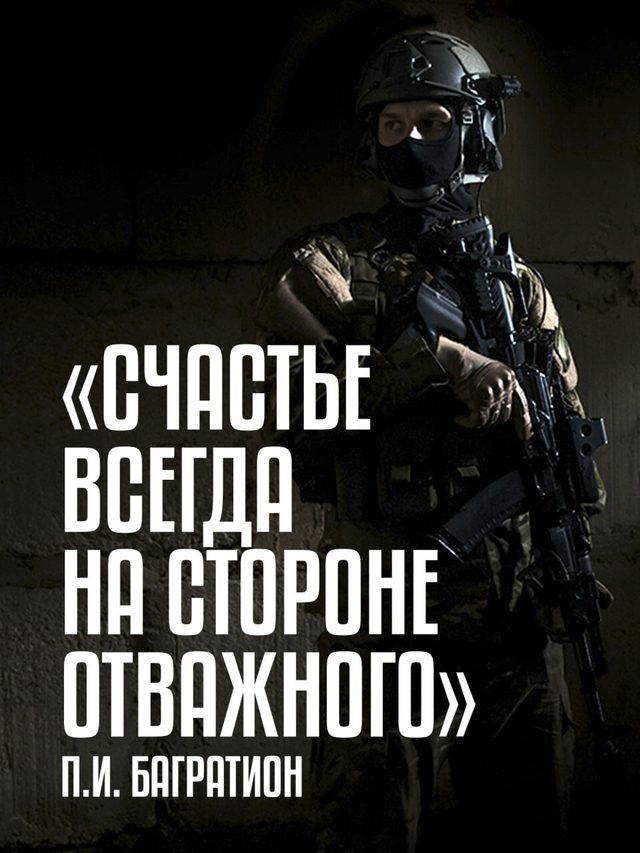
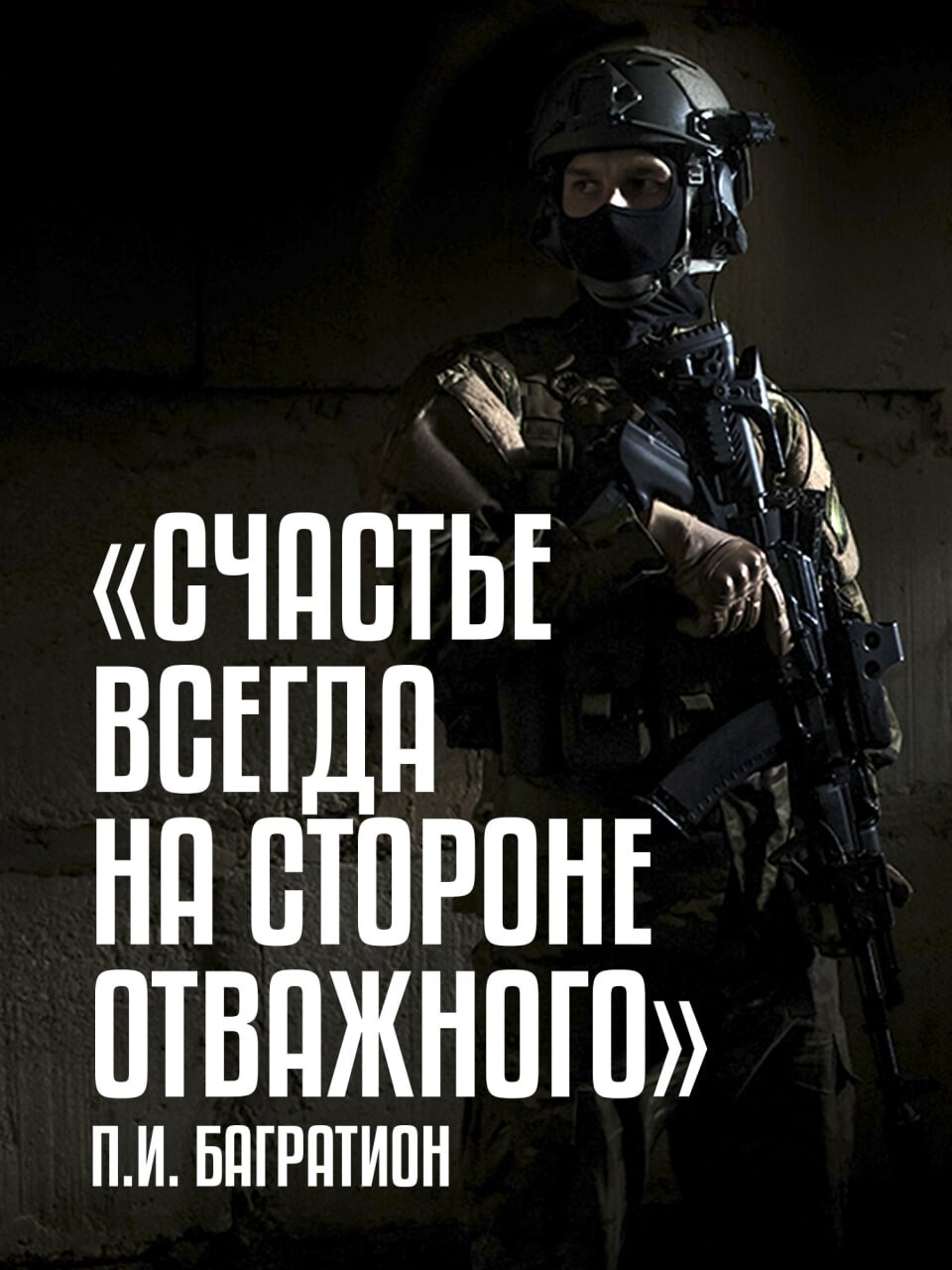
Russia, 2022. The Russian Ministry of Defence published numbered "agitation posters" in the "special military operation" section of its website. This one shows a masked soldier under the line "Fortune is always on the side of the brave" and the name of P. I. Bagration, the general who died of wounds after Borodino in 1812. The poster gives no source for the quotation, and none has been traced here.
Explain moreShow less
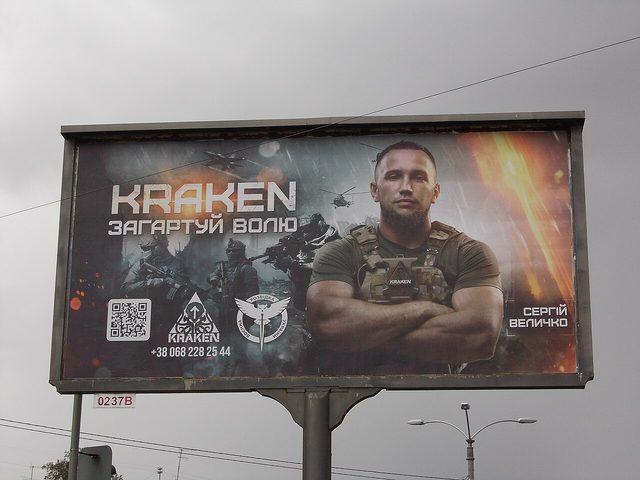
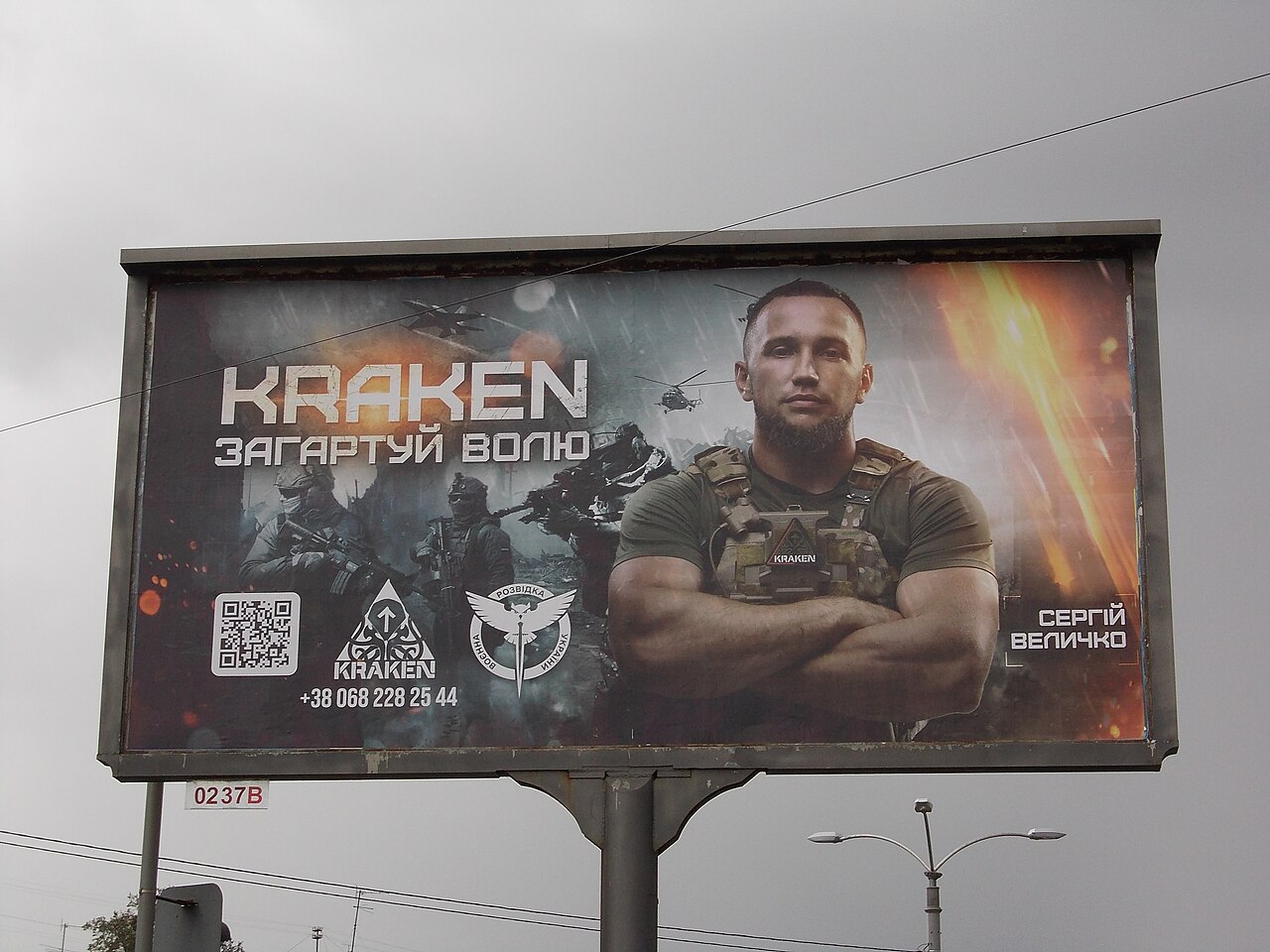
Ukraine, 2023. A billboard photographed in Kharkiv on 10 October 2023 shows a bearded man in a plate carrier, named as Serhiy Velychko, beside the name of the Kraken unit, the slogan "Temper your will", a QR code and the emblem of Military Intelligence of Ukraine. It is read as recruitment: the named man stands as proof of what joining makes of a person, and the billboard does not say whether he is serving.
How does the same technique look on different sides?
The issuers range from governments and armed forces to a church, a tonic company and a street movement, and the device is the same: borrowed trust in place of evidence. Hindenburg and Pershing both lend a commander's name. Radio Hanoi and the Chieu Hoi leaflet both put a named defector's voice in front of the other side's troops. The Russian and Ukrainian military items both recruit with a name.
Explain moreShow less
The differences are in scale, verifiability and purpose. State posters, loan drives and a leaflet run of 100,000 are large editions, while one banner photographed at one march is a single act. A passage attributed to a dated speech can be checked against the record, while a detainee's interview, a defector's letter or an unverified quotation cannot be checked from the page. Purposes differ too: recruiting, borrowing money, selling a tonic, dissuading troops. The entries record how each object is built; they do not measure effect or rank the causes.
How to spot testimonial propaganda
- The main reason to believe is who said it, not what they showed.
- The voucher's expertise lies in another field: a general on a loan, an official on a tonic.
- Only favourable voices appear, and the page does not say whether others disagree.
- The link between voucher and sender (office, employment, custody, payment) is absent or in small print.
- The quotation, number or identity cannot be traced to a primary source from the page itself.
Browse more testimonial examples
The collection holds 675 objects tagged testimonial (counted from the entry files), many also tagged with a second technique. The grid below shows more; the technique page has the definition, the research and edge cases. Sibling hubs: propaganda examples for the seven classic techniques, types of propaganda for the wider families, and propaganda posters for the poster collections.
Sources and further reading
Sources and rights
Objects come from the Library of Congress, the U.S.
Objects come from the Library of Congress, the U.S. National Archives, the Metropolitan Museum of Art, the Library of Congress POW/MIA Database, the Australian War Memorial, the Bundesarchiv, the Nationaal Archief, Paris Musées, the Internet Archive and Wikimedia Commons. Each image is hosted under the rights basis recorded on its entry: public domain through age or government authorship, an open dedication, or the named Creative Commons licence. Transcriptions are verbatim, and translations are given as recorded in each entry.