Content note. Two film frames here are caricatures of Japanese people from the Army's Private Snafu cartoons, drawn with exaggerated teeth, jaw and eyes, and one poster uses the coined word "Japanazis". They are shown as issued, from a country that in February 1942 (Executive Order 9066) ordered the removal of people of Japanese ancestry from the West Coast. Showing an item is not endorsing it.
Did Disney make propaganda in WW2?
Yes. Walt Disney Productions drew posters, insignia and films for United States agencies in 1941 to 1945, and its characters appeared on bond, scrap and recruitment appeals. The collection holds those posters, one Dr. Seuss drawing and two Private Snafu film frames. Each names who issued it and which technique it uses.
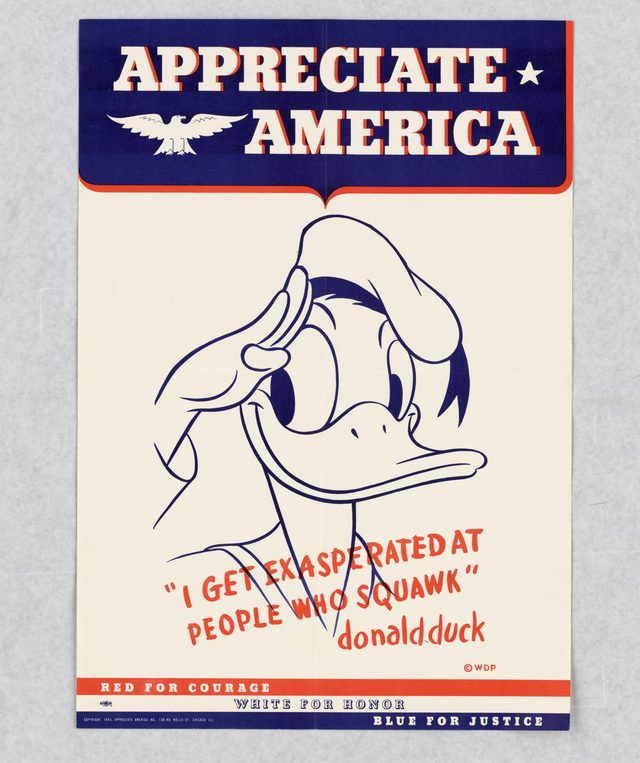
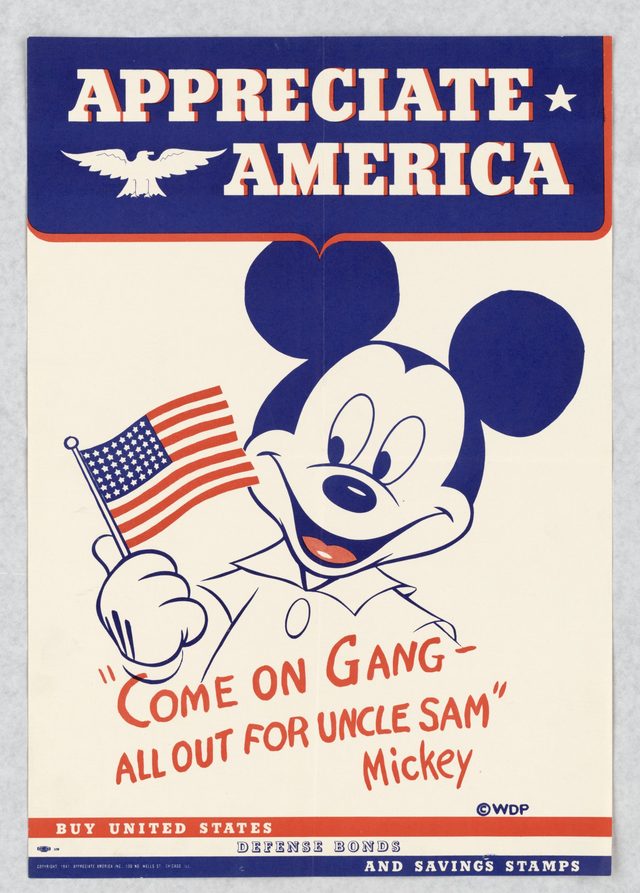
Mickey and Donald as speakers, 1941
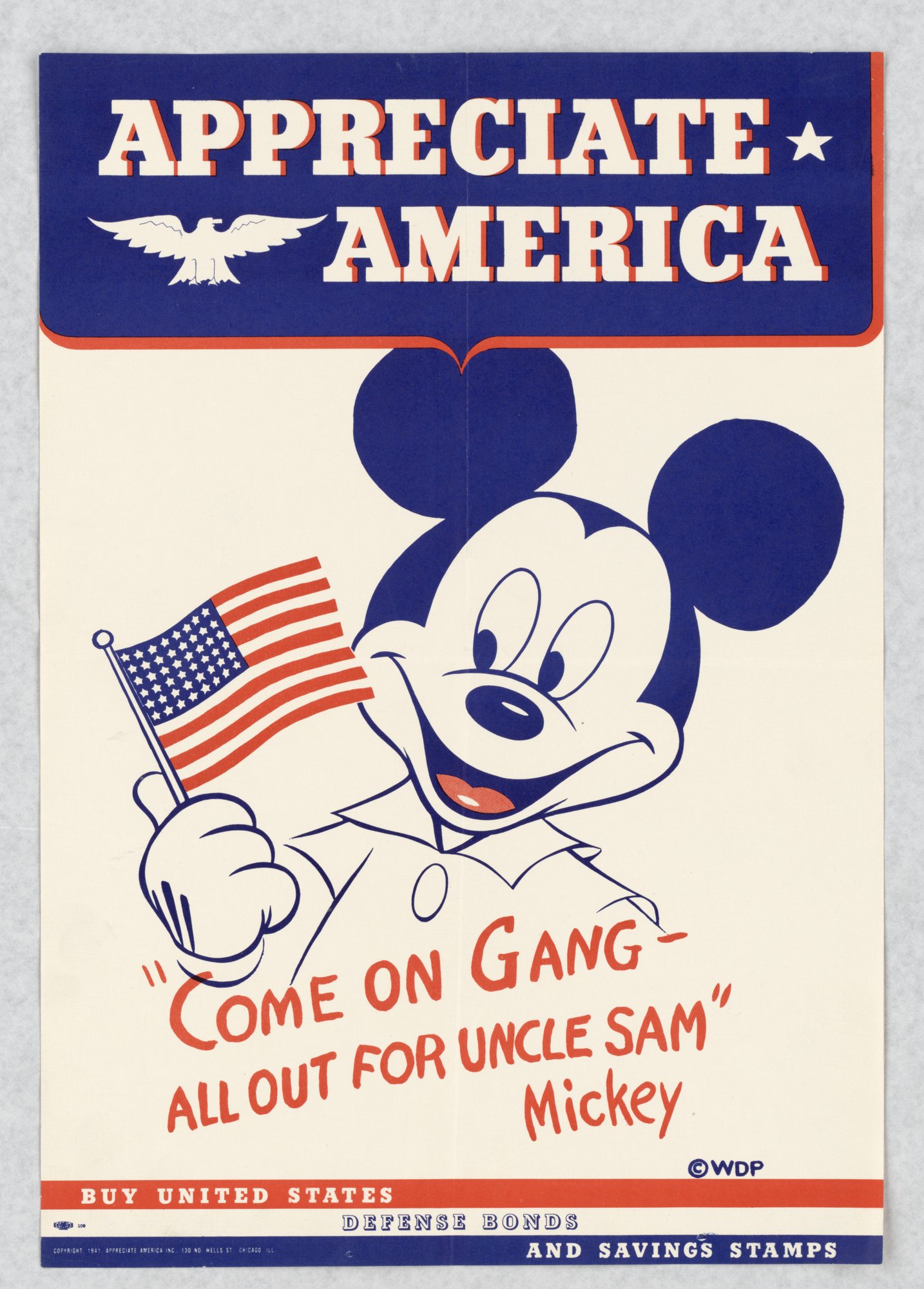
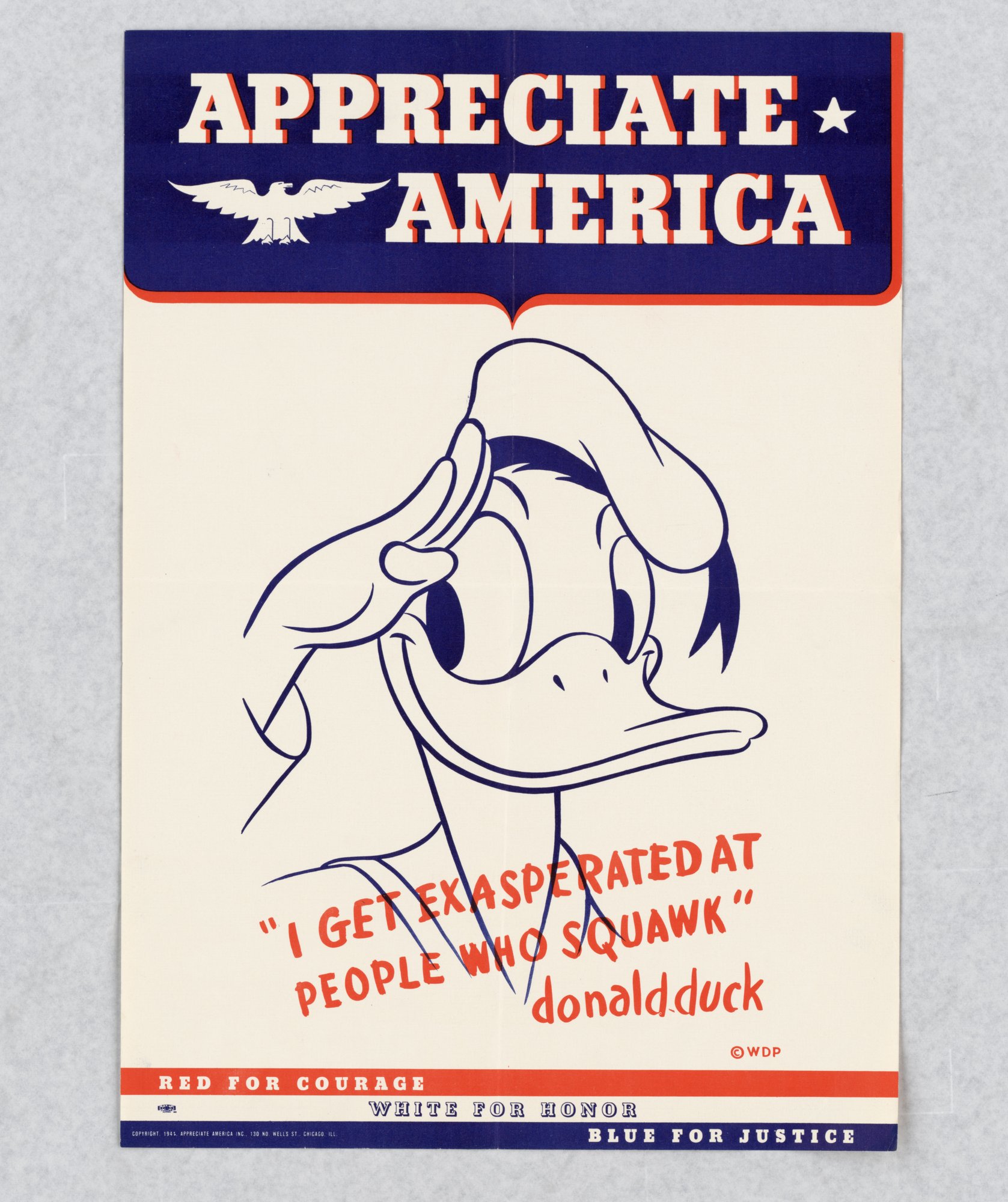
The earliest items are not Disney art. Appreciate America, Inc., of Chicago issued line drawings in which Mickey Mouse and Donald Duck speak to the reader. A popular character asked for patience or bond purchases, which is Testimonial and Transfer; the Mickey sheet adds the "gang" phrasing of Bandwagon.
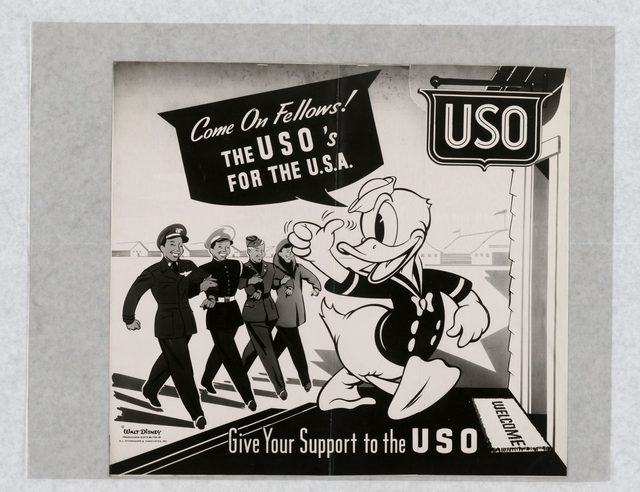
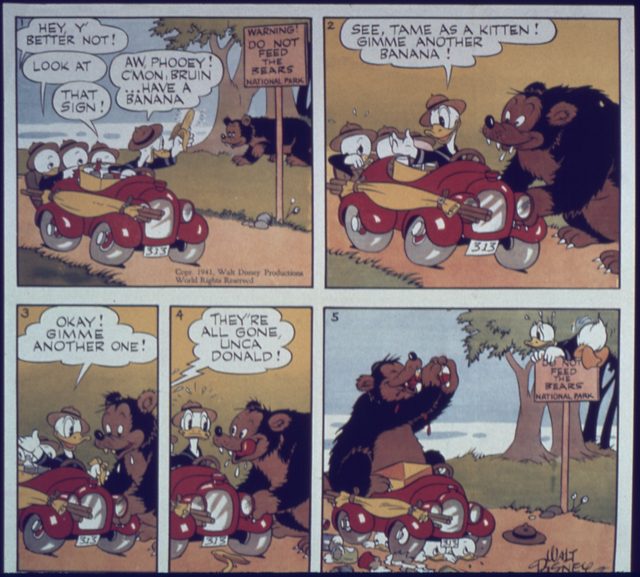
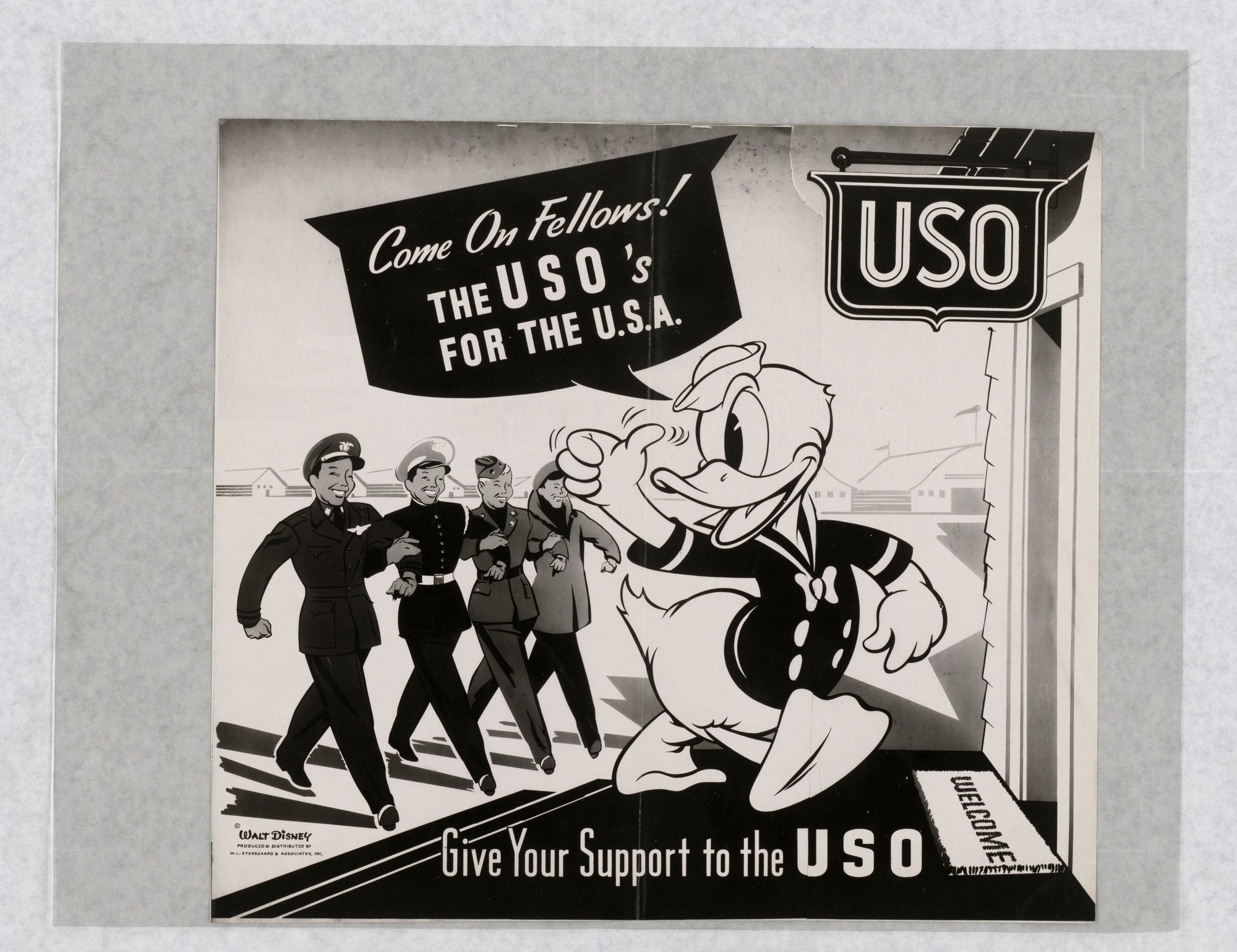
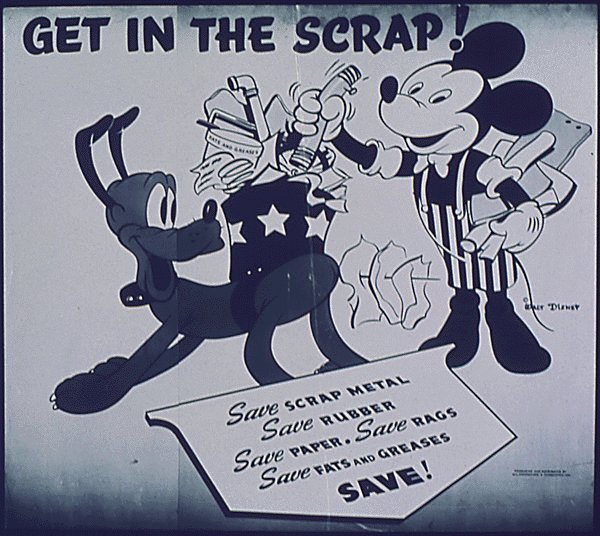
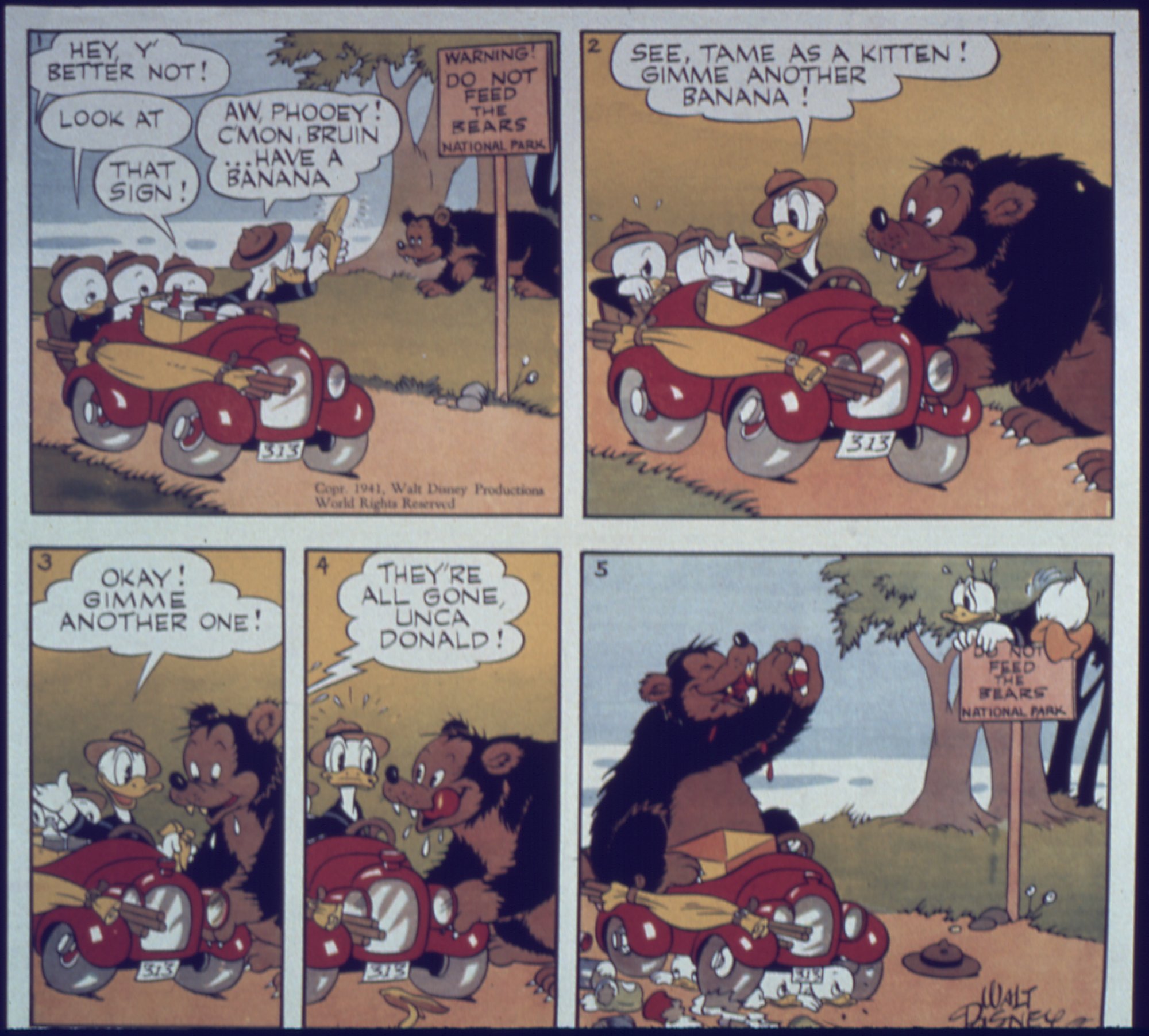
Disney for the USO, scrap and safety
The USO fund appeal is credited to Walt Disney: Donald Duck waves servicemen toward the USO door (Transfer, Bandwagon). The scrap poster carries Mickey and Pluto above a list of materials to save. The studio's own comic strip puts Donald and his nephews in a park, where feeding a bear wrecks the car; its only technique is faint Transfer, and the sheet carries no agency.
Government posters with Disney art, 1943 to 1944
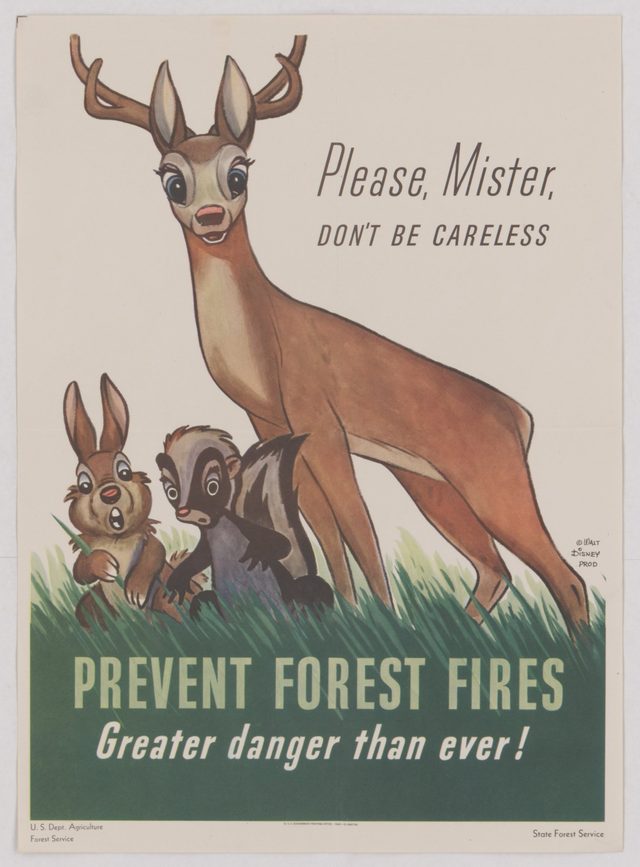
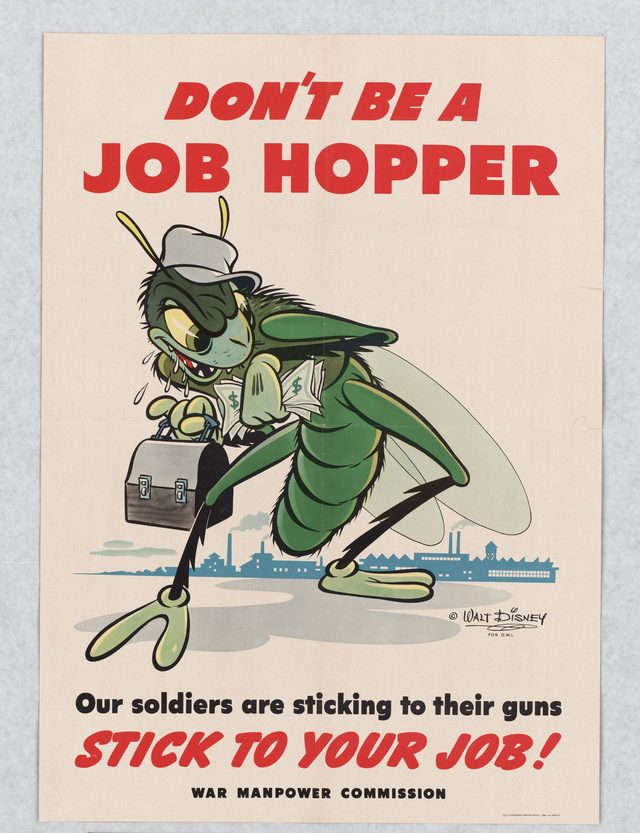
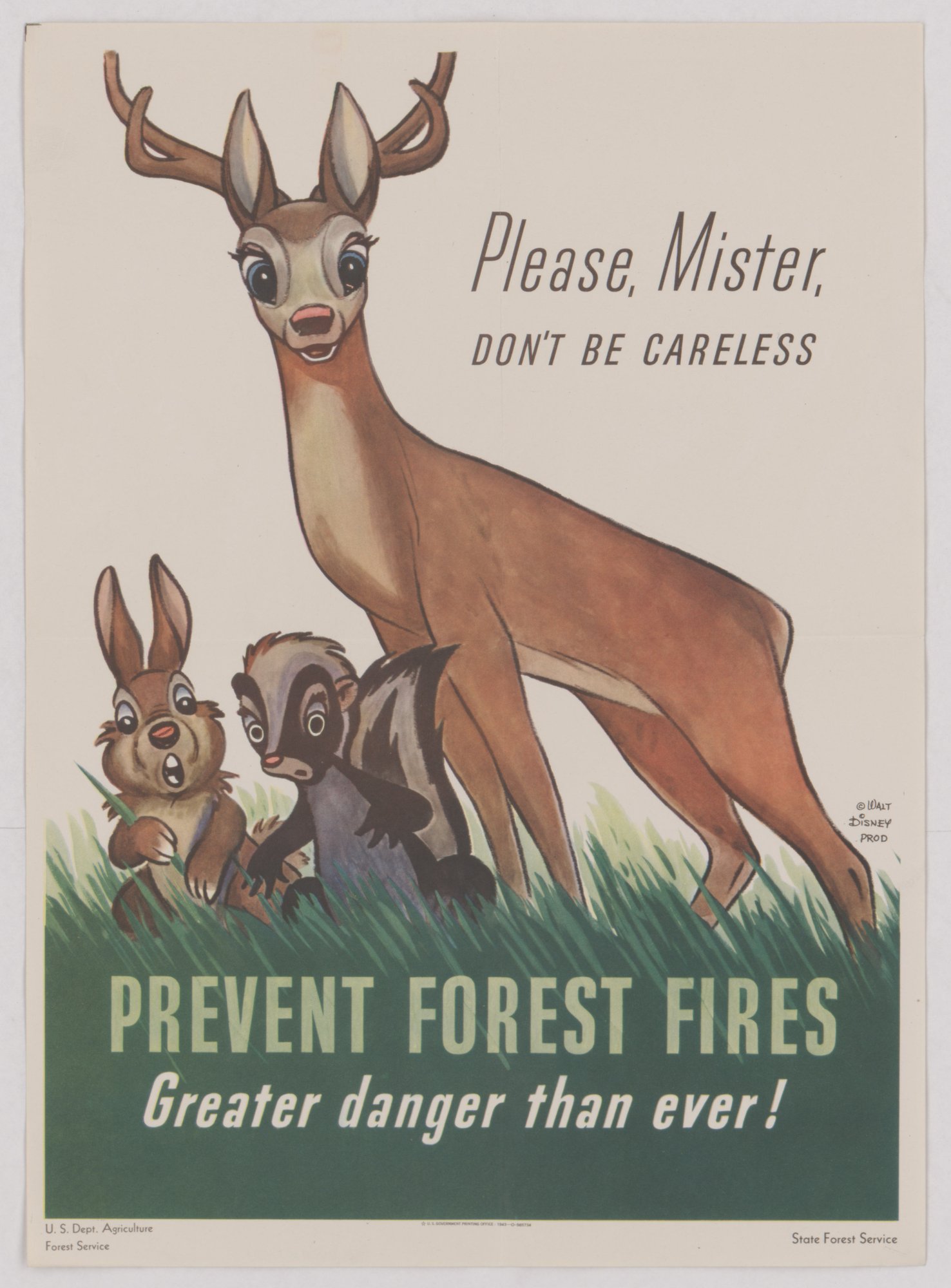
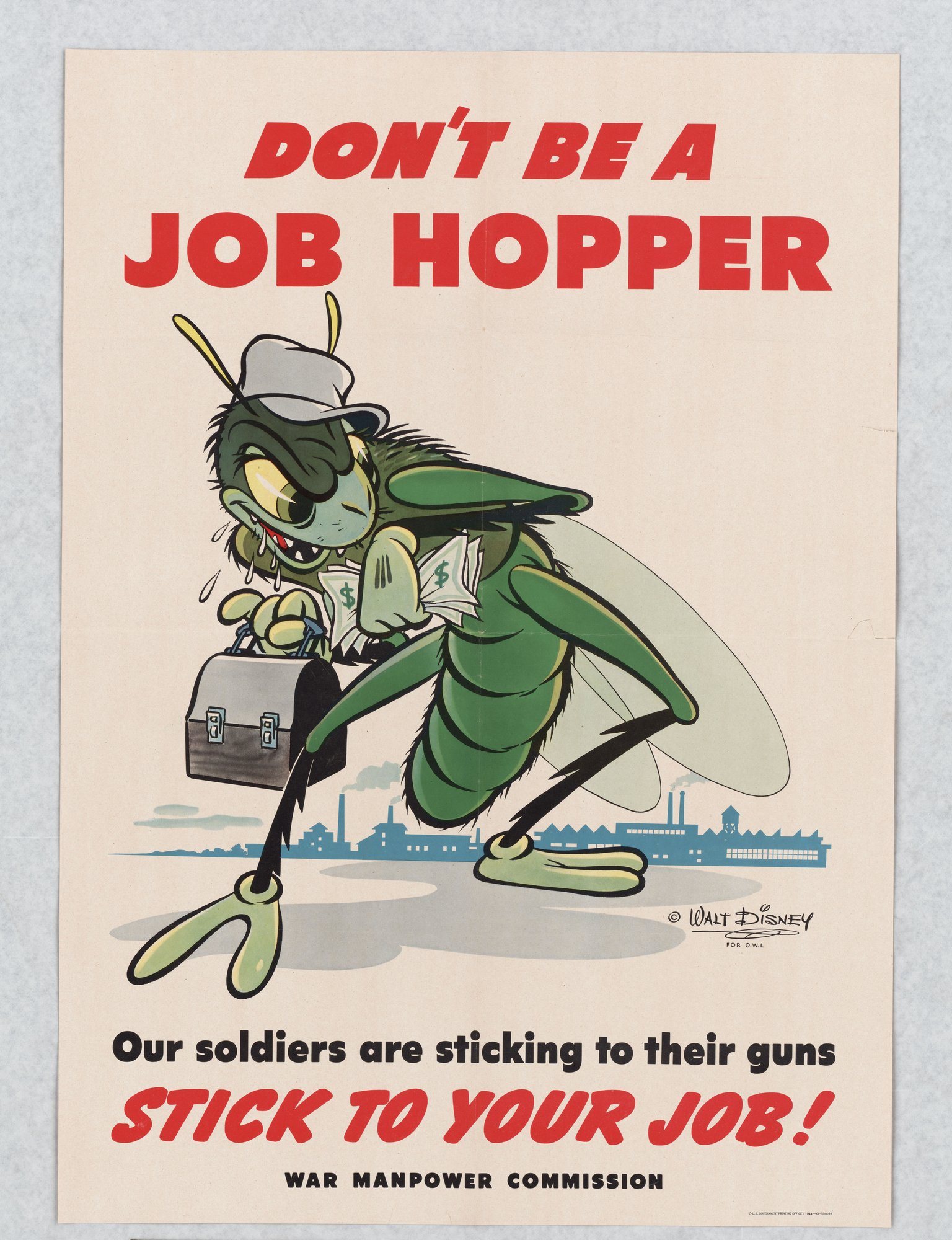
The Forest Service poster of 1943 carries a Walt Disney Productions copyright line beside its deer, rabbit and skunk, a mild Fear appeal resting on Transfer. In 1944 the War Manpower Commission credited "Walt Disney for O.W.I." on a poster that labels the reader a job hopper (Name-calling) and sets soldiers sticking to their guns against the worker.
Der Fuehrer's Face, Popeye and Dr. Seuss
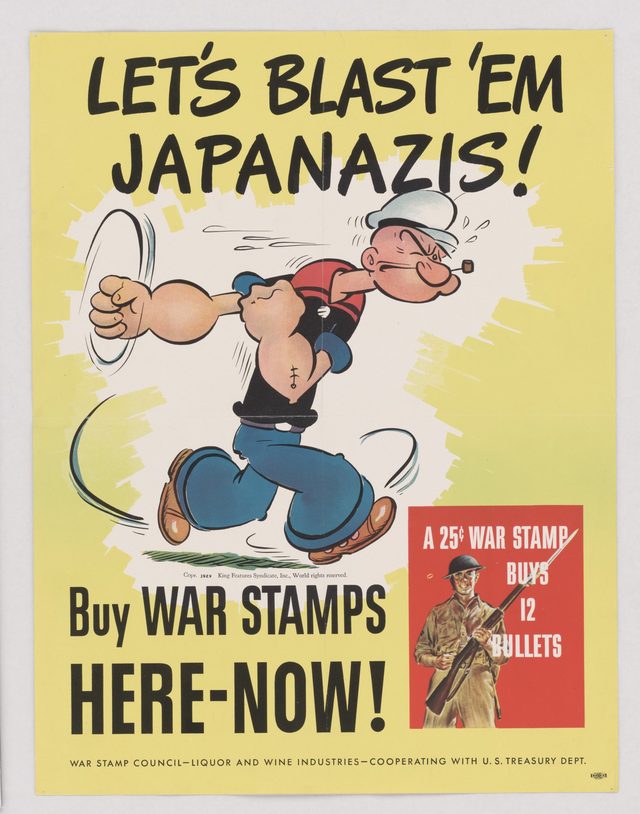
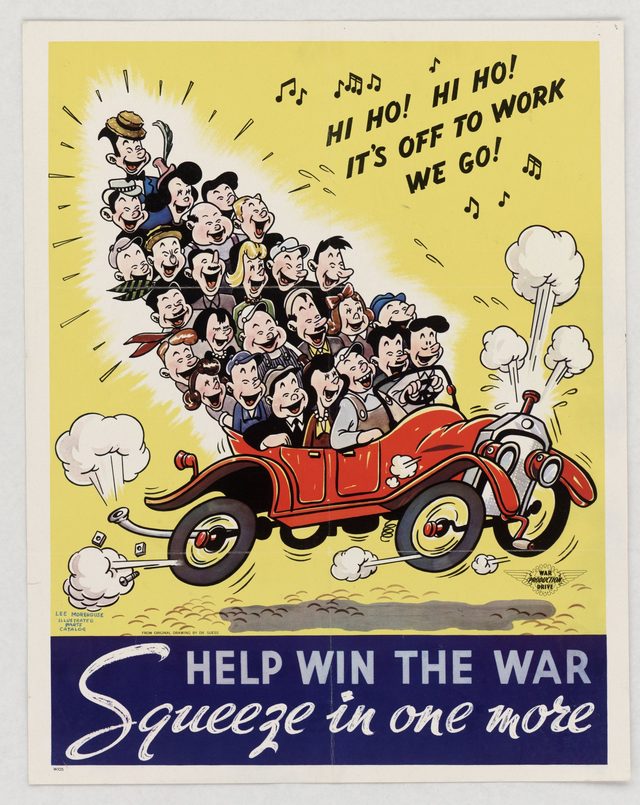
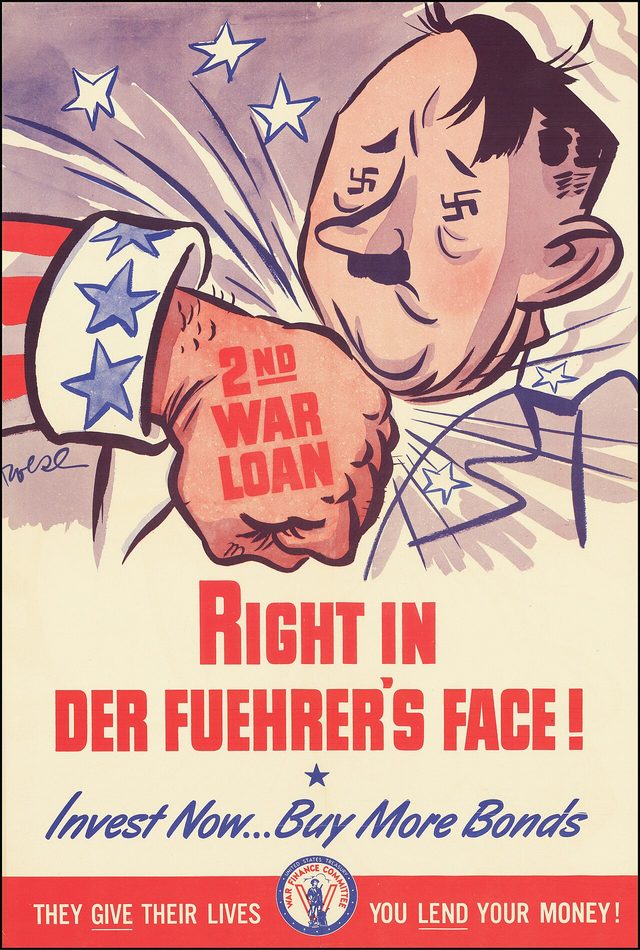
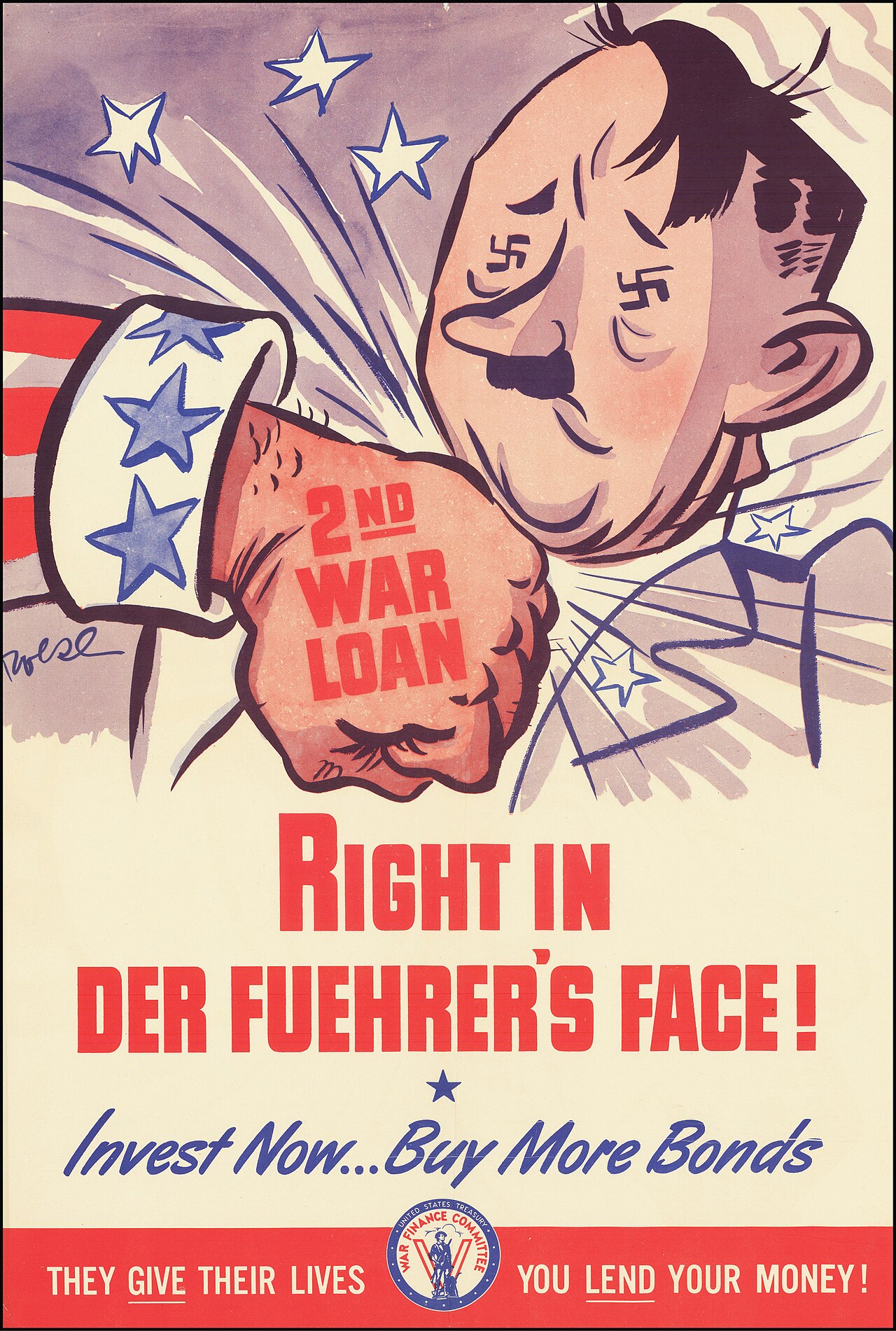
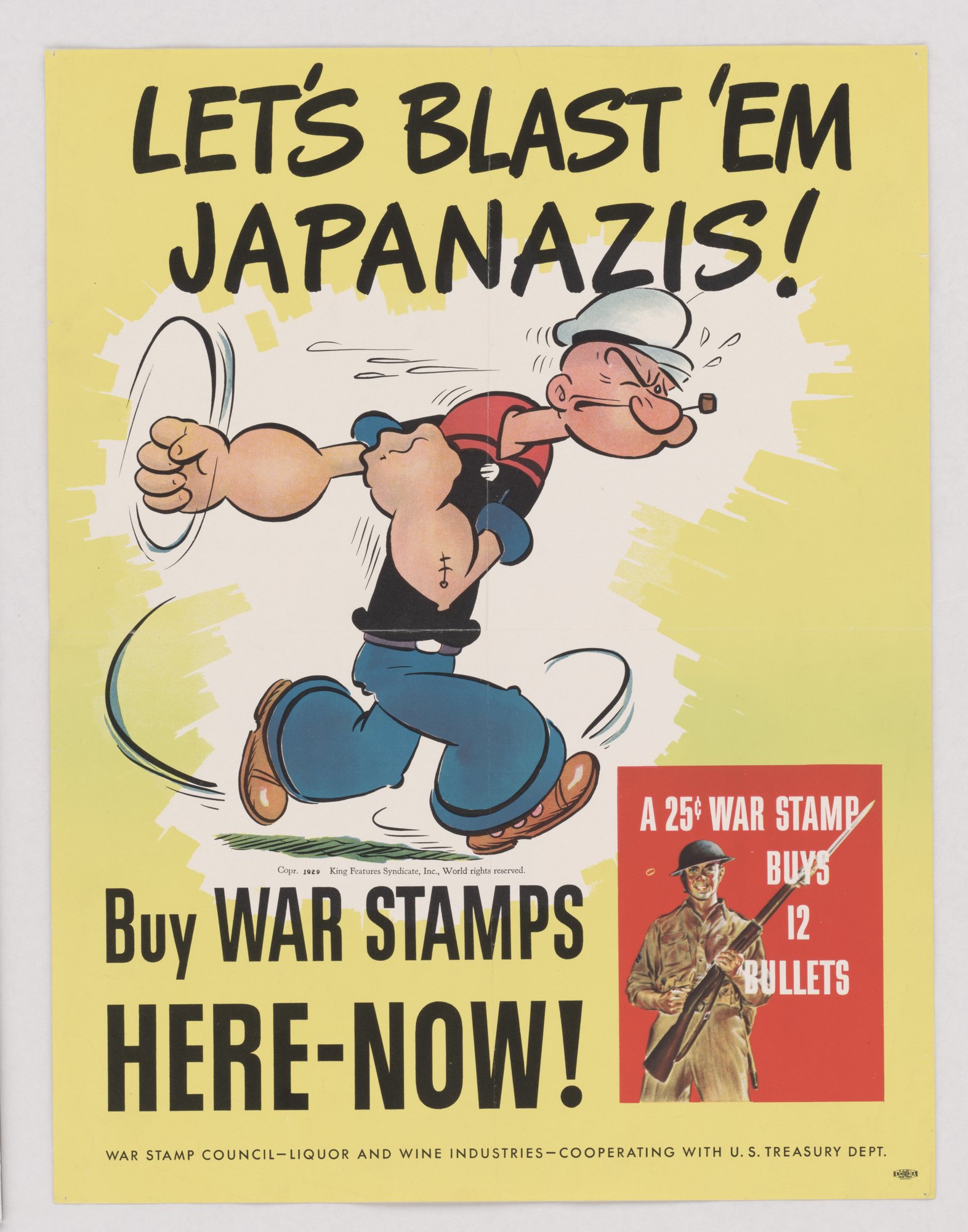
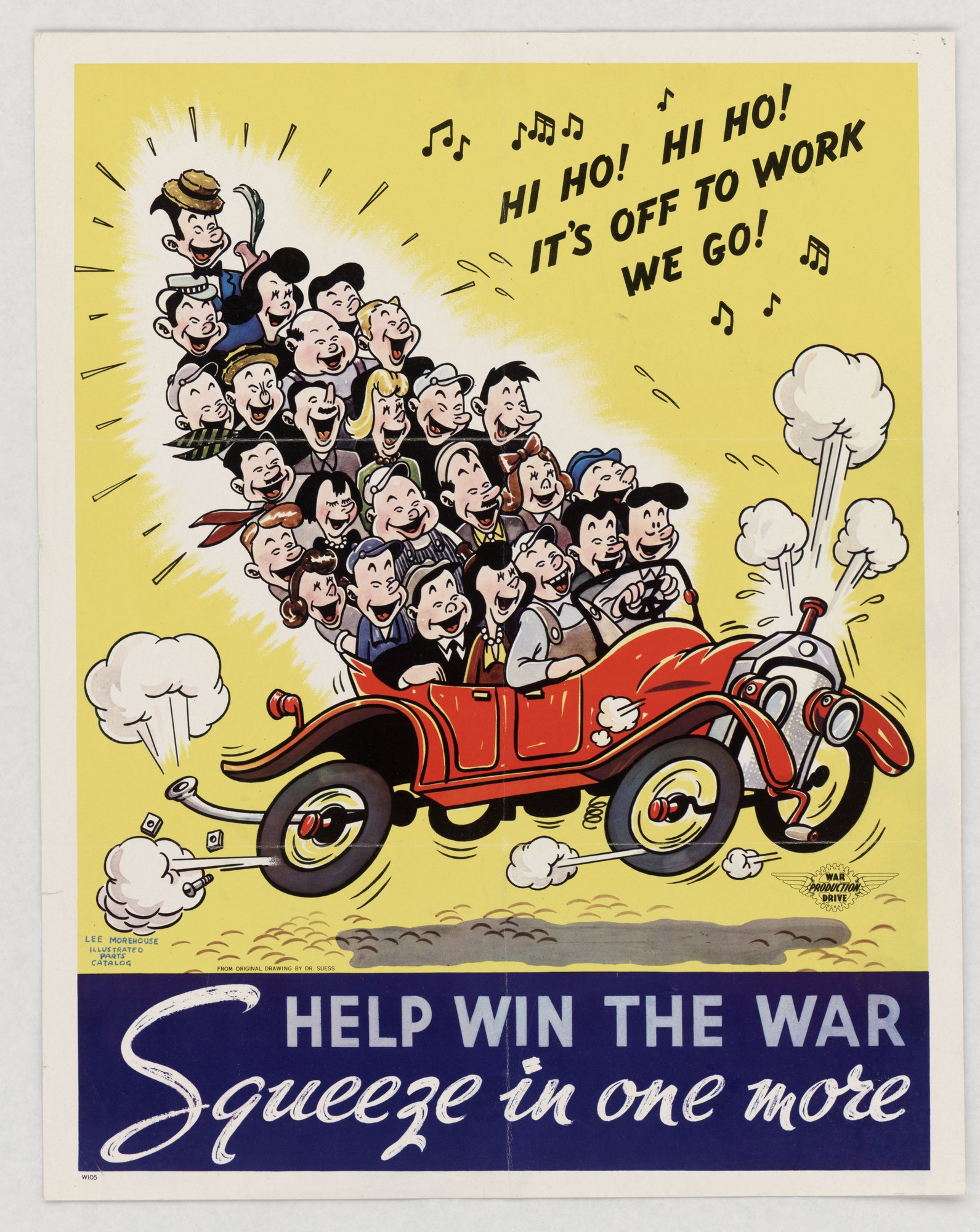
The Second War Loan poster takes its headline from the title of the 1942 Disney cartoon song "Der Fuehrer's Face". It was issued by the Treasury's War Finance Committee, not by Disney, and ridicules Hitler's caricatured face (Name-calling, Transfer). A liquor-industry war-stamp poster does the same for Japan with Popeye, the Fleischer-era comic sailor. Douglas Aircraft's production-drive sheet credits an original drawing "by Dr. Suess" (as printed): about thirty cheerful workers in one car, a crowd moving one way (Bandwagon) drawn as ordinary people (Plain folks).
Private Snafu, 1945
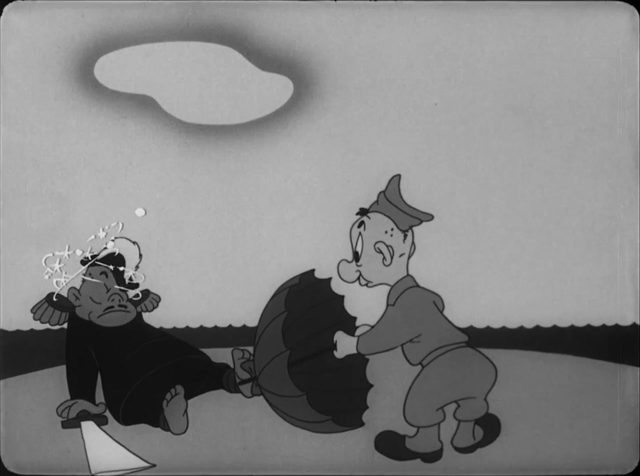
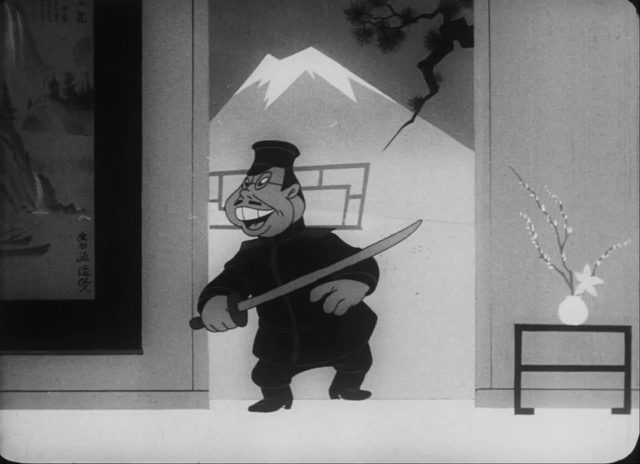
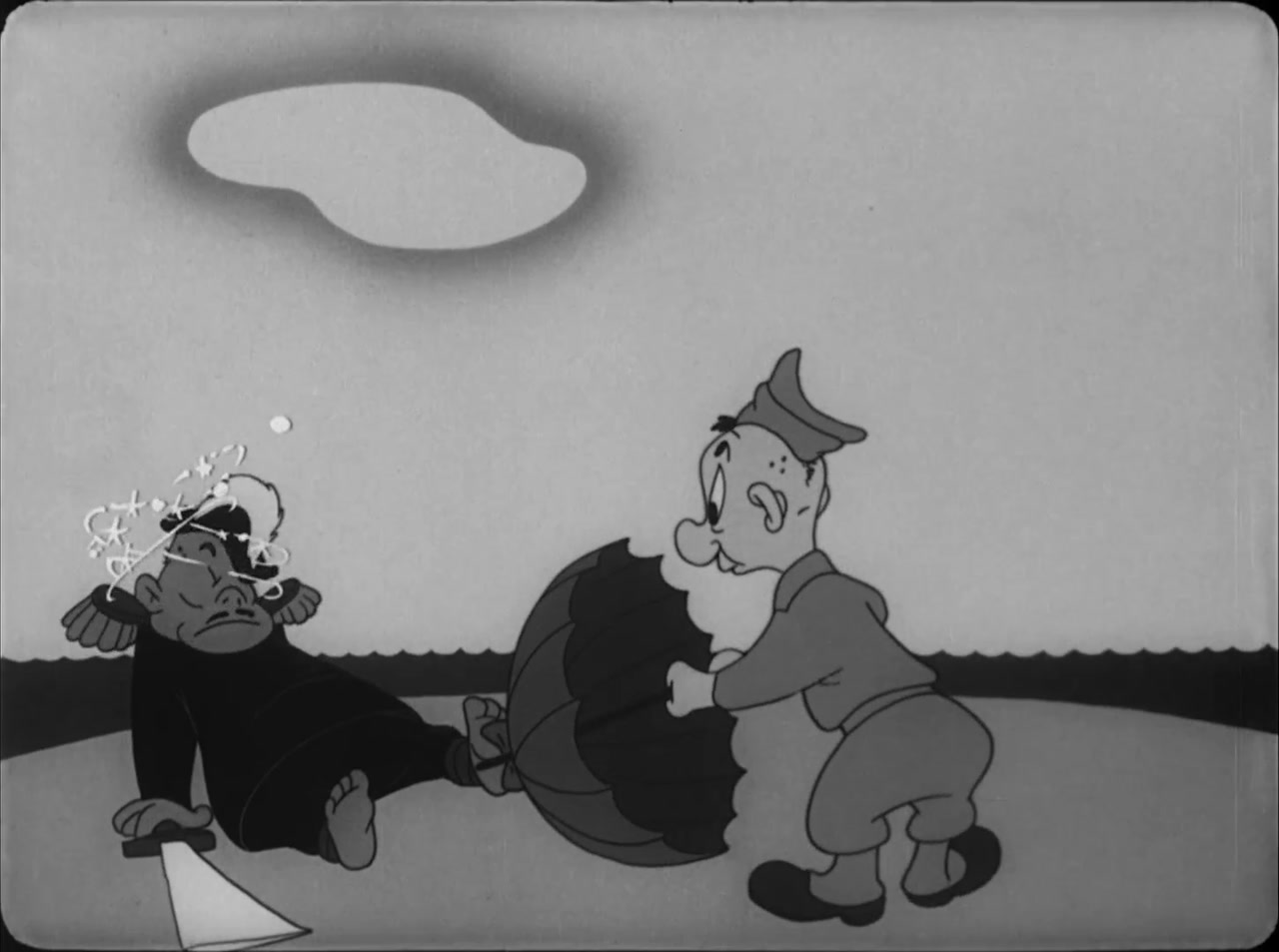
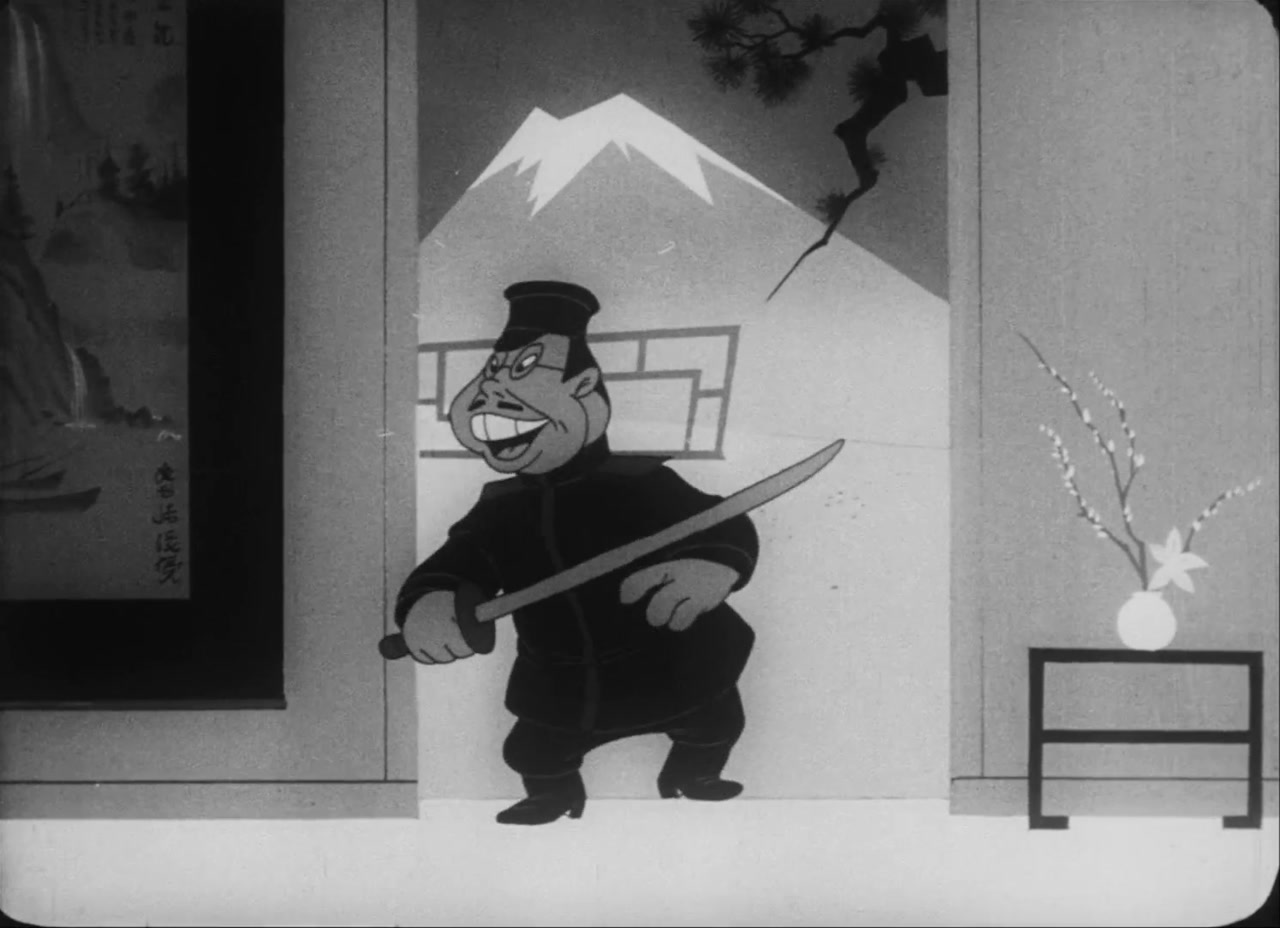
The Army's Private Snafu shorts began in 1943 as orientation cartoons for soldiers, produced by the First Motion Picture Unit with scripts mostly by Theodor Geisel (Dr. Seuss) and animated at Warner Bros. The two frames below come from the series' last shorts, released October and December 1945. Both draw Japanese figures by exaggeration, the same Name-calling by image seen in Allied and Japanese caricature alike (see Anti-Japanese posters).
What the collection does not hold
- Not here: Dr. Seuss's editorial cartoons for the newspaper PM (1941 to 1943) or his Navy posters; the one Seuss item is the Douglas sheet above.
- Not here: frames from Disney's own wartime shorts, including "Der Fuehrer's Face"; the poster only borrows its title.
- Not here: evidence of audience effect. The items show what was issued, not how it landed.
Related: war bonds posters, rationing and salvage posters, WW2 propaganda films.
Sources and further reading
Sources
National Archives and Records Administration, Record Group 44, World War II Posters; Wikimedia Commons (Treasury poster, from…
National Archives and Records Administration, Record Group 44, World War II Posters; Wikimedia Commons (Treasury poster, from NARA); Internet Archive, Private Snafu collection (Public Domain Mark 1.0). Credit lines are as printed on each sheet.