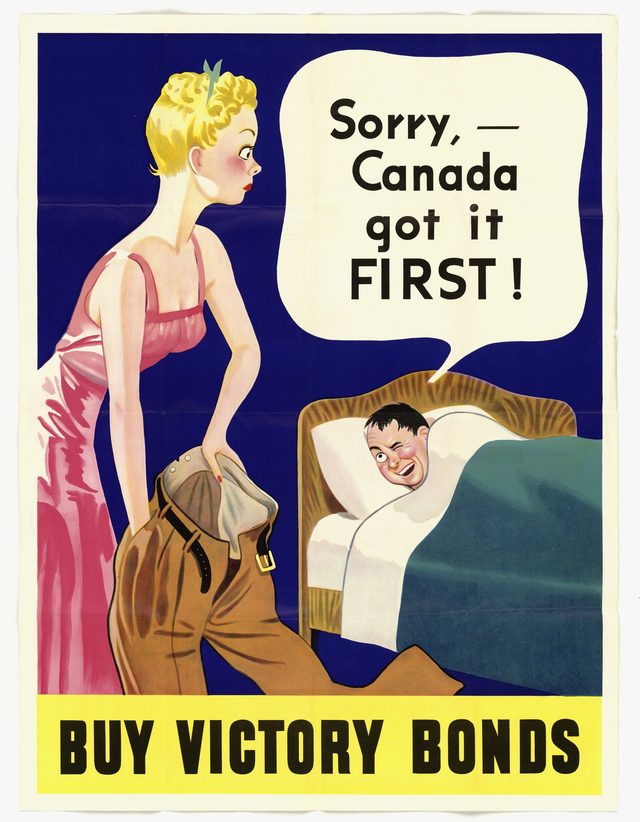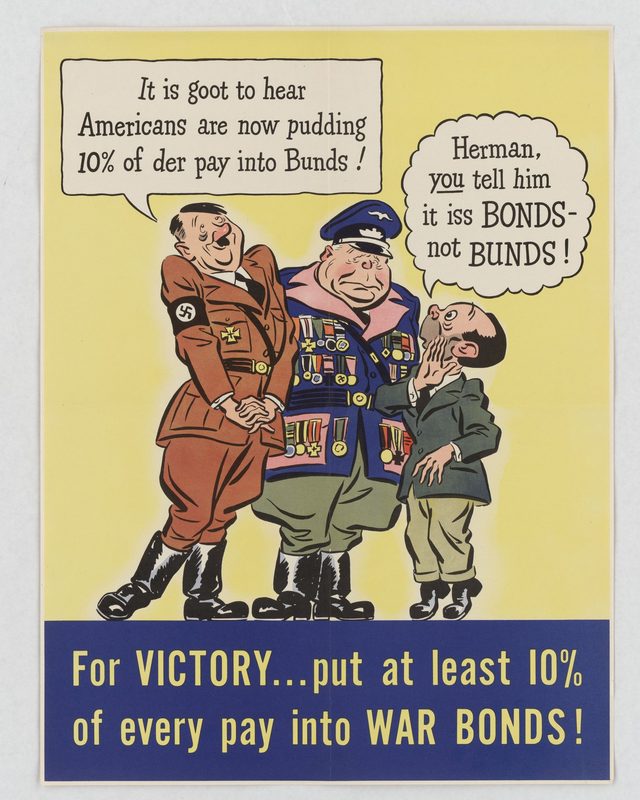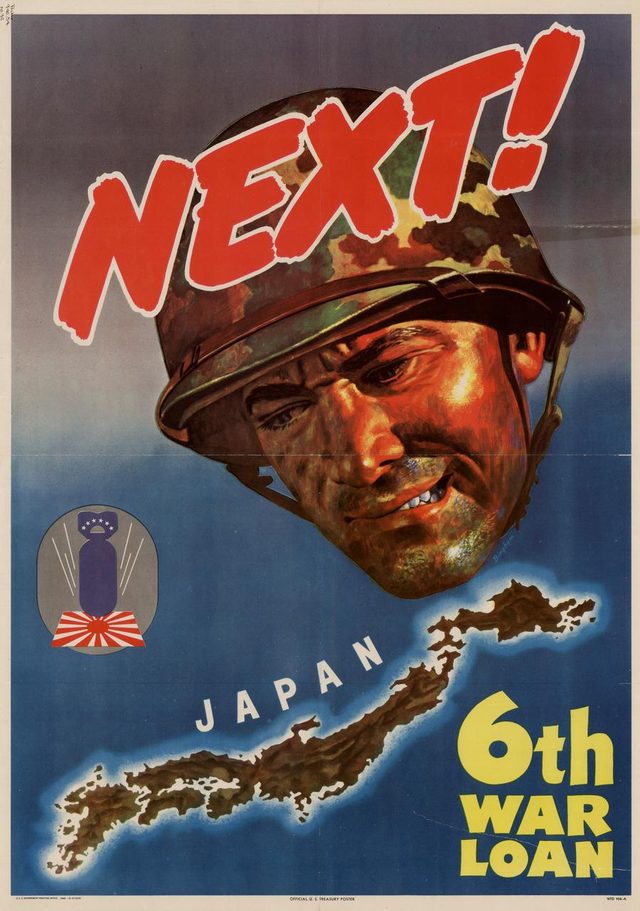
Content note. Some bond posters in this set caricature Japanese people and mock German-accented speech, and some use the wartime labels "Jap" and "Hun". They are shown as issued, as evidence of what civilians were told. Showing a poster is not endorsing it.
What were WW2 war bonds posters?
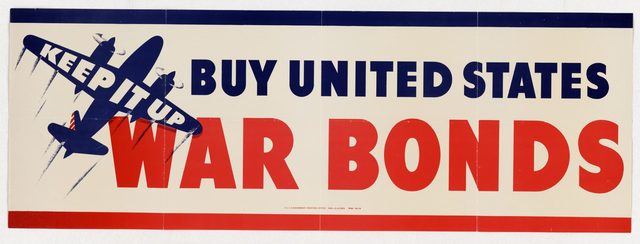
War bonds posters were printed sheets asking civilians to lend money to their governments during the Second World War. The U.S. Treasury ran eight bond drives between November 1942 and December 1945, Canada held nine Victory Loans from 1941 to 1945, and Britain's National Savings Committee urged savings throughout the war.
The collection holds 269 posters dated 1939 to 1946 that name bonds, savings stamps, certificates or war loans in their titles: 156 American, 78 Canadian and 35 British. That is a count of FRAME's catalogue, not of everything each government printed. For the wider picture, see the WW2 propaganda hub and propaganda posters.
Why did governments sell bonds at all?
There were two aims, and the posters mix them. The first was money. In the United States, "nearly $186 billion worth of government securities" were sold from May 1941 through December 1945, according to a Congressional Research Service report on WWII war bonds, which says bonds were promoted "to reduce consumer spending in order to lessen inflationary pressures and black market activity." The Duke University Libraries Ad*Access guide puts the figure at $185.7 billion and says the drives "served to thwart inflation as well as to finance the war."
The second aim was to absorb spending power. Factories were making tanks, not refrigerators, so rising wages met fewer goods and prices would climb unless money was set aside. The economist John Maynard Keynes made the same argument for Britain: a Financial History Review article summarises his view that "a rise in prices was inevitable because of the disequilibrium between supply and demand" unless demand was reduced. In Canada, according to Canada's History, "all economic signs pointed to the beginning of an inflationary cycle" and Prime Minister Mackenzie King feared it, since runaway inflation had afflicted the home front in the Great War.
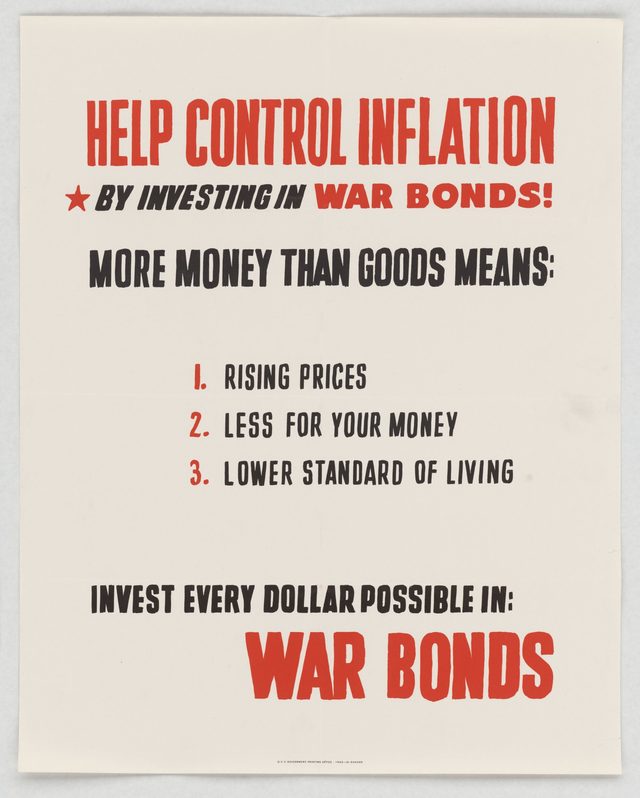
One poster states this logic in plain type. One 1943 US government sheet states it directly.
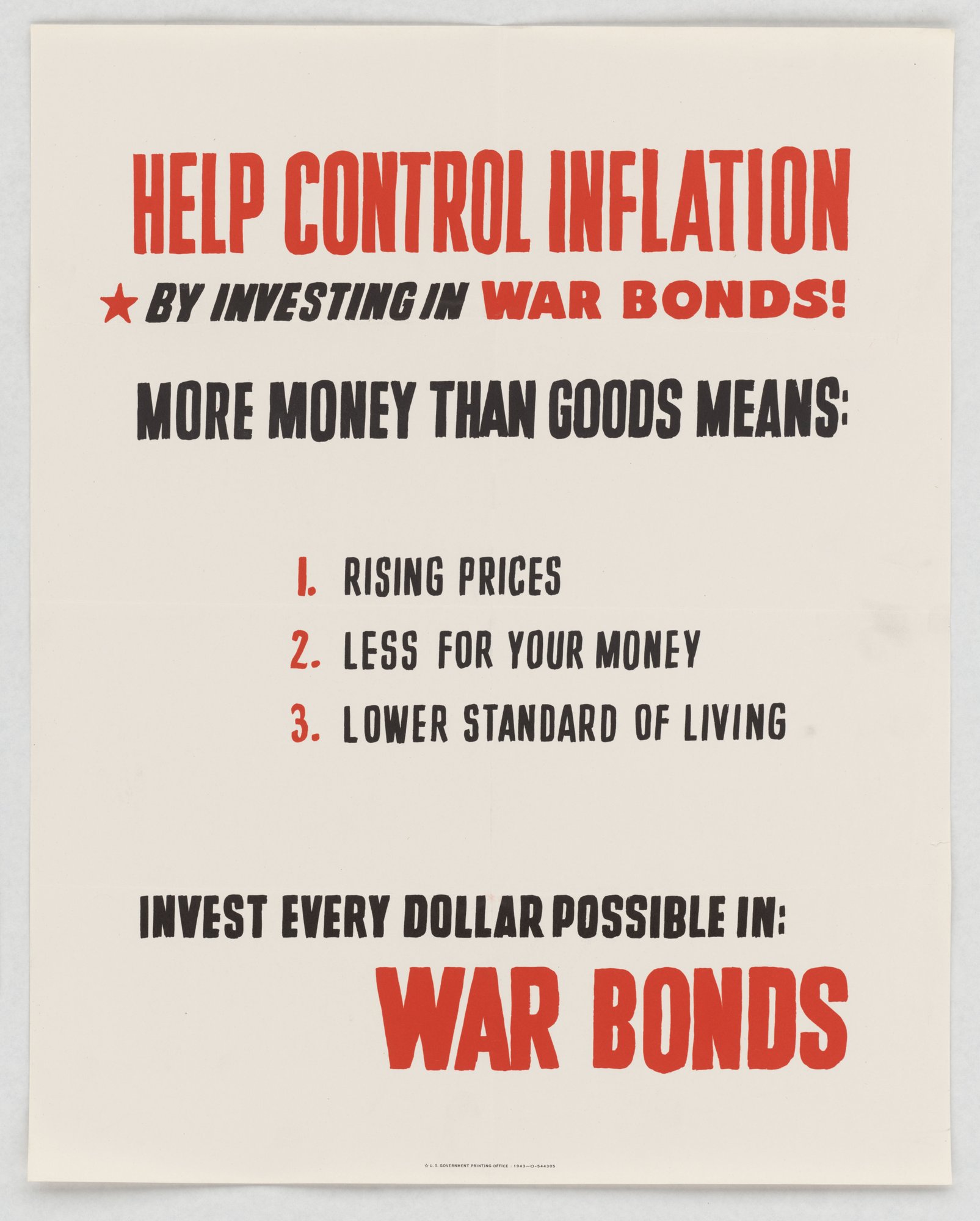
This type-only sheet carries a U.S. Government Printing Office imprint of 1943 and no named issuer. It sets three bad outcomes in a numbered list and gives one remedy, a pattern recorded in the catalogue as fear appeal with card stacking, since only one way of absorbing the extra money is offered. Read the technique: fear appeal.
How did the US Treasury run its war loan drives?
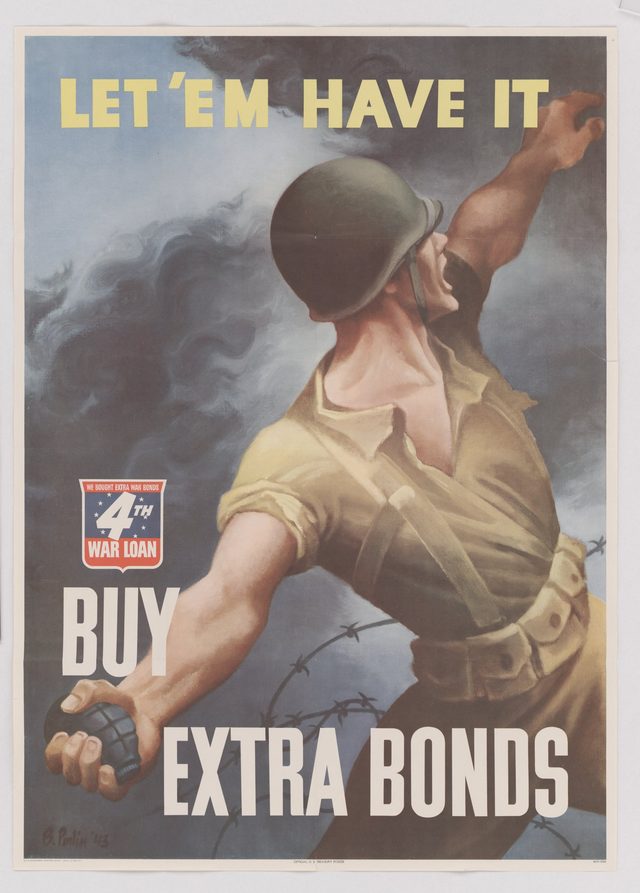
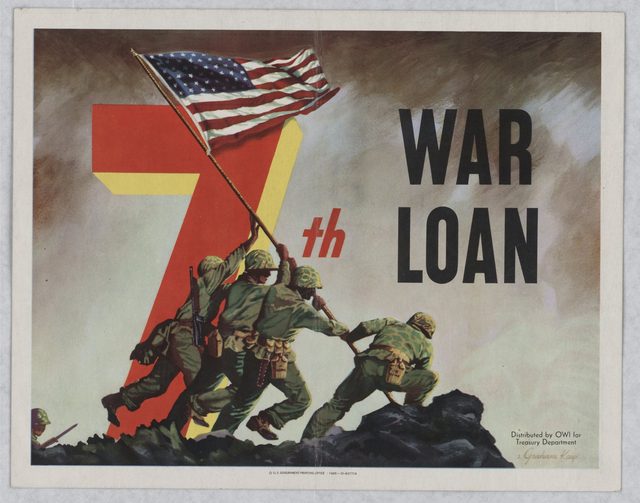
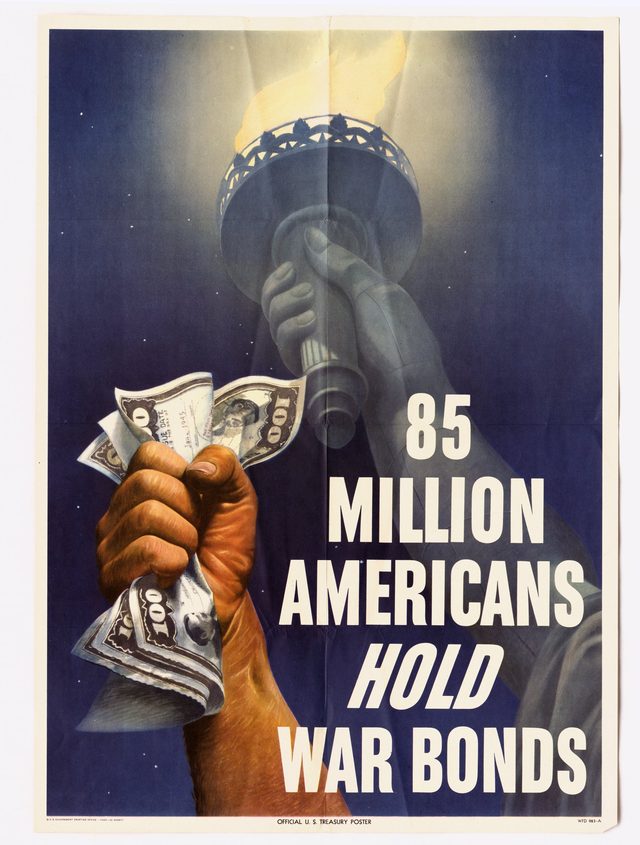
The Treasury's War Finance Division and War Savings Staff ran the drives, and many of the posters carry its "Official U.S. Treasury Poster" line or a "WFD" code. Series E bonds went on sale on 1 May 1941, per the CRS report. The drives, listed by the Duke guide, ran from the First War Loan (30 November to 23 December 1942) to the Eighth, or Victory Loan (29 October to 8 December 1945). The Duke guide reports over 85 million American investors by the war's end. The Office of War Information (OWI case study) issued some bond posters, including the Rockwell sheet below.
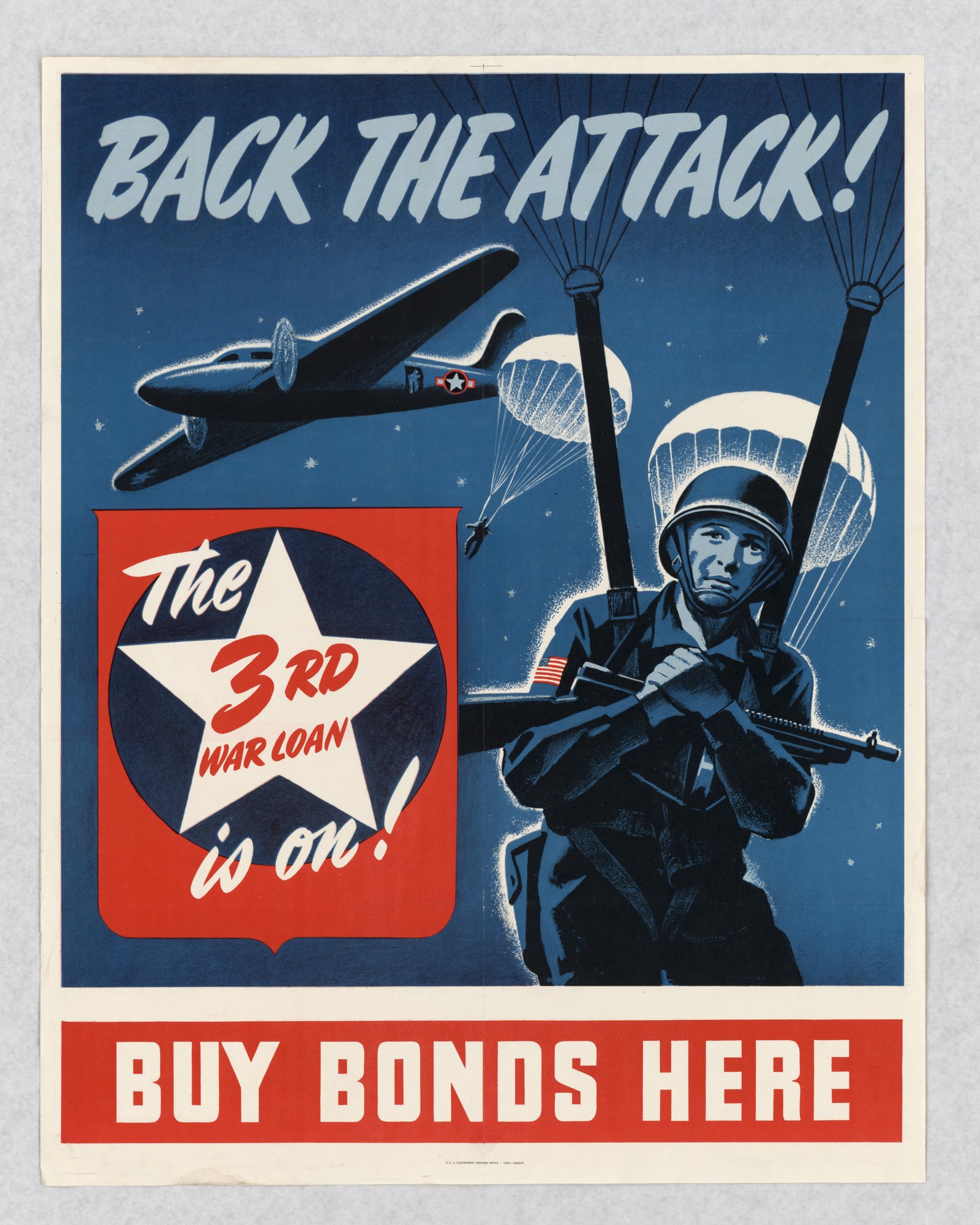
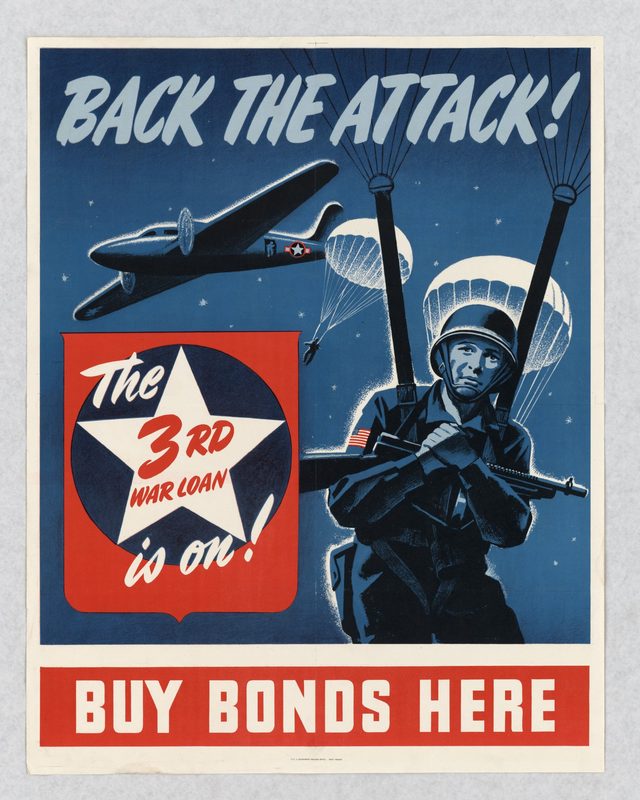
A 1943 Treasury poster for the Third War Loan shows a helmeted paratrooper with a submachine gun, parachutes and a transport aircraft, beside a red shield reading "The 3rd War Loan is on!" It mentions no interest, terms or price. The armed forces' standing is set beside a purchase, the tell of transfer. Read the technique: transfer.
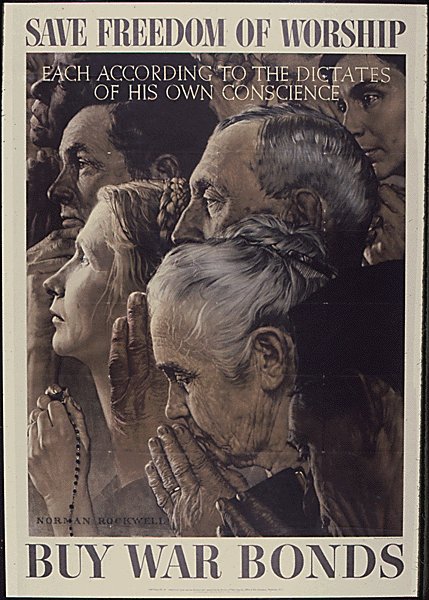
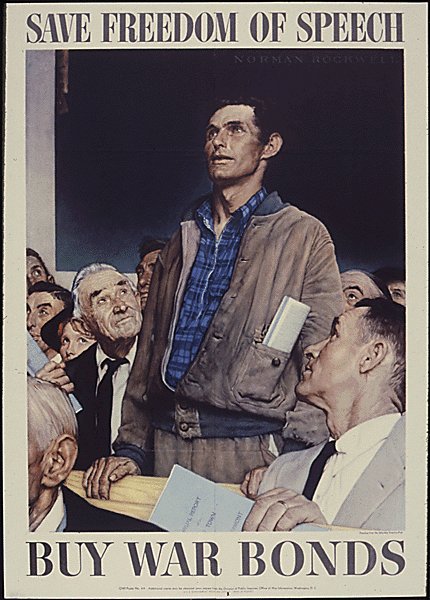
The Office of War Information issued Norman Rockwell's "Save Freedom of Worship" as a bond poster, with the line "Each according to the dictates of his own conscience" and "Buy War Bonds" beneath. A religious-liberty value is tied to a purchase request. That is glittering generalities and transfer, with no argument about what the money buys. Read the technique: glittering generalities.
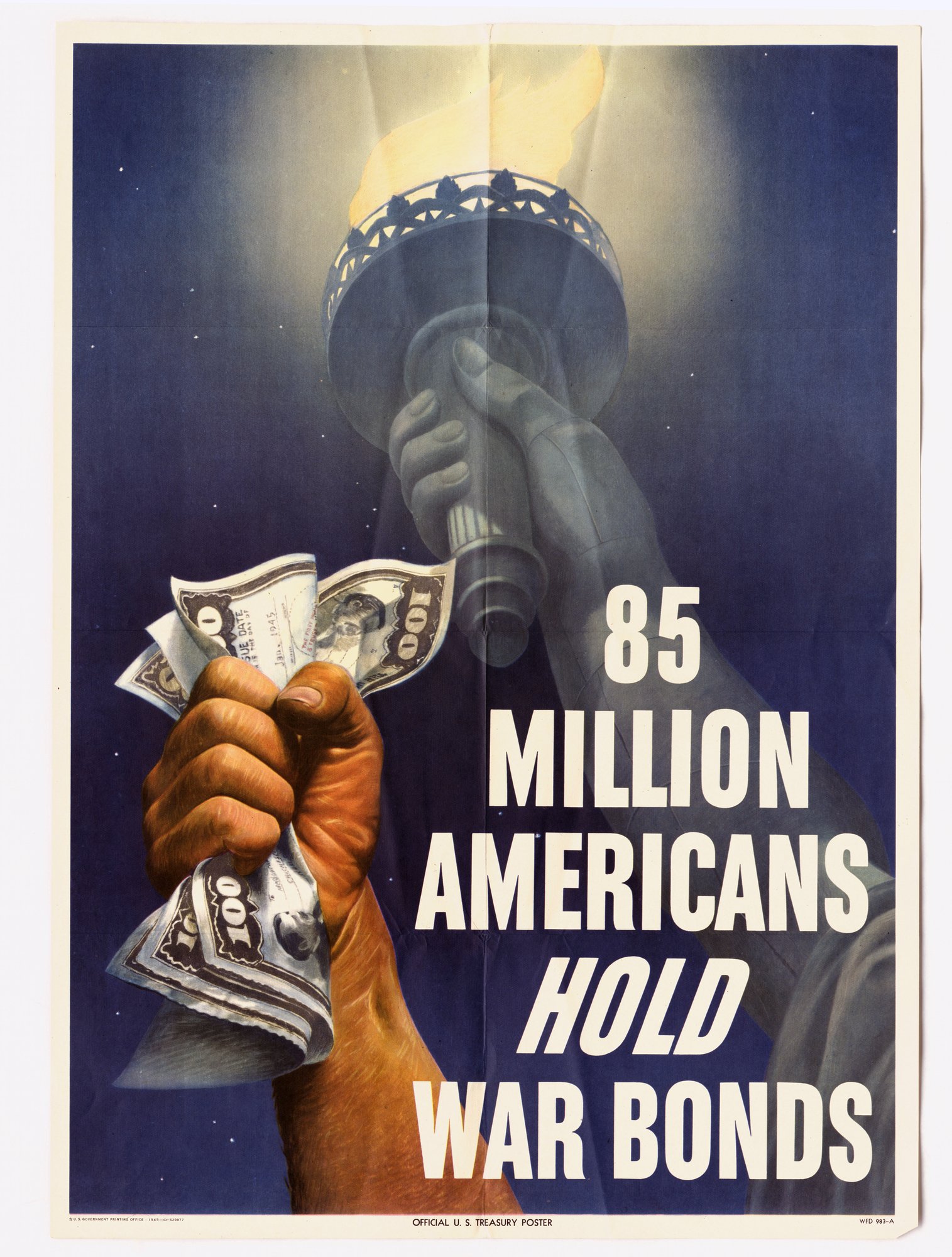
A 1945 Treasury poster (WFD 983-A) states that "85 million Americans hold war bonds" over a hand clutching crumpled $100 bonds and the torch of the Statue of Liberty. The figure is the poster's own claim, unchecked here. A stated majority already taking part is the tell of bandwagon. Read the technique: bandwagon.
Which posters used guilt and fear to sell bonds?
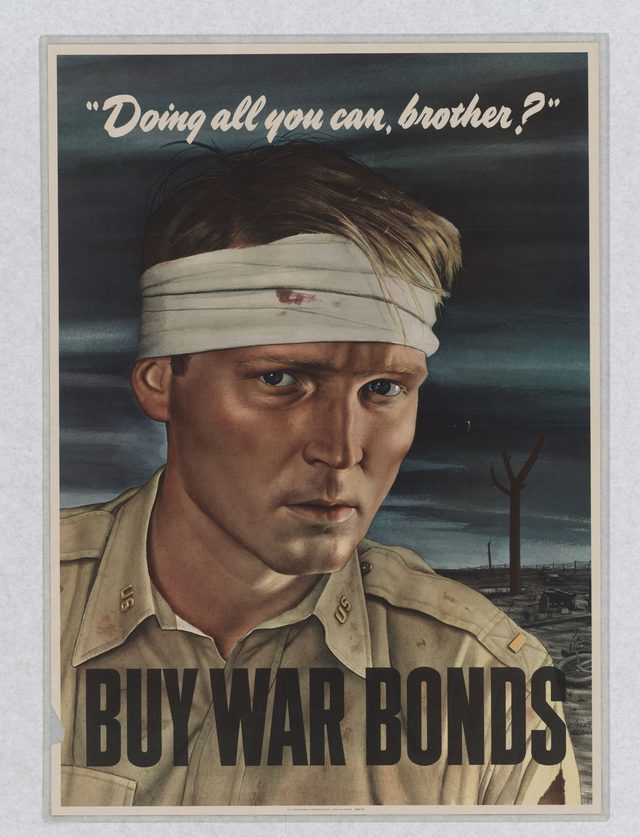
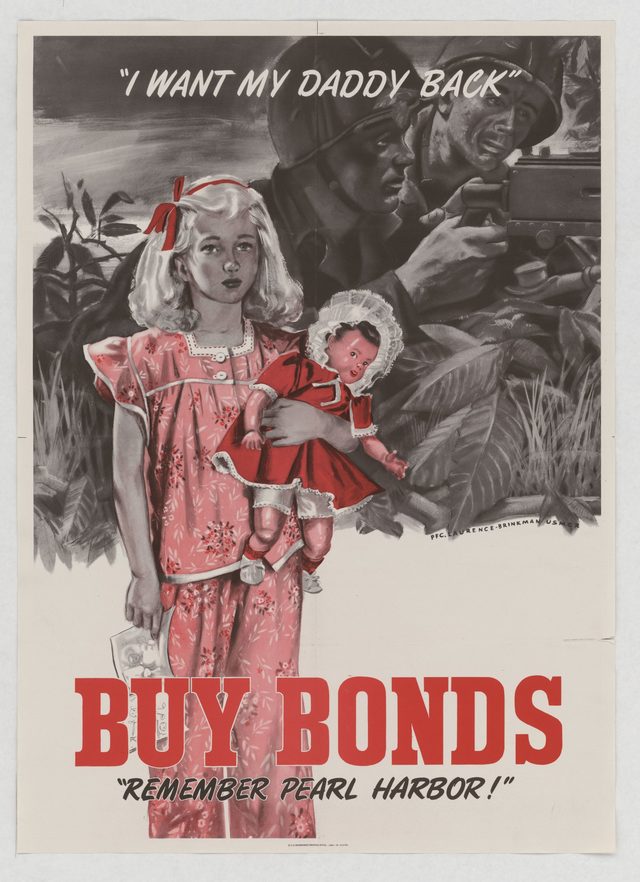
Many American posters speak in the voice of a casualty or a bereaved family. They are the clearest uses of fear appeal in the set, and the catalogue also tags several as testimonial because a survivor or officer vouches for the ask.
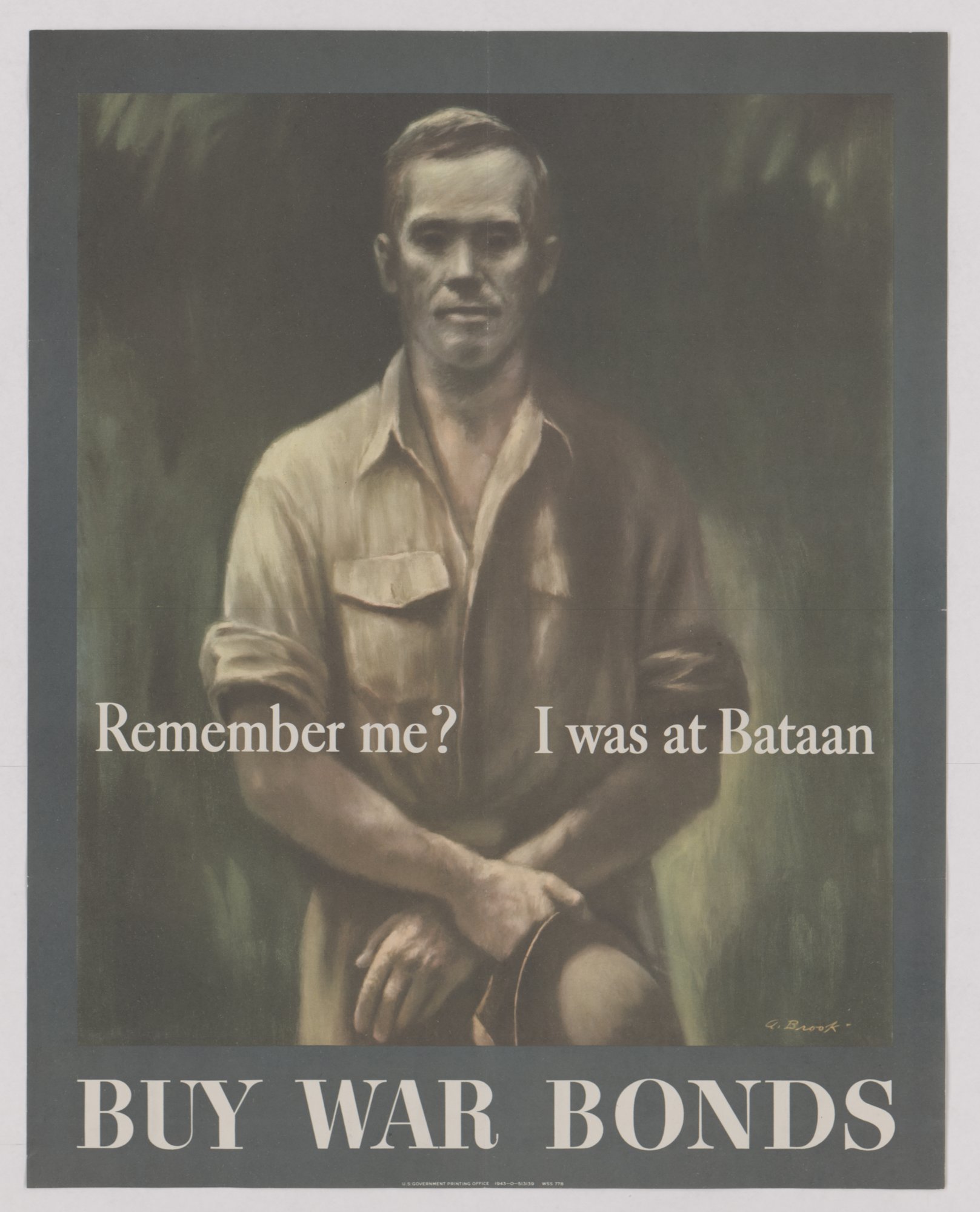
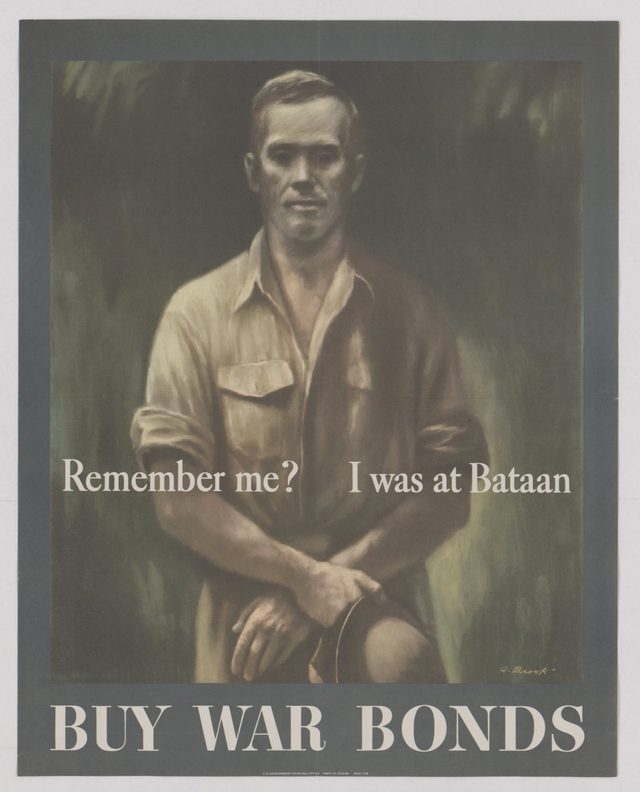
A 1943 War Savings Staff poster (WSS 778) shows a lean man with his hat in his hand who asks, "Remember me? I was at Bataan." Bataan refers to the April 1942 surrender of U.S. and Filipino forces in the Philippines. The speaker's past suffering invites guilt before the instruction "Buy war bonds". Read the technique: testimonial.
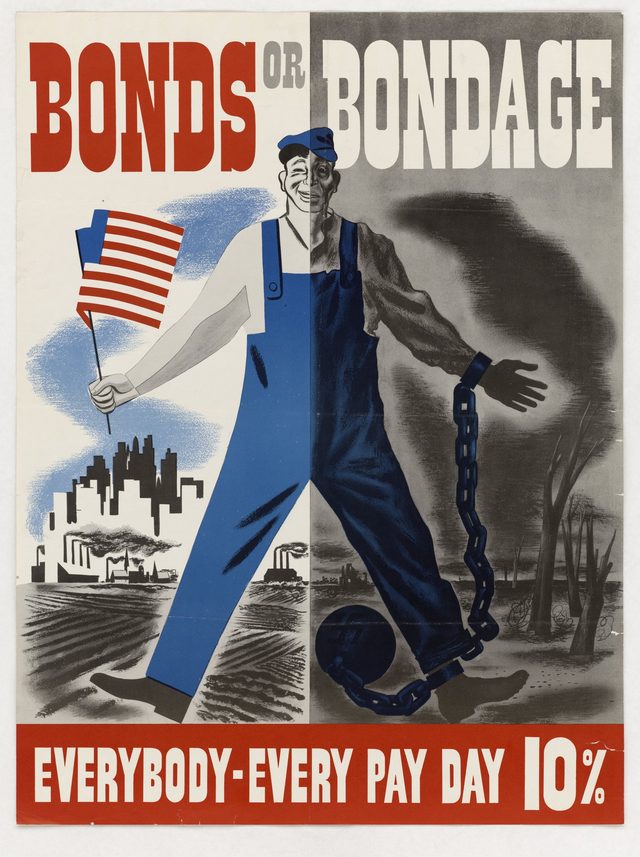
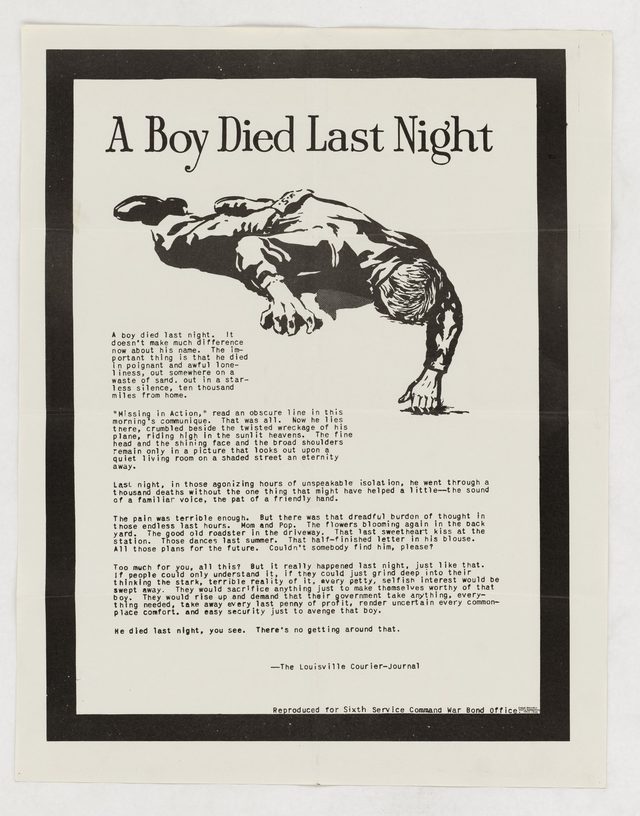
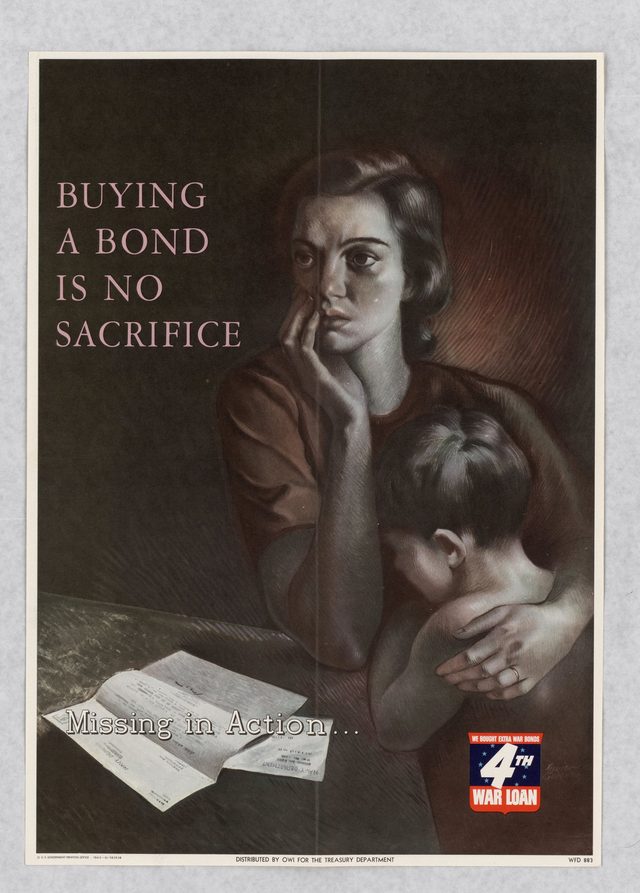
Others use the same structure. "Buying a bond is no sacrifice" shows a mother and child with a Navy "Missing in Action" notice on the table, and "A Boy Died Last Night" ends by asking civilians to give up profit and comfort. "Bonds or bondage" splits a worker into a smiling half and a chained half.
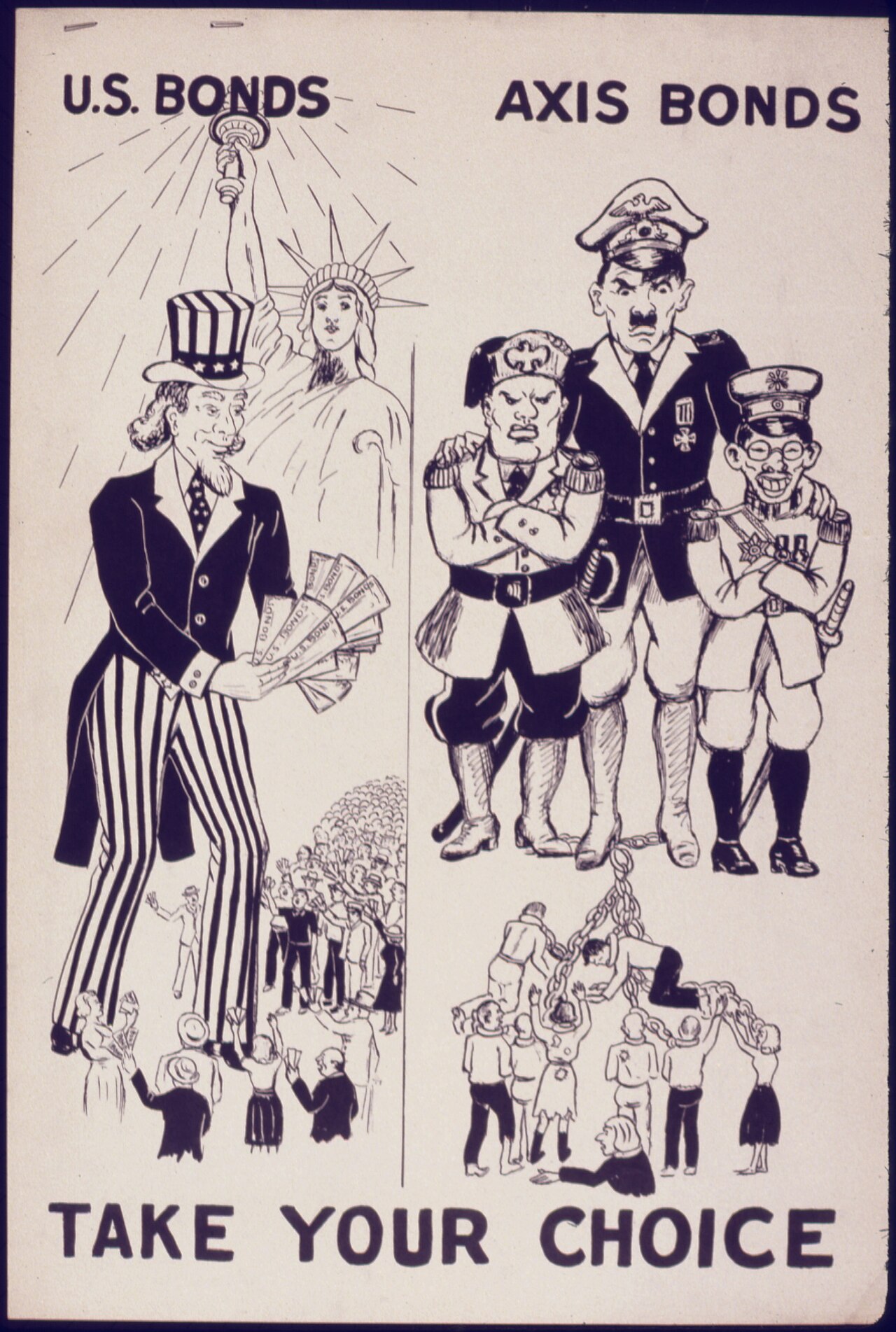
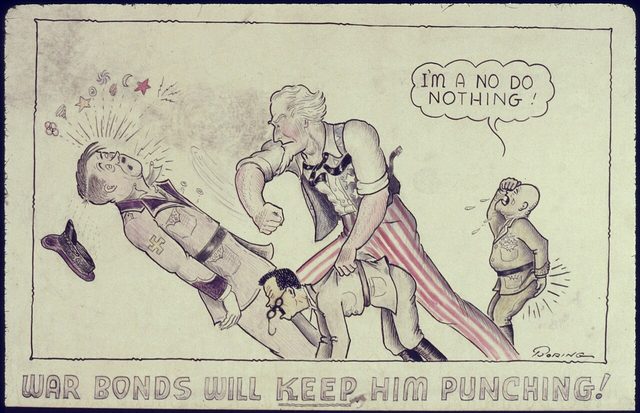
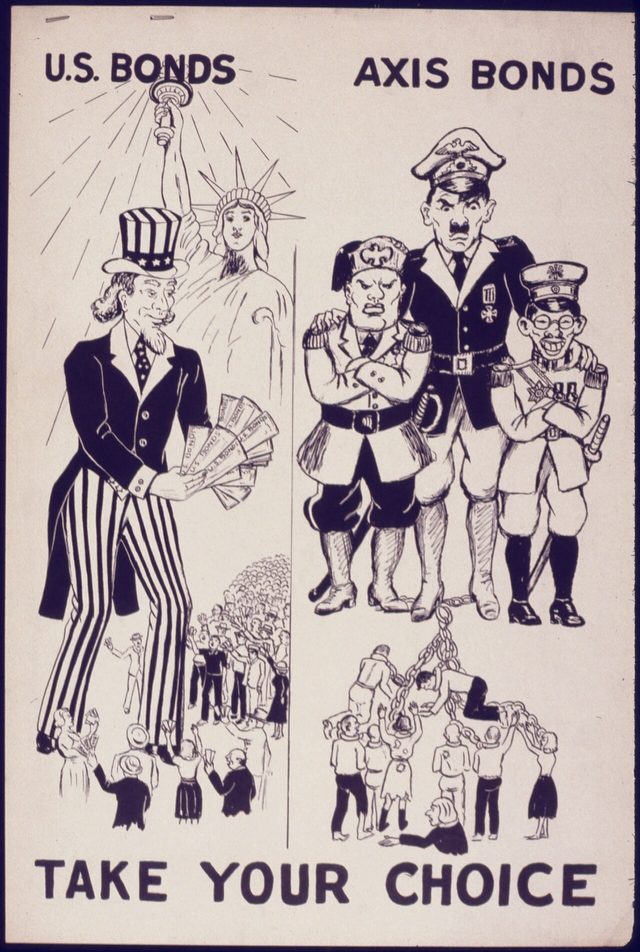
This two-panel poster in the Treasury series sets Uncle Sam, the Statue of Liberty and a cheering crowd against caricatures of Mussolini, Hitler and a Japanese officer, with shackled figures below. The catalogue notes that the Japanese figure has racialised features, which is name-calling, and that it pairs national symbols with enslavement, which is transfer and fear appeal. The caption records that "Axis bonds" did exist as real war loans, but the poster does not say what they financed. Read the technique: name-calling.
What was the Squander Bug?
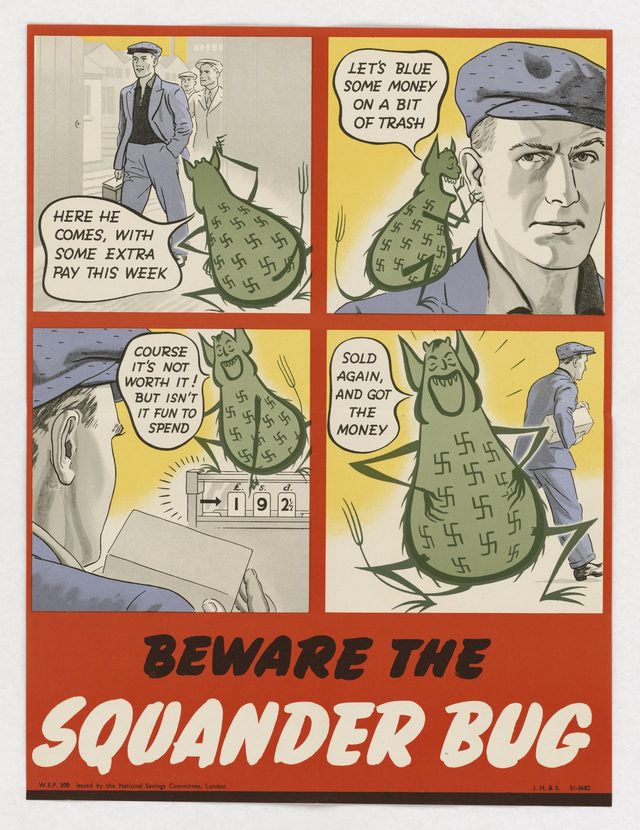
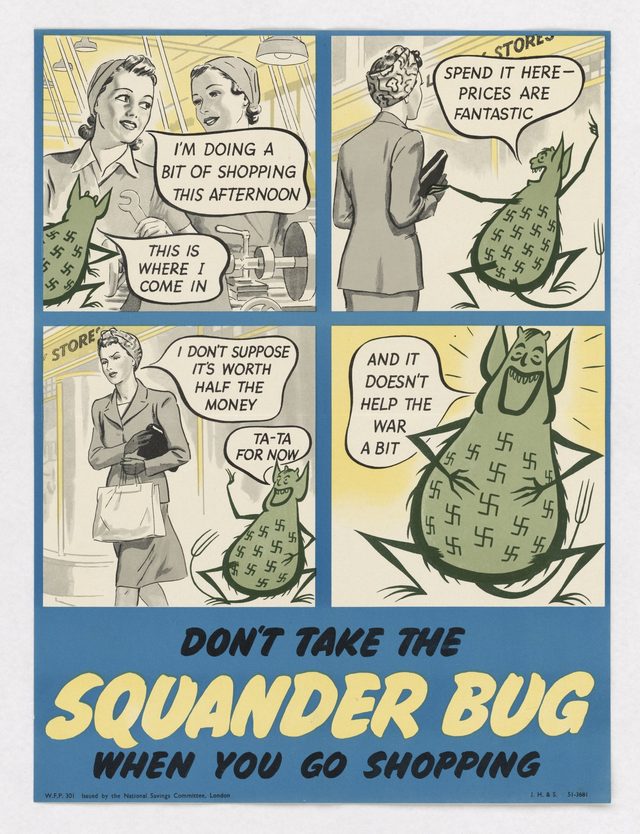
Britain's National Savings Committee used a different mascot. The Imperial War Museums say the Committee's artist Phillip Boydell created the Squander Bug, and that the committee "raised funds by urging the public to save their own money and invest it in the war effort" (IWM, Meet the Squander Bug).
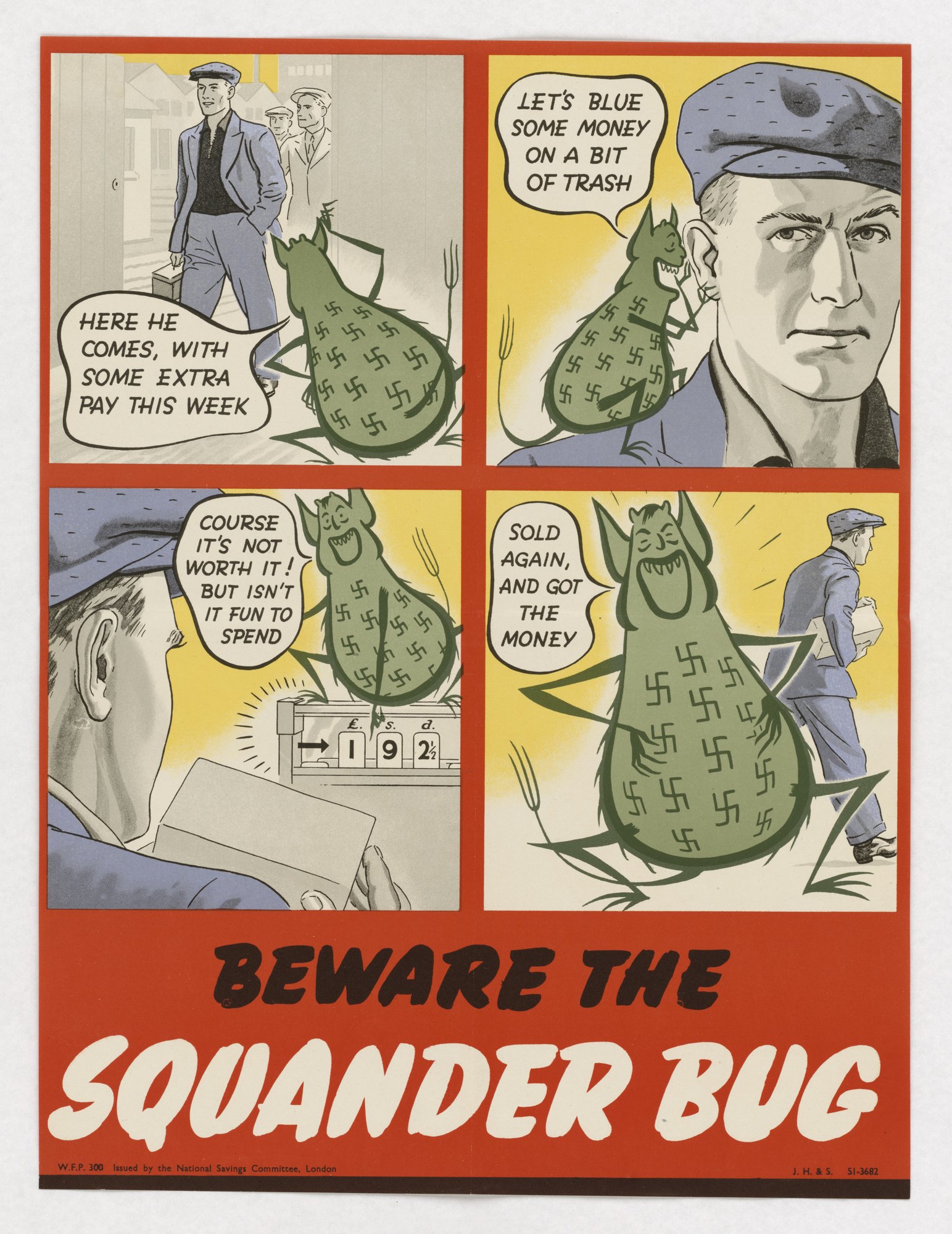
This four-panel strip (W.F.P. 300, issued by the National Savings Committee, London) shows a green insect covered in swastikas urging a worker to spend his extra pay, then gloating "Sold again, and got the money". A creature with the enemy's emblem gives spending a face, which is name-calling, and the frame makes thrift a defence against that enemy, which is fear appeal. Read the technique: name-calling.
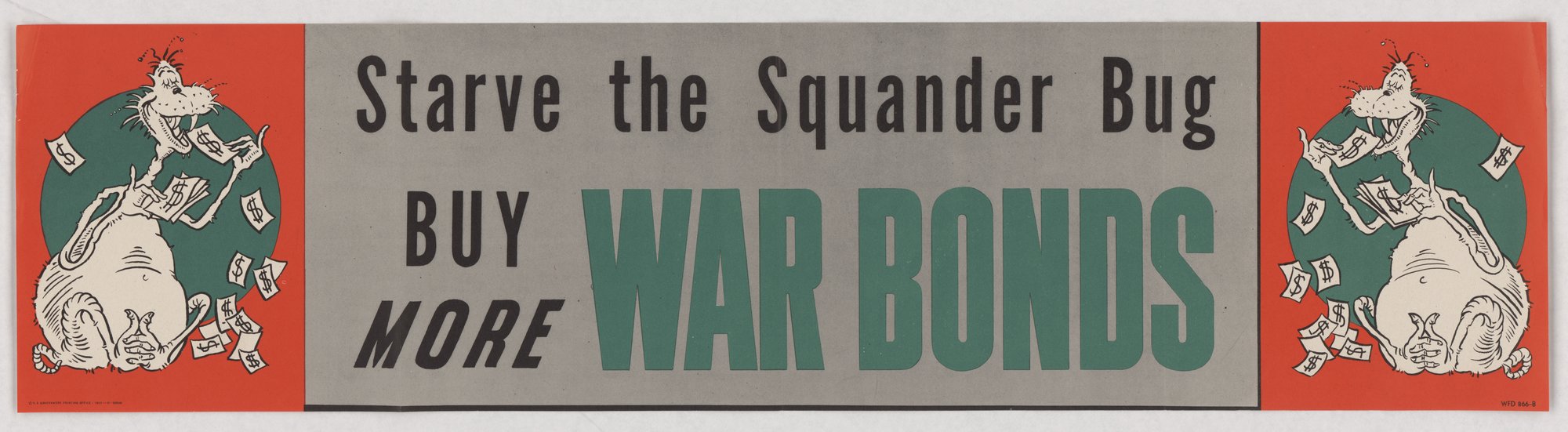
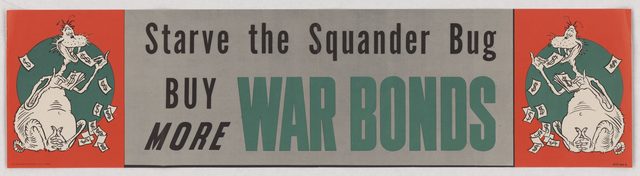
An American poster with a similar creature and the same name carries a War Finance Division code (WFD 866-B). Its fanged creature clutches dollar bills, and "starve" casts bond buying as the way to deny it. No year is printed. The device is the same, but the British creature wears swastikas and the American one does not.
How did British savings posters differ?
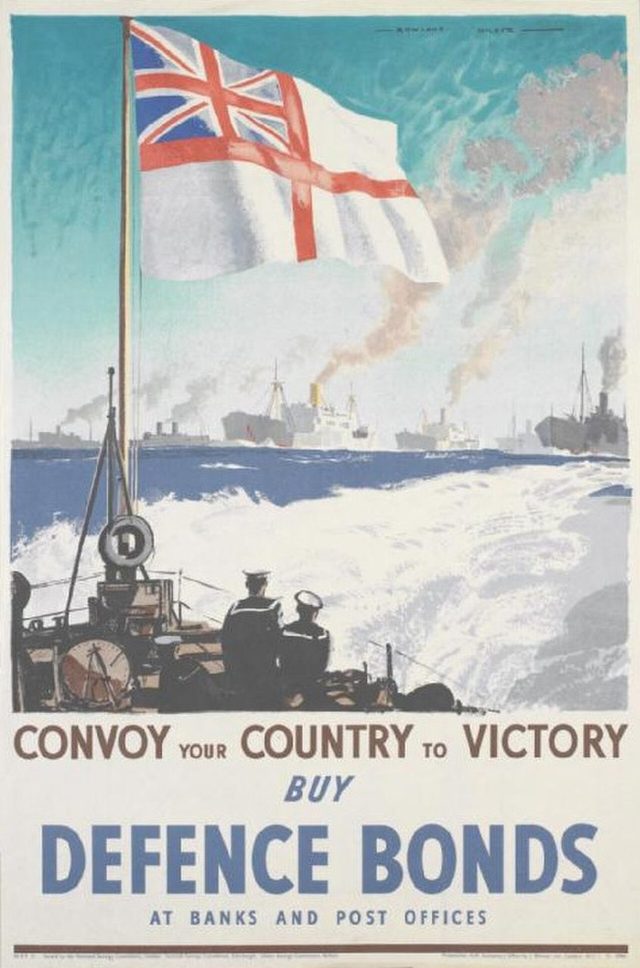
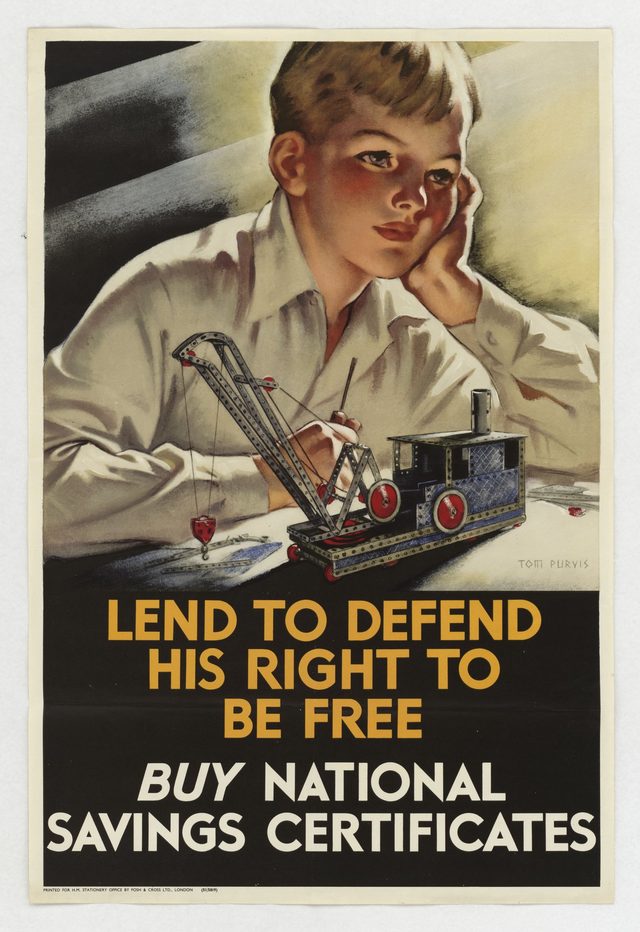
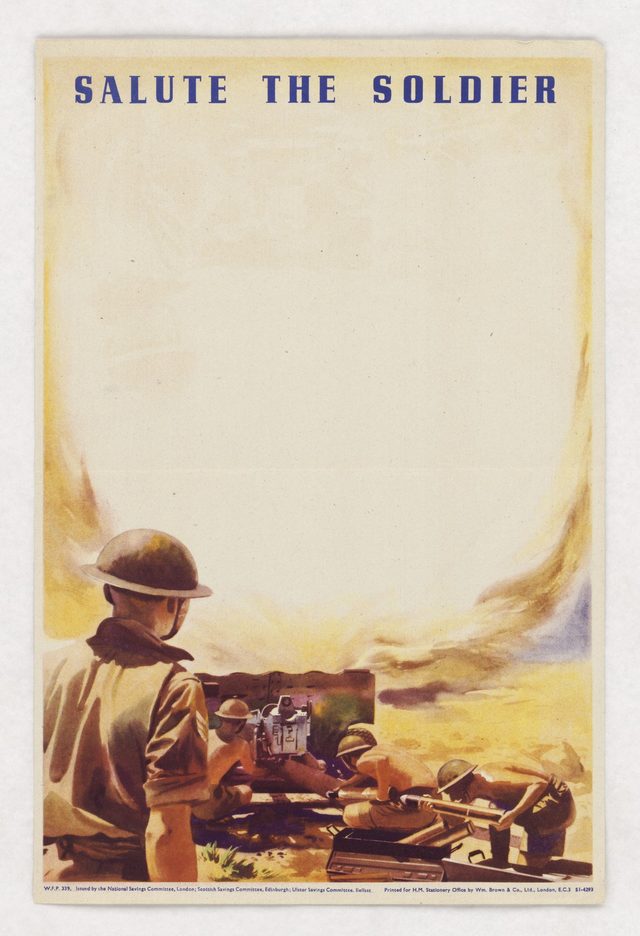
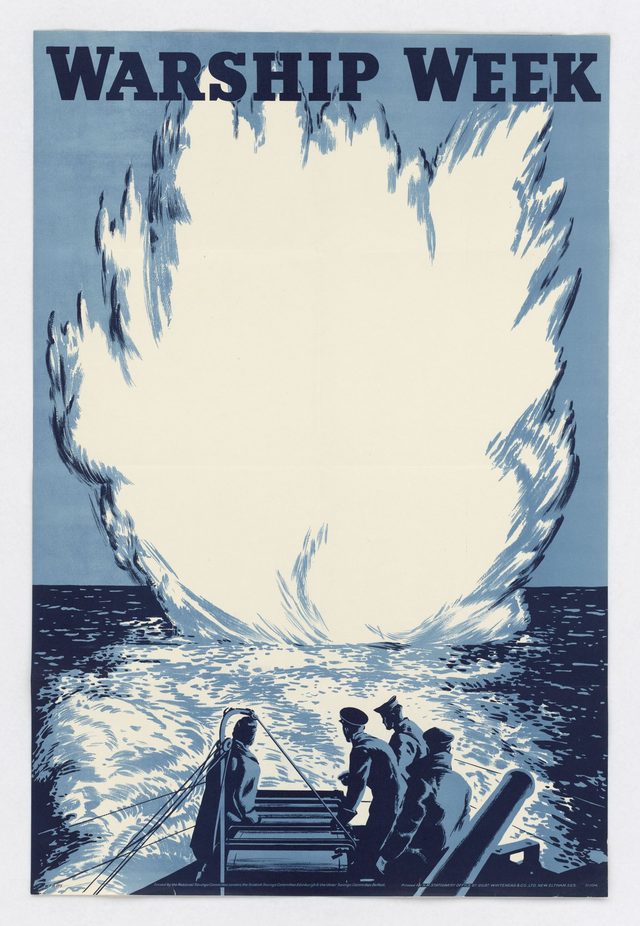
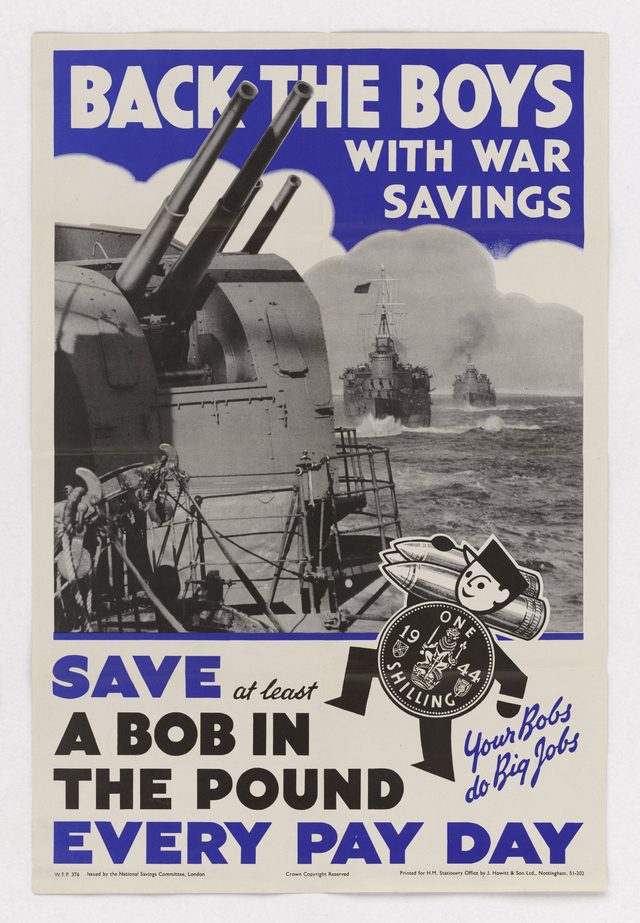
Britain sold National Savings Certificates, Defence Bonds and savings stamps rather than numbered war loans, and the posters promote weekly and local drives such as Warship Week, Salute the Soldier and Wings for Victory. The economist Mark Harrison notes in a Warwick University paper that the government "multiplied the variety of government bonds and bills and national saving certificates" for savers large and small.
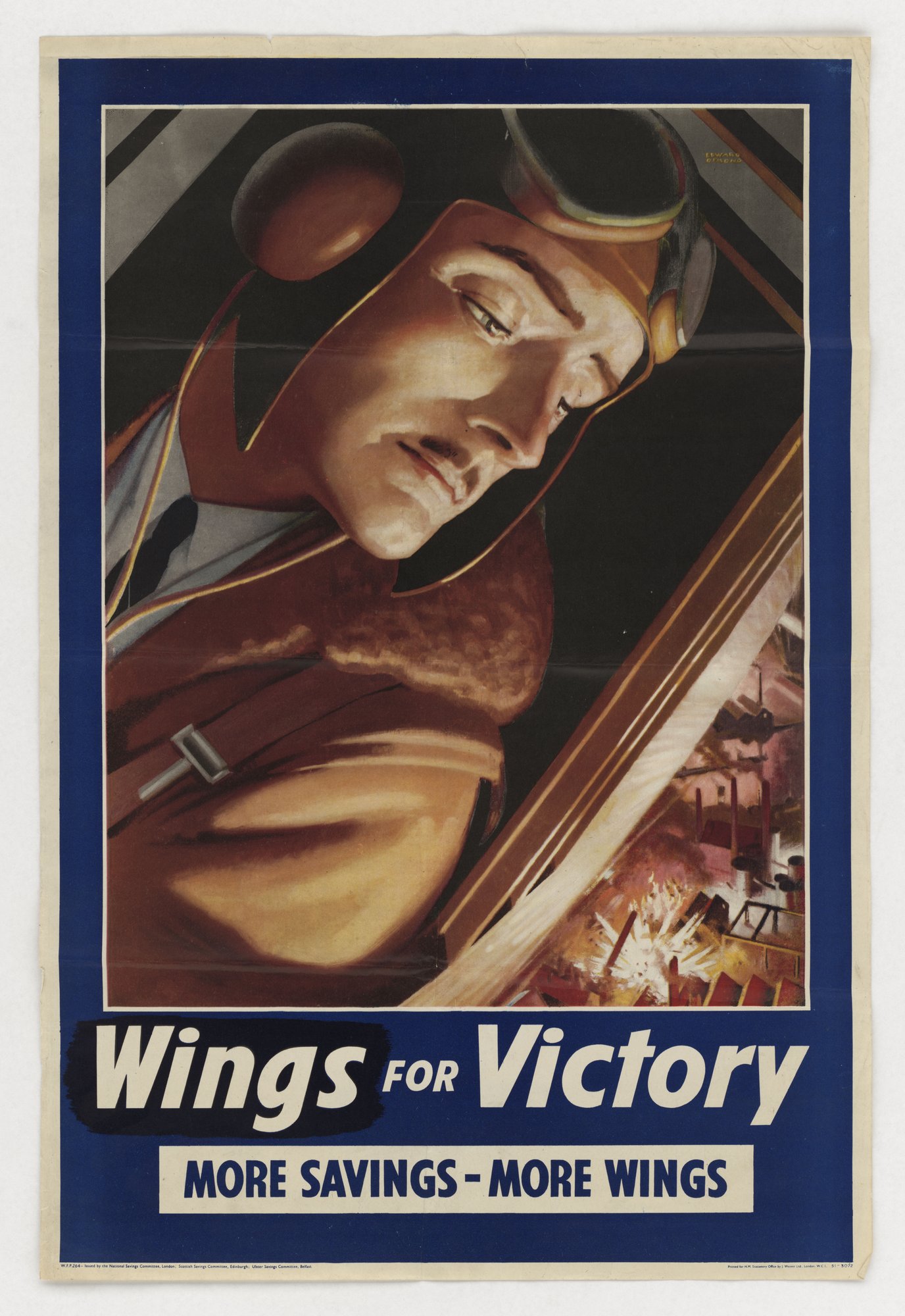
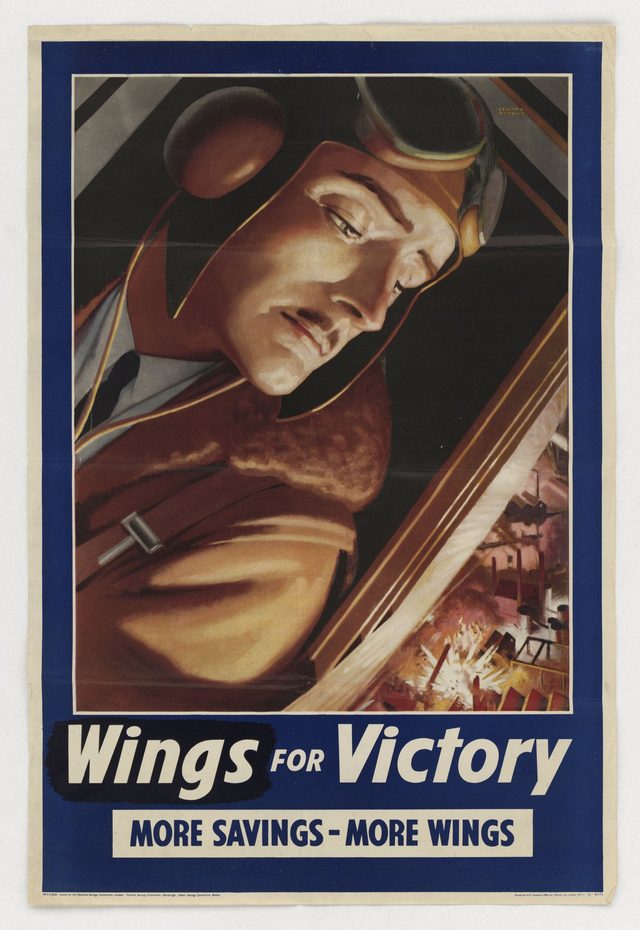
Edward Osmond signed this Wings for Victory poster (W.F.P. 264), issued by the National Savings Committee with the Scottish and Ulster committees. "Wings for Victory" is a virtue slogan, and "More savings, more wings" ties the viewer's money to the airman's aircraft. Read the technique: glittering generalities.
What did Canadian Victory Loan posters look like?
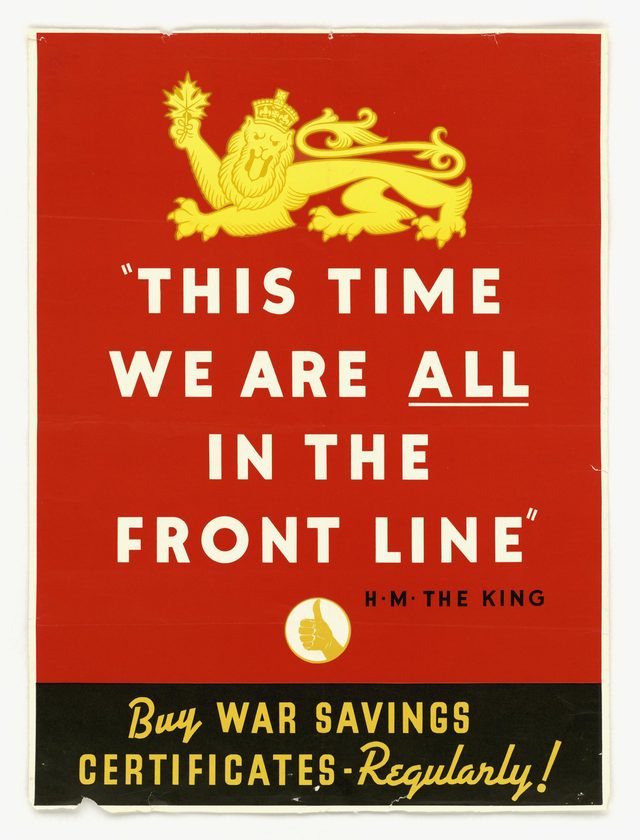
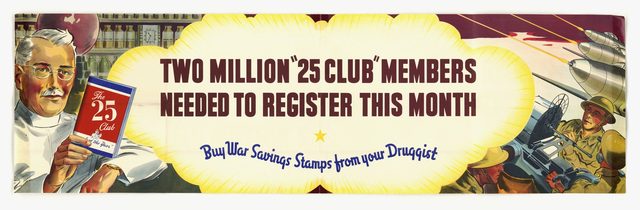
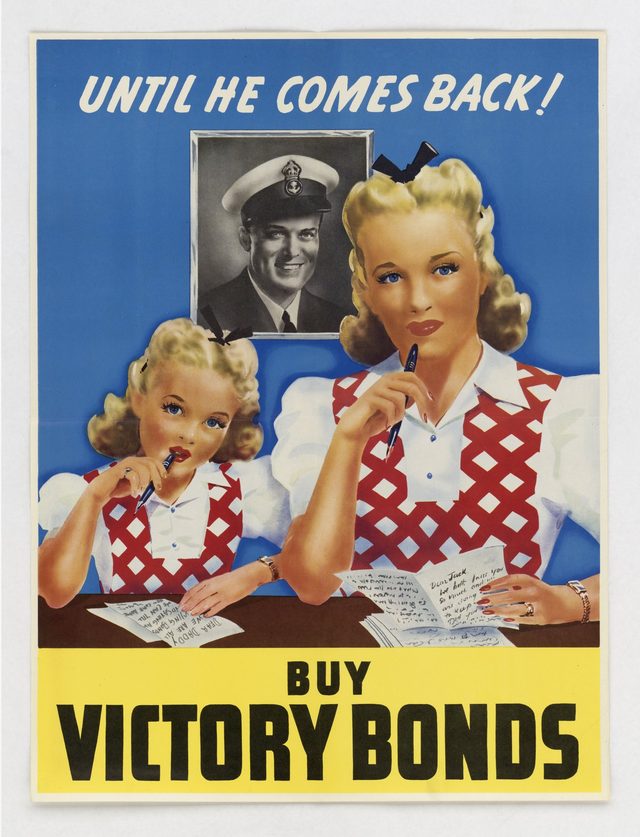
According to The Canadian Encyclopedia, there were nine Victory Loans from 15 June 1941 to 1 November 1945, raising almost $12 billion, "about 52% from corporations and the rest from individuals". Most Canadian posters here carry no printed issuer or year, so the collection dates them to the start of the 1939 to 1945 range.
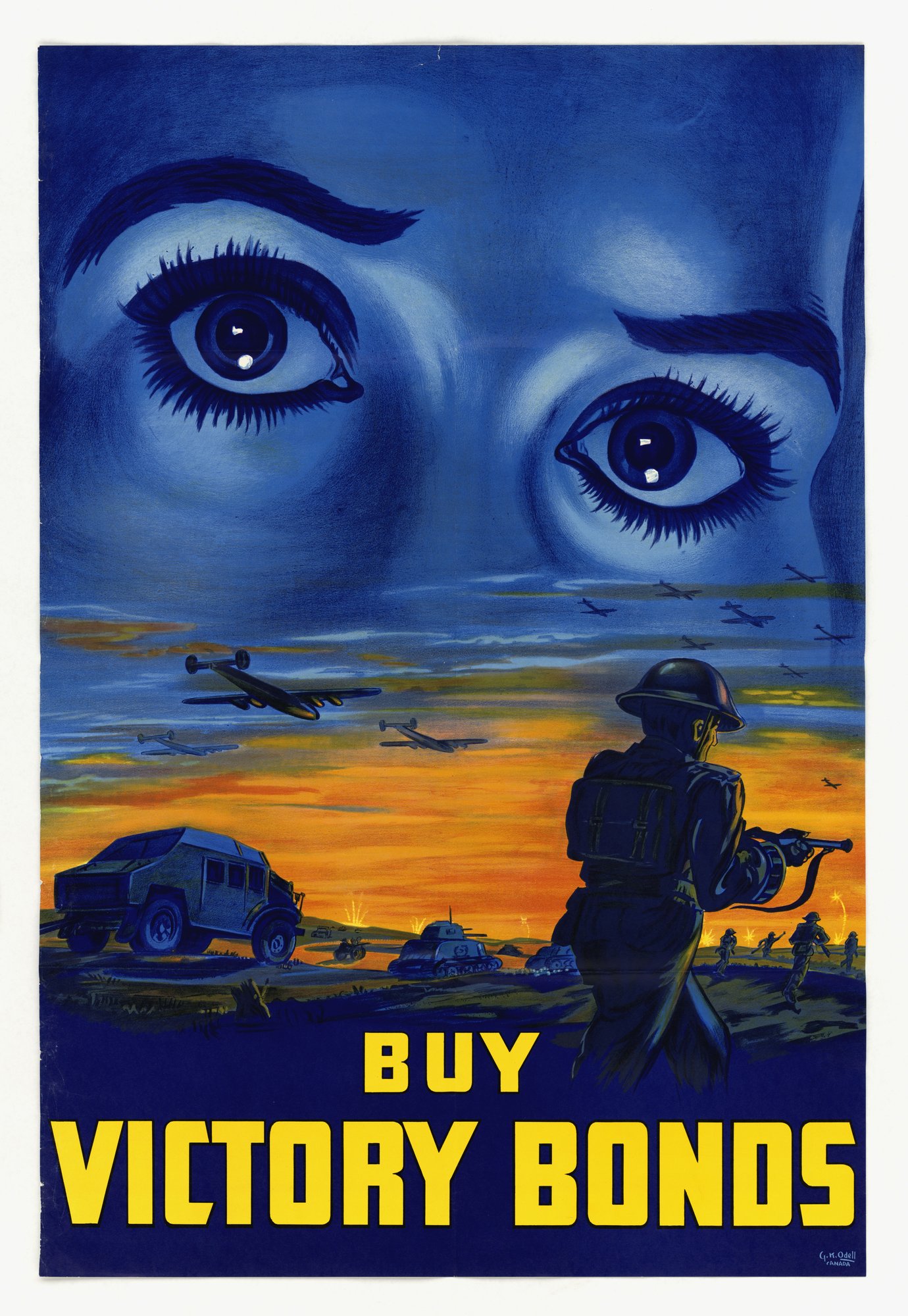
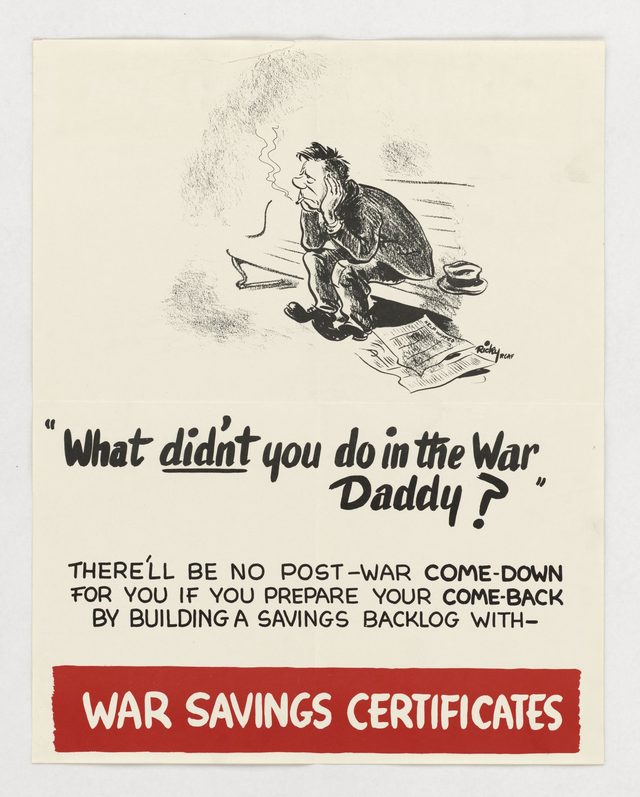
A poster signed "G. K. Odell, Canada" fills the top half with a woman's eyes, looking down over tanks, aircraft and advancing infantry, above "Buy Victory Bonds". It gives no rate or term, and the anxious gaze is the fear-appeal tell. A sheet signed "Ricky RCAF" asks "What didn't you do in the War Daddy?" over a jobless man, and offers War Savings Certificates as the remedy. The catalogue notes that it parodies a First World War poster. Read the technique: fear appeal.
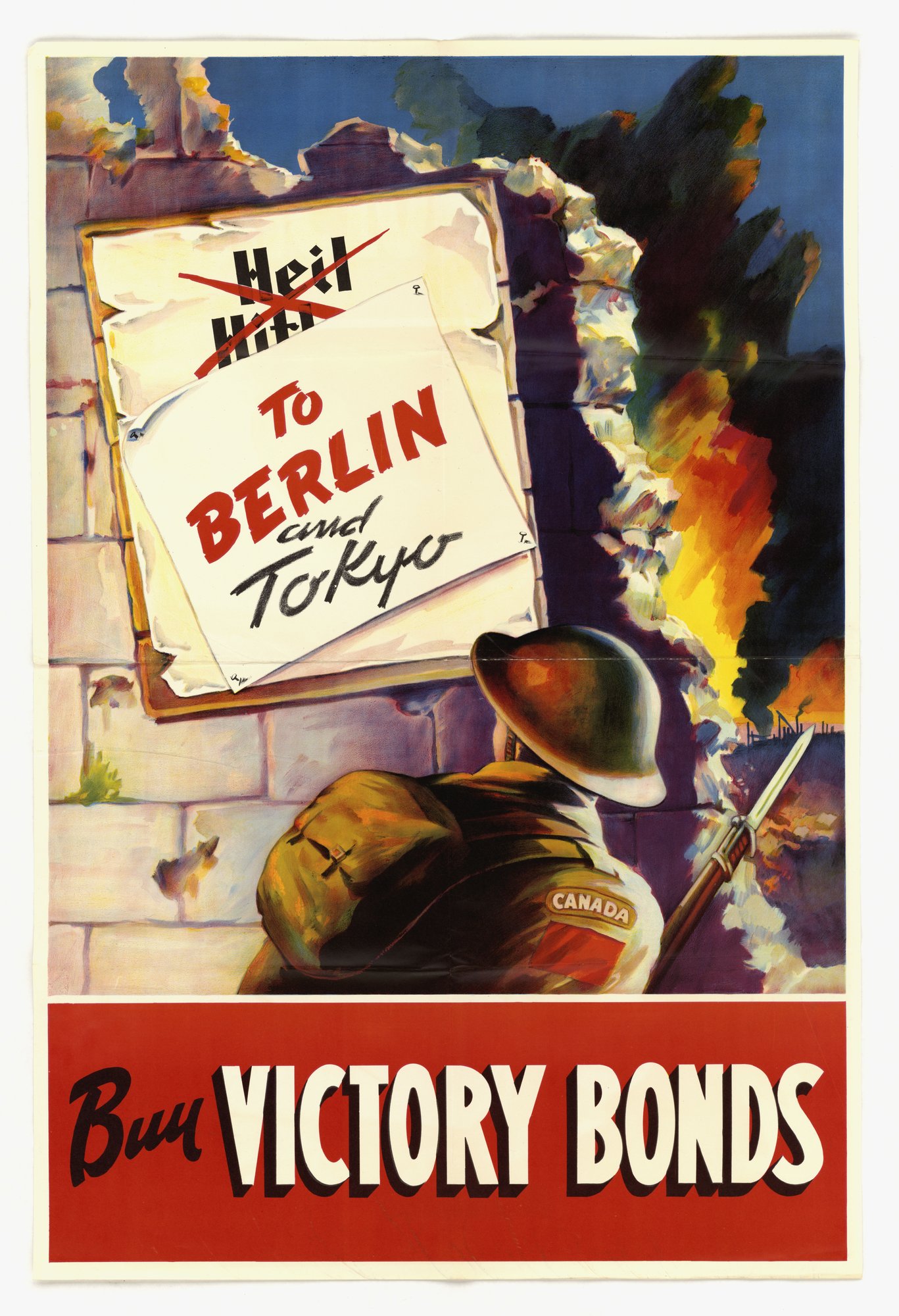
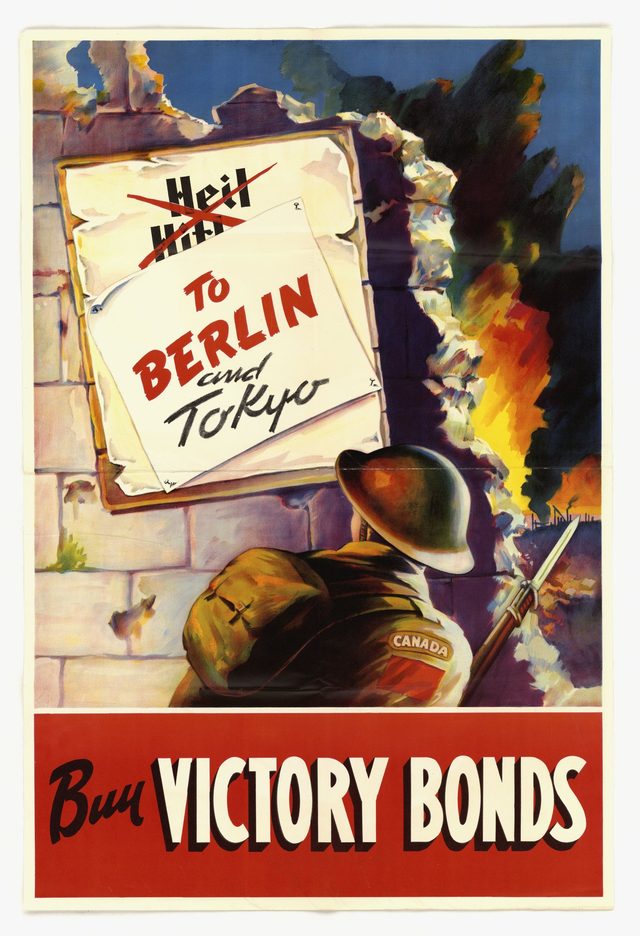
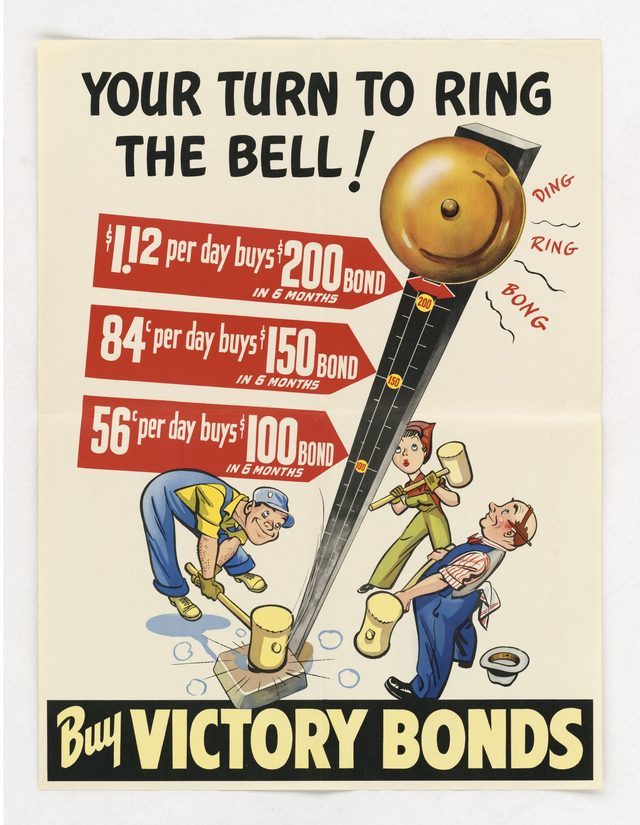
A soldier with a "CANADA" shoulder title stands before a ruined wall where a "Heil Hitler" notice has been covered with "To Berlin and Tokyo". The advance and the defacing of enemy slogans are tied to the purchase. "Your Turn to Ring the Bell!" shows cartoon workers at a strength-tester beside daily prices for $100, $150 and $200 bonds, which is plain folks with numbers. Read the technique: plain folks.
How did this compare with First World War Liberty Loan posters?
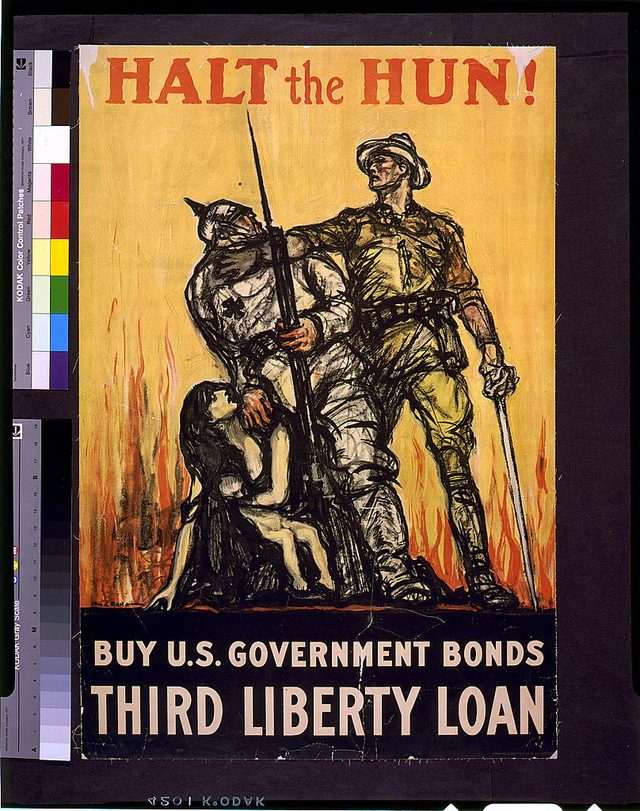
The Treasury's Liberty Loans of 1917 and 1918 used the same ask and many of the same devices. See WW1 propaganda posters and American propaganda posters, which shows "Halt the Hun!".
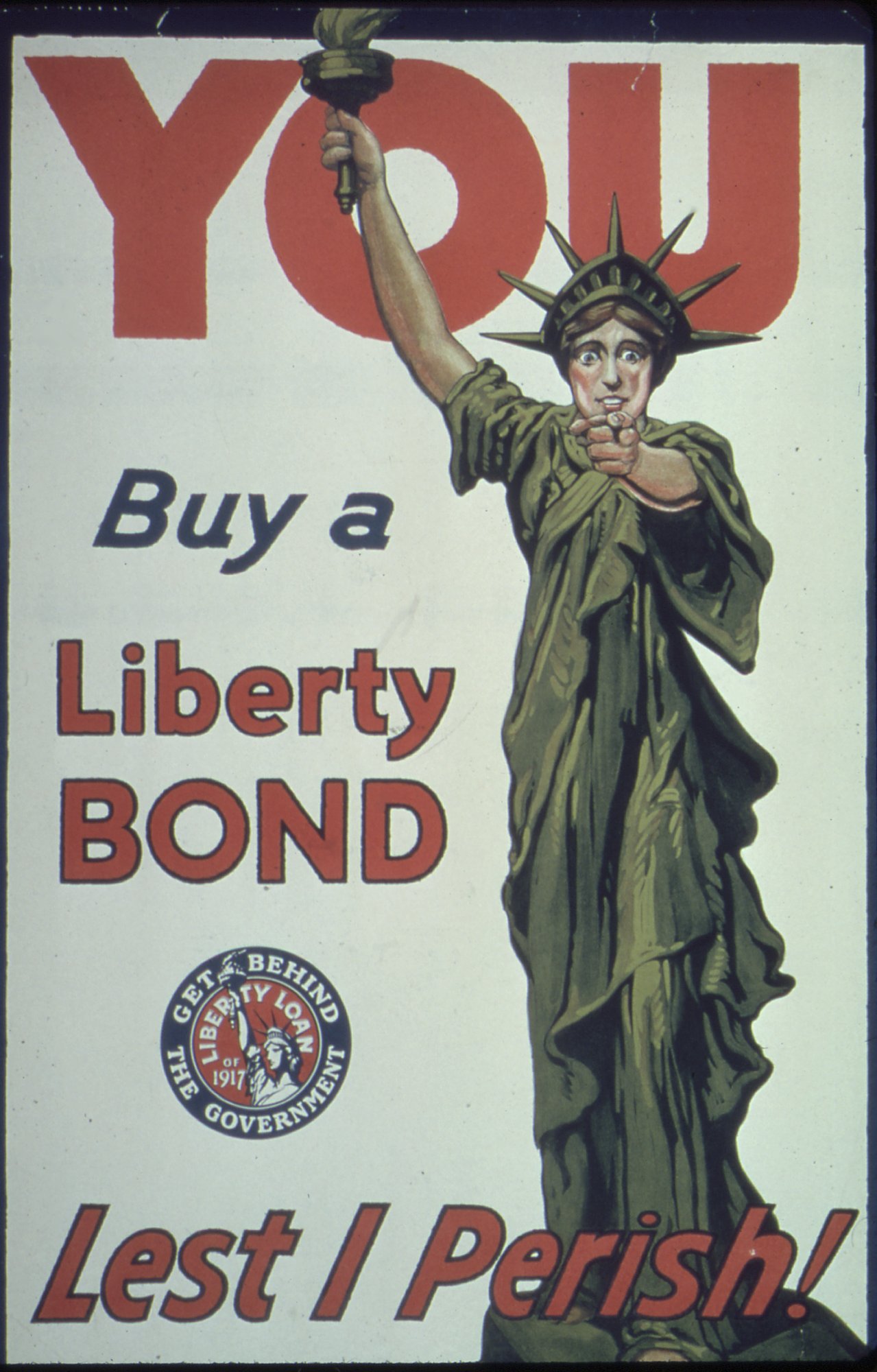
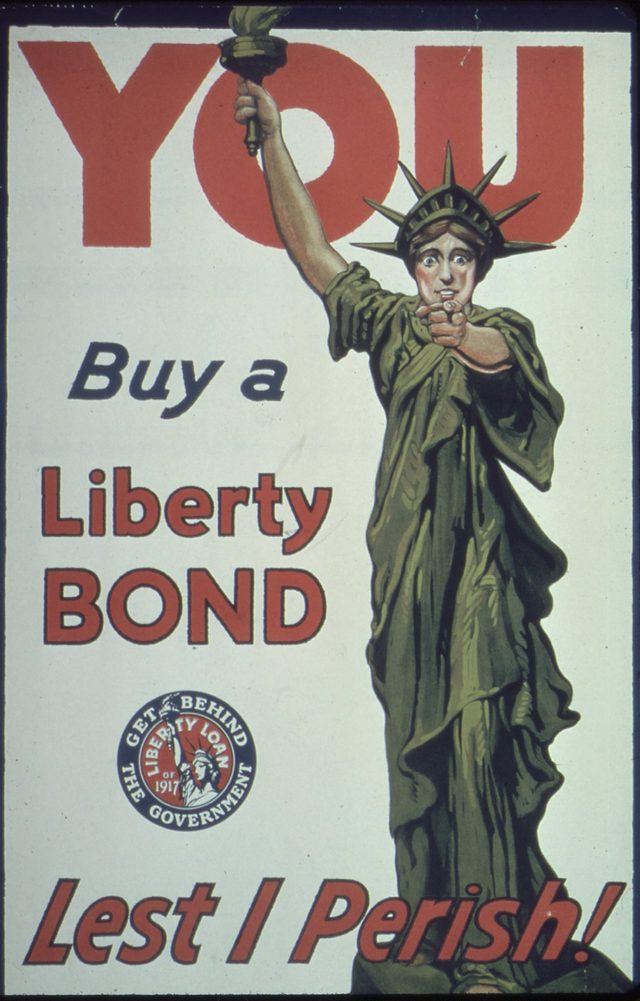
The 1917 "Lest I Perish!" poster has the Statue of Liberty pointing at the viewer beneath a huge red "YOU". A national symbol speaks in the first person and makes purchase the condition of Liberty's survival. The 1945 "85 million" poster uses the same statue in the third person, as a landmark behind a stated majority, so the appeal moves from direct address to bandwagon.
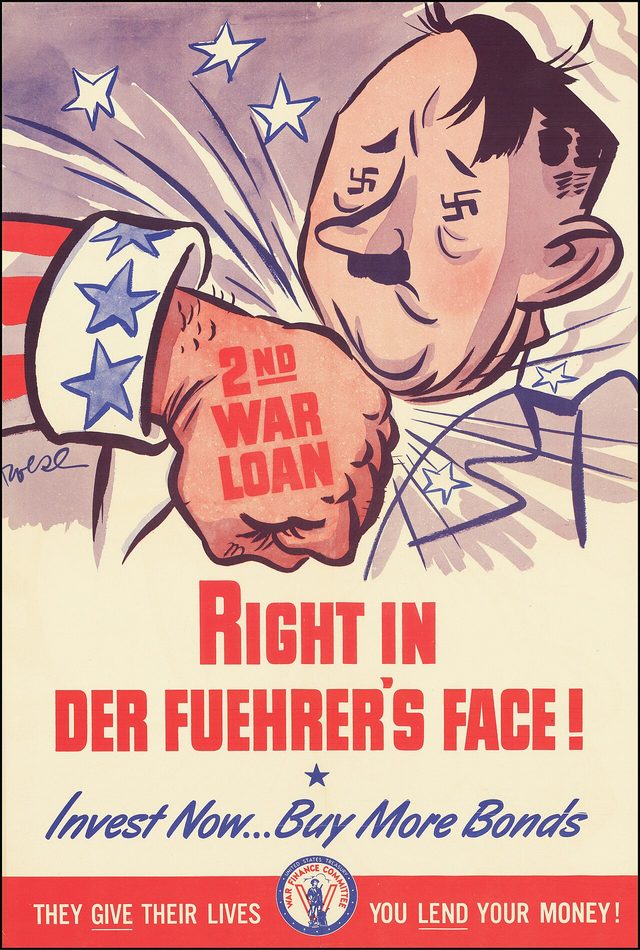
Canada's 1918 Victory Loan poster "Victory Bonds will help stop this: Kultur vs. humanity" refers to the sinking of the hospital ship Llandovery Castle on 27 June 1918. The Second World War posters in this set mostly point to a general threat, and "Axis bonds" and "Right in Der Fuehrer's Face" name no particular incident.
How to read a war bonds poster
- Who is speaking? A general, a survivor or a mascot each carry different authority (testimonial).
- What is the ask? Some give a rate or a daily price; many give none.
- What is set beside the purchase? A flag, a soldier, a statue or an enemy leader. That is transfer or name-calling.
- Who is already buying? Figures such as "85 million" or a quota box suggest a crowd, which is bandwagon.
- What harm is offered? A casualty, a hungry child or rising prices. Check whether the poster says how the money prevents it.
Browse war bonds posters
The grid below shows bond, savings stamp and war loan posters in the collection from the United States, Canada and Britain. Each opens an object page with the holding institution, a link to the original record, a transcription of any text and the rights basis for hosting. Related pages: British propaganda posters, Canadian propaganda posters, WW2 careless talk posters, WW2 rationing and salvage posters and WW2 posters about women.
Sources and rights
Posters on this page come from the U.S. National Archives (Record Group 44 and its World War II foreign poster series) and Wikimedia Commons. Where a rights statement is limited, the object page says so. Dates for most British and Canadian posters are the start of a 1939 to 1945 range, because the sheets print none. Transcriptions are verbatim. Historical figures are from the sources linked in the text.
![Buy Victory Bonds [1]](../../collection/images/buy-victory-bonds-soldier-and-crying-child-1939-640.jpg)
![Buy Victory Bonds [2]](../../collection/images/buy-victory-bonds-watching-eyes-canada-1939-640.jpg)