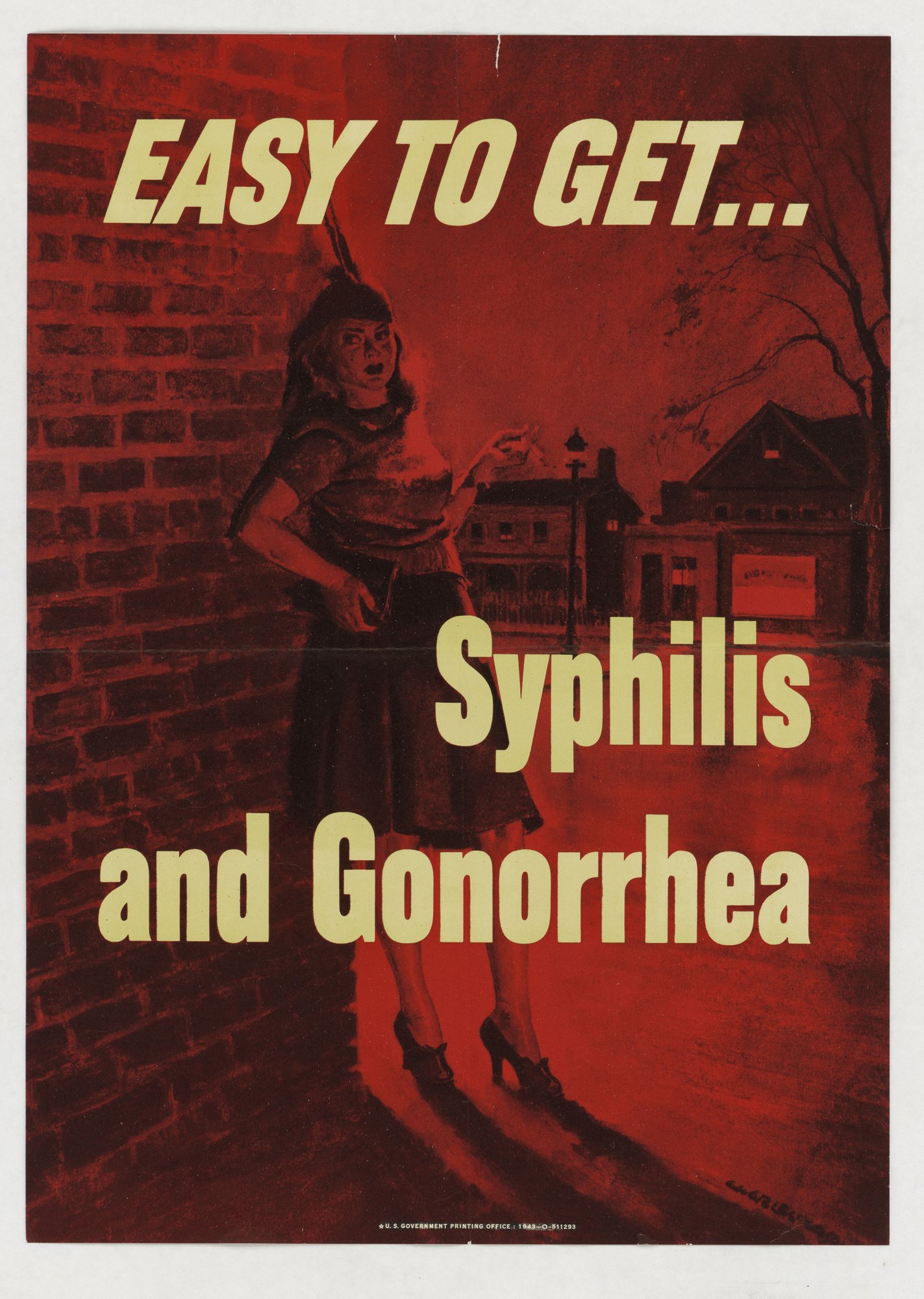
Content note. Several posters here concern venereal disease and use images of women, prostitution and moral blame, one pairs a political group with typhus, and a 1988 poster shows tobacco. They are shown as issued. Showing an item is not endorsing it.
What are public health posters?
Public health posters are notices from governments, health charities and medical bodies that tell people how to avoid disease: wash, cover a cough, screen a window, get a blood test, take a vaccine. Many are plain instruction. Others use fear, authority or a named enemy to change behaviour, and the collection tags each one by technique.
Before 1920: tuberculosis, syphilis and vaccination
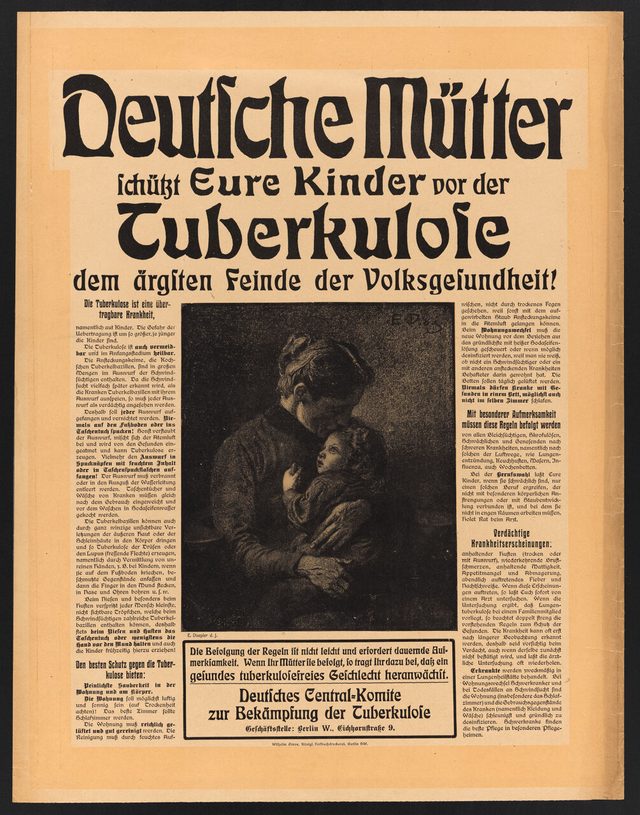
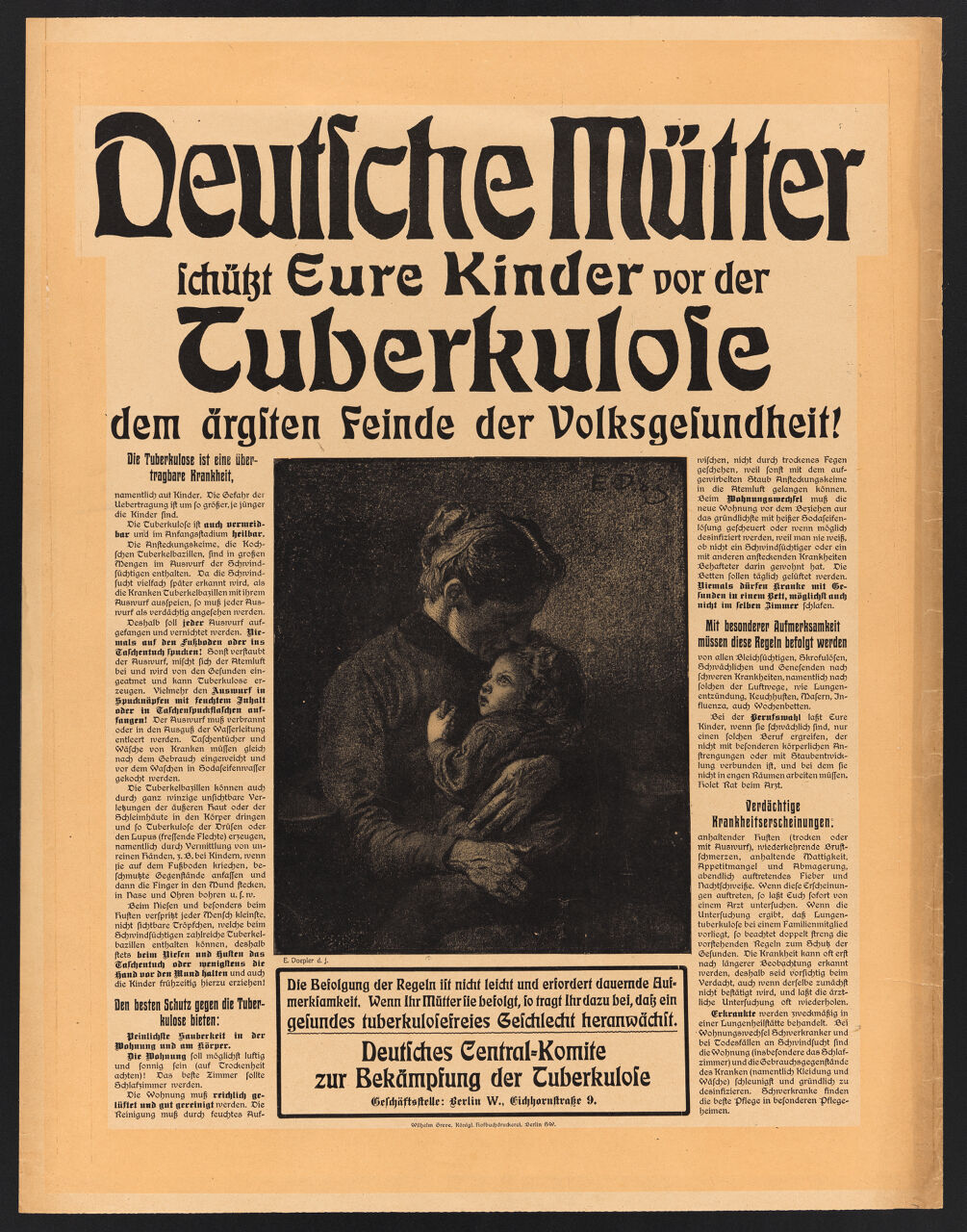
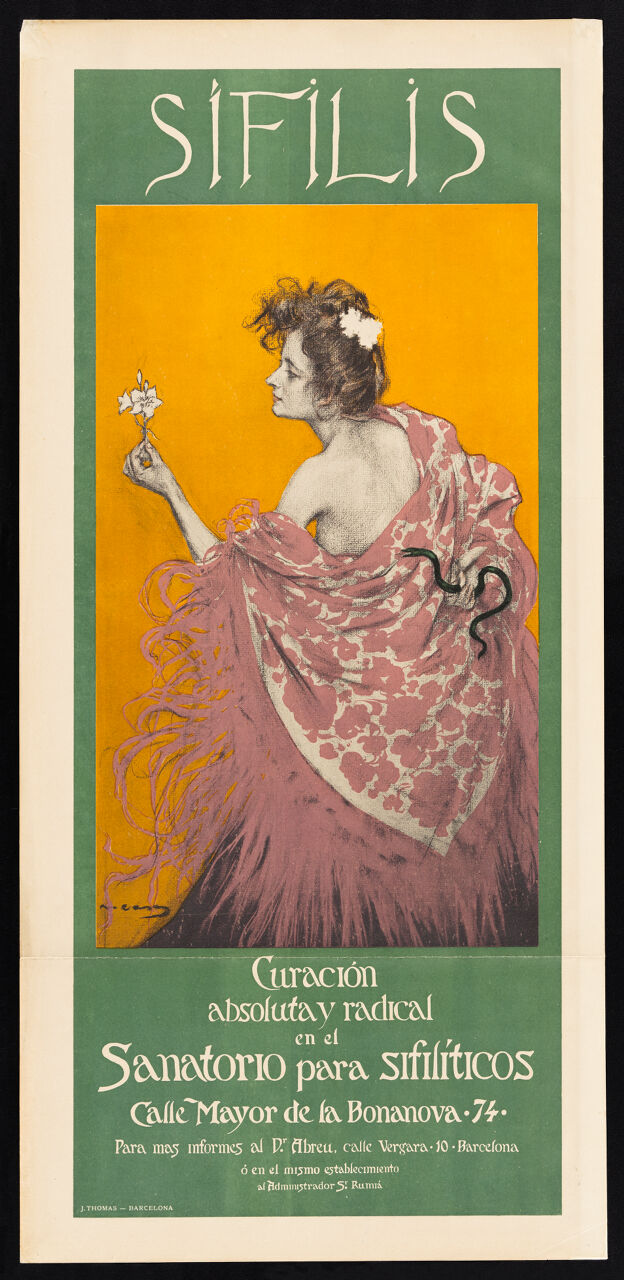
A Berlin committee against tuberculosis addressed "German mothers" with a child-at-risk image (Fear appeal). A Barcelona sanatorium sold a cure for syphilis, a commercial sponsor rather than a state (Fear appeal).
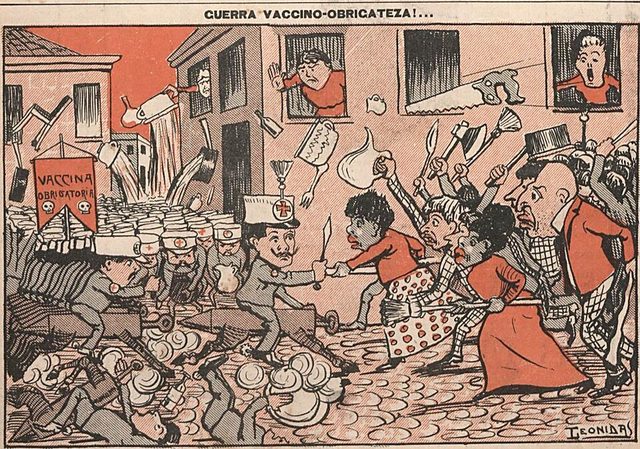
Content note: 1904 Brazilian magazine cartoon of the vaccine controversy, with caricatured Black and other Rio residents drawn with exaggerated features, shown as printed. This object is shown as it was published. Why 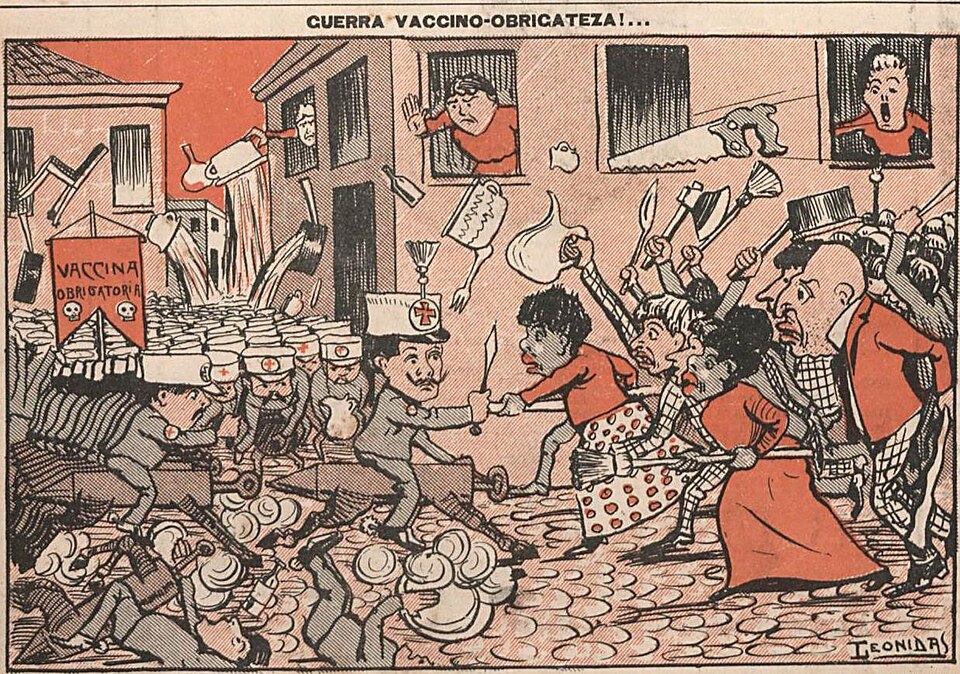
Explain moreShow less
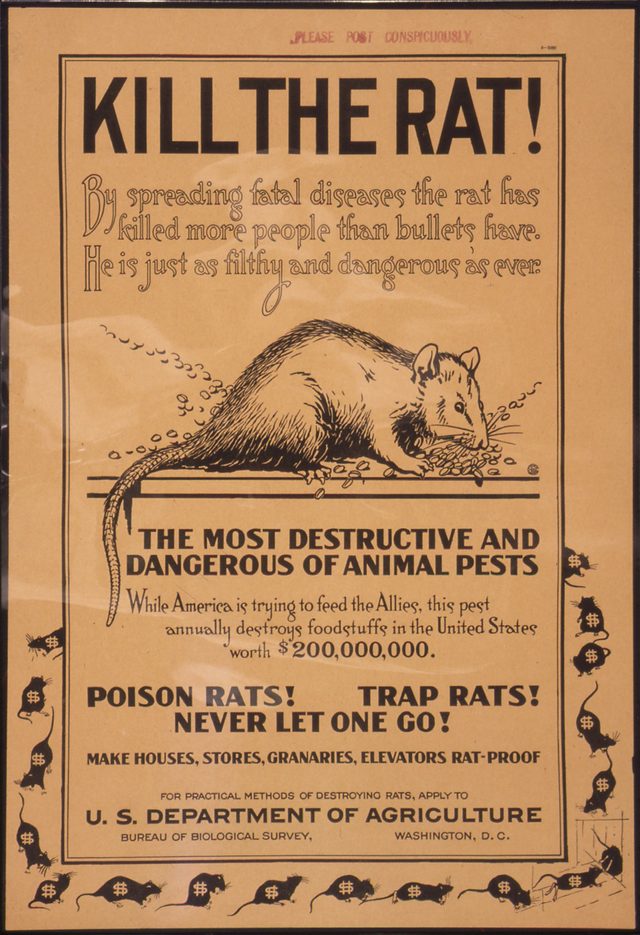
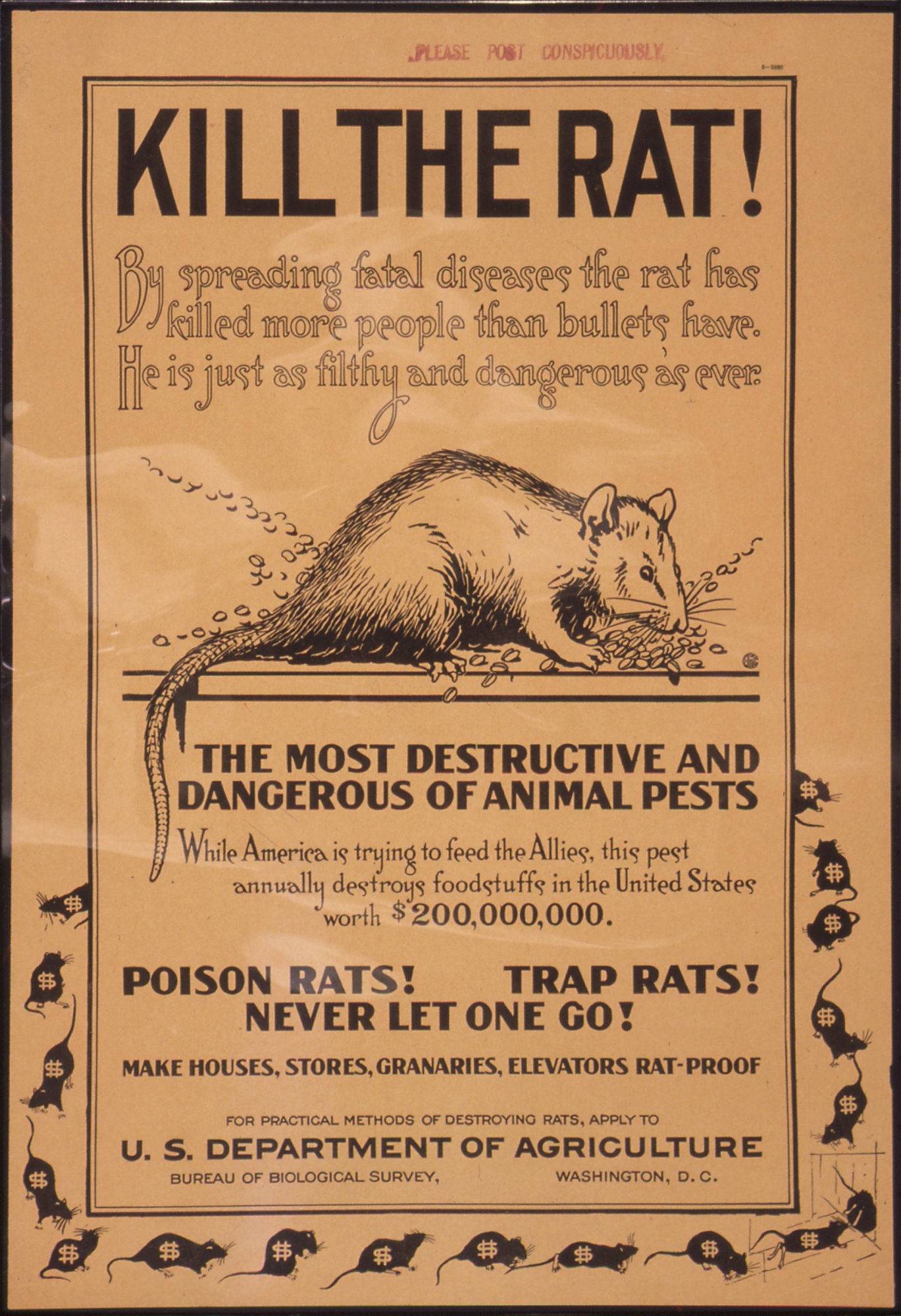
The vaccination dispute is shown from the side of its critics: O Malho's 1904 cartoon casts compulsory vaccination in Rio de Janeiro as a war (Name-calling). In 1917 the U.S. Department of Agriculture labelled the rat a dangerous animal (Name-calling).
Britain, 1939: immunisation, germs and venereal disease
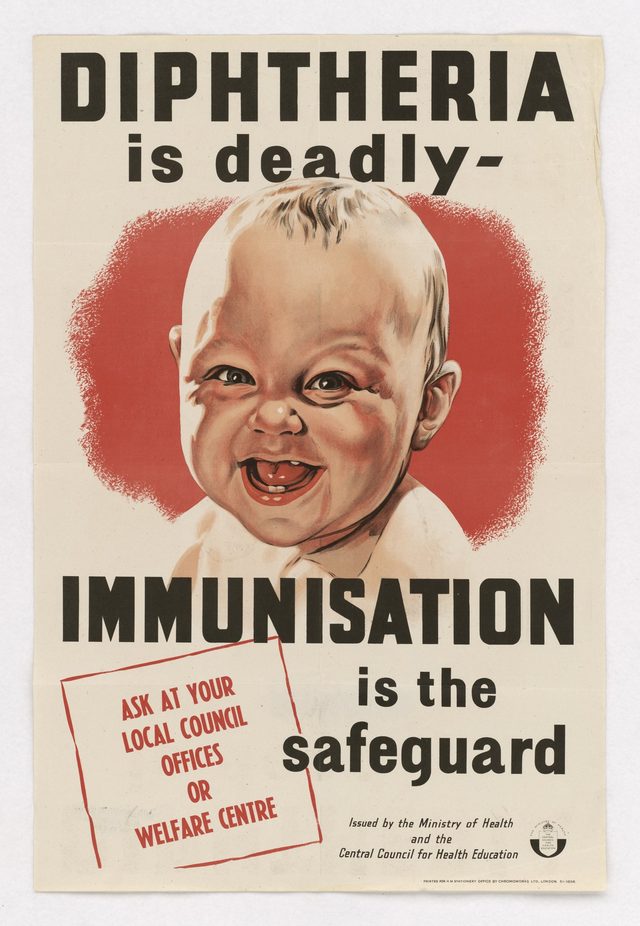
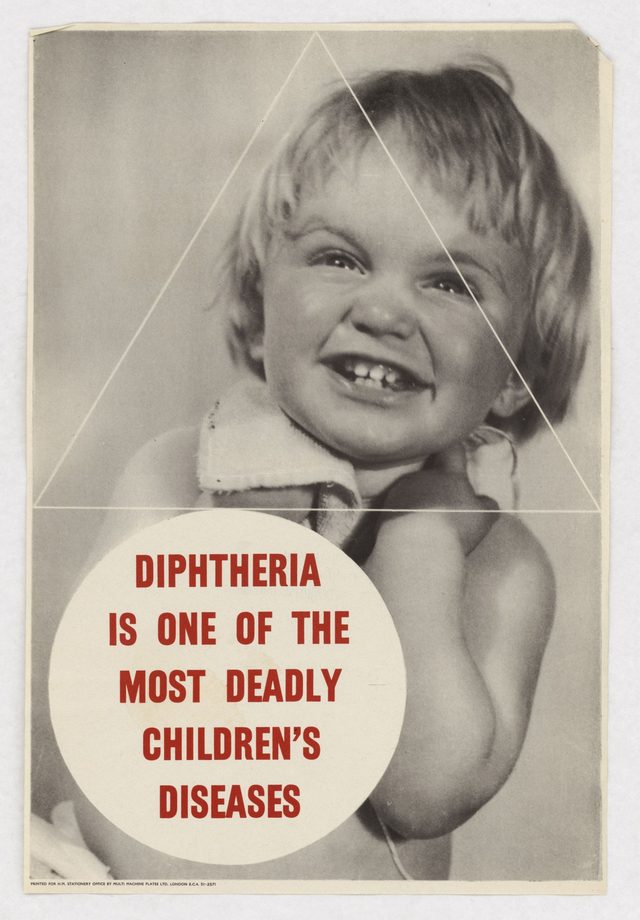
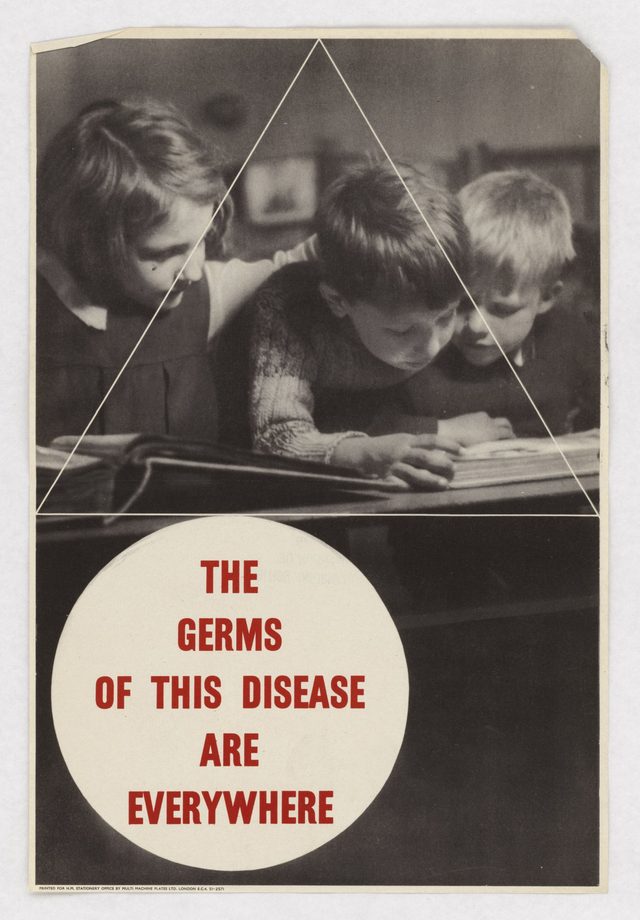
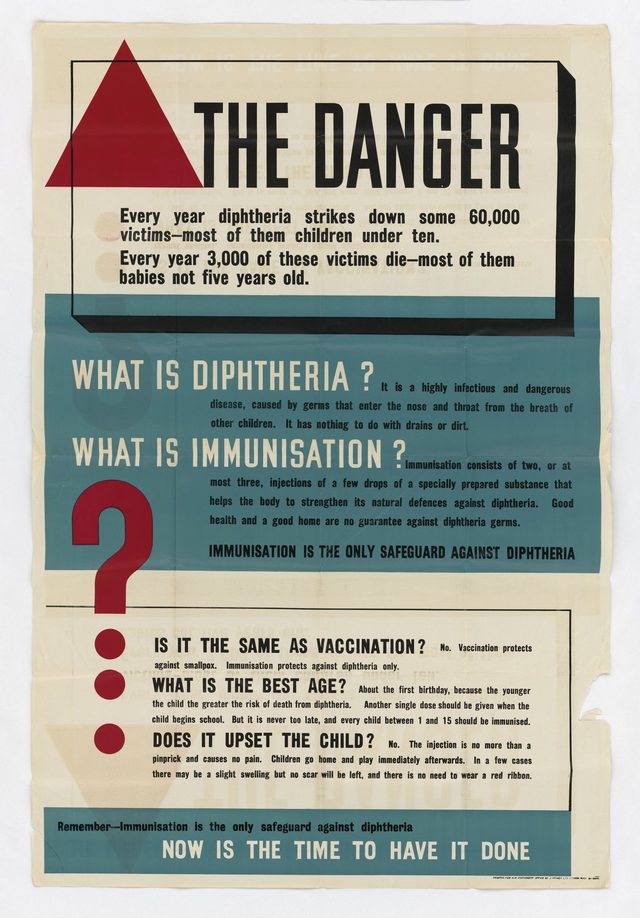
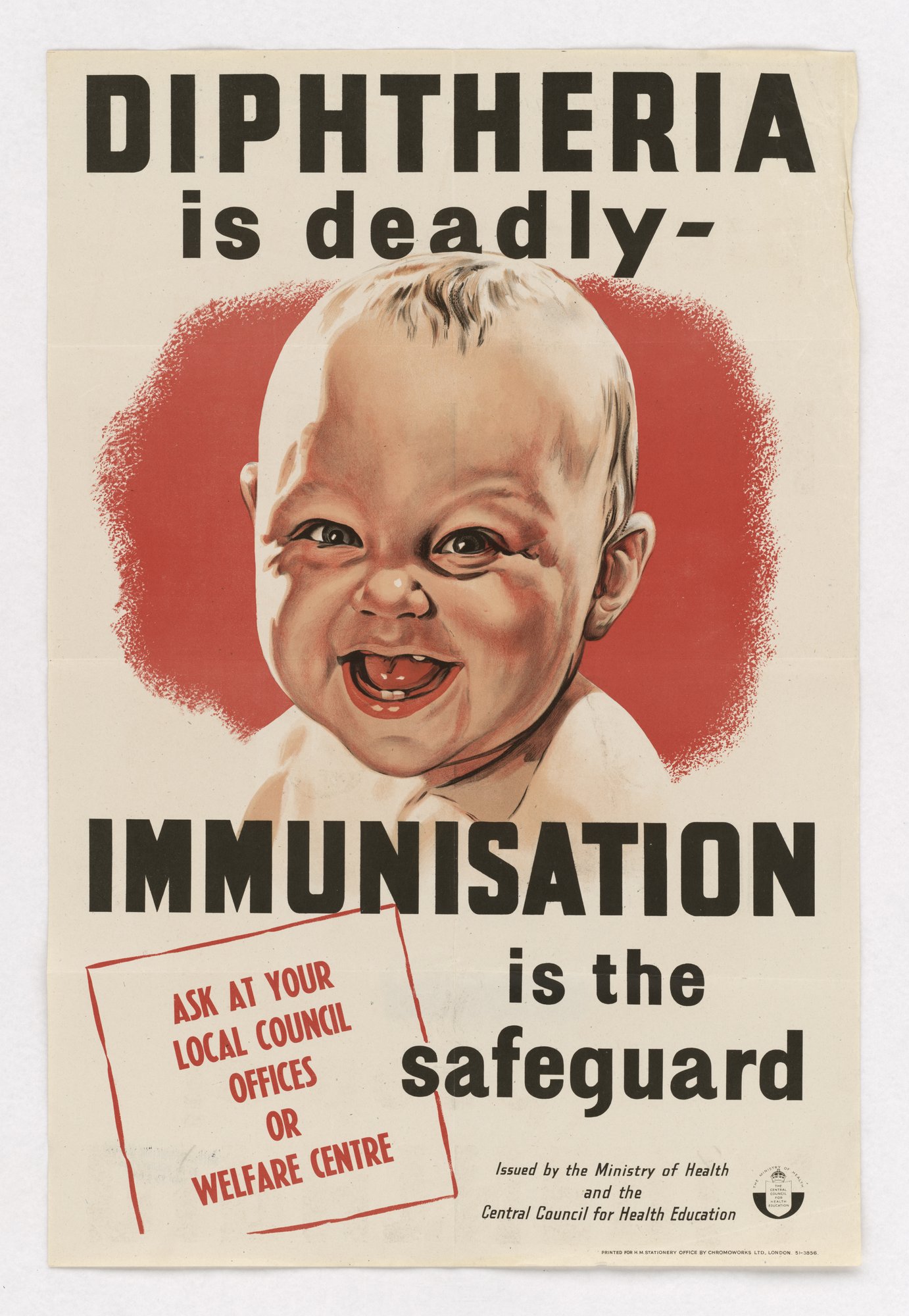
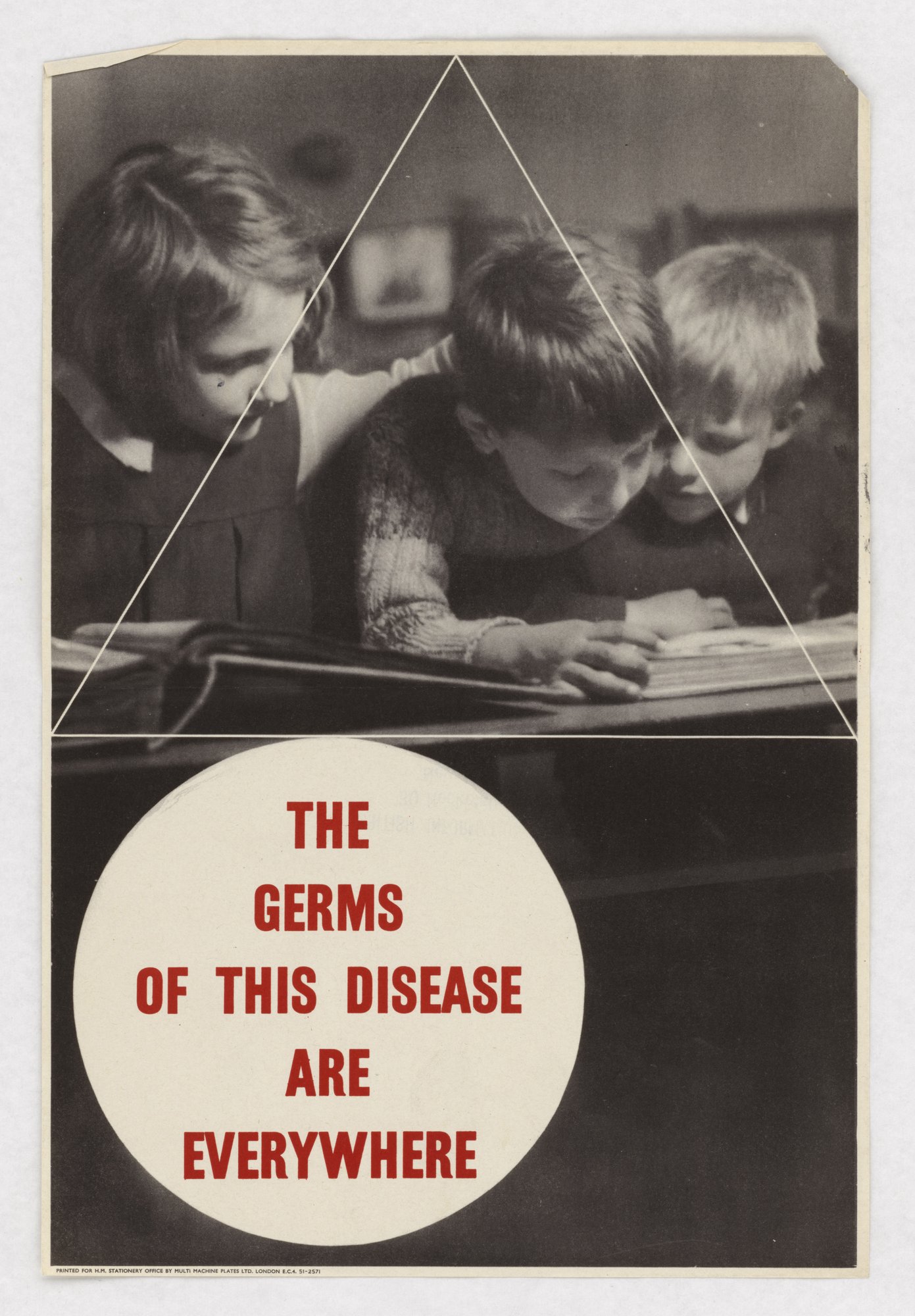
The Ministry of Health and the Central Council for Health Education pressed parents to immunise children against diphtheria, pairing a threat with an official sponsor (Fear appeal, Transfer). Another sheet warns that the germs "are everywhere".
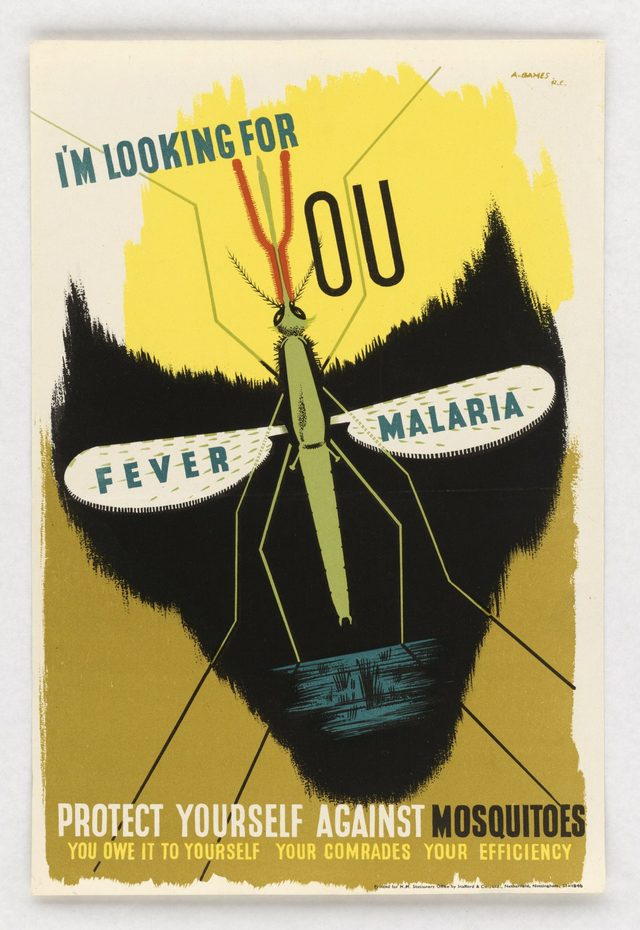
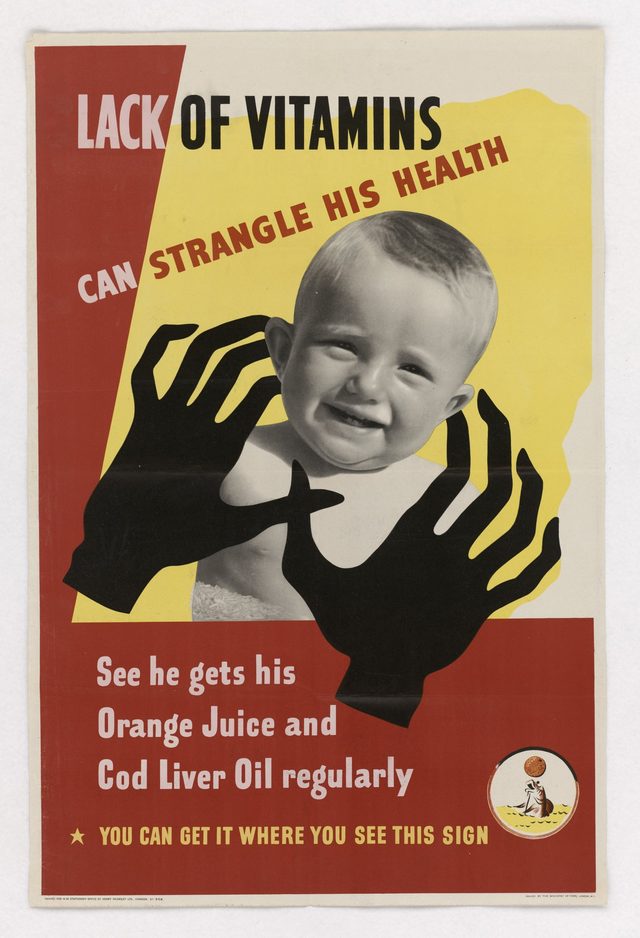
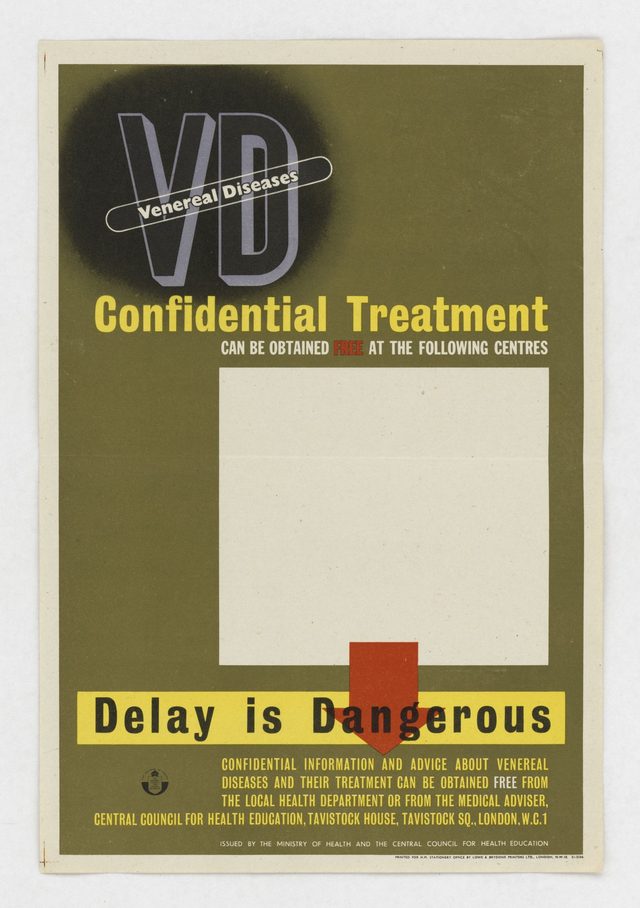
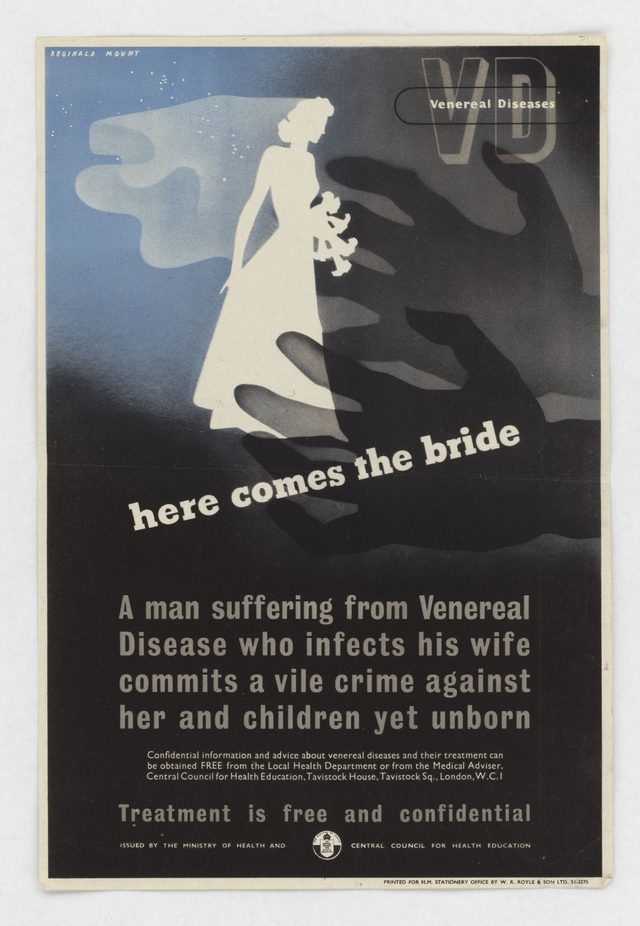
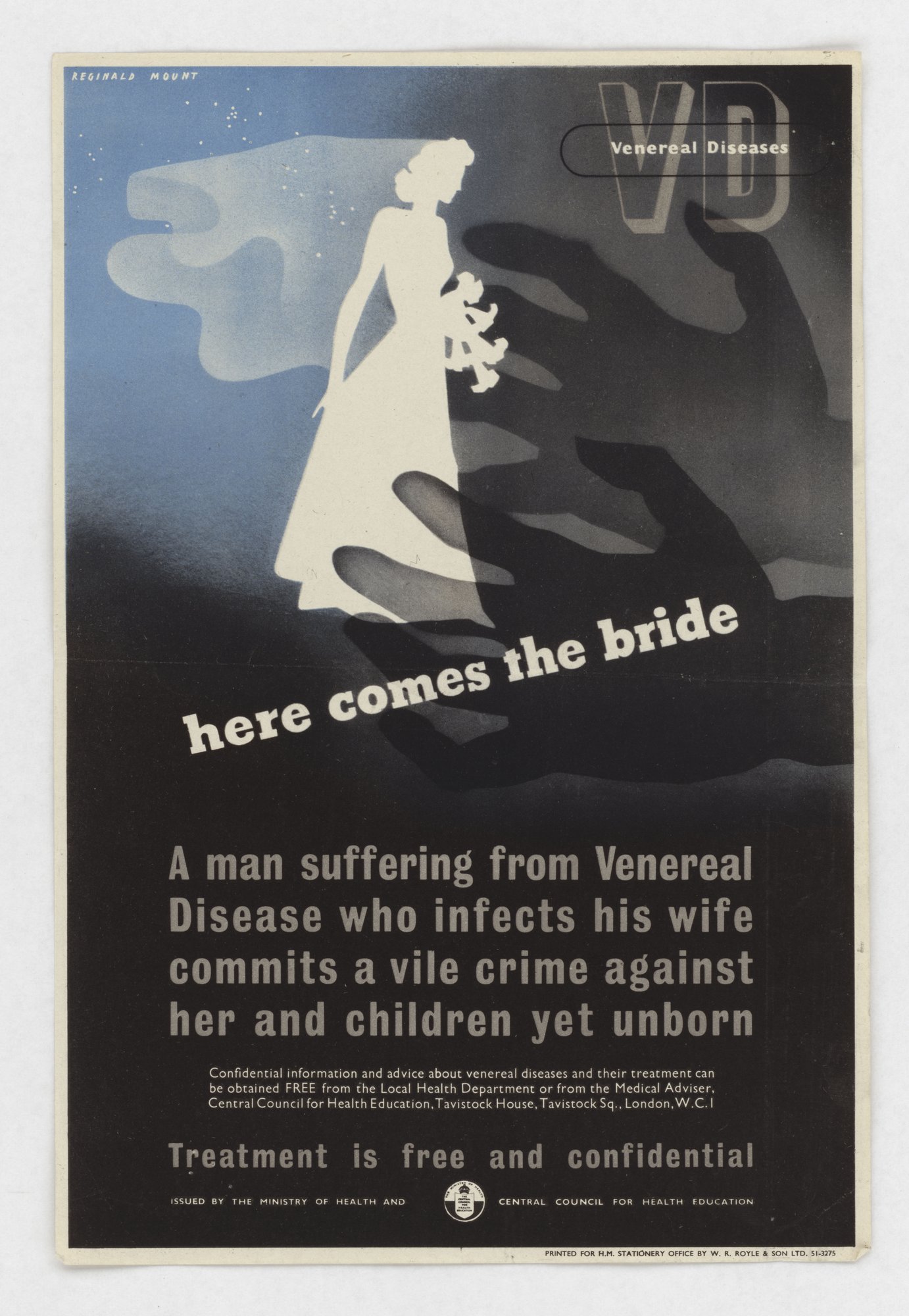
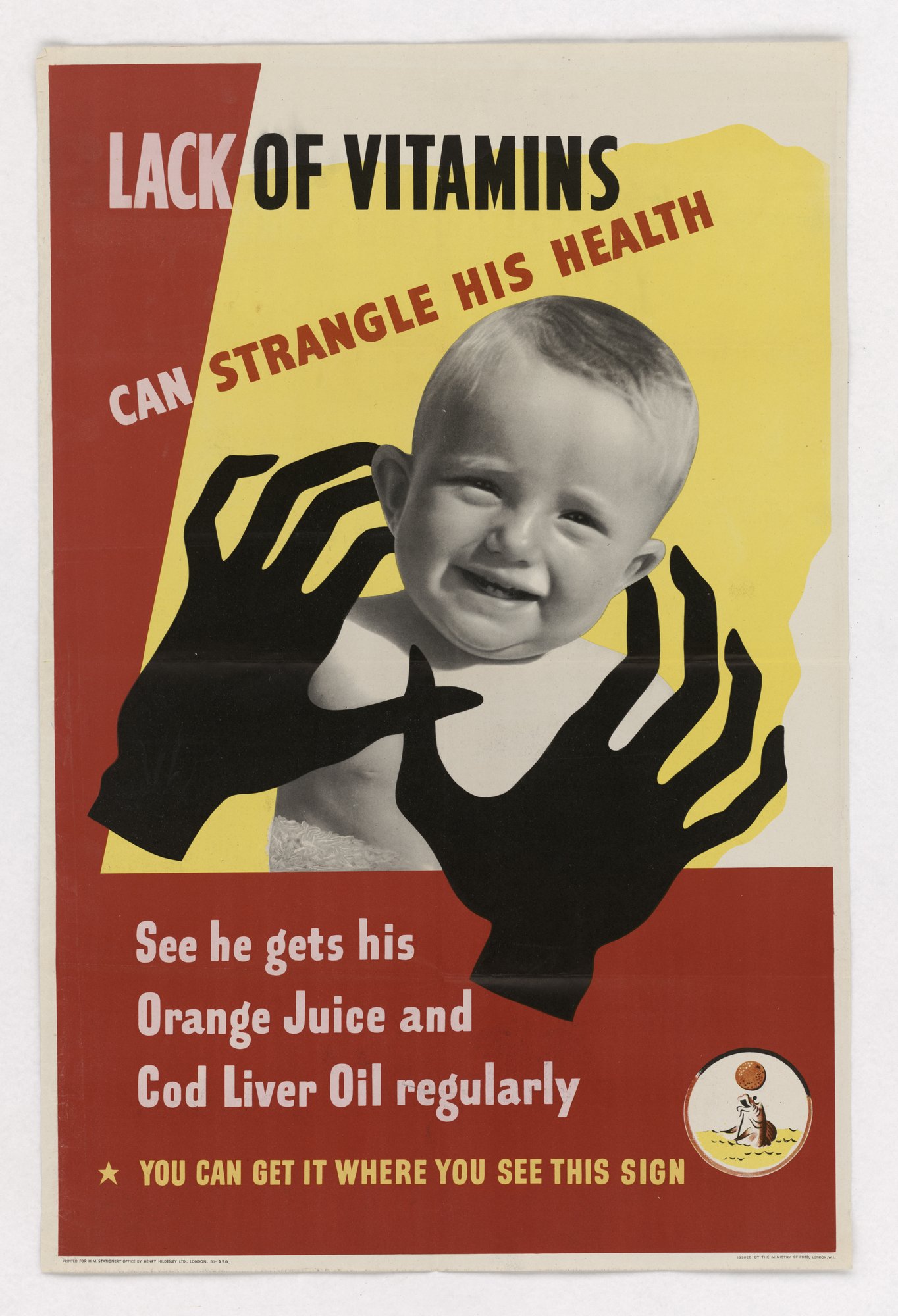
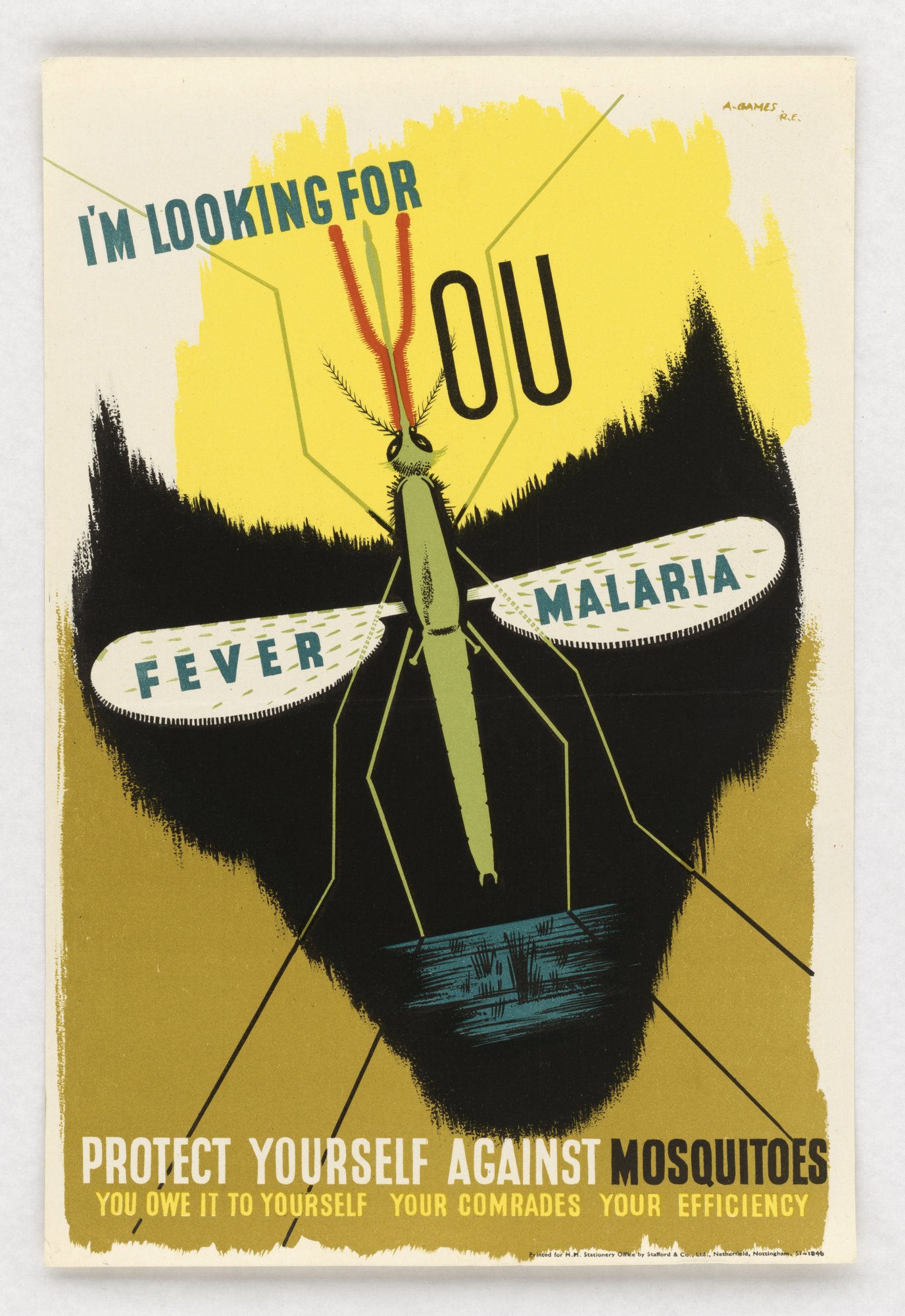
The same Ministry issued a venereal-disease series. "Here Comes the Bride" places a dark hand over a bridal figure and assigns moral blame to the infected husband (Fear appeal). The Ministry of Food used the same technique for nutrition, and Abram Games gave soldiers a speaking mosquito.
The United States, 1941 to 1944: war work and health
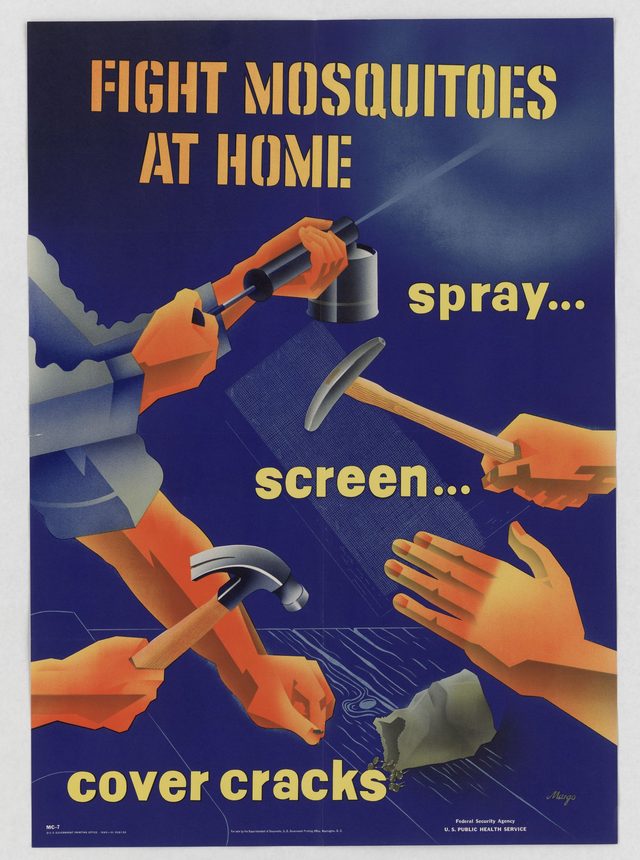
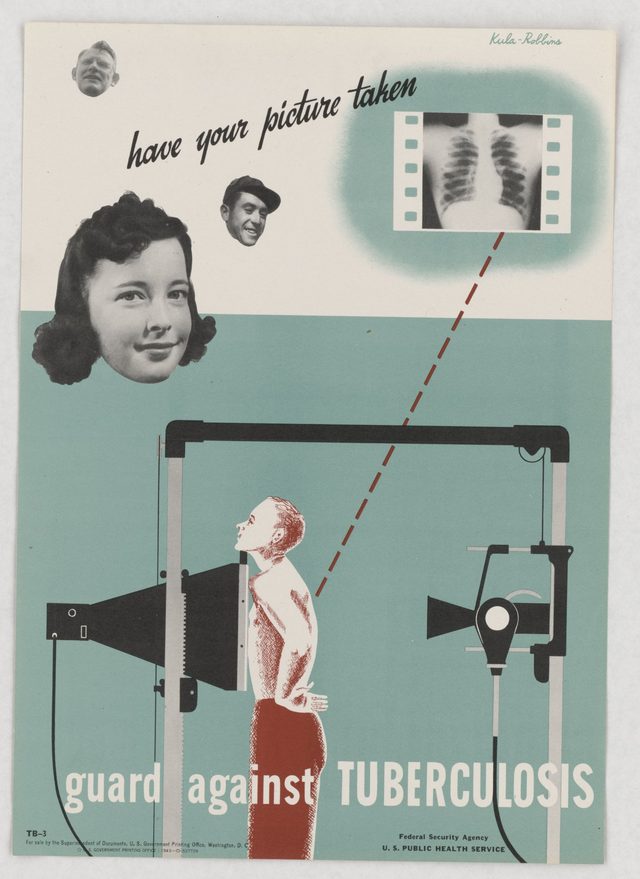
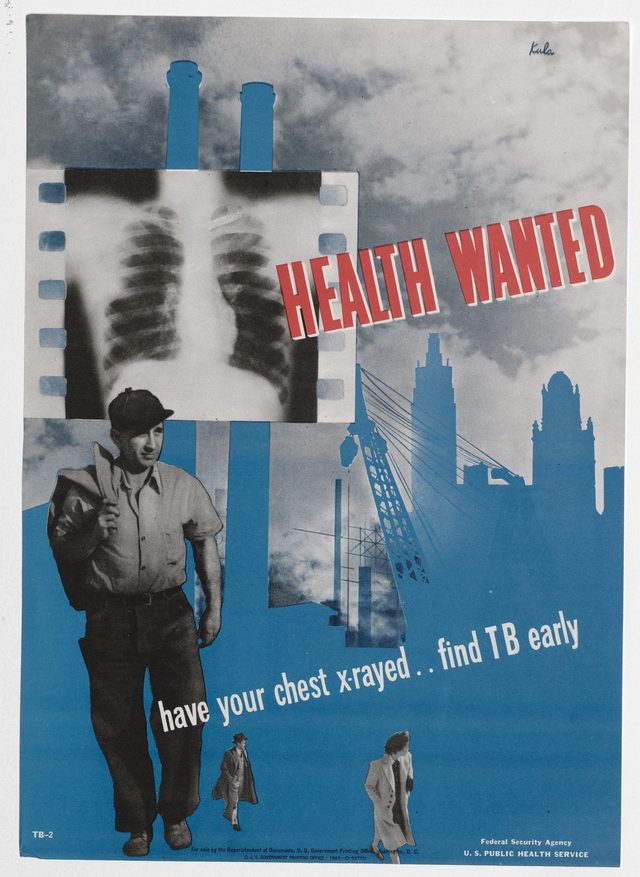
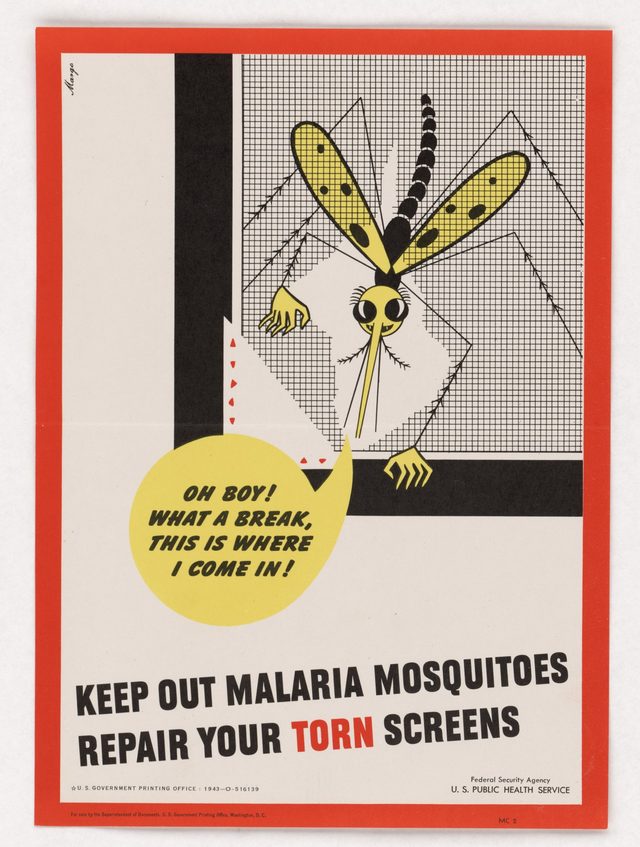
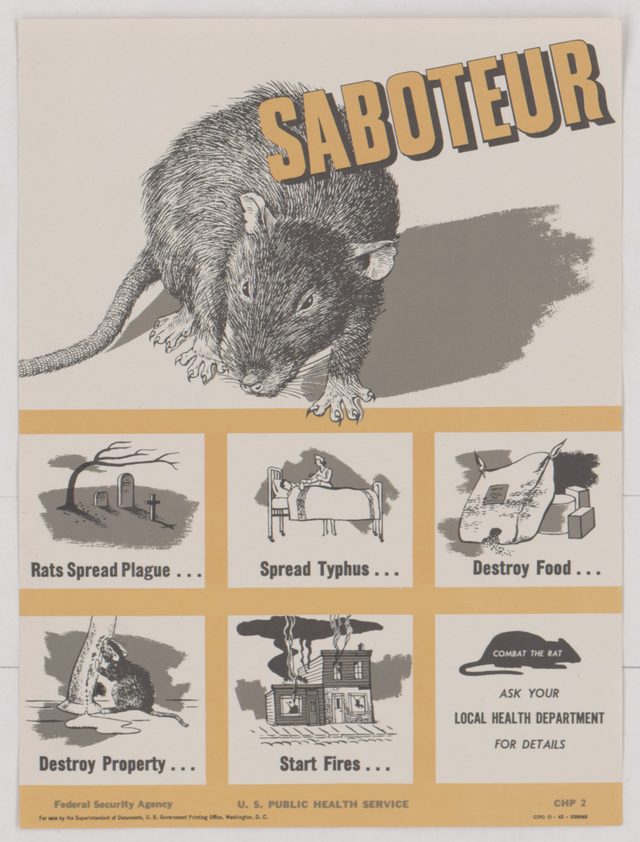
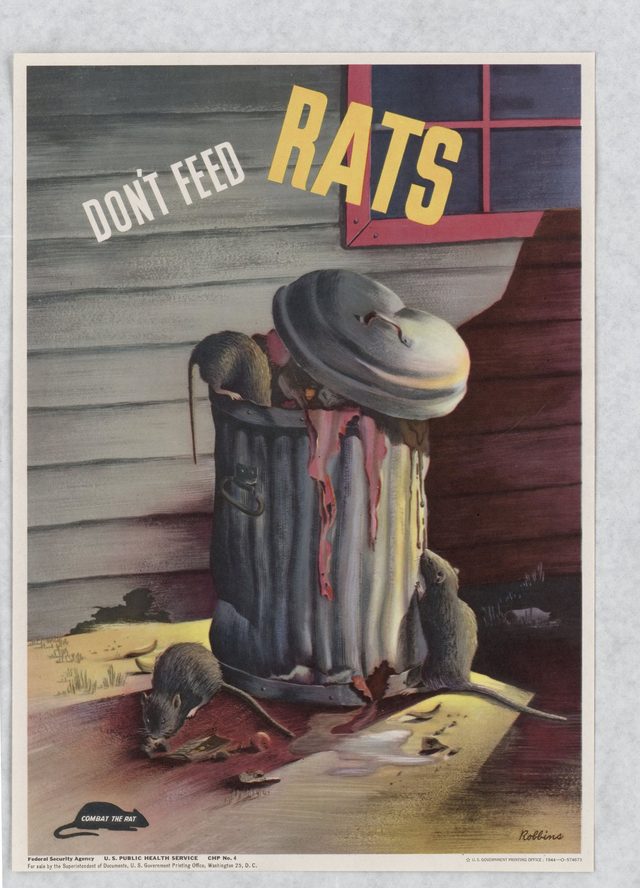
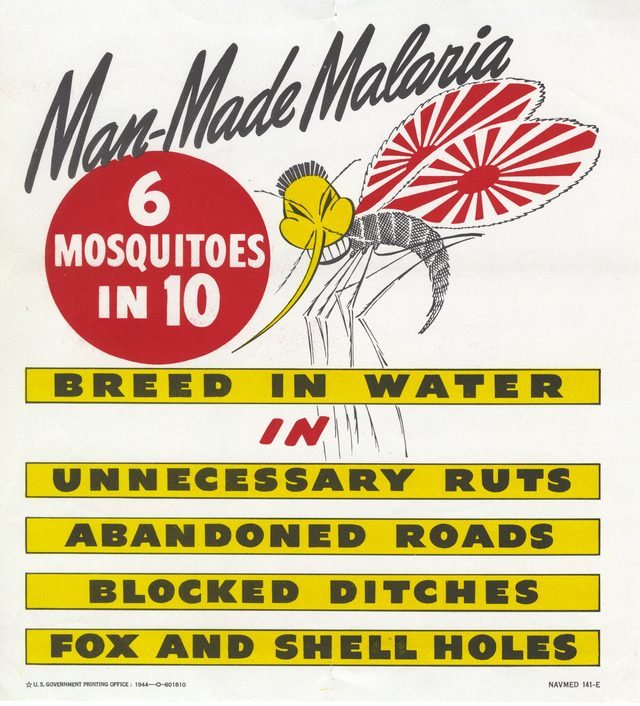
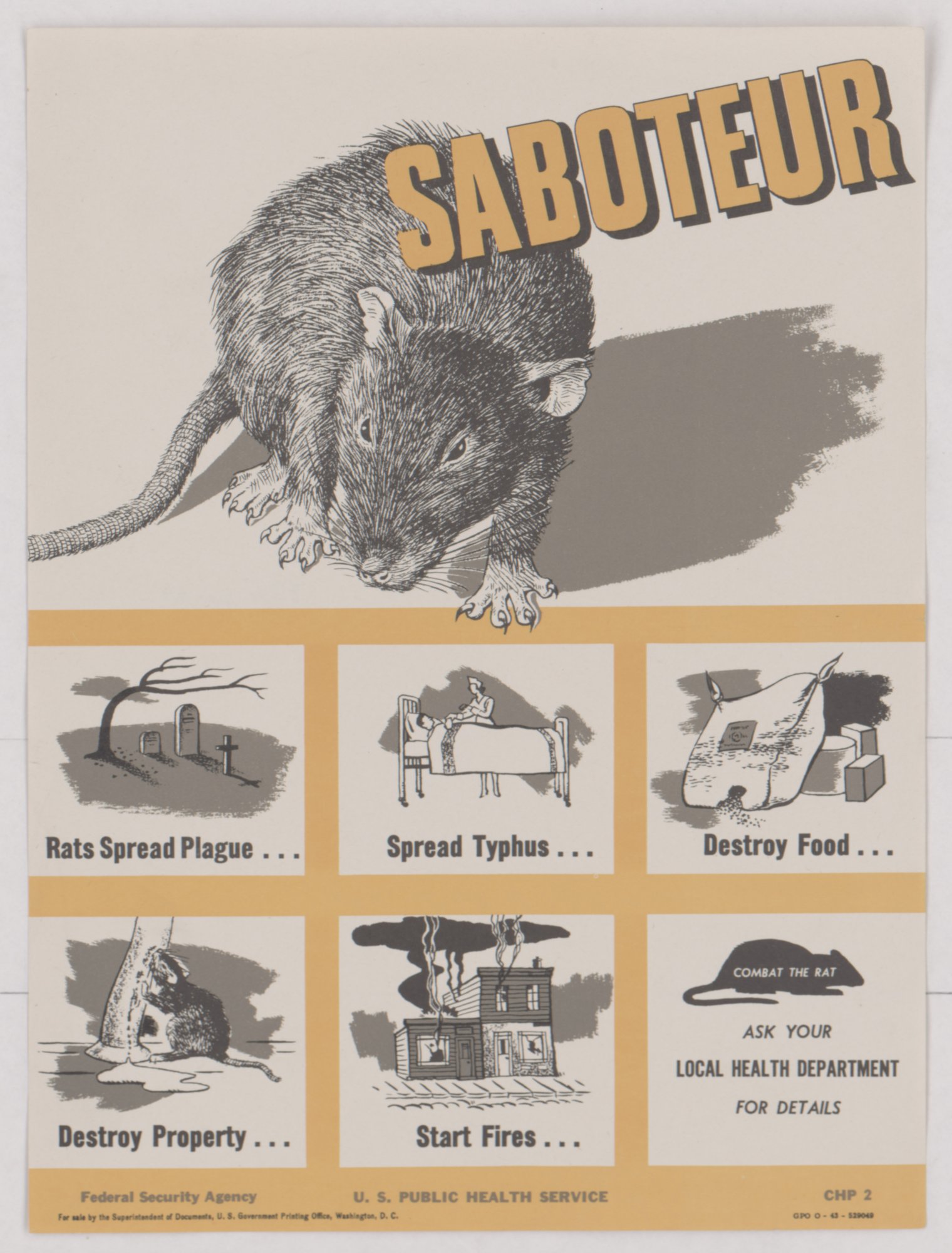
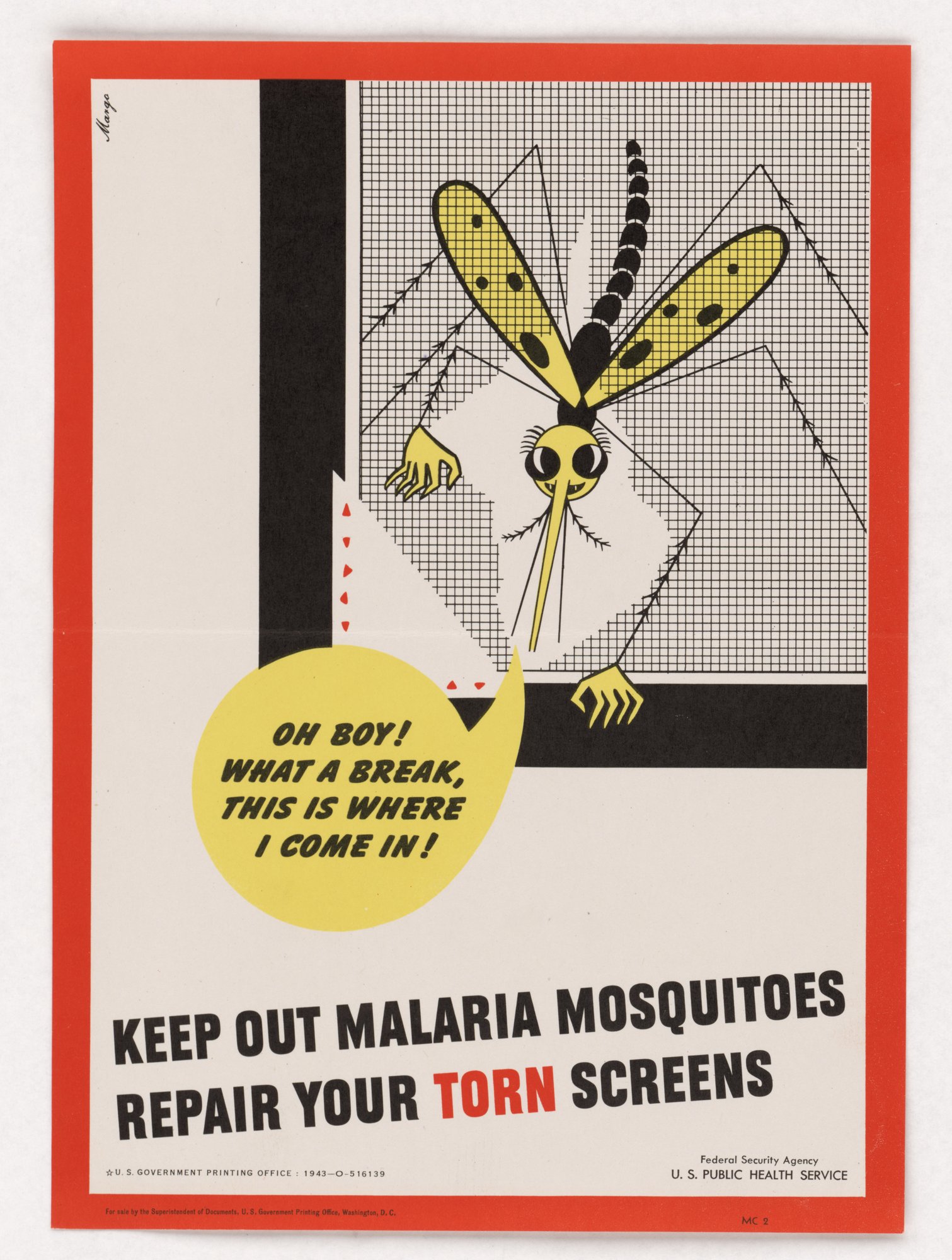
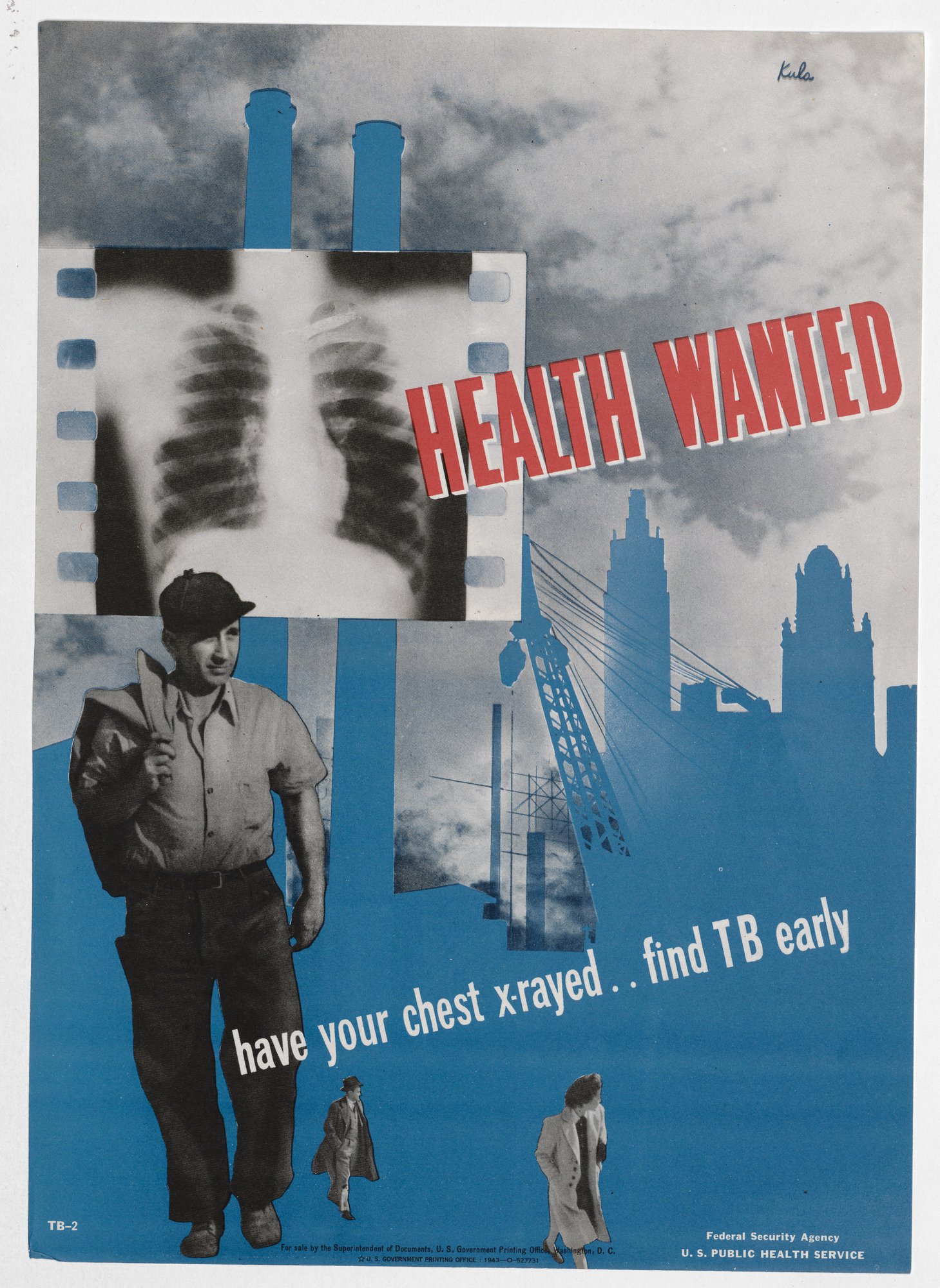
The Public Health Service framed health as war production. The rat becomes a "Saboteur", a wartime name for a pest (Name-calling); mosquito and TB posters ask for a home or chest check (Fear appeal).
Explain moreShow less
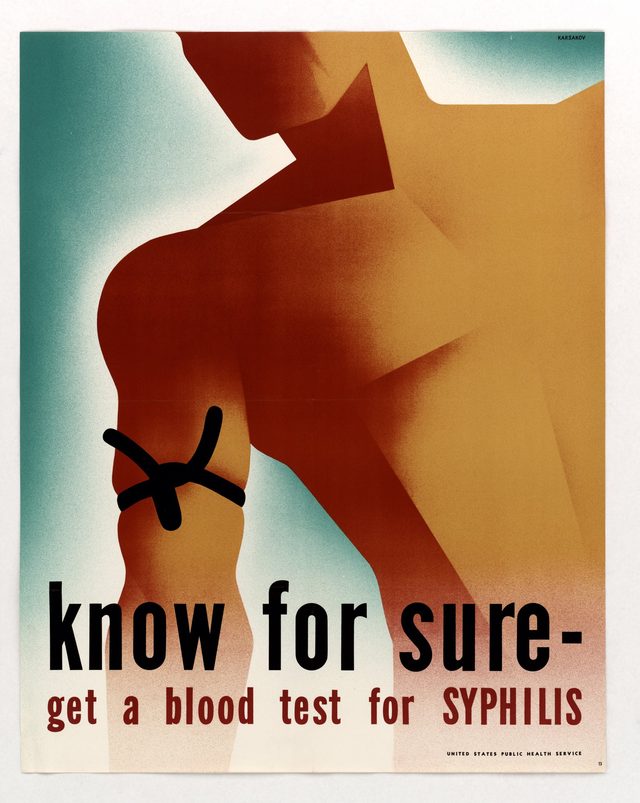
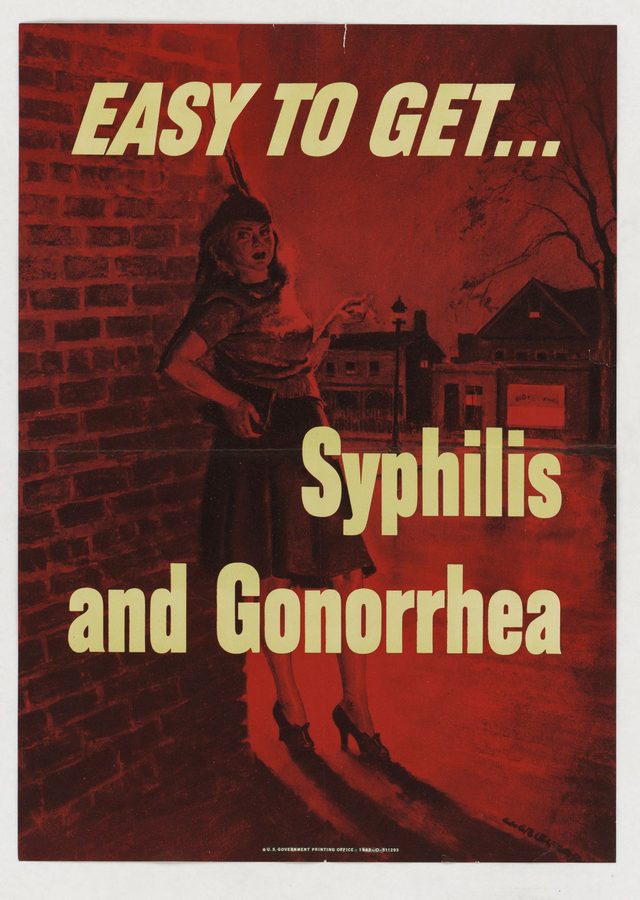
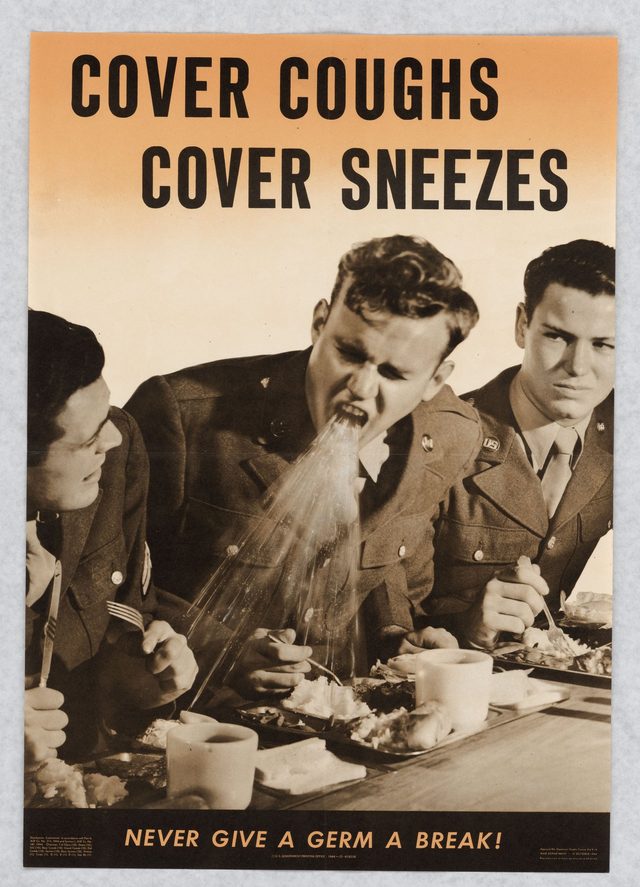
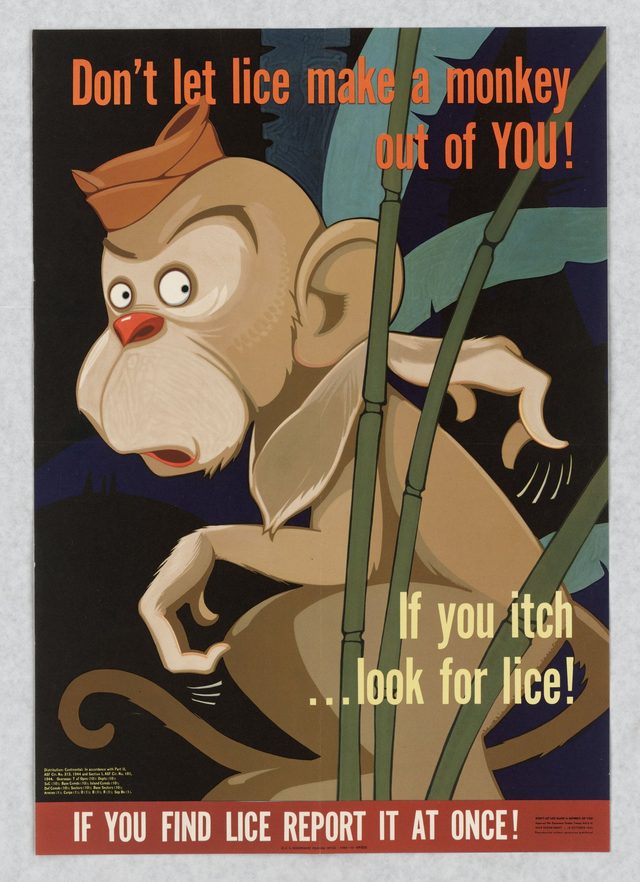
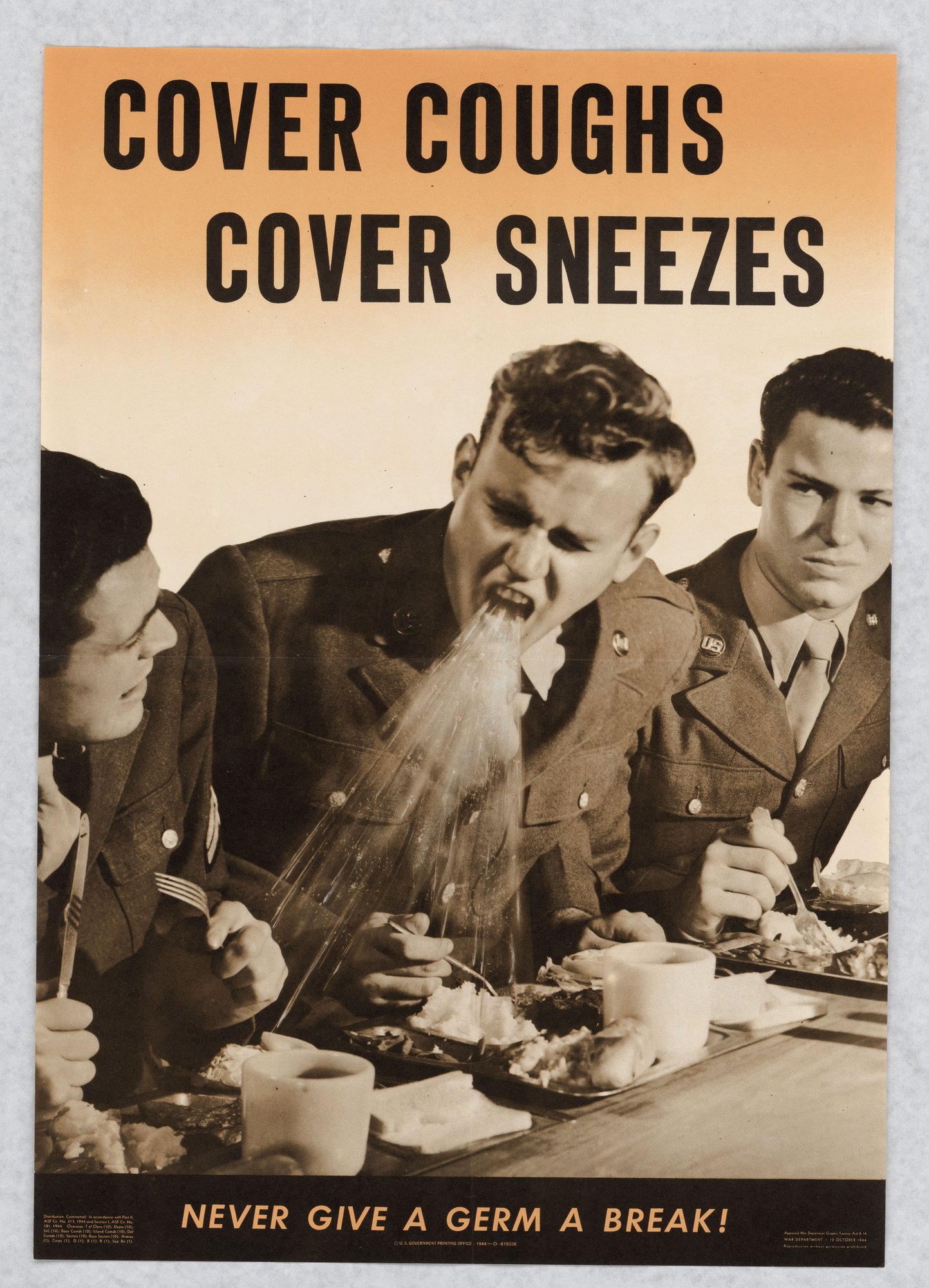
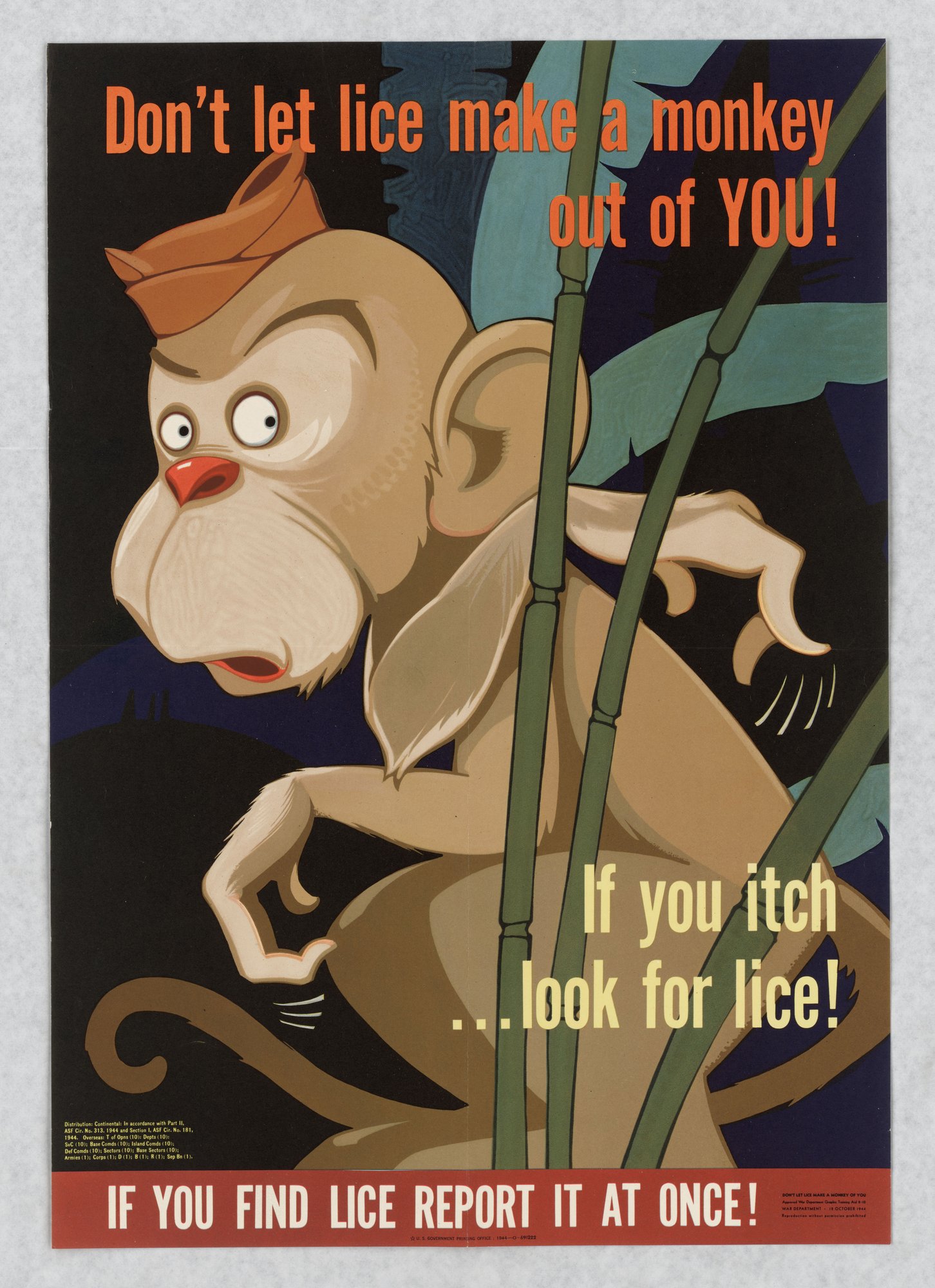
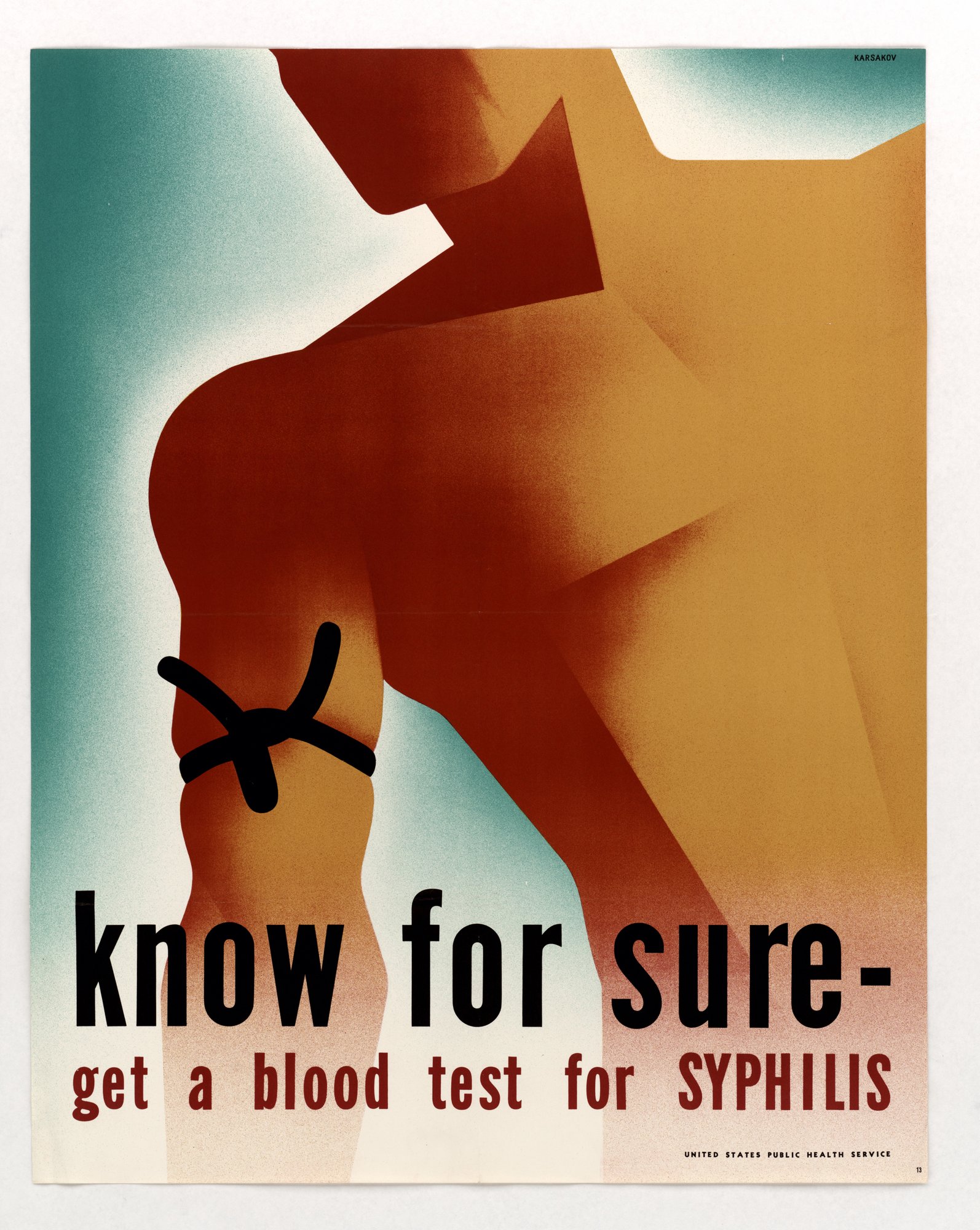
The War Department told soldiers to cover coughs and delouse. The Public Health Service urged a blood test for syphilis, while a separate 1943 government campaign used a woman on a red-lit street, a figure that carries blame as well as warning (Fear appeal, Scapegoating).
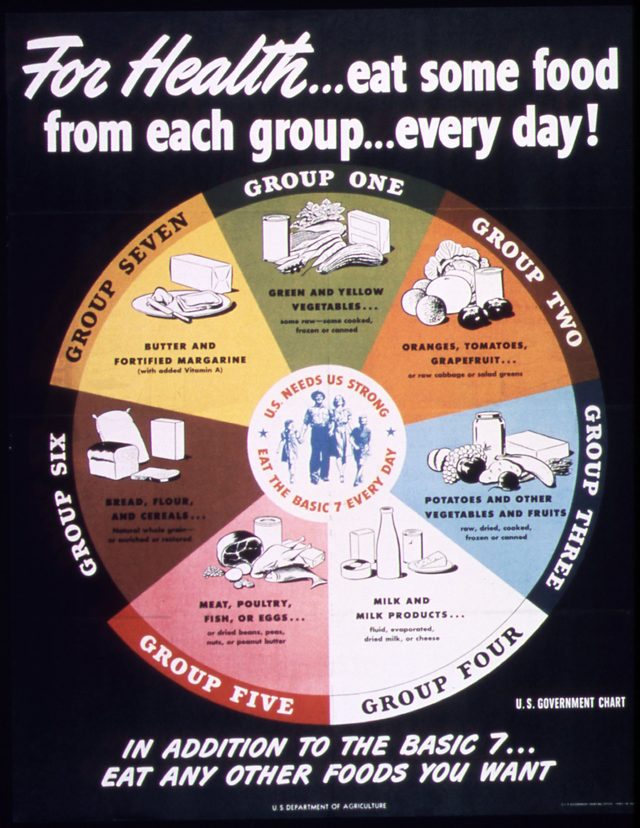
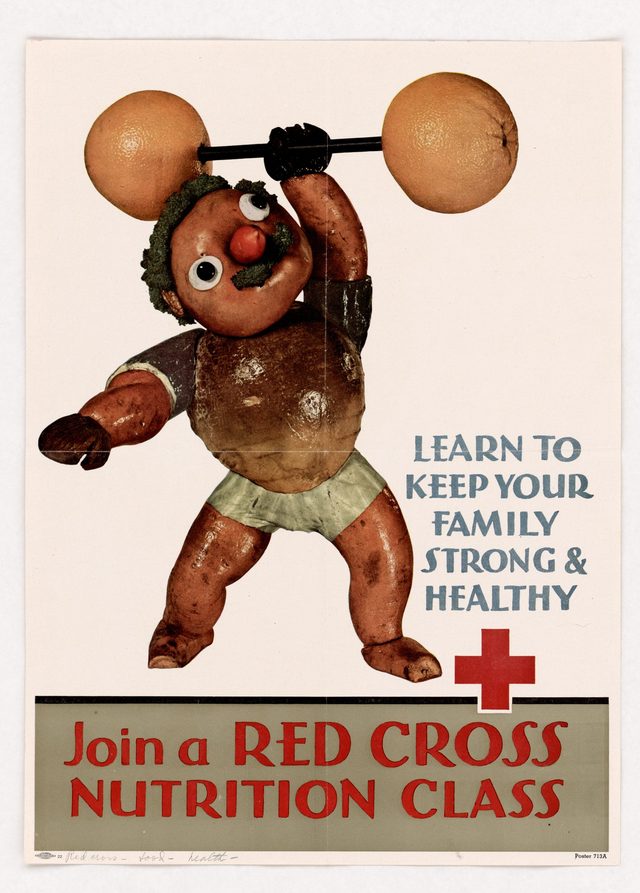
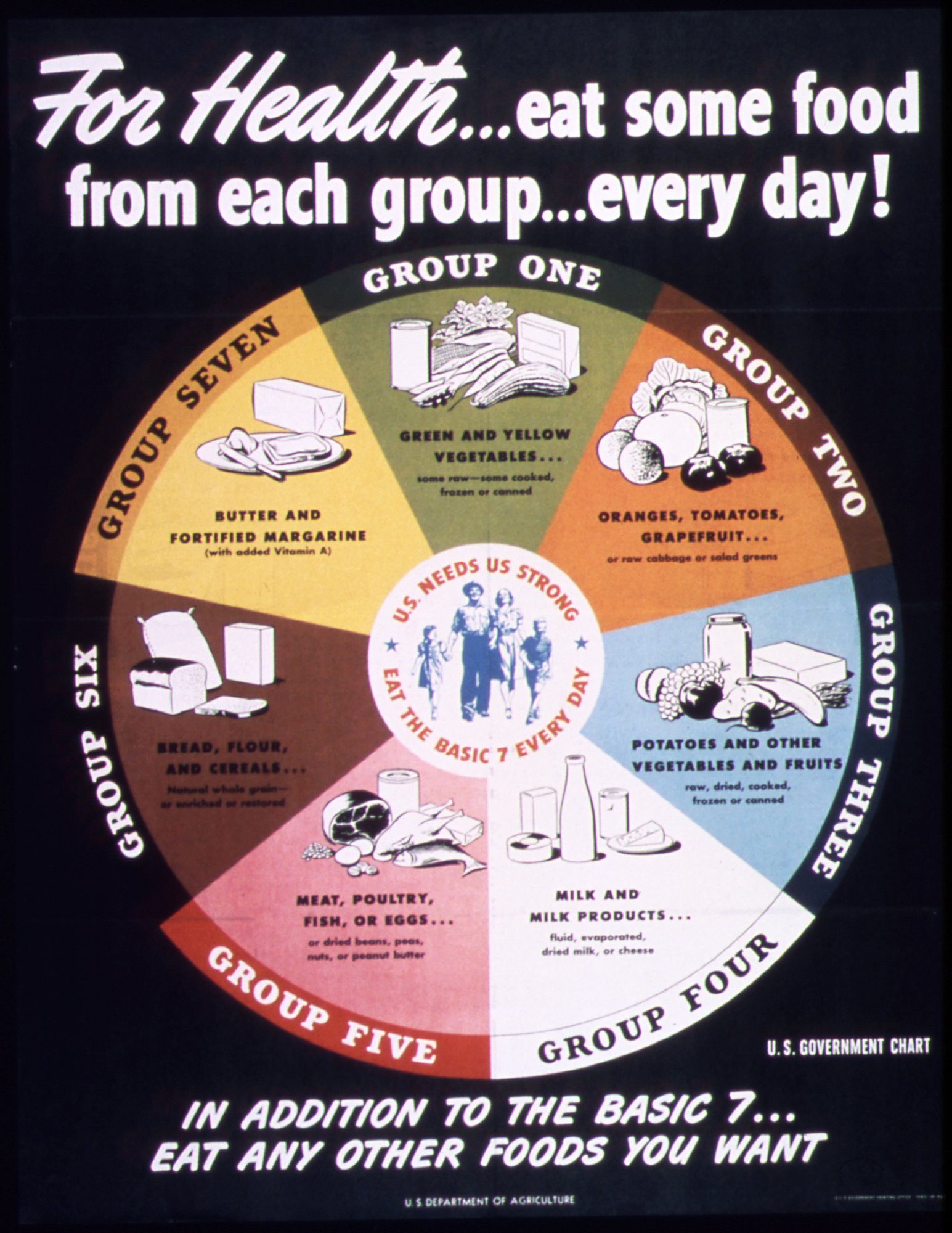
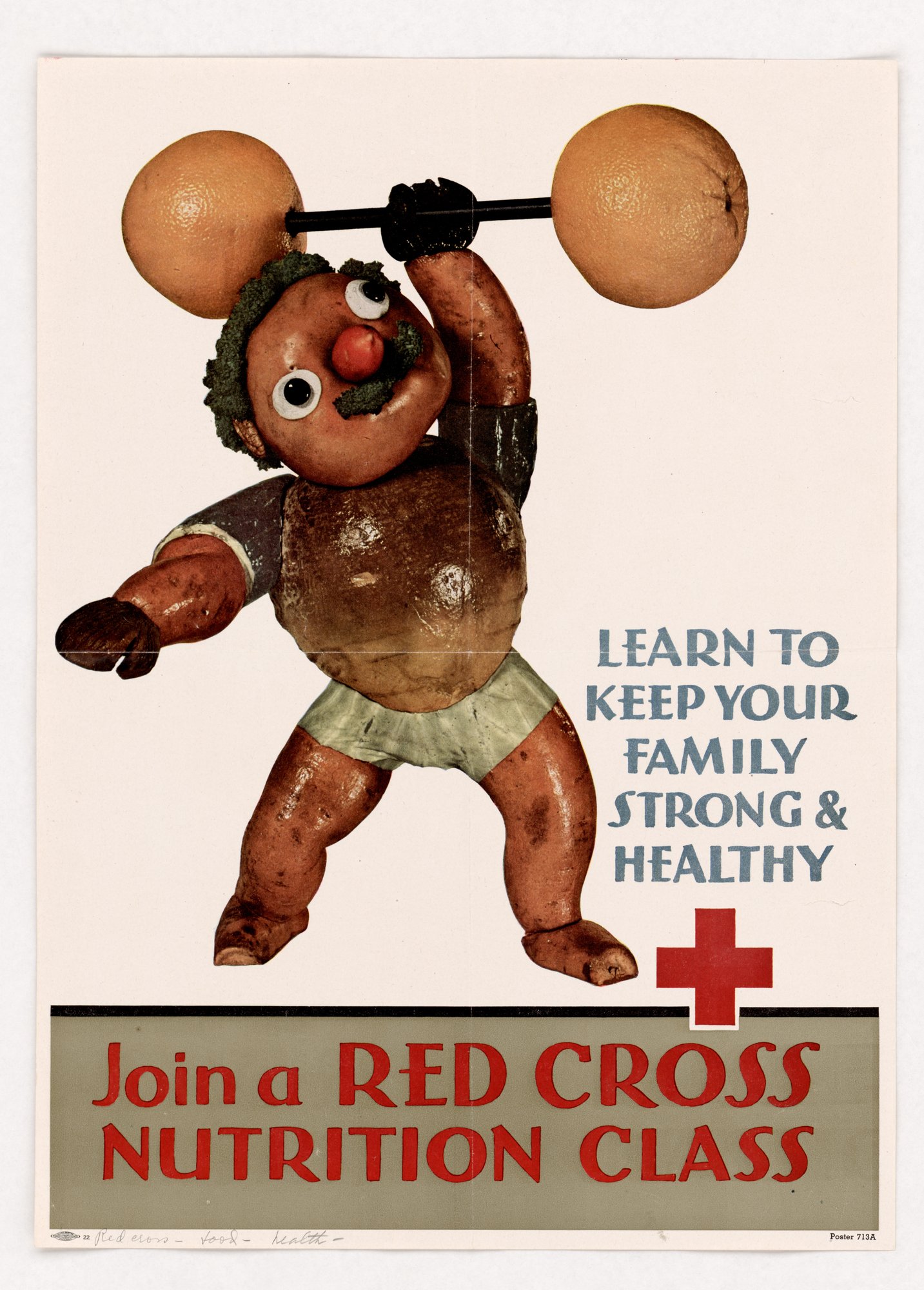
Nutrition posters were milder. The Department of Agriculture's food-group chart gives instructions in ordinary terms (Plain folks), and the American Red Cross borrowed its own name for its classes (Transfer).
Other places, other sponsors, 1939 to 1988
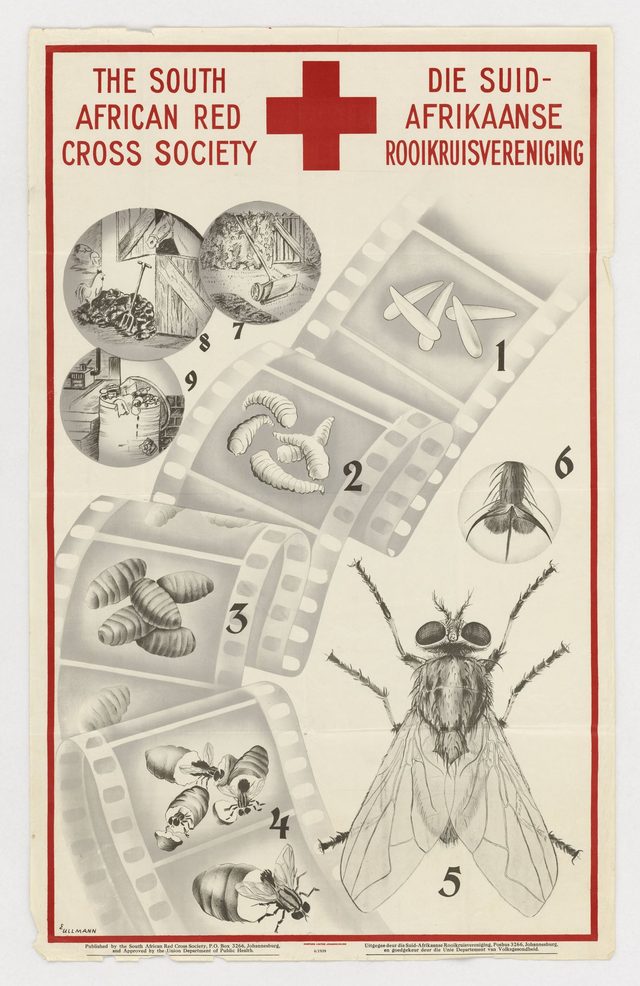
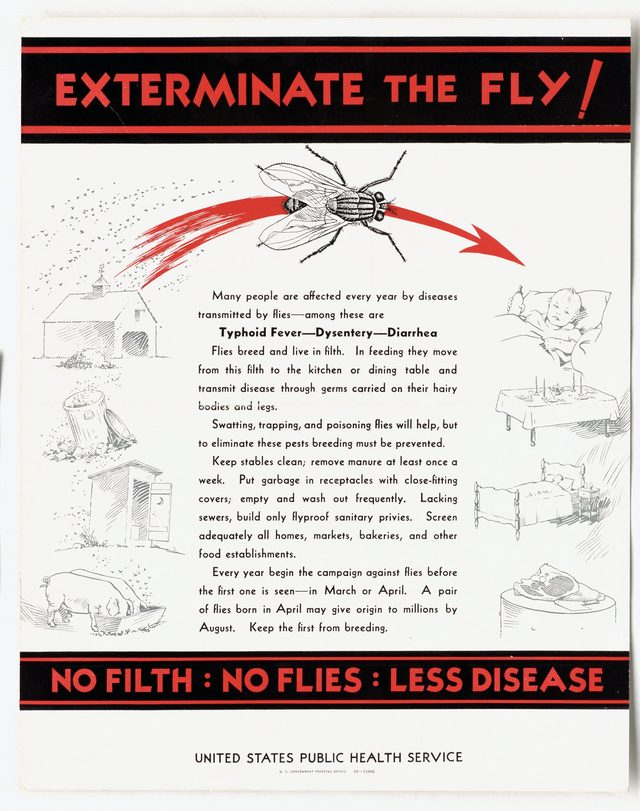
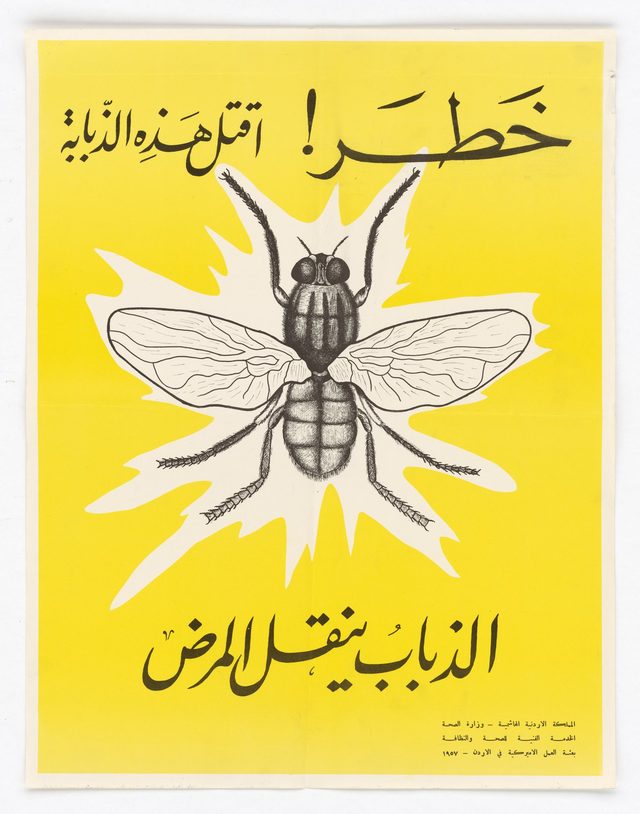
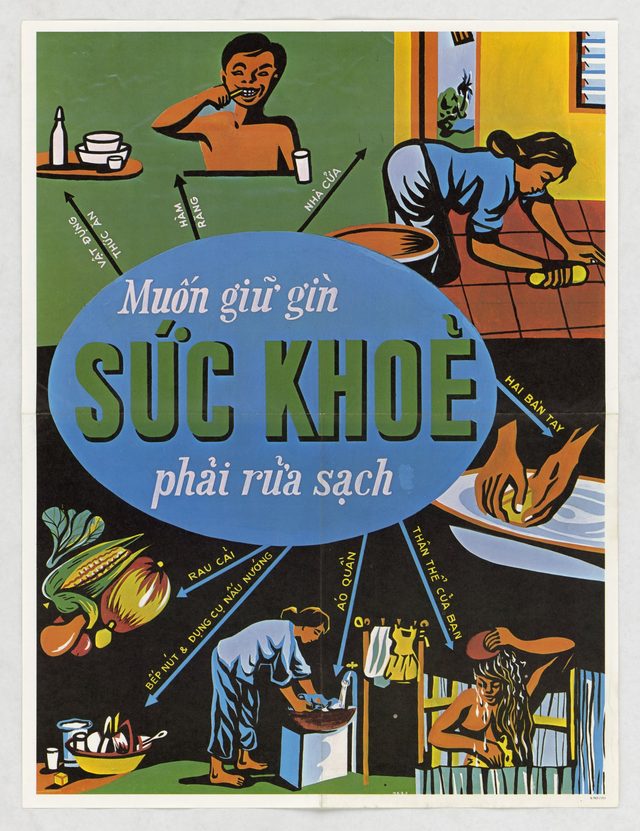
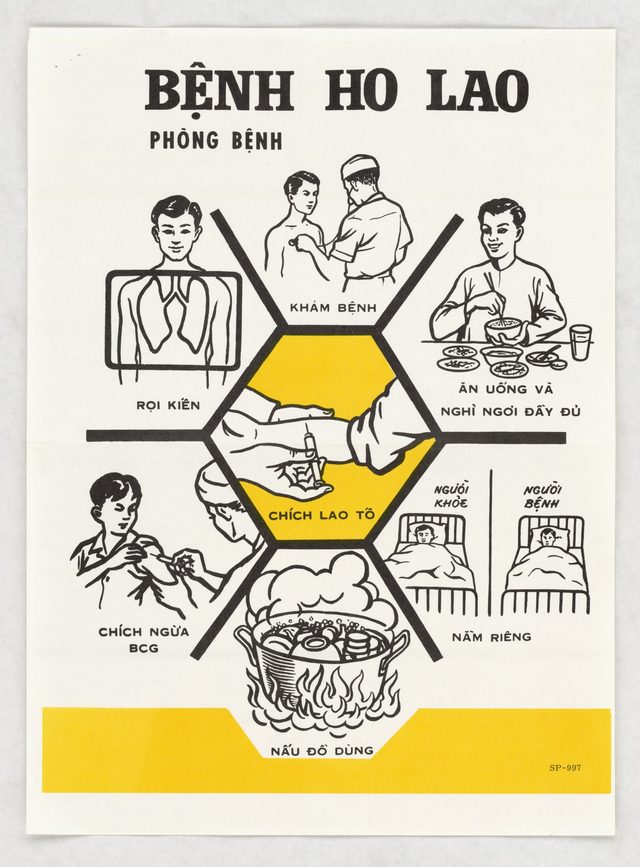
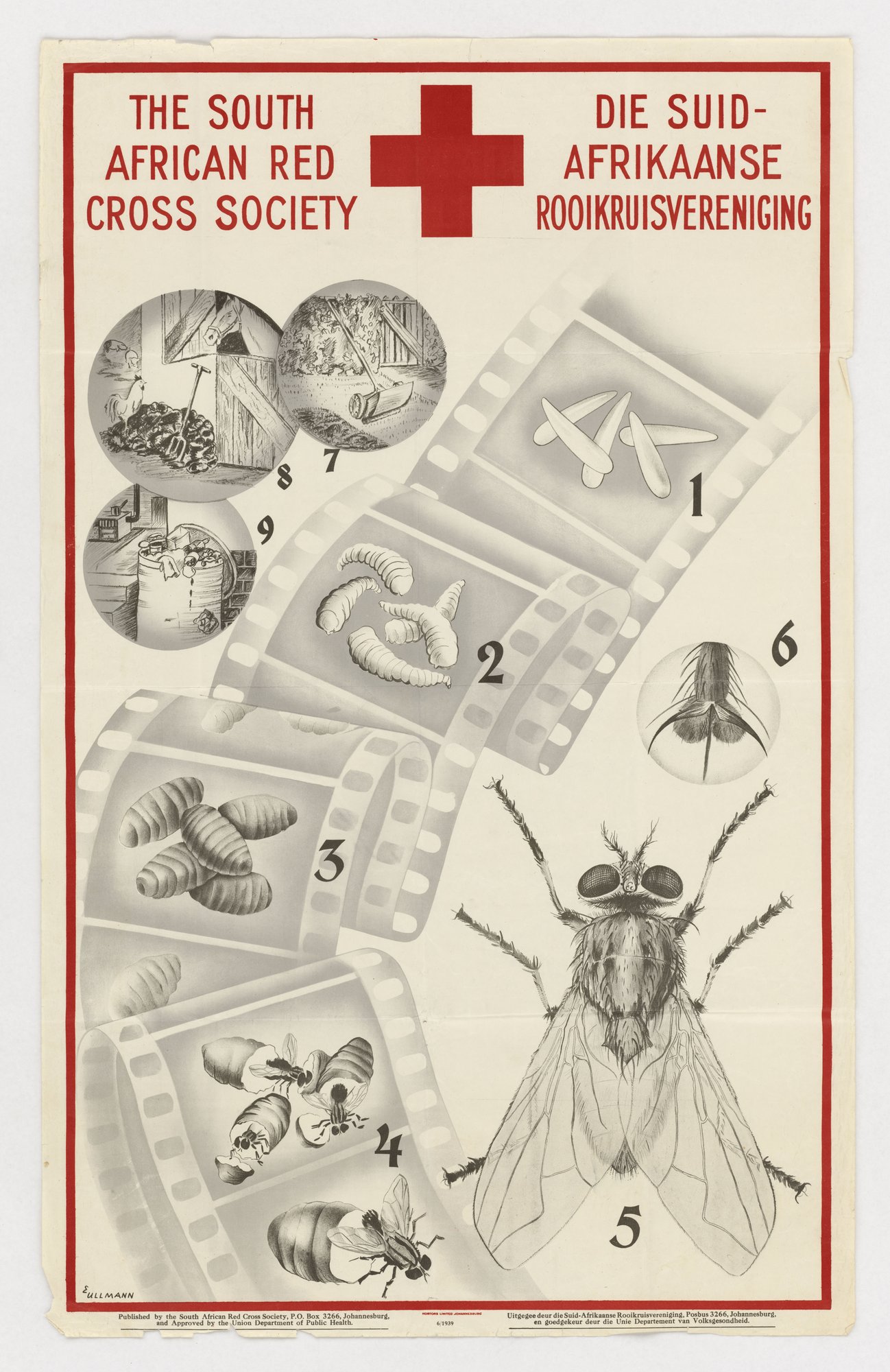
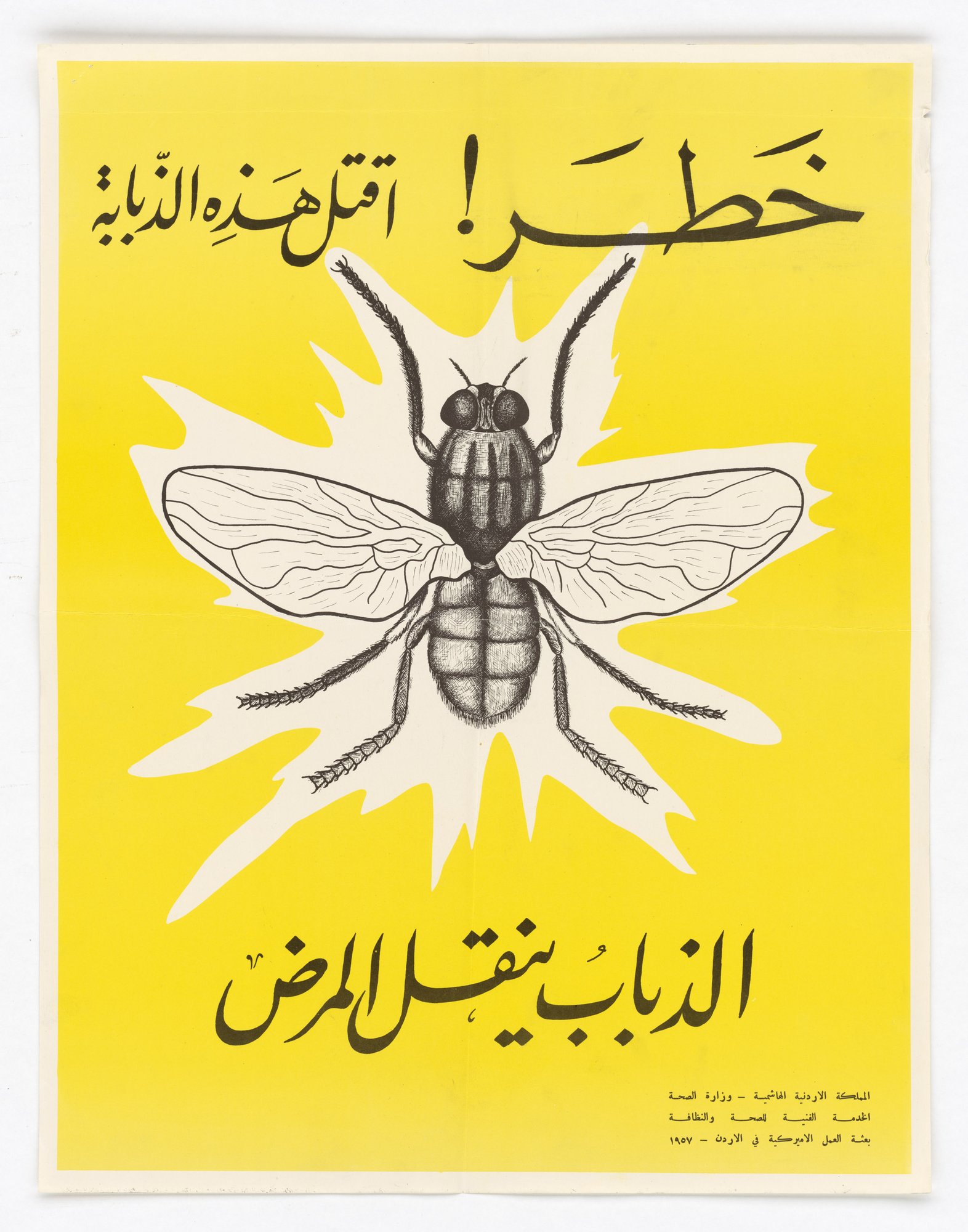
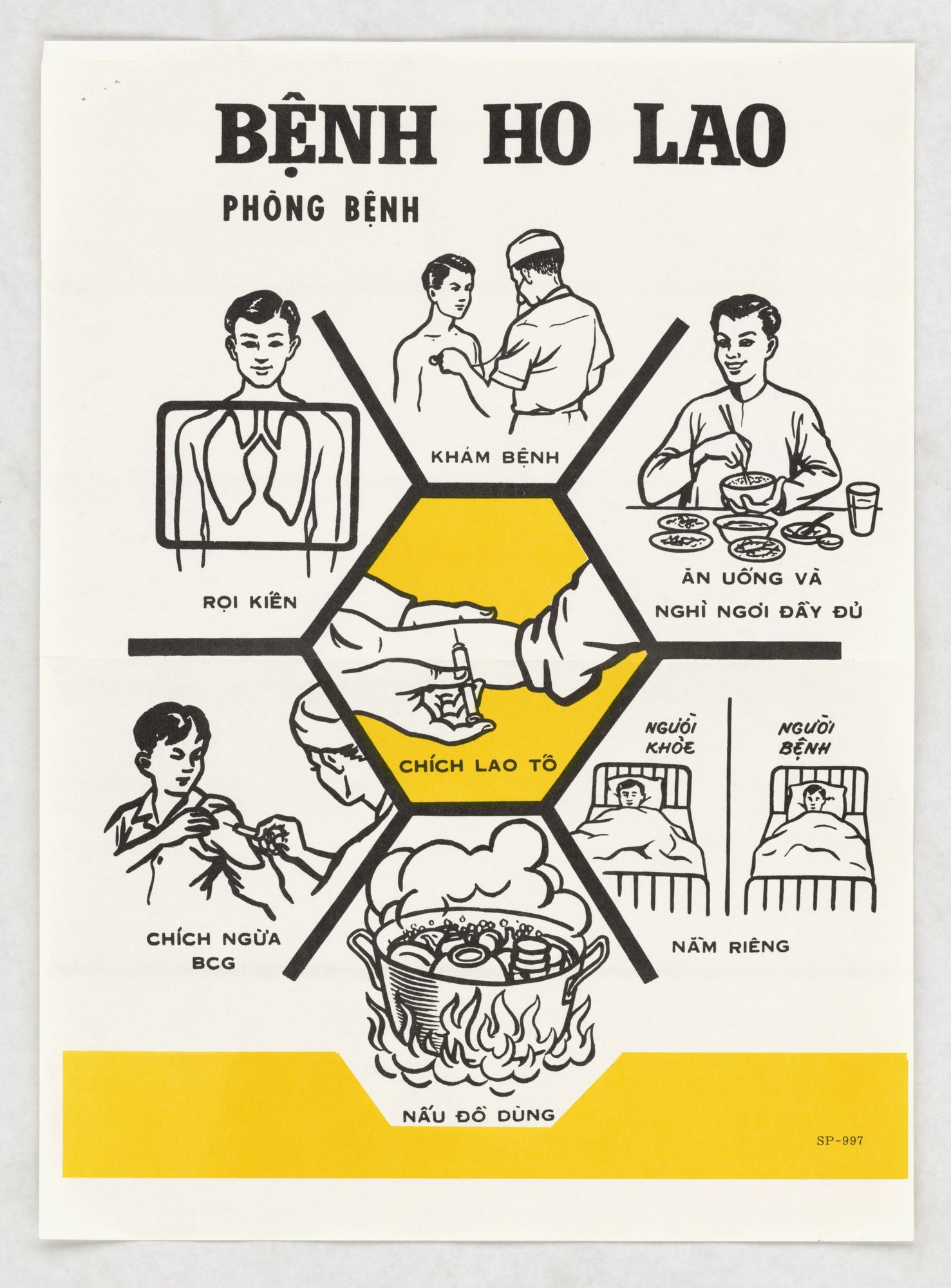
The South African Red Cross showed the fly's life cycle in English and Afrikaans (Transfer). The U.S. Information Agency distributed health sheets abroad, for example in Burma in 1952 and Jordan in 1957, and the Saigon government issued its own (Fear appeal).

Explain moreShow less
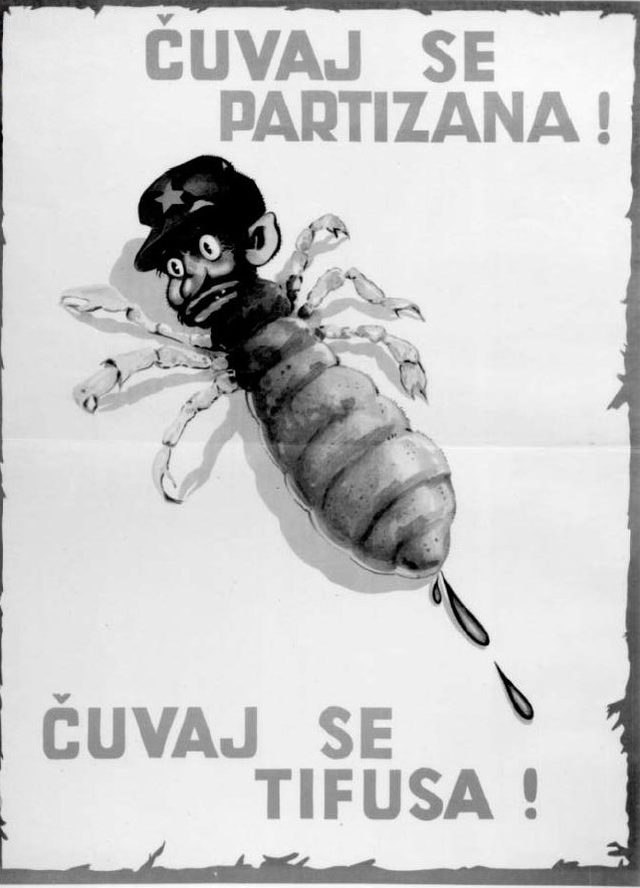
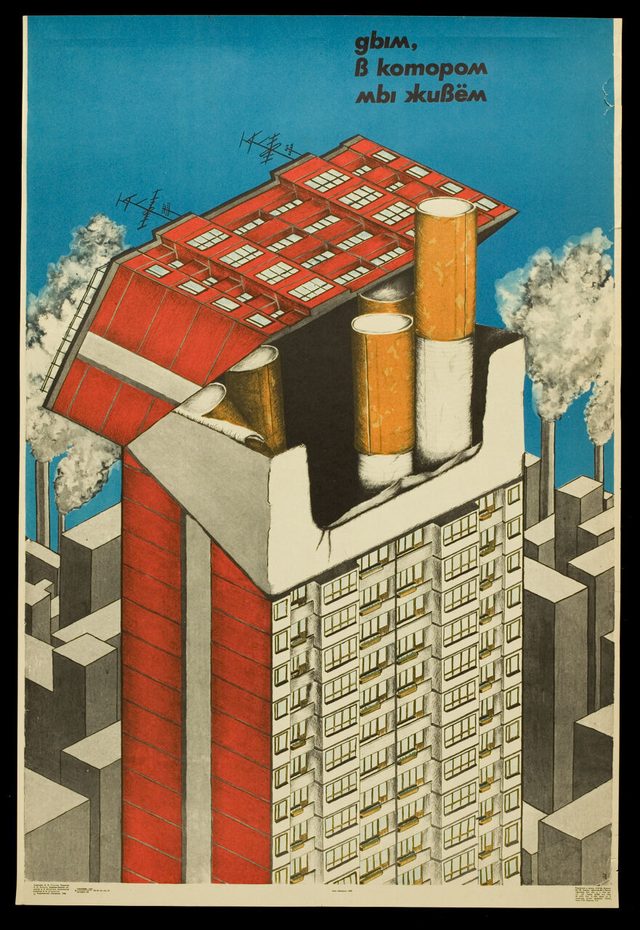
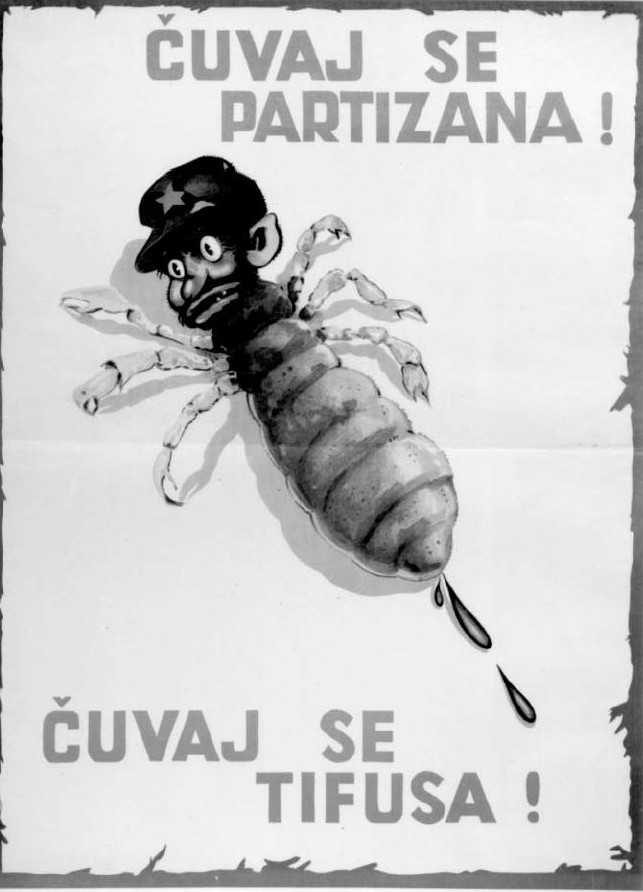
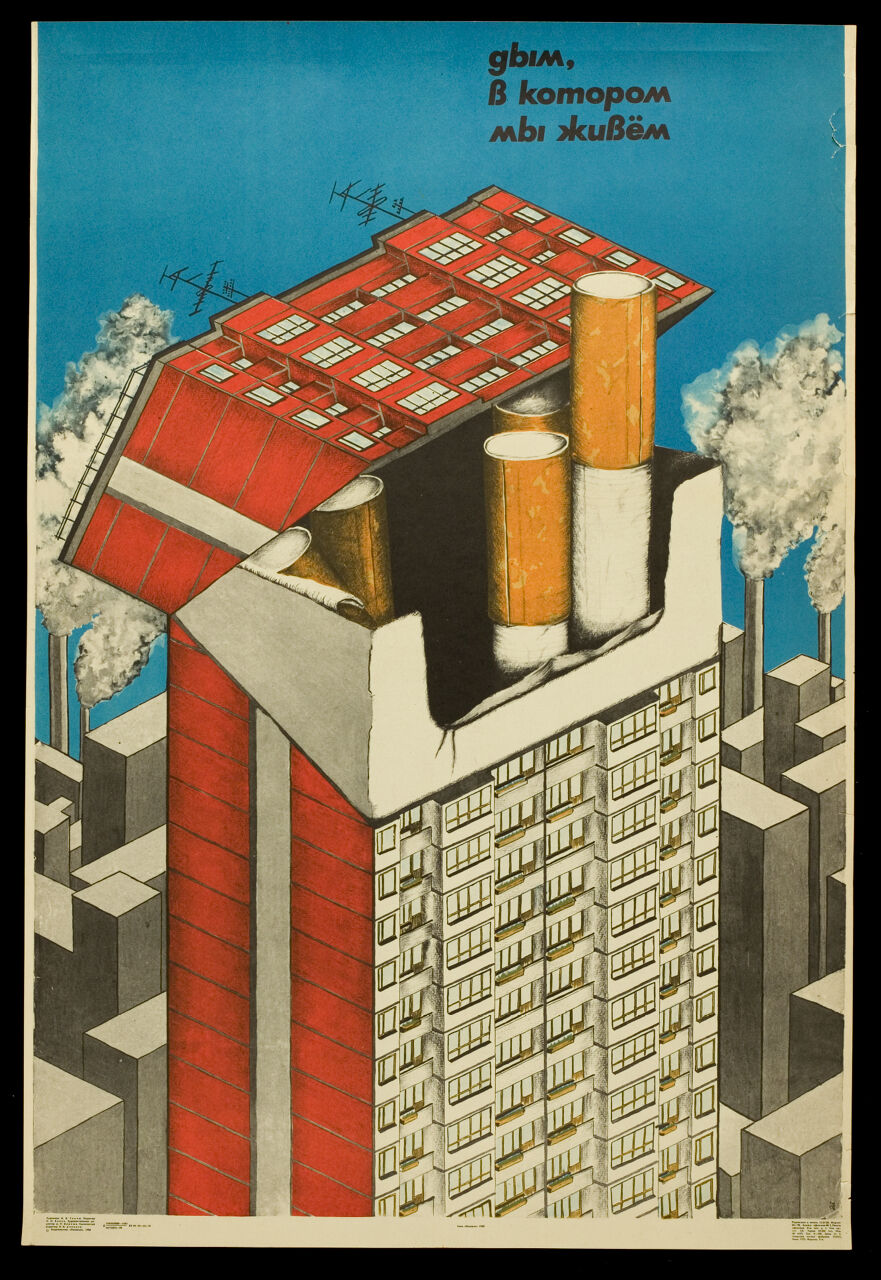
Health imagery has also served politics. In 1941 the State Propaganda Office of the Independent State of Croatia drew a louse with a Partisan star for a head, tying a political group to typhus (Name-calling). In 1988 a Kiev state publisher drew an apartment tower as a cigarette pack (Fear appeal).
Scope and limits
- Same definitions for all. Fear, transfer and name-calling are applied alike to British, American, Brazilian, Croatian and Soviet items. A mosquito warning and a political smear share a technique tag; they do not share an aim. The first asks for a precaution, the second assigns hostility to a group.
- Not here: proof that any poster changed behaviour, or the medical record for any disease.
- Not here: private clinic advertising beyond the one 1900 example.
Sources and further reading
Sources
Each item in the grid carries its own source and rights note from the holding institution.
Each item in the grid carries its own source and rights note from the holding institution. See also civil defense posters, British propaganda posters and American propaganda posters.