Illustration: a dossier collage of an evidence wall of pinned propaganda posters, leaflets and printed matter from many eras, with contact sheets and catalog labels.

Collection

American propaganda posters: US examples by technique

American propaganda posters from 19th-century campaigns to the Cold War, from government, parties and dissenters, tagged by technique, sources shown.

Illustration, not an archive object

Content note. American wartime posters include racial caricature of Japanese people, the epithet "Hun" for Germans, and posters from dissenting groups that use hostile labels for police and officials. They are shown as they were issued, as evidence of what Americans were told. Showing a poster is not endorsing it.

What counts as an American propaganda poster?

An American propaganda poster is a printed sheet issued in the United States, or by a United States body abroad, that was built to move an audience rather than only inform it. The collection records the issuer, the audience and the stated purpose of each one. This archive applies one working definition to every country (how FRAME defines propaganda), so the questions asked here are the same ones asked of a British, German, Soviet or Chinese poster: who issued it, who it was for, what it asked, and which technique carried the ask.

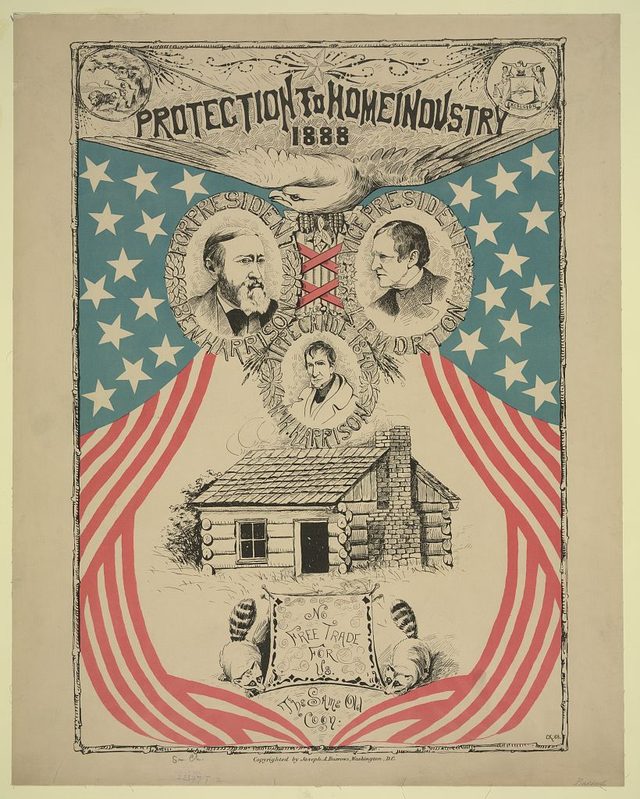
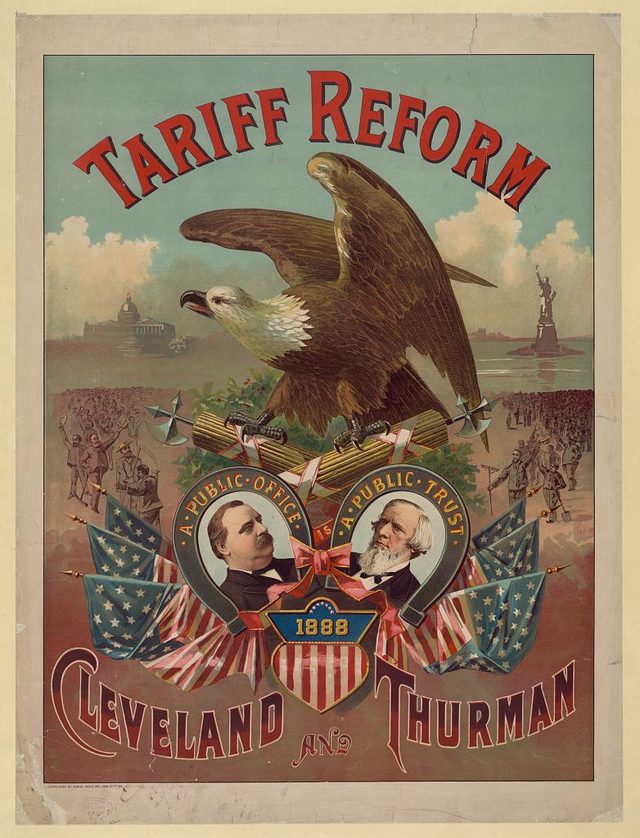
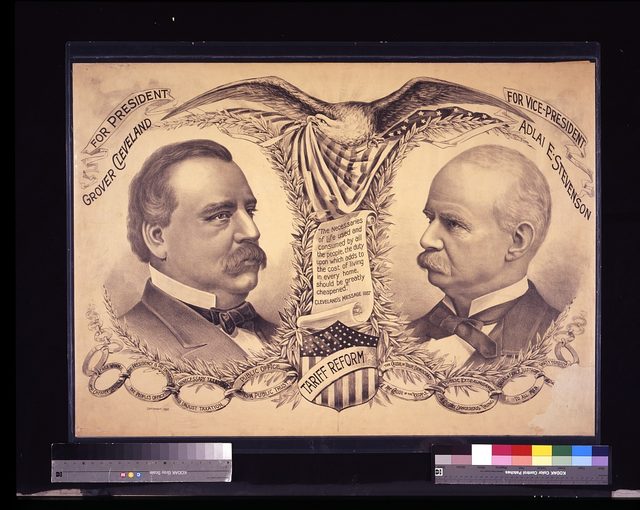
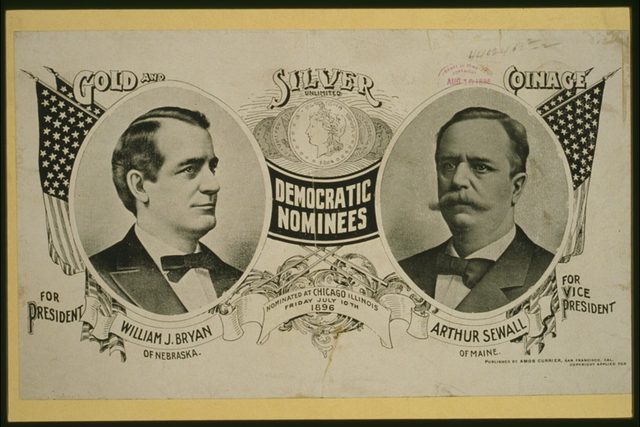
The set is broad. It runs from presidential campaign lithographs of the nineteenth century through the First and Second World War mobilisations to Cold War posters printed for audiences in Asia, and it includes posters from parties, movements, companies and charities as well as from government agencies. Government bodies issued many of the posters shown here, but they were never the only American voices, and dissenting posters are held to the same standard as official ones. For the world-wide view, see propaganda posters.

Campaign posters before 1914: card stacking and glittering generalities
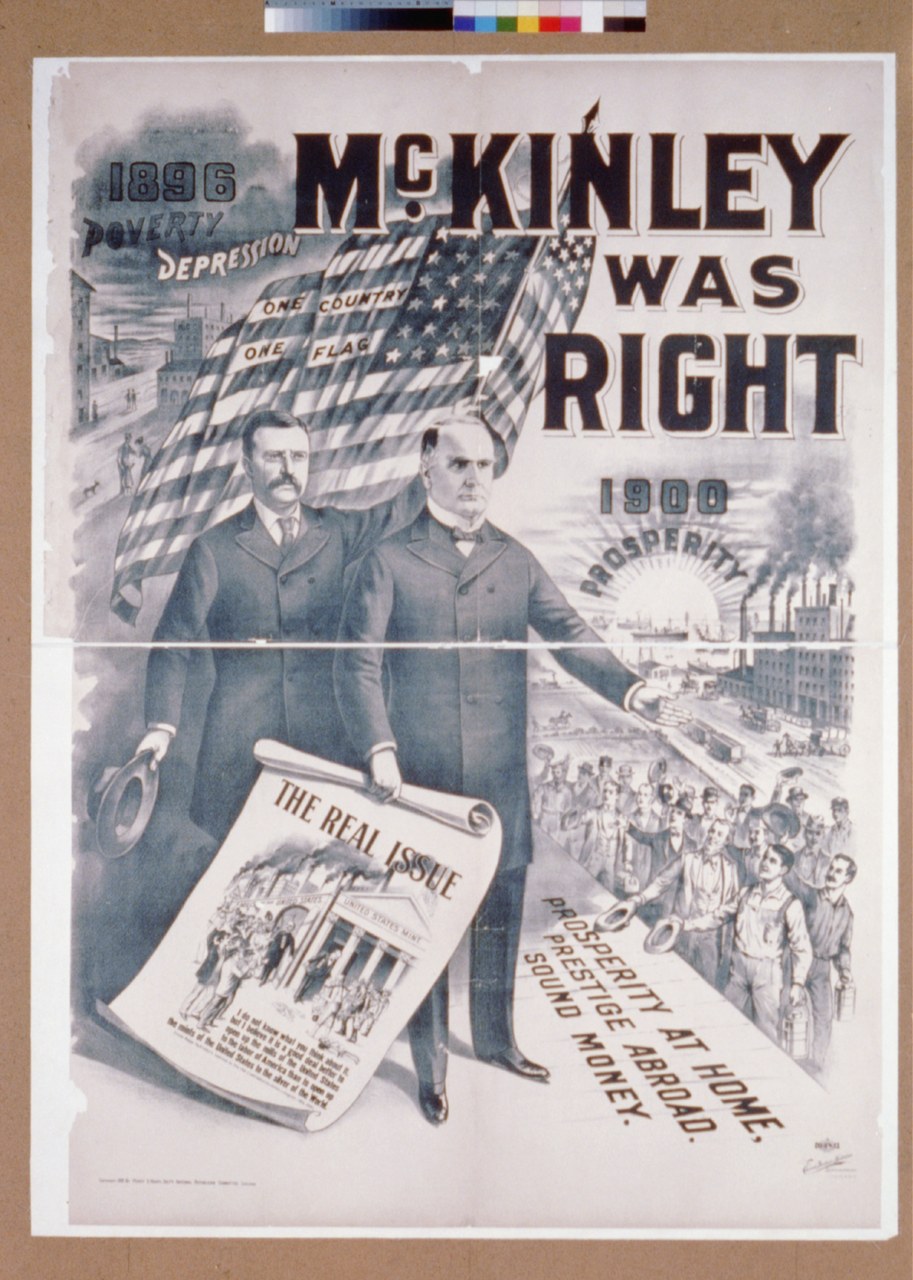
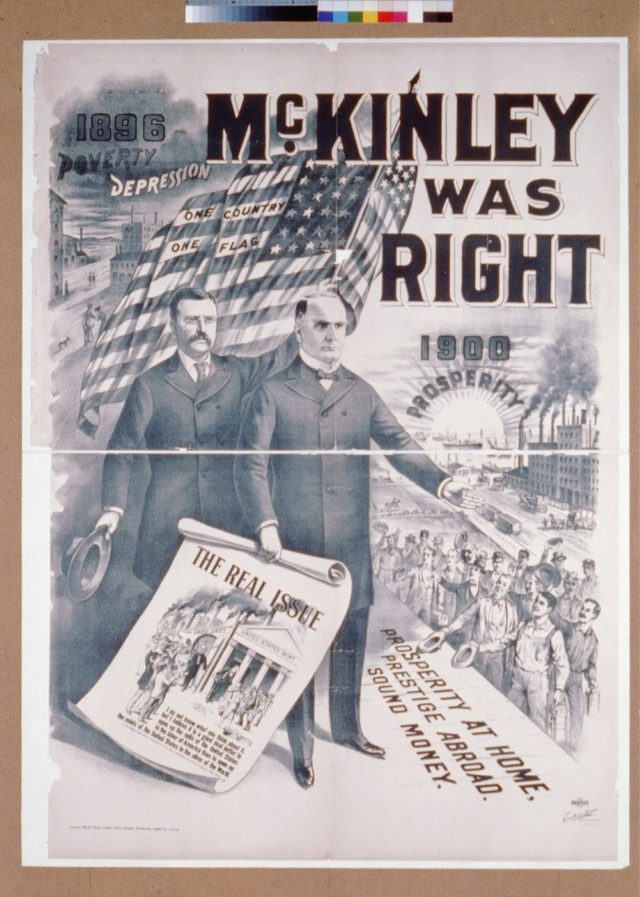
McKinley Was Right: a two-panel lithograph contrasting 1896 poverty with 1900 prosperity

Long before the world wars, American parties used lithographed posters to sell candidates. A pro-McKinley poster of 1900 splits the sheet in two: on the left, under "1896 Poverty Depression", idle factories; on the right, under "1900 Prosperity", smoking chimneys and a cheering crowd. It pairs two years and two conditions as cause and effect and ends on a slogan, which is the card-stacking tell. Read the technique: card stacking.
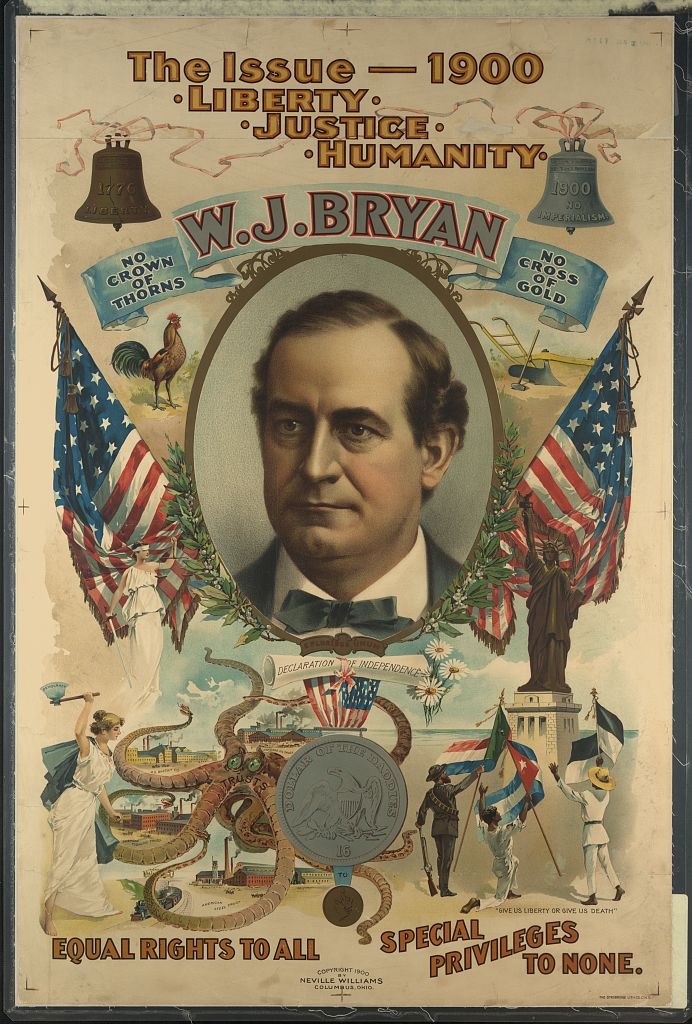
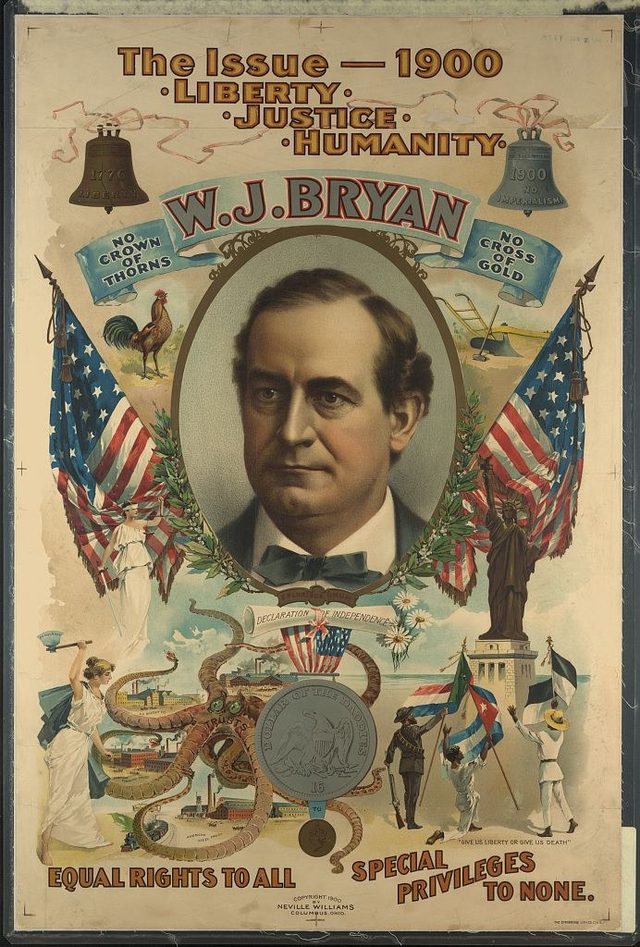
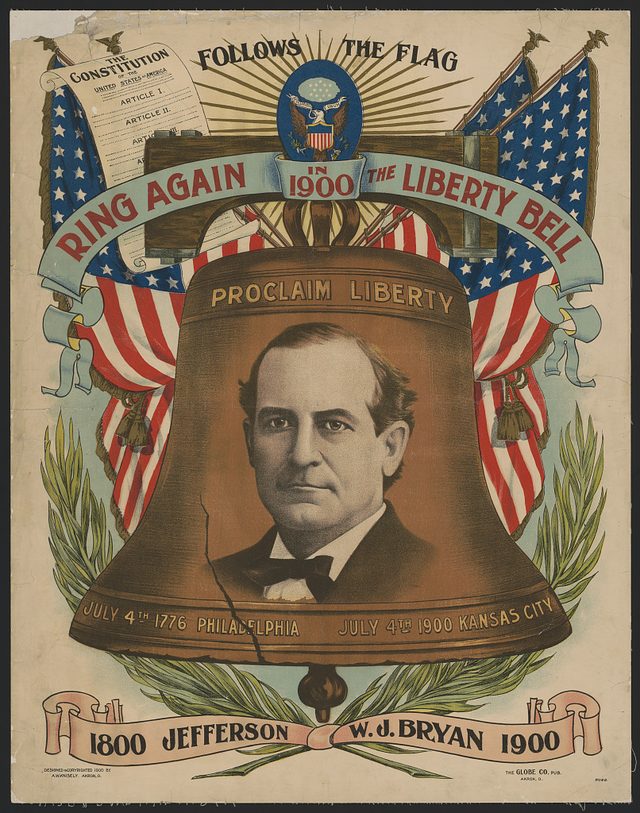
The Issue, 1900: a portrait of Bryan between a 1776 Liberty bell and a 1900 No Imperialism bell, with an octopus labelled Trusts

The same election produced a pro-Bryan chromolithograph. It sets Bryan's portrait between a bell marked "1776 Liberty" and one marked "1900 No Imperialism", coils an octopus labelled "Trusts" around factories, and ends on "Equal rights to all, special privileges to none". Virtue words ("Liberty. Justice. Humanity."), borrowed national symbols and a menacing image make up the appeal. Two opposing campaigns in one year, tagged with the same vocabulary, show why this archive scores methods and not teams. Read the technique: glittering generalities.

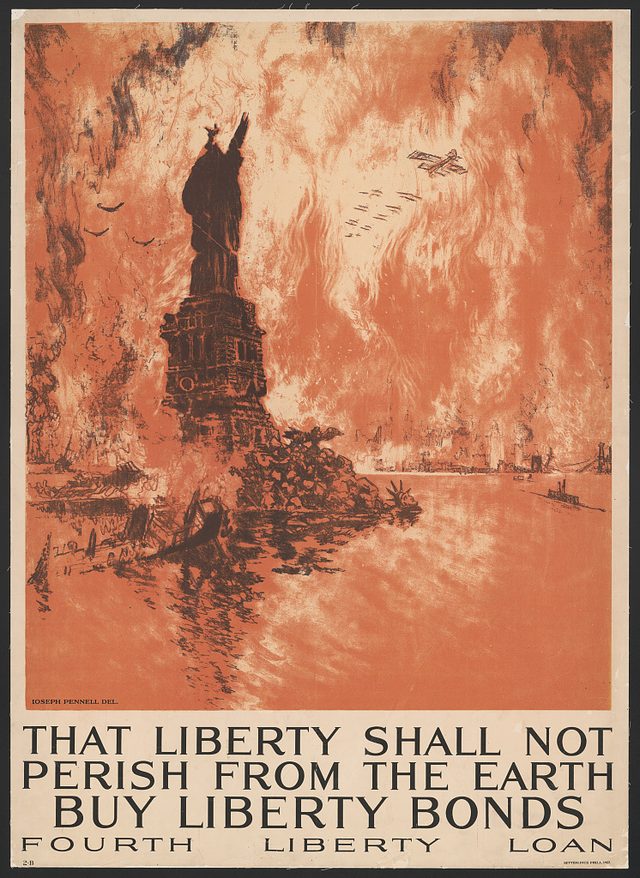
The First World War: name-calling and fear
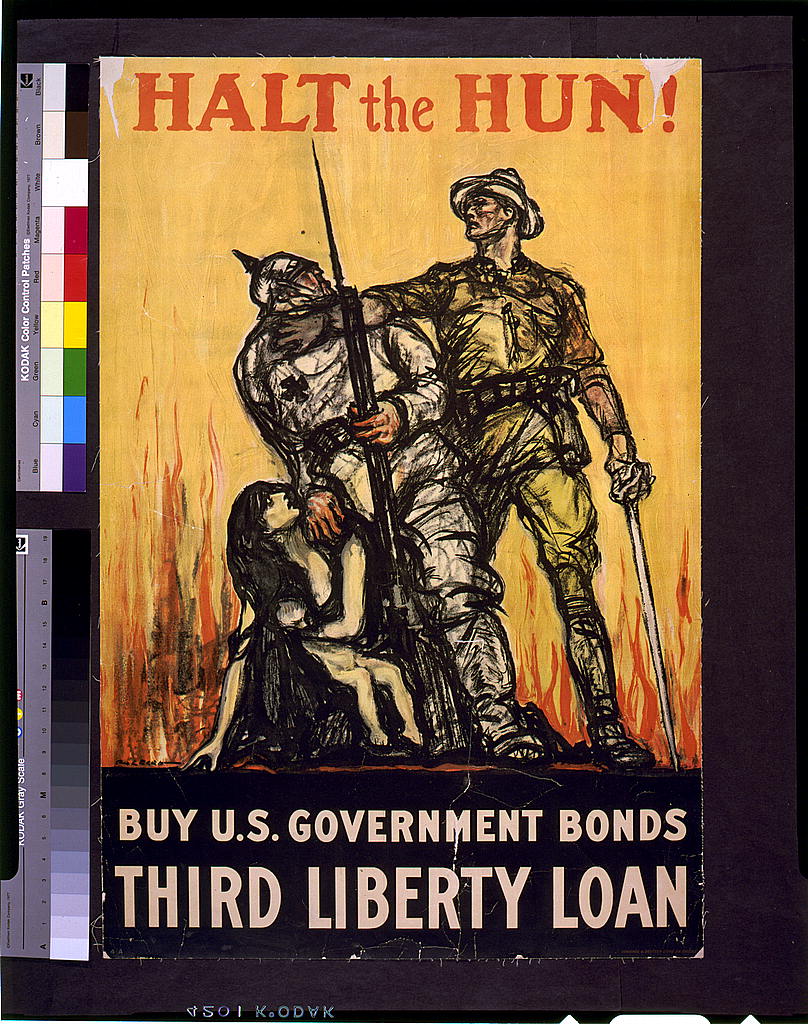
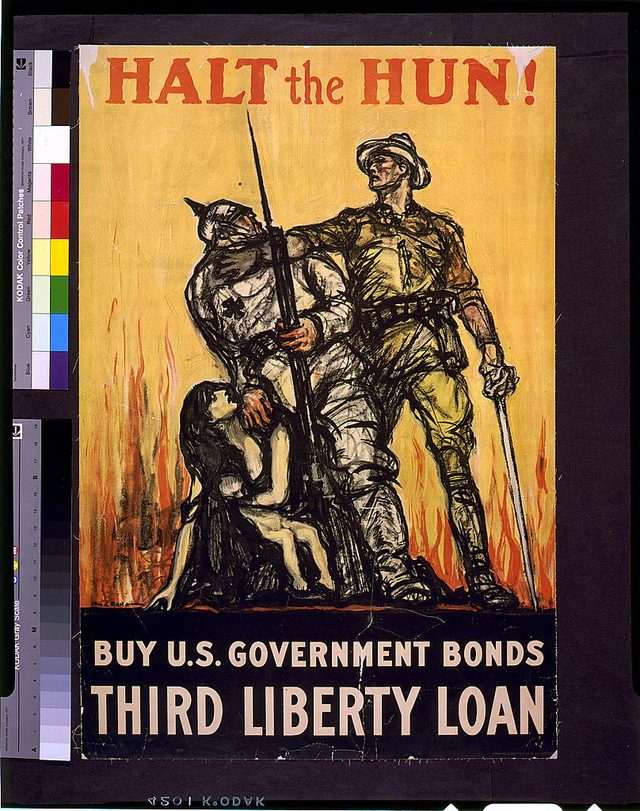
Halt the Hun! Buy U.S. Government Bonds: an American soldier restrains a German soldier who has seized a woman and child before a wall of flame

Henry Raleigh drew this Third Liberty Loan poster for the U.S. Treasury in spring 1918. Against a wall of flame, an American soldier grips a German soldier in a spiked helmet who has seized a half-clothed woman clutching a child. The label "Hun" names the enemy, and the staged threat to a mother and child sits directly above the single remedy, buying bonds. The scene belongs to the Allied "Rape of Belgium" iconography. Some 1914 atrocity stories were later shown to be false or unverified, while documented killings of civilians also took place, as the historians Horne and Kramer record. The poster does not distinguish between them. Read the technique: name-calling and fear appeal. More on the war's posters: WW1 propaganda posters.

The Second World War: mobilisation, secrecy and racial caricature

Home-front posters of 1942 to 1945 had three jobs: production, security and hatred of the enemy. The three examples below show each.
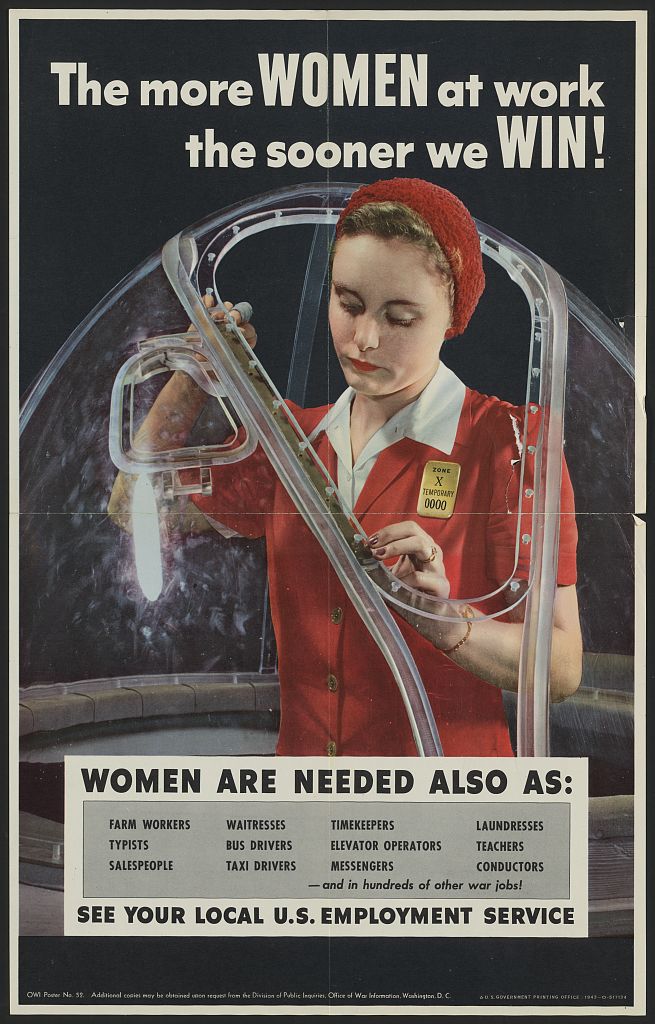
The More Women at Work the Sooner We Win!: a young woman in a red dress and snood fits a frame inside an aircraft nose dome

Production. The Office of War Information issued this 1943 labour-recruitment poster (OWI Poster No. 52), based on a photograph by Alfred T. Palmer. The ordinary, neatly dressed worker makes factory work look like a normal step for any woman, and "the sooner we win" ties each individual job to the end of the war. That is plain folks and glittering generalities. Read the technique: plain folks.
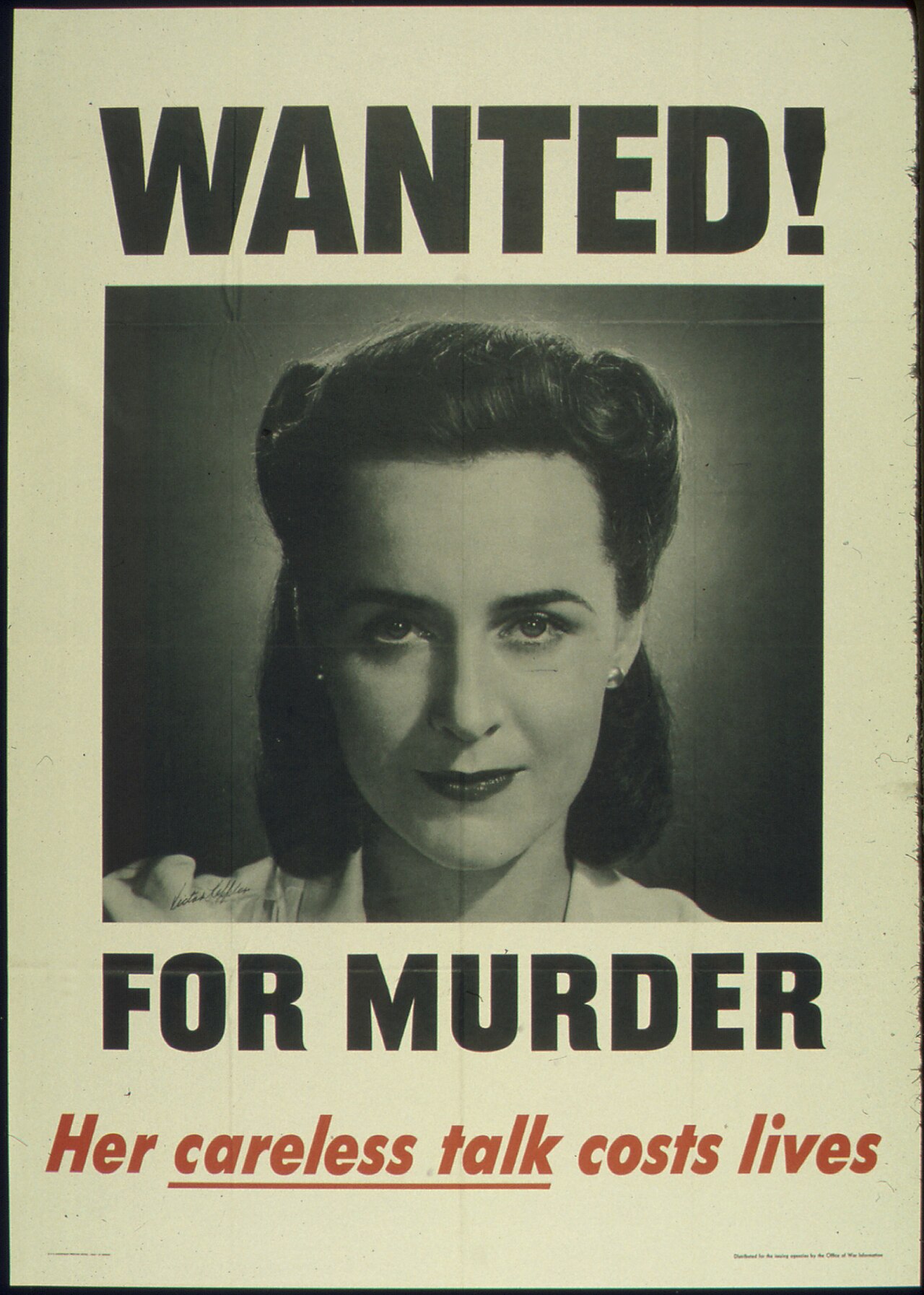
Wanted! For Murder: Her Careless Talk Costs Lives: a glamorous woman in the style of a wanted poster, with drowning soldiers behind her

Security. A government home-front campaign poster in the style of a wanted notice accuses an unnamed, glamorous woman of "murder" for indiscreet talk, with drowning soldiers superimposed behind her. A single social lapse is presented as the sole cause of deaths at sea, and the blame is placed on one civilian, a woman, with no mention of command, weather or enemy action. Read the technique: scapegoating.
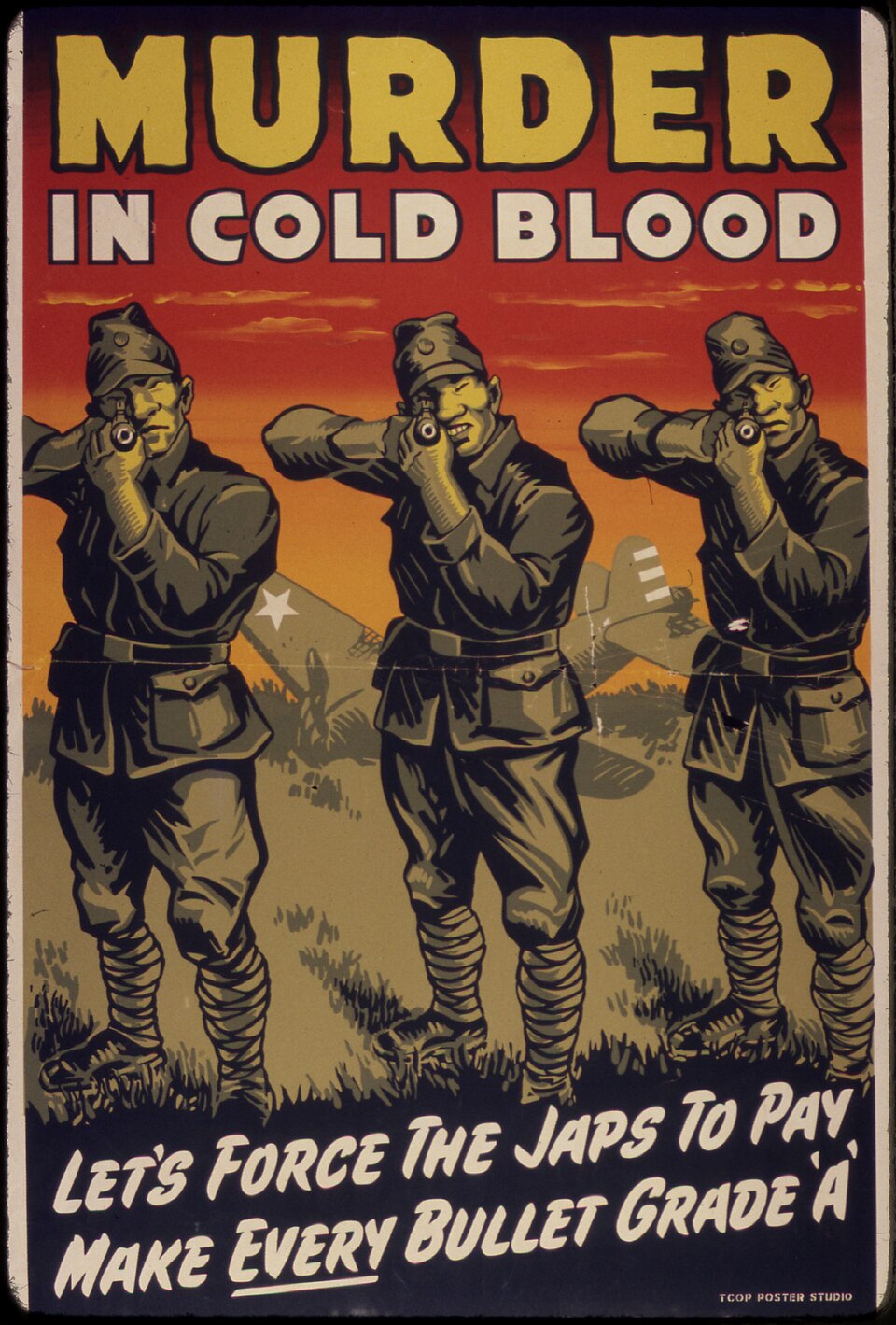
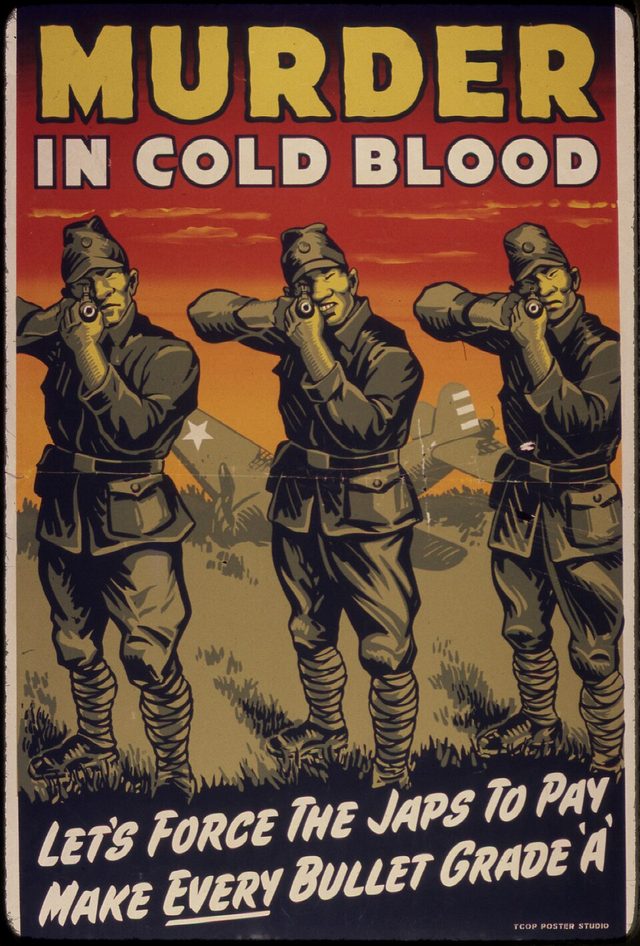
Murder in Cold Blood: Let's Force the Japs to Pay: three soldiers drawn with yellow-green faces aim rifles at the viewer

Hatred of the enemy. This war-plant poster, held by the National Archives, draws three Japanese-style soldiers with yellow-green faces and squinting eyes aiming rifles straight at the viewer, under the headline "Murder in cold blood" and the line "Let's force the Japs to pay. Make every bullet grade A." The poster does not say what event "murder in cold blood" refers to and cites no source for the claim. The slur and the caricature are shown as issued. The collection holds other anti-Japanese posters from the same war, including ones issued by the U.S. Army, and treats them in the same way as hostile posters from every other side. Read the technique: name-calling. More on the war's posters: WW2 propaganda posters.

The Cold War: posters printed for audiences abroad
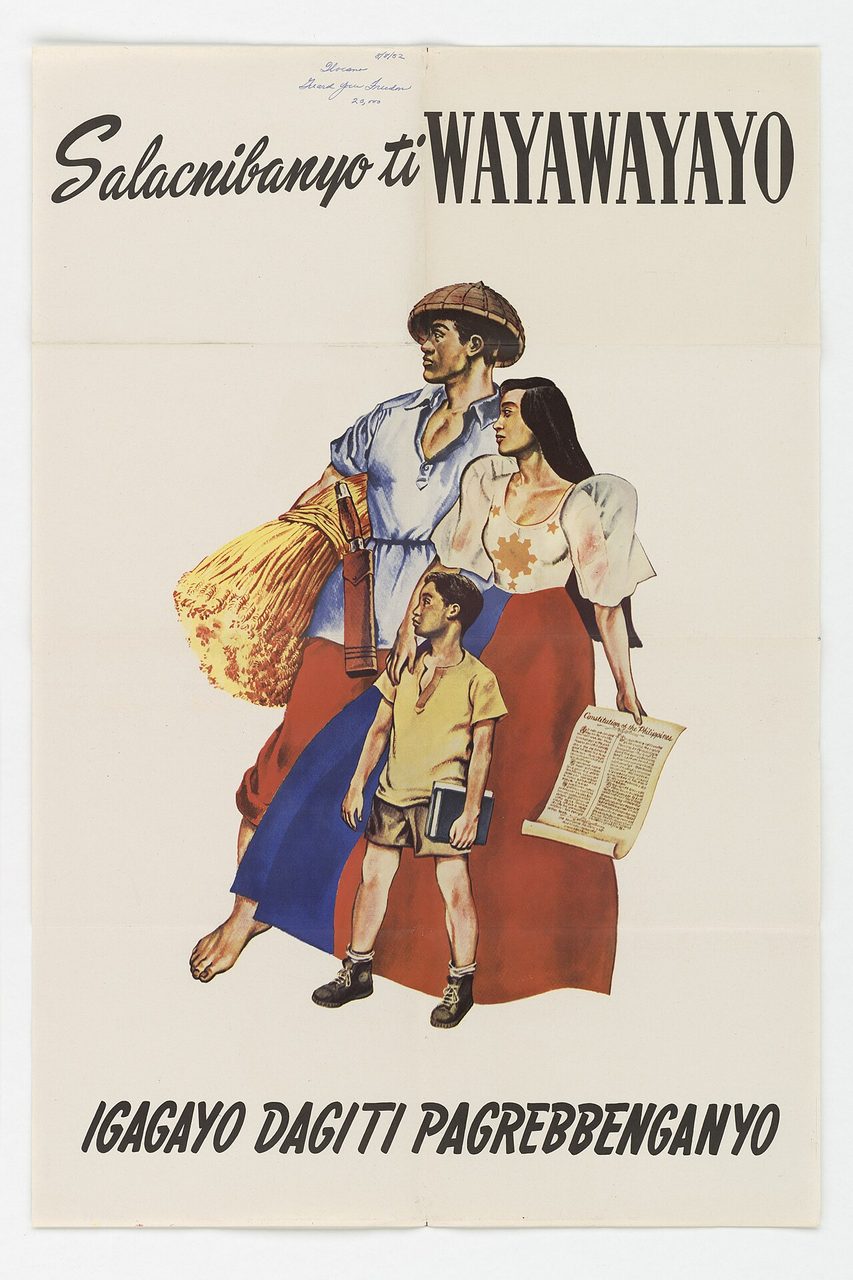
Guard Your Freedom: an Ilocano-language poster with a farmer, a woman holding a scroll marked Constitution of the Philippines, and a boy with a schoolbook

In the early 1950s the U.S. Department of State's information service printed posters in Asian languages for local distribution. This Ilocano-language poster of 1952 shows a farmer, a woman holding a scroll marked "Constitution of the Philippines" and a boy with a schoolbook before the red and blue of the Philippine flag. "Guard your freedom" and "carry out your duties" are virtue slogans, and the flag colours lend the national symbols' prestige to the message. The poster does not say what the freedom is to be guarded against. A pencil note on the National Archives copy appears to record a print run of 23,000. For other posters in this series, and for Soviet and Chinese posters of the same decades, see Cold War propaganda posters. Read the technique: transfer.

Posters from inside the United States that opposed official policy

Americans also made propaganda against their own government's actions, and the collection records it on the same terms.
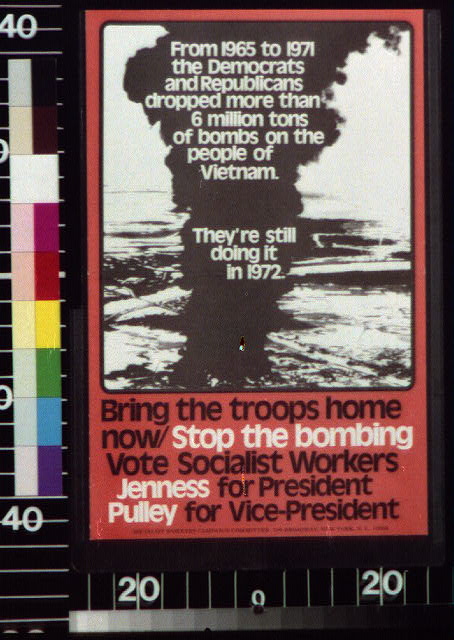
Bring the troops home now, stop the bombing: a Socialist Workers Party electoral poster with a photograph of a smoke column

A 1972 Socialist Workers Party electoral poster, from the Library of Congress's Yanker collection, states that "from 1965 to 1971 the Democrats and Republicans dropped more than 6 million tons of bombs on the people of Vietnam", and asks for votes for Jenness and Pulley. The tell is a single statistic attributed to both major parties with no source or breakdown, used to support a vote appeal. Read the technique: card stacking.

Content note: Memorial poster for a man killed in a police raid, using the hostile label 'fascist pigs' for police. This object is shown as it was published. Why You can jail a revolutionary, but you can't jail the revolution: a memorial poster for Fred Hampton
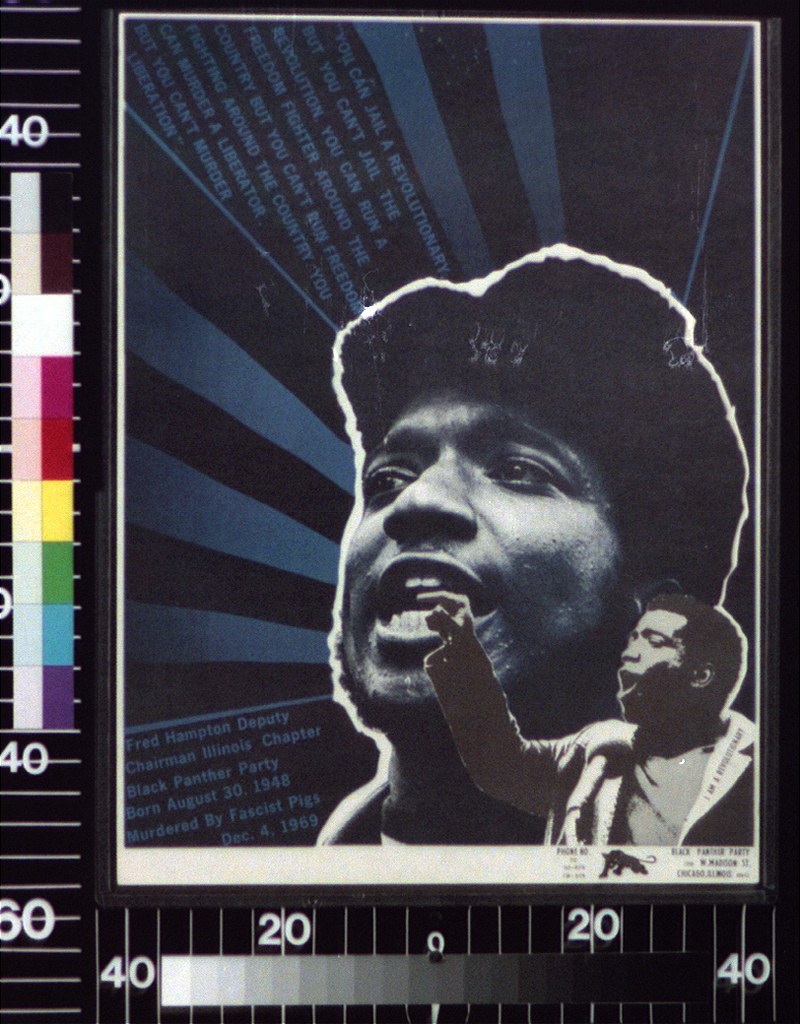
A 1969 Black Panther Party memorial poster for Fred Hampton, also from the Yanker collection, pairs his portrait with the line "You can jail a revolutionary, but you can't jail the revolution" and says he was "Murdered by fascist pigs Dec. 4, 1969", a hostile label for the police involved in the raid. The label is shown as printed, and the page makes no ruling on the event the poster describes. Read the technique: name-calling.

How the American record compares

The collection holds more American posters than posters from any other single country. That count reflects what the archive has found and been able to host with a clear rights basis; it is not a claim that American output was larger or smaller than another country's. Differences of scale, intent and context are recorded where the record supports them. For instance, American wartime posters came from a mix of federal agencies, military branches and private firms, and the same techniques appear in the British, German, Japanese and Soviet material in the collection. A reader comparing sides should use the technique pages and the per-object caption, which say what each picture does, and not the poster count.

Browse American propaganda posters

The grid below shows posters in the collection issued in the United States or by U.S. bodies abroad. Each opens an object page with the holding institution, a link to the original record, a transcription of any text and the rights basis for hosting. For every object, not only posters, use the full collection, filtered by technique, era, country and medium.

Sources and rights

Posters on this page come from the Library of Congress, the U.S. National Archives and Wikimedia Commons. Where a rights statement is limited, the object page says so; for example, the Library's Yanker collection items carry the advisory "No known restrictions on publication", and the 1942 war-plant poster's issuer was not verified. Transcriptions are verbatim and translations are labelled.
American posters in the collection

Showing 60 of 256 objects. Filter the whole collection.
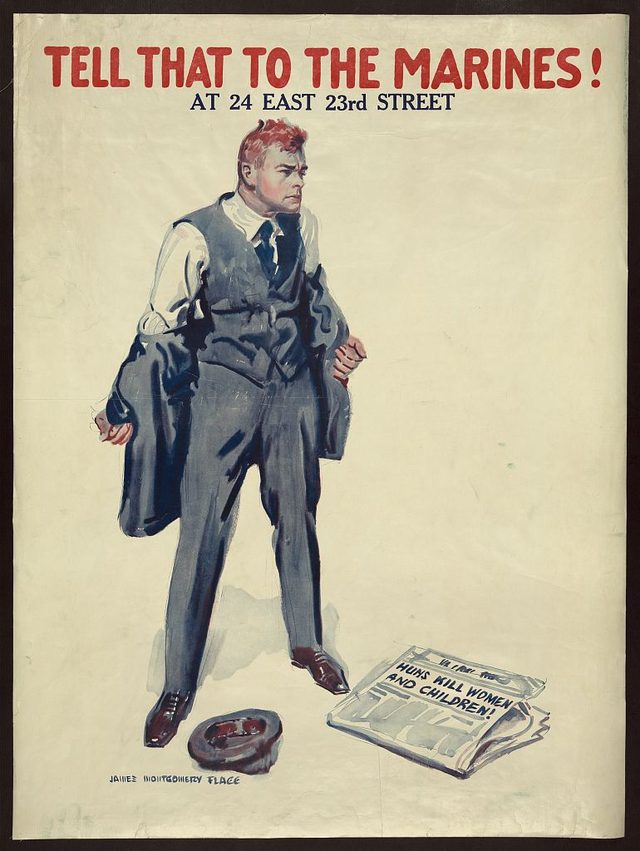
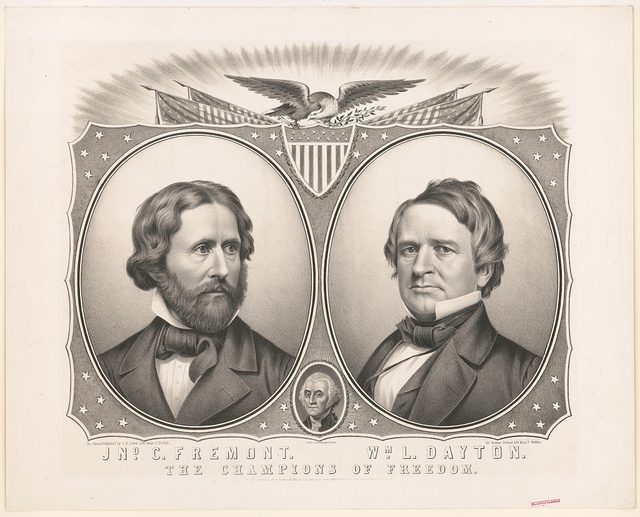
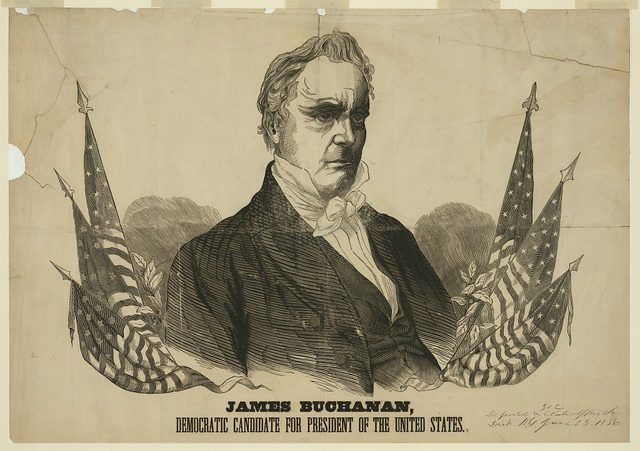
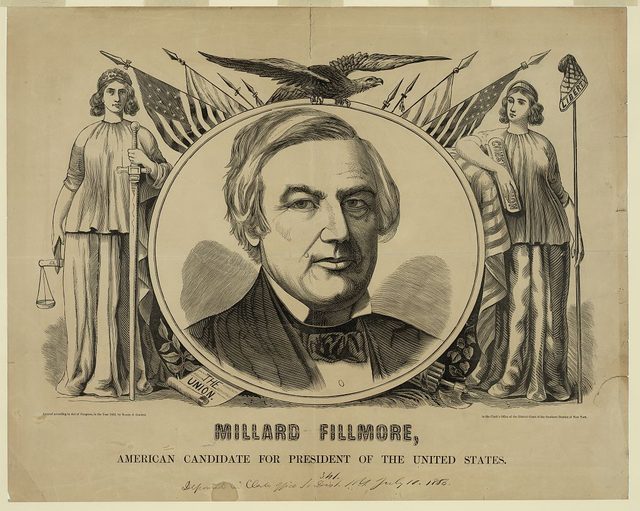
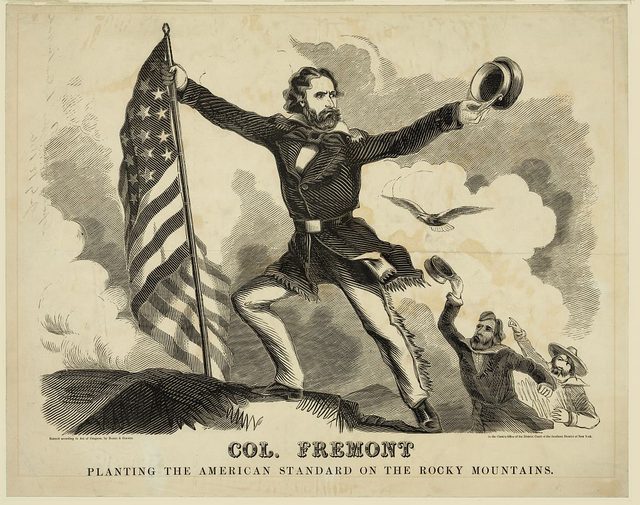
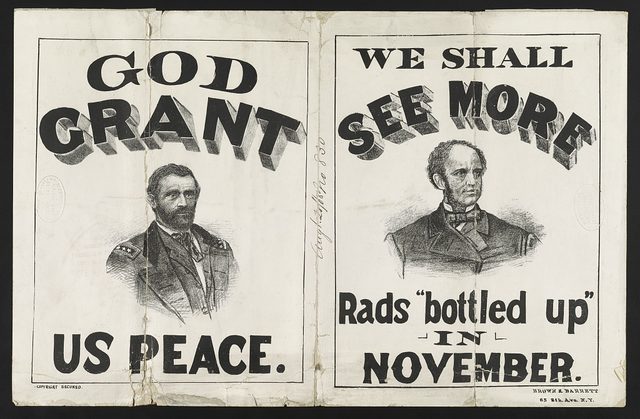
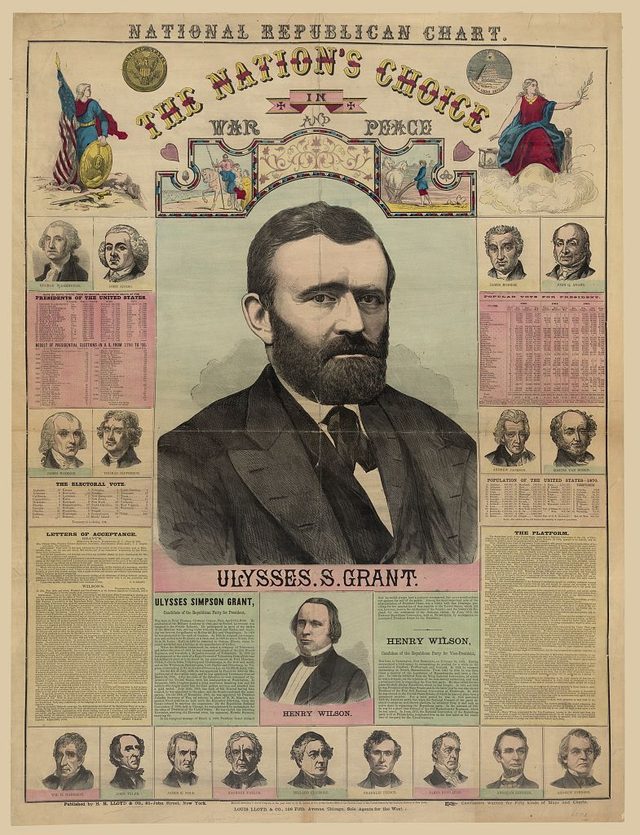
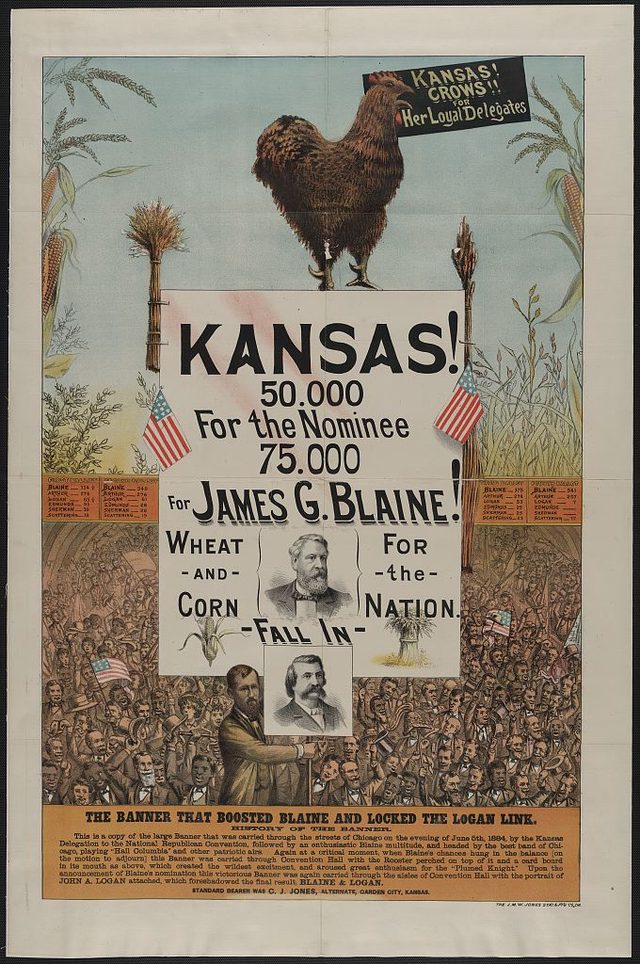
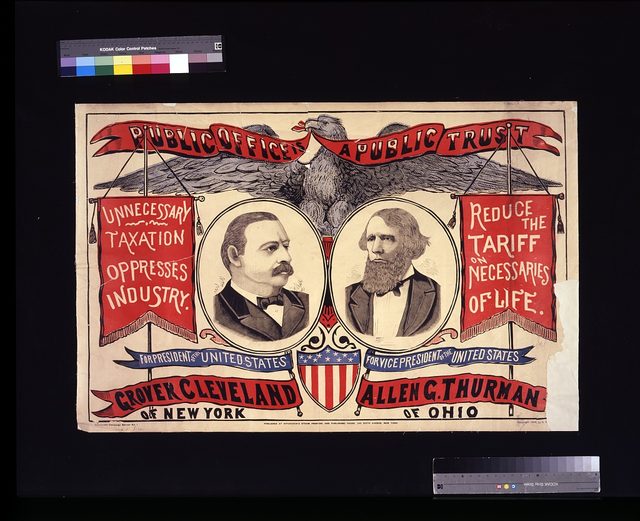
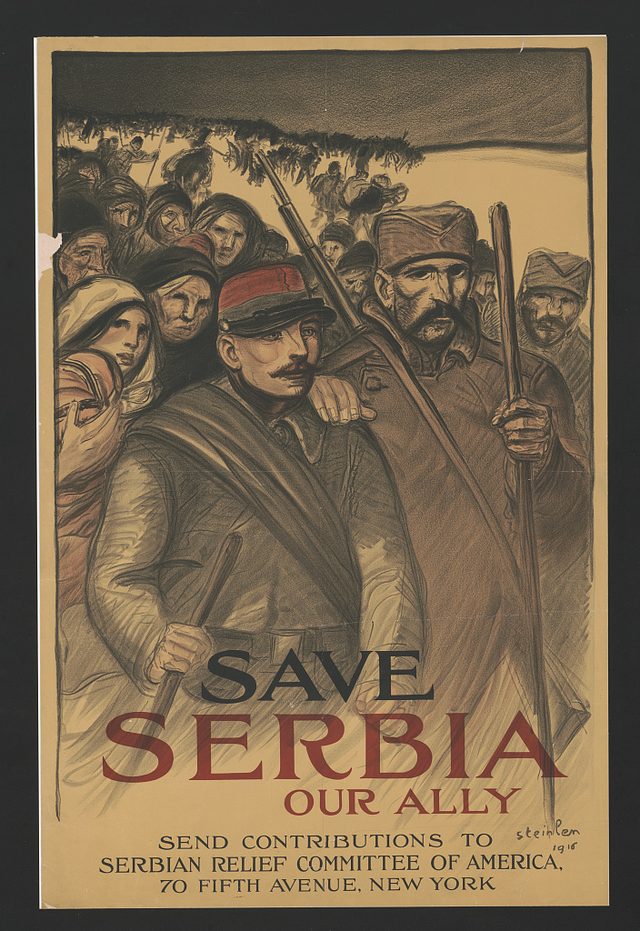
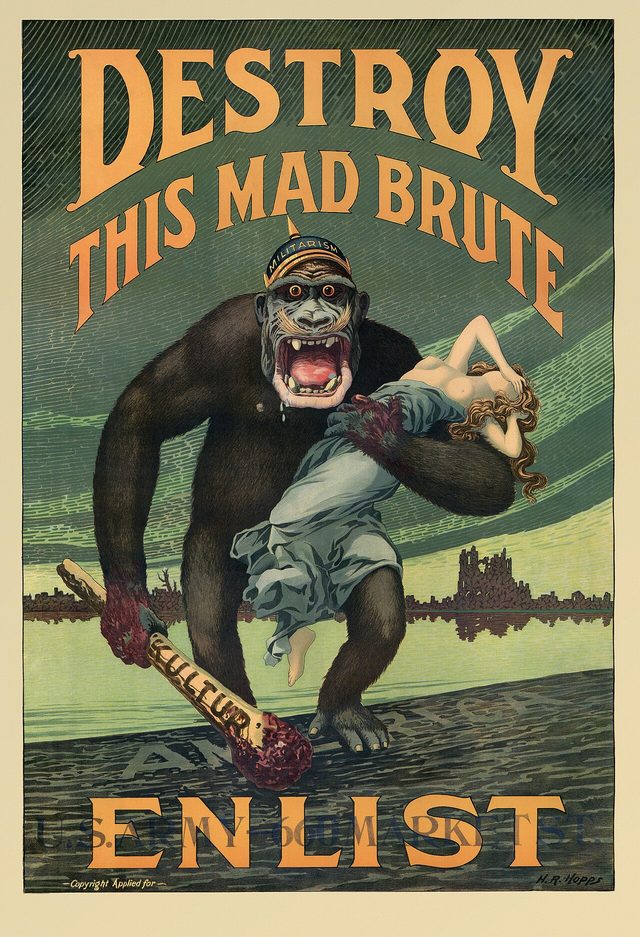
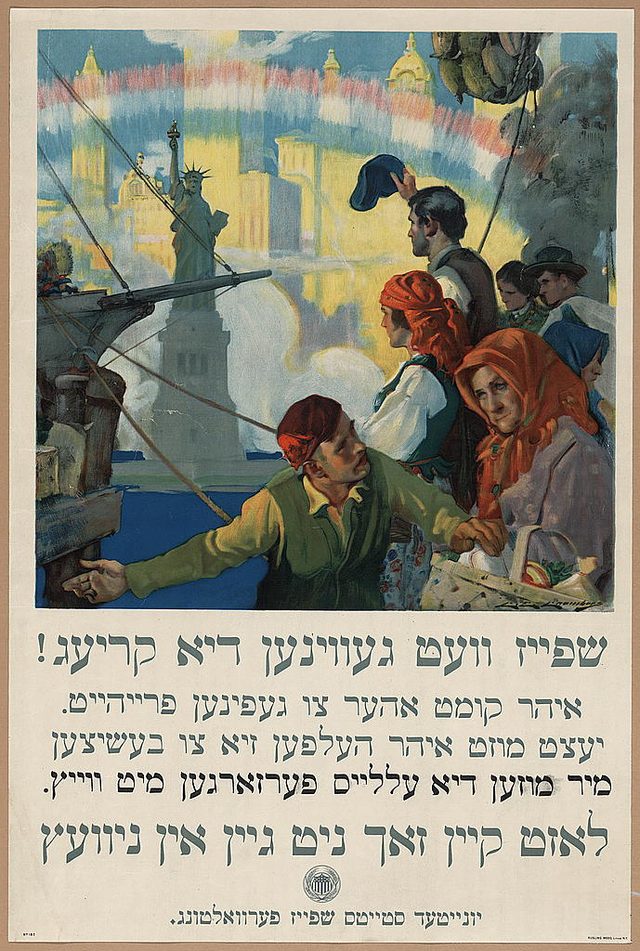
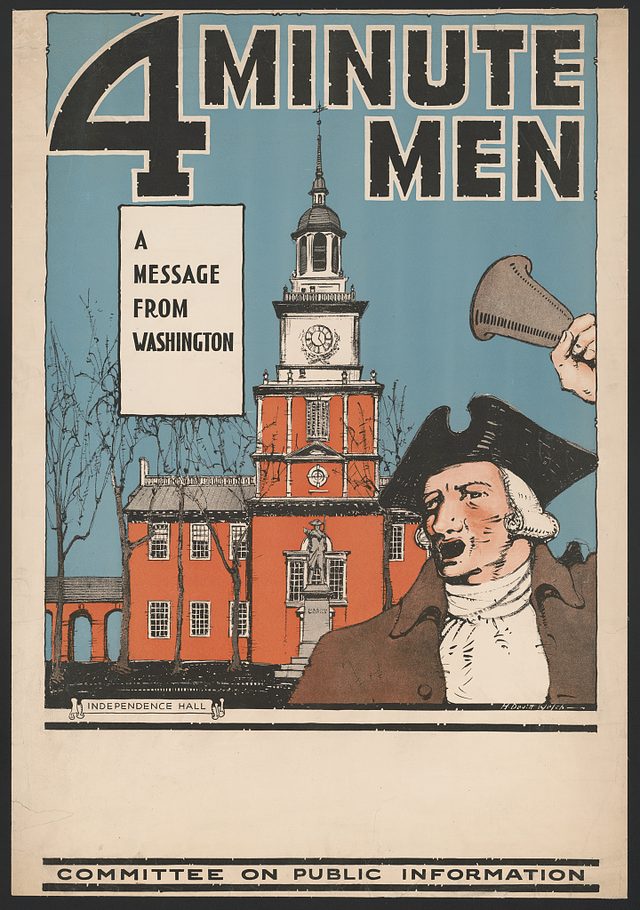
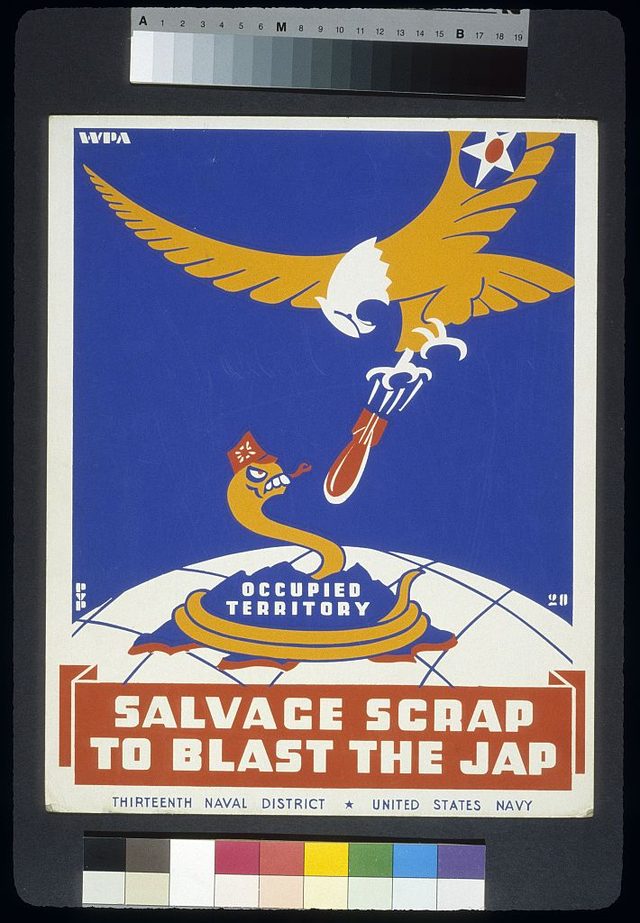
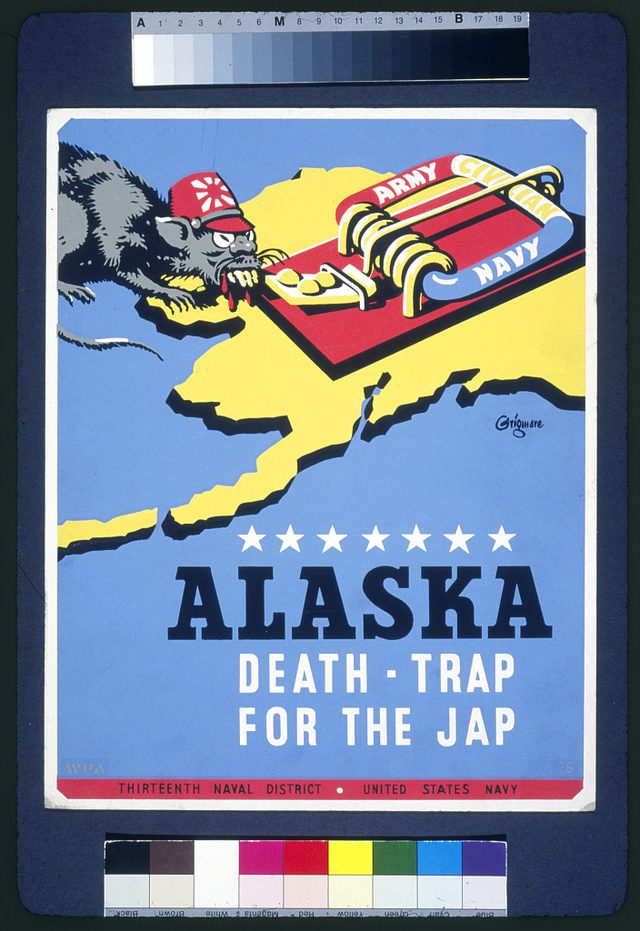
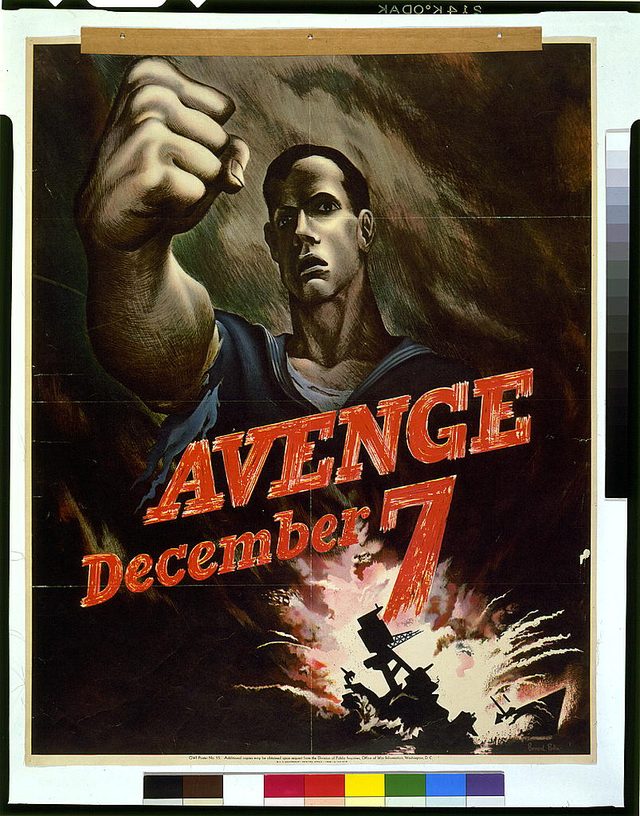
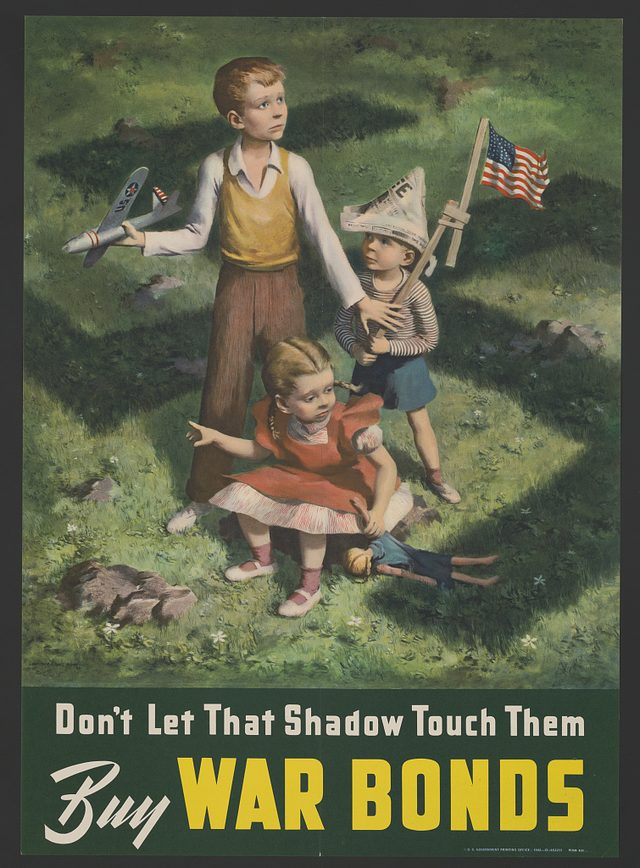
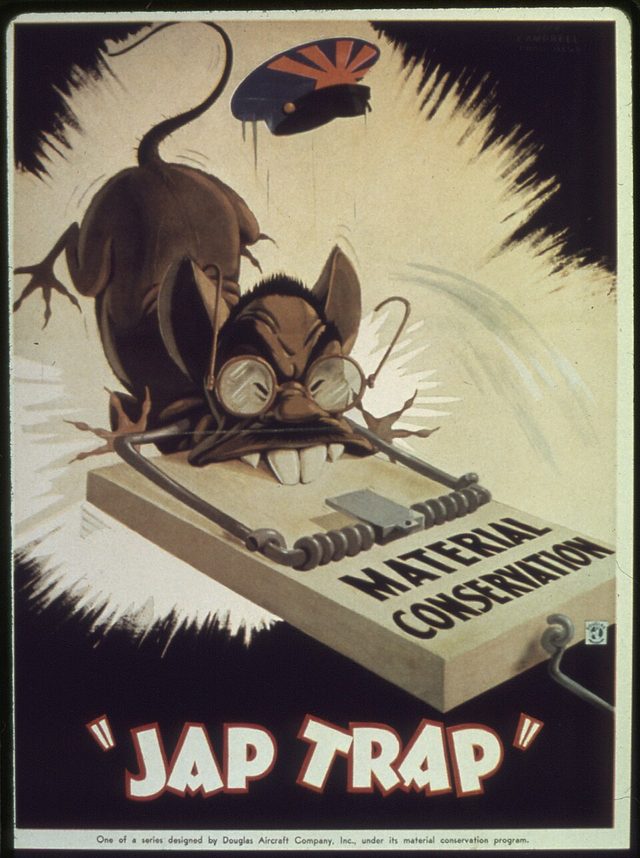
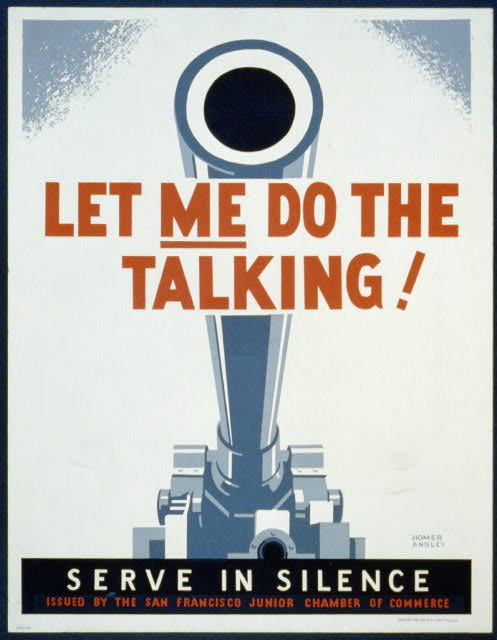
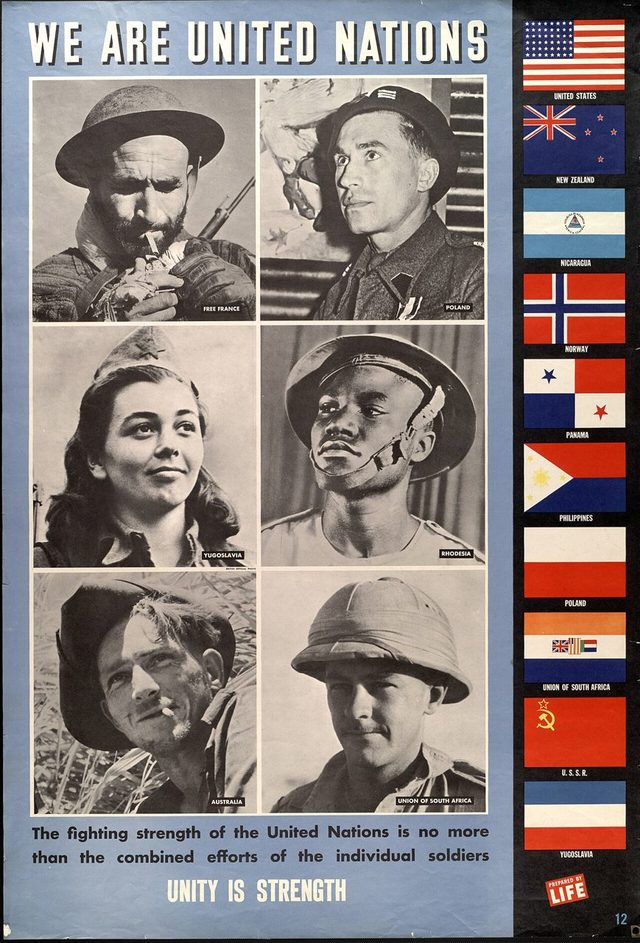
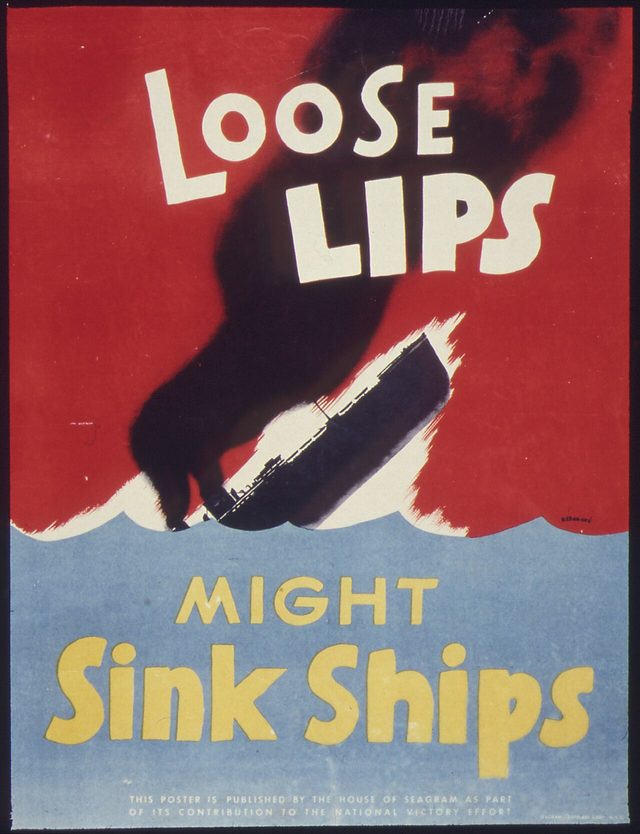
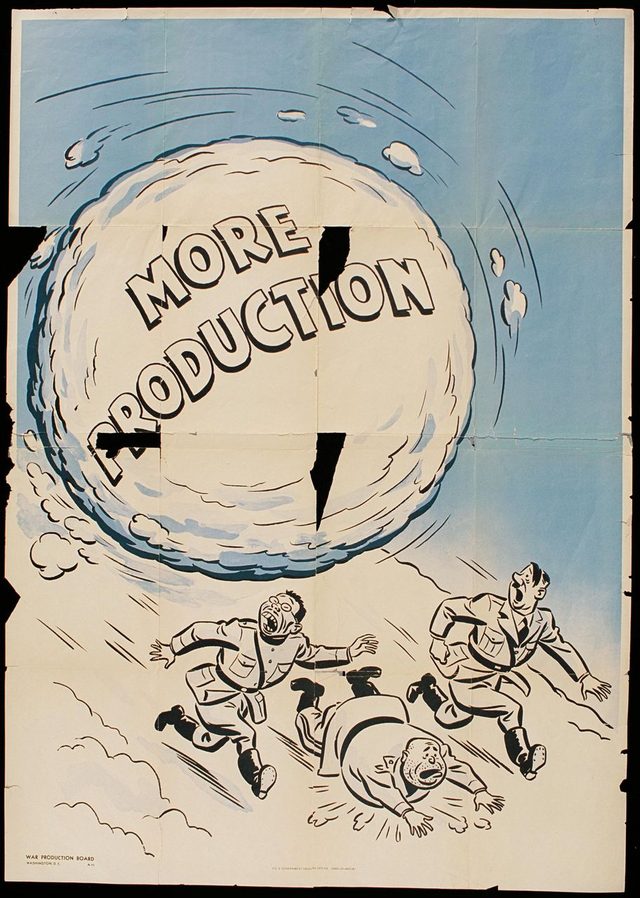
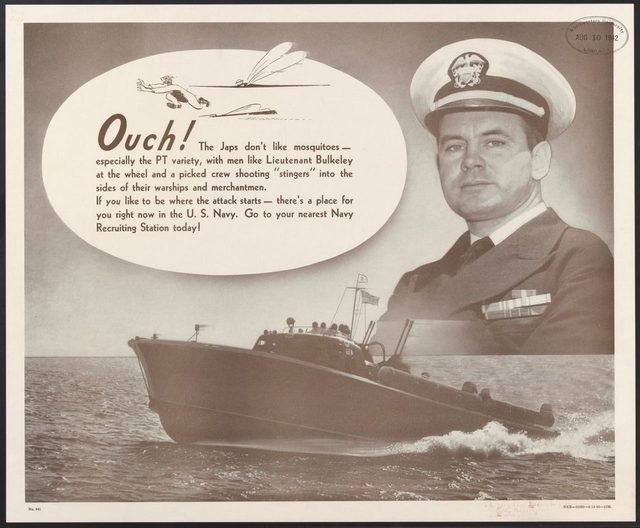
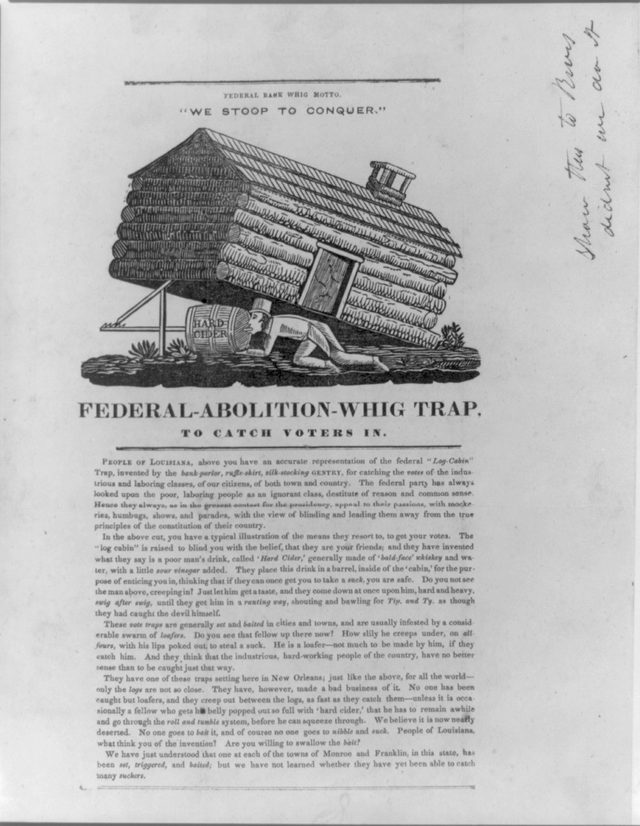
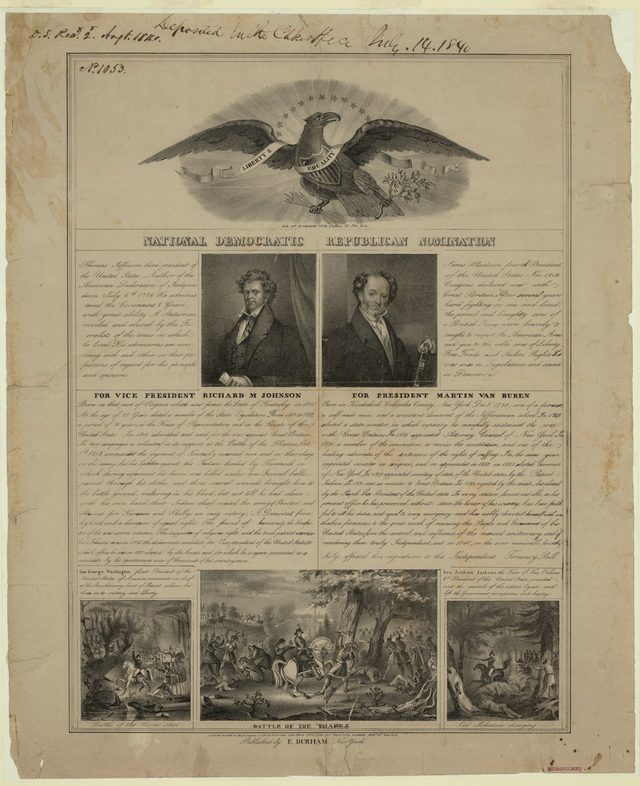
'Federal-Abolition-Whig Trap, to Catch Voters In', New Orleans broadside, 1840United States'Federal-Abolition-Whig Trap, to Catch Voters In', New Orleans broadside, 18401840 · Name-calling'National Democratic Republican Nomination' broadside for Van Buren and Johnson, 1840United States'National Democratic Republican Nomination' broadside for Van Buren and Johnson, 18401840 · Transfer, Glittering generalitiesContent note"The Champions of Freedom" Frémont and Dayton banner (Buffalo, 1856)United States"The Champions of Freedom" Frémont and Dayton banner (Buffalo, 1856)1856 · Glittering generalities, TransferJames Buchanan campaign banner (Baker & Godwin, 1856)United StatesJames Buchanan campaign banner (Baker & Godwin, 1856)Jun 1856 · TransferMillard Fillmore campaign banner (Baker & Godwin, 1856)United StatesMillard Fillmore campaign banner (Baker & Godwin, 1856)Jul 1856 · Transfer"Col. Fremont Planting the American Standard" (Baker & Godwin, 1856)United States"Col. Fremont Planting the American Standard" (Baker & Godwin, 1856)Jul 1856 · TransferGod Grant Us Peace / We Shall See More Rads 'Bottled Up' in NovemberUnited StatesGod Grant Us Peace / We Shall See More Rads 'Bottled Up' in November1868 · Name-callingThe Republican chart. The nation's choice in war and peace Ulysses S. GrantUnited StatesThe Republican chart. The nation's choice in war and peace Ulysses S. Grant1872 · Glittering generalities, TransferThe banner that boosted Blaine and locked the Logan linkUnited StatesThe banner that boosted Blaine and locked the Logan link1884 · Bandwagon, Plain folksPublic office is a public trust: Democratic campaign banner no. 1United StatesPublic office is a public trust: Democratic campaign banner no. 11888 · Glittering generalities, TransferProtection to home industry 1888United StatesProtection to home industry 1888Aug 18, 1888 · Transfer, Plain folksTariff reform. Cleveland and ThurmanUnited StatesTariff reform. Cleveland and ThurmanSep 17, 1888 · Glittering generalities, TransferFor President Grover Cleveland, for Vice-President Adlai E. StevensonUnited StatesFor President Grover Cleveland, for Vice-President Adlai E. Stevenson1892 · Glittering generalities, TransferDemocratic nominees Bryan and Sewall broadsideUnited StatesDemocratic nominees Bryan and Sewall broadside1896 · Transfer'Protection and sound money' shield placardUnited States'Protection and sound money' shield placard1896 · TransferThe Issue - 1900. Liberty. Justice. Humanity. W. J. BryanUnited StatesThe Issue - 1900. Liberty. Justice. Humanity. W. J. Bryan1900 · Glittering generalities, Transfer, Fear appealWm. McKinley, ProsperityUnited StatesWm. McKinley, Prosperity1900 · Transfer, Glittering generalitiesThe Real Issue: McKinley Was Right in 1896United StatesThe Real Issue: McKinley Was Right in 18961900 · Card stackingMcKinley Was Right (poster: 1896 poverty, 1900 prosperity)United StatesMcKinley Was Right (poster: 1896 poverty, 1900 prosperity)1900 · Card stacking, Glittering generalitiesRing Again the Liberty Bell in 1900 (Bryan poster)United StatesRing Again the Liberty Bell in 1900 (Bryan poster)1900 · Transfer, Glittering generalitiesRoosevelt in Africa (Selig film advertisement, The Moving Picture World, 30 April 1910)United StatesRoosevelt in Africa (Selig film advertisement, The Moving Picture World, 30 April 1910)Apr 30, 1910 · Transfer, BandwagonEnlistUnited StatesEnlist1915 · Fear appealContent noteSave Serbia our ally: Serbian Relief Committee of America posterUnited StatesSave Serbia our ally: Serbian Relief Committee of America poster1916 · TransferDestroy This Mad Brute — EnlistUnited StatesDestroy This Mad Brute — Enlist1917 · Fear appeal, Scapegoating, TransferContent noteשפייז וועט געווינען דיא קריעג! (Food Will Win the War!), Yiddish editionUnited Statesשפייז וועט געווינען דיא קריעג! (Food Will Win the War!), Yiddish edition1917 · Transfer4 Minute Men: A Message from WashingtonUnited States4 Minute Men: A Message from Washington1917 · TransferGee!! I Wish I Were a Man, I'd Join the NavyUnited StatesGee!! I Wish I Were a Man, I'd Join the Navy1917 · TransferHe Can't Put It OutUnited StatesHe Can't Put It Out1917 · Bandwagon, Name-callingI Want You for U.S. ArmyUnited StatesI Want You for U.S. Army1917 · TransferPutting the mortgage on the cradleUnited StatesPutting the mortgage on the cradle1917 · Fear appealArmia Polska we Francyi (Polish Army in France), recruiting poster by W. T. Benda, 1917United StatesArmia Polska we Francyi (Polish Army in France), recruiting poster by W. T. Benda, 19171917 · TransferBeat Back the Hun with Liberty BondsUnited StatesBeat Back the Hun with Liberty Bonds1918 · Name-calling, Fear appealContent noteThe Greatest Mother in the World: Red Cross Christmas Roll CallUnited StatesThe Greatest Mother in the World: Red Cross Christmas Roll Call1918 · TransferHalt the Hun! Buy U.S. Government Bonds, Third Liberty LoanUnited StatesHalt the Hun! Buy U.S. Government Bonds, Third Liberty Loan1918 · Name-calling, Fear appealContent notePershing Says: The S.O.S. Shares the Success With UsUnited StatesPershing Says: The S.O.S. Shares the Success With Us1918 · TestimonialPershing's CrusadersUnited StatesPershing's Crusaders1918 · TransferRemember Belgium. Buy Bonds. Fourth Liberty LoanUnited StatesRemember Belgium. Buy Bonds. Fourth Liberty Loan1918 · Fear appeal, TransferContent noteSave Your Child from Autocracy and Poverty: Buy War Savings StampsUnited StatesSave Your Child from Autocracy and Poverty: Buy War Savings Stamps1918 · TransferTell That to the Marines!United StatesTell That to the Marines!1918 · Name-callingContent noteThat Liberty Shall Not Perish from the Earth: Buy Liberty BondsUnited StatesThat Liberty Shall Not Perish from the Earth: Buy Liberty Bonds1918 · Fear appeal, TransferAmericans All! Victory Liberty LoanUnited StatesAmericans All! Victory Liberty Loan1919 · Transfer, BandwagonIndia Restores Her War Cripples to Self-Support (Red Cross Institute exhibit poster)United StatesIndia Restores Her War Cripples to Self-Support (Red Cross Institute exhibit poster)1919 · Card stackingBuild the Jewish Homeland Now: Palestine Restoration Fund $3,000,000United StatesBuild the Jewish Homeland Now: Palestine Restoration Fund $3,000,0001919 · TransferSalvage Scrap to Blast the JapUnited StatesSalvage Scrap to Blast the Jap1941 · Name-callingContent note'Como un Solo Hombre' [As One Man]United States'Como un Solo Hombre' [As One Man]1941 · Identity fusion, Glittering generalitiesEl Nuevo Orden... del Eje [The New Order... of the Axis]United StatesEl Nuevo Orden... del Eje [The New Order... of the Axis]1941 · Name-callingContent noteAlaska - Death-Trap for the JapUnited StatesAlaska - Death-Trap for the Jap1942 · Name-callingContent noteAvenge December 7United StatesAvenge December 71942 · TransferDon't Let That Shadow Touch Them: Buy War BondsUnited StatesDon't Let That Shadow Touch Them: Buy War Bonds1942 · Fear appeal, TransferContent noteDrive the Japs from the Aleutians! Our Bullets Will Do It!United StatesDrive the Japs from the Aleutians! Our Bullets Will Do It!1942 · Name-callingContent noteEnemy Ears Are Listening (OWI Poster No. 5)United StatesEnemy Ears Are Listening (OWI Poster No. 5)1942 · Fear appealHe's Watching YouUnited StatesHe's Watching You1942 · Fear appeal, Scapegoating, TransferHit 'Em with Copper, Zinc, LeadUnited StatesHit 'Em with Copper, Zinc, Lead1942 · Name-callingContent note"Jap Trap": Material Conservation (Douglas Aircraft poster)United States"Jap Trap": Material Conservation (Douglas Aircraft poster)1942 · Name-callingContent noteLet Me Do the Talking! Serve in SilenceUnited StatesLet Me Do the Talking! Serve in Silence1942 · TransferWe Are United Nations: Unity Is Strength (Life wartime poster, part 12)United StatesWe Are United Nations: Unity Is Strength (Life wartime poster, part 12)1942 · TransferLoose Lips Might Sink ShipsUnited StatesLoose Lips Might Sink Ships1942 · Fear appeal, Card stackingMore Production (Snowball over the Axis Leaders)United StatesMore Production (Snowball over the Axis Leaders)1942 · Name-callingContent noteMurder in Cold Blood: Let's Force the Japs to Pay (TCOP Poster Studio)United StatesMurder in Cold Blood: Let's Force the Japs to Pay (TCOP Poster Studio)1942 · Name-calling, Fear appealContent noteOuch! The Japs Don't Like MosquitoesUnited StatesOuch! The Japs Don't Like Mosquitoes1942 · Name-calling, TransferContent note