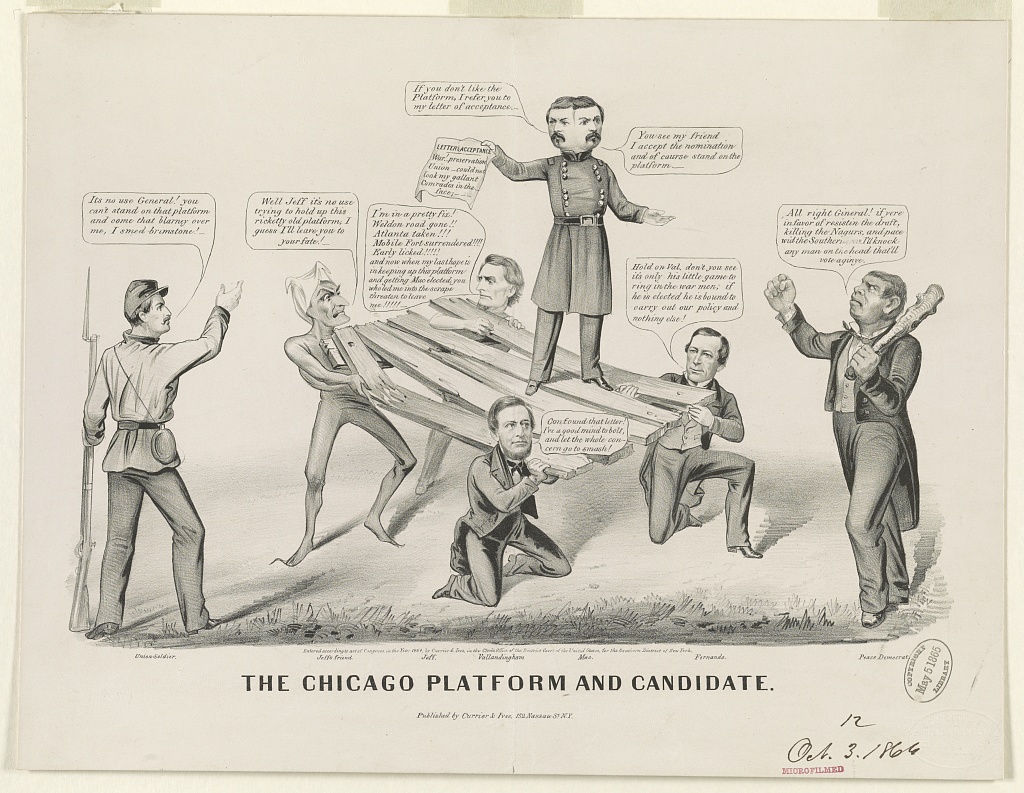
Content note. One 1864 print here, hostile to the Democratic ticket, contains a racial slur and an ethnic caricature. It is shown as issued, with the other prints. Showing an item is not endorsing it.
What are presidential campaign posters?
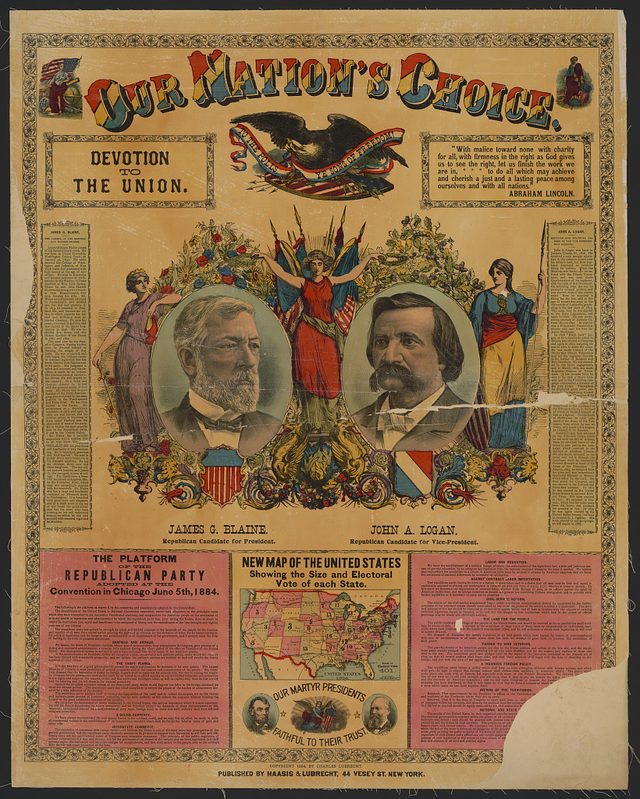
Presidential campaign posters are the banners, broadsides, charts and lithographs that parties and printers sold or displayed to promote a ticket. In this collection they run from the "Log Cabin" campaign of 1840 to the McKinley and Bryan contest of 1900. Most were made by commercial lithographers, not by the candidates, and nearly all are held by the Library of Congress with no known restrictions on publication.
Banners and portraits, 1840 to 1860
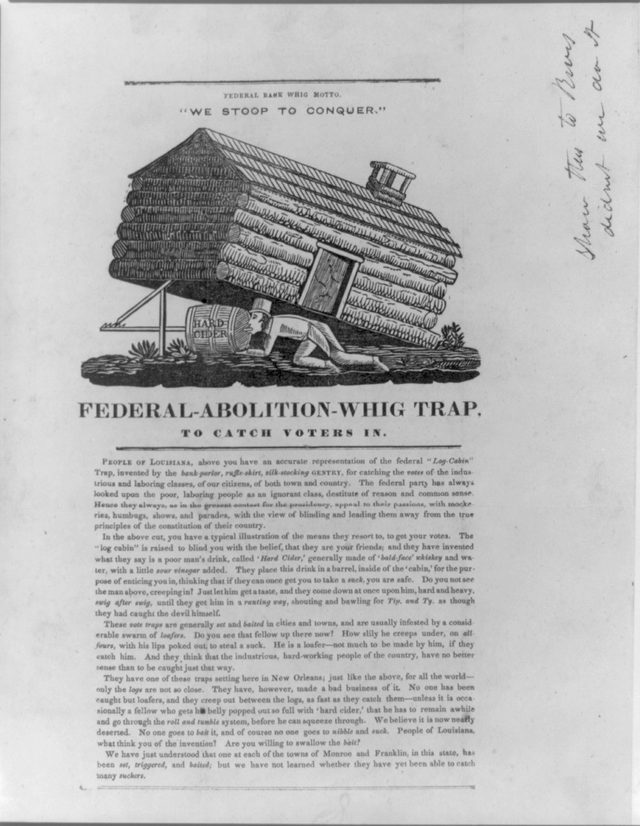
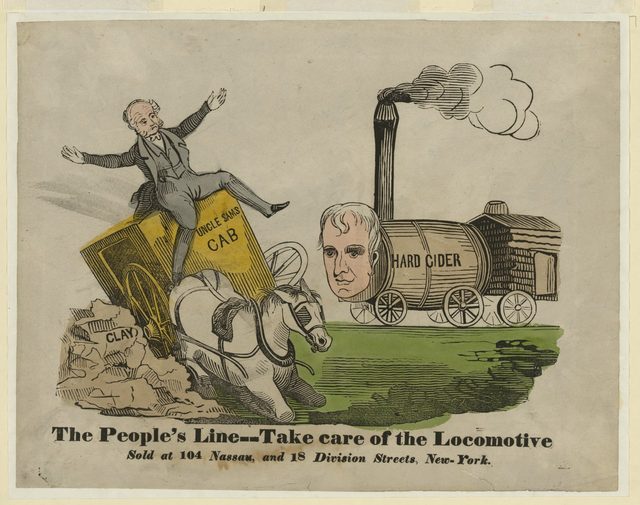
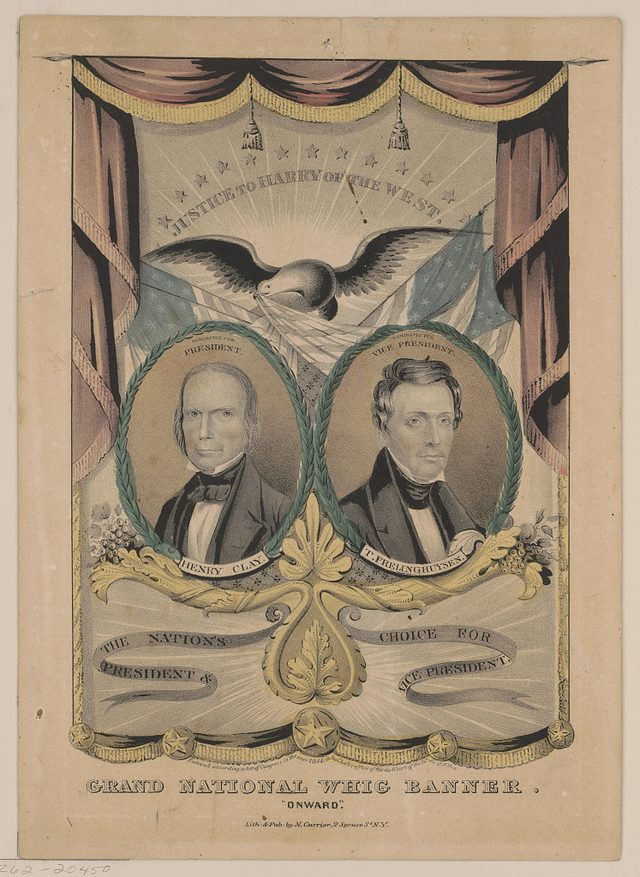
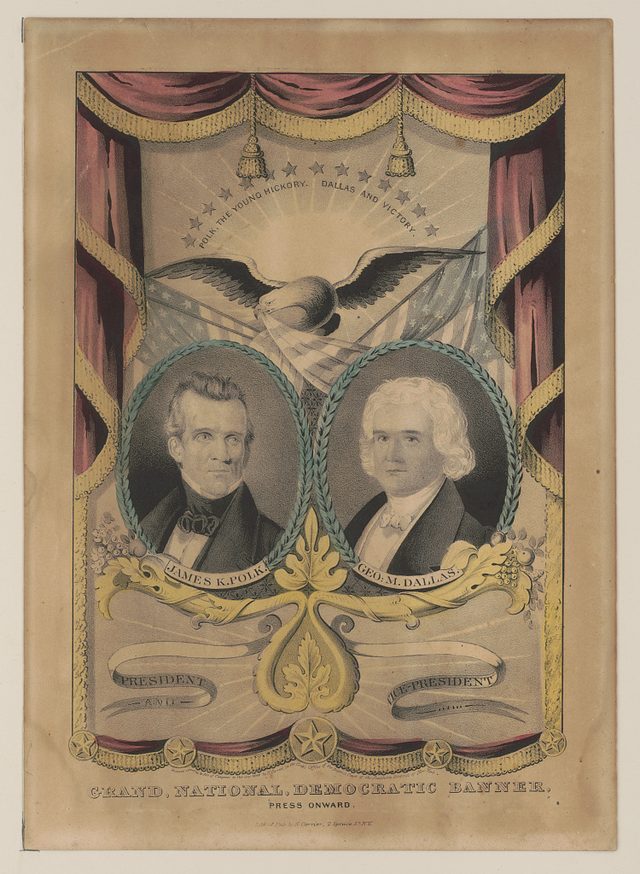
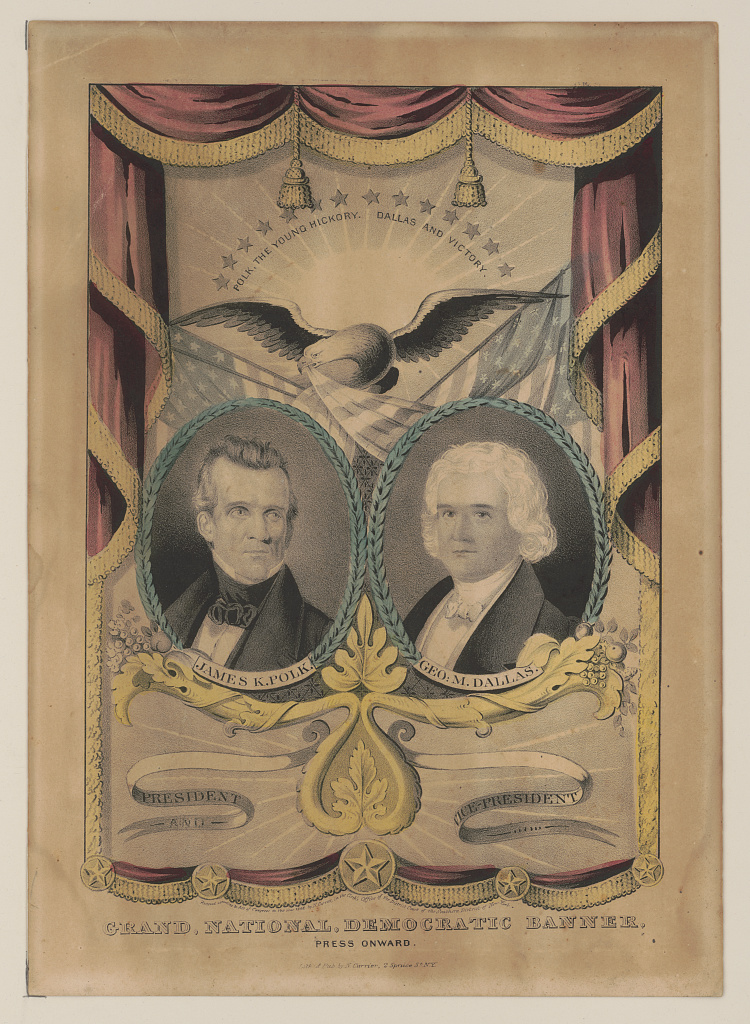
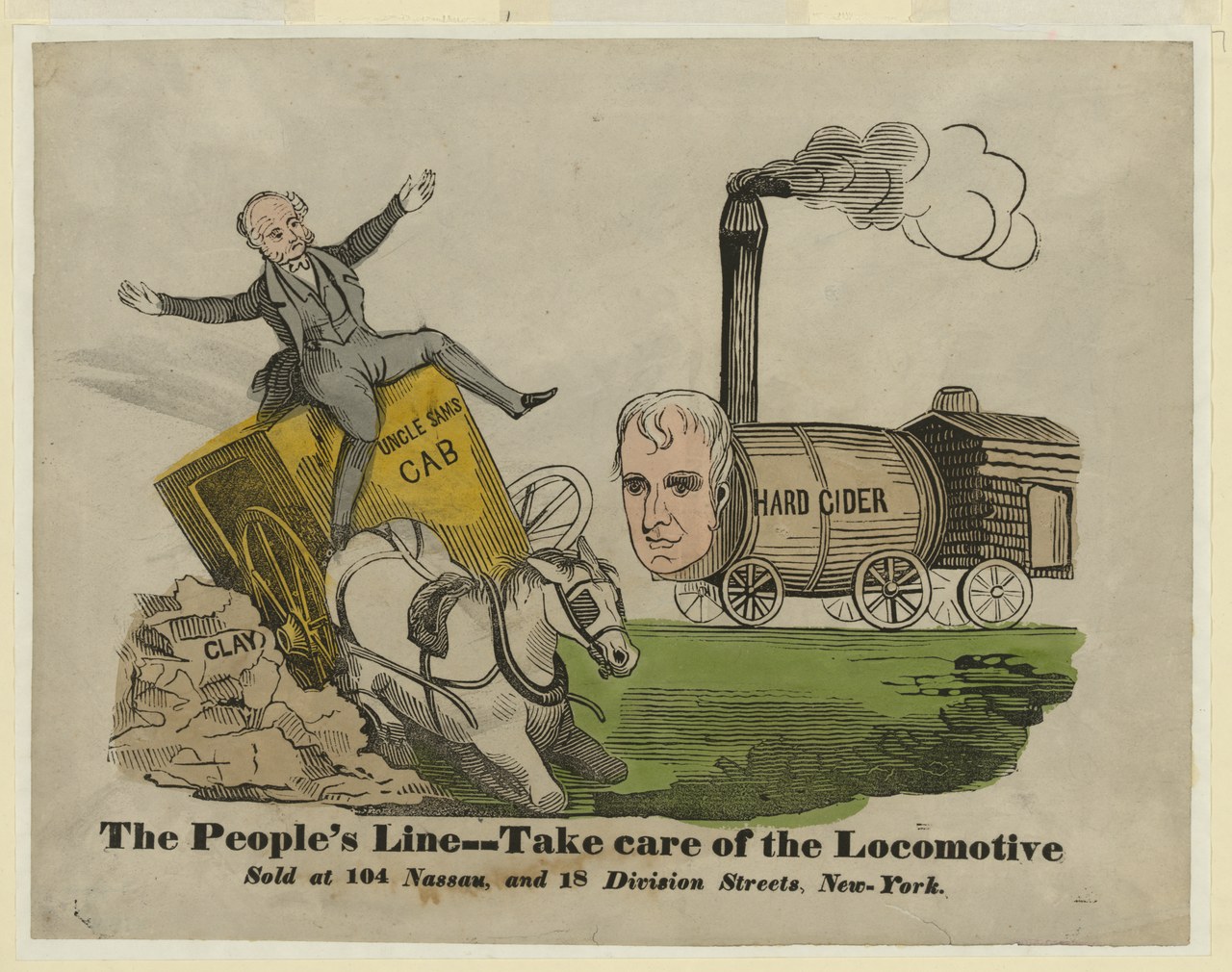
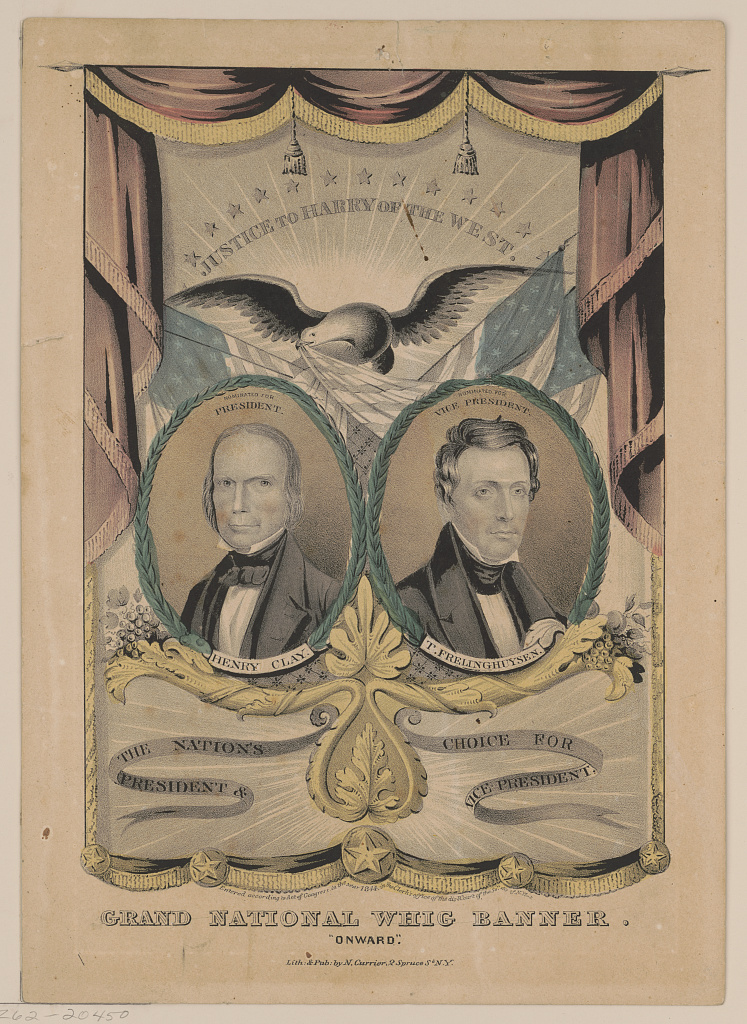
The 1844 banners show how both sides worked. Nathaniel Currier printed a Whig banner for Henry Clay with the line "The Nation's Choice" (Bandwagon), and a near-identical Democratic banner for James K. Polk, whose slogan "Polk, the Young Hickory" borrows Andrew Jackson's nickname (Transfer). The Polk sheet is in the grid. In 1840 the Whig "Log Cabin" campaign drew a hand-coloured woodcut of Harrison as an unstoppable locomotive, and a New Orleans broadside of unnamed origin attacked the same campaign with loaded words such as "ruffle-shirt, silk-stocking GENTRY" (Loaded language).
Explain moreShow less
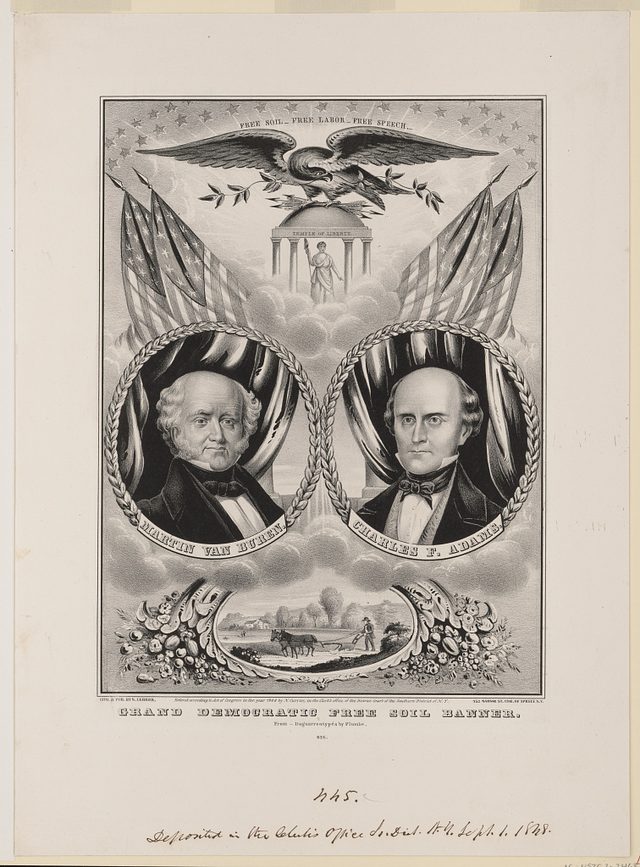
Third parties printed banners too: the 1848 Free Soil ticket of Van Buren and Adams used "Free Soil.-Free Labor.-Free Speech." as its message (Glittering generalities).
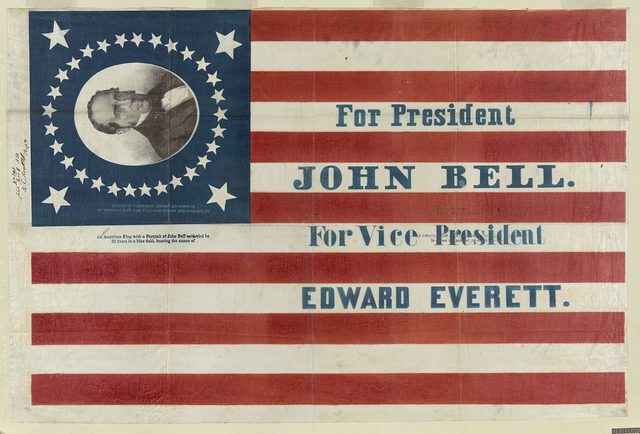
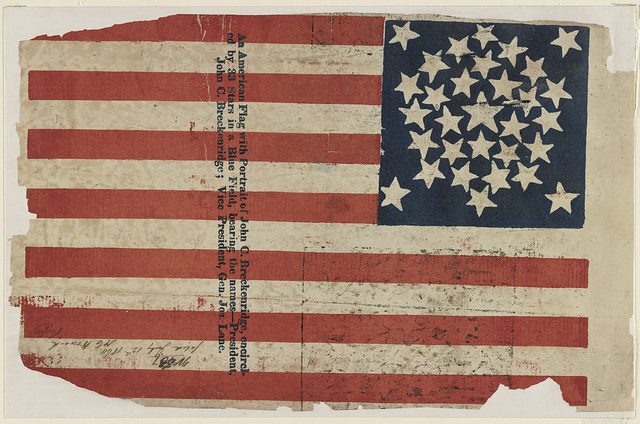
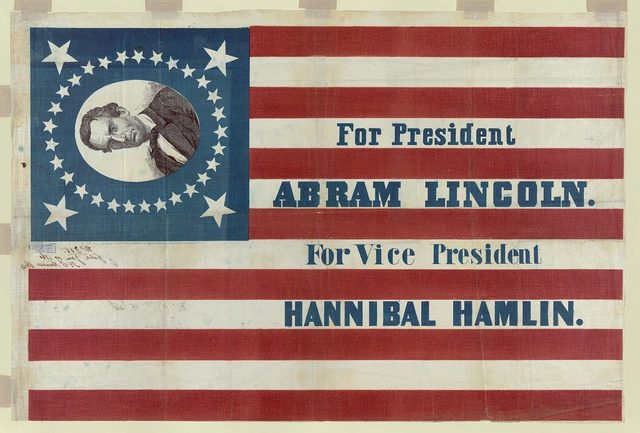
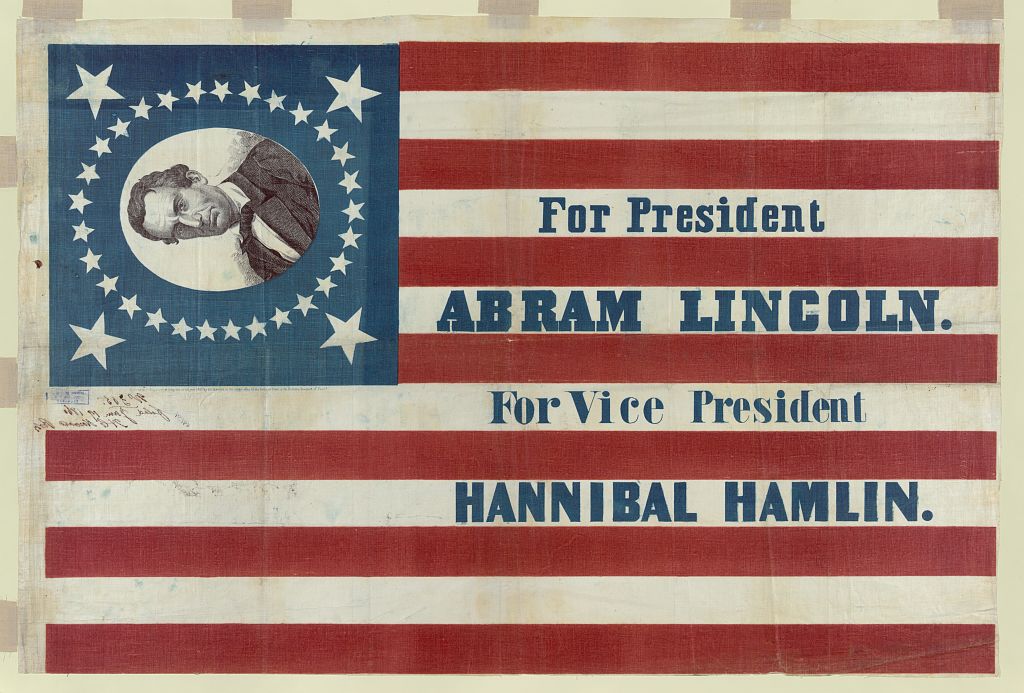
In 1860 the Philadelphia printer H. C. Howard made flag banners for Lincoln, for Bell, and a proof for Breckinridge. The national flag carries one party's ticket in each (Transfer).
Charts, platforms and attack prints, 1864 to 1892
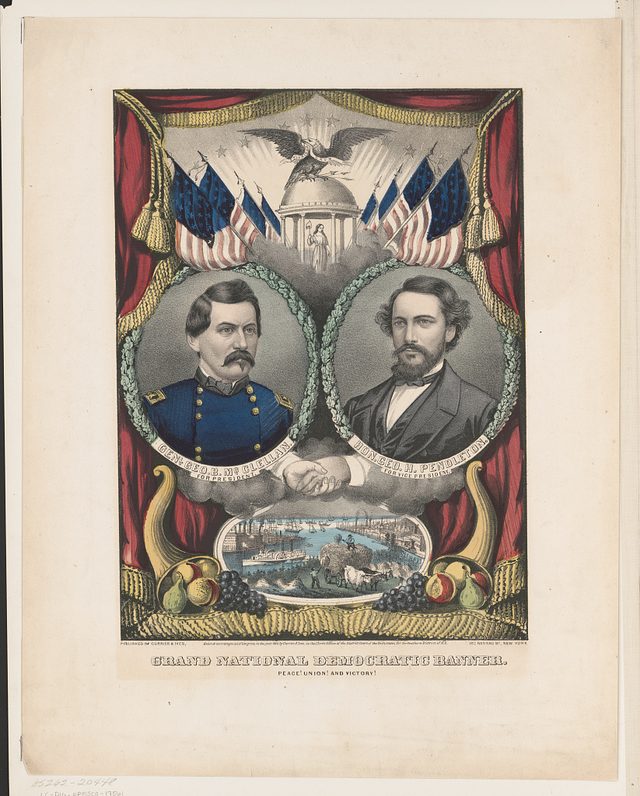
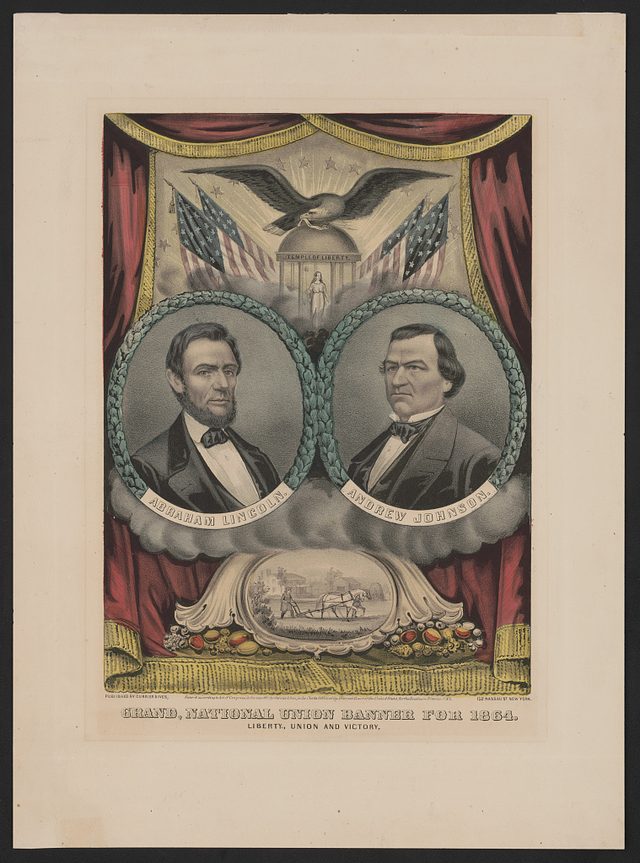
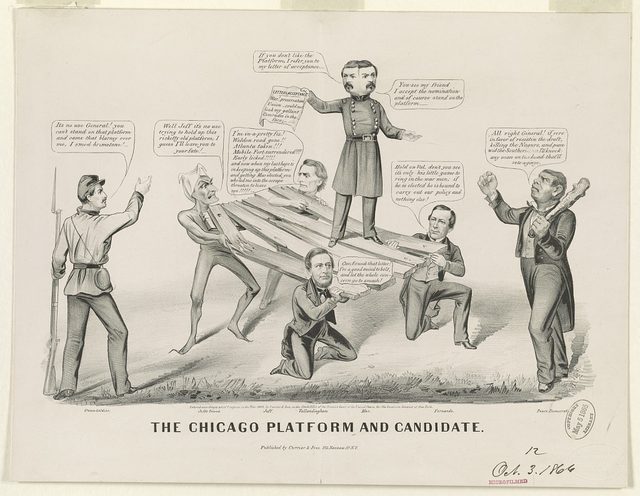
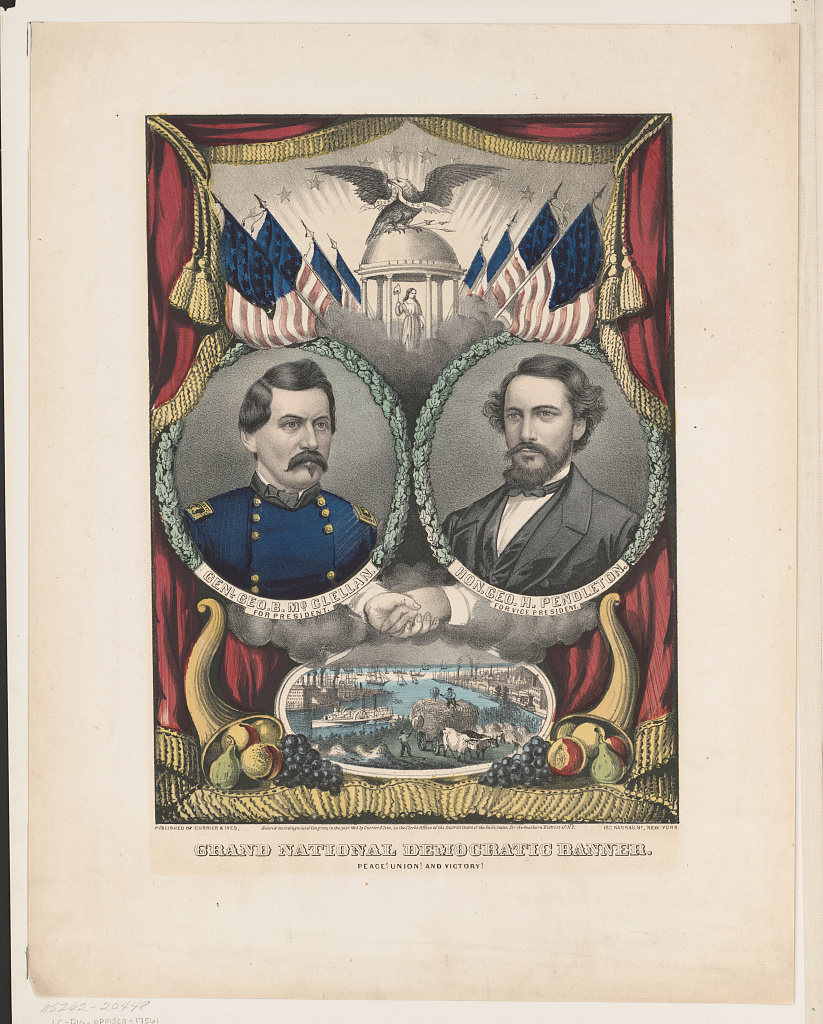
Currier & Ives made the 1864 Democratic banner for McClellan and a near-identical one for Lincoln. A separate Currier & Ives print, The Chicago platform and candidate, attacks McClellan as two-faced on a platform held up by a devil and Jefferson Davis (Name-calling).
Explain moreShow less
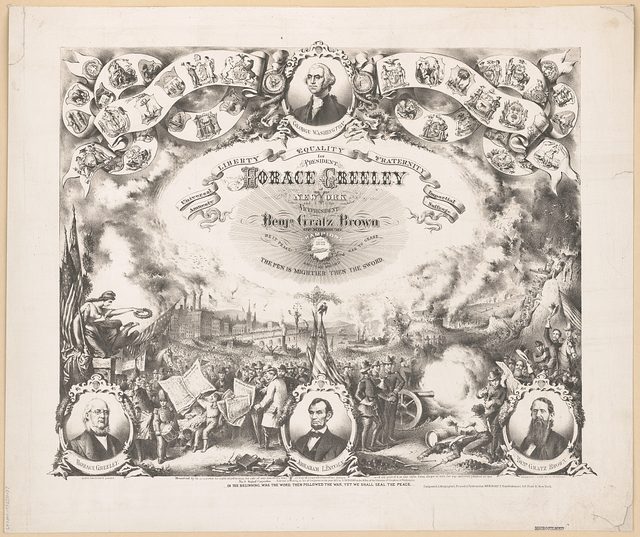
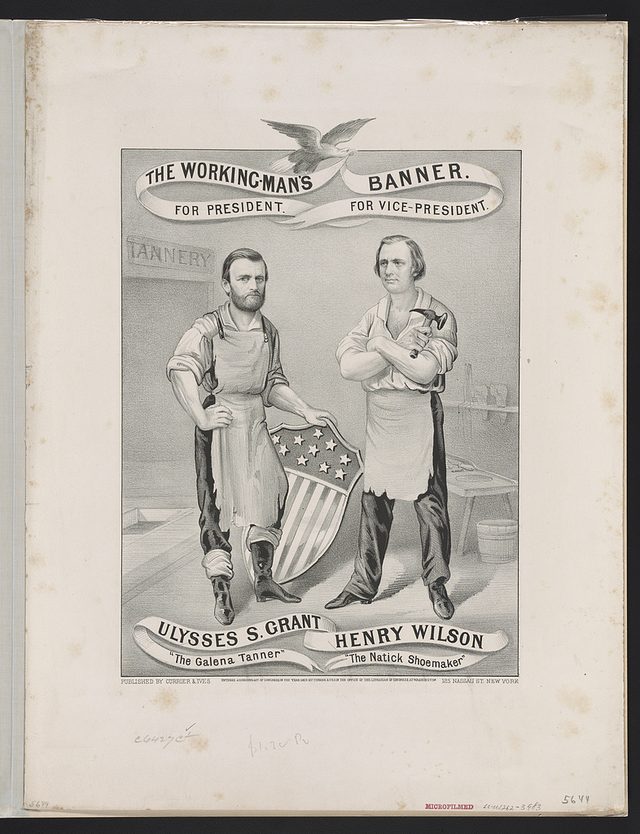
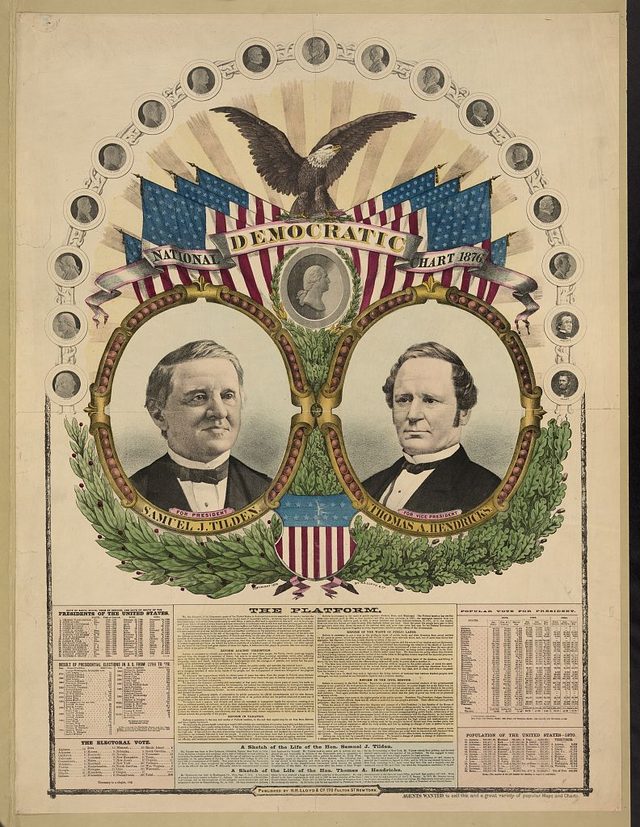
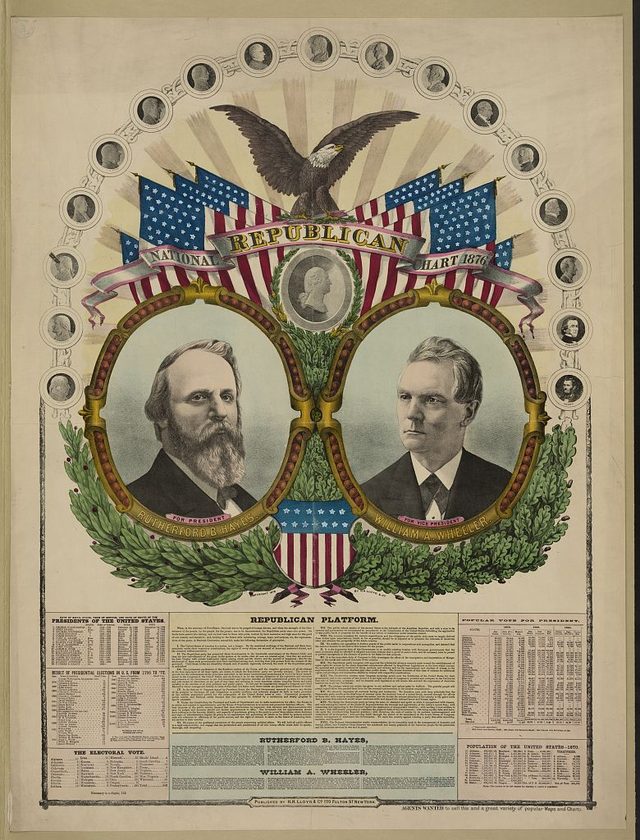
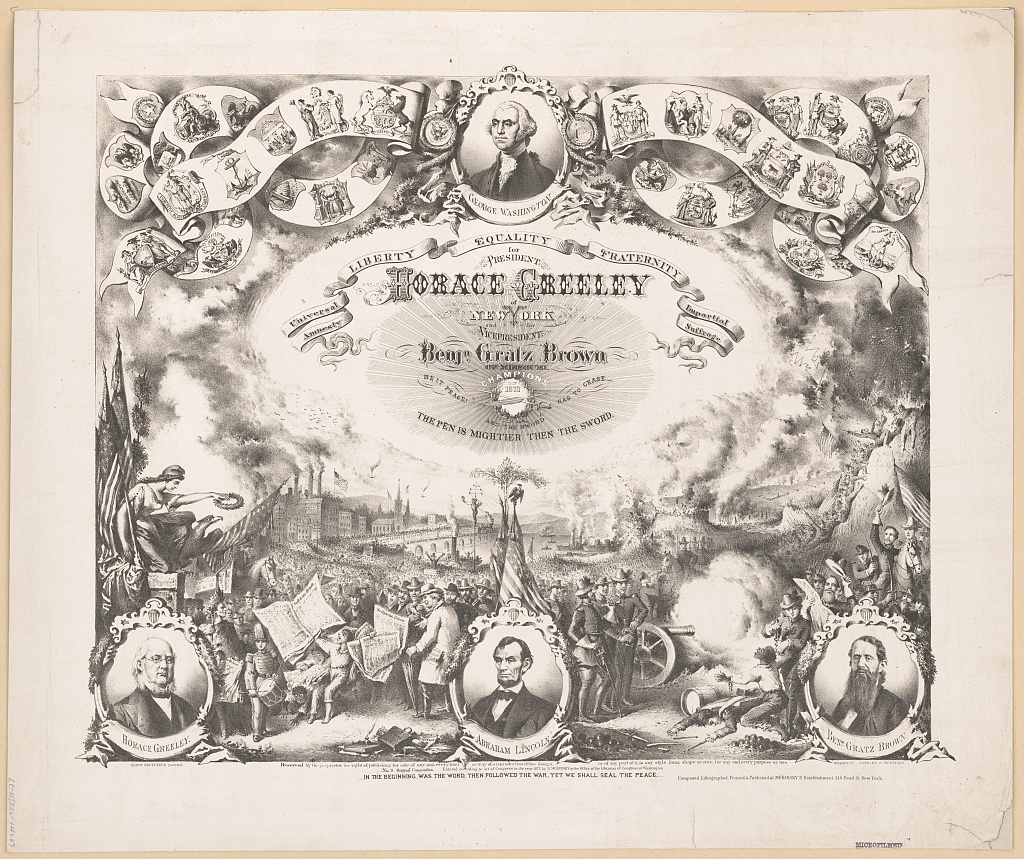
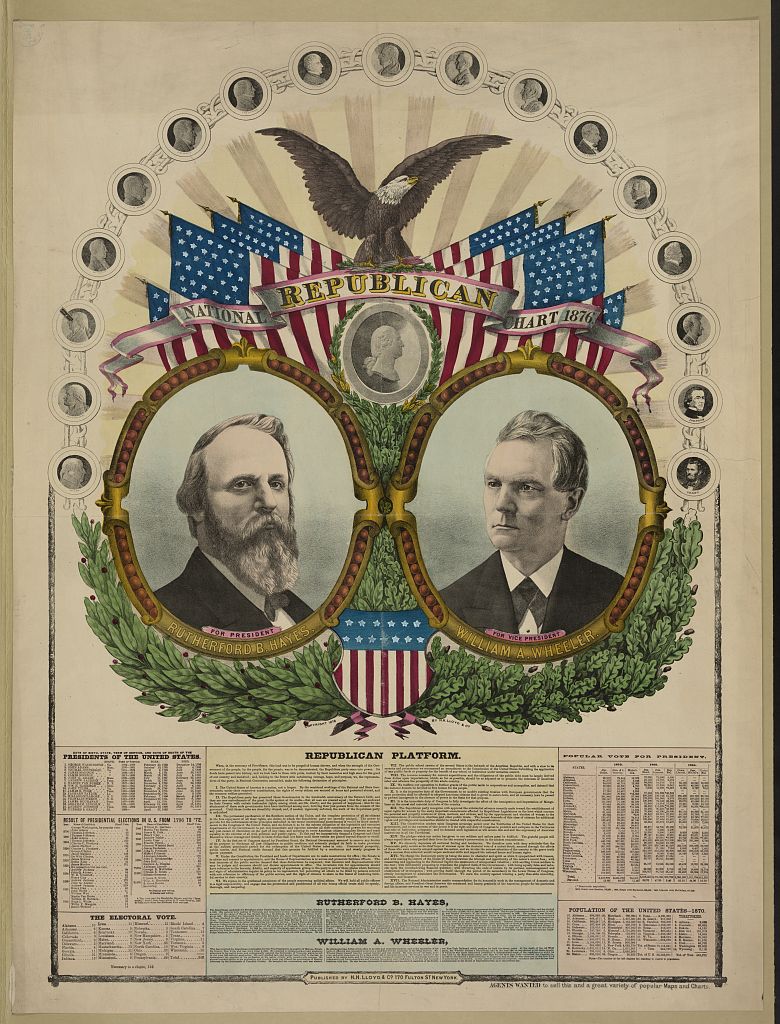
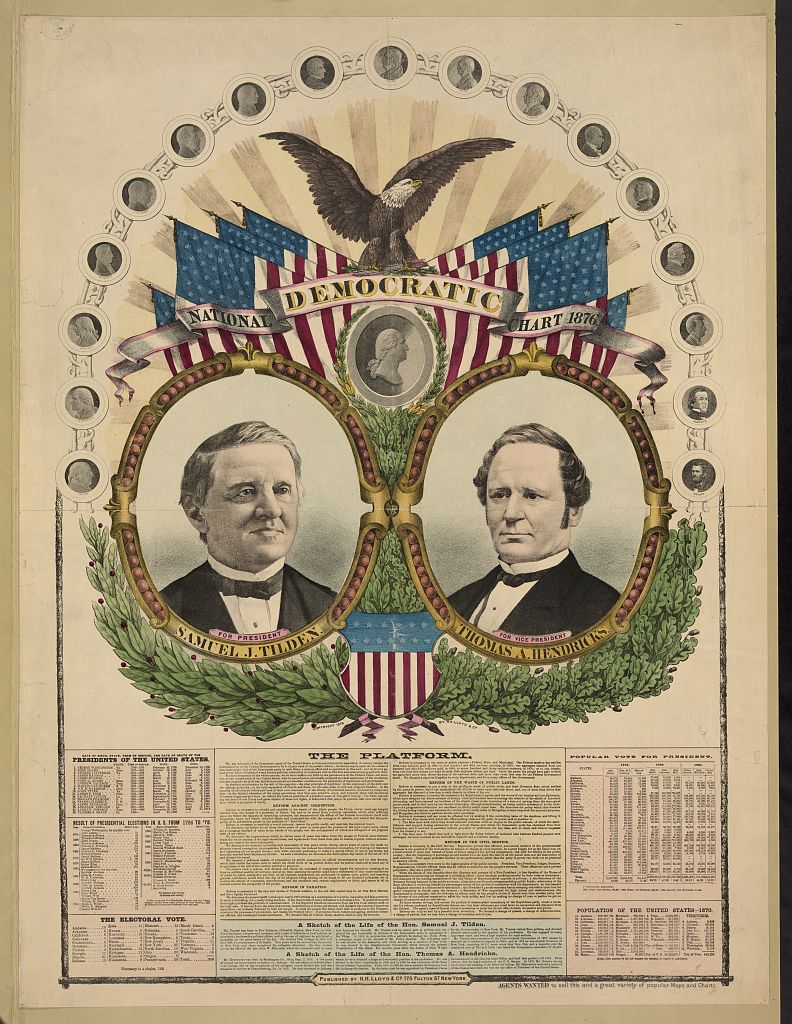
In 1872 a Currier & Ives banner showed Grant as "The Galena Tanner" and Henry Wilson as "The Natick Shoemaker", while a Greeley print set Greeley on the peace side and Grant's war record among cannon fire. The 1876 charts from H. H. Lloyd, one Republican and one Democratic, put platform text and biographies around the portraits.
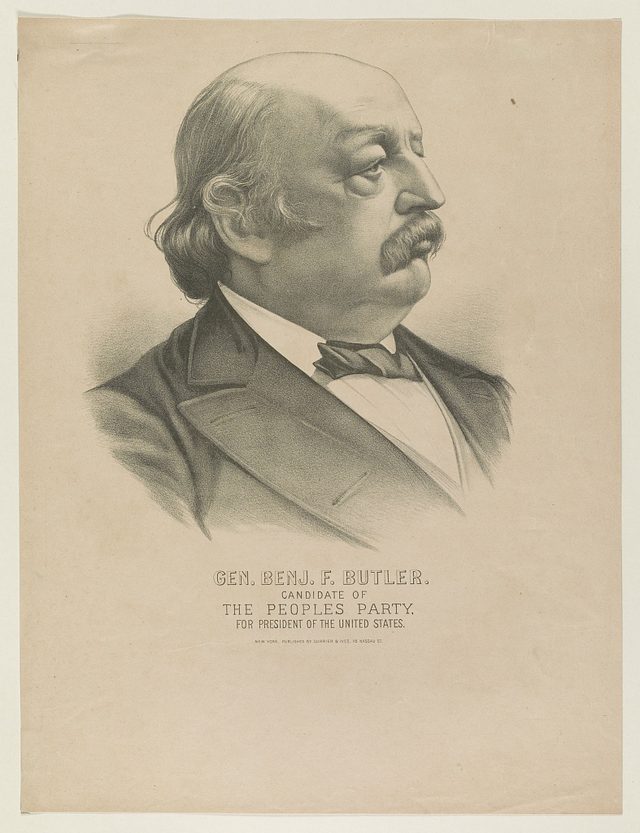
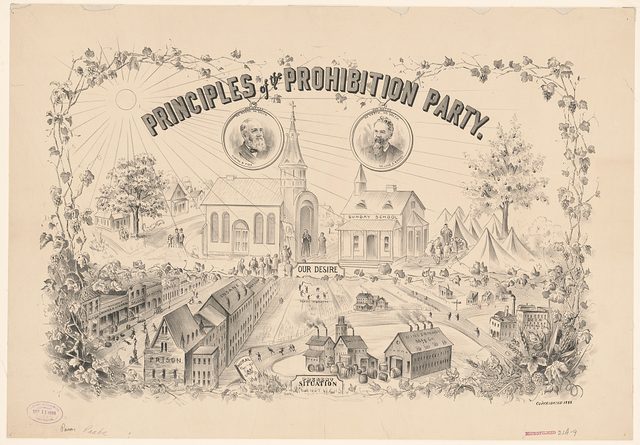
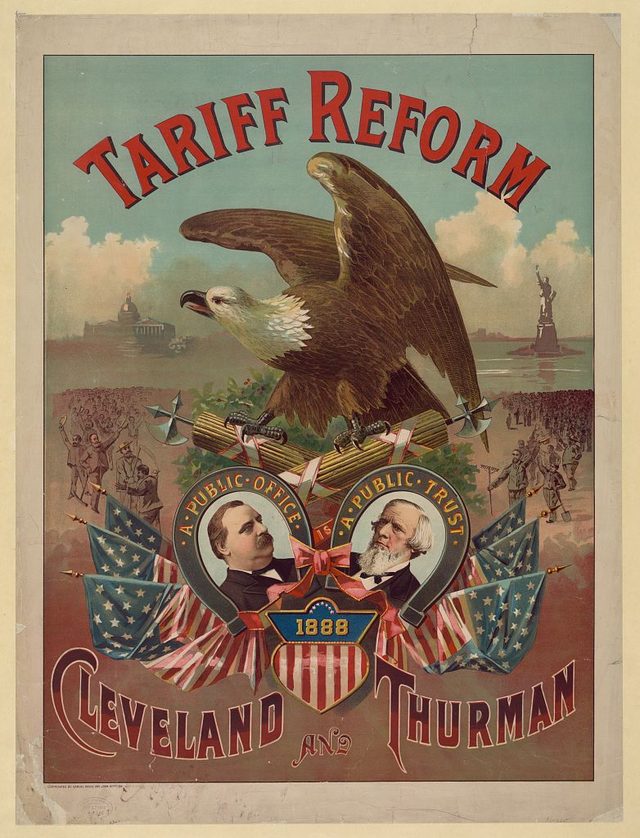
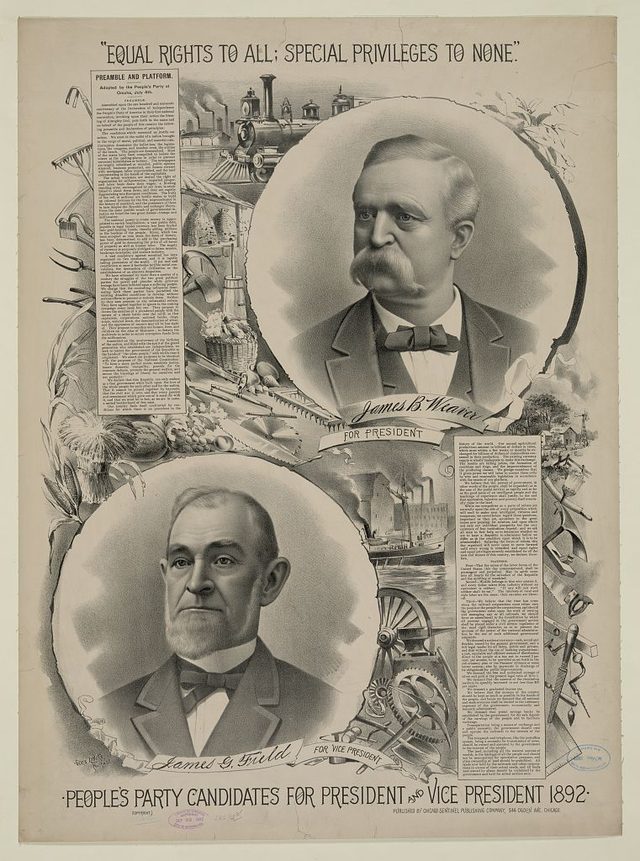
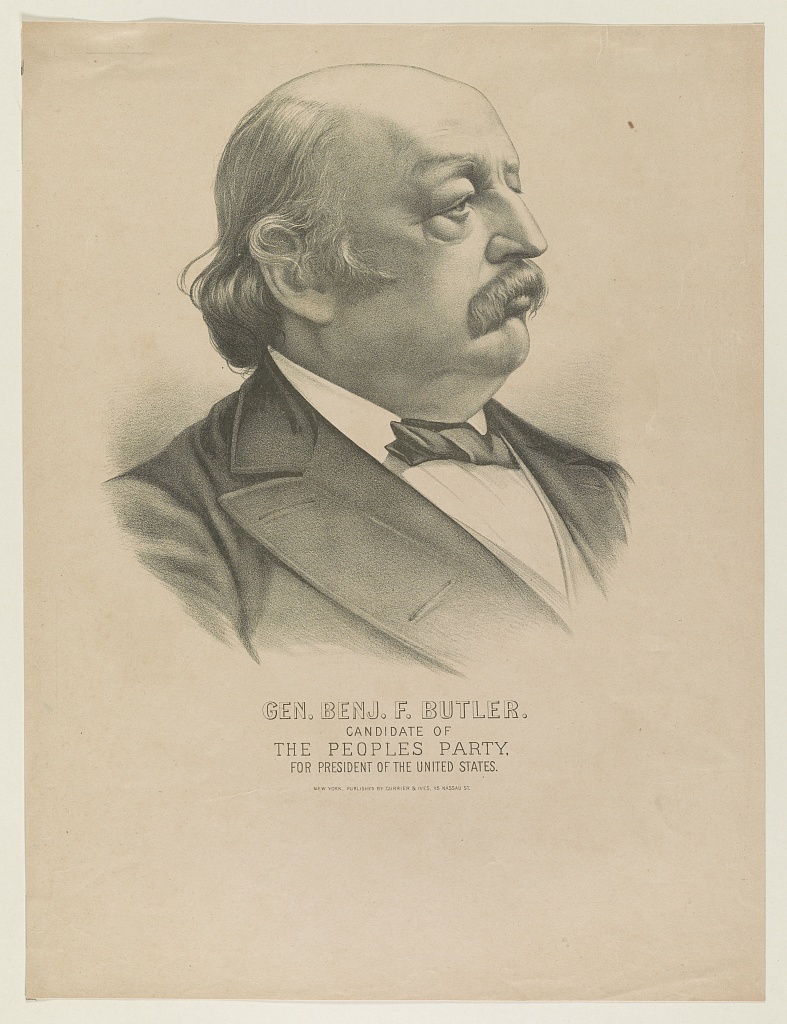
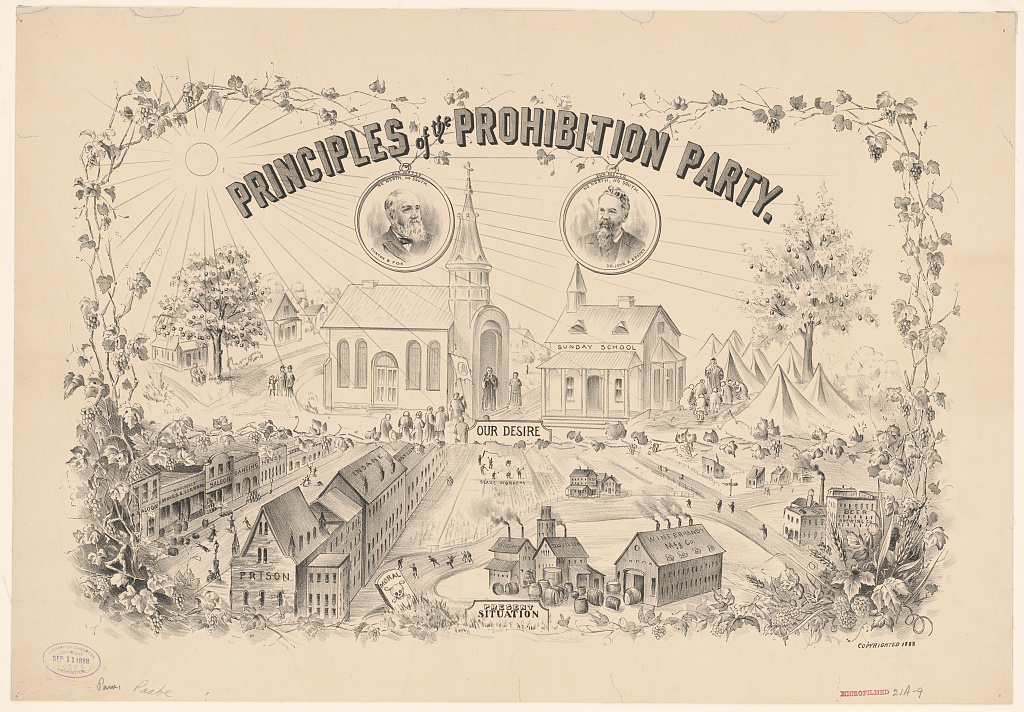
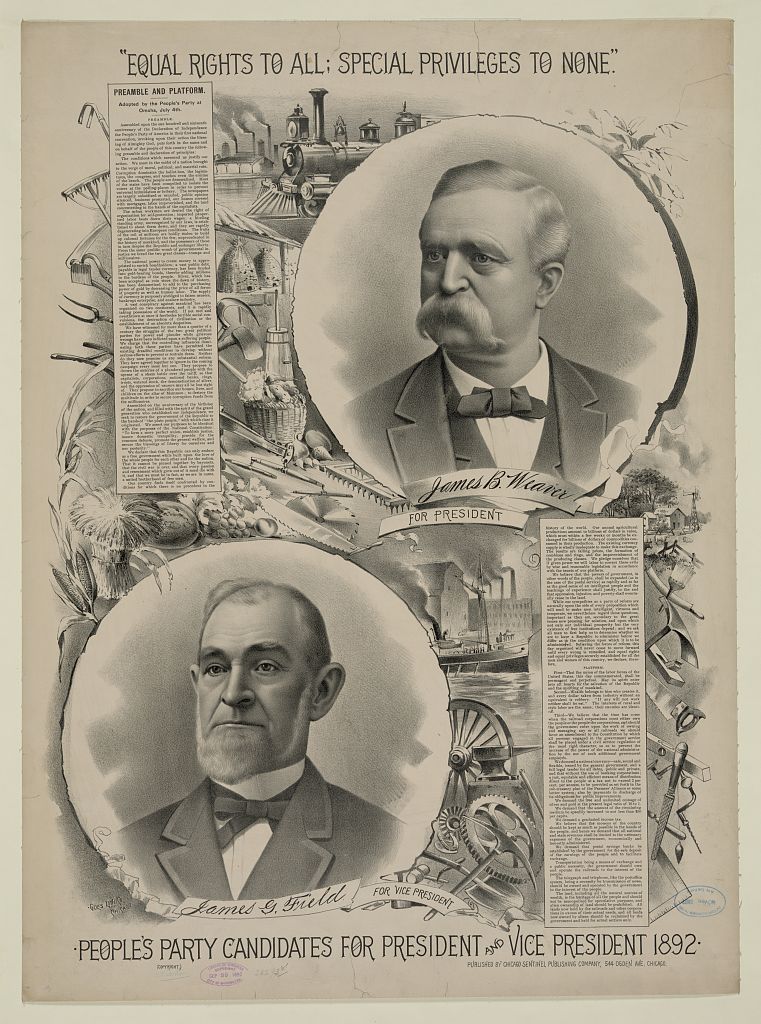
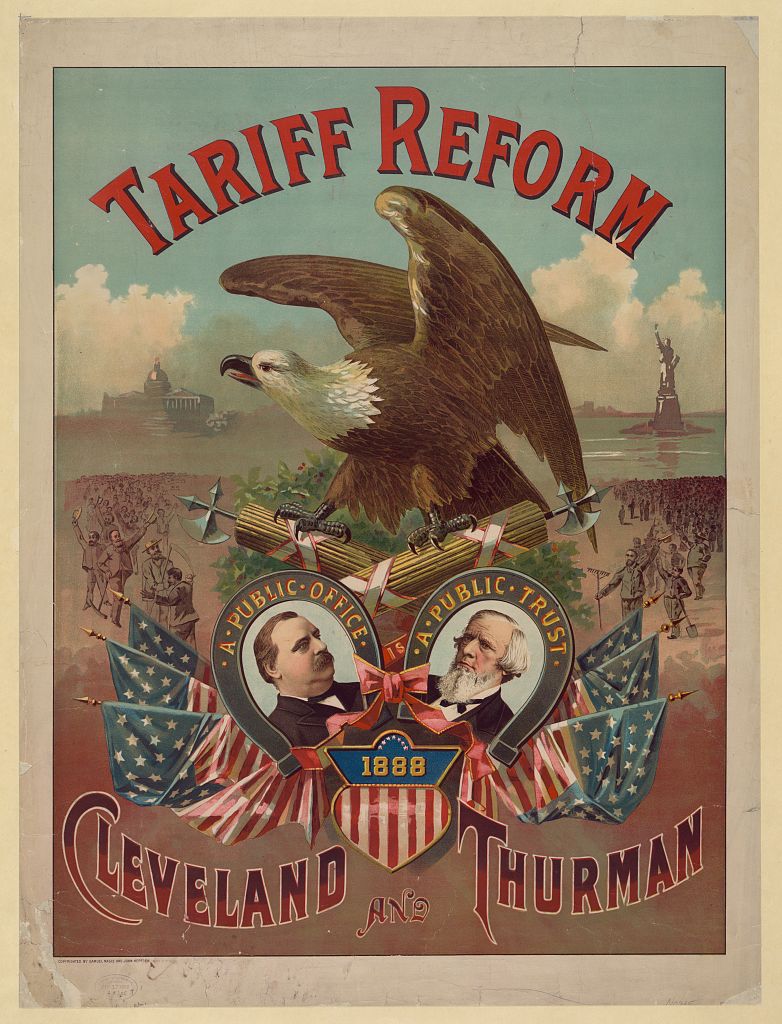
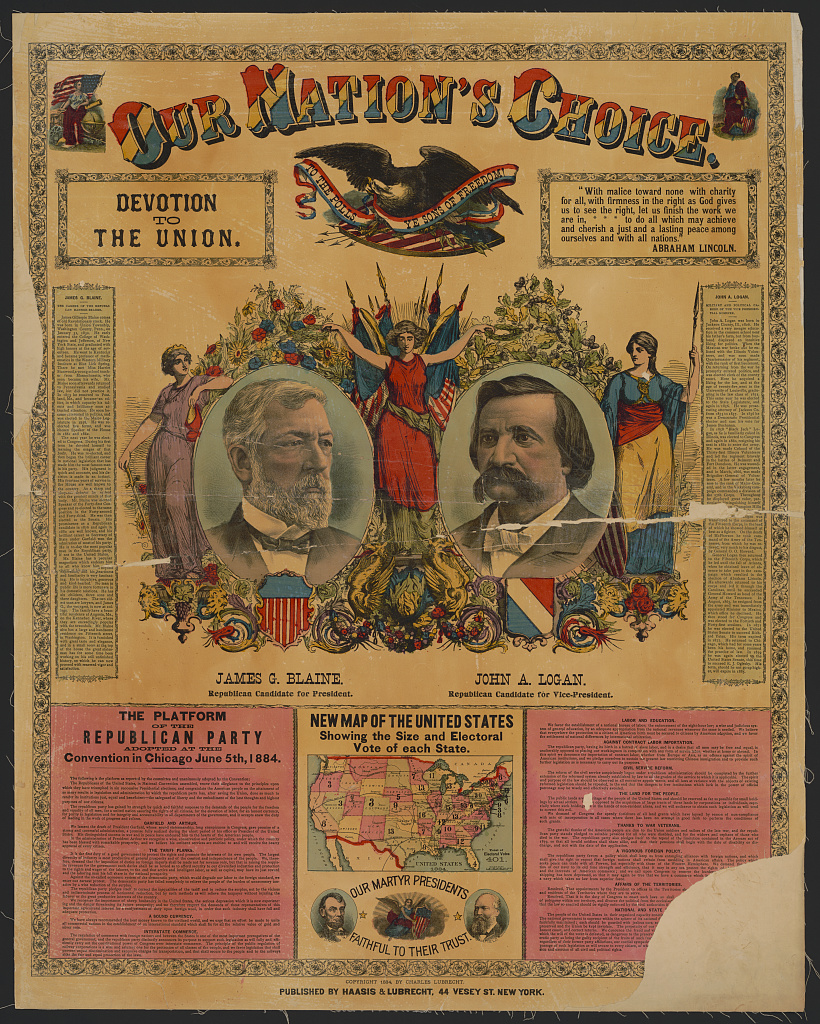
Smaller parties appear in 1884, 1888 and 1892: Butler's People's Party portrait, a Prohibition party print that sets "Our desire" against "Present situation" (Card stacking), and Weaver's People's Party lithograph. Cleveland's 1888 ticket got a Tariff Reform lithograph.
1896 and 1900
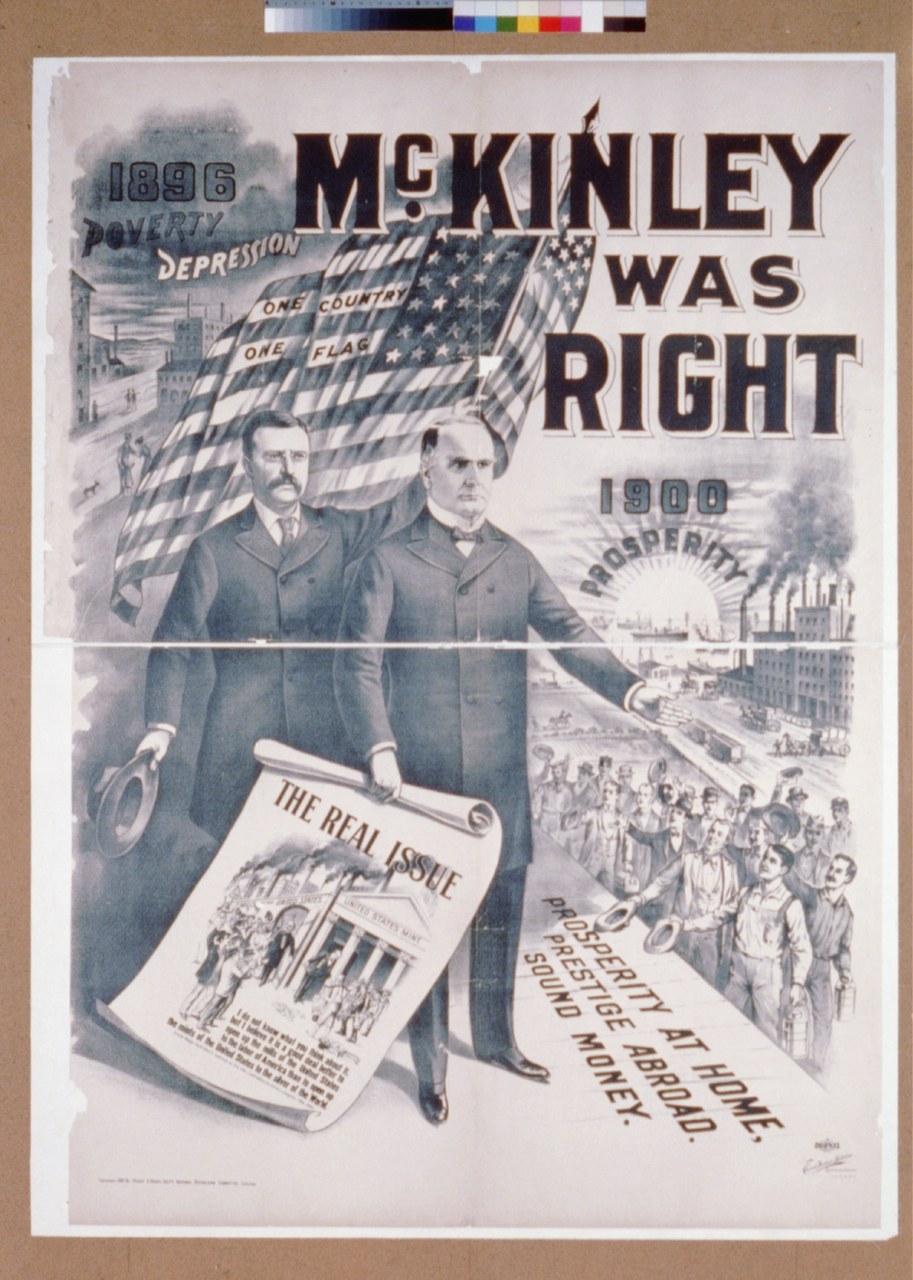
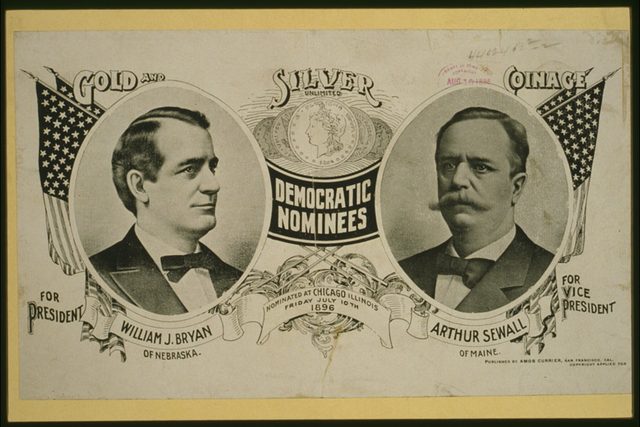
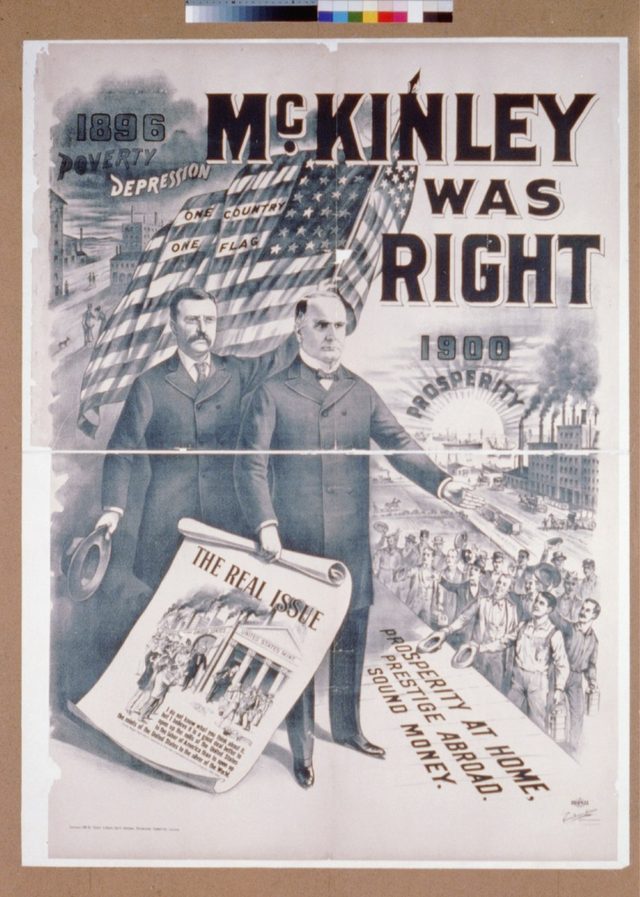
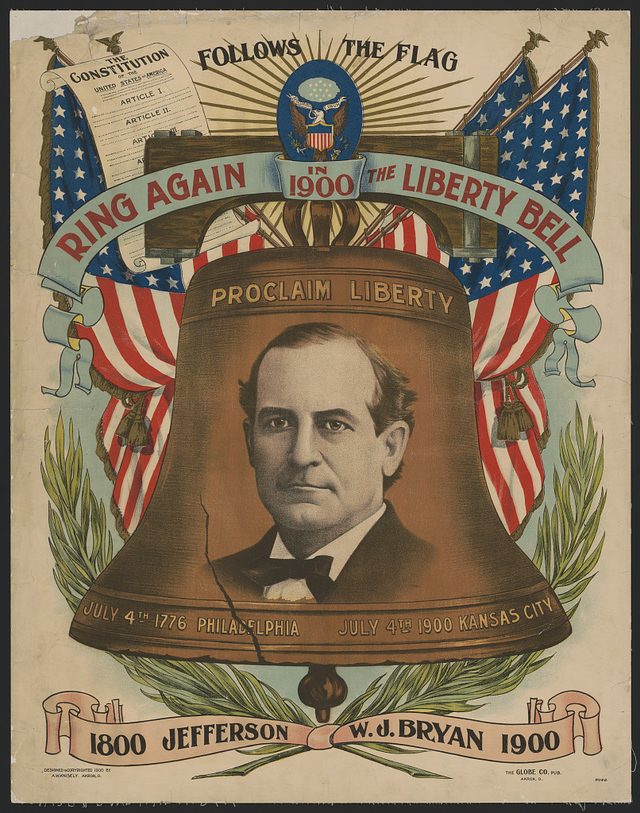
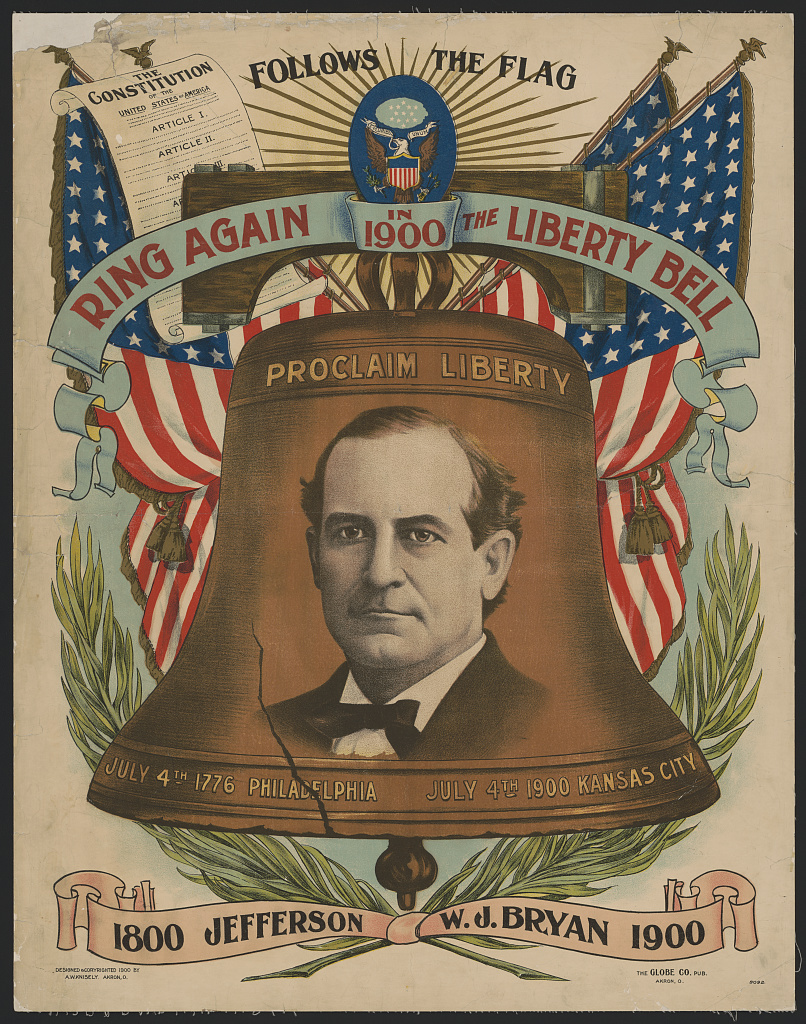
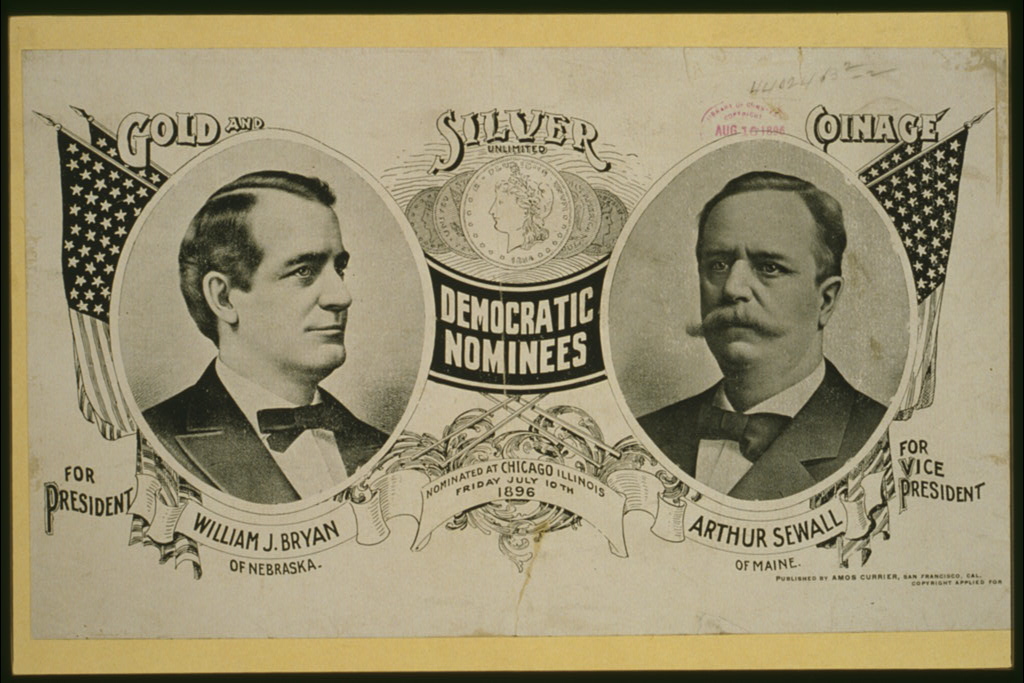
The 1900 sheets pair two years as cause and effect: the McKinley poster sets "1896 Poverty Depression" against "1900 Prosperity". The pro-Bryan Liberty Bell poster puts his portrait inside a cracked bell, and an 1896 San Francisco broadside names the Democratic ticket beside a coin.
Balance of the holdings
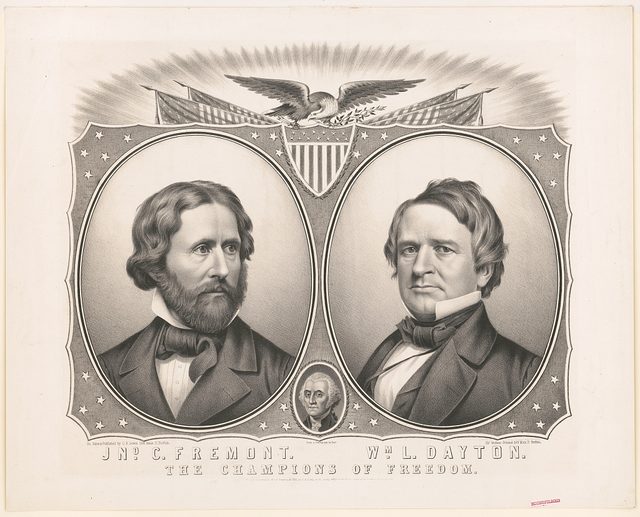
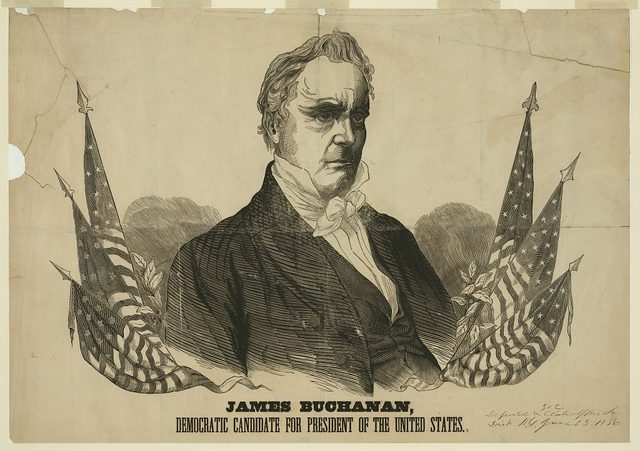
The grid covers Whig, Democratic, Republican, Free Soil, Constitutional Union, People's, Prohibition and Liberal Republican items. Both major parties are represented in most election years from 1844 to 1900. The record is lopsided in era and source: it is almost all 1840 to 1900, and mostly from one library.
What the collection does not hold
- Not here: campaign posters from 1904 to 2024, apart from the 1900 sheets. The collection has a 1964 television advertisement but no 20th-century street posters.
- Not here: the many surviving 19th-century cloth and paper banners held outside the Library of Congress.
- Not here: posters for the elections of 1789 to 1836, apart from a few ticket slips and handbills.
Sources and further reading
Sources
Library of Congress, Prints and Photographs Division, American political prints and campaign banners.
Library of Congress, Prints and Photographs Division, American political prints and campaign banners. Reilly, American Political Prints 1766-1876. Each item in the grid carries its own source and rights note.