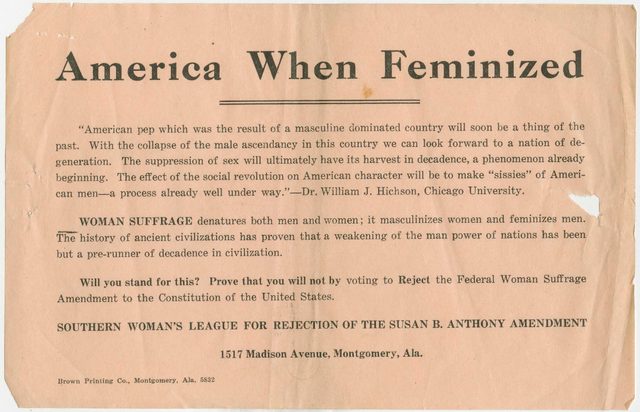
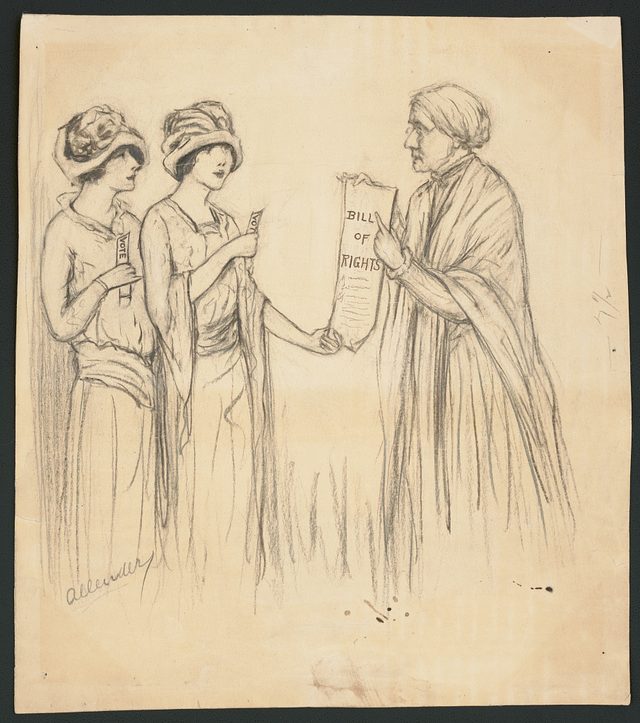
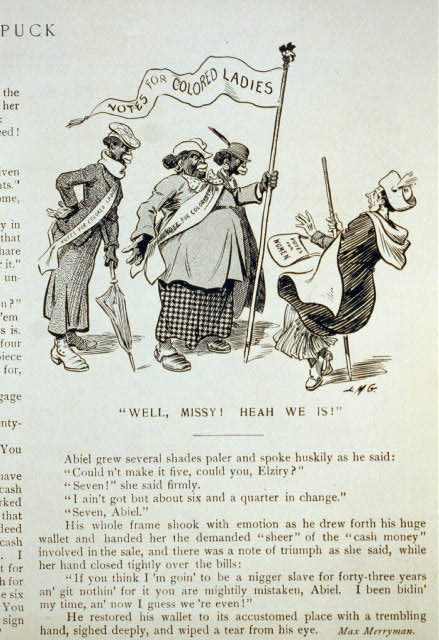
Content note. The cartoons below come from both sides of the suffrage argument. Some ridicule women, and one uses a racial caricature of Black women and imitation dialect, as published in 1913. They are shown as issued, as evidence of what was said to the public. Showing an item is not endorsing it.
What did women's suffrage posters look like?
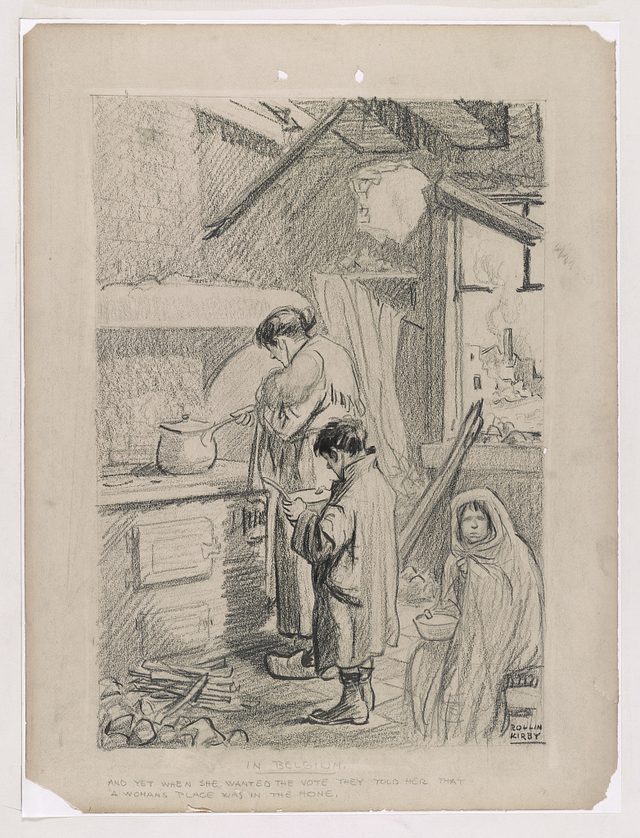
Suffrage posters and cartoons were made by both sides. Campaign groups used allegory, mothers and children, and maps; opponents used jokes about dress, hats and reversed roles. The collection holds items from the United States and Britain, from 1880 to 1923, and treats them by one standard: who issued the sheet, who it was aimed at, and which technique it uses, whatever the cause.
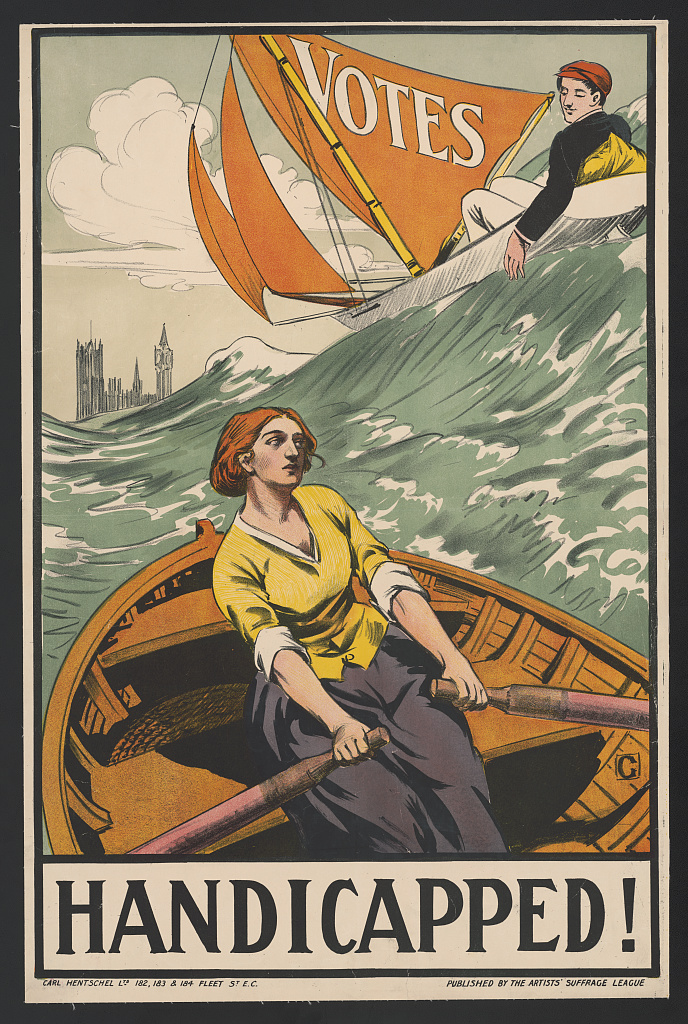
Posters from the campaigns
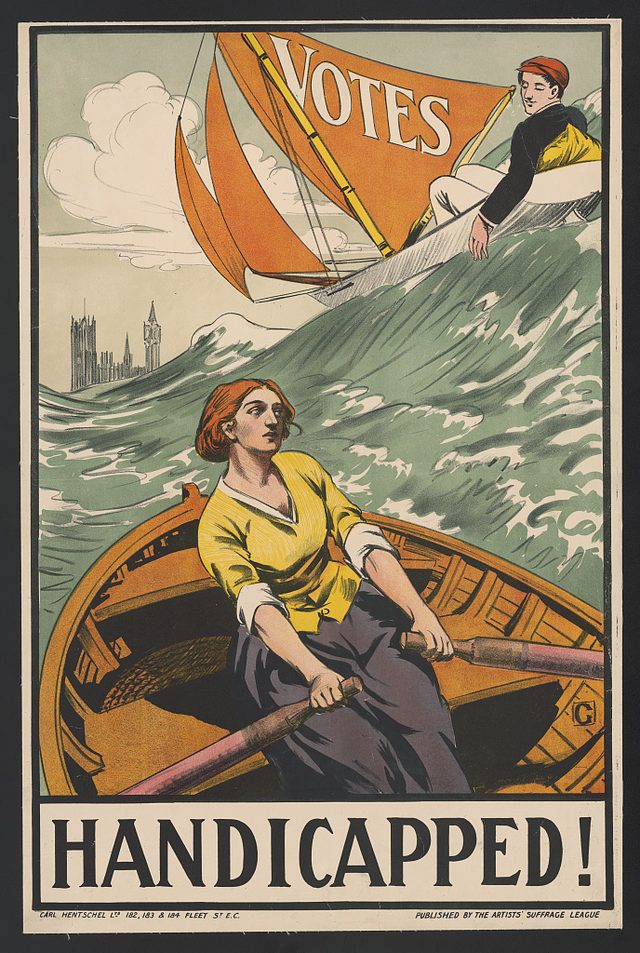
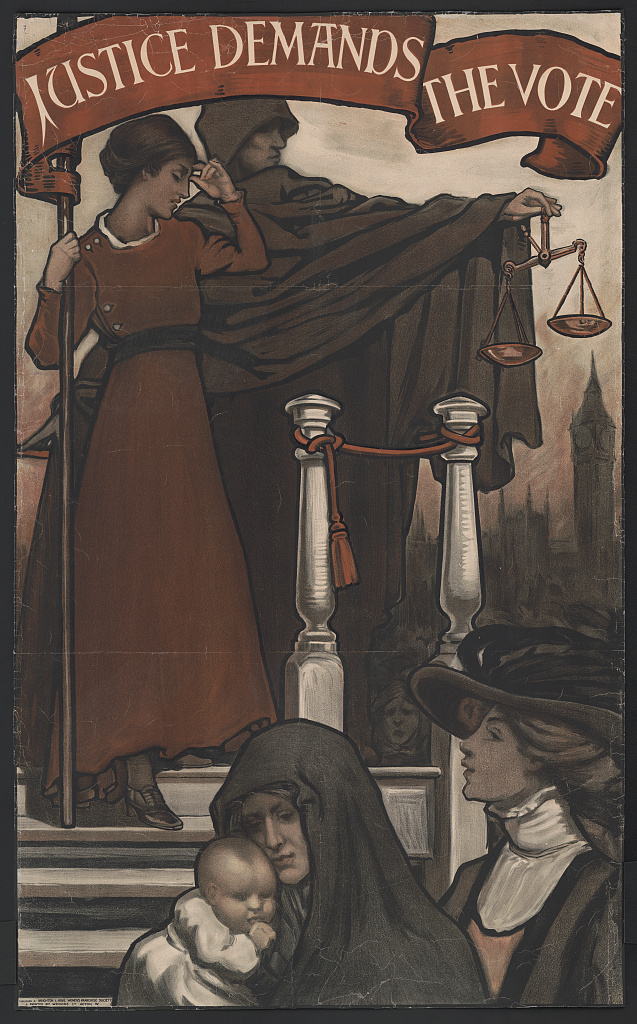
"Handicapped!" (1909), the winner of a poster competition run by the Artists' Suffrage League in London, makes its case in one picture: effort against ease, with the word on the sail naming the difference. Appeal to emotion is the tag. The Brighton and Hove Women's Franchise Society poster "Justice Demands the Vote" (1909) uses a robed figure of Justice beside a mother and infant, tagged Appeal to emotion and Transfer.
Explain moreShow less
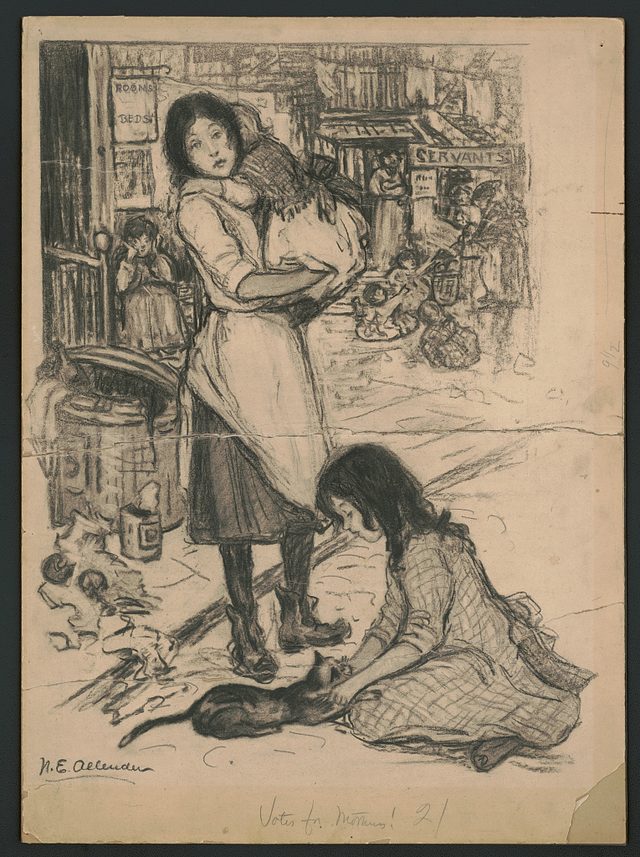
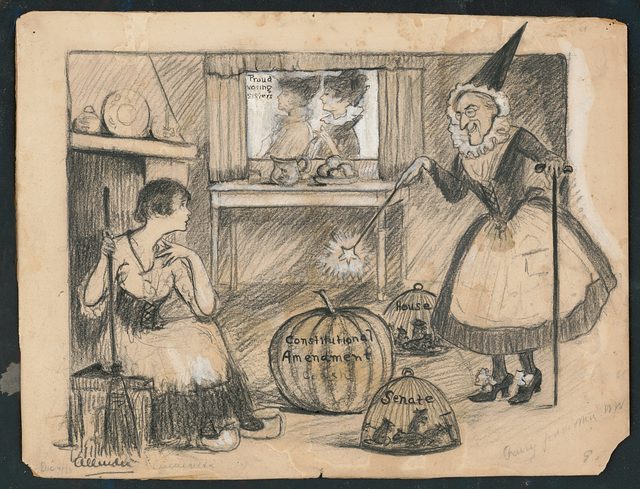
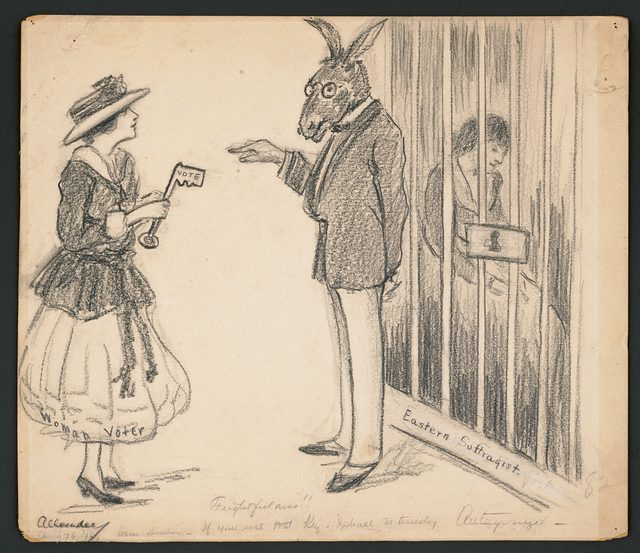
In the United States the weekly The Suffragist, published first by the Congressional Union for Woman Suffrage and from 1917 the National Woman's Party, carried cover drawings that addressed the President and the governing party by name. The collection holds "Votes for Mothers!" (1914), "Fairy Godmother, W.W." (1915), and "Frightfulness!!" (1916), and, from the National Woman's Party's later weekly Equal Rights, a 1923 drawing of Susan B. Anthony saying that everything but the vote was still to be won (Testimonial).
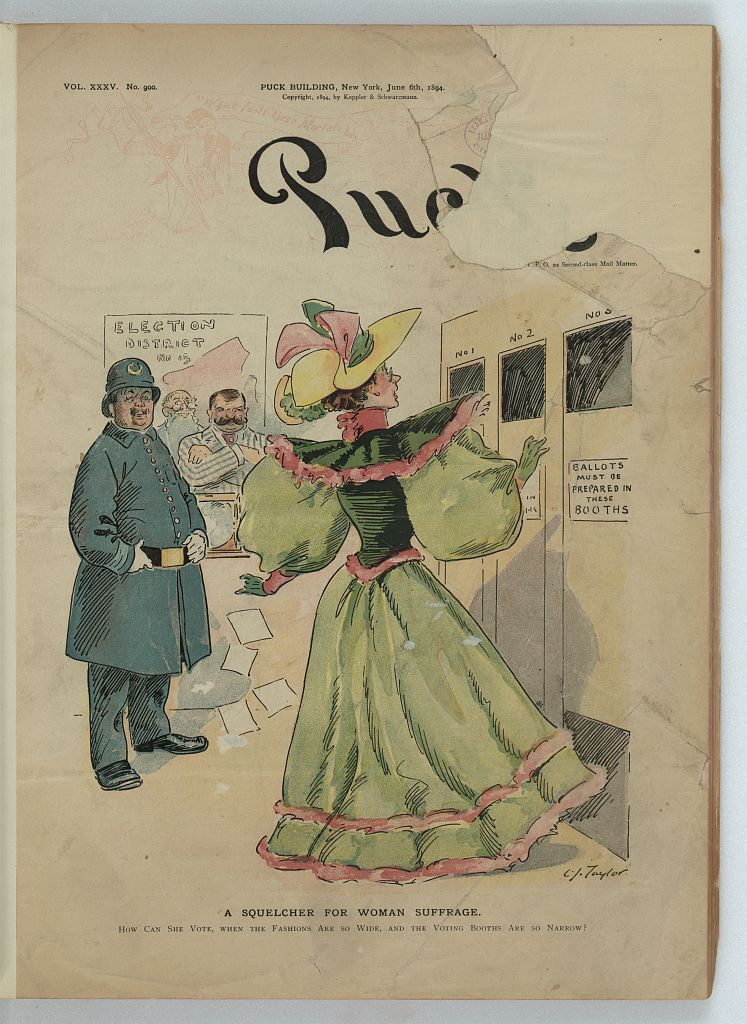
Cartoons against and about the cause
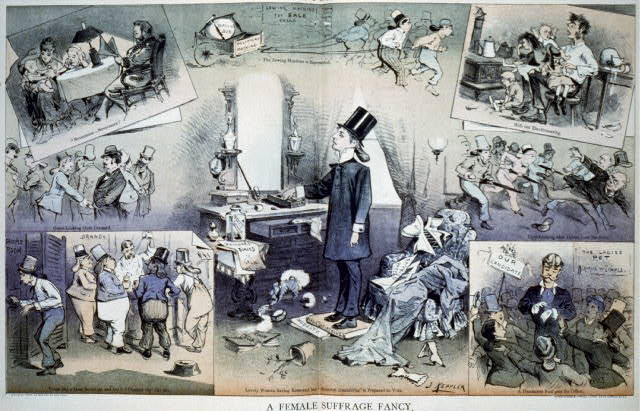
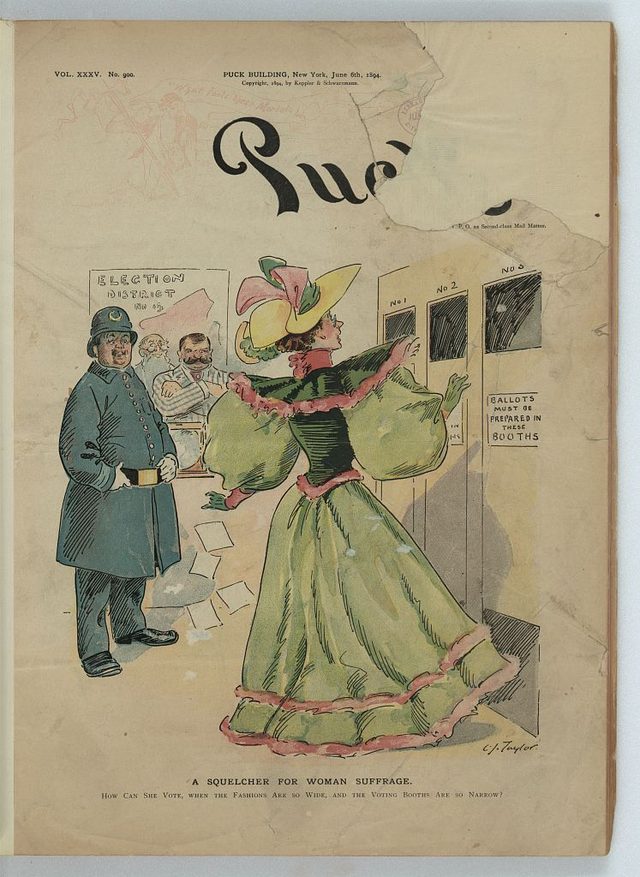
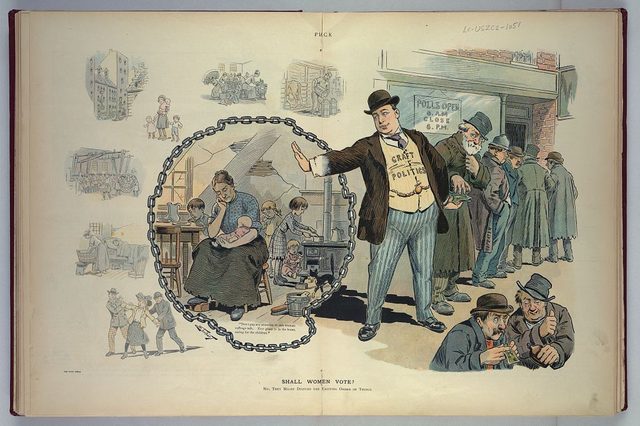
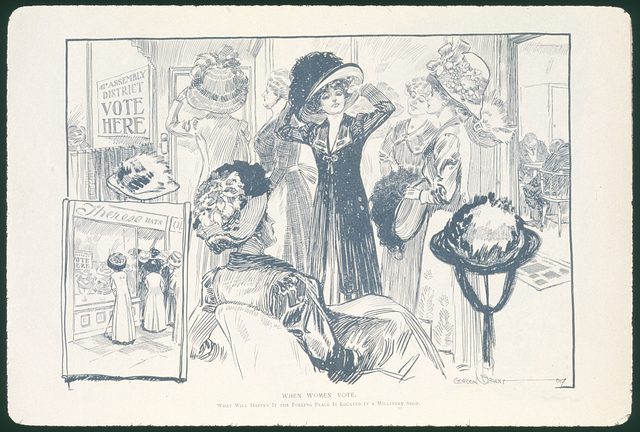
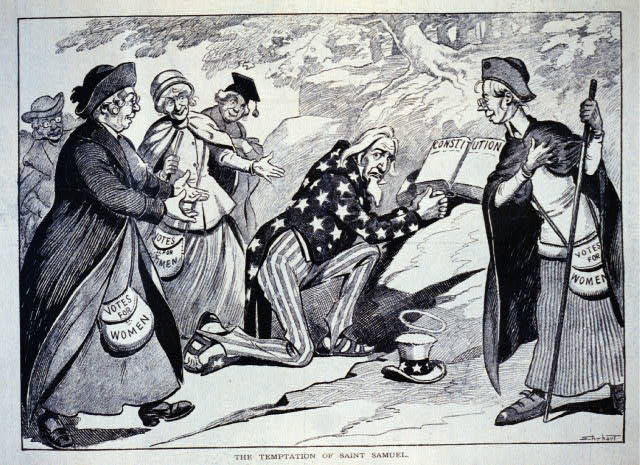
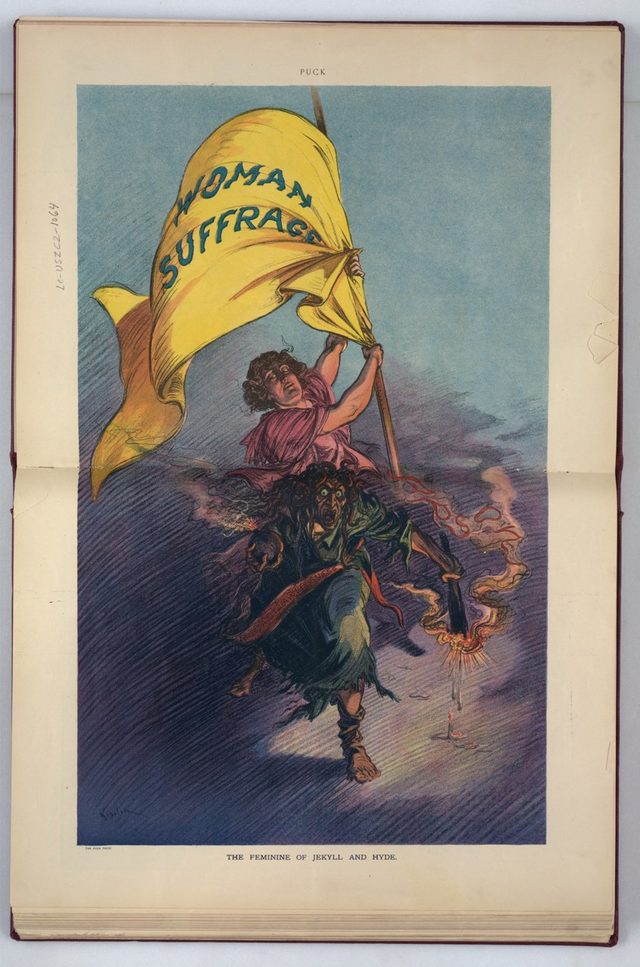
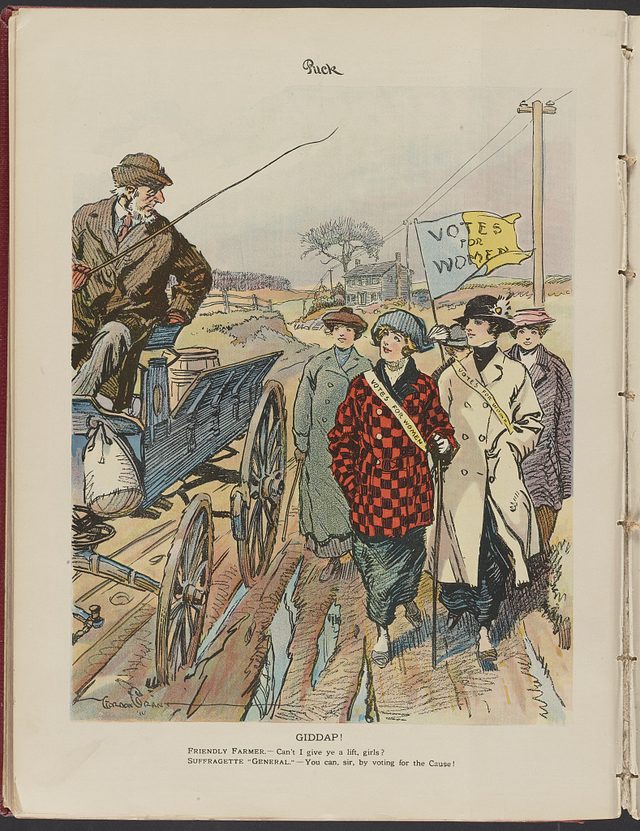
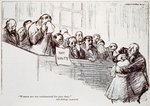
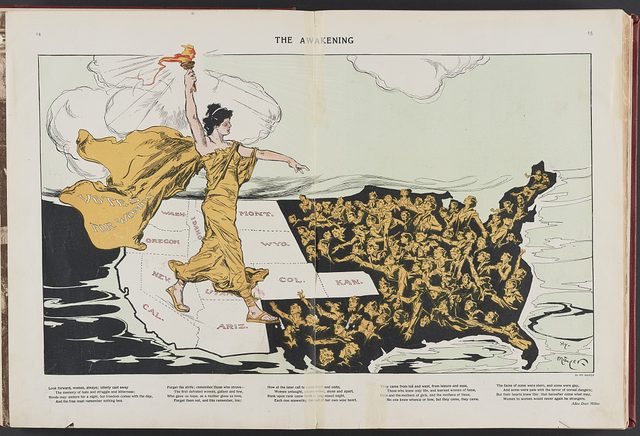
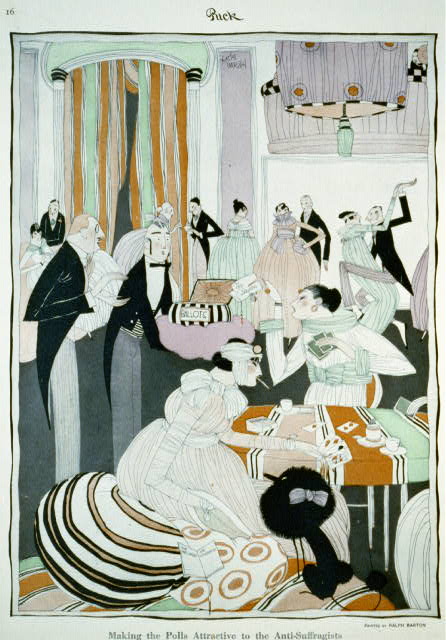
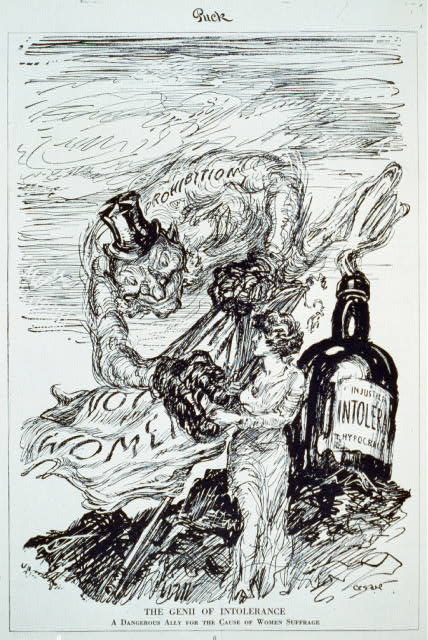
The magazine Puck printed suffrage cartoons of every stance, so its pages show how the argument was carried on in public. "A Female Suffrage Fancy" (1880), "A Squelcher for Woman Suffrage" (1894), and "When Women Vote" (1909) argue by joke, in each case from a picture of women that suffragists did not claim (Straw man). "Shall Women Vote?" (1909) and "The Awakening" (1915) argue for the cause, the second with a map of the western states where women already voted (Bandwagon). "The Genii of Intolerance" (1915) warns suffragists that Prohibition was a dangerous ally (Fear appeal).
Explain moreShow less
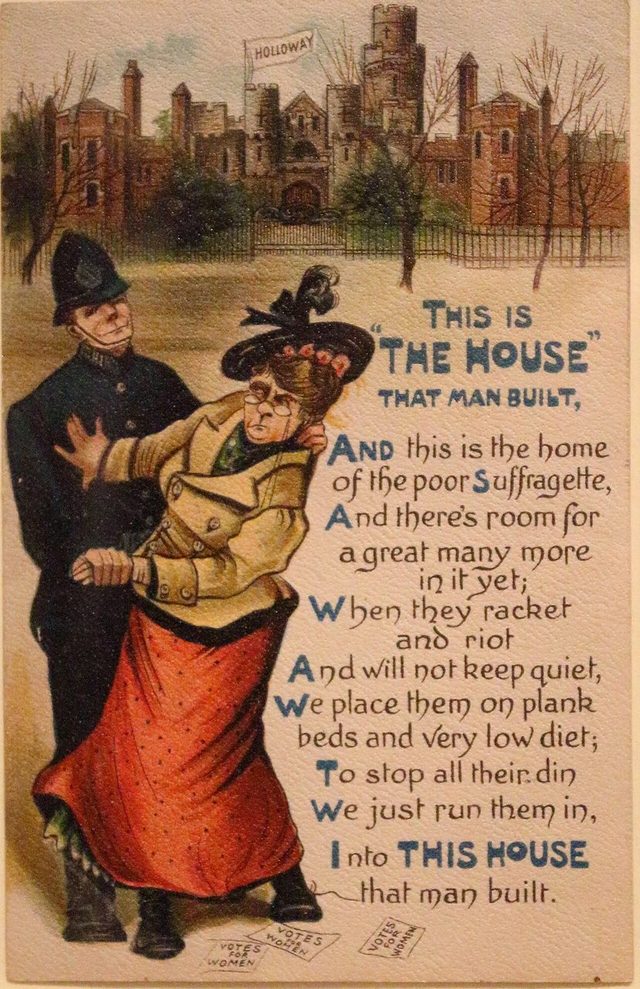
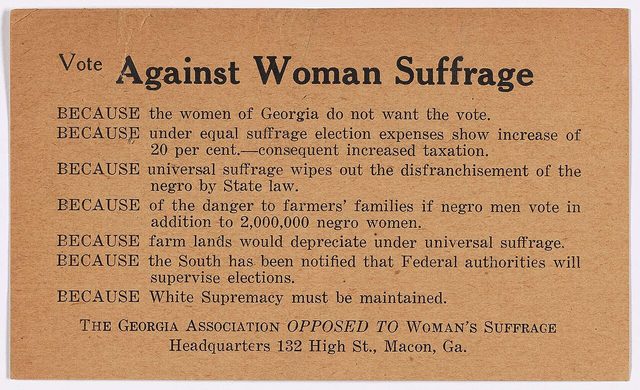
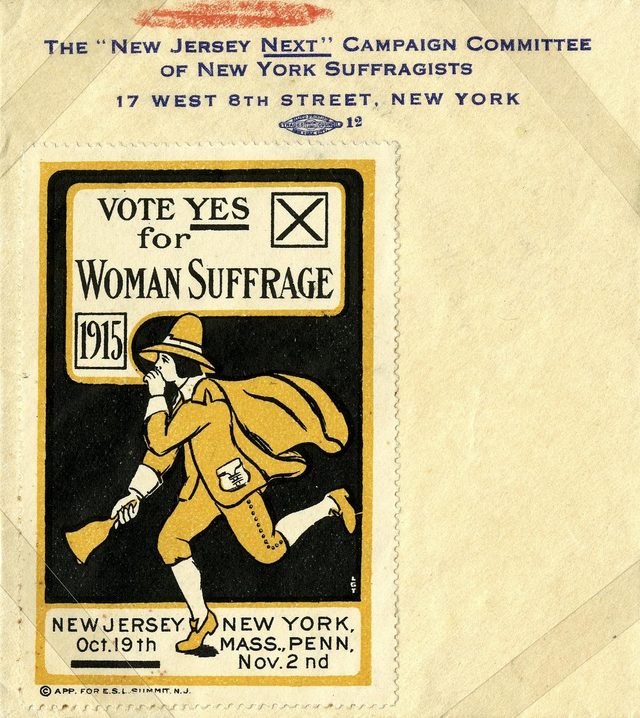
The collection also holds the postcard "This is 'the house' that man built" (1908) and the Georgia anti-suffrage card of 1915, both against the cause, and the 1915 New Jersey poster stamp for it. One cartoon, from 1913, shows the argument turning on race: a white suffragist is met by Black women carrying banners, and the artist mocks them in dialect. Several leading white suffragists argued for the vote on terms that left Black women out, and Black suffragists organised separately.
How it ended, and what is not here
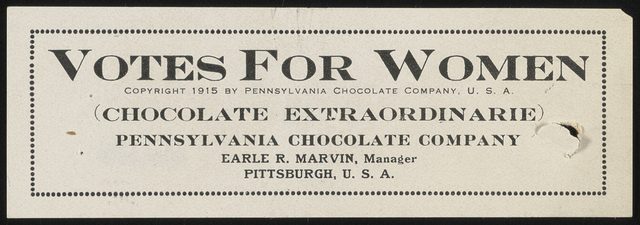
The Nineteenth Amendment was ratified in August 1920. Women in Britain over thirty with property qualifications got the vote in 1918, and all women over 21 in 1928. The collection holds several items from the 1915 state campaigns in New York, New Jersey, Massachusetts and Pennsylvania, all four of which voted the amendment down that year.
Explain moreShow less
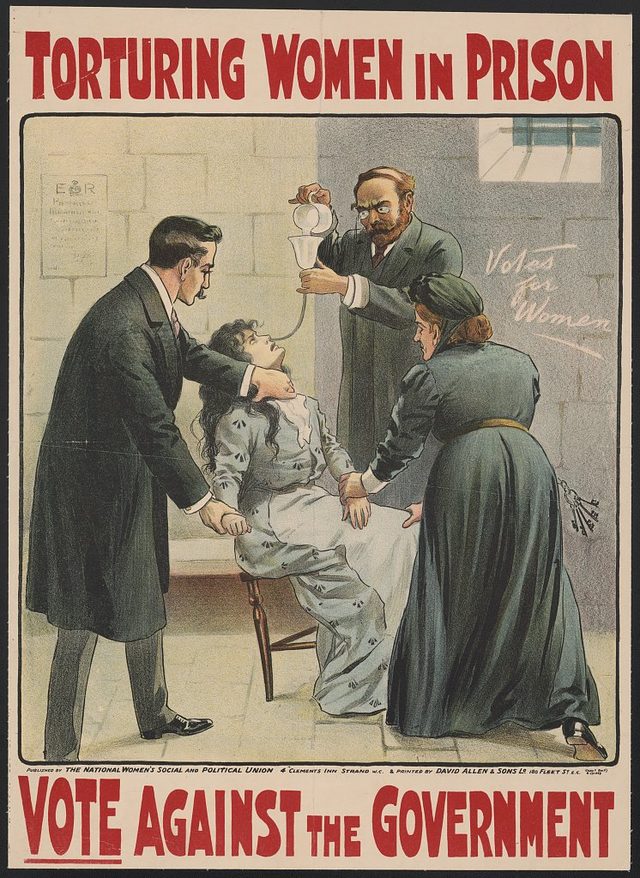
- Not here: posters printed in the name of the National American Woman Suffrage Association, and more than one Women's Social and Political Union item: that union is represented by its 1910 prison poster only.
- Not here: suffrage items from outside the United States and Britain, including the Australian, New Zealand and Finnish campaigns.
Sources and further reading
Sources
Lisa Tickner, The Spectacle of Women: Imagery of the Suffrage Campaign 1907-14 (Chatto & Windus, 1987).
Lisa Tickner, The Spectacle of Women: Imagery of the Suffrage Campaign 1907-14 (Chatto & Windus, 1987). Aileen S. Kraditor, The Ideas of the Woman Suffrage Movement, 1890-1920 (Columbia University Press, 1965). Library of Congress, "Shall Not Be Denied: Women Fight for the Vote" (exhibition). Each item in the grid carries its own source and rights note.
![Virginia Arnold [holding Kaiser Wilson banner]](../collection/images/kaiser-wilson-banner-1917-640.jpg)