Content note. Several prints on this page use racial caricature of Black Americans, ethnic caricature of Irish Americans, dialect speech and a racial slur, and one shows a severed head. They were issued by Northern publishers in the 1860s and are shown as printed. Showing a print is not endorsing it.
What Civil War propaganda does this archive hold?
The archive holds Northern election prints from the Civil War years: banners, cartoons, a songbook cover and an envelope from the 1860 and 1864 presidential campaigns. It holds no Confederate-issued posters, broadsides or leaflets. Every item below was published in the United States by Northern printers for Republican, Democratic or Constitutional Union candidates.
Explain moreShow less
That is a gap in the collection, not a finding about the Confederacy. Where Confederate figures appear here, such as Jefferson Davis, they are drawn by Union-side artists (see "What is missing" below). The same questions are asked of every item on this page (how FRAME defines propaganda): who issued it, who it was for, what it asked, and which technique carried the ask. For the wider American record see American propaganda posters and propaganda posters.
What is missing from this page?
Three things are not held, and the page does not fill them in by implication.
Explain moreShow less
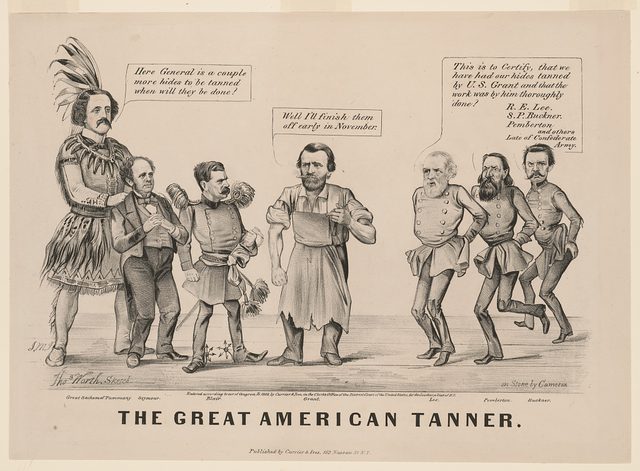
- Confederate-issued material. A search of the archive's entries finds four that mention the word "Confederate". All are Northern or later items, and none was issued by the Confederate government or a Confederate publisher. Two are the 1864 and 1868 prints discussed below; the others are an 1868 pro-Grant Currier & Ives cartoon that shows Confederate officers and a 1943 Office of War Information poster about Robert Smalls.
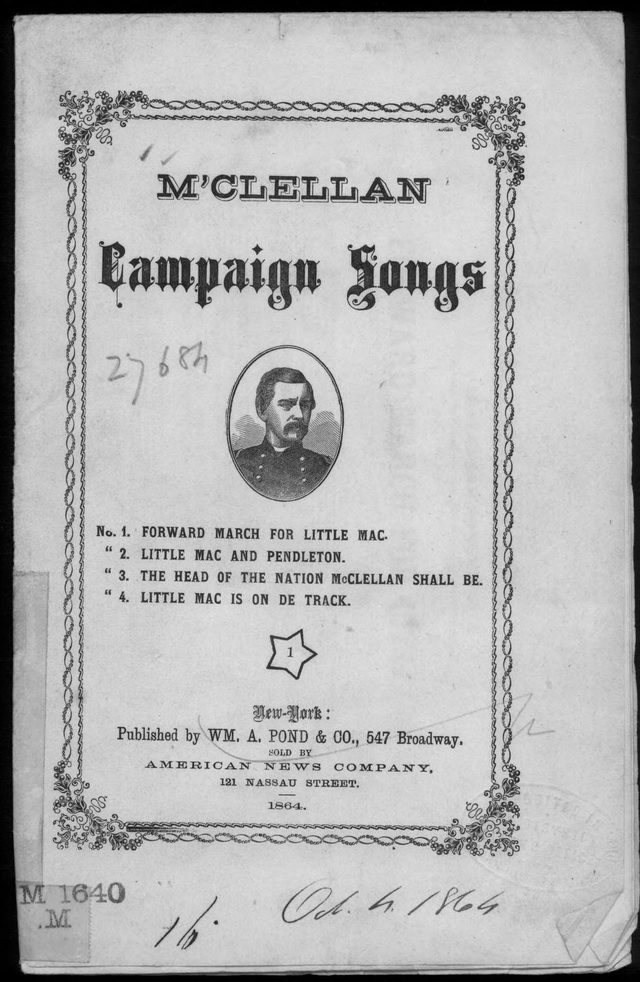
- Leaflets. No handbill or leaflet from 1856 to 1868 is held. The nearest items are a campaign envelope and the cover of a Democratic songbook.
- A balanced count. The 1864 election entry in this archive records that most of the pictorial cartoons held attack the Democratic ticket. That reflects what was catalogued, not a count of what each side printed.
Confederate material exists in public collections. The Library of Congress Confederate States of America Records hold mostly official papers from 1861 to 1865, such as War Department orders, presidential proclamations, congressional acts and bonds. Its Civil War Maps collection includes the 341 Hotchkiss manuscript maps and some Confederate imprints, though most of that collection was made by Federal forces or Northern firms. Its Printed Ephemera collection holds more than 28,000 broadsides and other ephemera, but its overview page does not say how many are Confederate.
How did the 1860 campaigns use the flag?
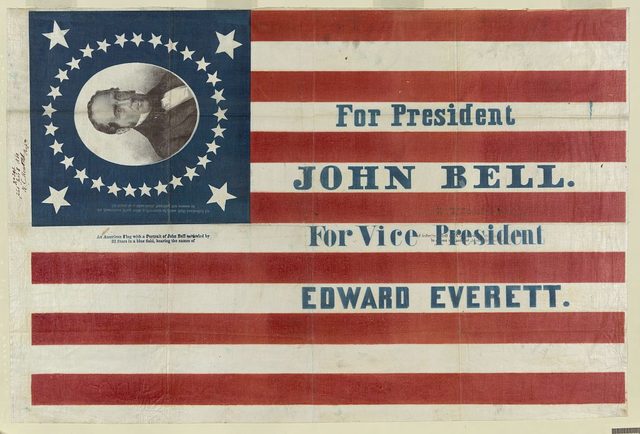
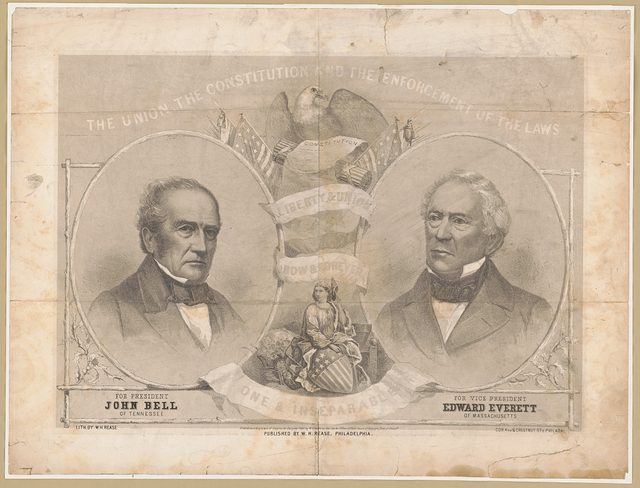
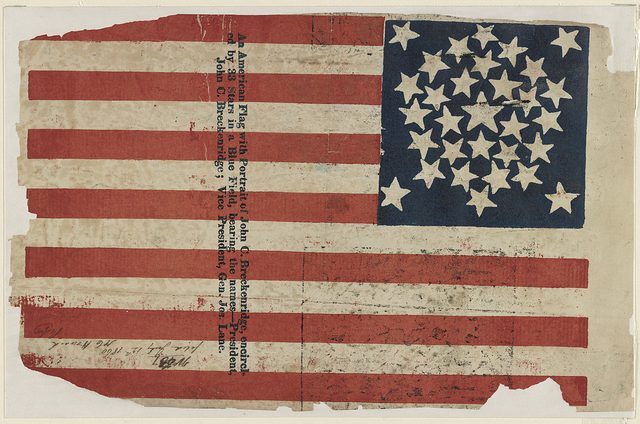
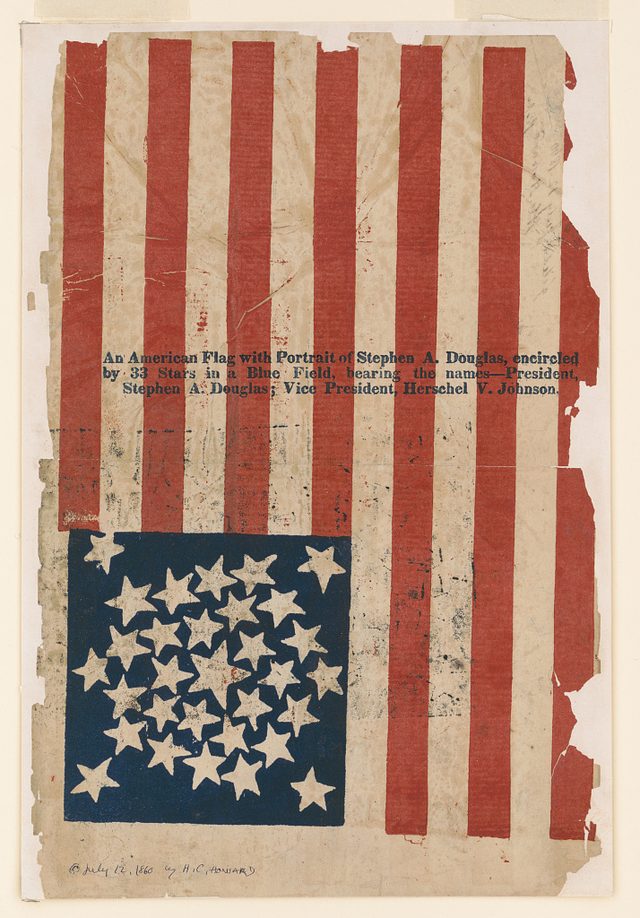
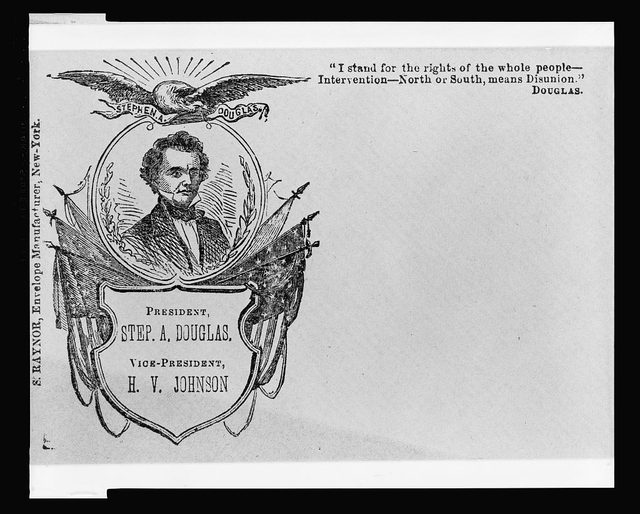
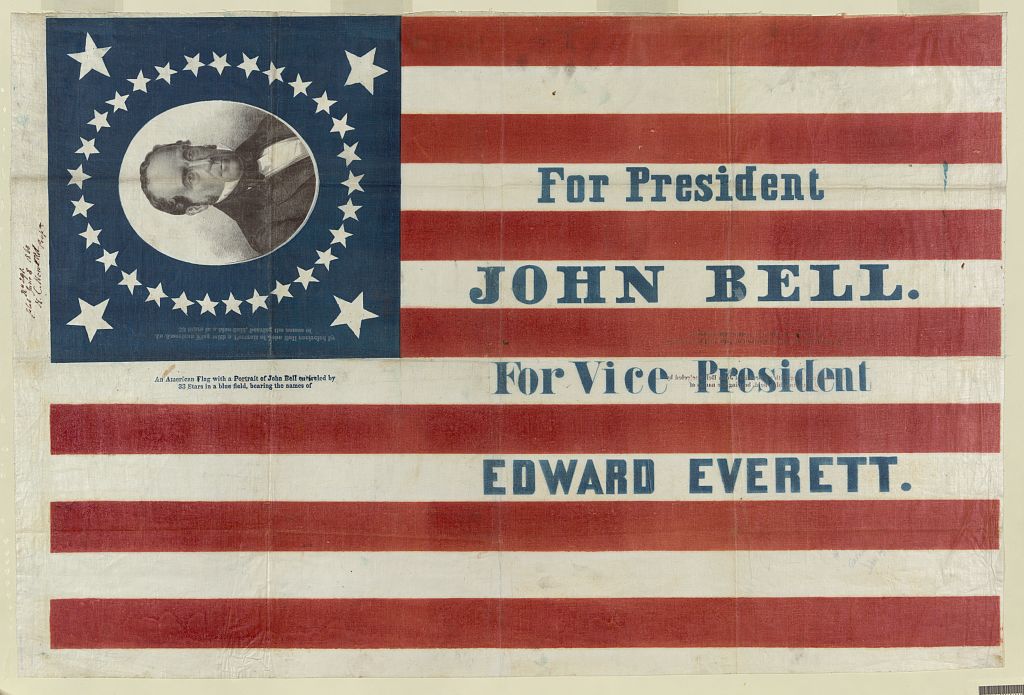
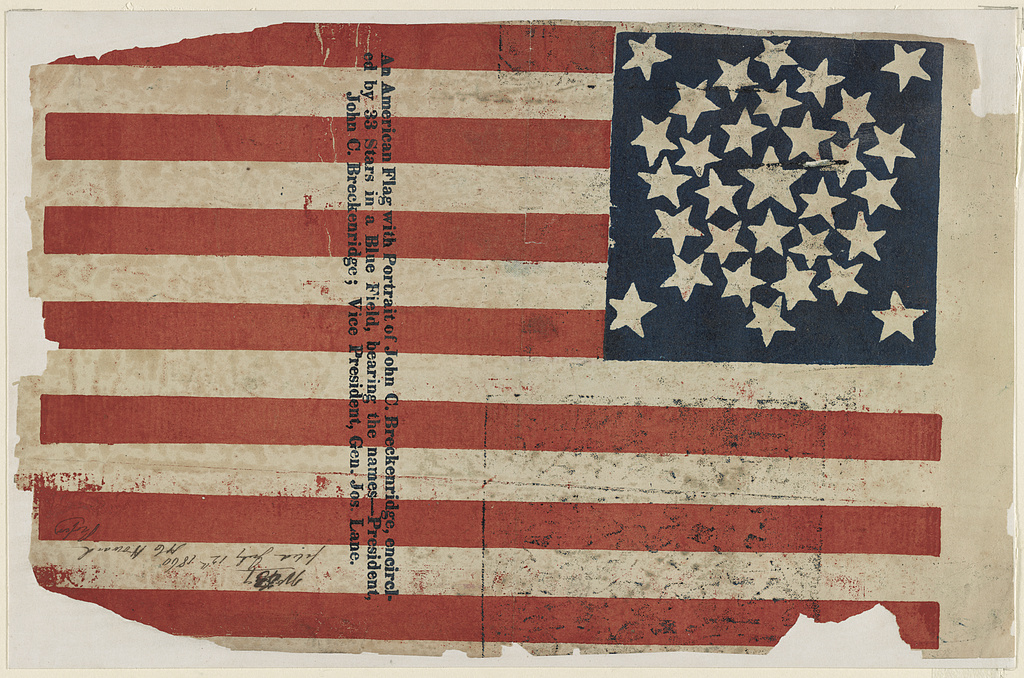
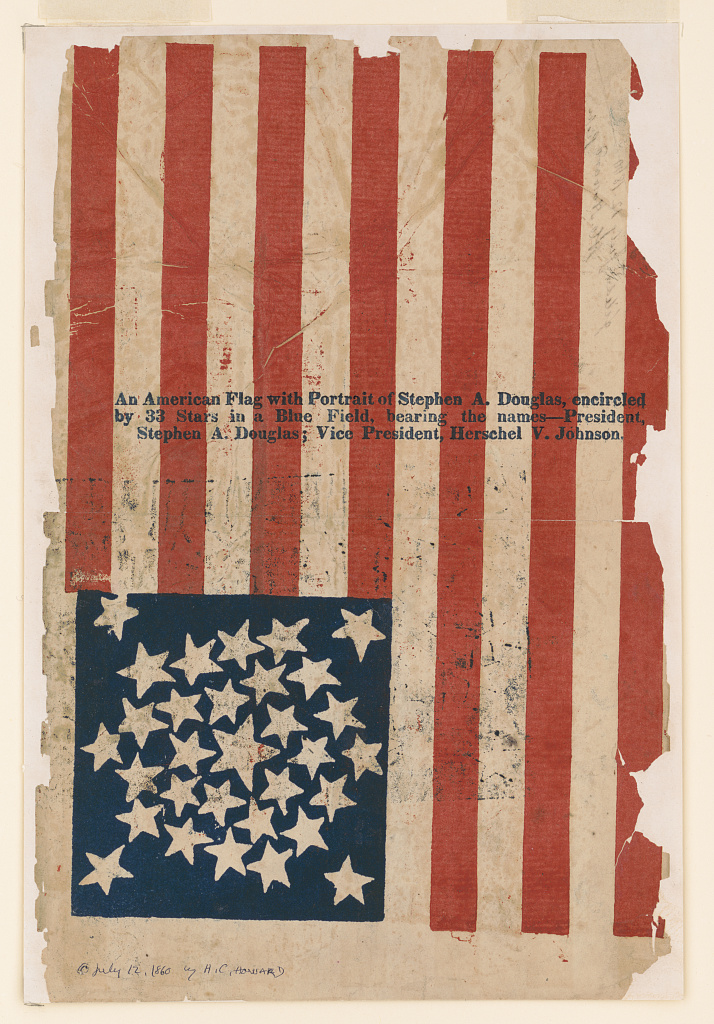
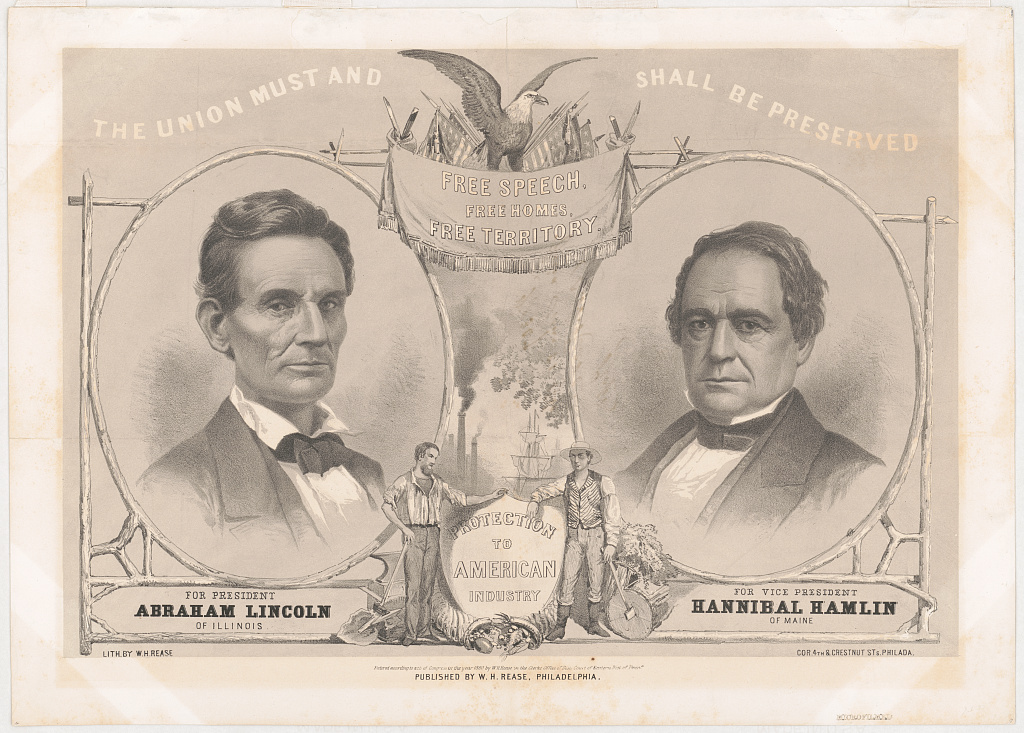
The 1860 contest had four tickets: Lincoln (Republican), Douglas (Northern Democratic), Breckinridge (Southern Democratic) and Bell (Constitutional Union). The 1860 election page lists them all. The Library of Congress holds near-identical flag banners printed by H. C. Howard of Philadelphia for all four, and the archive holds all four, plus a W. H. Rease banner and a cartoon.
Explain moreShow less
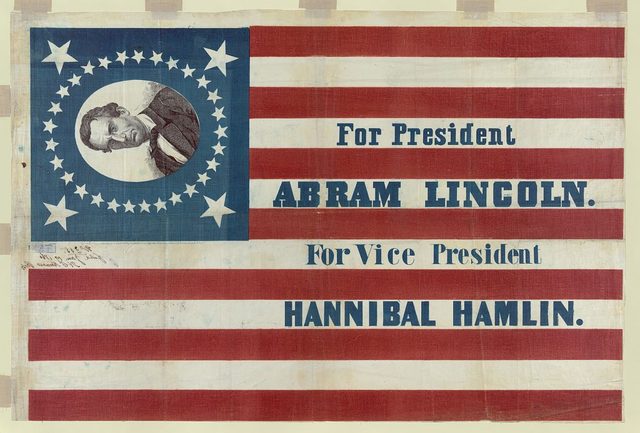
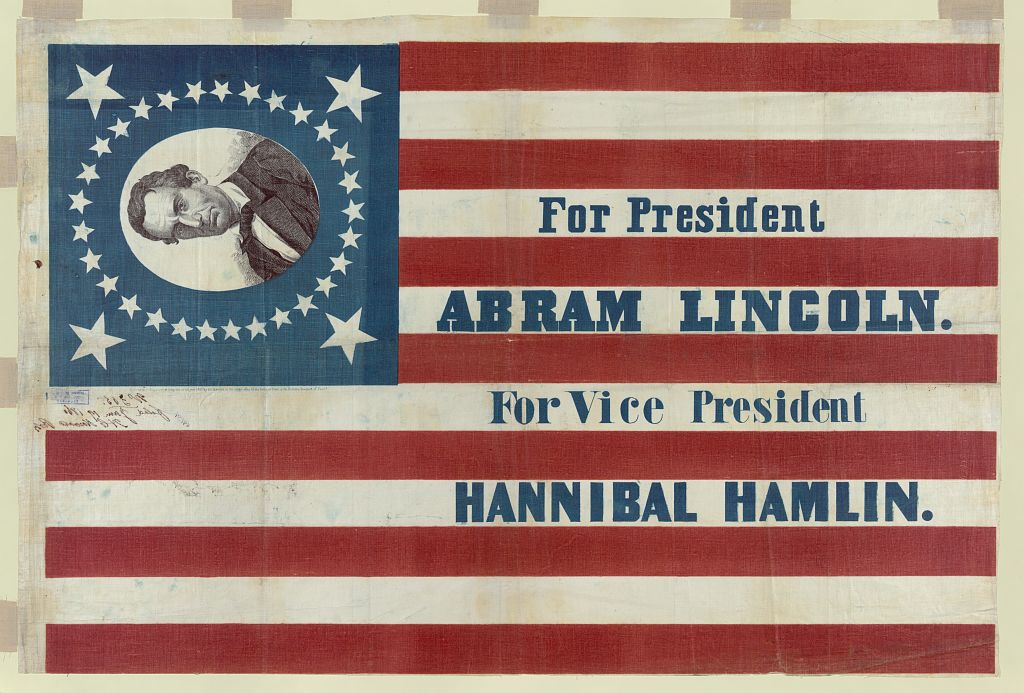
H. C. Howard printed this cloth flag for the Republican ticket, deposited for copyright on 17 June 1860. The ticket's names run across the stripes, and the printer spelled Lincoln's first name "Abram" to fit the design, according to the Library's caption. The flag itself carries the party. Read the technique: transfer.
The same printer made the same flag for the Constitutional Union ticket, deposited on 8 June 1860. Read the technique: transfer.
The Southern Democratic ticket's banner survives here only as a paper proof, deposited on 12 July 1860, with an overprinted line describing a portrait that this specimen does not show. The tell is again the flag as carrier. Read the technique: transfer.
The Northern Democratic specimen is a reversed, overprinted version of the Breckinridge proof, deposited the same day. Douglas had been nominated at Baltimore in June 1860. Read the technique: transfer.
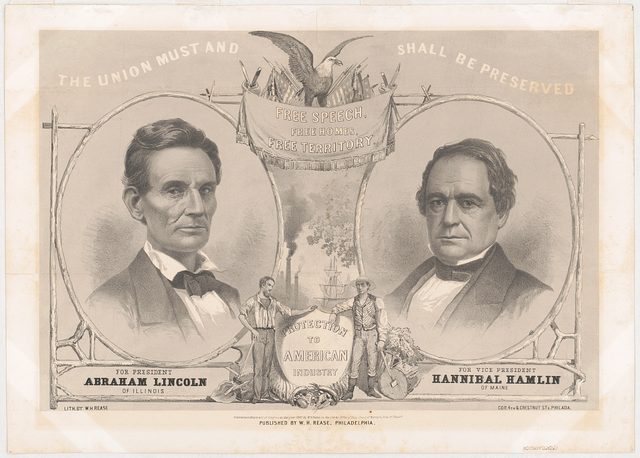
W. H. Rease's Republican banner mixes a virtue-word slogan, "The Union must and shall be preserved", with specific policy lines: "Free Speech, Free Homes, Free Territory" and "Protection to American Industry". The Library says Rease made a similar banner for the Bell-Everett ticket. Read the technique: glittering generalities.
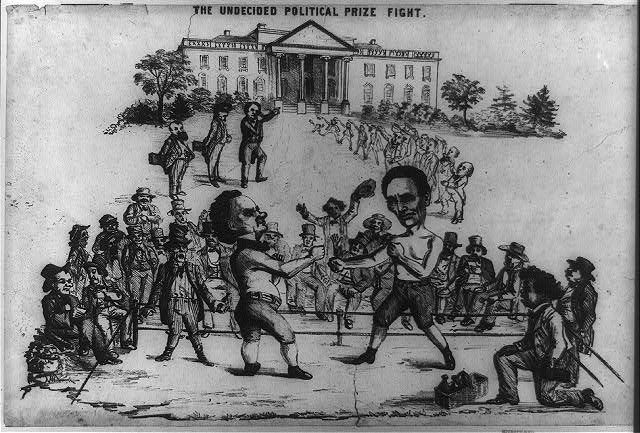
This anonymous 1860 print is pro-Breckinridge, according to the Library's summary. Douglas and Lincoln box while Breckinridge, per the Library, thumbs his nose behind them. Douglas has an Irish second and Lincoln a kneeling Black man with a basket of bottles. Pairing each rival with a caricatured group tries to attach contempt for the group to the candidate. Read the technique: name-calling.
What did Lincoln and McClellan's sides print in 1864?
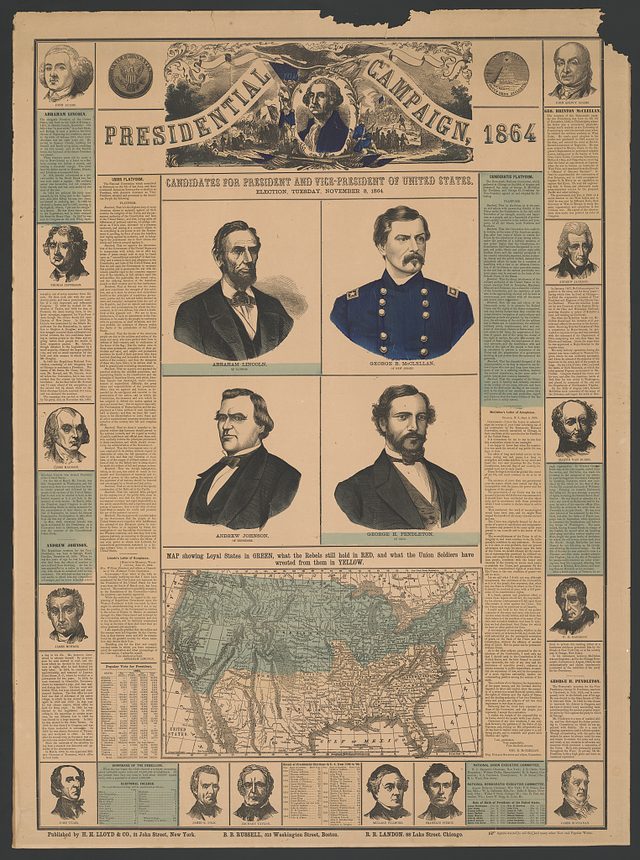
The 1864 election page quotes the platforms. The Republican (National Union) platform rejected any peace "except such as may be based upon an unconditional surrender". The Democratic platform, adopted at Chicago, called for "immediate efforts" toward "a cessation of hostilities, with a view of an ultimate convention of the States". Lincoln won 212 electoral votes to 21.
Explain moreShow less
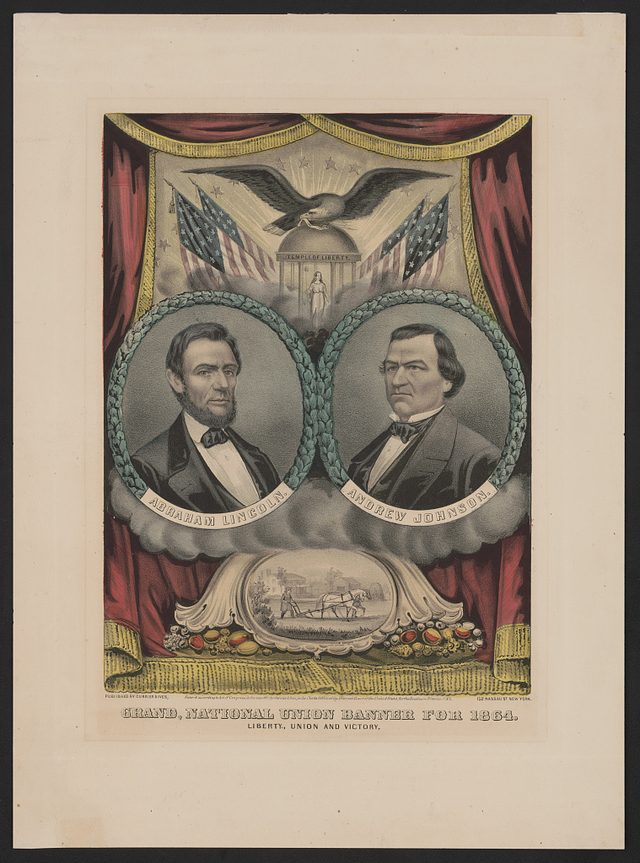
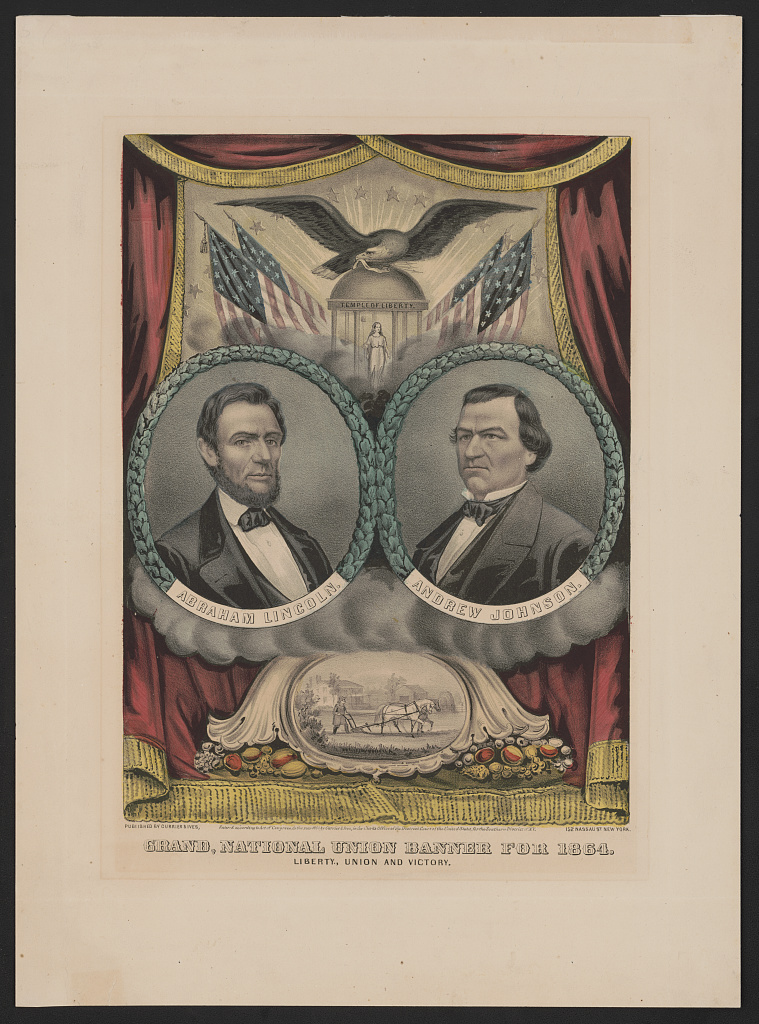
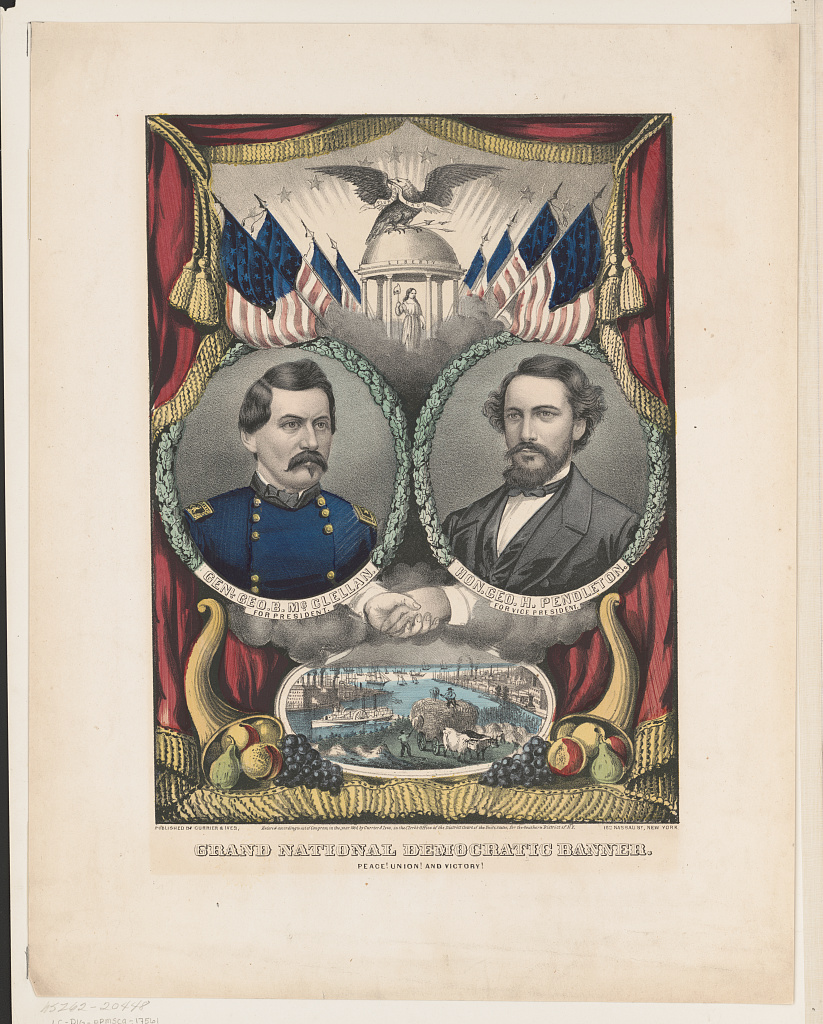
Currier & Ives published a banner for each side from nearly the same design.
The Lincoln-Johnson banner is titled "Liberty, union and victory". The Library notes it promises peace and prosperity to come with re-election. Read the technique: glittering generalities.
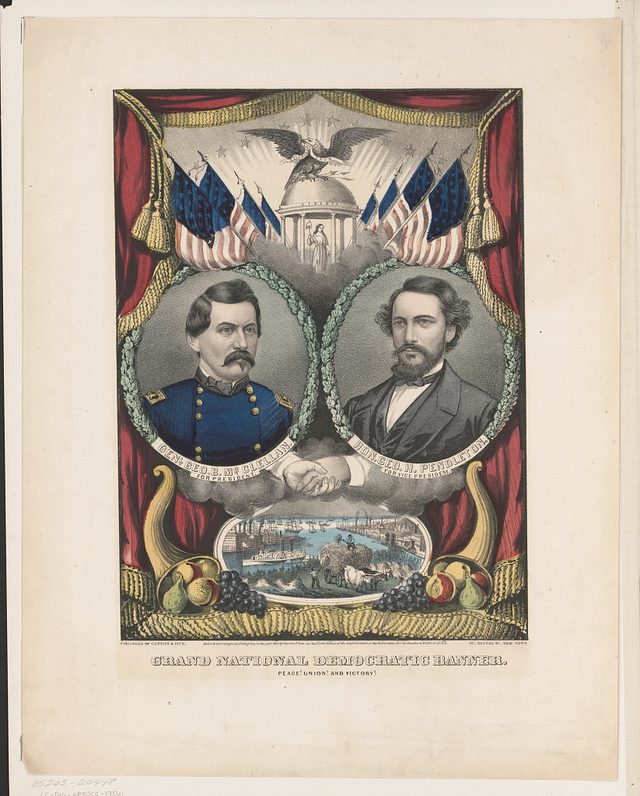
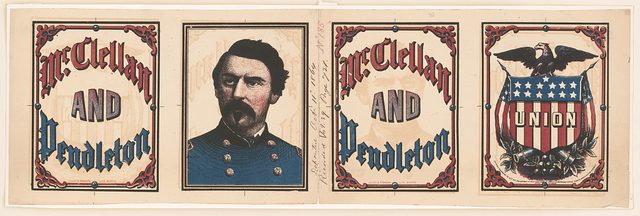
The McClellan-Pendleton banner is titled "Peace! Union! and victory!" and, per the Library, is almost identical to the Lincoln banner apart from the portraits, two extra flags and the vignette. The same symbols serve both tickets. Read the technique: glittering generalities.
The remaining 1864 prints are cartoons, and in this archive they are mostly hostile to McClellan.
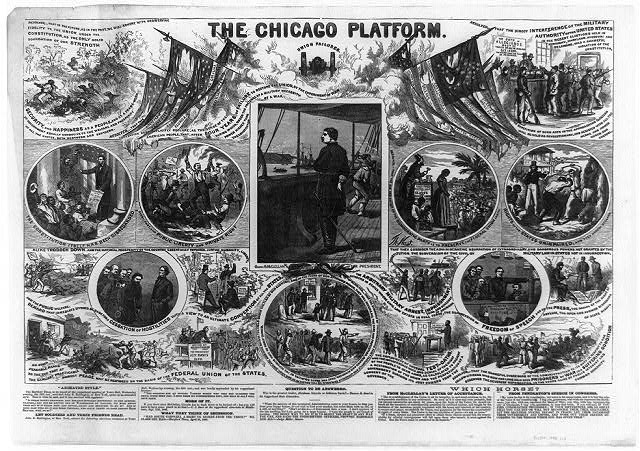
Thomas Nast signed this broadside, which is laid out like a platform sheet. Each Democratic resolution is paired with a scene, among them the 1863 New York draft riots, that the Library describes as supporting its reverse. The print puts the platform's wording in the opponent's mouth and answers each with a scene chosen to contradict it. Read the technique: straw man.
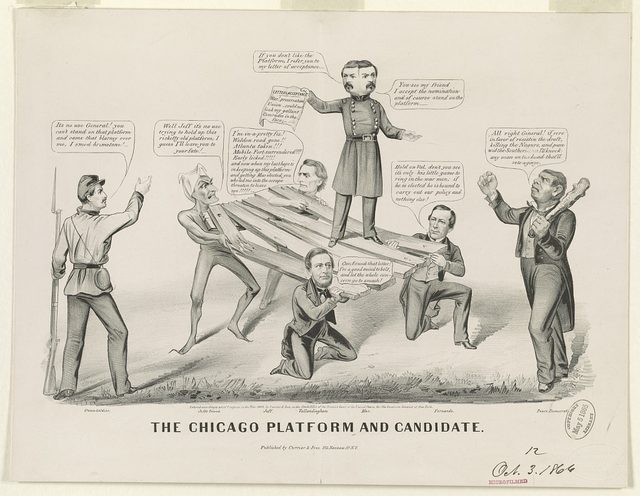
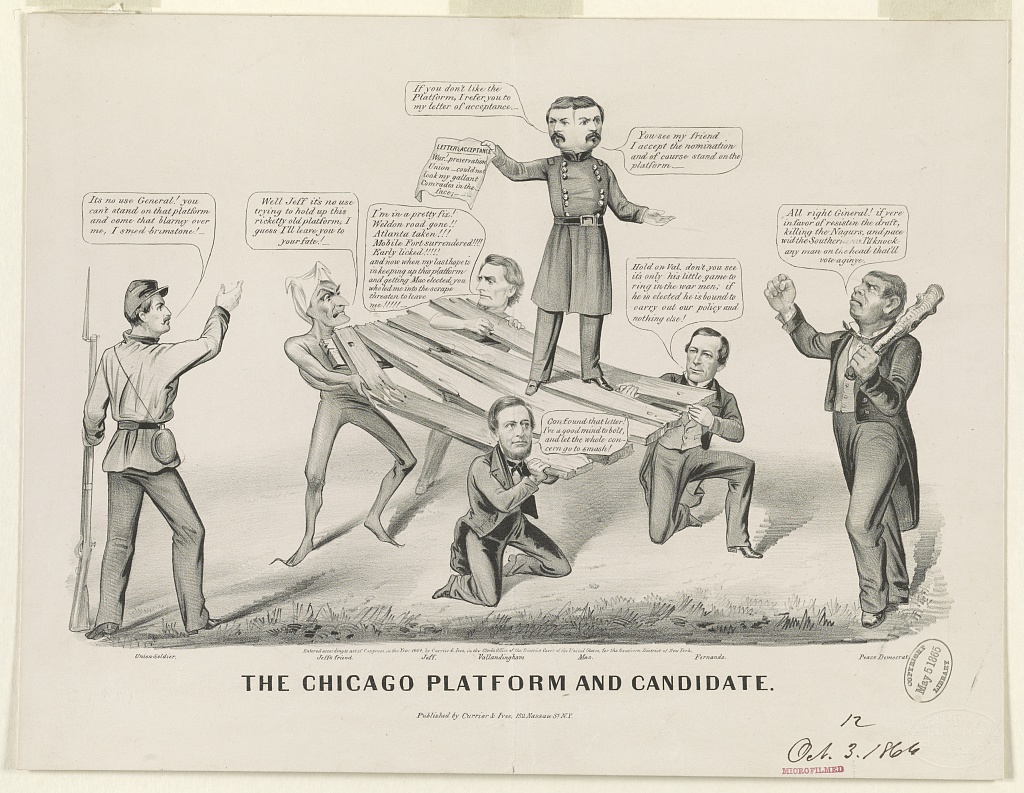
Currier & Ives, probably drawn by Louis Maurer, deposited this for copyright on 3 October 1864. McClellan has two faces, one citing his acceptance letter and one accepting the platform, and Davis lists Confederate losses at Atlanta, Mobile and Weldon Road. The print also caricatures an Irish "Peace Democrat" with a club and uses a racial slur. Read the technique: name-calling.
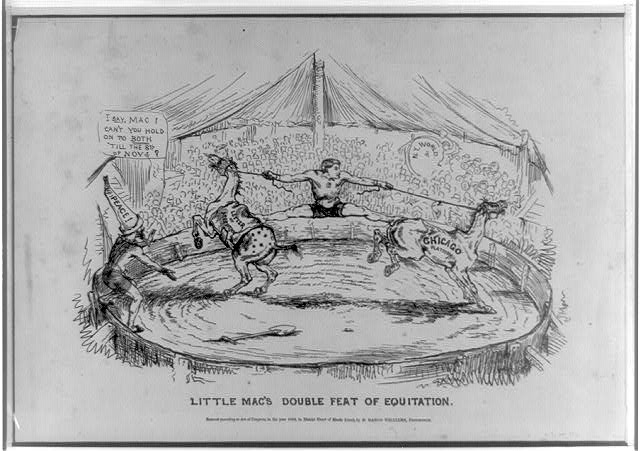
N. Bangs Williams of Providence drew McClellan as a circus rider on two horses while Pendleton, in a dunce cap marked "PEACE!", says "Can't you hold on to both till the 8th of Nov.?". It reduces the Democratic position to a contradiction between the letter and the platform. Read the technique: false dilemma.
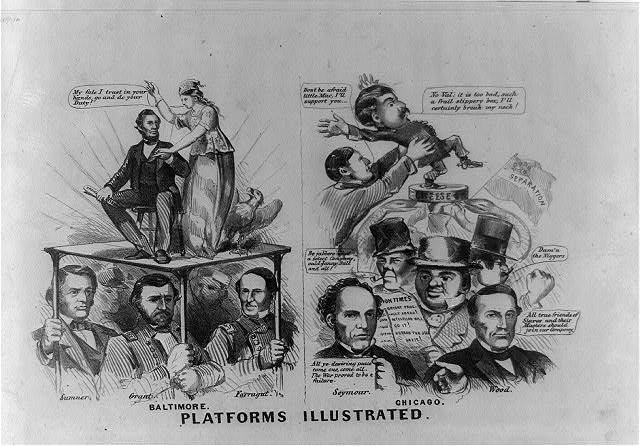
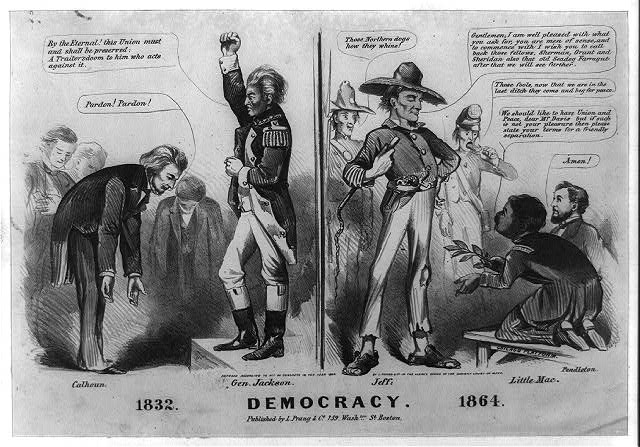
Louis Prang's two-panel print sets Jackson telling Calhoun that "this Union must and shall be preserved" against McClellan and Pendleton kneeling to Davis and asking terms for "a friendly separation". Davis answers by telling them to call back Sherman, Grant, Sheridan and Farragut. The Democratic platform asked for a convention of the states; the print renders it as surrender. Read the technique: straw man.
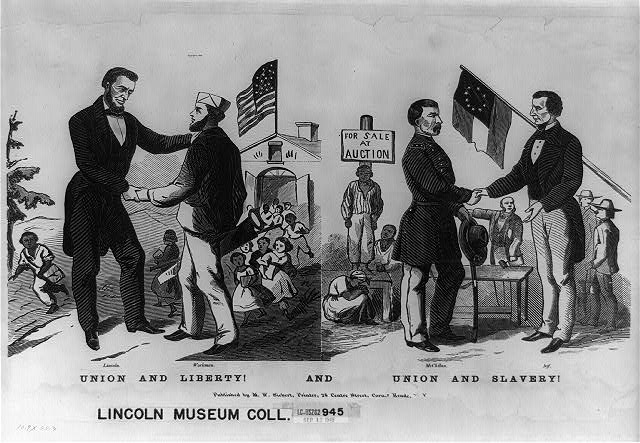
Martin W. Siebert's wood-engraving frames the vote as union with freedom against union with slavery and accuses McClellan Democrats of preferring to keep slavery in order to restore the Union. The choice is binary by design. Read the technique: false dilemma.
What did the Democratic side print against Lincoln?
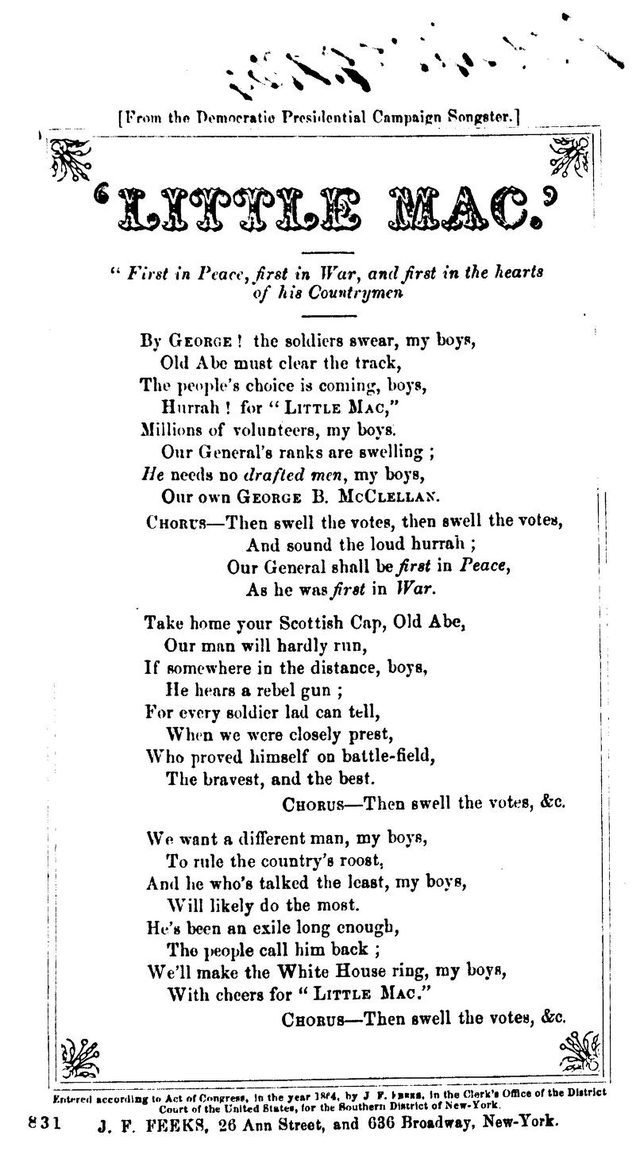
The archive holds fewer Democratic cartoons, and the ones it holds, such as the 1864 prints, use racial caricature of Black people against Republicans.
Explain moreShow less
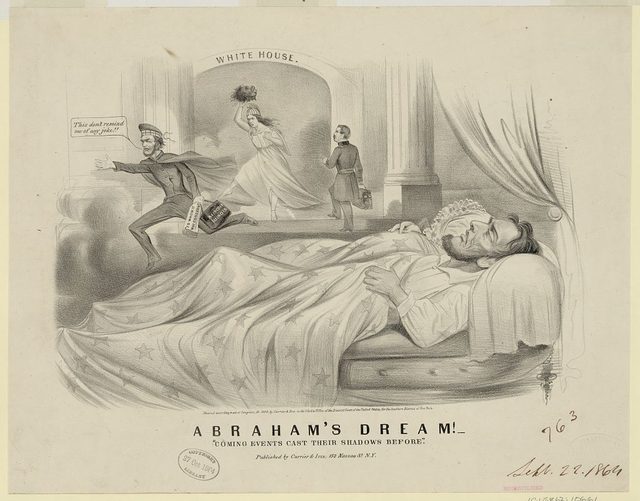
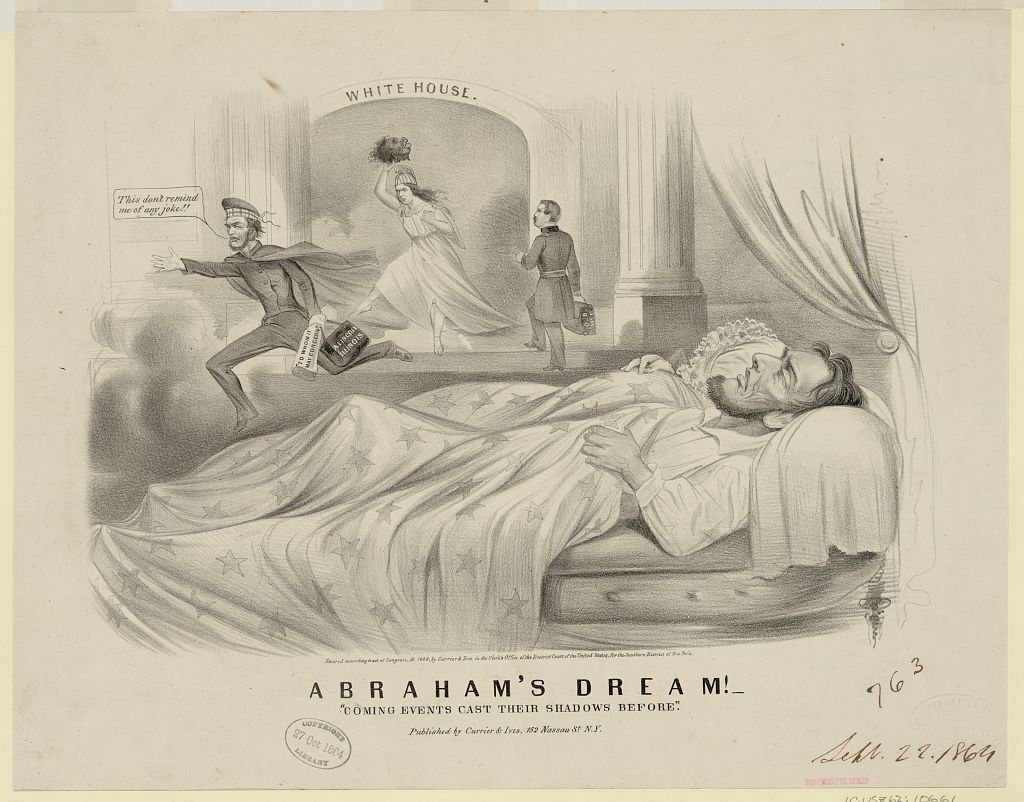
Currier & Ives, probably drawn by Louis Maurer, published this in September 1864 against Lincoln. In the dream Columbia kicks Lincoln out of the White House as McClellan walks in; Lincoln flees in the Scotch cap of the 1861 Baltimore story and says "This don't remind me of any joke!!". The print shows a severed Black head. The firm that made the Lincoln banner also made this print. Read the technique: fear appeal.
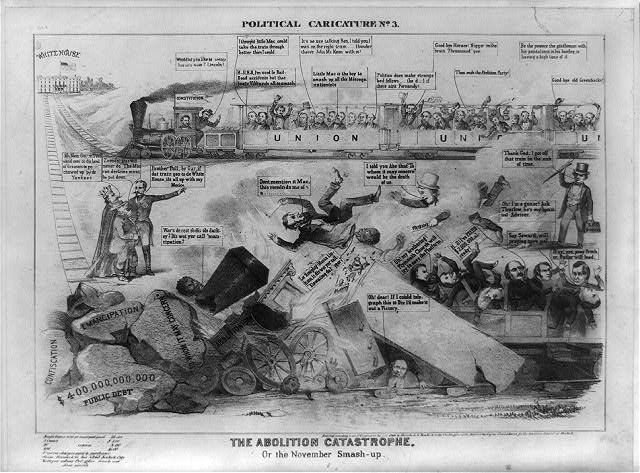
G. W. Bromley & Co. of New York published this Democratic print. The Republican train is wrecked beneath a "$400,000,000 public debt", and passenger captions use the label "Miscegenationists" and a racial slur. The Black figures in the wreck are caricatured. Read the technique: scapegoating.
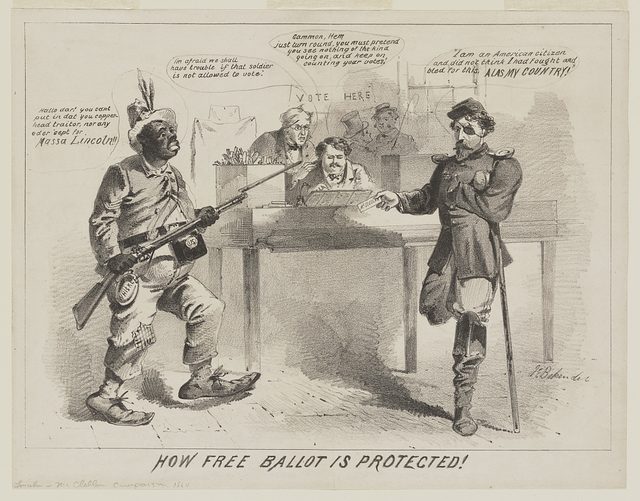
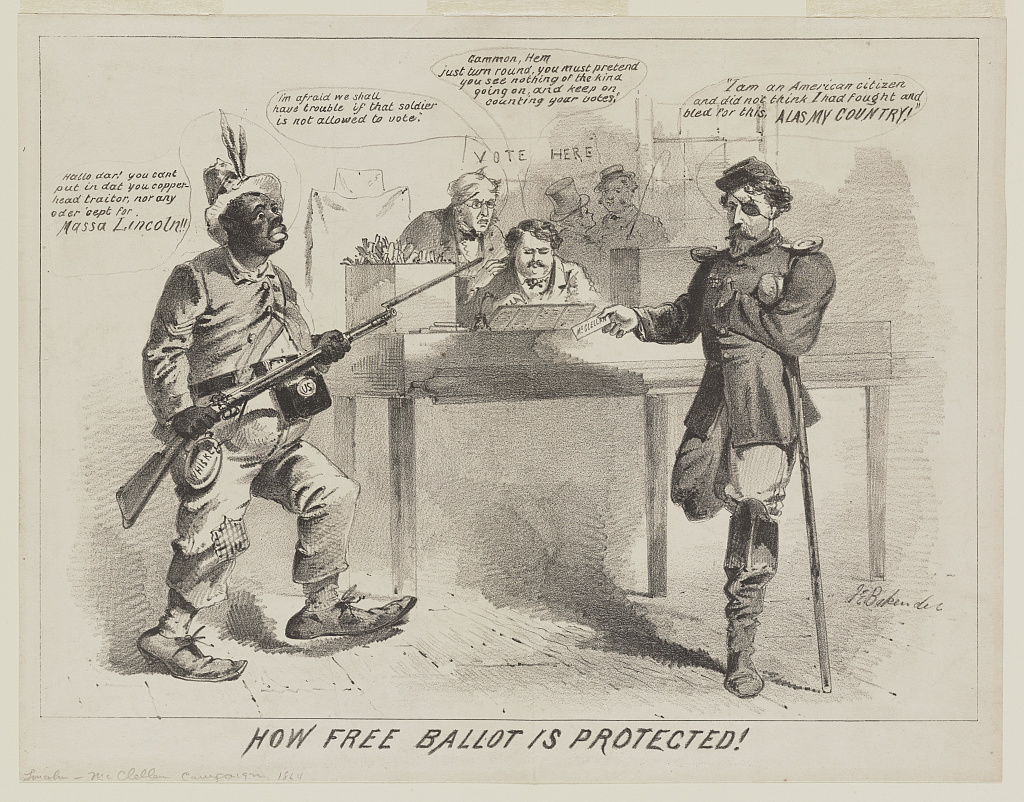
Joseph E. Baker of Boston drew this for the McClellan side. A Black soldier, drawn in dialect caricature, bars a white veteran from casting a McClellan ballot. It charges the Republicans with election corruption and with backing equal rights for Black Americans. Read the technique: loaded language.
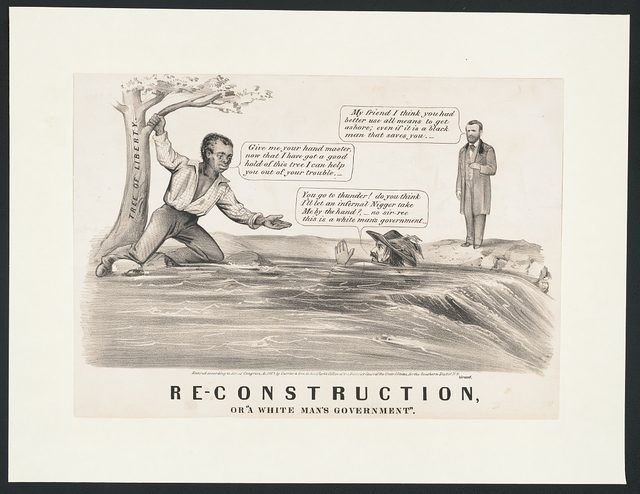
What do the Reconstruction prints add?
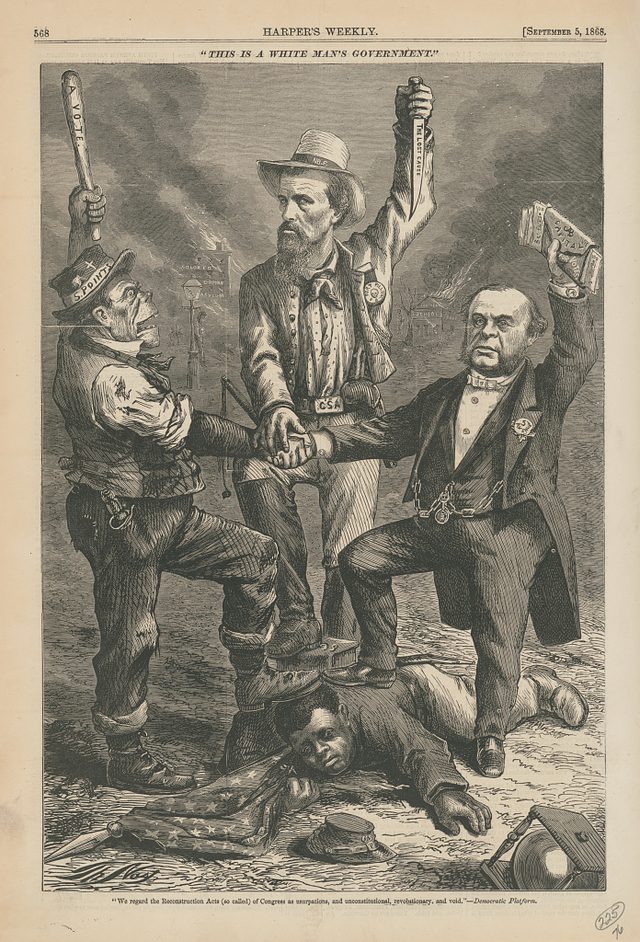
These two are not Civil War items. They are from the 1868 campaign, three years after the war, and are included because they show how the war was argued in the next election. Both are Republican, so they do not balance the Democratic prints above; a Democratic 1868 print is outside this page.
Explain moreShow less
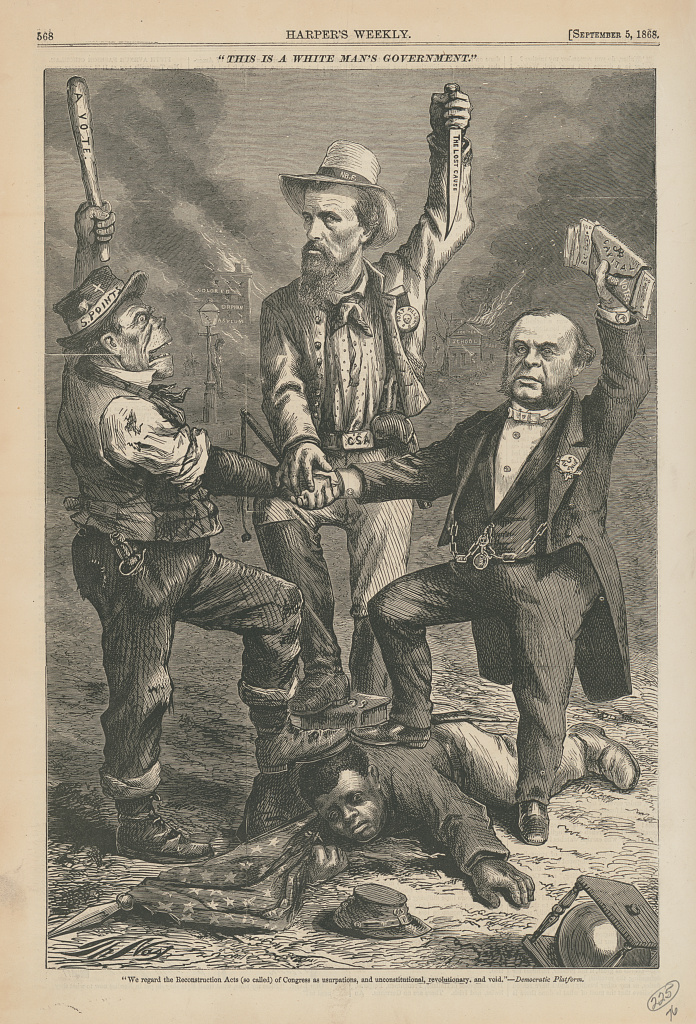
Thomas Nast's cartoon ran in Harper's Weekly on 5 September 1868. One figure carries a knife marked "The Lost Cause" and a belt buckle reading "CSA", beside a club marked "A VOTE" and a man holding a roll of money. The caption quotes the Democratic platform on the Reconstruction Acts, calling them "usurpations, and unconstitutional, revolutionary, and void". The image links the party to violence and the Confederacy. Read the technique: name-calling.
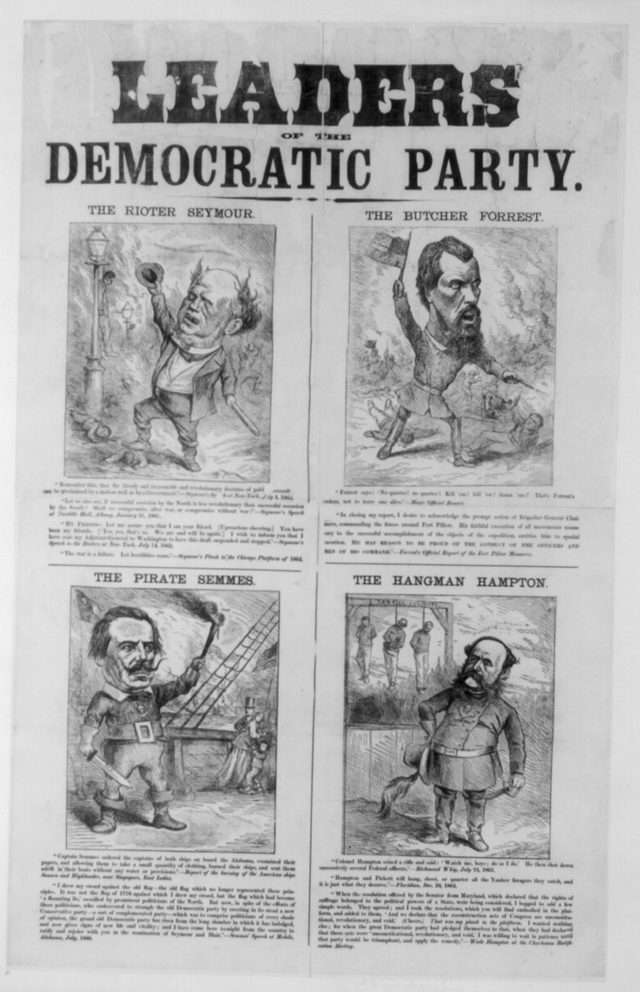
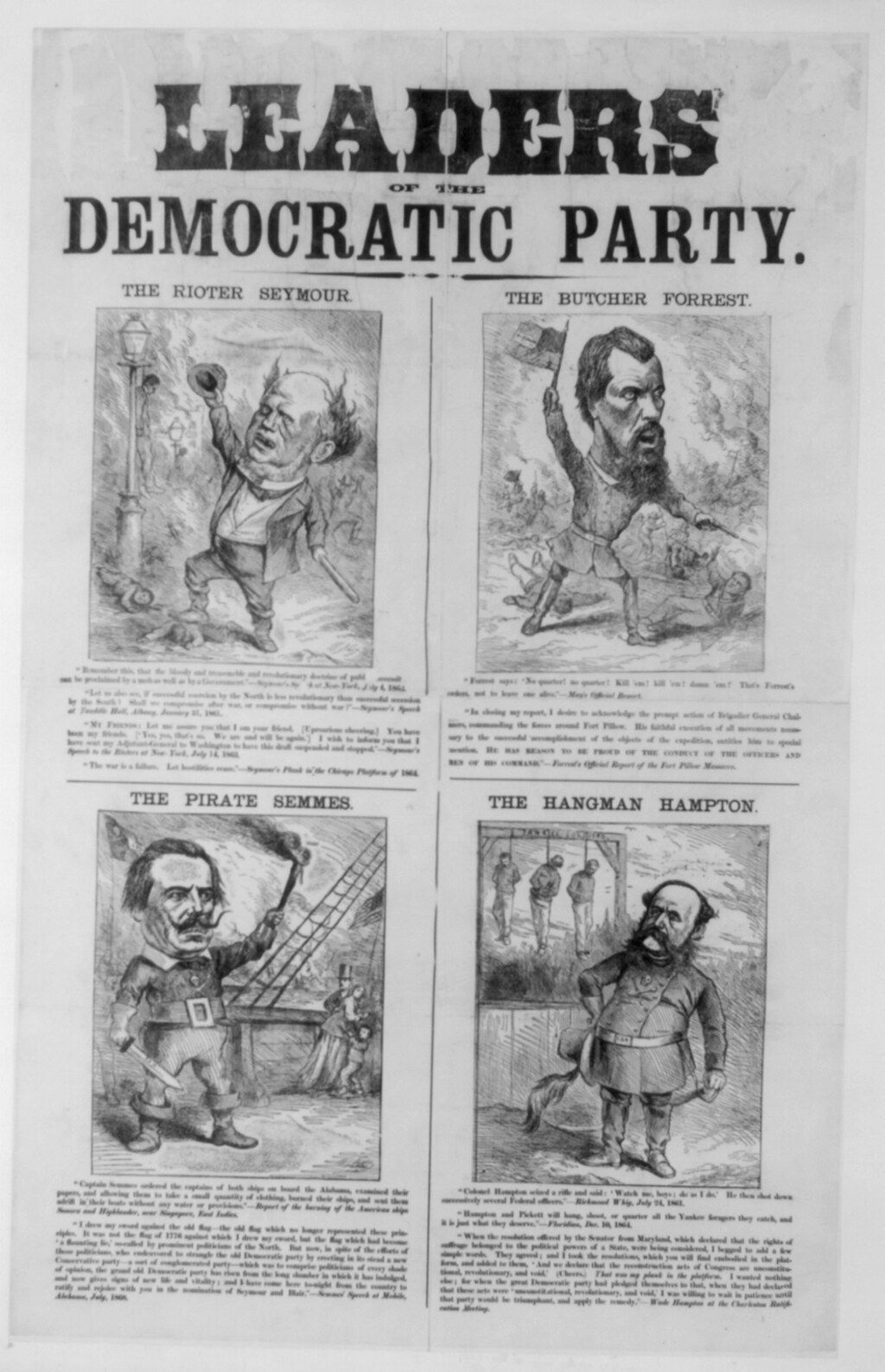
Nast's four-panel broadside labels Horatio Seymour "The Rioter", Nathan Bedford Forrest "The Butcher", Raphael Semmes "The Pirate" and Wade Hampton "The Hangman", each over extracts from their own speeches or reports. The presidential nominee is set beside Confederate officers by selected quotation. Read the technique: ad hominem.
How does the record compare across sides?
Both parties used the same toolkit in these prints: the flag, a portrait roundel, a slogan, and the opponent as a villain. The archive's one matched pair, the 1864 Currier & Ives banners, is nearly identical for the two tickets. On the Union side, the cartoons held attack the Democratic platform as treason or surrender. On the Democratic side, the cartoons held attack emancipation and Black political participation, and the racial caricature in them is direct. These are differences in content, shown as printed, within an archive that holds only Northern publishers. It cannot say how Confederate propaganda compared in scale or method.
How to read one
- Who issued it? Printers such as Currier & Ives sold to more than one side.
- What is the ask? Vote for one ticket, or against another.
- What carries the ask? The flag, a virtue word, a villain, or a forced choice.
- What is left out? What the opposing ticket said, beyond a selected quotation.
Browse Civil War propaganda
See the full set below, and the 1856 election page for the campaign before the war, the 1868 election page for Reconstruction, propaganda examples for other periods, and propaganda leaflets for the leaflet record the Civil War years lack here.