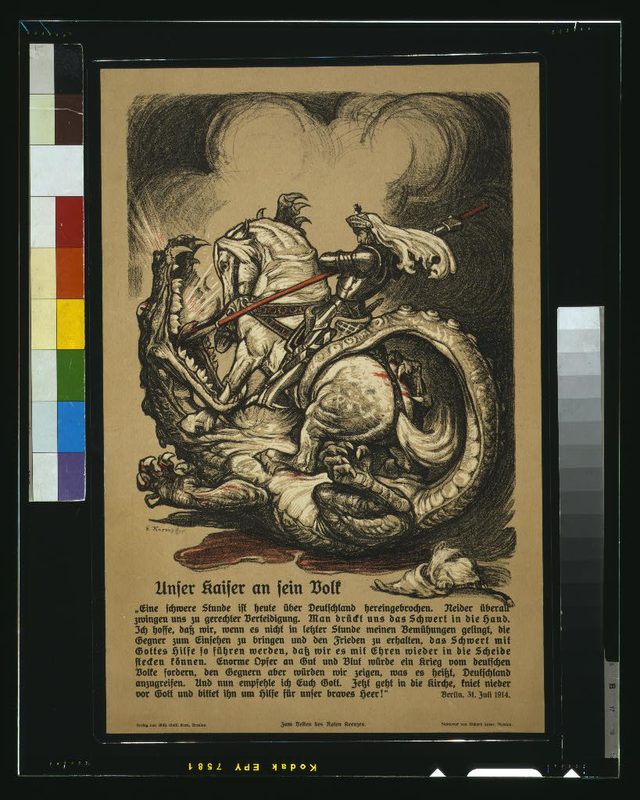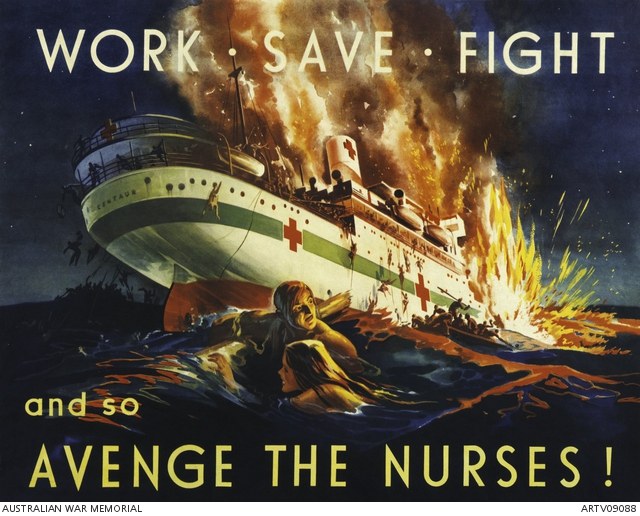
Content note. One German print here (1914) presents the war as a defence against envious rivals, and an Australian poster of 1943 uses a hospital-ship sinking to call for revenge. Both are shown as issued. Showing an item is not endorsing it.
What were Red Cross posters for?
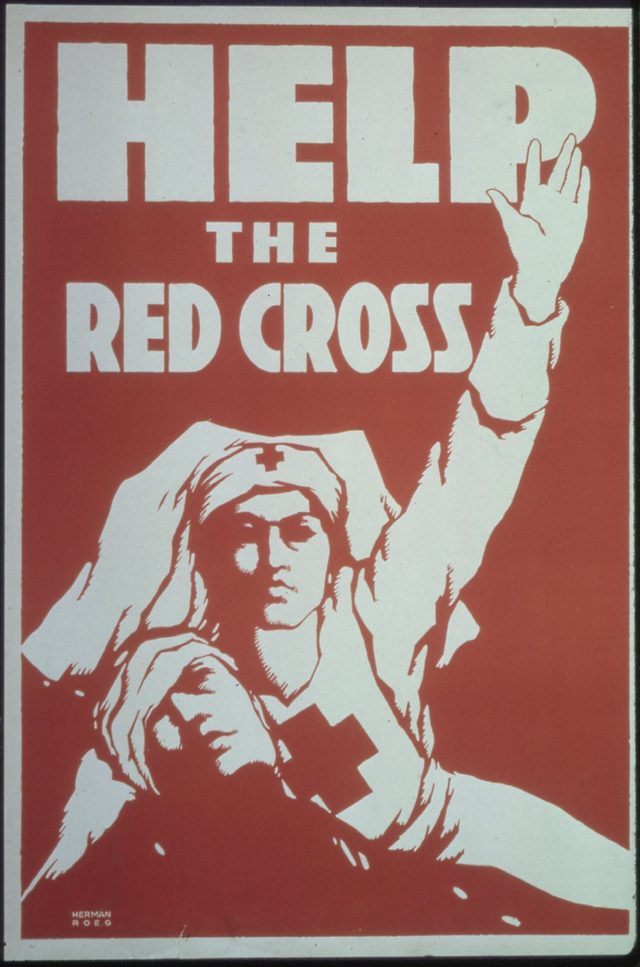
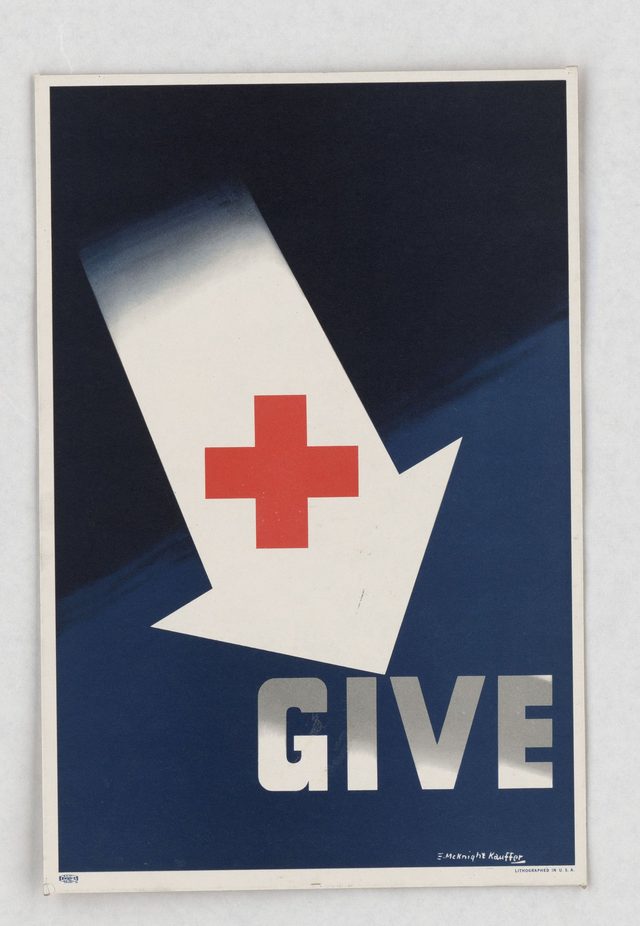
Red Cross posters of the two world wars asked the public for money, members, trained nurses and, in the Second World War, blood. Most here were issued by the American Red Cross; others come from Britain, Belgium, Germany, Australia and South Africa. The emblem itself did much of the persuading, which the technique tag calls Transfer.
World War I: funds, members and nurses
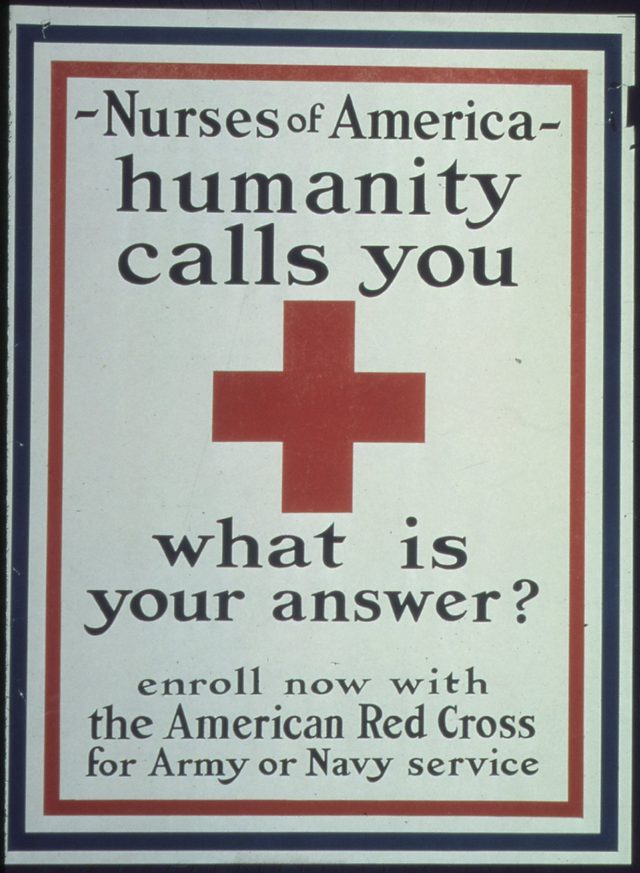
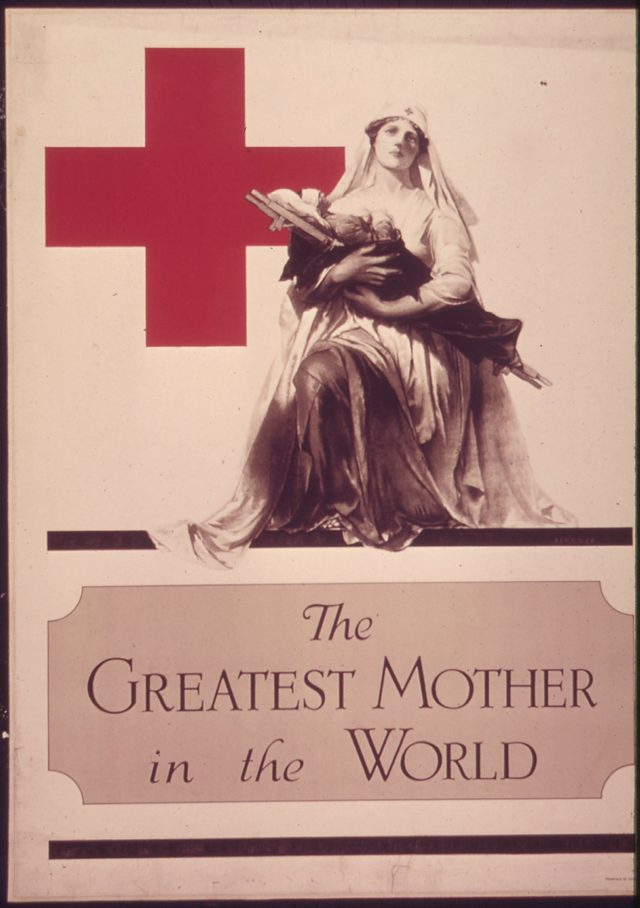
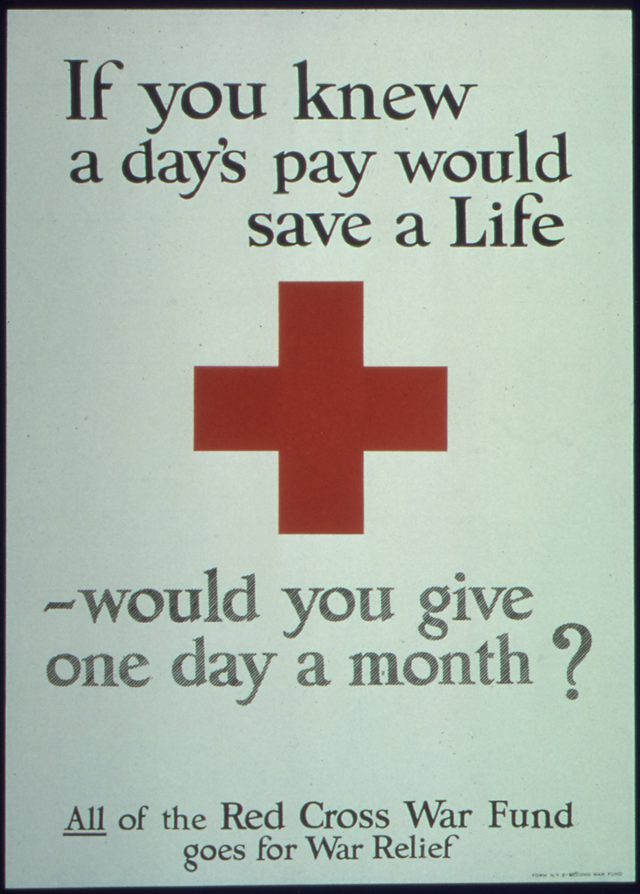
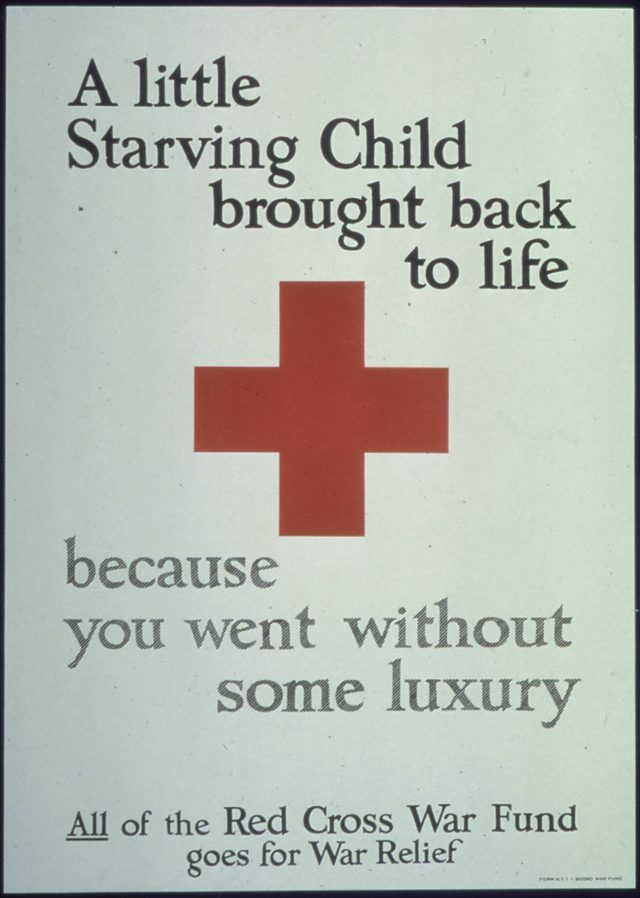
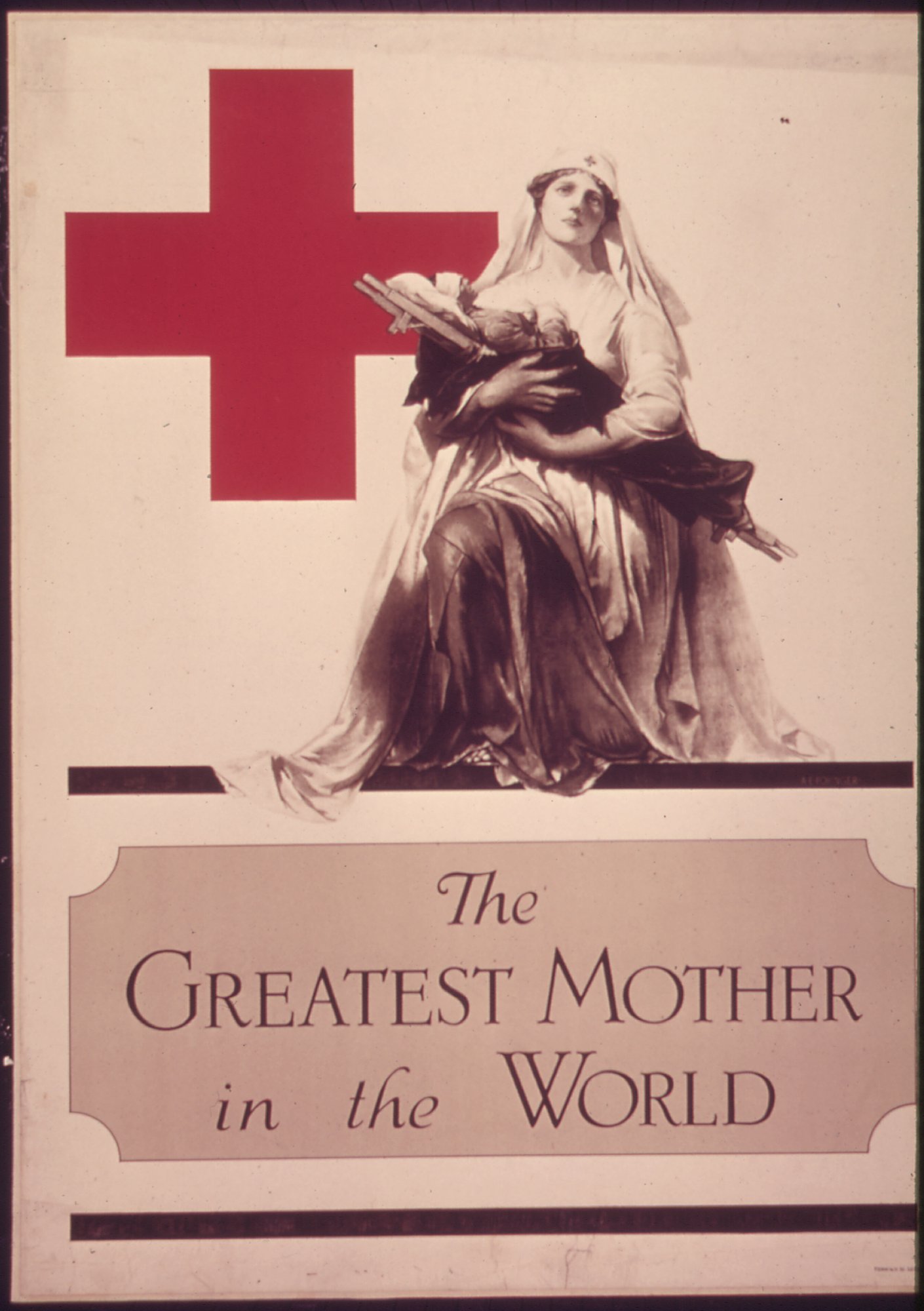
The American sheets of 1917 and 1918 are often just a red cross and a few lines. "If You Knew a Day's Pay Would Save a Life" turns a donation into a life saved, and "A Little Starving Child Brought Back to Life" ties one sacrifice to one rescue; both name the Second War Fund of 1918. "The Greatest Mother in the World" borrows religious imagery for the organisation, and "Nurses of America, Humanity Calls You" (Glittering generalities) recruits for Army and Navy service.
Explain moreShow less
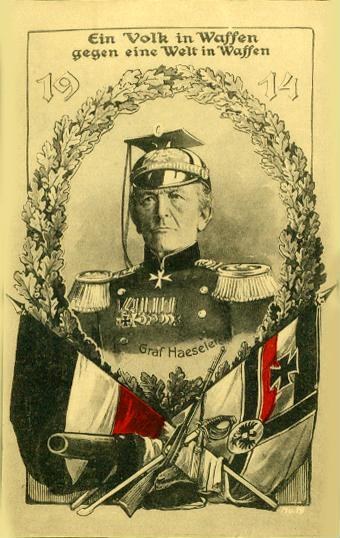
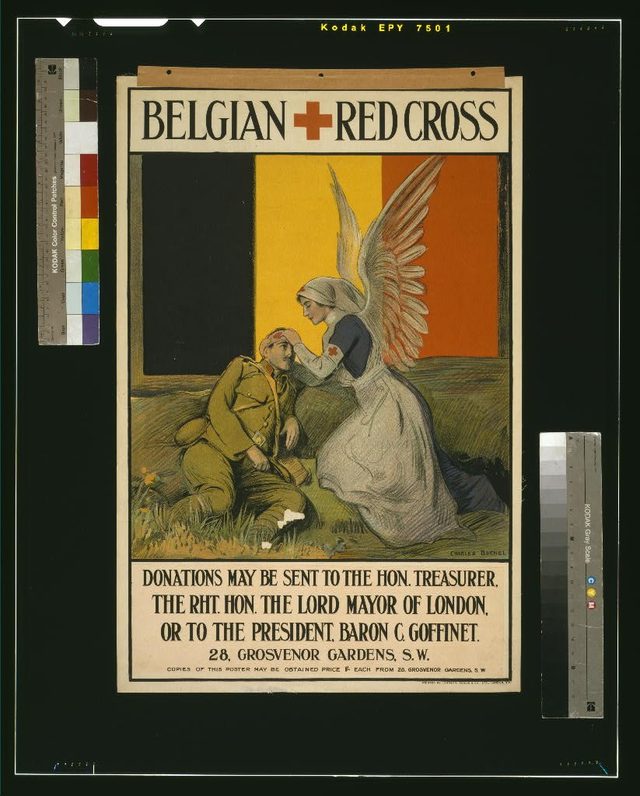
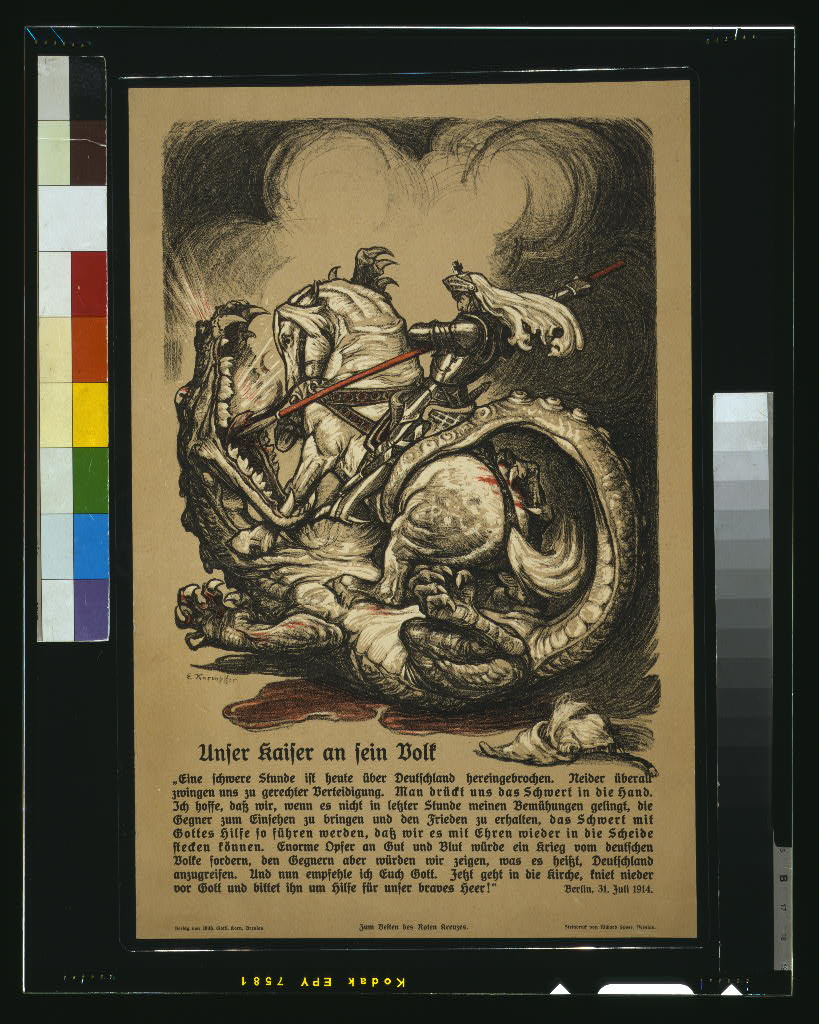
Other belligerents used the same emblem. A London poster for the Belgian Red Cross gives a nurse an angel's wings in front of the Belgian flag. In Germany, a Red Cross welfare postcard of 1914 prints a named general under the slogan "A People in Arms against a World in Arms", and a benefit print sold for the Red Cross carries the Kaiser's address of 31 July 1914 under a Saint George.
World War II: blood donors
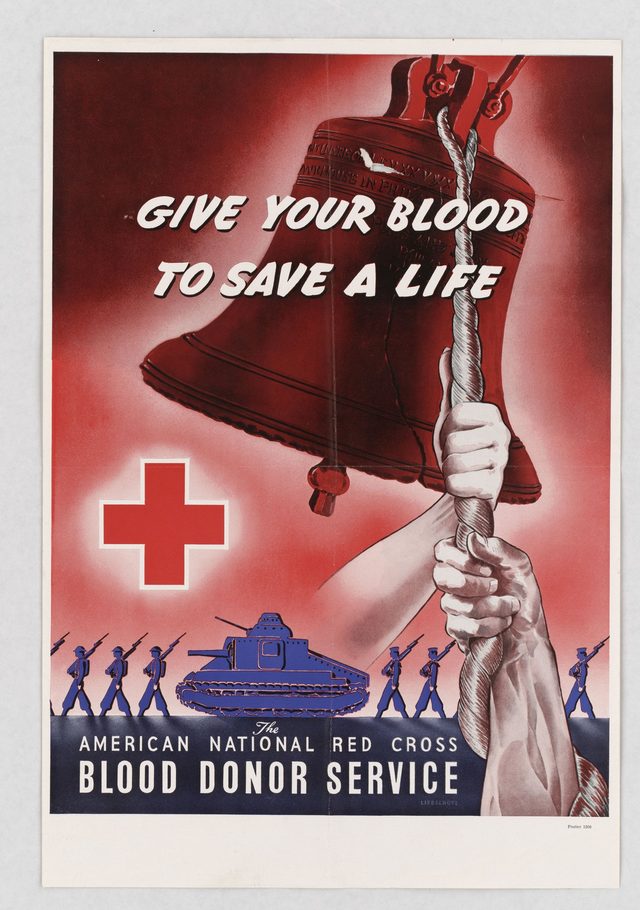
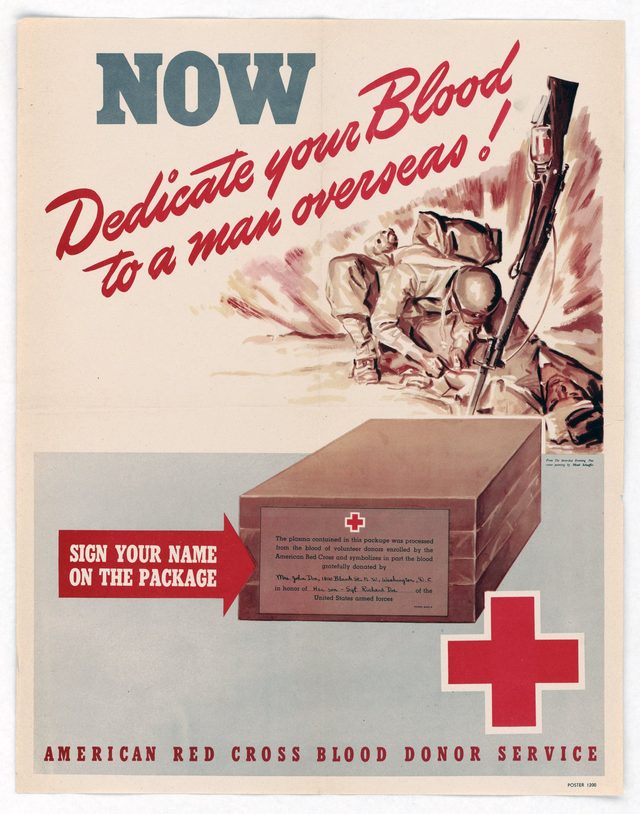
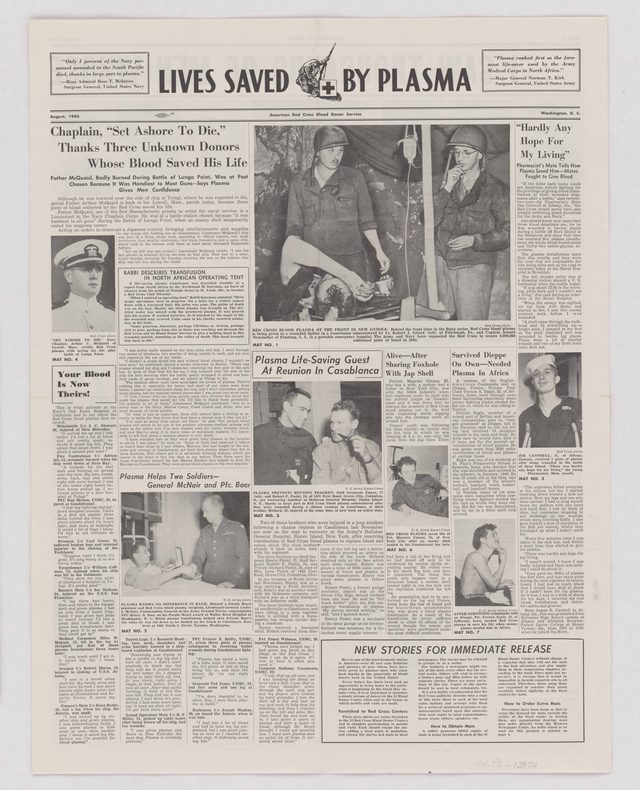
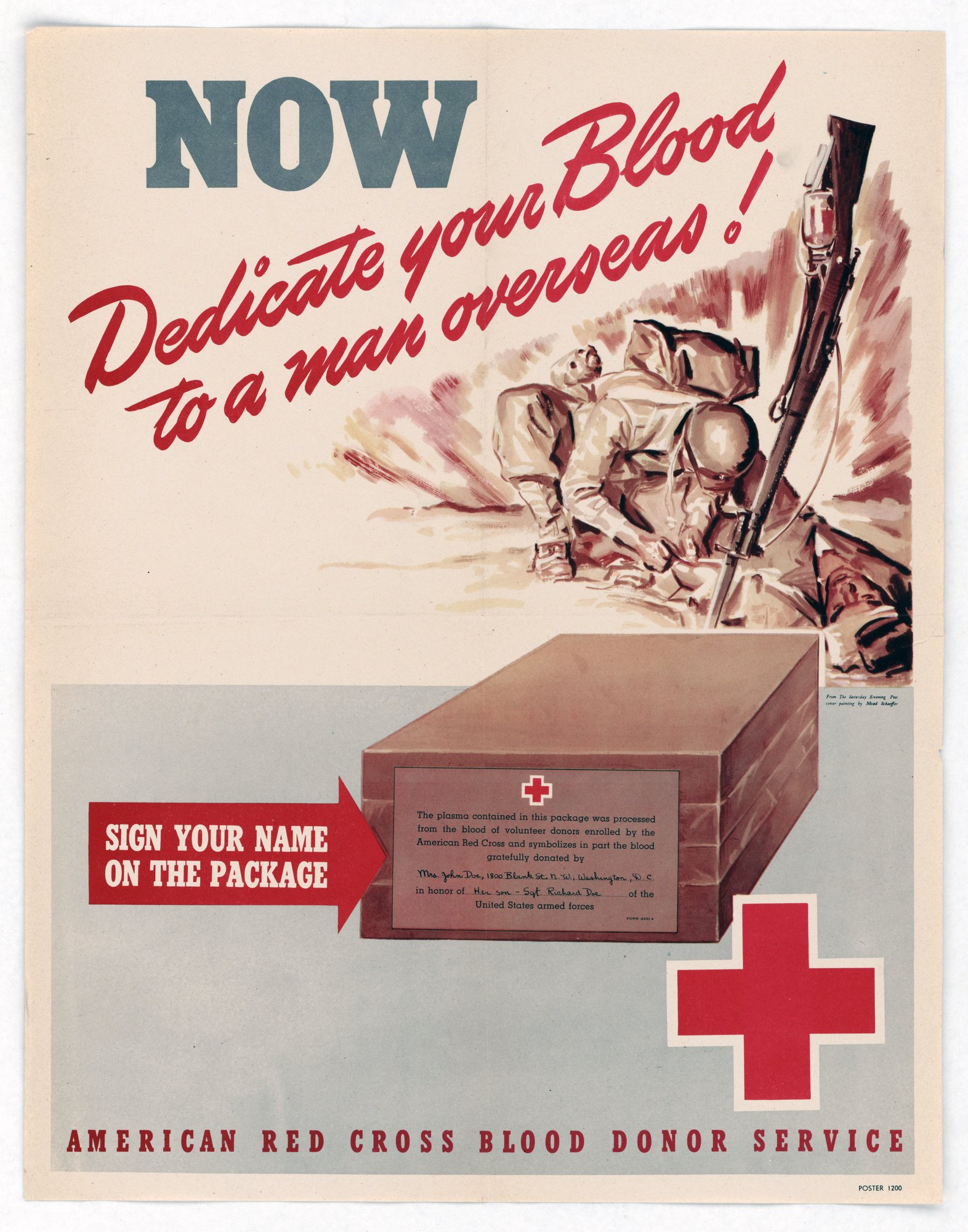
The American Red Cross Blood Donor Service tied the gift to a soldier: "Now dedicate your blood to a man overseas!" shows a plasma package with a label to sign. A 1943 press sheet, "Lives saved by plasma", gave local papers named patients and surgeons-general to quote (Testimonial).
Explain moreShow less
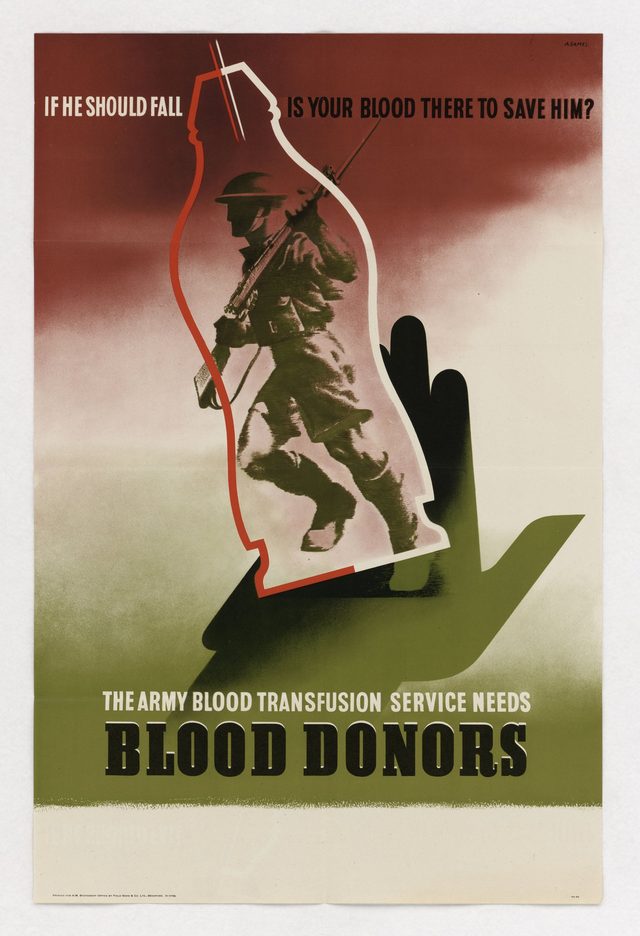
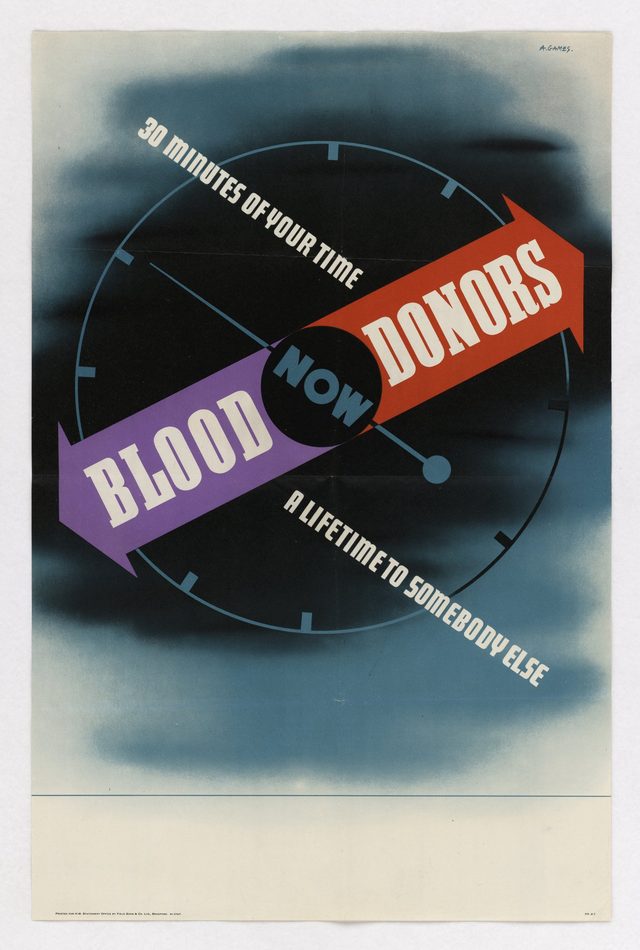
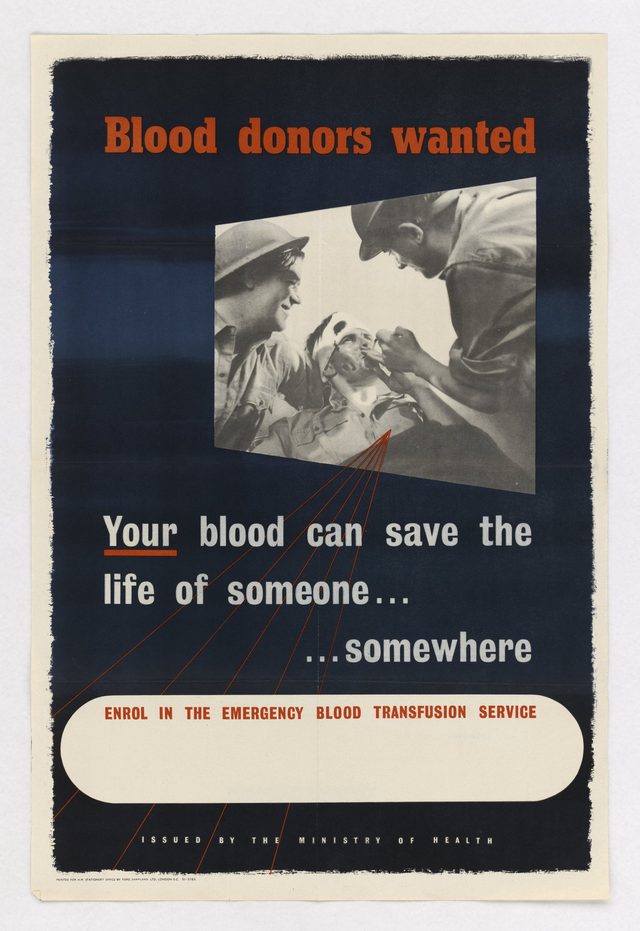
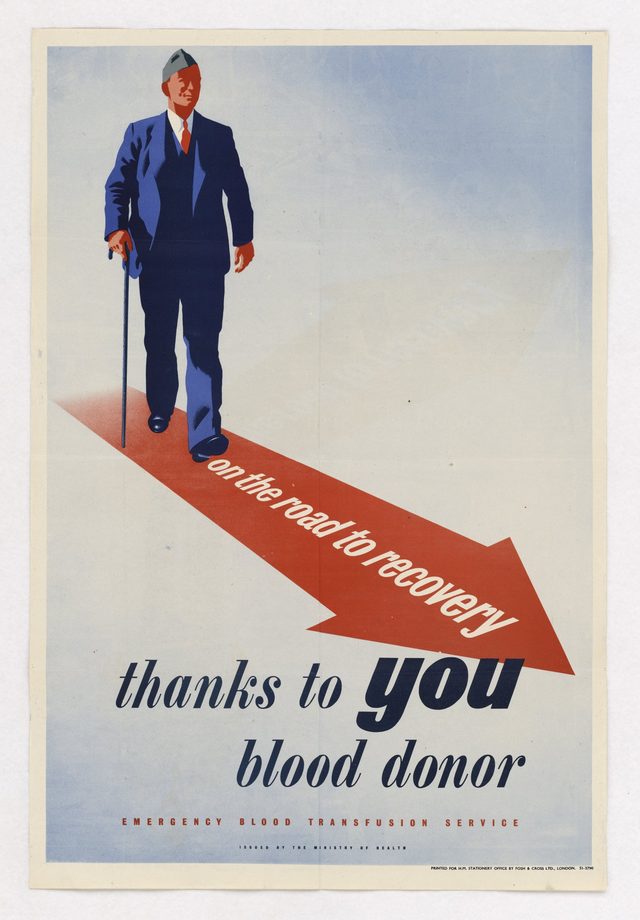
British government posters of the same war, several by Abram Games, set small cost against large benefit ("30 minutes of your time, a lifetime to somebody else", Card stacking), ask "If he should fall, is your blood there to save him?" (Fear appeal) and thank the donor with a patient on the road to recovery (Plain folks).
Nursing and relief work, 1939 to 1945
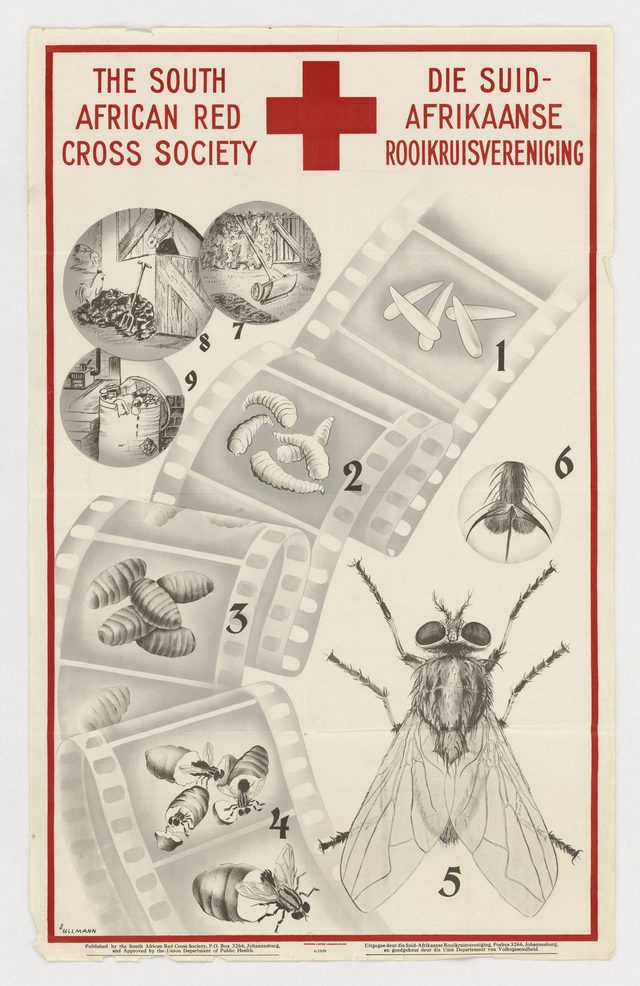
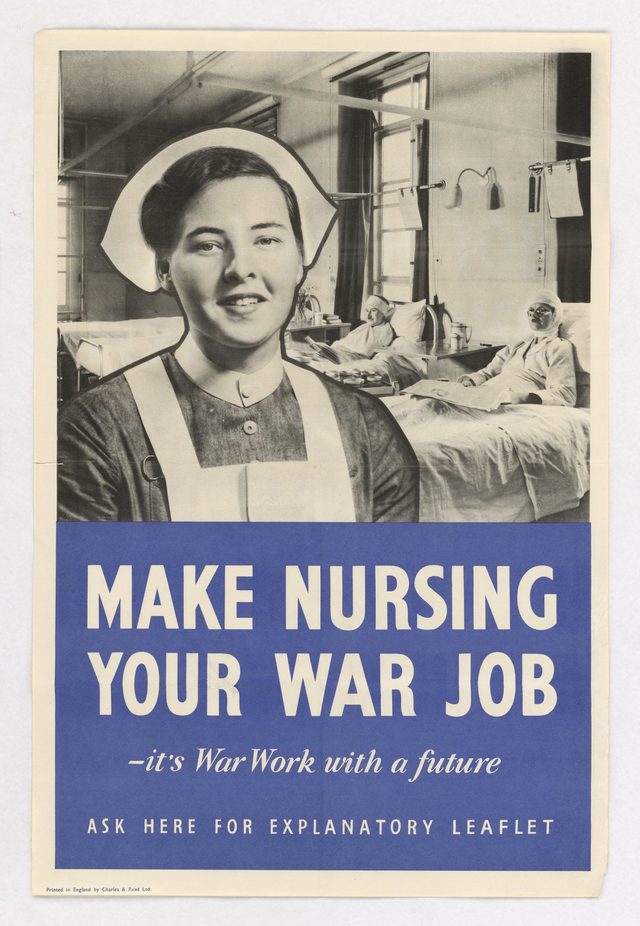
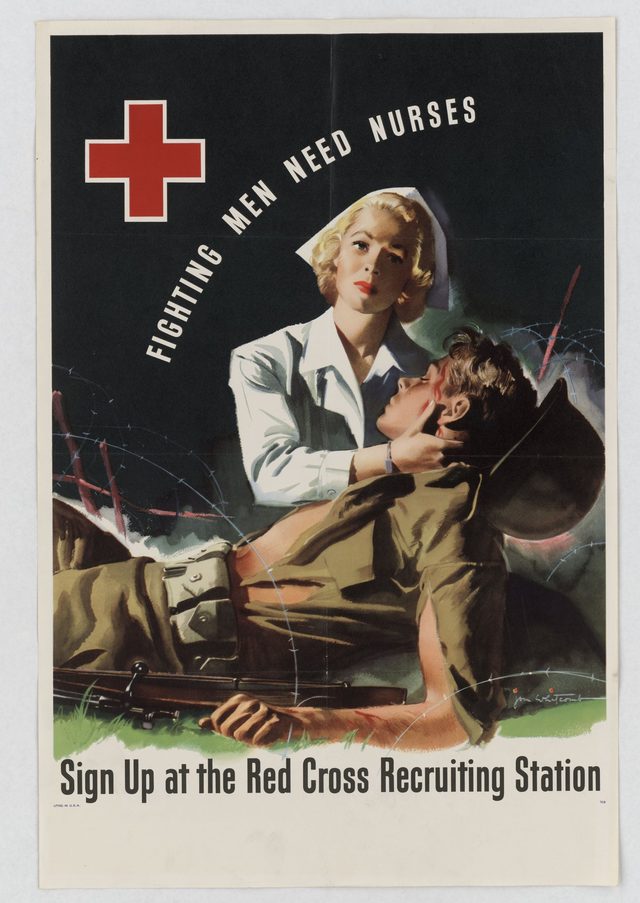
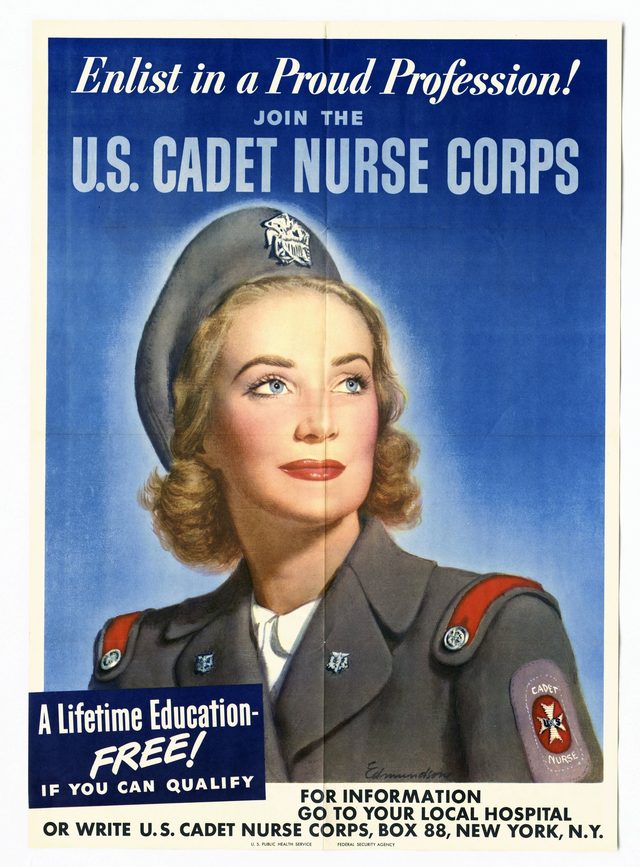
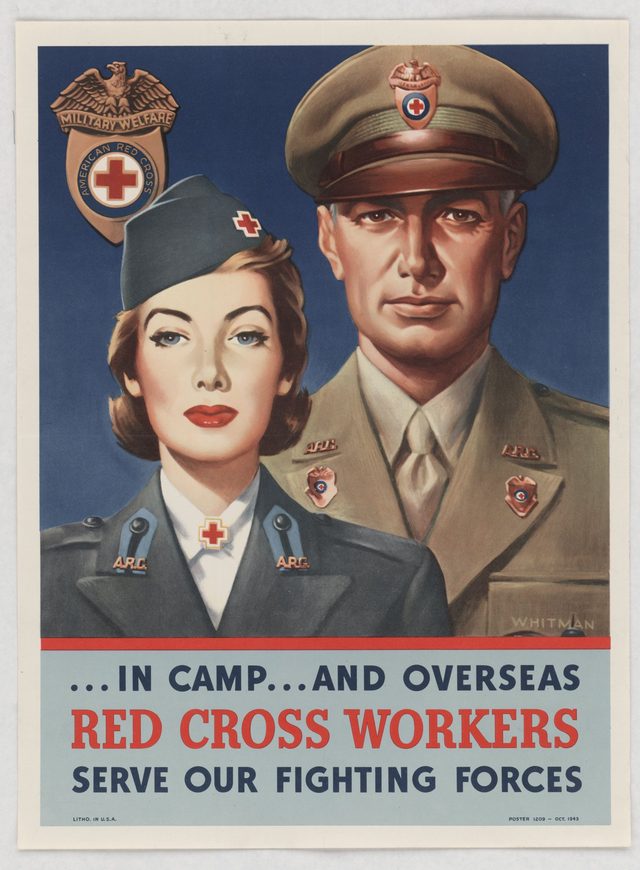
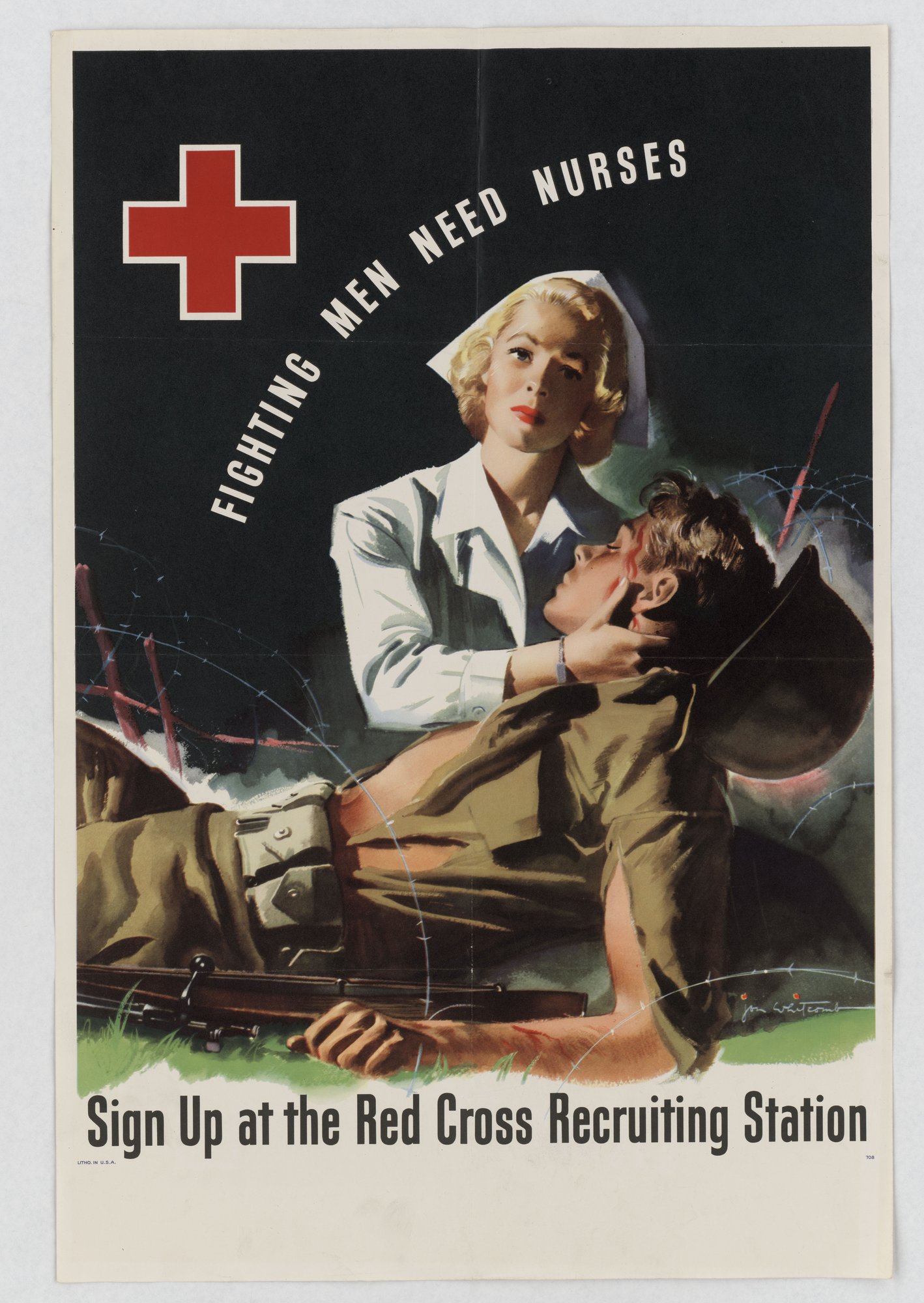
"Fighting Men Need Nurses" (1941) sends readers to a Red Cross recruiting station. State bodies ran parallel campaigns: the U.S. Cadet Nurse Corps and Army Nurse Corps, and a British poster, "Make Nursing Your War Job". A 1943 Red Cross poster shows its uniformed workers beside the Military Welfare badge. In Australia, "Work, Save, Fight and so Avenge the Nurses!" shows the hospital ship Centaur, sunk on 14 May 1943 with 268 dead, 11 of the 12 nurses aboard among them. A South African Red Cross sheet of 1939 on the house-fly shows the emblem lending authority to plain health instruction.
What the collection does not hold
- Not here: Red Cross posters after 1945, and posters from the Red Crescent societies.
- Not here: French, Russian, Japanese and Italian Red Cross appeals of either war.
- Not here: figures for money raised or blood given by any campaign.
Sources and further reading
Sources
U.S. National Archives (World War I and World War II poster series), Library of Congress, Australian War Memorial and Europeana…
U.S. National Archives (World War I and World War II poster series), Library of Congress, Australian War Memorial and Europeana 1914-1918. Each item in the grid carries its own source, date basis and rights note.