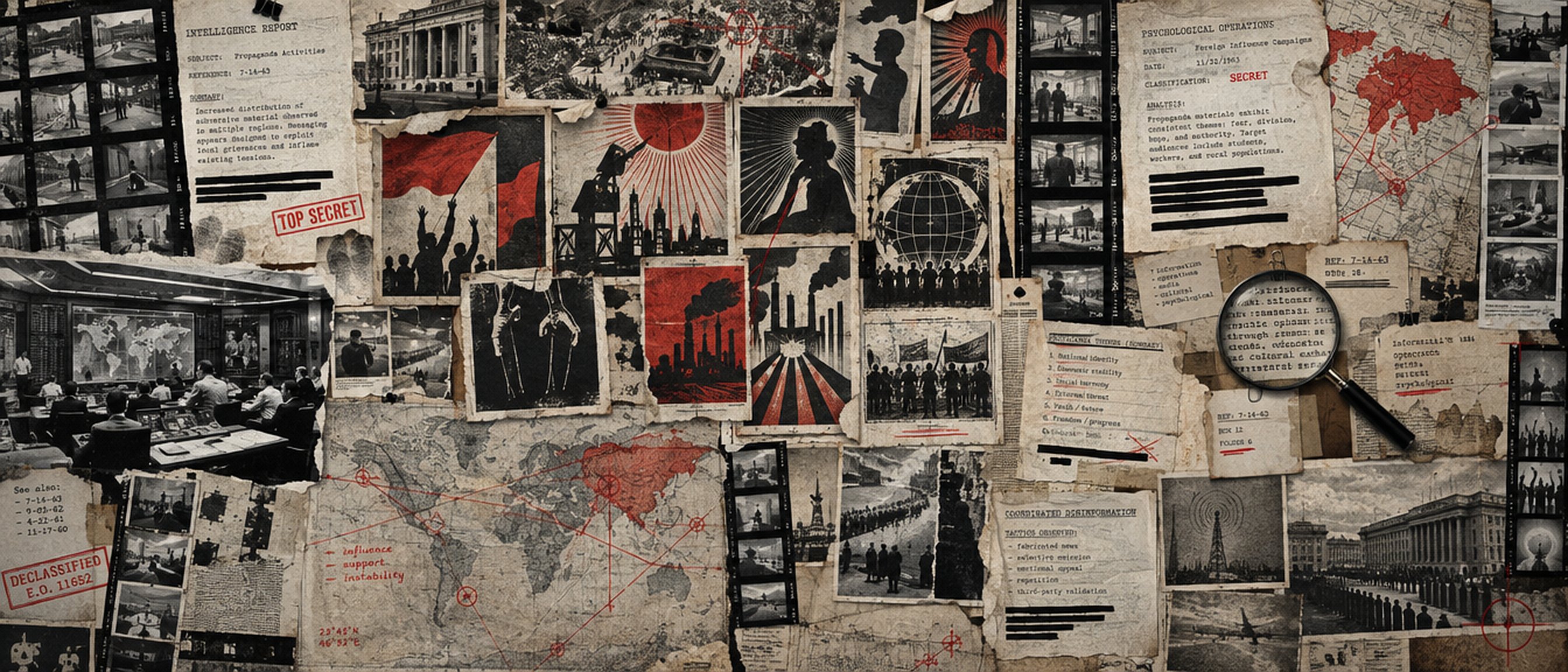
Illustration: a dossier collage of an evidence wall of pinned propaganda posters, leaflets and printed matter from many eras, with contact sheets and catalog labels.

Collection

Propaganda art: posters, cartoons and paintings by purpose

Propaganda art is any image made to move an audience: posters, cartoons, prints, murals and money. Forms, famous examples and the techniques they use.

Illustration, not an archive object

Content note. Propaganda art includes caricature of enemies and of ethnic and religious groups, and appeals to hatred, from every side. Items are shown as issued, as evidence of what was said to the public. Showing an item is not endorsing it.

What is propaganda art?

Propaganda art is any image made to move an audience toward a belief or an act: posters, cartoons, prints, paintings, murals, banknote and stamp designs, and banners. It is defined by purpose and sponsor, not by style or quality. A work can be fine art and still be propaganda if it was made to serve a campaign, and the same artists often worked in both modes.

The forms it takes

  • Posters are the largest group in the collection. See the propaganda posters page for how to read them.
  • Cartoons and prints reach readers through newspapers and magazines, and use caricature to attach a label to a person or group (Name-calling).
  • Paintings, murals and banners carry the same messages in public places. Soviet "socialist realism", adopted as the official artistic doctrine in 1934, is the best-known state-directed style; other states and parties commissioned art in their own styles.
Show all 5Show fewer
  • Hand-painted windows and street art. The Soviet ROSTA windows of 1919 to 1921 were hand-stencilled news posters in shop windows, and later street art has served both protest and state campaigns.
  • Money and stamps put a message into daily life through objects people handle and cannot avoid.

Why artists and sponsors matter

Famous images are often collaborations between a sponsor with an aim and an artist with a style. James Montgomery Flagg's 1917 "I Want You for U.S. Army" and Alfred Leete's 1914 Kitchener recruiting image are the usual examples from the First World War, and posters of the same kind appeared in Germany, France, Russia and Italy in the same years (WW1 posters by country). The archive records the issuer, date and source of each item, and applies the same questions to every side (how to spot propaganda).

Seeing the techniques in the art

Most propaganda art uses a small set of devices: a symbol carried onto a cause (Transfer), a threat to provoke fear (Fear appeal), a crowd to suggest everyone agrees, and a single striking figure. The types of propaganda page lists them, and the grid below shows cartoons, prints and artworks from the collection.

Sources and further reading

Sources

Garth S. Jowett and Victoria O'Donnell, Propaganda and Persuasion (Sage).

Garth S. Jowett and Victoria O'Donnell, Propaganda and Persuasion (Sage). Alfred McClung Lee and Elizabeth Briant Lee, The Fine Art of Propaganda (Institute for Propaganda Analysis, 1939). Items in the grid carry their own source and rights notes.
Cartoons, prints and artworks in the collection

Showing 24 of 642 objects. Filter the whole collection.

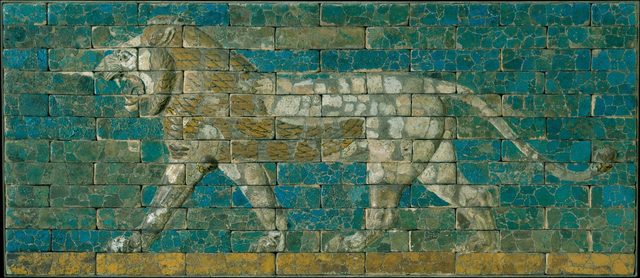
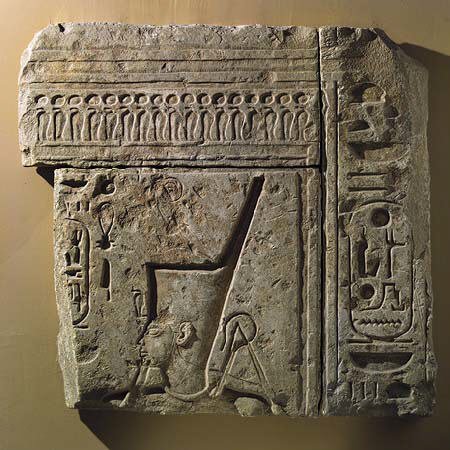
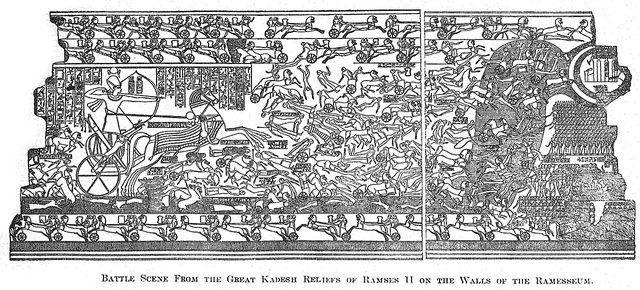
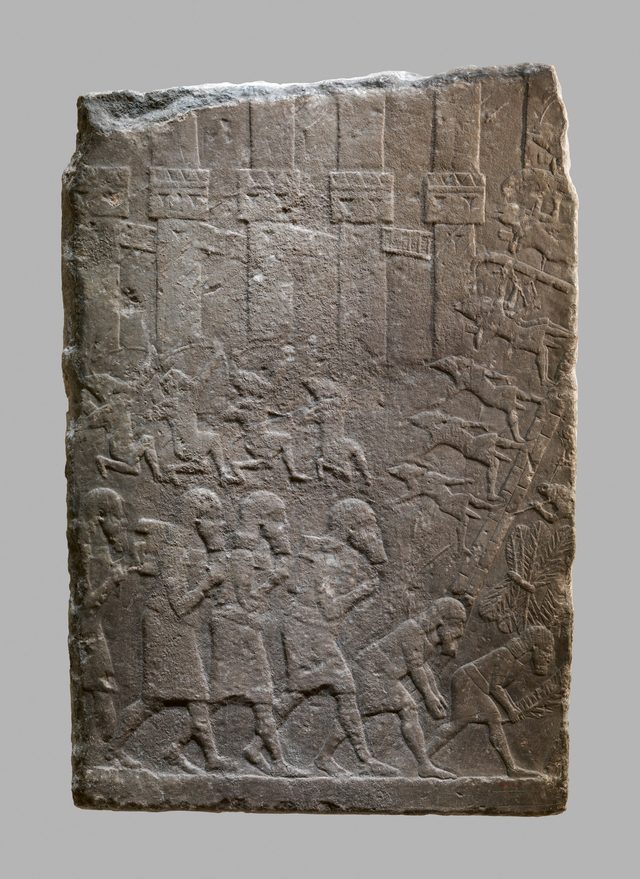
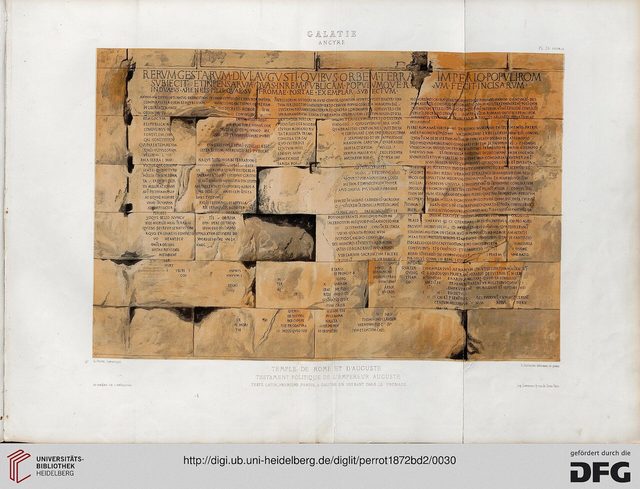
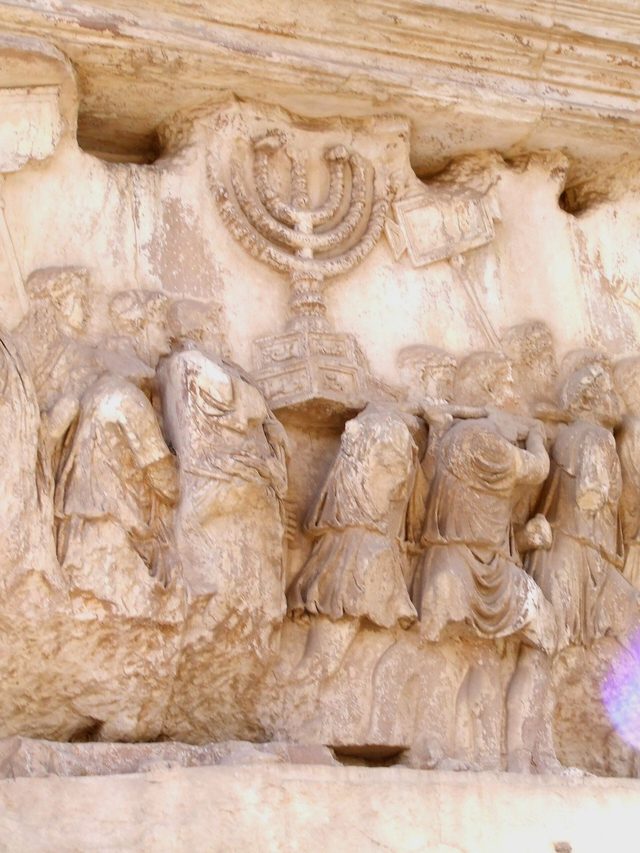
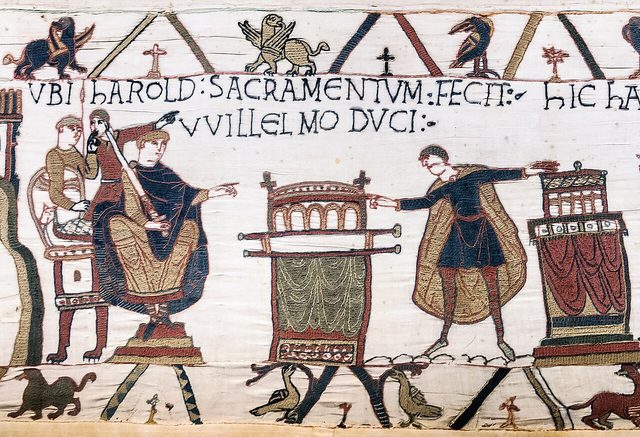
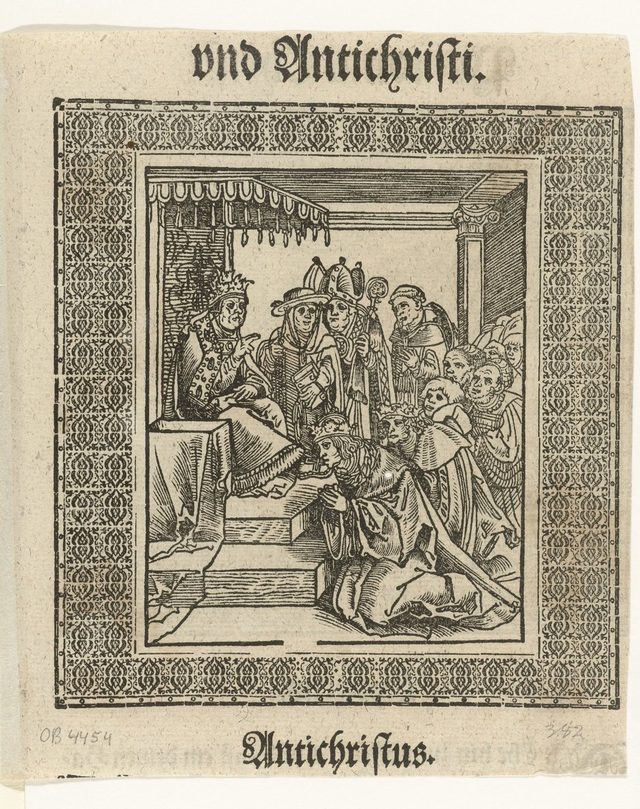
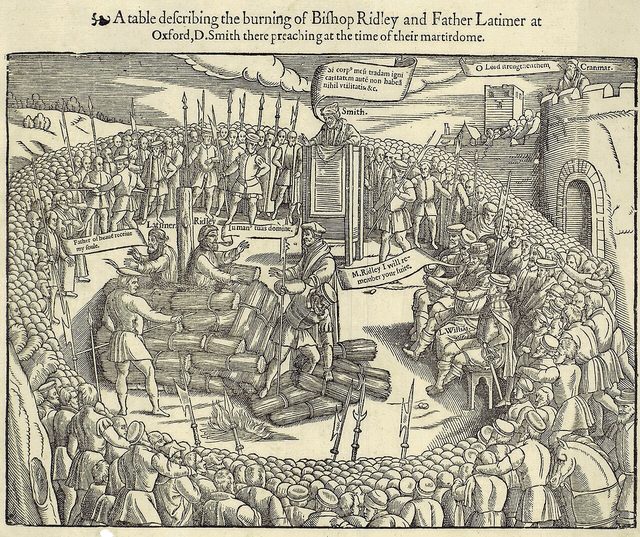
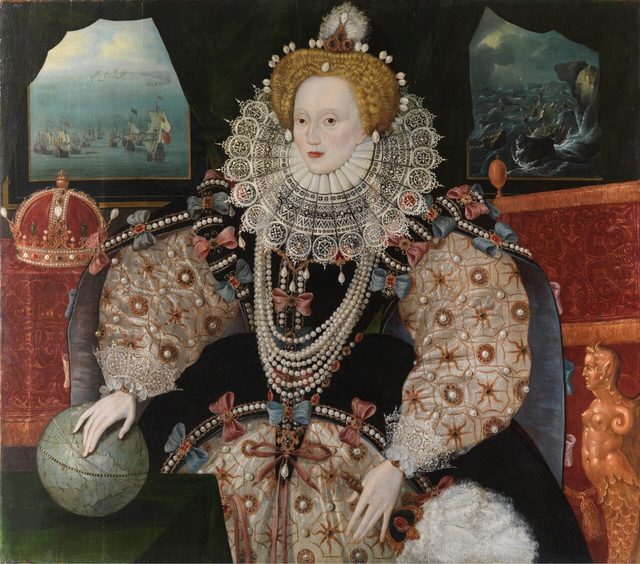
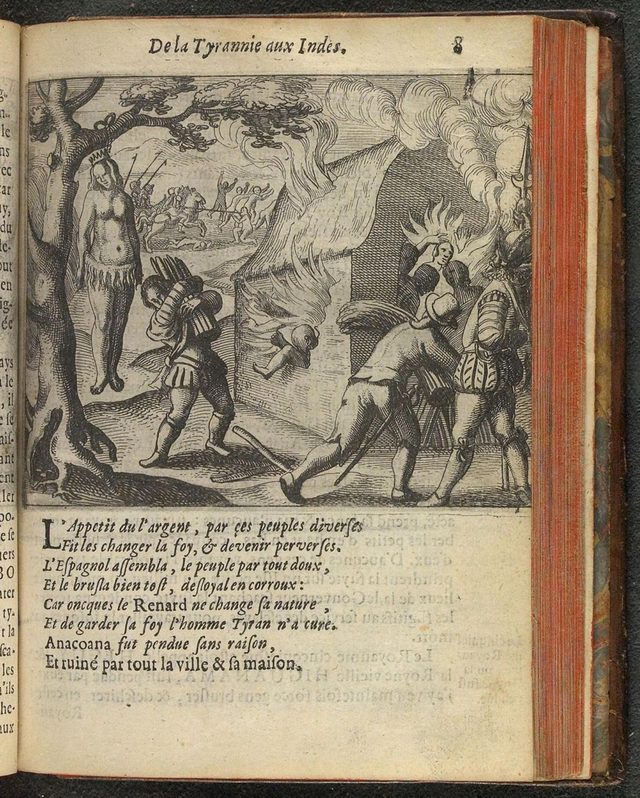
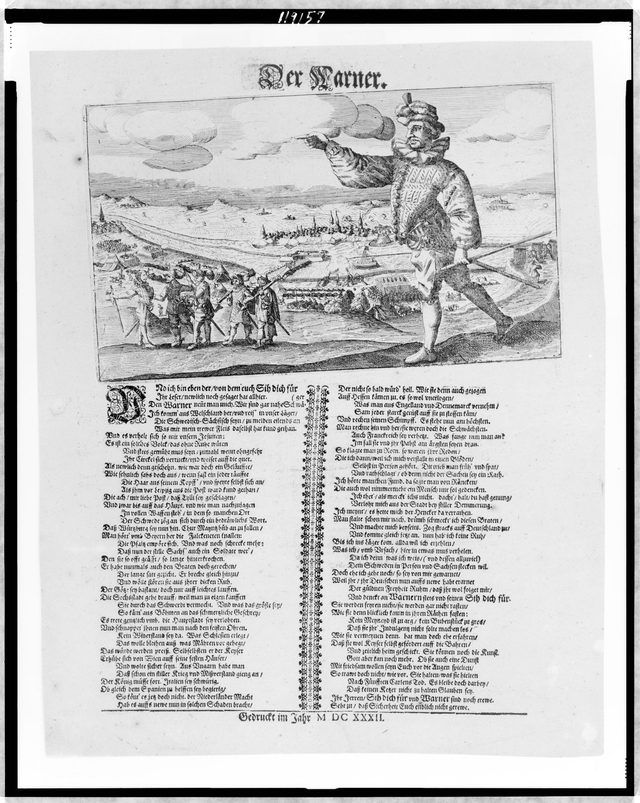
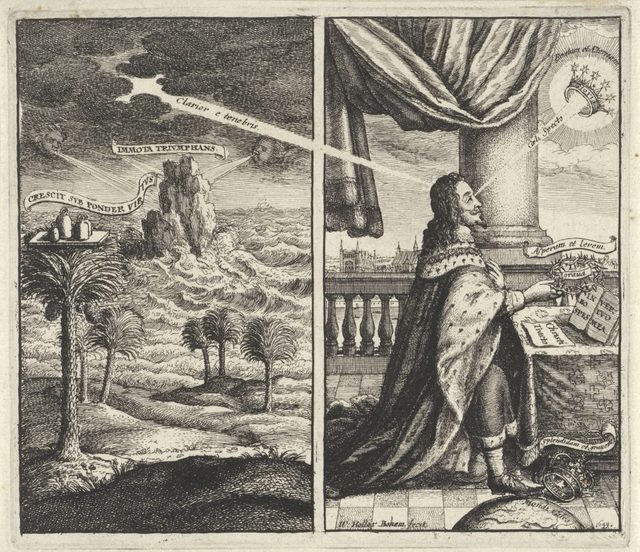
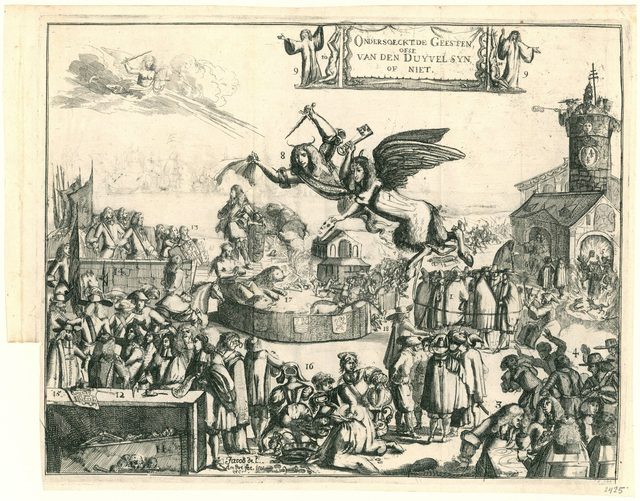
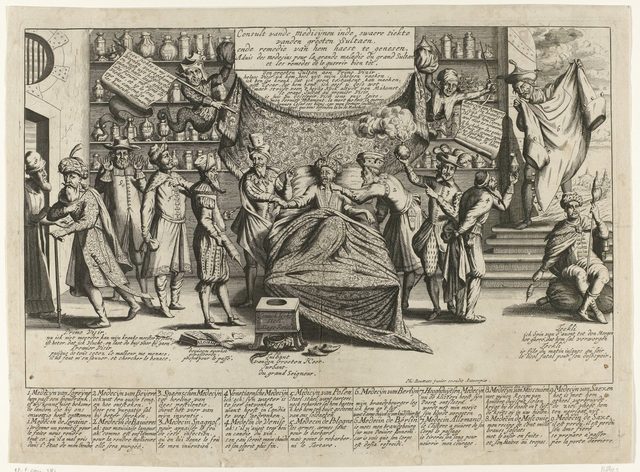
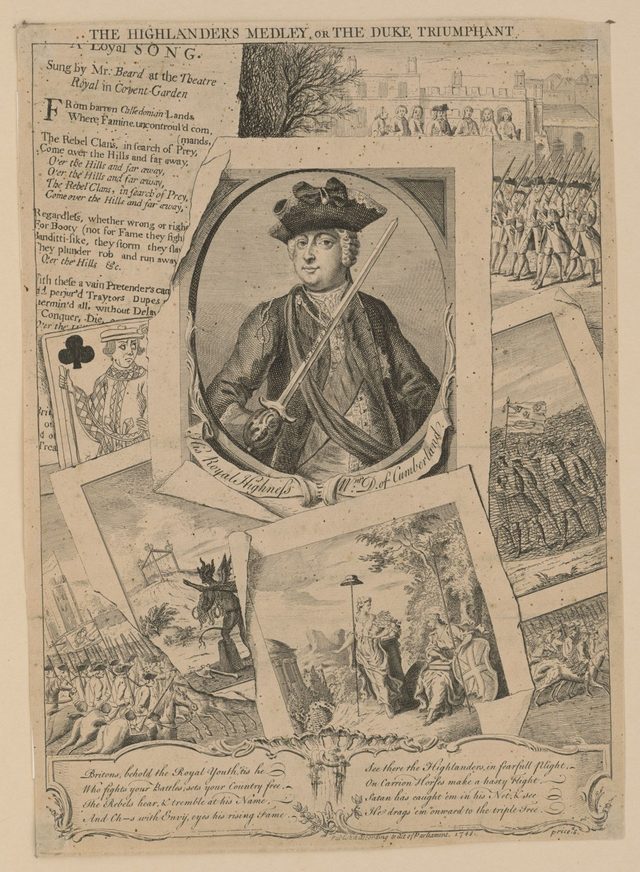
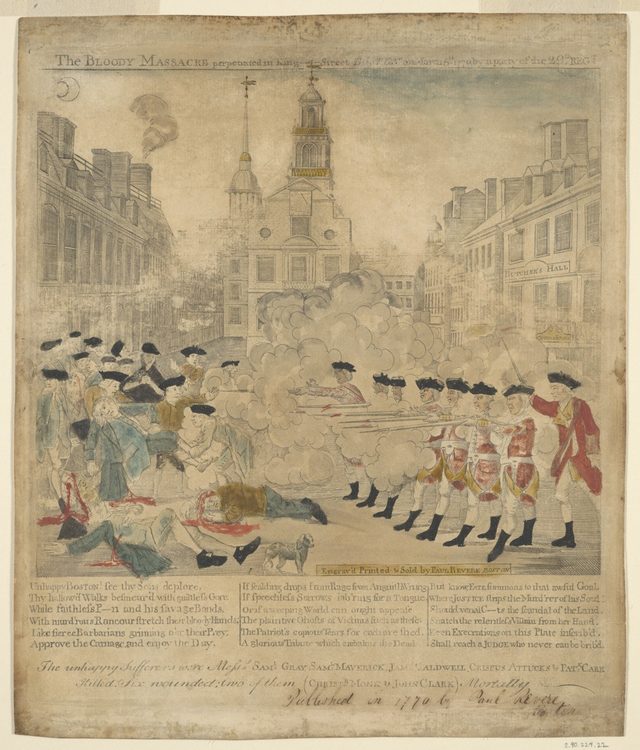
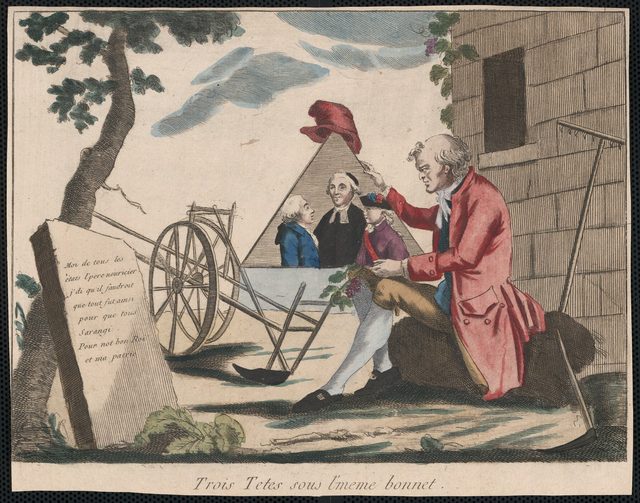
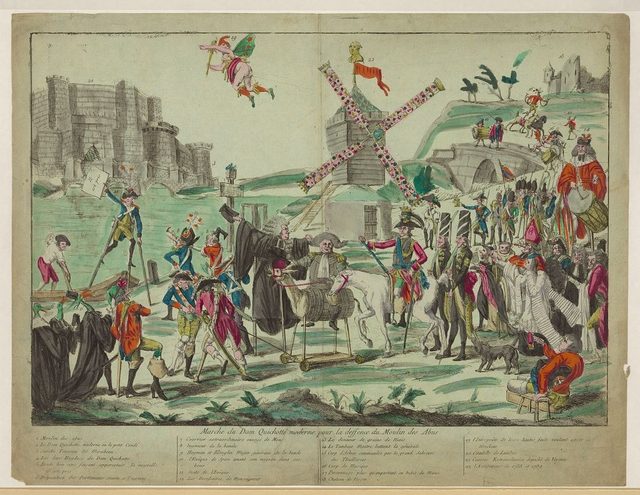
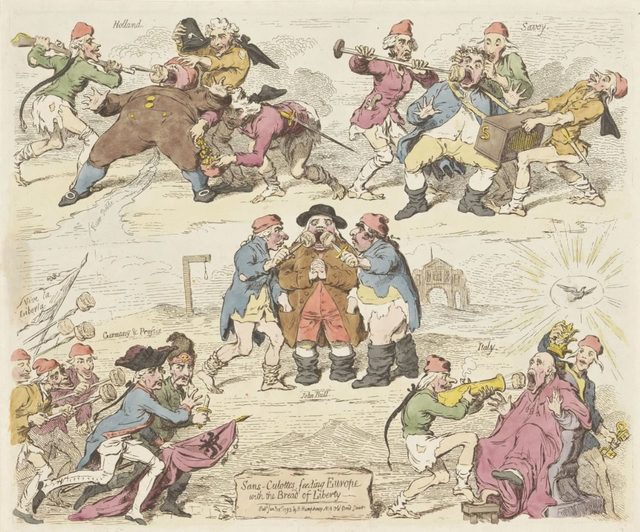
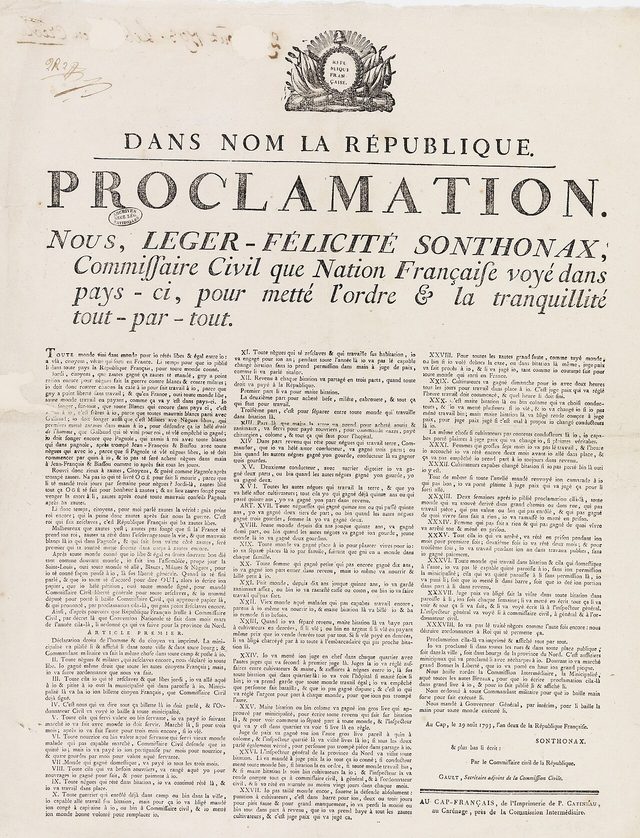
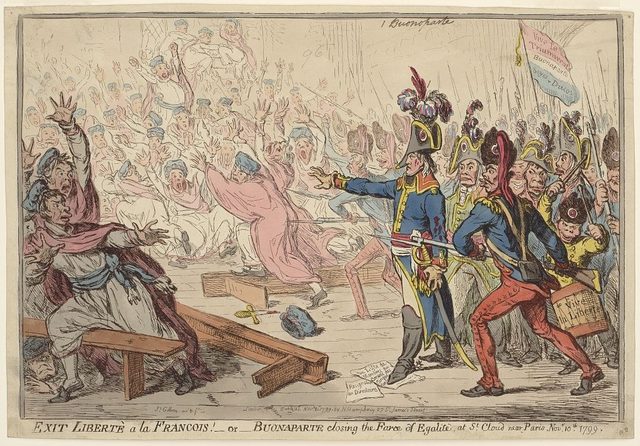
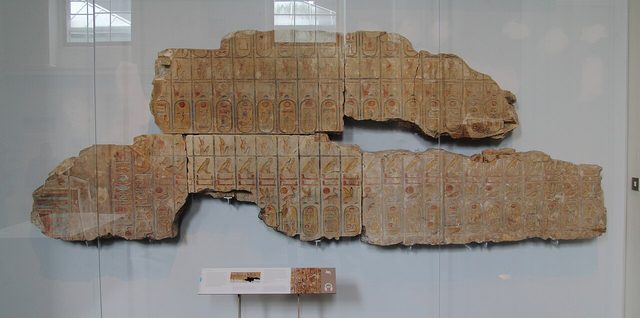
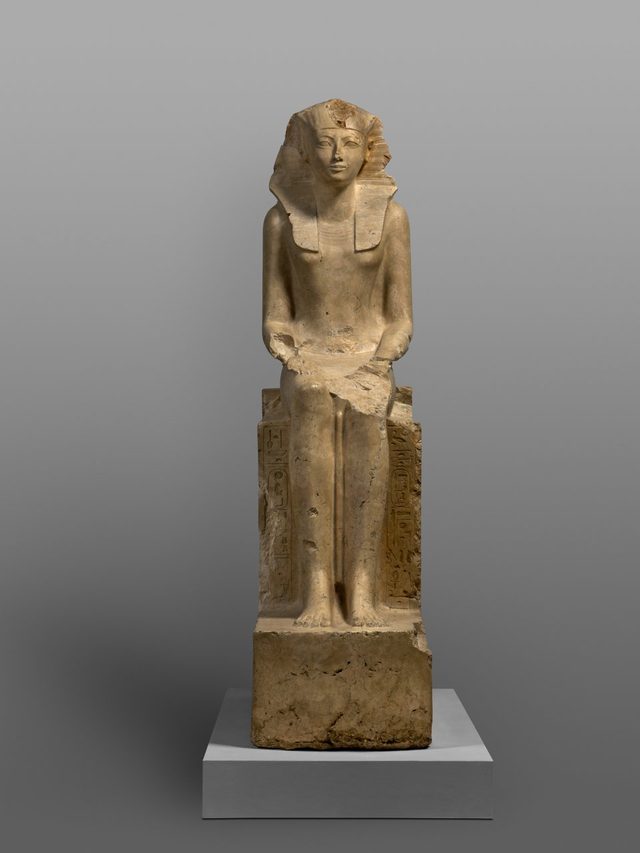
Fragments of the Abydos king list from Ramesses II's temple, in the British Museum: rows of royal cartouchesNew Kingdom EgyptFragments of the Abydos king list from Ramesses II's temple, in the British Museum: rows of royal cartouches0000 · Card stacking, TransferSeated limestone statue of Hatshepsut as king, with feminine royal titles on the throne, reassembled from fragments broken up at Deir el-BahriNew Kingdom EgyptSeated limestone statue of Hatshepsut as king, with feminine royal titles on the throne, reassembled from fragments broken up at Deir el-Bahri0000 · Transfer, TestimonialGlazed-brick panel with a striding lion, from Babylon (reign of Nebuchadnezzar II)Neo Babylonian EmpireGlazed-brick panel with a striding lion, from Babylon (reign of Nebuchadnezzar II)0000 · TransferLimestone relief block of Ramesses II wearing the White Crown, a jubilee relief from his temple at HerakleopolisNew Kingdom EgyptLimestone relief block of Ramesses II wearing the White Crown, a jubilee relief from his temple at Herakleopolis0000 · TransferLine drawing of the Great Kadesh battle relief on the walls of the Ramesseum, from Breasted's History of EgyptNew Kingdom EgyptLine drawing of the Great Kadesh battle relief on the walls of the Ramesseum, from Breasted's History of Egypt0000 · Card stacking, TransferContent noteAlabaster relief, Assyrian troops storming a citadel, from Nineveh (reign of Sennacherib)Neo Assyrian EmpireAlabaster relief, Assyrian troops storming a citadel, from Nineveh (reign of Sennacherib)0000 · Card stackingContent noteColour lithograph of the Latin text of the Res Gestae Divi Augusti on the wall of the temple of Roma and Augustus at Ancyra, with the heading in large letters (Perrot, Guillaume and Delbet, 1872)Roman EmpireColour lithograph of the Latin text of the Res Gestae Divi Augusti on the wall of the temple of Roma and Augustus at Ancyra, with the heading in large letters (Perrot, Guillaume and Delbet, 1872)0014 · Card stacking, Glittering generalitiesRelief on the Arch of Titus, Rome: soldiers carrying the menorah and other spoils from the Temple at Jerusalem in a triumphal processionRoman EmpireRelief on the Arch of Titus, Rome: soldiers carrying the menorah and other spoils from the Temple at Jerusalem in a triumphal procession0081 · Card stackingContent noteBayeux Tapestry, scene 23: UBI HAROLD SACRAMENTVM FECIT VVILLELMO DVCIKingdom of EnglandBayeux Tapestry, scene 23: UBI HAROLD SACRAMENTVM FECIT VVILLELMO DVCI1070 · Transfer, Card stackingPassional Christi und Antichristi: the emperor kisses the pope's foot (leaf 'Antichristus')Electoral SaxonyPassional Christi und Antichristi: the emperor kisses the pope's foot (leaf 'Antichristus')1521 · Name-calling, Card stackingWoodcut 'A table describing the burning of Bishop Ridley and Father Latimer at Oxford', in John Foxe, Actes and Monuments (1563)EnglandWoodcut 'A table describing the burning of Bishop Ridley and Father Latimer at Oxford', in John Foxe, Actes and Monuments (1563)1563 · Transfer, Card stackingContent noteThe Armada Portrait of Elizabeth I (Royal Museums Greenwich version), oil on panelEnglandThe Armada Portrait of Elizabeth I (Royal Museums Greenwich version), oil on panel1588 · Transfer, Glittering generalitiesAnacoana fut pendue sans raison (engraving in Le miroir de la cruelle et horrible tyrannie espagnole)Dutch RepublicAnacoana fut pendue sans raison (engraving in Le miroir de la cruelle et horrible tyrannie espagnole)1620 · Fear appeal, Name-callingContent noteDer Warner (broadsheet lampoon on the Jesuits after Breitenfeld and Rain)Holy Roman EmpireDer Warner (broadsheet lampoon on the Jesuits after Breitenfeld and Rain)1632 · Scapegoating, Fear appealFrontispiece to Eikon Basilike, The Pourtraicture of His Sacred Majestie in his Solitudes and Sufferings (Hollar, 1649)Dutch RepublicFrontispiece to Eikon Basilike, The Pourtraicture of His Sacred Majestie in his Solitudes and Sufferings (Hollar, 1649)1649 · Transfer, Glittering generalitiesOndersoeckt de Geesten, ofse van den Duyvel syn, of niet (the De Witt brothers as devils)Dutch RepublicOndersoeckt de Geesten, ofse van den Duyvel syn, of niet (the De Witt brothers as devils)1672 · Scapegoating, Name-callingConsult of the doctors on the grave illness of the Grand Sultan (Consult vande medicijnen inde swaere siekte vanden grooten Sultaen)Spanish NetherlandsConsult of the doctors on the grave illness of the Grand Sultan (Consult vande medicijnen inde swaere siekte vanden grooten Sultaen)1683 · Transfer, BandwagonThe Highlanders Medley, or The Duke Triumphant (A Loyal Song)Great BritainThe Highlanders Medley, or The Duke Triumphant (A Loyal Song)1746 · Name-calling, TransferThe Bloody Massacre perpetrated in King Street Boston on March 5th 1770 by a party of the 29th Regt.Province of Massachusetts BayThe Bloody Massacre perpetrated in King Street Boston on March 5th 1770 by a party of the 29th Regt.Mar 1770 · Name-calling, Card stackingContent noteTrois Tetes sous l'meme bonnet (three heads under the same cap)FranceTrois Tetes sous l'meme bonnet (three heads under the same cap)1789 · Plain folks, Glittering generalitiesMarche du Dom Quichotte moderne pour la deffence du Moulin des Abus (March of the Modern Don Quixote in Defence of the Mill of Abuses)FranceMarche du Dom Quichotte moderne pour la deffence du Moulin des Abus (March of the Modern Don Quixote in Defence of the Mill of Abuses)1791 · Name-calling, TransferSans-Culottes, feeding Europe with the Bread of Liberty (James Gillray)Kingdom of Great BritainSans-Culottes, feeding Europe with the Bread of Liberty (James Gillray)Jan 12, 1793 · Fear appeal, Name-callingProclamation de Sonthonax en créole, Cap-Français (Proclamation of Commissioner Sonthonax in Creole)FranceProclamation de Sonthonax en créole, Cap-Français (Proclamation of Commissioner Sonthonax in Creole)Aug 29, 1793 · Fear appeal, ScapegoatingContent noteExit Liberté a la Francois! or Buonaparte closing the Farce of Egalité, at St. Cloud (James Gillray)Kingdom of Great BritainExit Liberté a la Francois! or Buonaparte closing the Farce of Egalité, at St. Cloud (James Gillray)Nov 21, 1799 · Name-calling