In one line: From 1936 to 1975 General Francisco Franco led the Nationalist side in the Spanish Civil War and then, from the victory of 1 April 1939 until his death on 20 November 1975, ruled Spain as Head of State with a single legal party (FET y de las JONS, later the "Movimiento Nacional"), a censored press, a compulsory state newsreel and the Catholic Church as a partner of the state, and that state executed, imprisoned and exiled opponents on a large scale, above all in and after the war.
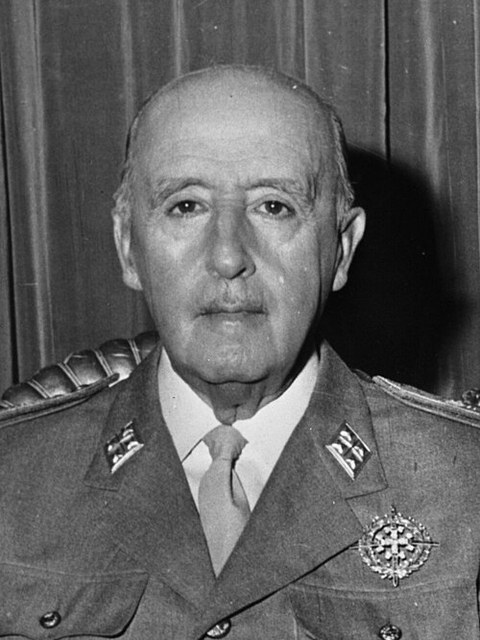
Head of State, Caudillo and (to 1973) head of government · 1936 to 1975
Francisco Franco: Read more
Generalísimo and Head of the Spanish State from the Nationalist junta decree of 29 September 1936, head of government until June 1973 and head of the single party; named Juan Carlos his successor in 1969 and died on 20 November 1975.
In their words
“Today, the Red Army having been captured and disarmed, the National troops have reached their final military objectives. The war is over.”
“I wish to thank all who have collaborated with enthusiasm, dedication and self-denial in the great enterprise of making a united, great and free Spain. [...] Do not forget that the enemies of Spain and of Christian civilisation are on the alert.”
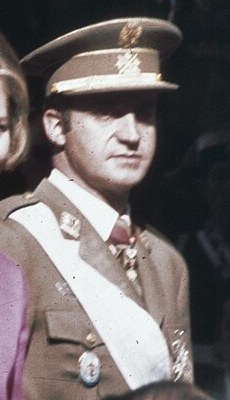
Prince of Spain, designated successor; King of Spain from 22 November 1975 · 1969 to 1975 (successor); King from 1975
Juan Carlos I: Read more
Named by Franco as his successor on 22 July 1969 (confirmed by the Cortes), took the oath and was proclaimed King on 22 November 1975, two days after Franco died, and presided over the move to elected government.
Minister of the Interior; later Minister of Foreign Affairs; president of the Political Board of FET · 1938 to 1942
Ramón Serrano Suñer: Read more
Franco's brother-in-law; Interior Minister from 30 January 1938 to 1940, under whom the Press Law of 22 April 1938 and the Delegación Nacional de Prensa y Propaganda were set up, then Foreign Minister from 17 October 1940 to 3 September 1942.
In their words
“It is for the State to organise, supervise and control the national institution of the periodical press.”
“Fifth. Censorship until its suppression is ordered.”
Undersecretary of the Presidency; Vice-President; Prime Minister · 1941 to 1973
Luis Carrero Blanco: Read more
Admiral and Franco's closest civil aide as Undersecretary of the Presidency from 1941, vice-president from 1967, prime minister from June 1973 and killed by an ETA bomb in Madrid on 20 December 1973.
Prime Minister (President of the Government) · 1974 to 1976
Carlos Arias Navarro: Read more
Director General of Security from 1957, mayor of Madrid from 1965, Interior Minister in 1973, prime minister from 3 January 1974 to 1 July 1976; announced Franco's death on radio and television on 20 November 1975.
In their words
“Spaniards: Franco has died. The man of exception who before God and before History took on the immense responsibility of the most demanding and self-sacrificing service to Spain has given his life, burned day by day, hour by hour, in the fulfilment of a transcendental mission.”
Party
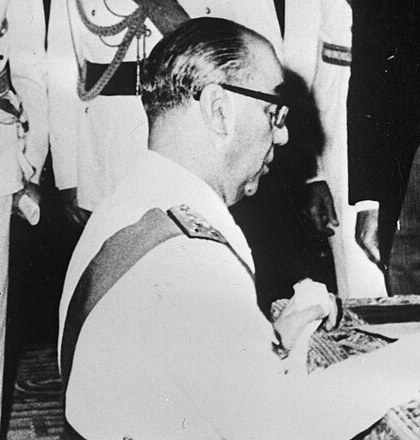
Photo: Unknown photographer, Public domain (Narodowe Archiwum Cyfrowe press photograph, 1936 to 1943; tagged public domain on Wikimedia Commons)
Raimundo Fernández-Cuesta
Secretary General of FET y de las JONS; later Minister Secretary-General of the Movement · 1937 to 1939 and 1948 to 1956
Raimundo Fernández-Cuesta: Read more
Falange co-founder named secretary general of the single party in December 1937 and removed on 9 August 1939, and again secretary general (minister without portfolio, then Minister Secretary-General of the Movement) from November 1948 to February 1956.
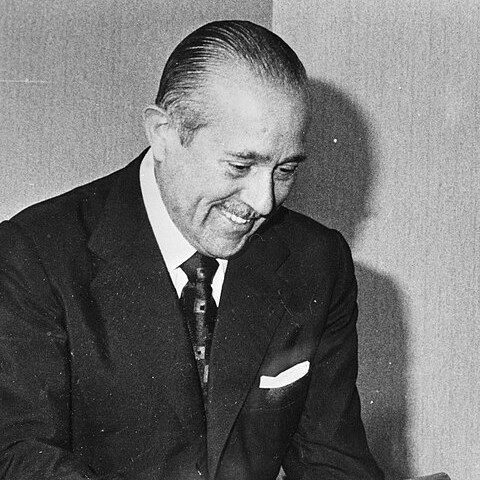
Photo: Unknown photographer, Public domain (Narodowe Archiwum Cyfrowe press photograph, 1936 to 1943; tagged public domain on Wikimedia Commons)
José Luis de Arrese
Secretary General of FET y de las JONS; later Minister Secretary-General of the Movement · 1941 to 1945
José Luis de Arrese: Read more
Falangist who ran the single party as secretary general from 1941 to 1945 and as minister from 1956 to 1957, when he drafted constitutional-law projects that the government dropped.
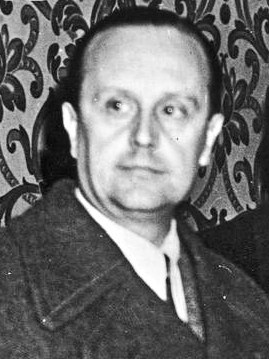
Photo: Unknown photographer, Public domain (Narodowe Archiwum Cyfrowe press photograph, 1936 to 1943; tagged public domain on Wikimedia Commons)
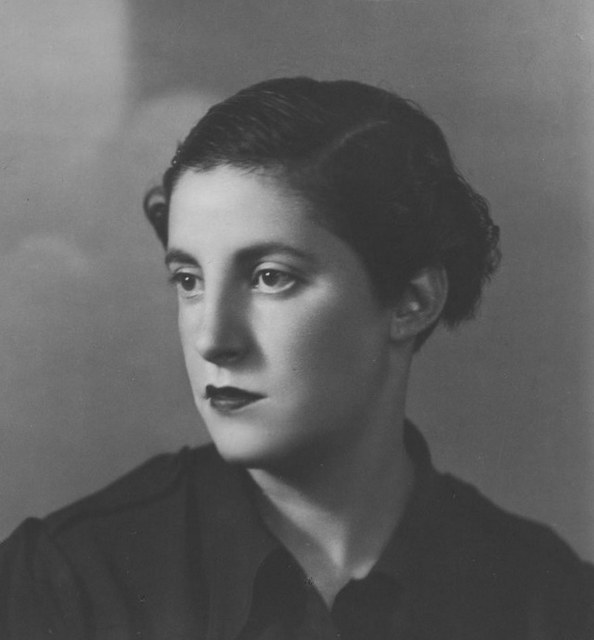
Pilar Primo de Rivera
National Delegate of the Sección Femenina of FET y de las JONS · 1934 to 1977
Pilar Primo de Rivera: Read more
Sister of the Falange founder; headed the party's women's section from 1934 to its abolition in 1977, which ran the compulsory Servicio Social, the schools and the cultural programmes for women.
Propaganda and press
DRNo public-domain or openly licensed portrait found that clearly shows him alone. Nearest: source, CC BY-SA 4.0, a three-person group photograph in which his position is only described as 'on the right', so not used.
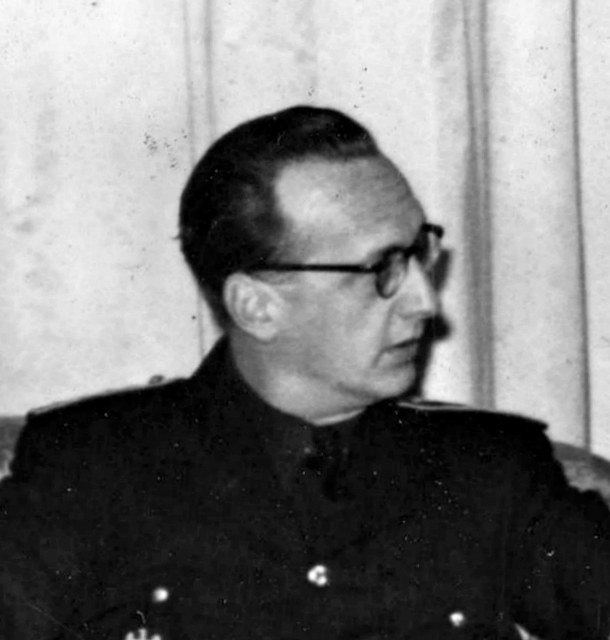
Dionisio Ridruejo
Head of the Servicio Nacional de Propaganda (Director General of Propaganda) · 1938 to 1940
Dionisio Ridruejo: Read more
Falange poet who ran the Servicio Nacional de Propaganda from March 1938 inside the Delegación Nacional de Prensa y Propaganda; volunteered for the Blue Division in 1941, left his party posts in 1942 and later became a critic of the regime.
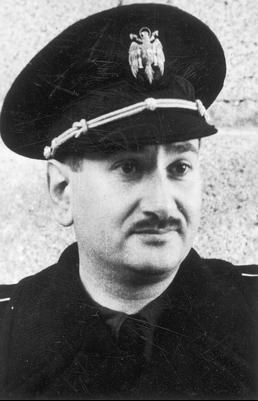
Photo: Unknown photographer, Public domain (Narodowe Archiwum Cyfrowe press photograph, 1936 to 1943; tagged public domain on Wikimedia Commons)
Gabriel Arias-Salgado
Vice-Secretary of Popular Education; Minister of Information and Tourism · 1941 to 1962
Gabriel Arias-Salgado: Read more
Ran the party's Vicesecretaría de Educación Popular (press, radio, cinema, NO-DO) from 1941 to 1945 and was the first Minister of Information and Tourism, from July 1951 to July 1962.
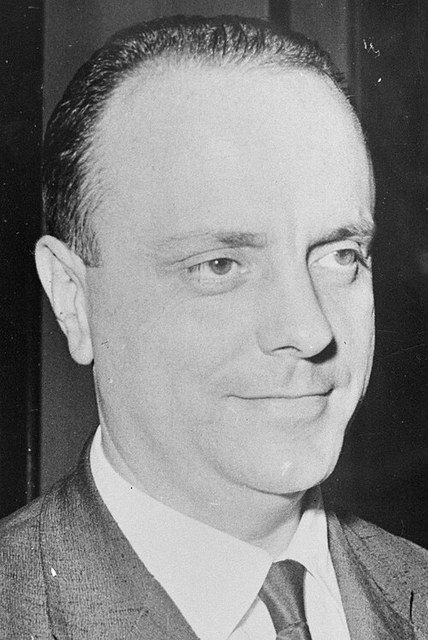
Minister of Information and Tourism · 1962 to 1969
Manuel Fraga Iribarne: Read more
Minister from 10 July 1962 to 29 October 1969; his Press and Printing Law of 18 March 1966 ended prior censorship in principle and kept sanctions after publication; later a founder of Alianza Popular in 1976.
In their words
“The Administration may not apply prior censorship or demand compulsory consultation, except in states of exception and of war expressly provided for in law.”
Background and rise to power
The Second Republic (1931 to 1936) was a parliamentary democracy with sharp conflict over land, the Church, regional autonomy and the army. The Popular Front won the elections of 16 February 1936. On 17 and 18 July 1936 army officers rose against the government; the rising failed to take Madrid, Barcelona and Valencia and became a civil war. Franco, then a general in the Canary Islands and Morocco, flew to the Army of Africa and, on 1 October 1936 at Burgos, was proclaimed Generalísimo and Head of the Government of the Spanish State by the Nationalist junta (decree of 29 September 1936). On 19 April 1937 a decree merged the Falange with the Carlist Comunión Tradicionalista and dissolved all other parties, creating the Falange Española Tradicionalista y de las JONS (FET y de las JONS) under Franco's leadership. A first regular government was formed under the law of 30 January 1938, with Ramón Serrano Suñer, Franco's brother-in-law, at the Interior Ministry.
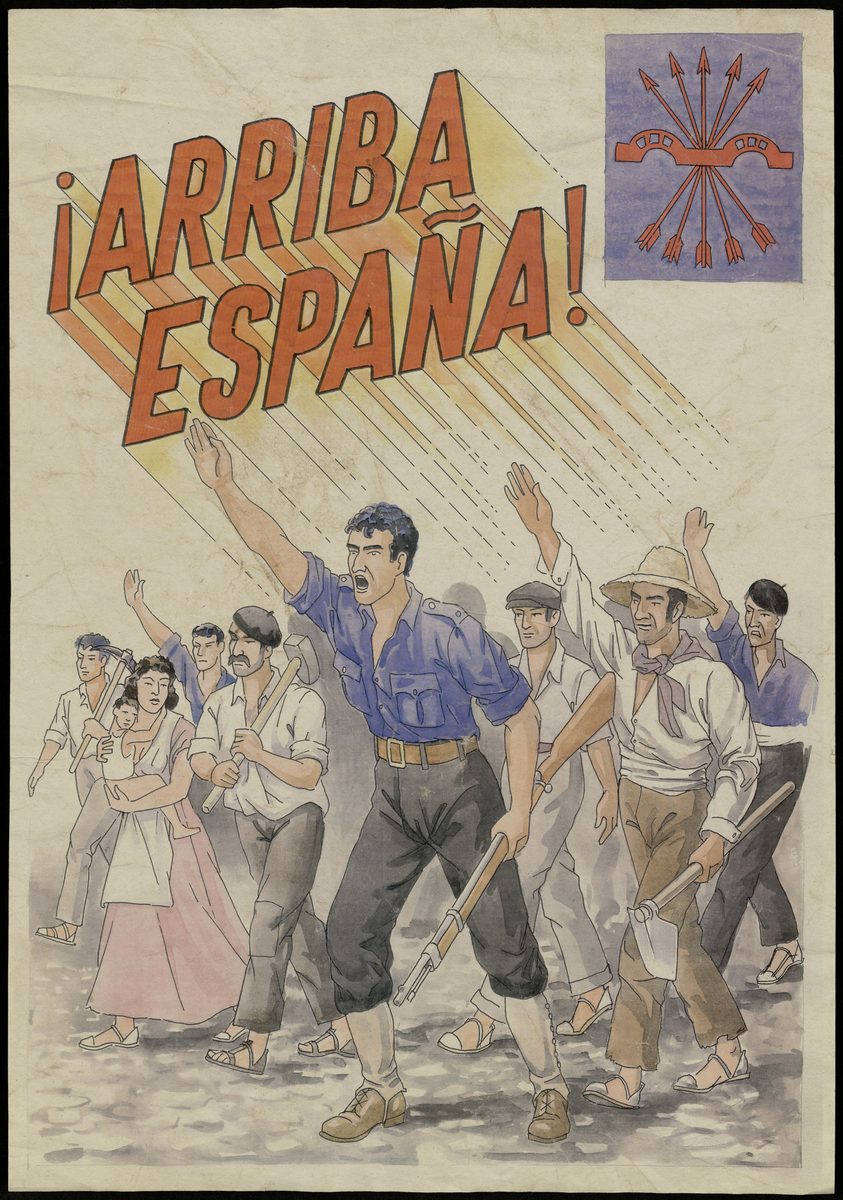
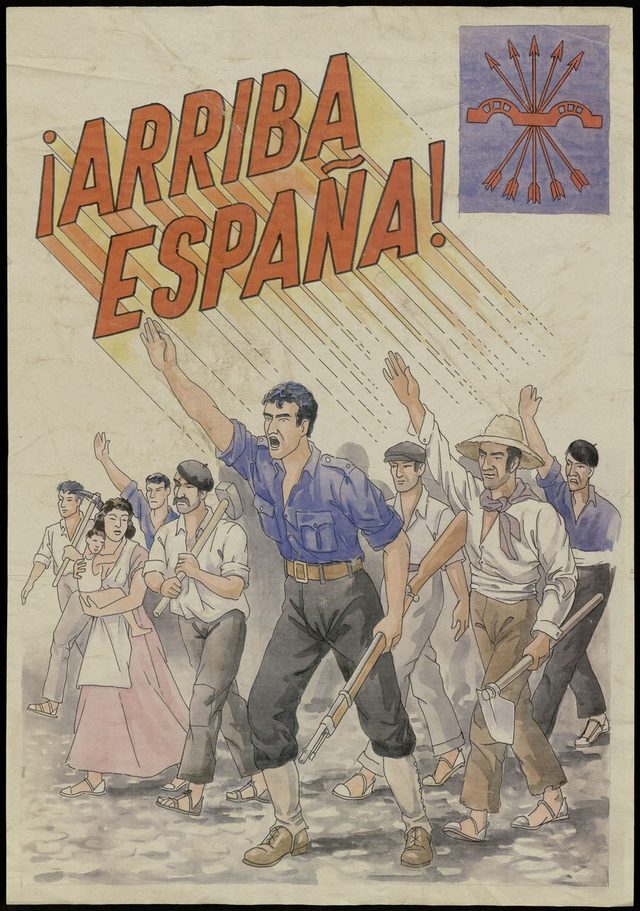
Content note: Falange emblem and raised-arm salute, with a rifle and tools carried by the marchers, in a poster design of the Spanish Civil War. This object is shown as it was published. Why
Germany and Italy sent aircraft, troops and supplies to the Nationalists; the Soviet Union and international volunteers supplied the Republic, and Britain and France adopted non-intervention. The Nationalist side won with the fall of Catalonia in early 1939 and the surrender of Madrid at the end of March. Franco's last war communiqué is dated Burgos, 1 April 1939: "La guerra ha terminado." Estimates of those killed by the Nationalist side in and after the war run from about 100,000 to 200,000, and of those killed in the Republican zone at about 50,000; both sides carried out killings behind the lines, and historians' totals differ (Preston; Juliá).
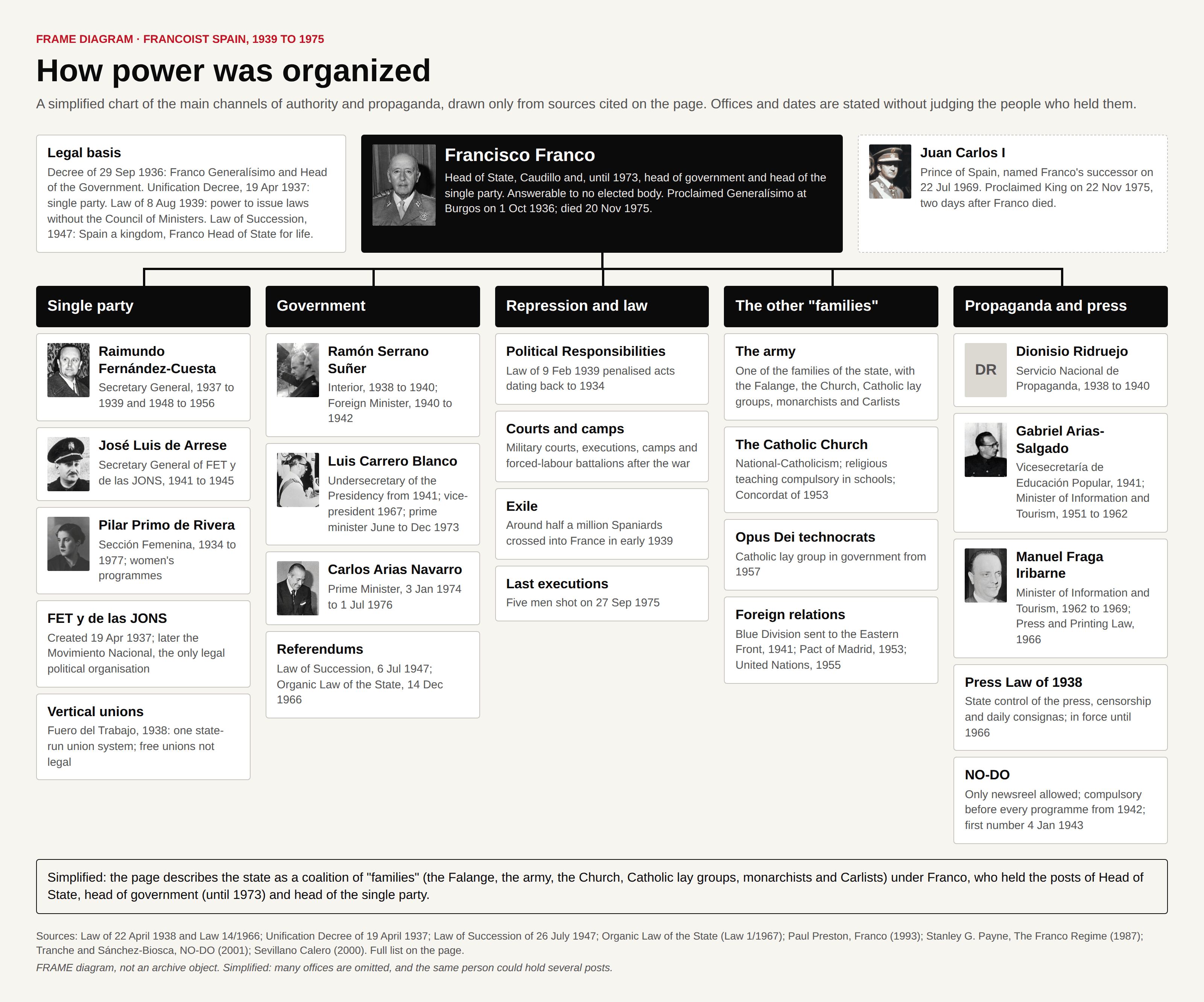
How power was organized
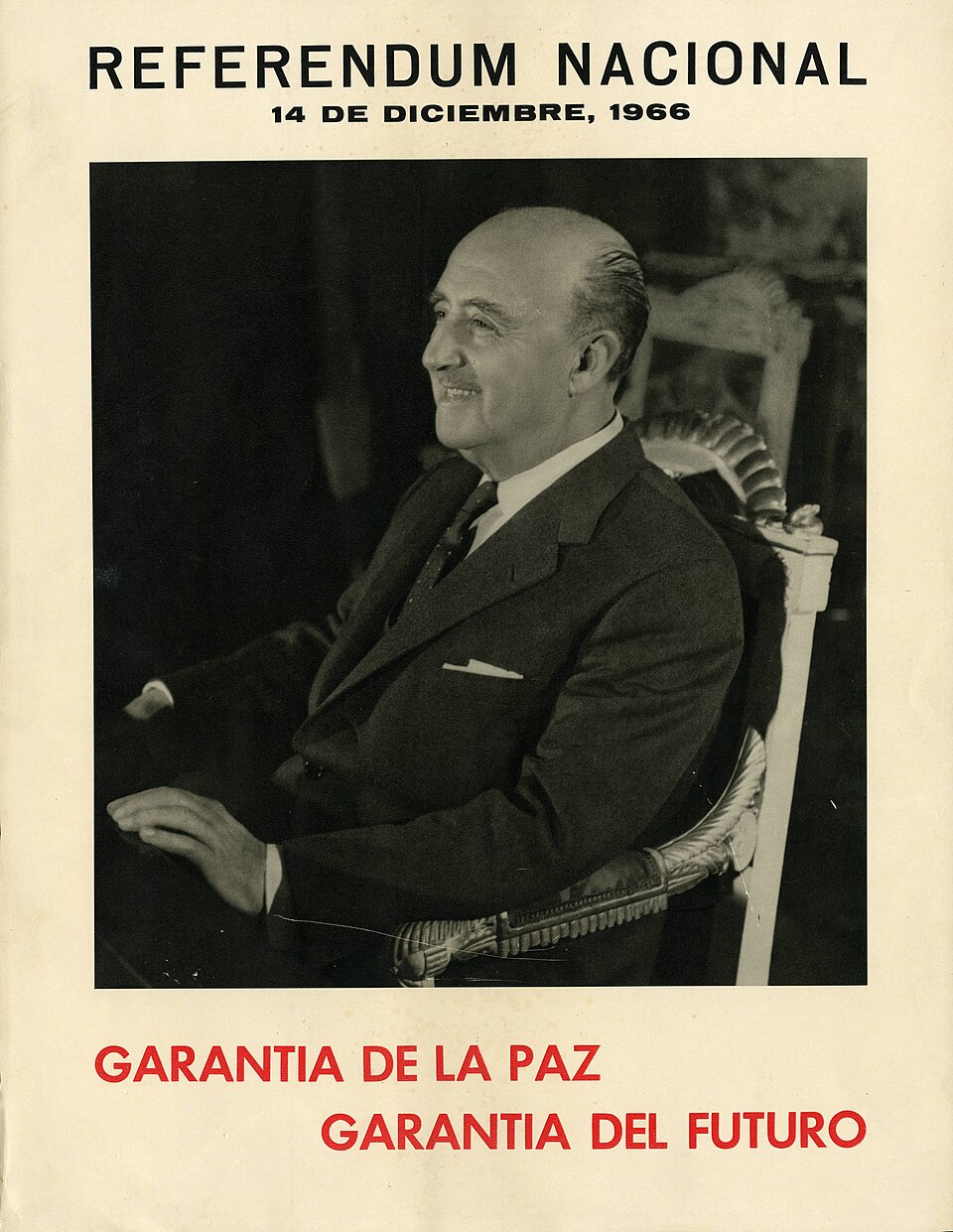
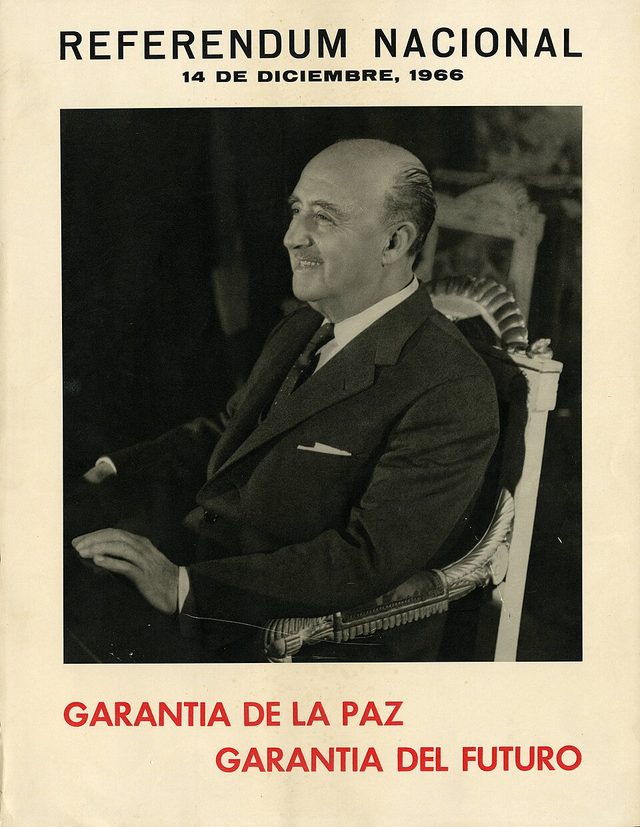
Franco held the posts of Head of State, head of government (until 1973) and head of the single party, and was answerable to no elected body. The Law of 8 August 1939 gave him the power to issue laws without the Council of Ministers; the Law of 9 February 1939 on Political Responsibilities penalised acts dating back to 1934. The party secretaries (Raimundo Fernández-Cuesta, 1937 to 1939 and 1948 to 1956; José Luis de Arrese, 1941 to 1945) ran the single party, and its Sección Femenina under Pilar Primo de Rivera ran the women's programmes. The Fuero del Trabajo (1938) set up a single state-run vertical union system, and parties and free unions were not legal. The Law of Succession of 26 July 1947, approved in a referendum on 6 July 1947, declared Spain a kingdom with Franco as Head of State for life and the right to name his successor. The Organic Law of the State was approved in a referendum on 14 December 1966 (Law 1/1967), in which the Movimiento remained the only legal political organisation.
Power in Francoist Spain, simplified from the sources cited on this page. Source: FRAME diagram. Portraits, cropped to thumbnails: Nationaal Archief, Fotocollectie Anefo, 23 October 1975; Anefo (Nationaal Archief), Fotocollectie Anefo, 23 July 1969; Narodowe Archiwum Cyfrowe, 2-13645, January 1943; Narodowe Archiwum Cyfrowe, 1-E-6350-1; Nationaal Archief, Fotocollectie Anefo, 22 November 1975; Nationaal Archief, Fotocollectie Anefo, record dated 20 December 1973 (the day of his death); Anefo (Nationaal Archief), Fotocollectie Anefo, 21 February 1963; Narodowe Archiwum Cyfrowe, 1-E-6512, first published in Ilustrowany Kurier Codzienny; Narodowe Archiwum Cyfrowe, 1-E-6651, published in Ilustrowany Kurier Codzienny, 13 March 1939; Josep Brangulí, Arxiu Nacional de Catalunya, 14 June 1939, CC BY 4.0 (FRAME archive content); portraits: CC BY 3.0; CC0 1.0; Public domain (Narodowe Archiwum Cyfrowe press photograph, 1936 to 1943; tagged public domain on Wikimedia Commons).
The state was a coalition of "families": the Falange and its successor organisations, the army, the Catholic Church, Catholic lay groups including Opus Dei technocrats from 1957, the monarchists, and the Carlists. The regime was neutral in the Second World War after a period of "non-belligerence" (1940 to 1943), sent the volunteer Blue Division to the Eastern Front in 1941 and was kept out of the United Nations until 1955. The Concordat and the Pact of Madrid with the United States were both signed in 1953; the Stabilisation Plan of 1959 opened the economy, and the 1960s brought rapid economic growth and mass tourism. Franco named Prince Juan Carlos de Borbón as his successor in 1969. Admiral Luis Carrero Blanco, Undersecretary of the Presidency from 1941 and vice-president from 1967, became prime minister in June 1973 and was killed by an ETA bomb on 20 December 1973; Carlos Arias Navarro succeeded him.
Repression included military courts, executions, camps and forced-labour battalions after the war, prison and exile; around half a million Spaniards crossed into France in early 1939. The state carried out executions into its last months: five men were shot on 27 September 1975. Regional languages and cultures were restricted in public life, most strictly in the 1940s.
Illustration, not an archive object
The propaganda apparatus
The press was brought under state control during the war. The Press Law of 22 April 1938, drafted under Serrano Suñer at the Interior Ministry, declared that "corresponde al Estado la organización, vigilancia y control de la institución nacional de la Prensa periódica", gave the state a say in appointing editors and listed "la censura mientras no se disponga su supresión"; it stayed in force until 1966. The Delegación Nacional de Prensa y Propaganda was set up in February 1938 inside the Interior Ministry with a General Directorate of Press under José Antonio Giménez-Arnau and a Servicio Nacional de Propaganda (General Directorate of Propaganda) under Dionisio Ridruejo; after the party's Vicesecretaría de Educación Popular took over from 1941 under Gabriel Arias-Salgado, newspapers received daily consignas (instructions) and the Movement's own press chain grew. A Ministry of Information and Tourism, created in 1951 under Arias-Salgado, passed in 1962 to Manuel Fraga. Fraga's Press and Printing Law of 18 March 1966 (Law 14/1966) ended prior censorship in principle ("La Administración no podrá aplicar la censura previa", except under states of exception or war) and replaced it with voluntary consultation, fines, seizures and suspensions after publication; historians describe the outcome as a shift to self-censorship rather than a free press (Sinova; Sevillano).
The newsreel and documentary service NO-DO (Noticiarios y Documentales), created by the Vicesecretaría de Educación Popular in 1942, was the only newsreel allowed in Spanish cinemas; a resolution of 17 December 1942 gave it exclusivity and made its screening compulsory before every programme. The first number ran on 4 January 1943, compulsory screening ended in January 1976 and the series stopped on 25 May 1981 (Tranche and Sánchez-Biosca). Radio was run by the state (Radio Nacional de España) and the Movement, and television began in 1956 under the state.
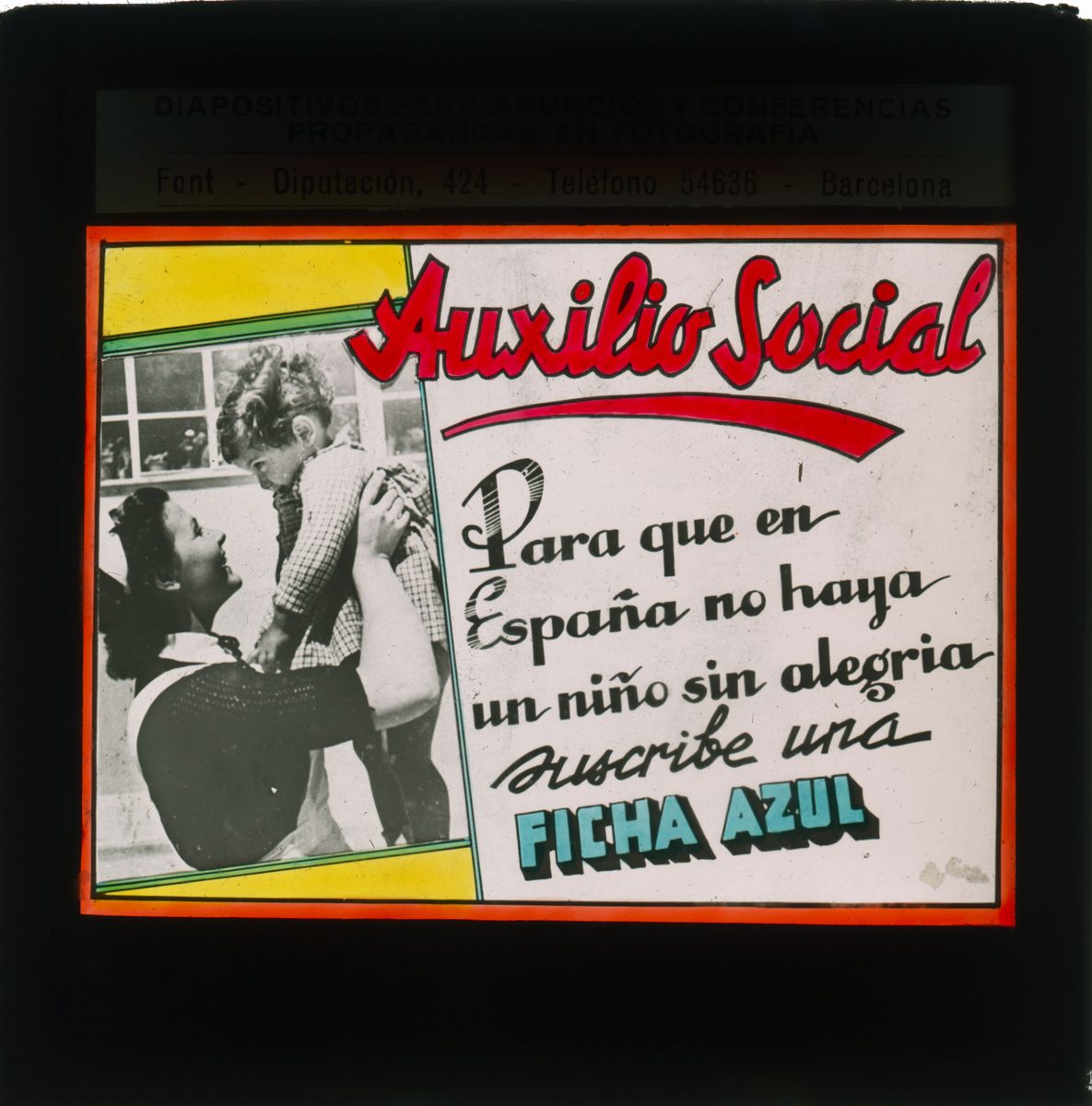
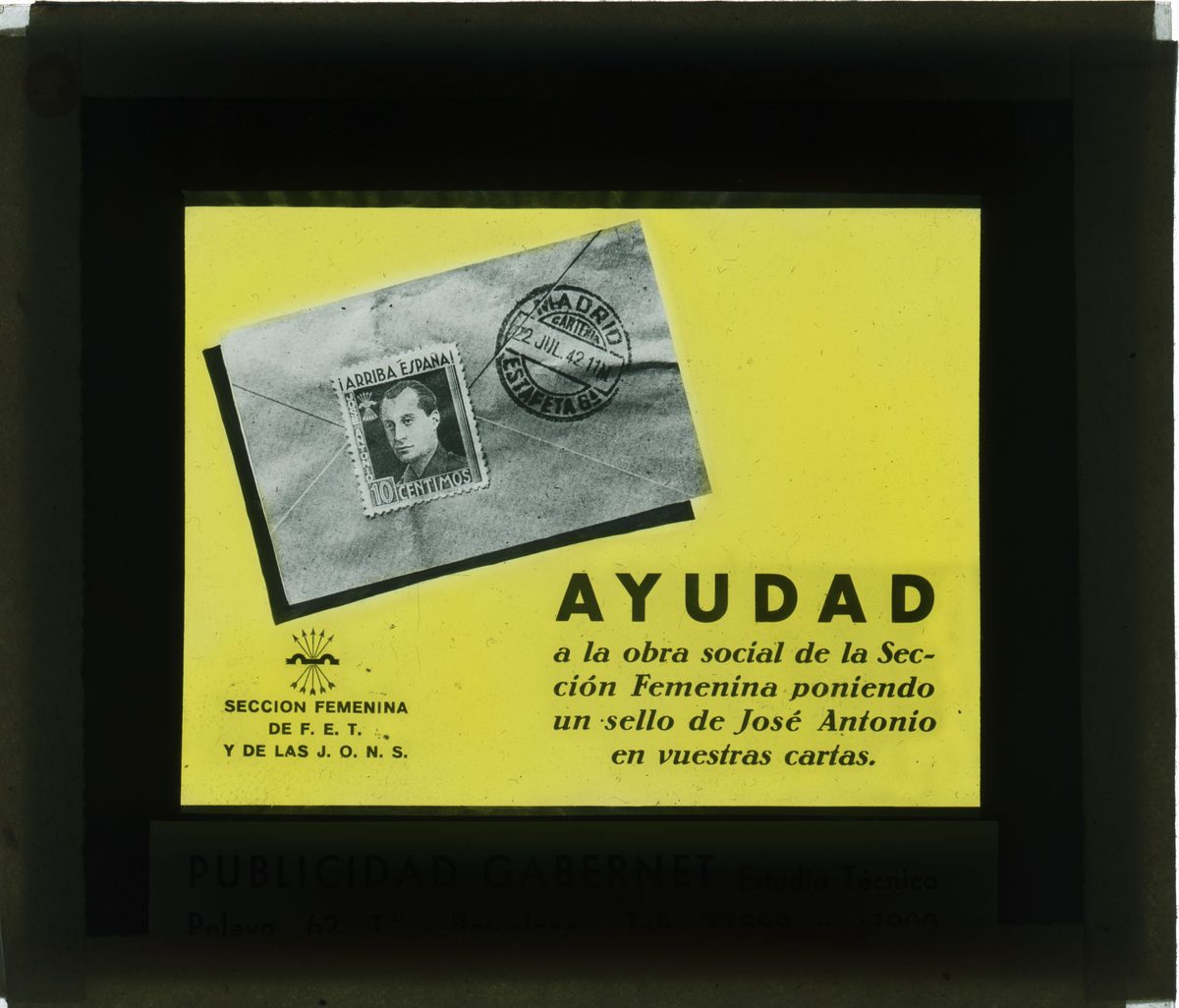
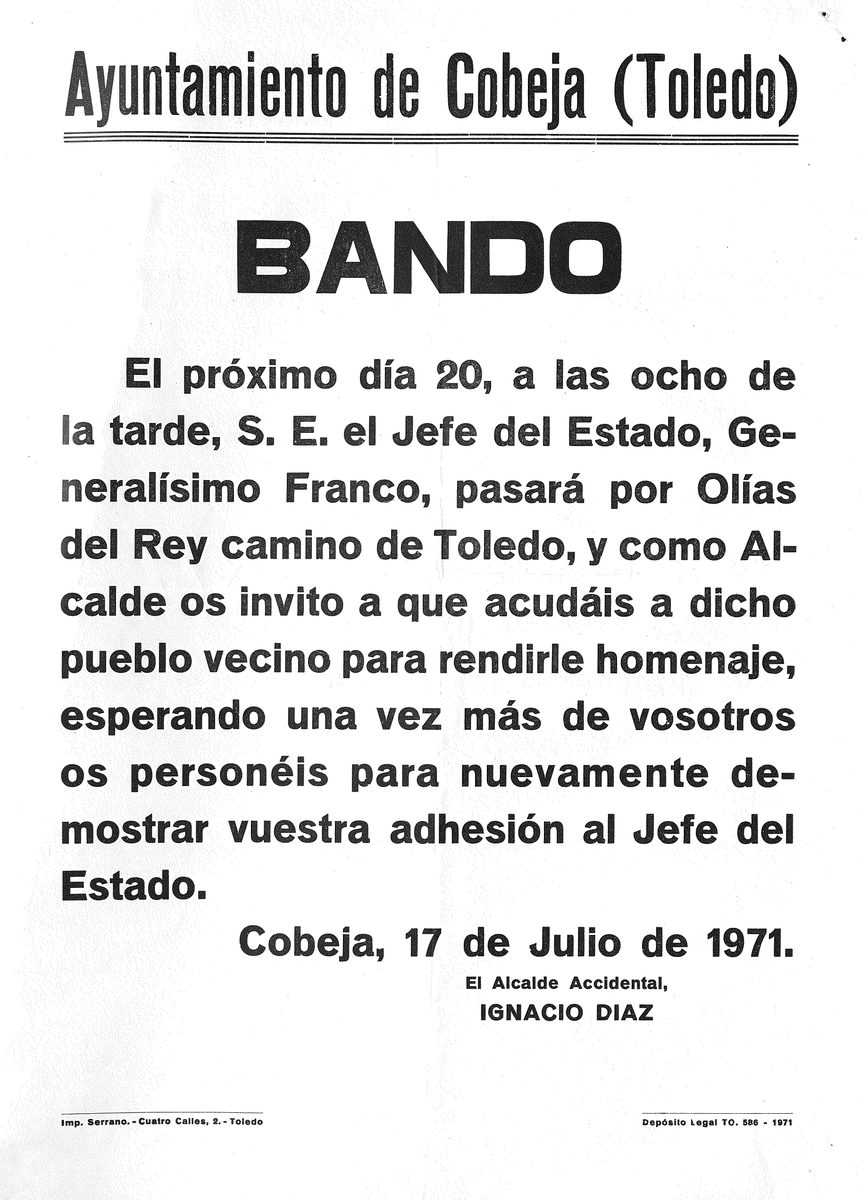
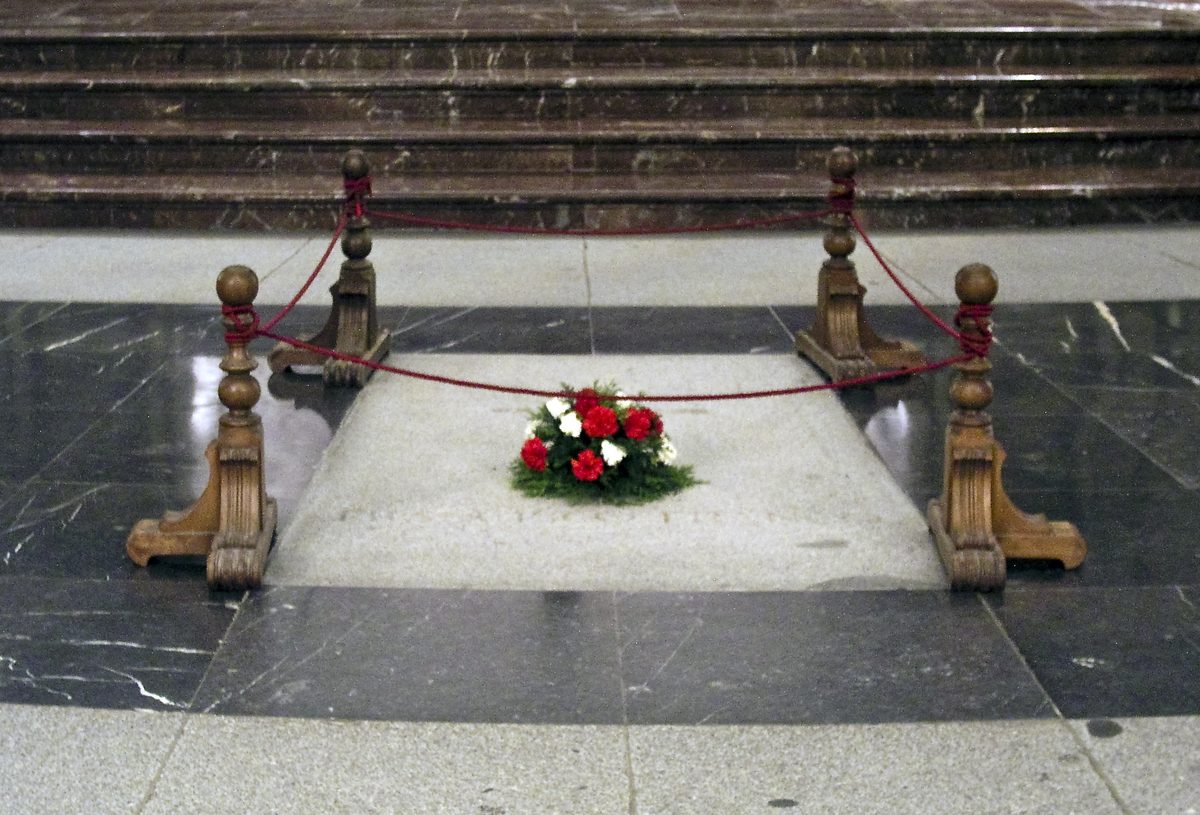
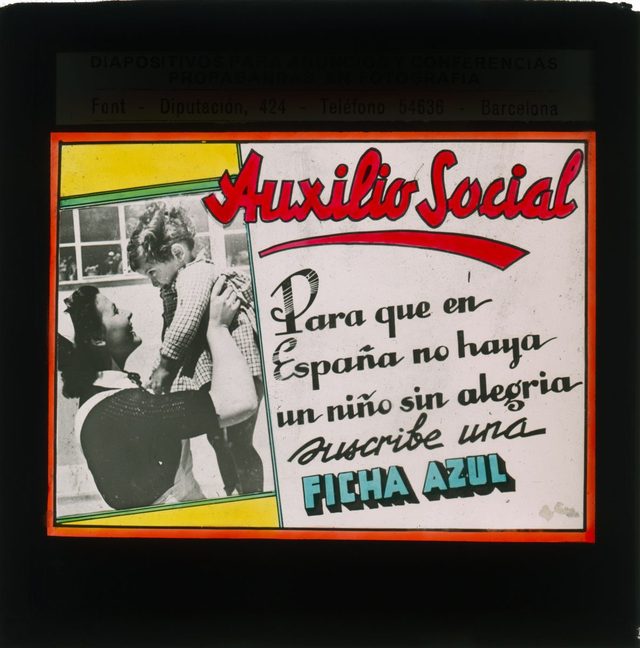
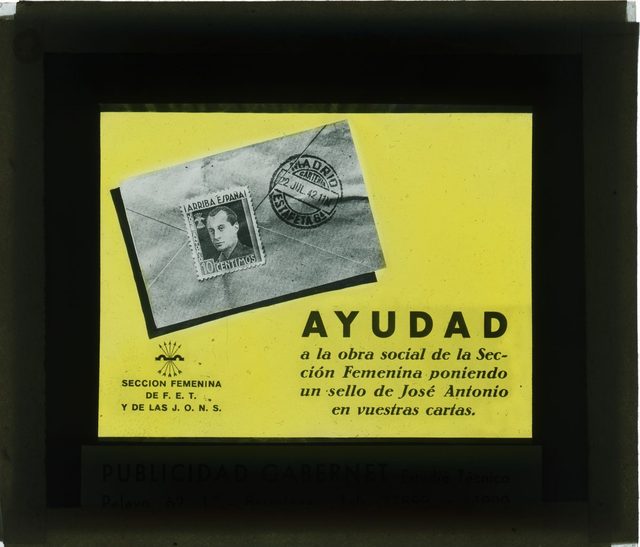
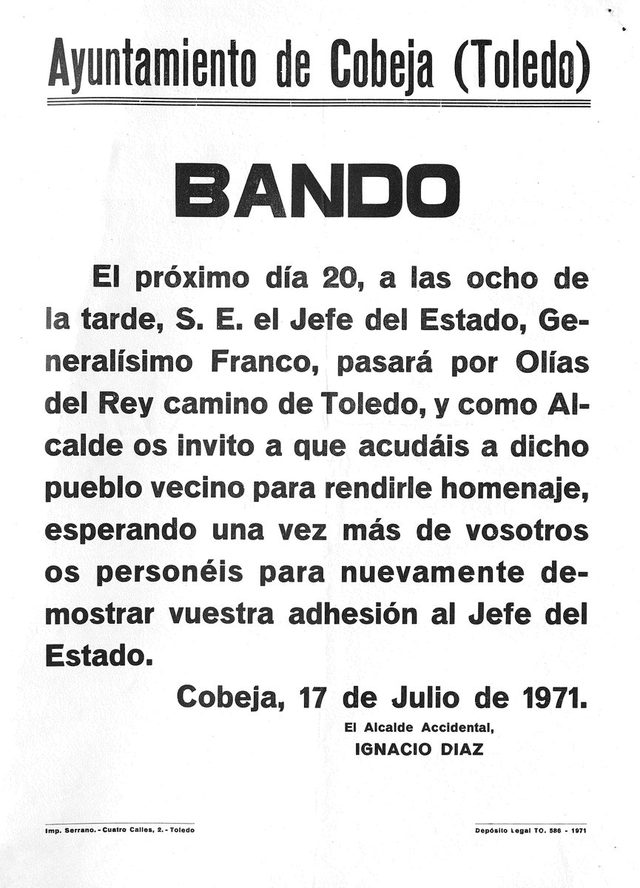
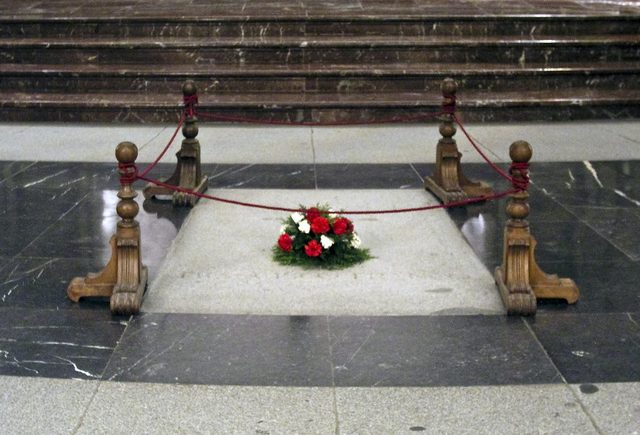
National-Catholicism tied the regime to the Church: the Nationalist side called the war a "Cruzada"; the bishops' Collective Letter of 1 July 1937 backed it; Franco entered churches under a canopy (bajo palio); religious teaching was compulsory in schools; and the Concordat of 1953 confirmed Catholic privileges. The Sección Femenina of the party, led by Pilar Primo de Rivera, taught domestic and religious roles for women. The Valley of the Fallen (Valle de los Caídos), a basilica and monument near El Escorial, was decreed on 1 April 1940 and inaugurated on 1 April 1959, the twentieth anniversary of the victory. Prisoners of war and political prisoners worked on it as forced labour under a sentence-reduction scheme, and it holds the remains of about 33,800 people killed in the war on both sides, many brought from mass graves, along with José Antonio Primo de Rivera and Franco, who was buried there on 23 November 1975. Surviving examples include the Falange drawing ¡Arriba España! (about 1937), the Auxilio Social cinema slide for the "blue token" subscription, the Sección Femenina slide that asks for José Antonio stamps on letters (postmarked 1942), the 1966 referendum poster with its slogan "Garantía de la paz, garantía del futuro", and a municipal notice of 1971 calling villagers out to show "adhesión" to Franco as he drove past. Franco's tomb at the Valley is also in the collection. Other surviving items, such as the 1938 Nationalist poster "¡Ha entrado la España de Franco!" and Franco's stamps of 1940 and 1949, are not hosted here because a clear licence basis could not be verified for them.
The archive's definitions fit most clearly: identity fusion (the Caudillo "por la gracia de Dios"), card stacking (prior censorship and the consignas), manufactured consensus (referendums held with no legal opposition campaign), glittering generalities (the 1966 poster), transfer (the Catholic liturgy and the "Crusade") and scapegoating (the "anti-Spain" of Masons and communists).
Timeline
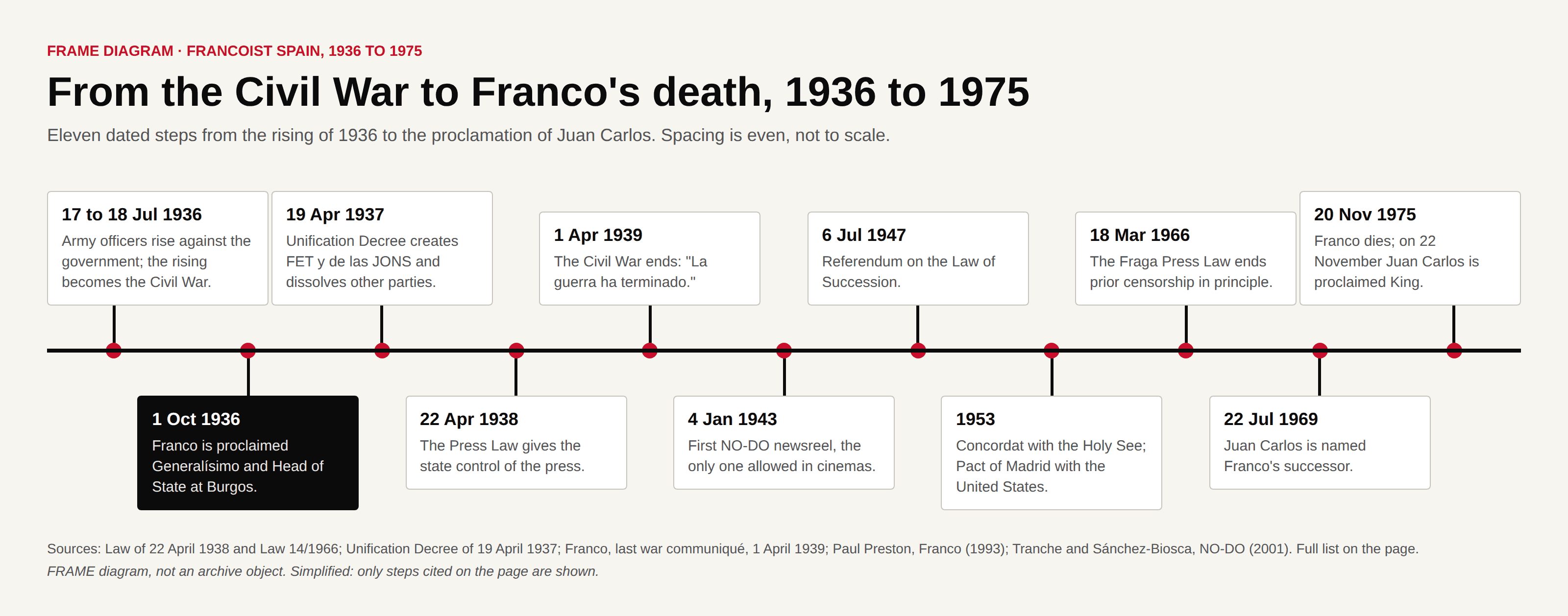
16 February 1936: Popular Front wins the elections.
17 to 18 July 1936: military rising begins the Civil War.
1 October 1936: Franco is proclaimed Generalísimo and Head of State at Burgos.
19 April 1937: Unification Decree creates FET y de las JONS.
30 January 1938 and 22 April 1938: first government and the Press Law.
1 April 1939: the Civil War ends; the United States recognises the Franco government.
1 April 1940: decree for the Valley of the Fallen.
4 January 1943: first NO-DO newsreel.
6 July 1947: referendum on the Law of Succession.
1953: Concordat with the Holy See; Pact of Madrid with the United States.
14 December 1955: Spain joins the United Nations.
1 April 1959: the Valley of the Fallen is inaugurated.
18 March 1966: the Fraga Press Law; 14 December 1966, referendum on the Organic Law.
22 July 1969: Juan Carlos is named successor.
20 December 1973: Carrero Blanco is killed.
20 November 1975: Franco dies; 22 November, Juan Carlos is proclaimed King.
Content note: Photograph of Franco's tomb in the basilica of the Valley of the Fallen, a monument built in part by prisoners' labour; its place in Spanish memory is disputed. This object is shown as it was published. Why
Eleven dated steps, 1936 to 1975, simplified from the sources cited on this page. Source: FRAME diagram, drawn from the sources listed on this page, CC BY 4.0 (FRAME archive content).
How it ended
Franco died in Madrid on 20 November 1975 after weeks of illness. Prime Minister Carlos Arias Navarro announced it on radio and television at 10 a.m. with the words "Españoles: Franco ha muerto" and read a message in Franco's name, dated 18 October 1975, asking Spaniards to support "el futuro Rey de España, Don Juan Carlos de Borbón". The funeral lay in state at the Palacio de Oriente and Franco was buried at the Valley of the Fallen on 23 November. Juan Carlos took the oath before the Cortes and was proclaimed King on 22 November 1975. The regime's institutions were then dismantled by its own legal route: the Law for Political Reform was approved by the Cortes on 18 November 1976 and by referendum on 15 December 1976; the Movimiento Nacional was dissolved by decree-law in April 1977; parties, including the Communist Party, were legalised in 1977; the first free general election since 1936 was held on 15 June 1977; and the Constitution was approved by referendum on 6 December 1978. Arias Navarro stayed as prime minister until July 1976, and the press law of 1966 was repealed in part in April 1977. On 23 February 1981 a group of Civil Guard officers took the Congress of Deputies in a failed coup.
Franco's tomb became the subject of a later legal process. Law 52/2007 (the Law of Historical Memory) had barred political acts exalting the Civil War or Francoism at the Valley; Royal Decree-law 10/2018 of 24 August 2018 limited burial there to those who died as a result of the war; on 24 September 2019 the Supreme Court rejected the family's appeal against the exhumation; and on 24 October 2019 Franco's remains were exhumed and reburied at the Mingorrubio cemetery at El Pardo. In the 2020s the site has been officially called the Valley of Cuelgamuros. Public and political opinion in Spain remains divided about how the period should be remembered.
Same-standard note
This page uses the same structure and technique definitions as every other regime page: a technique is listed only where the working definition and a documented example fit, and offices and dates are given without judging the people who held them. The regime was an authoritarian state with a single legal party, prior censorship for 28 years and mass repression above all in and after the civil war; it was a one-party state of a different structure from the Italian and German ones, which were built around mass party mobilisation, and it did not enter the Second World War, though it sent the Blue Division to the Eastern Front. Historians disagree about whether to classify it as fascist, authoritarian or a mix, and this page does not settle that. The scale of repression, the length of the period and the way it ended differ from other regime pages and are set out as history, not ranked.
Sources
Law of 22 April 1938 (Ley de Prensa), BOE nos. 549 and 550, 23 and 24 April 1938; Law 14/1966 of 18 March (Prensa e Imprenta), BOE no. 67, 19 March 1966; Law of Succession of 26 July 1947; Organic Law of the State, Law 1/1967; Unification Decree of 19 April 1937; Law 52/2007 of 26 December; Royal Decree-law 10/2018 of 24 August; Supreme Court judgment 1279/2019 on the exhumation.
Franco, last war communiqué, Burgos, 1 April 1939; Arias Navarro's address and Franco's message of 20 November 1975, as broadcast by Radio Televisión Española.
Paul Preston, Franco: A Biography (1993) and The Spanish Holocaust (2012); Stanley G. Payne, The Franco Regime, 1936 to 1975 (1987); Santos Juliá (ed.), Víctimas de la guerra civil (1999); Antonio Cazorla Sánchez, Franco: The Biography of the Myth (2013).
Rafael R. Tranche and Vicente Sánchez-Biosca, NO-DO: el tiempo y la memoria (2001); Justino Sinova, La censura de prensa durante el franquismo (1989); Francisco Sevillano Calero, Propaganda y medios en el nacionalsindicalismo español (2000); Sheelagh Ellwood, Spanish Fascism in the Franco Era (1987).
Official site of the Valley of Cuelgamuros (Spanish government), chronology of the exhumation of Francisco Franco; Contested Histories, case study on the Valley of the Fallen.
.jpg)


.jpg)