Content note. This page shows propaganda from Italy, Spain and Portugal as issued: enemy labels used by every side ("reds", "fascists", "traitors", "bandits"), leader-cult imagery, and photographs of bombed streets. Showing an item is not endorsing it, and captions record what each page claims without checking it.
What was fascist propaganda, and which regimes does this page cover?
Here it means state and party messaging of the regimes the archive's regime files cover under that label, first Mussolini's Italy (1922 to 1943). Its recurring tools were a leader cult, single-list plebiscites, a directed press and enemy labels. Franco's Spain and Salazar's Portugal are included, with the scholarly disagreement noted below.
Explain moreShow less
Scope. Nazi Germany has its own pages: Nazi propaganda posters, Joseph Goebbels and the Nazi Germany regime file. They are not repeated here. Soviet material is on Soviet propaganda posters.
The label. The regime file for Fascist Italy under Mussolini uses it in its title. The Franco Spain file says historians disagree about whether to classify that regime as fascist, authoritarian or a mix, and does not settle it. The Estado Novo file says historians disagree about whether to call that regime fascist, authoritarian or corporatist, and uses none of those labels as a finding. This page groups the three because readers search for them together, not because the archive rules they are one thing.
Inventory. The collection holds 22 objects from Fascist Italy, 16 from the Kingdom of Italy before it (1904 to 1920), 24 from Spain (1896 to 1975; 6 are Republican wartime front pages and 9 are from the Nationalist side and the Franco regime) and 8 from Portugal. Many are newspaper pages and photographs, not posters. For the Spanish Civil War it holds no Republican poster; its only wartime poster design is a Falange drawing. The gap is stated, not filled.
Where did Italian Fascist propaganda begin?
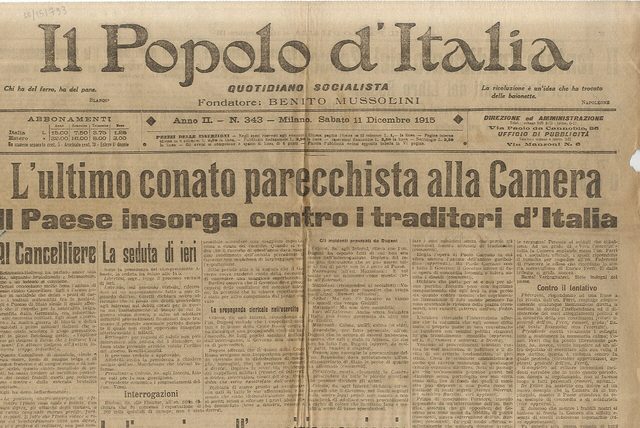
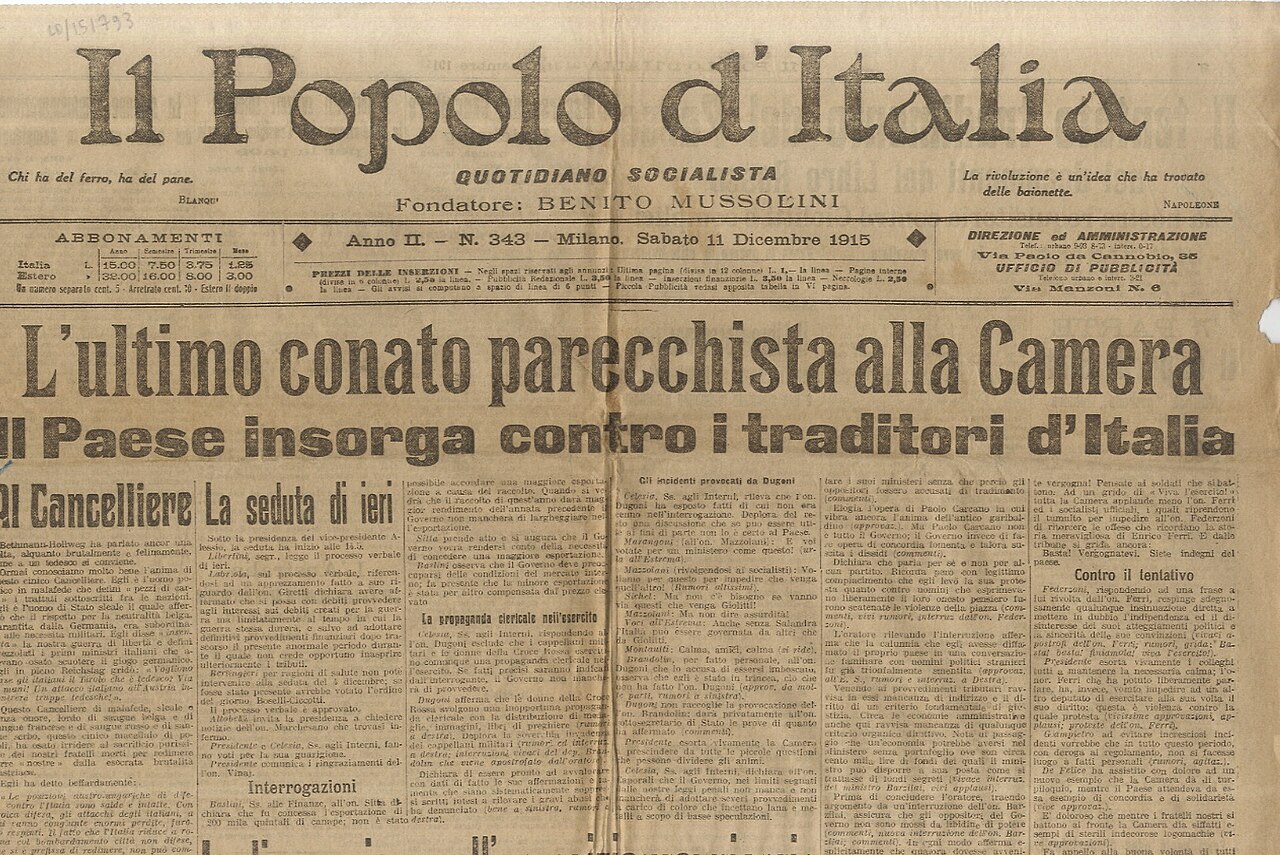
Mussolini founded Il Popolo d'Italia in Milan on 15 November 1914, after breaking with the Socialist Party over Italian intervention in the war. On this front page of 11 December 1915 the masthead still reads "quotidiano socialista", and "parecchista" labels deputies who followed Giolitti's neutralist line as "traditori d'Italia". Tagged name-calling. Read the technique: name-calling.
Explain moreShow less
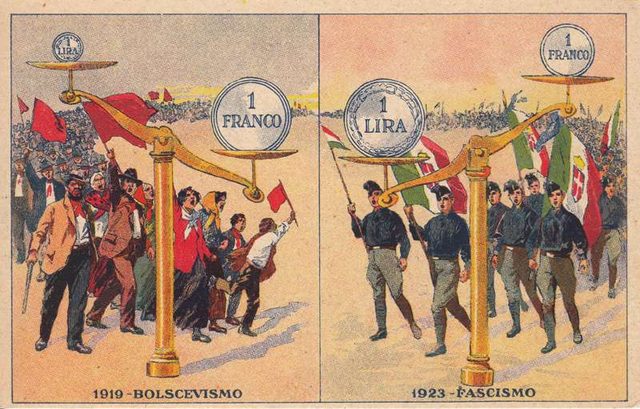
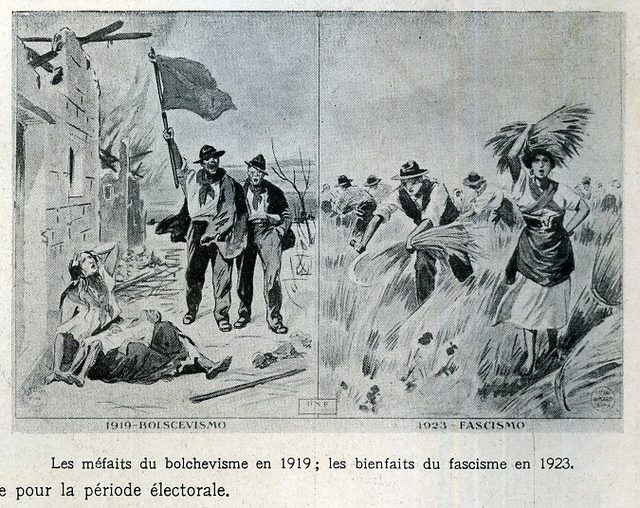
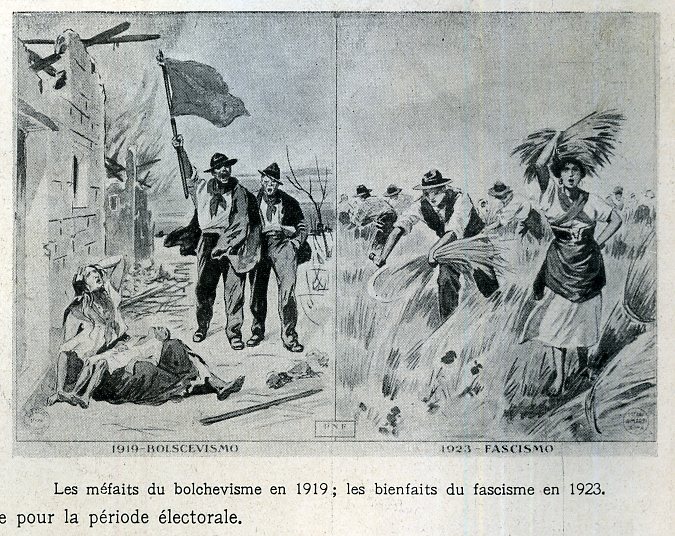
The National Fascist Party (PNF) poster for the election of 6 April 1924, held under the Acerbo law, as reproduced in L'Illustration (Paris) on 5 April 1924. It sets "1919 - Bolscevismo" against "1923 - Fascismo". Tagged card stacking and scapegoating: chosen scenes of disorder and order, the difference credited to the ideology. Read the technique: card stacking.
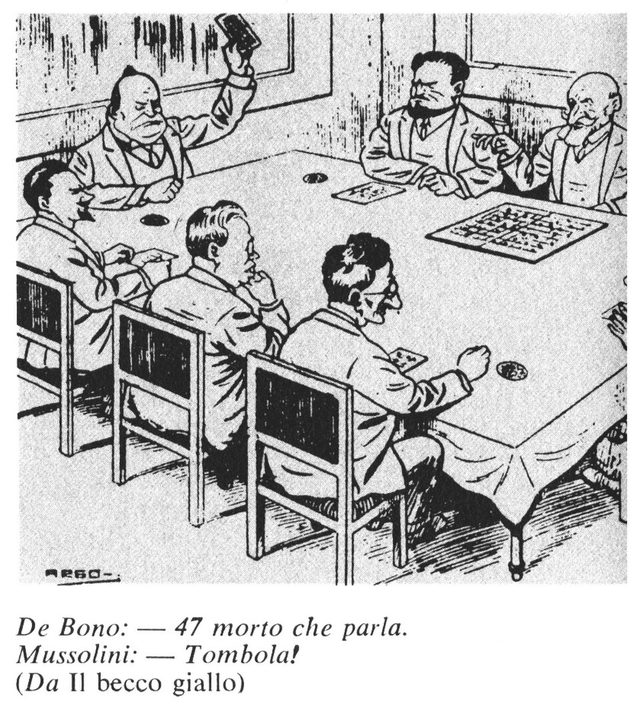
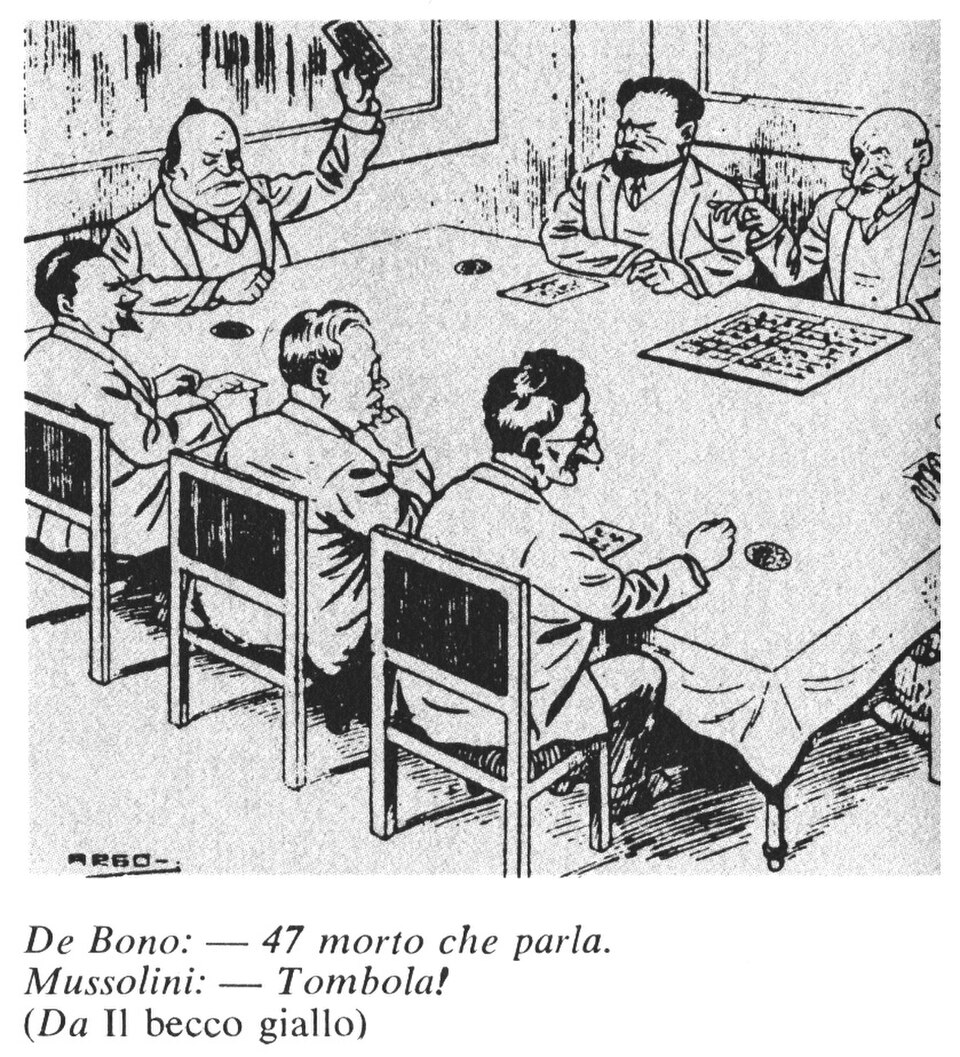
Il Becco Giallo, an openly opposition satirical weekly in Rome, printed this 1925 cartoon on the murder of the Socialist deputy Giacomo Matteotti, abducted on 10 June 1924. De Bono is given the call "47, the dead man who speaks" and Mussolini the shout "Tombola!". The entry tags it name-calling, by insinuation and not by evidence shown, and records that a Senate court acquitted De Bono in 1925.
How did Mussolini propaganda build a leader cult and a single-list vote?
After the laws of 1925 and 1926 Italy was a one-party state with a directed press. The machine ran from Ciano's Press Office (1933) to the Ministry of Popular Culture (1937); see Fascist Italy's propaganda machine.
Explain moreShow less
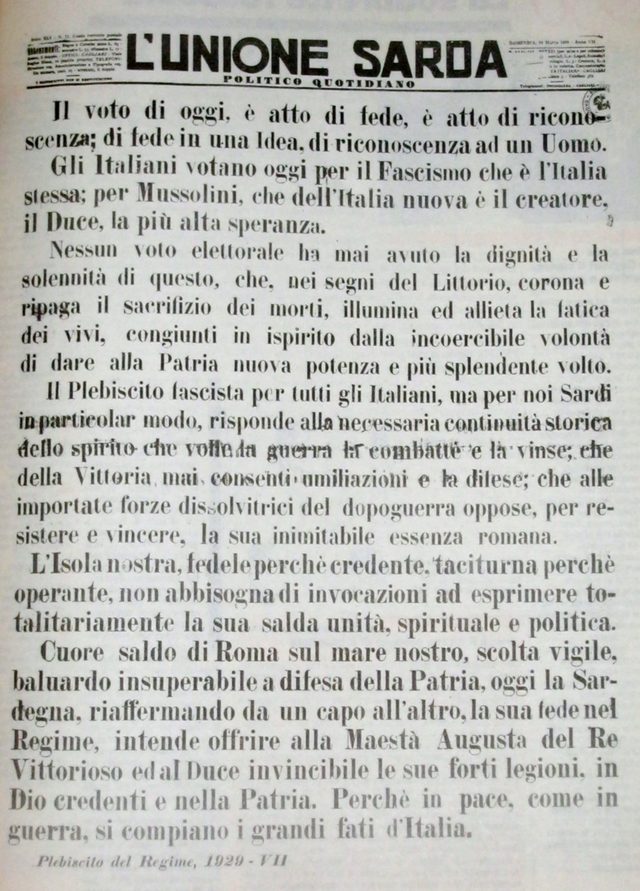
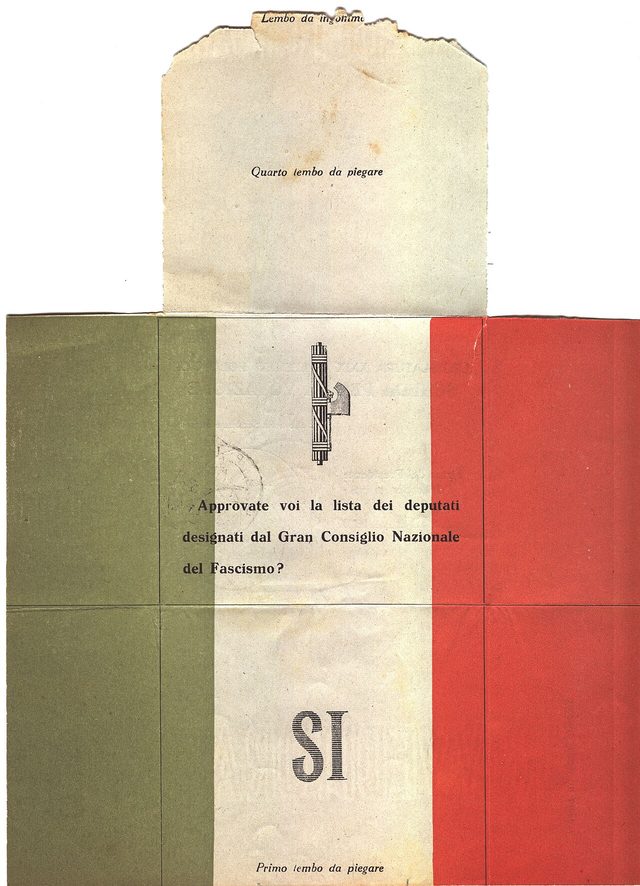
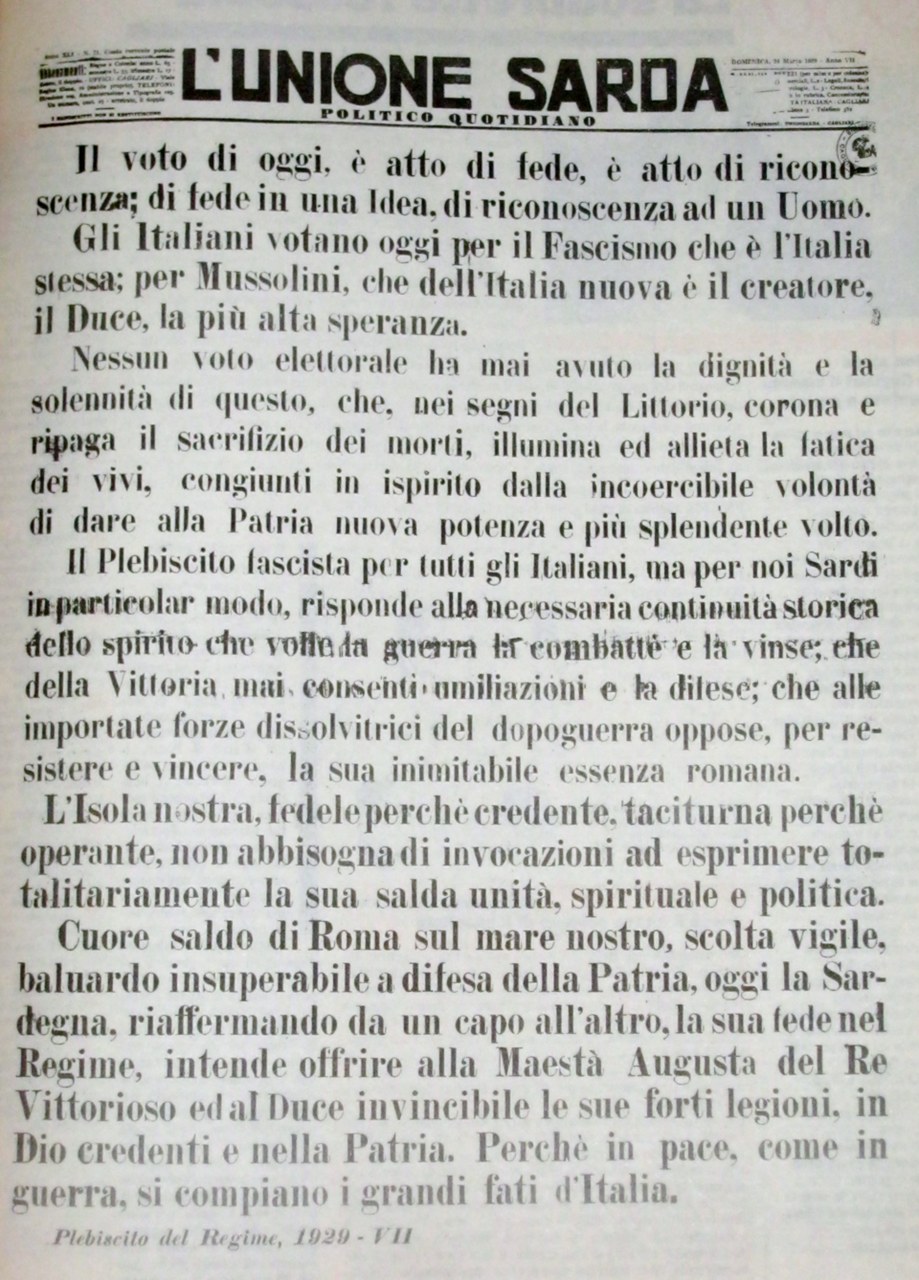
L'Unione Sarda of Cagliari, under Fascist press controls, printed an unsigned text on plebiscite day, 24 March 1929, calling the vote "an act of faith": Italians "vote today for Fascism, which is Italy itself". Voters could only approve or reject one list of 400 deputies named by the Fascist Grand Council; the regime reported about 8.5 million Yes and 136,000 No. Tagged identity fusion and glittering generalities. Read the technique: identity fusion.
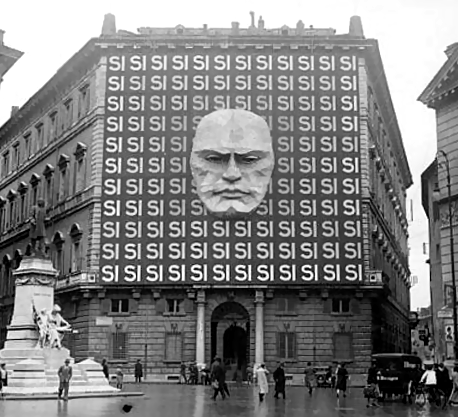
For the plebiscite of March 1934 the Fascist Federation of Rome covered the facade of Palazzo Braschi with a giant face of Mussolini ringed by rows of SI. Tagged identity fusion, bandwagon, repetition and demagoguery: the only answer on offer is repeated scores of times around the leader. The decoration was temporary. Read the technique: bandwagon.
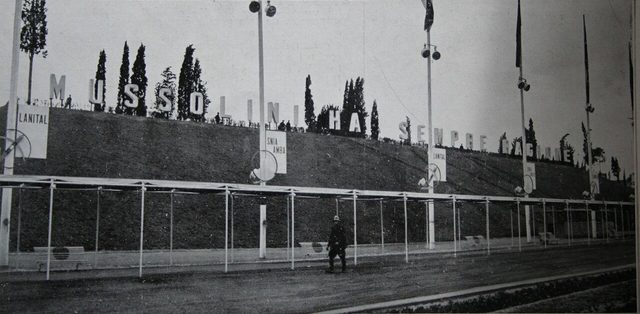
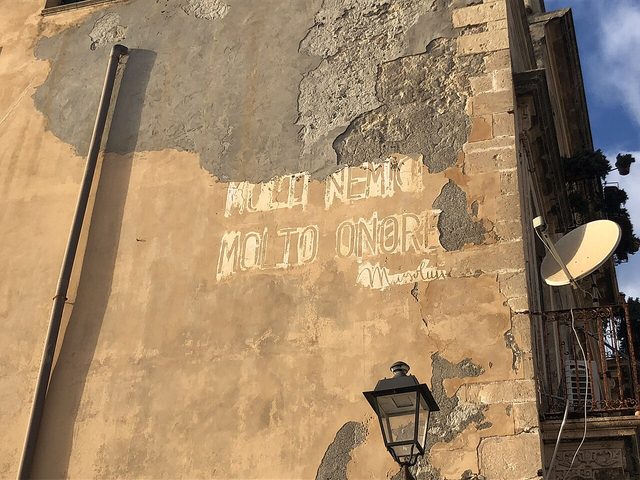
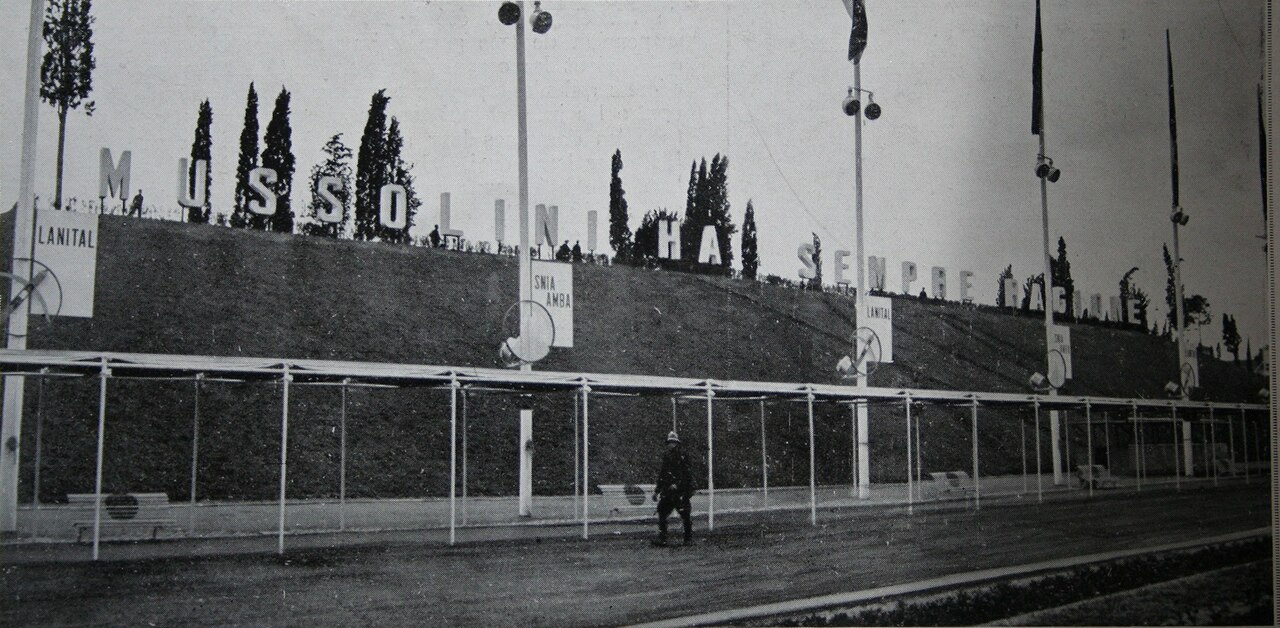
"Mussolini ha sempre ragione" ("Mussolini is always right"), as printed in L'Illustration on 8 April 1935. The entry says the slogan was painted on walls and built into public spaces across Italy in the 1930s; this site is not identified. Tagged identity fusion and cult of personality. Read the technique: cult of personality.
How did Italian propaganda mobilise for sanctions and war?
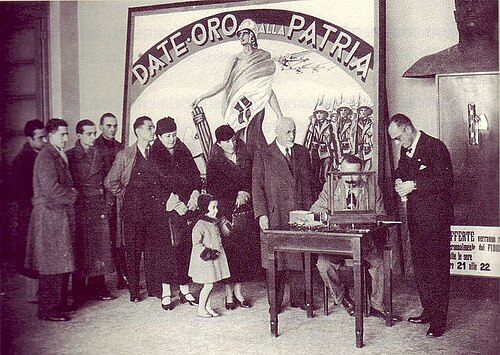
The gold collection in Milan, December 1935, answered the League of Nations sanctions of 18 November 1935. On 18 December, the Giornata della Fede, married couples gave their wedding rings for a steel or iron one. Tagged identity fusion, transfer and bandwagon: the fede (ring, also "faith") becomes a public proof of loyalty, and the queue shows others giving. The regime file adds that the Italian press printed nothing about gas in Ethiopia. Read the technique: identity fusion.
Explain moreShow less
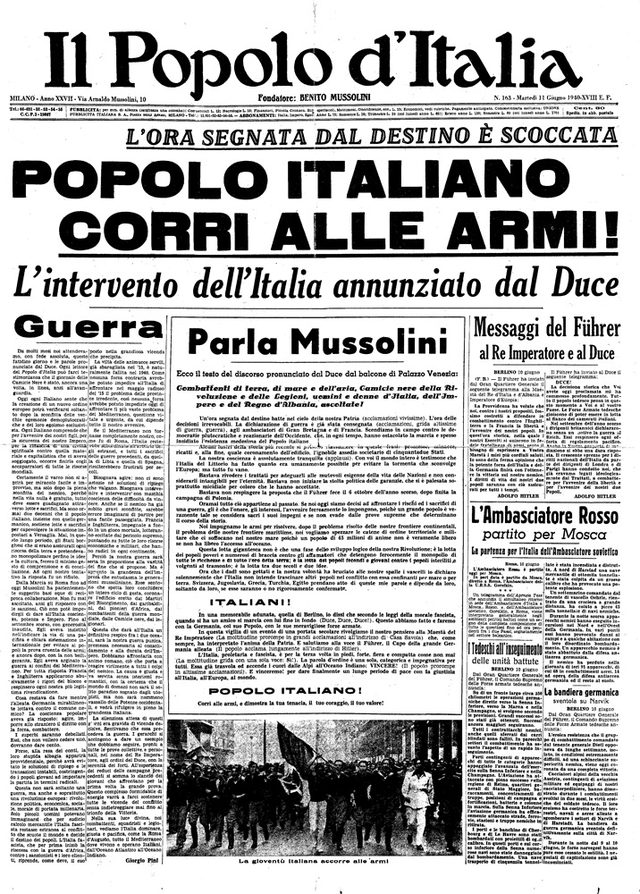
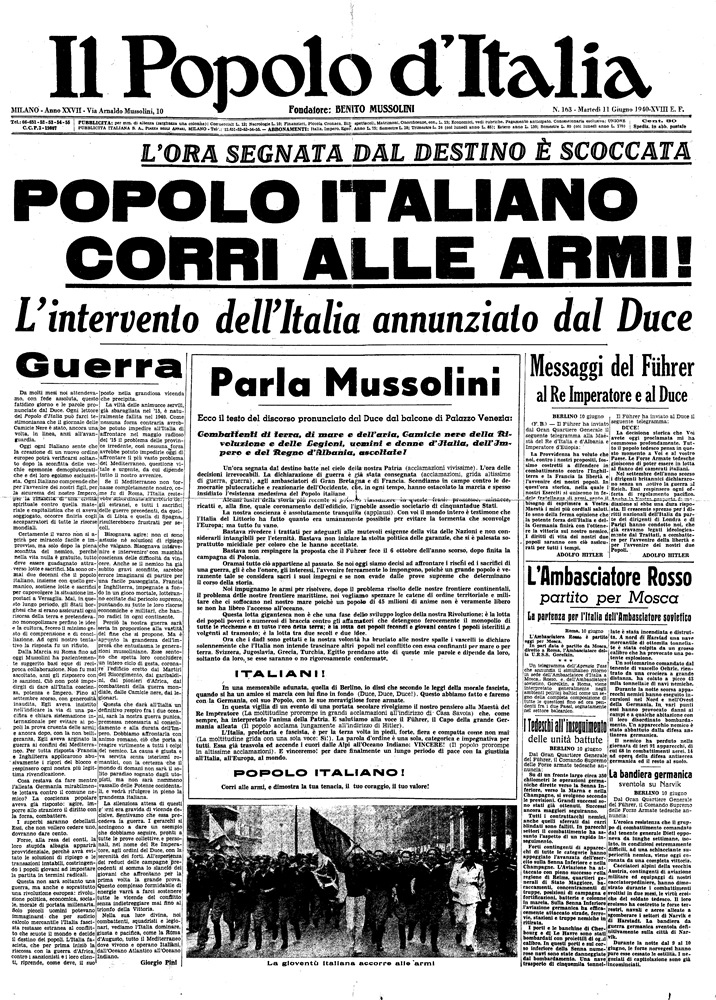
Mussolini announced the war on Britain and France from the balcony of Palazzo Venezia on 10 June 1940. His paper's next front page runs "Popolo italiano corri alle armi!" ("Italian people, run to arms") over the speech text, with a photo captioned "La gioventù italiana accorre alle armi". Tagged bandwagon and glittering generalities. For the end of the regime, see how Benito Mussolini died.
What was Spanish Civil War propaganda on each side?
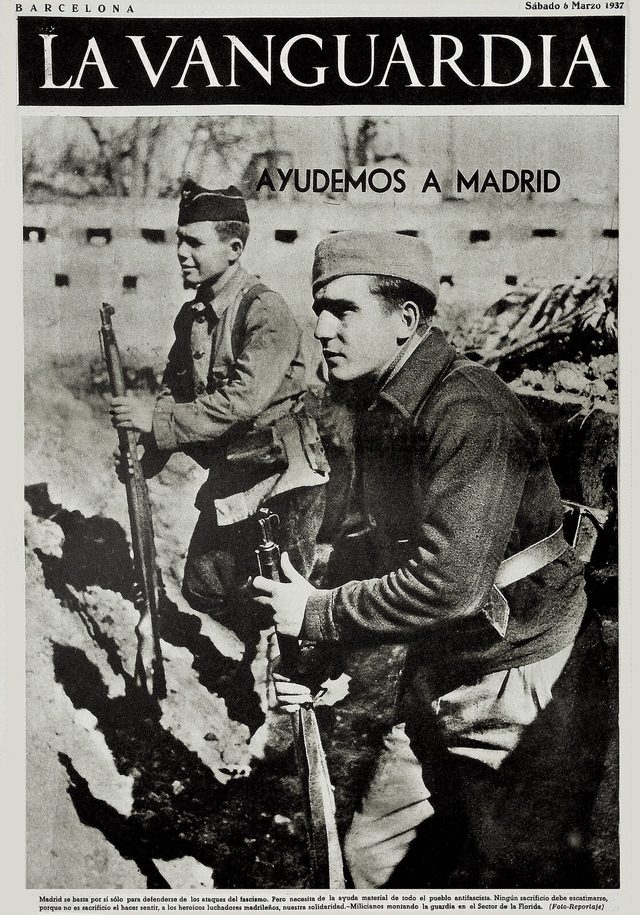
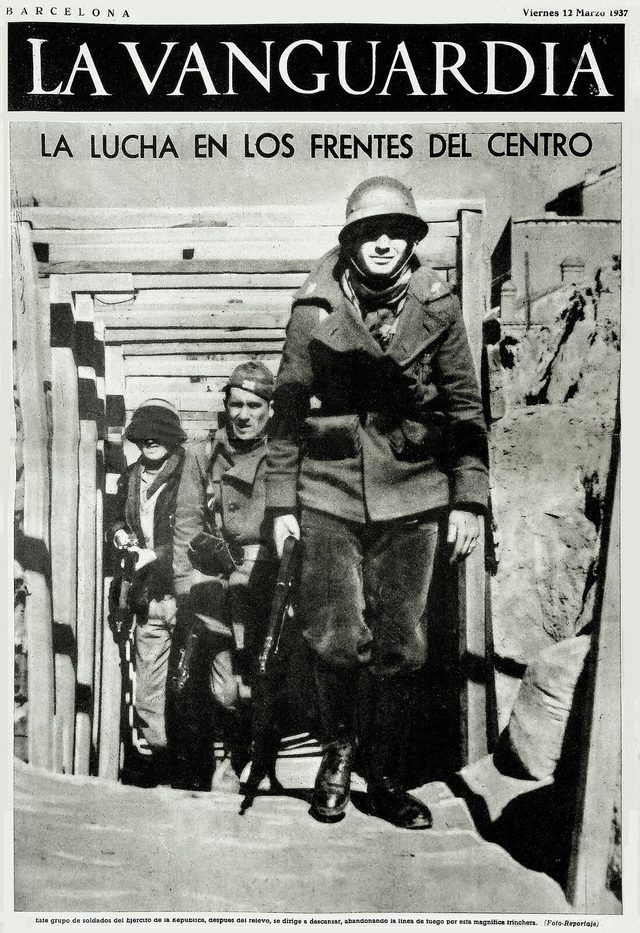
The war began with the army rising of 17 and 18 July 1936; Franco was proclaimed head of the Nationalist side on 1 October 1936 (regime file). Both zones are tagged on identical definitions. The collection's Republican wartime material is six pages of La Vanguardia, a Barcelona daily; three are shown.
Explain moreShow less
Republican zone
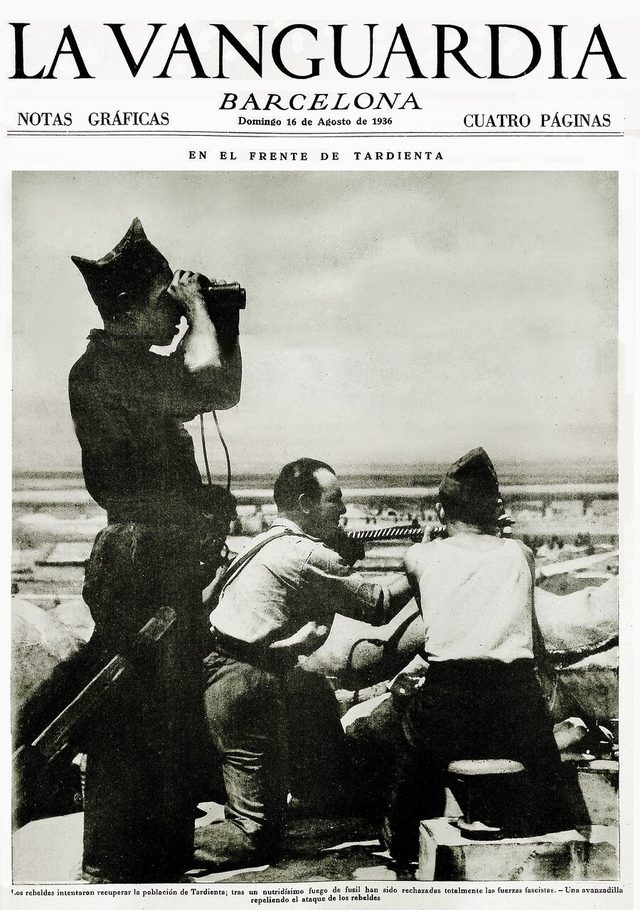
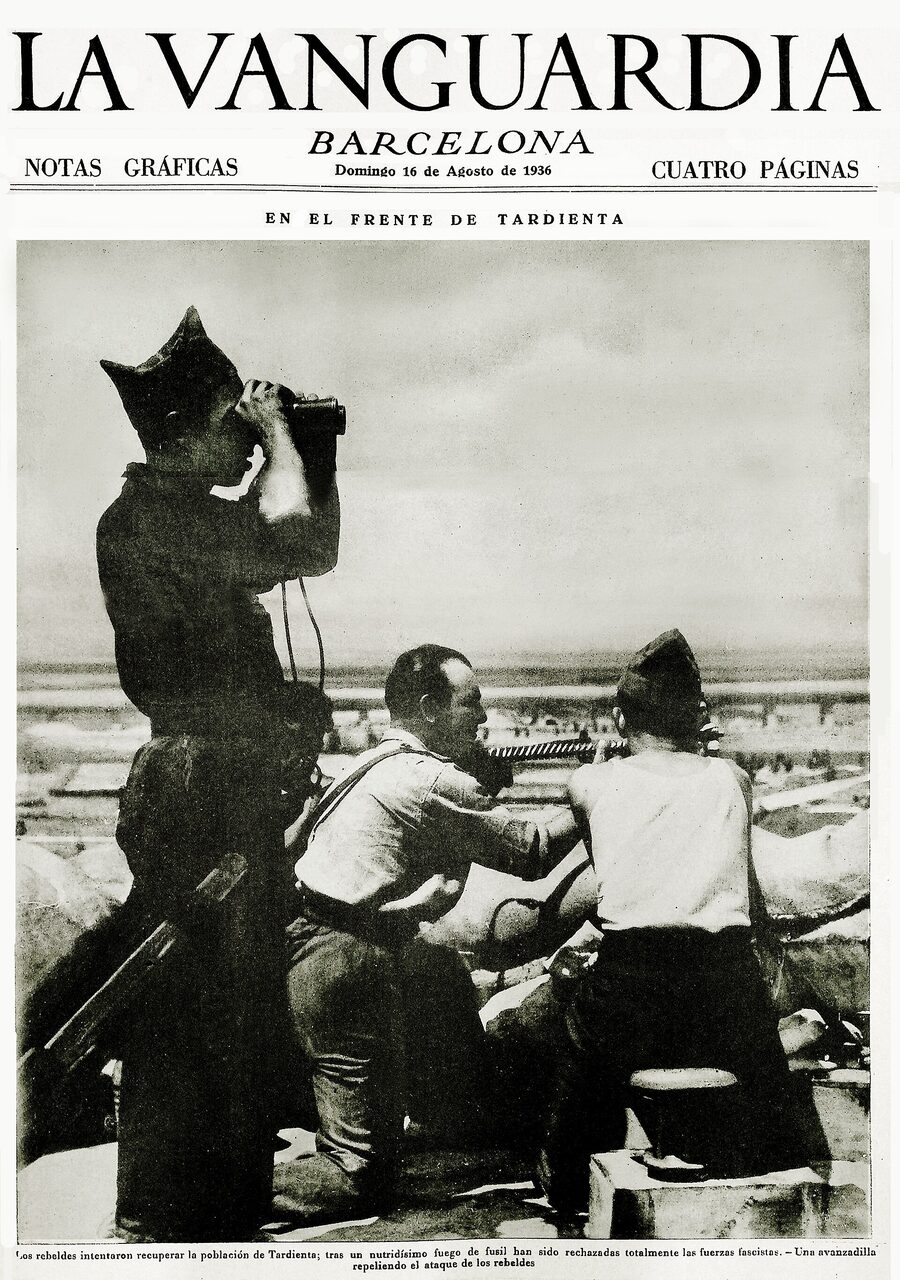
The photo-only front page "En el frente de Tardienta" (16 August 1936) says the "rebeldes" tried to retake the town and "las fuerzas fascistas" were repulsed. Tagged name-calling; the page gives no sources, losses or numbers and the entry does not verify the action. It notes that Nationalist-zone material calls Republican forces "reds" and "marxists" on the same definition. Read the technique: name-calling.
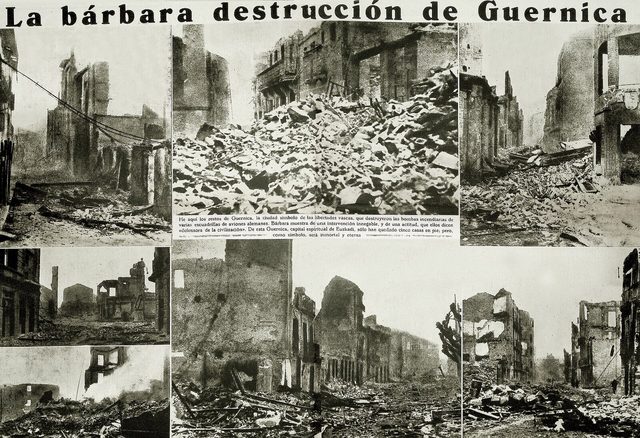
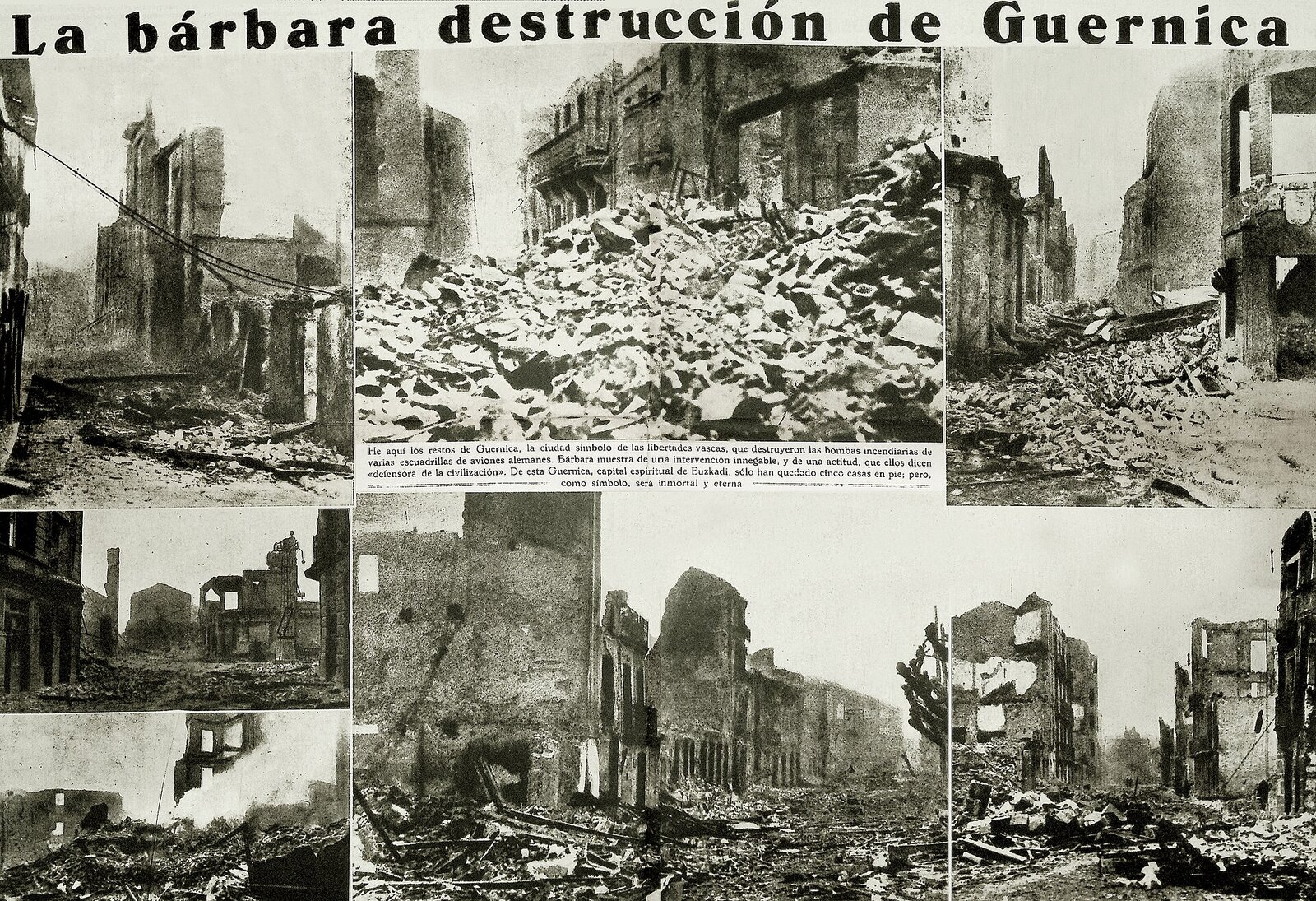
The bombing of Guernica on 26 April 1937 by the German Condor Legion, with Italian participation, is documented. This page, dated 26 May by Commons, is the Republican framing: German squadrons destroyed the town and only five houses were left standing. The five-house figure is the paper's own claim and is unverified; the entry records that Nationalist sources at the time denied or blamed Republican arson.
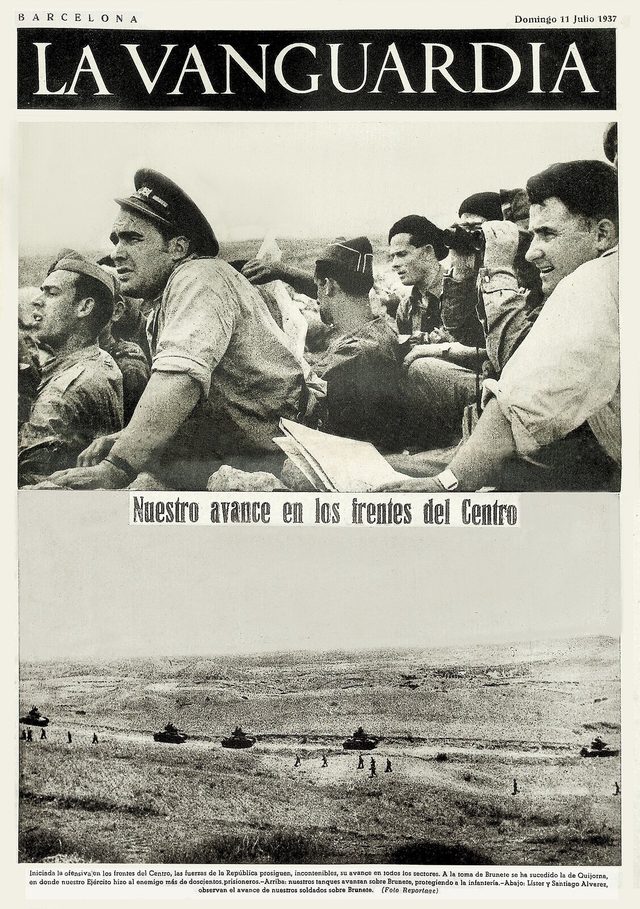
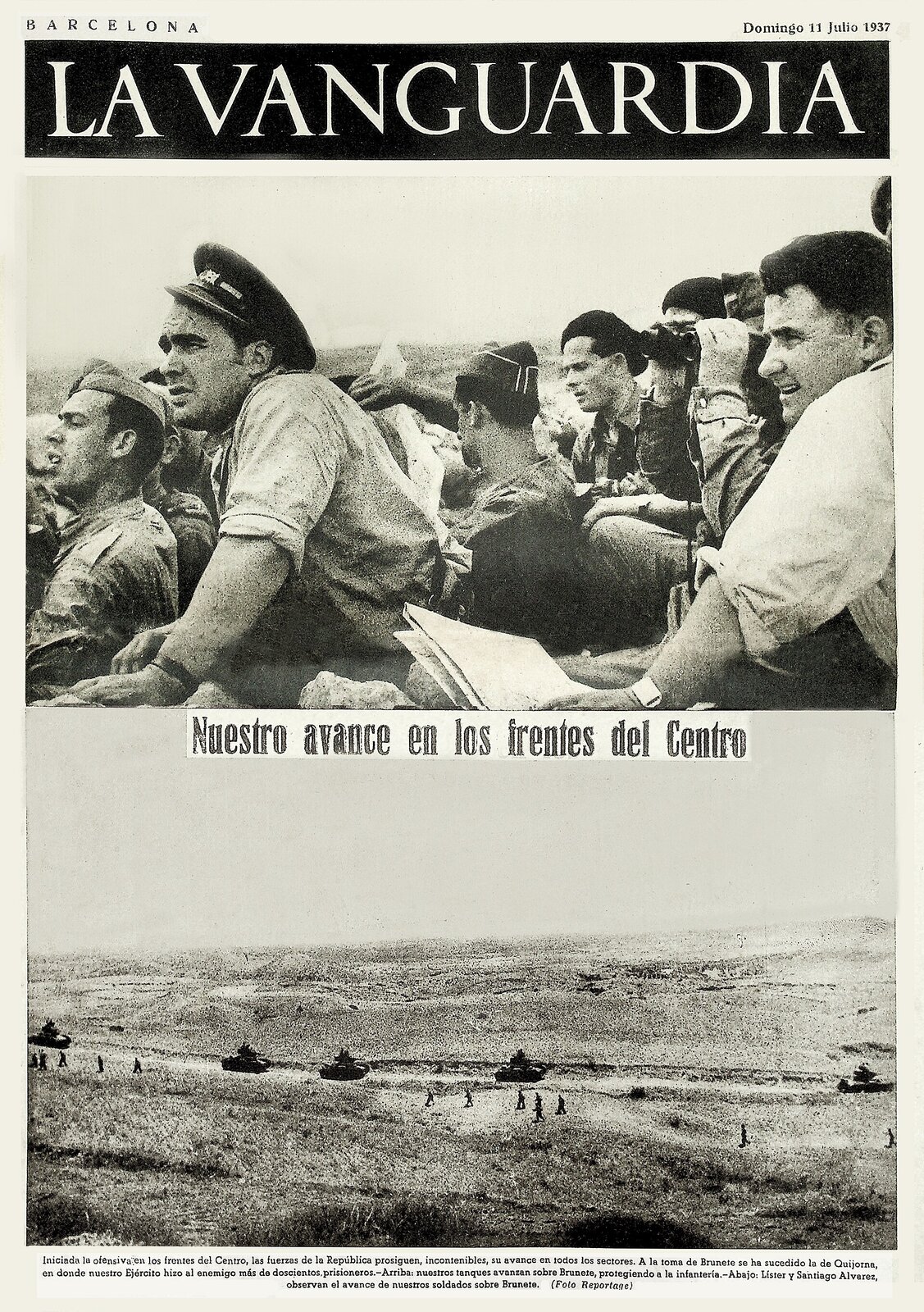
"Nuestro avance en los frentes del Centro" (11 July 1937) calls the Republican advance at Brunete "incontenibles" in all sectors. The offensive began on 6 July and stalled within about two weeks; Nationalist forces retook the ground by late July. Tagged bandwagon. Read the technique: bandwagon.
Nationalist zone
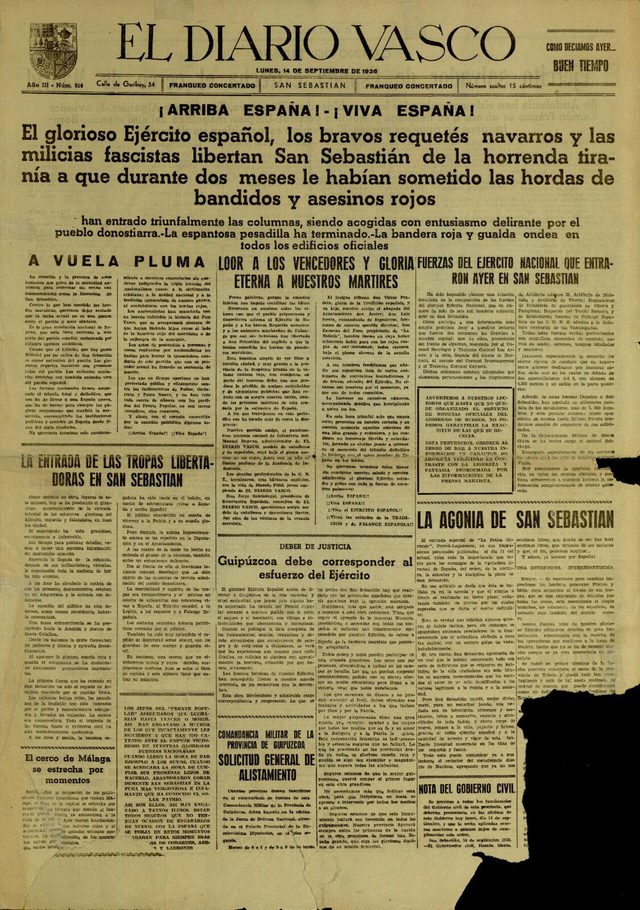
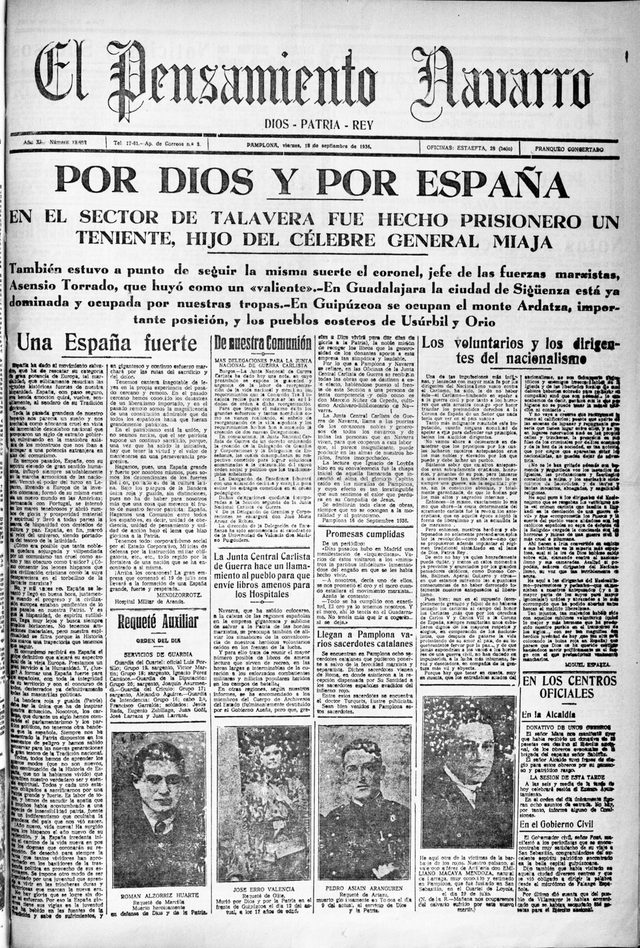
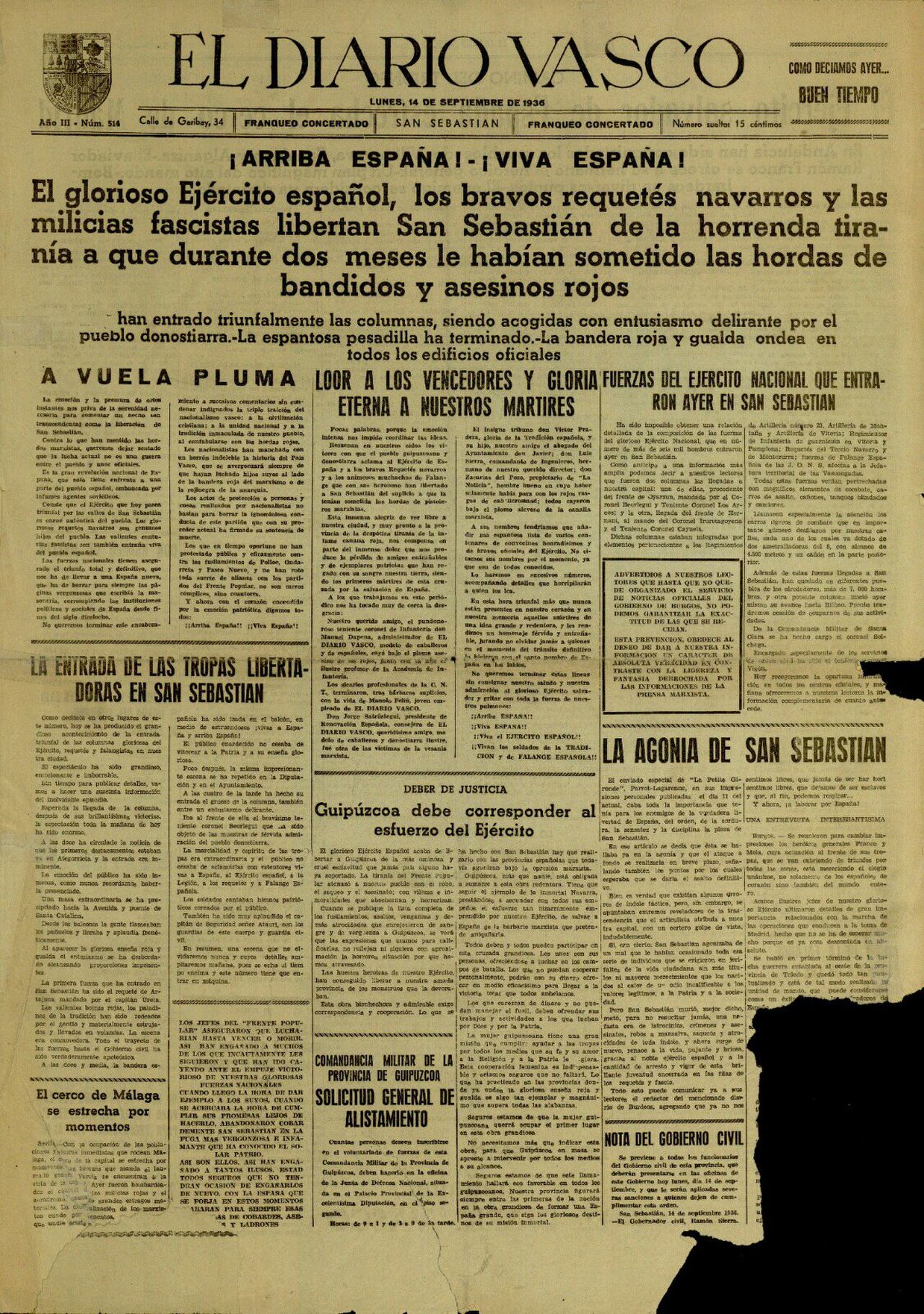
This San Sebastián front page of 14 September 1936 followed the Nationalist entry. It says the army, the Navarrese requetés and the fascist militias "free" the city from "hordes of red bandits and murderers", and claims "delirious enthusiasm". Tagged name-calling and glittering generalities; the entry does not adjudicate the charges. Read the technique: name-calling.
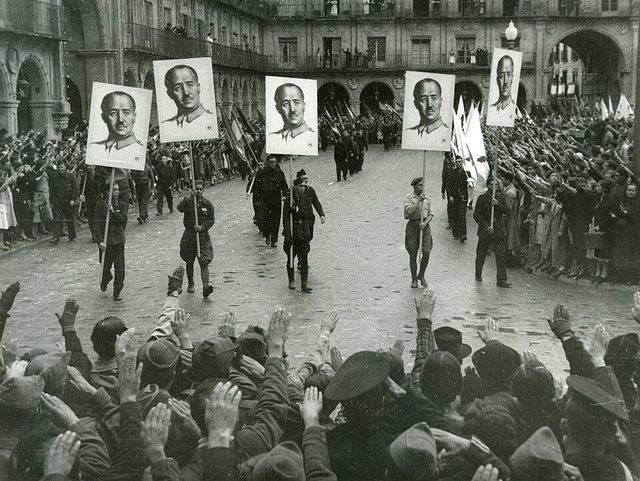
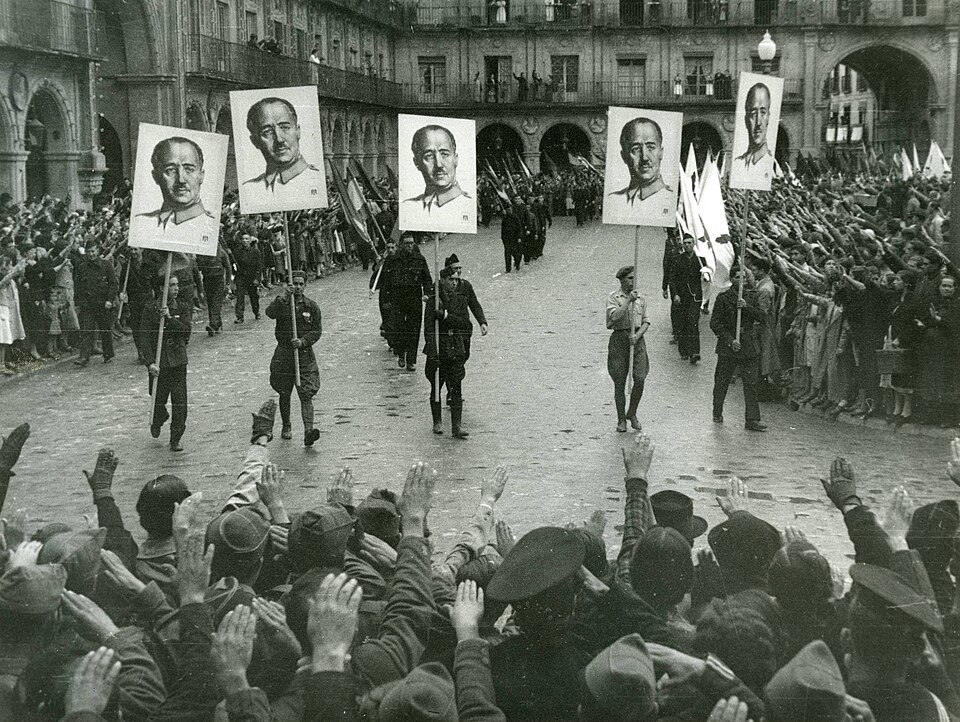
A parade in Salamanca in 1937 marking the Nationalist capture of Gijón, held by the Spanish Ministry of Defence's Biblioteca Virtual de Defensa. Tagged identity fusion, bandwagon and cult of personality: identical portraits and massed arm-raising turn a victory into a ritual of allegiance. Read the technique: cult of personality.
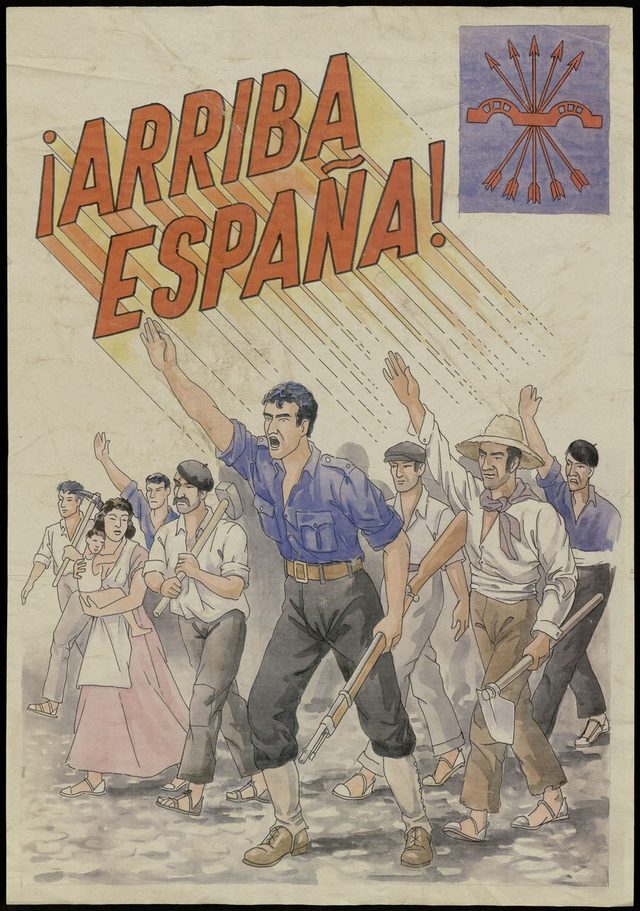
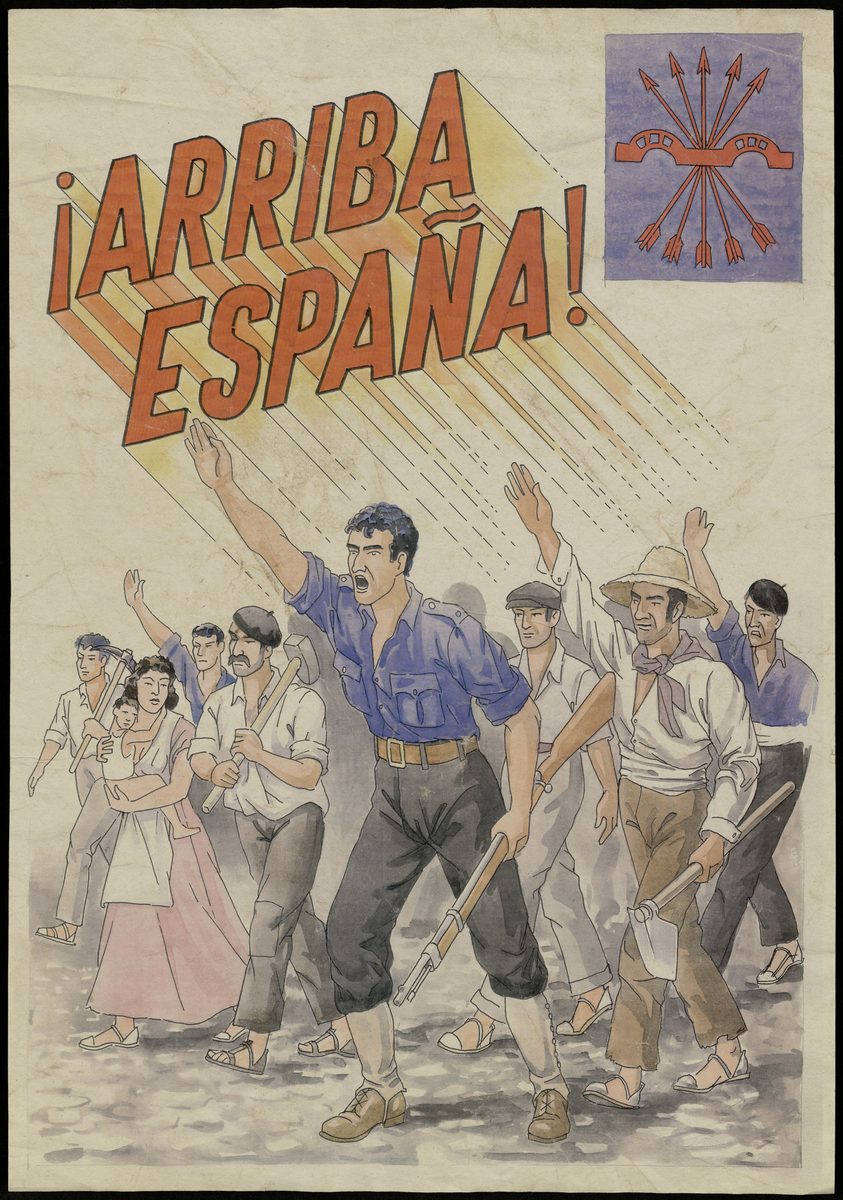
A Falange poster design in watercolour and ink, about 1937, held by the Biblioteca Virtual de la Comunidad de Madrid, which does not say whether it was printed. The Falange had been merged with the Carlists on 19 April 1937. Tagged plain folks and bandwagon: labourers and families march behind one party sign. Read the technique: plain folks.
How did Franco propaganda look after the war?
Franco governed until his death on 20 November 1975, with prior censorship for 28 years (regime file).
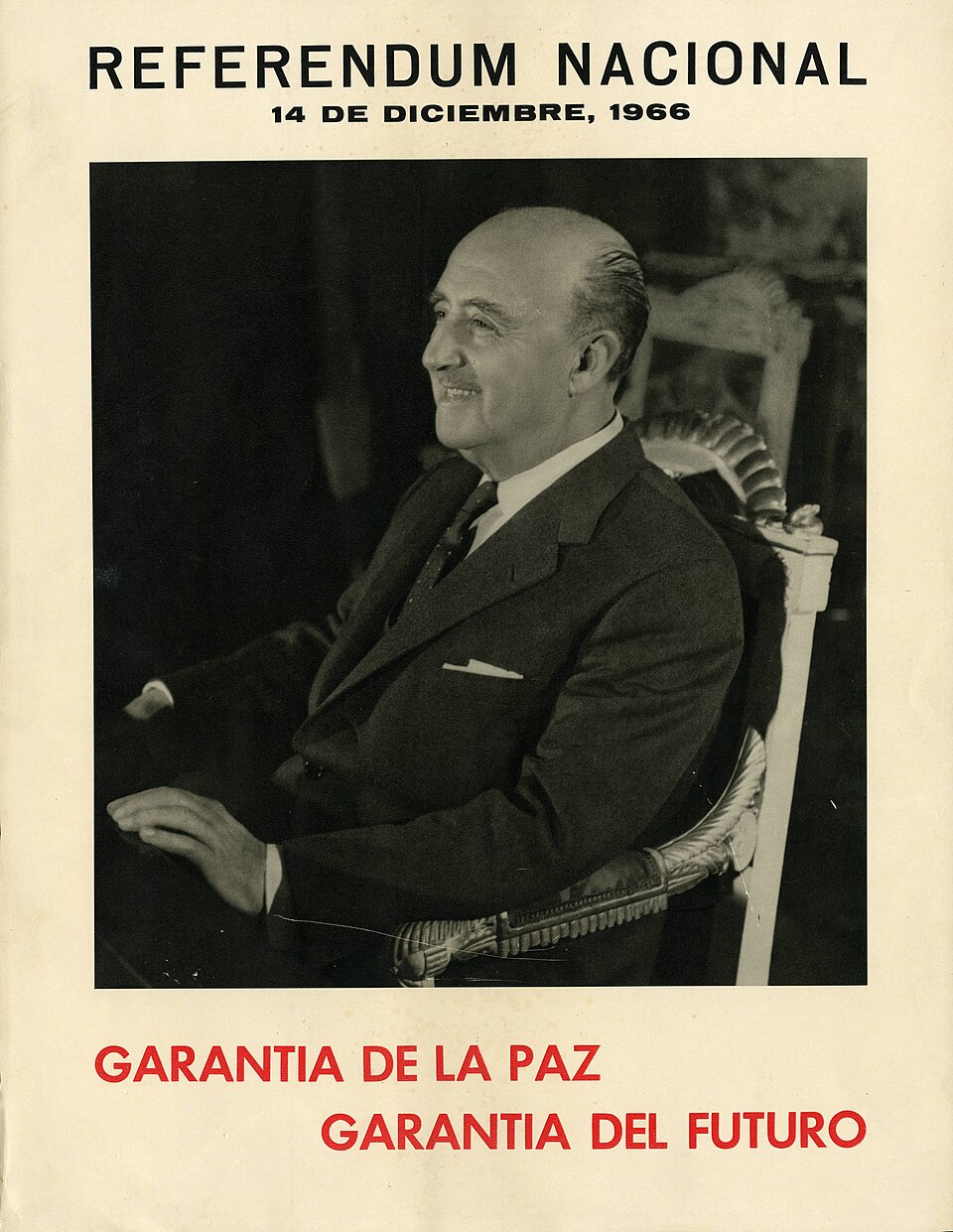
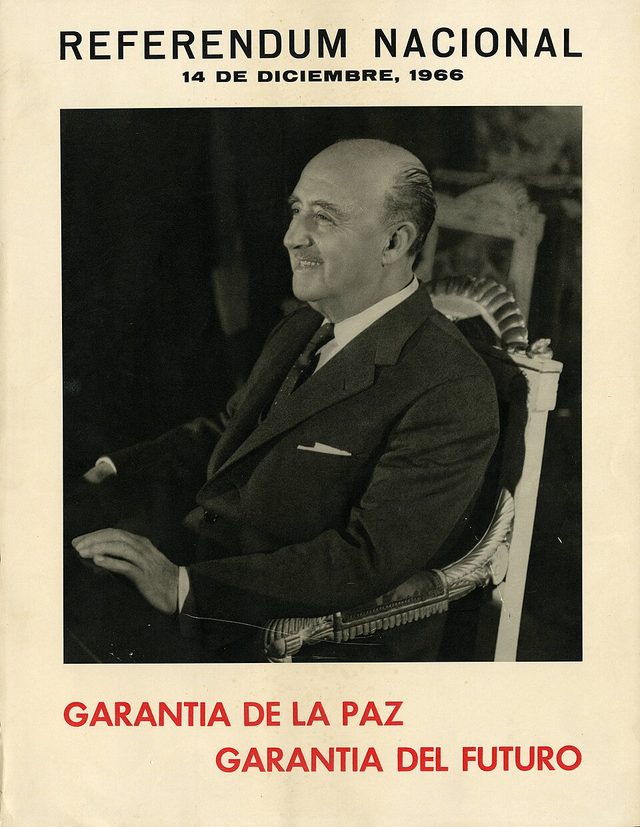
The poster for the referendum of 14 December 1966, held under a regime in which the Movimiento was the only legal political organisation. It never mentions the Organic Law of the State on the ballot: two abstract phrases and a portrait stand in for the question. Tagged glittering generalities. Read the technique: glittering generalities.
What did Portuguese Estado Novo propaganda look like?
The constitution took effect on 11 April 1933 and the regime ended on 25 April 1974, with prior censorship from 22 June 1926 (regime file). Three of the eight Portuguese items are shown, all held by the Biblioteca Nacional de Portugal.
Explain moreShow less
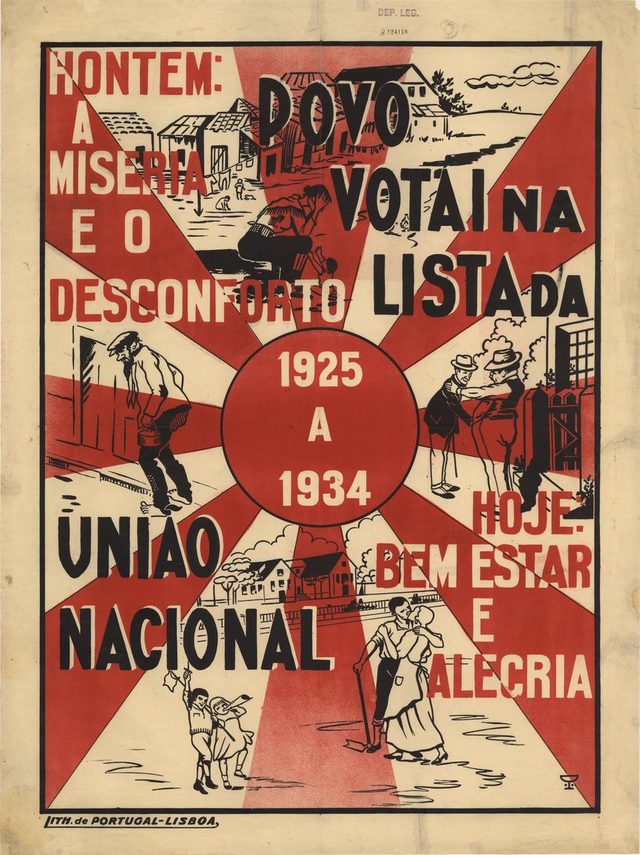
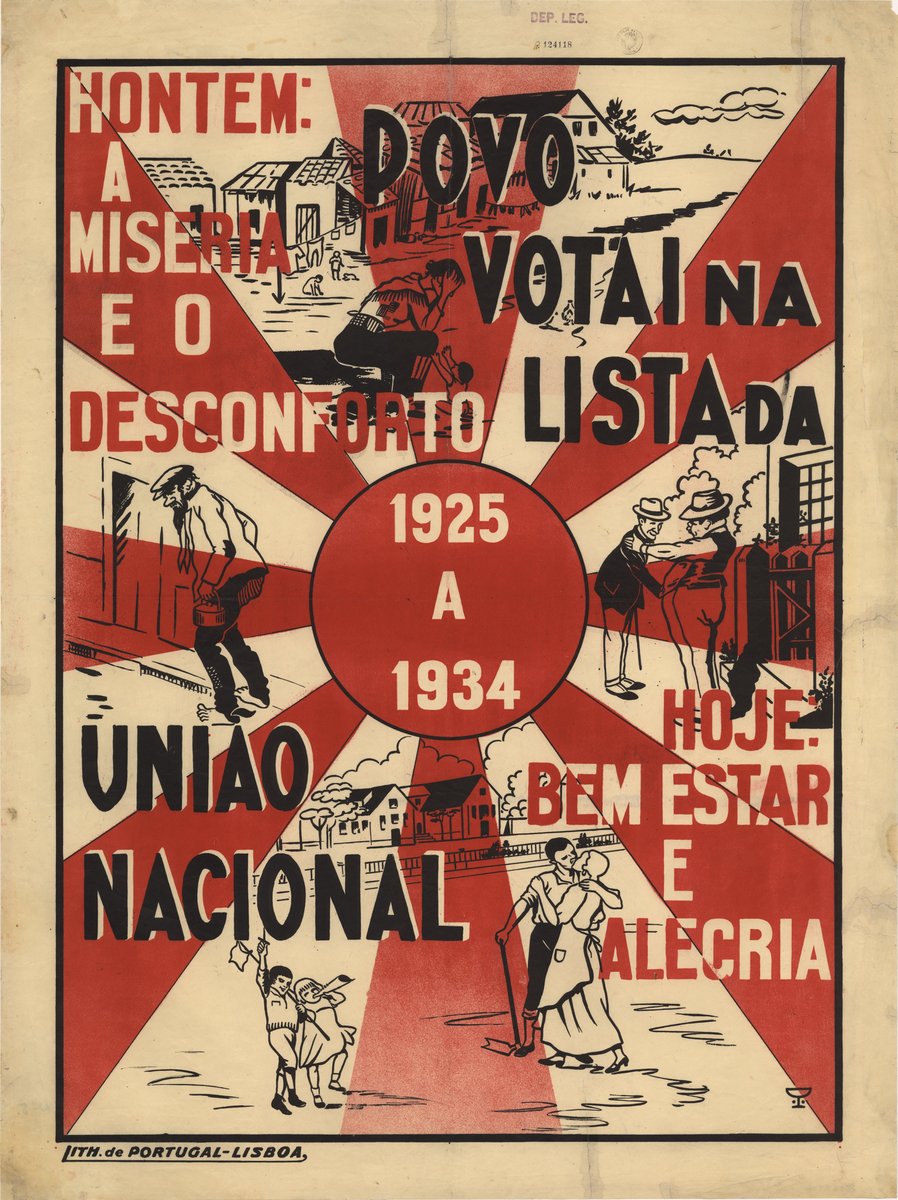
A 1934 União Nacional poster: "yesterday misery, today well-being and joy". The "yesterday" of 1925 to 1934 spans the end of the First Republic, the military dictatorship and Salazar's first two years as head of government; the poster gives no figures and names no other list. Tagged card stacking and glittering generalities. Read the technique: card stacking.
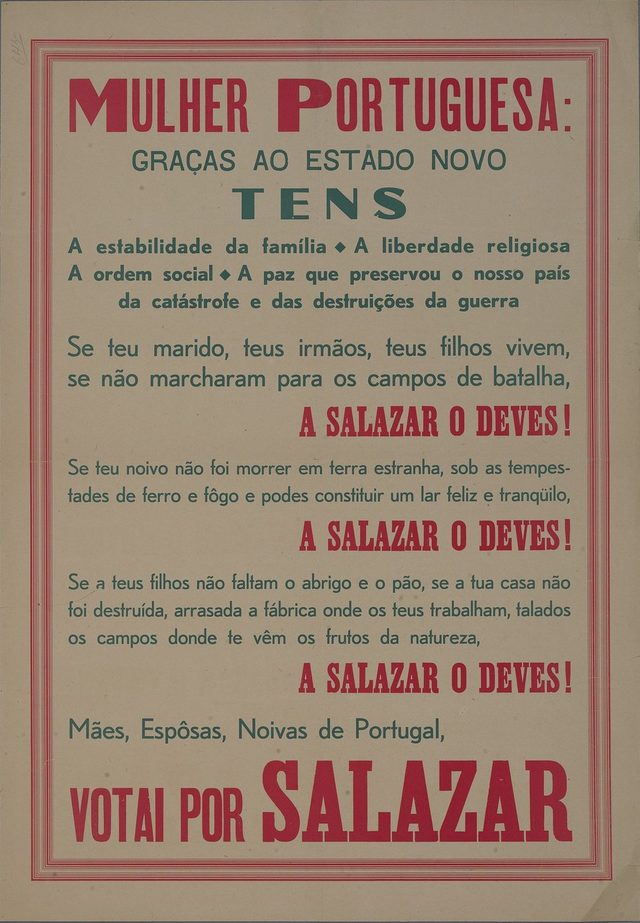
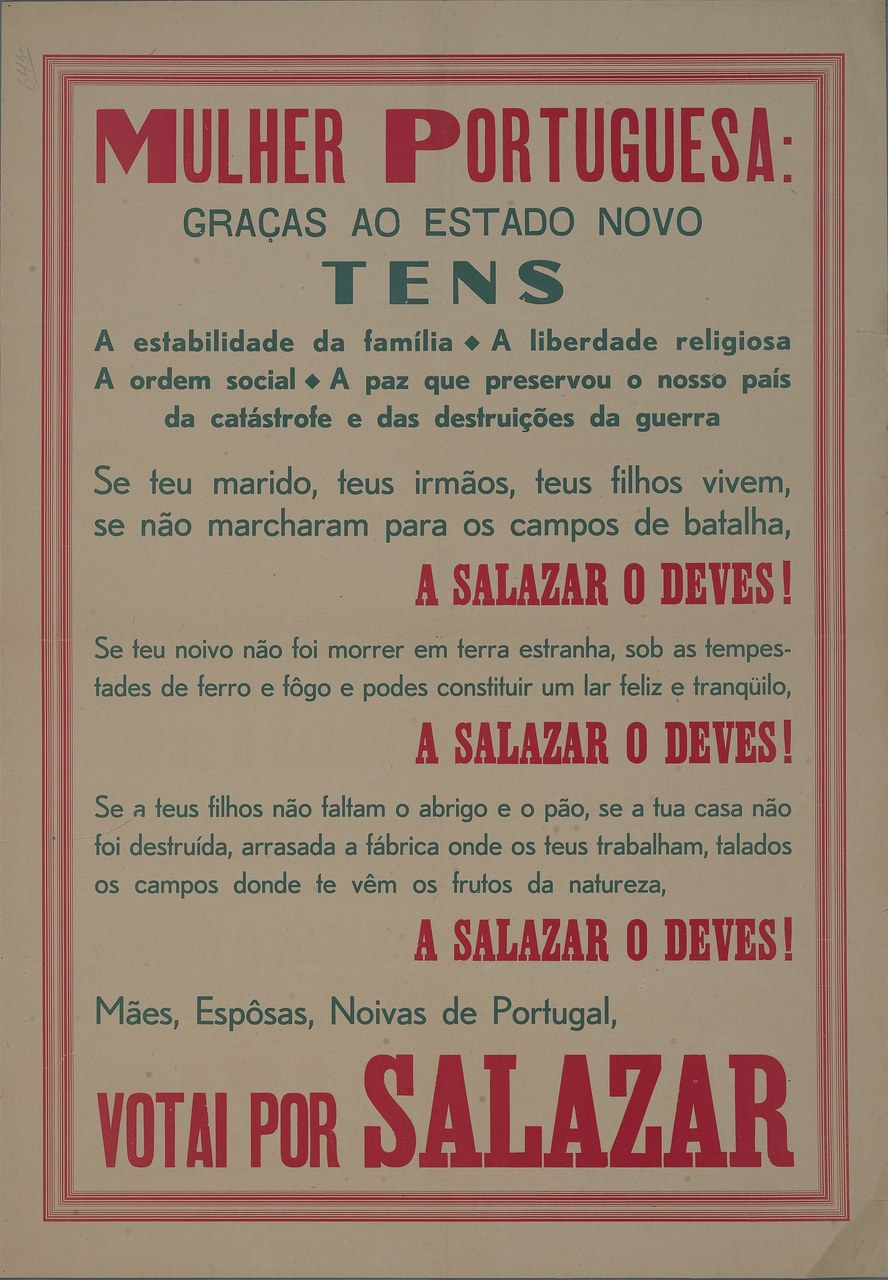
An SNI poster of 1945 to 1946, addressed to "Portuguese woman", repeats "A Salazar o deves!" ("you owe it to Salazar") after pictures of war's losses she was spared. The entry notes that the refrain credits neutrality to Salazar alone and omits other factors historians discuss, such as geography and the British alliance. Tagged fear appeal and card stacking.
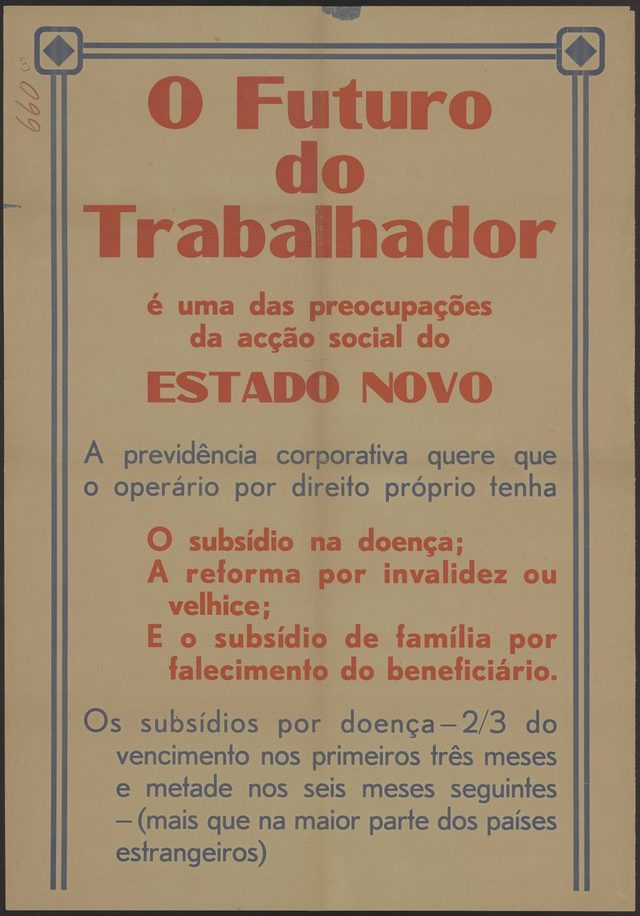
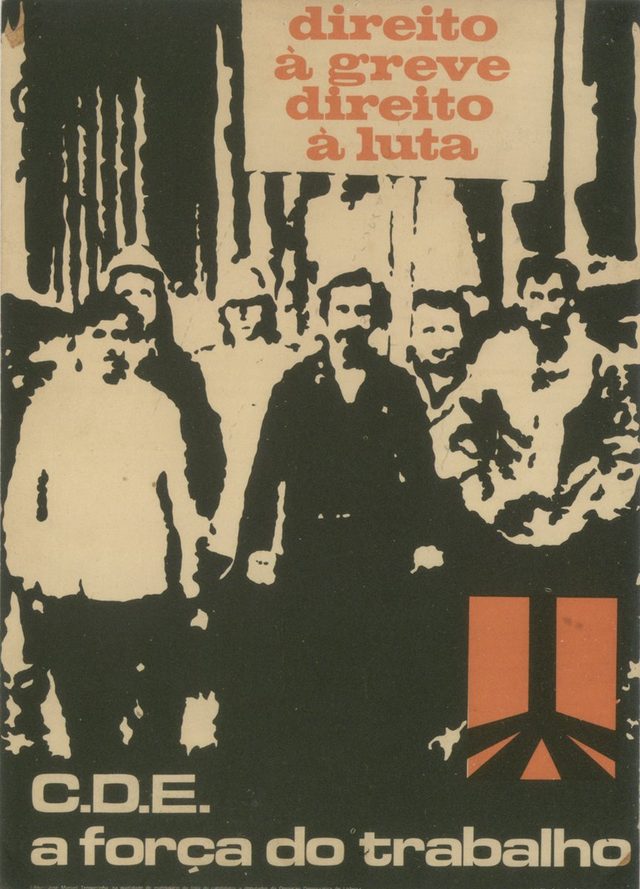
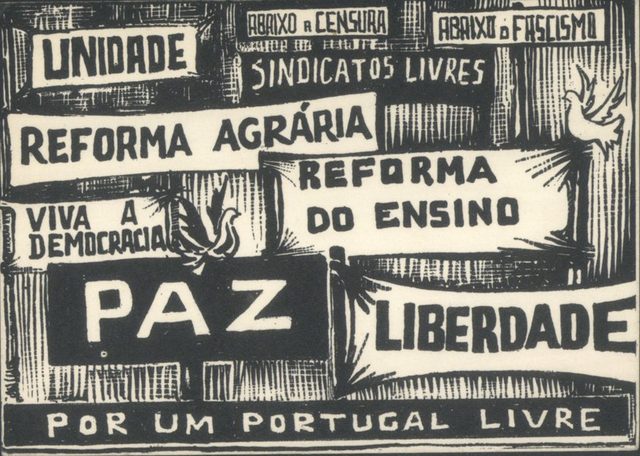
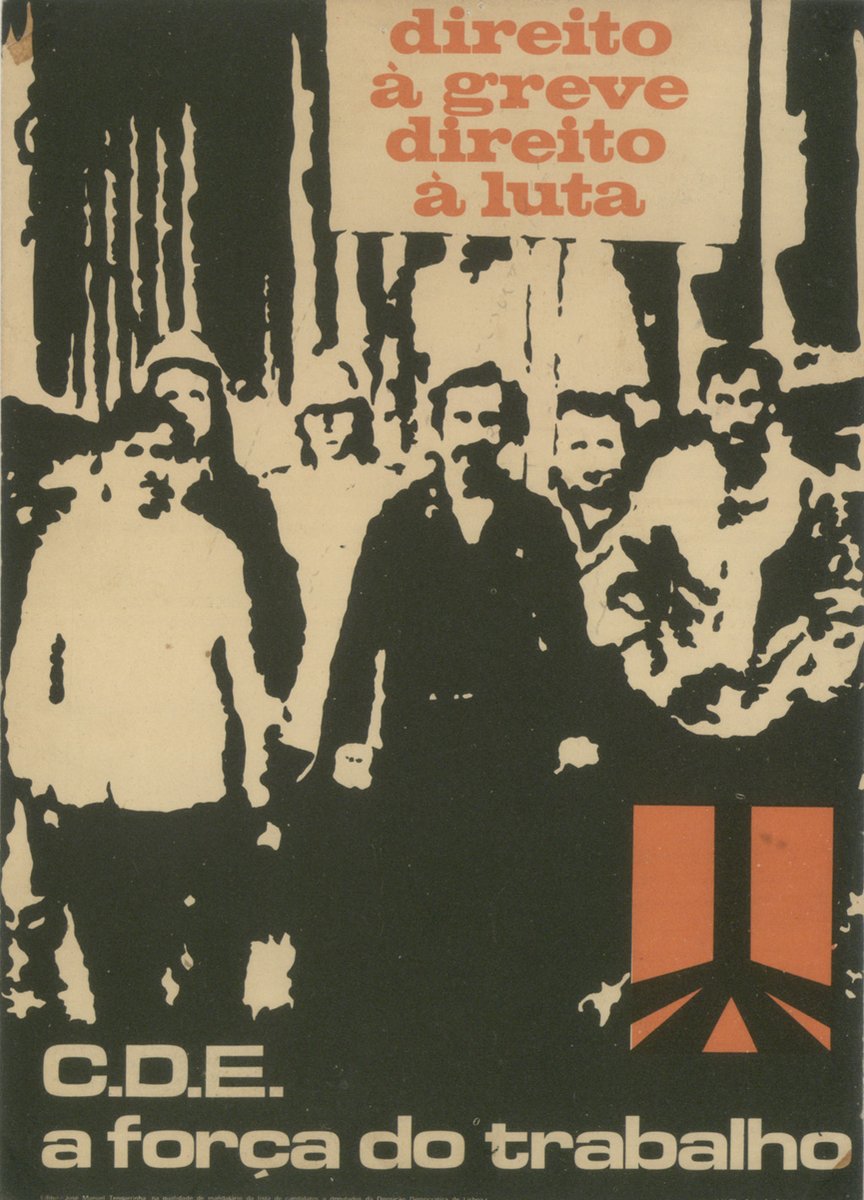
Opposition material issued under the regime, by the Comissão Democrática Eleitoral, whose lists were permitted to campaign. It appeals to workers with two rights the regime's corporative labour law did not grant, and names no candidate. The library dates it to 1969 or 1973. Tagged glittering generalities and bandwagon.
Which techniques recur in these regimes?
- Identity fusion. Leader, party, nation and vote are given as one object: "Fascism, which is Italy itself", Mussolini ringed by SI, "A Salazar o deves!". Identity fusion.
- Cult of personality. Slogans, portraits and parades centre one man. Cult of personality.
- Card stacking. A chosen before-and-after pair or a silence replaces an account: the 1924 PNF poster, the 1934 União Nacional poster, a front page with no losses. Card stacking.
Show all 6Show fewer
- Name-calling. "Traitors", "reds" and "fascists" appear in Italy and in both Spanish zones. Name-calling.
- Manufactured consensus and bandwagon. Single-list plebiscites, a crowd called to a road, a queue for gold. Manufactured consensus, bandwagon.
- Glittering generalities. "Peace", "faith", "the future", with no question stated. Glittering generalities.
Explain moreShow less
Differences of scale, intent and context are in the regime files and are not ranked here: a one-party state with a special tribunal and secret police (Italy), a civil war with mass killing behind the lines on both sides (Spain), and a 41-year state with censorship and colonial wars from 1961 (Portugal).
What to look for in a fascist-era item
- Who is speaking. A party, a ministry, a censored newspaper, or an opposition paper. Check the zone and the date.
- What the page leaves out. The question on the ballot, the losses, the source of a figure.
- Which noun carries the argument. Faith, peace, Italy, Spain, the people.
- The enemy's name, and whether the other side uses a mirror label.
Browse fascist-era propaganda in the collection
The grid below shows more items from Fascist Italy, the earlier Kingdom of Italy, both Spanish zones, Franco's Spain and the Estado Novo. Each opens an object page with the holder, the original record, a transcription and the rights basis. See also propaganda posters and types of propaganda.
Sources and further reading
Sources and rights
Items come from Wikimedia Commons (including scans of L'Illustration and Italian and Spanish newspapers), the Biblioteca Nacional…
Items come from Wikimedia Commons (including scans of L'Illustration and Italian and Spanish newspapers), the Biblioteca Nacional de Portugal, the Biblioteca Virtual de Defensa and the Biblioteca Virtual de la Comunidad de Madrid. Each object page gives its own rights basis; the 1936 to 1937 Spanish press pages rest on Commons tags with a URAA note. Regime facts come from the regime files, which list their sources. Transcriptions are verbatim.