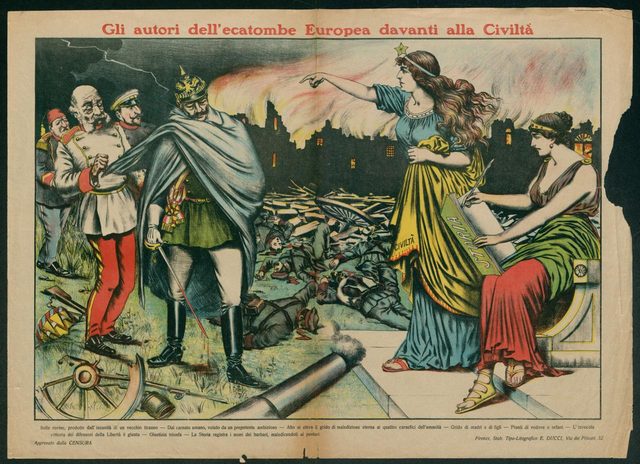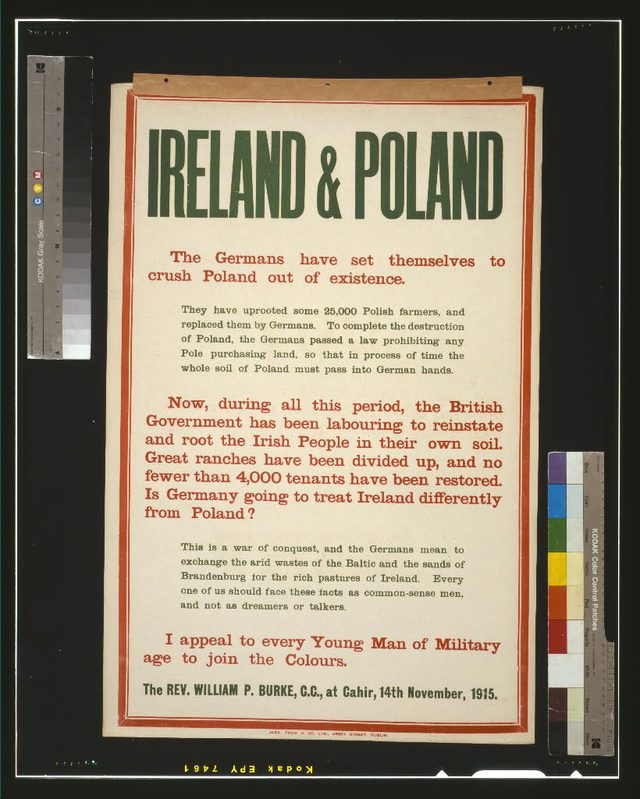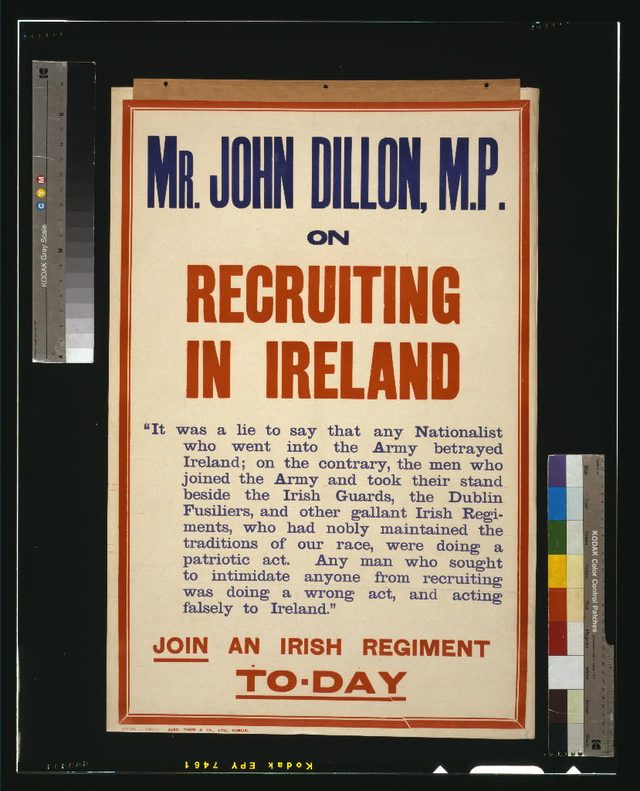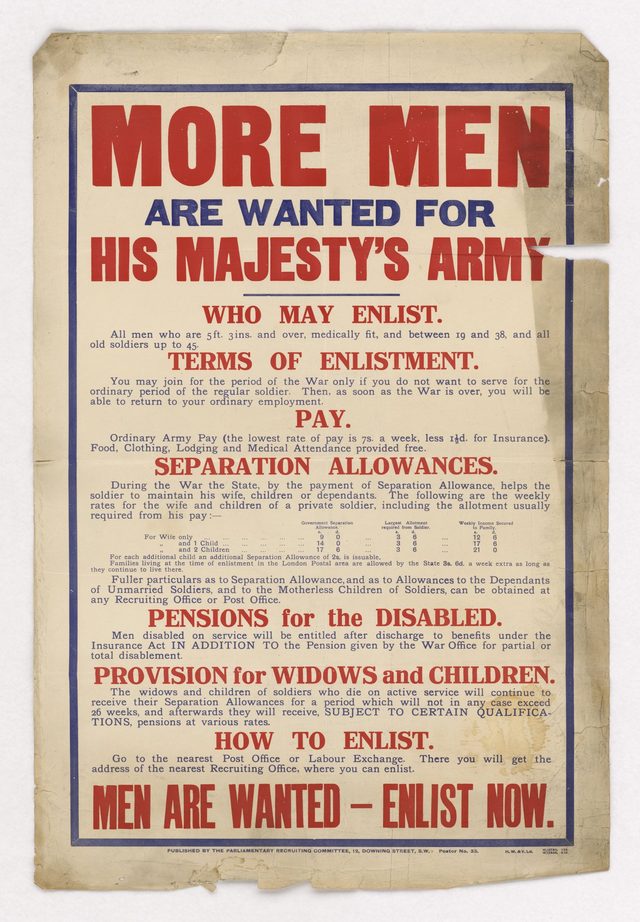
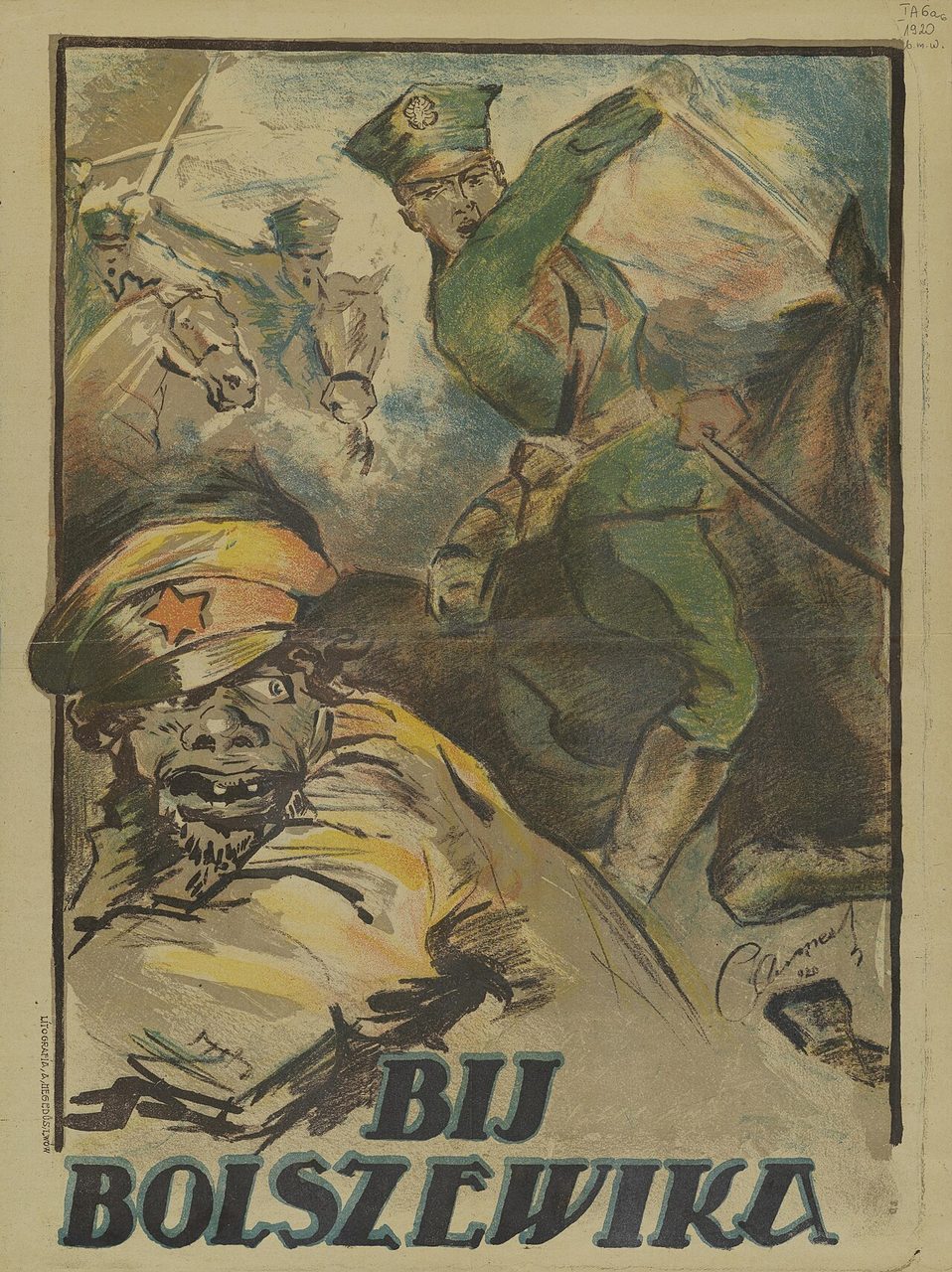
Content note. Two posters in the gallery below contain demeaning imagery: a 1920 Polish sheet that draws a Red Army soldier as a bestial face, and a 1940 Thai dress-code poster that labels regional dress "not civilised Thai". They are shown as issued, as evidence of what the public was shown. Showing a poster is not endorsing it. This page is a guide to what the archive records about rights. It is not legal advice.
Where can you download public domain propaganda posters?
Start with the holders: the Library of Congress, the U.S. National Archives, Wikimedia Commons and the Imperial War Museums. This archive hosts 5,137 posters, and each object page links the original record and states its recorded rights basis. Treat that basis as a lead and check the source yourself before reusing a file.
Why are so many propaganda posters public domain?
Four reasons recur in the collection's records. They are the archive's own working levers, set out in its examples guide, and each one is a lead to check, not a blanket clearance.
Explain moreShow less
- U.S. federal works. Material made by U.S. federal employees as part of their duties, such as Office of War Information (OWI) and U.S. Army posters, is recorded as public domain. The Library of Congress and the National Archives hold most of them.
- Published before 1931. The archive records anything published before 1931, from any country, as public domain in the United States. That is why World War I posters from every belligerent, early Soviet posters and suffrage posters are well represented.
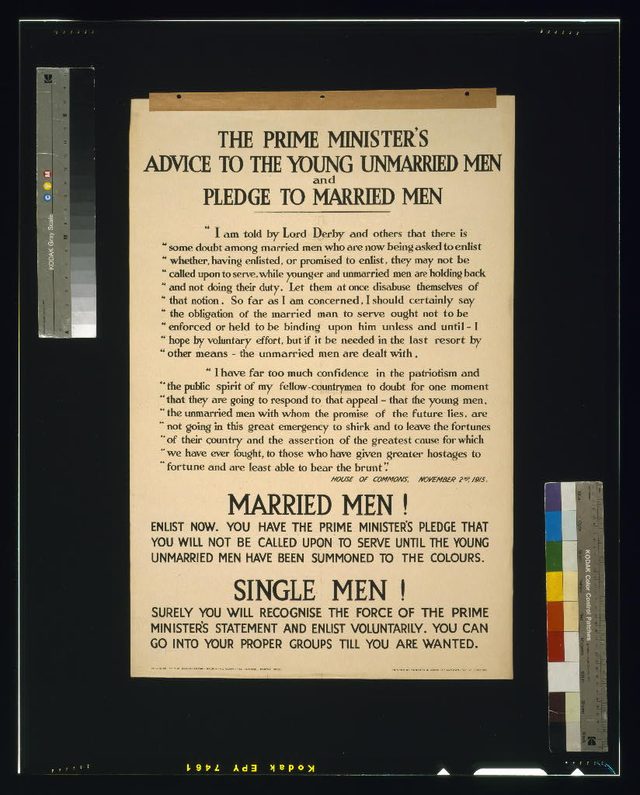
- UK and Canadian Crown copyright. The archive treats British government posters of the Second World War as public domain because Crown copyright on published works ran 50 years, and applies the same reasoning to Canadian Crown works. Each such object page records that the term has expired.
- Open licences and tags. Some institutions publish items under CC BY 4.0, CC0 or a Public Domain Mark, and Wikimedia Commons volunteers add public-domain tags after checking a file.
Two limits apply to all four. These are United States statements. And the archive's rule for material it cannot place is to drop it rather than host it on a guess.
How many posters rest on each basis?
The table is computed from the entry files by the script below, which reads the license.status text of every entry whose medium is poster and sorts it into the first family that matches. The families are the archive's own wording, grouped; they are not a legal ruling.
Explain moreShow less
| Licence basis recorded | Posters |
|---|---|
| US federal government work | 2,960 |
| NARA-held, "Unrestricted"; hosted on a project decision | 1,145 |
| UK Crown copyright expired | 462 |
| Wikimedia Commons public-domain tag | 161 |
| Published before 1931 | 137 |
| Canadian Crown copyright expired | 115 |
| CC BY, CC0 or Public Domain Mark | 99 |
| US publication without notice, or a "no known restrictions" statement | 38 |
| Other basis (individual notes) | 20 |
| All posters | 5,137 |
Read the second row with care. The National Archives uses "Unrestricted" as a use-restriction field, which is not a finding that no copyright exists. For those posters the archive hosts the file as a recorded project decision and says so on the object page. Nearly three in four posters are U.S. works (3,791 of 5,137), the archive's known imbalance; the other 68 countries and polities in the poster entries are what the gallery below samples. Counts are as of the build that produced this page and change as entries are added.
python
import json, glob, re, collections
def family(s):
    t = s.lower()
    if t.startswith(("held by nara", "nara unrestricted")): return "NARA-held, hosted on a project decision"
    if re.search(r"cc by|cc0|public domain mark", t): return "CC BY, CC0 or Public Domain Mark"
    if re.search(r"commons|pd-", t): return "Wikimedia Commons public-domain tag"
    if re.search(r"canadian crown", t): return "Canadian Crown copyright expired"
    if re.search(r"uk crown|crown copyright", t): return "UK Crown copyright expired"
    if re.search(r"u\.?s\.? (federal|government)|us (federal|government)|government work|federal", t): return "US federal government work"
    if re.search(r"before 19[123]\d|published (c\.? ?)?(1[89]\d\d|19[012]\d)|pre-1931|public domain: published|first published before|c1900|british wwi", t): return "Published before 1931"
    if re.search(r"without copyright notice|noc-us|no copyright - united states|no known restrictions|no known copyright", t): return "US publication without notice, or 'no known restrictions'"
    return "Other basis"
c = collections.Counter()
for f in glob.glob("examples/entries/*.json"):
    d = json.load(open(f))
    if d["medium"] == "poster": c[family(d["license"]["status"])] += 1
print(sum(c.values()), c.most_common())
The sort is by keyword, so a few items could sit in another family under a different reading; the totals always add up to the poster count. For the 20 "other" posters, see each object page.
How do you read the "source and rights" box?
Every object page has a "Full record" fold beside the image. Three rows matter here.
Explain moreShow less
- Source. The first Source row says how the archive rates the origin of the message (a colour from white to black, defined in the working definition). It says nothing about rights. The second Source row names the holding institution, links to its page for the item and gives the date the archive retrieved it. That link is the record to check.
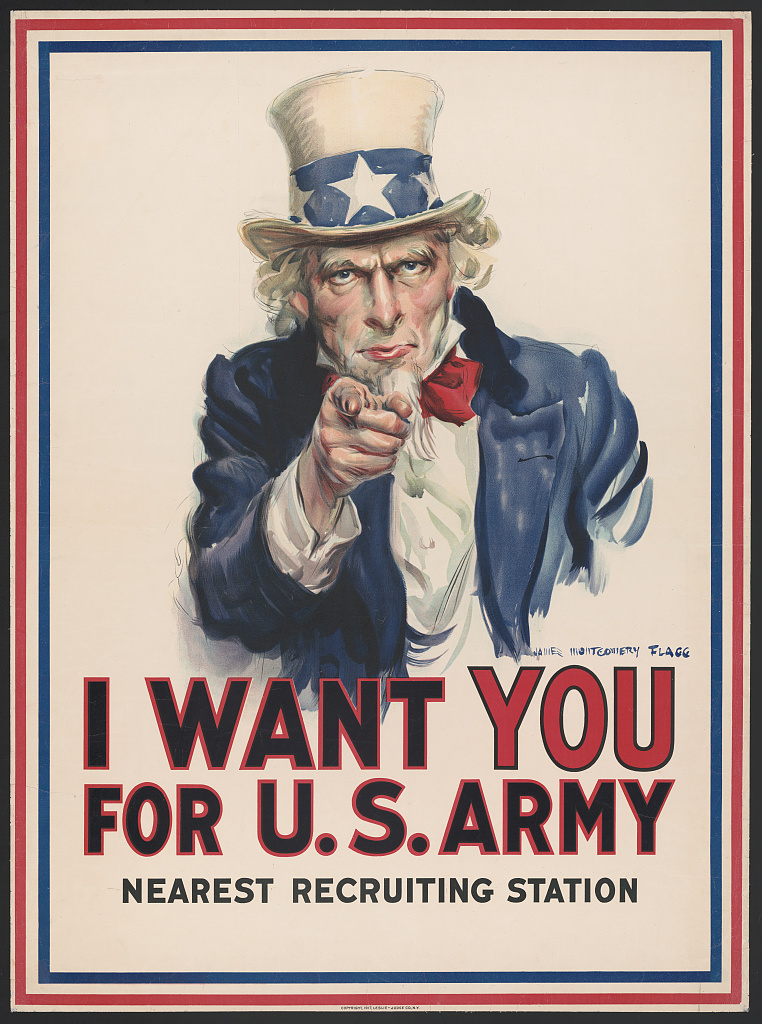
- Rights. The recorded basis in plain words, such as "Public domain in the U.S. (published before 1931)", with an attribution line underneath where the holder asks for one, for example "Flagg, James Montgomery, 1877-1960, artist. 1917. Library of Congress, LC-DIG-ppmsc-03521."
- Made by. The issuer and, where known, the artist. This matters for the living-artist caveat below.
Vague wording is a signal. "Hosted by owner decision" means the archive judged the risk acceptable and recorded the reason. It does not mean the item is free in your country.
How do you download a poster from this archive?
The object page offers three things, and only these. The poster image is itself a link to the full-size file the archive hosts. The Source row links to the holding institution's own record. The Rights row states the recorded basis. There is no separate download button, and the hosted copy is sometimes downscaled: for example, a 2000-pixel limit is noted on some entries. For the highest resolution, follow the source link to the institution's own file.
Explain moreShow less
When you reuse a poster, keep the attribution line from the Rights row, keep the object page or source URL, and say which institution holds the original. The archive's own taxonomy, doctrine and briefs are CC BY 4.0; poster images keep the basis recorded on their object page.
Which sources should you check yourself?
Go to the holder before you rely on a copy anywhere, this archive included.
Explain moreShow less
- Library of Congress Prints & Photographs: wartime and other posters, with rights information on each record.
- U.S. National Archives catalog: OWI (Record Group 44), military (Record Group 306) and other series, each with a use-restriction field.
- Wikimedia Commons: file pages carry licence tags and cite the holding institution. Check the tag against the source.
- Imperial War Museums collections: British First and Second World War posters, with IWM's own reuse terms.
- Australian War Memorial collection: Australian posters, some with a Public Domain Mark.
- Europeana, Finna, Polona and Gallica: national libraries and aggregators with per-item rights statements.
What are the caveats for reuse outside the United States?
The levers above are United States rules. Copyright terms elsewhere differ: a poster published in 1925 may still be protected abroad if its designer died less than 70 years ago in a country with a life-plus-70 term, and a poster covered by Crown copyright in one country may be treated differently in another. The archive records "no URAA restoration" on some UK and Canadian entries because the United States restored some foreign copyrights in 1996; it does not make that check for every country, and does not promise any file is free in every country. Use this page to find out what the holder and the archive say, then check the rules where you will publish.
Explain moreShow less
Posters by living or recently dead artists need more care. Modern posters can be public domain only if a government or an open licence says so. In the gallery, the 2022 Russian Ministry of Defence poster is there because the ministry's site states CC BY 4.0. A poster from a living artist's studio, a political party or an advertiser is not covered by the levers above just because it is propaganda. Where an entry cannot be cleared, the archive's rule is to cite and link the source instead of hosting the image.
Gallery: 16 posters from 15 countries and polities
One standard applies to every side. Each caption below follows the entry record, and each rights line is the one recorded on the object page. Open any poster for its full record.
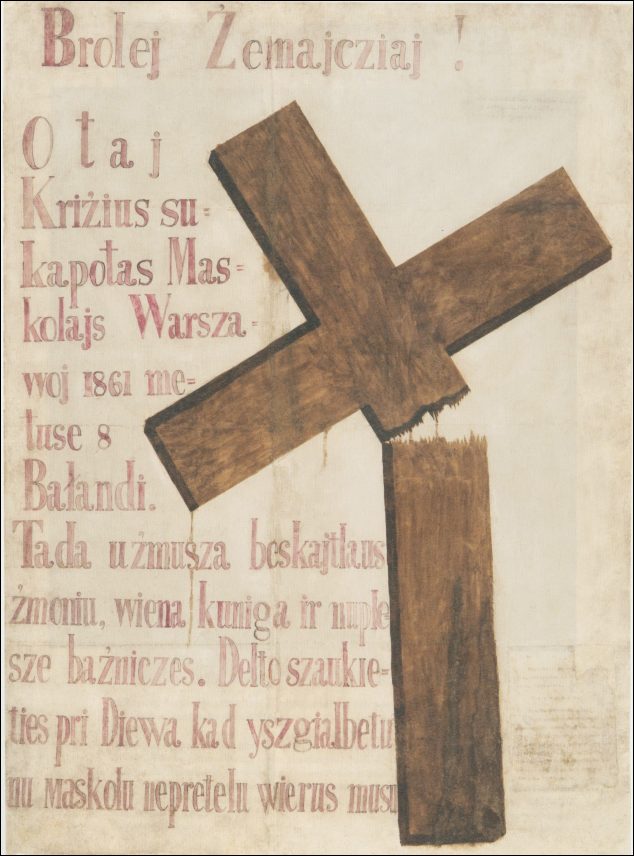
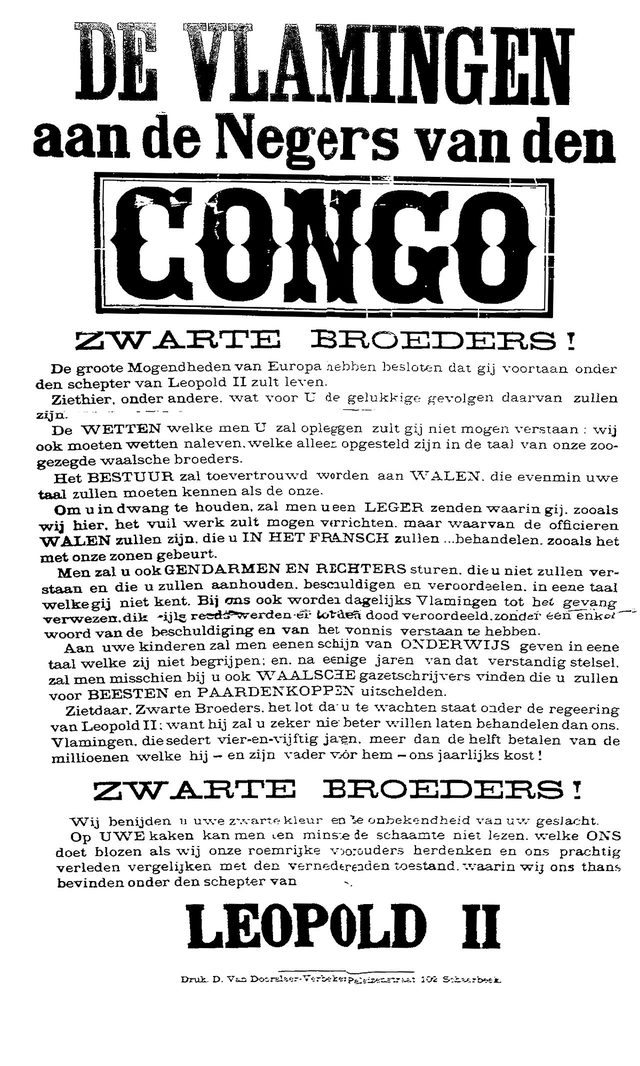
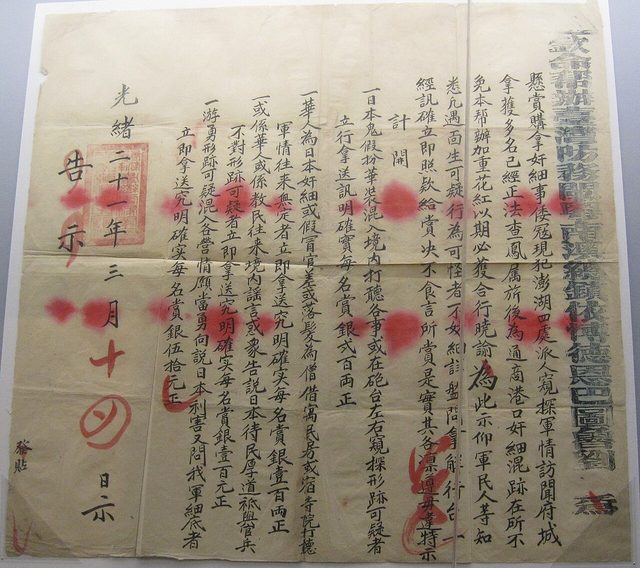
Content note: Placard threatens a curse on the sons of sedan-chair bearers who would serve a named individual; no graphic imagery. This object is shown as it was published. Why 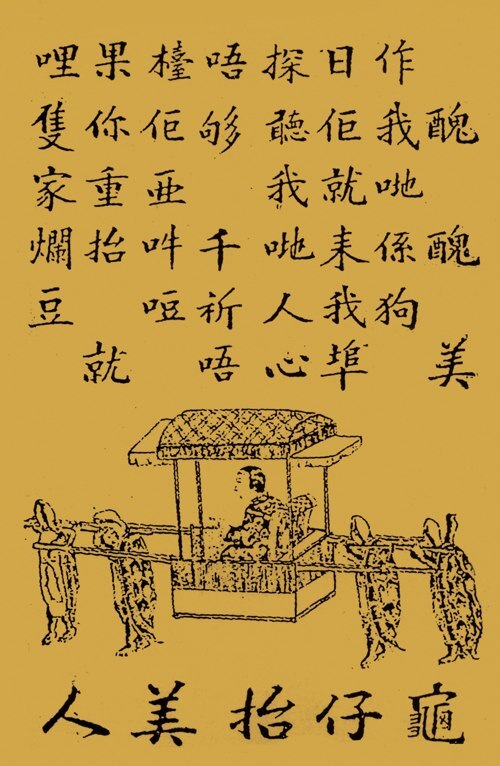
Content note: State poster labelling traditional and regional dress, including bare-chested dress and a Muslim-associated hat, as 'not civilised Thai'. This object is shown as it was published. Why 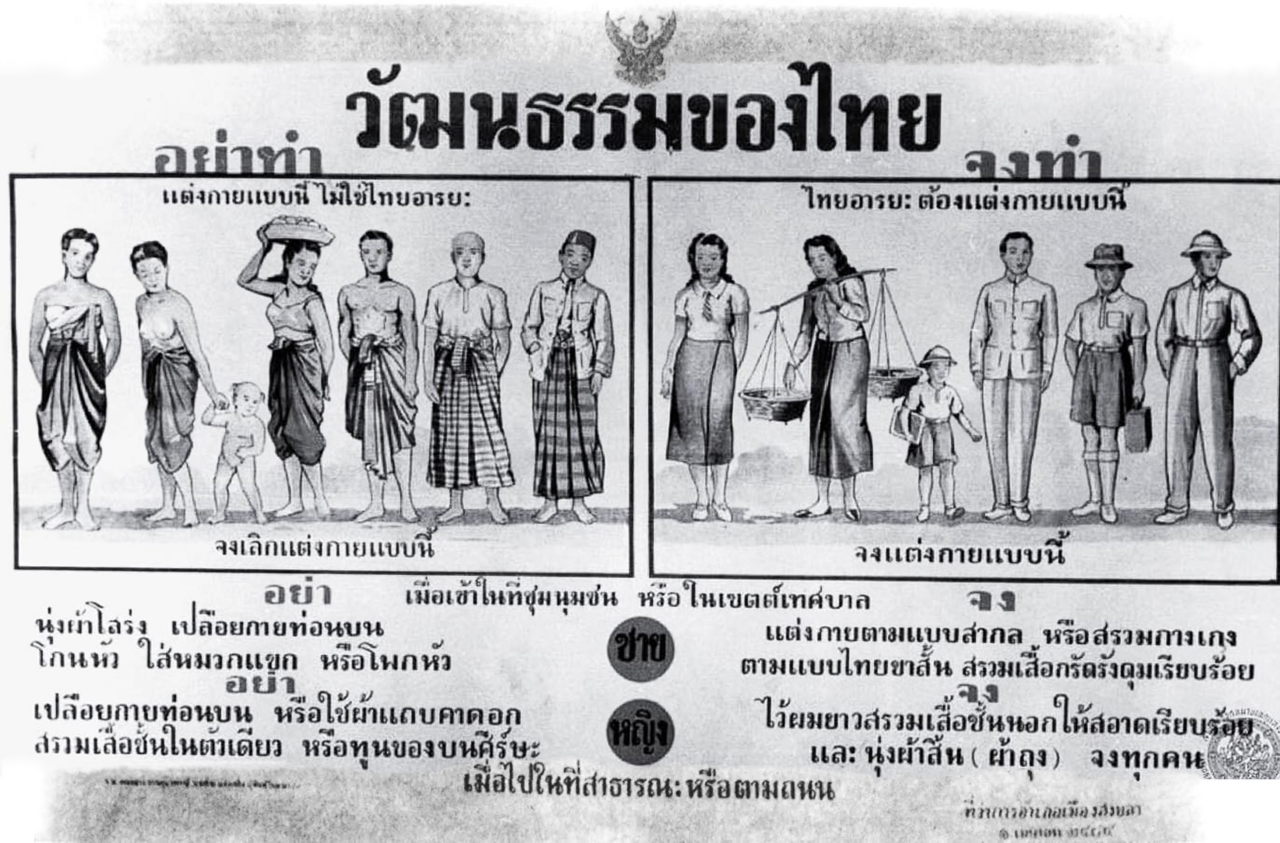

Explain moreShow less
United States, 1917. U.S. Army recruiting, artist James Montgomery Flagg, held by the Library of Congress. Rights recorded: public domain in the U.S. (published before 1931). Uncle Sam points straight out at the viewer; the entry tags it transfer.
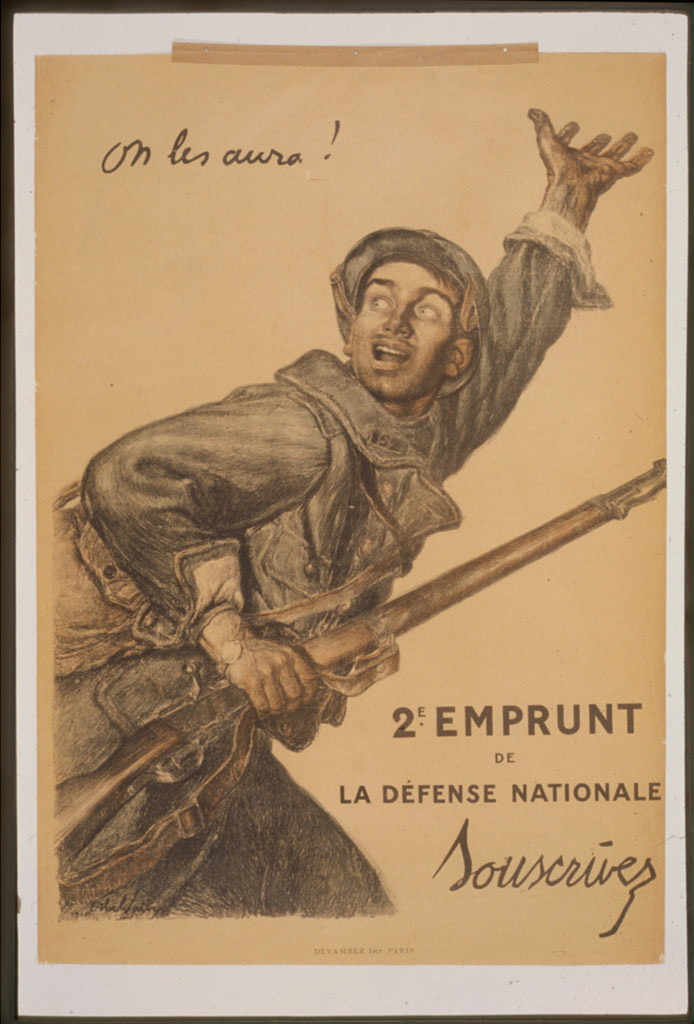
France, 1916. Second National Defence Loan campaign, artist Abel Faivre, held by the Library of Congress. Rights recorded: public domain in the U.S. (published before 1931). The soldier's courage is transferred onto the act of buying a bond.
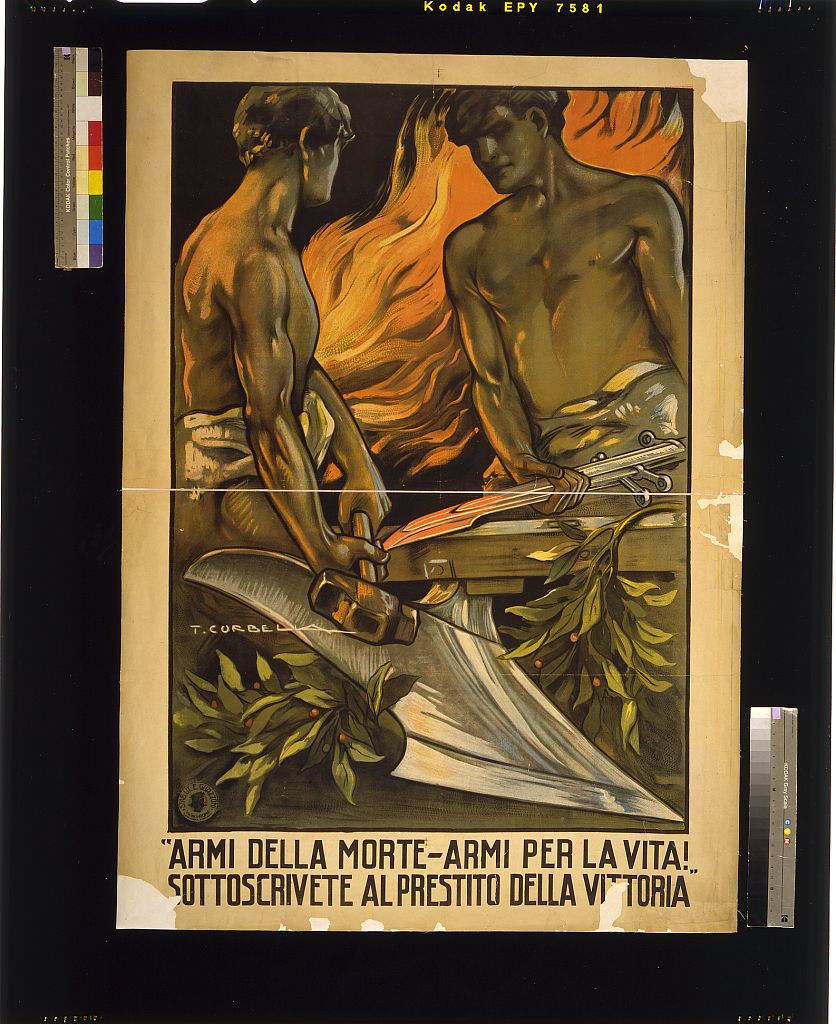
Kingdom of Italy, 1918. A national war-loan appeal, artist T. Corbella, printed in Rome, held by the Library of Congress. Rights recorded: public domain (published 1918; LOC: no known restrictions on publication).
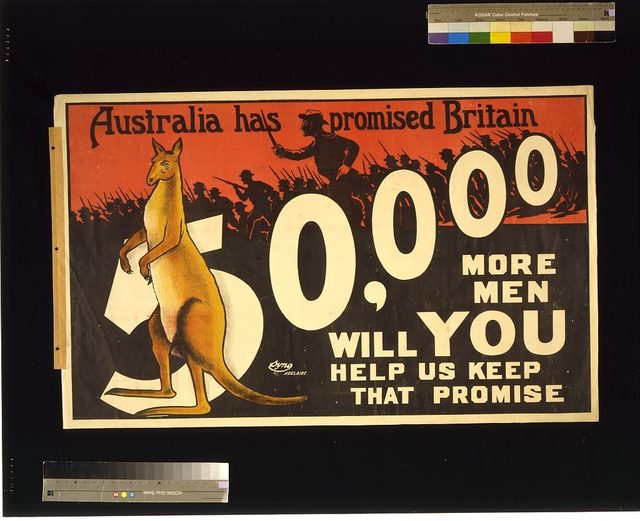
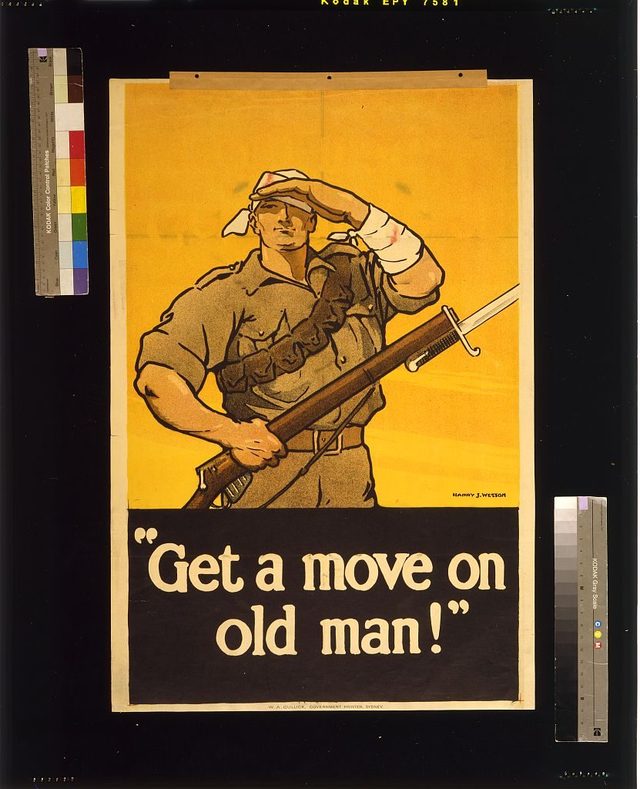
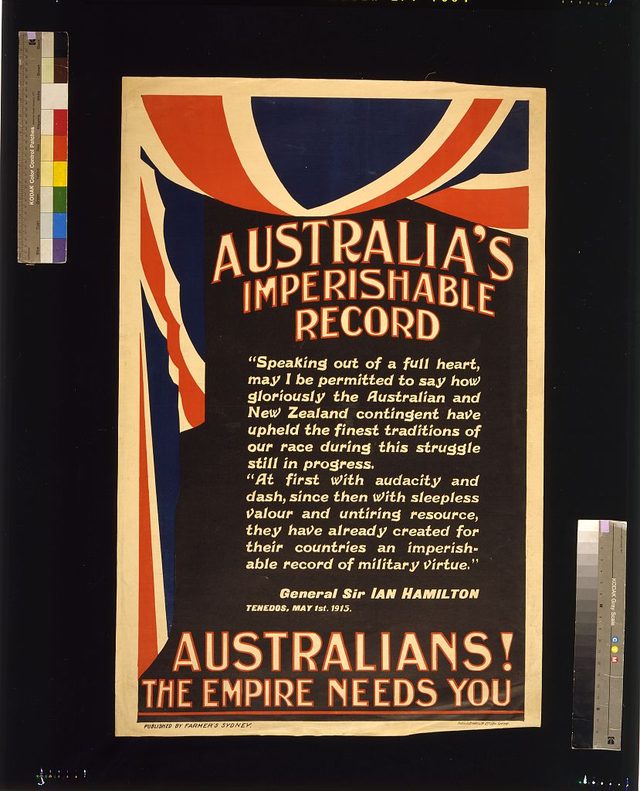
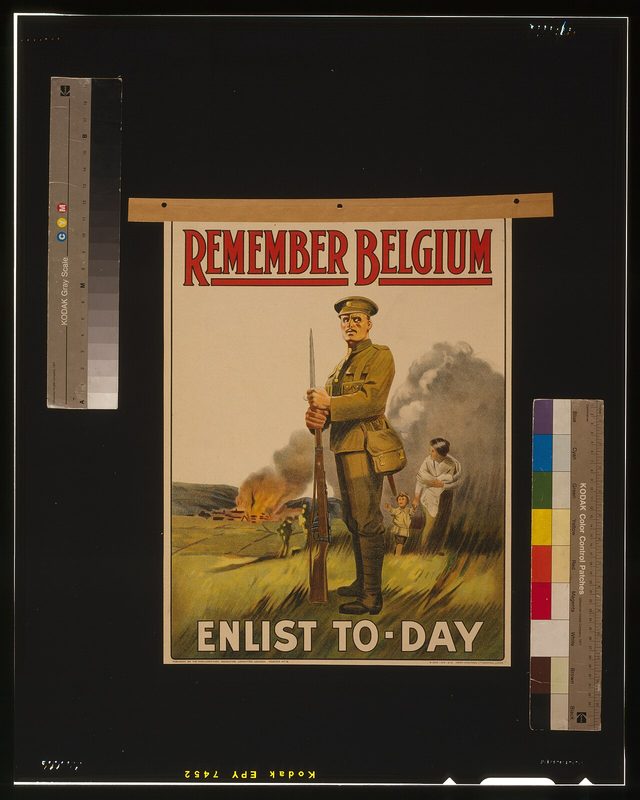
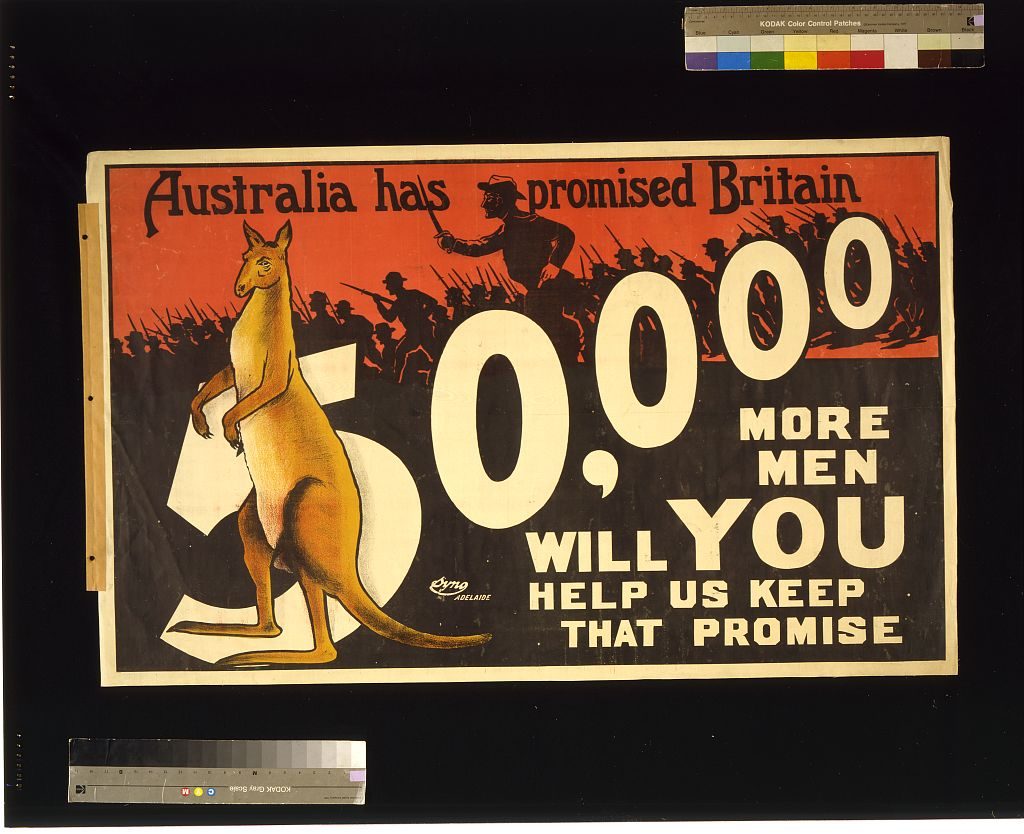
Australia, 1915. A recruiting poster printed in Adelaide, held by the Library of Congress. Rights recorded: public domain (published 1915, before 1931). The entry notes that the promise is framed as the nation's own.
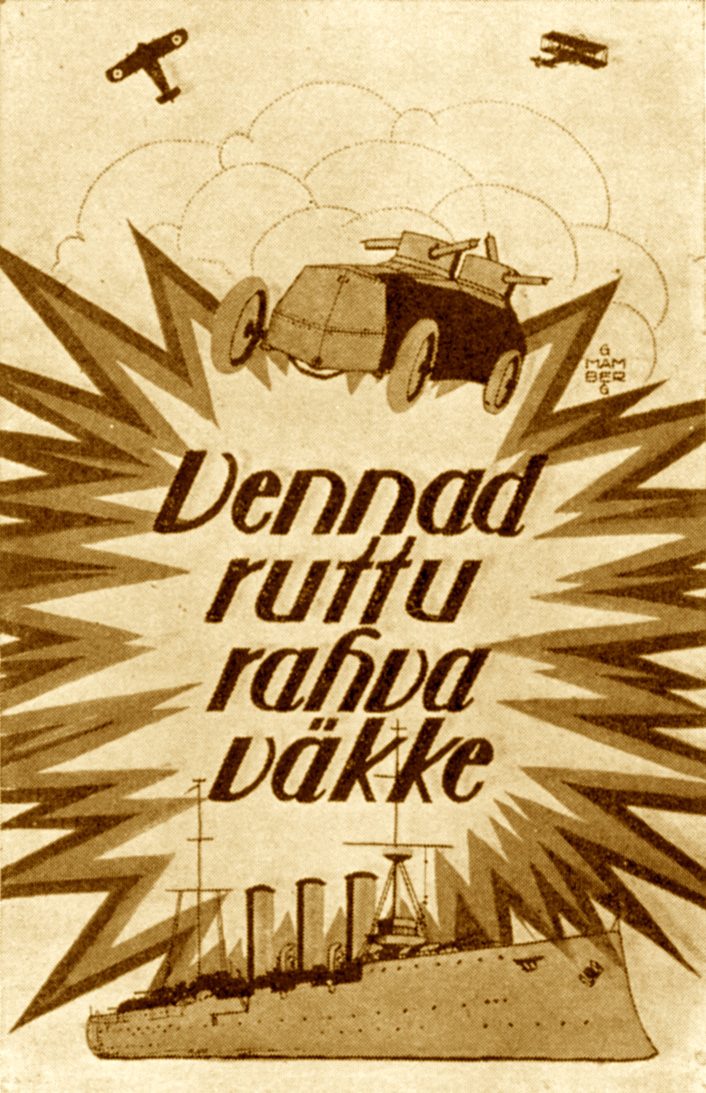
Estonia, 1918. Estonian Provisional Government recruiting poster, signed G. Mamberg, reproduced from the 1937 book Eesti Vabadussõda 1918-1920 via Wikimedia Commons. Rights recorded: public domain (Commons: PD-1923). The hosted file is a book halftone, not a photograph of the sheet.
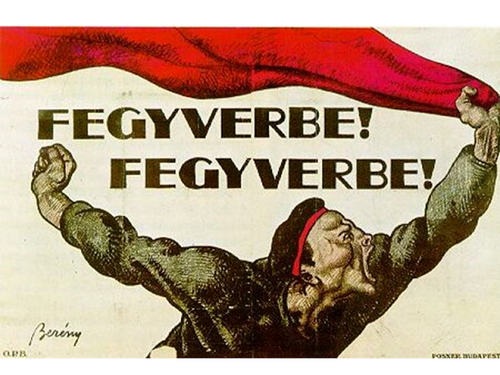
Hungarian Soviet Republic, 1919. Red Army mobilisation poster by Róbert Berény, printed by Pósner in Budapest, via Wikimedia Commons. Rights recorded: public domain (PD-old-70-1923 per Commons; published 1919).
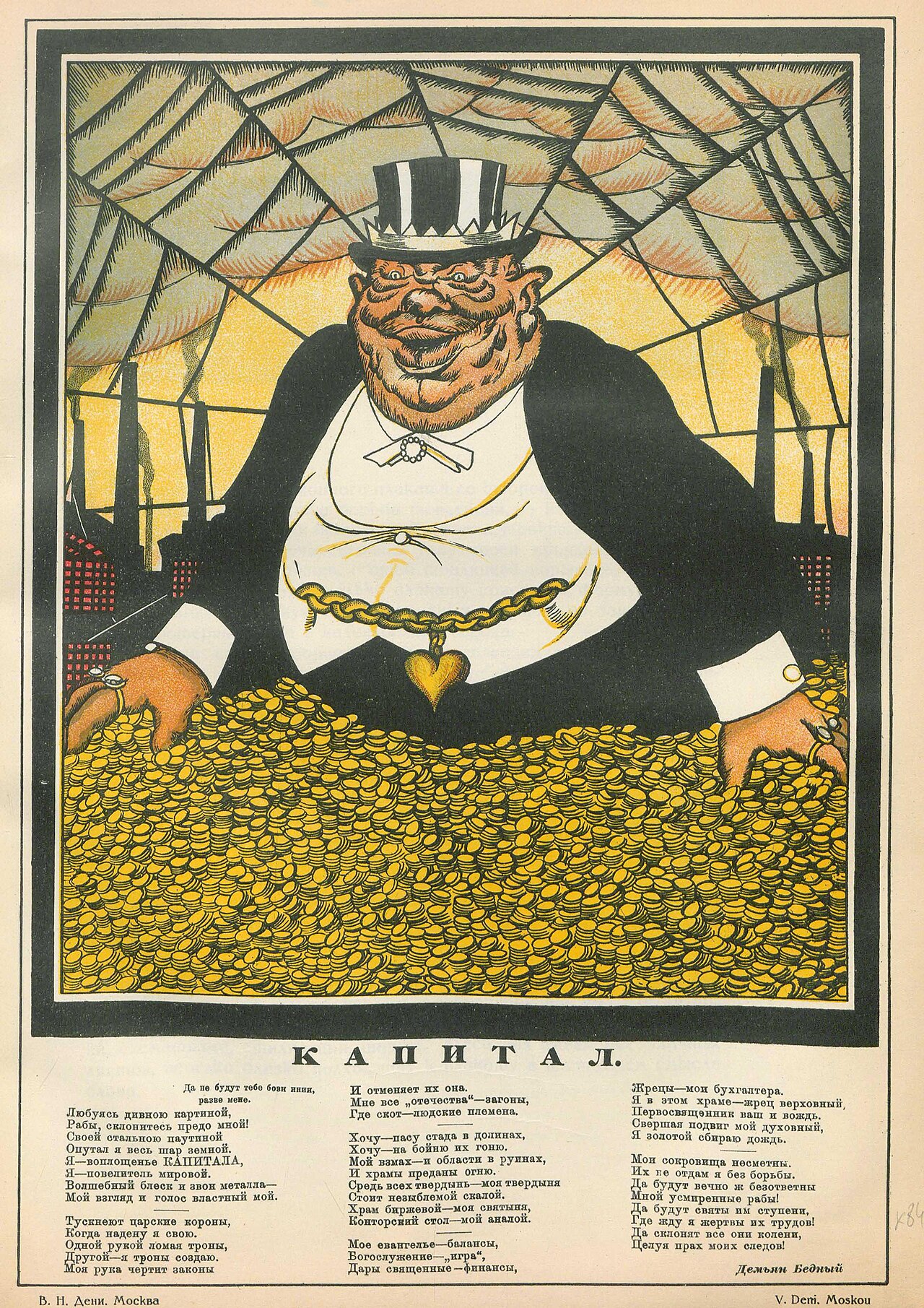
Soviet Russia, 1919. Agitprop poster by Viktor Deni with verse by Demyan Bedny, via Wikimedia Commons. Rights recorded: public domain (per Wikimedia Commons). Its caricature stands in for an entire class.
Content note. Grotesque caricature of a Red Army soldier, shown being cut down by a cavalryman (Polish poster, 1920).
Poland, 1920. Polish-Soviet War lithograph printed in Lwów, sponsor not named on the sheet, via Wikimedia Commons from Polona. Rights recorded: public domain (July 1920; Commons: PD-old-100-expired, Public Domain Mark). The entry says the enemy is drawn as a leering, bestial head, so the label arrives already attached.
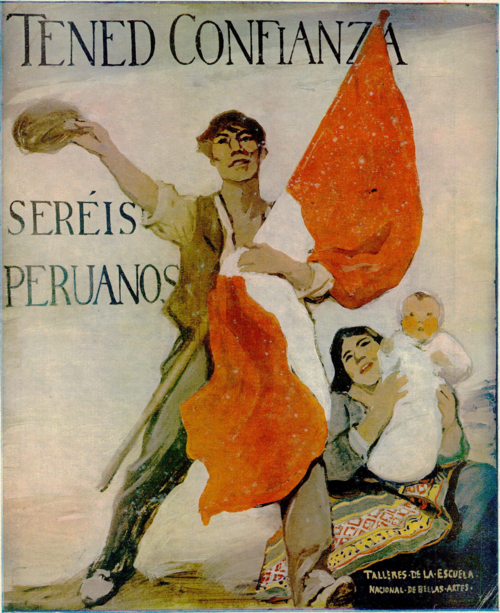
Peru, 1925. A patriotic poster on the Tacna-Arica question, painted at the Escuela Nacional de Bellas Artes in Lima and printed on the cover of the weekly Mundial, via Wikimedia Commons. Rights recorded: public domain (Peruvian state work published 1925; Commons PD-Peru tag).
Qing China, 1905. An anonymous placard posted in Canton during the boycott of American goods, via Wikimedia Commons citing a Smithsonian Freer|Sackler essay. Rights recorded: public domain (anonymous 1905 work; Commons PD-anon-expired).
Content note. State poster labelling traditional and regional dress, including bare-chested dress and a Muslim-associated hat, as "not civilised Thai".
Thailand, c. 1940. Issued under the Phibunsongkhram government's cultural mandates, via Wikimedia Commons. Rights recorded: public domain (Commons PD-Thailand: Thai government work over 50 years old).
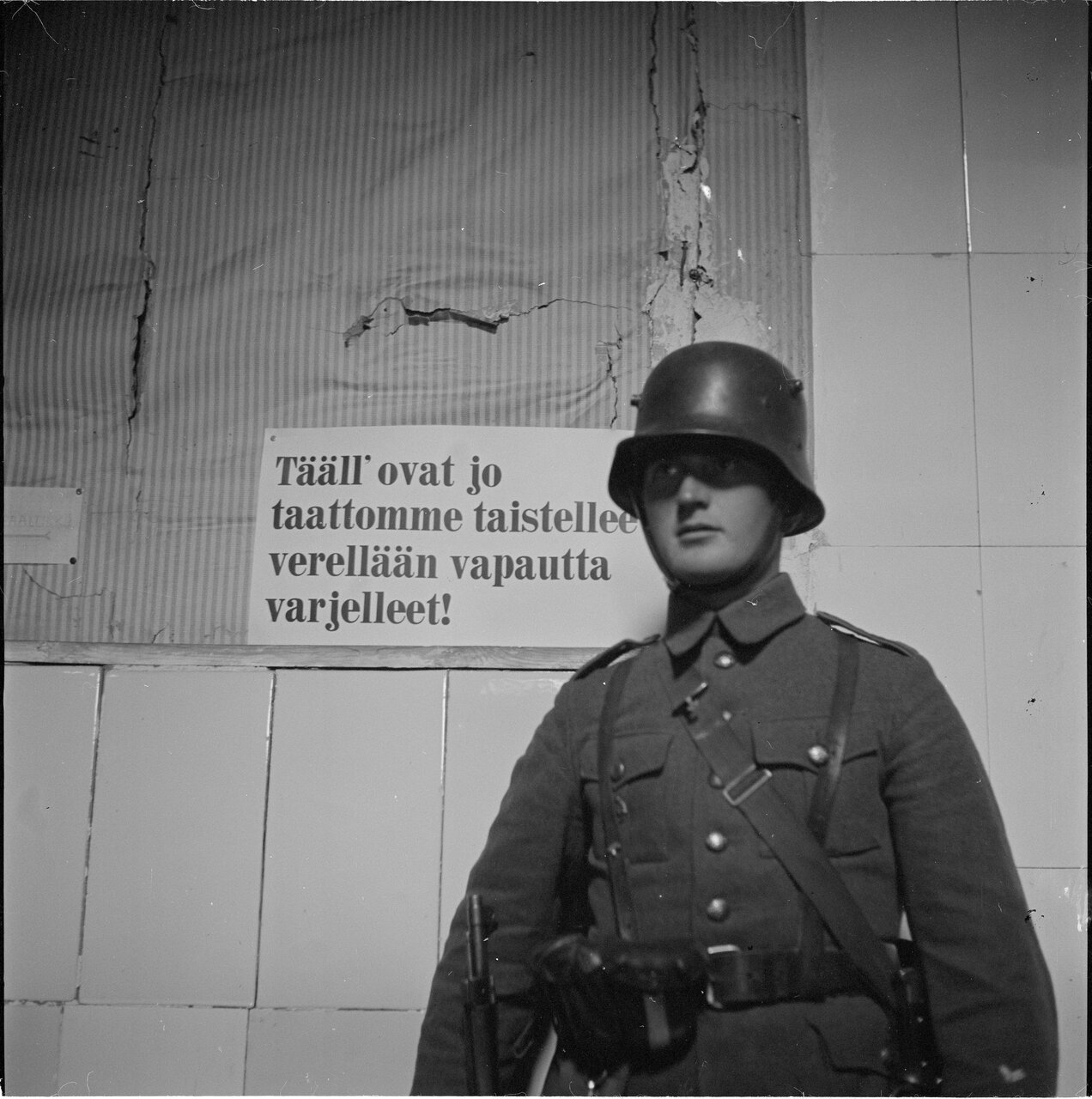
Finland, 1939. A wartime-archive photograph of a poster before the Winter War, held by SA-kuva and found through Finna; the issuer is not printed on the poster. Rights recorded: CC BY 4.0 (SA-kuva licence statement on the Finna record).
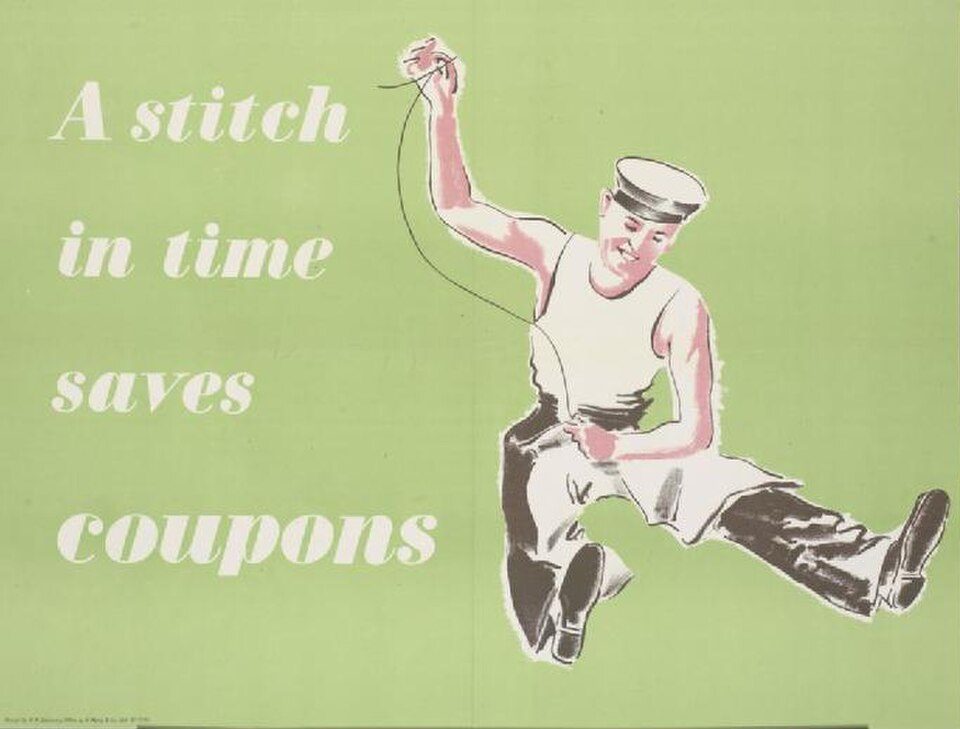
United Kingdom, 1941. Board of Trade clothes-rationing poster printed for H.M. Stationery Office, scan from the Imperial War Museums via Wikimedia Commons. Rights recorded: public domain (UK Crown copyright expired; PD-UKGov per Commons).
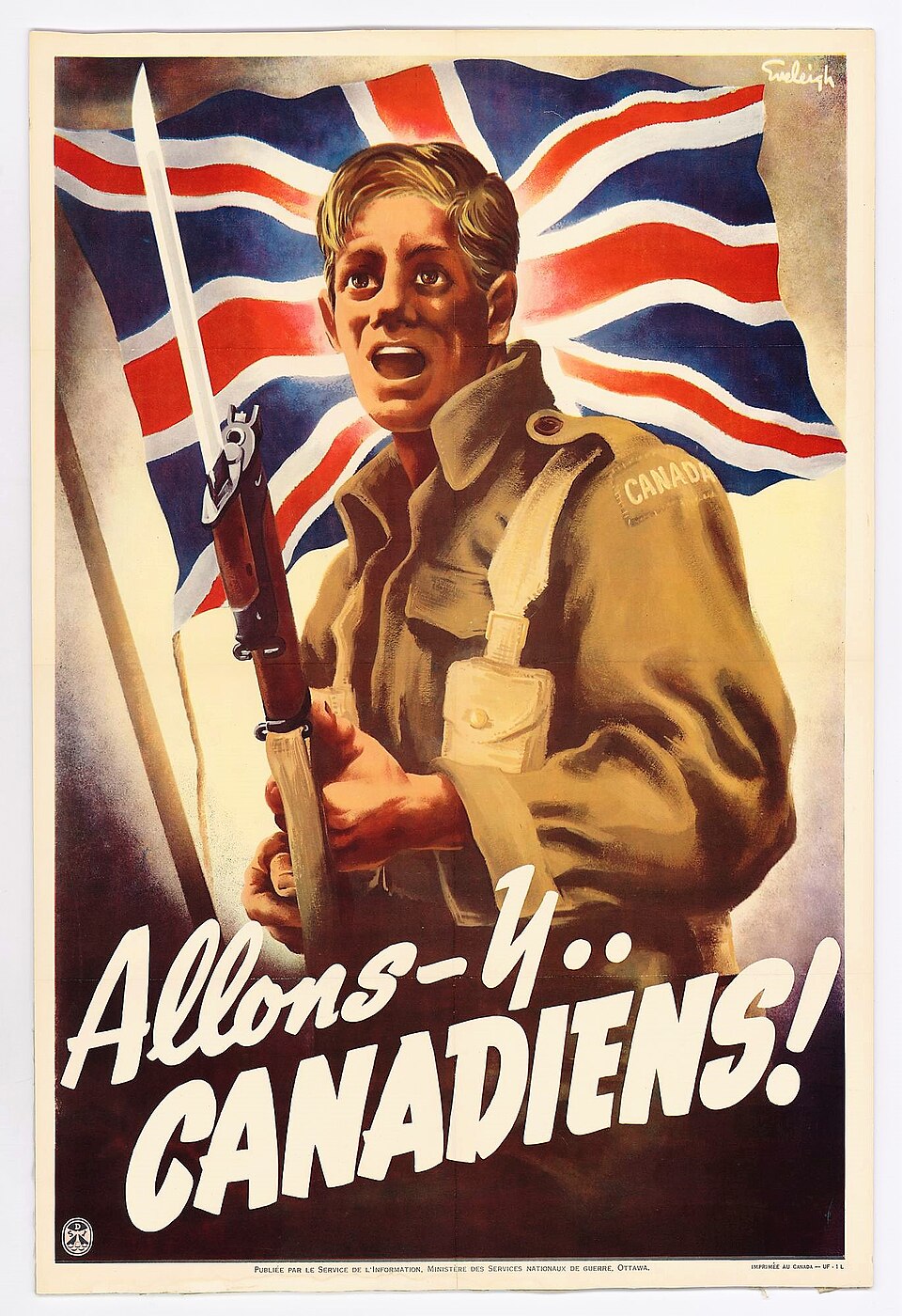
Canada, 1941. Department of National War Services, artist Henry Eveleigh, held by BAnQ, via Wikimedia Commons. Rights recorded: public domain (Canadian Crown copyright expired; PD-Canada and PD-1996 per Commons).
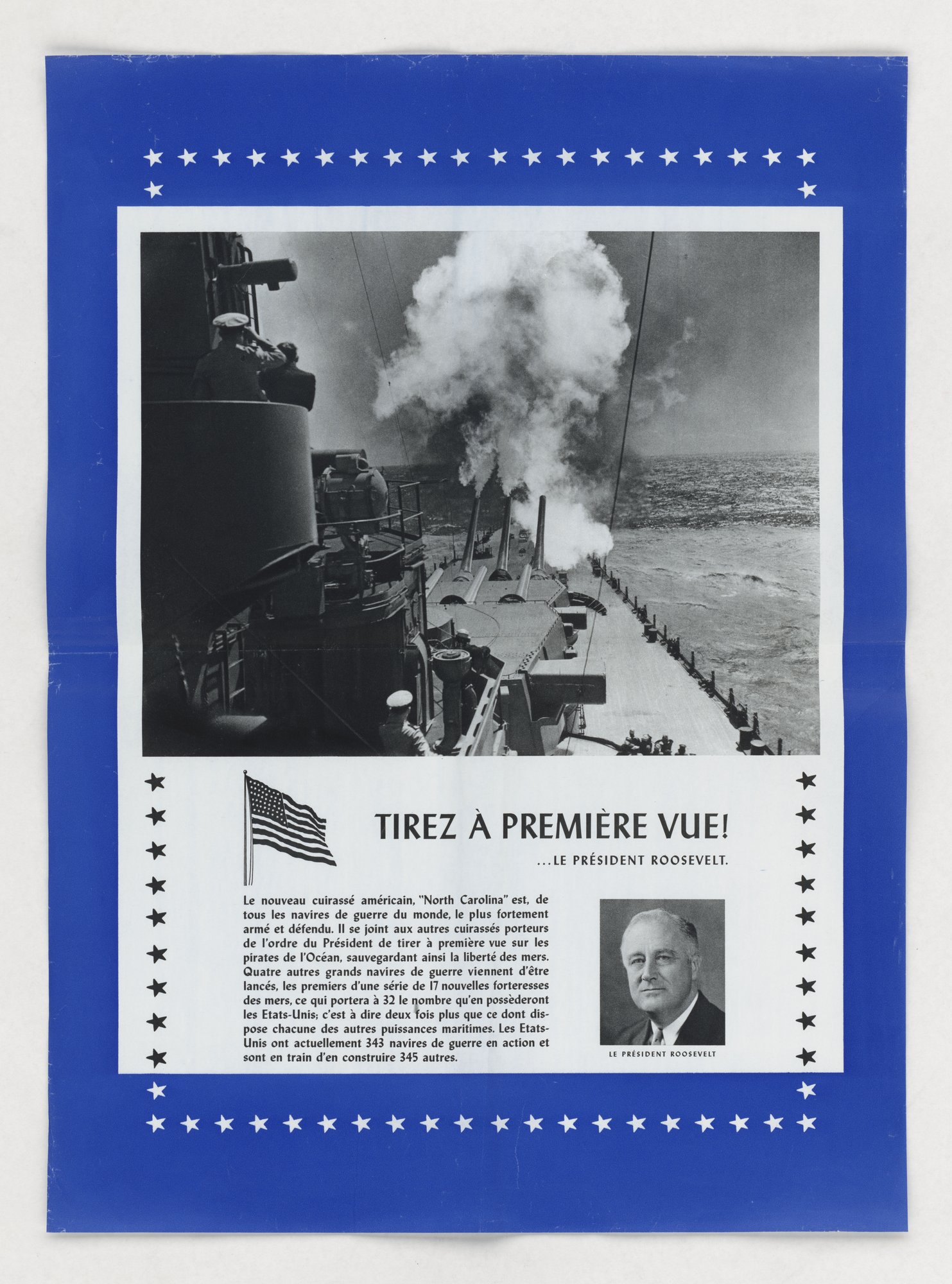
United States, 1942. Office of War Information French-language edition, National Archives Record Group 44. Rights recorded: public domain (U.S. government work, NARA RG 44 OWI series). The entry tags it transfer and card-stacking.
Russia, 2022. Russian Ministry of Defence poster from its z.mil.ru series, via Wikimedia Commons. Rights recorded: CC BY 4.0 (mil.ru terms of use). The entry notes the slogan borrows the opening of Molotov's 1941 radio address.
Browse more posters with their rights recorded
The grid below shows posters from the collection. Each opens an object page with the holding institution, a link to the original record, a transcription of any text and the rights basis for hosting. For related pages, see propaganda posters, American propaganda posters, British propaganda posters, Canadian propaganda posters, Soviet propaganda posters and propaganda archives and collections.