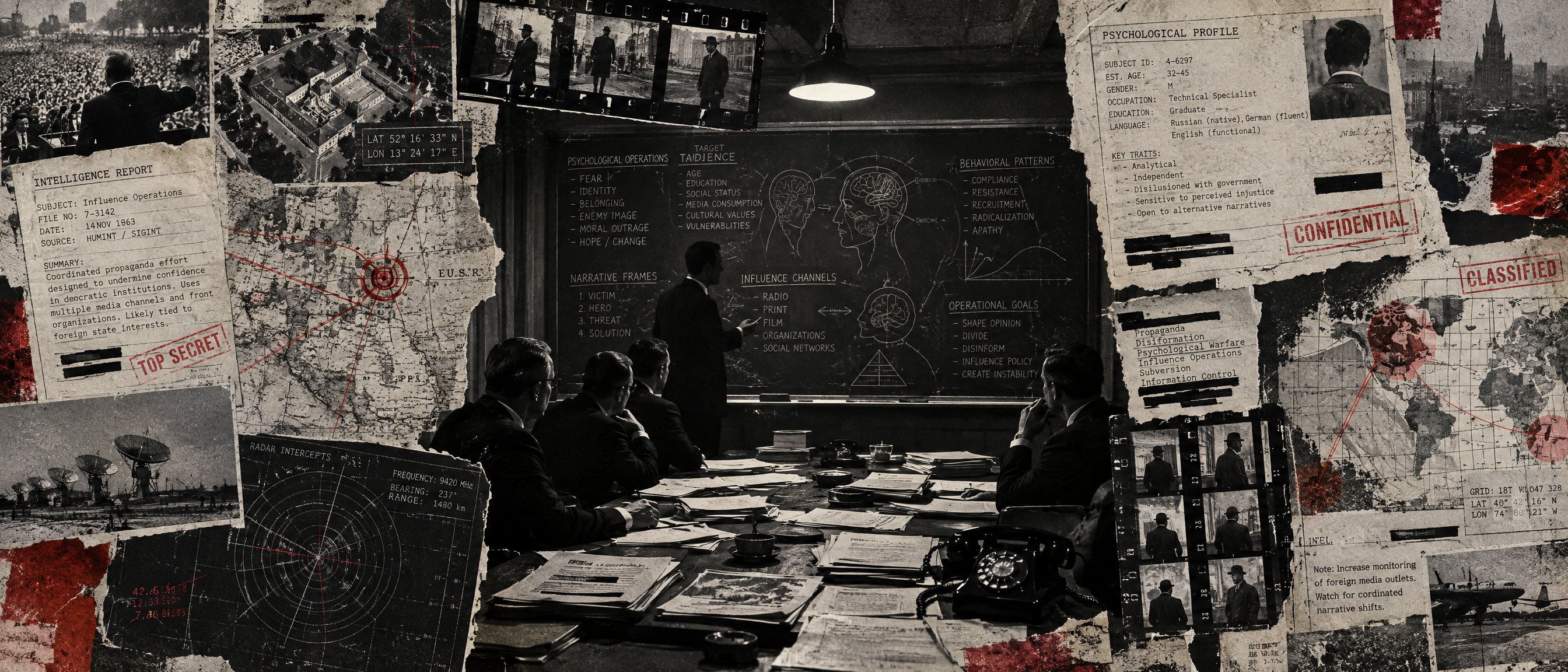
Content note. Some sheets here show caricature and slurs, a blood-stained bayonet over a mother and child, and a Japanese-American exclusion order. They are shown as issued, as evidence of method. Naming a technique is not a verdict on any person or cause.
Which propaganda techniques does Animal Farm use?
Animal Farm uses techniques that the FRAME archive names and defines. Squealer's rewriting of the Commandments is gaslighting and euphemism, "four legs good" is repetition, Snowball is a scapegoat, the dogs and the threat of Jones are fear appeals, and "Napoleon is always right" is a cult of personality. Each has real archive examples from several sides.
What did Orwell say the book was for?
George Orwell published Animal Farm in 1945. In the preface he wrote in March 1947 for a Ukrainian edition he said he had become convinced that "the destruction of the Soviet myth" was essential for a revival of the socialist movement, and that he had thought of "exposing the Soviet myth in a story that could be easily understood by almost anyone" (text at the Orwell archive on marxists.org). That is the author's own stated aim, and this page takes it as given. The novel is a fable about a farm, and the comparisons below are between its devices and documented methods, not a claim that each character equals a named person. Orwell's works remain in copyright in the US, so this archive neither hosts nor reproduces them; only short phrases are quoted.
Explain moreShow less
The technique definitions are the archive's, applied the same way to every side. The collection holds 66 entries filed under the Soviet Union and 4,534 under the United States, out of 6,705 entries (counts made from the entry files in examples/entries/), so the numbers show what the archive has found and can host, not who used a method more.
Squealer rewrites the Commandments: gaslighting and euphemism
In the book the pigs alter the painted Commandments at night, then Squealer tells puzzled animals that the words were always so. A rule against sleeping in beds gains "with sheets", and the rules against killing and drinking gain qualifiers. The archive's gaslighting page defines it as denying or rewriting what the audience saw or lived through so they distrust their own memory. Its euphemism page covers the softer move, such as calling a ration cut a "readjustment". The archive's semantic hijack page covers stretching a word, as "equal" is stretched in the final Commandment.
Explain moreShow less
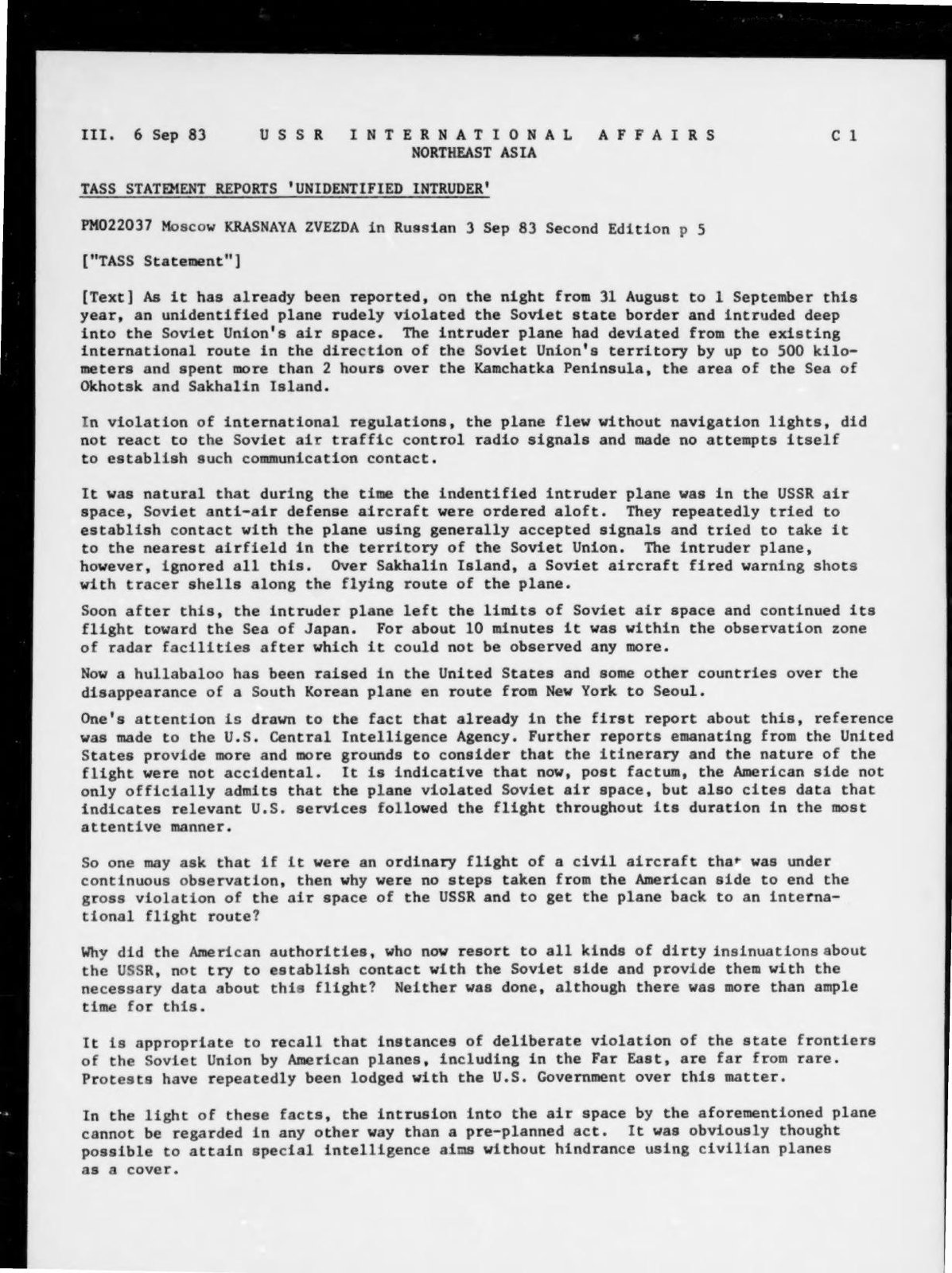
The entry is a US monitoring translation of a TASS statement of 3 September 1983, two days after Soviet interceptors shot down Korean Air Lines Flight 007, killing 269. It speaks of an "unidentified plane" and "warning shots" and omits the plane's destruction. The entry tags it gaslighting, whataboutism, red herring and card stacking.
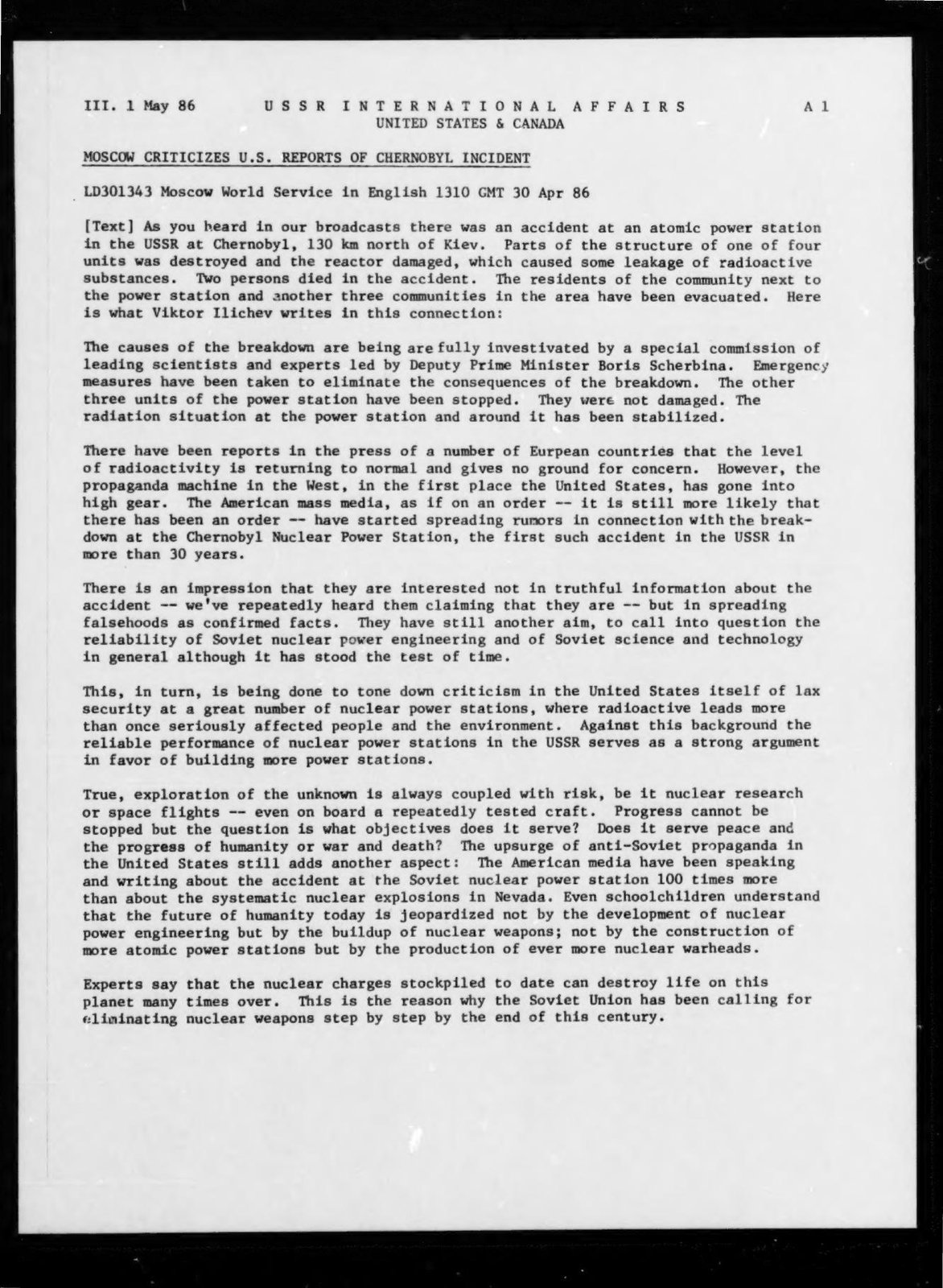
A Radio Moscow broadcast of 30 April 1986 gave a short account of the Chernobyl accident ("two persons died", radiation "stabilized") and then turned on the US press for "spreading rumors". The entry tags limited hangout, whataboutism, red herring and gaslighting. The Glavlit case study shows the same habit in print, with figures cut out of published photographs.
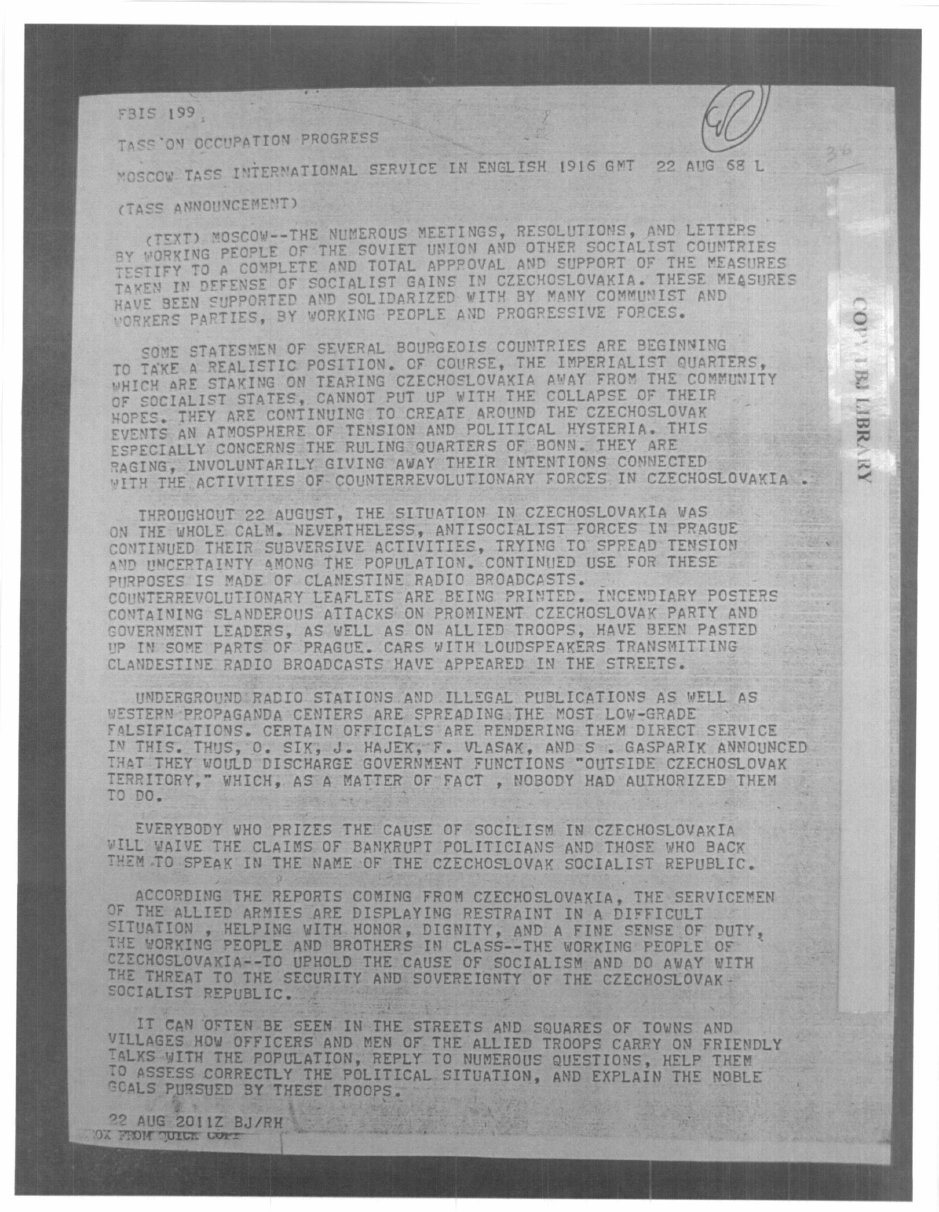
On the second day of the Warsaw Pact invasion of Czechoslovakia in August 1968, TASS called the troops "allied" and their entry "measures taken in defense of socialist gains", and cited "numerous meetings, resolutions, and letters" as "complete and total approval". The entry tags name-calling, bandwagon and euphemism.
"Four legs good, two legs bad": slogans and repetition
The sheep chant the slogan until it drowns out debate, and at the end it is changed to say two legs are better. The archive's repetition page defines the technique as repeating a claim until familiarity is mistaken for truth. A slogan with nothing testable in it is a glittering generality, and a crowd that chants because others chant is a bandwagon. The course lessons on glittering generalities and bandwagon teach both.

Explain moreShow less
A 1975 photograph shows tall roof letters in Moscow reading "Long live the Communist Party of the Soviet Union!" The entry calls it pure acclamation that makes no testable claim, tagged glittering generalities and repetition.
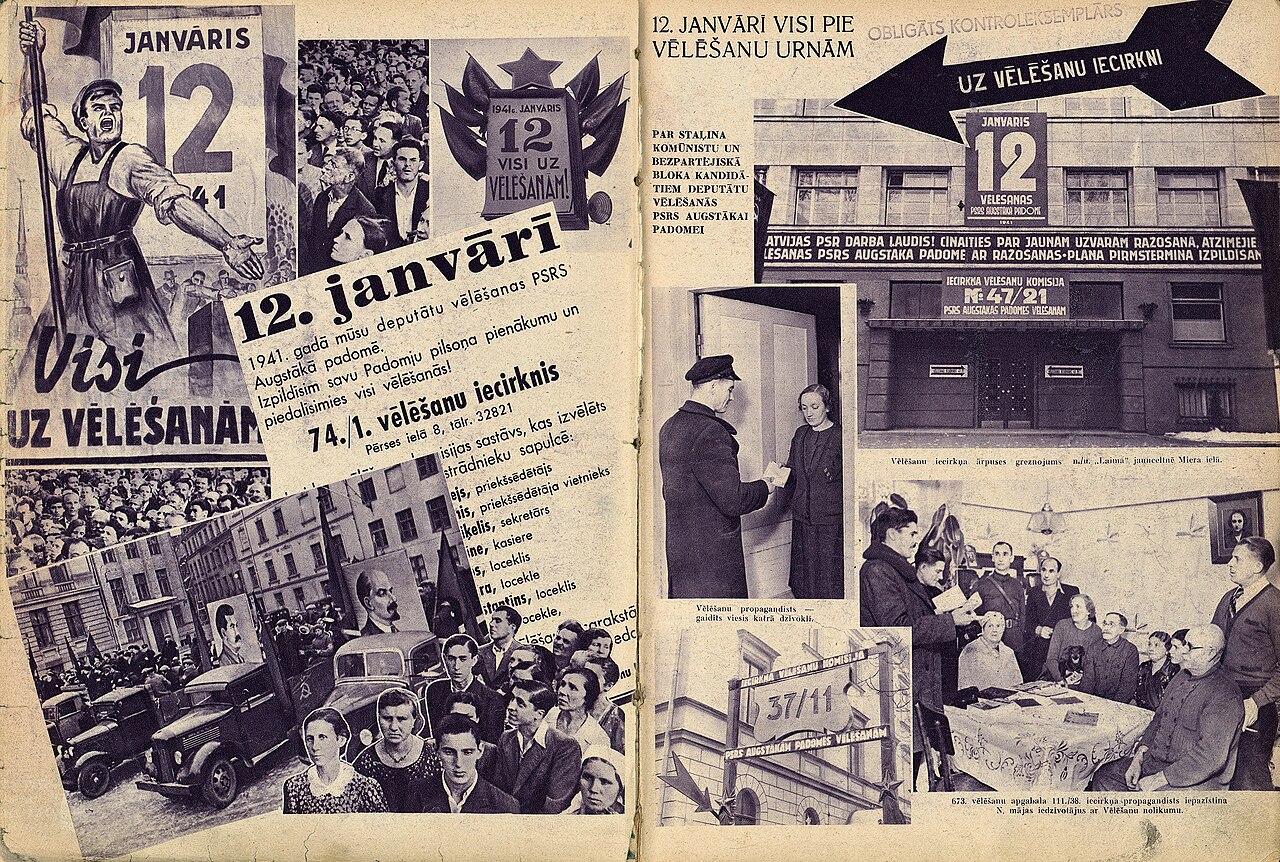
This Latvian-language magazine spread for the 12 January 1941 Supreme Soviet election, the first in the annexed Baltic states, uses an "everyone to the ballot boxes" refrain and massed crowds. The entry tags bandwagon and transfer.
Snowball: scapegoating and name-calling
Once Snowball is driven out, every setback is blamed on him, and the animals are told he served Jones all along. The archive's scapegoating page defines it as parking blame for a complex harm on a bounded group so the in-group stays clean, and name-calling as a label that does the work of evidence. The lessons are scapegoating and name-calling.
Explain moreShow less
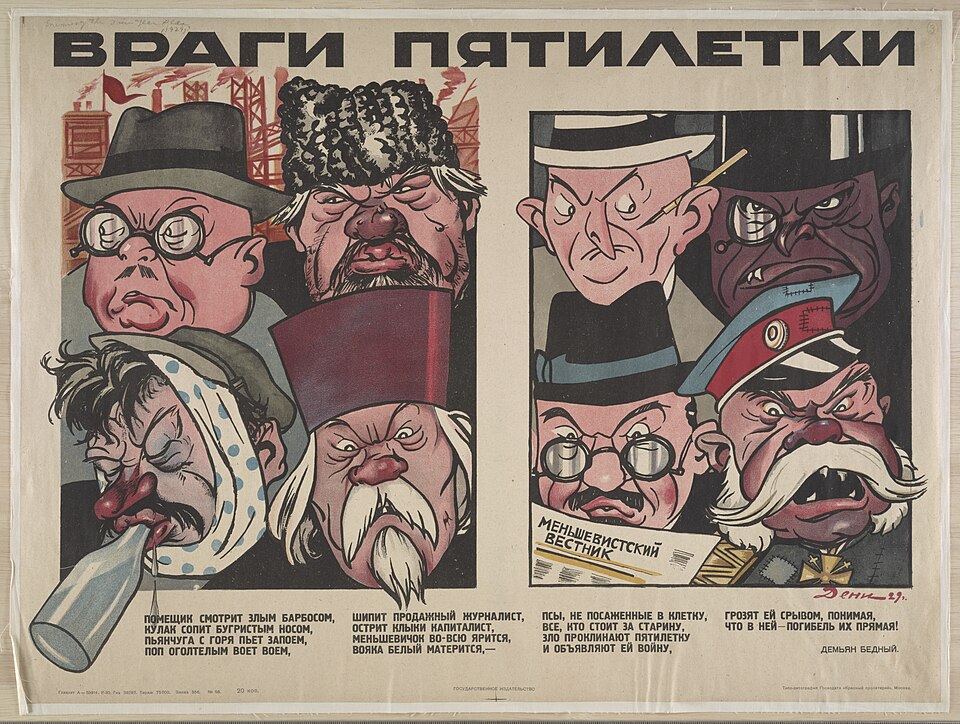
Viktor Deni's 1929 poster (verse by Demyan Bedny) shows eight caricature heads, from landowner and kulak to priest, journalist and Menshevik, as one pack that threatens the plan. The entry tags name-calling and scapegoating.
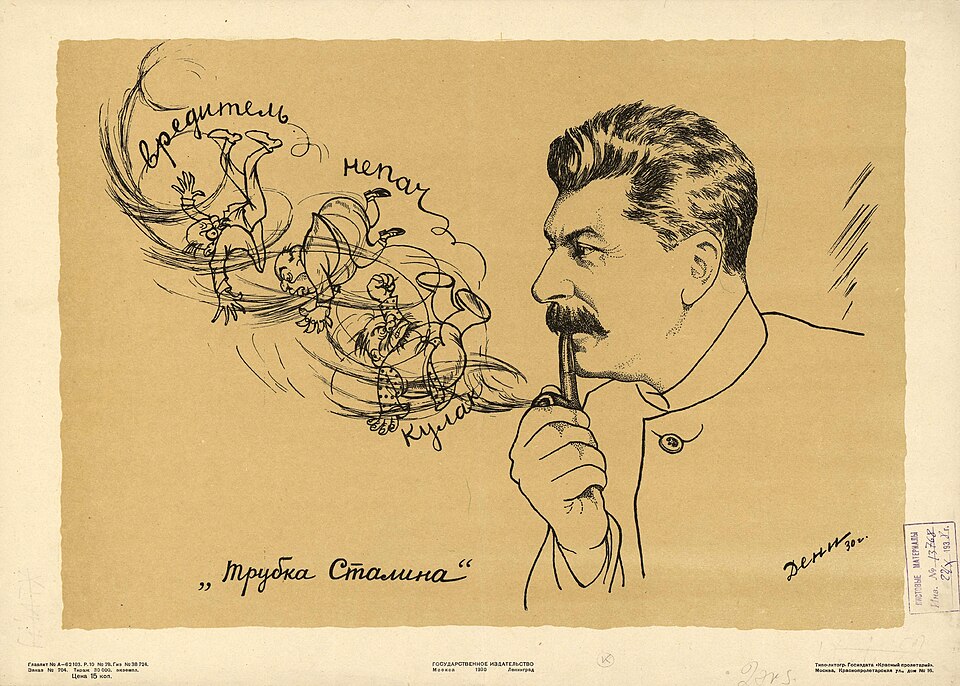
Deni's 1930 drawing blows three labelled figures, "wrecker", "NEPman" and "kulak", away in a puff of pipe smoke. The archive's Stalin-Trotsky case study documents the press campaign against Trotsky, and the show trials case study the staged confessions of 1936 to 1938, which the book's forced confessions are often read alongside. The case studies carry the sourced detail.
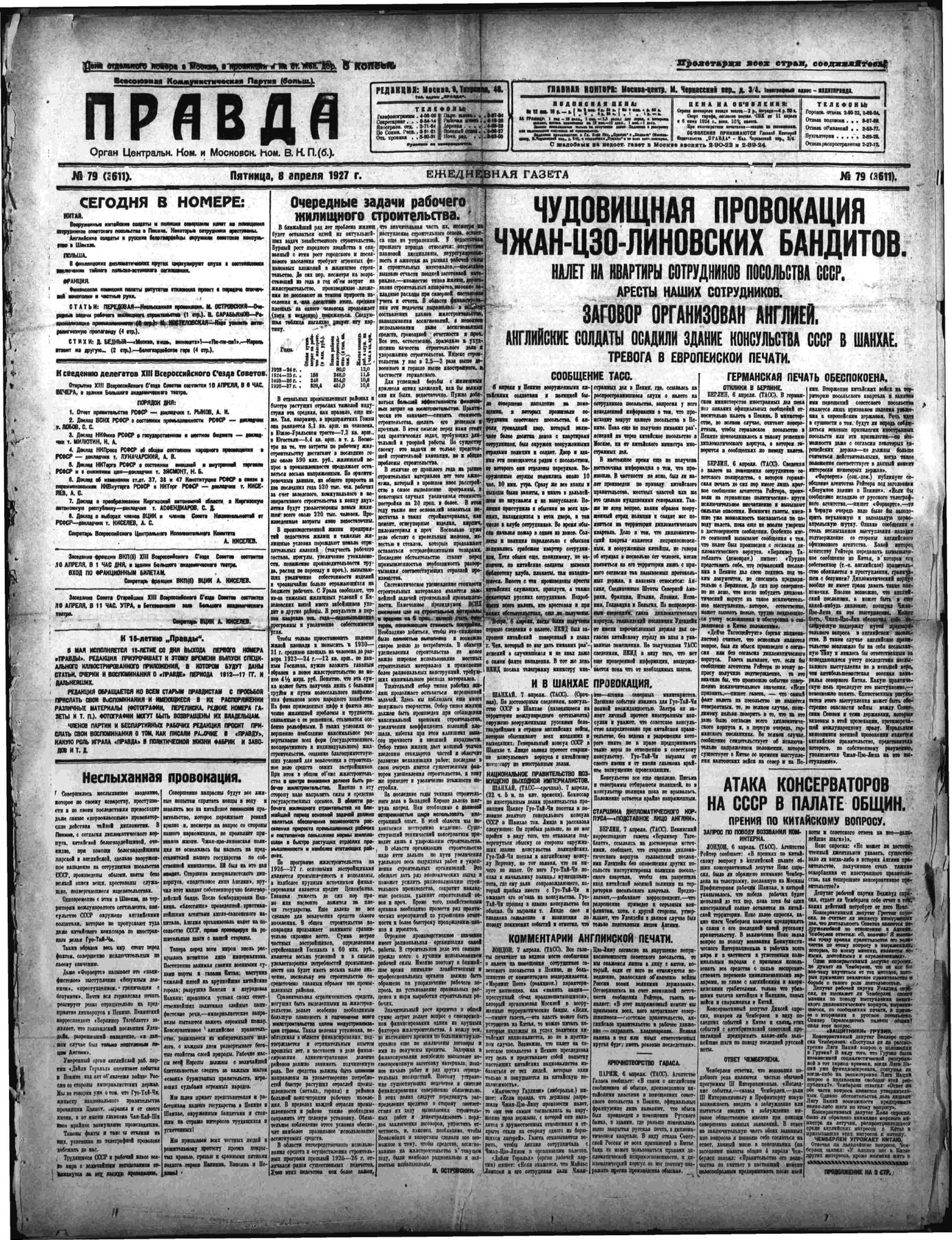
Pravda's front page of 8 April 1927 labels the raiders of the Soviet embassy compound in Peking "bandits" and a "monstrous provocation" and states "The plot was organised by England" as a headline. The entry tags name-calling, testimonial and loaded language.
The dogs and "you do not want Jones back": fear and false choice
Squealer's refrain that the animals do not want Jones back offers two outcomes only, and the dogs make the fear physical. The archive's fear appeal page defines a staged imminent harm with one prescribed remedy, and false dilemma presents two options as the only ones. See the fear appeal lesson.
Explain moreShow less
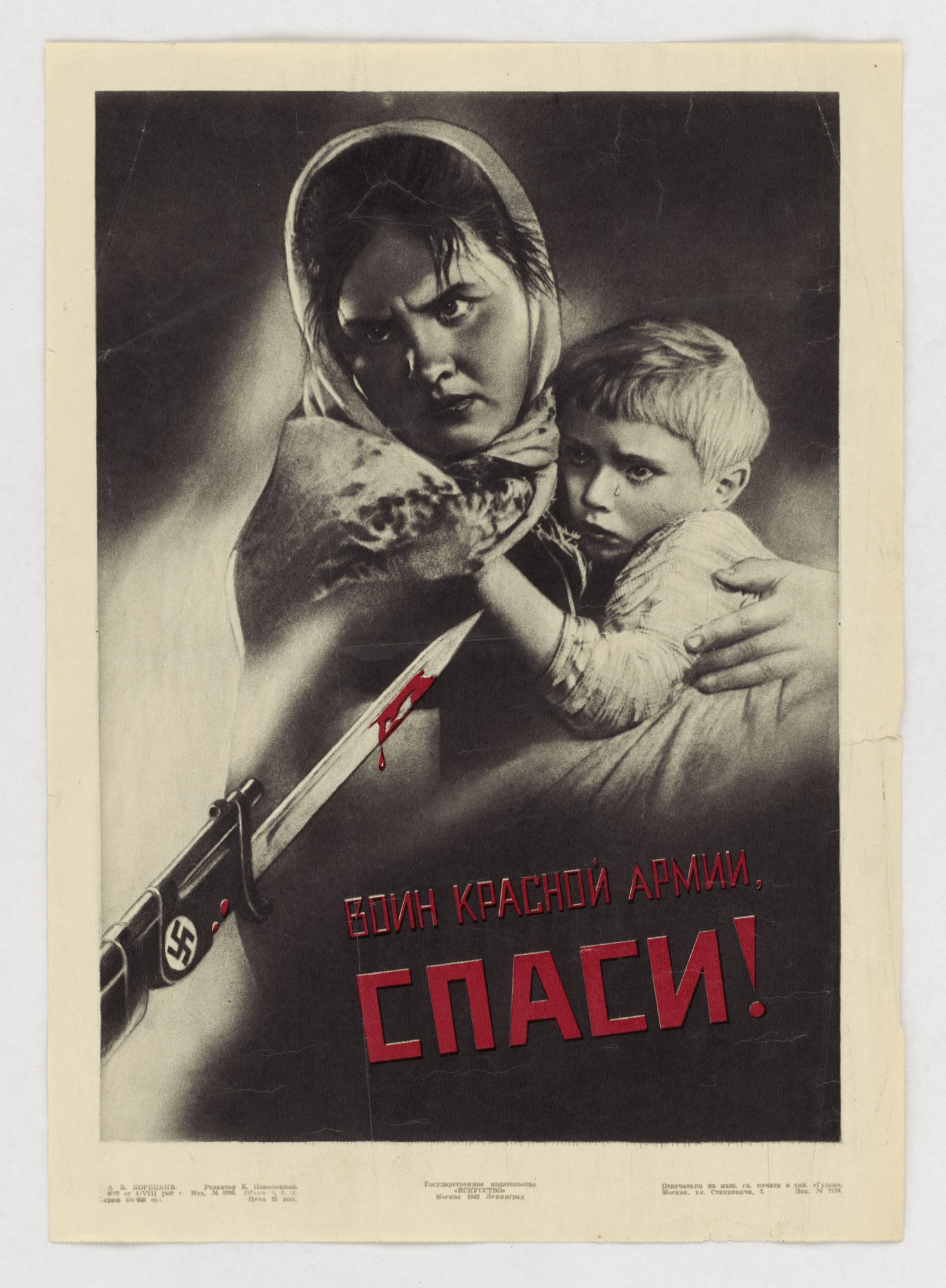
V. Koretsky's 1942 photomontage shows a woman clutching a weeping child as a swastika-marked, blood-dripping bayonet enters the frame, and addresses the Red Army soldier directly. The entry tags fear appeal and outrage bait. The threat was an actual invading army; the archive's test is the staging, not the enemy.
"Napoleon is always right": cult of personality
Napoleon collects titles, poems and portraits, and Boxer's private maxim becomes public doctrine. The archive's cult of personality page defines an apparatus building a leader into an infallible, omnipresent figure; see also the Lenin cult case study.
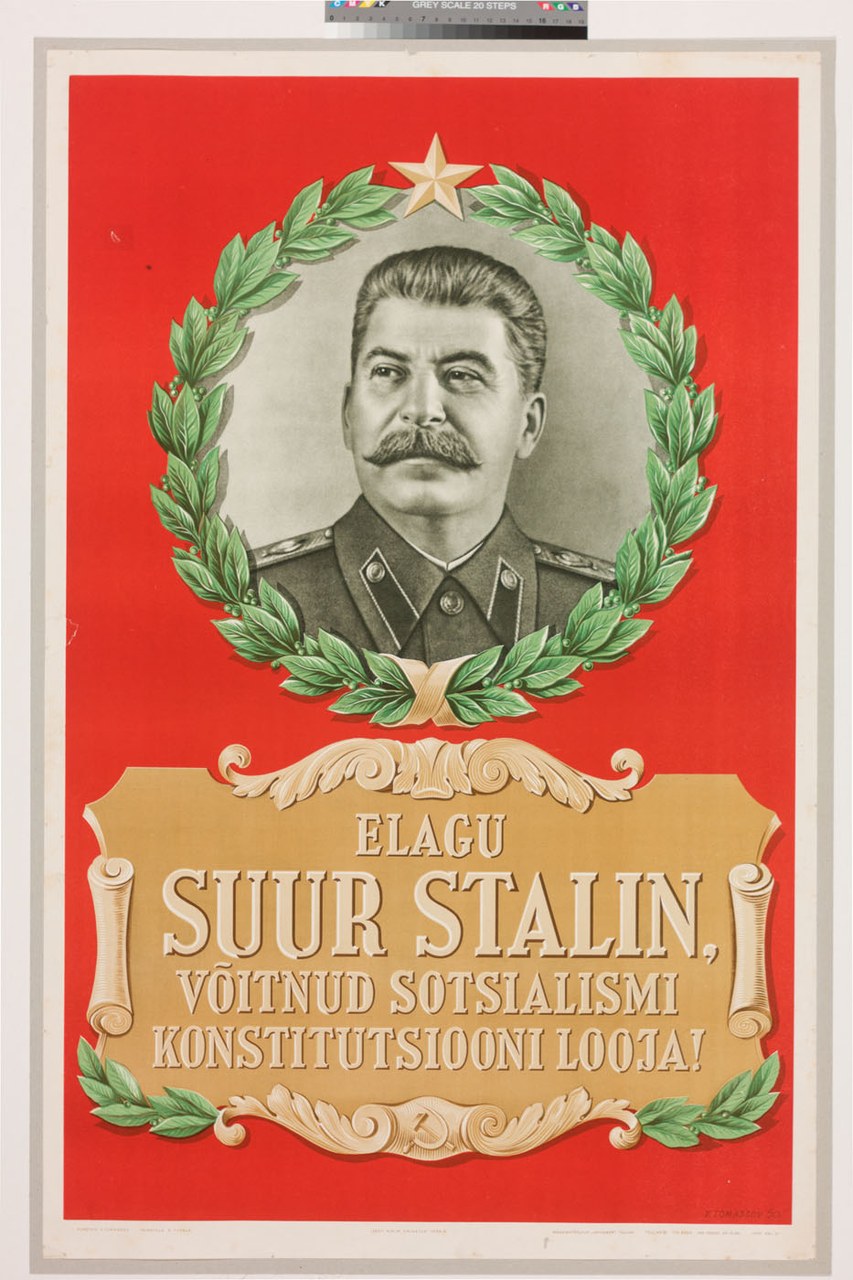
A 1950 Estonian-language poster sets a retouched portrait of Stalin in a laurel wreath under a star, with the words "great" and "victorious" standing in for any testable claim. It is the one Soviet-Union entry among the archive's 12 tagged for this technique.
Same technique, other side
Orwell aimed at the Soviet case, but the definitions apply to everyone. These are the archive's examples of the same devices from other states and movements.
Content note: Ethnic slur against Japanese people in the headline. This object is shown as it was published. Why 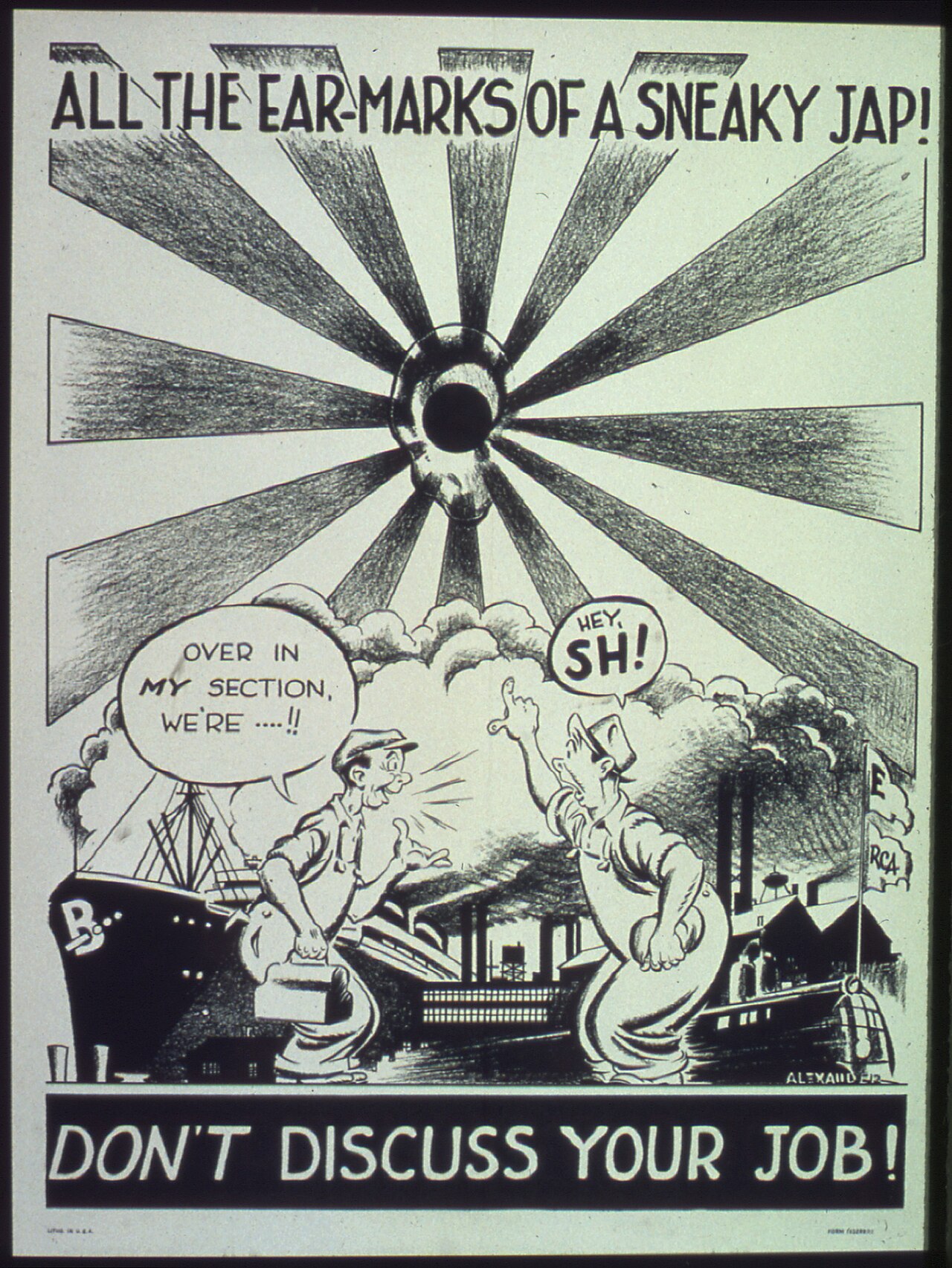

Explain moreShow less
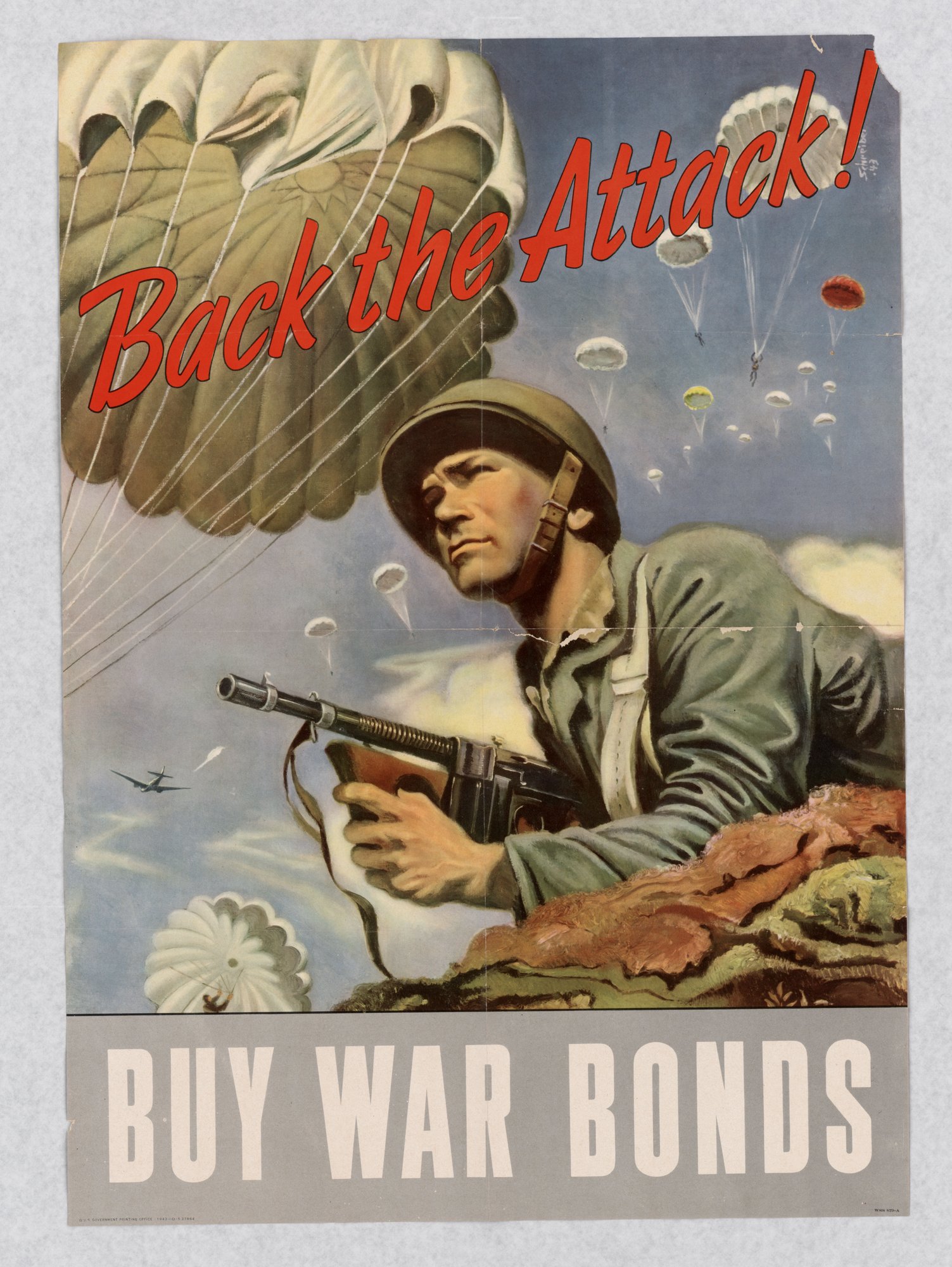
Repetition: this 1943 US Treasury war-bond poster is one of several "Back the attack!" sheets in the collection (the entry is tagged transfer and repetition). The archive tags repetition on 5 US and 1 Soviet-Union entries.
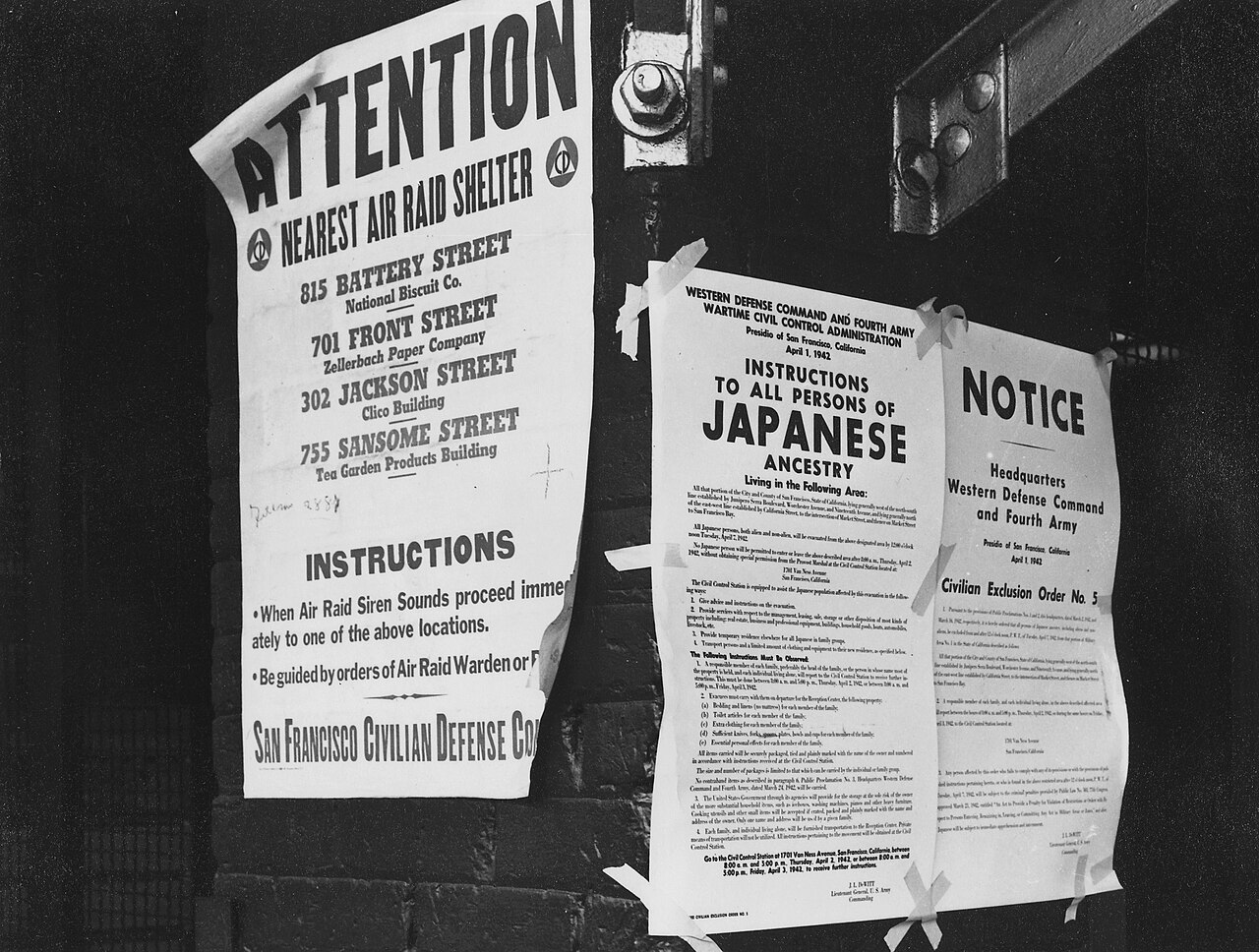
Euphemism: a US Army exclusion order of April 1942 told "all persons of Japanese ancestry, both alien and non-alien" to report for removal. The entry notes that citizens became "non-aliens", forced removal "evacuation" and the holding sites "assembly centers". The archive tags 15 US entries as euphemism.
Scapegoating and name-calling: a US wartime plant-security poster attaches a slur and the trait "sneaky" to a whole nationality. The label, not any evidence, carries the warning. The archive tags 65 US entries as scapegoating.
Fear appeal: the 1964 Johnson campaign advertisement cuts from a girl counting daisy petals to a nuclear explosion, never names Goldwater, and offers one remedy, a vote.
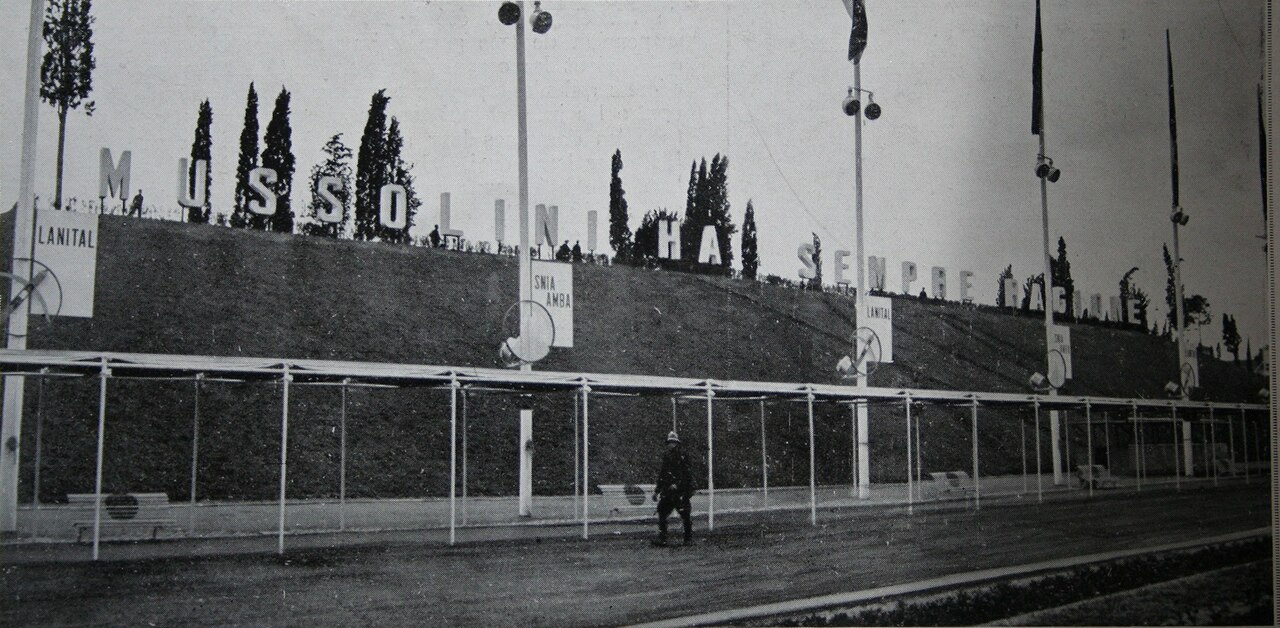
Cult of personality: giant letters spelling "Mussolini is always right" in a 1935 photograph. None of the 12 entries tagged cult of personality is American; they come from Turkmenistan, China, North Korea, the USSR, Italy, Spain, Iraq and Romania. The definition requires a state or movement apparatus building the leader up, which is a narrower thing than ordinary campaign publicity.
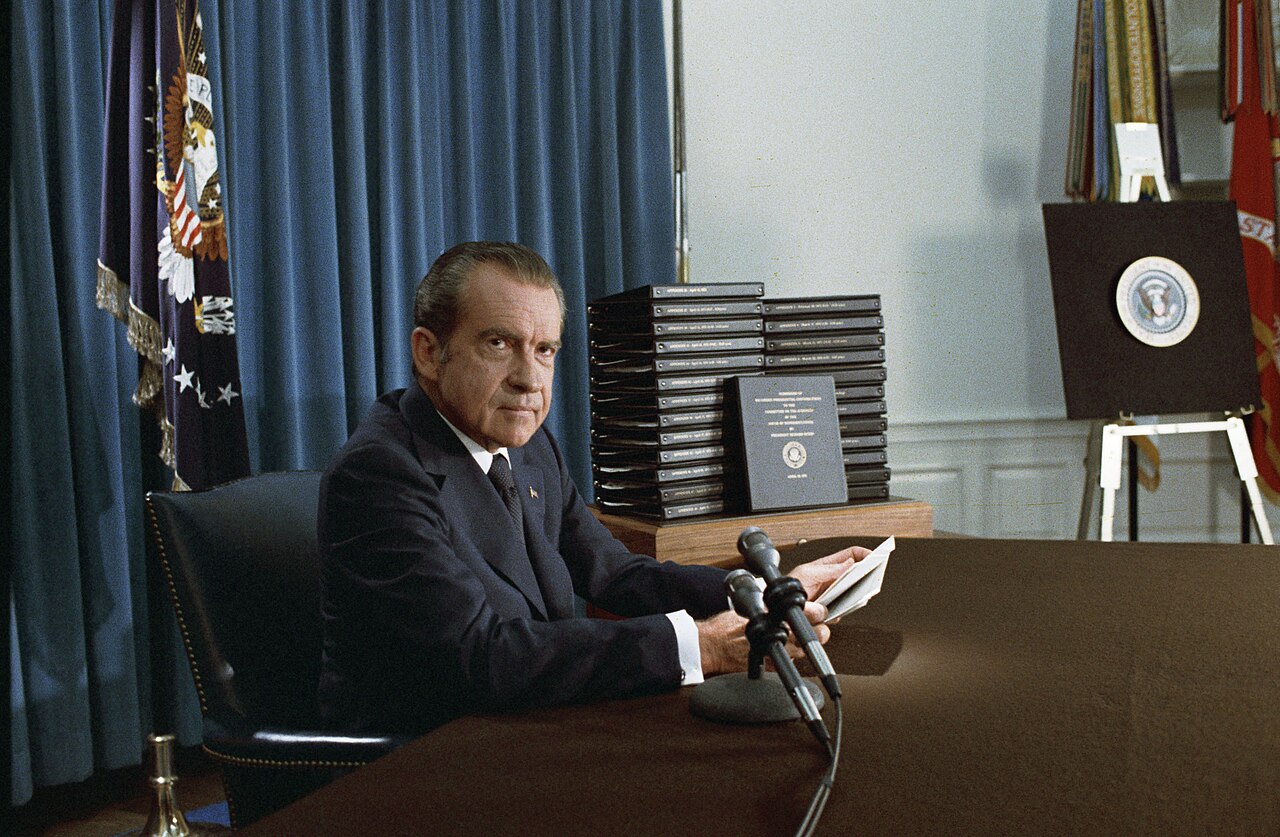
Rewriting the record: in 1974 President Nixon released edited transcripts instead of the subpoenaed tapes, which the entry tags limited hangout. The courts later obtained the tapes. Of six gaslighting entries in the archive, none is American; two are Soviet, two North Korean, one Romanian and one Russian.
How to use the comparison
- Name the technique, then ask the definition's test: what is the evidence, the base rate, the alternative?
- Compare scale and context as well as method. A farm fable compresses decades into a few scenes.
- Apply the same test to the sheet from your own side.
For the full list see propaganda techniques list, for the three classical appeals see ethos, pathos and logos in propaganda, and for Soviet material see Soviet propaganda posters and the Soviet press case study.