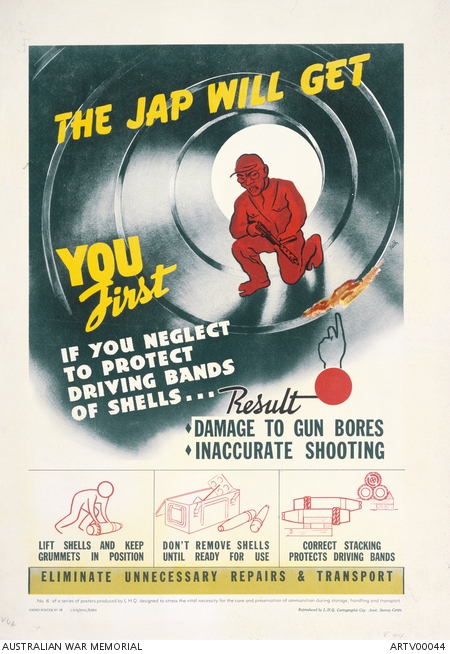
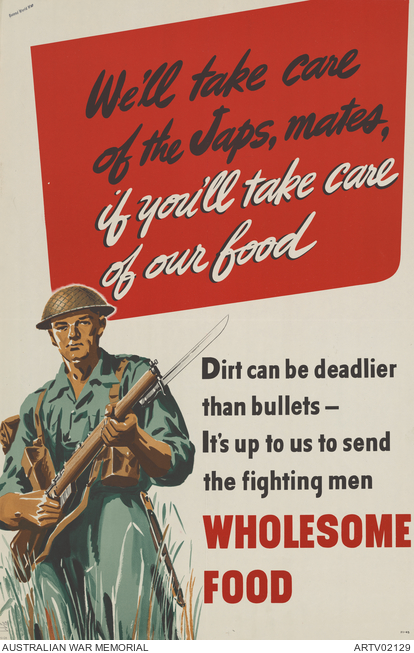
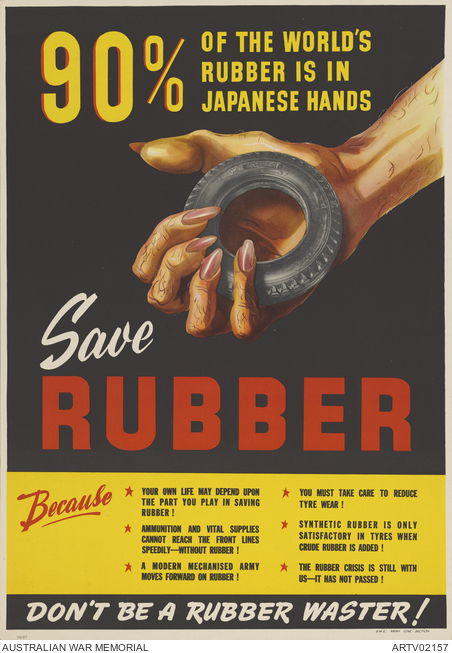
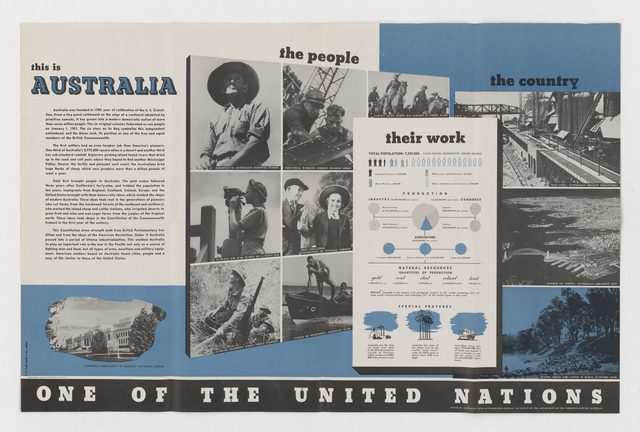
Content note. Several Second World War posters here, issued by Australian government bodies and factories, draw Japanese people as caricatures or vermin-like menaces and use the period slur "Jap"; a 1944 information sheet calls First Nations Australians "primitive nomads". Both sides of the First World War press and referendum campaigns also name opponents as "Huns" or "enemies". All are shown as issued, with the other posters. Showing an item is not endorsing it.
What were Australian propaganda posters?
Australian propaganda posters are recruiting, referendum, production and security sheets issued from 1915 to the 2010s by the Commonwealth government, parties, unions, shops and factories. Two conscription referendums (1916, 1917) were both lost, so the First World War army stayed volunteer, and both sides campaigned by poster.
The 1915 to 1916 enlistment posters
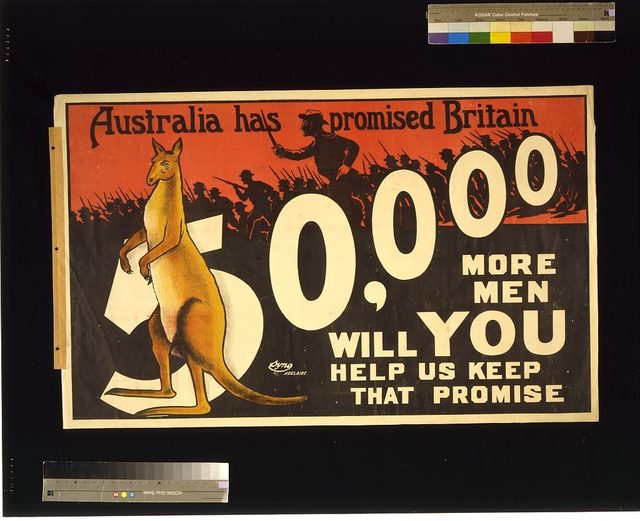
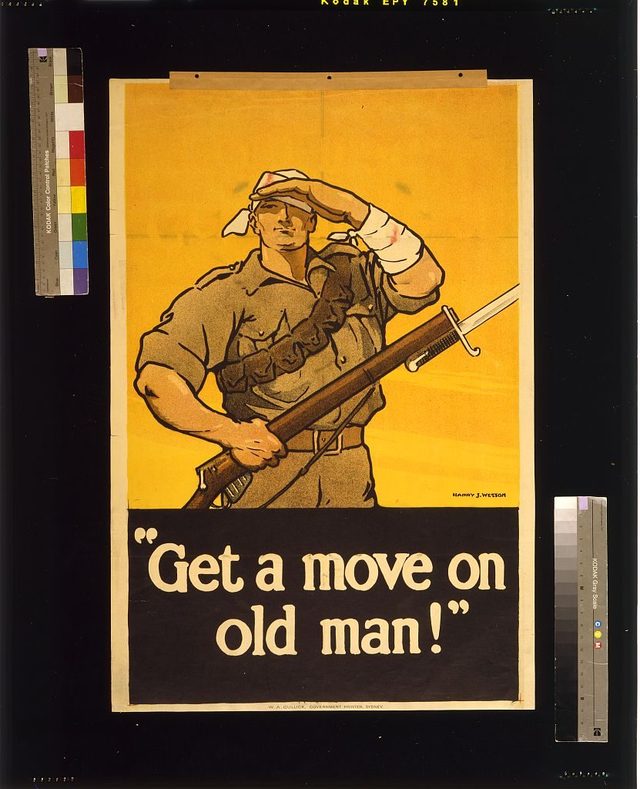
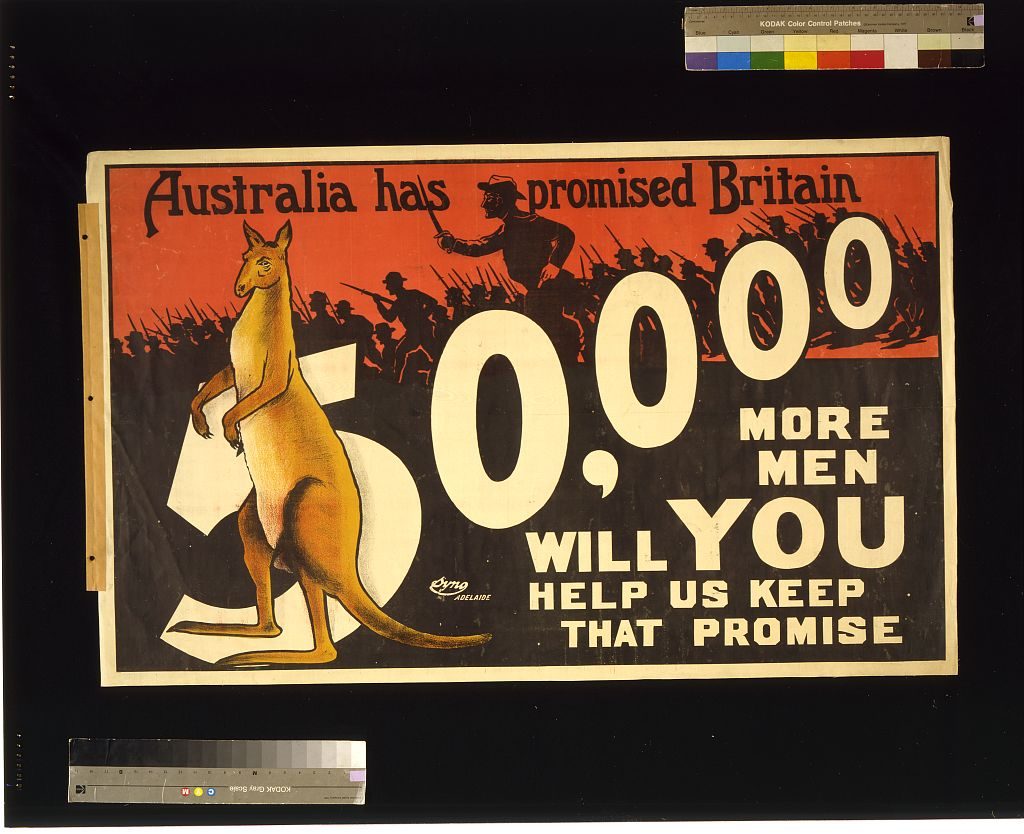
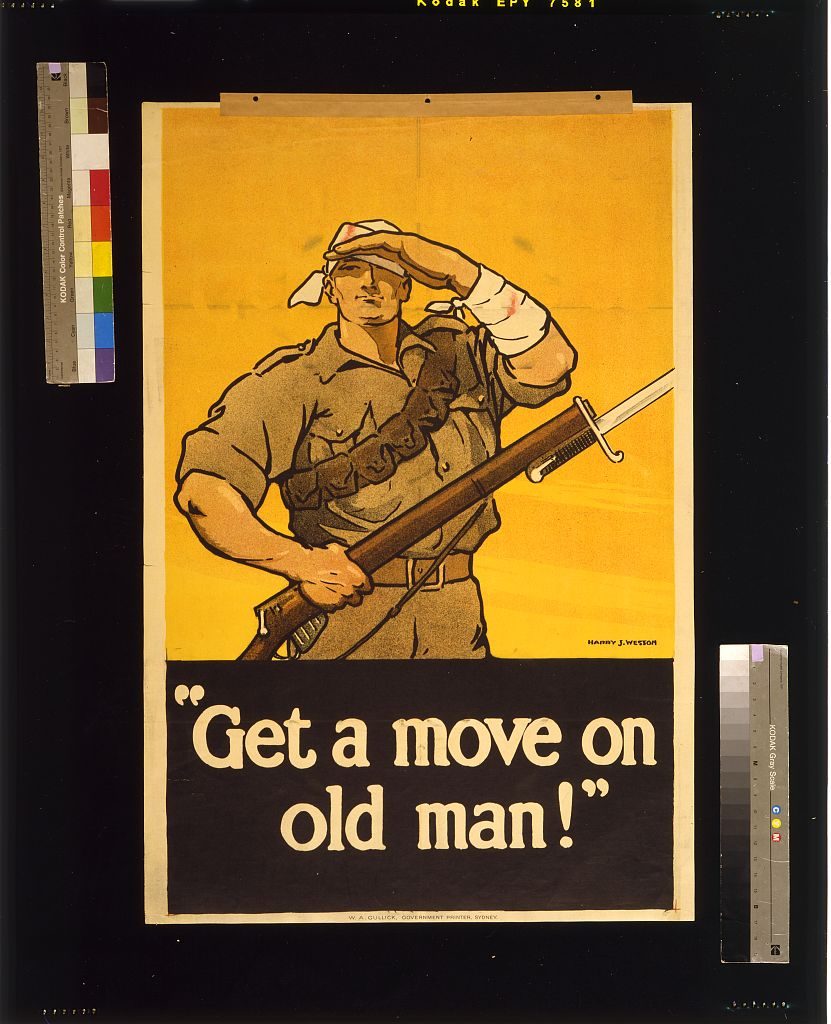
An Adelaide-printed sheet of 1915 puts a kangaroo beside "50,000 more men" and frames a pledge to Britain as the viewer's own debt (Bandwagon). Harry J. Weston's "Get a move on old man!" has a bandaged soldier speak slang to the viewer, so enlisting sounds like a mate's request (Plain folks).
Explain moreShow less
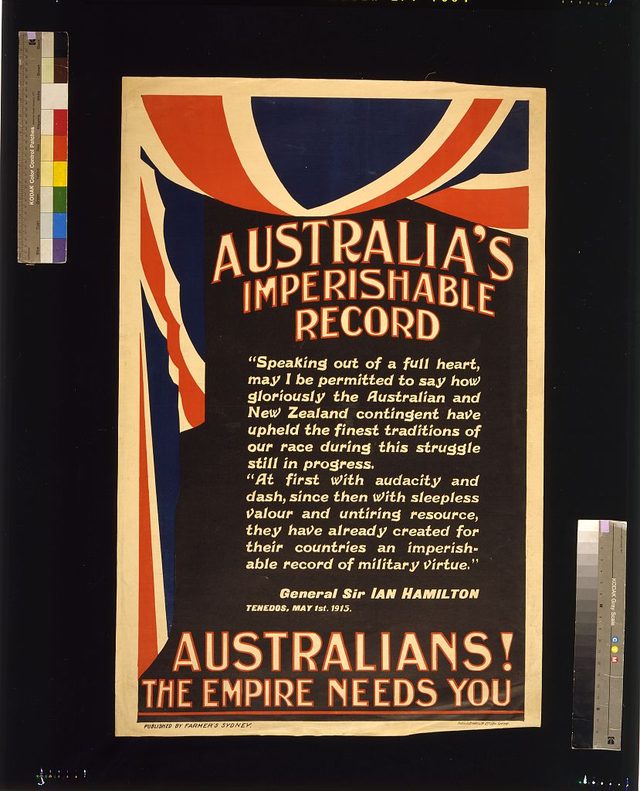
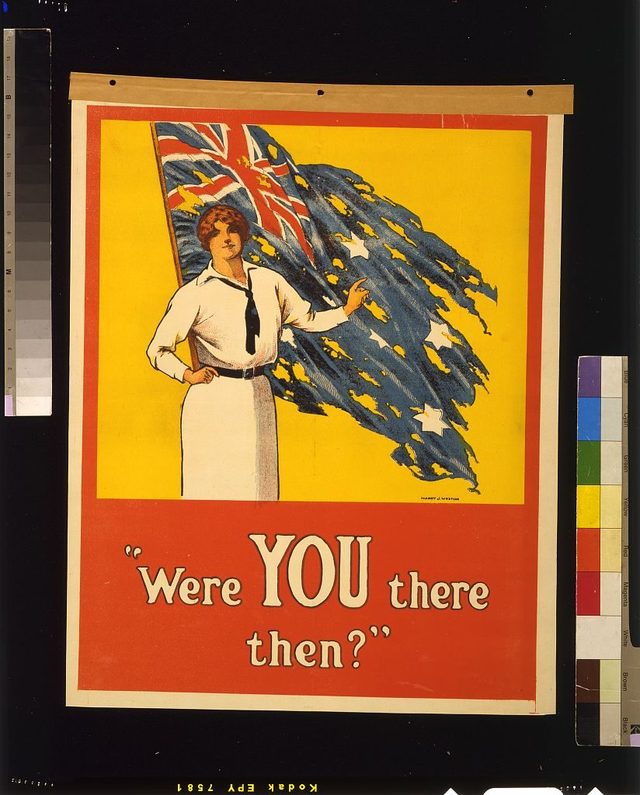
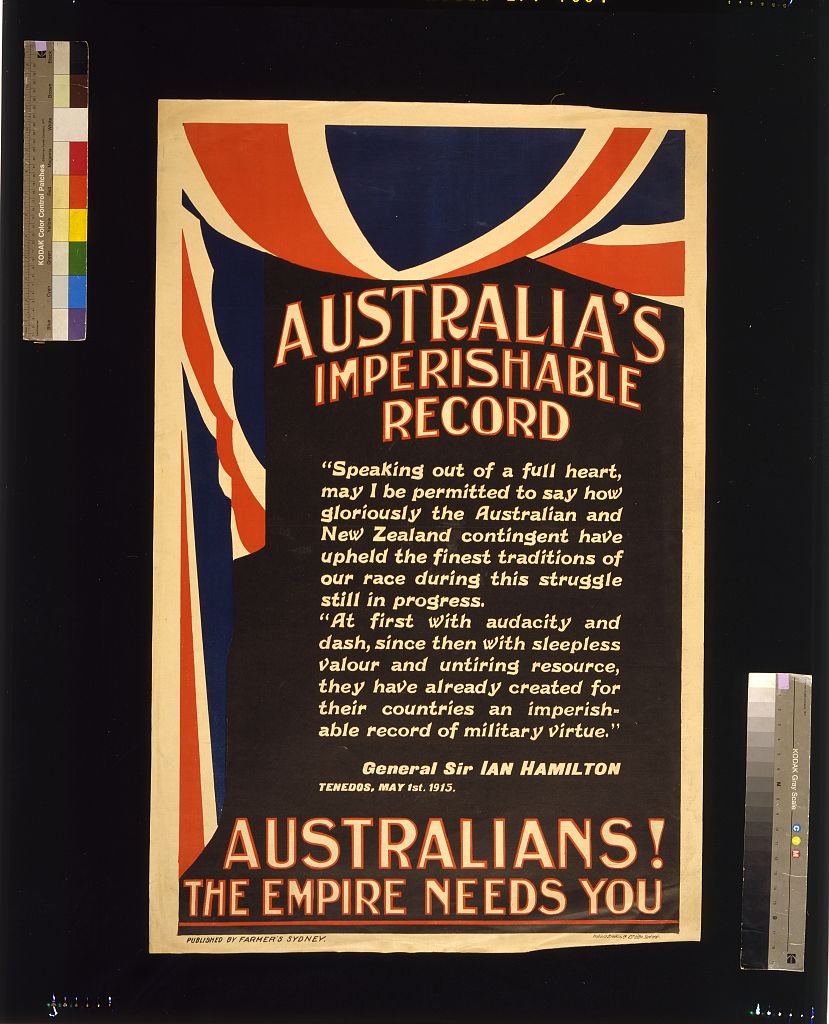
His 1916 "Were YOU there then?" holds a torn flag over a woman's accusing question (Transfer). Farmer's department store in Sydney printed a quotation from General Sir Ian Hamilton on Gallipoli under "Australians! The empire needs you" (Testimonial).
The conscription referendums, 1916 and 1917
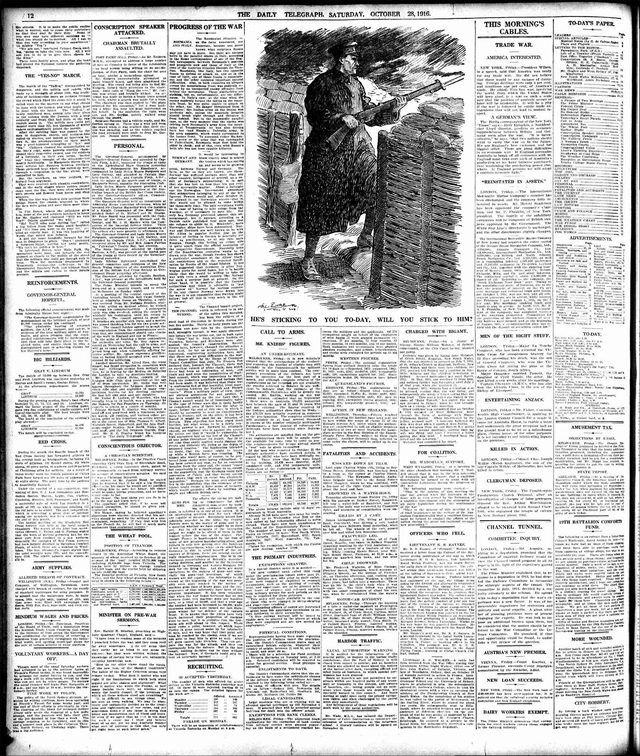
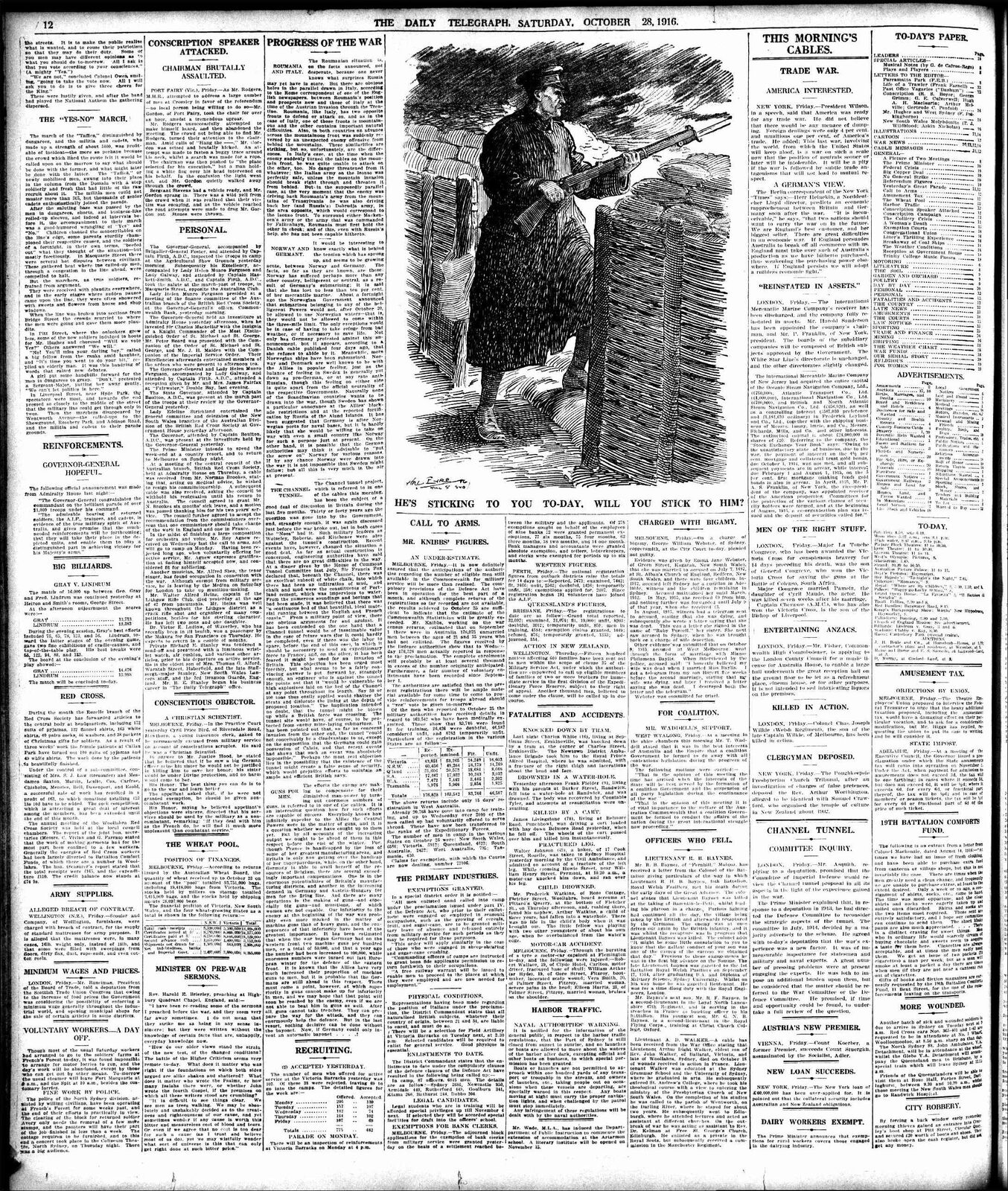
Prime Minister W. M. Hughes put overseas conscription to a vote on 28 October 1916. The Yes side was carried by most big dailies: that day's Sydney Daily Telegraph ran a trench cartoon asking "will you stick to him?" (Transfer). The No side used labour papers, handbills and union campaigns.
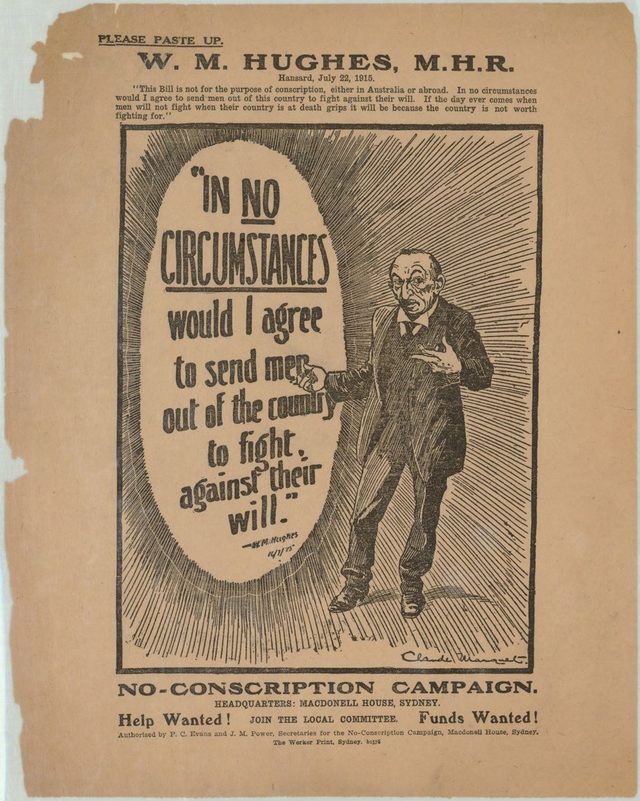
Content note: Political caricature of the Australian Prime Minister W. M. Hughes; no graphic content. This object is shown as it was published. Why 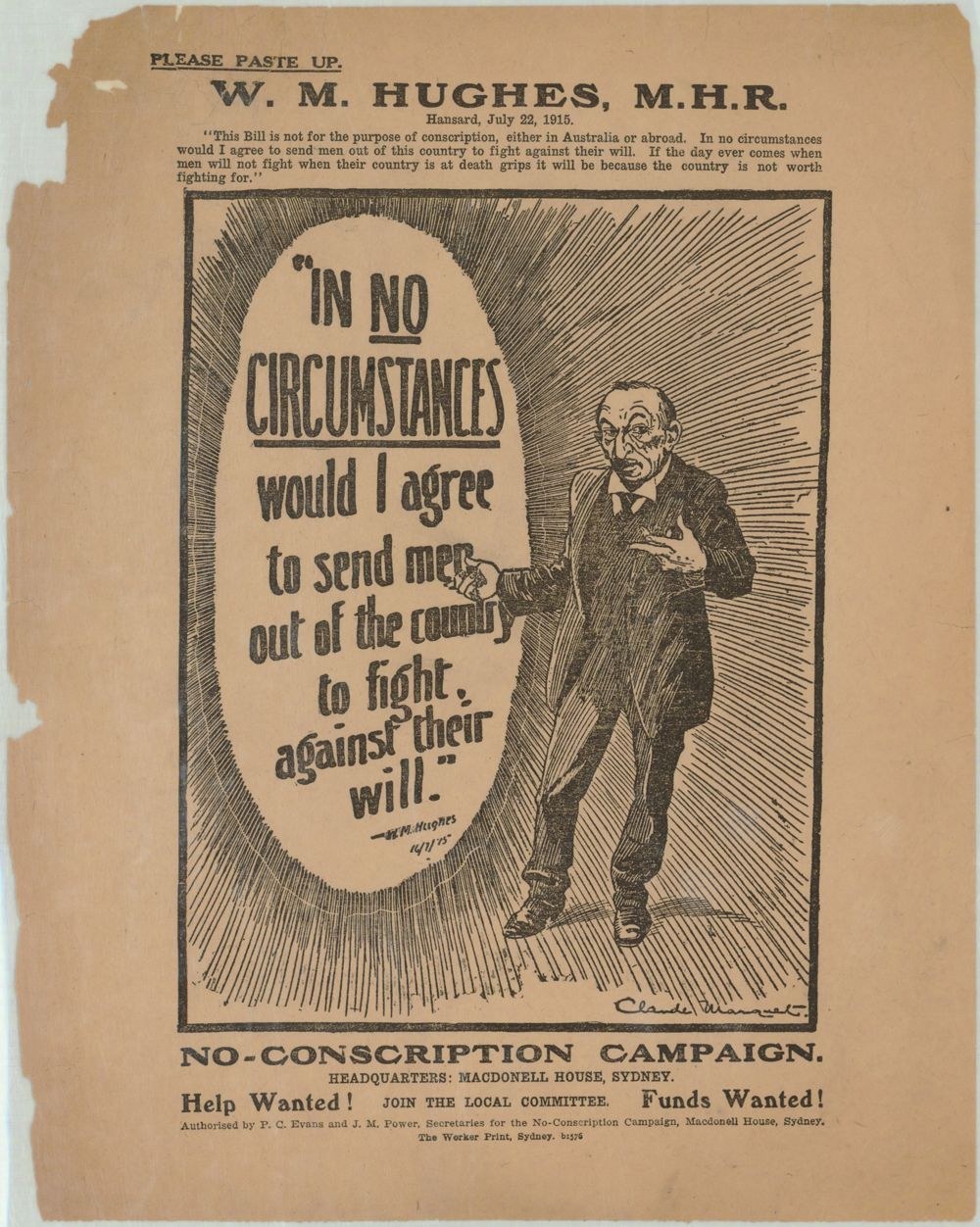
Explain moreShow less
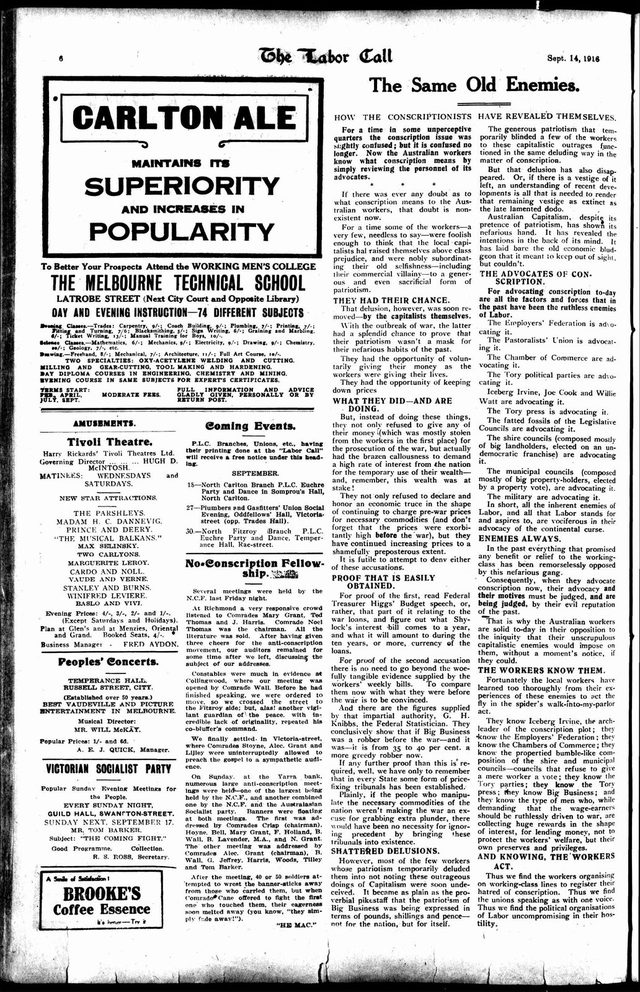
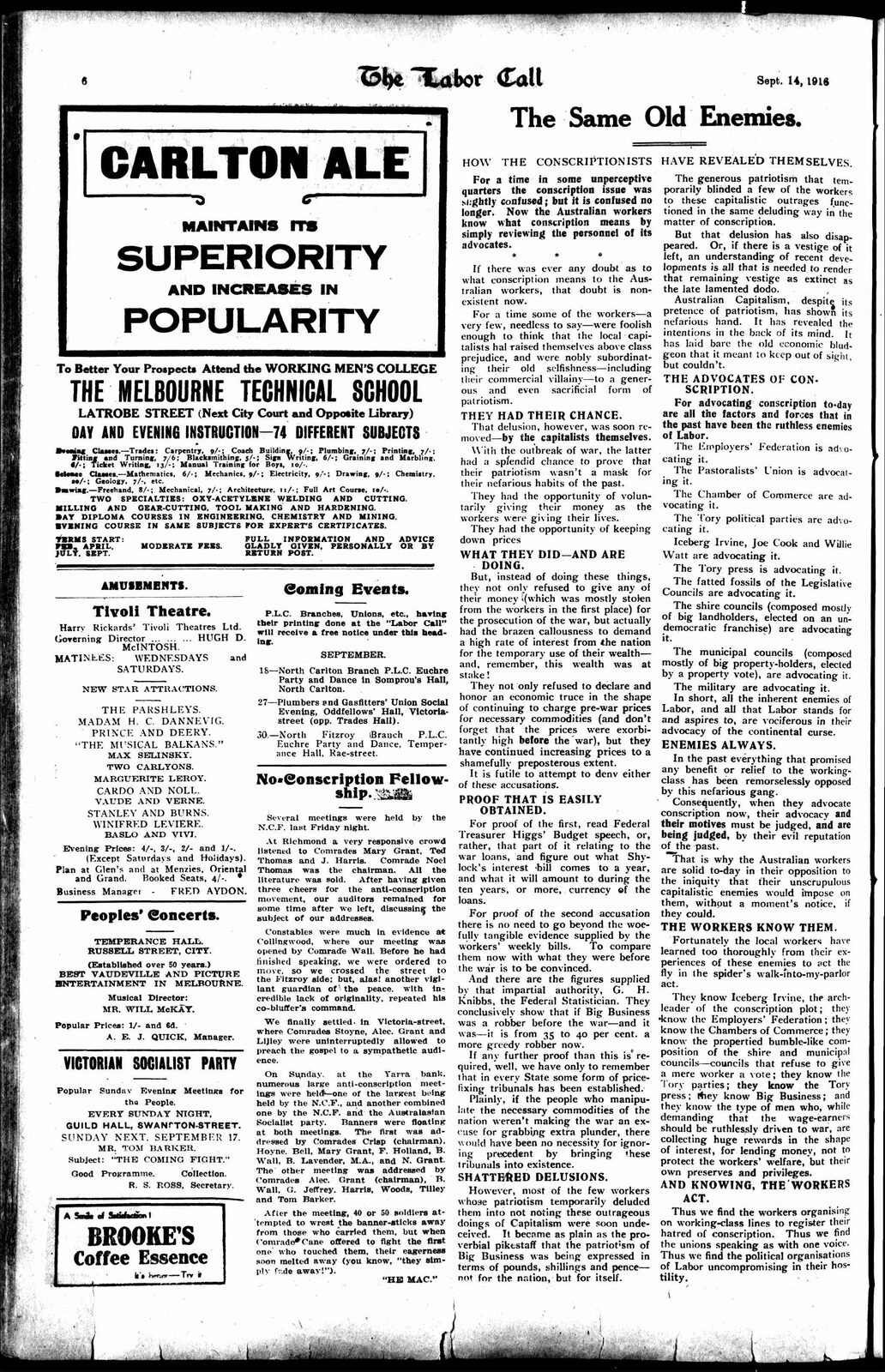
The Labor Call, the Victorian Labor council's paper, answered with one list of "ruthless enemies of Labor" (Scapegoating). The No-Conscription Campaign quoted Hughes's 1915 Hansard sentence against his later proposal and left out the debate between them (Card stacking).
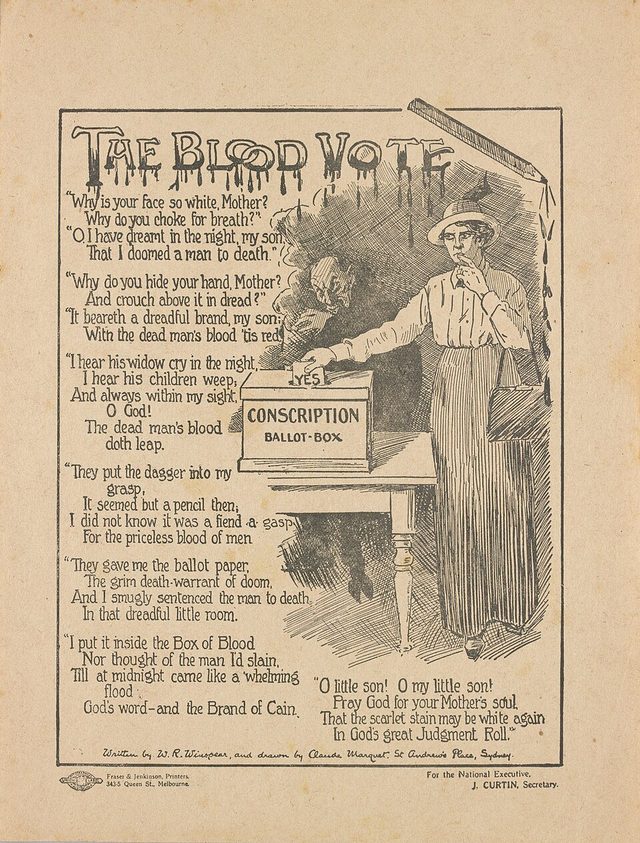
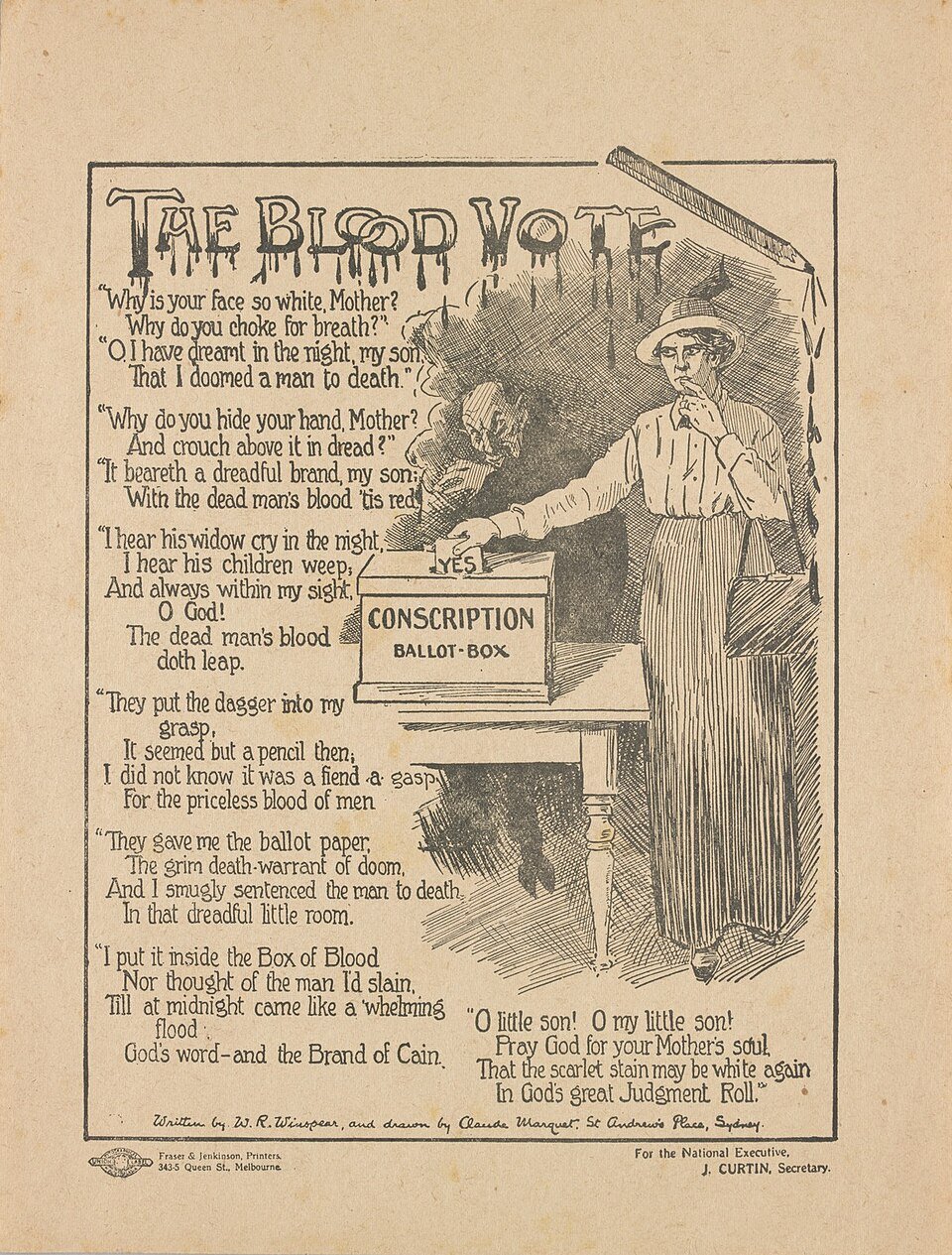
"The Blood Vote", a leaflet whose drawing is by Claude Marquet and whose imprint names John Curtin as secretary, shows a woman dropping a Yes slip into a ballot box while blood drips (Fear appeal).
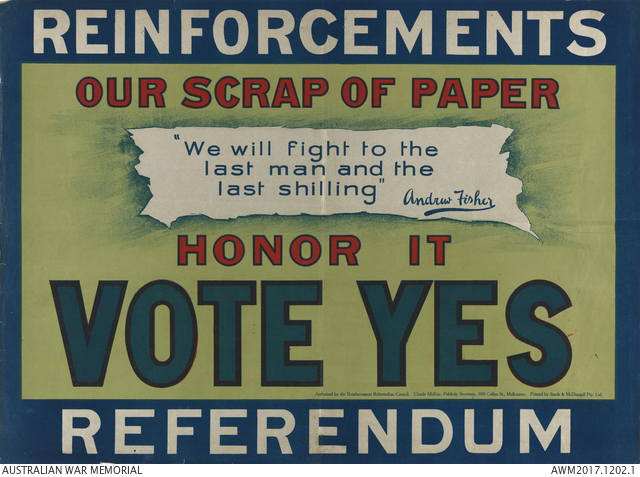
The second vote, on 20 December 1917, was lost by a wider margin. The Reinforcements Referendum Council's Yes poster quotes former Prime Minister Andrew Fisher and recasts "scrap of paper" as a pledge to honour (Testimonial).
1916 to 1918: the enemy as monster
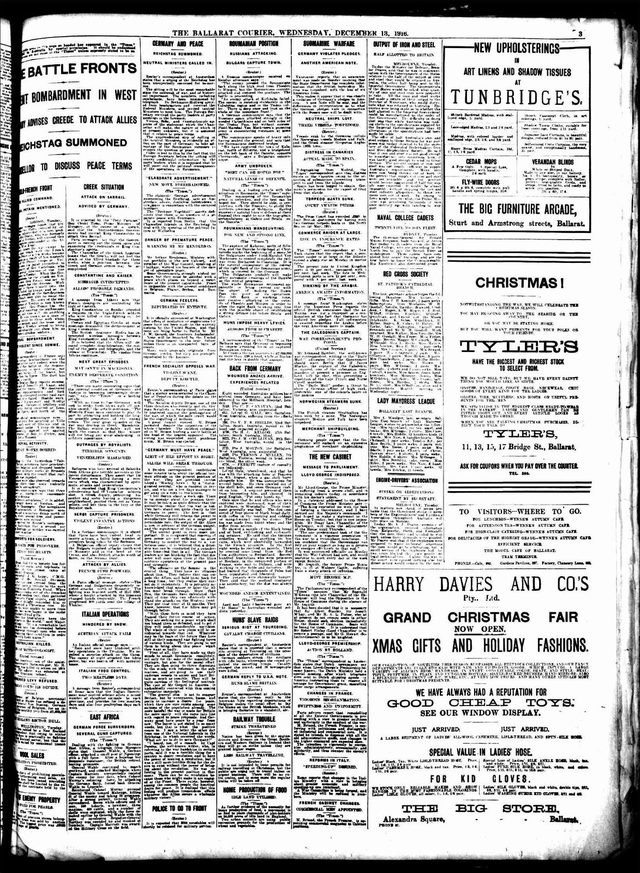
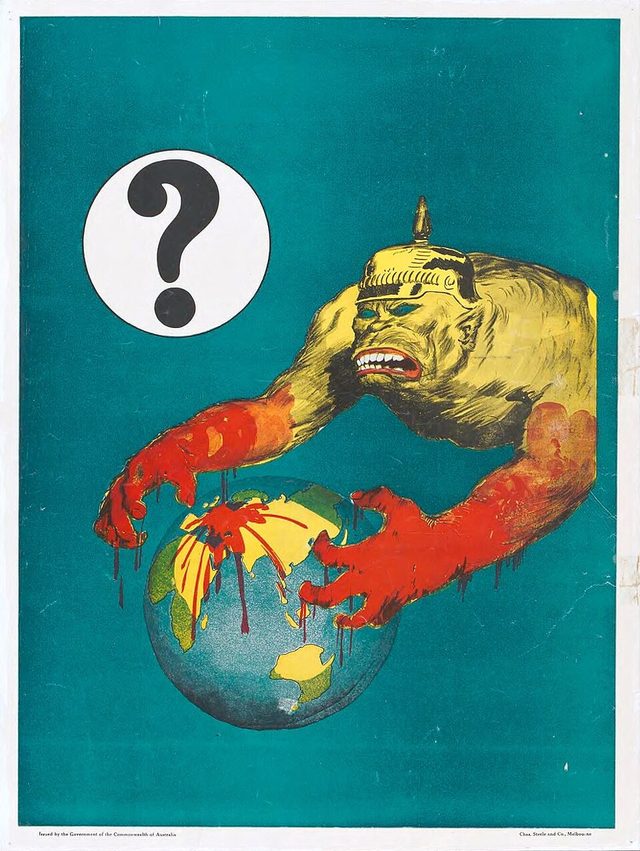
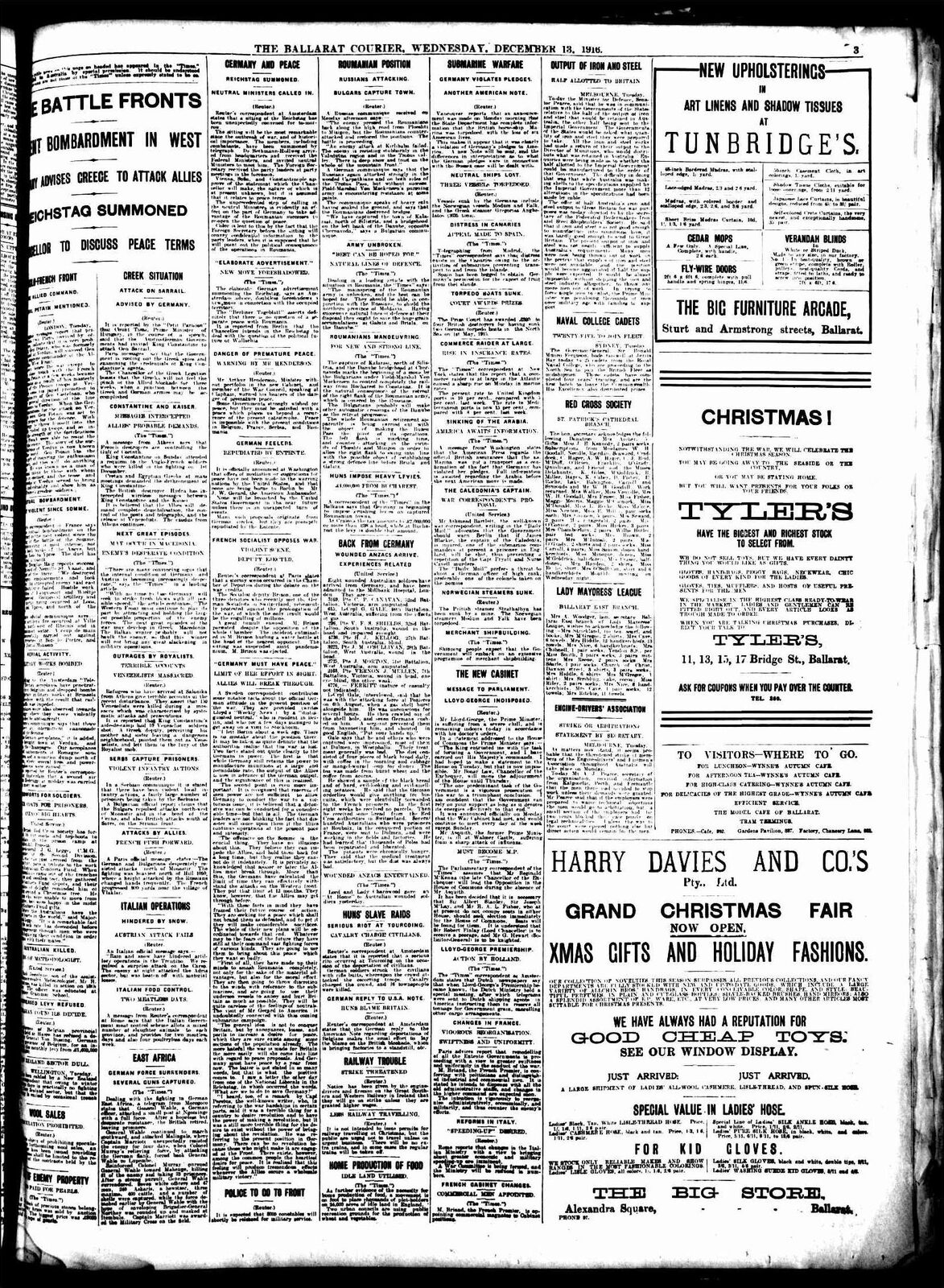
The Ballarat Courier's own headlines call Germans "Huns" over cabled Reuters and Times reports (Name-calling). The Commonwealth's last national recruiting campaign, in 1918, used six Norman Lindsay posters. One is a spiked-helmet ogre and a question mark; another asks "Will you fight now or wait for this", staging a German raid on Australian soil (Dehumanization, False dilemma).
Content note: Dehumanising caricature of Germans as a blood-covered ape-like ogre. This object is shown as it was published. Why 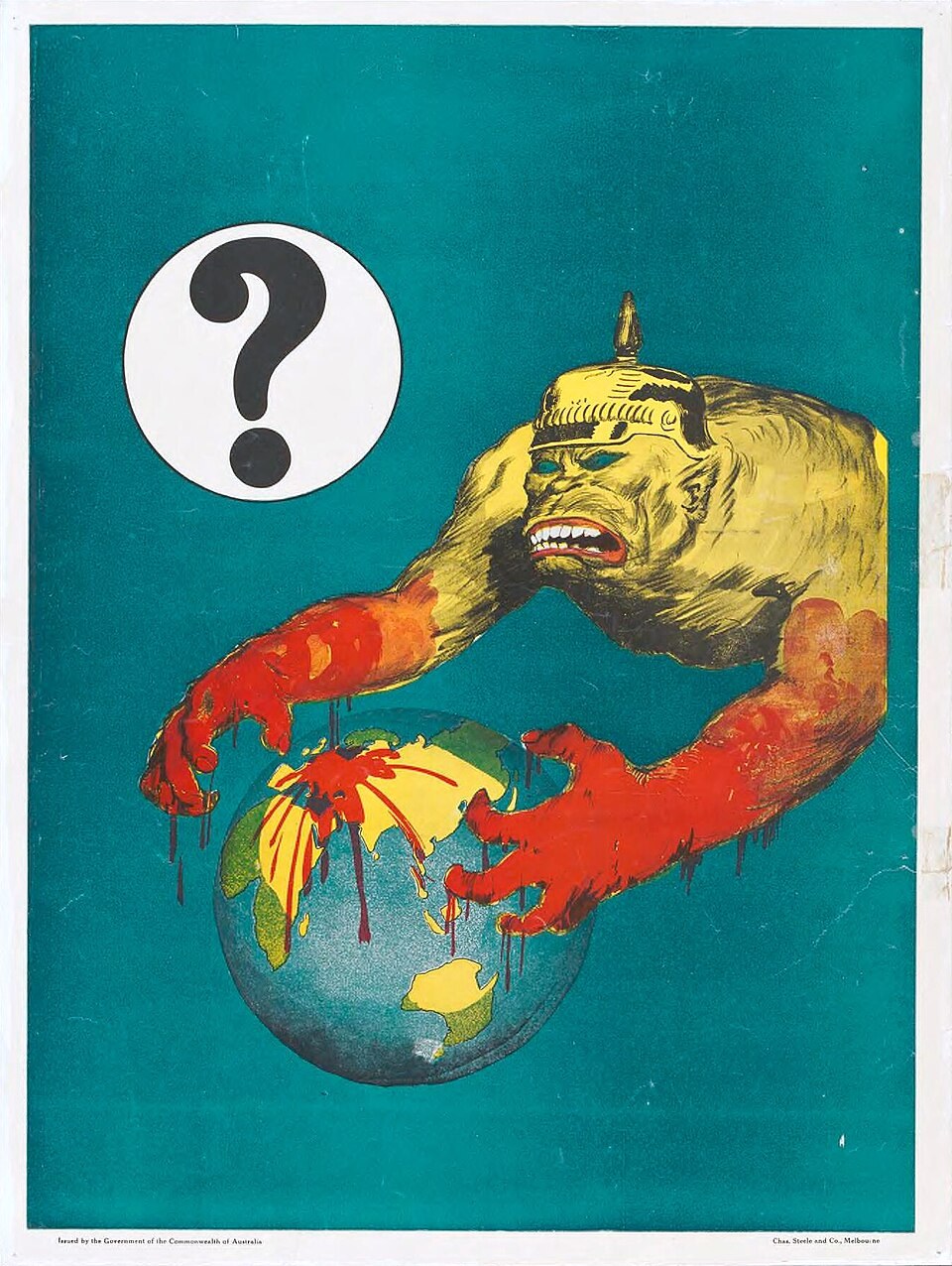
Content note: Invasion-atrocity imagery: German soldiers threatening civilians, a body on the ground and a burning building. This object is shown as it was published. Why 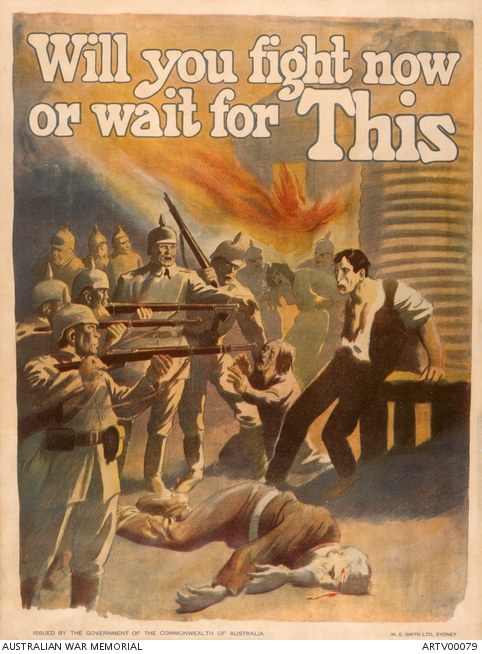
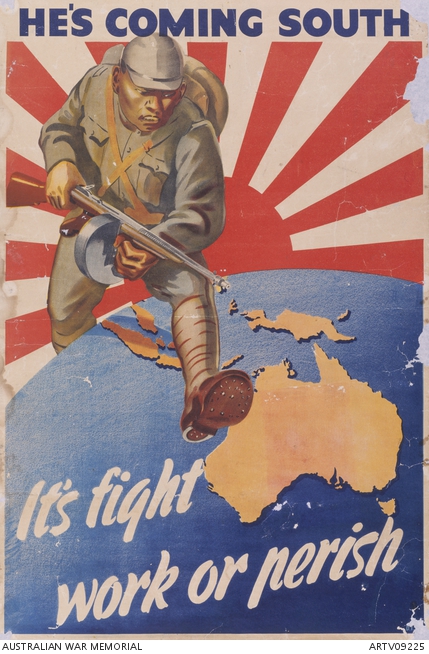
The Second World War home front
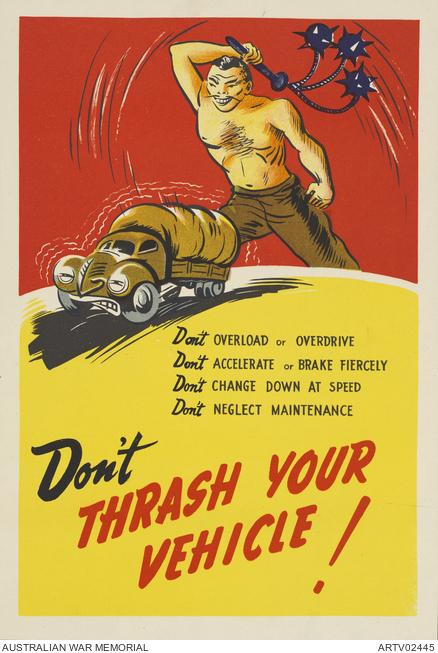
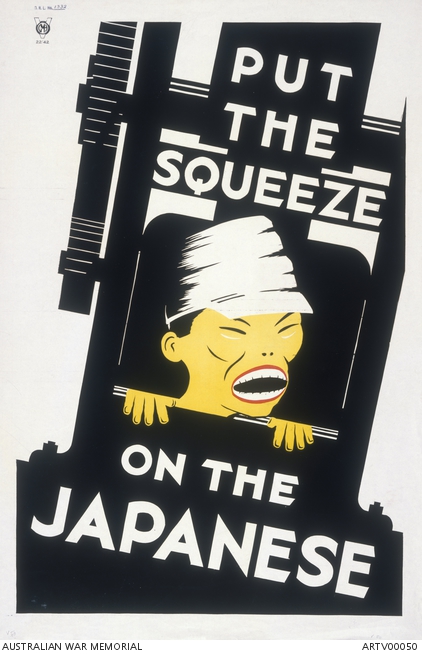
"He's coming south. It's fight, work or perish" (Fear appeal) was, by the Australian War Memorial's record, thought alarmist enough that it was not released in Queensland or Melbourne. Factories made their own: General Motors-Holden's sheets set a bowing caricature against a worker's absence and a grimacing mask in a press.
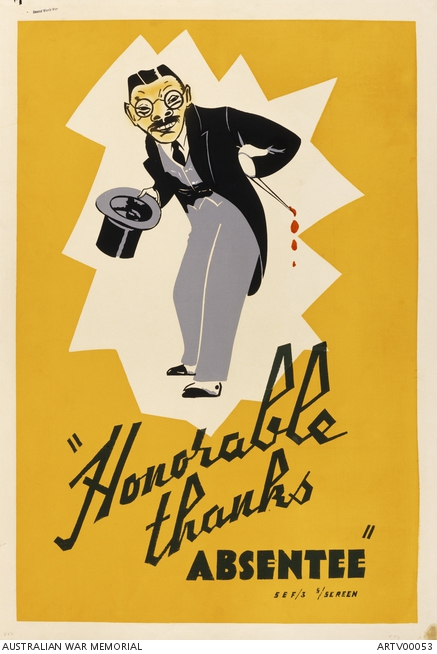
Content note: Depicts an attack on a hospital ship: a burning ship and women in the water. This object is shown as it was published. Why 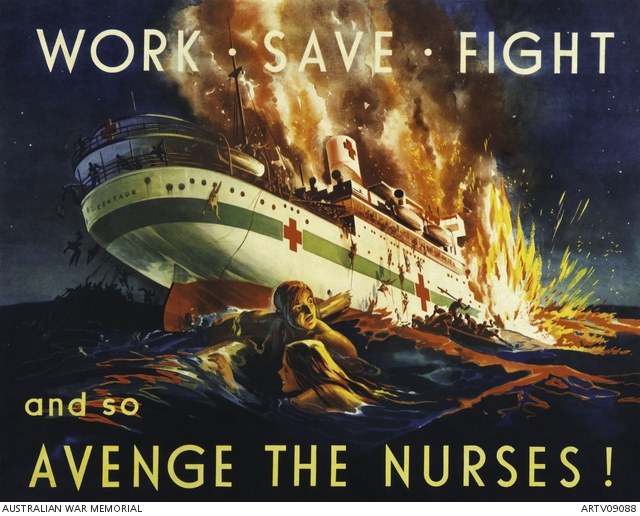
Explain moreShow less
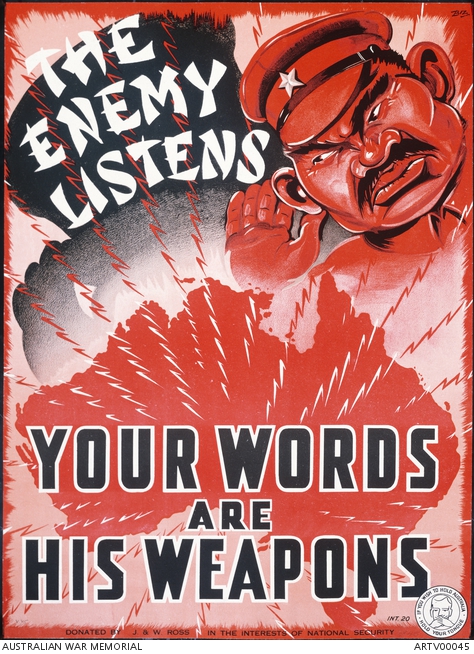
A careless-talk poster drew the same figure as a listener.
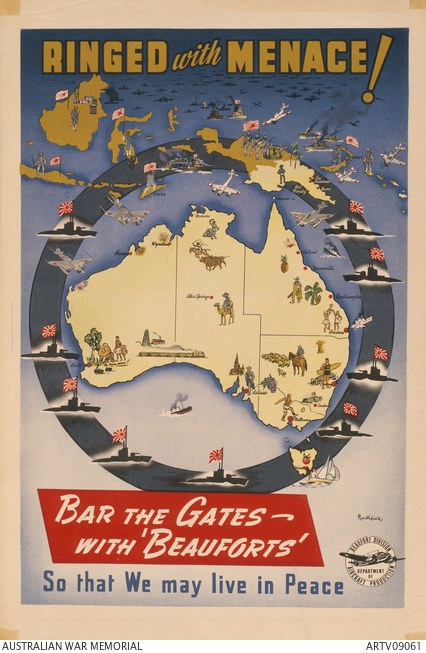
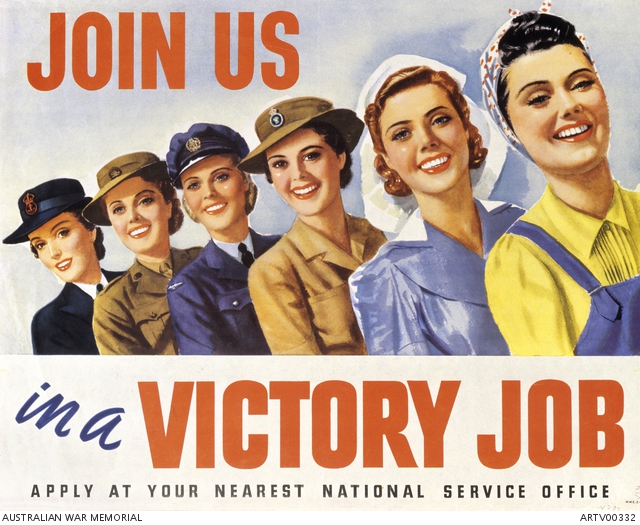
The Department of Aircraft Production's "Ringed with menace" circled a map with warships to sell Beaufort bombers, while the Centaur poster turned the 1943 sinking of a hospital ship, which killed 11 of its 12 nurses, into a call to work, save and fight (Transfer). In the other direction, "Join us in a victory job" simply lines up women in uniform (Bandwagon).
The Cold War and after
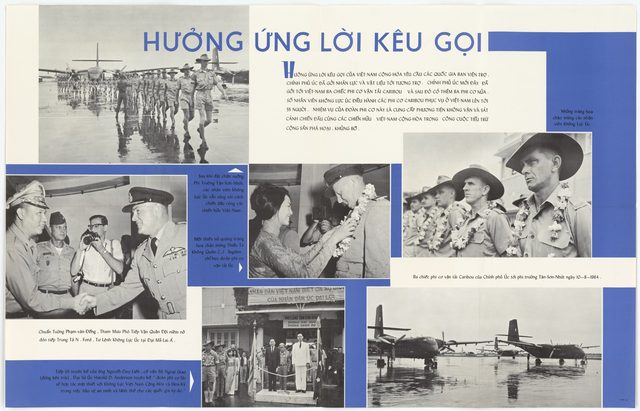
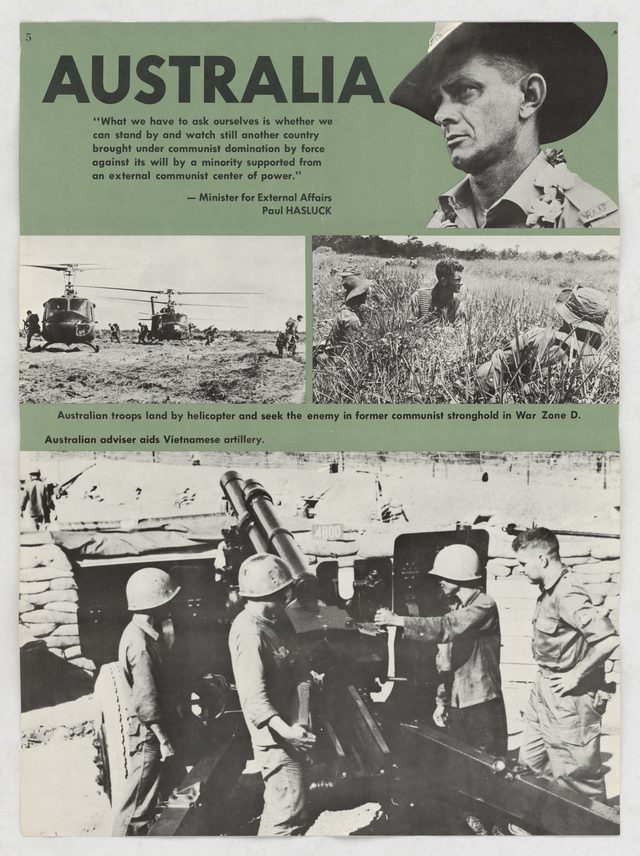
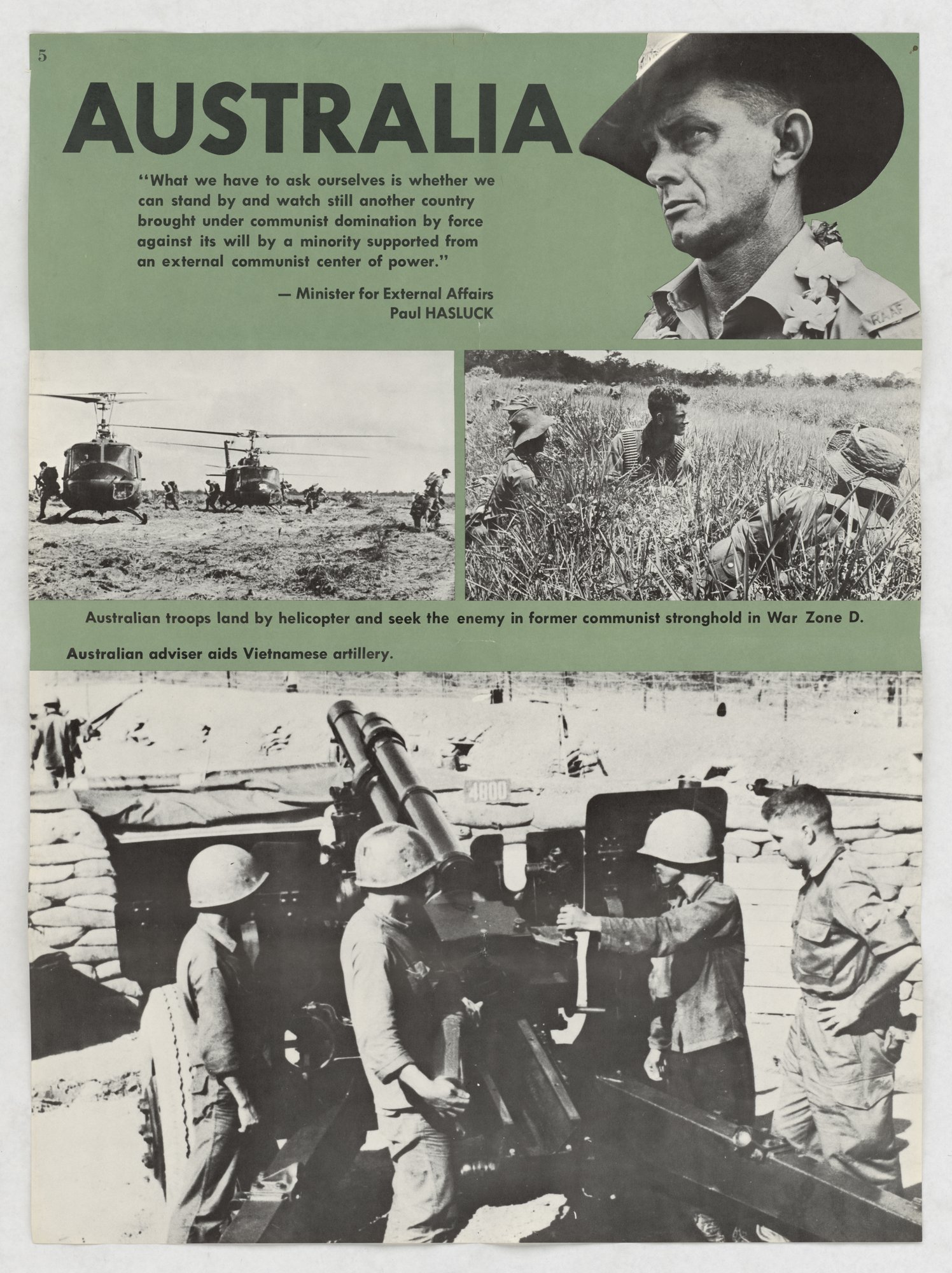
The collection's Cold War material is mostly Australian subjects shown by others. A 1964 United States Information Agency photo sheet, in Vietnamese, presents the arrival of Australian air transport crews as widening support (Bandwagon); a 1966 sheet in the same agency's "Common Struggle" series quotes Minister Paul Hasluck (Testimonial).
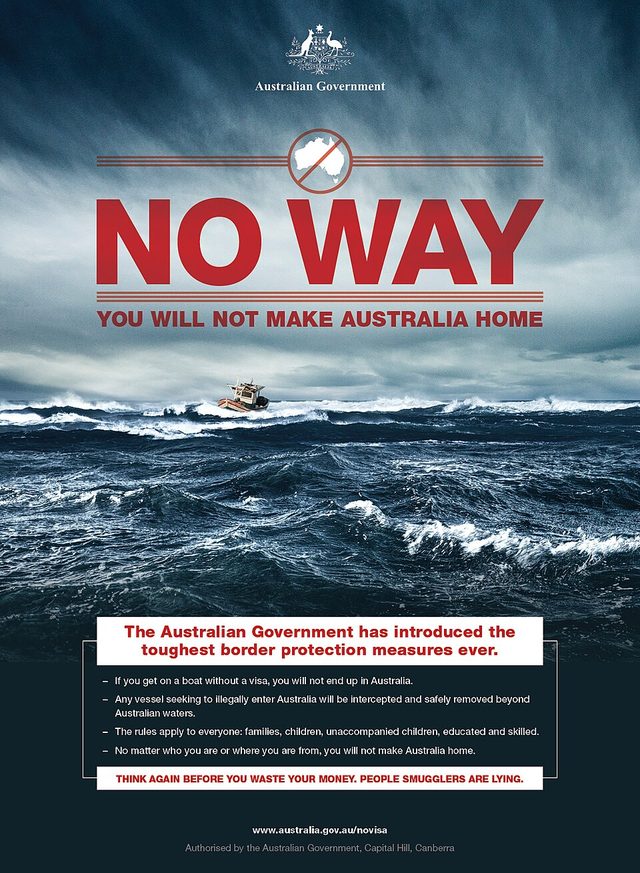
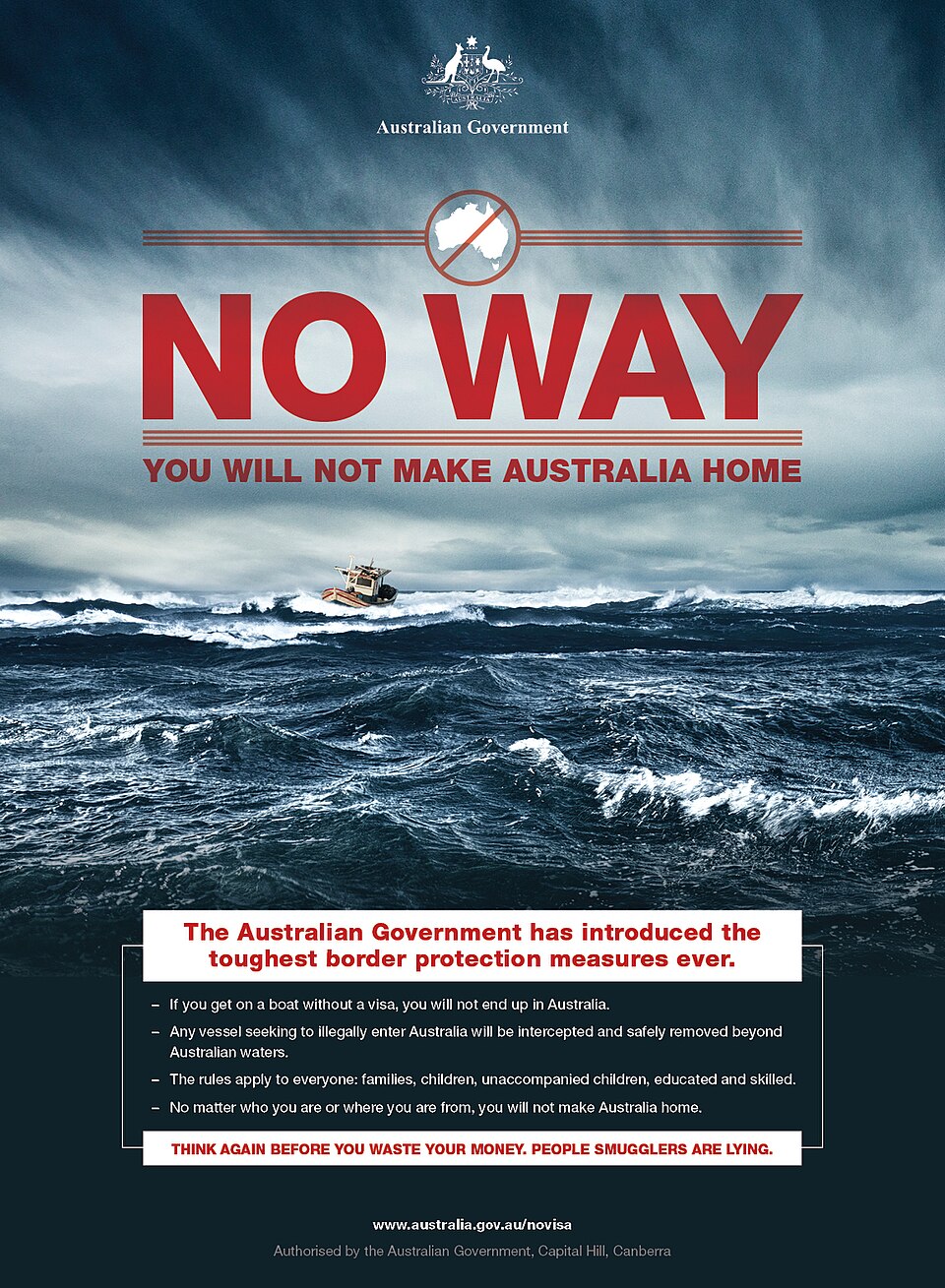
The Australian Government's own 2013 "No Way" notice for Operation Sovereign Borders uses a storm-dark sea to stage one safe course (Fear appeal).
What the collection does not hold
- Not here: the 1951 referendum on banning the Communist Party, Menzies-era Cold War posters, and Australian-made Cold War posters generally. The 1964 and 1966 Cold War sheets were issued by the United States.
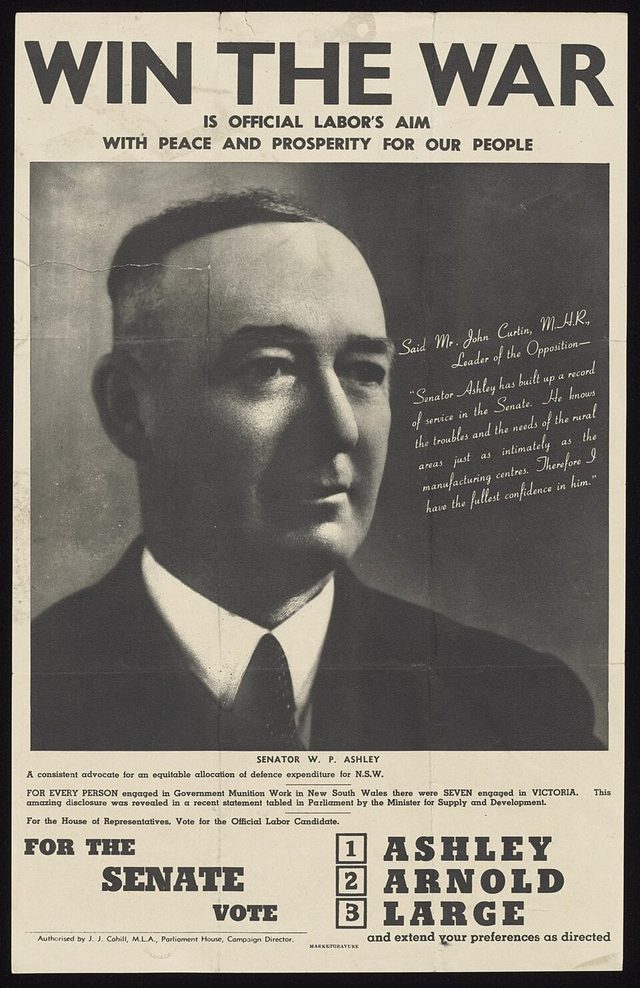
- Not here: all six of the 1918 Lindsay posters (two are held), and party election posters beyond one 1940 Labor Senate ticket.
- Not here: Aboriginal and Torres Strait Islander accounts of these campaigns, and the 1967 referendum material.
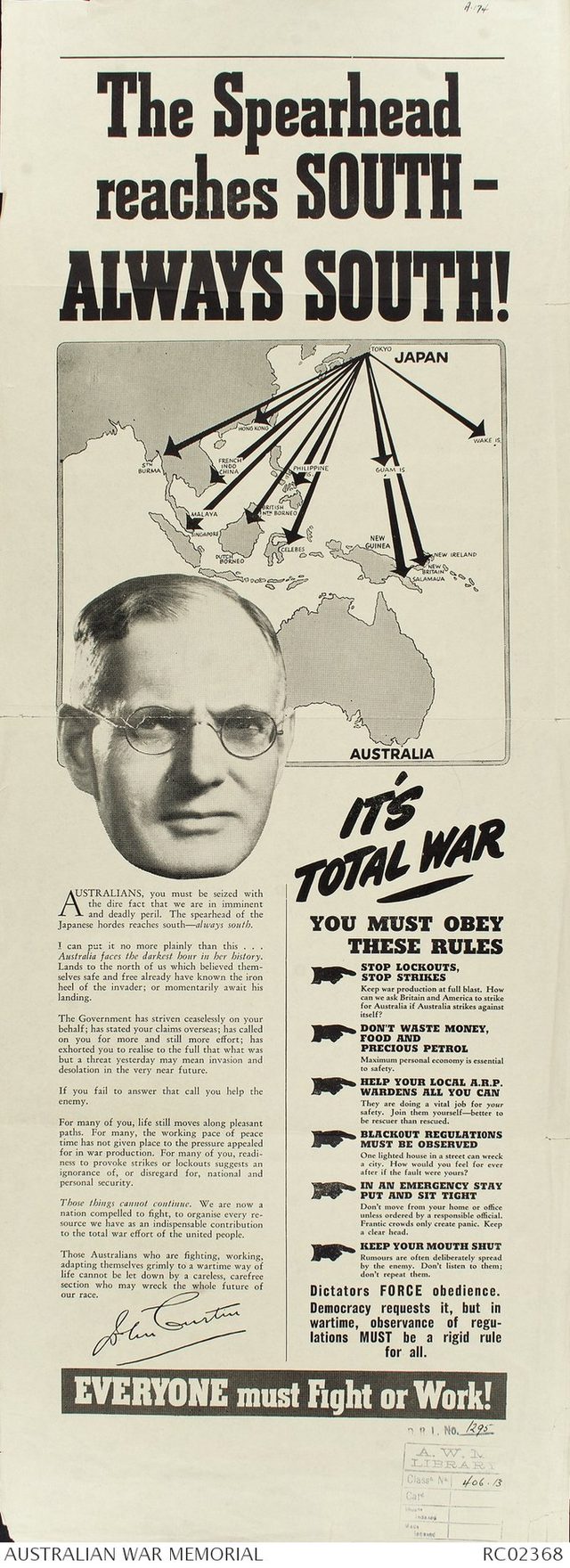
- The 1942 Curtin broadside and Australian Task Force leaflets in Vietnam are held as leaflets, not posters.
Sources and further reading
Sources
Australian War Memorial collection records (ARTV series and RC02368); Library of Congress, World War I Posters; State Library…
Australian War Memorial collection records (ARTV series and RC02368); Library of Congress, World War I Posters; State Library Victoria and State Library of New South Wales, conscription collections; National Library of Australia, Trove newspapers; National Archives (United States), Record Group 306. Each item in the grid carries its own source and rights note.