Content note. The 20 December 1989 address calls demonstrators "hooligan elements" and "terrorist gangs" and its text uses the word "fascist" for their acts, and a 1987 ballot carries a handwritten insult aimed at the head of state. They are shown and quoted as issued, as evidence of what audiences were told or what one voter wrote. Quoting a speech is not endorsing it, and nothing here is a verdict on any person or people.
What was Ceausescu's last speech?
Nicolae Ceausescu's last speech of record in this archive is his live radio and television address of the evening of 20 December 1989 on the unrest in Timisoara. The party daily Scinteia printed a headline for it on 21 December, the day he spoke to a crowd from the Central Committee balcony in Bucharest, where he was interrupted. The archive holds no transcript of the 21 December balcony speech itself.
What does the archive hold, and what does it not hold?
It holds the 20 December address as a page of the US Foreign Broadcast Information Service (FBIS) Daily Report, and the masthead and headline of Scinteia for 21 December. It holds a photograph of the balcony building as it stood in 2009. It does not hold the 21 December speech, its broadcast, or any recording of the interruption. The FBIS page of 21 December also lists a report headed "Commotion Interrupts Ceausescu Speech 21 Dec", which the entry notes but does not reproduce.
Explain moreShow less
The regime and ending pages give the account used here: Socialist Republic of Romania under Ceausescu and How Nicolae Ceausescu died. Nothing below is taken from outside those pages and the object entries. The collection holds ten Romanian objects from 1977 to 1989 (counted from the regime and leader fields of examples/entries/, plus the National Salvation Front paper of 23 December 1989). The archive has no quotes file for Ceausescu (see the quotes data), so the only words of his given here are from the FBIS transcription and from the cult objects below.
What did he say on 20 December 1989?
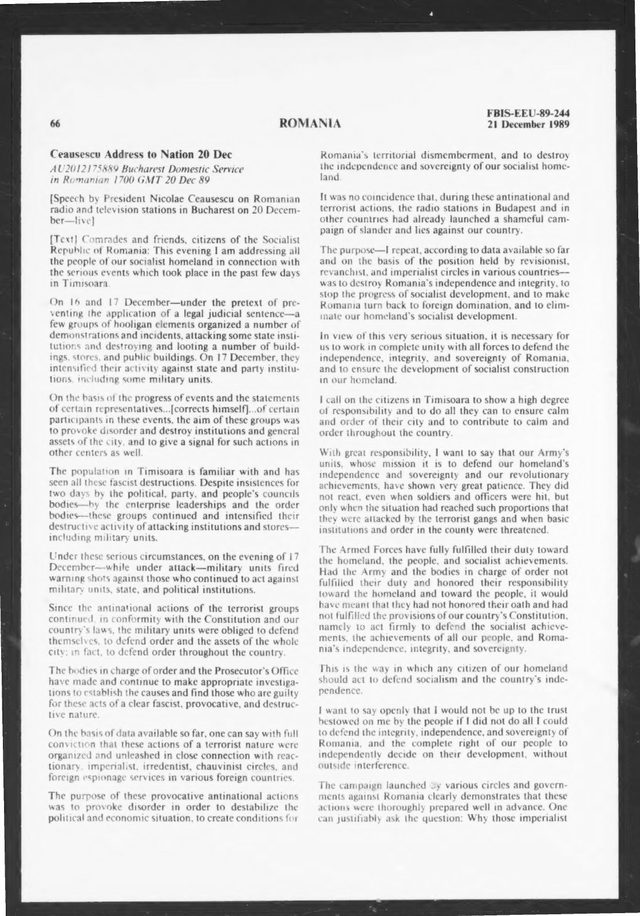
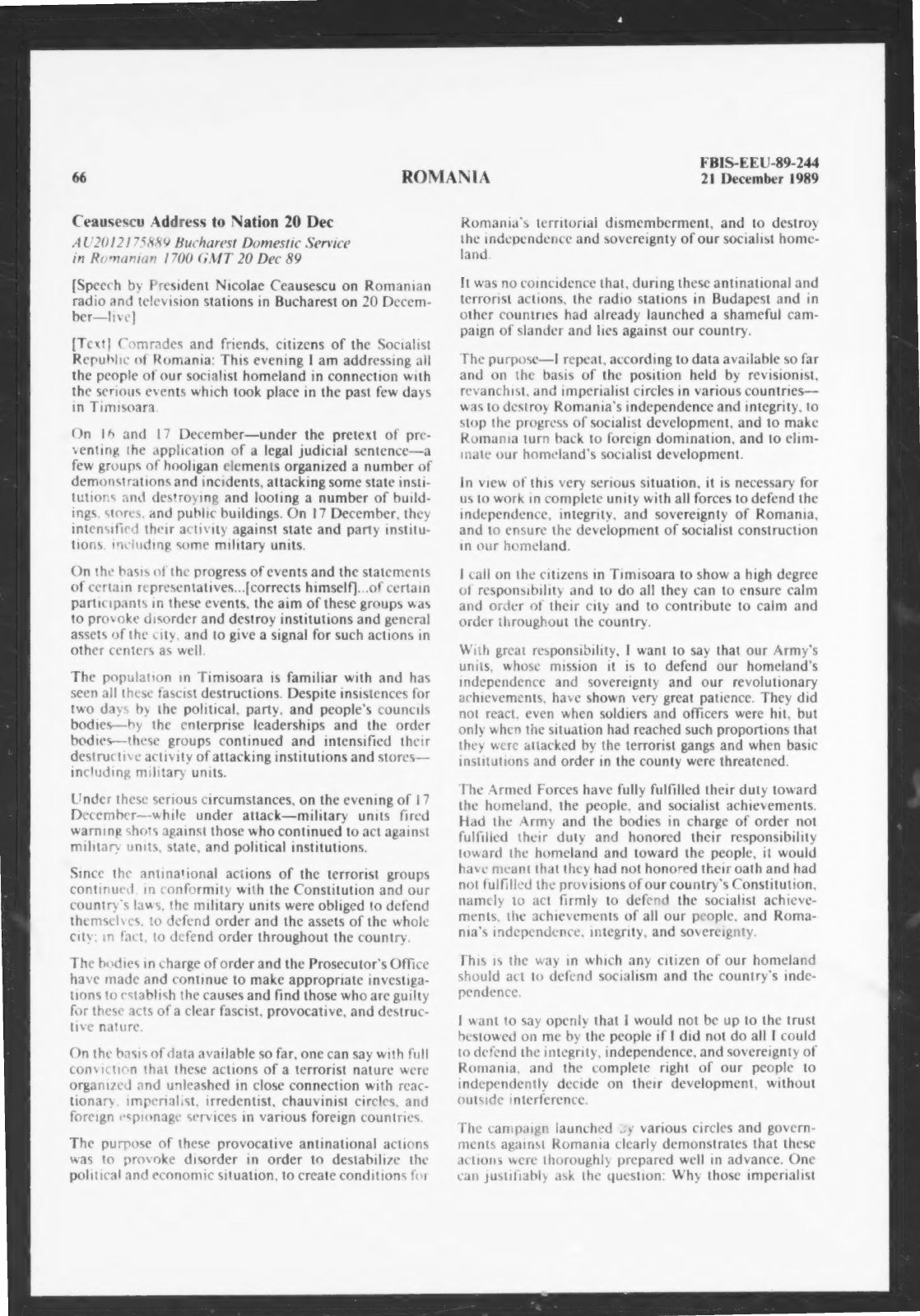
The FBIS translation of the live address opens with these words, as transcribed in the entry:
Explain moreShow less
"Comrades and friends, citizens of the Socialist Republic of Romania: This evening I am addressing all the people of our socialist homeland in connection with the serious events which took place in the past few days in Timisoara."
The entry transcribes further passages. On the origin of the unrest it reads:
"On the basis of data available so far, one can say with full conviction that these actions of a terrorist nature were organized and unleashed in close connection with reactionary, imperialist, irredentist, chauvinist circles, and foreign espionage services in various foreign countries."
And on foreign broadcasts:
"It was no coincidence that, during these antinational and terrorist actions, the radio stations in Budapest and in other countries had already launched a shameful campaign of slander and lies against our country."
(Source: FBIS-EEU-89-244, 21 December 1989, page 66, source line "AU2012175889 Bucharest Domestic Service in Romanian 1700 GMT 20 Dec 89". The English is FBIS's translation. Paragraphs omitted in the entry are marked [...] there; the page breaks off mid-sentence.)
The page is tagged name-calling, scapegoating, card-stacking, gaslighting and demagoguery in the collection. The entry's caption records that the speech describes the army's fire as "warning shots" and self-defence, and that the page carries no mention of deaths among demonstrators. The entry's context note says protests began in Timisoara on 16 December around the attempted eviction of the pastor Laszlo Tokes, that security forces fired on crowds from 17 December, and that later Romanian investigations recorded dozens of deaths there. The labels and the omission are described by the archive's definitions of name-calling, scapegoating and card-stacking. The archive does not judge the speech by the speaker's later fate.
What happened on 21 December, the balcony speech?
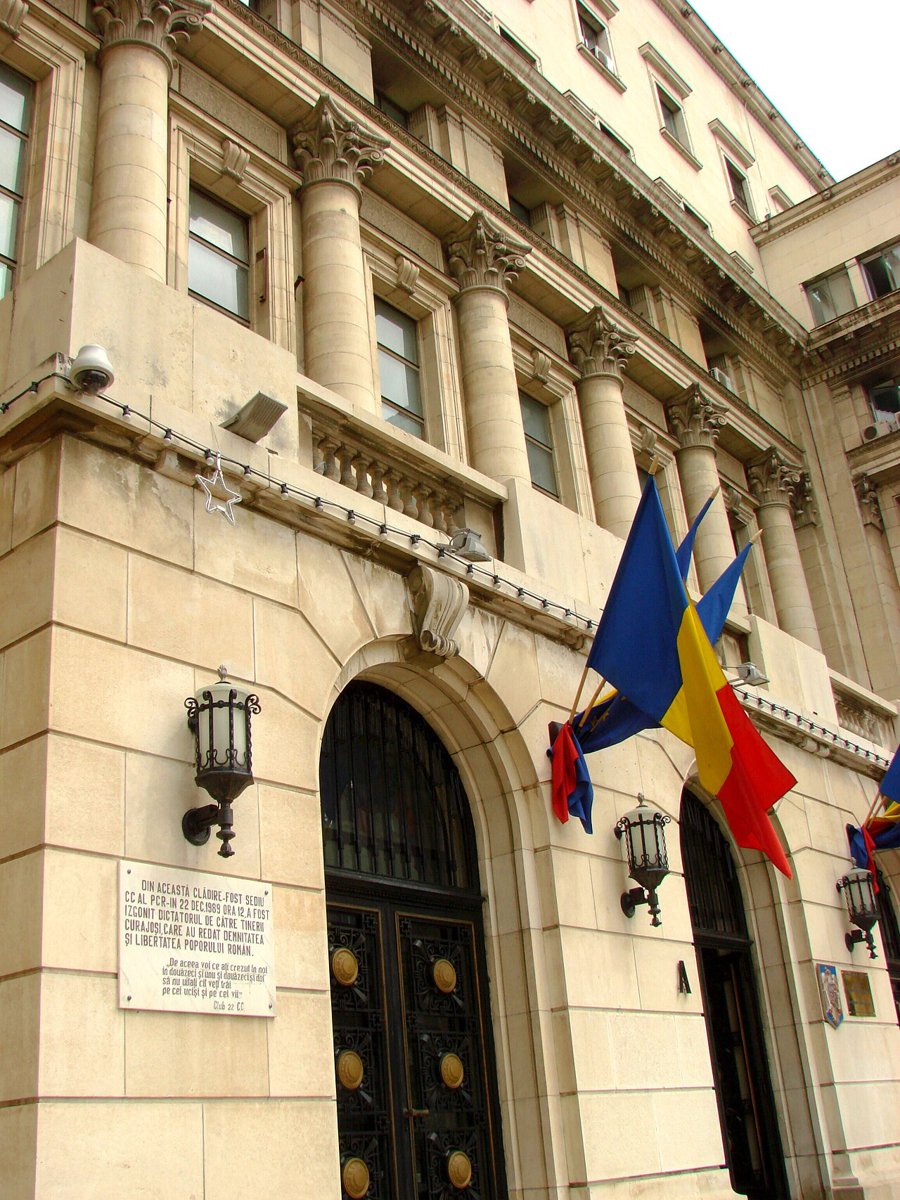
The ending page says that on 21 December he spoke from the balcony of the Central Committee building to a crowd usually estimated at around 100,000. Shouting broke out, he stopped speaking and raised his hand, and the live broadcast was interrupted. Protests spread through the capital that evening, and soldiers and security units fired on crowds.
Explain moreShow less
The photograph shows the former Central Committee building in 2009, with the balcony that Wikimedia Commons identifies as the one used on 21 December 1989, and a plaque put up after 1989. Photograph by Adam Jones, CC BY-SA 3.0. It is a later photograph of the place, not a 1989 object.
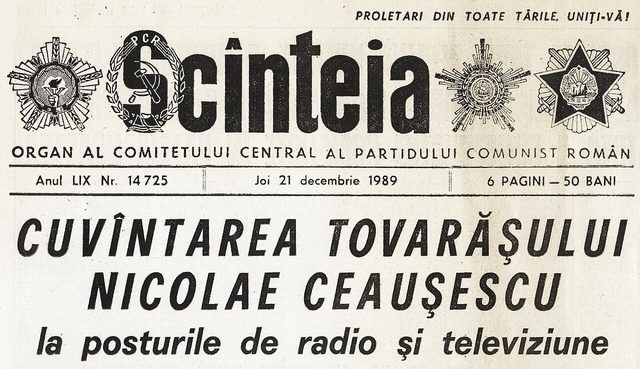
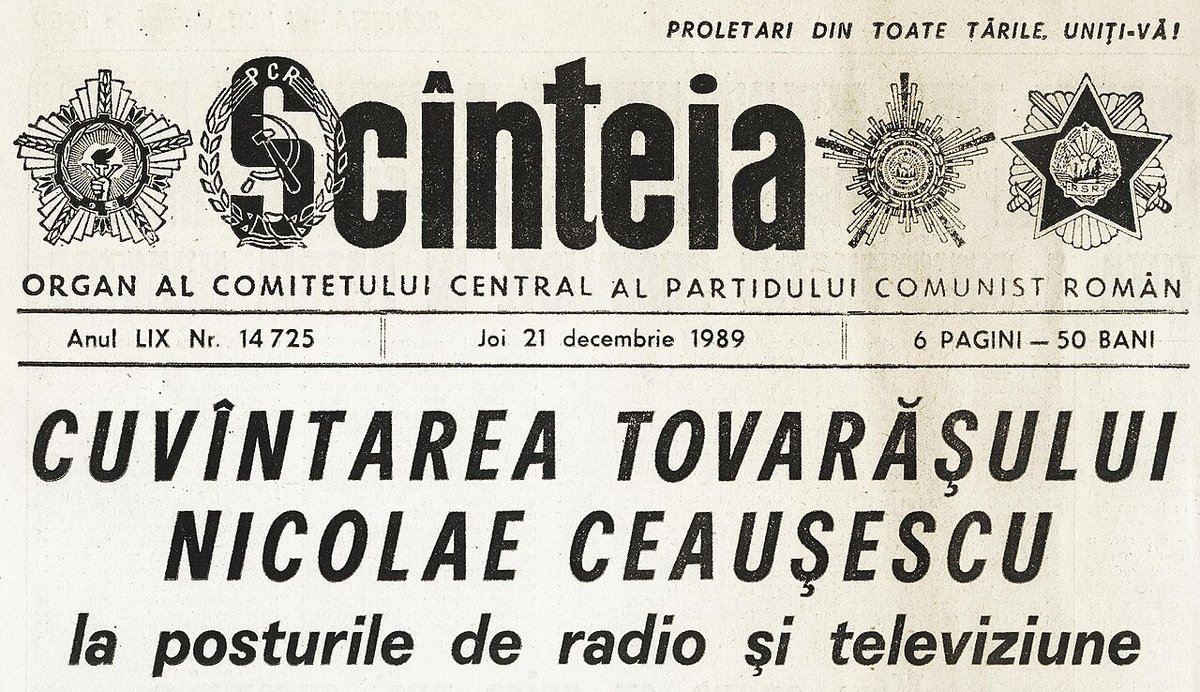
The newspaper dated that day carried the previous evening's text:
The entry transcribes the masthead. Romanian: "CUVÎNTAREA TOVARĂȘULUI NICOLAE CEAUȘESCU la posturile de radio și televiziune". Translation in the entry: "SPEECH OF COMRADE NICOLAE CEAUȘESCU on radio and television". The issue is no. 14 725, Thursday 21 December 1989, 6 pages, 50 bani, "Organ of the Central Committee of the Romanian Communist Party". The file shows only the masthead and headline, so the archive tags it with transfer from the party motto and decorations, not from the text. The translation is by machine and not verified by a fluent reader.
What happened next: flight and execution?
The ending page records that on the morning of 22 December the defence minister, General Vasile Milea, died, with the circumstances disputed, and the army was ordered back to barracks. At about midday the Ceausescus left the roof of the Central Committee building by helicopter and were detained that afternoon at Targoviste. A body calling itself the National Salvation Front, led by Ion Iliescu, had announced itself that day. On 25 December an extraordinary military tribunal sat at Targoviste, sentenced them to death and they were shot the same afternoon. The legality and quality of the proceeding are disputed, and the page lays out the criticisms; the ending page does not dispute that he was killed. Its sources are listed on that page.
Explain moreShow less
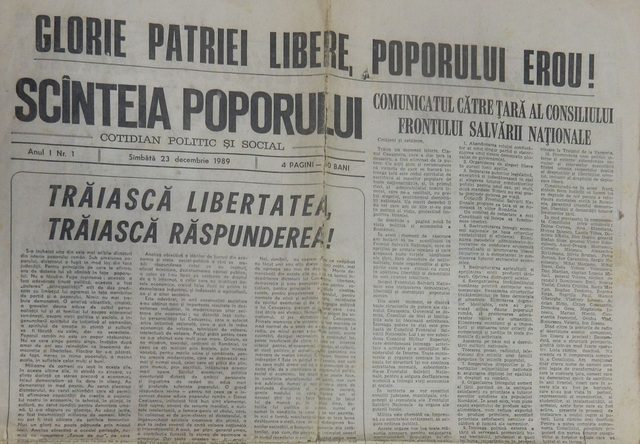
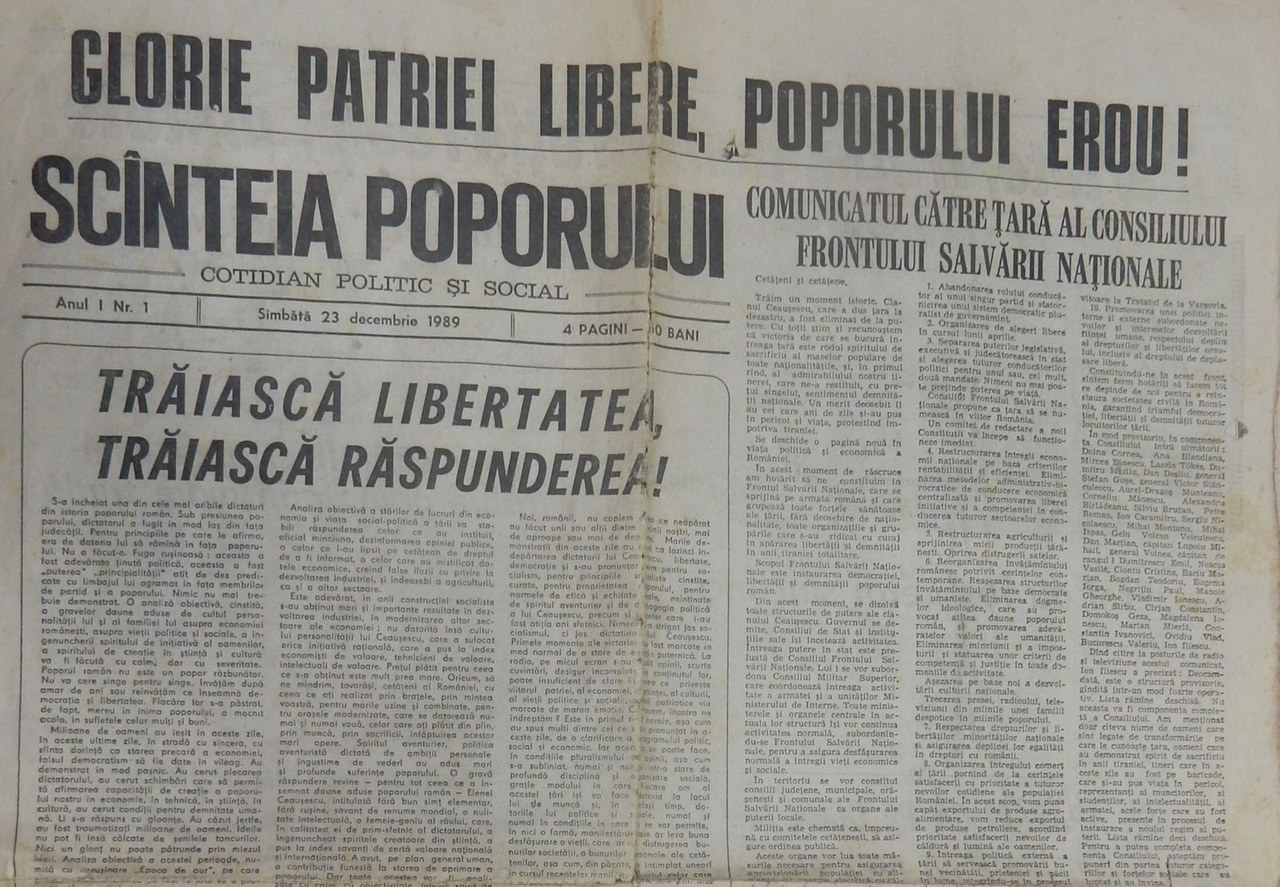
The new authority's first paper appeared on 23 December:
"Scînteia Poporului" ("The People's Spark"), Year I no. 1, Saturday 23 December 1989, 4 pages, 50 bani. Headline: "GLORIE PATRIEI LIBERE, POPORULUI EROU!" ("Glory to the free fatherland, to the heroic people!"), and "TRĂIASCĂ LIBERTATEA, TRĂIASCĂ RĂSPUNDEREA!" ("Long live freedom, long live responsibility!"). The communiqué of the Council of the National Salvation Front begins: "Trăim un moment istoric. Clanul Ceaușescu, care a dus țara la dezastru, a fost eliminat de la putere." (entry translation: "We are living a historic moment. The Ceaușescu clan, which led the country to disaster, has been removed from power."). Its point 2 promises "Organizarea de alegeri libere în cursul lunii aprilie" ("Organising free elections in the course of April"). The entry notes that the elections were in fact held on 20 May 1990. The archive tags the page glittering generalities, applying the same definition it applies to the regime's own front pages. Both are state or party messaging at a moment of change, and the same tests are used on each.
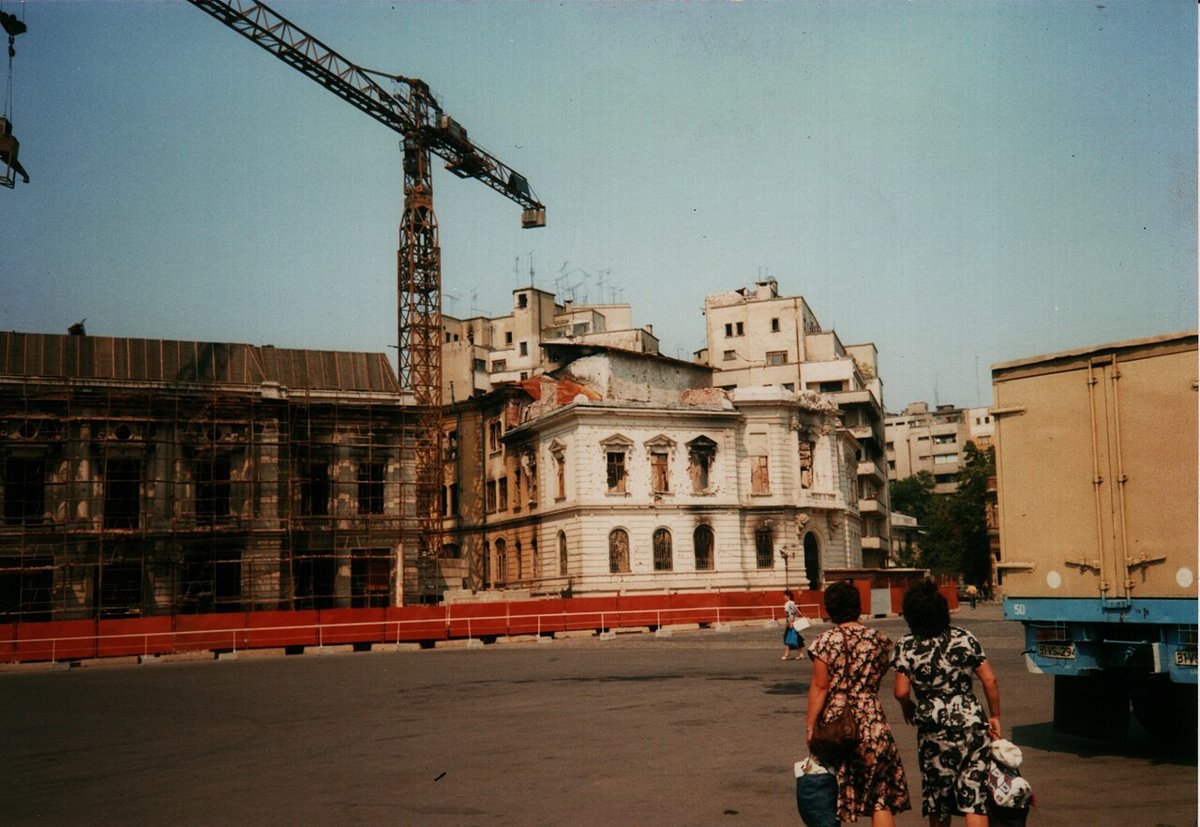
The north side of Revolution Square (formerly Palace Square) in July 1990, with buildings under repair after the fire and gunfire of December 1989. Photograph by Lklundin, CC BY-SA 4.0. The ending page cites 1,142 deaths in the uprising from a 2019 commemoration and 862 in the period after the couple left power from the 2019 charges, and notes that counts differ by source.
What did the speeches follow? The leader-centred cult
The Library of Congress study cited on the regime page reports the cult at "epic dimensions" by the mid-1980s. The objects show how the message was staged before 1989.
Explain moreShow less
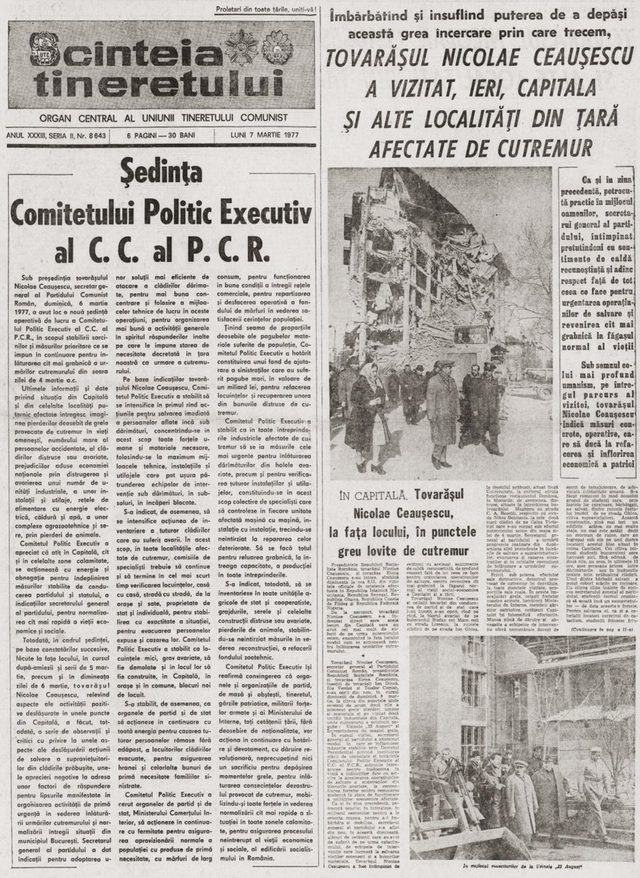
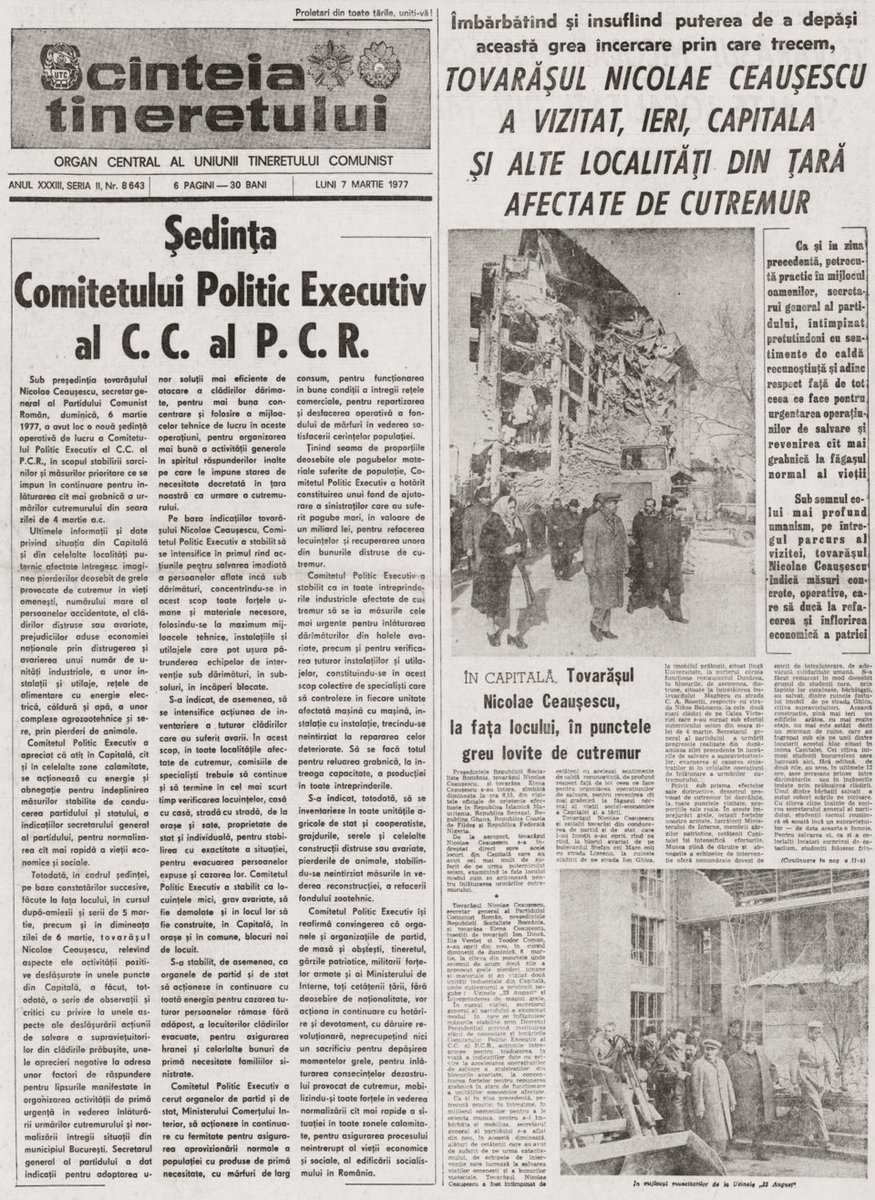
Three days after the earthquake of 4 March 1977, the youth daily Scinteia Tineretului made the leader's visits its lead: "TOVARĂȘUL NICOLAE CEAUȘESCU A VIZITAT, IERI, CAPITALA ȘI ALTE LOCALITĂȚI DIN ȚARĂ AFECTATE DE CUTREMUR" ("Comrade Nicolae Ceaușescu yesterday visited the Capital and other localities affected by the earthquake"). Tagged glittering generalities for the wording "the most profound humanism". The entry does not assess the scale of the disaster or the relief.
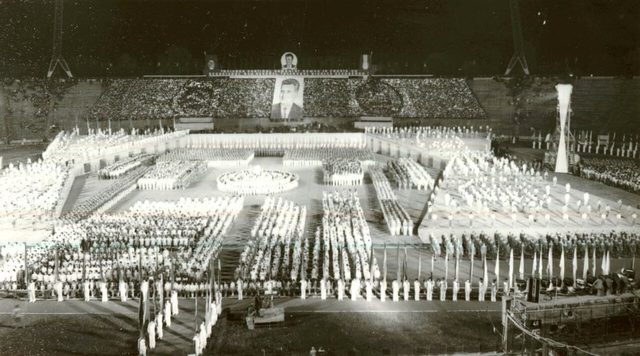
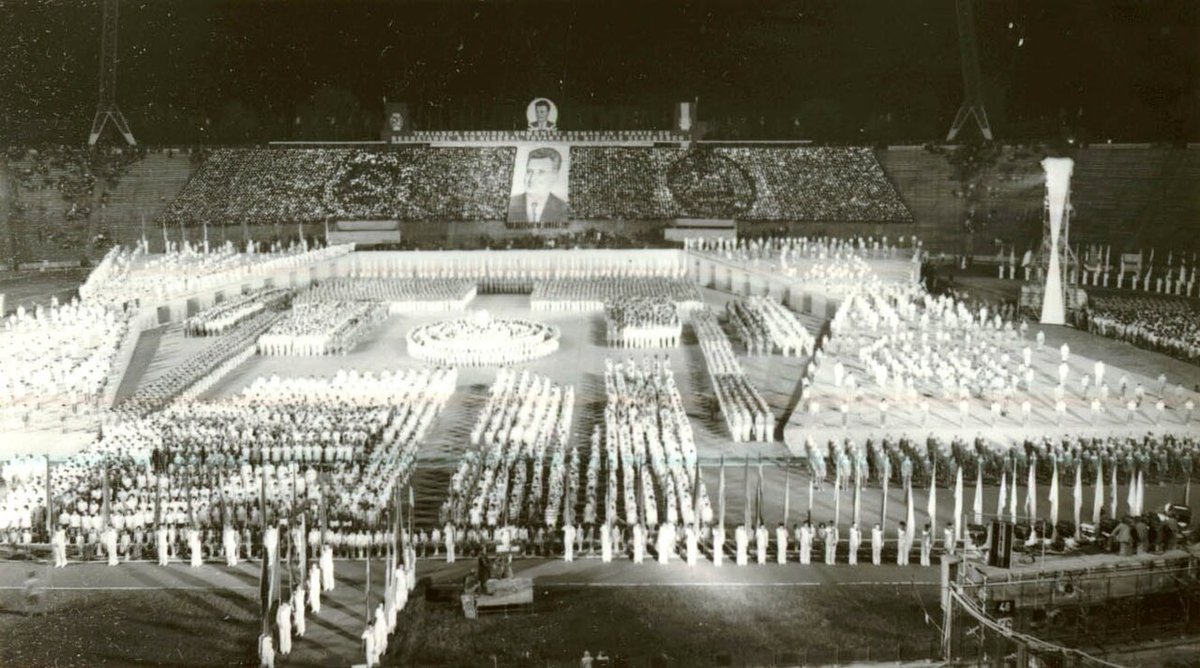
The Daciada show at the "23 August" Stadium, Bucharest, 23 September 1978: thousands of performers in white, and above a packed stand a very large portrait of Ceaușescu. No legible text. Tagged bandwagon and transfer. Romanian National Archives photograph, hosted under that archive's reuse terms.
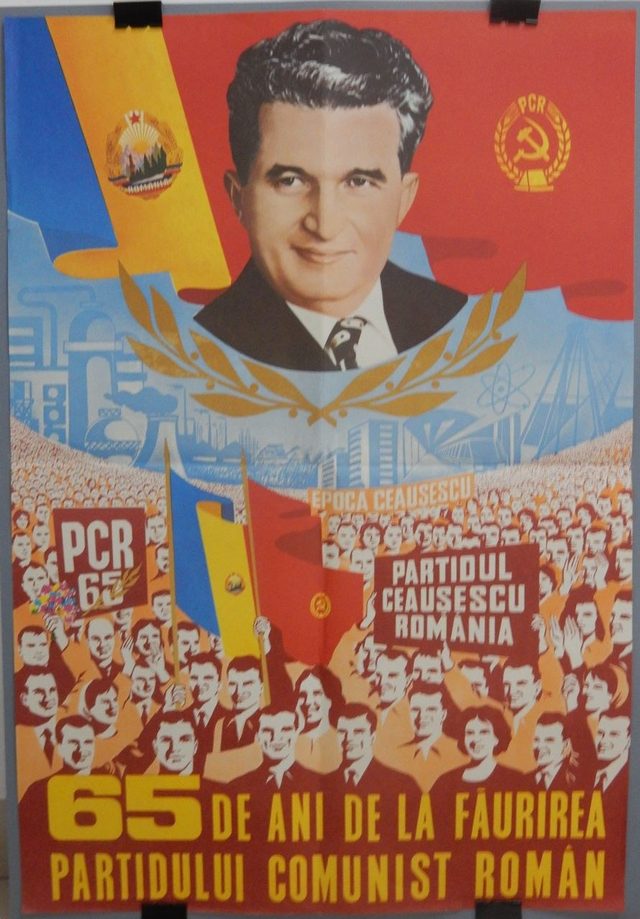
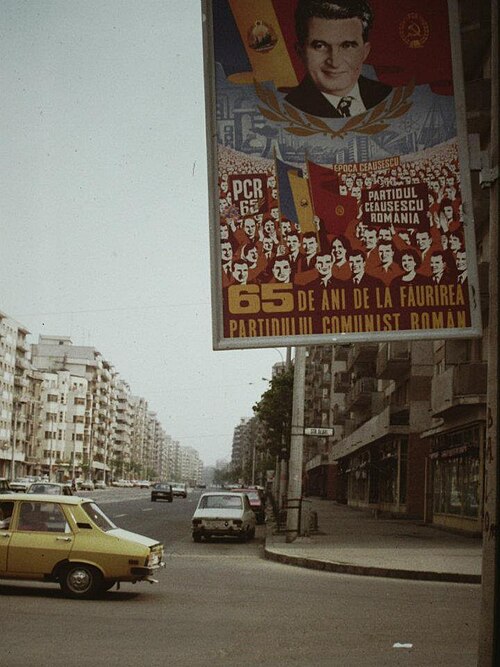
A billboard on the Calea Moșilor axis, photographed around 1 May 1986. Text: "EPOCA CEAUSESCU", "PARTIDUL CEAUSESCU ROMANIA", "PCR 65", "65 DE ANI DE LA FAURIREA PARTIDULUI COMUNIST ROMÂN" ("65 years since the forging (founding) of the Romanian Communist Party"). Photograph by Scott Edelman of the US State Department, no copyright claimed. Tagged transfer: the party's 1921 founding is staged as the leader's own.
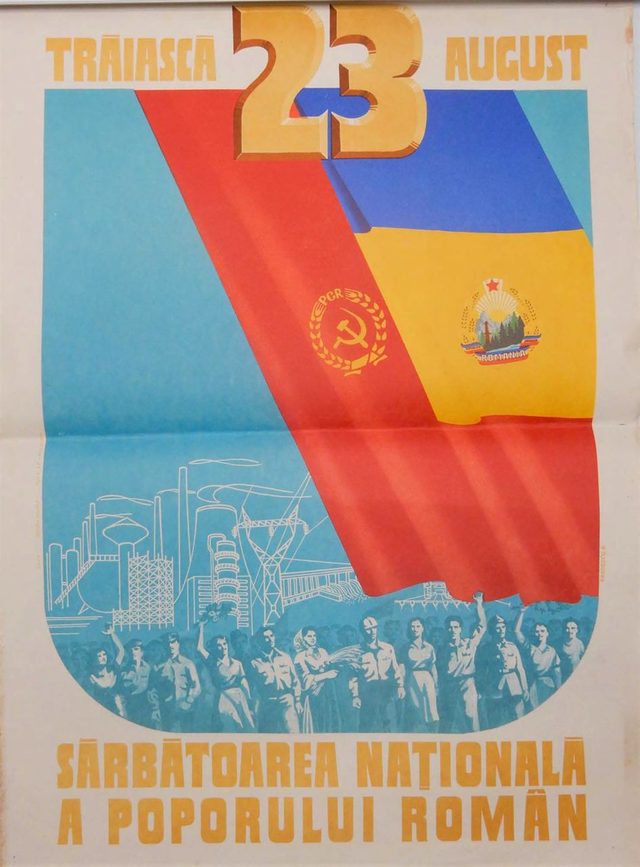
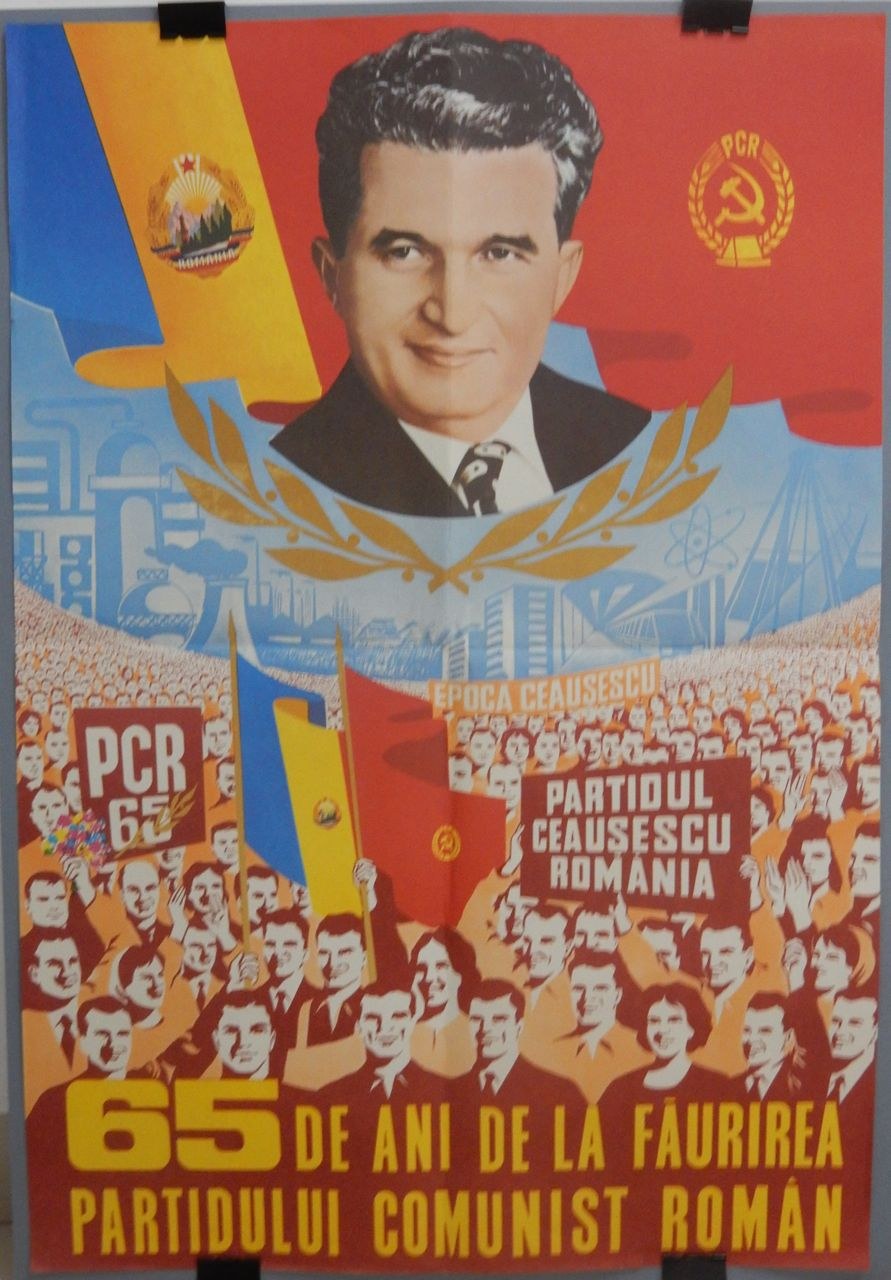
The printed poster of the same design, from the special collections of the Octavian Goga Cluj County Library, described by the contributor as an anonymous standardised sheet. Tagged transfer.
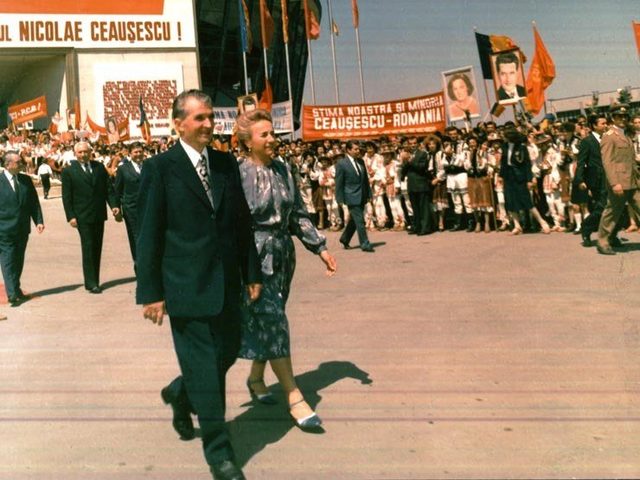
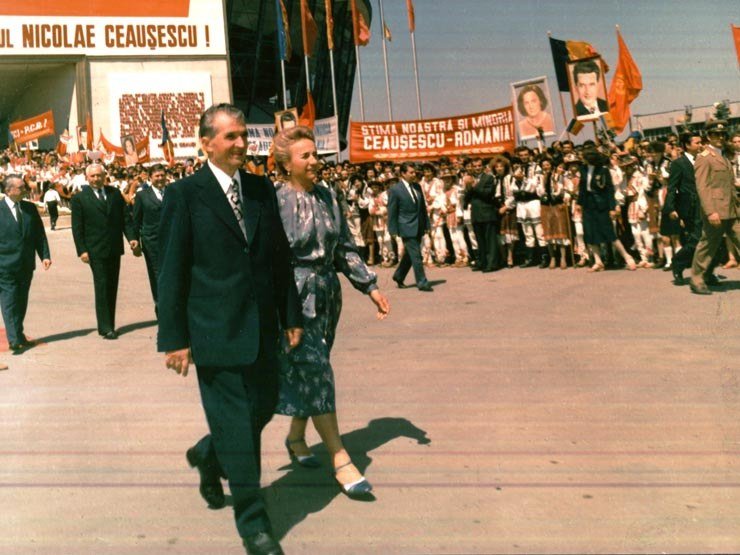
The couple walk before a crowd holding orange banners and framed portraits; one banner reads "STIMA NOASTRĂ ȘI MÎNDRIA CEAUȘESCU - ROMÂNIA" ("Our esteem and pride Ceaușescu - Romania"). The entry notes the first word may be misread. Tagged transfer, bandwagon and cult of personality. Commons gives no place or occasion, and neither does the entry.
How was the single-list system presented, and how did one voter answer?
The 1985 wall chart puts "Partidul Comunist Român" at the hub of a wheel of 33 organisations and calls the Front "cel mai larg organism politic, patriotic, revolutionar și reprezentativ" ("the broadest political, patriotic, revolutionary and representative body"). Under the quotation from Ceaușescu the Front works "sub conducerea partidului" ("under the leadership of the party"). Tagged semantic hijack and glittering generalities. The regime page says elections to the Great National Assembly were held on single lists put forward by the Front.
Explain moreShow less
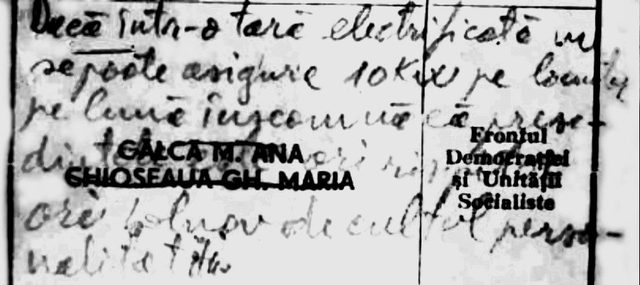
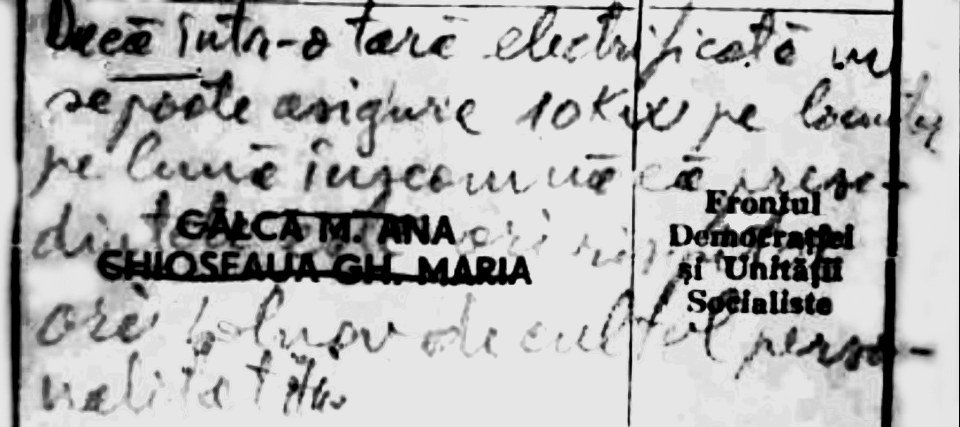
A ballot from Tulcea County, 17 November 1987, with both printed names struck through. The handwriting reads: "Dacă într-o țară electrificată nu se poate asigura 10 kilowați pe locuitor pe lună înseamnă că președintele ori e [illegible], ori e bolnav de cultul personalității." (entry translation: "If in an electrified country 10 kilowatts per inhabitant per month cannot be ensured, it means that the president is either [illegible], or sick with the cult of personality."). The entry says it is a record of dissent inside the staged form, not regime propaganda, that the image is a low-resolution reproduction from a 2016 newspaper article, and that its authenticity rests on that publication. It is tagged name-calling for the insult directed at the head of state.
How do these items compare with other leader cults?
Cult-of-personality objects from other states are on the cult of personality page, and the same definitions are applied to each: portraits, honorifics, the fusing of leader with party and country. Scale, intent and context differ from case to case. The regime page also records that Romania broke with Moscow on some foreign-policy questions while keeping a domestic system of censorship and a large secret police. For the communist-state context see communist propaganda; for radio and broadcasting in the same decade see cold war radio propaganda; for another end of a communist information system see glasnost and the end of Soviet information control.
Browse Ceausescu-era objects
The grid below shows the Romanian objects in the collection. Each opens an object page with the holding institution, a link to the original record, a transcription of any text and the rights basis for hosting. Related pages: Socialist Republic of Romania under Ceausescu, How Nicolae Ceausescu died, communist propaganda, Stalin propaganda and how to analyse propaganda.
Sources and further reading
Sources and rights
Objects come from the Internet Archive (US FBIS collection, public domain as a US government work), Wikimedia Commons (including…
Objects come from the Internet Archive (US FBIS collection, public domain as a US government work), Wikimedia Commons (including the Romanian National Archives photo collection and the Library of Congress country study), the Europeana 1989 collection (Octavian Goga Cluj County Library, CC BY-SA) and the two Commons photographs from 2009 and 1990 credited above. Each object page gives its own rights basis. Transcriptions are verbatim, and translations marked as machine translation are not verified by a fluent reader. The account of the events comes from the regime and ending pages, whose sources include the Library of Congress country study, Helsinki Watch (1990), Radio Free Europe and the FBIS translation of the trial transcript.