What were Cultural Revolution posters?
Cultural Revolution posters were the printed and woven sheets that the People's Republic of China displayed during the campaign launched in 1966 and ended after Mao Zedong's death in 1976. They carried Party slogans, portraits of Mao, model workers and soldiers, and denunciations of named enemies. The collection holds thirteen Mao-era examples, 1958 to 1977, and none is a Red Guard handbill.
Before 1966: campaign posters
The Cultural Revolution is dated from 1966, when the Party leadership issued its first notices calling for a campaign against "bourgeois" influence in culture and in the Party. Posters from the years just before show the visual habits it inherited: bold flat colour, workers and soldiers as heroes, and a slogan in large characters. The collection's examples are catalogued by museums and Wikimedia Commons, and the issuing body is often not named on the sheet itself.
Explain moreShow less
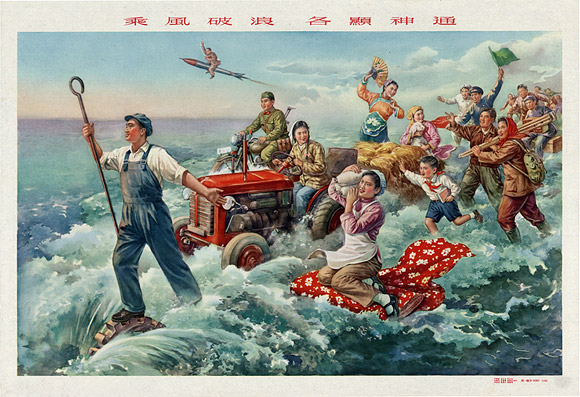
Mao-era posters did not begin with the Cultural Revolution. The Great Leap Forward poster of 1958 shows workers in a rush of steel and construction under a slogan about each showing their powers, and the tags are Bandwagon and Transfer. The collection records Shanghai poster artists; no issuing body is named.
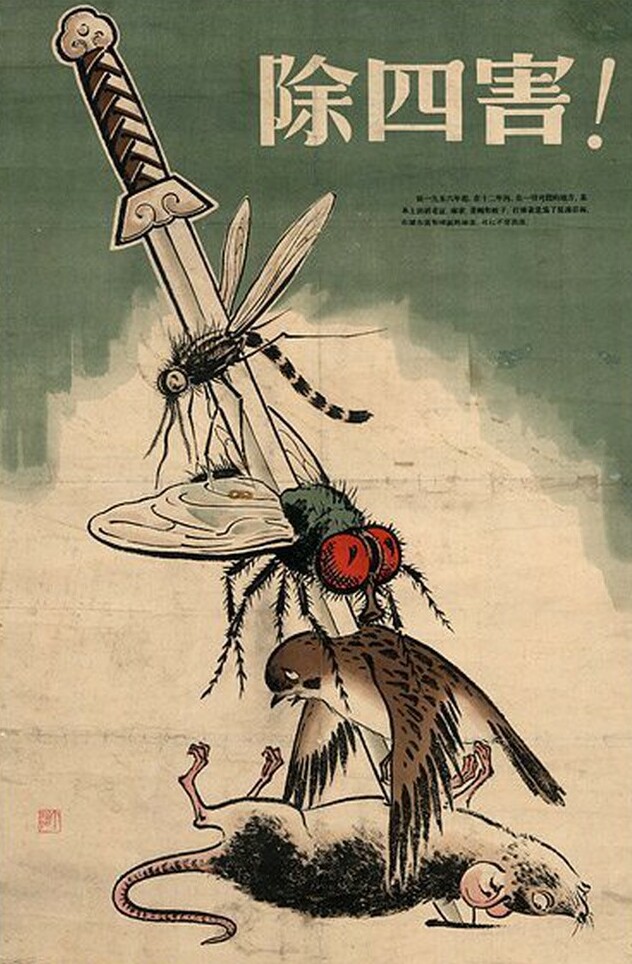
The same year's campaign against the four pests (rats, sparrows, flies and mosquitoes) used a label for the animals and a warning about disease, tagged Name-calling and Fear appeal. Commons credits "China Government"; the poster names no issuer.
1966: the Chairman at the centre
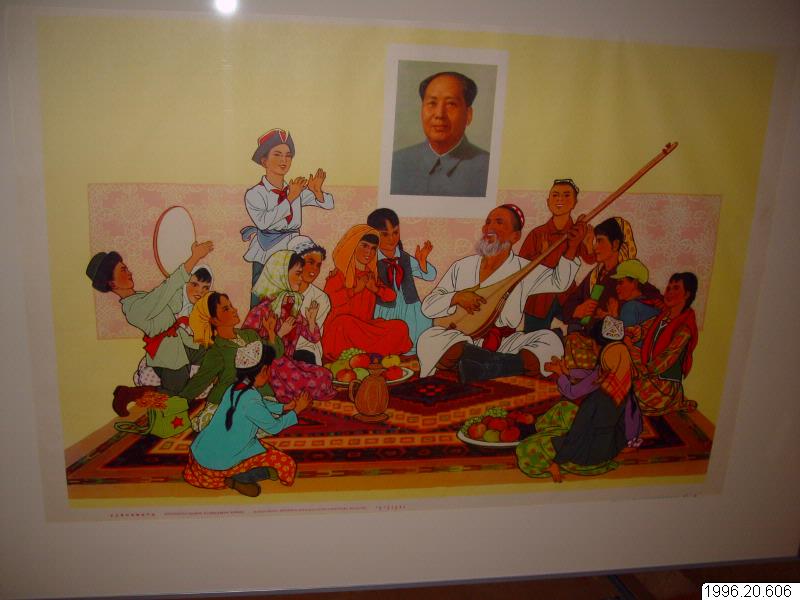
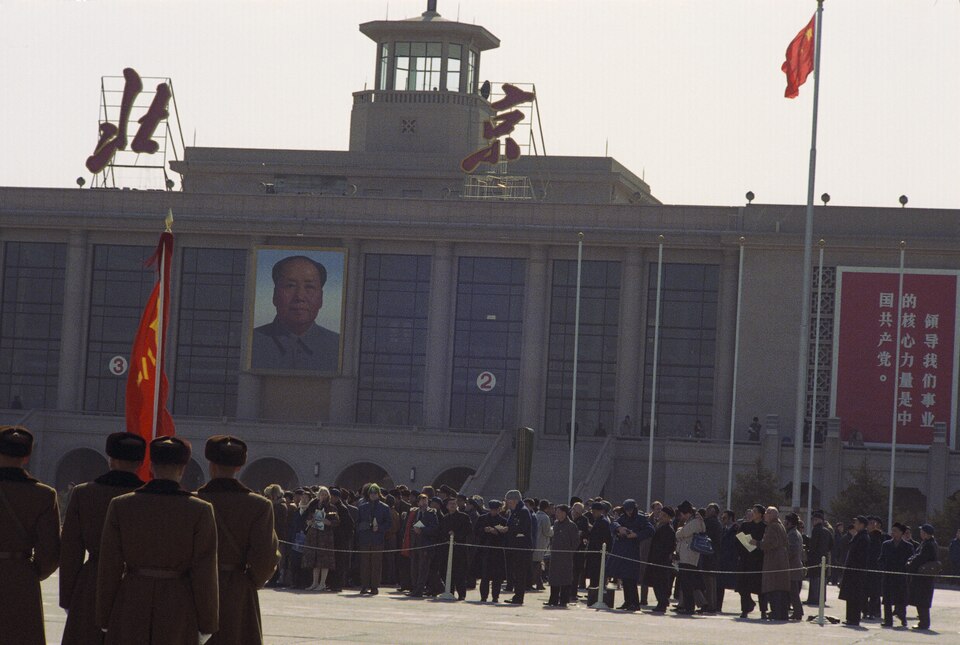
At the height of the campaign, images of Mao were shown as the source of the movement's authority. The two sheets below are the clearest examples in the collection, and both are tagged for the same technique.
Explain moreShow less
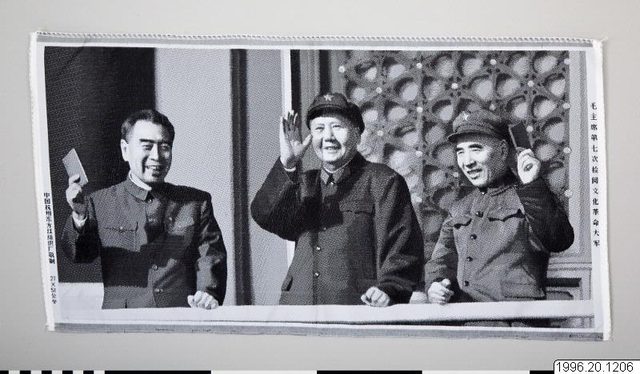
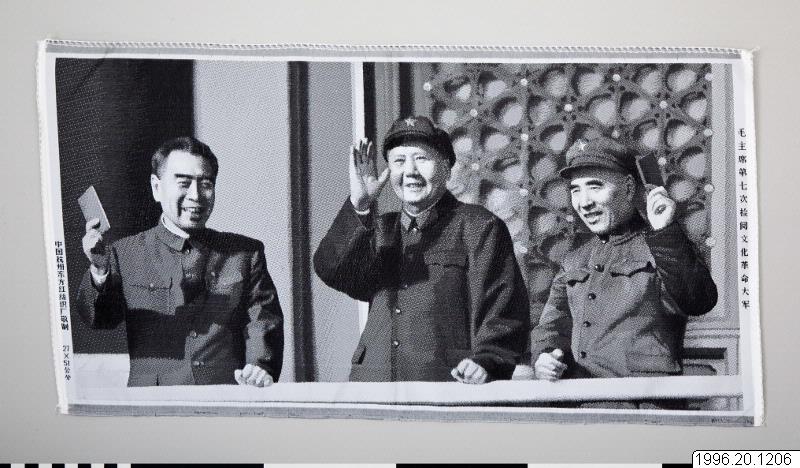
A woven silk picture from the Hangzhou Dongfanghong (The East Is Red) Silk Weaving Factory, 1966, is titled for Mao's seventh review of the "great army of the Cultural Revolution". It joins his image to the campaign (Transfer) and shows the leader as the object of devotion (Cult of personality).
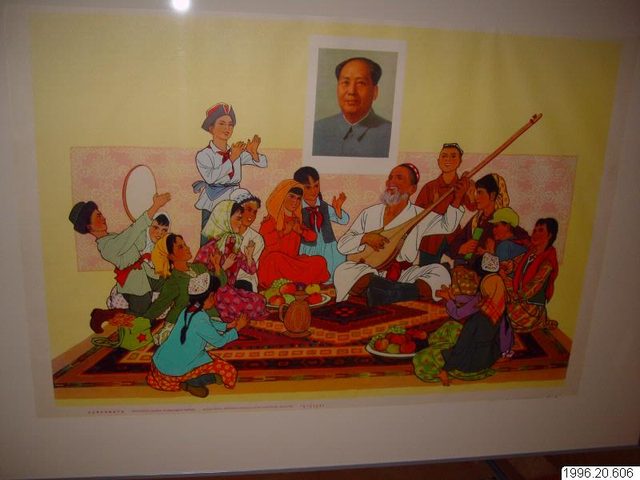
A Xinjiang poster of 1973 by Zhu Huakun carries the same device years later: the museum title is "We never stop praising the thoughts of our Chairman Mao", tagged Cult of personality, Bandwagon and Transfer.
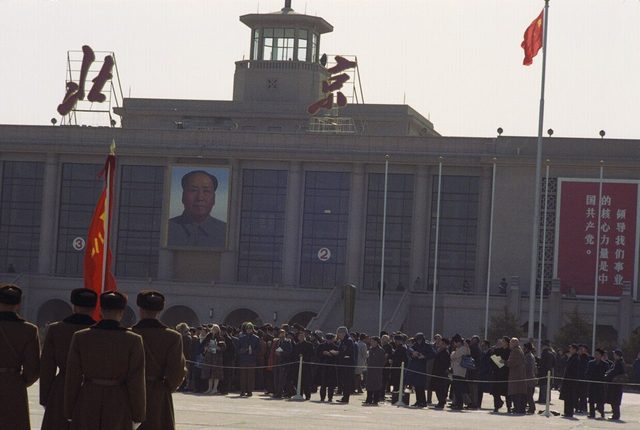
On 21 February 1972 the White House Photo Office photographed a Mao portrait and a Party slogan on the Beijing airport terminal as President Nixon arrived. The display is a state building used as a billboard (Transfer).
Heroes, study and unity, 1973 to 1976
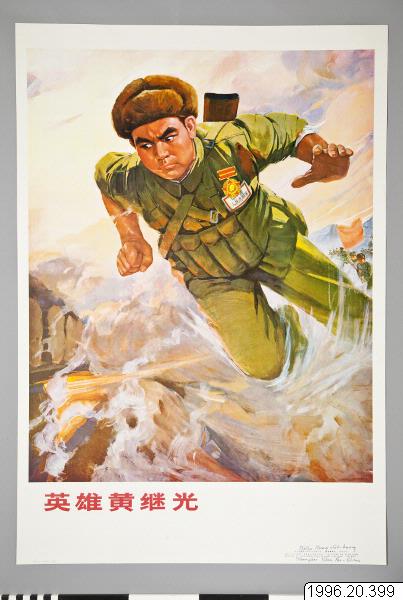
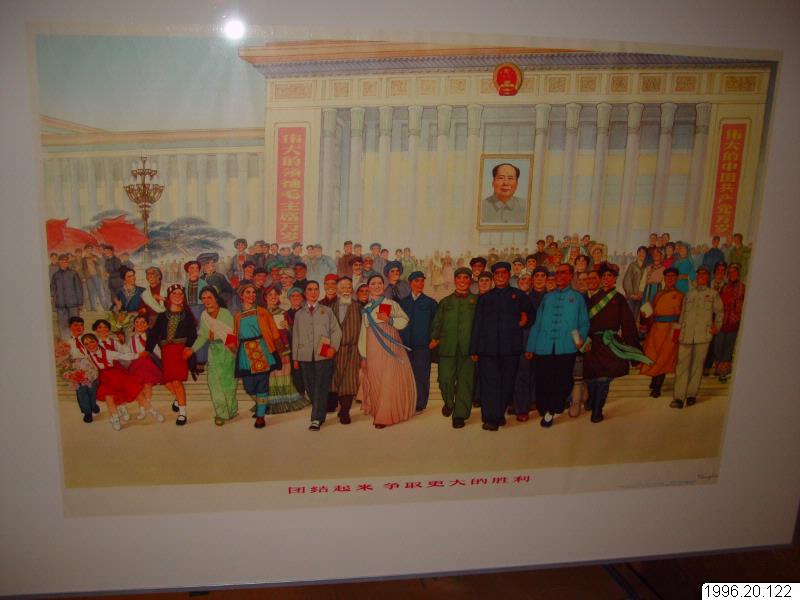
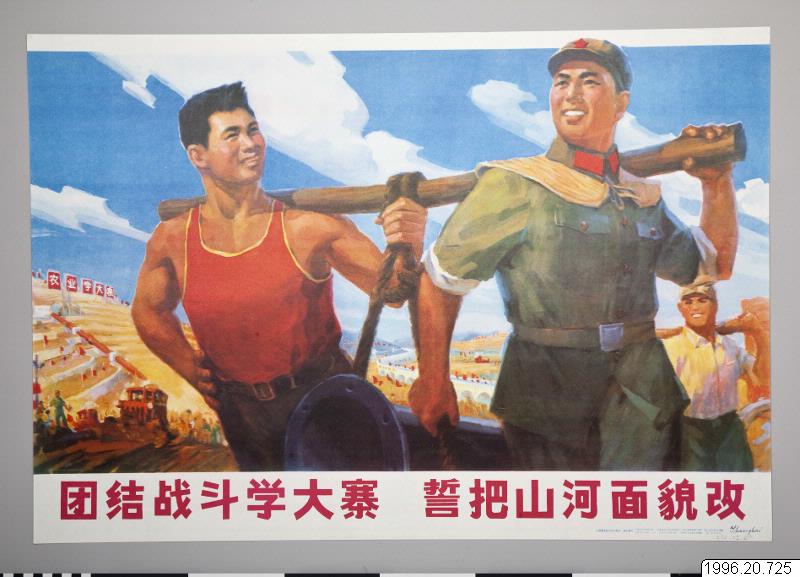
By the early 1970s the most violent phase of the campaign was over, yet the poster output continued in a standard style. Shanghai artists signed many sheets, and the same few devices recur: a model figure, a crowd, a slogan, and a link to the Party. The captions below give the artist where the museum record does.
Explain moreShow less
Shanghai poster artists produced much of the 1970s output. Zhou Ruizhuang's 1973 sheet honours Huang Jiguang, a Korean War soldier, borrowing a martyr's prestige for the Party (Transfer).
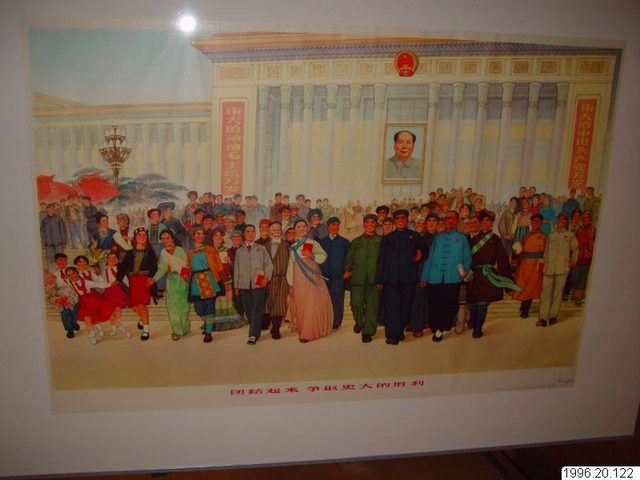
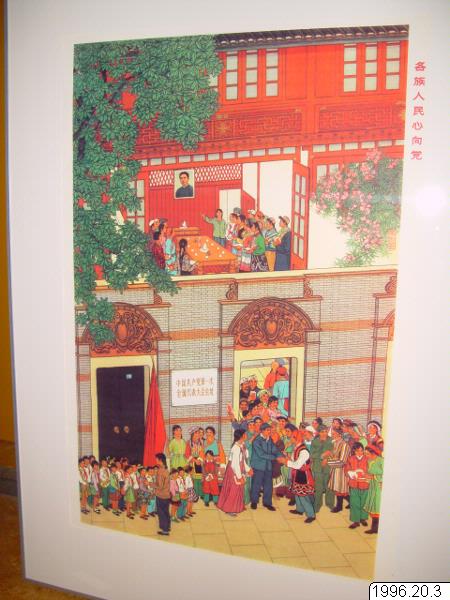
Jiangnan Chun's 1974 poster urges unity for greater victories, and the 1976 "peoples of all nationalities" poster shows many groups turned toward the Party. Both use the crowd as proof (Bandwagon).
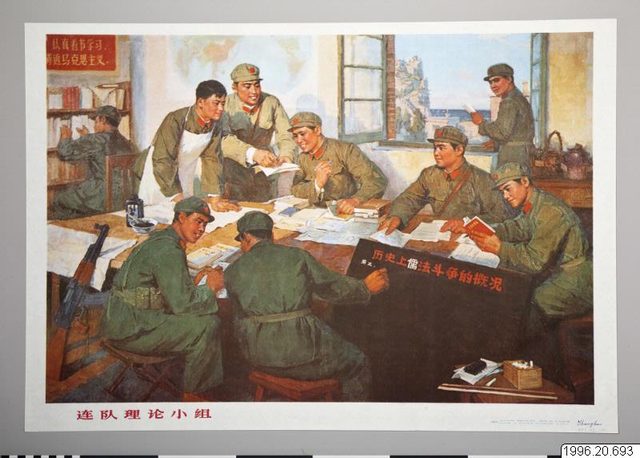
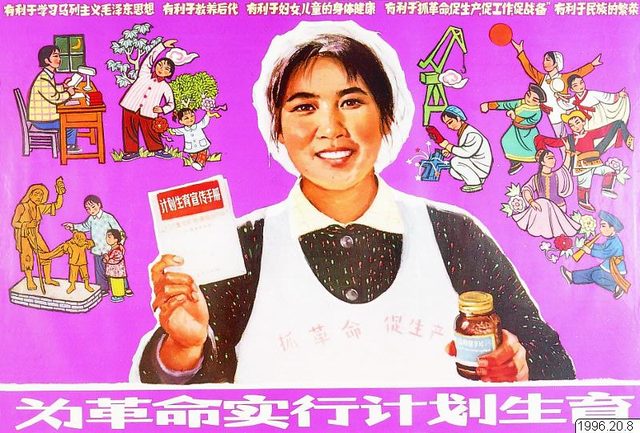
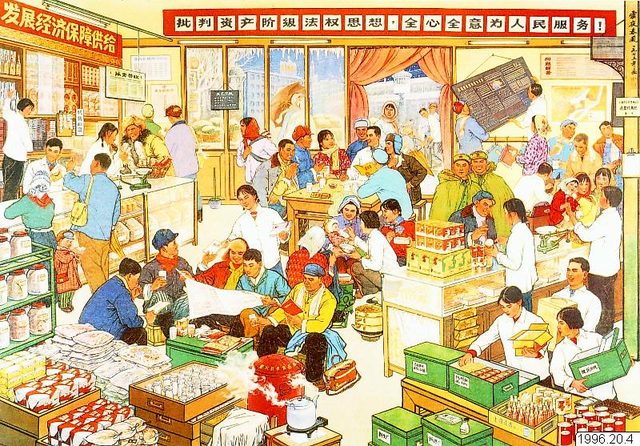
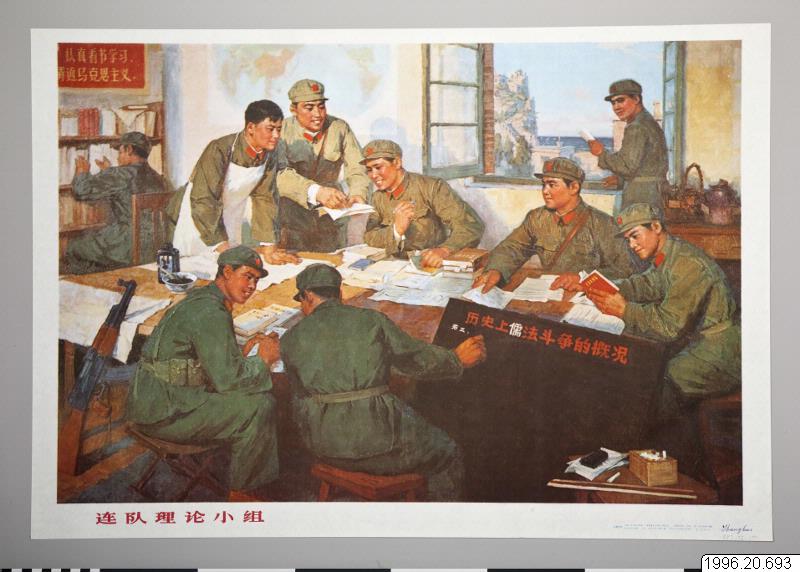
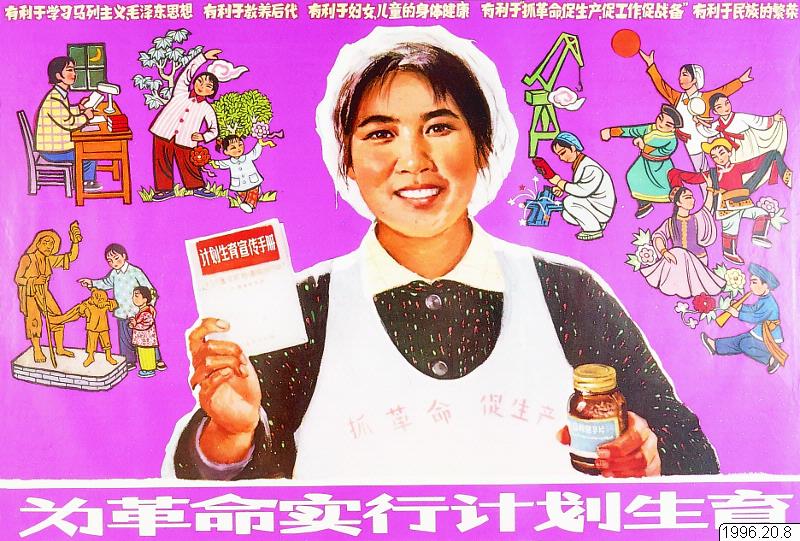
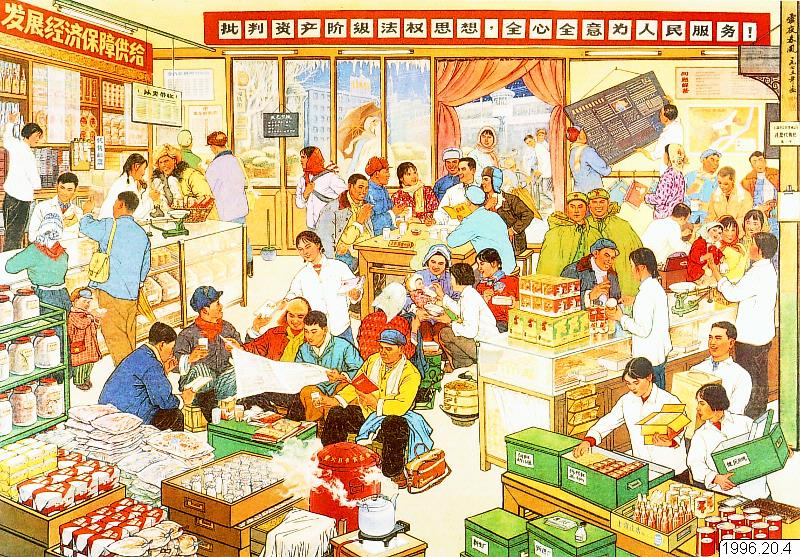
Wang Zunyi's 1975 company theory study group and the 1975 family-planning sheet attach everyday tasks to the revolution (Transfer, Glittering generalities). The 1976 poster against "bourgeois-right thinking" is built on virtue words alone (Glittering generalities).
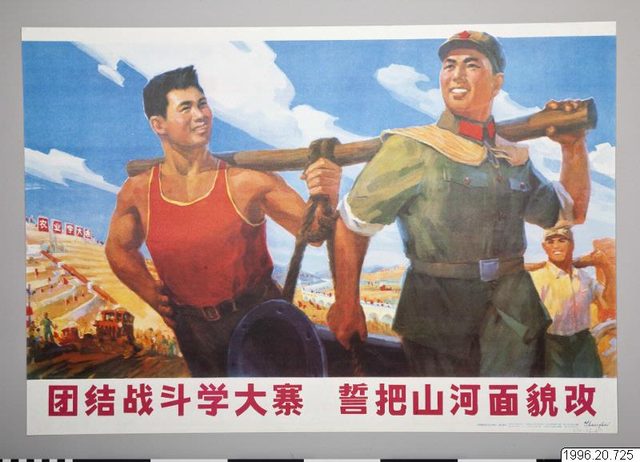
The 1976 poster by Yao Erchang sets the Dazhai model village as the pattern for national effort (Transfer, Glittering generalities).
1977: the labels reverse
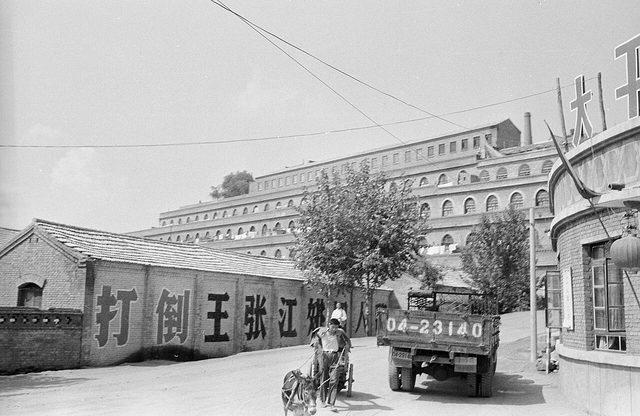
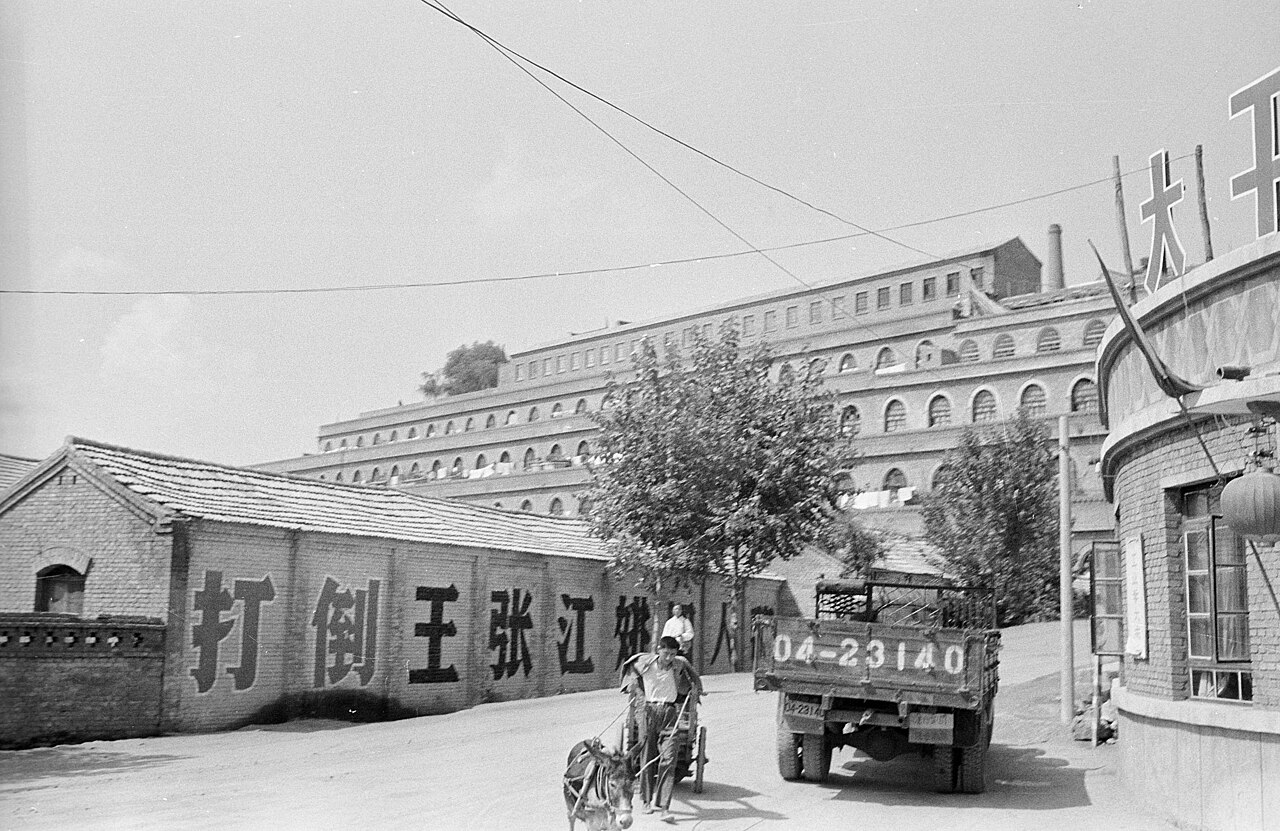
After Mao died in September 1976, the leaders later called the Gang of Four were arrested. In August 1977 local Party and commune authorities painted a wall slogan at Dazhai, Shanxi, reading "Down with Wang, Zhang, Jiang, Yao". It is the same technique of naming enemies that the earlier campaign used, now aimed at the former leaders (Name-calling).
What is and is not here
The collection holds no hand-written wall posters (big-character posters, dazibao) and no Red Guard publications, so none is shown. Scale and intent differ from the Western items in the archive: these were issued by a single-party state controlling nearly all publication, and the 1981 Party resolution later called the Cultural Revolution responsible for severe losses. The same technique definitions apply to every country.
Explain moreShow less
For the wider range, see Chinese propaganda posters; for the campaign labels and the struggle meeting, Cultural Revolution struggle sessions; for Mao's own sourced words, Mao quotes.